Article

Radar Cross Section Near-Field to Far-Field Prediction for Isotropic-Point Scattering Target Based on Regression Estimation


1
School of Information and Electronics, Beijing Institute of Technology, Beijing 100081, China
2
Department of Computing, The Hong Kong Polytechnic University, 11 Yuk Choi Rd, Hung Hom, Hong Kong 999077, China
3
China North Industries Corp., Beijing 100053, China
4
Faculty of Electrical Engineering, Delft University of Technology, 2628 CN Delft, The Netherlands
*
Author to whom correspondence should be addressed.
Sensors 2020, 20(21), 6023; https://doi.org/10.3390/s20216023
Submission received: 10 September 2020 / Revised: 16 October 2020 / Accepted: 21 October 2020 / Published: 23 October 2020
(This article belongs to the Special Issue Advances in Microwave and Millimeter Wave Radar Sensors)

Abstract

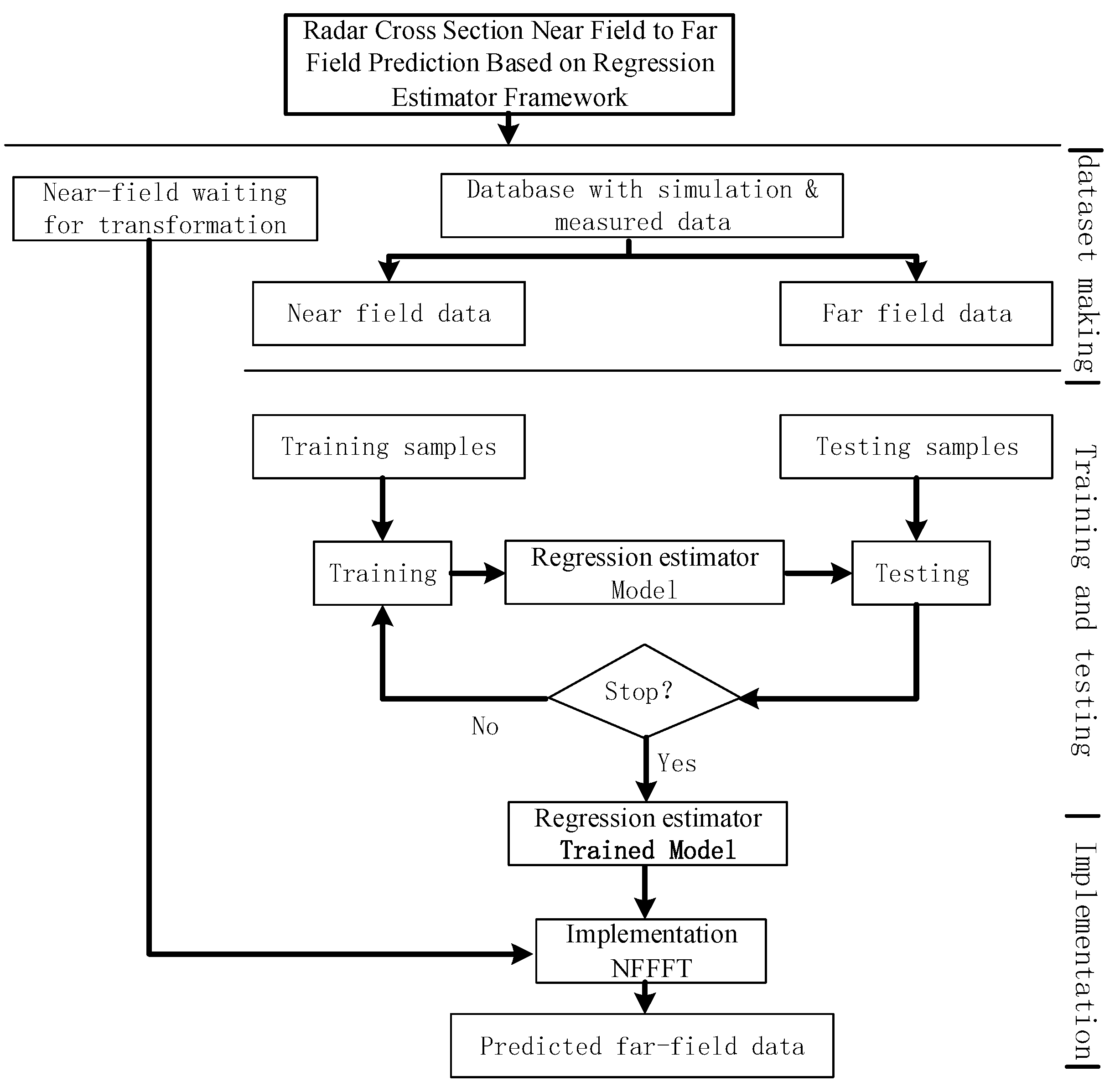
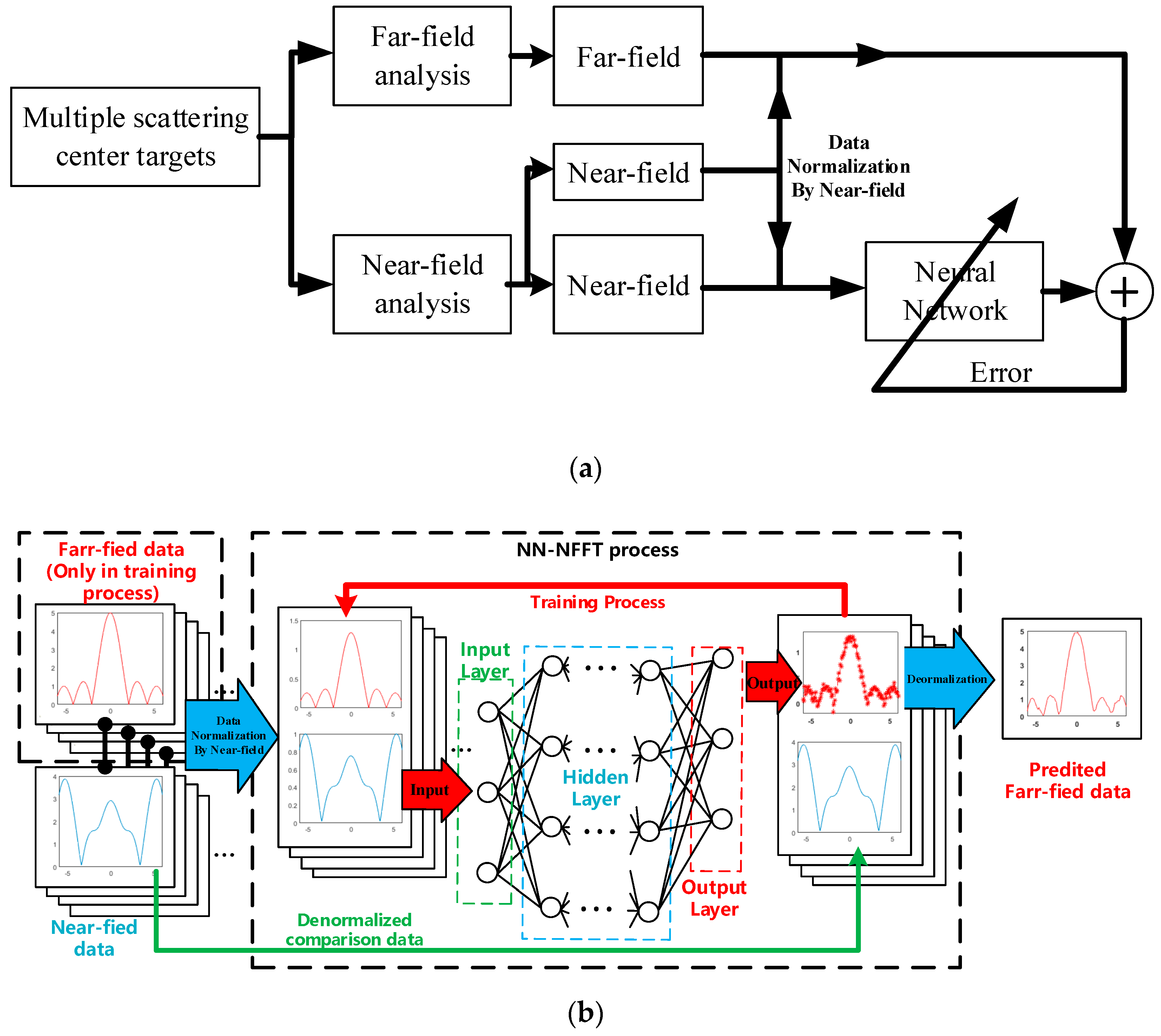
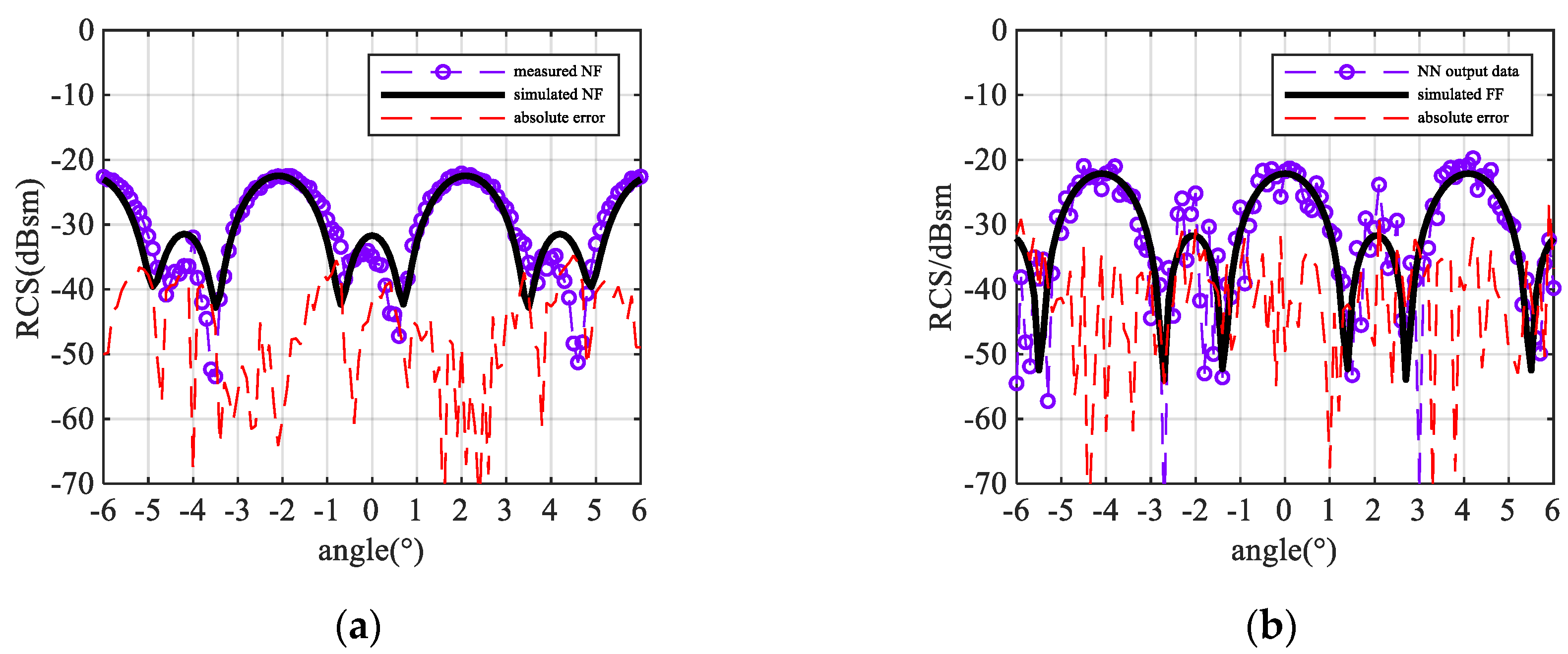
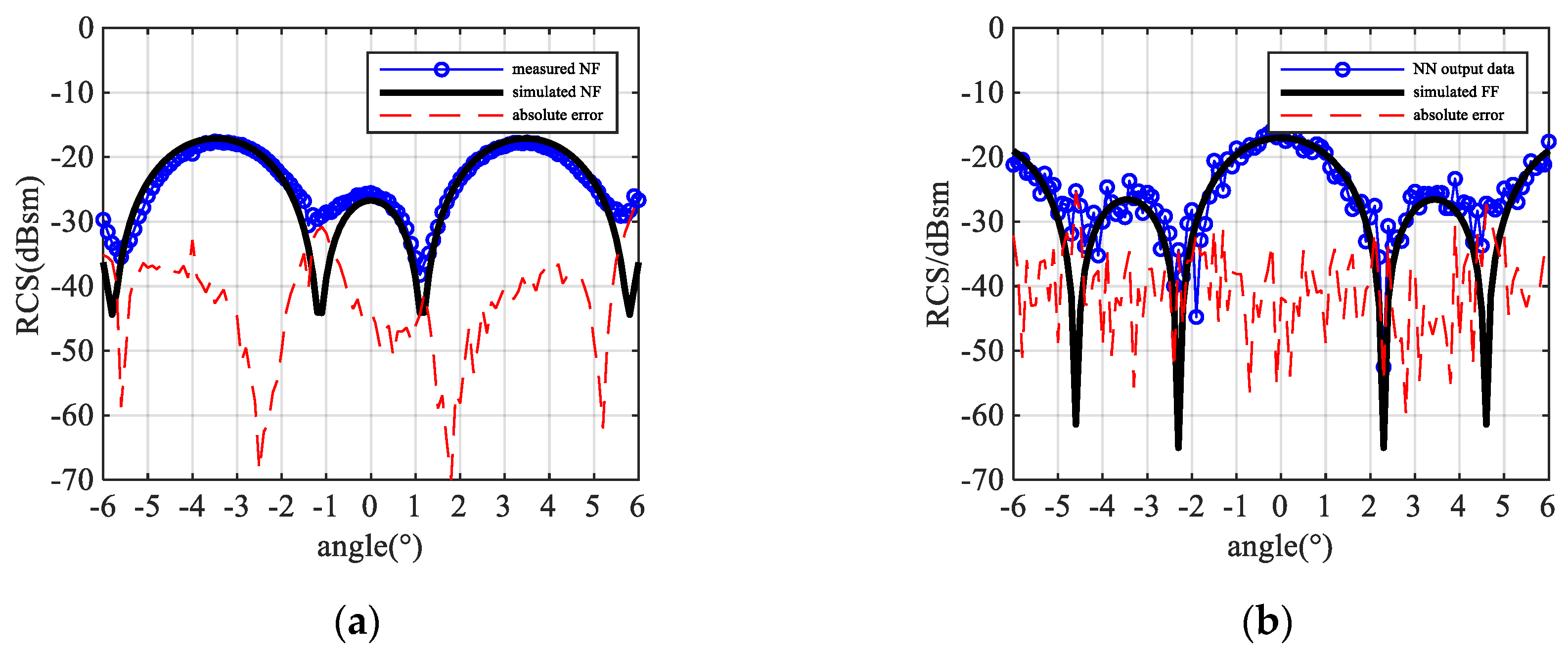
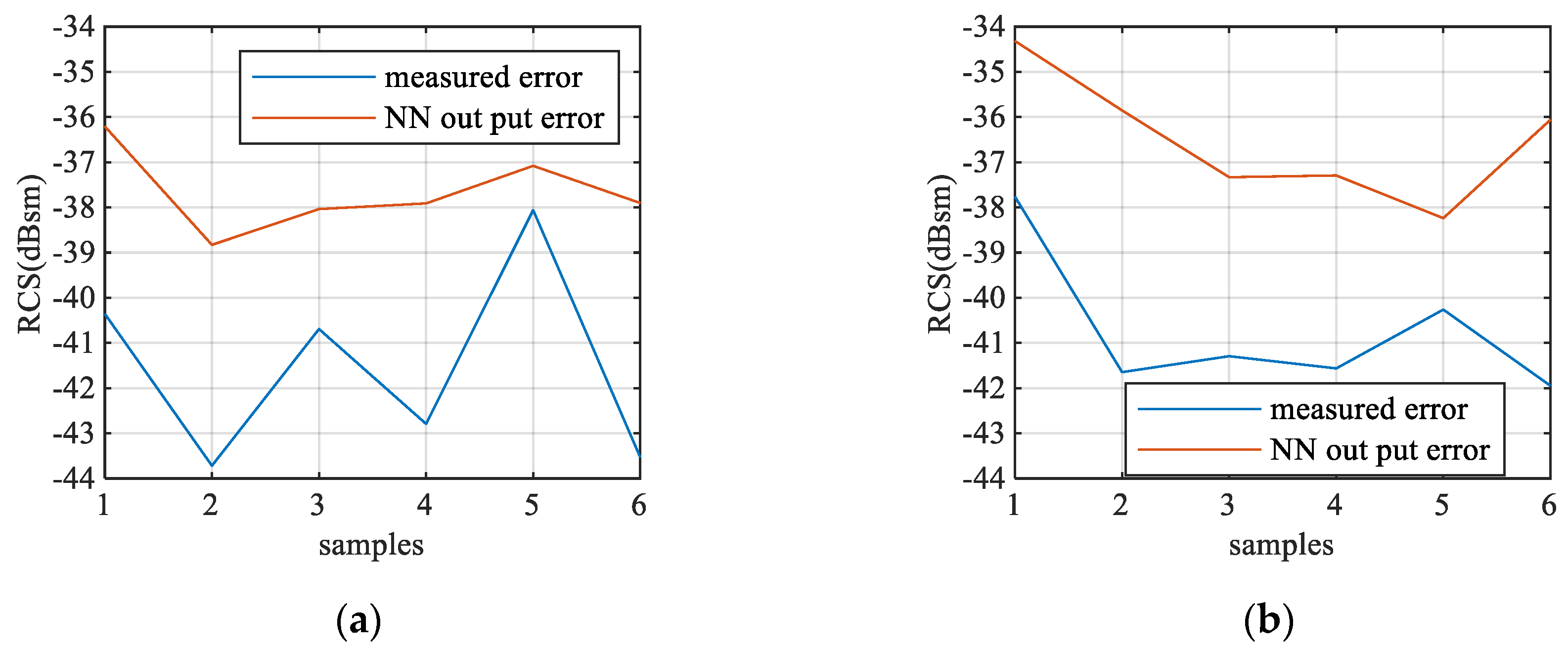
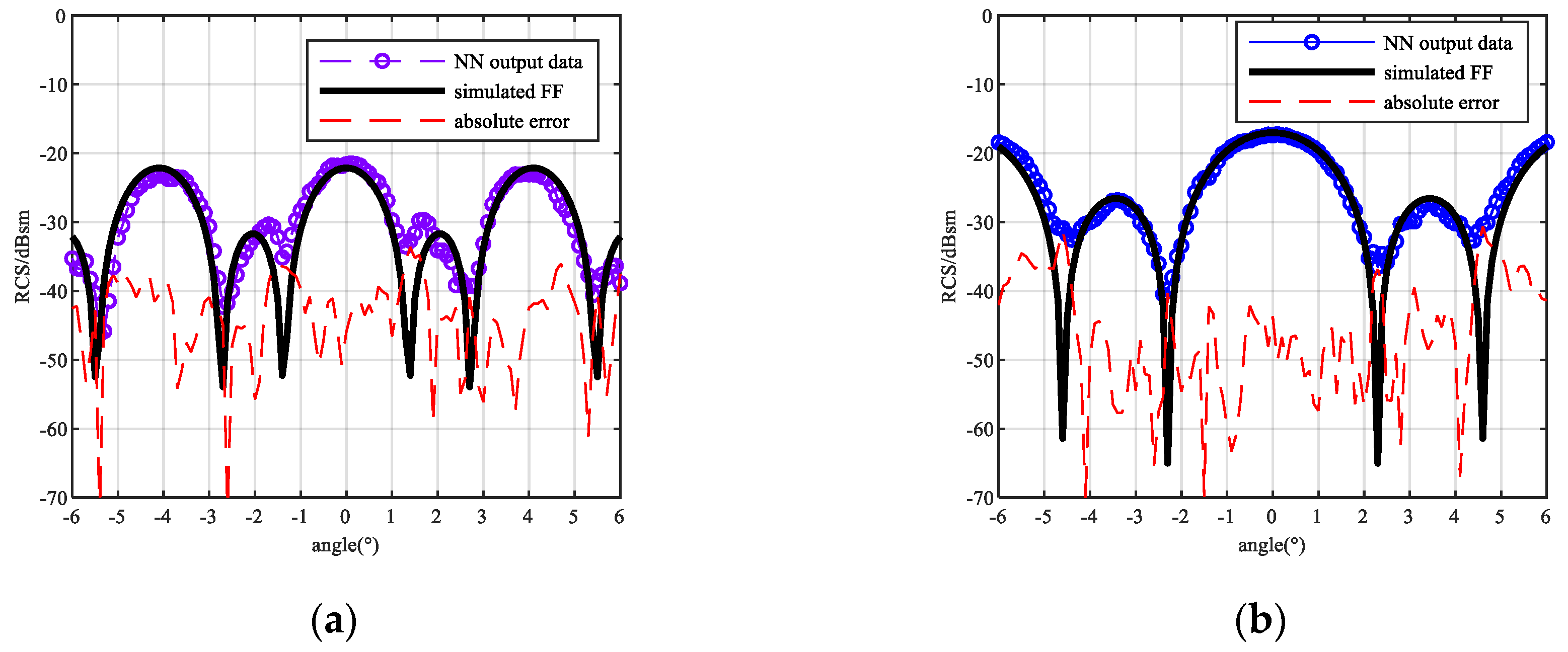
Radar cross section near-field to far-field transformation (NFFFT) is a well-established methodology. Due to the testing range constraints, the measured data are mostly near-field. Existing methods employ electromagnetic theory to transform near-field data into the far-field radar cross section, which is time-consuming in data processing. This paper proposes a flexible framework, named Neural Networks Near-Field to Far-Filed Transformation (NN-NFFFT). Unlike the conventional fixed-parameter model, the near-field RCS to far-field RCS transformation process is viewed as a nonlinear regression problem that can be solved by our fast and flexible neural network. The framework includes three stages: Near-Field and Far-field dataset generation, regression estimator training, and far-field data prediction. In our framework, the Radar cross section prior information is incorporated in the Near-Field and Far-field dataset generated by a group of point-scattering targets. A lightweight neural network is then used as a regression estimator to predict the far-field RCS from the near-field RCS observation. For the target with a small RCS, the proposed method also has less data acquisition time. Numerical examples and extensive experiments demonstrate that the proposed method can take less processing time to achieve comparable accuracy. Besides, the proposed framework can employ prior information about the real scenario to improve performance further.
Keywords: near-field to far-field transformation (NFFFT); neural network; nonlinear regression; radar cross section (RCS) measurement; regression analysis near-field to far-field transformation (NFFFT); neural network; nonlinear regression; radar cross section (RCS) measurement; regression analysis