


Abstract
Tugai forests are intrazonal riparian ecosystems formed along river valleys in arid and semi-arid regions and characterized by high biodiversity and complex vegetation structure. The aim of this study was to assess the phytocenological structure, species composition, and ecological characteristics of tugai forests distributed within the Kura River basin and the Nakhchivan Autonomous Republic of Azerbaijan. The study was conducted using classical geobotanical and phytocenological methods based on the Braun—Blanquet approach. The results revealed clear ecological differentiation among tugai forest formations depending on hydrological regime, groundwater conditions, and soil salinity. High species diversity and a multi-layered vegetation structure were identified within the Populeta—Salicetum—Ulmosum, Ulmeta, Populeta, Saliceta—Alnueta—Populeta, and Tamariceta formation groups, which develop mainly on alluvial soils under conditions of elevated moisture. In the Nakhchivan region, tugai forests adapted to more arid environments are distributed mainly along the Araz River and are dominated by Tamarix ramosissima, Populus euphratica, Populus nigra, and Salix species. Anthropogenic impacts, including grazing, deforestation, and hydrological alterations, were identified as major factors contributing to ecosystem degradation and reduction in vegetation cover. The obtained results confirm the high ecological and conservation significance of tugai forests and emphasize the necessity of their protection, restoration, and sustainable management.
1. Introduction
Tugai forests are intrazonal forest ecosystems that develop on floodplains and river terraces within arid and semi-arid climatic regions. These ecosystems are characterized by high biodiversity, complex multilayered vegetation structure, and a strong dependence on natural hydrological processes, particularly periodic flooding and shallow groundwater. They perform important ecological functions, including riverbank stabilization, regulation of hydrological processes, maintenance of soil fertility, carbon sequestration, regulation of local microclimatic conditions, and provision of habitat for numerous plant and animal species [1].
Globally, tugai forests are distributed along the major river systems of Central Asia, the Caucasus, the Middle East, and Eastern Europe. Despite their relatively restricted distribution, they represent one of the most valuable riparian forest ecosystems in arid and semi-arid regions. Tugai forests typically develop on alluvial floodplains and are commonly dominated by species of Populus, Salix, Ulmus, Tamarix, and, locally, Alnus. These communities exhibit pronounced vertical stratification and high floristic diversity. Owing to their dependence on natural flooding regimes and groundwater, tugai forests provide essential ecosystem services, including nutrient cycling, maintenance of regional biodiversity, and habitat for numerous plant and animal species. However, they are also highly vulnerable to hydrological alterations. During recent decades, reservoir construction, river regulation, intensive water abstraction for irrigation, agricultural expansion, deforestation, overgrazing, invasive species, and climate change have substantially reduced their extent, altered vegetation structure, decreased biodiversity, and impaired natural regeneration capacity throughout their distribution range [2,3,4].
In Azerbaijan, tugai forests are distributed mainly along the Kura River and its tributaries, whereas in the Nakhchivan Autonomous Republic, they occur along the Araz River and its tributaries. Historical botanical studies indicate that extensive tugai forests formerly occupied both banks of the Kura River. However, large-scale hydrological regulation has resulted in substantial habitat loss. Approximately 20,000 ha of tugai forests were submerged following the construction of the Mingachevir Reservoir, while the subsequent construction of the Shamkir, Yenikend, and Varvara reservoirs resulted in the loss of an additional 10,000 ha. Consequently, the area of tugai forests along the Kura River has declined by approximately 10–15-fold, with only about 18,000 ha remaining today [5,6,7]. Despite these substantial losses, the Kura River Basin still supports the largest remaining and relatively continuous tugai forest stands in Azerbaijan, characterized by multilayered vegetation dominated by Populus alba, Populus nigra, Salix alba, Ulmus minor, Alnus barbata, and species of Tamarix. In contrast, tugai forests in the Nakhchivan Autonomous Republic occur only as small, isolated fragments along the Araz River. Owing to the more arid continental climate, limited water resources, and soil salinization, drought-tolerant species of Populus, Salix, and Tamarix predominate [4]. Consequently, the tugai vegetation of these two regions differs considerably in floristic composition, dominant species, phytocenological structure, and ecological characteristics [5,6,7].
The tugai forests of Azerbaijan have been investigated for many decades from different perspectives. Studies by L.I. Prilipko, H.A. Aliyev, G.Sh. Mammadov, K.S. Asadov, M.Y. Khalilov, E.M. Gurbanov, and other researchers have primarily focused on floristic composition, geobotanical structure, distribution patterns, dominant species, and anthropogenic changes. In particular, E.M. Gurbanov documented the taxonomy, dominant and subdominant species, distribution ranges, and spatial boundaries of Azerbaijan’s tugai forests. According to published data, the flora of Azerbaijan comprises 435 species of trees and shrubs, representing approximately 19% of the country’s woody flora.
Previous studies of the tugai forests of the Kura River Basin have mainly focused on floristic diversity, geobotanical descriptions of plant communities, anthropogenic transformation, and conservation issues. In contrast, investigations conducted in the Nakhchivan Autonomous Republic have largely been limited to describing the floristic composition and geobotanical characteristics of tugai vegetation along the Araz River. Although these studies have provided valuable information, they are primarily descriptive in nature and were conducted using different methodological approaches, limiting direct comparisons between the two regions. Furthermore, to conserve the remaining tugai forests, the Garayazi State Nature Reserve, covering 4855 ha in the Agstafa District, was established in 1978, emphasizing the high conservation importance of these ecosystems.
Nevertheless, previous investigations have been largely limited to floristic inventories and traditional geobotanical descriptions. A comprehensive syntaxonomic comparison of the tugai forests of the Kura River Basin and the Nakhchivan Autonomous Republic using a unified Braun—Blanquet phytosociological approach, including the differentiation of plant communities at the association level and the assessment of regional phytosociological diversity, has not yet been adequately undertaken. This methodological inconsistency has hindered direct regional comparisons and highlights the need for a systematic syntaxonomic assessment of Azerbaijan’s tugai forests using a unified Braun—Blanquet phytosociological framework.
This study aimed to determine the syntaxonomic diversity of tugai forests in the Kura River Basin and the Nakhchivan Autonomous Republic using the Braun—Blanquet phytosociological approach, compare the phytocenological differentiation of plant communities, characterize their floristic composition and ecological features, and evaluate regional phytosociological diversity.
2. Materials and Methods
2.1. Research Area
The study was conducted in the plain riparian areas of the Republic of Azerbaijan, including the Kura River basin and the tugai forests of the Nakhchivan Autonomous Republic. The investigated areas covered a range of geomorphological and hydrological conditions and included the administrative regions of Agstafa—Shamkir, Yevlakh—Aghdash, Agjabedi—Sabirabad, and Salyan.
The climatic characteristics of the study areas were described using meteorological data obtained from the Azerbaijan National Hydrometeorological Service during the field survey period (2024–2025). The average annual air temperature ranged from 9.3 to 10.7 °C, while the annual precipitation varied between 435 and 518 mm. These data were used to characterize the environmental conditions of the study areas.
The tugai forests of the Kura River basin develop mainly on meadow-forest, alluvial-meadow-floodplain, and brown-forest soils under conditions of shallow groundwater occurrence. In the Nakhchivan Autonomous Republic, tugai forests are distributed primarily along the Araz River and its tributaries, where they develop on alluvial and alluvial—sedimentary soils under arid climatic conditions. The vegetation is dominated by species of the genera Salix, Populus, and Tamarix. Owing to their dependence on river hydrology, these ecosystems are highly sensitive to environmental changes and play an important role in the conservation of regional plant diversity.
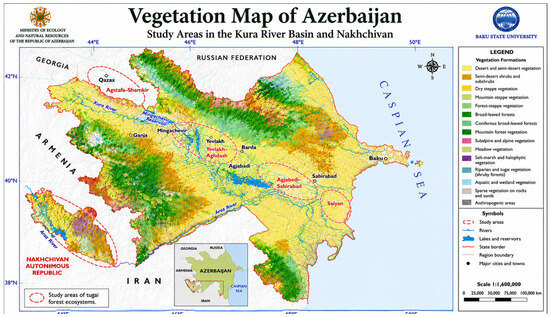
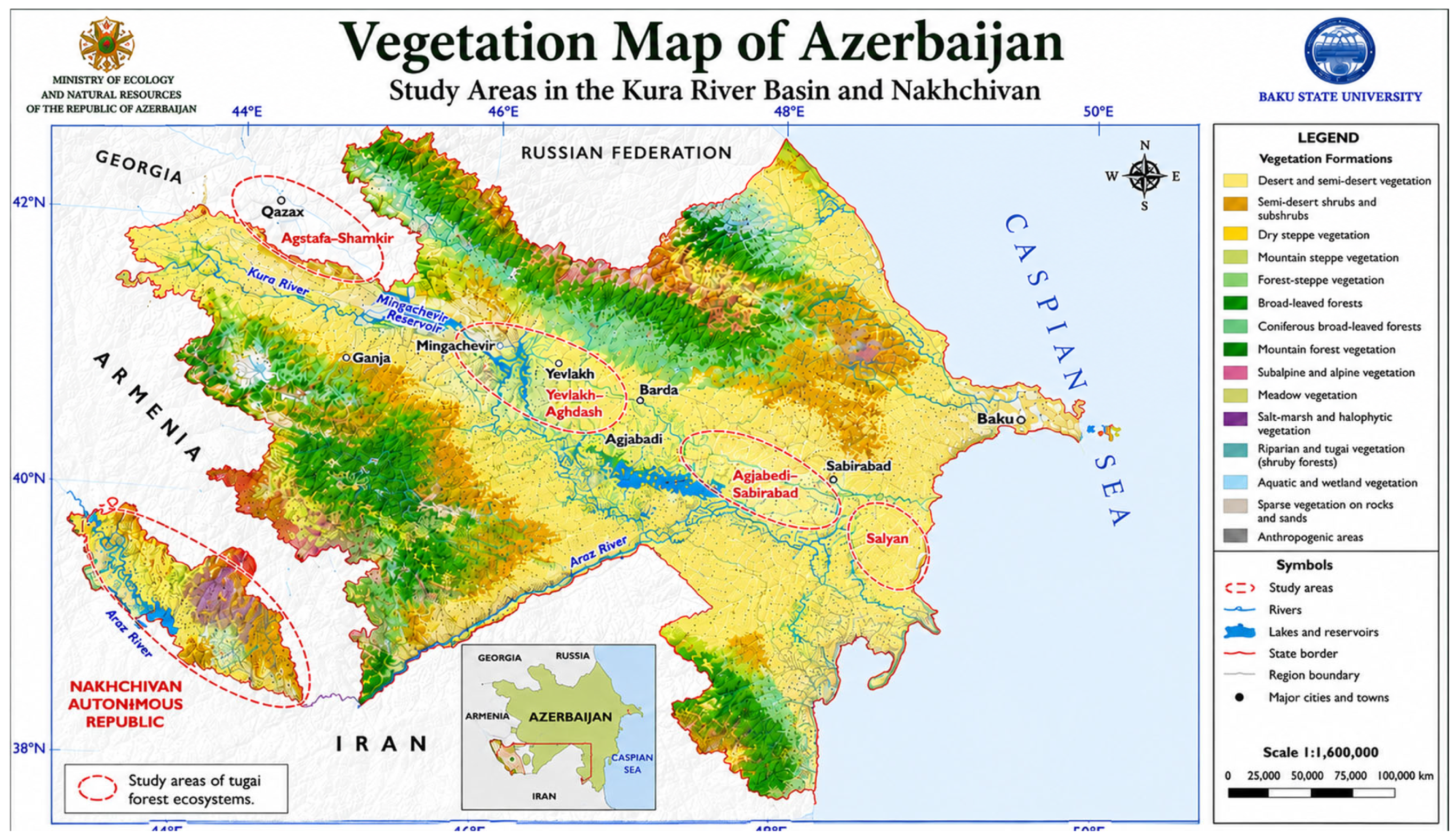
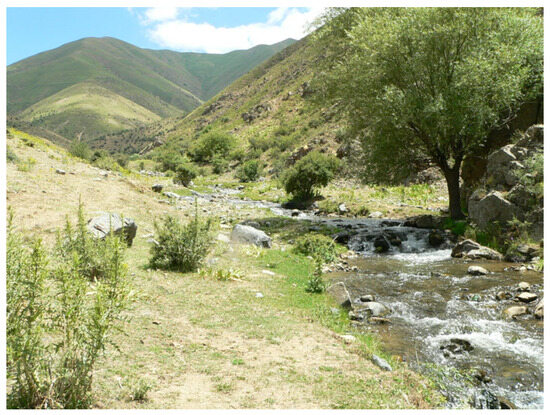
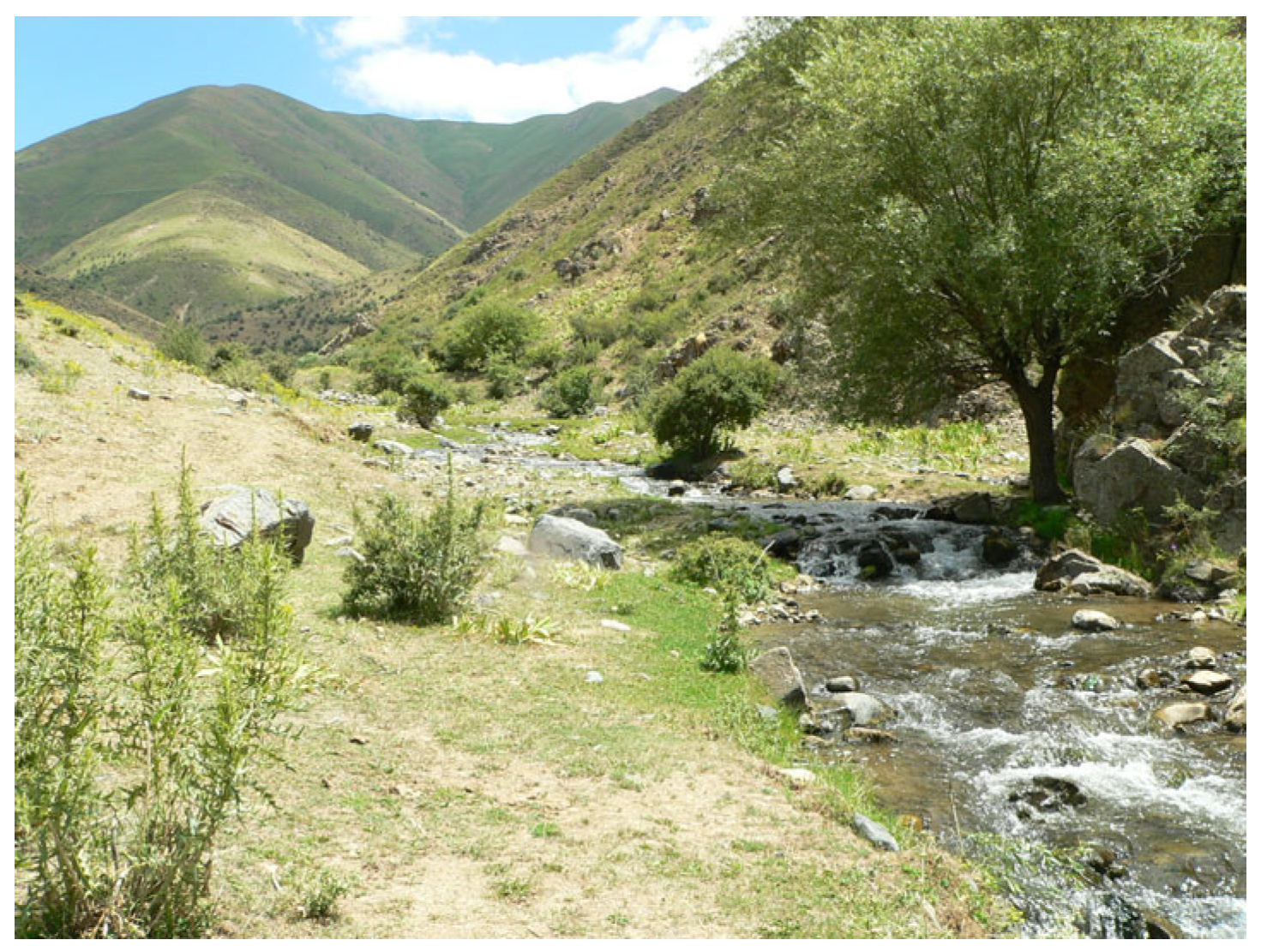
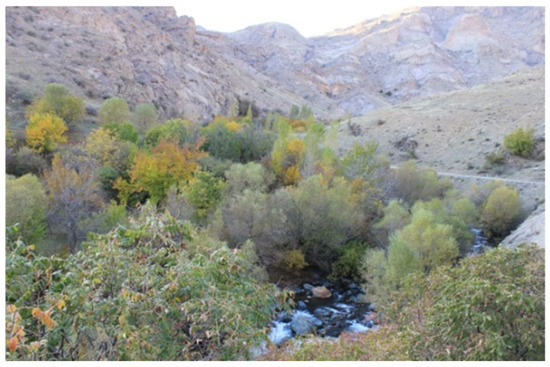
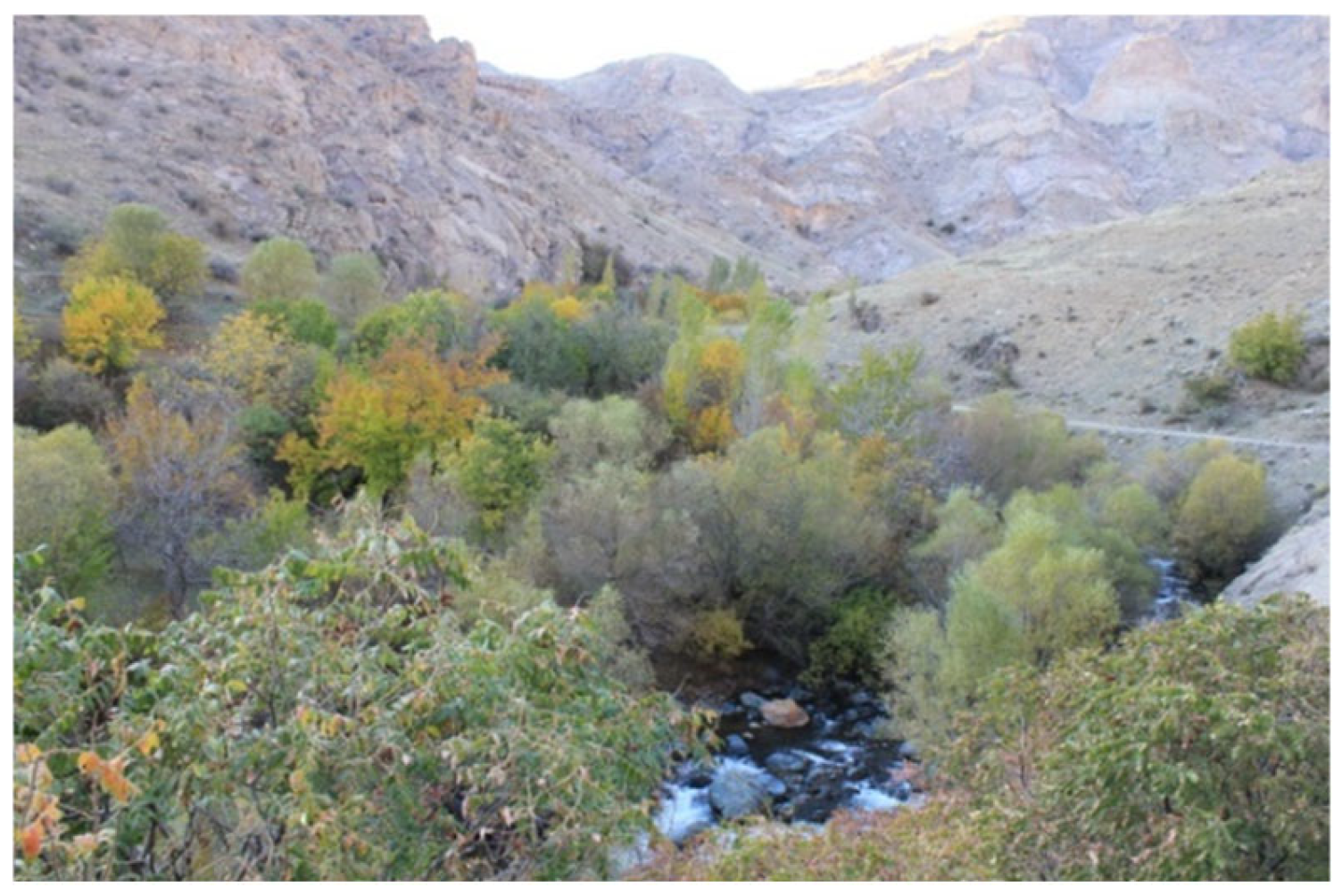
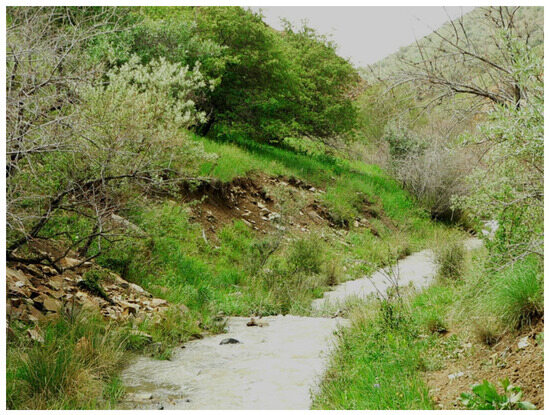
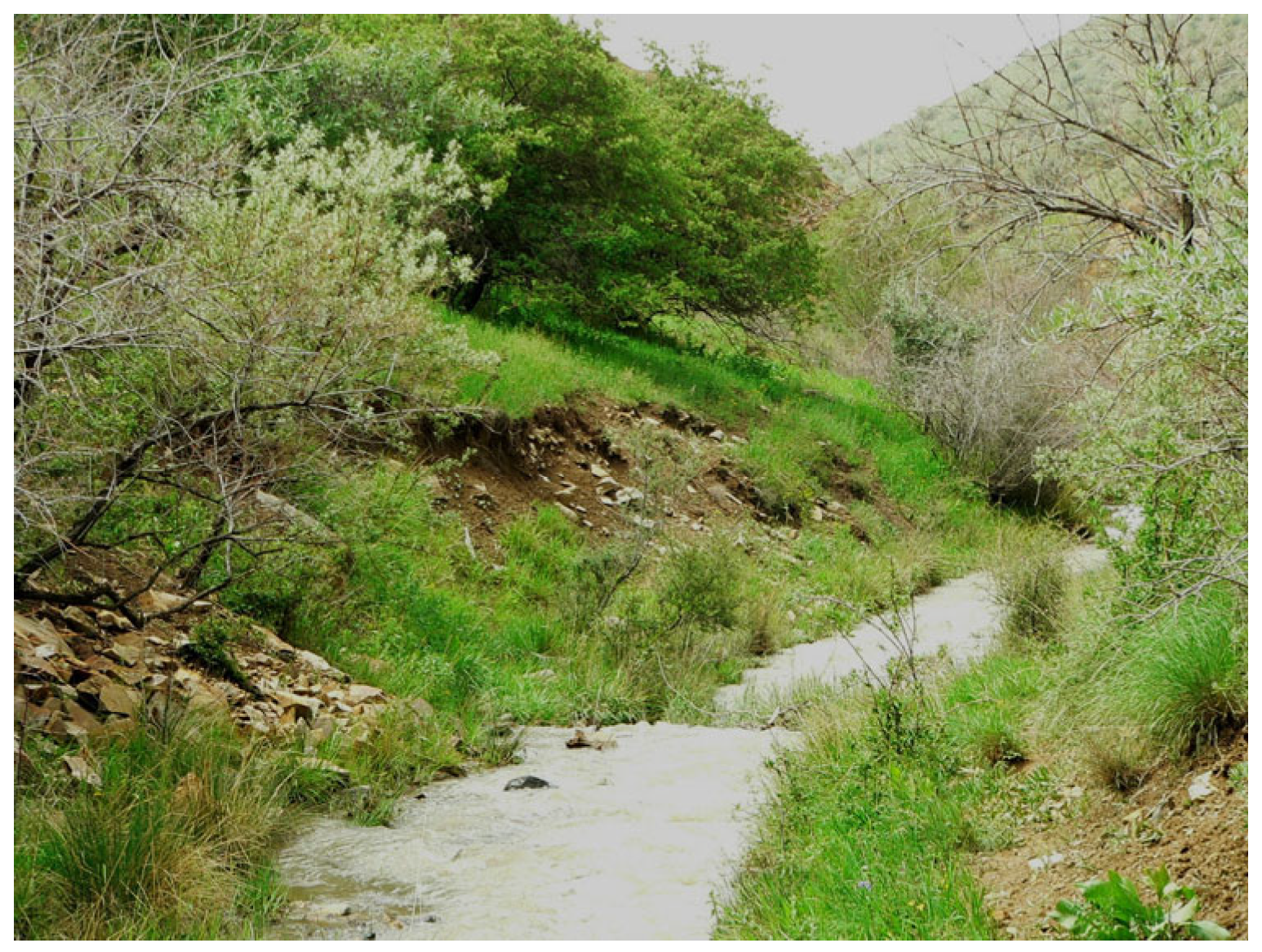
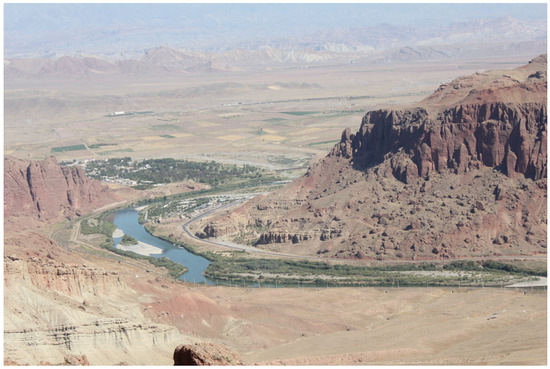
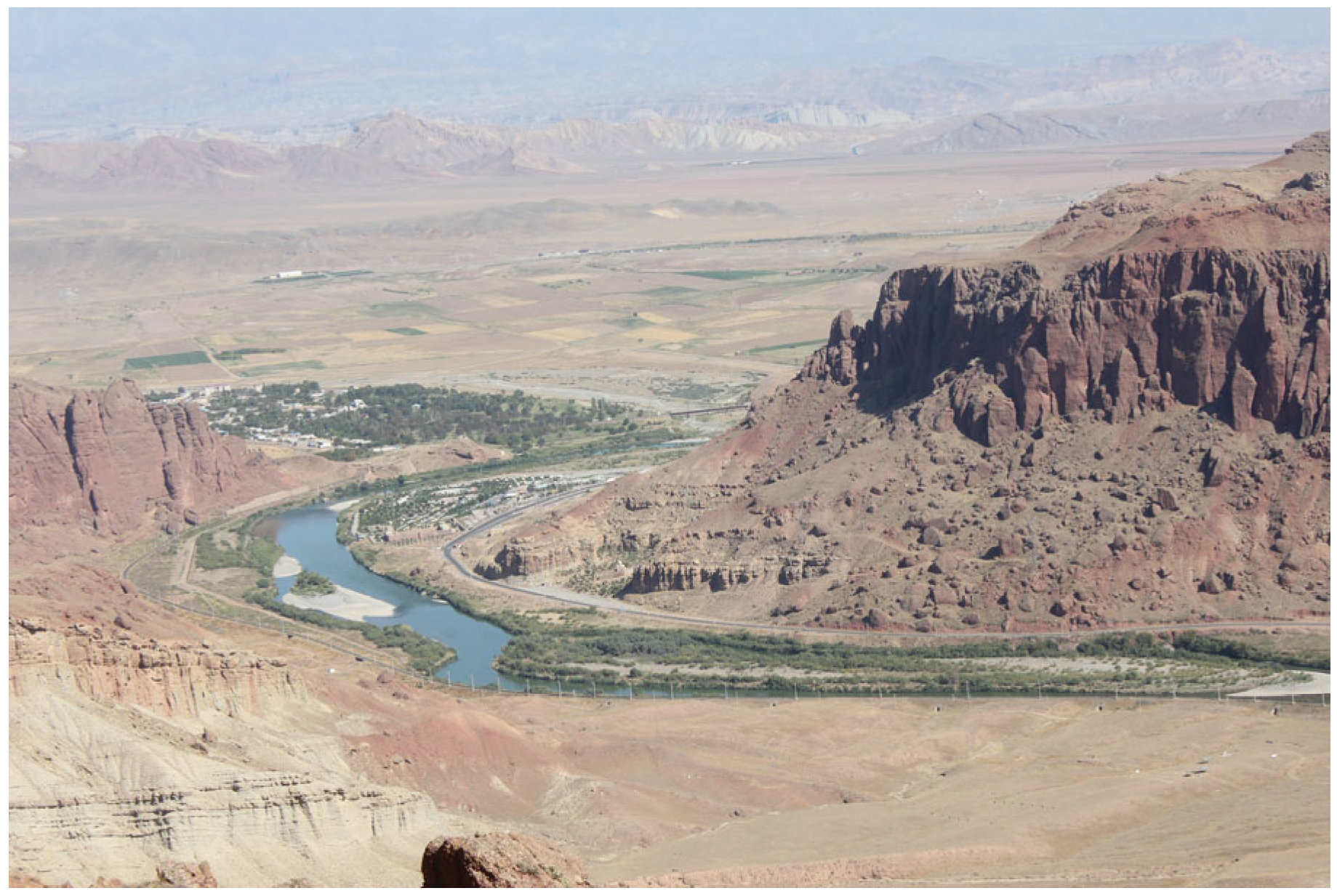
The geomorphological and ecological conditions of the study area, including riparian vegetation and river valley landscapes, are illustrated in Figure 1, Figure 2, Figure 3 and Figure 4.
Figure 1.
Vegetation map of Azerbaijan showing the study areas within the Kura River basin and the Nakhchivan Autonomous Republic.
Figure 2.
Riverside landscape of the study area in the Nakhchivan Autonomous Republic.
Figure 3.
Riparian tugai vegetation along a mountain river in the Nakhchivan Autonomous Republic.
Figure 4.
General view of tugai forest vegetation in the Nakhchivan Autonomous Republic.
Figure 1 is based on the Vegetation Map of Azerbaijan compiled by Gurbanov [8], with the study areas indicated by the authors.
2.2. Research Material
The research material consisted of field geobotanical observations, phytocenological descriptions, and herbarium specimens collected during the 2024–2025 vegetation seasons. The collected data also provided a basis for assessing vegetation diversity and supporting biodiversity conservation and ecosystem management [9]. Plant specimens were systematically analyzed, and species were identified based on the Flora of Azerbaijan, “Plant World”, and other fundamental floristic sources [10,11]. The nomenclature of species was refined in accordance with modern taxonomic approaches.
3. Methods
Classical geobotanical and phytosociological methods were employed in this study [12]. Vegetation description and classification were carried out according to the principles of the Braun—Blanquet phytosociological approach [13,14,15,16,17], which is a classical method for the survey, description, and syntaxonomic classification of plant communities. The approach is based on the establishment of homogeneous vegetation plots (relevés), within which the floristic composition and the cover abundances of each species are recorded. Species abundance and cover were estimated using the Braun—Blanquet cover-abundance scale, which provides a semi-quantitative assessment of species dominance within each relevé. The resulting relevés were compared on the basis of their floristic composition, species dominance, and ecological characteristics to identify syntaxa and establish the phytocenological classification of the investigated tugai forests.
Standard phytosociological plots ranging from 100 to 400 m2 were established according to the concept of the minimum representative area recommended in the Braun—Blanquet approach for homogeneous plant communities [13,14,15,16,17]. Plot size was adjusted to the structure, physiognomy, and homogeneity of the vegetation to ensure adequate representation of each plant community. Sampling sites were selected in representative, homogeneous, and relatively undisturbed tugai forest stands to encompass the ecological variability of the study area. The Braun—Blanquet approach is particularly suitable for riparian tugai forests because it effectively characterizes heterogeneous vegetation with complex vertical stratification and variable species composition. However, the interpretation of transitional communities requires careful consideration because floristic boundaries between adjacent vegetation units may be less distinct.
Sample plots were distributed across the study areas to represent the principal tugai forest communities and the range of environmental conditions occurring within the Kura River Basin and the Nakhchivan Autonomous Republic. Plots were established only in homogeneous vegetation stands, avoiding ecotonal zones and heavily disturbed sites, thereby ensuring that each relevé represented a distinct plant community.
A total of 68 phytosociological relevés were recorded during the 2024–2025 field surveys. Their distribution reflected the spatial extent and ecological heterogeneity of tugai forests in the investigated regions. Of these, 46 relevés were recorded in the Agstafa—Shamkir area, 10 in the Yevlakh—Aghdash area, 8 in the Agjabedi—Sabirabad area, 2 in Salyan, and 2 in the Nakhchivan Autonomous Republic. The relatively small number of relevés in the Nakhchivan Autonomous Republic reflects the fragmented distribution and limited extent of tugai forests along the Araz River. Each relevé represented an independent phytosociological observation. Field surveys included repeated visits to the same sampling plots during the 2024–2025 vegetation seasons to verify species composition and vegetation characteristics under different phenological stages.
For each phytosociological plot, the following parameters were recorded:
- -
- Species composition and taxonomic identity;
- -
- Biomorphological groups (trees, shrubs, subshrubs, and herbs);
- -
- Species abundance according to the Braun—Blanquet cover-abundance scale;
- -
- Projective cover (%);
- -
- Vegetation density;
- -
- Vertical stratification (layers I–III);
- -
- Plant height;
- -
- Phenological stages (vegetative, flowering, and fruiting);
- -
- Ecological groups (mesophytes, xerophytes, mesoxerophytes, hydrophytes, etc.).
The dominant and subdominant species of each phytocenosis were identified, and plant communities were characterized according to their edificator species. During the structural analysis of the vegetation, the ecological importance of species was evaluated based on their abundance and projective cover.
Phytocenological Classification
The phytocenological classification of the tugai forest vegetation was performed following the classical Braun—Blanquet phytosociological approach. Plant communities were classified according to their floristic composition, dominant and subdominant species, vegetation structure, biomorphological characteristics, and ecological features.
The syntaxonomic hierarchy adopted in this study comprised one vegetation type (forest), one vegetation subtype (tugai forest), one formation class (plain riverside tugai forests), five formation groups (Populeta—Salicetum—Ulmosum, Ulmeta, Populeta, Saliceta—Alnueta—Populeta, and Tamariceta), and fourteen associations. The names of the syntaxa were assigned according to the dominant and subdominant species following the descriptive phytocenological tradition.
The geobotanical data obtained from the relevés were summarized using descriptive measures and interpreted according to the principles of the Braun—Blanquet approach. Species richness, floristic composition, vegetation structure, abundance values, ecological spectra, and the distribution of biomorphological and ecological groups were compared descriptively among the identified formation groups.
The syntaxonomic classification was based on the analysis of similarities and differences in species composition, dominance structure, ecological characteristics, and vegetation physiognomy among the investigated plant communities. The resulting classification was evaluated in comparison with previously published phytosociological studies of tugai forests and classical geobotanical studies of Azerbaijan [18,19] to ensure consistency with established syntaxonomic concepts.
No inferential statistical analyses were performed, as the primary objective of this study was the phytocenological classification and ecological characterization of tugai forest vegetation rather than hypothesis testing.
4. Results and Discussion
Phytocenological Classification of Tugai Forest Vegetation
Based on the phytocenological investigations conducted in the Kura River Basin and the Nakhchivan Autonomous Republic, the tugai forest vegetation of Azerbaijan was classified into one vegetation type, one vegetation subtype, one formation class, five formation groups, and fourteen associations (Table 1).
Table 1.
Syntaxonomic classification of tugai forest vegetation in Azerbaijan.
The classification was established using the Braun—Blanquet phytosociological approach and reflects the floristic composition, dominant species, vegetation structure, and ecological characteristics of the investigated tugai forest communities. The syntaxonomic units recognized in this study are presented in Table 1.
The identified formation groups comprise Populeta—Salicetum—Ulmosum, Ulmeta, Populeta, Saliceta—Alnueta—Populeta, and Tamariceta, including a total of fourteen associations. These syntaxa differ in their dominant species composition, vegetation structure, floristic diversity, and ecological characteristics.
The principal phytocenotic groupings identified in the present study are as follows:
- Moist willow forest (Salicetum purum);
- Moist willow forest with couch-grass ground cover (Salicetum agropyrosum);
- Moist elm—poplar forest with lianas (Ulmeta—Populetum smilacosum);
- Moist elm—poplar forest with shrub understory (Ulmeta—Populeta fruticosa);
- Moist elm forest with well-developed herbaceous cover (Ulmetum herbosum);
- Moist elm forest with mixed shrub understory (Ulmetum fruticosum);
- Moist elm forest with shrubs and treelike tamarisk (Tamariceto—Ulmetum fruticosum);
- Moist elm forest with tamarix understory (Ulmetum—Tamaricosum);
- Moist forest with mixed shrub understory (Querceto—Ulmetum fruticosum);
- Moist forest with hawthorn understory (Querceto—Crataegetum ulmosum);
- Forest with tamarix understory (Querceto—Ulmetum tamarixosum);
- Forest with Paliurus understory (Querceto—Ulmetum paliurosum);
- Dry-site forest with shrub understory (Ulmo—Quercetum fruticosum).
The syntaxonomic classification of the investigated tugai forest vegetation is summarized in Table 2.
Table 2.
Summary of the syntaxonomic classification of tugai forest vegetation in Azerbaijan.
As shown in Table 1, the investigated tugai forest vegetation comprises five formation groups that differ in dominant species composition, floristic richness, ecological spectra, habitat characteristics, and geographical distribution. The detailed phytocenological characteristics of each formation group are presented in the following sections.
The detailed phytocenological characteristics of each formation group are presented in the following sections.
I. Vegetation of the Tugai forest zone
I.1. Plain riverside tugai forest formation class
A. Populeta—Salicetum—Ulmosum Formation Group
This formation group is represented by the associations Populeta alba—Salicetum excelsa—Ulmosum minor, Populeta nigra—Salicetum triandra—Ulmosum minor, and Salicetum triandra—Ulmosum minor.
A total of 25 vascular plant species were recorded in this phytocenosis, including 5 tree species (20.0%), 5 shrub species (20.0%), 1 climbing shrub species (4.0%), 1 subshrub species (4.0%), and 13 perennial herb species (52.0%). According to the ecological analysis, the phytocenosis comprises 16 mesophytic species (64.0%), 6 mesoxerophytic species (24.0%), 2 hydrophytic species (8.0%), and 1 xerophytic species (4.0%).
The dominant tree species of this formation group are Populus alba, Populus nigra, Salix excelsa, Salix triandra, and Ulmus minor. According to the Drude abundance scale, Populus alba and Populus nigra reached abundance values of 3–4 points, whereas Salix excelsa, Salix triandra, and Ulmus minor were estimated at 2–3 points.
The first vegetation layer is formed by Populus alba, Populus nigra, Salix excelsa, Salix triandra, and Ulmus minor, which constitute the main forest canopy. The shrub layer is moderately developed and is accompanied by a herbaceous understory typical of mixed riparian forests. The coexistence of poplar, willow, and elm species contributes to the structural complexity of the phytocenosis. The total projective cover ranges from 70% to 90%.
The predominance of mesophytic species reflects the occurrence of this formation group under relatively moist floodplain conditions. These mixed poplar—willow—elm communities occur fragmentarily along the banks of the Kura River and represent one of the characteristic riparian forest formations of the study area.
B. Ulmeta Formation Group
This formation group is represented by the associations Ulmeta glabra and Ulmeta minor.
A total of 25 vascular plant species were recorded in this phytocenosis, including 4 tree species (16.0%), 5 shrub species (20.0%), 1 climbing shrub species (4.0%), 1 subshrub species (4.0%), and 14 perennial herb species (56.0%). According to the ecological analysis, the phytocenosis comprises 17 mesophytic species (68.0%), 5 mesoxerophytic species (20.0%), 2 xerophytic species (8.0%), and 1 hydrophytic species (4.0%).
The dominant species, Ulmus glabra Huds., reached an abundance of 3–4 points according to the Drude abundance scale, whereas the subdominant species, Ulmus minor Mill., was estimated at 2–3 points.
The first vegetation layer is dominated by Ulmus glabra and Ulmus minor, with Ulmus minor attaining an average height of approximately 20 m. The shrub layer consists of scattered individuals of Rhamnus pallasii, Punica granatum, Tamarix hohenackeri, and Lycium ruthenicum, each occurring with abundance values of 1–2 points. Perennial mesophytic herb species are distributed throughout the open forest patches. The total projective cover ranges from 60% to 85%.
The predominance of mesophytic species reflects the relatively moist environmental conditions characteristic of elm-dominated tugai forests in the Kura River floodplain. The relatively dense canopy provides favorable conditions for the development of a mesophytic understory, while the sparse shrub layer contributes to the structural heterogeneity of the community.
Field observations indicate that some stands of this formation group have been affected by anthropogenic activities, resulting in thinning of the tree and shrub layers and local degradation of the vegetation cover [20].
C. Populeta Formation Group
This formation group is represented by the associations Populeta tremula, Populeta canescens, and Populeta nigra.
A total of 31 vascular plant species were recorded in this phytocenosis, including 5 tree species (16.1%), 6 shrub species (19.4%), 1 climbing shrub species (3.2%), 1 subshrub species (3.2%), and 18 perennial herb species (58.1%). According to the ecological analysis, the phytocenosis comprises 19 mesophytic species (61.3%), 8 mesoxerophytic species (25.8%), 2 xerophytic species (6.5%), 1 hydrophytic species (3.2%), and 1 psammophytic species (3.2%).
The formation develops on meadow-forest and tugai soils and represents one of the principal poplar-dominated communities of the Kura River floodplain. The dominant tree species are Populus nigra, Populus canescens, and Populus tremula. According to the Drude abundance scale, Populus nigra reached an abundance of 3–4 points, whereas Populus canescens and Populus tremula were estimated at 2–3 points.
The first vegetation layer is formed mainly by Populus nigra, Populus canescens, and Populus tremula, which constitute the main forest canopy. The shrub layer is represented predominantly by species of the genera Crataegus, Rubus, and Rosa, occurring beneath the tree canopy with low to moderate abundance. The vegetation is characterized by a well-developed tree layer and a moderately developed shrub layer typical of poplar-dominated tugai forests. The total projective cover ranges from 65% to 85%.
Within the Sultanbud forest, this formation group is represented predominantly by the associations Populeta canescens and Populeta nigra [21]. Populus canescens is regarded as a characteristic species of the Caucasus region and represents an important component of the natural tugai vegetation.
Field observations indicate that some stands of this formation group have been affected by anthropogenic disturbance, resulting in local changes in stand structure and vegetation density.
D. Saliceta—Alnueta—Populeta Formation Group
This formation group is represented by the associations Saliceta triandra—Alnueta barbata—Populeta nigra, Salicetum triandra—Alnosum barbata, and Salicetum australis—Populetum alba.
The species belonging to this formation group constitute the dominant and subdominant components of the tugai forests. A total of 23 vascular plant species were recorded in the phytocenosis, including 5 tree species (21.7%), 6 shrub species (26.1%), 1 creeping shrub species (4.4%), 1 subshrub species (4.4%), and 10 perennial herb species (43.4%) (Table 3).
Table 3.
Species composition and structural characteristics of the Saliceta—Alnueta—Populeta formation (Populus alba L. and P. nigra L. as edificators) in the Kura riverside tugai forest.
According to the ecological analysis, 13 species (56.4%) were classified as mesophytes, 6 species (26.1%) as mesoxerophytes, 2 species (8.7%) as xerophytes, 1 species (4.4%) as a psammophyte, and 1 species (4.4%) as a hydrophyte [22].
The dominant tree species of this formation group are Populus alba, Populus nigra, Alnus barbata, and Salix triandra. According to the Drude abundance scale, Populus alba and Populus nigra reached abundance values of 3–4 points, whereas Alnus barbata was estimated at 2–3 points and Salix triandra at 2 points.
The first vegetation layer is formed by Populus canescens, Populus nigra, Alnus barbata, and Salix triandra, with canopy density ranging from 0.6 to 0.9. The upper shrub layer includes scattered individuals of Elaeagnus caspica, Tamarix hohenackeri, and Punica granatum. The second vegetation layer contains Berberis vulgaris and other shrub species occurring sporadically. Artemisia szowitsiana is widespread in the community and reaches a height of approximately 70 cm. The third vegetation layer is composed mainly of herbaceous species, including Plantago major and Alhagi pseudoalhagi (M. Bieb.), with abundance values of 1–2 points. The total projective cover varies between 40% and 80%.
Artemisia szowitsiana, recorded with low abundance (1–2 points), is regarded as a characteristic species of the Caucasus region. Field observations also indicate that many stands of this formation group exhibit signs of anthropogenic disturbance, including tree and shrub cutting, soil cultivation, and livestock grazing, resulting in local degradation and reduced vegetation density [23].
The comparative ecological characteristics of the five main tugai forest formation groups are summarized in Table 4.
Table 4.
Comparative ecological characteristics of the main tugai forest formation groups in Azerbaijan.
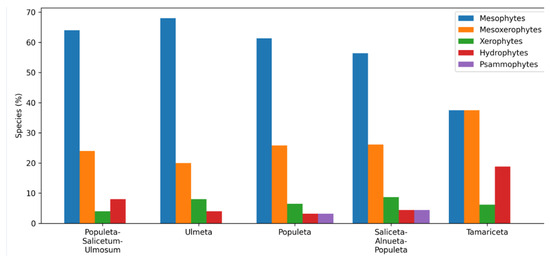
Figure 5 illustrates the comparative distribution of ecological groups among the five main tugai forest formation groups in Azerbaijan. Mesophytic species predominate in the Populeta—Salicetum—Ulmosum, Ulmeta, Populeta, and Saliceta—Alnueta—Populeta formation groups, whereas the Tamariceta formation group is characterized by relatively higher proportions of mesoxerophytic and hydrophytic species. These differences demonstrate variation in the ecological composition of the studied formation groups and indicate differences in habitat conditions across the Kura River floodplain.
Figure 5.
Comparative distribution of ecological groups (mesophytes, mesoxerophytes, xerophytes, hydrophytes, and psammophytes) among the five main tugai forest formation groups in Azerbaijan.
The predominance of mesophytic species in most formation groups suggests that the distribution of tugai vegetation is associated with relatively moist floodplain habitats. In contrast, the ecological composition of the Tamariceta formation group indicates adaptation to comparatively drier, more saline, and hydrologically variable environments. Similar ecological patterns have been reported for tugai forests of Central Asia, where groundwater level, soil moisture, and salinity are recognized as important environmental factors influencing vegetation composition (Zeng et al., [24]). Although these observations are consistent with the present results, the relationships were not quantitatively tested in this study and, therefore, should be interpreted as ecological patterns rather than direct causal relationships.
E. Tamariceta Formation Group
This formation group is represented by the associations Tamariceta ramosissima, Tamariceta hohenackeri, and Tamariceta meyeri.
The formation occurs in narrow strips along riverbanks within the plain tugai forests. A total of 16 vascular plant species were recorded in the phytocenosis (Table 5), including 1 tree species (6.2%), 3 shrub species (18.8%), 1 semi-shrub species (6.2%), 6 perennial herb species (37.5%), 1 biennial herb species (6.2%), and 4 annual herb species (25.0%).
Table 5.
Species composition and structural characteristics of the Tamariceta formation dominated by Tamarix ramosissima Ledeb. in the Kura riverside tugai forest.
According to the ecological analysis, phytocenosis comprises six mesophytic species (37.5%), six mesoxerophytic species (37.5%), three hydrophytic species (18.8%), and one xerophytic species (6.2%).
The dominant species of this formation group is Tamarix ramosissima, which reached an abundance of 3–4 points according to the Drude abundance scale. The first vegetation layer is composed of Tamarix ramosissima, accompanied by scattered individuals of Populus canescens and Lycium ruthenicum. The second layer is represented mainly by Salsola dendroides and Alhagi pseudoalhagi, whereas the third layer consists predominantly of herbaceous species, including Cynodon dactylon and Melilotus alba.
The total projective cover ranges from 60% to 80%. The relatively high proportion of mesoxerophytic and hydrophytic species distinguishes this formation group from the other tugai forest formations and reflects its occurrence under variable moisture conditions along the river floodplain.
Based on the classification of tugai forests distributed along the banks of the Kura River and in the Nakhchivan Autonomous Republic, together with the phytocenological characteristics of the studied formations, it is important to assess the current ecological condition of these forests, ensure their protection, implement conservation measures, and establish protective forest belts.
The Tamariceta formation distributed along the Araz River floodplain is shown in Figure 6.
Figure 6.
Tamariceta formation distributed along the Araz River floodplain in the Nakhchivan Autonomous Republic.
5. Conclusions
This study assessed the phytocenological structure, syntaxonomic diversity, and ecological characteristics of the tugai forest vegetation of Azerbaijan, with particular emphasis on the Kura River Basin and the Nakhchivan Autonomous Republic. The investigated tugai forests were characterized by high floristic diversity, a multi-layered vegetation structure, and clear differences in species composition and community structure among the identified vegetation units.
Application of the Braun—Blanquet phytosociological approach enabled a unified syntaxonomic assessment of the investigated tugai forests. Within this established methodological framework, the study distinguished one vegetation type, one subtype, one formation class, five formation groups, and fourteen associations, providing a comprehensive regional classification of the tugai forest vegetation in the study area.
The results demonstrated that the main tugai forest communities are dominated by species of the genera Populus, Salix, Ulmus, Alnus, and Tamarix. Differences in floristic composition, vegetation structure, and ecological spectra among the identified formation groups reflect the ecological heterogeneity of tugai vegetation across the investigated regions.
The classification presented in this study provides a consistent phytocenological framework for describing and comparing tugai forest communities of Azerbaijan and may serve as a reference for future vegetation surveys, syntaxonomic studies, and regional biodiversity assessments. The documented differentiation of plant communities contributes to a better understanding of the diversity and distribution of riparian tugai forest vegetation in the Kura River Basin and the Nakhchivan Autonomous Republic.
Author Contributions
Conceptualization, E.G. and S.A.; Methodology, E.G., S.A. and T.T.; Validation, E.G., T.T. and V.N.; Formal Analysis, S.A., N.A. and U.B.; Investigation, S.A., N.A. and U.B.; Resources, T.T. and V.N.; Data Curation, S.A. and N.A.; Writing—Original Draft Preparation, S.A.; Writing—Review and Editing, E.G., T.T., A.B. and V.N.; Visualization, N.A. and U.B.; Supervision, E.G.; Project Administration, E.G. and S.A. All authors have read and agreed to the published version of the manuscript.
Funding
This research did not receive any specific grant from funding agencies in the public, commercial, or not-for-profit sectors.
Data Availability Statement
The data presented in this study are available from the corresponding author upon reasonable request.
Conflicts of Interest
The authors declare no conflict of interest.
References
- Mammadov, G.S.; Asadov, K.S. Forest Ecology; Elm: Baku, Azerbaijan, 2010; p. 452. [Google Scholar]
- Anderegg, W.R.L.; Konings, A.G.; Trugman, A.T.; Yu, K.; Bowling, D.R.; Gabbitas, R.; Karp, D.S.; Pacala, S.; Sperry, J.S.; Sulman, B.N.; et al. Hydraulic Diversity of Forests Regulates Ecosystem Resilience During Drought. Nature 2018, 561, 538–541. [Google Scholar] [CrossRef] [Scilit] [PubMed]
- Bratu, I.; Dinca, L.; Constandache, C.; Murariu, G. Resilience and Decline: The Impact of Climatic Variability on Temperate Oak Forests. Climate 2025, 13, 119. [Google Scholar] [CrossRef] [Scilit]
- Salayev, M.E.; Babayev, M.P.; Jafarova, C.M.; Hasanov, V.H. Morphogenetic Profile of the Soils of Azerbaijan; Elm: Baku, Azerbaijan, 2004; p. 202. [Google Scholar]
- Treshkin, S.Y. The Tugai Forests of Floodplain of the Amudarya River: Ecology, Dynamics and Their Conservation. In Sustainable Land Use in Deserts; Breckle, S.W., Veste, M., Wucherer, W., Eds.; Springer: Berlin/Heidelberg, Germany, 2001. [Google Scholar] [CrossRef] [Scilit]
- Gurbanov, E.M. Vegetation of Azerbaijan; Elm: Baku, Azerbaijan, 2024; p. 536. [Google Scholar]
- Mammadov, G.; Khalilov, M. Forests of Azerbaijan (Current State, Anthropogenic Transformation and Restoration); Region Press LLC: Baku, Azerbaijan, 2022; p. 624. [Google Scholar]
- Gurbanov, E.M. Vegetation Map of Azerbaijan (Scale 1:600,000); Aerogeodesy and Cartography Agency of the Ministry of Ecology and Natural Resources: Baku, Azerbaijan, 2023; p. 1. [Google Scholar]
- Brown, M.B.; Morrison, J.C.; Schulz, T.T.; Cross, M.S.; Püschel-Hoeneisen, N.; Suresh, V.; Eguren, A. Using the Conservation Standards Framework to Address the Effects of Climate Change on Biodiversity and Ecosystem Services. Climate 2022, 10, 13. [Google Scholar] [CrossRef] [Scilit]
- Thevs, N.; Zerbe, S.; Schnittler, M.; Abdusalih, N.; Succow, M. Structure, Reproduction and Flood-Induced Dynamics of Riparian Tugai Forests at the Tarim River in Xinjiang, NW China. Forestry 2008, 81, 45–57. [Google Scholar] [CrossRef] [Scilit]
- Flora of Azerbaijan; Academy of Sciences of Azerbaijan SSR: Baku, Azerbaijan, 1961; Volume VIII.
- Askerov, A.M. The World of Plants; Teass-Press: Baku, Azerbaijan, 2016; p. 444. [Google Scholar]
- Gurbanov, E.M.; Jabbarov, M.T. Geobotany; Baku University Publishing House: Baku, Azerbaijan, 2017; p. 320. [Google Scholar] [CrossRef] [Scilit] [PubMed]
- Braun-Blanquet, J. Zur Wertung der Gesellschaftstreue in der Pflanzensoziologie. Vierteljahrsschr. Naturf. Ges. Zür. 1925, 70, 122–149. [Google Scholar]
- Braun-Blanquet, J. Pflanzensociologie; Wien: New York, NY, USA, 1964; p. 865. [Google Scholar]
- Braun-Blanquet, J. Pflanzensoziologie. Grundzüge der Vegetationskunde; Springer: Berlin/Heidelberg, Germany, 1928; p. 330. [Google Scholar]
- Ivanova, N. Global Overview of the Application of the Braun-Blanquet Approach in Research. Forests 2024, 15, 937. [Google Scholar] [CrossRef] [Scilit]
- Prilipko, L.I. Forest Vegetation of Azerbaijan; Publishing House of the Academy of Sciences of the Azerbaijan SSR: Baku, Azerbaijan, 1954; p. 471. [Google Scholar]
- Prilipko, L.I. Plant Cover of Azerbaijan; Elm: Baku, Azerbaijan, 1970; p. 170. [Google Scholar]
- Red Book of the Republic of Azerbaijan; Ministry of Ecology and Natural Resources: Baku, Azerbaijan, 2023; p. 1214.
- Schulz, C.; Kleinschmit, B. Monitoring the Condition of Wetlands in the Syr Darya Floodplain—How Healthy Are the Tugai Forests in Kazakhstan? Forests 2023, 14, 2305. [Google Scholar] [CrossRef] [Scilit]
- Dimeyeva, L.; Islamgulova, A.; Permitina, V.; Ussen, K.; Kerdyashkin, A.; Tsychuyeva, N.; Salmukhanbetova, Z.; Kurmantayeva, A.; Iskakov, R.; Imanalinova, A.; et al. Plant Diversity and Distribution Patterns of Populus pruinosa Schrenk (Salicaceae) Floodplain Forests in Kazakhstan. Diversity 2023, 15, 797. [Google Scholar] [CrossRef] [Scilit]
- Aslanova, S. Ecology; Azerbaijan State Pedagogical University: Baku, Azerbaijan, 2025; p. 347. [Google Scholar]
- Zeng, Y.; Zhao, C.; Kundzewicz, Z.W.; Lv, G. Distribution Pattern of Tugai Forests Species Diversity and Their Relationship to Environmental Factors in an Arid Area of China. PLoS ONE 2020, 15, e0232907. [Google Scholar] [CrossRef] [Scilit] [PubMed]

Disclaimer/Publisher’s Note: The statements, opinions and data contained in all publications are solely those of the individual author(s) and contributor(s) and not of MDPI and/or the editor(s). MDPI and/or the editor(s) disclaim responsibility for any injury to people or property resulting from any ideas, methods, instructions or products referred to in the content. |
© 2026 by the authors. Licensee MDPI, Basel, Switzerland. This article is an open access article distributed under the terms and conditions of the Creative Commons Attribution (CC BY) license.