


Abstract
Silverfish (order Zygentoma) comprise a diverse group of primitively wingless insects, several of which have evolved myrmecophilous associations with ants (Hymenoptera: Formicidae). However, the diversity and host relationships of ant-associated Zygentoma in the Balkans remain insufficiently documented. In this study, we surveyed ant nests across Bulgaria to assess the taxonomic diversity, host specificity and distribution of silverfish associated with ants. We identified five species: Atelura montana (Stach, 1946), Proatelurina pseudolepisma (Grassi, 1887), Neoasterolepisma balcanicum (Stach, 1922), N. cf. crassipes (Escherich, 1905) and N. wasmanni (Moniez, 1894). These species were recorded from nests of ants belonging to the genera Bothriomyrmex, Aphaenogaster, Pheidole, Messor, Tetramorium, Formica and Lasius. Patterns of host association ranged from generalist species occurring in nests of multiple ant genera, such as Atelura montana, to more specialised taxa largely restricted to a single host genus, as observed in Neoasterolepisma species. Our findings expand the current understanding of myrmecophilous Zygentoma in the Balkans. Three species—Proatelurina pseudolepisma, Neoasterolepisma cf. crassipes, and Neoasterolepisma wasmanni—are reported here for the first time in Bulgaria, bringing the total number of recorded silverfish species in the country to 11. Moreover, our results highlight the ecological importance of ant nests as microhabitats that support highly specialised arthropod communities.
1. Introduction
Ant colonies represent complex, resource-rich microhabitats that support a remarkable diversity of associated organisms, ranging from microorganisms and fungi to numerous arthropods and even some vertebrates that exploit ant nests for shelter or protection [1,2,3,4,5]. Arthropods, the most diverse group of animals, have evolved close relationships with ants, a phenomenon broadly known as myrmecophily [4,6]. Their social integration ranges from opportunistic coexistence to highly specialised symbioses, in which organisms rely on ant colonies for feeding, grooming, or transportation [4,7]. Ant nests promote the development of diverse communities of commensal and parasitic ant guests providing relatively stable environmental conditions, including buffered temperature and humidity, as well as an abundance of organic material [8,9]. Thus, ant colonies act as important ecological niches, harboring diverse and unique symbiotic assemblages.
Among insects, primitively wingless silverfish of the order Zygentoma include several lineages that have developed close associations with ants. While many representatives of this order inhabit soil, leaf litter, caves, or synanthropic environments, certain taxa live inside ant nests and show morphological (oval-fusiform or limuloid shape, reduced terminal filaments, modified setae), chemical (mimicry and camouflage) and behavioural (quick escape, shedding scales in grasping) adaptations that facilitate their coexistence with host ants and minimize their aggression [10,11,12]. Myrmecophilous silverfish typically exploit resources available within ant nests, such as organic debris, prey remains, and food obtained through trophallaxis or kleptoparasitism [13].
Ant-associated silverfish in the Palaearctic region belong to the families Lepismatidae and Nicoletiidae, which include several genera occasionally or obligately recorded from ant nests. Among them, species of Neoasterolepisma, Atelura and Proatelurina are particularly well known for their associations with ants [14]. These taxa have been reported from nests of numerous ant genera across Europe and the Mediterranean basin [11,15]. However, the ecological relationships between silverfish and their host ants remain incompletely understood. In particular, host specificity varies considerably among species: while some taxa occur in nests of multiple ant genera, others are more specialised and restricted to a narrower range of hosts [11]. Understanding these host–symbiont relationships is essential for clarifying the ecological and evolutionary dynamics of myrmecophilous communities.
Despite increasing attention to ant-associated arthropods, the diversity and distribution of myrmecophilous Zygentoma remain poorly documented in many parts of southeastern Europe. The Balkan Peninsula represents one of the major centres of biodiversity and endemism in Europe [16,17], yet data on ant-associated silverfish are still limited and often based on scattered historical records. In Bulgaria, knowledge of Zygentoma associated with ant nests is based on only a few sources, and only two species, Neoasterolepisma balcanicum (Stach, 1922) (Lepismatidae) and Atelura montana (Stach, 1946) (Nicoletiidae), have been reported so far [18,19,20]. Together with six non-myrmecophilous species recorded from the country [18,19,20,21], this highlights the limited knowledge of the Bulgarian silverfish fauna and suggests that additional species are likely to be discovered through more thorough research.
The present study aims to improve the understanding of myrmecophilous Zygentoma in Bulgaria through a survey of silverfish inhabiting ant nests across the country. Specifically, we document the taxonomic diversity of ant-associated silverfish, identify their host ants, and examine distribution patterns.
2. Materials and Methods
Silverfish were collected by the second author, unless otherwise stated, during surveys of ants and their myrmecophiles in Bulgaria. The explored nests of various ant species were located mainly under stones or bark and, more rarely, by digging into parts of the nest debris to find fast-hiding specimens. Specimens were collected using an aspirator or forceps and were subsequently preserved in ethanol. The material was deposited in the entomological collection of the University of Córdoba (UCO) and in the working collection of A.L.-G. in the Zoological Collection of Sofia University (BFUS). Identification of several silverfish specimens was carried out by the first author after dissection. Dissected specimens were mounted on slides using Tendeiro medium and examined under a light microscope. Identification of Zygentoma was carried out using the most recent keys to species for the Mediterranean and South Europe [15,22], together with the original species descriptions and comparative material. A distribution map was created using QGIS v. 3.40 [23] and Database of Global Administrative Areas [24] shapefile.
3. Results
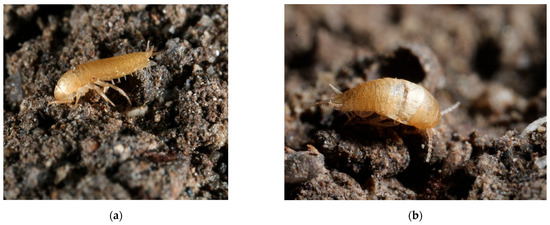
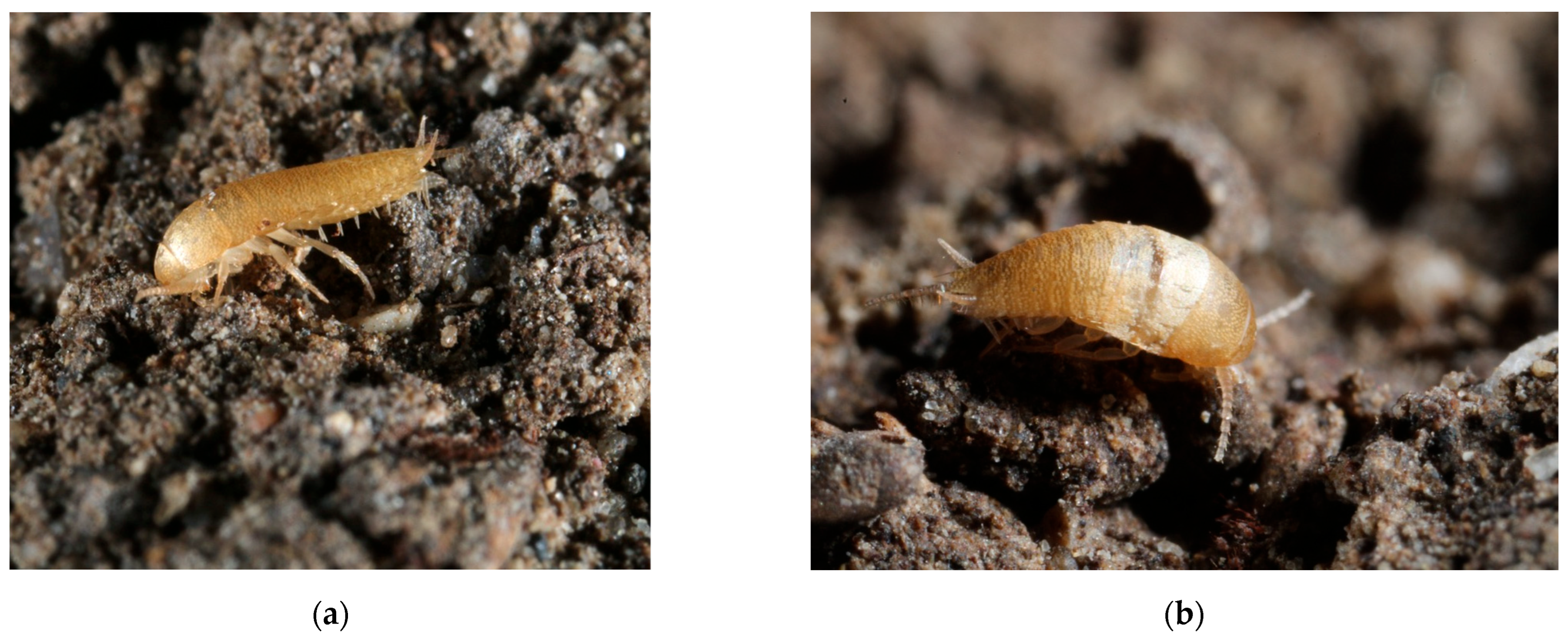
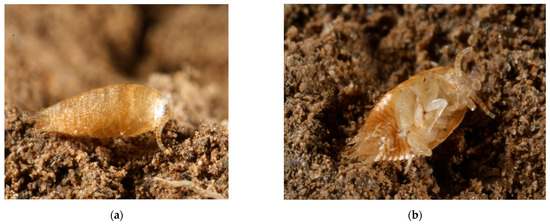
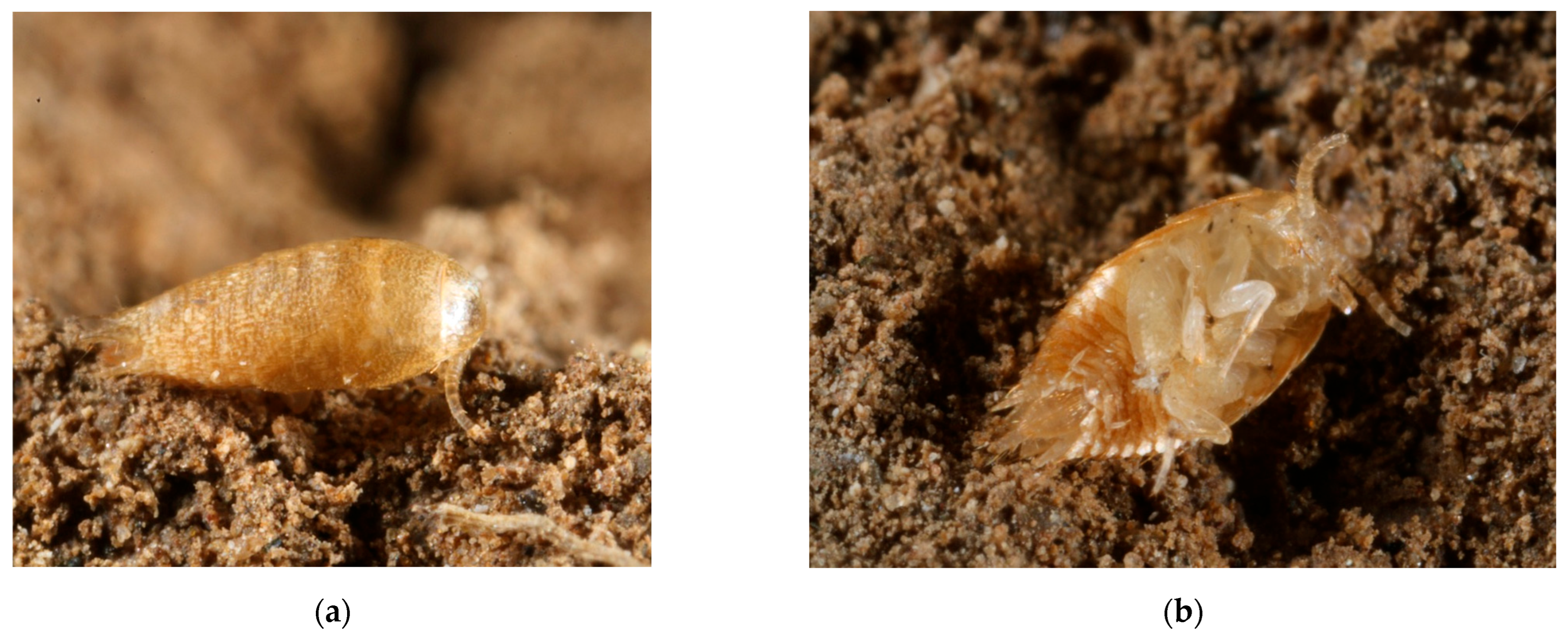
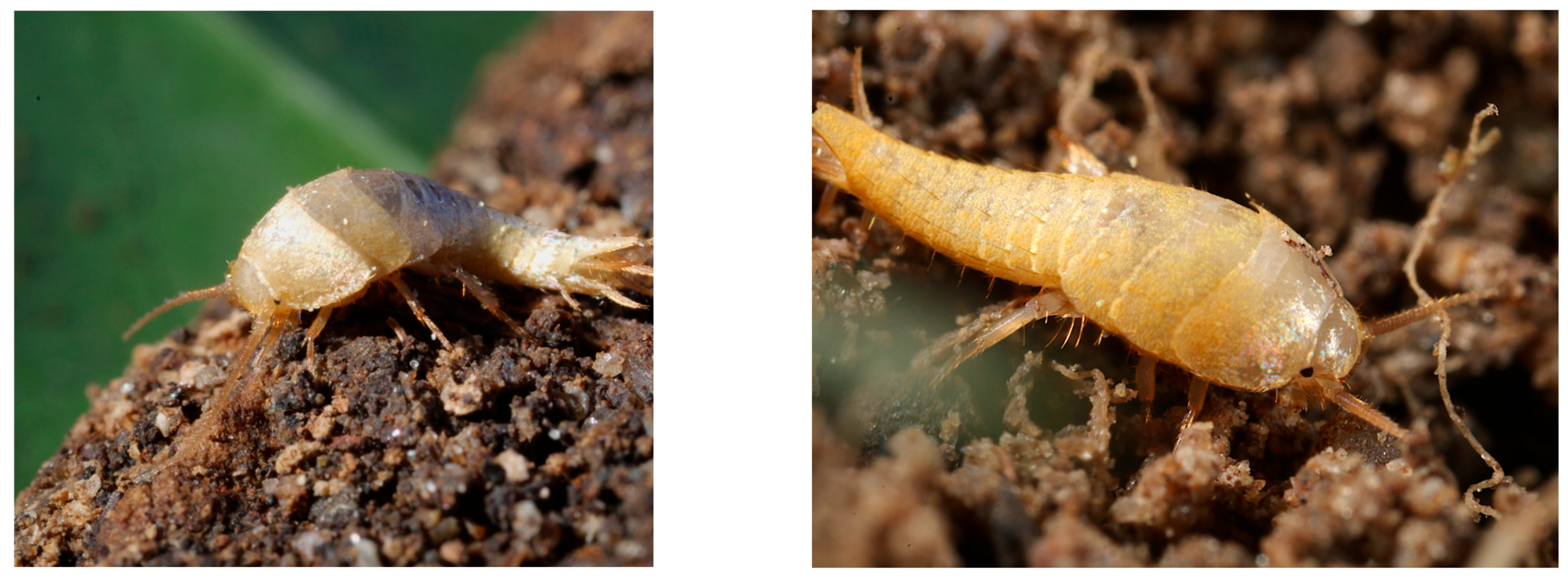
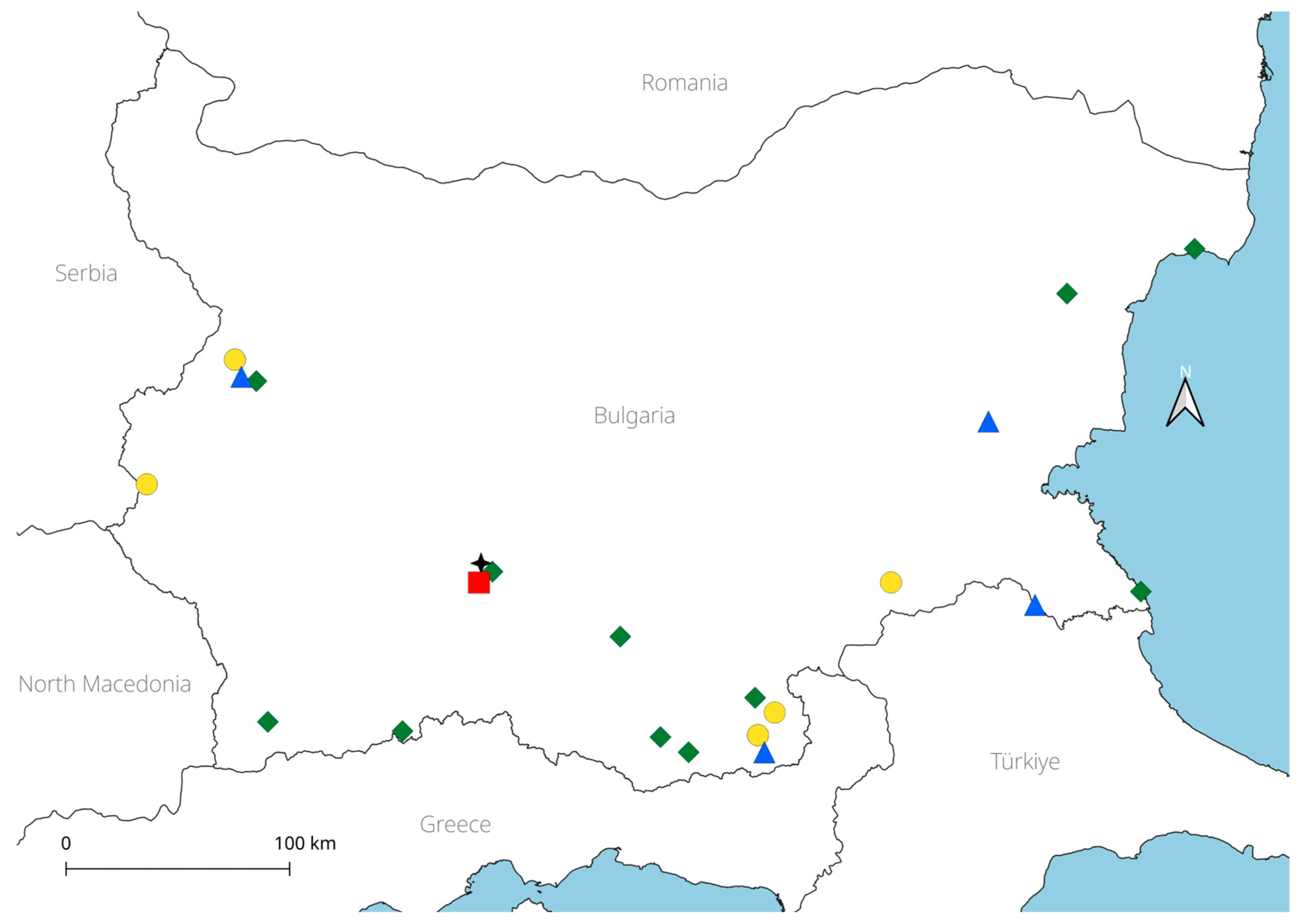
This study is based on material of myrmecophilous Zygentoma collected from 28 nest samples across different geographic regions of Bulgaria (Table 1). Sampling was non-systematic and based on haphazard encounters during field surveys without prior targeting of specific host taxa. The scattered distribution of localities reflects this exploratory approach and field accessibility. The specimens were identified as belonging to five morphospecies. Three females of Proatelurina and one female of Neoasterolepisma were assigned to the closest taxa, P. pseudolepisma and N. crassipes, respectively, as females possess limited diagnostic characters for reliable identification. Host specificity of myrmecophilous Zygentoma from Bulgaria, based on the new data, is summarised in Table 2. Photographs in situ of some representatives are shown in Figure 1, Figure 2 and Figure 3, and a map showing the distribution of all species from this study is presented in Figure 4.
Table 1.
Material examined of myrmecophilous Zygentoma from Bulgaria.
Table 2.
Host specificity of myrmecophilous Zygentoma from Bulgaria based on new data ("+" indicates presence in the nest of the species).
Figure 1.
Atelura montana: (a) lateral view with visible abdominal styli on segments II–IX; (b) dorsolateral view. Photos: I. Gjonov.
Figure 2.
Proatelurina pseudolepisma: (a) dorsolateral view; (b) ventral view with visible three pairs of abdominal styli on segments VII–IX. Photos: I. Gjonov.
Figure 3.
Neoasterolepisma species from Bulgaria: general view. Photos: I. Gjonov.
Figure 4.
Distribution map of the newly established myrmecophilous Zygentoma species in Bulgaria: Atelura montana (green diamond); Proatelurina pseudolepisma (black four-pointed star); Neosterolepisma balcanicum (yellow circle); N. cf. crassipes (red square); N. wasmanni (blue triangle).
Host specificity of myrmecophilous Zygentoma from Bulgaria, based on the new data, is summarised in Table 2, which lists their associated ant subfamilies and genera.
4. Discussion
The present study expands knowledge of myrmecophilous Zygentoma in Bulgaria and frames their distribution and host associations within the broader Mediterranean region. Five species of ant-associated silverfish were recorded from diverse ant hosts in Bulgaria, including taxa previously unreported in the country (Proatelurina pseudolepisma, Neoasterolepisma cf. crassipes, N. wasmanni), underscoring the incompleteness of earlier faunistic data. With six additional non-myrmecophilous species, the recorded Bulgarian silverfish fauna totals 11 species, a number that likely underestimates the full diversity of both myrmecophilous and non-myrmecophilous taxa in the country.
4.1. Biogeographic and Regional Context
All recorded taxa conform to broader Mediterranean and southern European distributional patterns. Atelura montana occurs across the Balkan Peninsula, though its exact range remains imprecisely defined [15]. Proatelurina pseudolepisma is strictly Mediterranean from the Iberian Peninsula to Türkiye, whereas Neoasterolepisma balcanicum is largely restricted to southern Europe and adjacent Anatolia, matching earlier accounts of Mediterranean-centred Zygentoma diversity. Neoasterolepisma crassipes and N. wasmanni also exhibit broad Mediterranean distributions extending to North Africa and the Black Sea coast. This pattern aligns with recent assessments highlighting the Mediterranean Basin as a major biodiversity hotspot for ant-associated silverfish, harbouring a high proportion of the world’s myrmecophilous Lepismatidae and several endemic taxa.
The Balkan Peninsula’s complex topography, climatic gradients, and role as a refugial region during past climatic fluctuations have promoted diversification and endemism in many insect groups, including ants and their associated symbionts [16,17,25,26]. The region has also been identified as one of the major Pleistocene refugia for Zygentoma [27]. These geographic and ecological features likely contribute to the presence of diverse myrmecophilous silverfish assemblages in Bulgaria and adjacent regions, though many areas remain poorly sampled.
4.2. Local Distribution in Bulgaria
Comparison with historical records reveals that several species are more widespread in Bulgaria than previously known. Atelura montana was historically recorded from multiple mountainous and lowland regions; our new records extend its known range across additional geographic zones and a wider array of ant hosts. Neoasterolepisma balcanicum likewise shows a broad distribution, corroborated by multiple new localities and consistent associations with Messor ants. The first country records of N. cf. crassipes and N. wasmanni further demonstrate the overlooked diversity of ant-associated Zygentoma in Bulgaria. In addition, Proatelurina pseudolepisma is recorded from the Bessapari Hills, which represents the first and currently the only known locality for the species in the country. The Bessapari Hills constitute a low hilly region in southern Bulgaria characterised by a sub-Mediterranean climatic influence, with dry grasslands and xerothermic habitats. These environmental conditions correspond well with the broader distribution pattern of the species in southeastern Europe and the Mediterranean region, where it is typically associated with warm, relatively arid landscapes and ant nests occurring in open habitats.
4.3. Host Specificity Patterns
Host association patterns observed here largely mirror those reported in Mediterranean myrmecophile studies. Atelura montana has been recorded from nests of various ant genera, although published information on these associations is limited, and its degree of host generalism remains poorly documented. Proatelurina pseudolepisma, the only known species from the genus, is also considered a generalist species across the Mediterranean [11,15,28]; in Bulgaria, however, our current records are limited to Tetramorium nests, and further sampling will be needed to confirm its full range of local host associations, as well as the possibility of parthenogenesis, as suggested by other studies [28]. In contrast, Neoasterolepisma spp. showed stronger associations with Messor ants, consistent with previous evidence that seed-harvesting Messor species support rich symbiotic communities, likely due to their large, stable nests and abundant organic resources [11,29,30,31].
Although these patterns align with broader regional trends, the limited number of samples and the frequent reliance on female or juvenile specimens constrain definitive statements about the degree of host specificity for some taxa.
5. Conclusions
Despite recent progress, myrmecophilous Zygentoma in the Balkan Peninsula remain insufficiently documented compared to other European regions. The recent comprehensive checklist of Mediterranean ant-associated silverfish highlights the Mediterranean Basin’s importance but also notes that knowledge remains patchy and unevenly distributed across countries.
The rich and partially endemic ant fauna of the Balkans offers significant potential for discovering additional myrmecophilous taxa and clarifying host–symbiont relationships. Systematic surveys across diverse habitats, combined with modern taxonomic frameworks and integrative methods, will be crucial to resolving species boundaries, updating distributional data, and understanding the ecological and evolutionary dynamics of these symbioses.
Author Contributions
Conceptualization, A.L.-G.; methodology, R.M.-B., and A.L.-G.; validation, R.M.-B., and A.L.-G.; formal analysis, A.L.-G.; investigation, R.M.-B., A.L.-G., and I.G.; resources, R.M.-B., and A.L.-G.; data curation, R.M.-B., and A.L.-G.; writing—original draft preparation, A.L.-G.; writing—review and editing, R.M.-B., A.L.-G., and I.G.; visualization, I.G.; supervision, R.M.-B., and A.L.-G.; project administration, A.L.-G.; funding acquisition, A.L.-G. All authors have read and agreed to the published version of the manuscript.
Funding
This research was funded by the National Science Fund of the Republic of Bulgaria, grant No. KP-06-N-51/6 from 11 November 2021.
Institutional Review Board Statement
Not applicable.
Data Availability Statement
The original contributions presented in this study are included in the article. Further inquiries can be directed to the corresponding author.
Conflicts of Interest
The authors declare no conflicts of interest.
References
- Rödel, M.-O.; Brede, C.; Hirschfeld, M.; Schmitt, T.; Favreau, P.; Stöcklin, R.; Wunder, C.; Mebs, D. Chemical camouflage—A frog’s strategy to co-exist with aggressive ants. PLoS ONE 2013, 8, e81950. [Google Scholar] [CrossRef] [Scilit] [PubMed]
- Delgado-Baquerizo, M.; Eldridge, D.J.; Hamonts, K.; Singh, B.K. Ant colonies promote the diversity of soil microbial communities. ISME J. 2019, 13, 1114–1118. [Google Scholar] [CrossRef] [Scilit] [PubMed]
- de Lima Barros, A.; López-Lozano, J.L.; Lima, A.P. The frog Lithodytes lineatus (Anura: Leptodactylidae) uses chemical recognition to live in colonies of leaf-cutting ants of the genus Atta (Hymenoptera: Formicidae). Behav. Ecol. Sociobiol. 2016, 70, 2195–2201. [Google Scholar] [CrossRef] [Scilit]
- Parmentier, T.; De Laender, F.; Bonte, D. The topology and drivers of ant–symbiont networks across Europe. Biol. Rev. 2020, 95, 1664–1688. [Google Scholar] [CrossRef] [Scilit] [PubMed]
- Hölldobler, B.; Kwapich, C.L. The Guests of Ants: How Myrmecophiles Interact with Their Hosts; Belknap Press of Harvard University Press: Cambridge, MA, USA, 2022; 576p. [Google Scholar]
- Parmentier, T. Guests of Social Insects. In Encyclopedia of Social Insects; Starr, C., Ed.; Springer: Cham, Switzerland, 2007; pp. 1–15. [Google Scholar]
- Hölldobler, B.; Wilson, E.O. The Ants; Belknap Press of Harvard University Press: Cambridge, MA, USA, 1990; 732p. [Google Scholar]
- Wheeler, W.M. Ants: Their Structure, Development and Behavior; Columbia University Press: New York, NY, USA, 1910; 663p. [Google Scholar]
- Parmentier, T.; Dekoninck, W.; Wenseleers, T. Metapopulation processes affecting diversity and distribution of myrmecophiles associated with red wood ants. Basic Appl. Ecol. 2015, 16, 553–562. [Google Scholar] [CrossRef] [Scilit]
- Parmentier, T.; Van Kerckvoorde, M.; Dekoninck, W. First record of the myrmecophilous silverfish Atelura formicaria Heyden, 1855 in Belgium (Zygentoma: Nicoletiidae). Bull. Soc. R. Belge Entomol. 2013, 149, 27–28. [Google Scholar]
- Molero-Baltanás, R.; Gaju-Ricca, M.; Bach de Roca, C. Symbiotic relationships between silverfish (Zygentoma: Lepismatidae, Nicoletiidae) and ants (Hymenoptera: Formicidae) in the Western Palaearctic. A quantitative analysis of data from Spain. Myrmecol. News 2017, 24, 107–122. [Google Scholar]
- Parmentier, T.; Gaju-Ricart, M.; Wenseleers, T.; Molero-Baltanás, R. Chemical and behavioural strategies along the spectrum of host specificity in ant-associated silverfish. BMC Zool. 2022, 7, 23. [Google Scholar] [CrossRef] [Scilit]
- von Beeren, C.; Schulz, S.; Hashim, R.; Witte, V. Acquisition of chemical recognition cues facilitates integration into ant societies. BMC Ecol. 2011, 11, 30. [Google Scholar] [CrossRef] [Scilit]
- Molero-Baltanás, R.; Gaju-Ricart, M.; Robla, J. Diversity hidden in nests: Worldwide account of nidicolous silverfish (Insecta: Zygentoma). Insectes Soc. 2025, 72, 243–267. [Google Scholar] [CrossRef] [Scilit]
- Robla, J.; Gaju-Ricart, M.; Molero-Baltanás, R. Assessing the Diversity of Ant-Associated Silverfish (Insecta: Zygentoma) in Mediterranean Countries: The Most Important Hotspot for Lepismatidae in Western Palaearctic. Diversity 2023, 15, 635. [Google Scholar] [CrossRef] [Scilit]
- Griffiths, H.I.; Kryštufek, B.; Reed, J.M. (Eds.) Balkan Biodiversity: Pattern and Process in the European Hotspot; Springer: Dordrecht, The Netherlands, 2004. [Google Scholar] [CrossRef] [Scilit]
- Hewitt, G.M. Mediterranean Peninsulas: The Evolution of Hotspots. In Biodiversity Hotspots; Zachos, F., Habel, J., Eds.; Springer: Berlin/Heidelberg, Germany, 2011. [Google Scholar] [CrossRef] [Scilit]
- Silvestri, F. Contributto alla conoscenza dei Lepismatidae e Machilidae (Thysanura) della Bulgaria. Mitt. Königl. Naturwiss. Inst. Sofia 1942, 15, 27–32. [Google Scholar]
- Stach, J. Lepidoatelura montana, n. g., n. sp., the myrmecophilous Lepismid from the Balkan. Práce Muz. Přír. 1946, 3, 1–10. [Google Scholar]
- Naumova, M.; Tsvetanov, T.; Vassilev, V.; Antonova, V.; Teofilova, T.M.; Trifonov, T.; Vagalinski, B.; Georgiev, I.; Indzhov, S. Review of Zygentoma in Bulgaria with report of four new species. In Proceedings of the 3rd International Electronic Conference on Diversity, 15–17 October 2024; MDPI: Basel, Switzerland, 2024. [Google Scholar]
- Kozaroff, G. Eine neue Nicoletiaart in Bulgarien. Bull. Soc. Entomol. Bulg. 1939, 10, 45–50. [Google Scholar]
- Molero-Baltanás, R.; Fanciulli, P.P.; Frati, F.; Carapelli, A.; Gaju-Ricart, M. New data on the Zygentoma (Insecta, Apterygota) from Italy. Pedobiologia 2000, 44, 320–332. [Google Scholar] [CrossRef] [Scilit]
- QGIS Development Team. QGIS Geographic Information System, Version 3.40; QGIS Association: Grüt, Switzerland. Available online: https://www.qgis.org (accessed on 25 January 2026).
- GADM. Database of Global Administrative Areas, Version 4.1; GADM: Dorchester, MA, USA. Available online: https://gadm.org (accessed on 25 January 2026).
- Kociński, M.; Chobanov, D.P.; Grzywacz, B. New insights into the genetic diversity of the Balkan bush-crickets of the Poecilimon ornatus group (Orthoptera: Tettigoniidae). Arthropod Syst. Phylogeny 2022, 80, 243–259. [Google Scholar]
- Simonsen, T.J.; Djernæs, M.; Nielsen, O.F.; Olsen, K. The Grasshopper Paradigm in damselflies: Evidence for phalanx-like postglacial recolonization of Europe from a Balkan refugium in Platycnemis pennipes Pallas (Odonata: Zygoptera: Platycnemidae). Arthropod Syst. Phylogeny 2023, 81, 1019–1029. [Google Scholar] [CrossRef] [Scilit]
- Mendes, L.F. Taxonomy of Zygentoma and Microcoryphia: Historical overview, present status and goals for the new millennium: Proceedings of the Xth International Colloquium on Apterygota, České Budějovice 2000: Apterygota at the Beginning of the Third Millennium. Pedobiologia 2002, 46, 225–233. [Google Scholar] [CrossRef] [Scilit]
- Molero-Baltanás, R.; Gaju-Ricart, M.; Bach de Roca, C.; Mendes, L.F. Description of Atelura valenciana n. sp. (Insecta, Zygentoma) and distribution and myrmecophilic relationships of Proatelurina pseudolepisma in the Iberian peninsula. Miscellània Zool. 1998, 21, 101–117. [Google Scholar]
- Boulton, A.M.; Jaffee, B.A.; Scow, K.M. Effects of a common harvester ant (Messor andrei) on richness and abundance of soil biota. Appl. Soil Ecol. 2003, 23, 257–265. [Google Scholar] [CrossRef] [Scilit]
- Uppstrom, K.A.; Klompen, H. Mites (Acari) associated with the desert seed harvester ant, Messor pergandei (Mayr). Psyche 2011, 2011, 974646. [Google Scholar] [CrossRef] [Scilit]
- Cassar, T.; Lapeva-Gjonova, A.; Mifsud, D. The Intranidal Myrmecophiles of the Maltese Islands with Notes on Messor Nests as Repositories of Biodiversity. Insects 2023, 14, 45. [Google Scholar] [CrossRef] [Scilit]

Disclaimer/Publisher’s Note: The statements, opinions and data contained in all publications are solely those of the individual author(s) and contributor(s) and not of MDPI and/or the editor(s). MDPI and/or the editor(s) disclaim responsibility for any injury to people or property resulting from any ideas, methods, instructions or products referred to in the content. |
© 2026 by the authors. Licensee MDPI, Basel, Switzerland. This article is an open access article distributed under the terms and conditions of the Creative Commons Attribution (CC BY) license.