


Abstract
This study aims to reveal the rhizosphere bacteriome patterns, biomarkers, and metabolic functions of dominant plants in the water-level fluctuation zone (WLFZ) of the Three Gorges Reservoir through comparative analyses with the non-rhizosphere bacteriome. The present study showed that a total of 4546–5011 amplicon sequence variants (ASVs) were identified in both rhizosphere and non-rhizosphere soils of Artemisia annua L. and Persicaria lapathifolia (L.) Delarbre. Pseudomonadota and Acidobacteriota were the most abundant bacterial phyla in both rhizosphere and non-rhizosphere bacteriomes. The α-diversity indices of microbial communities in the non-rhizosphere soils were lower than those in the rhizosphere soils associated with the two dominant plant species. Distinctive key biomarkers were successfully identified for both rhizosphere and non-rhizosphere bacterial assemblages, and these biomarkers exhibited a strong plant-specific pattern. Functional annotation revealed that metabolic processes, genetic information processing, and two core functional traits (chemoheterotrophy and aerobic chemoheterotrophy) accounted for the highest relative abundance within the bacteriomes. However, notable discrepancies were observed in the subdominant functional traits between the rhizosphere and non-rhizosphere bacteriomes. Overall, the present study brings novel insight into the plant-microbe interactions in the WLFZ of large reservoirs under the extreme environmental conditions.
1. Introduction
China has constructed the world’s largest dam, the Three Gorges Dam, primarily for flood control and hydropower generation. The construction of this dam has resulted in the formation of a 349-square-kilometer water-level fluctuation zone (WLFZ) [1,2]. Within this WLFZ, the water level fluctuates periodically and aseasonally between 145 and 175 m, imposing intense submergence stress on the vegetation therein [3]. Compared with the vegetation prior to the dam’s construction, the current vegetation in the WLFZ has undergone a significant transformation [4]. Currently, common plant species in the area include Cynodon dactylon [5], Alternanthera philoxeroides, Xanthium strumarium, Bidens tripartita, Abutilon theophrasti, Artemisia annua [6], and Persicaria lapathifolia (L.) Delarbre, etc.
Dominant plants are crucial to the protection and restoration of the WLFZ of the Three Gorges Reservoir. Previous studies have suggested that the rhizosphere microorganisms of these plants provide significant support for their persistence and growth in the WLFZ [7,8]. For instance, our research group investigated the composition, diversity, and potential metabolic functions of rhizosphere microorganisms associated with two typical dominant plant species (Rumex acetosa L. and Oxybasis glauca) in the WLFZ of the Three Gorges Reservoir and concluded that rhizosphere microorganisms are essential for their host dominant plants to adapt to strong waterlogging stress [9]. Rhizosphere microorganisms play a pivotal role in organic matter decomposition, nutrient provision, and biogeochemical cycling of elements [10,11]. They are capable of transforming nutrients that are unavailable for plant uptake into bioavailable forms, enabling host plants to acclimate to various environmental stresses and facilitating their growth. Consequently, a growing body of research has documented that rhizosphere microorganisms are particularly crucial for plants growing under adverse environmental conditions [12,13]. However, until now, the understanding of rhizosphere bacteriome features and patterns in the WLFZ remains very limited, especially for two common dominant plants (Artemisia annua L. and Persicaria lapathifolia (L.) Delarbre).
In the present study, the 16s rRNA high-throughput sequencing method was adopted to explore the bacteriomes in the rhizosphere and non-rhizosphere soils of two dominant plants (A. annua L. and P. lapathifolia (L.) Delarbre), and the key biomarkers and metabolic functions in their bacterial communities were identified, which will give a theoretical basis for the conservation of dominant plants and screening the microorganisms that are beneficial to the restoration of vegetation in the WLFZ of large reservoirs.
2. Materials and Methods
2.1. Sampling of Rhizosphere and Non-Rhizosphere Soils
Two independent areas were selected for the collection of soil samples in May 2025, one at Fengjie County, Chongqing City, China (31°4′54″ N, 109°36′38″ E) for A. annua L., and one at Wanzhou District, Chongqing City, China (30°55′23″ N, 108°31′35″ E) for P. lapathifolia (L.) Delarbre. Rhizosphere soils were collected by shaking the roots to retain the soil adhering to the roots. Non-rhizosphere soils were obtained from about 50 cm away from the WLFZ dominant plants. The soil samples were marked using a combination of numbers and letters that represent the plant type, sampling site number, rhizosphere, and non-rhizosphere. For A. annua L., the labels are as follows: AAR-1, rhizosphere soil at site 1; AAR-2, rhizosphere soil at site 2; AAR-3, rhizosphere soil at site 3; AAN-1, non-rhizosphere soil at site 1; AAN-2, non-rhizosphere soil at site 2; AAN-3, non-rhizosphere soil at site 3. For P. lapathifolia (L.) Delarbre, the labels are PLR-1, rhizosphere soil at site 1; PLR-2, rhizosphere soil at site 2; PLR-3, rhizosphere soil at site 3; PLN-1, non-rhizosphere soil at site 1; PLN-2, non-rhizosphere soil at site 2; and PLN-3, non-rhizosphere soil at site 3. Before returning to the laboratory, these soil samples were placed in a liquid nitrogen tank. Afterwards, the soil samples were stored in a −80 °C freezer.
2.2. DNA Extraction, Amplification, and 16S Sequencing
DNA was extracted from rhizosphere and non-rhizosphere soils of two typical dominant plants in the WLFZ with the CTAB method [14]. 1% agarose gel electrophoresis was adopted for determining the DNA concentration, with a concentration of 1 ng/µL obtained. V3–V4 regions of the bacterial 16S rRNA gene were PCR-amplified by 341F (5′-CCTAYGGGRBGCASCAG-3′) and 806R (5′-GGACTACNNGGGTATCTAAT-3′) primers in a reaction system containing approximately 10 ng template DNA, following the thermal cycling program: initial pre-denaturation at 98 °C for 1 min; 30 cycles of denaturation at 98 °C for 10 s; annealing at 50 °C for 30 s; extension at 72 °C for 30 s, and a final extension at 72 °C for 5 min. The sequencing was carried out on an Illumina NovaSeq platform (Illumina, Inc., San Diego, CA, USA) at the Shenzhen Wekemo corporation, Shenzhen, China.
2.3. Data Treatment and Analysis
The QIIME2 system was used to filter and process sequencing data [15]. The DADA2 plugin of QIIME2 was used to produce ASVs by performing quality control (filtering), denoising (correcting sequences with sequencing errors), merging, and removing chimeric sequences on all the original sequences of all samples. Species classification of ASVs was carried out based on the sklearn algorithm using the SILVA138.2 (16 S) database with a classification confidence threshold of 0.7. Biomarkers with significant differences between rhizosphere and non-rhizosphere soil sample groups were identified by linear discriminant analysis effect size (LEFSe) [16] with an LDA threshold of 4 or larger and a standardized scaling factor of 1,000,000. Five α-diversity indices were estimated according to our previous studies [8,9], which include Chao1, Shannon, Faith_pd, Simpson, and Observed_features. Microbial β diversity analysis was performed with SIMPER analysis. PICRUSt2 [17] was adopted to investigate the potential bacterial functions of rhizosphere or non-rhizosphere microbes with the KEGG database [18] in 1 October 2025. In addition, FAPROTAX software (version 1.2.6) [19] was also used to identify the potential bacterial functions of these microbes.
3. Results
3.1. Composition and Structure of Rhizospheric and Non-Rhizospheric Bacteriomes
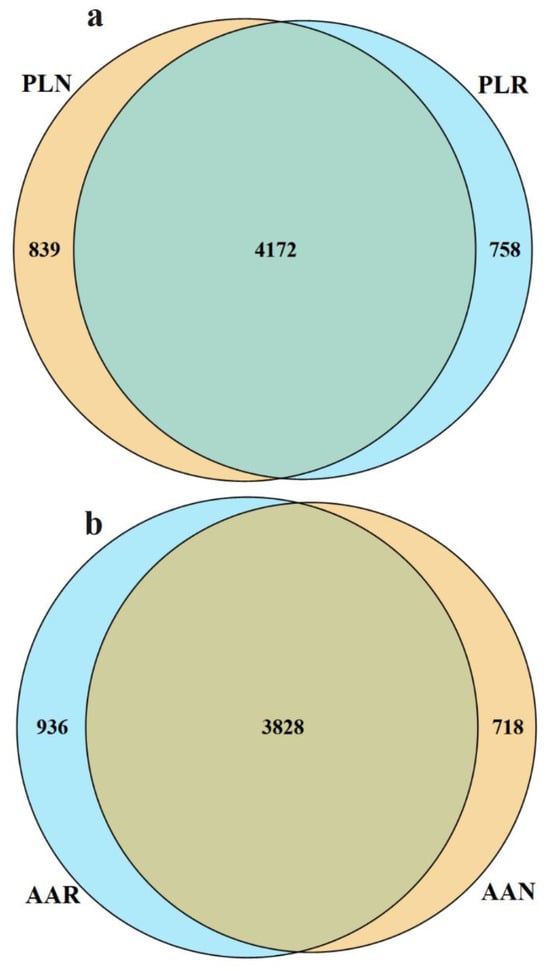
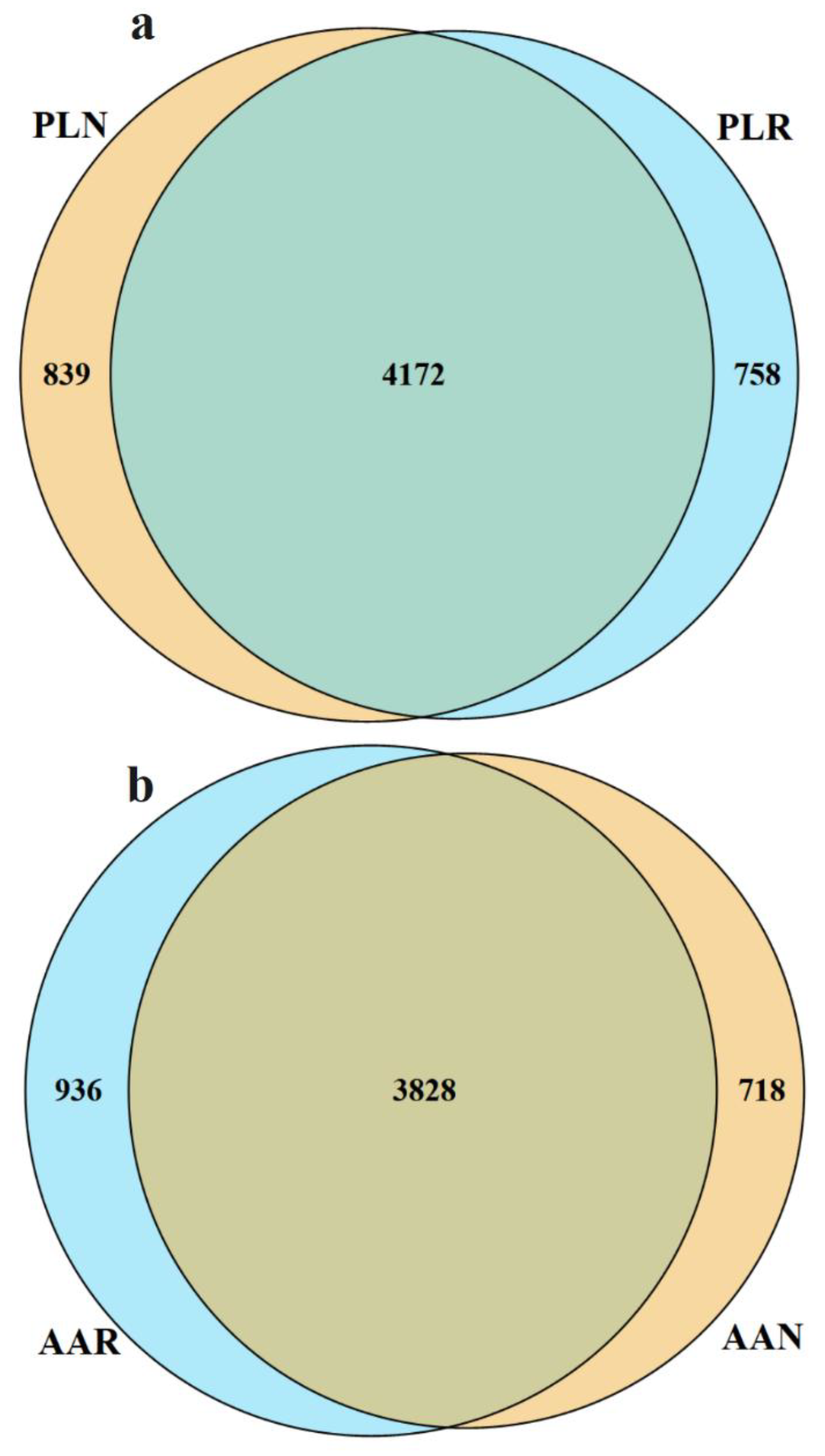
The annotation analyses showed that 5011 ASVs and 4930 ASVs were present in the non-rhizosphere bacteriome (PLN) and rhizosphere bacteriome (PLR) in P. lapathifolia (L.) Delarbre, respectively, whilst 4546 ASVs and 4764 ASVs were examined in the non-rhizosphere bacteriome (AAN) and rhizosphere bacteriome (AAR) in A. annua L. (Table 1). The same phylum number was found in both PLN and PLR (42), as well as in both AAN and AAR (37). The phylum number in rhizosphere and non-rhizosphere soil of A. annua L. was lower than that of P. lapathifolia (L.) Delarbre. The number of classes, orders, and families in rhizosphere soil was more than that in the non-rhizosphere of A. annua L., respectively. However, they are just opposite for P. lapathifolia (L.) Delarbre. This can be further confirmed by a Venn plot, where the unique ASVs were obviously more in the rhizosphere than in the non-rhizosphere in A. annua L. (936 vs. 718), and less in the rhizosphere of P. lapathifolia (L.) Delarbre (758 vs. 839) than its non-rhizosphere (Figure 1). Their common ASVs in A. annua L. or P. lapathifolia (L.) Delarbre were 3828 and 4172, respectively. Rarefaction curves constructed using the Shannon index showed that the line trends to be flat after 20,000, which suggested the sequencing depth was reasonable (Figures S1 and S2).
Table 1.
Number of taxa and amplicon sequence variants (ASVs) in the rhizosphere and non-rhizosphere bacteriomes.
Figure 1.
Venn diagram of rhizosphere and non-rhizosphere bacteriomes of P. lapathifolia (L.) Delarbre (a) and A. annua L. (b).
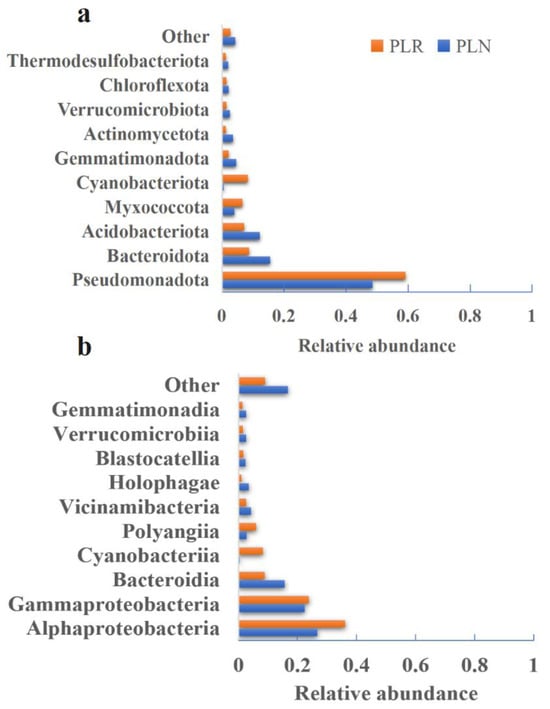
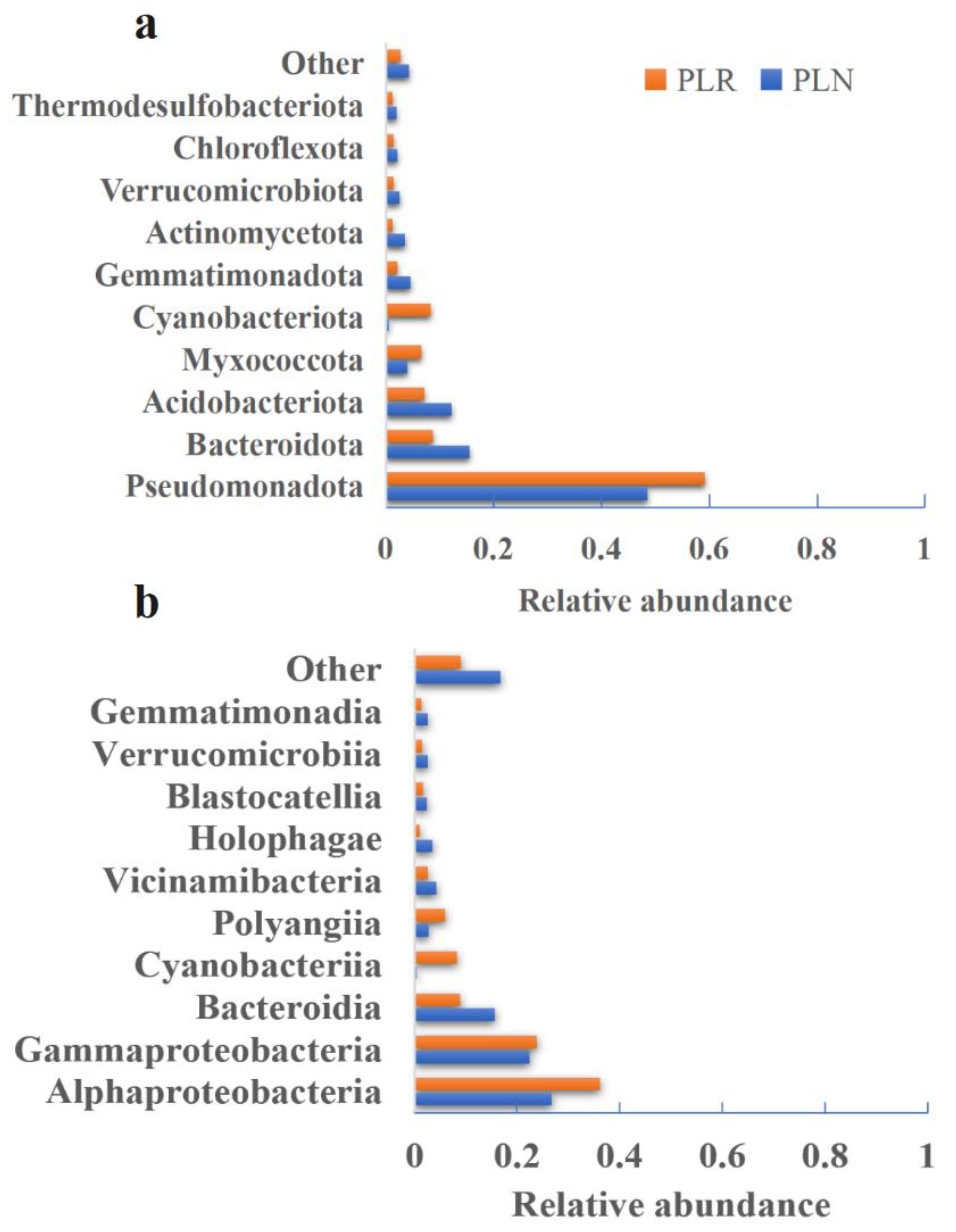
The barplot reveals distinct phylum-level partitioning between PLN and PLR groups (Figure 2a). Pseudomonadota dominated PLR samples (59.13%), exceeding its abundance in PLN (48.55%). Conversely, Acidobacteriota thrived in PLN (12.26% vs. 7.14% in PLR). Bacteroidota was enriched in PLN (15.55% vs. 8.73% in PLR), while Cyanobacteriota exclusively colonized PLR (8.25% vs. 0.58% in PLN). The most abundant classes in both groups were Alphaproteobacteria, Gammaproteobacteria, and Bacteroidia (Figure 2b). The PLR group exhibited a higher relative abundance of Alphaproteobacteria (approximately 36.10% in PLR vs. 26.70% in PLN) and Gammaproteobacteria (approximately 23.82% in PLR vs. 22.39% in PLN). In contrast, the PLN group showed a higher abundance of Bacteroidia (approximately 15.72% in PLN vs. 8.85% in PLR). The Burkholderiales order dominated in both groups with a similar relative abundance (PLN: 16.45%; PLR: 16.05%) (Figure S3a). The relative abundance of the Sphingomonadales order also exhibited a similar trend between PLR (12.94%) and PLN (14.55%). The composition of the bacterial community at the family level showed Sphingomonadaceae was the most dominant family in the two groups (PLN and PLR) (Figure S3b), accounting for the largest proportion (16.56% for PLN; 14.45% for PLR), followed by Chitinophagaceae and Nitrosomonadaceae. Although Chitinophagaceae remained the second dominant component in the PLR group, its relative abundance (6.11%) decreased compared to the PLN group (14.42%). The other top 10 families, including Comamonadaceae, Paracoccaceae, Xanthobacteraceae, Leptolyngbyaceae, Haliangiaceae, Gemmatimonadaceae, and Lysobacteraceae, had a relative abundance of <5.0%. The “other” group accounted for a very high proportion in the bacterial communities of PLN (49.72%) and PLR (48.58%). PLN exhibited higher diversity with enriched genera of Sphingomonas (19.65%) and Flavisolibacter (15.15%) compared to PLR, where the relative abundance of these two genera decreased to 15.05% and 3.40%, respectively (Figure S3c).
Figure 2.
The relative abundance of rhizosphere and non-rhizosphere bacteriomes at the phylum (a) and class (b) levels from P. lapathifolia (L.) Delarbre.
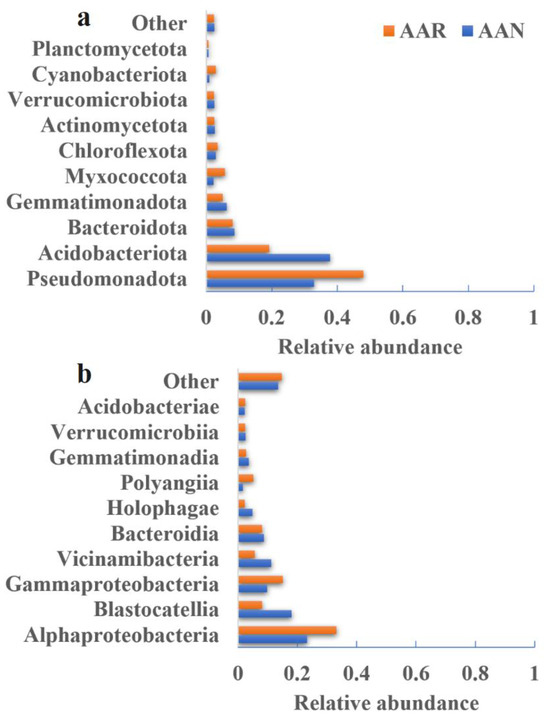
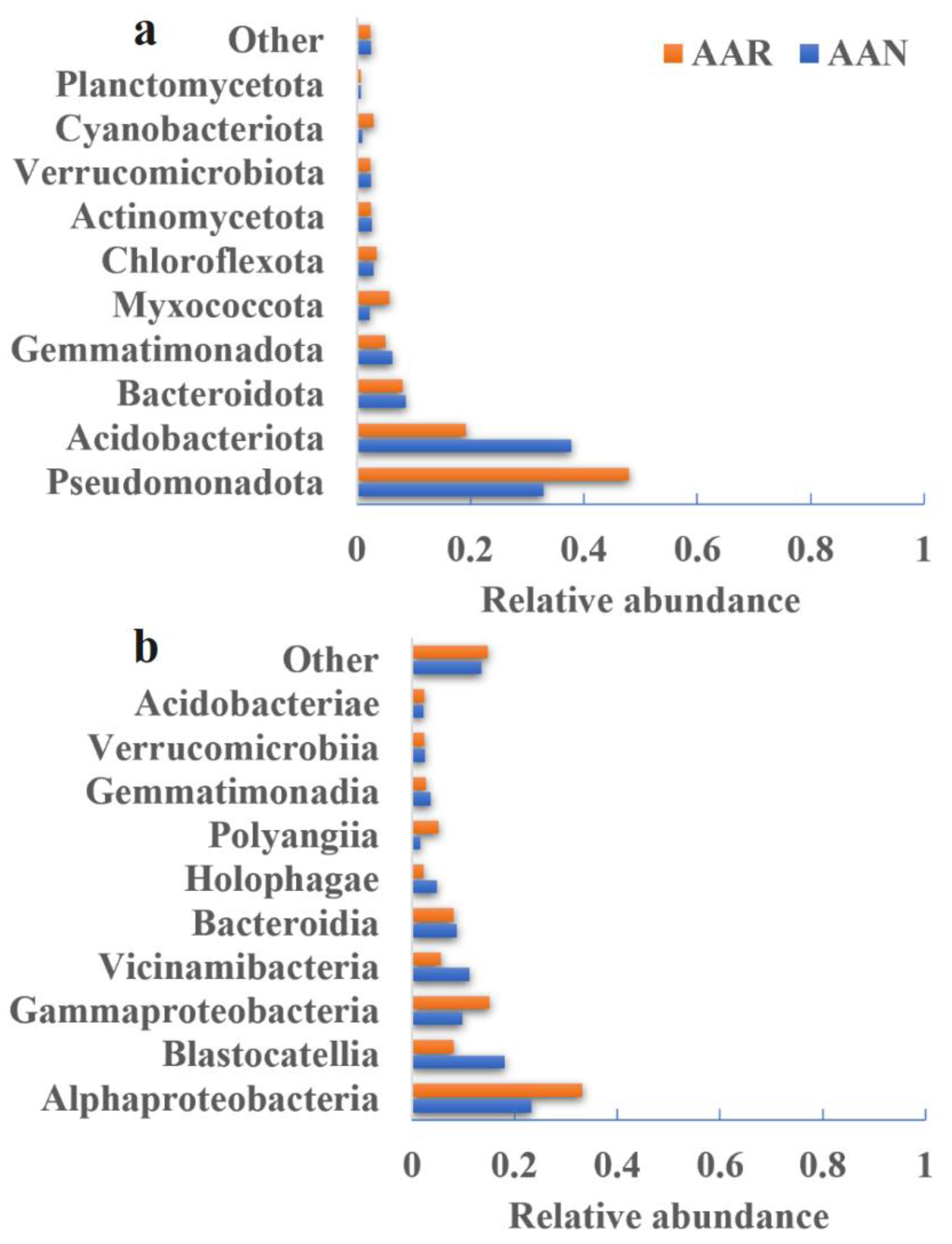
In addition to P. lapathifolia (L.) Delarbre, the present study also investigated the rhizosphere and non-rhizosphere bacteriome structure of another dominant plant (A. annua L.). Phylum-level community structures of AAN and AAR groups are shown in Figure 3a. In AAR, Pseudomonadota dominated (47.94%), followed by Acidobacteriota (19.28%). In AAN, the bacterial community was characterized by a high abundance of Acidobacteriota (37.73%), with Pseudomonadota (32.94%) present as a subdominant phylum. In the rhizosphere soil, Alphaproteobacteria dominated (33.19%), followed by Gammaproteobacteria (15.11%) and Blastocatellia (8.07%) at the class level (Figure 3b). Unlike the AAR, AAN was dominated by Alphaproteobacteria (23.35%). Notably, Blastocatellia and Vicinamibacteria were increased to higher levels in AAN (>11%). Sphingomonadales was observed to be the most abundant order in both AAR and AAN groups (Figure S4a). However, the second most abundant orders were largely different between them: Pyrinomonadales (13.92%) and Vicinamibacterales (11.56%) for AAN; Hyphomicrobiales (8.27%) and Burkholderiales (7.60%) for AAR. Sphingomonadaceae was the dominant group in both AAN and AAR communities at the family level (Figure S4b), accounting for 16.68% in AAN and 19.91% in AAR, serving as a core supporting group in the community structure. Pyrinomonadaceae (16.32%), Chitinophagaceae (8.18%), and Vicinamibacteraceae (8.47%) were the secondary dominant families in the AAN group, maintaining a relative abundance of >8%. This is not true for AAR, where these microbes were at a low abundance of <6%. The core dominant groups overlap at the genus level, with Other (>45%) and Sphingomonas (>27%) being the shared core groups between the AAN and AAR groups, collectively accounting for over 72% of the total community abundance (Figure S4c).
Figure 3.
The relative abundance of rhizosphere and non-rhizosphere bacteriomes at the phylum (a) and class (b) levels from A. annua L.
3.2. Alpha and Beta Diversity
Alpha diversity was quantified by the diversity indices of Chao1, Shannon, Faith_pd, Simpson, and Observed_features (Table 2), as performed in our previous studies [8,9]. For P. lapathifolia (L.) Delarbre, these five indices were generally higher in the rhizosphere than in the non-rhizosphere soil. Interestingly, this situation was also similar for A. annua L., where all these indices were lower in the non-rhizosphere than those in the rhizosphere.
Table 2.
Alpha diversity indices of rhizosphere and non-rhizosphere bacteriomes.
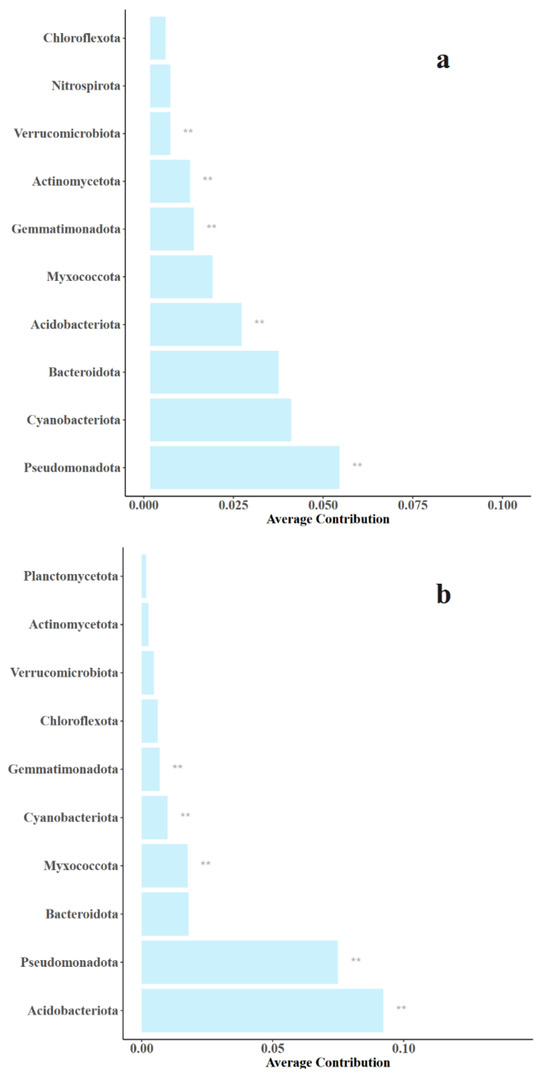
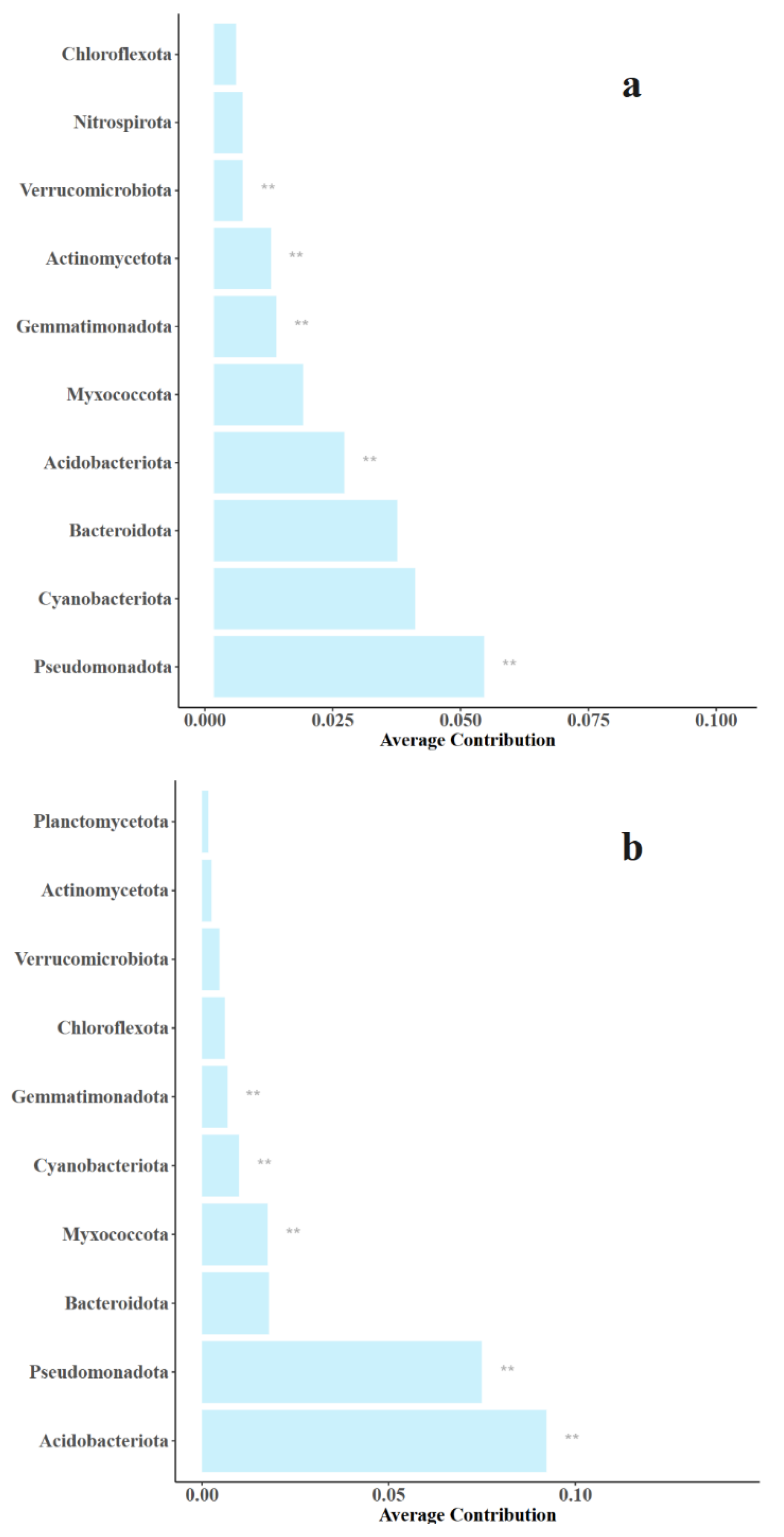
SIMPER analysis was carried out to detect taxa contributing to β-diversity differences between the rhizosphere and non-rhizosphere groups. The top 10 phyla contributing to the differences between PLN and PLR groups are shown in Figure 4a. Among them, Pseudomonadota exhibited the highest average contribution (0.053, p < 0.01), followed by Cyanobacteriota (0.039, p > 0.05) and Bacteroidota (0.036, p > 0.05). However, only five phyla in these top phyla showed statistically significant contributions (p = 0.0014): Pseudomonadota, Acidobacteriota, Gemmatimonadota, Actinomycetota, and Verrucomicrobiota. The top 10 phyla contributing to differences between AAN and AAR groups are shown in Figure 4b. Acidobacteriota (average contribution: 0.09) and Pseudomonadota (0.07) were the primary drivers of dissimilarity (both p < 0.01). Significant contributions were also observed for Myxococcota, Cyanobacteriota, and Gemmatimonadota (all with p < 0.01). Collectively, these five phyla accounted for >80% of the observed intergroup variation.
Figure 4.
β-diversity differences between rhizosphere and non-rhizosphere bacteriomes of P. lapathifolia (L.) Delarbre (a) and A. annua L. (b) based on SIMPER analysis. “**” denotes p < 0.01.
3.3. Different Biomarkers Between the Rhizosphere and Non-Rhizosphere Bacteriomes
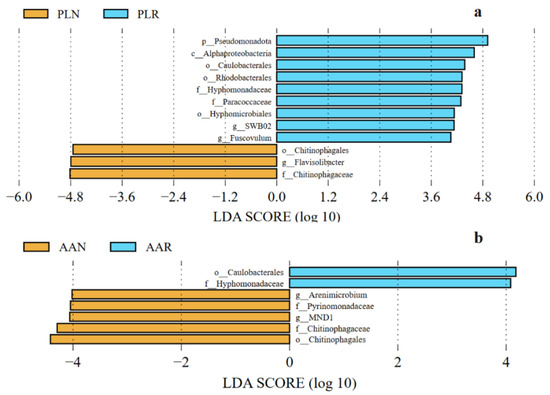
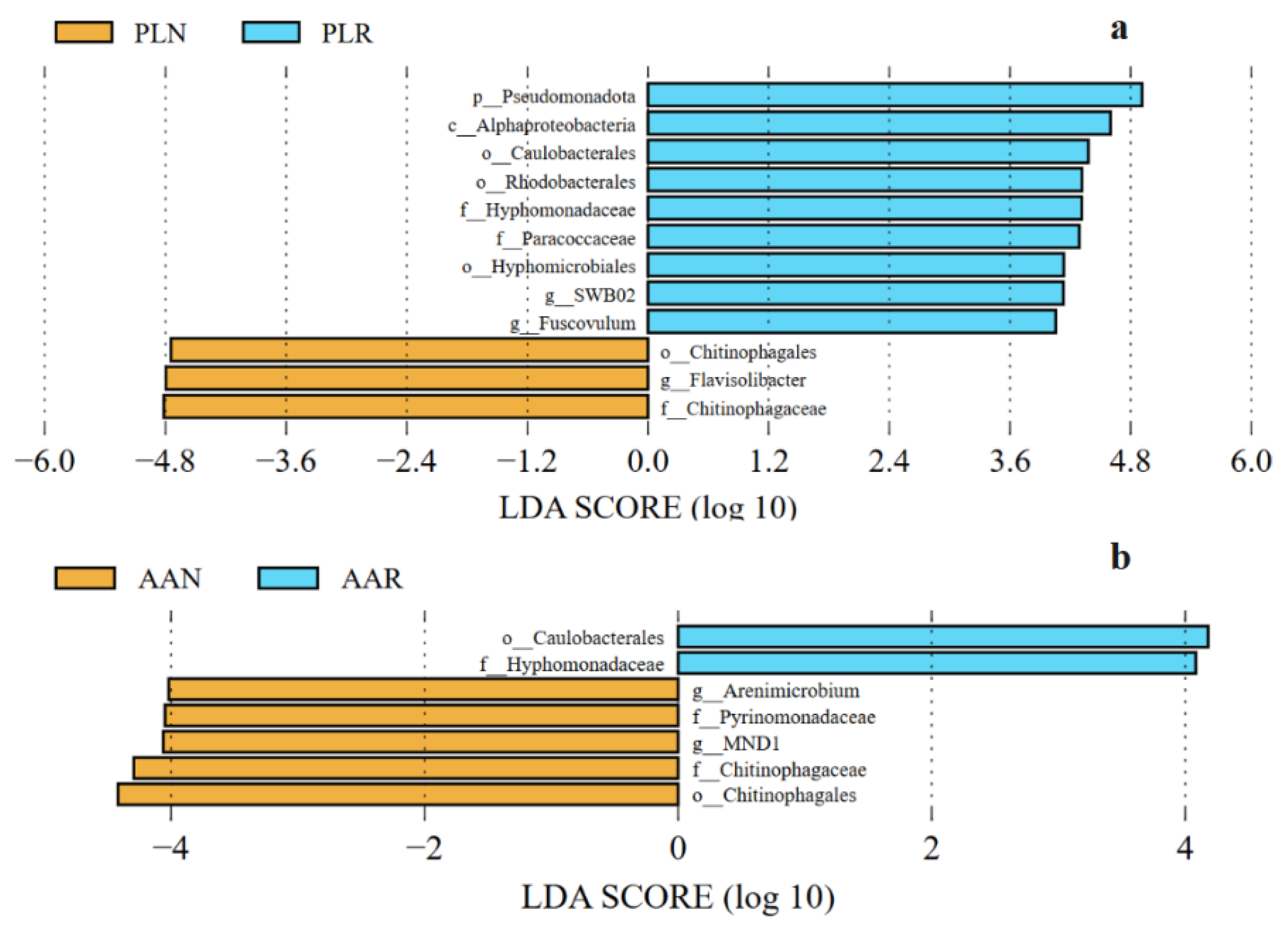
Significant biomarkers between the rhizosphere and non-rhizosphere bacteriomes were identified, with the threshold for the logarithmic LDA score being set to ≥4.0. The PLN group showed higher enrichment of o__Chitinophagaceae, f__Chitinophagaceae, and g__Flavisolibacter. The PLR group was enriched in p__Pseudomonadota, g__Fuscovulum, g__SWB02, o__Hyphomicrobiales, f__Paracoccaceae, f__Hyphomonadaceae, o__Rhodobacterales, o__Caulobacterales, and c__Alphaproteobacteria, with the phylum p__Pseudomonadota (LDA = 4.9) representing the most discriminative biomarker (Figure 5a).
Figure 5.
LEfSe analysis between rhizosphere and non-rhizosphere bacteriomes of P. lapathifolia (L.) Delarbre (a) and A. annua L. (b).
To further investigate plant-specific biomarker differences, A. annua L. was also analyzed for comparison. LEfSe analysis revealed distinct microbial signatures between the AAN and AAR groups (Figure 5b). Specifically, the Caulobacterales order and Hyphomonadaceae family were significantly enriched in the AAR group (LDA scores: −4.2 and −4.1, respectively). Differently, the AAN group exhibited enrichment of multiple taxa, including the Arenimicrobium genus (LDA = 4.0), Pyrinomonadaceae family (LDA = 4.0), MND1 genus (LDA = 4.1), Chitinophagales order (LDA = 4.4), and Chitinophagaceae family (LDA = 4.3).
3.4. Functional Profiles of Bacteriomes
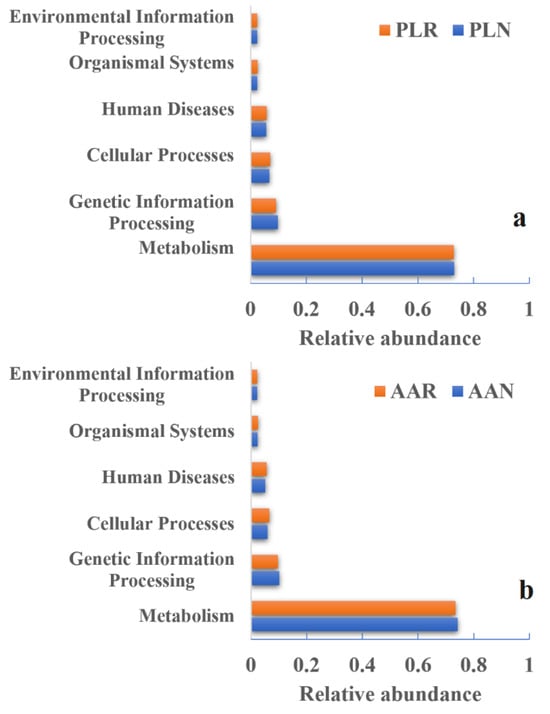
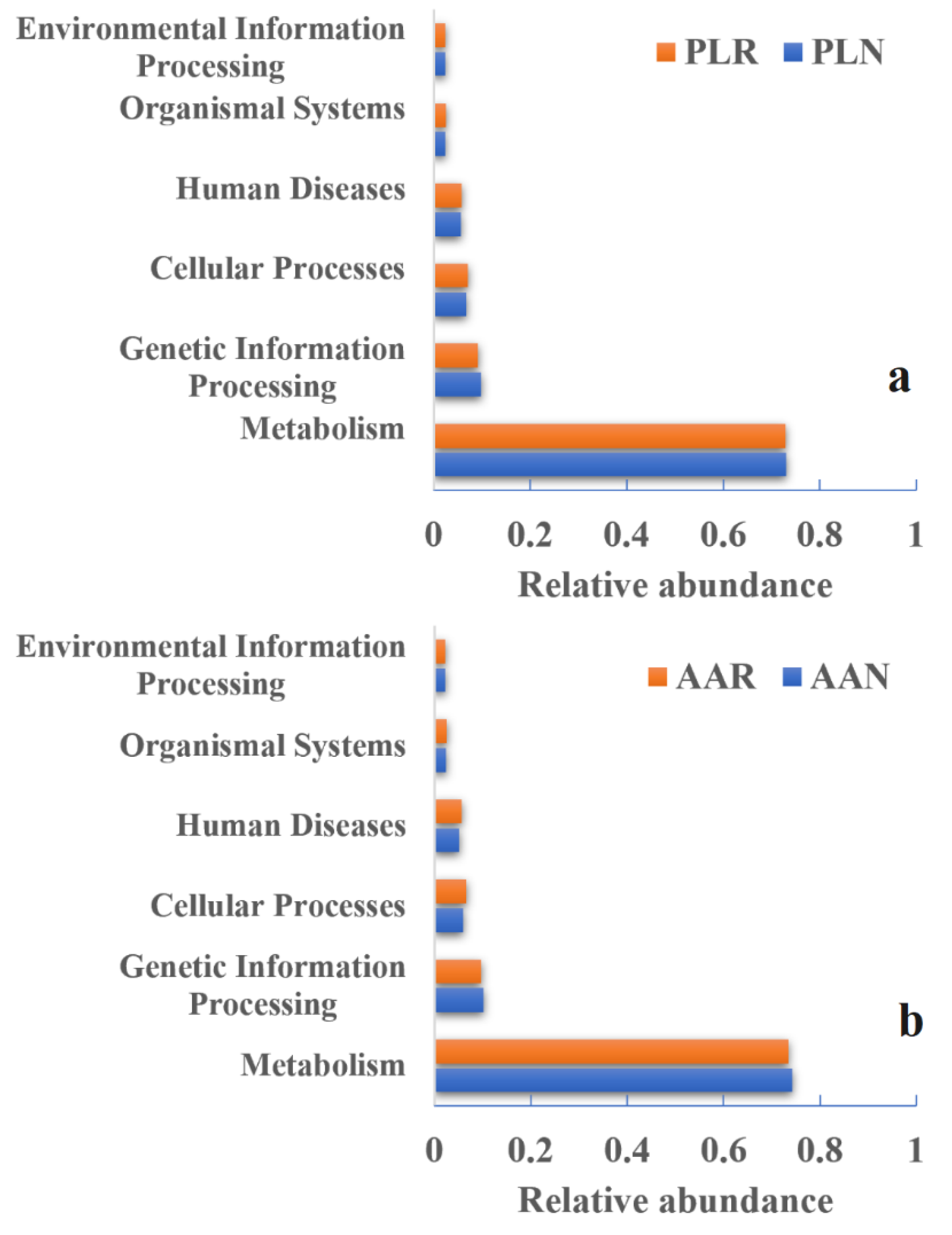
PICRUSt2 software was used to explore the functional profiles of bacterial communities in both rhizosphere and non-rhizosphere soils. The KEGG analysis showed that metabolism was the dominant functional category in both groups, accounting for 73.01% in PLN and 72.82% in PLR (Figure 6a). Genetic information processing represented the second-largest category (PLN: 9.76%; PLR: 9.25%). The relative abundances of cellular processes and human diseases were 6.79% and 5.62% in PLN, respectively, and 7.14% and 5.85% in PLR, respectively. Organismal systems and environmental information processing were minor functional categories (relative abundance for each <2.60%). Similarly, the dominant KEGG L1 level functional category across both AAN and AAR groups from another dominant plant, A. annua L., was metabolism, accounting for 74.17% and 73.42% of total abundance, respectively (Figure 6b). Genetic information processing was the second-largest functional type in the bacterial communities of AAN (10.13%) or AAR (9.67%). Cellular processes, human diseases, organismal systems, and environmental information processing were four minor functional categories in both AAN and AAR groups with a highly similar relative abundance, respectively: 6.01% vs. 6.56%; 5.11% vs. 5.58%; 2.39% vs. 2.48%; 2.18% vs. 2.29%.
Figure 6.
KEGG L1 level functions of rhizosphere and non-rhizosphere bacteriomes involved in metabolism, genetic information processing, cellular processes, human diseases, organismal systems, and environmental information processing from P. lapathifolia (L.) Delarbre (a) and A. annua L. (b).
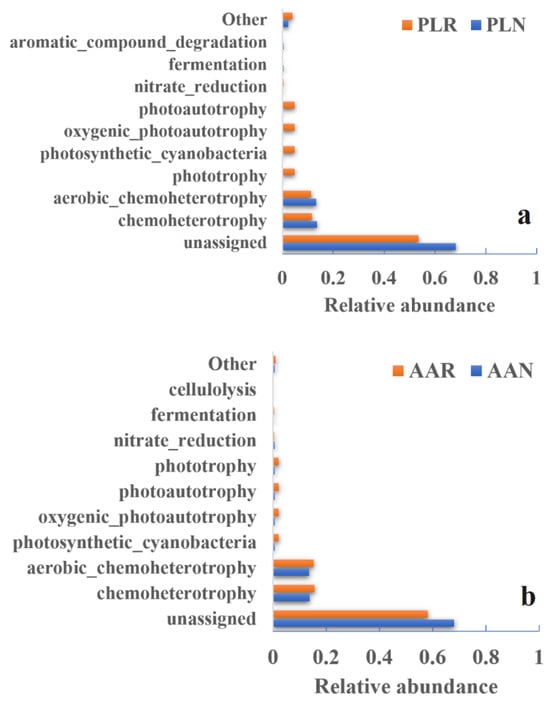
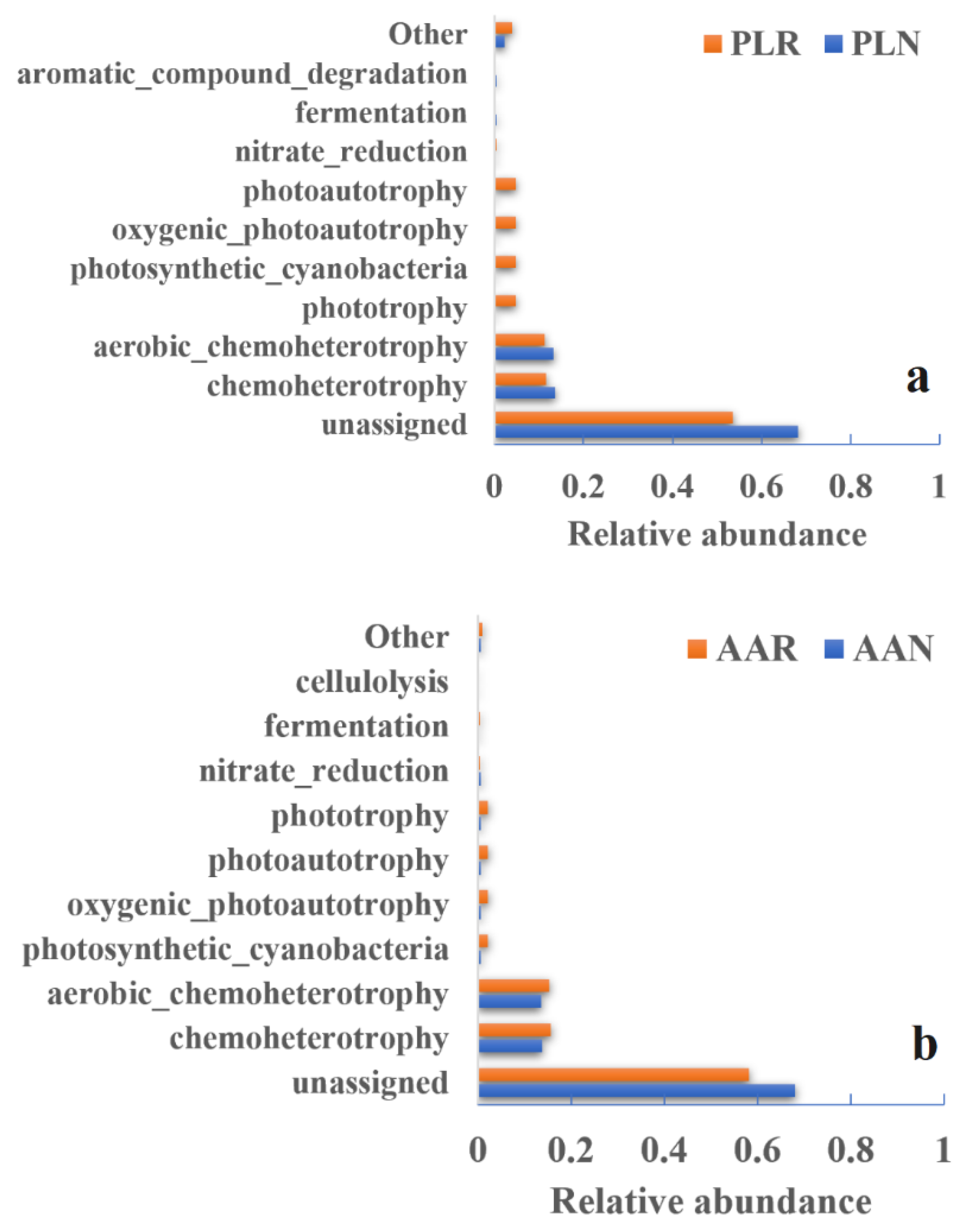
Functional traits analyzed using FAPROTAX software (version 1.2.6) exhibited distinct partitioning between PLN and PLR groups (Figure 7a), although chemoheterotrophy (13.68% for PLN and 11.63% for PLR) and aerobic_chemoheterotrophy (13.21% for PLN and 11.23% for PLR) similarly dominated in these two groups. Phototrophy, photosynthetic_cyanobacteria, oxygenic_photoautotrophy, and photoautotrophy in PLN exhibited a very low relative abundance of <0.3%, while their relative abundances were >4.7% for each in PLR. Traits such as nitrate_reduction, fermentation, and aromatic_compound_degradation were minor in both PLN and PLR. Consistent with P. lapathifolia (L.) Delarbre, chemoheterotrophy (13.78% for AAN and 15.69% for AAR) and aerobic_chemoheterotrophy (13.56% for AAN and 15.36% for AAR) also dominated in rhizosphere and non-rhizosphere groups from A. annua L. (Figure 7b). However, this trend was opposite, i.e., where these two functional traits were more abundant in the rhizosphere than in the non-rhizosphere soil. Photosynthetic_cyanobacteria, oxygenic_photoautotrophy, photoautotrophy, phototrophy, and nitrate_reduction accounted for a higher proportion in AAN (~7% for each) than in AAR (<2.2% for each). Fermentation and cellulolysis were at a very low abundance in the rhizosphere and non-rhizosphere groups (<0.5% for each).
Figure 7.
Putative functional traits of rhizosphere and non-rhizosphere bacteriomes from P. lapathifolia (L.) Delarbre (a) and A. annua L. (b).
4. Discussion
Several studies have examined the bacterial community diversity in WLFZ of the Three Gorges reservoir [9], Danjiangkou reservoir [12], and Wudongde reservoirs [8]. Only a few plants have been examined for their rhizosphere bacteriome together with their non-rhizosphere bacteriome in the WLFZ, such as Rumex acetosa L. and Oxybasis glauca [9]. Comparative analyses on the bacterial communities of rhizosphere and non-rhizosphere are very crucial to identify the important biomarkers and metabolic functions for understanding microbial roles in supporting the growth of plants. In this study, two dominant plants (P. lapathifolia (L.) Delarbre and A. annua L.) from the WLFZ of the Three Gorges reservoir were selected for these comparative analyses. The diversity, composition, relative abundance, and metabolic functions of their rhizosphere and non-rhizosphere bacteriomes were investigated by Illumina high-throughput sequencing and bioinformatics analysis.
After the high-throughput sequencing, a total of 4546–5011 ASVs were identified in both rhizosphere and non-rhizosphere soils of A. annua L. and P. lapathifolia (L.) Delarbre. By aligning with the sequence database, these ASVs were categorized as 37–42 phyla, 69–82 classes, 133–163 orders, 168–211 families, and 292–353 genera. A consistent phenomenon was observed between different plants, i.e., the rhizosphere and non-rhizosphere bacterial communities have the same number of phyla for each type of plant. As for low-level biological taxa (class, order, family, or genus), their numbers can be higher or lower in the rhizosphere bacteriome compared to the non-rhizosphere bacteriome.
The pronounced dominance of Pseudomonadota in PLR and PLN suggests a habitat-specific selective pressure, potentially linked to the nitrogen cycle or abiotic stress, because many nitrogen-demanding bacteria belong to the Pseudomonadota phylum [20]. Similarly, Pseudomonadota dominated, followed by Acidobacteriota in AAR. However, in AAN, the bacterial community was characterized by a high abundance of Acidobacteriota (37.73%), with Pseudomonadota (32.94%) presented as a subdominant phylum. In addition, Acidobacteriota was found to be the second-largest bacterial group in PLR and PLN. This can be expected, since Acidobacteriota has been demonstrated to be one of the most abundant bacterial taxa that can adapt to diverse habitats in soil [21,22]. Cyanobacteriota’s PLR enrichment may help P. lapathifolia (L.) Delarbre to utilize soil nutrients more efficiently due to their ability to phosphorus turnover and carbon fixation [23,24].
Regardless of A. annua L. or P. lapathifolia (L.) Delarbre, all five α diversity indices were lower in the non-rhizosphere than in the rhizosphere, respectively. This result is different from previous findings that bacterial α diversity decreased from the bulk soil to the root endosphere [25,26]. It is believed that the plant root has a filtration effect on the soil microbiome [27]. However, soil is not the unique source of microbes when the plant roots recruit microorganisms, and reservoir impoundment and rainfall in the WLFZ may bring new microbes into the rhizosphere. The lower α-diversity in non-rhizosphere relative to rhizosphere soils observed in this study may stem from plant root-mediated differences in resource availability, microenvironmental heterogeneity, microbial interaction complexity, and soil structural conditions, which collectively support greater microbial niche differentiation and coexistence in the rhizosphere.
β-diversity analysis based on the SIMPER program in 1 October 2025 showed that Pseudomonadota, Cyanobacteriota, and Bacteroidota exhibited the highest contribution to the difference between the rhizosphere and non-rhizosphere bacteriomes of P. lapathifolia (L.) Delarbre, while Acidobacteriota and Pseudomonadota were the primary drivers of dissimilarity between the rhizosphere and non-rhizosphere bacteriomes of A. annua L. This can be partly expected, since Pseudomonadota and Acidobacteriota were the top phyla in rhizosphere and non-rhizosphere soils of both these plants. The co-contribution of Cyanobacteriota and Bacteroidota to the difference may be because they drive key ecological functions in the rhizosphere environment of P. lapathifolia (L.) Delarbre, such as nutrient cycling [28,29].
LEFSe analysis [16] was adopted to search for the key biomarkers, as performed by previous studies [30,31]. Our study showed that different plants had distinct key biomarkers in their rhizosphere bacterial communities. The rhizosphere of P. lapathifolia (L.) Delarbre was enriched in 7 types of biomarkers (1 phylum, 1 class, 3 orders, 2 families, and 2 genera), while that of A. annua L. only exhibited enrichment of 1 order and 1 family. However, this situation is just the opposite for the non-rhizosphere bacteriomes of these two plants, i.e., the non-rhizosphere bacteriome of A. annua L. (5 kinds of biomarkers, including 1 order, 2 families, and 2 genera) presented more biomarkers than that of P. lapathifolia (L.) Delarbre (3 kinds of biomarkers, including 1 order, 1 family, and 1 genus).
Two dominant plants exhibited similar KEGG functional profiles in the rhizosphere or non-rhizosphere group, i.e., metabolism and genetic information processing were the dominant functional categories in their bacterial communities, and their respective relative abundances were very close to each other. The dominance of metabolism and genetic information processing was also observed in the rhizosphere and its adjacent bulk soil of Abutilon fruticosum [32]. The same is true for the rhizosphere bacterial community of Panicum miliaceum L., where metabolism accounted for more than 79% of the proportion in total [33]. Many microbes in these bacterial communities of both rhizosphere and non-rhizosphere soils of A. annua L. or P. lapathifolia (L.) Delarbre enriched the functional traits of chemoheterotrophy and aerobic_chemoheterotrophy, similar to those found in the rhizosphere bacteria of ephemeral desert plants [34] and Kobresia humilis [35]. The dominance of these two functional traits in the communities implies a reliance on the metabolism of organic materials [36]. However, the sub-dominated functional traits showed a large difference between rhizosphere and non-rhizosphere bacteriomes, such as phototrophy, photosynthetic_cyanobacteria, oxygenic_photoautotrophy, and photoautotrophy for P. lapathifolia (L.) Delarbre, and Photosynthetic_cyanobacteria, oxygenic_photoautotrophy, photoautotrophy, phototrophy, and nitrate_reduction for A. annua L.
5. Conclusions
The diversity, composition, and functional profiles were compared between rhizosphere and non-rhizosphere bacteriomes from two dominant plants (A. annua L. and P. lapathifolia (L.) Delarbre) in the WLFZ of the Three Gorges reservoir, a habitat subjected to strong waterlogging stress. After comparative analyses, our results showed that Pseudomonadota and Acidobacteriota were common top bacterial phyla in both rhizosphere and non-rhizosphere bacteriomes, but bacterial community composition varied largely at lower taxonomy levels (class, order, family, and genus) between them. Microbial α diversity indices were lower in the non-rhizosphere than in the rhizosphere of these two dominant plants. Key biomarkers of rhizosphere bacteriomes were identified as plant-specific. Metabolism and genetic information processing, together with two functional traits of chemoheterotrophy and aerobic_chemoheterotrophy occupied the most relative abundance in their bacteriomes, but the sub-dominated functional traits showed a large difference between rhizosphere and non-rhizosphere bacteriomes. Collectively, these findings enhance the current understanding of plant-microbe interactions within the WLFZ ecosystems of large reservoirs. However, it should be noted that our current research was carried out based on the predictive function from 16S rRNA gene amplicons, and further in-depth exploration using metagenomics/metatranscriptomics is required in the near future to validate active metabolic pathways and their gene expression levels. In addition, further research should focus on isolating identified key biomarkers to experimentally verify their specific contributions to plant waterlogging tolerance, which can provide support for the ecological restoration of plants in the WLFZ of large reservoirs.
Supplementary Materials
The following supporting information can be downloaded at: https://www.mdpi.com/article/10.3390/d18020079/s1, Figure S1: Rarefaction curves based on Shannon index of rhizosphere and non-rhizosphere bacteriomes of P. lapathifolia (L.) Delarbre; Figure S2: Rarefaction curves based on Shannon index of rhizosphere and non-rhizosphere bacteriomes of A. annua L.; Figure S3: The relative abundance of rhizosphere and non-rhizosphere bacteriomes at the order (a), family (b) and genus (c) levels from P. lapathifolia (L.) Delarbre; Figure S4: The relative abundance of rhizosphere and non-rhizosphere bacteriomes at the order (a), family (b) and genus (c) levels from A. annua L.
Author Contributions
L.Z.: Conceptualization, Methodology, Data curation, Writing—original draft preparation, Writing—review and editing; Y.G.: Validation, Writing—review and editing; S.W.: Supervision, Project administration, Writing—review and editing; M.M.: Validation, Writing—review and editing. All authors have read and agreed to the published version of the manuscript.
Funding
The study was financially supported by Geological Disaster Patterns and Mitigation Strategies Under River–Reservoir Hydrodynamics in the Three Gorges Reservoir Fluctuation Zone (5000002024CC20004).
Institutional Review Board Statement
Not applicable.
Data Availability Statement
The original contributions presented in this study are included in the article/Supplementary Materials. Further inquiries can be directed to the corresponding authors.
Conflicts of Interest
Author Yutao Gao was employed by the company PowerChina Chengdu Engineering Corporation Limited, Chengdu. The remaining authors declare that the research was conducted in the absence of any commercial or financial relationships that could be construed as a potential conflict of interest.
References
- Qin, P.; Xu, H.; Liu, M.; Du, L.; Xiao, C.; Liu, L.; Tarroja, B. Climate change impacts on Three Gorges Reservoir impoundment and hydropower generation. J. Hydrol. 2020, 580, 123922. [Google Scholar] [CrossRef] [Scilit]
- Li, Z.; Jia, B.; Xie, P.; Gao, Z.; Huang, Z.; He, S.; Zhu, H.; Zhang, J.; Cao, S. Characteristics of Spatiotemporal Distribution of Microbial Communities in the Riparian Zone of the Three Gorges Reservoir Area. Processes 2025, 13, 3541. [Google Scholar] [CrossRef] [Scilit]
- Zhu, K.-W.; Chen, Y.-C.; Zhang, S.; Lei, B.; Yang, Z.-M.; Huang, L. Vegetation of the water-level fluctuation zone in the Three Gorges Reservoir at the initial impoundment stage. Glob. Ecol. Conserv. 2020, 21, e00866. [Google Scholar] [CrossRef] [Scilit]
- Zhang, A.; Xie, Z. C4 herbs dominate the reservoir flood area of the Three Gorges Reservoir. Sci. Total Environ. 2021, 755, 142479. [Google Scholar] [CrossRef] [Scilit] [PubMed]
- Zhu, Z.; Chen, Z.; Li, L.; Shao, Y. Response of dominant plant species to periodic flooding in the riparian zone of the Three Gorges Reservoir (TGR), China. Sci. Total Environ. 2020, 747, 141101. [Google Scholar] [CrossRef] [Scilit] [PubMed]
- Zheng, J.; Arif, M.; Zhang, S.; Yuan, Z.; Zhang, L.; Dong, Z.; Tan, X.; Charles, W.; Li, C. The convergence of species composition along the drawdown zone of the Three Gorges Dam Reservoir, China: Implications for restoration. Environ. Sci. Pollut. Res. 2021, 28, 42609–42621. [Google Scholar] [CrossRef] [Scilit]
- Jia, W.; Huang, P.; Zhu, K.; Gao, X.; Chen, Q.; Chen, J.; Ran, Y.; Chen, S.; Ma, M.; Wu, S. Zonation of bulk and rhizosphere soil bacterial communities and their covariation patterns along the elevation gradient in riparian zones of Three Gorges Reservoir, China. Environ. Res. 2024, 249, 118383. [Google Scholar] [CrossRef] [Scilit]
- Zhou, L.; Wu, S.; Ma, M. First insights into diversity and potential metabolic pathways of bacterial and fungal communities in the rhizosphere of Argemonemexicana L. (Papaveraceae) from the water-level-fluctuation zone of Wudongde Reservoir of the upper Yangtze river, China. Biodivers. Data J. 2023, 11, e101950. [Google Scholar] [CrossRef] [Scilit]
- Zhou, L.; Wu, S.; Ma, M.; Zou, H.; Huang, J.; Yang, J. Rhizosphere microbial community structure in the water-level-fluctuation zone under distinct waterlogging stresses. One Ecosyst. 2024, 9, e133645. [Google Scholar] [CrossRef] [Scilit]
- Xu, D.; Yu, X.; Yang, J.; Zhao, X.; Bao, Y. High-throughput sequencing reveals the diversity and community structure in rhizosphere soils of three endangered plants in western ordos, China. Curr. Microbiol. 2020, 77, 2713–2723. [Google Scholar] [CrossRef] [Scilit]
- Ling, N.; Wang, T.; Kuzyakov, Y. Rhizosphere bacteriome structure and functions. Nat. Commun. 2022, 13, 836. [Google Scholar] [CrossRef] [Scilit]
- Chen, Z.-J.; Shao, Y.; Li, Y.-J.; Lin, L.-A.; Chen, Y.; Tian, W.; Li, B.-L.; Li, Y.-Y. Rhizosphere bacterial community structure and predicted functional analysis in the water-level fluctuation zone of the Danjiangkou reservoir in China during the dry period. Int. J. Environ. Res. 2020, 17, 1266. [Google Scholar] [CrossRef] [Scilit] [PubMed]
- Wang, X.; Huang, P.; Ma, M.; Shan, K.; Wu, S. Effects of riparian pioneer plants on soil aggregate stability: Roles of root traits and rhizosphere microorganisms. Sci. Total Environ. 2024, 940, 173584. [Google Scholar] [CrossRef] [Scilit] [PubMed]
- Griffiths, R.I.; Whiteley, A.S.; O’Donnell, A.G.; Bailey, M.J. Rapid Method for Coextraction of DNA and RNA from Natural Environments for Analysis of Ribosomal DNA- and rRNA-Based Microbial Community Composition. Appl. Environ. Microbiol. 2000, 66, 5488–5491. [Google Scholar] [CrossRef] [Scilit] [PubMed]
- Estaki, M.; Jiang, L.; Bokulich, N.A.; McDonald, D.; González, A.; Kosciolek, T.; Martino, C.; Zhu, Q.; Birmingham, A.; Vázquez-Baeza, Y. QIIME 2 enables comprehensive end-to-end analysis of diverse microbiome data and comparative studies with publicly available data. Curr. Protoc. Bioinform. 2020, 70, e100. [Google Scholar] [CrossRef] [Scilit]
- Chang, F.; He, S.; Dang, C. Assisted selection of biomarkers by linear discriminant analysis effect size (LEfSe) in microbiome data. J. Vis. Exp. 2022, 183, e61715. [Google Scholar]
- Douglas, G.M.; Maffei, V.J.; Zaneveld, J.R.; Yurgel, S.N.; Brown, J.R.; Taylor, C.M.; Huttenhower, C.; Langille, M.G.I. PICRUSt2 for prediction of metagenome functions. Nat. Biotechnol. 2020, 38, 685–688. [Google Scholar] [CrossRef] [Scilit]
- Kanehisa, M.; Goto, S.; Sato, Y.; Furumichi, M.; Tanabe, M. KEGG for integration and interpretation of large-scale molecular data sets. Nucleic Acids Res. 2012, 40, D109–D114. [Google Scholar] [CrossRef] [Scilit]
- Sansupa, C.; Wahdan, S.F.; Hossen, S.; Disayathanoowat, T.; Wubet, T.; Purahong, W. Can We Use Functional Annotation of Prokaryotic Taxa (FAPROTAX) to Assign the Ecological Functions of Soil Bacteria? Appl. Sci. 2021, 11, 688. [Google Scholar] [CrossRef] [Scilit]
- Ren, N.; Wang, Y.; Ye, Y.; Zhao, Y.; Huang, Y.; Fu, W.; Chu, X. Effects of continuous nitrogen fertilizer application on the diversity and composition of rhizosphere soil bacteria. Front. Microbiol. 2020, 11, 1948. [Google Scholar] [CrossRef] [Scilit]
- Jiao, F.; Qian, L.; Wu, J.; Zhang, D.; Zhang, J.; Wang, M.; Sui, X.; Zhang, X. Diversity and Composition of Soil Acidobacterial Communities in Different Temperate Forest Types of Northeast China. Microorganisms 2024, 12, 963. [Google Scholar] [CrossRef] [Scilit] [PubMed]
- Navarrete, A.A.; Venturini, A.M.; Meyer, K.M.; Klein, A.M.; Tiedje, J.M.; Bohannan, B.J.; Nüsslein, K.; Tsai, S.M.; Rodrigues, J.L. Differential Response of Acidobacteria Subgroups to Forest-to-Pasture Conversion and Their Biogeographic Patterns in the Western Brazilian Amazon. Front. Microbiol. 2015, 6, 1443. [Google Scholar] [CrossRef] [Scilit] [PubMed]
- Berlanga Herranz, M.; Picart, P.; Blasco, A.; Benaiges-Fernandez, R.; Guerrero, R.; Butturini, A.; Urmeneta, J. Biodiversity and potential functionality of biofilm-sediment biotope in La Muerte lagoon, Monegros Desert, Spain. Front. Ecol. Evol. 2024, 12, 1412124. [Google Scholar] [CrossRef] [Scilit]
- Xiao, J.; Liu, C.; Wei, R.; Chi, Z.; Zhang, P.; Yu, Z. Fertilization Strategies Regulate Soil Viral Diversity and Functional Potentials in Nutrient Cycling. Agronomy 2025, 15, 2425. [Google Scholar] [CrossRef] [Scilit]
- Coleman-Derr, D.; Desgarennes, D.; Fonseca-Garcia, C.; Gross, S.; Clingenpeel, S.; Woyke, T.; North, G.; Visel, A.; Partida-Martinez, L.P.; Tringe, S.G. Plant compartment and biogeography affect microbiome composition in cultivated and native Agave species. New Phytol. 2016, 209, 798–811. [Google Scholar] [CrossRef] [Scilit]
- Chen, D.; Sun, W.; Xiang, S.; Zou, S. High-Throughput Sequencing Analysis of the Composition and Diversity of the Bacterial Community in Cinnamomum camphora Soil. Microorganisms 2022, 10, 72. [Google Scholar] [CrossRef] [Scilit]
- Reinhold-Hurek, B.; Bünger, W.; Burbano, C.S.; Sabale, M.; Hurek, T. Roots shaping their microbiome: Global hotspots for microbial activity. Annu. Rev. Phytopathol. 2015, 53, 403–424. [Google Scholar] [CrossRef] [Scilit]
- Berlanga, M.; Blasco, A.; Guerrero, R.; Butturini, A.; Urmeneta, J. Comparative Analysis of Bacterial Diversity and Functional Potential in Two Athalassohaline Lagoons in the Monegros Desert (NE Spain). Microorganisms 2025, 13, 2224. [Google Scholar] [CrossRef] [Scilit]
- Lin, Z.; Pang, S.; Wu, Y.; Xu, T.; Zhou, Y.-L.; Li, H.; Zhang, C.; Qian, P.-Y.; Zhang, S. Biodiversity and nitrogen metabolism in the plastisphere impacted by urban nitrogen loading from a coastal mega-city. J. Hazard. Mater. 2025, 495, 139012. [Google Scholar] [CrossRef] [Scilit]
- Gao, L.; Rao, M.P.N.; Liu, Y.-H.; Wang, P.-D.; Lian, Z.-H.; Abdugheni, R.; Jiang, H.-C.; Jiao, J.-Y.; Shurigin, V.; Fang, B.-Z.; et al. SALINITY-Induced Changes in Diversity, Stability, and Functional Profiles of Microbial Communities in Different Saline Lakes in Arid Areas. Microb. Ecol. 2024, 87, 135. [Google Scholar] [CrossRef] [Scilit]
- Deng, X.; Shi, R.; Elnour, R.O.; Guo, Z.; Wang, J.; Liu, W.; Li, G.; Jiao, Z. Analysis of rhizosphere fungal diversity in lavender at different planting years based on high-throughput sequencing technology. PLoS ONE 2024, 19, e0310929. [Google Scholar] [CrossRef] [Scilit]
- Abulfaraj, A.A.; Shami, A.Y.; Alotaibi, N.M.; Alomran, M.M.; Aloufi, A.S.; Al-Andal, A.; AlHamdan, N.R.; Alshehrei, F.M.; Sefrji, F.O.; Alsaadi, K.H.; et al. Exploration of genes encoding KEGG pathway enzymes in rhizospheric microbiome of the wild plant Abutilon fruticosum. AMB Express 2024, 14, 27. [Google Scholar] [CrossRef] [Scilit]
- Tian, L.; Zhang, F.; Zhang, L.; Gao, X.; Feng, B. Use of metagenomics and metabolomics to quantify changes in rhizosphere soil microbial function in response to mulching regimes. Land Degrad. Dev. 2023, 34, 3033–3048. [Google Scholar] [CrossRef] [Scilit]
- Yang, Y.; Liu, W.; Huang, T.; Yang, Y. Similarities and differences in the rhizosphere biota among different ephemeral desert plants in Gurbantünggüt Desert. Environ. Sci. Eur. 2023, 35, 18. [Google Scholar] [CrossRef] [Scilit]
- Peng, Q.; Guo, J.; Yang, Z.; Hou, X.; Yang, Z.; Zhu, Z. Rhizosphere Bacterial Diversity and Community Structure of Kobresia humilis in the Alpine Meadow of Eastern Qinghai–Tibetan Plateau and Its Response to Environmental Variables. Diversity 2025, 17, 723. [Google Scholar] [CrossRef] [Scilit]
- Wei, G.; Li, M.; Shi, W.; Tian, R.; Chang, C.; Wang, Z.; Wang, N.; Zhao, G.; Gao, Z. Similar drivers but different effects lead to distinct ecological patterns of soil bacterial and archaeal communities. Soil Biol. Biochem. 2020, 144, 107759. [Google Scholar] [CrossRef] [Scilit]

Disclaimer/Publisher’s Note: The statements, opinions and data contained in all publications are solely those of the individual author(s) and contributor(s) and not of MDPI and/or the editor(s). MDPI and/or the editor(s) disclaim responsibility for any injury to people or property resulting from any ideas, methods, instructions or products referred to in the content. |
© 2026 by the authors. Licensee MDPI, Basel, Switzerland. This article is an open access article distributed under the terms and conditions of the Creative Commons Attribution (CC BY) license.