


Abstract
Environmental DNA (eDNA) serves as the material foundation for biodiversity research. As a revolutionary biomonitoring tool, eDNA technology offers significant advantages such as being non-invasive, efficient, and cost-effective. Understanding the eDNA research landscape in China is important for global scholars, both for tracking progress in this field and for observing how an advanced biodiversity monitoring technology is systematically validated and applied in a major biodiversity-rich country. This study employs the CiteSpace bibliometric analysis tool, based on 304 publications from the CNKI database, to systematically map the research landscape in this field. The results indicate a consistent upward trend in the number of publications within China’s eDNA research domain, which has evolved through three stages. The field involves numerous researchers, with the top three prolific authors being Xiao-wei Zhang, Jiang-hua Yang, and Zhi Chen. Some research institutions have formed clusters, but a close cross-institutional collaborative network has yet to be established. Chinese eDNA research is oriented toward technological application and addressing ecological issues, with current hotspots focusing on applying eDNA technology to biodiversity studies through biomonitoring, biomass assessment, and biological community structure analysis, targeting phytoplankton, benthic animals, fish, and environmental microorganisms, among others. However, it also faces common global challenges. This study provides a reference for environmental DNA-related research and contributes Chinese experience and insights to global biodiversity monitoring.
1. Introduction
Ecosystems, species, and genetic resources represent three key dimensions in the conservation and sustainable use of biodiversity. Biodiversity loss is recognized as one of the three major global environmental crises [1,2]. Rich biodiversity is fundamental to maintaining ecological balance and enhancing ecosystem resilience [3,4]. Protecting biodiversity represents a global strategy for preserving critical human genetic resources [5,6]. Innovating biomonitoring technologies and providing standardized ecological monitoring systems directly contribute to assessing progress toward the 23 action targets of the Kunming–Montreal Global Biodiversity Framework (Kunming–Montreal GBF) and tracking its long-term vision for 2050.
Environmental DNA (eDNA) refers to the mixture of DNA captured from all organisms present in environmental media, serving as the foundational material basis for biodiversity research [7,8]. Unlike DNA extracted from a single species, eDNA contains genetic information from multiple species, including excretions, secretions, shed epidermal cells, organelles, reproductive cells, and other biological materials. It is widely distributed in diverse environments such as water, soil, air, sediments, as well as in animal feces, gut contents, and on the surfaces of animals and plants [9,10,11,12]. As early as 1990, Giovannoni et al. successfully revealed the diversity of planktonic microorganisms using eDNA samples from seawater media [13]. With the rapid advancement of molecular biology and genetics, technological methods related to eDNA research have continually progressed and evolved. The presentation of the DNA barcoding concept in 2003 and the emergence of high-throughput sequencing (HTS) technology in 2005 have accelerated the development of eDNA studies [14,15].
Environmental DNA metabarcoding technology, abbreviated as eDNA technology, is an advanced molecular biology approach that integrates HTS technology with DNA barcoding to classify and identify species based on genetic material isolated from environmental samples [16,17,18]. In 2008, the French research team led by Ficetola first successfully confirmed the invasion of the American bullfrog using eDNA obtained from freshwater through metabarcoding technology [19]. Compared with traditional morphological identification, eDNA technology offers significant advantages such as being non-invasive, highly efficient, and cost-effective, making it a revolutionary tool for biomonitoring [9,12,16]. It also serves as a core technical support for achieving multiple monitoring, reporting, and capacity-building objectives under the Kunming–Montreal GBF [20]. Currently, it has garnered extensive attention from scholars in related fields both domestically and internationally and has yielded numerous research outcomes.
Bibliometrics is a discipline that conducts quantitative research on scientific literature [21]. Mapping knowledge domains serves as a critical methodology within bibliometrics, employing visualization techniques to demonstrate, excavate, and analyze the underlying patterns and distribution of scientific knowledge and its interrelationships within a specific field [22]. This approach aims to achieve an in-depth interpretation of knowledge structures and facilitate knowledge reproduction. CiteSpace stands as a key tool for visualizing knowledge domain analysis, capable of generating various visual maps, such as author collaboration networks and keyword networks, through co-occurrence clustering. It thereby reveals research hotspots, advance directions, and development trends within the given field of study [23].
In recent years, research output on eDNA has grown markedly, yet a research landscape specifically based on the China National Knowledge Infrastructure (CNKI) database is still lacking. As the COP15 President, China has actively shaped the Kunming–Montreal GBF and led the way in advancing biomonitoring technologies [20]. The development and application of such technologies are vital for achieving global conservation targets. China National Knowledge Infrastructure (CNKI), as the largest academic resource database in China, encompasses a vast collection of Chinese academic achievements, with a coverage rate of 99% for core journals. It holds a central position in China’s scientific research landscape and serves as the digital foundation of the country’s research system. CNKI is deeply integrated into the development of China’s academic ecosystem, research evaluation, knowledge dissemination, and even the national innovation strategy. Therefore, this study, based on bibliometrics, employs CiteSpace to conduct a knowledge mapping visualization analysis of eDNA-related research from the CNKI database. It aims to map the Chinese research landscape, provide a reference framework for the future eDNA technology development, and contribute insights from China’s experience to advance global biodiversity monitoring.
2. Materials and Methods
2.1. Data Sources and Search Strategies
This study utilized the China National Knowledge Infrastructure (CNKI) (www.cnki.net accessed on 5 February 2026) full-text database as the retrieval platform. Search strategies were employed with the subject term set to “environmental DNA” and the article title field query set to “eDNA OR ‘eDNA technology’ OR ‘eDNA metabarcoding’ OR ‘environmental DNA (eDNA)’ OR ‘extracellular DNA”. The search was limited to academic journal articles. The journal source datasets were restricted to the Peking University Core (PKU Core) and the Chinese Science Citation Database (CSCD). The publication year range was set from 2005 to 2025 (search executed on 25 August 2025).
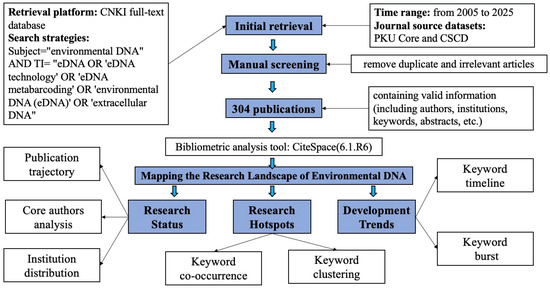
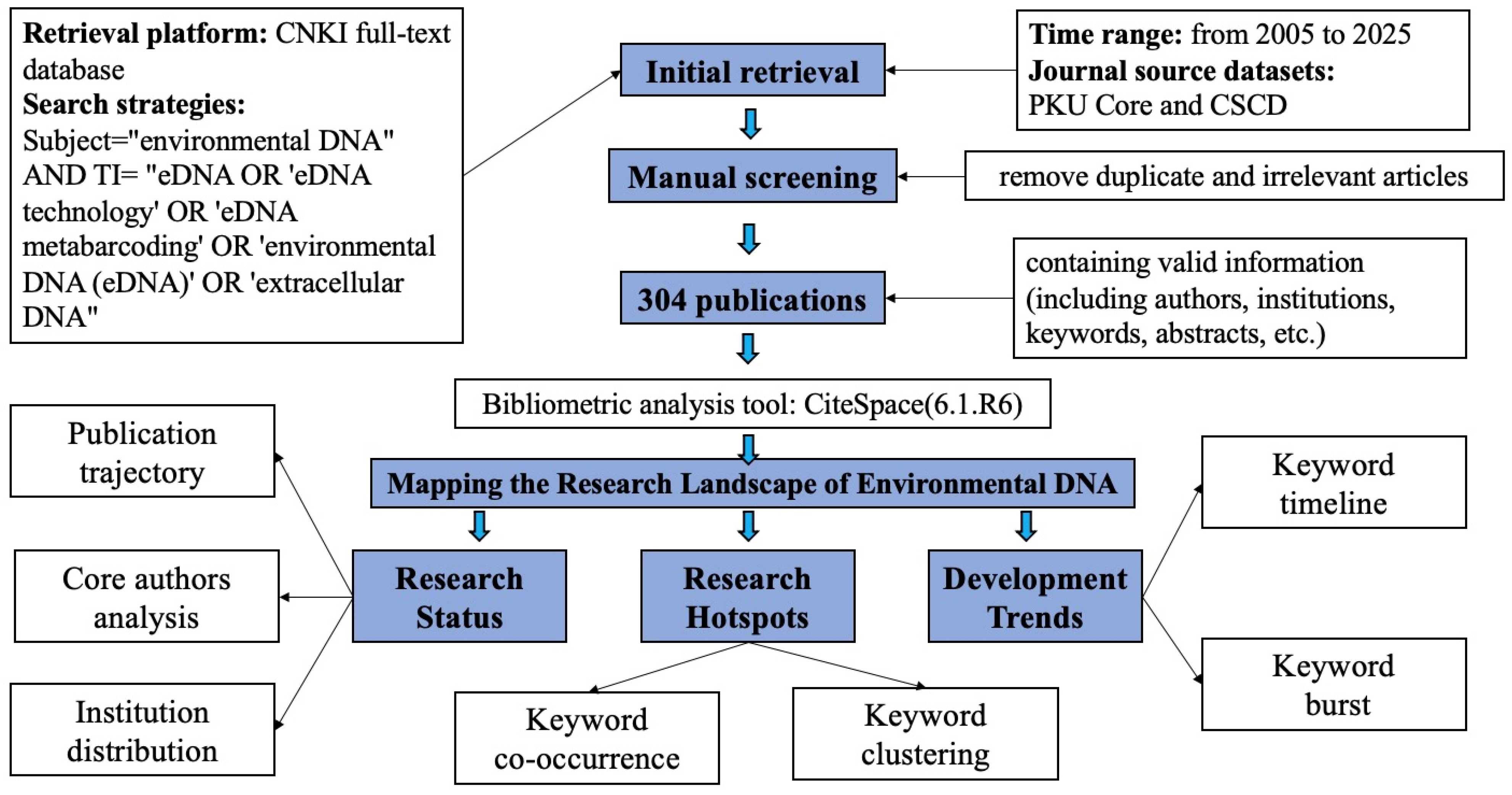
Following the initial retrieval, manual screening was conducted to remove duplicate records and articles irrelevant to the research focus. This process yielded a final dataset of 304 publications containing valid information, including authors, institutions, keywords, abstracts, etc. The metadata for these eligible publications was exported in Refworks format, forming the core dataset for the subsequent visualized analysis of environmental DNA research. Figure 1 shows the search strategies and general analysis framework.
Figure 1.
Search strategies and general analysis framework for environmental DNA research based on the CNKI database.
2.2. Analysis Method
This study employed the bibliometric analysis tool CiteSpace (version 6.1.R6) developed by Dr. Chen [22,23] in conjunction with Microsoft Office Excel 2020 and Origin 2022, to reveal the research status, hotspots, and development trends in the field of environmental DNA in China. This was achieved through visualizing and analyzing the quantity and temporal distribution of publications, as well as the frequency, network, and interrelationships of authors, institutions, and keywords. The main procedures and settings were as follows. A total of 304 valid publication records in Refworks format were imported into CiteSpace (6.1.R6) to establish a project. The time partition was set from 2005 to 2025, with a time slice of 1 year. Node types were sequentially selected as author, institution, and keywords, with default node selection thresholds. The Pruning sliced networks algorithm was applied to simplify and visually represent the network.
3. Results and Discussion
3.1. Research Status and General Analysis
3.1.1. Temporal Distribution and General Characteristics of Publications
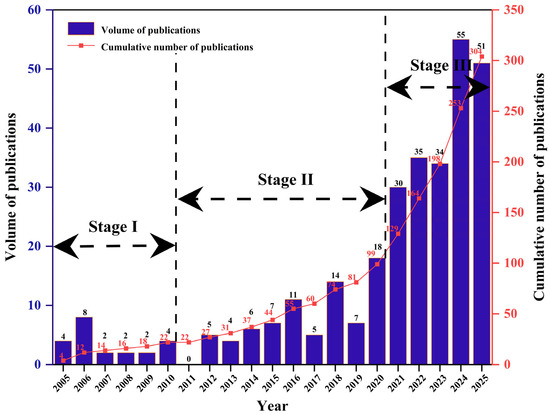
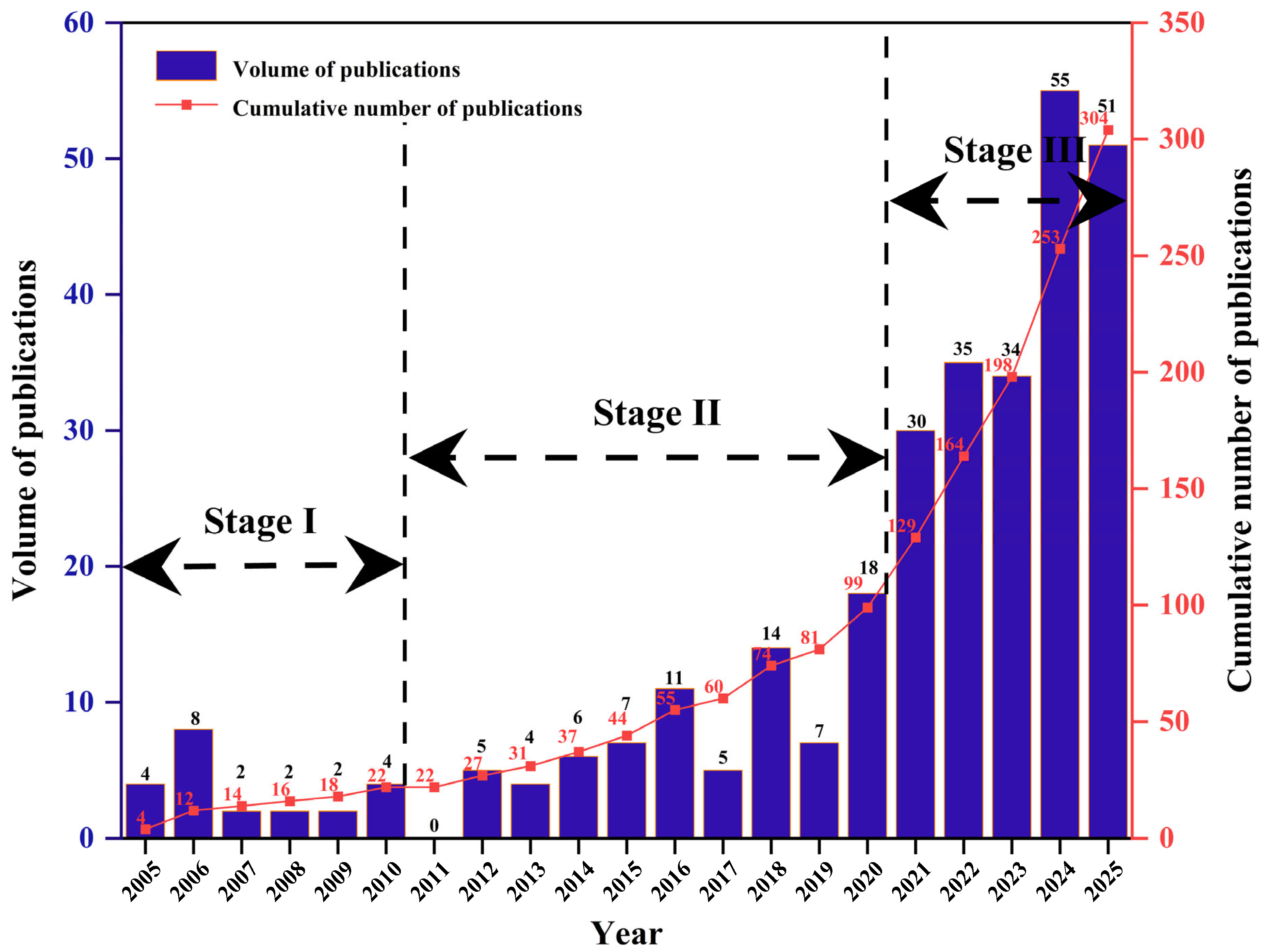
The publication trend within a given research field serves as a visual indicator of scholarly attention and activity. Based on annual output and regarding the publication volume of eDNA-related publications, the period from 2005 to 2020 exhibited moderate fluctuations followed by a gradual increase, whereas a marked surge occurred from 2021 to 2025 (Figure 2). The publication dynamics of eDNA research can be categorized into three distinct stages, detailed as follows.
Figure 2.
Annual and cumulative number of publications in the CNKI database from 2005 to 2025.
The first stage (2005–2010) represents an exploratory period. A total of 22 papers were published during this interval, with an average annual output of 3.67. Research efforts centered on environmental sample collection, eDNA extraction protocols, and reviews of metagenomic approaches [24,25,26]. The first research achievement was published in January 2005, titled “Preliminary research on bacterial diversity of Parece vela Basin Pacific Ocean by culture-independent method”. The authors extracted total environmental DNA and employed 16S rDNA sequencing to provide initial insights into bacterial diversity in the Pacific Parece vela Basin [24].
The second stage (2011–2020) is characterized as a validation and development period. Cumulative publications reached 77 papers, averaging 8.55 annually. Research during this stage mainly concentrated on validating and applying eDNA technology in ecological fields [27,28,29]. The research subjects were predominantly aquatic species [30,31,32,33,34]. Among these, the 2016 paper “Application of Environmental DNA Metabarcoding in Ecology” was the most-accessed source of this stage, garnering 2650 downloads and 83 citations (search executed on 25 August 2025). It systematically elucidated the core concepts of environmental DNA and eDNA technology, clearly defined their connotations, detailed the complete workflow of eDNA technology, and listed typical application scenarios of eDNA technology in ecological research [27].
The third stage (2021–present) marks an expansion period. Publication output increased sharply, with 205 papers cumulatively, accounting for 67.4% of all eDNA-related publications and an average of 41 papers per year. Benefiting from the validated application of eDNA technology across various fields, the research taxa in this stage have expanded to include zooplankton [35], plankton [36,37], benthos [38,39,40], amphibians [41,42,43], birds [44], mammals [45], etc. Research has focused on the monitoring and detection efficiency of eDNA technology and its standardization, such as establishing and improving species barcode databases and standardizing field and laboratory operational protocols [46,47,48].
3.1.2. Analysis of Core Authors
Core authors serve as pivotal contributors within their research domain. Initial bibliometric analysis based on the CNKI database reveals that the most prolific author in the field of eDNA research is Xiao-wei Zhang, with 11 publications, constituting 3.6% of the total publication number. According to Price’s Law, the threshold for core authorship is determined by the formula M = 0.749 × √Nmax, where M denotes the minimum number of publications required and Nmax refers to the publication count of the top-producing author [49]. Applying this criterion, authors with three or more publications are identified as core authors in the field of eDNA research. In this domain, 34 core authors have been identified, collectively producing 69 publications, representing 7.5% of all authors and 22.7% of total publications (Table 1).
Table 1.
Core authors’ publication volume and earliest publication time.
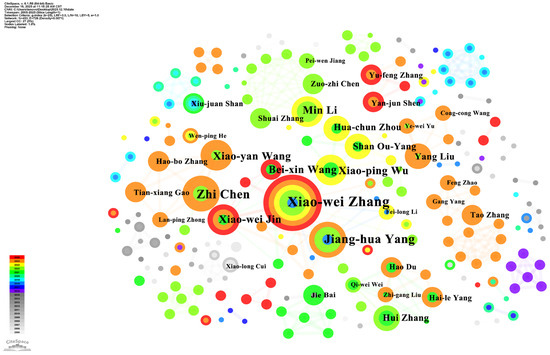
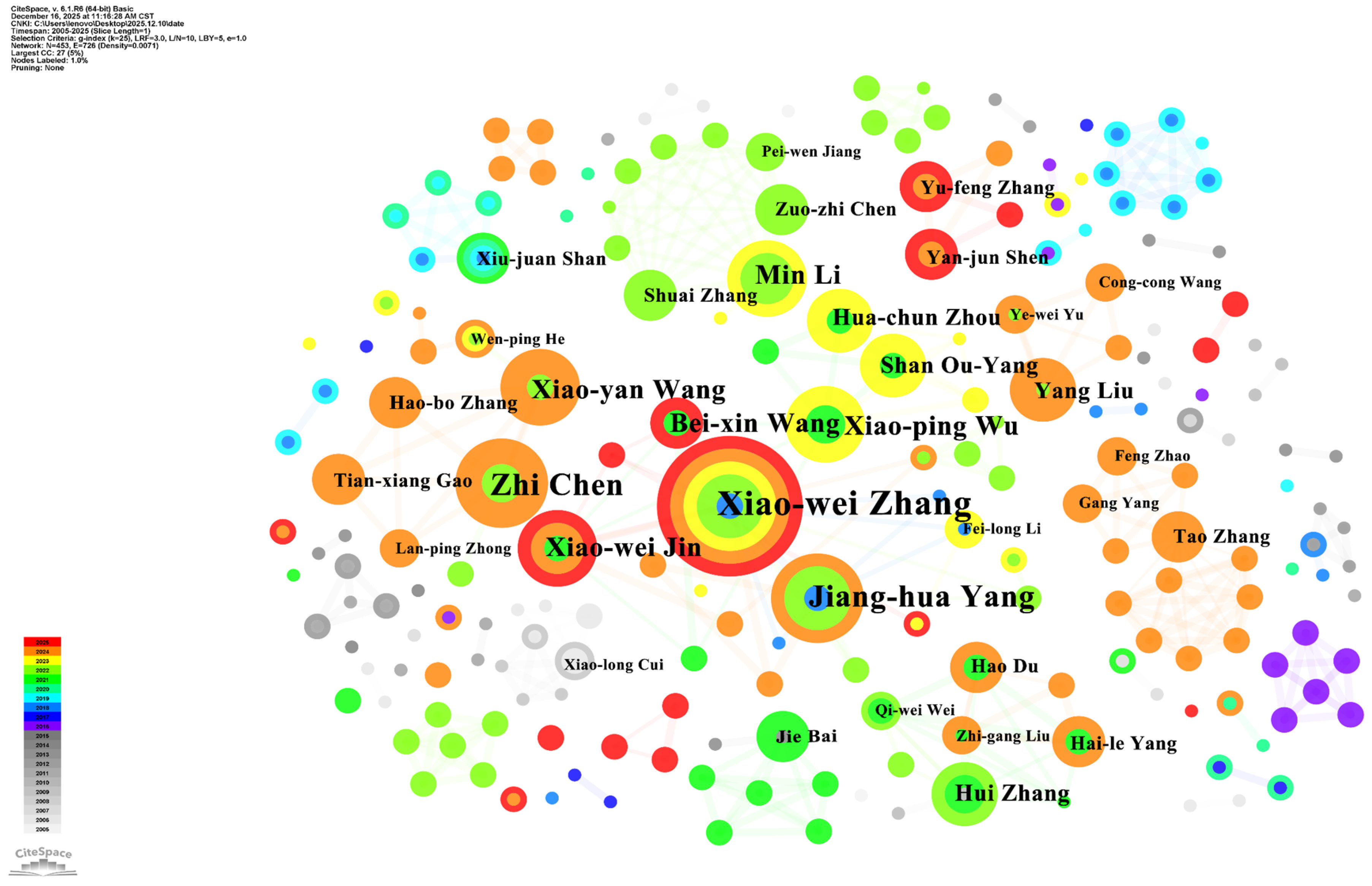
Using CiteSpace, a co-authorship network map of core authors in eDNA research field was generated (Figure 3). The map shows 453 authors (N), 726 connecting lines (E), and a network density of 0.0071. The size of each node and label represents its frequency of occurrence, with larger nodes and labels denoting higher frequencies. Node color corresponds to the temporal sequence of occurrence, while the connecting lines between nodes indicate co-occurrence relationships. This indicates that while there are numerous researchers in the field of eDNA, the core authors constitute a relatively small proportion. Some core authors maintain close collaborative relationships, forming several well-established research teams.
Figure 3.
Mapping the co-authorship network of core authors in the eDNA research field.
The seven most prolific core authors are Xiao-wei Zhang (11 publications), Jiang-hua Yang (7 publications), Zhi Chen (7 publications), Xiao-wei Jin (6 publications), Xiao-ping Wu (6 publications), Min Li (6 publications), and Xiao-yan Wang (6 publications). Among them, Xiao-wei Zhang and Jiang-hua Yang have employed eDNA technology for ecological health assessment [33], investigating the impact of standardized experimental procedures on results, such as primer bias and the effect of sample preservation time on experimental outcomes [50,51]. Their research covers a range of taxa including protists [52], plankton [35], zooplankton [53], benthos [39], amphibians [54] and fish [51]. Zhi Chen ’s team has focused on fish diversity in waters surrounding Zhoushan [55,56,57,58,59], Xixuan Island [60], and the Zhongjieshan Islands [61]. Xiao-ping Wu’s group works primarily in the Poyang Lake area [62,63], with research centered on phytoplankton and invertebrate diversity [64,65]. Min Li’s team emphasizes watershed-scale investigations, systematically assessing fish and cetacean diversity [66,67,68,69,70].
3.1.3. Institution Distribution and Their Cooperation Networks
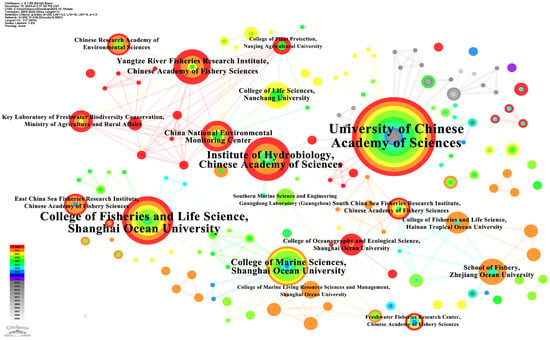
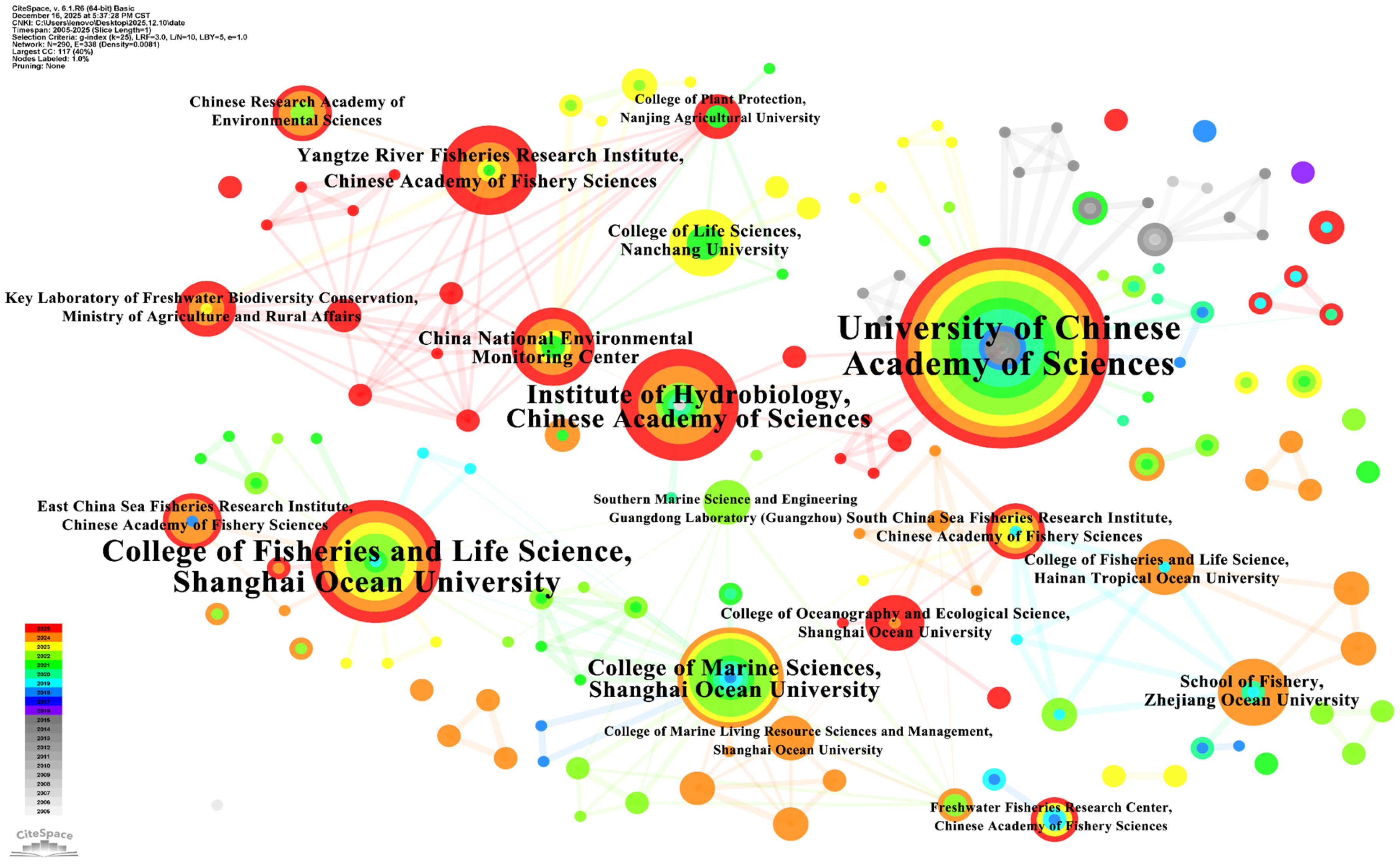
Clarifying the distribution patterns of research institutions can reveal the status and cooperation networks among various institutions within a field. Based on the co-occurrence network map of research institutions in the eDNA research field from the CNKI database (Figure 4), the number of nodes (N) (research institutions) is 290, the number of edges (E) is 338, and the network density is 0.0081. According to the ranking of the top 18 institutions by publication output (Table 2), the University of Chinese Academy of Sciences leads with 18 publications, followed by the College of Fisheries and Life Science, Shanghai Ocean University, the Institute of Hydrobiology, Chinese Academy of Sciences, the College of Marine Sciences, Shanghai Ocean University, the Yangtze River Fisheries Research Institute, Chinese Academy of Fishery Sciences, the China National Environmental Monitoring Center, the School of Fishery, Zhejiang Ocean University, the College of Life Sciences, and Nanchang University, among others. These institutions play a significant role in eDNA research in China, collectively contributing 92 publications, which account for 30.26% of the total output.
Figure 4.
Mapping the cooperation networks of institution in the eDNA research field.
Table 2.
Core institutions’ publication volume and earliest publication time.
Among them, the University of Chinese Academy of Sciences started publishing earlier and has focused mainly on resource utilization in fisheries [36,71,72,73] and phytoplankton studies [74,75]. The College of Fisheries and Life Science at Shanghai Ocean University has applied eDNA technology to assess water quality and biological composition under both artificial and natural conditions [76,77], successfully monitoring aquatic biological resources in the Yangtze River [78,79] and Pearl River basins [66,67,80]. Recently, a collaborative network among cross-regional research institutions has been established. Specifically, with the University of Chinese Academy of Sciences, the College of Fisheries and Life Sciences, Shanghai Ocean University, and the Institute of Hydrobiology, Chinese Academy of Sciences at its core, stable and close cooperative relationships have been formed with multiple research institutions. Notably, some institutions still primarily conduct independent research, and the collaborative network among research organizations requires further improvement. Therefore, strengthening the collaborative network plays a crucial role in enhancing the output of research achievements and promoting the rapid development of the field of eDNA.
3.2. Research Hotspots and Development Trends
3.2.1. Keyword Co-Occurrence Network Analysis
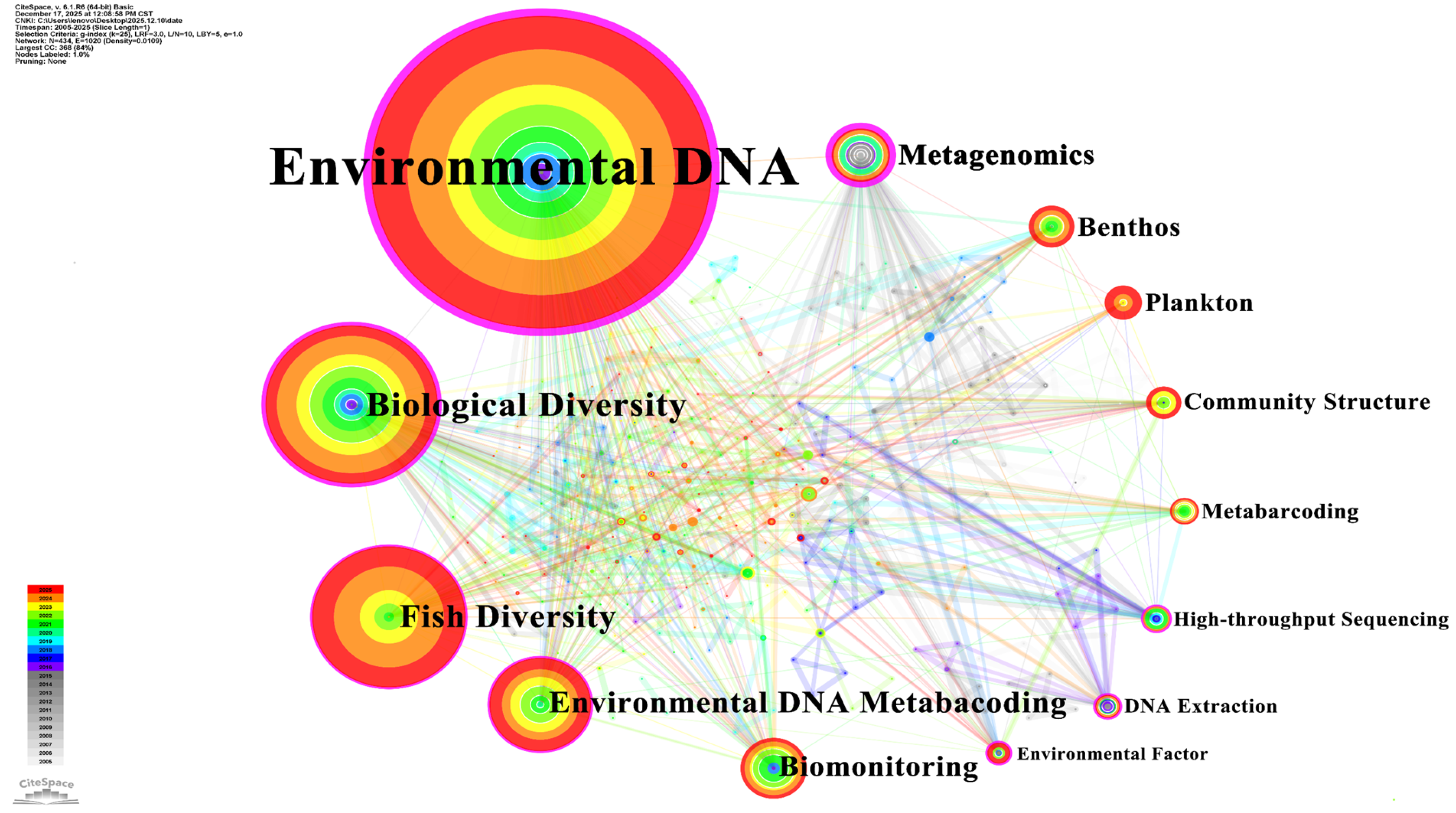
Keywords serve as a highly condensed encapsulation of the key elements in a study, including its core research content, methodological approaches, and analytical perspectives [21,23]. They collectively represent the essence of the research work. Therefore, conducting visual analyses of keywords, such as frequency and co-occurrence, facilitates a deeper understanding of research hotspots and development trends in the field [81]. The keyword co-occurrence network derived from CNKI-based eDNA research is presented in Figure 5. The network comprises 434 nodes (keywords) and 1020 edges, with a density of 0.0109. In this visualization, node and label sizes are proportional to keyword frequency, while circle color denotes the temporal appearance of each keyword. Among keywords occurring 10 or more times (Table 3), “environmental DNA” ranks highest (frequency = 122), followed by “biological diversity” (63), “fish diversity” (54), “environmental DNA metabarcoding” (38), “metagenomics” (25), “biomonitoring” (25), etc. Significantly, several keywords, including environmental DNA, biodiversity, metagenomics, DNA extraction, environmental DNA metabarcoding, fish diversity, high-throughput sequencing, and environmental factor, exhibit a betweenness centrality greater than 0.1. This indicates that these keywords serve as core hubs and turning points in the eDNA research field, acting as key intermediaries and reflecting research hotspots.
Figure 5.
Mapping the co-occurrence networks of keywords occurring 10 or more times in the eDNA research field.
Table 3.
Top 13 high-frequency keywords from the CNKI database.
3.2.2. Keyword Clustering Analysis
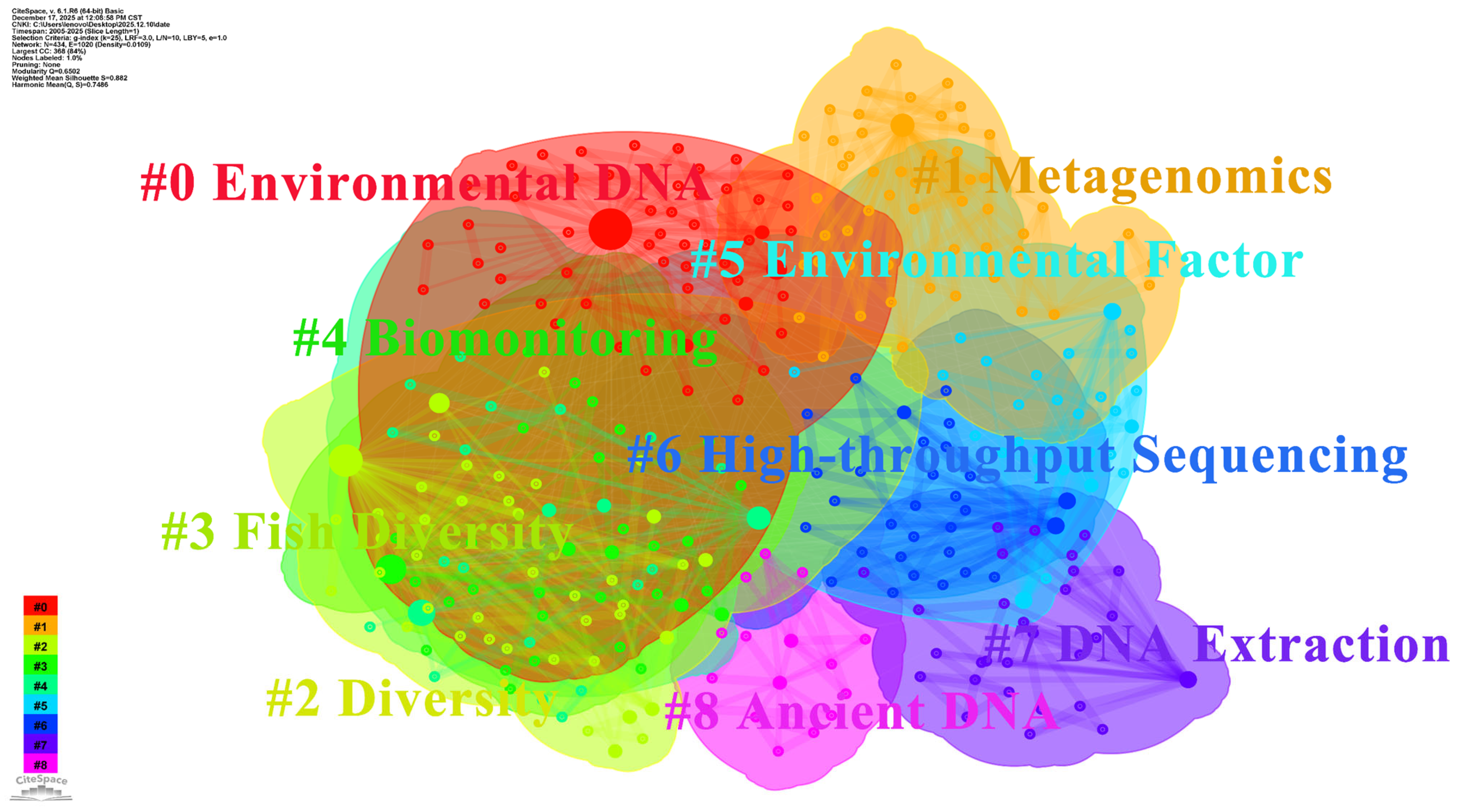
Based on keyword co-occurrence analysis, a further cluster analysis was conducted to identify keyword hotspot modules and derive the key research hotspot themes. Accordingly, CiteSpace was run with the keyword clustering module selected, and the log-likelihood rate (LLR) algorithm was applied to generate a keyword cluster map for eDNA research (Figure 6). As shown in the figure, the modularity Q-value was 0.6502 > 0.3, confirming a significant cluster structure, and the mean silhouette value was 0.882 > 0.7, indicating that the clustering was reasonable, efficient, and credible [23]. The map shows that 434 keywords were mainly grouped into 9 major clusters: #0 environmental DNA, #1 metagenomics, #2 diversity, #3 fish diversity, #4 biomonitoring, #5 environmental factor, #6 high-throughput sequencing, #7 DNA extraction, and #8 ancient DNA. These cluster labels represent the hotspot themes in eDNA research. By further organizing the keywords within each cluster label, a keyword cluster label table was compiled (Table 4).
Figure 6.
Mapping the cluster networks of keywords in the eDNA research field.
Table 4.
Keyword clustering labels and their main keywords.
Keyword clustering analysis revealed that Module #0, environmental DNA, clustered 67 keywords and overlapped with Module #2 (diversity), Module #3 (fish diversity), and Module #4 (biomonitoring). This indicates strong internal connections among keywords within each clustering module. Based on the keyword labels in the clustering modules, it is evident that eDNA technology is currently primarily applied to biodiversity research through approaches such as biomonitoring and biomass assessment, with a focus on phytoplankton, benthic animals, fish, and environmental microorganisms. The 16S rDNA and COI genes are the main target genes for DNA extraction. DNA extraction and DNA sequencing constitute the core processes of eDNA technology. Environmental factors play a critical role in eDNA research and biological community structure. On one hand, environmental factors (such as temperature, pH, hydraulic conditions, etc.) directly determine the release rate, existence forms, and stability of eDNA in various environmental media. On the other hand, as a carrier of biological genetic information in the environment, eDNA can record the comprehensive effects of environmental factors at specific spatiotemporal scales, providing biological evidence for reconstructing environmental conditions [82]. Additionally, ancient DNA is also a key topic in eDNA research and eDNA technology applications. In paleoecology and global change research, extracting ancient eDNA from sediments provides crucial molecular evidence for revealing the relationships among paleo ecosystem evolution, paleoclimate fluctuations, and human evolutionary history [83,84,85].
3.2.3. Keyword Clustering Timeline Analysis
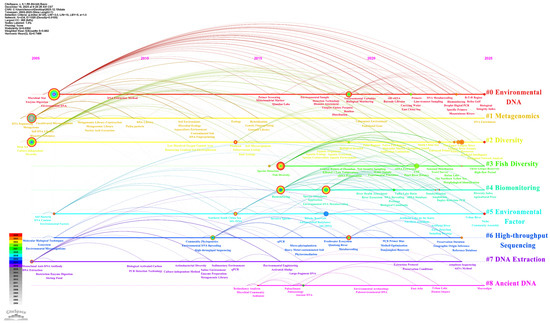
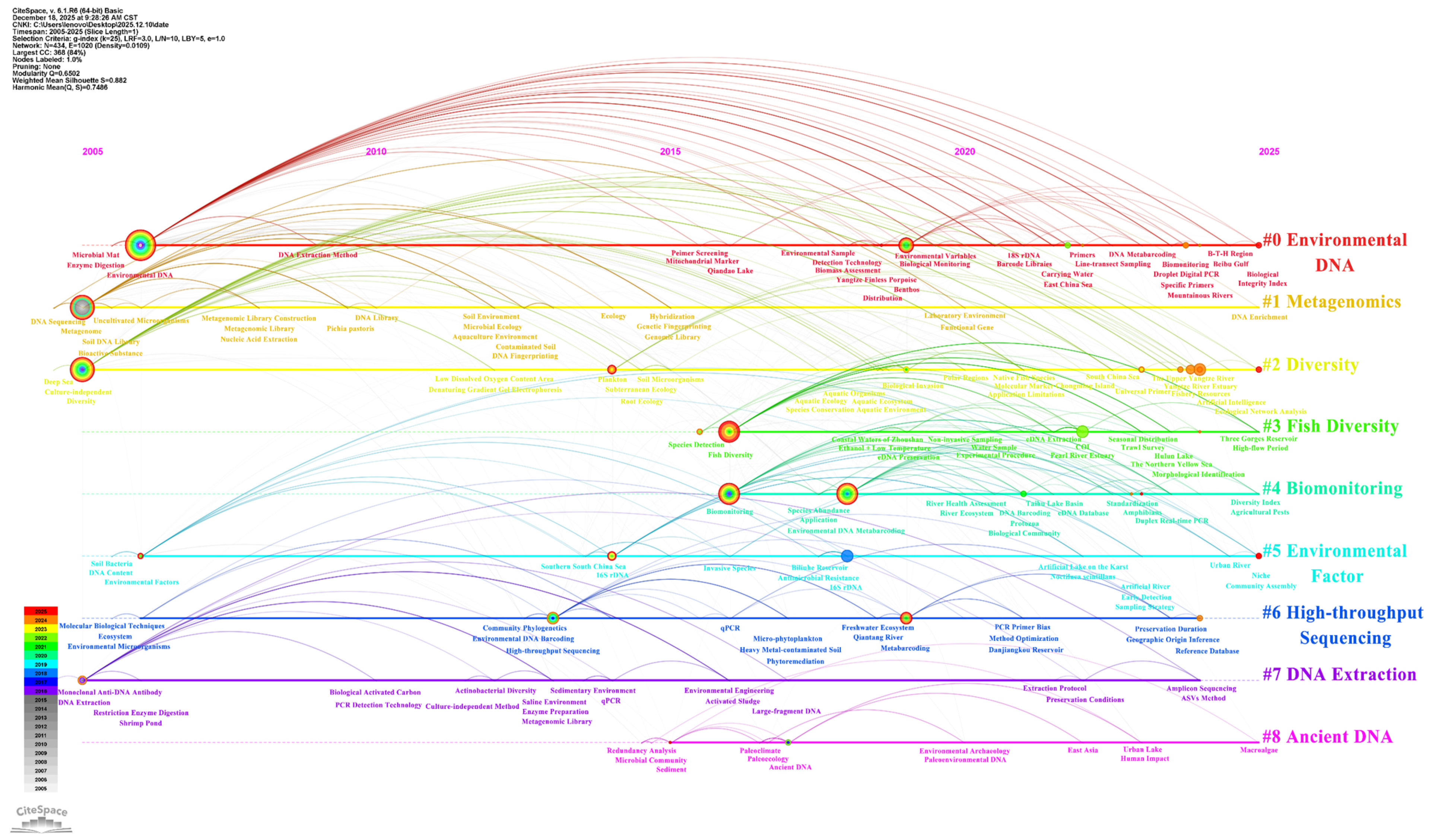
To effectively capture and examine the dynamic development trends of eDNA research, a keyword clustering timeline map was generated (Figure 7). The keyword timeline map visually presents the time span of each cluster and the temporal distribution of keywords within clusters, thereby revealing development trends in the research field. As depicted, the timeline of eDNA-related studies indexed in the CNKI database extends from 2005 to 2025, reflecting sustained scholarly attention over two decades. Among these, #1 Metagenomics and #2 Biodiversity exhibit the longest time spans, suggesting that environmental DNA serves as a critical sample source for metagenomics research, and biodiversity remains a fundamental application of eDNA technology. Researchers continue to innovate DNA extraction methods to enhance detection rates. #8 Ancient DNA emerged after 2017 and has persisted to the present, demonstrating that environmental DNA research and eDNA technology applications have expanded into palaeoecological studies.
Figure 7.
Timeline mapping of keywords from the CNKI database in the eDNA research field.
3.2.4. Keyword Burst Analysis
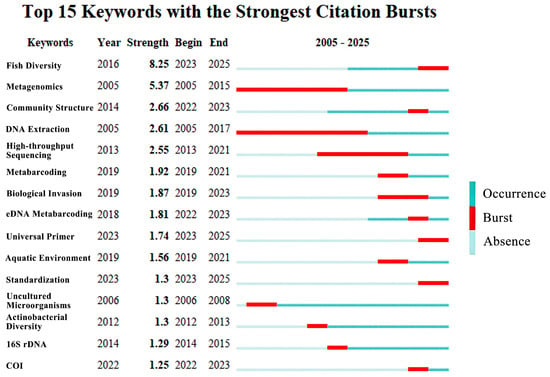
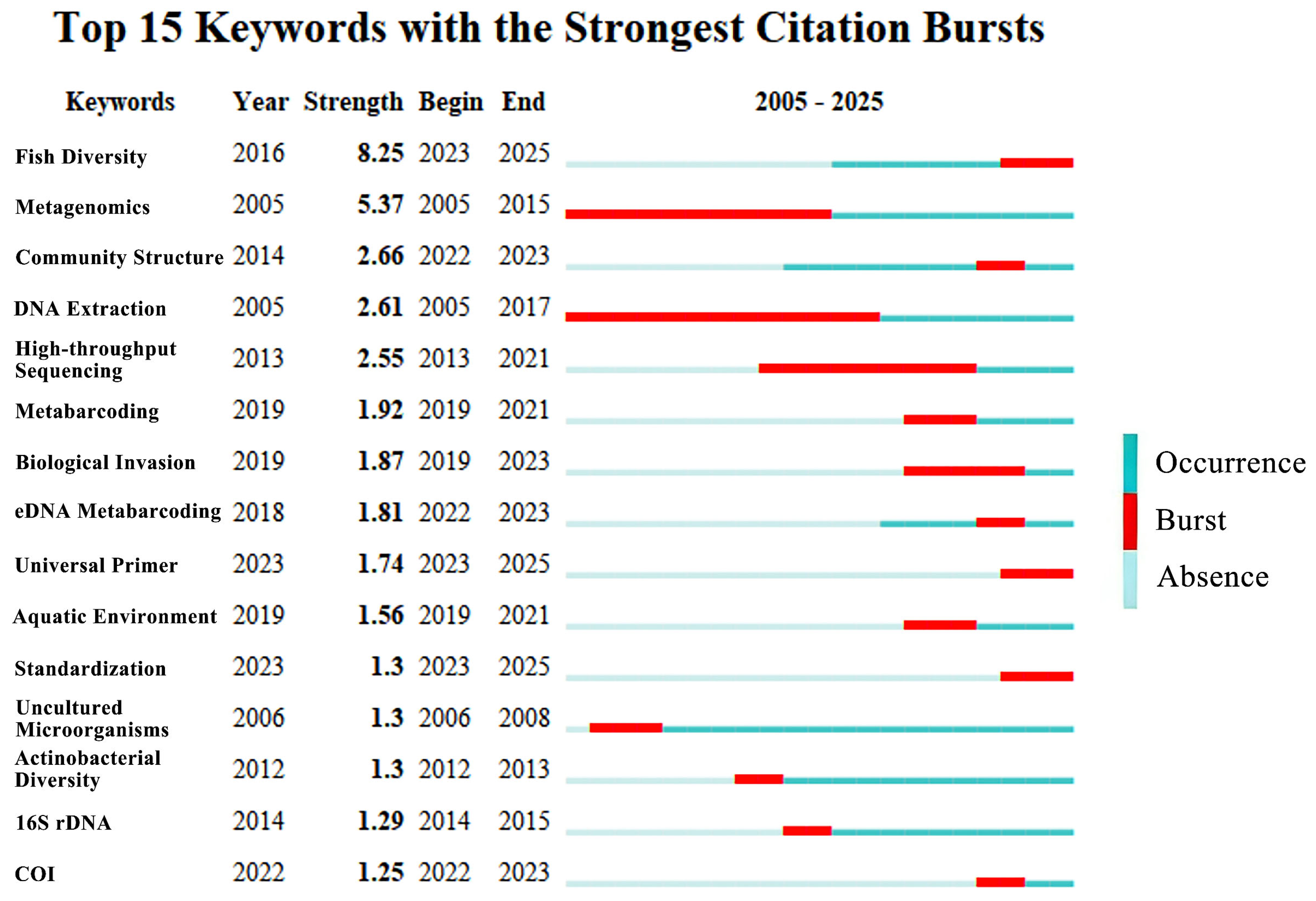
Keyword burst refers to the phenomenon where the frequency of a keyword increases abruptly within a certain period. This phenomenon essentially reflects the dynamic shifts in research hotspots and provides important quantitative evidence for identifying current and potential research trends [23]. As shown in the keyword burst graph (Figure 8), in eDNA research based on CNKI, “DNA extraction” has consistently appeared over the past two decades, with its burst period occurring between 2005 and 2017. Efficient and accurate DNA extraction is fundamental to eDNA research, and common laboratory methods include chloroform extraction, cell lysis and disruption, and silica-based extraction [47]. Therefore, the standardization of DNA extraction has long been a focus of researchers [86]. However, with the rapid development of molecular biology and the widespread adoption of commercial DNA extraction kits, attention to DNA extraction has gradually diminished.
Figure 8.
Top 15 keywords with the strongest citation bursts.
In terms of burst strength, the top keyword is “fish diversity”, which first appeared in 2016 and has been in a burst phase from 2023 to the present, with a burst strength as high as 8.25. This indicates that research on fish diversity in the field of eDNA has garnered a surge of attention, serving as a current research focus and a persistent hotspot area for future biodiversity studies. As the most widely applied biological group in eDNA technology, fish possess three core advantages: First, fish are generally large-bodied and metabolically active, making it relatively convenient and efficient to capture their DNA released into aquatic environments through shedding (e.g., skin cells, scales) and metabolic waste excretion [87,88]. Second, fish have extensive activity ranges, frequently migrating across different water bodies (e.g., various sections of rivers, lakes, or connected waters). Their released DNA can cover broader geographical areas, thereby significantly enhancing the spatial representativeness of eDNA in species distribution monitoring [89]. Third, fish often occupy high trophic levels in ecosystem food webs, and their community structure is closely linked to material cycling, energy flow, and ecosystem stability, making them sensitive indicators of ecosystem health [90,91].
Significantly, among the burst keywords in the past three years, in addition to “fish diversity”, “universal primers” and “standardization” have also emerged. Designing ideal primers to ensure high-quality PCR amplification is a critical step in eDNA research. Primers can be categorized into taxon-specific primers and universal primers applicable to broad taxonomic groups [30]. Among these, PCR amplification using universal primers is primarily employed for detecting and monitoring multi-species composition in eDNA, offering efficiency and cost-effectiveness. This approach is currently a focal point for species diversity surveys and biological community structure analysis in specific ecological regions [50,64]. Furthermore, feasibility and validation studies on the application of eDNA technology across various ecosystems are driving its standardization, exploring and establishing a unified, reproducible standard experimental protocol to address data comparability issues arising from methodological differences among research teams [86].
4. Conclusions
For global scholars, tracking the research progress of environmental DNA (eDNA) in China offers not only insight into developments within a specialized field but also an insight into how an emerging biomonitoring technology is being systematically validated and implemented in a megadiverse nation. Particularly against the backdrop of the Kunming–Montreal Global Biodiversity Framework, China’s practical experience with eDNA provides valuable workflows, validation cases, and applied knowledge for addressing the worldwide biodiversity crisis.
Using the bibliometric analysis tool CiteSpace, this study visually examines publications, authors, institutions, and keywords from eDNA-related literature in the CNKI database (2005–2025), systematically mapping the research landscape in this field in China. The main findings are as follows:
- (1)
- Publication output in Chinese eDNA research has grown consistently, with accelerated growth observed after 2020. The publication dynamics can be categorized into three distinct stages: the exploratory period (2005–2010), the validation and development period (2011–2020), and the expansion period (2021–present).
- (2)
- Although the field involves many researchers (454 in total), core authors are relatively few (34 individuals) and have produced 69 papers, accounting for 22.7% of total publications. Close collaborations exist among some core authors, forming several stable research teams. The most prolific authors are Xiao-wei Zhang, Jiang-hua Yang, and Zhi Chen. Research activities are concentrated around key institutions, primarily the University of Chinese Academy of Sciences, College of Fisheries and Life Science, Shanghai Ocean University, and the Institute of Hydrobiology, Chinese Academy of Sciences. However, beyond these core clusters, inter-institutional links remain relatively loose, and a tightly connected cross-institutional network has yet to be fully established. It is imperative to enhance collaboration among core authors and researchers, as well as to strengthen cooperative networks across research institutions, thereby ensuring increased scientific output and accelerating the advancement of the eDNA field.
- (3)
- Keyword co-occurrence and clustering analyses reveal that current eDNA research in China is largely application-oriented, focusing on biodiversity assessment via biomonitoring, biomass estimation, and community structure analysis, with particular emphasis on phytoplankton, benthic animals, fish, and environmental microorganisms, among others.
- (4)
- Timeline mapping and keyword burst detection indicate that China’s eDNA research has moved beyond initial theoretical and technological exploration and is now transitioning from technology validation and scenario expansion toward the development of integrated and standardized workflows.
In-depth exploration of eDNA research offers complementary approaches and technical frameworks for traditional biodiversity monitoring methods. However, current eDNA technologies still face globally common challenges, including the lack of standardized sampling and analytical protocols, inconsistent technical standards across the entire workflow, and incomplete reference databases [9,10,18,86,88,92,93,94]. Future eDNA research should be guided by common challenges, integrate artificial intelligence based on validating the effectiveness of application scenarios, establish long-term and cyclical procedural frameworks, develop global eDNA technical standards and data-sharing systems, and provide comprehensive technical support and feedback for global ecosystem management and ecological security assessments.
Author Contributions
Conceptualization, P.H., D.Y. and C.Z.; methodology, P.H. and D.Y.; software, P.H. and X.M.; validation, L.L. and Y.M.; formal analysis, P.H. and X.M.; investigation, P.H. and L.L.; data curation, X.M. and Y.M.; writing—original draft preparation, P.H. and X.M.; writing—review and editing, D.Y. and C.Z.; visualization, X.M., Y.M. and L.L.; supervision, D.Y. and C.Z.; funding acquisition, D.Y. and C.Z. All authors have read and agreed to the published version of the manuscript.
Funding
This research was funded by the National Natural Science Foundation of China (32470459) and the Science & Technology Fundamental Resources Investigation Program (2023FY100302).
Institutional Review Board Statement
Not applicable.
Data Availability Statement
All data presented in this study are included in this article. For further inquiries, please contact the first author.
Conflicts of Interest
The authors declare no conflicts of interest.
References
- Pimm, S.L.; Jenkins, C.N.; Abell, R.; Brooks, T.M.; Gittleman, J.L.; Joppa, L.N.; Raven, P.H.; Roberts, C.M.; Sexton, J.O. The biodiversity of species and their rates of extinction, distribution, and protection. Science 2014, 344, 1246752. [Google Scholar] [CrossRef] [Scilit] [PubMed]
- Lei, G. Goals of Kunming-Montreal Global Biodiversity Framework and solutions by China’s Biosphere Reserve Network. Bull. Chin. Acad. Sci. 2025, 40, 1536–1545. [Google Scholar] [CrossRef] [Scilit]
- Llorente-Culebras, S.; Ladle, R.J.; Santos, A.M. Publication trends in global biodiversity research on protected areas. Biol. Conserv. 2023, 281, 109988. [Google Scholar] [CrossRef] [Scilit]
- Rodríguez-Rodríguez, D.; Martínez-Vega, J. Effectiveness of Protected Areas in Conserving Biodiversity: A Worldwide Review; Springer: Cham, Switzerland, 2022. [Google Scholar]
- Intergovernmental Science-Policy Platform on Biodiversity and Ecosystem Services (IPBES). Global Assessment Report on Biodiversity and Ecosystem Services. Available online: https://www.ipbes.net/global-assessment (accessed on 15 October 2025).
- Cardinale, B.J.; Duffy, J.E.; Gonzalez, A.; Hooper, D.U.; Perrings, C.; Venail, P.; Narwani, A.; Mace, G.M.; Tilman, D.; Wardle, D.A.; et al. Biodiversity loss and its impact on humanity. Nature 2012, 486, 59–67. [Google Scholar] [CrossRef] [Scilit]
- Taberlet, P.; Coissac, E.; Hajibabaei, M.; Rieseberg, L.H. Environmental DNA. Mol. Ecol. 2012, 21, 1789–1793. [Google Scholar] [CrossRef] [Scilit]
- Pawlowski, J.; Apotheloz-Perret-Gentil, L.; Altermatt, F. Environmental DNA: What’s behind the term? Clarilying the terminology and recommendations for its future use in biomonitoring. Mol. Ecol. 2020, 29, 4258–4264. [Google Scholar] [CrossRef] [Scilit]
- Beng, K.C.; Corlett, R.T. Applications of Environmental DNA (eDNA) in Ecology and Conservation: Opportunities, Challenges and Prospects. Biodivers. Conserv. 2020, 29, 2089–2121. [Google Scholar] [CrossRef] [Scilit]
- Tsuji, S.; Takahara, T.; Doi, H.; Shibata, N.; Yamanaka, H. The Detection of Aquatic Microorganisms Using Environmental DNA Analysis—A Review of Methods for Collection, Extraction, and Detection. Environ. DNA 2019, 1, 99–108. [Google Scholar] [CrossRef] [Scilit]
- Thomsen, P.F.; Wilerslev, E. Environmental DNA-An emerging tool in conservation for monitoring past and present biodiversity. Biol. Conserv. 2015, 183, 4–18. [Google Scholar] [CrossRef] [Scilit]
- Carvalho, D.C.; Leal, C.G. Steps Forward in Biomonitoring 2.0: eDNA Metabarcoding and Community-Level Modelling Allow the Assessment of Complex Drivers of Neotropical Fish Diversity. Glob. Change Biol. 2023, 29, 1688–1690. [Google Scholar] [CrossRef] [Scilit]
- Giovannoni, S.J.; Britschgi, T.B.; Moyer, C.L.; Field, K.G. Genetic diversity in sargasso sea bacterioplankton. Nature 1990, 345, 60–63. [Google Scholar] [CrossRef] [Scilit] [PubMed]
- Hebert, P.D.N.; Cywinska, A.; Ball, S.L.; de Waard, J.R. Biological identifications through DNA barcodes. Proc. R. Soc. Lond. Ser. B Biol. Sci. 2003, 270, 313–321. [Google Scholar] [CrossRef] [Scilit] [PubMed]
- Shendure, J.; Ji, H. Next-generation DNA sequencing. Nat. Biotechnol. 2008, 26, 1135–1145. [Google Scholar] [CrossRef] [Scilit] [PubMed]
- Ge, X.; Zhang, J.; Shao, Z.; Chai, L.; Nie, J.; Yin, D.; Zhang, H.; Liu, W.; Yan, C. Research Trends and Hotspots in eDNA-Based Surveys of Macroinvertebrates: A Bibliometric Analysis. Diversity 2025, 17, 402. [Google Scholar] [CrossRef] [Scilit]
- Zhang, X. Environmental DNA Shaping a New Era of Ecotoxicological Research. Environ. Sci. Technol. 2019, 53, 5605–5612. [Google Scholar] [CrossRef] [Scilit]
- Deiner, K.; Bik, H.M.; Mächler, E.; Seymour, M.; Lacoursière-Roussel, A.; Altermatt, F.; Bernatchez, L. Environmental DNA metabarcoding: Transforming how we survey animal and plant communities. Mol. Ecol. 2017, 26, 5872–5895. [Google Scholar] [CrossRef] [Scilit]
- Ficetola, G.F.; Miaud, C.; Pompanon, F.; Taberlet, P. Species Detection Using Environmental DNA from Water Samples. Biol. Lett. 2008, 4, 423–425. [Google Scholar] [CrossRef] [Scilit]
- China Releases National Biodiversity Conservation Strategy and Action Plan (2023–2030). 2024. Available online: https://www.cbd.int/doc/nbsap/NBSAP-China-news-summary-rev.pdf (accessed on 9 October 2025).
- Osareh, F. Bibliometrics, citation analysis and co-citation analysis: A review of literature I. Libri 2009, 49, 149–158. [Google Scholar] [CrossRef] [Scilit]
- Chen, C. CiteSpace II: Detecting and visualizing emerging trends and transient patterns in scientific literature. J. Am. Soc. Inf. 2006, 57, 359–377. [Google Scholar] [CrossRef] [Scilit]
- Chen, Y.; Chen, C.M.; Liu, Z.Y.; Hu, Z.G.; Wang, Z.W. The methodology function of CiteSpace mapping knowledge domains. Stud. Sci. Sci. 2015, 33, 242–253. [Google Scholar]
- Xie, H.; Xue, Y.; Zhao, A.; Li, T.; Ma, Y. Preliminary research on bacterial diversity of Parece vela Basin Pacific Ocean by culture-independent method. Acta Microbiol. Sin. 2005, 45, 1–5. [Google Scholar]
- Chen, Z.; Chen, Y.; Fu, S.; Zhan, H. Methods for extracting DNA from environmental samples. Environ. Pollut. Control 2007, 7, 537–540+544. [Google Scholar]
- Zhang, H.; Cui, H. Metagenomic and its research progress. Chin. J. Anim. Sci. Vet. 2010, 37, 87–90. [Google Scholar]
- Chen, L.; Wu, L.; Liu, Y.; Xu, H.G. Application of environmental DNA metabarcoding in ecology. Acta Ecol. Sin. 2016, 36, 4573–4582. [Google Scholar] [CrossRef] [Scilit]
- Yu, S.Q.; Wang, W.J.; Li, B.L. Applied environmental DNA technology to study underground ecology. Acta Ecol. Sin. 2015, 15, 4968–4976. [Google Scholar]
- Xu, H.; Luo, X.; Li, Y.; Xue, Y.; Ye, Q. Applications of Environmental DNA Approaches to Ecological Researches. Biotechnol. Bull. 2014, 10, 49–55. [Google Scholar]
- Kuang, C.; Liang, Z.; Wen, F.; Ma, Y.; Zhou, T.; Liao, C.; Liu, J.; Guo, C. Applications and Prospects for Non-capture Approaches to Surveying and Monitoring Freshwater Fish. J. Hydrobiol. 2025, 46, 232–243. [Google Scholar]
- Li, H.; Huang, X.; Li, S.; Zhan, A. Environmental DNA(eDNA)-metabarcoding-based early monitoring and warning for invasive species in aquatic ecosystems. Biodivers. Sci. 2019, 27, 491–504. [Google Scholar]
- Xu, N.; Xiong, M.; Shao, K.; Que, Y.; Li, J. Preliminary study on environmental DNA metabarcoding for detecting biodiversity in the middle and lower reaches of the Yangtze River. Res. Environ. Sci. 2020, 33, 1187–1196. [Google Scholar]
- Li, F.; Yang, J.; Yang, Y.; Zhang, X. Using Environmental DNA Metabarcoding to Monitor the Changes and Health Status of Aquatic Ecosystems. Environ. Monit. China 2018, 34, 37–46. [Google Scholar]
- Hao, Y.; Zhang, A.; Liu, J.; Gu, Z. Application of Environmental DNA Technology in the Study of Fish Resources. Biotechnol. Bull. 2018, 34, 56–62. [Google Scholar]
- Zhang, L.; Xu, S.; Zhao, Z.; Zhou, X.; Feng, Q.; Yang, J.; Li, F.; Wang, Z.; Zhang, X. Precision of eDNA Metabarcoding Technology for Biodiversity Monitoring of Eukaryotic Phytoplankton in Lakes. Environ. Sci. 2021, 42, 796–807. [Google Scholar]
- Chen, J.; Zhong, Y.; Wang, L.; Guo, Y.; Qiu, D. Noctiluca scintillans effects on eukaryotic plankton community structure using Environmental DNA analysis in Daya Bay. J. Trop. Oceanogr. 2022, 41, 121–132. [Google Scholar]
- Li, X.; Huo, S.; Zhang, H.; Jin, X.; Li, W.; Zhang, J.; Zhang, J. Application of Environmental DNA Metabarcoding in Monitoring Cyanobacterial Community. Res. Environ. Sci. 2021, 34, 372–381. [Google Scholar]
- Wang, M.; Jin, X.; Lin, X.; Du, L.; Cui, Y.; Wu, X.; Sun, H.; Xie, Z.; Wang, X.; Wang, B. Advances in the macrozoobenthos biodiversity monitoring and ecosystem assessment using environmental DNA metabarcoding. Acta Ecol. Sin. 2021, 18, 7440–7453. [Google Scholar] [CrossRef] [Scilit]
- Jin, K.; Zhang, L.; Zhang, W.; Zhang, X.; Chen, Q.; Yang, J.; Zhang, Y.; Zhang, X. Benthic Macroinvertebrate Biomonitoring and Ecological Assessment in Taihu Lake Basin Based on Environmental DNA Metabarcoding. Environ. Monit. China 2022, 38, 175–188. [Google Scholar]
- Zhao, Q.; Pan, F.; Li, B.; Zang, X.; Ding, S. Distribution patterns of macroinvertebrate community diversity and their impact factors analysis in mountainous rivers at lower Yellow River Basin based on environmental DNA technology. J. Lake Sci. 2024, 36, 523–535. [Google Scholar] [CrossRef] [Scilit]
- Xiao, Z.; Dong, S.; Zhang, Z.; Zhang, D.; Song, Z. Advances in the application of environmental DNA in amphibians monitoring. Acta Ecol. Sin. 2023, 43, 7861–7873. [Google Scholar] [CrossRef]
- Sun, X.; Xiao, N.; Guo, N.; Gao, X.; Zhang, S.; Chu, Z. Exploring Diversity and Distribution Characteristics of Amphibians in Chaohu Lake Based on Environmental DNA. Res. Environ. Sci. 2024, 37, 2310–2323. [Google Scholar] [CrossRef]
- Peng, W.; Deng, Z.; Zheng, W.; Gong, L.; Zeng, Y.; Meng, H.; Chen, J.; Yang, D. Application of eDNA technology in amphibian surveys: A case study of Hunan Mangshan National Nature Reserve. Biodivers. Sci. 2025, 33, 109–121. [Google Scholar] [CrossRef] [Scilit]
- Li, Y.; Zhang, W.; Zhao, G.; Yang, C.; Chen, X.; Yuan, S.; Cao, M.; Cai, W.; Yang, J. Application of airborne eDNA for terrestrial animal diversity monitoring: A case study of 20-ha forest dynamics plot in Xishuangbanna, Yunnan, China. Biodivers. Sci. 2025, 33, 95–108. [Google Scholar] [CrossRef] [Scilit]
- Liu, T.; Ming, M.; Yuan, S.; Fu, H.; Nashunmengke; Gegentana; Yang, W.; Wu, X. Analysis of Food Composition and Seasonal Differences of Brandt’s voles Based on DNA Macro-Barcoding Technology. Acta Agrestia Sin. 2025, 33, 2474–2481. [Google Scholar]
- Li, C.; Ling, L.; Tan, J.; Lin, X.; Wang, H.; Sun, B.; Li, Z. Challenge, breakthrough and future perspectives of environmental DNA technology in monitoring aquatic organisms. J. Shanghai Ocean Univ. 2023, 32, 564–574. [Google Scholar]
- Gu, S.Y.; Chen, K.; Jin, X.W.; Li, W.P.; Chen, X.F.; Xiong, J.; Tang, M.Z.; Jiang, C.Q.; Xiong, J.; Li, T.; et al. Development, applications, and standardization of environmental DNA monitoring technology for aquatic organisms. Acta Hydrobiol. Sin. 2024, 48, 1443–1458. [Google Scholar]
- Liu, M.Q.; Zhang, Z.; Wang, S.; Feng, K.; Gu, S.S.; Li, C.G.; Deng, Y. eDNA technology for monitoring terrestrial biodiversity: Technical highlights, challenges and progress. Chin. J. Appl. Ecol. 2025, 36, 927–942. [Google Scholar]
- Price, D.S. A general theory of bibliometric and other cumulative advantage processes. J. Am. Soc. Inf. Sci. 1976, 27, 292–306. [Google Scholar] [CrossRef] [Scilit]
- Mu, Y.; Yang, J.; Zhang, L.; Zhang, Y.; Zhang, X. Comprehensive Comparison and Validation of eDNA Metabarcoding Primers for Phytoplankton Biomonitoring. Environ. Monit. China 2024, 40, 167–176. [Google Scholar]
- Mu, Y.; Luo, Y.; Tang, N.; Yang, J.; Zhang, Y.; Zhang, X. Effects of storage temperature and time of sampling and pre-treatment on fish biomonitoring through environmental DNA. J. Lake Sci. 2024, 36, 1853–1863. [Google Scholar] [CrossRef] [Scilit]
- Xue, Q.W.; Yang, J.H.; Zhang, L.J.; Zhang, X.W.; Lei, C.S. Using Environmental DNA Metabarcoding to Monitor Community Diversity of Protist in Sediments. Asian J. Ecotoxicol. 2022, 17, 175–186. [Google Scholar]
- Sun, J.Y.; Yang, J.H.; Zhang, X.W. Identification and Biomass Monitoring of Zooplankton Cladocera Species with eDNA Metabarcoding Technology. Asian J. Ecotoxicol. 2018, 13, 76–86. [Google Scholar]
- Zhang, J.; Mao, Z.; Yang, J.; Jin, X.; Zhang, X. Research and application progress of environmental DNA technology in amphibian monitoring. J. Lake Sci. 2025, 37, 1162–1174. [Google Scholar] [CrossRef] [Scilit]
- Gao, T.; Chen, Z.; Wang, X. Environmental DNA, A New Method for Fish Diversity Investigation in the Coastal Waters. J. Zhejiang Ocean Univ. (Nat. Sci.) 2018, 37, 1–7. [Google Scholar]
- Chen, Z.; Chen, J.W.; Wang, X.Y.; Gao, T.X.; Liu, Y. Establishment and optimization of the eDNA preservation method for Zhoushan coastal waters. Oceanol. Limnol. Sin. 2019, 50, 1098–1107. [Google Scholar]
- Chen, Z.; Song, N.; Minamoto, T.; Wu, Q.Q.; Gao, T.X. The eDNA collection method of Zhoushan coastal waters. Acta Hydrobiol. Sin. 2020, 44, 50–58. [Google Scholar]
- Zhang, H.; Wang, X.; Chen, Z.; Zhong, L.; Gao, T. Preliminary study on spatial distribution pattern of fish in Zhoushan and its adjacent waters based on environmental DNA metabarcoding. J. Fish. China 2024, 8, 125–138. [Google Scholar]
- Gao, T.; Zhang, H.; Wang, X.; Chen, Z. Qualitative and quantitative analysis of Platyrhina sinensis based on eDNA methods in Zhoushan offshore. J. Fish. China 2024, 48, 118–127. [Google Scholar]
- Zhang, H.; Wang, X.; Zhong, L.; Chen, Z.; Gao, T. Diversity of Fish Species in Xixuan Island Coastal Waters Based on Environmental DNA Metabarcoding. Prog. Fish. Sci. 2024, 45, 173–185. [Google Scholar]
- Zhong, L.; Gao, T.; Zhang, H.; Chen, Z.; Wang, X. Fish species diversity in the Zhongjieshan Islands based on Environmental DNA Metabarcoding. J. Fish. China 2024, 9, 126–137. [Google Scholar]
- Guo, T.; Fu, Z.; Zhou, C.; Chen, J.; Ouyang, S.; Wu, X. Diversity of Eukaryotic Phytoplankton in Poyang Lake based on Environmental DNA Metabarcoding. J. Hydrobiol. 2023, 5, 67–75. [Google Scholar]
- Zhou, C.; Zhong, W.; Chen, J.; Ouyang, S.; Wu, X. Difference in fish species diversity detected by environmental DNA from sediments and water. J. Nanchang Univ. (Nat. Sci.) 2018, 37, 565–570. [Google Scholar]
- Chen, J.; Zhou, C.; Ouyang, S.; Huang, X.; Wu, X. Universal primers screening and verification for environmental DNA metabarcoding of freshwater mussels in the Lake Poyang Basin. J. Lake Sci. 2021, 33, 1254–1264. [Google Scholar] [CrossRef] [Scilit]
- Lei, Y.; Zhou, C.H.; Ouyang, S.; Wu, X.P. Differences in environmental DNA monitoring of freshwater mussels from different environmental sample types. Acta Hydrobiol. Sin. 2023, 47, 412–423. [Google Scholar]
- Li, H.; Zou, K.; Zhang, S.; Cao, Y.; Lu, Z.; Chen, Z.; Li, M. Species composition of fishes in the Pearl River estuary based on Environmental DNA Metabarcoding. J. Shanghai Ocean Univ. 2022, 31, 1423–1433. [Google Scholar]
- Jiang, P.W.; Li, M.; Zhang, S.; Chen, Z.Z.; Xu, S.N. Investigating the fish diversity in Pearl River estuary based on Environmental DNA Metabarcoding and bottom trawling. Acta Hydrobiol. Sin. 2022, 46, 1701–1711. [Google Scholar]
- Hu, K.; Li, M.; Zhang, S.; Jiang, P.; Cai, Y.; Chen, Z.; Xu, S. Species composition of spring fish eggs in the Daya Bay analyzed via DNA barcoding technology. J. Fish. Sci. China 2024, 31, 416–428. [Google Scholar]
- Mai, J.; Zhang, S.; Zheng, R.; Wang, T.; Lai, X.; Jing, P.; Wang, W.; Chen, Z.; Li, M. Preliminary investigation of Cetacean species diversity in Xisha Sea area of the South China Sea using environmental DNA technology. J. Fish. Sci. China 2023, 30, 1566–1576. [Google Scholar]
- Zheng, R.; Chen, B.; Zhang, S.; Mai, J.; Jiang, P.; Wang, W.; Li, M. Preliminary exploration of Balaenoptera edeni edeni population distribution in surrounding waters of Weizhou Island based on environmental DNA. South China Fish. Sci. 2024, 3, 36–46. [Google Scholar]
- Wang, X.; Huang, S.; Bai, F.; Du, Y. Comparative study of methods for extraction and purification of environmental DNA from marine sediment samples. J. Dalian Univ. Technol. 2014, 54, 272–277. [Google Scholar]
- Dong, Z.; Chen, L.; Zhang, N.; Chen, L.; Sun, D.; Ni, Y.; Li, B. Response of fish diversity to hydrological connectivity of typical tidal creek system in the Yellow River Delta based on environmental DNA metabarcoding. Biodivers. Sci. 2023, 31, 100–114. [Google Scholar] [CrossRef] [Scilit]
- Li, B.; Feng, X.; Zhu, R.; Sui, X.; Jia, Y.; Chen, Y. Detection and Biomass Assessment of Schizopygopsis younghusbandi younghusbandi Based on Environmental DNA in the Middle Reach of Yarlung Zangbo River. J. Hydrobiol. 2024, 45, 84–91. [Google Scholar]
- Chen, Y.; Ren, Y.; Xi, Y.; Liu, Y.; He, H.; Fan, F.; Chen, D.; Li, H. Comparative study on the biodiversity of phytoplankton based on environmental DNA technology and morphological identification. J. Lake Sci. 2024, 36, 1336–1352. [Google Scholar] [CrossRef] [Scilit]
- Ren, Y.; Fan, F.; Xi, Y.; Chen, F.; Li, Y.; Ding, J.; Gao, J.; Gu, Y.; Li, H. Comparative study on the biodicersity of zooplankton in Lake Fuxian based on environmental DNA technology and morphological identification. J. Lake Sci. 2025, 37, 1140–1150. [Google Scholar]
- Mu, M.; Li, A.; Zhao, X.; Liu, S.; Zhuang, Z. Preliminary Study on the Quantitative Analysis of Environmental DNA Metabarcoding under Ideal Conditions. Prog. Fish. Sci. 2021, 5, 24–30. [Google Scholar]
- Xiao, S.; Liu, X.; Lu, S.; Zhao, Y.; Gu, Z.; Zhou, R. Water Quality and Bio-composition in a Monoculture and Polyculture Grass carp Pond. J. Hydrobiol. 2023, 44, 79–87. [Google Scholar]
- Zhang, F.Y.; Wang, R.X.; Yang, G.; Qin, Z.; Zhao, F.; Zhang, T.; Geng, Z. Application of environmental DNA technology in monitoring the broodstock resources of Eriocheir sinensis in the Yangtze estuary. Acta Hydrobiol. Sin. 2024, 48, 950–957. [Google Scholar]
- Wang, R.X.; Yang, G.; Geng, Z.; Zhao, F.; Feng, X.S.; Zhang, T. Application of environmental DNA technology in fish diversity analysis in the Yangtze River estuary. Acta Hydrobiol. Sin. 2023, 47, 365–375. [Google Scholar]
- Jiang, P.; Li, M.; Zhang, S.; Chen, Z.; Xu, S. Construction of DNA meta-barcode database of fish in Pearl River Estuary based on mitochondrial cytochrome COI and 12S rDNA gene. South China Fish. Sci. 2022, 03, 13–21. [Google Scholar]
- Liu, Y.; Ren, X.; Lu, F. Research Status and Trends of Agrobiodiversity and Traditional Knowledge Based on Bibliometric Analysis (1992–Mid-2022). Diversity 2022, 14, 950. [Google Scholar] [CrossRef] [Scilit]
- Luo, X.; Liu, Z.; Li, Y.; Wang, S.; Zhong, W. Analysis of the Correlation Between Eukaryotic Phytoplankton Communities and Environmental Factors in the Luanhe River Basin. Environ. Sci. Technol. 2025, 48, 47–57. [Google Scholar]
- Hou, W.; Dong, H.; Jiang, H.; Li, G.; Yang, J. Applications of ancient DNA preserved in sediment in paleo-ecology, paleo-environment and paleo-climate studies. Earth Sci. Front. 2017, 24, 286–291. [Google Scholar]
- Wang, J.; Xu, H. Lake sedimentary ancient DNA (sedaDNA) reveals paleoclimatic change and ecological evolution. J. Earth Environ. 2022, 13, 132–162. [Google Scholar]
- Fu, Q.M. Insights into evolutionary dynamics of East Asians through Ancient DNA. Chin. Sci. Bull. 2022, 67, 3836–3848. [Google Scholar] [CrossRef] [Scilit]
- Yang, H.; Zhang, H.; Du, H. A framework for standardizing the processes of eDNA monitoring and an accessible vision of the future. J. Lake Sci. 2023, 35, 12–31. [Google Scholar]
- Li, M.; Chen, X.Y. Advances in the application of environmental DNA technology in fish ecology. Acta Ecol. Sin. 2023, 43, 6951–6967. [Google Scholar]
- Holmlund, C.M.; Hammer, M. Ecosystem services generated by fish populations. Ecol. Econ. 1999, 29, 253–268. [Google Scholar] [CrossRef] [Scilit]
- Perry, W.B.; Seymour, M.; Orsini, L.; Jâms, I.B.; Milner, N.; Edwards, F.; Harvey, R.; Bruyn, M.; Bista, I.; Walsh, K.; et al. An integrated spatio-temporal view of riverine biodiversity using environmental DNA metabarcoding. Nat. Commun. 2024, 15, 4372. [Google Scholar] [CrossRef] [Scilit]
- Miya, M. Environmental DNA metabarcoding: A novel method for biodiversity monitoring of marine fish communities. Annu. Rev. Mar. Sci. 2022, 14, 161–185. [Google Scholar] [CrossRef] [Scilit]
- He, W.; Zou, Y.; Hu, D.; Hao, H.; Wu, J.; Zheng, K.; Liu, Z.; Li, F.; Zhang, Y. Environmental DNA-based biotic monitoring reveals fish community assembly mechanisms in urban rivers. J. Lake Sci. 2025, 37, 1118–1127. [Google Scholar] [CrossRef] [Scilit]
- Cristescu, M.E.; Hebert, P.D.N. Uses and misuses of environmental DNA in biodiversity science and conservation. Annu. Rev. Ecol. Evol. Syst. 2018, 49, 209–230. [Google Scholar] [CrossRef] [Scilit]
- Martins, F.M.S.; Feio, M.J.; Porto, M.; Filipe, A.F.; Bonin, A.; Serra, S.R.Q.; Alves, P.C.; Taberlet, P.; Beja, P. Assessing Changes in Stream macroinvertebrate Communities across Ecological Gradients Using Morphological versus DNA Metabarcoding Approaches. Sci. Total Environ. 2021, 797, 149030. [Google Scholar] [CrossRef] [Scilit]
- Lamperti, L.; Sanchez, T.; Si Moussi, S.; Mouillot, D.; Albouy, C.; Flück, B.; Bruno, M.; Valentini, A.; Pellissier, L.; Manel, S. New Deep Learning-Based Methods for Visualizing Ecosystem Properties Using Environmental DNA Metabarcoding Data. Mol. Ecol. Resour. 2023, 23, 1946–1958. [Google Scholar] [CrossRef] [Scilit]

Disclaimer/Publisher’s Note: The statements, opinions and data contained in all publications are solely those of the individual author(s) and contributor(s) and not of MDPI and/or the editor(s). MDPI and/or the editor(s) disclaim responsibility for any injury to people or property resulting from any ideas, methods, instructions or products referred to in the content. |
© 2026 by the authors. Licensee MDPI, Basel, Switzerland. This article is an open access article distributed under the terms and conditions of the Creative Commons Attribution (CC BY) license.