


Abstract
The tropical Andes are a global biodiversity hotspot, yet extensive areas of the Peruvian western slope, such as the district of Sumbilca (Huaral province, Lima), remain floristically understudied despite mounting pressure from agricultural expansion, overgrazing, and seasonal burning. This study aimed to determine floristic diversity and assess the conservation status of vascular plants along a 2400–4000 m altitudinal gradient in Sumbilca. Between July 2024 and June 2025, qualitative walking surveys were conducted across four altitudinal zones (Z1–Z4), and species richness, family composition, floristic similarity (Jaccard dissimilarity, hierarchical clustering), and conservation status (IUCN Red List and Peruvian Supreme Decree N.° 043-2006-AG) were analyzed. A total of 202 species, 140 genera, and 62 families were recorded, dominated by Asteraceae, Poaceae, Solanaceae, and Fabaceae, with herbs as the predominant growth habit (66.3%). Species richness peaked in Z2–Z3 (85 and 84 species) and declined sharply in Z4 (38 species), which was also the most floristically distinct zone. Twenty-one endemic species and 42 species with recognized conservation status were documented, including five nationally threatened taxa, along with several new records for Huaral province. These findings indicate that Sumbilca harbors considerable, previously undocumented floristic and conservation value, and provide an essential baseline for future ecological monitoring and management along the western Andean slope.
1. Introduction
The tropical Andes are among the most biologically diverse regions on the planet and have been recognized as one of the global biodiversity hotspots [1,2]. Their complex geological and climatic history has given rise to a remarkable heterogeneity of landscapes and microclimates [3,4], in which marked altitudinal gradients in temperature and precipitation have favored speciation processes and the existence of a large number of endemic species [5,6]. However, this very ecological uniqueness makes the Andes one of the most vulnerable regions on the planet, affected by habitat loss, the expansion of the agricultural frontier, and the effects of climate change [7,8].
Peru is a prime example of this landscape, home to approximately 25,000 species of vascular plants, of which about one-third are endemic [9,10]. Much of this diversity is concentrated in the Andean region, where the succession of ecological zones generates a wide variety of environmental conditions that determine unique patterns of floristic distribution [11,12]. The study of these altitudinal gradients is essential for understanding the mechanisms that regulate species distribution, as well as the factors that explain differences in diversity among localities and their potential response to anthropogenic and climatic disturbances [5,6,13].
Multiple studies conducted in different Andean regions have revealed significant variations in floristic richness and composition along altitudinal gradients [6,14,15], although the specific patterns differ depending on the geographic context. In Peru, research conducted in the central rainforest has documented these patterns, reporting high diversity in premontane and montane forests [16,17,18]. However, extensive areas of the Peruvian Andean highlands remain understudied from a floristic perspective, which limits the establishment of the baseline data necessary for their conservation.
This information gap is particularly noticeable in the district of Sumbilca, located in the province of Huaral on the western slope of the central Andes in Peru [19]. Its geographic scope spans a wide altitudinal range, extending from dry inter-Andean valleys to the puna (high mountain region and cold climate in the central Andes), and is home to complex vegetation characterized by xerophytic shrublands, grasslands, and pastures [20,21]. Although floristic research has been conducted in the province of Huaral and in adjacent watersheds on the Pacific slope, focusing on coastal hills or specific forested relicts [22,23,24], the continental ecosystems and intermediate gradients of Sumbilca have been scarcely evaluated. This absence of background information becomes even more serious in light of the constant expansion of the agricultural frontier, seasonal burning, and overgrazing, which threaten the functional integrity of these habitats [25,26].
Plant diversity is one of the fundamental components of ecosystems, as it supports key ecological processes, the stability of biotic communities, and the provision of essential ecosystem services, such as climate regulation, oxygen production, and the hydrological cycle [27,28,29]. Consequently, characterizing floristic composition and structure is an indispensable step in designing conservation and sustainable management strategies [30]. In this regard, floristic inventories serve as the basic methodological tool for estimating species richness, assessing the conservation status of vegetation, and prioritizing areas of interest for protection [31,32]. Consequently, the lack of systematic inventories prevents the identification of endemic taxa or those classified as threatened, thereby limiting the design of conservation measures. In light of this issue, the objective of this study was to determine the floristic diversity and assess the conservation status of vascular plant species along an altitudinal gradient in the Sumbilca district.
2. Materials and Methods
2.1. Study Area
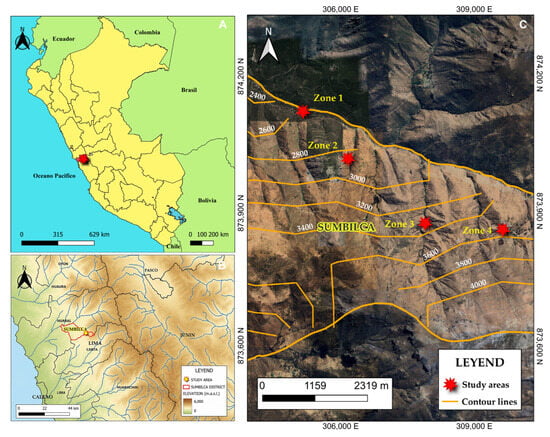
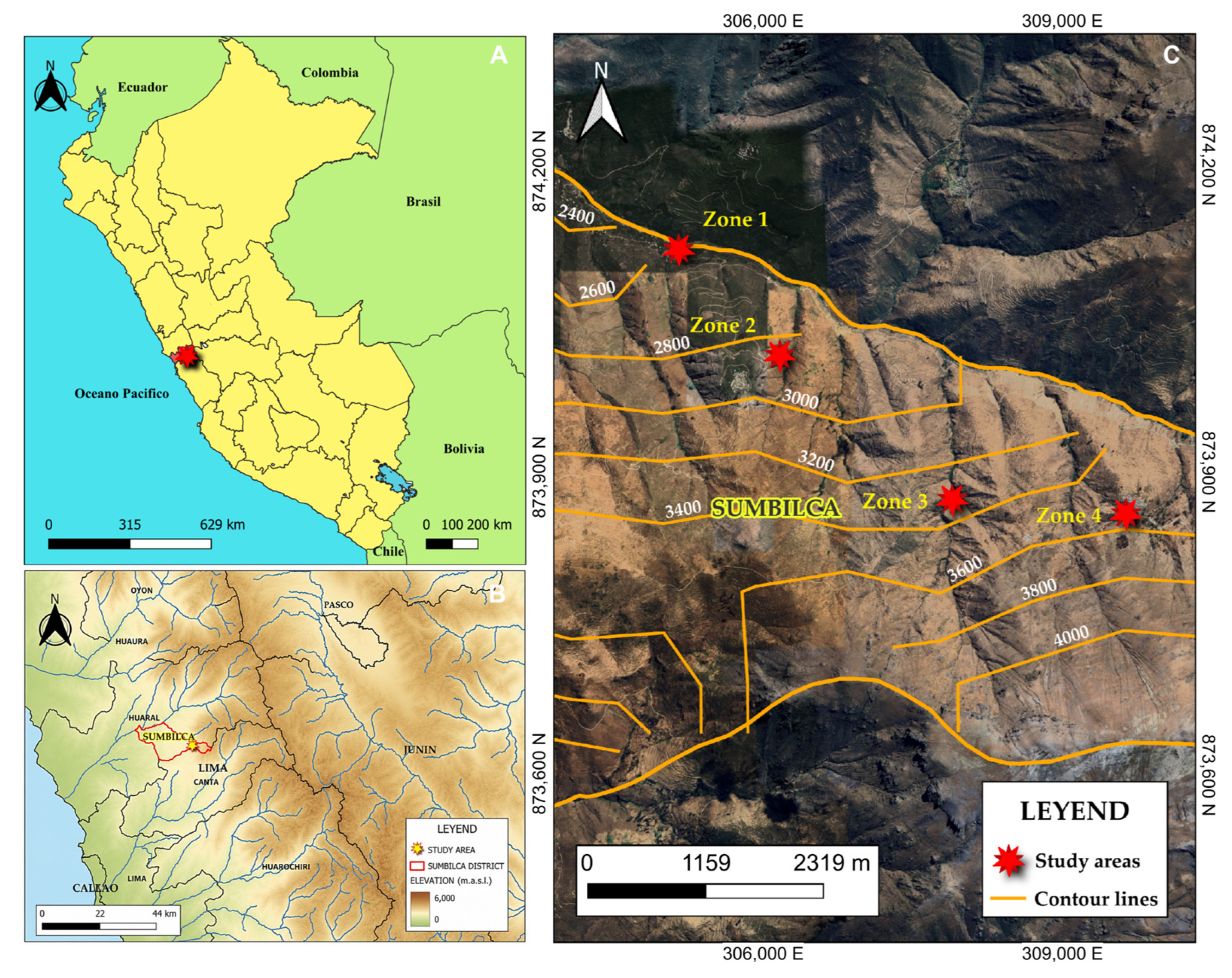
The study was conducted between July 2024 and June 2025 in the district of Sumbilca, province of Huaral, department of Lima, Peru (Figure 1). Sumbilca is one of the twelve districts that make up the province of Huaral and is located in the central Andes of Peru. The district is characterized by marked geographic heterogeneity, resulting from its complex topography and a wide altitudinal gradient that spans various ecological zones, ranging from inter-Andean ravines to puna areas above 3500 m above sea level [21]. In the lower elevations of the district (1500–2000 m above sea level), the climate is semi-arid and temperate, with little rainfall. In contrast, in the capital (3367 m a.s.l.) and higher-altitude areas (3000–4000 m a.s.l.), the climate becomes subhumid and cold, with an average annual temperature of 11 °C and rainfall from December through April exceeding 500 mm per year [33]. These conditions favor the development of a wide diversity of ecosystems and vegetation types, including Andean scrublands, grasslands, rocky outcrops, and remnants of native vegetation [34].
Figure 1.
Location of the study area in Peru. (A) Geographic location of Peru in South America. (B) Location of the department of Lima and Huaral Province. (C) Study area in the district of Sumbilca, showing the altitudinal gradient and sampling zones.
2.2. Sampling Method
Floristic surveys were conducted between July 2024 and June 2025 through intensive field surveys across four altitudinal zones (Z1: 2400–2800 m; Z2: 2800–3200 m; Z3: 3200–3600 m; Z4: 3600–4000 m). The inventory was conducted using systematic walking surveys designed to maximize the detection of vascular plant species by exploring the environmental heterogeneity within each altitudinal belt. Surveys within each interval covered cumulative walking distances of 10–12 km per zone (~44 km total) using directional changes (zigzagging) along slopes, strategically spanning both ridgelines and valley bottoms (as well as intervening slopes). This qualitative approach is widely recognized as an effective strategy for floristic inventories because it allows comprehensive documentation of species occurring across different vegetation types and microhabitats while increasing the representativeness of the inventory [35,36]. At each sampling locality, the survey team systematically explored the altitudinal range and all representative habitats, recording vascular plant species in Andean shrublands, grasslands, rocky outcrops, ravines, cactus-dominated communities, and disturbed areas. Sites with difficult topography were surveyed with the assistance of a local guide familiar with the terrain, facilitating access to poorly explored sectors and improving the spatial coverage of the inventory. Successive sampling localities were accessed by vehicle along the altitudinal gradient, enabling repeated surveys across different elevations and vegetation types to maximize floristic coverage of the study area. Similar sampling strategies have recently been employed in floristic inventories conducted in the central Andes of Peru, demonstrating their suitability for documenting vascular plant diversity and compositional turnover across heterogeneous mountain landscapes [37,38]. Overall, this sampling design provided a comprehensive characterization of the vascular flora along the altitudinal gradient by integrating extensive field exploration with the environmental heterogeneity of the study area [36,37,38].
2.3. Taxonomic Identification and Conservation Assessment
Plant individuals were photographed in situ, and representative material from individuals that could not be reliably identified in the field was collected for subsequent taxonomic determination. The collected material was processed and deposited in the Laboratory of Tropical Ecology and Data Analysis, Faculty of Biological Sciences, Universidad Nacional Mayor de San Marcos, Lima, Peru. Botanical samples were identified by comparison with herbarium specimens and specialized literature [39,40,41]. Botanical nomenclature was based on the W3-Tropicos database (www.tropicos.org). The conservation status of the recorded species was determined according to the Red List criteria and the Peruvian categorization of threatened plant species [42].
2.4. Statistical Analyses
Statistical analyses were performed in R, version 4.6.1, through the RStudio integrated development environment [43]. Community-level diversity, composition, and dissimilarity analyses were performed with the vegan package, version 2.6.10 [44]. Statistical tests were computed with the base stats package distributed with R, version 4.3.3. All graphs were generated with the ggplot2 package, version 4.0.2 [45]. Dendrogram segment data were extracted for plotting with the ggdendro package, version 0.2.0 [46], and composite heatmap–dendrogram figures were assembled with the patchwork package, version 1.3.2 [47]. The chord diagram was built with the circlize package, version 0.4.16 [48].
Species richness was evaluated by family, growth habit, and altitudinal zone using bar charts for the 18 most abundant families overall and the six most rich families per habit. Expected richness across zones was estimated via a species accumulation curve (Mao Tau solution: specaccum, method = “exact” in vegan [44]) with a ± 1 SD band. Genus-level richness across zones for the 25 most species-rich genera was examined via a hierarchically clustered heatmap using Euclidean distances (dist in stats) and Ward’s method (hclust, method = “ward.D2”), with dendrograms extracted via ggdendro [46] and combined using patchwork [47].
Floristic dissimilarity among zones was calculated using Sørensen (vegdist, method = “bray”, binary = TRUE) and Jaccard indices (method = “jaccard”) in vegan [44]. Sørensen distances were plotted as a heatmap, while Jaccard distances were hierarchically clustered via UPGMA (hclust, method = “average”) and rendered with ggdendro [46]. For the 21 endemic species, altitudinal distribution was visualized using a presence/absence heatmap and a chord diagram (circlize [48]), abbreviating species names for clarity.
3. Results
3.1. Floristic Inventory
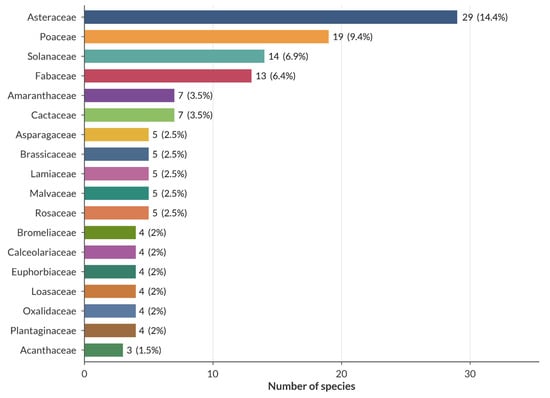
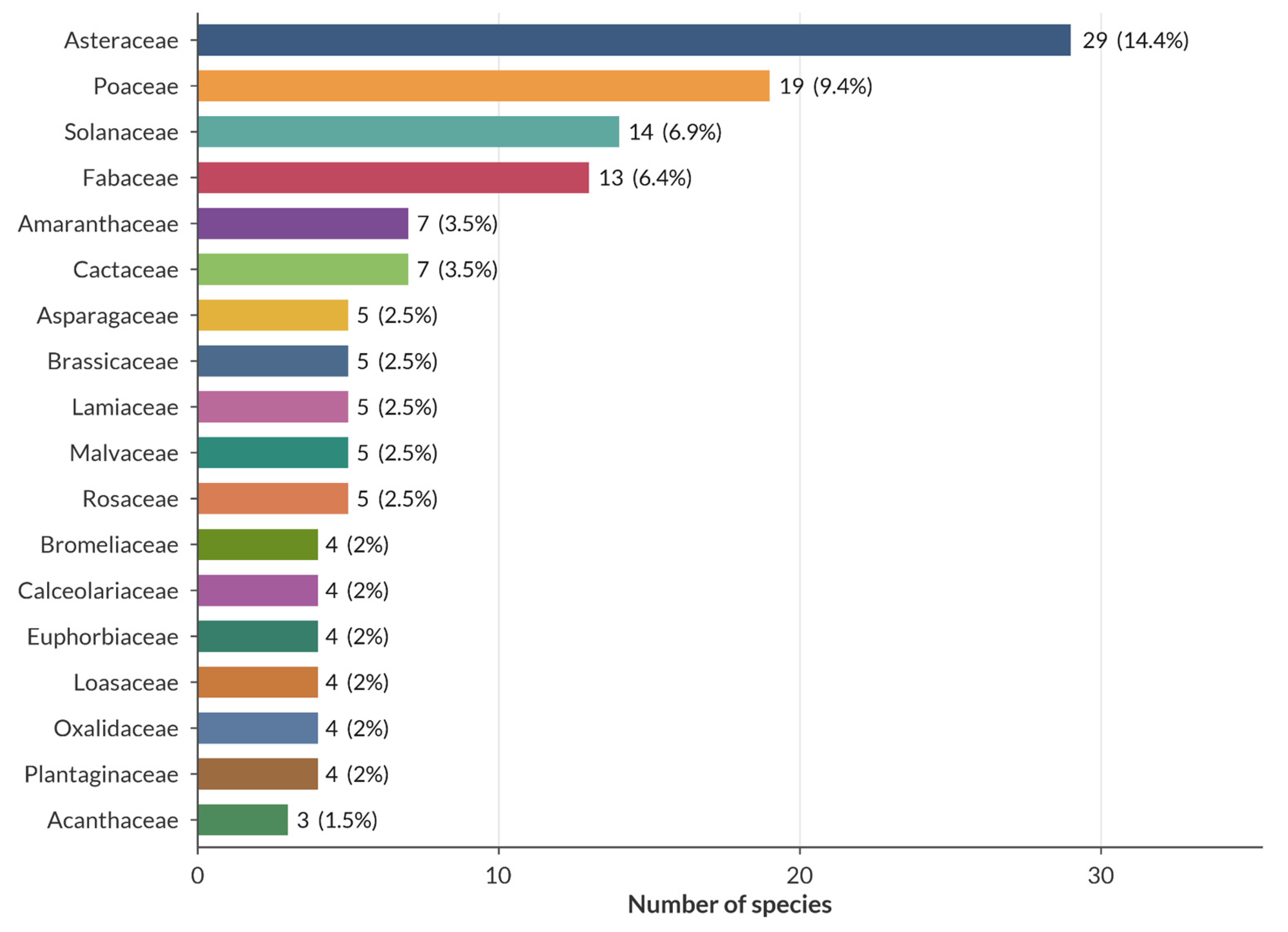
A total of 202 plant species were recorded, grouped into 140 genera and 62 families, of which 40 had a conservation status assigned by the IUCN (Table 1). Eudicots account for 78.2% of the taxa, with 158 species grouped into 50 families; monocots account for 19.3%, with 39 species; Equisetophytes account for 0.49%, represented solely by Equisetum bogotense; and the remaining 1.98% consists of monilophytes, with 3 species in 2 families. The most diverse families were Asteraceae (29 species), Poaceae (19 species), Solanaceae (14 species), Fabaceae (13 species), Amaranthaceae (7 species), and Cactaceae (7 species), which together accounted for 44.1% of the total number of species (Figure 2). The most well-represented genera were Solanum (6 species), Senecio (5 species), and Poa, Calceolaria, and Oxalis (4 species each), while 144 genera had a single species.
Table 1.
Complete species checklist of the Huaral floristic inventory.
Figure 2.
Species richness by plant family (top 18 of 62 families).
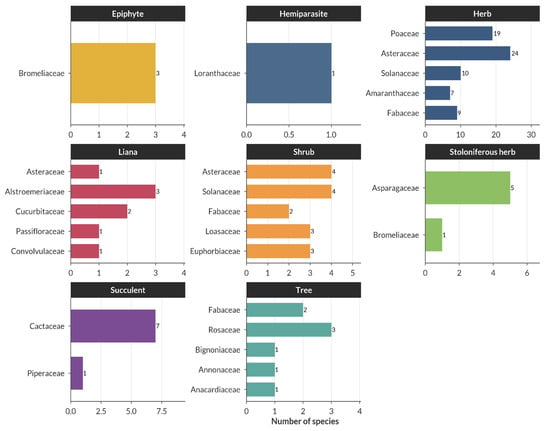
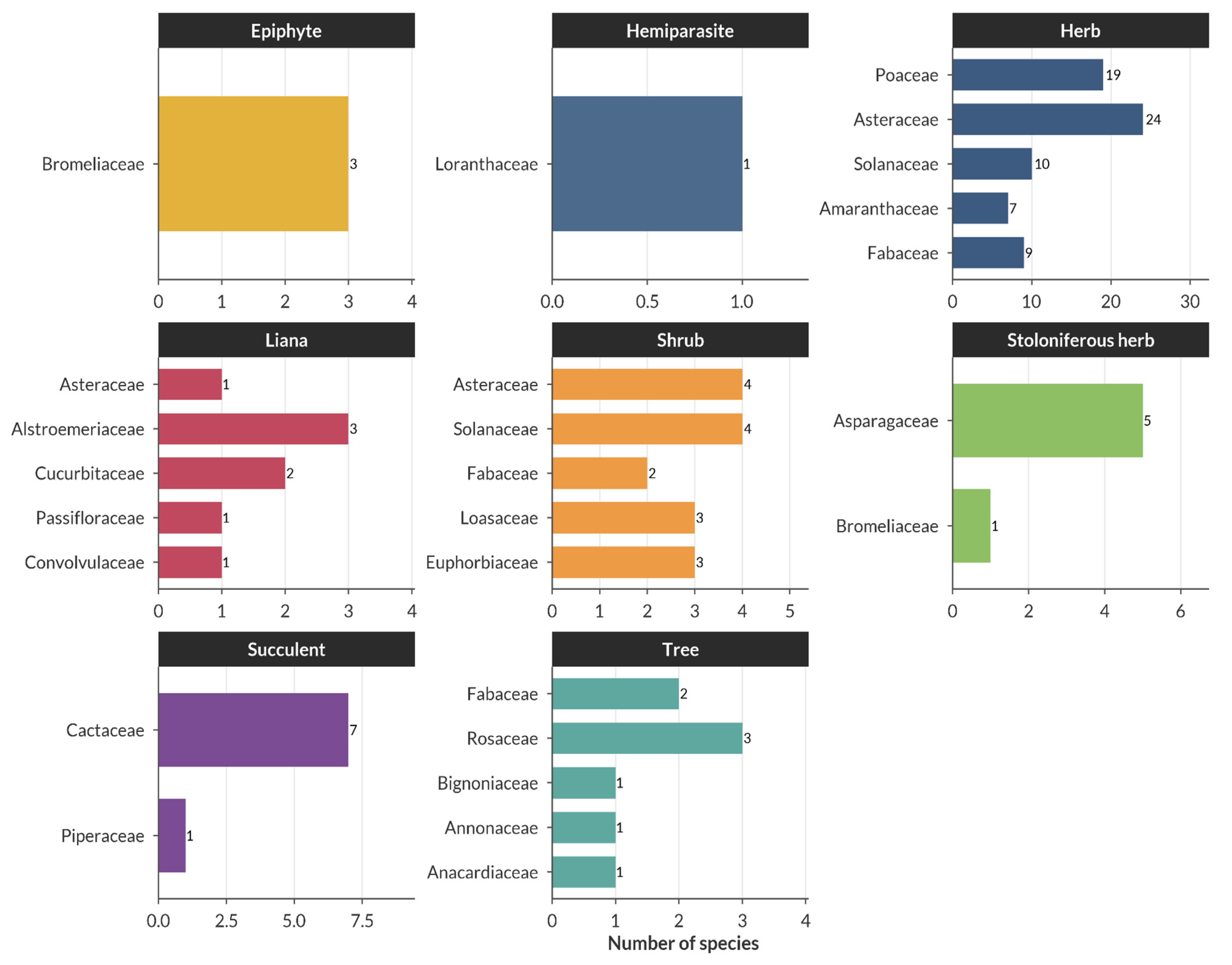
In terms of growth habits, herbaceous plants predominated, accounting for 66.3% of the recorded species. Shrubs accounted for 14.4%, followed by trees (6.4%). Succulents and vines accounted for 4.0%, while stolon-bearing herbaceous plants accounted for 3.0%. Epiphytes were rare (1.5%), and only one hemiparasitic species was recorded, accounting for 0.5% of the total. The taxonomic composition of growth forms showed a predominance of Asteraceae and Poaceae in the herbaceous stratum, while the other growth forms were represented by a smaller number of dominant families, whose main contributions are shown in Figure 3.
Figure 3.
The most representative botanical families based on growth habit.
3.2. Ecosystems
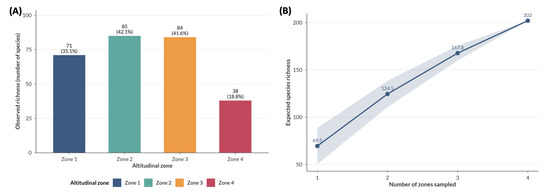
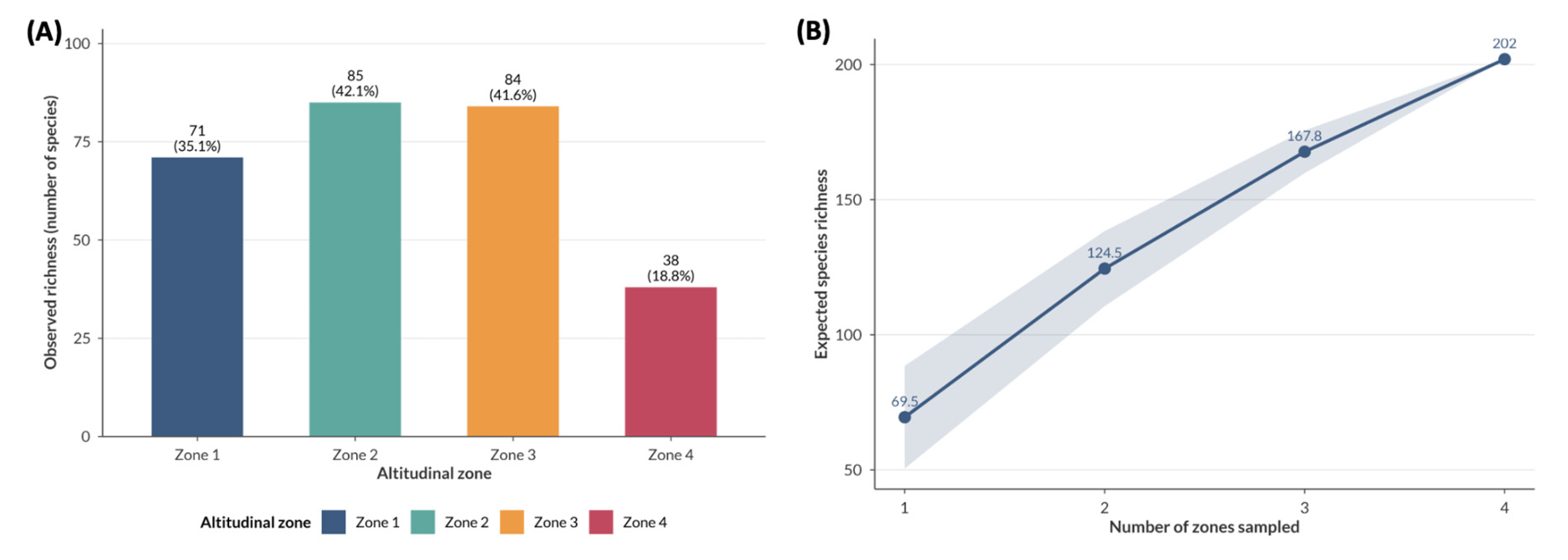
In the analysis of species richness by altitudinal zone (Figure 4A), Zone 1 recorded 71 species. Species richness increased in Zone 2, where it peaked at 85 species, and remained virtually constant in Zone 3, with 84 species. Finally, Zone 4 showed a marked decrease, recording the lowest species richness along the gradient with 38 species. Meanwhile, the species accumulation curve (Figure 4B) showed a gradual increase in expected species richness as altitudinal zones were added. With one sampled zone, the expected species richness was 69.5 species; with two zones, 124.5 species; with three zones, 167.8 species; and with all four zones included, it reached a cumulative value of 201.2 species.
Figure 4.
(A) Species richness observed by altitudinal zone. (B) Species accumulation curve for plant communities along the altitudinal gradient.
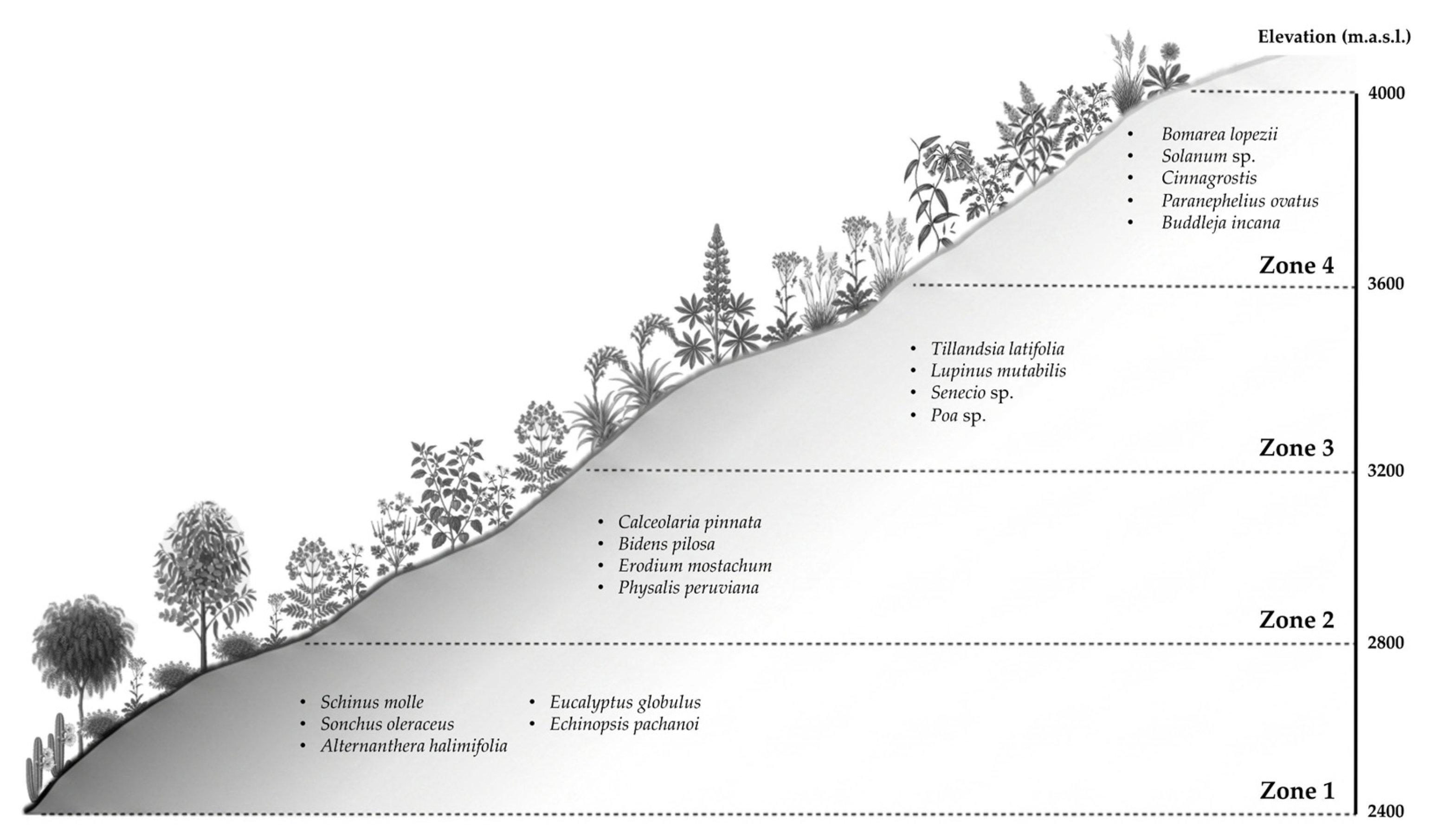
Species richness varied among the different growth forms along the altitudinal gradient (Figure 5). In all the areas evaluated, herbs were the predominant growth form, while the remaining groups were considerably less abundant and exhibited distinct distribution patterns across the altitudinal zones.
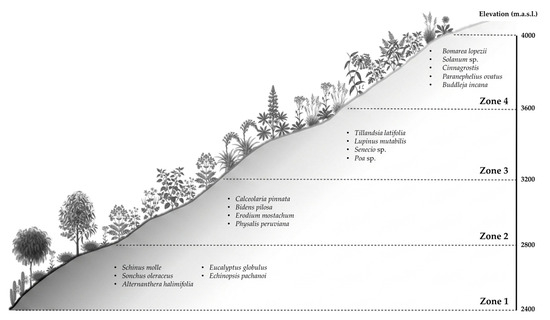
Figure 5.
Vegetation profile along an altitudinal gradient in the Sumbilca district, Peru.
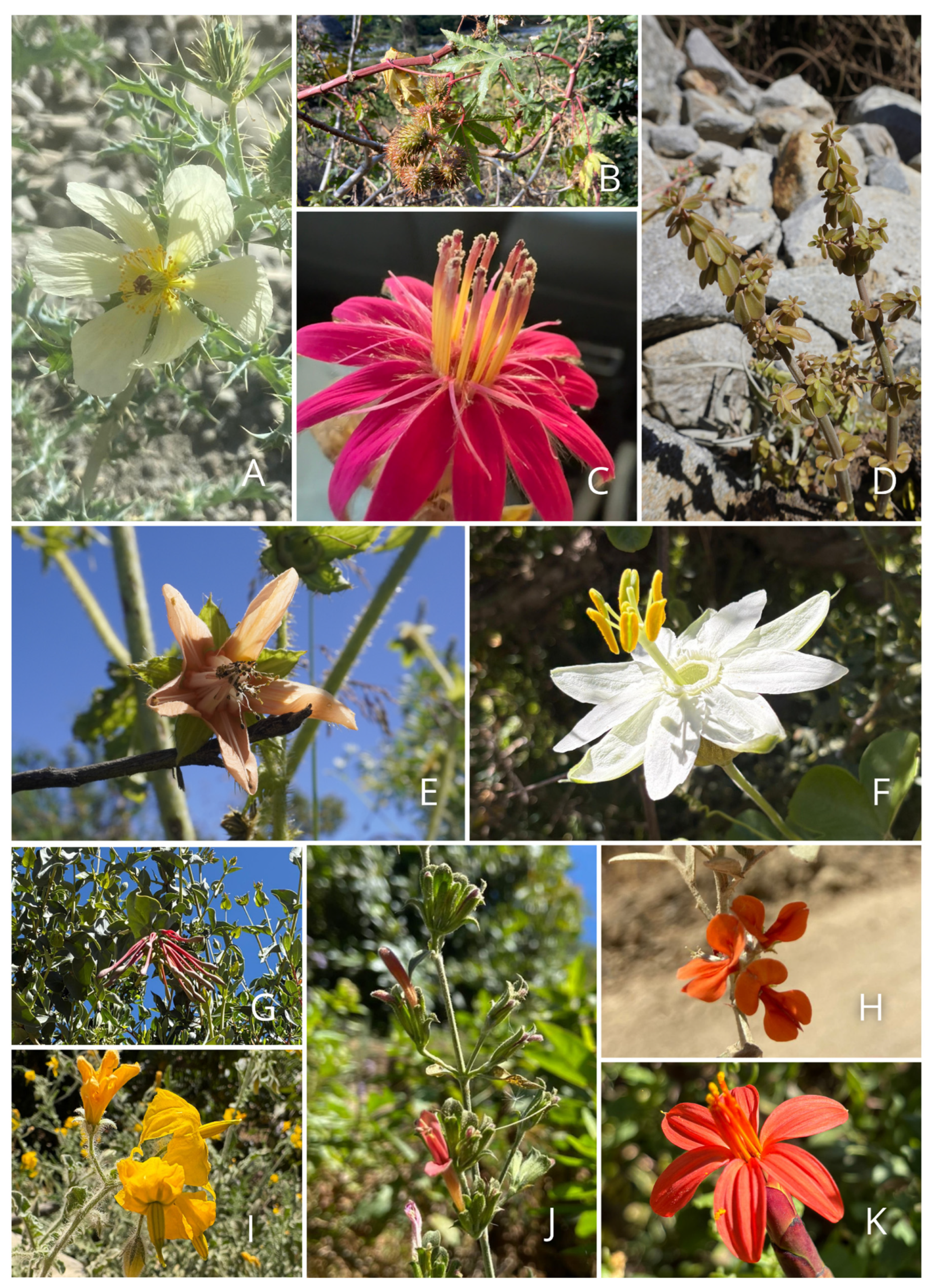
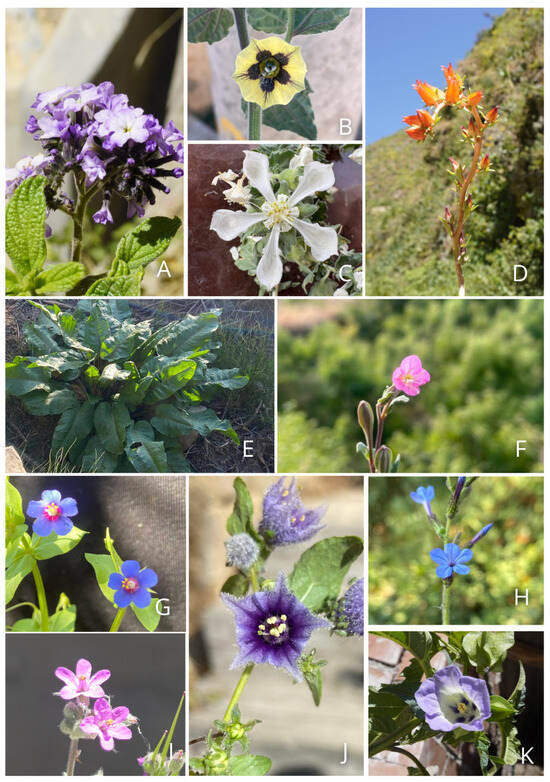
In Zone 1, herbaceous species predominated, with 45 species (63.4%), followed by shrubs (10; 14.1%) and trees (8; 11.3%). Succulents and vines accounted for 4 (5.6%) and 3 (4.2%), respectively, while stolon-bearing herbs were represented solely by Furcraea occidentalis (1; 1.4%). At the genus level, Heliotropium was the most diverse, with three species (H. curassavicum, H. arborescens (Figure 6A), and H. angiospermum), followed by Brassica, Ipomoea, Salvia, and Tropaeolum, with two species each.
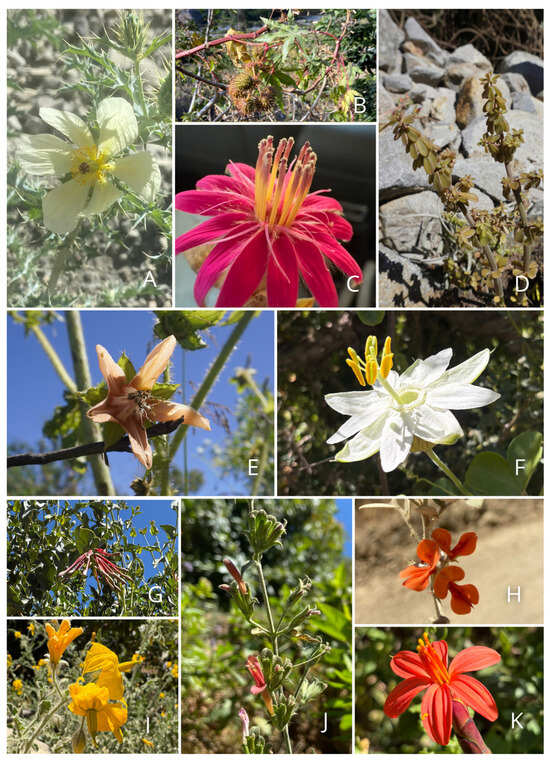
Figure 6.
Argemone subfusiformis (A), Ricinus communis (B), Barnadesia dombeyana (C), Peperomia inaequalifolia (D), Nasa magnifica (E), Passiflora cf. peduncularis (F), Tristerix longebracteatus (G), Indigofera suffruticosa (H), Solanum peruvianum (I), Dicliptera montana (J), Mutisia acuminata (K).
In Zone 2, herbaceous species predominated, with 59 species (69.4%), followed by shrubs (10; 11.8%) and trees (8; 9.4%). Stolon-bearing herbs were represented by 3 species (3.5%), while succulents and epiphytes each accounted for 2 species (2.4%). Lianas were represented by a single species, Mutisia acuminata (Figure 7K), accounting for only 1.2%. At the genus level, the most diverse genera were Dicliptera, Oxalis, and Solanum, with three species each.
Figure 7.
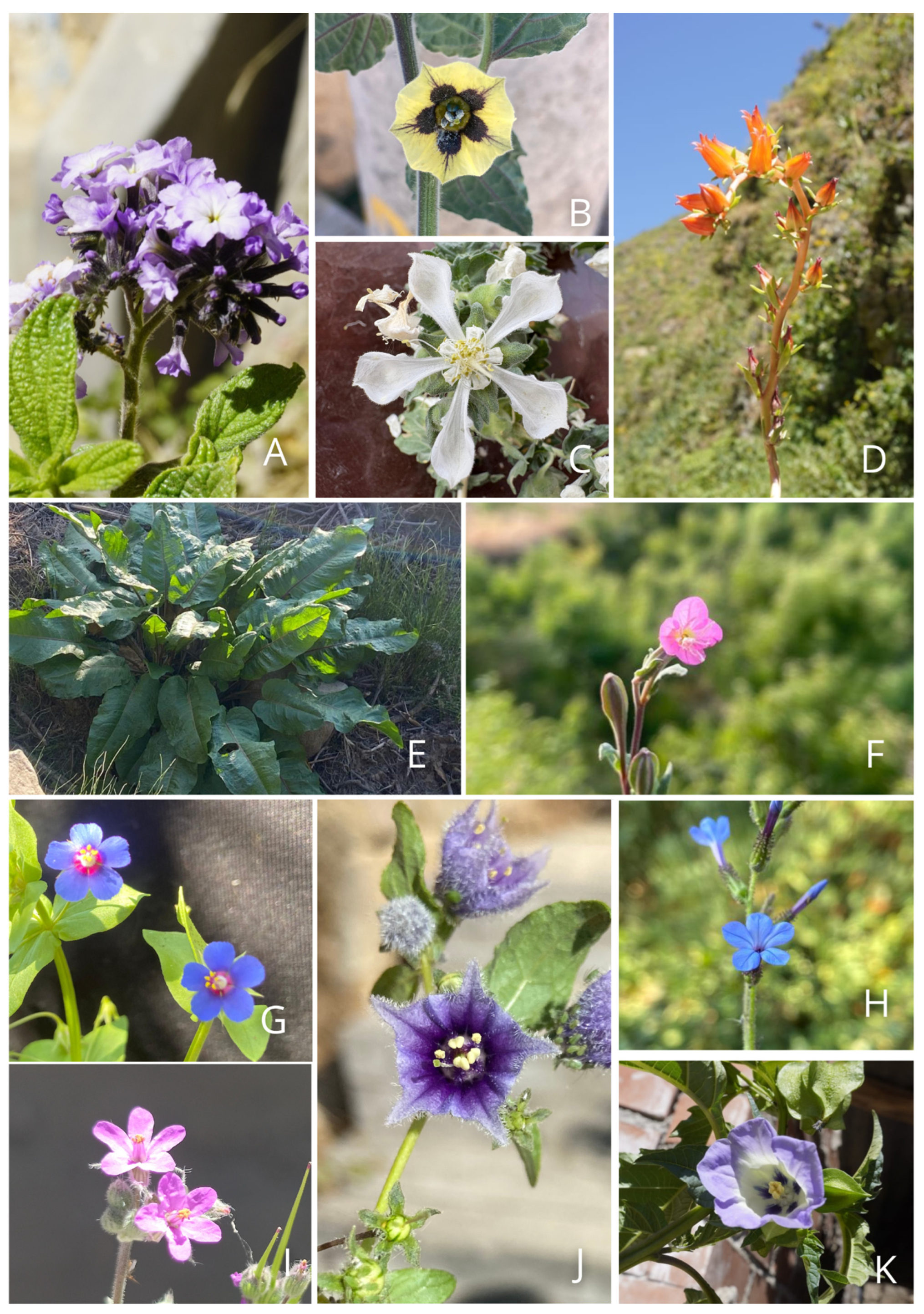
Heliotropium arborescens (A), Physalis peruviana (B), Presliophytum incanum (C), Echeveria deltoidea (D), Rumex obtusifolius (E), Oenothera rosea (F), Lysimachia arvensis (G), Plumbago caerulea (H), Erodium malacoides (I), Jaltomata dentata (J), Nicandra physalodes (K).
In Zone 3, herbaceous species predominated, with 59 species (70.2%), followed by shrubs (11; 13.1%) and succulent plants (5; 6.0%). Trees accounted for 3.6%, while vines and stolon-bearing herbs accounted for 2 (2.4%). Epiphytes were represented by a single species (1.2%), while hemiparasites also included a single species, Tristerix longebracteatus (Figure 7G); this was the only zone in which hemiparasitic species were recorded. At the genus level, the most diverse genera were Solanum, Senecio, and Poa, with three species each.
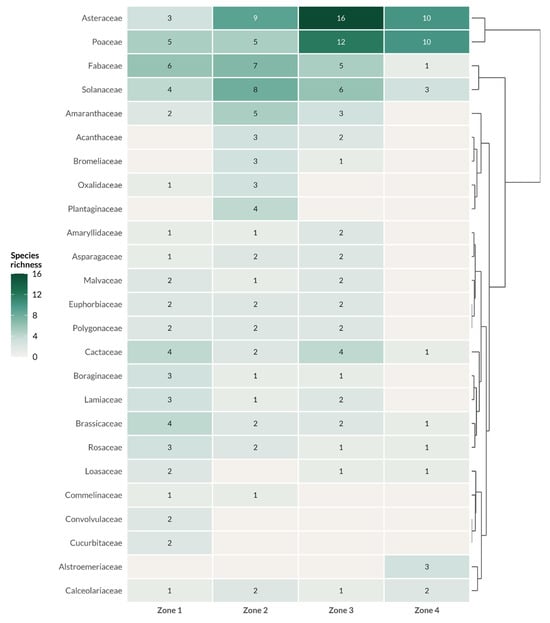
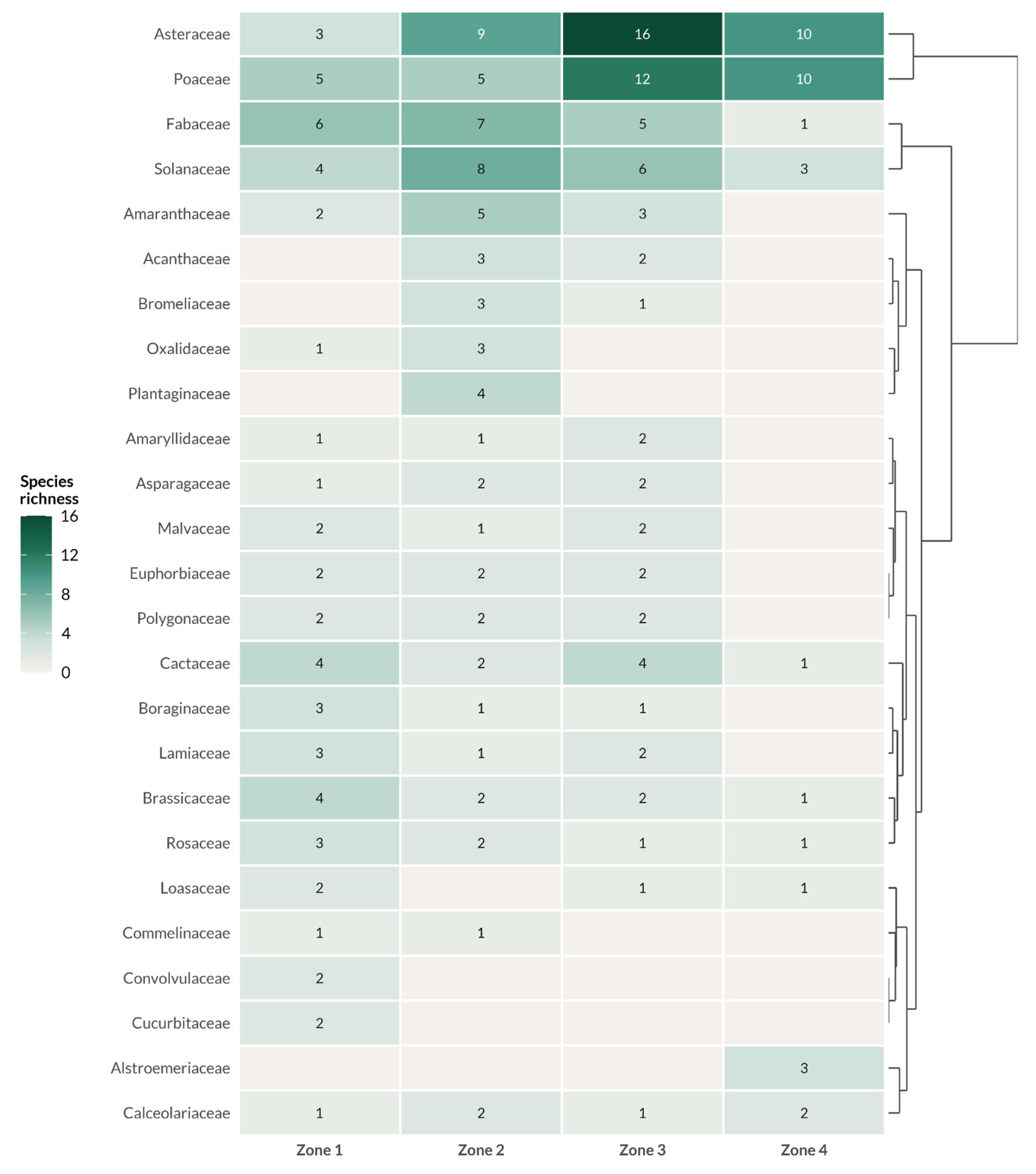
The heat map (Figure 8) revealed differences in the distribution patterns of botanical family richness along the altitudinal gradient. Asteraceae and Poaceae exhibited the highest richness values and a wide distribution across the evaluated zones, with a concentration in the highest-altitude zones (Z3 and Z4). In contrast, Solanaceae and Fabaceae showed variation in richness among zones, indicating changes in their composition along the gradient. Some families had a more restricted distribution; for example, Alstroemeriaceae was recorded exclusively in Z4.
Figure 8.
Number of recorded species and their distribution by botanical family across the four zones of the altitudinal gradient.
The dendrogram associated with the heat map grouped the families according to the similarity of their distribution patterns across altitudinal zones, primarily distinguishing families with greater species richness and wider distribution from those with lower species richness or more restricted distribution. In general terms, zones Z2 and Z3 had the greatest richness and diversity of families, while zone Z4 showed a decrease in the number of recorded taxa. However, zone Z4 still contained some exclusive or restricted-distribution families, reflecting differences in floristic composition among the various altitudinal levels.
3.3. Inferential Statistics
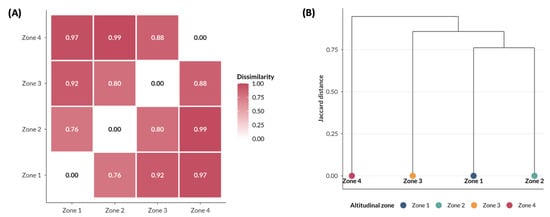
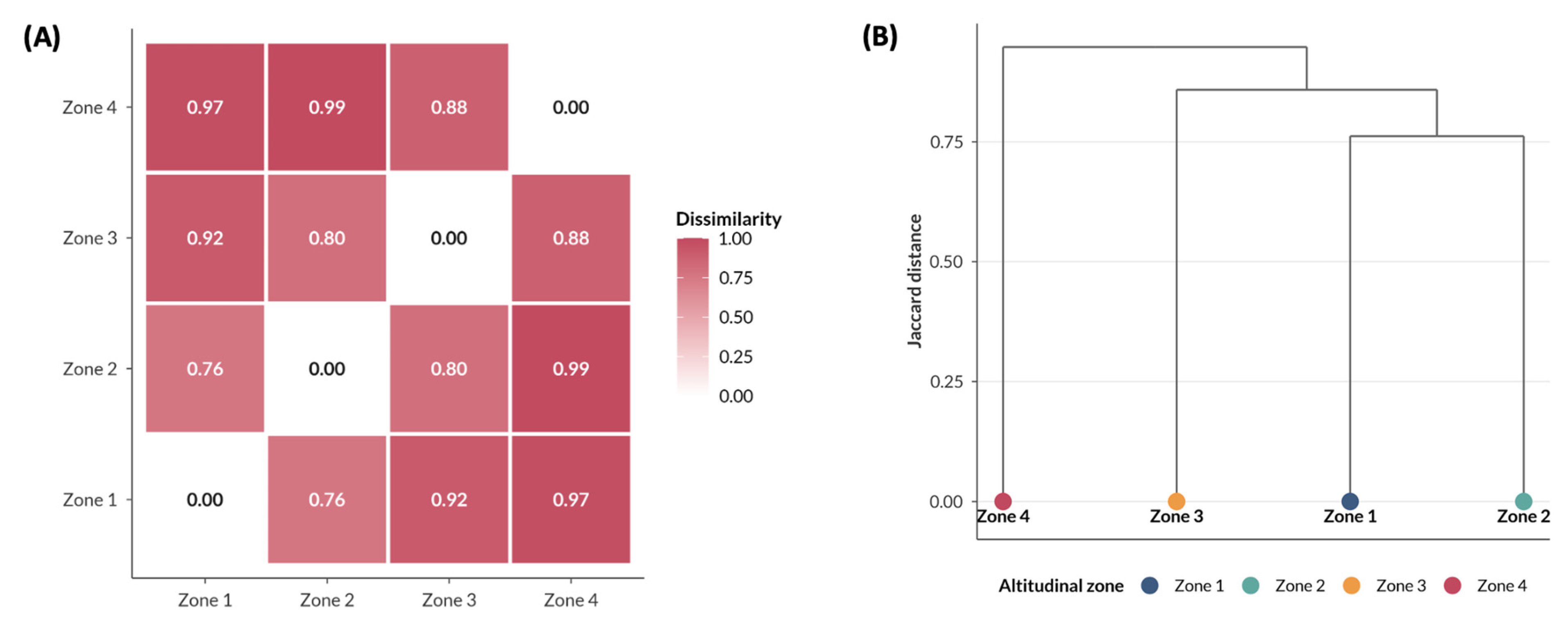
To assess the floristic exchange between the areas, the Jaccard dissimilarity was calculated (Figure 9A). The matrix showed that Zone 4 exhibited the highest levels of dissimilarity compared to Zone 1 (0.97), Zone 2 (0.99), and Zone 3 (0.88). In contrast, Zone 1 and Zone 2 showed lower dissimilarity (0.76), indicating greater homogeneity in their species composition. The hierarchical clustering dendrogram revealed patterns of floristic similarity among the evaluated zones (Figure 9B). Zones 1 and 2 showed the greatest compositional affinity, while Zone 3 was grouped at a greater distance. In contrast, Zone 4 stood apart as a distinct group, reflecting greater floristic distinctiveness compared to the other zones.
Figure 9.
Analysis of floristic dissimilarity among study areas. (A) Heat map based on the Jaccard dissimilarity matrix. (B) Hierarchical clustering dendrogram showing patterns of floristic similarity among areas.
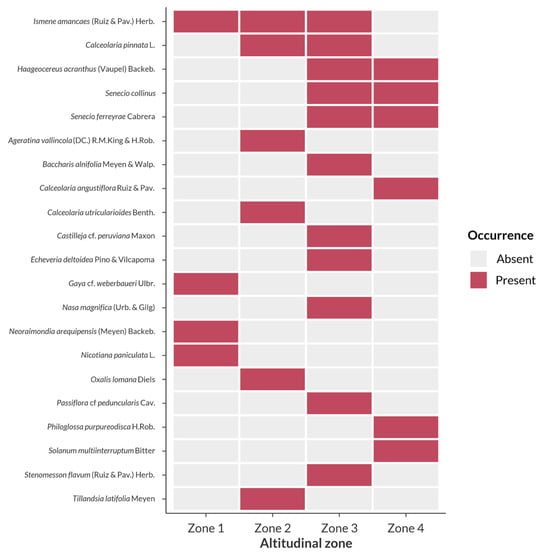
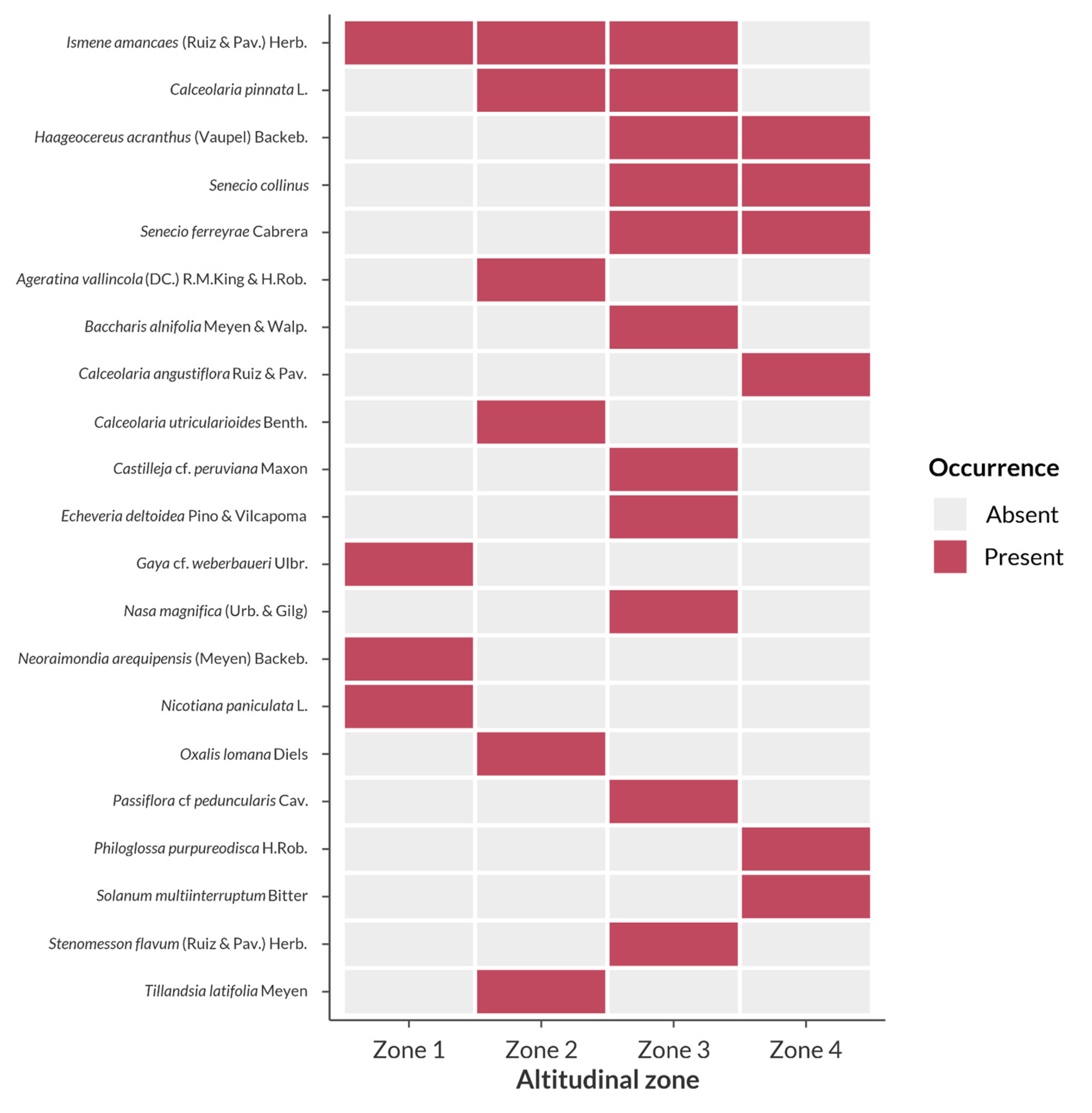
A total of 21 endemic species were recorded, with a heterogeneous distribution along the altitudinal gradient (Figure 10). Most were restricted to one or two zones, while only a small number occurred in three consecutive zones; no species was present in all four study zones. Overall, Zone 3 had the highest number of endemic species records, followed by Zones 2, 4, and 1.
Figure 10.
Presence–absence matrix of endemic plant species across the altitudinal gradient.
3.4. Threatened Flora
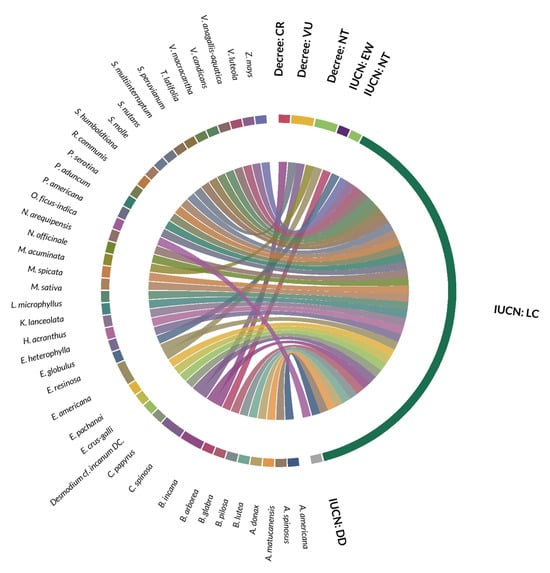
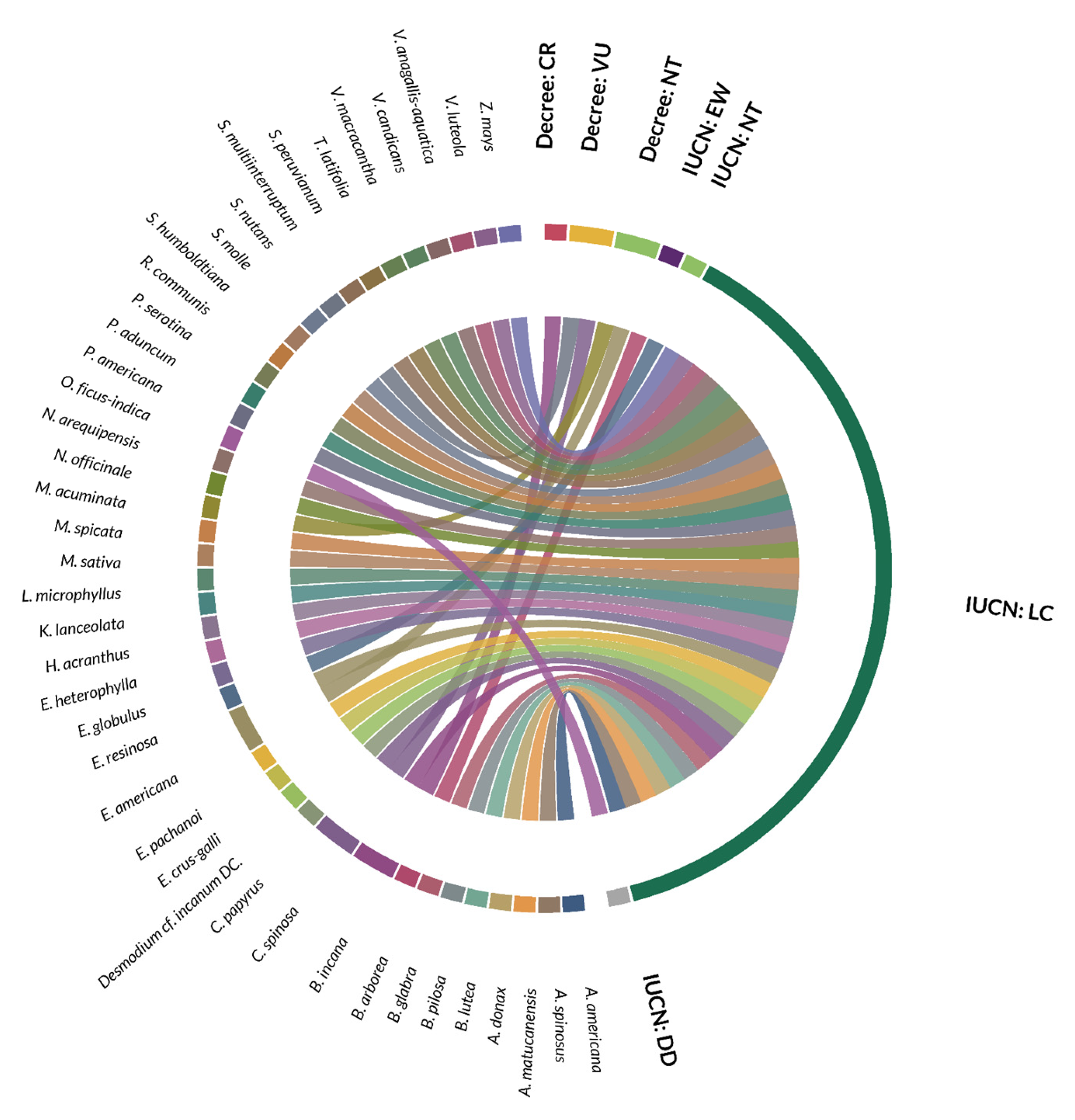
A total of 42 species were recorded with a conservation status recognized under national (Supreme Decree No. 043-2006-AG) and international (IUCN) criteria (Figure 11). According to the IUCN Red List, 40 species were assessed, of which 92.5% were classified as Least Concern (LC). The remaining categories included Near Threatened (NT), represented by Escallonia resinosa; Extinct in the Wild (EW), corresponding to Brugmansia arborea; and Data Deficient (DD), represented by Opuntia ficus-indica. Under the Peruvian legal framework (Supreme Decree No. 043-2006-AG), five species were classified into threat categories: Buddleja incana (critically endangered), Caesalpinia spinosa (vulnerable), Ephedra americana (near threatened), Mutisia acuminata (near threatened), and Senecio nutans (vulnerable).
Figure 11.
Flora listed as threatened according to the IUCN Red List and Supreme Decree No. 043–2006–AG.
4. Discussion
The high level of plant diversity recorded in the Sumbilca district (202 species, 140 genera, and 62 families) confirms that the ecosystems on the western slope of the Central Andes harbor considerable plant diversity, even in environments characterized by marked seasonal variations in water availability and significant topographic heterogeneity [37,49]. These results are consistent with the role of the tropical Andes as one of the world’s major centers of plant diversification, where altitudinal gradients generate a wide variety of environmental conditions that favor species replacement and the coexistence of floristic elements from different ecological zones [5,6,12,37]. The predominance of Asteraceae, Poaceae, Solanaceae, and Fabaceae is a widely documented pattern in the flora of the Central Andes and reflects the adaptation of these groups to mountain environments subject to extreme variations in temperature, solar radiation, and water availability [37,38,50,51].
Beltrán and Galán de Mera [50], in their catalog of angiosperms for the department of Lima, identify Asteraceae, Poaceae, Solanaceae, and Fabaceae as the most species-rich families, with Senecio and Baccharis as the most diverse genera within the Asteraceae. Gonzáles [51], in his review of this family for the same department, also found Senecio to be the dominant genus, followed by Baccharis and Werneria, and noted that species diversity—both total and endemic—is concentrated between 3000 and 3500 m in elevation. A similar generic pattern was documented by Ceroni-Stuva and Vilcapoma-Segovia [52] in Cajatambo, where Senecio, Baccharis, and Calceolaria were found to be the genera with the highest species richness; these same authors note that the predominance of Senecio and Baccharis is also observed in Oyón [53], Huarochirí [54], Canta [55], and Yauyos [56].
Asteraceae, the most diverse family in this study, includes numerous taxa adapted to conditions of high solar radiation, seasonal drought, and poorly developed soils—characteristic of high-Andean environments, where daily temperature ranges are often extreme and soil nutrient availability is low [57,58]. Poaceae, on the other hand, dominates grassland and puna environments due to the tolerance for low temperatures and grazing exhibited by genera such as Calamagrostis and Festuca [37,59,60,61], and constitutes the most representative floristic component of high-Andean grasslands subjected to low temperatures and cold, dry winds [62]. In Cajatambo, an increase in Poaceae species richness was also recorded above 3800 m in elevation, associated primarily with the genera Cinnagrostis and Poa [37]. In contrast, Solanaceae and Fabaceae show their greatest diversification in inter-Andean and montane environments, where they occupy a wide variety of open habitats and areas subject to varying levels of disturbance, reflecting high ecological plasticity [12].
The altitudinal distribution of floristic richness observed in Sumbilca reveals a marked process of floristic replacement driven by environmental filtering along the altitudinal gradient [63]. At lower elevations, species associated with dry shrublands and environments with greater anthropogenic influence predominated, while at higher elevations, the representation of herbaceous and gramineous species characteristic of high-Andean grasslands and puna environments increased [5,6]. This pattern is consistent with the decrease in temperature and increase in humidity with altitude, factors that alter resource availability and vegetation structure [5,14,64,65]. In the tropical Andes, elevation acts as a composite gradient that integrates temperature, radiation, humidity, soil depth, and disturbance frequency, resulting in marked floristic differentiation among altitudinal zones [6,13,64,65].
The elevational pattern of floristic richness observed in Sumbilca is generally consistent with patterns reported across the tropical Andes, where species richness often reaches its highest values at intermediate elevations before declining toward higher altitudes. Similar patterns have been documented in the northern and central Andes, including Colombia [66], southern Ecuador [67,68], and the eastern slopes of Peru and Bolivia [37,38,69]. In these regions, vascular plant richness commonly reaches its highest values between approximately 1500 and 3500 m, although the elevation and intensity of the richness peak vary among localities. This pattern is also evident in Sumbilca, where richness increased from Z1 to Z2 and remained high in Z3, with the highest values concentrated between 2800 and 3600 m. In contrast, richness declined sharply in Z4, where only 38 species were recorded above 3600 m. This decrease may reflect the transition toward the more open and arid puna vegetation characteristic of the Pacific slope of the Central Andes. Overall, these findings suggest that although mid-elevation peaks in plant richness are common across Andean ecosystems, their expression at the local scale is strongly influenced by topographic heterogeneity, changes in moisture availability, and environmental filtering at higher elevations [6,70].
This differentiation reflects a constant process of species replacement, driven by environmental transitions along the gradient [71]. The greater floristic affinity among the lower zones suggests shared climatic, edaphic, and disturbance conditions, which favor the persistence of taxa adapted to scrubland and anthropogenic impacts [72,73]. In contrast, the high dissimilarity in the upper zones results from severe environmental filtering imposed by low temperatures, high solar radiation, wind exposure, and shallow soils [5,74]. These constraints exclude species from lower elevations and favor specialized taxa in high-Andean ecosystems, thereby increasing landscape heterogeneity [12,73,75]. Consequently, the floristic uniqueness of high-altitude communities highlights their high conservation value, as they contribute endemic and complementary components to regional diversity, especially in terms of floristic turnover and beta-diversity [6,76].
The new records also enhance the district’s biogeographic value and highlight the importance of conducting systematic floristic inventories in intermediate areas of the western Andean slope, where significant distribution gaps persist [9,10]. The magnitude of this gap is directly related to the heterogeneity of local plant communities and the intensity of the sampling effort. Taxa such as Senecio collinus, Senecio ferreyrae and Calceolaria angustiflora are key examples of this pattern; their discovery in the area enriches the district’s floristic catalog and provides valuable data for understanding biogeographic connectivity and the composition of plant communities in this sector of the Andes.
The floristic differentiation among the assessed areas also has implications for conservation. The presence of species with restricted distributions and taxa classified as threatened indicates that the altitudinal gradient of Sumbilca harbors plant communities of high conservation value. Scrubland and puna habitats function as reservoirs of biodiversity, but they face pressures from agricultural expansion, overgrazing, and seasonal burning, which can lead to a loss of vegetation cover that reduces ecological connectivity and compromises the stability of high-Andean communities [7,8]. Nor is this threat unique to Sumbilca, as Cuba-Melly and Odar [22] documented, for the Granados hills in the same province, the progressive replacement of native vegetation cover by crops. The fact that this anthropogenic pressure is evident in both the coastal and inland sectors of Huaral underscores the urgency of establishing floristic baselines and conservation measures along the entire altitudinal gradient of the province. The results obtained underscore the importance of incorporating complete altitudinal gradients into floristic monitoring and land-use planning programs, and of maintaining ecological continuity from the inter-Andean valleys to the puna, given that species replacement along the altitudinal gradient is one of the main mechanisms underpinning regional diversity [13,14,37].
To address these pressures across the Huaral altitudinal gradient, conservation efforts must combine the protection of native vegetation with sustainable land management and community-based approaches, which are increasingly recognized as essential components of high-Andean ecosystem conservation [77,78]. Similar strategies have already proven successful in Peru through initiatives such as the MERESE-FIDA project, which promoted the conservation and sustainable management of native forests, grasslands, and wetlands in close collaboration with local communities [78]. Implementing targeted measures such as native vegetation restoration and controlled grazing practices provides a particularly relevant framework for Sumbilca, where safeguarding local scrubland and puna habitats is critical to preventing further vegetation degradation [78,79]. In particular, prioritizing the protection of native grasslands and remnant Polylepis forests in Sumbilca is vital due to their key role in sustaining regional biodiversity and fundamental ecosystem functions at high elevations [77,78]. Ultimately, incorporating these site-specific approaches into broader land-use planning will safeguard the ecological continuity of the entire altitudinal gradient, maintaining essential functional connections from the inter-Andean valleys up to the puna.
This study has some limitations that should be taken into account when interpreting the results. The inventory was based on intensive sampling using directed search transects, a methodology that maximizes species detection but does not allow for accurate estimates of relative abundance or population structure within communities. Sampling effort was also not entirely consistent across microhabitats and seasons, so some species with seasonal flowering or fruiting patterns may have been underrepresented. Finally, although a broad altitudinal gradient was assessed, the number of study sites was limited, and quantitative environmental variables—such as vegetation cover, soil moisture, or disturbance intensity—were not incorporated, which limits the ability to establish causal relationships between the observed floristic patterns and the underlying ecological factors. Despite these limitations, this study represents the most comprehensive floristic assessment conducted to date for the Sumbilca district and provides a fundamental baseline for future studies in ecology, biogeography, and conservation in the central Andes of Peru.
5. Conclusions
This study documents a considerable level of floristic diversity in the district of Sumbilca (202 species, 140 genera, and 62 families), confirming that the ecosystems of the western slope of the central Andes harbor substantial plant diversity despite pronounced hydric seasonality and strong topographic heterogeneity. The distribution of this richness along the altitudinal gradient was non-linear: an increase from Zone 1 toward a shared maximum in Zones 2 and 3 was followed by a marked decline in Zone 4, a pattern consistent with the progressive replacement of xerophytic shrubland communities by herbaceous and graminoid communities characteristic of the puna. This compositional turnover was further reflected in the high Jaccard dissimilarity values between Zone 4 and the remaining zones, as well as in the greater compositional affinity observed between Zones 1 and 2. The predominance of Asteraceae, Poaceae, Solanaceae, and Fabaceae, together with the dominance of the herbaceous habit, is consistent with patterns previously reported for the central Andes. The recording of 21 endemic species, concentrated mainly in Zone 3, and of five species classified as threatened under Peruvian Supreme Decree N.° 043-2006-AG (Buddleja incana, Caesalpinia spinosa, Ephedra americana, Mutisia acuminata, and Senecio nutans), together with several new records for Huaral province (e.g., Nasa magnifica, Tristerix longebracteatus), indicates that Sumbilca had been floristically undersampled and holds considerable conservation value. The species accumulation curve, which approached its asymptote (201.2 of an expected 202 species), supports the representativeness of the inventory. Nevertheless, because sampling was qualitative and did not include abundance estimates or quantitative environmental variables, this work should be regarded as a baseline, the most comprehensive floristic assessment available to date for the district, upon which future monitoring, ecological, and conservation studies along the western Andean slope should be built.
Author Contributions
Conceptualization, V.S.-L. and J.M.-B.; methodology, V.S.-L. and J.M.-B.; software, V.S.-L. and J.M.-B.; validation, J.M.-B., R.F.M., Y.Q.-G. and R.B.-C.; formal analysis, V.S.-L. and M.L.R.-S.; investigation, V.S.-L., J.M.-B., M.L.R.-S. and R.F.M.; resources, Y.Q.-G. and E.J.-P.; data curation, V.S.-L. and R.B.-C.; writing—original draft preparation, V.S.-L. and J.M.-B.; writing—review and editing, V.S.-L., J.M.-B., Y.Q.-G. and R.B.-C.; visualization, D.G.-T.; supervision, Y.Q.-G., D.G.-T. and E.J.-P.; project administration, E.J.-P.; funding acquisition, E.J.-P. All authors have read and agreed to the published version of the manuscript.
Funding
This research was funded by the Universidad Nacional Mayor de San Marcos (UNMSM) through the research project “Estimación de la diversidad florística, estructura y estado de conservación de los bosques relictos en territorios andino-amazónicos del perú con distintos niveles de actividad antrópica” (PSINFINV), grant number B25100642 (Resolution 012128-2025-R), Faculty of Biological Sciences.
Data Availability Statement
Data used in this study can be requested from the following authors via email: victor.santos2@unmsm.edu.pe, raphael.baca@unmsm.edu.pe.
Conflicts of Interest
The authors declare no conflicts of interest.
References
- Mittermeier, R.A.; Turner, W.R.; Larsen, F.W.; Brooks, T.M.; Gascon, C. Global biodiversity conservation: The critical role of hotspots. In Biodiversity Hotspots: Distribution and Protection of Conservation Priority Areas; Zachos, F.E., Habel, J.C., Eds.; Springer: Berlin/Heidelberg, Germany, 2011; pp. 3–22. [Google Scholar] [CrossRef] [Scilit]
- Yánez-Muñoz, M.H.; Jarrín-V, P.; Brito, M.J.; Román-Rr, R.; Astorquiza, J.M.; Baca, A.E.; Baker, P.A.; Bejarano-Muñoz, P.; Cuesta R, E.Y.; Freire, E.; et al. The Tropical Andes Biodiversity Hotspot: A Comprehensive Dataset for the Mira-Mataje Binational Basins. Sci. Data 2024, 11, 782. [Google Scholar] [CrossRef] [Scilit] [PubMed]
- Cuesta, F.; Muriel, P.; Beck, S.; Meneses, R.I.; Halloy, S.; Salgado, S.; Ortíz, E.; Becerra, M.T. Biodiversidad y Cambio Climático en los Andes Tropicales: Conformación de Una Red de Investigación Para Monitorear sus Impactos y Delinear Acciones de Adaptación; Red GLORIA-Andes: Quito, Ecuador, 2012. [Google Scholar]
- Gonda, C. Cambio Climático y Biodiversidad en los Andes Tropicales; Fundación Ambiente Y Recursos Naturales (FARN): Tacuari, Argentina, 2020. [Google Scholar]
- Körner, C. The use of ‘altitude’ in ecological research. Trends Ecol. Evol. 2007, 22, 569–574. [Google Scholar] [CrossRef] [Scilit] [PubMed]
- Cuesta, F.; Muriel, P.; Llambí, L.D.; Halloy, S.; Aguirre, N.; Beck, S.; Carilla, J.; Meneses, R.I.; Cuello, S.; Grau, A.; et al. Latitudinal and altitudinal patterns of plant community diversity on mountain summits across the tropical Andes. Ecography 2017, 40, 1381–1394. [Google Scholar] [CrossRef] [Scilit]
- Comer, P.J.; Valdez, J.; Pereira, H.M.; Acosta-Muñoz, C.; Campos, F.; Bonet García, F.J.; Claros, X.; Castro, L.; Dallmeier, F.; Rivadeneira, E.Y.D.; et al. Conserving Ecosystem Diversity in the Tropical Andes. Remote Sens. 2022, 14, 2847. [Google Scholar] [CrossRef] [Scilit]
- Brondizio, E.S.; Settele, J.; Díaz, S.; Ngo, H.T. Global Assessment Report on Biodiversity and Ecosystem Services of the Intergovernmental Science-Policy Platform on Biodiversity and Ecosystem Services; IPBES Secretariat: Bonn, Germany, 2019. [Google Scholar] [CrossRef]
- León, B.; Pitman, N.; Roque, J.E. Introducción a las plantas endémicas del Perú. Rev. Peru. Biol. 2006, 13, 9–22. [Google Scholar] [CrossRef] [Scilit]
- Ulloa, C.U.; Acevedo-Rodríguez, P.; Beck, S.; Belgrano, M.J.; Bernal, R.; Berry, P.E.; Brako, L.; Celis, M.; Davidse, G.; Forzza, R.C.; et al. An integrated assessment of the vascular plant species of the Americas. Science 2017, 358, 1614–1617. [Google Scholar] [CrossRef] [Scilit] [PubMed]
- Young, K.R.; Leon, B. Tree-line changes along the Andes: Implications of spatial patterns and dynamics. Philos. Trans. R Soc. B Biol. Sci. 2007, 362, 263–272. [Google Scholar] [CrossRef] [Scilit] [PubMed]
- Luebert, F.; Weigend, M. Phylogenetic insights into Andean plant diversification. Front. Ecol. Evol. 2014, 2, 27. [Google Scholar] [CrossRef] [Scilit]
- Rahbek, C. The role of spatial scale and the perception of large-scale species-richness patterns. Ecol. Lett. 2005, 8, 224–239. [Google Scholar] [CrossRef] [Scilit]
- McCain, C.M.; Grytnes, J.A. Elevational gradients in species richness. Encycl. Life Sci. 2010, 15, 1–10. [Google Scholar] [CrossRef] [Scilit]
- Homeier, J.; Breckle, S.W.; Günter, S.; Rollenbeck, R.T.; Leuschner, C. Tree diversity, forest structure and productivity along altitudinal and topographical gradients in a species-rich Ecuadorian montane rain forest. Biotropica 2010, 42, 140–148. [Google Scholar] [CrossRef] [Scilit]
- Rivera, R.; Reynel, C.; Giacomotti, J. Diversidad y composición florística en un área de bosque premontano en Satipo/Junín/Perú. Rev. Peru. 2024, 38, 261–279. [Google Scholar] [CrossRef] [Scilit]
- Giacomotti, J.; Reynel, C.; Fernandez-Hilario, R.; Revilla, I.; Palacios-Ramos, S.; Terreros-Camac, S.; Daza, A.; Linares-Palomino, R. Diversidad y composición florística en un gradiente altitudinal en Chanchamayo, selva central del Perú. Folia Amaz. 2021, 30, 1–14. [Google Scholar] [CrossRef] [Scilit]
- Monteagudo, A.; Villalba, M.; Pallqui, N.; Phillips, O.; Baker, T.; Lopez-Gonzalez, G.; Pickavance, G.; Chávez, W.; Vásquez, R.; Rojas, R.; et al. La impresionante diversidad y estructura del bosque tropical a través de una gradiente altitudinal en la selva central del Perú. Q’EUÑA 2023, 14, 7–27. [Google Scholar] [CrossRef] [Scilit]
- Oficio, N. ° 002-2020-A-MDS. Presupuesto Institucional de Apertura (PIA) 2020. Municipalidad Distrital de Sumbilca. Available online: https://www.leyes.congreso.gob.pe/Documentos/2016_2021/Consejo_Directivo/Documentos_Otras_Instituciones/OFICIO-002-2020-A-MDS.pdf (accessed on 20 June 2026).
- Lara Sandoval, D.G. La Adjudicación de Terrenos Comunales y el Derecho a la Tierra en la Comunidad Campesina de Sumbilca, 2023. Bachelor’s Thesis, Universidad César Vallejo, Trujillo, Peru, 2023. [Google Scholar]
- Van Dalen Luna, P.D. La Arqueología de Sumbilca (Huaral): Develando las características de una Sociedad Prehispánica Tardía Desconocida. Ñawpa Marca 2024, 4, 69–170. [Google Scholar] [CrossRef] [Scilit]
- Melly, N.C.; Odar, J. Diversidad de flora vascular de las lomas de granados y posibles amenazas a su conservación, provincia de Huaral, Lima–Perú. Biologist 2018, 16, 237–250. [Google Scholar] [CrossRef] [Scilit]
- Stuva, A.C.; Moya-Méndez, N.C.; Cepero, V.C. Taxonomía, ecología y conservación ex situ de las cactáceas de Lima. Zonas Áridas 2006, 10, 115–128. [Google Scholar]
- Ticona Cárdenas, R.J. Evaluación y Estado de Conservación de la Diversidad Biológica: Flora, Fauna y Recursos Hidrobiológicos del Valle de Huaral-Acos, Lima. Master’s Thesis, Universidad Nacional Jorge Basadre Grohmann, Tacna, Peru, 2014. [Google Scholar]
- Lopez Erazo, M.D. Valoración Social de Servicios Ecosistémicos en el Centro Poblado Cucapunco, Distrito Sumbilca, Provincia Huaral, Departamento Lima-2022. Bachelor’s Thesis, Universidad Privada del Norte, Trujillo, Peru, 2024. [Google Scholar]
- Chen, Y.; Jin, X. How Do Farmers Realize Their Rights on the Collective Land in Rural China? An Explanatory Framework for Deconstructing the Subject of Collective Land Ownership. Land 2023, 12, 1746. [Google Scholar] [CrossRef] [Scilit]
- Kier, G.; Mutke, J.; Dinerstein, E.; Ricketts, T.H.; Küper, W.; Kreft, H.; Barthlott, W. Global patterns of plant diversity and floristic knowledge. J. Biogeogr. 2005, 32, 1107–1116. [Google Scholar] [CrossRef] [Scilit]
- Quijas, S.; Schmid, B.; Balvanera, P. Plant diversity enhances provision of ecosystem services: A new synthesis. Basic Appl. Ecol. 2010, 11, 582–593. [Google Scholar] [CrossRef] [Scilit]
- Isbell, F.; Calcagno, V.; Hector, A.; Connolly, J.; Harpole, W.S.; Reich, P.B.; Scherer-Lorenzen, M.; Schmid, B.; Tilman, D.; van Ruijven, J.; et al. High plant diversity is needed to maintain ecosystem services. Nature 2011, 477, 199–202. [Google Scholar] [CrossRef] [Scilit] [PubMed]
- Roa-García, C.E.; Torres-González, A.M. Caracterización florística y estructural como línea de base para la restauración ecológica de bosques en la microcuenca del río Barbas, Colombia. Rev. Acad. Colomb. Cienc. Exactas Físicas Nat. 2021, 45, 190–207. [Google Scholar] [CrossRef] [Scilit]
- Mokany, K.; Westcott, D.A.; Prasad, S.; Ford, A.J.; Metcalfe, D.J. Identifying priority areas for conservation and management in diverse tropical forests. PLoS ONE 2014, 9, e89084. [Google Scholar] [CrossRef] [Scilit] [PubMed]
- Zhao, J. Identifying priority conservation areas to improve species-specific representation: Conservation. Nat. Rev. Biodivers. 2026, 2, 8. [Google Scholar] [CrossRef] [Scilit]
- Plan Integral de Gestión Ambiental de Residuos Sólidos (PIGARS)—Huaral—2016. Available online: https://sinia.minam.gob.pe/sites/default/files/siar-lima/archivos/public/docs/pigars-huaral-2016-1-100.pdf (accessed on 24 June 2026).
- Galán de Mera, A.; Beltrán, H.; Campos de la Cruz, J.; Linares Perea, E.; Montoya Quino, J.; Trujillo Vera, C.; Vicente Orellana, J.A. Diversidad de comunidades vegetales del Perú. Una revisión a través de una clasificación fitosociológica. Arnaldoa 2024, 31, 2. [Google Scholar] [CrossRef] [Scilit]
- Filgueiras, T.S.; Nogueira, P.E.; Brochado, A.L.; Guala, G.F. Caminhamento: Um método expedito para levantamentos florísticos qualitativos. Cad. Geociências 1994, 12, 39–43. [Google Scholar]
- D’Antraccoli, M.; Bedini, G.; Peruzzi, L. Next generation floristics: A workflow to integrate novel methods in traditional floristic research. Plant Biosyst. 2022, 156, 594–597. [Google Scholar] [CrossRef] [Scilit]
- Quinteros-Gómez, Y.; Macedo-Bedoya, J.; Santos-Linares, V.; Angeles-Alvarez, F.; Gómez-Ticerán, D.; Campos-De la Cruz, J.; Solis Sarmiento, J.; Salinas-Inga, A.; Valencia-Saavedra, Z. Floristic diversity and distribution pattern along an altitudinal gradient in the Central Andes: A case study of Cajatambo, Peru. Plants 2024, 13, 3328. [Google Scholar] [CrossRef] [Scilit] [PubMed]
- Quinteros-Gómez, Y.; Macedo-Bedoya, J.; Anlas-Rosado, F.; Yangua-Evangelista, S.; Angeles-Alvarez, F.; Azurín-Sotelo, S.; La Rosa-Sánchez, M.; Gómez-Ticerán, D.; Jara-Peña, E.; Campos-De la Cruz, J.; et al. Floristic composition and species conservation status in three Polylepis (Rosaceae) relict forests in Peru. Plants 2025, 14, 3537. [Google Scholar] [CrossRef] [Scilit] [PubMed]
- Brako, L.; Zarucchi, J.L. Catalogue of the Flowering Plants and Gymnosperms of Peru; Missouri Botanical Garden: St. Louis, MO, USA, 1993; Volume 45. [Google Scholar]
- Gentry, A.H. A Field Guide to the Families and Genera of Woody Plants of Northwest South America (Colombia, Ecuador, Peru), with Supplementary Notes on Herbaceous Taxa; University of Chicago Press: Chicago, IL, USA, 1996. [Google Scholar]
- Plants of the World Online. Available online: https://powo.science.kew.org/ (accessed on 25 June 2026).
- Decreto Supremo N.° 043-2006-AG—Aprueban Categorización de Especies Amenazadas de Flora Silvestre. Available online: https://cdn.www.gob.pe/uploads/document/file/944738/D.S.-N-043-2006-AG—Aprueban-Categorizacin-de-Especies-Amenazadas-de-Flora-Silvestre20200705-25584-3pd55e.pdf?v=1594007698 (accessed on 25 June 2026).
- Posit Team. RStudio: Integrated Development Environment for R. Available online: http://www.posit.co/ (accessed on 20 July 2026).
- Oksanen, J.; Simpson, G.L.; Blanchet, F.G.; Kindt, R.; Legendre, P.; Minchin, P.R.; O’Hara, R.B.; Solymos, P.; Stevens, M.H.H.; Szoecs, E.; et al. Vegan: Community Ecology Package, Version 2.7-2. Available online: https://CRAN.R-project.org/package=vegan (accessed on 20 July 2026).
- Wickham, H. Ggplot2: Elegant Graphics for Data Analysis; Springer-Verlag: New York, NY, USA, 2016. [Google Scholar] [CrossRef] [Scilit]
- de Vries, A.; Ripley, B.D. Ggdendro: Create Dendrograms and Tree Diagrams Using ‘ggplot2’, Version 0.2.0. Available online: https://CRAN.R-project.org/package=ggdendro (accessed on 20 July 2026).
- Pedersen, T.L. Patchwork: The Composer of Plots, Version 1.3.2. Available online: https://CRAN.R-project.org/package=patchwork (accessed on 21 July 2026).
- Gu, Z.; Gu, L.; Eils, R.; Schlesner, M.; Brors, B. Circlize implements and enhances circular visualization in R. Bioinformatics 2014, 30, 2811–2812. [Google Scholar] [PubMed]
- Pennington, R.T.; Lavin, M.; Särkinen, T.; Lewis, G.P.; Klitgaard, B.B.; Hughes, C.E. Contrasting plant diversification histories within the Andean biodiversity hotspot. Proc. Natl. Acad. Sci. USA 2010, 107, 13783–13787. [Google Scholar] [CrossRef] [Scilit] [PubMed]
- Beltrán, H.; Galán de Mera, A. Las Angiospermas del Departamento de Lima (Perú): Diversidad y Patrones de Distribución. Arnaldoa 2021, 28, 217–242. [Google Scholar] [CrossRef]
- Gonzáles, P. Riqueza y distribución de Asteraceae en el departamento de Lima (Perú). Arnaldoa 2016, 23, 111–134. [Google Scholar]
- Ceroni-Stuva, A.; Vilcapoma-Segovia, G. Composición florística y estado de conservación de plantas vasculares del distrito de Cajatambo, Lima, Perú. Ecol. Apl. 2020, 19, 132–146. [Google Scholar] [CrossRef] [Scilit]
- Kahn, F.; Millán, B.; Cano, A.; La Torre, M.I.; Baldeón, S.; Beltrán, H.; Trinidad, H.; Castillo, S.; Machahua, M. Contribución a la flora altoandina del distrito de Oyón, región Lima, Perú. Rev. Peru. Biol. 2016, 23, 67–72. [Google Scholar] [CrossRef] [Scilit][Green Version]
- Aquino, W.; Condo, F.; Romero, J.; Yllaconza, R.; La Torre, M.I. Composición florística del distrito de Huarochirí, provincia de Huarochirí (Lima, Perú). Arnaldoa 2018, 25, 877–922. [Google Scholar] [CrossRef] [Scilit]
- Gonzáles, P.; Navarro, E.; La Torre, M.I.; Cano, A. Flora y vegetación del distrito de Santa Rosa de Quives, provincia de Canta (Lima). Arnaldoa 2015, 22, 155–182. [Google Scholar]
- Trinidad, H.; Cano, A. Composición florística de los bosques de Polylepis Yauyinazo y Chaqsii Chaqsii, Reserva Paisajística Nor Yauyos Cochas, Lima. Rev. Peru. Biol. 2016, 23, 271–286. [Google Scholar] [CrossRef] [Scilit][Green Version]
- Liesenfeld, V.; Gentz, P.; De Freitas, E.M.; Martins, S. Leaf morphology and anatomy of Asteraceae of the Pampas biome (sand-fields). Flora 2019, 258, 151418. [Google Scholar] [CrossRef] [Scilit]
- Morello, J.; Matteucci, S.D.; Rodríguez, A.F.; Silva, M.E. Ecorregiones Y Complejos Ecosistémicos Argentinos; Orientación Gráfica Editora: Buenos Aires, Argentina, 2012. [Google Scholar]
- Duvall, M.R.; Noll, J.D.; Minn, A. Phylogenetics of Paniceae (Poaceae). Am. J. Bot. 2001, 88, 1988–1992. [Google Scholar] [CrossRef] [Scilit]
- Peterson, P.M. Poaceae (Gramineae). In ELS; John Wiley & Sons, Ltd.: Hoboken, NJ, USA, 2013. [Google Scholar]
- Tito, E.; Aguirre, L.; Flores, E. Impacto de la intensidad de pastoreo en el vigor y peso de Festuca humilior (Nees & Meyen) y Calamagrostis vicunarum (Weddell). Ecol. Apl. 2024, 23, 89–98. [Google Scholar] [CrossRef] [Scilit]
- Gutiérrez, H.; Castañeda, R. Diversidad de las gramíneas (Poaceae) de Lircay (Angaraes, Huancavelica, Perú). Ecol. Apl. 2014, 13, 23–33. [Google Scholar] [CrossRef] [Scilit]
- Jiang, Z.; Ma, K. Environmental filtering drives herb community composition and functional trait changes across an elevational gradient. Plant Ecol. Evol. 2015, 148, 301–310. [Google Scholar] [CrossRef] [Scilit][Green Version]
- Camacho, L.F.; Schwartz, N.; Avilés, L. Vegetation structural complexity across elevational gradients: Insights from the tropical Andes. J. Biogeogr. 2025, 52, e15102. [Google Scholar] [CrossRef] [Scilit]
- Fries, A.; Rollenbeck, R.; Nauß, T.; Peters, T.; Bendix, J. Near surface air humidity in a megadiverse Andean mountain ecosystem of southern Ecuador and its regionalization. Agric. For. Meteorol. 2012, 152, 17–30. [Google Scholar] [CrossRef] [Scilit]
- Kessler, M.; Grytnes, J.A.; Halloy, S.R.; Kluge, J.; Krömer, T.; León, B.; Macía, M.J.; Young, K.R. Gradients of plant species richness in the Andes: A global comparison. In Ecosystem Services and Global Change in the Andes; Kappelle, M., Ed.; Oxford University Press: Oxford, UK, 2011; pp. 115–128. [Google Scholar]
- Jiménez, M.; Ansaloni, R.; Citterio, S.; Minga, D. Exploring plant α- and β-diversity patterns along tropical altitudinal gradients in the Southern Andes of Ecuador: A potential pathway to biodiversity conservation. Plant Biosyst. 2026. [Google Scholar] [CrossRef] [Scilit]
- Vieira, I.; Herrera, I.; Vargas, A.; Panchana, K.; Espinoza-Maticurena, A.; Dillon, I.; Goncalves, E.; Barros, A.; Ferrer-Paris, J.R.; López-Pujol, J. Native and non-native plant richness and diversity along an elevational gradient in the Ecuadorian Andes. Alp. Bot. 2026, 136, 131–148. [Google Scholar] [CrossRef] [Scilit]
- Kessler, M. Patterns of diversity and range size of selected plant groups along an elevational transect in the Bolivian Andes. Biodivers. Conserv. 2001, 10, 1897–1921. [Google Scholar] [CrossRef] [Scilit]
- Bañares-de-Dios, G.; Macía, M.J. Woody plant taxonomic, functional, and phylogenetic diversity decrease along elevational gradients in Andean tropical montane forests: Environmental filtering and arrival of temperate taxa. Plant Divers. 2024, 46, 491–501. [Google Scholar] [CrossRef] [Scilit] [PubMed]
- Doležal, J.; Šrůtek, M. Altitudinal changes in composition and structure of mountain-temperate vegetation: A case study from the Western Carpathians. Plant Ecol. 2002, 158, 201–221. [Google Scholar] [CrossRef] [Scilit]
- Fuentes-Lillo, E.; Pauchard, A. Invasiones en montañas: ¿Cuánto hemos avanzado en los últimos 10 años y cuáles son los desafíos para los ecosistemas de los Andes? Gayana Bot. 2019, 76, 141–155. [Google Scholar] [CrossRef] [Scilit][Green Version]
- Josse, C.; Cuesta, F.; Navarro, G.; Barrena, V.; Cabrera, E.; Chacón-Moreno, E.; Ferreira, W.; Peralvo, M.; Saito, J.; Tovar, A. Ecosistemas de los Andes del Norte y Centro. Bolivia, Colombia, Ecuador, Perú y Venezuela; Secretaría General de la Comunidad Andina; Programa Regional ECOBONA-Intercooperation; CONDESAN-Proyecto Páramo Andino; Programa BioAndes; EcoCiencia; NatureServe; IAvH; LTA-UNALM; ICAE-ULA; CDC-UNALM; RUMBOL SRL: Lima, Peru, 2009. [Google Scholar]
- Cushquicullma-Colcha, D.F.; Ati-Cutiupala, G.M.; Guilcapi-Pacheco, E.D.; Villacis-Uvidia, J.F.; Brito-Mancero, M.Y.; Vaca-Cárdenas, P.V.; Vasco-Lucio, M.M.; Muñoz-Jácome, E.A.; Vaca-Cárdenas, M.L. Influence of altitude and climatic factors on the floristic composition of the moorlands of the Guamote Canton, Ecuador: Key revelations for conservation. Sustainability 2025, 17, 383. [Google Scholar] [CrossRef] [Scilit]
- Anthelme, F.; Beck, S.; Ginot, P.; Garcia-Lino, M.C.; Meneses, R.I. Ecosistemas y plantas altoandinos de la cordillera real: únicos y frágiles. In La Cordillera Real Y Sus Plantas; IRD & Herbario Nacional de Bolivia: La Paz, Bolivia, 2015; pp. 17–30. [Google Scholar]
- Huamán Tapara, J.C.; Huamán Tapara, E.; Carlo, H.A.; Rojas Flores, V.Y.; Campos Albornoz, M.E. Evaluación florística y ecológica del ecosistema altoandino Sachapata Nuñoa, Puno-Perú para su conservación. Alfa Rev. Investig. Cienc. Agronóm. Vet. 2025, 9, 646–662. [Google Scholar] [CrossRef] [Scilit]
- Segovia-Salcedo, M.C.; Caiza Guamba, J.C.; Kessler, M.; Ramsay, P.M.; Boza Espinoza, T.E.; Renison, D.; Quispe-Melgar, H.R.; Urquiaga-Flores, E.; Rodriguez-Caton, M.; Ames-Martínez, F.N.; et al. How to Advance the Conservation of Polylepis Forests and Their Biodiversity? Neotrop. Biodivers. 2021, 7, 318–326. [Google Scholar] [CrossRef] [Scilit]
- Mosquera, G.M.; Marín, F.; Stern, M.; Bonnesoeur, V.; Ochoa-Tocachi, B.F.; Román-Dañobeytia, F.; Crespo, P. Progress in Understanding the Hydrology of High-Elevation Andean Grasslands under Changing Land Use. Sci. Total Environ. 2022, 804, 150112. [Google Scholar] [CrossRef] [Scilit] [PubMed]
- Ministerio del Ambiente (MINAM). Proyecto MERESE-FIDA: Conservación Y Uso Sostenible de Los Ecosistemas Altoandinos Del Perú a Través Del Pago Por Servicios Ambientales Para El Alivio de La Pobreza Rural Y La Inclusión Social; Ministerio del Ambiente: Lima, Peru, 2020.

Disclaimer/Publisher’s Note: The statements, opinions and data contained in all publications are solely those of the individual author(s) and contributor(s) and not of MDPI and/or the editor(s). MDPI and/or the editor(s) disclaim responsibility for any injury to people or property resulting from any ideas, methods, instructions or products referred to in the content. |
© 2026 by the authors. Licensee MDPI, Basel, Switzerland. This article is an open access article distributed under the terms and conditions of the Creative Commons Attribution (CC BY) license.