


Abstract
Mescaline, the primary bioactive alkaloid found in Peyote and San Pedro cactus, has been used in traditional medicine for centuries and is now attracting renewed interest for clinical applications. The purpose of this systematic review was to search the literature for studies reporting the use of mescaline to address the gap in our understanding of mescaline use and its impact. References were exported from PubMed, Scopus, Embase, and Cochrane. Included studies contained patient data pertaining to mescaline, primary sources for beliefs on the use of mescaline as traditional medicine, and a range of psychiatric conditions. Excluded studies included unpublished studies, animal studies, and studies without English full-texts available. Of 2770 imported references, 66 met the inclusion criteria, with only 10 being found suitable for analysis. Studies reported therapeutic effects such as improvements in depression scales, well-being, nicotine dependence, alcohol use, and obsessions. Bayesian analysis found that certain effects were frequently reported, such as hypertension, headache, nausea, and vomiting. The existing literature on mescaline is limited and of highly variable quality, preventing definitive conclusions regarding the prevalence of psychological and somatic effects from mescaline and mescaline-containing ethnobotanicals. Additional research is needed to determine the safety profile of mescaline. Given the prevalence of Peyote use in the Native American Church, the collaboration of the Native American Church and regional hospitals/poison centers is recommended to create a registry to allow for standardized and clinically applicable data collection on the effects of mescaline in prevalent populations.
1. Introduction
Nonadherence to psychiatric medications remains a persistent challenge in mental healthcare, with rates ranging from 40 to 60% across various psychiatric conditions [1,2,3,4]. Among multiple contributing factors, medication side effects and perceived limited effectiveness drive many individuals to discontinue, reduce, or seek alternative treatments [5,6,7]. Mescaline (3,4,5-trimethoxyphenethylamine), a bioactive alkaloid found in Peyote (Lophophora williamsii) and San Pedro cactus (Trichocereus pachanoi), represents one such alternative that has been used in traditional medicine for centuries and is now attracting renewed clinical and research attention [8,9,10]. Mescaline is one of the oldest psychedelics studied by Western scientists, with Arthur Heffter first demonstrating that it is the primary active alkaloid in Peyote through a series of experiments in the late 1890s [11]. The Native American Church (NAC), with members stemming from tribes including the Navajo, has long been known to use Peyote not only as a sacrament in their religious practices, but also as a treatment for a variety of physical and psychological ailments [12,13,14]. With this context in mind, psychiatrists in the 1950s began to experiment with mescaline to study its potential psychotherapeutic effects for a variety of psychiatric disorders [11]. However, due in part to psychedelics’ association with the 1960s hippie counter-culture movement, as well as the increased regulations on clinical research that came with the Drug Amendments of 1962, psychedelic research in humans all but halted by 1976 and would not restart until 1994 [15]. This did not stop the consumption of mescaline and mescaline-related compounds by the general public, such as those in the rave or party scenes [16,17,18].
As psychedelic research expands for treatment-resistant depression, mescaline’s therapeutic mechanisms and potential risks require systematic evaluation, particularly given its distinct pharmacology and limited modern clinical investigation [15]. Like other psychedelics, mescaline primarily acts through the serotonin 5-HT2A receptor as a partial agonist [19]. Mescaline also binds to the serotonin 5-HT1A receptor, the α1-adrenergic receptor, the dopamine receptors D1/2/3, and the trace amine-associated receptor 1 [19]. Although the receptor activity of mescaline has been explored in both animal and human studies, a systematic review of modern clinical data regarding the use of mescaline for psychiatric purposes is missing [19].
The purpose of this systematic review was to search the literature for studies reporting the use of mescaline to address the gap in our understanding of mescaline use and impact, and to establish a baseline of the current literature as of 2026.
2. Methods
2.1. Inclusion and Exclusion Criteria
For this review, studies met the inclusion criteria if they included original patient data pertaining to mescaline/mescaline-containing plants, were primary sources for beliefs/opinions on the use of mescaline/mescaline-containing plants as traditional/indigenous medicine, and had English full-texts available. Additionally, in congruence with our search syntax, inclusion criteria consisted of a broad range of psychiatric conditions, including mood, anxiety, psychotic, and substance use disorders, along with relevant ethnopharmacological and traditional medicine contexts across all database searches. Exclusion criteria included unpublished studies (non-peer-reviewed studies or study protocols with no data), animal studies, and studies without English full-texts available. Only studies identified as quantitative or mixed methods were included in this review.
2.2. Search Strategy and Study Eligibility
The protocol of this review was prospectively registered in PROSPERO as CRD420251184986. The full search syntax databases, including keywords and MeSH terms, can be seen in Supplementary File S1. Using the Covidence systematic review management program, two researchers independently evaluated each reference against the inclusion/exclusion criteria, with any disagreements being adjudicated by a third researcher. A completed PRISMA checklist can be seen in Supplementary File S4 [20].
2.3. Data Extraction and Quality/Risk of Bias Assessment
Two researchers independently conducted data extractions, which were compared in order to form a consensus. Any disagreements between the data extractions were adjudicated by a third researcher. Similarly, quality and risk of bias were assessed by two researchers, with disagreements being adjudicated by a third researcher using the Joanna Briggs Institute’s Checklist for Case Reports, the National Institute of Health’s study quality assessment tools (Observational Cohort and Cross-Sectional Studies; Case Series Studies), and the Risk Of Bias In Non-randomized Studies—of Interventions [21,22,23].
2.4. Analysis
Heterogeneity in studies was assessed using the Higgins Index (I2). Due to the significant variance in historical reporting and sample sizes, a Bayesian framework was utilized to provide a more robust interpretation than simple frequency reporting. This approach allows for the integration of high-fidelity clinical trials as ‘priors’, ensuring that small sample case reports do not disproportionately skew the safety profile. A Gaussian–Poisson prior was also created based on established clinical baselines to operationalize ‘frequently reported’ effects as those exceeding a 95% credible interval. This quantifies the conditional probability of adverse events, demonstrating that risk is a function of the clinical environment rather than an inherent property of the substance. All analyses and subsequent visualizations were performed in Python 3.10 using Pandas, NumPy, SciPy, and Matplotlib as libraries.
3. Results
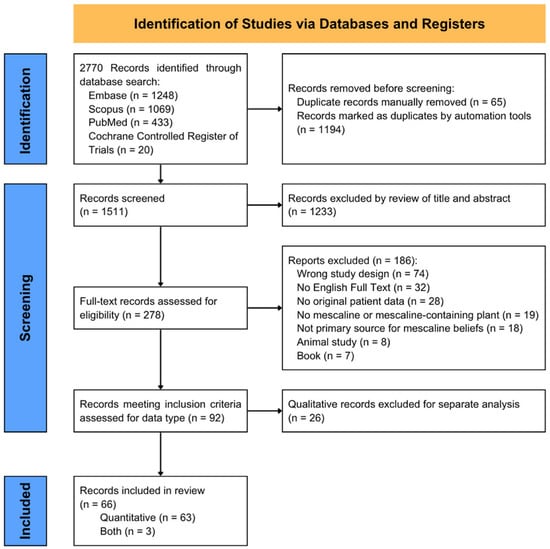
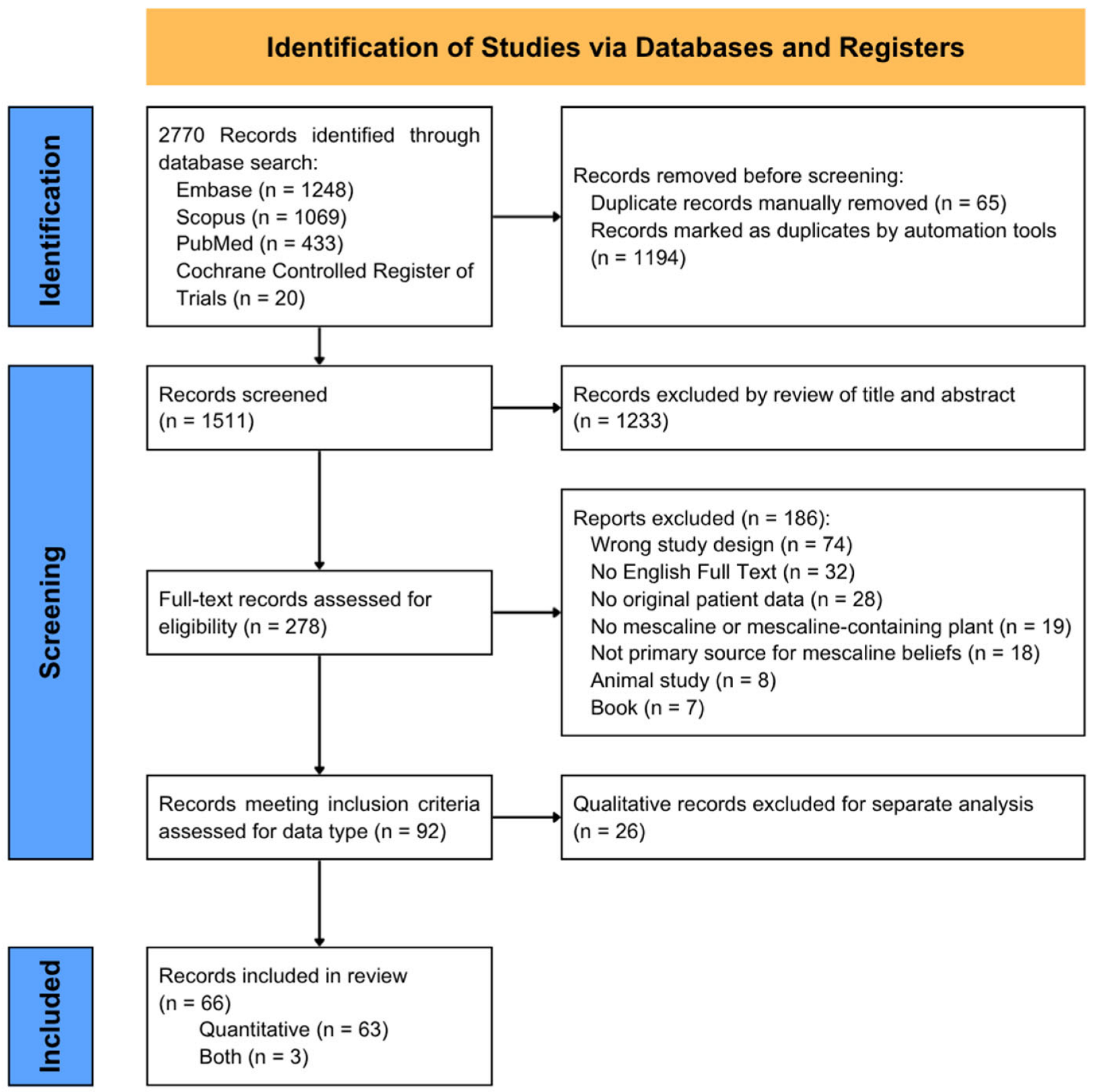
Using the search terms detailed in the registered protocol, 2770 studies were imported for screening from Embase (1248), Scopus (1069), PubMed (433), and the Cochrane Controlled Register of Trials (20) on 27 October 2025. Of the 66 references [12,13,16,17,18,24,25,26,27,28,29,30,31,32,33,34,35,36,37,38,39,40,41,42,43,44,45,46,47,48,49,50,51,52,53,54,55,56,57,58,59,60,61,62,63,64,65,66,67,68,69,70,71,72,73,74,75,76,77,78,79,80,81,82,83,84] that met inclusion criteria for this quantitative review, 9 (13.6%) were case reports, 4 (6.1%) were case series, 34 (51.5%) were observational/cross-sectional cohort studies, and 19 (28.8%) were clinical trials. Details regarding reference selection and reasons for exclusion are presented in Figure 1, while the demographic information and findings of the included studies are presented in Table 1. Further details relating to the included references can be seen in Supplementary File S2.
Figure 1.
PRISMA flowchart.
Table 1.
Summary of Included References.
3.1. Quantitative Analysis
Of the ten studies that were included in the final Bayesian Analysis, there was one controlled clinical trial, two clinical observations, one case series, one clinical pilot, one retrospective case series, one individual case report, and one modern Phase I study. The analysis was then split into two parts, one for psychological effects and another for somatic effects. Both groups were further split into categories based on whether the data was clinical (Group 1) or through exposure (Group 2) as well.
This stratification was chosen to account for the inherent reporting bias found in historical data, where unsupervised exposures are typically only documented when they result in medical crises or poison center calls. By separating these from controlled clinical observations, the analysis can distinguish between the core effects of mescaline and the adverse outcomes associated with high-stress, unsupervised environments. This grouping allows for a more accurate assessment of how the context of use influences the frequency and severity of reported symptoms.
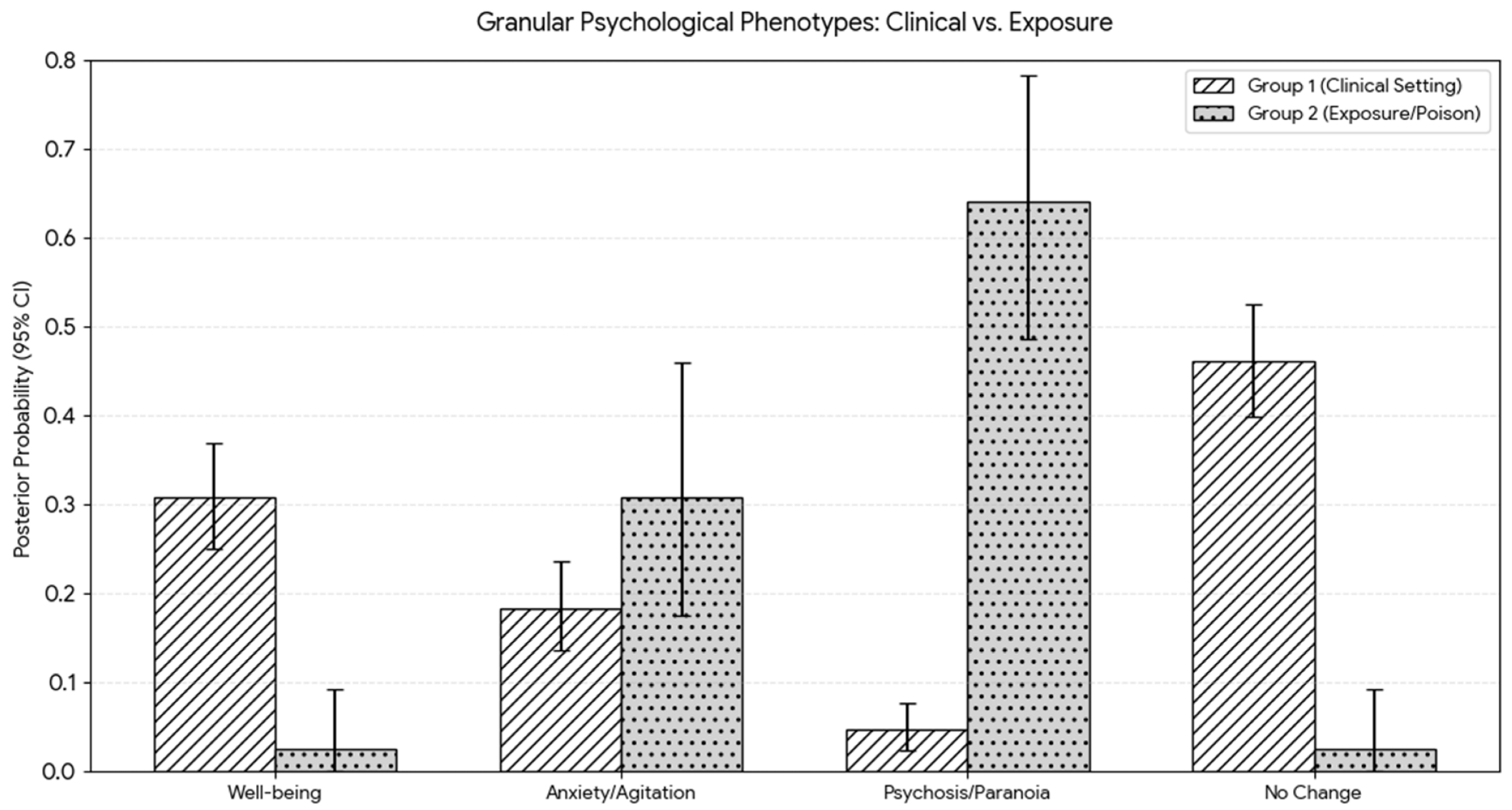
From the eight studies with data on psychological effects (Group 1: N = 215, Group 2: N = 33), the Bayesian Analysis returned the following results, showcased in Figure 2 [31,32,33,34,52,59,69,77,81]:
Figure 2.
Granular psychological phenotypes. Comparison of modeled psychological outcomes between supervised medical settings and unsupervised exposures. The Y-axis represents the Posterior Probability (0.0 to 1.0), reflecting the calculated likelihood of a psychological state manifesting based on the weighted integration of study reliability and sample size. Bar heights indicate the Mean Posterior Probability for each phenotype, representing the most likely occurrence rate within that setting. The vertical whiskers denote the 95% Credible Interval (CrI), identifying the range in which the true probability resides with 95% certainty. Narrower intervals indicate high consensus across the literature, while wider intervals (e.g., psychosis in Group 2) reflect greater uncertainty due to smaller sample sizes or conflicting case reports.
These results show that the majority of the time, mescaline produces negative effects as a result of exposure instead of being administered clinically. Interestingly, in clinical settings, it likely creates a sense of well-being, as seen in Table 2 [32,33,34,52,69]. These differing results between the two groups show that the environment in which mescaline is administered contributes greatly to the results. However, the data regarding exposure are likely subject to reporting bias, as anomalous negative outcomes are more likely to be documented.
Table 2.
Prevalence of the psychological effects of mescaline.
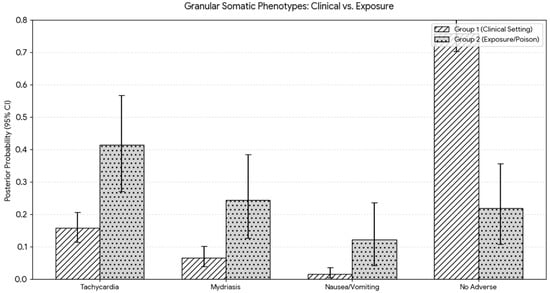
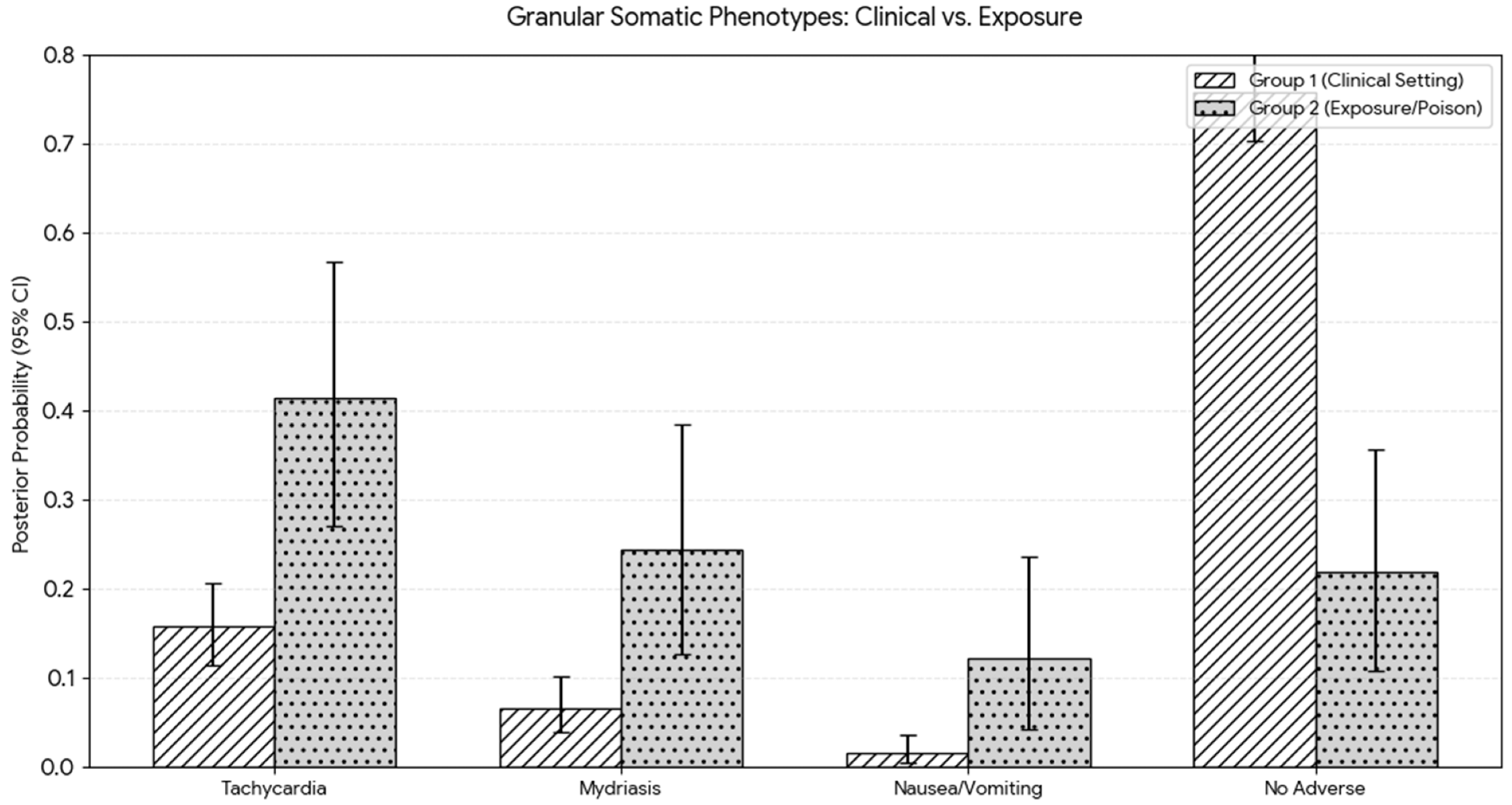
From the eight studies that detailed somatic effects (Group 1: N = 181, Group 2: N = 8), the Bayesian Analysis gave the following results, showcased in Figure 3 [31,32,33,34,52,56,59,77,81]:
Figure 3.
Granular somatic phenotypes. Comparison of modeled physiological outcomes between supervised medical settings and unsupervised exposures. The Y-axis displays the Posterior Probability (0.0 to 1.0), providing a weighted estimate of the likelihood of a somatic symptom occurring while adjusting for the precision of the source data. The height of each bar represents the Mean Posterior Probability for a given somatic marker within that specific environment. The vertical whiskers represent the 95% Credible Interval (CrI), illustrating the statistical uncertainty of the estimate. Tight intervals (e.g., cardio) signify consistent reporting across the dataset, whereas wider intervals highlight phenotypes with higher variance or limited granular data in the available literature.
The difference between environments is even more apparent when it comes to the somatic effects, as seen in Table 3. There is significant overlap when it comes to having no adverse reactions to mescaline in [32,33,34,59,82]. Additionally, some of the physical effects, such as an increase in heart rate, are predictable and therefore can be addressed [56]. It is also important to note that the increase in probability pertaining to nausea and vomiting is likely due to the different-sized populations, as three cases were reported in the clinical group compared with four in the smaller exposure group. Overall, mescaline has a high physical safety margin, especially regarding clinical administration of the psychedelic.
Table 3.
Prevalence of the somatic effects of mescaline.
Reasons for Exclusion from Analysis
Most case reports discuss potential side effects associated with mescaline, suggesting the need for caution for its use/administration [30,31,39,41,72,77,81]. Many additional studies examine psychedelics as a class in a broader sense, with mescaline as an undifferentiated part of their analyses [16,17,24,44,68,75,80,84]. There is also a notable number of studies that come from coarse data, which makes them ineligible for inclusion due to the self-reported nature and non-generalizability of the data [16,17,24,44,45,46,47,48,49,50,51,68,75,80,83].
3.2. Bias and Quality Assessment
The bias and quality assessments for each included reference are presented in Supplementary File S3, with a summary provided below. Of the nine case reports, four (44.4%) were of good quality, one (11.1%) was of moderate quality, and four (44.4%) were of poor quality. Among the four case series, two (50%) were of good quality, one (25%) was of moderate quality, and one (25%) was of poor quality. Of the 34 observational/cross-sectional cohort studies, 16 (47.1%) were of good quality, and 18 (52.9%) were of moderate quality. Of the 19 clinical trials, 15 (78.9%) were identified as having a serious risk of bias in reporting, 2 (10.5%) were at moderate risk, and 2 (10.5%) were at low risk of bias.
4. Discussion
4.1. Current State of Evidence
As of 2026, the current state of the literature on mescaline and mescaline-containing ethnobotanicals, such as Peyote, suggests potential therapeutic relevance; however, it remains insufficient for formal clinical decision making. Studies examined in this review have reported therapeutic effects associated with mescaline that have included improvements in depression scales, well-being, nicotine dependence, alcohol use, and obsessions [12,36,39,47,57]. On the other hand, studies have also consistently reported physical effects such as hypertension, headache, aggression, nausea, and vomiting [31,34,35,37,41,52,58,59,70,82]. However, some of these physical effects, such as nausea, hypertension, and headache, are also commonly reported with other classic psychedelics like Lysergic acid diethylamide (LSD) and psilocybin, potentially indicating that these physical effects are not unique to mescaline [52].
Both the therapeutic and physical effects should be interpreted cautiously, as the claims remain largely speculative without well-controlled large clinical trials. Despite the relative consistency of these reported effects, the extent to which the authors can interpret the results meaningfully is constrained due to substantial limitations in the current body of literature. These limitations include various factors such as publishing year, study design, and sample size.
Additionally, as noted in Table 2, the setting in which mescaline is administered appears to influence its reported effects. Mescaline administered in clinical settings is more likely to produce a sense of well-being [32,33,34,52,69]. This observation suggests that the expectations of individuals consuming mescaline or mescaline-containing ethnobotanicals, such as Peyote or San Pedro cactus, may influence their overall experiences and perceived effects. However, due to the limited sample sizes available for analysis, the effects of mescaline, Peyote, and San Pedro cactus could not be differentiated in this review. Therefore, when interpreting the current literature and considering future research on mescaline and related ethnobotanicals, careful attention should be given to the specific substance used as well as the cultural and clinical contexts in which it is administered.
For example, the use of pure mescaline, whether isolated or synthesized, differs from the use of ethnobotanicals such as Peyote or San Pedro cactus, because these plants vary in their mescaline content and contain additional bioactive compounds [85]. Furthermore, perceptions of “negative” versus “positive” effects associated with psychedelic use may vary depending on the cultural background and setting of the user. For instance, ceremonial Peyote users from rural northcentral Alabama have reported that part of the value of the Peyote ceremony comes from successfully enduring the mental and physical challenges associated with its use [10]. Despite this, the current clinical literature has not extensively considered two important factors: the differences between pure mescaline and mescaline-containing ethnobotanicals, and the cultural or clinical settings in which these substances are used. These considerations are particularly important for clinicians when discussing mescaline, Peyote, or San Pedro cactus use with patients, as the available safety data may not reflect the intentions or contexts in which patients are actually using these psychedelics.
Additionally, clinicians should also take into account that analysis of data from the existing literature is significantly limited, particularly due to the decades-long halt in psychedelic research. The majority of available clinical trials were conducted 50 years ago, while more modern studies are either set in non-clinical settings (correlational survey studies) or lack adequate sample sizes (case reports and case series) to allow for conclusive results. As a result, many studies that initially met inclusion criteria were excluded from quantitative analysis due to multiple reasons, such as grouping results of mescaline with other psychedelics [16,17,24,44,68,75,80], general use of mescaline as a recreational drug or for religious reasons [10,13,25,29,30,37,38,55,60,64,72,74,77,86], or use of mescaline to induce psychological symptoms [39,41,42,63,66,73].
Of particular note, several correlational survey studies examined the use of mescaline or Peyote and their association with various psychiatric disorders [47,48,49,50,83]. These studies were conducted using the National Survey on Drug Use and Health, but used identical methodology for analysis. This provided additional difficulties in including this research into the analysis, as it provided multiple examples using the same data with small differences in outcome. While each paper focuses on different specifics, the data is inherently coarse and also inflates the potential pool of data used for this synthesis. On the other hand, correlational survey studies are also susceptible to bias arising from participant self-selection and social desirability effects [87,88]. Psychedelic use has been shown to increase the likelihood that prospective participants will volunteer for studies examining psychedelic use, including single unpaid surveys, multiple unpaid surveys presented longitudinally, or unpaid administration studies. In contrast, other demographic variables do not reliably predict consistent participation in future psychedelic research [87]. Additionally, survey participants who report lower severity of psychiatric symptoms or disorders, such as depressive symptoms or alcohol use, also tend to report greater concern about social desirability when completing surveys [88]. These factors raised concerns among the authors regarding the generalizability of findings that associate psychedelic use with reduced odds of experiencing a non-severe major depressive episode within the past year [50]. Furthermore, many of these correlational studies focused on lifetime use of individual psychedelics but did not report analyses examining how the frequency of psychedelic use or polysubstance exposure relates to psychiatric conditions. They also did not establish temporal relationships between psychedelic use and the psychiatric outcomes measured [47,48,49,50,83].
As a result of these limitations, this review’s analysis only consisted of approximately 300 individuals between both psychological and somatic effects analysis, a notably low sample size. This significantly limits the generalizability of reported findings and constrains the interpretation of the results. Beyond these issues regarding scope and scale, additional concerns related to variability in study quality assessment and risk of bias further limit the rigorous evaluation of the existing mescaline literature.
4.2. Risk of Bias, Quality Concerns, and Class-Level Comparison
In addition to the aforementioned structural limitations, there was also significant variation regarding the quality and risk of bias of the included studies. The majority of the clinical trial data originated from studies from the 1950s, many with serious overall risk of bias related to selection of participants, measurement of outcomes, or selection of reported results [32,33,34,35,36,40,56,59,69,73,82]. A sizable proportion of the case reports and case series were also noted to be of overall poor quality rating due to various reasons, including lacking clear descriptions of patient history, assessment methods, and interventions [12,27,62,77,79].
Concerns regarding study quality are further heightened by population selection, as many reported benefits of mescaline use were derived from populations without formal diagnoses, limiting conclusions regarding the therapeutic efficacy of mescaline [45,46,47,48,49,50,51,83]. Additionally, several newer cohort studies relied on survey data that were not clinically applicable [45,47,48,49,50,51,83]. This methodology by researchers, who have published extensively examining how survey data correlate with psychiatric disorders, complicates future meta-analyses, given their lack of clinical applicability and findings that lack definitive causality.
On the other hand, more recent clinical trials are high quality in terms of methodology and reporting, though they are lacking in terms of sample size [52,58]. These limitations, for much of the existing literature, substantially limit the authors’ analysis of the existing data on mescaline/Peyote/San Pedro cactus. This further emphasizes the need for large-scale clinical trials to investigate the psychological as well as physical effects of mescaline/mescaline-containing ethnobotanicals in a replicable and high-quality manner. Collectively, these concerns regarding severe risk of bias and poor quality obfuscate whether the reported psychological and physical effects from the literature are uniquely attributable to mescaline or are pharmacodynamic properties shared among classic psychedelics. Importantly, this further stresses the importance of the systematic evaluation of risk of bias and quality to limit the overestimation of therapeutic benefits and to reliably interpret effects specific to mescaline compared to those across all classic psychedelics.
4.3. Mescaline in the Context of Other Classic Psychedelics
Mescaline belongs to the phenethylamine class of psychedelics, whereas LSD and psilocybin are tryptamines, containing an indole ring derived from tryptophan and structurally similar to serotonin [89,90]. This fundamental difference in chemical scaffold is important because tryptamines closely mimic serotonin’s indole pharmacophore, while phenethylamines, such as mescaline, interact with serotonergic receptors through a different structural framework [89].
These structural differences are associated with substantial differences in pharmacokinetics and duration of action, as demonstrated through experimental comparisons in humans, which found that while mescaline, LSD, and psilocybin produce broadly similar psychedelic phenomenology, they differ in onset, duration, intensity profiles, and autonomic effects [89,91]. Mescaline produces effects that can persist for about 11.1 h while LSD lasts 8.2 h and psilocybin lasts 4.9 h [52,92,93,94]. Such differences reflect variations in metabolism, lipophilicity, receptor affinity, and required dosing, which justifies further research into mescaline individually, especially since it remains highly prevalent in certain populations, such as members of the NAC [94].
Taken together, mescaline’s phenethylamine structure, substantially longer duration of action, and distinct receptor affinity and pharmacodynamic profile indicate that it cannot be fully represented by findings derived from tryptamines such as psilocybin [94]. Although grouped within the broader category of serotonergic or “classic” psychedelics due to shared 5-HT2A-mediated effects, these differences support the need for independent investigation of mescaline rather than subsuming it under generalized psychedelic mechanisms [89,92,94].
4.4. Future Directions and Research Implications
Future studies examining mescaline or mescaline-containing ethnobotanicals should build upon the small, but high-quality clinical trials identified by this review to provide more standardized, comparative, and ethically based research [52,58]. Although mescaline remains restricted for medical use, the long-standing ceremonial and cultural use of Peyote by the NAC further emphasizes the need for continued research into mescaline/Peyote as its use remains prevalent in these populations/cultures. However, before therapeutic investigations can occur, the safety profile of mescaline must be further investigated in large, well-controlled clinical trials.
A recent Phase I study of mescaline has demonstrated that a single dose of mescaline to healthy individuals is safe regarding psychological and physical harm in a controlled clinical setting, but this finding is limited due to a relatively small sample size (N = 48) [52]. Future efforts should build upon the existing Phase I studies identified by this review to fully establish a comprehensive safety profile by documenting pharmacokinetic and dynamic properties and defining dose-dependent effects.
Furthermore, comparative studies directly evaluating mescaline versus other classic psychedelics, including LSD and psilocybin, are recommended and essential to distinguish compound-specific effects from class-general classic psychedelic responses. Lastly, registries in collaboration with medical centers and poison control networks serving areas with high prevalence of Peyote use, with a partnership with the NAC, would be highly beneficial in being able to provide real-world safety profiles, further advancing the research into mescaline while maintaining ethical and cultural boundaries. These registries could collect longitudinal clinical data through the primary care physicians and affiliated hospital systems of NAC members who voluntarily choose to participate. By providing anonymized, clinician-sourced information on the psychological and physical health of members who regularly participate in Peyote ceremonies, the registry would enable more granular and reliable data collection. This information could be standardized through validated clinical measures such as the Patient Health Questionnaire-9 and the Generalized Anxiety Disorder-7. In addition to psychological measures, objective clinical metrics such as laboratory values could also be tracked and compared with those of non-Peyote users. Although concerns about self-selection bias may remain—as not all NAC members may feel comfortable participating in such registries—the American Indian Religious Freedom Act Amendments of 1994 legally protect the use of Peyote within the NAC. This legal protection may help reduce social desirability bias among participants when reporting their experiences and health outcomes.
In order to integrate mescaline and mescaline-containing ethnobotanicals into modern psychiatry practice, future studies should aim to standardize clinical research of mescaline and hence bridge the gap between psychedelic exceptionalism and other psychopharmacologic agents. Altogether, these findings support the need for continued rigorous investigation to establish mescaline’s safety, efficacy, and overall compound-specific profile within the broader class of classic psychedelics.
Limitations
Despite the various strengths of this review, certain limitations warrant consideration. First, only including publications in English may have omitted relevant references from Latin America and other non-English speaking regions where mescaline use is common and has cultural significance. Second, a majority of the clinical trials collected were outdated due to the hiatus in psychedelic research and may have a serious risk of bias in their reporting. Furthermore, a majority of studies consisted of observation or cross-sectional cohort studies, which limit the ability to establish causality. Lastly, heterogeneity in how mescaline and Peyote as individual substances were reported and analyzed in some references limits the generalizability to classic psychedelics as a category.
5. Conclusions
The current landscape of mescaline literature is marked with significant quality limitations and risk of bias concerns, preventing this review from formulating concrete statements regarding the therapeutic effects and potential adverse effects of mescaline or mescaline-containing ethnobotanicals. Although psychological (improvement of depression symptoms, enhanced sense of well-being, anxiety, etc.) and somatic (diaphoresis, hypertension, nausea, and vomiting) effects are frequently reported in the literature, an accurate prevalence of these effects cannot be determined until further research is conducted. Large, high-quality clinical trials are needed to better define the safety profile of mescaline and its associated ethnobotanicals (Peyote and San Pedro cactus) before therapeutic studies can be conducted. Of note, the context and setting of mescaline use appear to meaningfully influence its psychological and physical effects, warranting further systematic evaluation. The clinical setting, cultural context, and the specific substance consumed, whether pure mescaline or an ethnobotanical source such as Peyote or San Pedro cactus, represent variables that the existing literature has largely not considered. One way to address this gap would be to establish a standardized registry of regular Peyote and San Pedro cactus users, particularly in areas where the Native American Church is present. Such a registry could collect clinician-sourced longitudinal data within the cultural and religious contexts in which Peyote and San Pedro cactus are regularly consumed. This approach would generate clinically applicable data that could quantify the frequency of Peyote and San Pedro cactus consumption and clarify the temporal relationship between psychedelic use and associated side effects. Researchers have identified the absence of such data as a key limitation of prior correlational, cross-sectional survey studies. Ultimately, continued development of high-quality research will be essential for evaluating mescaline and advancing the field of psychiatric care.
Supplementary Materials
The following supporting information can be downloaded at: https://www.mdpi.com/article/10.3390/ijms27073081/s1.
Author Contributions
Conceptualization, J.S.; Validation, J.S. and J.-Y.W.; Investigation, J.S. and J.-Y.W.; Data curation, J.S., A.Y., J.L. and A.A.; Formal analysis, J.C.; Project administration, J.S.; Supervision, R.B.; Visualization, J.S.; Writing—original draft, J.S., J.-Y.W. and A.A.; Writing–review and editing, J.S., R.B. and Y.Z.-I. All authors have read and agreed to the published version of the manuscript.
Funding
This research received no external funding.
Data Availability Statement
No new data were created or analyzed in this study. Data sharing is not applicable to this article.
Acknowledgments
The authors would like to thank California University of Science and Medicine’s medical librarians, Victoria Flores (MBA, MLIS) and Deborah Farber (MLIS, AHIP), for their help with obtaining full-text manuscripts for screening.
Conflicts of Interest
The authors declare no conflicts of interest.
Abbreviations
Native American Church (NAC), Lysergic acid diethylamide (LSD).
References
- Lieslehto, J.; Tiihonen, J.; Lähteenvuo, M.; Tanskanen, A.; Taipale, H. Primary Nonadherence to Antipsychotic Treatment Among Persons with Schizophrenia. Schizophr. Bull. 2022, 48, 655–663. [Google Scholar] [CrossRef] [Scilit] [PubMed]
- Semahegn, A.; Torpey, K.; Manu, A.; Assefa, N.; Tesfaye, G.; Ankomah, A. Psychotropic Medication Non-Adherence and Its Associated Factors among Patients with Major Psychiatric Disorders: A Systematic Review and Meta-Analysis. Syst. Rev. 2020, 9, 17. [Google Scholar] [CrossRef] [Scilit]
- Zewdu, W.S.; Dagnew, S.B.; Tarekegn, G.Y.; Yazie, T.S.; Ayicheh, M.A.; Dagnew, F.N.; Moges, T.A. Non-Adherence Level of Pharmacotherapy and Its Predictors among Mental Disorders in a Resource-Limited Life Trajectories: A Systematic Review and Meta-Analysis. BMC Psychiatry 2025, 25, 512. [Google Scholar] [CrossRef] [Scilit]
- Lintunen, J.; Lähteenvuo, M.; Tanskanen, A.; Tiihonen, J.; Taipale, H. Non-Adherence to Mood Stabilizers and Antipsychotics among Persons with Bipolar Disorder—A Nationwide Cohort Study. J. Affect. Disord. 2023, 333, 403–408. [Google Scholar] [CrossRef] [Scilit]
- Zisman-Ilani, Y.; Shern, D.; Deegan, P.; Kreyenbuhl, J.; Dixon, L.; Drake, R.; Torrey, W.; Mishra, M.; Gorbenko, K.; Elwyn, G. Continue, Adjust, or Stop Antipsychotic Medication: Developing and User Testing an Encounter Decision Aid for People with First-Episode and Long-Term Psychosis. BMC Psychiatry 2018, 18, 142. [Google Scholar] [CrossRef] [Scilit]
- Roe, D.; Jones, N.; Hasson-Ohayon, I.; Zisman-Ilani, Y. Conceptualization and Study of Antipsychotic Medication Use: From Adherence to Patterns of Use. Psychiatr. Serv. 2021, 72, 1464–1466. [Google Scholar] [CrossRef] [Scilit]
- Zisman-Ilani, Y.; Hayes, D.; Fancourt, D. Promoting Social Prescribing in Psychiatry—Using Shared Decision-Making and Peer Support. JAMA Psychiatry 2023, 80, 759–760. [Google Scholar] [CrossRef] [Scilit]
- Webb, H.S. The Use of Peyote as Treatment for Alcoholism within the NAC Community: Reflections on a Study: An Interview with John Halpern, M.D. Anthropol. Conscious. 2011, 22, 234–244. [Google Scholar] [CrossRef] [Scilit]
- Dobkin, M. Folk Curing with a Psychedelic Cactus in the North Coast of Peru. Int. J. Soc. Psychiatry 1969, 15, 23–32. [Google Scholar] [CrossRef] [Scilit] [PubMed]
- Copes, H.; Hochstetler, A.; Ragland, J.; Hendricks, P.S. Hitting the Reset Button: Ceremonial Use of Peyote and Experiences of Personal Change. J. Drug Issues 2024, 56, 150–170. [Google Scholar] [CrossRef] [Scilit]
- Aday, J.S.; Bloesch, E.K.; Davoli, C.C. Beyond LSD: A Broader Psychedelic Zeitgeist during the Early to Mid-20th Century. J. Psychoact. Drugs 2019, 51, 210–217. [Google Scholar] [CrossRef] [Scilit]
- Albaugh, B.J.; Anderson, P.O. Peyote in the Treatment of Alcoholism among American Indians. Am. J. Psychiatry 1974, 131, 1247–1250. [Google Scholar] [CrossRef] [Scilit] [PubMed]
- Bergman, R.L. Navajo Peyote Use: Its Apparent Safety. Am. J. Psychiatry 1971, 128, 695–699. [Google Scholar] [CrossRef] [Scilit]
- Calabrese, J.D. Spiritual Healing and Human Development in the Native American Church: Toward a Cultural Psychiatry of Peyote. Psychoanal. Rev. 1997, 84, 237–255. [Google Scholar]
- Nichols, D.E.; Walter, H. The History of Psychedelics in Psychiatry. Pharmacopsychiatry 2021, 54, 151–166. [Google Scholar] [CrossRef] [Scilit]
- Desai, S.; Jain, V.; Xavier, S.; Du, W. Hopelessness, Suicidality, and Co-Occurring Substance Use among Adolescent Hallucinogen Users-A National Survey Study. Children 2022, 9, 1906. [Google Scholar] [CrossRef] [Scilit]
- Karp Barnir, E.; Rubinstein, Z.; Abend, R.; Lev-Ran, S.; Naor, L.; Mikulincer, M. Peri-Traumatic Consumption of Classic Psychedelics Is Associated with Lower Anxiety and Post-Traumatic Responses 3 Weeks after Exposure. J. Psychopharmacol. 2025, 39, 1031–1036. [Google Scholar] [CrossRef] [Scilit] [PubMed]
- Rojas-Hernández, J.; Borkel, L.F.; Quintana-Hernández, D.J.; del Pino, Á.S.; Henríquez-Hernández, L.A. Pattern of Psychedelic Substance Use: A Comparison between Populations in Spain and South America Using the Psychedelic Use Scale (PUS). Curr. Psychol. 2024, 43, 35083–35098. [Google Scholar] [CrossRef] [Scilit]
- Kleffens, M.D.; Zimmermann-Klemd, A.M.; Gründemann, C. An Overview on the Hallucinogenic Peyote and Its Alkaloid Mescaline: The Importance of Context, Ceremony and Culture. Molecules 2023, 28, 7942. [Google Scholar] [CrossRef] [Scilit] [PubMed]
- Page, M.J.; McKenzie, J.E.; Bossuyt, P.M.; Boutron, I.; Hoffmann, T.C.; Mulrow, C.D.; Shamseer, L.; Tetzlaff, J.M.; Akl, E.A.; Brennan, S.E.; et al. The PRISMA 2020 statement: An updated guideline for reporting systematic reviews. BMJ 2021, 372, n71. [Google Scholar] [CrossRef] [Scilit]
- Joanna Briggs Institute (JBI). Critical Appraisal Checklist for Case Reports; Joanna Briggs Institute: Adelaide, Australia, 2017. [Google Scholar]
- National Heart, Lung, and Blood Institute (NHLBI). Study Quality Assessment Tools. Available online: https://www.nhlbi.nih.gov/health-topics/study-quality-assessment-tools (accessed on 30 January 2026).
- Sterne, J.A.; Hernán, M.A.; Reeves, B.C.; Savović, J.; Berkman, N.D.; Viswanathan, M.; Henry, D.; Altman, D.G.; Ansari, M.T.; Boutron, I.; et al. ROBINS-I: A Tool for Assessing Risk of Bias in Non-Randomised Studies of Interventions. BMJ 2016, 355, i4919. [Google Scholar] [CrossRef] [Scilit] [PubMed]
- Acevedo, E.C.; Uhler, S.; White, K.P.; Al-Shawaf, L. What Predicts Beneficial Outcomes in Psychedelic Use? A Quantitative Content Analysis of Psychedelic Health Outcomes. J. Psychoact. Drugs 2025, 57, 193–202. [Google Scholar] [CrossRef] [Scilit]
- Agin-Liebes, G.; Haas, T.F.; Lancelotta, R.; Uthaug, M.V.; Ramaekers, J.G.; Davis, A.K. Naturalistic Use of Mescaline Is Associated with Self-Reported Psychiatric Improvements and Enduring Positive Life Changes. ACS Pharmacol. Transl. Sci. 2021, 4, 543–552. [Google Scholar] [CrossRef] [Scilit]
- Argento, E.; Socias, M.E.; Hayashi, K.; Choi, J.; Mackay, L.; Christie, D.; Milloy, M.-J.; DeBeck, K. Psychedelic Use Is Associated with Reduced Daily Opioid Use among People Who Use Illicit Drugs in a Canadian Setting. Int. J. Drug Policy 2022, 100, 103518. [Google Scholar] [CrossRef] [Scilit] [PubMed]
- Blum, K.; Futterman, S.L.; Pascarosa, P. Peyote, a Potential Ethnopharmacologic Agent for Alcoholism and Other Drug Dependencies: Possible Biochemical Rationale. Clin. Toxicol. 1977, 11, 459–472. [Google Scholar] [CrossRef] [Scilit]
- Boehnke, K.F.; Cox, K.; Weston, C.; Herberholz, M.; Glynos, N.; Kolbman, N.; Fields, C.W.; Barron, J.; Kruger, D.J. Slouching towards Engagement: Interactions between People Using Psychedelics Naturalistically and Their Healthcare Providers. Front. Psychiatry 2023, 14, 1224551. [Google Scholar] [CrossRef] [Scilit]
- Bohn, A.; Kiggen, M.H.H.; Uthaug, M.V.; van Oorsouw, K.I.M.; Ramaekers, J.G.; van Schie, H.T. Altered States of Consciousness During Ceremonial San Pedro Use. Int. J. Psychol. Relig. 2023, 33, 309–331. [Google Scholar] [CrossRef] [Scilit]
- Borkel, L.F.; Rojas-Hernández, J.; Henríquez-Hernández, L.A.; Santana Del Pino, Á.; Quintana-Hernández, D.J. Set and Setting Predict Psychopathology, Wellbeing and Meaningfulness of Psychedelic Experiences: A Correlational Study. Expert Rev. Clin. Pharmacol. 2024, 17, 165–176. [Google Scholar] [CrossRef] [Scilit]
- Carstairs, S.D.; Cantrell, F.L. Peyote and Mescaline Exposures: A 12-Year Review of a Statewide Poison Center Database. Clin. Toxicol. 2010, 48, 350–353. [Google Scholar] [CrossRef] [Scilit]
- Cattell, J.P. The Influence of Mescaline on Psychodynamic Material. J. Nerv. Ment. Dis. 1954, 119, 233–244. [Google Scholar] [CrossRef] [Scilit] [PubMed]
- Denber, H.C. Studies on Mescaline. VII: The Role of Anxiety in the Mescaline-Induced State and Its Influence on the Therapeutic Result. J. Nerv. Ment. Dis. 1956, 124, 74–77. [Google Scholar] [CrossRef] [Scilit]
- Denber, H.C.; Merlis, S. Studies on Mescaline. I. Action in Schizophrenic Patients; Clinical Observations and Brain Wave Patterns, Showing Effects before and after Electric Convulsive Treatments. Psychiatr. Q. 1955, 29, 421–429. [Google Scholar] [CrossRef] [Scilit]
- Denber, H.C.; Merlis, S. A Note on Some Therapeutic Implications of the Mescaline-Induced State. Psychiatr. Q. 1954, 28, 634–640. [Google Scholar] [CrossRef] [Scilit] [PubMed]
- Denber, H.C.; Van West, A. Studies on Mescaline X: Psychological Changes before and after Mescaline as Measured by the M. M. P. I. Am. J. Psychiatry 1958, 115, 546. [Google Scholar] [CrossRef] [Scilit]
- Duraković, D.; Silić, A.; Peitl, V.; Vlahović, D.; Vojnović, D.; Karlović, D. Acute Mescaline Intoxication Followed by Catatonia. Arch. Psychiatry Res. 2022, 58, 287–292. [Google Scholar] [CrossRef] [Scilit]
- Halpern, J.H.; Sherwood, A.R.; Hudson, J.I.; Yurgelun-Todd, D.; Pope, H.G.J. Psychological and Cognitive Effects of Long-Term Peyote Use among Native Americans. Biol. Psychiatry 2005, 58, 624–631. [Google Scholar] [CrossRef] [Scilit] [PubMed]
- Hermle, L.; Fünfgeld, M.; Oepen, G.; Botsch, H.; Borchardt, D.; Gouzoulis, E.; Fehrenbach, R.A.; Spitzer, M. Mescaline-Induced Psychopathological, Neuropsychological, and Neurometabolic Effects in Normal Subjects: Experimental Psychosis as a Tool for Psychiatric Research. Biol. Psychiatry 1992, 32, 976–991. [Google Scholar] [CrossRef] [Scilit]
- Hoch, P.H.; Cattell, J.P.; Pennes, H.H. Effects of Mescaline and Lysergic Acid (d-LSD-25). Am. J. Psychiatry 1952, 108, 579–584. [Google Scholar] [CrossRef] [Scilit]
- Hollister, L.; Hartman, A. Mescaline, Lysergic Acid Diethylamide and Psilocybin Comparison of Clinical Syndromes, Effects on Color Perception and Biochemical Measures. Compr. Psychiatry 1962, 3, 235–242. [Google Scholar] [CrossRef] [Scilit]
- Hollister, L.; Sjoberg, B. Clinical Syndromes and Biochemical Alterations Following Mescaline, Lysergic Acid Diethylamide, Psilocybin and a Combination of the Three Psyhotomimetic Drugs. Compr. Psychiatry 1964, 20, 170–178. [Google Scholar] [CrossRef] [Scilit]
- Hutten, N.R.P.W.; Mason, N.L.; Dolder, P.C.; Kuypers, K.P.C. Motives and Side-Effects of Microdosing with Psychedelics among Users. Int. J. Neuropsychopharmacol. 2019, 22, 426–434. [Google Scholar] [CrossRef] [Scilit] [PubMed]
- Johansen, P.-Ø.; Krebs, T.S. Psychedelics Not Linked to Mental Health Problems or Suicidal Behavior: A Population Study. J. Psychopharmacol. 2015, 29, 270–279. [Google Scholar] [CrossRef] [Scilit]
- Jones, G.; Herrmann, F.; Wang, E. Associations between Individual Hallucinogens and Hallucinogen Misuse among U.S. Adults Who Recently Initiated Hallucinogen Use. Addict. Behav. Rep. 2023, 18, 100513. [Google Scholar] [CrossRef] [Scilit]
- Jones, G.; Arias, D.; Nock, M. Associations between MDMA/Ecstasy, Classic Psychedelics, and Suicidal Thoughts and Behaviors in a Sample of U.S. Adolescents. Sci. Rep. 2022, 12, 21927. [Google Scholar] [CrossRef] [Scilit]
- Jones, G.; Ricard, J.A.; Lipson, J.; Nock, M.K. Associations between Classic Psychedelics and Opioid Use Disorder in a Nationally-Representative U.S. Adult Sample. Sci. Rep. 2022, 12, 4099. [Google Scholar] [CrossRef] [Scilit]
- Jones, G.; Lipson, J.; Wang, E. Examining Associations between MDMA/Ecstasy and Classic Psychedelic Use and Impairments in Social Functioning in a U.S. Adult Sample. Sci. Rep. 2023, 13, 2466. [Google Scholar] [CrossRef] [Scilit] [PubMed]
- Jones, G.M.; Nock, M.K. Exploring Protective Associations between the Use of Classic Psychedelics and Cocaine Use Disorder: A Population-Based Survey Study. Sci. Rep. 2022, 12, 2574. [Google Scholar] [CrossRef] [Scilit] [PubMed]
- Jones, G.M.; Nock, M.K. Lifetime Use of MDMA/Ecstasy and Psilocybin Is Associated with Reduced Odds of Major Depressive Episodes. J. Psychopharmacol. 2022, 36, 57–65. [Google Scholar] [CrossRef] [Scilit]
- Jones, G.M.; Nock, M.K. Psilocybin Use Is Associated with Lowered Odds of Crime Arrests in US Adults: A Replication and Extension. J. Psychopharmacol. 2022, 36, 66–73. [Google Scholar] [CrossRef] [Scilit]
- Klaiber, A.; Humbert-Droz, M.; Ley, L.; Schmid, Y.; Liechti, M.E. Safety Pharmacology of Acute Mescaline Administration in Healthy Participants. Br. J. Clin. Pharmacol. 2024. [Google Scholar] [CrossRef] [Scilit]
- Korman, B.A. Recruitment Discrimination of Lifetime Classic Psychedelic Users Is Unjustified: Evidence from Employees’ Motivation-Based Workplace Absenteeism. J. Psychedelic Stud. 2023, 6, 203–210. [Google Scholar] [CrossRef] [Scilit]
- Krebs, T.S.; Johansen, P.-Ø. Psychedelics and Mental Health: A Population Study. PLoS ONE 2013, 8, e63972. [Google Scholar] [CrossRef] [Scilit]
- Lu, B.Y.; Woofter, C.; Escalona, R. A Case of Prolonged Peyote-Induced Psychosis Resolved by Sleep. J. Clin. Psychiatry 2004, 65, 1433–1434. [Google Scholar] [CrossRef] [Scilit] [PubMed]
- Merlis, S. The Effects of Mescaline Sulfate in Chronic Schizophrenia. J. Nerv. Ment. Dis. 1957, 125, 432–434. [Google Scholar] [CrossRef] [Scilit]
- Moreno, F.A.; Delgado, P.L. Hallucinogen-Induced Relief of Obsessions and Compulsions. Am. J. Psychiatry 1997, 154, 1037–1038. [Google Scholar] [CrossRef] [Scilit]
- Ley, L.; Holze, F.; Arikci, D.; Becker, A.M.; Straumann, I.; Klaiber, A.; Coviello, F.; Dierbach, S.; Thomann, J.; Duthaler, U.; et al. Comparative acute effects of mescaline, lysergic acid diethylamide, and psilocybin in a randomized, double-blind, placebo-controlled cross-over study in healthy participants. Neuropsychopharmacology 2023, 48, 1659–1667. [Google Scholar] [CrossRef] [Scilit] [PubMed]
- Pennes, H.H. Clinical Reactions of Schizophrenics to Sodium Amytal, Pervitin Hydrochloride, Mescaline Sulfate, and d-Lysergic Acid Diethylamide. J. Nerv. Ment. Dis. 1954, 119, 95–112. [Google Scholar] [CrossRef] [Scilit]
- Prince, M.A.; O’Donnell, M.B.; Stanley, L.R.; Swaim, R.C. Examination of Recreational and Spiritual Peyote Use Among American Indian Youth. J. Stud. Alcohol. Drugs 2019, 80, 366–370. [Google Scholar] [CrossRef] [Scilit]
- Rabinowitz, J.; Lev-Ran, S.; Gross, R. The Association between Naturalistic Use of Psychedelics and Co-Occurring Substance Use Disorders. Front. Psychiatry 2023, 13, 1066369. [Google Scholar] [CrossRef] [Scilit]
- Reynolds, P.C.; Jindrich, E.J. A Mescaline Associated Fatality. J. Anal. Toxicol. 1985, 9, 183–184. [Google Scholar] [CrossRef] [Scilit]
- Richards, T.W.; Stevenson, I.P. Consistency in the Psychologic Reaction to Mescaline. South. Med. J. 1961, 54, 1319–1320. [Google Scholar] [CrossRef] [Scilit] [PubMed]
- Romeo, B.; Kervadec, E.; Fauvel, B.; Strika-Bruneau, L.; Amirouche, A.; Verroust, V.; Piolino, P.; Benyamina, A. Exploring Factors Associated with the Intensity of a Mystical Experience Following Naturalistic Psychedelic Use: A Retrospective Survey. Prog. Neuropsychopharmacol. Biol. Psychiatry 2025, 137, 111300. [Google Scholar] [CrossRef] [Scilit]
- Rosenberg, J.; Pentel, P.; Pond, S.; Benowitz, N.; Olson, K. Hyperthermia Associated with Drug Intoxication. Crit. Care Med. 1986, 14, 964–969. [Google Scholar] [CrossRef] [Scilit]
- Silva, F.; Heath, R.G.; Rafferty, T.; Johnson, R.; Robinson, W. Comparative Effects of the Administration of Taraxein, d-LSD, Mescaline, and Psilocybin to Human Volunteers. Compr. Psychiatry 1960, 1, 370–376. [Google Scholar] [CrossRef] [Scilit]
- Simonds, J.F.; Kashani, J. Specific Drug Use and Violence in Delinquent Boys. Am. J. Drug Alcohol. Abus. 1980, 7, 305–322. [Google Scholar] [CrossRef] [Scilit]
- Simonsson, O.; Goldberg, S.B. Linkages between Psychedelics and Meditation in a Population-Based Sample in the United States. J. Psychoact. Drugs 2023, 55, 11–18. [Google Scholar] [CrossRef] [Scilit]
- Smith, C.M. A New Adjunct to the Treatment of Alcoholism: The Hallucinogenic Drugs. Q. J. Stud. Alcohol. 1958, 19, 406–417. [Google Scholar] [CrossRef] [Scilit]
- Smith, J.C.; Curry, S.C. Isolated Mescaline Toxicity Confirmed by GC-MS. Clin. Toxicol. 2009, 47, 747. [Google Scholar] [CrossRef] [Scilit]
- Stone, A.L.; O’Brien, M.S.; De La Torre, A.; Anthony, J.C. Who Is Becoming Hallucinogen Dependent Soon after Hallucinogen Use Starts? Drug Alcohol Depend. 2007, 87, 153–163. [Google Scholar] [CrossRef] [Scilit]
- Teitelbaum, D.T.; Wingeleth, D.C. Diagnosis and Management of Recreational Mescaline Self Poisoning. J. Anal. Toxicol. 1977, 1, 36–37. [Google Scholar] [CrossRef] [Scilit]
- Thale, T.; Gabrio, B.W.; Salomon, K. Hallucination and Imagery Induced by Mescaline. Am. J. Psychiatry 1950, 106, 686–691. [Google Scholar] [CrossRef] [Scilit]
- Uthaug, M.V.; Davis, A.K.; Haas, T.F.; Davis, D.; Dolan, S.B.; Lancelotta, R.; Timmermann, C.; Ramaekers, J.G. The Epidemiology of Mescaline Use: Pattern of Use, Motivations for Consumption, and Perceived Consequences, Benefits, and Acute and Enduring Subjective Effects. J. Psychopharmacol. 2022, 36, 309–320. [Google Scholar] [CrossRef] [Scilit]
- Vina, S.M. Minorities’ Diminished Psychedelic Returns: Income and Educations Impact on Whites, Blacks, Hispanics, and Asians. J. Racial Ethn. Health Disparities 2025, 12, 1937–1950. [Google Scholar] [CrossRef] [Scilit] [PubMed]
- Vina, S.M. Stigma, Psychedelics Use, and the Risk of Reduced Formal Mental Health Care. Stigma Health 2024. [Google Scholar] [CrossRef] [Scilit]
- Wadsworth, M.L. Peyote Use: A Case Report. Am. J. Psychiatry 1972, 129, 96. [Google Scholar] [CrossRef] [Scilit] [PubMed]
- Wolbach, A.B.J.; Isbell, H.; Miner, E.J. Cross Tolerance between Mescaline and LSD-25, with a Comparison of the Mescaline and LSD Reactions. Psychopharmacologia 1962, 3, 1–14. [Google Scholar] [CrossRef] [Scilit]
- Yelmo-Cruz, S.; Hernández-Padrón, E.; Pavesi, A.S.; Díaz-Mesa, E.; García-Gómez-Pamo, F.; Povedano-García, L.; Navarro-Morejón, L.; Calles-Marbán, R.; Cejas-Méndez, M.R. P.131 San Pedro Cactus and Psychotic Symptoms. Eur. Neuropsychopharmacol. 2019, 29, S107. [Google Scholar] [CrossRef] [Scilit]
- Zech, J.M.; Yaden, D.B.; Jones, G.M. Associations between Psychedelic Use and Cannabis Use Disorder in a Nationally Representative Sample. Drug Alcohol Depend. 2025, 266, 112502. [Google Scholar] [CrossRef] [Scilit]
- Zhu, G.; Elhassan, S.; Simon, C.; Kahlon, V.; Dugum, A.; Lin, T. Peyote Poisoning Mimicking Autoimmune Encephalitis with Polyneuropathy: A Case Report. Neurology 2025, 104, 286. [Google Scholar] [CrossRef] [Scilit]
- Denber, H.C.; Merlis, S. Studies on Mescaline. VI. Therapeutic Aspects of the Mescaline-Chlorpromazine Combination. J. Nerv. Ment. Dis. 1955, 122, 463–469. [Google Scholar] [CrossRef] [Scilit]
- Jones, G.; Lipson, J.; Nock, M.K. Associations between Classic Psychedelics and Nicotine Dependence in a Nationally Representative Sample. Sci. Rep. 2022, 12, 10578. [Google Scholar] [CrossRef] [Scilit]
- Simonsson, O.; Hendricks, P.S.; Chambers, R.; Osika, W.; Goldberg, S.B. Prevalence and Associations of Challenging, Difficult or Distressing Experiences Using Classic Psychedelics. J. Affect. Disord. 2023, 326, 105–110. [Google Scholar] [CrossRef] [Scilit]
- Bruhn, J.G.; Bruhn, C. Alkaloids and Ethnobotany of Mexican Peyote Cacti and Related Species. Econ. Bot. 1973, 27, 241–251. [Google Scholar] [CrossRef] [Scilit]
- Wiedman, D. Big and Little Moon Peyotism as Health Care Delivery Systems. Med. Anthropol. 1990, 12, 371–387. [Google Scholar] [CrossRef] [Scilit]
- Gomez, S.G.; Low, F.; Earleywine, M. Examining Volunteer Bias in Psychedelic Research. J. Psychoact. Drugs 2025, 1–8. [Google Scholar] [CrossRef] [Scilit] [PubMed]
- Latkin, C.A.; Edwards, C.; Davey-Rothwell, M.A.; Tobin, K.E. The Relationship between Social Desirability Bias and Self-Reports of Health, Substance Use, and Social Network Factors among Urban Substance Users in Baltimore, Maryland. Addict. Behav. 2017, 73, 133–136. [Google Scholar] [CrossRef] [Scilit] [PubMed]
- Nichols, D.E. Psychedelics. Pharmacol. Rev. 2016, 68, 264–355, Erratum in Pharmacol. Rev. 2016, 68, 356. [Google Scholar] [CrossRef] [Scilit]
- Araújo, A.M.; Carvalho, F.; Bastos, M.D.L.; de Pinho, P.G.; Carvalho, M. The Hallucinogenic World of Tryptamines: An Updated Review. Arch. Toxicol. 2015, 89, 1151–1173. [Google Scholar] [CrossRef] [Scilit]
- Fradet, M.; Kelly, C.M.; Donnelly, A.J.; Suppes, T. Psilocybin and Hallucinogenic Mushrooms. CNS Spectr. 2024, 29, 611–632. [Google Scholar] [CrossRef] [Scilit] [PubMed]
- Arikci, D.; Holze, F.; Mueller, L.; Vizeli, P.; Rudin, D.; Luethi, D.; Hysek, C.M.; Liechti, M.E. Absolute Oral Bioavailability and Bioequivalence of LSD Base and Tartrate in a Double-Blind, Placebo-Controlled, Crossover Study. Clin. Pharmacol. Ther. 2025, 118, 735–743. [Google Scholar] [CrossRef] [Scilit]
- Klaiber, A.; Schmid, Y.; Becker, A.M.; Straumann, I.; Erne, L.; Jelusic, A.; Thomann, J.; Luethi, D.; Liechti, M.E. Acute Dose-Dependent Effects of Mescaline in a Double-Blind Placebo-Controlled Study in Healthy Subjects. Transl. Psychiatry 2024, 14, 395. [Google Scholar] [CrossRef] [Scilit] [PubMed]
- Czopek, A.; Jończyk, J.; Fryc, M.; Kluzik, D.; Zagórska, A. Classic Psychedelics in Pain Modulation: Mechanisms, Clinical Evidence, and Future Perspectives. ACS Chem. Neurosci. 2025, 16, 2163–2177. [Google Scholar] [CrossRef] [Scilit] [PubMed]

Disclaimer/Publisher’s Note: The statements, opinions and data contained in all publications are solely those of the individual author(s) and contributor(s) and not of MDPI and/or the editor(s). MDPI and/or the editor(s) disclaim responsibility for any injury to people or property resulting from any ideas, methods, instructions or products referred to in the content. |
© 2026 by the authors. Licensee MDPI, Basel, Switzerland. This article is an open access article distributed under the terms and conditions of the Creative Commons Attribution (CC BY) license.