Temporal Transcriptomic and Metabolomic Reprogramming Unveils a Two-Phase Salt Tolerance Mechanism in Apocynum venetum

 ,
,  and
and 
Abstract
1. Introduction
2. Results
2.1. Physiological Responses of A. venetum Seedlings Under NaCl Stress
2.2. Transcriptional Responses of A. venetum Seedlings Under NaCl Stress
2.3. Transcriptional Regulation and Enriched Salt-Responsive Pathways
2.4. Metabolomic Responses of A. venetum Seedlings Under NaCl Stress
2.5. Metabolic Reprogramming and Enriched Salt-Responsive Pathways
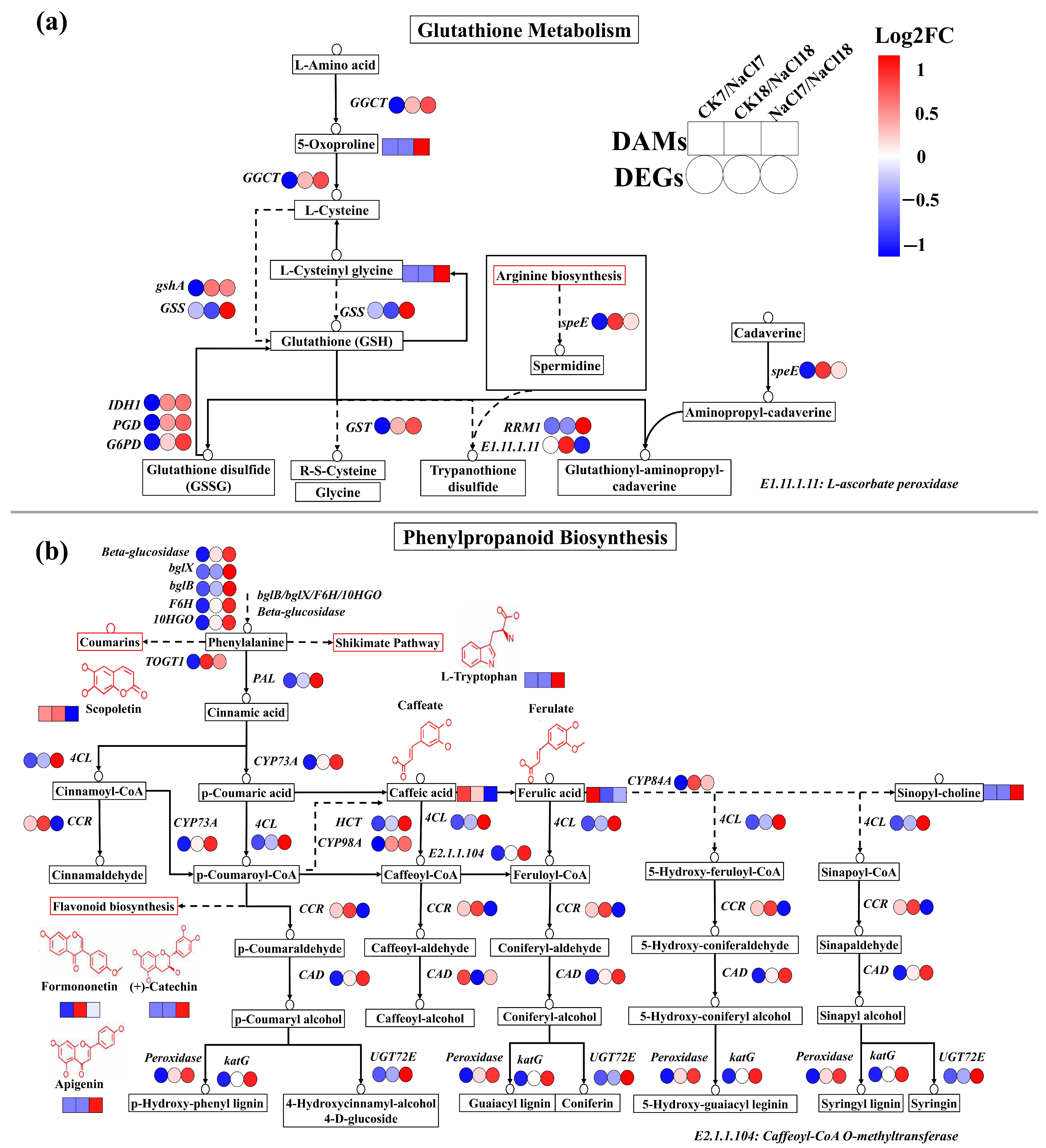
2.6. Integrated Transcriptome-Metabolome Responses Under NaCl Stress
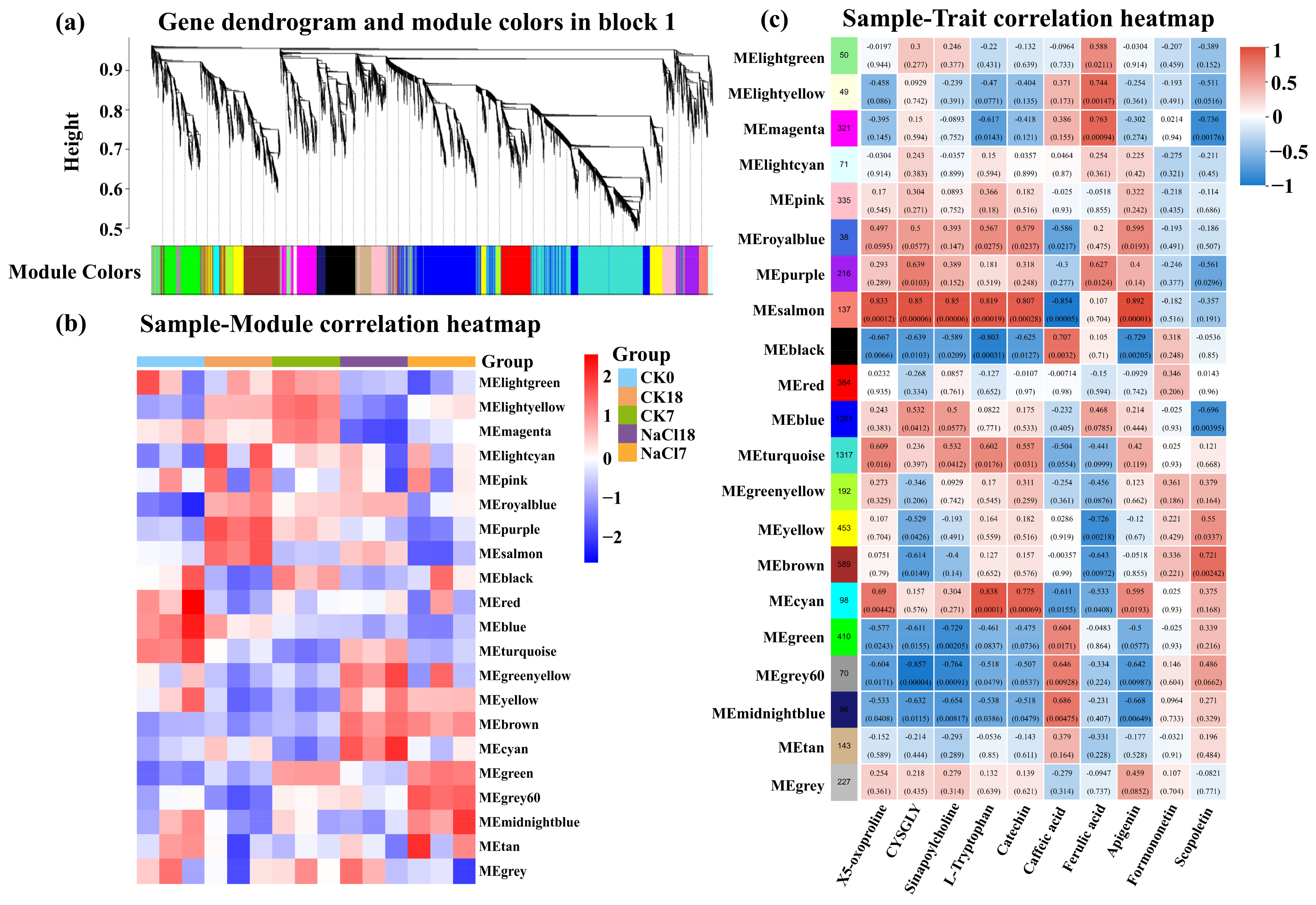
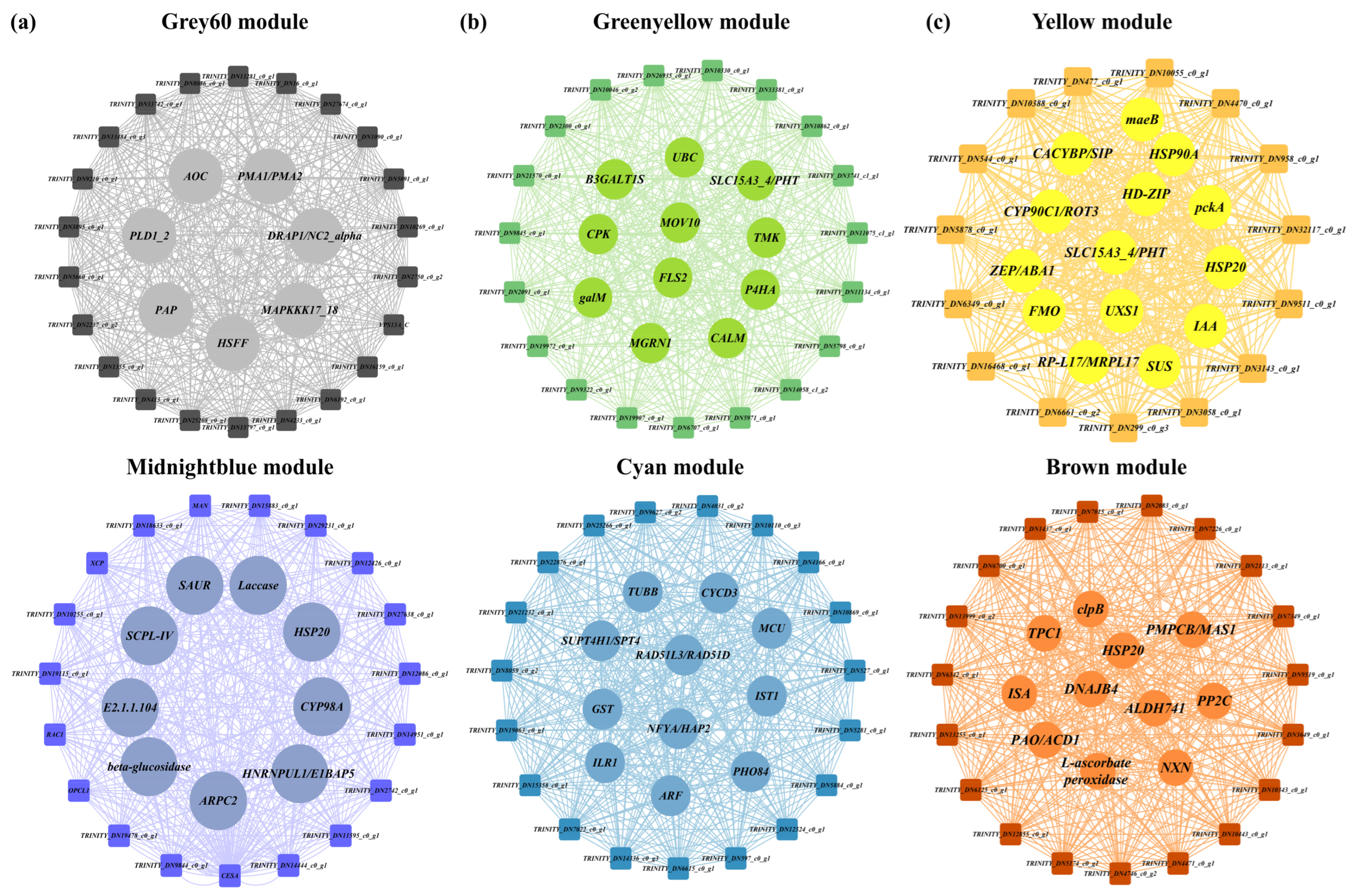
2.7. WGCNA-Based Identification of Salt Tolerance-Related Gene Networks
3. Discussion
4. Materials and Methods
4.1. Plant Material and Growth Conditions
4.2. Experimental Design and Salt Treatments
4.3. Sampling and Tissue Processing
4.4. Physiological and Biochemical Analyses
4.5. Transcriptome (RNA-Seq) Analysis
4.6. Metabolomics Analysis
4.7. Integrated Transcriptome-Metabolome Analysis
4.8. Statistical Analyses
5. Conclusions
Supplementary Materials
Author Contributions
Funding
Institutional Review Board Statement
Informed Consent Statement
Data Availability Statement
Conflicts of Interest
References
- Jiang, L.; She, C.; Tian, C.; Tanveer, M.; Wang, L. Storage Period and Different Abiotic Factors Regulate Seed Germination of Two Apocynum Species—Cash Crops in Arid Saline Regions in the Northwestern China. Front. Plant Sci. 2021, 12, 671157. [Google Scholar] [CrossRef] [PubMed]
- Xu, Z.; Wang, M.; Zhou, J.; Liu, H.; Zhang, C.; Li, Y. Identification and Validation of Stable Reference Genes for Gene Expression Analysis in Sword-leaf Dogbane Using Quantitative Reverse Transcriptase Polymerase Chain Reaction. J. Am. Soc. Hortic. Sci. 2018, 143, 508–517. [Google Scholar] [CrossRef]
- Xie, W.; Zhang, X.; Wang, T.; Hu, J. Botany, Traditional Uses, Phytochemistry and Pharmacology of Apocynum venetum L. (Luobuma): A review. J. Ethnopharmacol. 2012, 141, 1–8. [Google Scholar] [CrossRef] [PubMed]
- Jiang, L.; Wu, X.; Zhao, Z.; Zhang, K.; Tanveer, M.; Wang, L.; Huang, J.; Tian, C.; Wang, L. Luobuma (Apocynum)—Cash crops for saline lands. Ind. Crops Prod. 2021, 173, 114146. [Google Scholar] [CrossRef]
- Thevs, N.; Zerbe, S.; Kyosev, Y.; Rouzi, A.; Tang, B.; Abdusalih, N.; Novitskiy, Z. Apocynum venetum L. and Apocynum pictum Schrenk (Apocynaceae) as Multi-Functional and Multi-Service Plant Species in Central Asia: A Review on Biology, Ecology, and Utilization. J. Appl. Bot. Food Qual. 2012, 85, 159–167. Available online: https://bia.unibz.it/esploro/outputs/journalArticle/Apocynum-venetum-L-and-Apocynum-pictum/991005772967901241#file-0 (accessed on 14 January 2026).
- Zhang, Y.; Hu, S.; Wang, X.; Yue, J.; Chen, D.; Han, M.; Qiao, W.; Wang, Y.; Wang, H. Response of Anatomical Structure and Active Component Accumulation in Apocynum venetum L. (Apocynaceae) Under Saline Stress and Alkali Stress. Plants 2025, 14, 2223. [Google Scholar] [CrossRef]
- Gao, G.; Chen, P.; Chen, J.; Chen, K.; Wang, X.; Abubakar, A.S.; Liu, N.; Yu, C.; Zhu, A. Genomic Survey, Transcriptome, and Metabolome Analysis of Apocynum venetum and Apocynum hendersonii to Reveal Major Flavonoid Biosynthesis Pathways. Metabolites 2019, 9, 296. [Google Scholar] [CrossRef]
- Li, X.; Li, J.; Su, H.; Sun, P.; Zhang, Z.; Li, M.; Xing, H. Physiological and Transcriptional Responses of Apocynum venetum to Salt Stress at the Seed Germination Stage. Int. J. Mol. Sci. 2023, 24, 3623. [Google Scholar] [CrossRef]
- Chen, C.; Chen, J.; Shi, J.; Chen, S.; Zhao, H.; Yan, Y.; Jiang, Y.; Gu, L.; Chen, F.; Liu, X. A Strategy for Quality Evaluation of Salt-Treated Apocyni Veneti Folium and Discovery of Efficacy-Associated Markers by Fingerprint-Activity Relationship Modeling. Sci. Rep. 2019, 9, 16666. [Google Scholar] [CrossRef]
- Chen, C.; Wang, C.; Chen, F.; Cai, Z.; Yuan, J.; Hua, Y.; Shi, J.; Liu, Z.; Zou, L.; Liu, X.; et al. Transcriptomic Profiling Reveals Key Genes of Halophyte Apocyni Veneti Folium (Apocynum venetum L.) and Regulatory Mechanism of Salt Tolerance. J. Plant Growth Regul. 2023, 42, 6565–6584. [Google Scholar] [CrossRef]
- Xiang, T.; Wu, L.; Isah, M.B.; Chen, C.; Zhang, X. Apocynum venetum, A Medicinal, Economical and Ecological Plant: A Review Update. PeerJ. 2023, 11, e14966. [Google Scholar] [CrossRef] [PubMed]
- Shrivastava, P.; Kumar, R. Soil salinity: A Serious Environmental Issue and Plant Growth Promoting Bacteria as One of The Tools for Its Alleviation. Saudi J. Biol. Sci. 2015, 22, 123–131. [Google Scholar] [CrossRef] [PubMed]
- Zhang, M.; Lu, X.; Ren, T.; Marowa, P.; Meng, C.; Wang, J.; Yang, H.; Li, C.; Zhang, L.; Xu, Z. Heterologous Overexpression of Apocynum Venetum Flavonoids Synthetase Genes Improves Arabidopsis Thaliana Salt Tolerance by Activating the IAA and JA Biosynthesis Pathways. Front. Plant Sci. 2023, 14, 1123856. [Google Scholar] [CrossRef] [PubMed]
- Jiang, L.; Qiu, G.; Yu, X. Identification and Spatial Analysis of Land Salinity in China’s Yellow River Delta Using a Land Salinity Monitoring Index from Harmonized UAV-Landsat Imagery. Sensors 2023, 23, 7584. [Google Scholar] [CrossRef]
- Shi, S.; Tian, L.; Nasir, F.; Bahadur, A.; Batool, A.; Luo, S.; Yang, F.; Wang, Z.; Tian, C. Response of Microbial Communities and Enzyme Activities to Amendments in Saline-Alkaline Soils. Appl. Soil Ecol. 2019, 135, 16–24. [Google Scholar] [CrossRef]
- Vaziriyeganeh, M.; Khan, S.; Zwiazek, J.J. Transcriptome and Metabolome Analyses Reveal Potential Salt Tolerance Mechanisms Contributing to Maintenance of Water Balance by the Halophytic Grass Puccinellia nuttalliana. Front. Plant Sci. 2021, 12, 760863. [Google Scholar] [CrossRef]
- Alharbi, K.; Al-Osaimi, A.A.; Alghamdi, B.A. Sodium Chloride (NaCl)-Induced Physiological Alteration and Oxidative Stress Generation in Pisum sativum (L.): A Toxicity Assessment. ACS Omega 2022, 7, 20819–20832. [Google Scholar] [CrossRef]
- Keisham, M.; Mukherjee, S.; Bhatla, S. Mechanisms of Sodium Transport in Plants—Progresses and Challenges. Int. J. Mol. Sci. 2018, 19, 647. [Google Scholar] [CrossRef]
- Das, K.; Roychoudhury, A. Reactive Oxygen Species (ROS) and Response of Antioxidants as ROS-Scavengers During Environmental Stress in Plants. Front. Environ. Sci. 2014, 2, 53. [Google Scholar] [CrossRef]
- Flowers, T.J.; Galal, H.K.; Bromham, L. Evolution of Halophytes: Multiple Origins of Salt Tolerance in Land Plants. Funct. Plant Biol. 2010, 37, 604–612. [Google Scholar] [CrossRef]
- Parida, A.K.; Das, A.B. Salt Tolerance and Salinity Effects on Plants: A Review. Ecotoxicol. Environ. Saf. 2005, 60, 324–349. [Google Scholar] [CrossRef] [PubMed]
- Munns, R.; Tester, M. Mechanisms of Salinity Tolerance. Annu. Rev. Plant Biol. 2008, 59, 651–681. [Google Scholar] [CrossRef] [PubMed]
- Wang, X.; Yin, J.; Wang, J.; Li, J. Integrative Analysis of Transcriptome and Metabolome Revealed the Mechanisms by Which Flavonoids and Phytohormones Regulated the Adaptation of Alfalfa Roots to NaCl Stress. Front. Plant Sci. 2023, 14, 1117868. [Google Scholar] [CrossRef] [PubMed]
- Guo, X.; Li, J.; Cai, D. Overexpression of a Flavonol Synthase Gene from Apocynum venetum Improves the Salinity Stress Tolerance of Transgenic Arabidopsis thaliana. J. Soil Sci. Plant Nutr. 2024, 24, 2317–2333. [Google Scholar] [CrossRef]
- Gill, S.S.; Tuteja, N. Reactive Oxygen Species and Antioxidant Machinery in Abiotic Stress Tolerance in Crop Plants. Plant Physiol. Biochem. 2010, 48, 909–930. [Google Scholar] [CrossRef]
- Yuan, N.; Li, M.; Jia, C. De Novo Transcriptome Assembly and Population Genetic Analyses of an Important Coastal Shrub, Apocynum Venetum L. BMC Plant Biol. 2020, 20, 408. [Google Scholar] [CrossRef]
- Xu, Z.; Wang, M.; Ren, T.; Li, K.; Li, Y.; Marowa, P.; Zhang, C. Comparative Transcriptome Analysis Reveals the Molecular Mechanism of Salt Tolerance in Apocynum venetum. Plant Physiol. Biochem. 2021, 167, 816–830. [Google Scholar] [CrossRef]
- Chen, P.; Gao, G.; Yu, C.; Chen, J.; Chen, K.; Zhu, A. Data Set for Transcriptome Analysis of Apocynum venetum L. Data Brief 2018, 20, 1739–1744. [Google Scholar] [CrossRef]
- Jiang, L.; Zhu, Z.; Wu, Y.; Wen, B.; Zhang, S.; Zhan, J.; Su, N. Comparative Metabolomic Profiling Reveals the Superiority of Apocynum Venetum as a Source for Apocynum Tea. Food Chem. X 2025, 31, 103122. [Google Scholar] [CrossRef]
- Zhen, X.; Liu, X.; Zhang, X.; Luo, S.; Wang, W.; Wan, T. Identification of Core Genes Involved in the Response of Apocynum Venetum to Salt Stress Based on Transcriptome Sequencing and WGCNA. PLoS ONE 2024, 19, e0300277. [Google Scholar] [CrossRef]
- Jiang, L.; Zhao, Y.; Jiang, Z.; Wu, Y.; Wen, B.; Zhang, S.; Zhan, J.; Su, N. Comprehensive Analysis of Element and Metabolite Content Between the Seeds of Apocynum Venetum and Apocynum Pictum Provides New Sights for the Salt Tolerance in Apocynum. Front. Plant Sci. 2025, 16, 1611975. [Google Scholar] [CrossRef] [PubMed]
- Ren, G.; Jiang, Y.; Li, A.; Yin, M.; Li, M.; Mu, W.; Wu, Y.; Liu, J. The Genome Sequence Provides Insights into Salt Tolerance of Achnatherum Splendens (Gramineae), A Constructive Species of Alkaline Grassland. Plant Biotechnol. J. 2022, 20, 116–128. [Google Scholar] [CrossRef] [PubMed]
- Zhang, M.; Yu, Z.; Zeng, D.; Si, C.; Zhao, C.; Wang, H.; Li, C.; He, C.; Duan, J. Transcriptome and Metabolome Reveal Salt-Stress Responses of Leaf Tissues from Dendrobium officinale. Biomolecules 2021, 11, 736. [Google Scholar] [CrossRef] [PubMed]
- Chen, C.; Wang, C.; Liu, Z.; Cai, Z.; Hua, Y.; Mei, Y.; Wei, L.; Liu, X. iTRAQ-based Proteomic Technique Provides Insights into Salt Stress Responsive Proteins in Apocyni Veneti Folium (Apocynum venetum L.). Environ. Exp. Bot. 2020, 180, 104247. [Google Scholar] [CrossRef]
- Zhao, H.; Huang, X.; Wang, Y.; Zhu, A.; Wang, X.; Hazaisi, H.; Gao, G.; Jiang, L.; Chen, J. ApHKT1 Confers Salinity Tolerance in Apocynum by Restraining the Intake of Na+/K+ In Root Tissues. Plant Stress 2025, 15, 100776. [Google Scholar] [CrossRef]
- Khan, H.A.; Siddique, K.H.; Colmer, T.D. Salt Sensitivity in Chickpea is Determined by Sodium Toxicity. Planta 2016, 244, 623–637. [Google Scholar] [CrossRef]
- Katuwal, K.B.; Xiao, B.; Jespersen, D. Physiological Responses and Tolerance Mechanisms of Seashore Paspalum and Centipedegrass Exposed to Osmotic and Iso-Osmotic Salt Stresses. J. Plant Physiol. 2020, 248, 153154. [Google Scholar] [CrossRef]
- Li, L.; Wang, J.; Qian, C.; Zhang, C.; Wang, H.; Li, W.; Zhao, H.; Ju, Y. Physiological and Molecular Responses of Apocynum venetum L. (Apocynaceae) on Salt Stress. Horticulturae 2023, 9, 1010. [Google Scholar] [CrossRef]
- Shao, Y.-H.; Gao, J.-L.; Wu, X.-W.; Li, Q.; Wang, J.-G.; Ding, P.; Lai, X.-P. Effect of salt treatment on growth, isoenzymes and metabolites of Andrographis paniculata (Burm. f.) Nees. Acta Physiol. Plant. 2015, 37, 35. [Google Scholar] [CrossRef]
- Chen, C.; Wang, C.; Liu, Z.; Liu, X.; Zou, L.; Shi, J.; Chen, S.; Chen, J.; Tan, M. Variations in Physiology and Multiple Bioactive Constituents under Salt Stress Provide Insight into the Quality Evaluation of Apocyni Veneti Folium. Int. J. Mol. Sci. 2018, 19, 3042. [Google Scholar] [CrossRef]
- Yamauchi, Y.; Sugimoto, Y. Effect of Protein Modification by Malondialdehyde on the Interaction Between the Oxygen-Evolving Complex 33 kDa Protein and Photosystem II Core Proteins. Planta 2010, 231, 1077–1088. [Google Scholar] [CrossRef] [PubMed]
- Wang, J.; Zhong, X.; Zhu, K.; Lv, J.; Lv, X.; Li, F.; Shi, Z. Reactive Oxygen Species, Antioxidant Enzyme Activity, and Gene Expression Patterns in a Pair of Nearly Isogenic Lines of Nicosulfuron-Exposed Waxy Maize (Zea mays L.). Environ. Sci. Pollut. Res. 2018, 25, 19012–19027. [Google Scholar] [CrossRef] [PubMed]
- Mishra, S.; Srivastava, S.; Tripathi, R.D.; Kumar, R.; Seth, C.S.; Gupta, D.K. Lead Detoxification by Coontail (Ceratophyllum demersum L.) Involves Induction of Phytochelatins and Antioxidant System in Response to Its Accumulation. Chemosphere 2006, 65, 1027–1039. [Google Scholar] [CrossRef] [PubMed]
- Li, Y.; Liu, F.; Li, P.; Wang, T.; Zheng, C.; Hou, B. An Arabidopsis Cytokinin-Modifying Glycosyltransferase UGT76C2 Improves Drought and Salt Tolerance in Rice. Front. Plant Sci. 2020, 11, 560696. [Google Scholar] [CrossRef]
- Farooq, M.A.; Zeeshan Ul Haq, M.; Zhang, L.; Wu, S.; Mushtaq, N.; Tahir, H.; Wang, Z. Transcriptomic Insights into Salt Stress Response in Two Pepper Species: The Role of MAPK and Plant Hormone Signaling Pathways. Int. J. Mol. Sci. 2024, 25, 9355. [Google Scholar] [CrossRef]
- Zhu, W.; Cao, H.; Wang, Q.; Niu, Y.; Sadeghnezhad, E.; Han, S.; Liu, M.; Wang, L.; Liu, Z. Transcriptome Analysis Revealed MAPK and Hormone Pathway Involving in Exogenous Melatonin-Regulated Salt Tolerance in Sour Jujube. Fruit Res. 2023, 3, 19. [Google Scholar] [CrossRef]
- Ghosh, T.; Atta, K.; Mondal, S.; Bandyopadhyay, S.; Singh, A.P.; Jha, U.C.; Kumar, R.; Gujjar, R.S. Hormonal Signaling at Seed Germination and Seedling Stage of Plants Under Salinity Stress. Plant Growth Regul. 2025, 105, 583–600. [Google Scholar] [CrossRef]
- Wang, D.; Wang, K.; Sun, S.; Yan, P.; Lu, X.; Liu, Z.; Li, Q.; Li, L.; Gao, Y.; Liu, J. Transcriptome and Metabolome Analysis Reveals Salt-Tolerance Pathways in the Leaves and Roots of ZM-4 (Malus zumi) in the Early Stages of Salt Stress. Int. J. Mol. Sci. 2023, 24, 3638. [Google Scholar] [CrossRef]
- Silveira, J.A.G.; Carvalho, F.E.L. Proteomics, Photosynthesis and Salt Resistance in Crops: An Integrative View. J. Proteom. 2016, 143, 24–35. [Google Scholar] [CrossRef]
- Quan, C.; Huang, S.; Yu, Q.; Chen, Z.; Kashif, M.H.; Xu, M.; Wei, F.; Tang, D. Physiological, Biochemical, and Transcriptomic Analyses Reveal Potential Candidate Genes of Platostoma palustre in Response to Salt Stress. BMC Plant Biol. 2025, 25, 848. [Google Scholar] [CrossRef]
- Aycan, M.; Mitsui, T. Regulation of Common Early and Late Stress Responses in Rice by Transcriptional and Antioxidant Mechanisms Under Salt Stress. J. Plant Growth Regul. 2024, 43, 4470–4489. [Google Scholar] [CrossRef]
- Wang, J.; Zhu, J.; Zhang, Y.; Fan, F.; Li, W.; Wang, F.; Zhong, W.; Wang, C.; Yang, J. Comparative Transcriptome Analysis Reveals Molecular Response to Salinity Stress of Salt-Tolerant and Sensitive Genotypes of Indica Rice at Seedling Stage. Sci. Rep. 2018, 8, 2085. [Google Scholar] [CrossRef] [PubMed]
- Geng, Y.; Wu, R.; Wee, C.W.; Xie, F.; Wei, X.; Chan, P.M.Y.; Tham, C.; Duan, L.; Dinneny, J.R. A Spatio-Temporal Understanding of Growth Regulation during the Salt Stress Response in Arabidopsis. Plant Cell 2013, 25, 2132–2154. [Google Scholar] [CrossRef] [PubMed]
- Cao, Y.H.; Lü, Z.-L.; Li, Y.-H.; Jiang, Y.; Zhang, J.-L. Integrated Metabolomic and Transcriptomic Analysis Reveals the Role of Root Phenylpropanoid Biosynthesis Pathway in the Salt Tolerance of Perennial Ryegrass. BMC Plant Biol. 2024, 24, 1225. [Google Scholar] [CrossRef]
- Ninkuu, V.; Aluko, O.O.; Yan, J.; Zeng, H.; Liu, G.; Zhao, J.; Li, H.; Chen, S.; Dakora, F.D. Phenylpropanoids Metabolism: Recent Insight into Stress Tolerance and Plant Development Cues. Front. Plant Sci. 2025, 16, 1571825. [Google Scholar] [CrossRef]
- Rao, M.J.; Zheng, B. The Role of Polyphenols in Abiotic Stress Tolerance and Their Antioxidant Properties to Scavenge Reactive Oxygen Species and Free Radicals. Antioxidants 2025, 14, 74. [Google Scholar] [CrossRef]
- Wu, F.; Qu, D.; Zhang, X.; Sun, Y.; Wang, J.; Zhu, D.; Yang, L.; Liu, X.; Tian, W.; Wang, L.; et al. PaLectinL7 Enhances Salt Tolerance of Sweet Cherry by Regulating Lignin Deposition in Connection with PaCAD1. Tree Physiol. 2023, 43, 1986–2000. [Google Scholar] [CrossRef]
- Rajkumari, N.; Chowrasia, S.; Nishad, J.; Ganie, S.A.; Mondal, T.K. Metabolomics-Mediated Elucidation of Rice Responses to Salt Stress. Planta 2023, 258, 111. [Google Scholar] [CrossRef]
- Sun, S.; Wen, D.; Yang, W.; Meng, Q.; Shi, Q.; Gong, B. Overexpression of Caffeic Acid O-Methyltransferase 1 (COMT1) Increases Melatonin Level and Salt Stress Tolerance in Tomato Plant. J. Plant Growth Regul. 2020, 39, 1221–1235. [Google Scholar] [CrossRef]
- Waśkiewicz, A.; Muzolf-Panek, M.; Goliński, P. Phenolic Content Changes in Plants Under Salt Stress. In Ecophysiology and Responses of Plants Under Salt Stress; Ahmad, P., Azooz, M.M., Prasad, M.N.V., Eds.; Springer: New York, NY, USA, 2013; pp. 283–314. [Google Scholar] [CrossRef]
- Yang, J.; Zhang, W.; Wang, T.; Xu, J.; Wang, J.; Huang, J.; Sun, Y.; Ni, Y.; Guo, Y. Enhancing Sweet Sorghum Emergence and Stress Resilience in Saline–Alkaline Soils Through ABA Seed Priming: Insights into Hormonal and Metabolic Reprogramming. BMC Genom. 2025, 26, 241. [Google Scholar] [CrossRef]
- Yang, X.; Liu, D.; Liu, C.; Li, M.; Yan, Z.; Zhang, Y.; Feng, G. Possible Melatonin-Induced Salt Stress Tolerance Pathway in Phaseolus vulgaris L. Using Transcriptomic and Metabolomic Analyses. BMC Plant Biol. 2024, 24, 72. [Google Scholar] [CrossRef] [PubMed]
- Wang, Y.; Jiang, W.; Li, C.; Wang, Z.; Lu, C.; Cheng, J.; Wei, S.; Yang, J.; Yang, Q. Integrated Transcriptomic and Metabolomic Analyses Elucidate the Mechanism of Flavonoid Biosynthesis in the Regulation of Mulberry Seed Germination Under Salt Stress. BMC Plant Biol. 2024, 24, 132. [Google Scholar] [CrossRef] [PubMed]
- Wang, Y.; Zeng, X.; Xu, Q.; Mei, X.; Yuan, H.; Jiabu, D.; Sang, Z.; Nyima, T. Metabolite Profiling in Two Contrasting Tibetan Hulless Barley Cultivars Revealed the Core Salt-Responsive Metabolome and Key Salt-Tolerance Biomarkers. AoB Plants 2019, 11, plz021. [Google Scholar] [CrossRef] [PubMed]
- Li, H.; Tang, X.; Yang, X.; Zhang, H. Comprehensive Transcriptome and Metabolome Profiling Reveal Metabolic Mechanisms of Nitraria Sibirica Pall. to salt stress. Sci. Rep. 2021, 11, 12878. [Google Scholar] [CrossRef]
- Ren, W.; Chen, L.; Xie, Z.M.; Peng, X. Combined Transcriptome and Metabolome Analysis Revealed Pathways Involved in Improved Salt Tolerance of Gossypium hirsutum L. Seedlings in Response to Exogenous Melatonin Application. BMC Plant Biol. 2022, 22, 552. [Google Scholar] [CrossRef]
- Yang, S.; Liu, M.; Chu, N.; Chen, G.; Wang, P.; Mo, J.; Guo, H.; Xu, J.; Zhou, H. Combined Transcriptome and Metabolome Reveal Glutathione Metabolism Plays a Critical Role in Resistance to Salinity in Rice Landrace HD961. Front. Plant Sci. 2022, 13, 952595. [Google Scholar] [CrossRef]
- Punia, H.; Tokas, J.; Malik, A.; Bajguz, A.; El-Sheikh, M.A.; Ahmad, P. Ascorbate–Glutathione Oxidant Scavengers, Metabolome Analysis, and Adaptation Mechanisms of Ion Exclusion in Sorghum Under Salt Stress. Int. J. Mol. Sci. 2021, 22, 13249. [Google Scholar] [CrossRef]
- Zhao, Y.; Dong, W.; Zhang, N.; Ai, X.; Wang, M.; Huang, Z.; Xiao, L.; Xia, G. A Wheat Allene Oxide Cyclase Gene Enhances Salinity Tolerance via Jasmonate Signaling. Plant Physiol. 2013, 164, 1068–1076. [Google Scholar] [CrossRef]
- Khalilova, L.A.; Lobreva, O.V.; Nedelyaeva, O.I.; Karpichev, I.V.; Balnokin, Y.V. Involvement of the Membrane Nanodomain Protein AtFlot1 in Vesicular Transport of Plasma Membrane H+-ATPase in Arabidopsis thaliana Under Salt Stress. Int. J. Mol. Sci. 2023, 24, 1251. [Google Scholar] [CrossRef]
- Sadau, S.B.; Mehari, T.G.; Ahmad, A.; Tajo, S.M.; Ibrahim, S.; Iqbal, M.S.; Elasad, M.; Zhang, J.; Wei, H.; Yu, S. Genome-Wide Identification and Characterization of MAPK Genes Reveals Their Potential Roles in Enhancing Drought and Salt Stress Tolerance in Gossypium hirsutum. J. Cotton Res. 2022, 5, 23. [Google Scholar] [CrossRef]
- Yu, J.; Cheng, Y.; Feng, K.; Ruan, M.; Ye, Q.; Wang, R.; Li, Z.; Zhou, G.; Yao, Z.; Yang, Y.; et al. Genome-Wide Identification and Expression Profiling of the Tomato Hsp20 Gene Family in Response to Biotic and Abiotic Stresses. Front. Plant Sci. 2016, 7, 1215. [Google Scholar] [CrossRef] [PubMed]
- Zhang, X.; Xue, L.; Chen, R.; Ma, Q.; Ma, D.; Liu, X. Genome-Wide Identification of the Cytochrome P450 Family and Analysis of CYP Genes Associated with Salt Tolerance in Medicago sativa L. Grass Res. 2023, 3, 21. [Google Scholar] [CrossRef]
- Zhang, Y.; Shen, Y.; Han, M.; Su, Y.; Feng, X.; Gao, T.; Zhou, X.; Wu, Q.; Sun, G.; Wang, Y. Potential Response Patterns of Endogenous Hormones in Cliff Species Opisthopappus taihangensis and O. longilobus Under Salt Stress. Plants 2024, 13, 557. [Google Scholar] [CrossRef] [PubMed]
- Verma, S.; Negi, N.P.; Pareek, S.; Mudgal, G.; Kumar, D. Auxin Response Factors in Plant Adaptation to Drought and Salinity Stress. Physiol. Plant. 2022, 174, e13714. [Google Scholar] [CrossRef]
- Xu, N.; Cui, Y.; Zhang, Y.; Zhang, H.; Fan, Y.; Feng, X.; Huang, H.; Ni, K.; Han, M.; Lu, X.; et al. GhNFYA16 was Functionally Observed Positively Responding to Salt Stress by Genome-Wide Identification of NFYA Gene Family in Cotton. Environ. Sci. Eur. 2022, 34, 95. [Google Scholar] [CrossRef]
- Csiszár, J.; Horváth, E.; Váry, Z.; Gallé, Á.; Bela, K.; Brunner, S.; Tari, I. Glutathione Transferase Supergene Family in Tomato: Salt Stress-Regulated Expression of Representative Genes from Distinct GST Classes In Plants Primed with Salicylic Acid. Plant Physiol. Biochem. 2014, 78, 15–26. [Google Scholar] [CrossRef]
- Liaqat, A.; Alfatih, A.; Jan, S.U.; Sun, L.; Zhao, P.; Xiang, C. Transcription Elongation Factor AtSPT4-2 Positively Modulates Salt Tolerance in Arabidopsis thaliana. BMC Plant Biol. 2023, 23, 49. [Google Scholar] [CrossRef]
- Yuan, S.; Zhang, W.; Zhang, Y. Characterization of PHT Genes in ‘duli’ (Pyrus betulifolia Bunge) and Expression Analysis of PbPHTs in Response to Plant Growth Regulators, P, and Salt Stress. Agriculture 2025, 15, 199. [Google Scholar] [CrossRef]
- Atif, R.M.; Shahid, L.; Waqas, M.; Ali, B.; Rashid, M.A.R.; Azeem, F.; Nawaz, M.A.; Wani, S.H.; Chung, G. Insights on Calcium-Dependent Protein Kinases (CPKs) Signaling for Abiotic Stress Tolerance in Plants. Int. J. Mol. Sci. 2019, 20, 5298. [Google Scholar] [CrossRef]
- Han, M.; Cui, R.; Cui, Y.; Wang, J.; Wang, S.; Jiang, T.; Huang, H.; Lei, Y.; Liu, X.; Rui, C.; et al. A Flavonol Synthase (FLS) Gene, GhFLS1, was Screened Out Increasing Salt Resistance in Cotton. Environ. Sci. Eur. 2023, 35, 37. [Google Scholar] [CrossRef]
- Tian, X.; Wang, Z.; Zhang, Q.; Ci, H.; Wang, P.; Yu, L.; Jia, G. Identification of Salt Stress Response Genes in Rosa chinensis Leaves by Comparative RNA-Seq Analysis of Transcriptome Dynamics. Russ. J. Plant Physiol. 2019, 66, 119–127. [Google Scholar] [CrossRef]
- Escolà, G.; Garcia-Molina, A.; Almira-Casellas, M.; Poschenrieder, C.; Busoms, S. Transcriptomic Insights into Plant Adaptation. In Plant Transcriptomics and Epitranscriptomics: Concepts and Strategies in Plant Sciences; Vaschetto, L.M., Ed.; Springer Nature: Singapore, 2026; pp. 67–101. [Google Scholar] [CrossRef]
- Xia, Y.; Yang, J.; Ma, L.; Yan, S.; Pang, Y. Genome-Wide Identification and Analyses of Drought/Salt-Responsive Cytochrome P450 Genes in Medicago truncatula. Int. J. Mol. Sci. 2021, 22, 9957. [Google Scholar] [CrossRef] [PubMed]
- Sharif, R.; Raza, A.; Chen, P.; Li, Y.; El-Ballat, E.M.; Rauf, A.; Hano, C.; El-Esawi, M.A. HD-ZIP Gene Family: Potential Roles in Improving Plant Growth and Regulating Stress-Responsive Mechanisms in Plants. Genes 2021, 12, 1256. [Google Scholar] [CrossRef] [PubMed]
- Wang, J.X.; Dai, L.; Yang, Y.; Zhu, L.Y. Identification and Expression Pattern Analysis of the PP2C Gene Family Response to Salt Stress in Tomato. Russ. J. Plant Physiol. 2025, 72, 122. [Google Scholar] [CrossRef]
- Xiao, H.-J.; Liu, K.-K.; Li, D.-W.; Arisha, M.H.; Chai, W.-G.; Gong, Z.-H. Cloning and Characterization of the Pepper CaPAO Gene for Defense Responses to Salt-Induced Leaf Senescence. BMC Biotechnol. 2015, 15, 100. [Google Scholar] [CrossRef]
- Wang, M.; Ren, T.; Huang, R.; Li, Y.; Zhang, C.; Xu, Z. Overexpression of an Apocynum venetum Flavonols Synthetase Gene Confers Salinity Stress Tolerance to Transgenic Tobacco Plants. Plant Physiol. Biochem. 2021, 162, 667–676. [Google Scholar] [CrossRef]
- Ma, L.; Li, Y.; Yu, C.; Wang, Y.; Li, X.; Li, N.; Chen, Q.; Bu, N. Alleviation of Exogenous Oligochitosan on Wheat Seedlings Growth Under Salt Stress. Protoplasma 2012, 249, 393–399. [Google Scholar] [CrossRef]
- Beers, R.F.; Sizer, I.W. A Spectrophotometric Method for Measuring the Breakdown of Hydrogen Peroxide by Catalase. J. Biol. Chem. 1952, 195, 133–140. [Google Scholar] [CrossRef]
- Beauchamp, C.; Fridovich, I. Superoxide Dismutase: Improved Assays and An Assay Applicable to Acrylamide Gels. Anal. Biochem. 1971, 44, 276–287. [Google Scholar] [CrossRef]
- Heath, R.L.; Packer, L. Photoperoxidation in Isolated Chloroplasts: I. Kinetics and Stoichiometry of Fatty Acid Peroxidation. Arch. Biochem. Biophys. 1968, 125, 189–198. [Google Scholar] [CrossRef]
- Sultana, B.; Anwar, F.; Ashraf, M. Effect of Extraction Solvent/Technique on the Antioxidant Activity of Selected Medicinal Plant Extracts. Molecules 2009, 14, 2167–2180. [Google Scholar] [CrossRef]
- Zhang, B.; Deng, Z.; Ramdath, D.D.; Tang, Y.; Chen, P.X.; Liu, R.; Liu, Q.; Tsao, R. Phenolic profiles of 20 Canadian lentil Cultivars and Their Contribution to Antioxidant Activity and Inhibitory Effects On α-Glucosidase and Pancreatic Lipase. Food Chem. 2015, 172, 862–872. [Google Scholar] [CrossRef]
- Lichtenthaler, H.K.; Wellburn, A.R. Determinations of Total Carotenoids and Chlorophylls a and b of Leaf Extracts in Different Solvents. Biochem. Soc. Trans. 1983, 11, 591–592. [Google Scholar] [CrossRef]
- Bolger, A.M.; Lohse, M.; Usadel, B. Trimmomatic: A Flexible Trimmer for Illumina Sequence Data. Bioinformatics 2014, 30, 2114–2120. [Google Scholar] [CrossRef]
- Grabherr, M.G.; Haas, B.J.; Yassour, M.; Levin, J.Z.; Thompson, D.A.; Amit, I.; Adiconis, X.; Fan, L.; Raychowdhury, R.; Zeng, Q. Full-Length Transcriptome Assembly from RNA-Seq Data Without a Reference Genome. Nat. Biotechnol. 2011, 29, 644–652. [Google Scholar] [CrossRef]
- Li, B.; Dewey, C.N. RSEM: Accurate Transcript Quantification from RNA-Seq Data with or without a Reference Genome. BMC Bioinform. 2011, 12, 323. [Google Scholar] [CrossRef] [PubMed]
- R Core Team. R: A Language and Environment for Statistical Computing; R Foundation for Statistical Computing: Vienna, Austria, 2016; Available online: https://cir.nii.ac.jp/crid/1574231874043578752 (accessed on 12 December 2025).




Disclaimer/Publisher’s Note: The statements, opinions and data contained in all publications are solely those of the individual author(s) and contributor(s) and not of MDPI and/or the editor(s). MDPI and/or the editor(s) disclaim responsibility for any injury to people or property resulting from any ideas, methods, instructions or products referred to in the content. |
© 2026 by the authors. Licensee MDPI, Basel, Switzerland. This article is an open access article distributed under the terms and conditions of the Creative Commons Attribution (CC BY) license.
Share and Cite
Gillani, S.W.; Wang, M.; Wang, L.; Lu, X.; Bai, Y.; Song, Y.; Meng, C.; Jia, X.; Li, Y.; Zhang, C.; et al. Temporal Transcriptomic and Metabolomic Reprogramming Unveils a Two-Phase Salt Tolerance Mechanism in Apocynum venetum. Int. J. Mol. Sci. 2026, 27, 1917. https://doi.org/10.3390/ijms27041917
Gillani SW, Wang M, Wang L, Lu X, Bai Y, Song Y, Meng C, Jia X, Li Y, Zhang C, et al. Temporal Transcriptomic and Metabolomic Reprogramming Unveils a Two-Phase Salt Tolerance Mechanism in Apocynum venetum. International Journal of Molecular Sciences. 2026; 27(4):1917. https://doi.org/10.3390/ijms27041917
Chicago/Turabian StyleGillani, Syeda Wajeeha, Meng Wang, Lu Wang, Xueli Lu, Yu Bai, Yiru Song, Chen Meng, Xi Jia, Yiqiang Li, Chengsheng Zhang, and et al. 2026. "Temporal Transcriptomic and Metabolomic Reprogramming Unveils a Two-Phase Salt Tolerance Mechanism in Apocynum venetum" International Journal of Molecular Sciences 27, no. 4: 1917. https://doi.org/10.3390/ijms27041917
APA StyleGillani, S. W., Wang, M., Wang, L., Lu, X., Bai, Y., Song, Y., Meng, C., Jia, X., Li, Y., Zhang, C., & Xu, Z. (2026). Temporal Transcriptomic and Metabolomic Reprogramming Unveils a Two-Phase Salt Tolerance Mechanism in Apocynum venetum. International Journal of Molecular Sciences, 27(4), 1917. https://doi.org/10.3390/ijms27041917