Exosomes and Triple-Negative Breast Cancer: Current Knowledge and Clinical Significance


Abstract
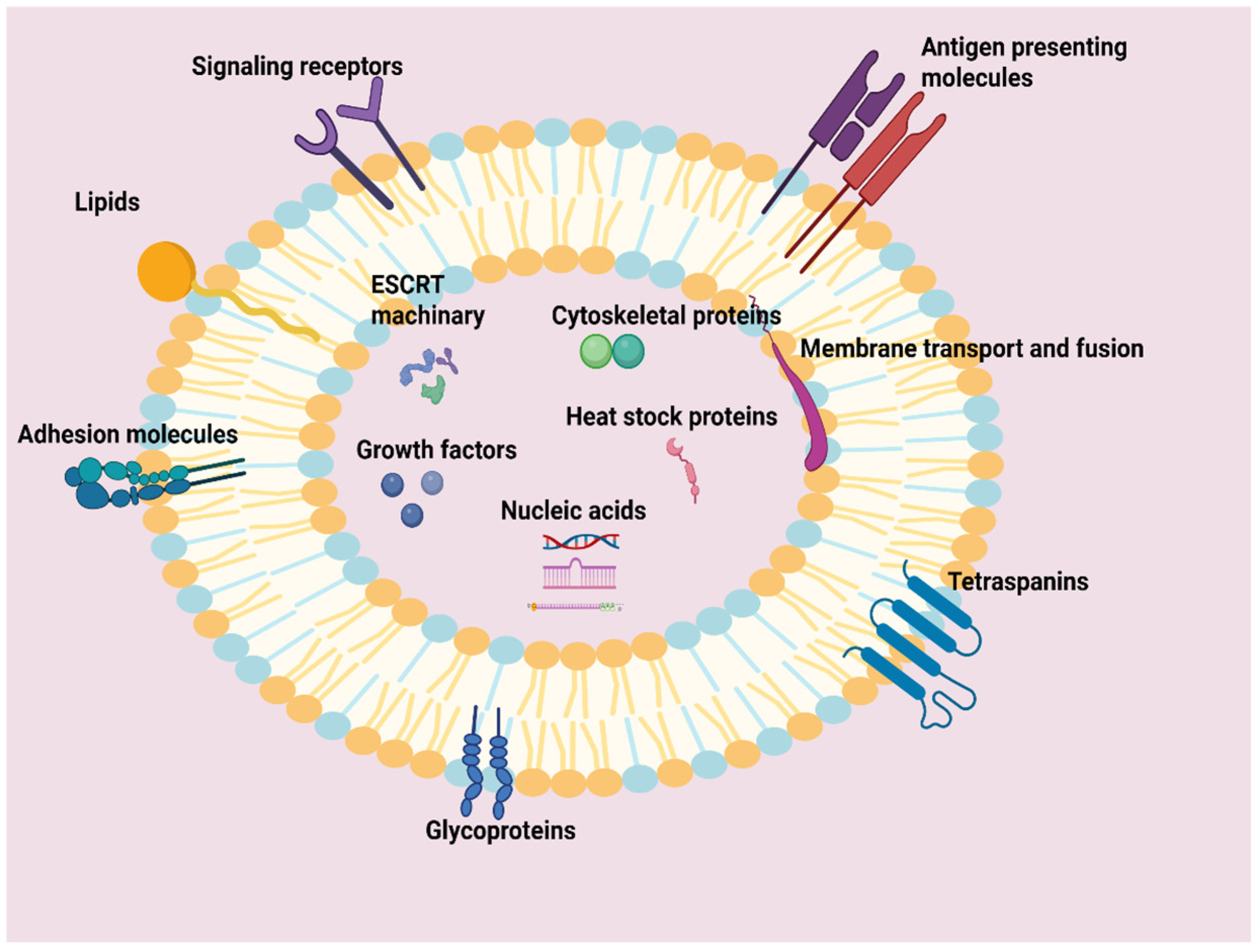
1. Exosomes: Silent Messengers of Cellular Communication
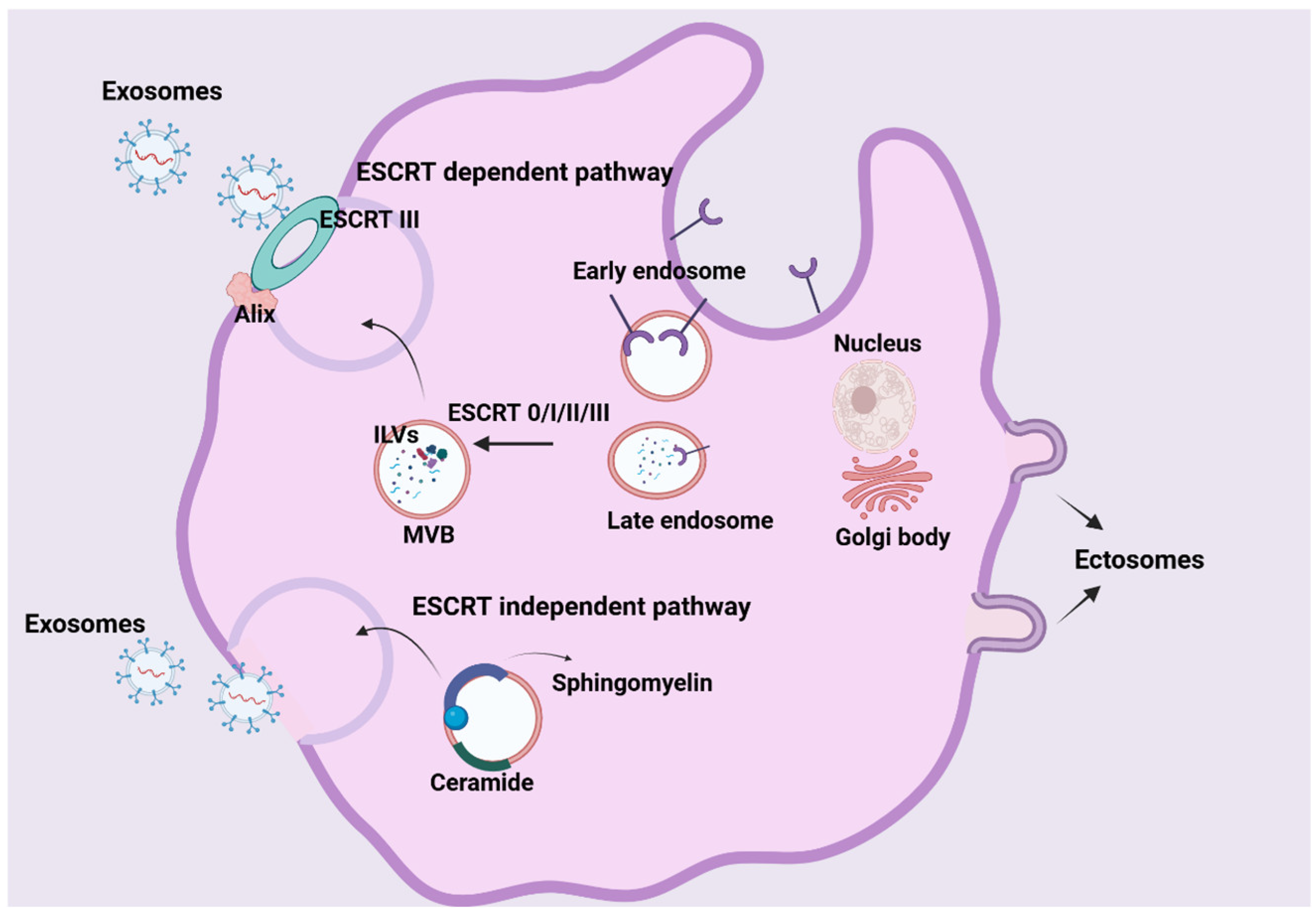
2. Exosome Biogenesis: A Complex Cellular Process
- ESCRT-dependent pathway: This intricate pathway is precisely orchestrated by a large multiprotein complex comprising around thirty different types of proteins. The core function of the ESCRT machinery is to selectively sort specific components into ILVs. The ESCRT system itself is made up of four main complexes—ESCRT-0, ESCRT-I, ESCRT-II and ESCRT-III—each playing a unique and vital role [30].
- b.
- ESCRT-independent pathway: In addition to the ESCRT-dependent pathway, ILVs and MVBs can also be generated by ESCRT-independent mechanisms (Figure 2). These mechanisms involve lipids, such as sphingomyelin, cholesterol and ceramides, as well as tetraspanins and HSPs [26]. Exosomes are rich in these lipids, whose composition resembles that of membrane lipid rafts. Evidence suggests that lipid raft components play fundamental roles in ESCRT-independent ILV formation [26,32,33].
3. Exosomes: Important Contributors in Triple-Negative Breast Cancer Pathogenesis
4. Exosomal Biomarkers in ΤΝBC
4.1. Exosomes as Diagnostic Biomarkers in TNBC
4.2. Exosomal microRNAs (miRNAs) as Diagnostic Biomarkers in TNBC
4.3. Exosomal circRNAs and lncRNAs in Diagnosis of TNBC
4.4. Exosomal Proteins as Diagnostic Biomarkers in TNBC

| (a) | ||||
| Biomarker | Sample Type | N (Patients)/N (Controls/Others) | Correlation | Reference |
| miGISig | Plasma | 20 BC/10 HC | Elevated in plasma exosomes of Chinese BC patients | [59] |
| miR-122-5p | Plasma | 257 BC/257 HC | Elevated in plasma exosomes of Chinese BC patients (38.9% TNBC) | [60] |
| miR-3662 | Serum | 60 BC/20 HC | Increased levels in the serum of Chinese BC patients | [63] |
| miR-146a | ||||
| miR-1290 | ||||
| miR-200c | Serum | 98 BC/45 benign/79 HC | Increased levels in the serum of Chinese BC patients | [62] |
| miR-372 | Serum | 50 Invasive BC/12 HC | Increased levels in serum of German BC patients (21% TNBC) | [61] |
| miR-92b-5p | Serum | 59 BC/53 HC | Elevated in Taiwanese BC patients vs. HC; correlated with disease stage | [64] |
| miR-148a | Serum | 125 BC/50 benign/40 HC | Significantly reduced in Chinese BC patients | [65] |
| miR-21 miR-1246 | Plasma | 16 BC/16 HC | Significantly higher in plasma exosomes of American BC patients | [67] |
| miR-21 | Urine | 22 BC/26 HC | Significantly lower in Japanese BC patients than in controls | [68] |
| miR-424 | Urine | 69 BC/40 HC | Highly specific/sensitive tool for distinguishing BC from HC in German patients (16 TNBC/69) | [69] |
| miR-423 | ||||
| miR-660 | ||||
| let-7i | ||||
| miR-9 | Plasma | 62 BC/20 HC | Significantly elevated in early-stage South Korean BC patients (15/62) | [70] |
| miR-16 | ||||
| miR-21 | ||||
| miR-429 | ||||
| miR-373 | Serum | 168 primary BC/19 benign/28 HC | Significantly elevated in German TNBC patients vs. other BC subtypes | [61] |
| miR-376c | Serum | 224 TNBC/20 HC | Elevated in German TNBC patients relative to healthy controls | [71] |
| miR-382 | ||||
| hsa-miR-148a-5p | Plasma | 27 BC/3 HC | Upregulated in Chinese TNBC patients vs. HC | [72] |
| hsa-miR-200a-5p | ||||
| hsa-miR-210a-3p | ||||
| hsa-miR-378a-3p | ||||
| hsa-miR-483-5p | ||||
| hsa-miR-7110-5p | ||||
| hsa-miR-92b-3p | Downregulated in Chinese TNBC patients vs. HC | |||
| hsa-miR-150-5p | ||||
| miR-335-5p | Serum | 56 TNBC/HC not specified | Lower expression in Chinese TNBC patients than in HC | [73] |
| miR-150-5p | Serum | 31 BC (16 LA. 15 TNBC)/16 HC | Accurately distinguished LA and TNBC subtypes in Brazilians | [74] |
| hsa-miR-1180 | Tumor Tissue | 15 TNBC tumor/15 adjacent normal | Significantly elevated in Indian TNBC tumor tissue | [75] |
| hsa-miR-4728 | ||||
| miR-21 miR-221 miR-210 | Serum | 85 TNBC/85 HC | Overexpressed in Indians TNBC patients; early detection biomarker | [76] |
| Tissue | 85 TNBC/85 adjacent normal | |||
| miR-195 miR-145 Let-7a | Serum | 85 TNBC/85 HC | Downregulated in Indians TNBC patients; early detection biomarker | |
| Tissue | 85 TNBC/85 adjacent normal | Overexpressed in Indians TNBC patients; early detection biomarker | ||
| (b) | ||||
| Biomarker | Sample Type | N (Patients)/N (Controls/Others) | Correlation | Reference |
| lncRNA XIST | Serum | 91 TNBC/50 HC | Distinguishes TNBC patients from HC in Chinese; decreased after tumor excision | [81] |
| SUMO1P3 | Serum | 130 TNBC/60 non-TNBC/60 benign/50 HC | Higher in Chinese TNBC patients compared to non-TNBC, benign and HC | [82] |
| (c) | ||||
| Biomarker | Sample Type | N (Patients)/N (Controls/Others) | Correlation/Finding | Reference |
| circHSDL2 | Serum Exosomes and Tumor Tissue | 43 TNBC (serum)/Not specified HC (serum)/20 TNBC tumor | Significantly elevated in serum exosomes and tumor tissues of TNBC patients vs. HC | [80] |
| circSIPA1L3 | Serum | 50 BC/50 HC | Significantly increased levels in the serum exosomes of Chinese BC patients | [78] |
| circSTIL | Plasma | 59 TNBC/40 non-TNBC | Diagnostic value in distinguishing TNBC from non-TNBC subtypes in Chinese | [79] |
| circPSMA1 | Serum and Cell Lines | 20 TNBC/20 non-TNBC | Increased expression in Chinese TNBC patients and TNBC cell lines vs. Non-TNBC patients/lines | [77] |
| (d) | ||||
| Biomarker | Sample Type | N (Patients)/N (Controls/Others) | Correlation | Reference |
| CD151 | Serum | 10 TNBC/17 HC | Higher expression in Chinese TNBC patients than in HC | [83] |
| exo-AnxA2 | Serum | 169 BC/68 HC | Concentration significantly increased in serum samples from American BC patients vs. HC | [84] |
| FLT1 | Serum | 56 TNBC/Not specified HC | Higher expression in Chinese TNBC patients than in HC | [73] |
| GLUT-1 | BC Cell Line and non-tumorigenic breast cell line | Increased expression in BC cell lines | [85] | |
| GPC-1 | ||||
| ADAM10 | ||||
5. Exosomes as Prognostic Indicators in TNBC
5.1. Exosomal miRNAs as Prognostic Indicators in TNBC
5.2. Exosomal lncRNAs and circRNAs as Prognostic Indicators in TNBC
5.3. Exosomal Proteins as Prognostic Indicators in TNBC
| (a) | ||||
| Biomarker | Sample Type | N (Patients)/N (Controls/Others) | Correlation | Reference |
| miR-148a | Serum | 125 BC and 50 benign/40 HC | Lower expression in Chinese BC patients linked to worse OS and DFS | [65] |
| miGISig | Plasma | 210 | Higher expression in Chinese BC patients linked to worse OS | [59] |
| miR-4448 | Serum | 24 TNBC | High expression associated with longer OS in Japanese TNBC patients | [86] |
| miR-2392 | ||||
| miR-2467 | ||||
| miR-4800 | ||||
| miR-21 | serum | 53 BC | Higher expression in metastatic Spanish BC patients | [87] |
| miR-105 | ||||
| miR-335-5p | Serum | 56 TNBC | Low expression associated with worse OS in Chinese TNBC patients | [73] |
| miR-637 | Serum | 20 TNBC | Low expression (combined with high Akt1) correlated with poor prognosis in Chinese TNBC patients with lymph node metastasis | [80] |
| miR-939 | Tissue | 63 TNBC | High expression associated with recurrence risk in Italian breast cancer patients | [88] |
| (b) | ||||
| Biomarker | Sample Type | N (Patients)/N (Controls/Others) | Correlation | Reference |
| XIST | Serum | 91 TNBC | High expression associated with worse OS in Chinese TNBC patients | [81] |
| SUMO1P3 | Serum | 130 TNBC | High expression associated with worse OS in Chinese TNBC patients | [82] |
| LINC00989 | Serum | 135 TNBC | Elevated in metastatic TNBC; combination with CEA, CA125 associated with shorter OS and PFS in Chinese TNBC patients | [91] |
| LINC00899 | Plasma | 119 BC | Correlated with Ki-67 index, tumor size and presence/absence of lymph node metastasis | [89] |
| (c) | ||||
| Biomarker | Sample Type | N (Patients)/N (Controls/Others) | Correlation | Reference |
| circSIPA1L3 | serum | 238 BC | Increased levels associated with shorter OS in Chinese BC patients. | [78] |
| circSTIL | plasma | 49 TNBC | High expression associated with worse DFS in Chinese TNBC patients. | [79] |
| circHSDL2 | serum | 43 TNBC | Promotes proliferation, infiltration and metastasis in TNBC cells. | [77] |
| circMIB1 | exosomes from CAFs | 113 TNBC | Increased expression associated with shorter OS and DFS in Chinese TNBC patients. | [90] |
| (d) | ||||
| Biomarker | Sample Type | N (Patients)/N (Controls/Others) | Correlation | Reference |
| FLT1 | serum | 56 TNBC | High expression associated with worse OS in Chinese TNBC patients. | [73] |
| Akt1 | serum | 20 TNBC | High expression of Akt1 combined with low expression of miR-637 correlated with poor prognosis in Chinese TNBC patients with lymph node metastasis. | [80] |
| LDHC | serum | 75 BC | Higher levels in Chinese preoperative breast cancer patients than in postoperative patients. | [92] |
| AnxA2 | serum | 169 TNBC | Higher levels associated with shorter OS and worse DFS in Americans and higher levels in TNBC patients with Grade III compared to Grade II. | [84] |
| EV_APRIL | serum | 190 TNBC | Higher levels in Korean TNBC patients associated with shorter OS. | [93] |
| EV_CXCL13 | ||||
| EV_VEGF-A | ||||
6. Exosomal Biomarkers as Predictive Indicators in TNBC
6.1. Overall Exosome Concentration and Treatment Response
6.2. Exosomal RNA as Predictive Indicators for Chemotherapy Response
6.3. Exosomal Proteins as Predictive Indicators for Chemotherapy Response
6.4. Exosomal Biomarkers as Predictive Indicators for Immunotherapy Response
7. Conclusions and Future Perspectives
Author Contributions
Funding
Data Availability Statement
Conflicts of Interest
References
- Tkach, M.; Théry, C. Communication by Extracellular Vesicles: Where We Are and Where We Need to Go. Cell 2016, 164, 1226–1232. [Google Scholar] [CrossRef]
- Raposo, G.; Stoorvogel, W. Extracellular vesicles: Exosomes, microvesicles, and friends. J. Cell Biol. 2013, 200, 373–383. [Google Scholar] [CrossRef]
- de la Torre Gomez, C.; Goreham, R.V.; Bech Serra, J.J.; Nann, T.; Kussmann, M. “Exosomics”—A Review of Biophysics, Biology and Biochemistry of Exosomes with a Focus on Human Breast Milk. Front. Genet. 2018, 9, 92. [Google Scholar] [CrossRef]
- Taha, H.B. Plasma versus serum for extracellular vesicle (EV) isolation: A duel for reproducibility and accuracy for CNS-originating EVs biomarker analysis. J. Neurosci. Res. 2023, 101, 1677–1686. [Google Scholar] [CrossRef]
- Zhang, X.; Takeuchi, T.; Takeda, A.; Mochizuki, H.; Nagai, Y. Comparison of serum and plasma as a source of blood extracellular vesicles: Increased levels of platelet-derived particles in serum extracellular vesicle fractions alter content profiles from plasma extracellular vesicle fractions. PLoS ONE 2022, 17, e0270634. [Google Scholar] [CrossRef]
- Sánchez-Vizcaíno Mengual, E.; Cordero, L.; Pinto, H. Human Blood Exosomes: Isolation and Characterization Methods, Variability, and the Need for Standardized Protocols—A Review. Biomedicines 2025, 13, 2970. [Google Scholar] [CrossRef]
- Mukerjee, N.; Bhattacharya, A.; Maitra, S.; Kaur, M.; Ganesan, S.; Mishra, S.; Ashraf, A.; Rizwan, M.; Kesari, K.K.; Tabish, T.; et al. Exosome isolation and characterization for advanced diagnostic and therapeutic applications. Mater. Today Bio 2025, 31, 101613. [Google Scholar] [CrossRef] [PubMed]
- Corrado, C.; Raimondo, S.; Chiesi, A.; Ciccia, F.; De Leo, G.; Alessandro, R. Exosomes as Intercellular Signaling Organelles Involved in Health and Disease: Basic Science and Clinical Applications. Int. J. Mol. Sci. 2013, 14, 5338–5366. [Google Scholar] [CrossRef]
- Jeppesen, D.K.; Fenix, A.M.; Franklin, J.L.; Higginbotham, J.N.; Zhang, Q.; Zimmerman, L.J.; Liebler, D.C.; Ping, J.; Liu, Q.; Evans, R.; et al. Reassessment of Exosome Composition. Cell 2019, 177, 428–445.e18. [Google Scholar] [CrossRef] [PubMed]
- Kowal, J.; Tkach, M.; Théry, C. Biogenesis and secretion of exosomes. Curr. Opin. Cell Biol. 2014, 29, 116–125. [Google Scholar] [CrossRef] [PubMed]
- Jankovičová, J.; Sečová, P.; Michalková, K.; Antalíková, J. Tetraspanins, More than Markers of Extracellular Vesicles in Reproduction. Int. J. Mol. Sci. 2020, 21, 7568. [Google Scholar] [CrossRef]
- Uddin, M.J.; Mohite, P.; Munde, S.; Ade, N.; Oladosu, T.A.; Chidrawar, V.R.; Patel, R.; Bhattacharya, S.; Paliwal, H.; Singh, S. Extracellular vesicles: The future of therapeutics and drug delivery systems. Intell. Pharm. 2024, 2, 312–328. [Google Scholar] [CrossRef]
- Hánělová, K.; Raudenská, M.; Masařík, M.; Balvan, J. Protein cargo in extracellular vesicles as the key mediator in the progression of cancer. Cell Commun. Signal. 2024, 22, 25. [Google Scholar] [CrossRef]
- Aloi, N.; Drago, G.; Ruggieri, S.; Cibella, F.; Colombo, P.; Longo, V. Extracellular Vesicles and Immunity: At the Crossroads of Cell Communication. Int. J. Mol. Sci. 2024, 25, 1205. [Google Scholar] [CrossRef]
- Liu, J.; Ren, L.; Li, S.; Li, W.; Zheng, X.; Yang, Y.; Fu, W.; Yi, J.; Wang, J.; Du, G. The biology, function, and applications of exosomes in cancer. Acta Pharm. Sin. B 2021, 11, 2783–2797. [Google Scholar] [CrossRef]
- O’Brien, J.; Hayder, H.; Zayed, Y.; Peng, C. Overview of MicroRNA Biogenesis, Mechanisms of Actions, and Circulation. Front. Endocrinol. 2018, 9, 402. [Google Scholar] [CrossRef] [PubMed]
- Kumar, M.A.; Baba, S.K.; Sadida, H.Q.; Marzooqi, S.A.; Jerobin, J.; Altemani, F.H.; Algehainy, N.; Alanazi, M.A.; Abou-Samra, A.-B.; Kumar, R.; et al. Extracellular vesicles as tools and targets in therapy for diseases. Signal Transduct. Target. Ther. 2024, 9, 27. [Google Scholar] [CrossRef] [PubMed]
- Iwasaki, Y.W.; Siomi, M.C.; Siomi, H. PIWI-Interacting RNA: Its Biogenesis and Functions. Annu. Rev. Biochem. 2015, 84, 405–433. [Google Scholar] [CrossRef] [PubMed]
- Chen, Y.F.; Luh, F.; Ho, Y.S.; Yen, Y. Exosomes: A review of biologic function, diagnostic and targeted therapy applications, and clinical trials. J. Biomed. Sci. 2024, 31, 67. [Google Scholar] [CrossRef]
- Donoso-Quezada, J.; Ayala-Mar, S.; González-Valdez, J. The role of lipids in exosome biology and intercellular communication: Function, analytics and applications. Traffic 2021, 22, 204–220. [Google Scholar] [CrossRef]
- Parameshwar, K.; Anitha, K.; Mounika, N.; Parameshwar, R.; Narayana, N.A. Exosomes: Biogenesis, Composition, and Synthesis. In Exosomes Based Drug Delivery Strategies for Brain Disorders; Springer Nature: Singapore, 2024; pp. 37–53. [Google Scholar]
- Li, J.; Wang, J.; Chen, Z. Emerging role of exosomes in cancer therapy: Progress and challenges. Mol. Cancer 2025, 24, 13. [Google Scholar] [CrossRef] [PubMed]
- Wang, Y.; Xiao, T.; Zhao, C.; Li, G. The Regulation of Exosome Generation and Function in Physiological and Pathological Processes. Int. J. Mol. Sci. 2023, 25, 255. [Google Scholar] [CrossRef] [PubMed]
- Cano, A.; Ettcheto, M.; Bernuz, M.; Puerta, R.; Esteban de Antonio, E.; Sánchez-López, E.; Souto, E.B.; Camins, A.; Marti, M.; Pividori, M.I.; et al. Extracellular vesicles, the emerging mirrors of brain physiopathology. Int. J. Biol. Sci. 2023, 19, 721–743. [Google Scholar] [CrossRef]
- Xu, M.; Ji, J.; Jin, D.; Wu, Y.; Wu, T.; Lin, R.; Zhu, S.; Jiang, F.; Ji, Y.; Bao, B.; et al. The biogenesis and secretion of exosomes and multivesicular bodies (MVBs): Intercellular shuttles and implications in human diseases. Genes Dis. 2023, 10, 1894–1907. [Google Scholar] [CrossRef]
- Gurung, S.; Perocheau, D.; Touramanidou, L.; Baruteau, J. The exosome journey: From biogenesis to uptake and intracellular signalling. Cell Commun. Signal. 2021, 19, 47. [Google Scholar] [CrossRef]
- Krylova, S.V.; Feng, D. The Machinery of Exosomes: Biogenesis, Release, and Uptake. Int. J. Mol. Sci. 2023, 24, 1337. [Google Scholar] [CrossRef]
- Lee, Y.J.; Shin, K.J.; Chae, Y.C. Regulation of cargo selection in exosome biogenesis and its biomedical applications in cancer. Exp. Mol. Med. 2024, 56, 877–889. [Google Scholar] [CrossRef]
- Babst, M. MVB vesicle formation: ESCRT-dependent, ESCRT-independent and everything in between. Curr. Opin. Cell Biol. 2011, 23, 452–457. [Google Scholar] [CrossRef]
- Schmidt, O.; Teis, D. The ESCRT machinery. Curr. Biol. 2012, 22, R116–R120. [Google Scholar] [CrossRef]
- Larios, J.; Mercier, V.; Roux, A.; Gruenberg, J. ALIX- and ESCRT-III–dependent sorting of tetraspanins to exosomes. J. Cell Biol. 2020, 219, e201904113. [Google Scholar] [CrossRef] [PubMed]
- Han, Q.F.; Li, W.J.; Hu, K.S.; Gao, J.; Zhai, W.L.; Yang, J.H.; Zhang, S.J. Exosome biogenesis: Machinery, regulation, and therapeutic implications in cancer. Mol. Cancer 2022, 21, 207. [Google Scholar] [CrossRef]
- Teng, F.; Fussenegger, M. Shedding Light on Extracellular Vesicle Biogenesis and Bioengineering. Adv. Sci. 2021, 8, 2003505. [Google Scholar] [CrossRef] [PubMed]
- Komori, T.; Fukuda, M. Two roads diverged in a cell: Insights from differential exosome regulation in polarized cells. Front. Cell Dev. Biol. 2024, 12, 1451988. [Google Scholar] [CrossRef]
- Foulkes, W.D.; Smith, I.E.; Reis-Filho, J.S. Triple-Negative Breast Cancer. N. Engl. J. Med. 2010, 363, 1938–1948. [Google Scholar] [CrossRef]
- Zhang, Z.; Zhang, R.; Li, D. Molecular Biology Mechanisms and Emerging Therapeutics of Triple-Negative Breast Cancer. Biologics 2023, 17, 113–128. [Google Scholar] [CrossRef] [PubMed]
- Papakonstantinou, D.; Roumeliotou, A.; Pantazaka, E.; Shaukat, A.; Christopoulou, A.; Koutras, A.; Dimitrakopoulos, F.I.; Georgoulias, V.; Xagara, A.; Chantzara, E.; et al. Integrative analysis of circulating tumor cells (CTCs) and exosomes from small-cell lung cancer (SCLC) patients: A comprehensive approach. Mol. Oncol. 2025, 19, 2038–2055. [Google Scholar] [CrossRef] [PubMed]
- Dimitrakopoulos, F.I.; Kottorou, A.E.; Rodgers, K.; Sherwood, J.T.; Koliou, G.A.; Lee, B.; Yang, A.; Brahmer, J.R.; Baylin, S.B.; Yang, S.C.; et al. Clinical Significance of Plasma CD9-Positive Exosomes in HIV Seronegative and Seropositive Lung Cancer Patients. Cancers 2021, 13, 5193. [Google Scholar] [CrossRef]
- Kottorou, A.; Dimitrakopoulos, F.I.; Diamantopoulou, G.; Kalofonou, F.; Stavropoulos, M.; Thomopoulos, K.; Makatsoris, T.; Koutras, A.; Kalofonos, A. Small Extracellular Vesicles (sEVs) Biogenesis Molecular Players Are Associated with Clinical Outcome of Colorectal Cancer Patients. Cancers 2023, 15, 1685. [Google Scholar] [CrossRef]
- Semeradtova, A.; Liegertova, M.; Herma, R.; Capkova, M.; Brignole, C.; Del Zotto, G. Extracellular vesicles in cancer’s communication: Messages we can read and how to answer. Mol. Cancer 2025, 24, 86. [Google Scholar] [CrossRef]
- Weaver, J.W.; Zhang, J.; Rojas, J.; Musich, P.R.; Yao, Z.; Jiang, Y. The application of exosomes in the treatment of triple-negative breast cancer. Front. Mol. Biosci. 2022, 9, 1022725. [Google Scholar] [CrossRef]
- Duan, S.L.; Fu, W.J.; Jiang, Y.K.; Peng, L.S.; Ousmane, D.; Zhang, Z.J.; Wang, J.-P. Emerging role of exosome-derived non-coding RNAs in tumor-associated angiogenesis of tumor microenvironment. Front. Mol. Biosci. 2023, 10, 1220193. [Google Scholar] [CrossRef]
- Ashekyan, O.; Abdallah, S.; Shoukari, A.A.; Chamandi, G.; Choubassy, H.; Itani, A.R.S.; Alwan, N.; Nasr, R. Spotlight on Exosomal Non-Coding RNAs in Breast Cancer: An In Silico Analysis to Identify Potential lncRNA/circRNA-miRNA-Target Axis. Int. J. Mol. Sci. 2022, 23, 8351. [Google Scholar] [CrossRef]
- Cao, J.; Feng, B.; Xv, Y.; Yu, J.; Cao, S.; Ma, C. Continued attention: The role of exosomal long non-coding RNAs in tumors over the past three years. Int. Immunopharmacol. 2025, 144, 113666. [Google Scholar] [CrossRef]
- Yang, X.; Zhang, Y.; Zhang, Y.; Zhang, S.; Qiu, L.; Zhuang, Z.; Wei, M.; Deng, X.; Wang, Z.; Han, J. The Key Role of Exosomes on the Pre-metastatic Niche Formation in Tumors. Front. Mol. Biosci. 2021, 8, 703640. [Google Scholar] [CrossRef] [PubMed]
- Asao, T.; Tobias, G.C.; Lucotti, S.; Jones, D.R.; Matei, I.; Lyden, D. Extracellular vesicles and particles as mediators of long-range communication in cancer: Connecting biological function to clinical applications. Extracell. Vesicles Circ. Nucleic Acids 2023, 4, 461–485. [Google Scholar] [CrossRef]
- Liu, L.; Jiang, D.; Bai, S.; Zhang, X.; Kang, Y. Research progress of exosomes in drug resistance of breast cancer. Front. Bioeng. Biotechnol. 2024, 11, 1214648. [Google Scholar] [CrossRef]
- Liao, X.W.; Gao, J.B.; Sun, H.; Chen, H.D.; Zheng, M.H.; Han, L.; Chen, X.-G.; Su, Y.-N.; Pan, D.-L.; Wu, M.; et al. Prediction of neoadjuvant chemotherapy efficacy and prognostic biomarker analysis in patients with triple-negative breast cancer. Front. Pharmacol. 2025, 16, 1553831. [Google Scholar] [CrossRef]
- Mansoori, B.; Mohammadi, A.; Davudian, S.; Shirjang, S.; Baradaran, B. The Different Mechanisms of Cancer Drug Resistance: A Brief Review. Adv. Pharm. Bull. 2017, 7, 339–348. [Google Scholar] [CrossRef]
- Li, J.; Gao, N.; Gao, Z.; Liu, W.; Pang, B.; Dong, X.; Li, Y.; Fan, T. The Emerging Role of Exosomes in Cancer Chemoresistance. Front. Cell Dev. Biol. 2021, 9, 737962. [Google Scholar] [CrossRef] [PubMed]
- Santos, J.C.; da Silva Lima, N.; Sarian, L.O.; Matheu, A.; Ribeiro, M.L.; Derchain, S.F.M. Exosome-mediated breast cancer chemoresistance via miR-155 transfer. Sci. Rep. 2018, 8, 829. [Google Scholar] [CrossRef] [PubMed]
- Li, J.; Kang, J.; Liu, W.; Liu, J.; Pan, G.; Mao, A.; Zhang, Q.; Lu, J.; Ding, J.; Li, H. Docetaxel-resistant triple-negative breast cancer cell-derived exosomal lncRNA LINC00667 reduces the chemosensitivity of breast cancer cells to docetaxel via targeting miR-200b-3p/Bcl-2 axis. Eur. J. Histochem. 2022, 66, 3529. [Google Scholar] [CrossRef]
- Dong, X.; Bai, X.; Ni, J.; Zhang, H.; Duan, W.; Graham, P.; Li, Y. Exosomes and breast cancer drug resistance. Cell Death Dis. 2020, 11, 987. [Google Scholar] [CrossRef] [PubMed]
- Xiong, N.; Wu, H.; Yu, Z. Advancements and challenges in triple-negative breast cancer: A comprehensive review of therapeutic and diagnostic strategies. Front. Oncol. 2024, 14, 1405491. [Google Scholar] [CrossRef]
- Youssef, E.; Palmer, D.; Fletcher, B.; Vaughn, R. Exosomes in Precision Oncology: From Bench to Bedside in Diagnostics and Therapeutics. Cancers 2025, 17, 940. [Google Scholar] [CrossRef]
- Dong, M.; Liu, Q.; Xu, Y.; Zhang, Q. Extracellular Vesicles: The Landscape in the Progression, Diagnosis, and Treatment of Triple-Negative Breast Cancer. Front. Cell Dev. Biol. 2022, 10, 842898. [Google Scholar] [CrossRef]
- Li, J.; Wang, A.; Guo, H.; Zheng, W.; Chen, R.; Miao, C.; Zheng, D.; Peng, J.; Wang, J.; Chen, Z. Exosomes: Innovative biomarkers leading the charge in non-invasive cancer diagnostics. Theranostics 2025, 15, 5277–5311. [Google Scholar] [CrossRef]
- Li, C.; Zhou, T.; Chen, J.; Li, R.; Chen, H.; Luo, S.; Chen, D.; Cai, C.; Li, W. The role of Exosomal miRNAs in cancer. J. Transl. Med. 2022, 20, 6. [Google Scholar] [CrossRef]
- Bao, S.; Hu, T.; Liu, J.; Su, J.; Sun, J.; Ming, Y.; Li, J.; Wu, N.; Chen, H.; Zhou, M. Genomic instability-derived plasma extracellular vesicle-microRNA signature as a minimally invasive predictor of risk and unfavorable prognosis in breast cancer. J. Nanobiotechnol. 2021, 19, 22. [Google Scholar] [CrossRef]
- Li, M.; Zou, X.; Xia, T.; Wang, T.; Liu, P.; Zhou, X.; Wang, S.; Zhu, W. A five-miRNA panel in plasma was identified for breast cancer diagnosis. Cancer Med. 2019, 8, 7006–7017. [Google Scholar] [CrossRef] [PubMed]
- Eichelser, C.; Stückrath, I.; Müller, V.; Milde-Langosch, K.; Wikman, H.; Pantel, K.; Schwarzenbach, H. Increased serum levels of circulating exosomal microRNA-373 in receptor-negative breast cancer patients. Oncotarget 2014, 5, 9650–9663. [Google Scholar] [CrossRef] [PubMed]
- Qiao, P.; Du, H.; Guo, X.; Yu, M.; Zhang, C.; Shi, Y. Serum exosomal miR-200c is a potential diagnostic biomarker for breast cancer. Biomarkers 2024, 29, 419–426. [Google Scholar] [CrossRef]
- Li, S.; Zhang, M.; Xu, F.; Wang, Y.; Leng, D. Detection significance of miR-3662, miR-146a, and miR-1290 in serum exosomes of breast cancer patients. J. Cancer Res. Ther. 2021, 17, 749–755. [Google Scholar] [CrossRef]
- Kan, J.Y.; Shih, S.L.; Yang, S.F.; Chu, P.Y.; Chen, F.M.; Li, C.L.; Wu, Y.C.; Yeh, Y.T.; Hou, M.F.; Chiang, C.P. Exosomal microRNA-92b Is a Diagnostic Biomarker in Breast Cancer and Targets Survival-Related MTSS1L to Promote Tumorigenesis. Int. J. Mol. Sci. 2024, 25, 1295. [Google Scholar] [CrossRef]
- Li, D.; Wang, J.; Ma, L.-J.; Yang, H.-B.; Jing, J.-F.; Jia, M.-M.; Zhang, X.-J.; Guo, F.; Gao, J.-N. Identification of serum exosomal miR-148a as a novel prognostic biomarker for breast cancer. Eur. Rev. Med. Pharmacol. Sci. 2020, 24, 7303–7309. [Google Scholar]
- Wang, M.; Wang, Y.; Tian, X.; Wang, Q.; Huang, H.; Lu, X.; Qi, M.; Cao, X.; Lei, J. Diagnostic and predictive value of liquid biopsy-derived exosome miR-21 for breast cancer: A systematic review and meta-analysis. Expert Rev. Mol. Diagn. 2023, 23, 315–324. [Google Scholar] [CrossRef] [PubMed]
- Hannafon, B.N.; Trigoso, Y.D.; Calloway, C.L.; Zhao, Y.D.; Lum, D.H.; Welm, A.L.; Zhao, Z.J.; Blick, K.E.; Dooley, W.C.; Ding, W.Q. Plasma exosome microRNAs are indicative of breast cancer. Breast Cancer Res. 2016, 18, 90. [Google Scholar] [CrossRef] [PubMed]
- Ando, W.; Kikuchi, K.; Uematsu, T.; Yokomori, H.; Takaki, T.; Sogabe, M.; Kohgo, Y.; Otori, K.; Ishikawa, S.; Okazaki, I. Novel breast cancer screening: Combined expression of miR-21 and MMP-1 in urinary exosomes detects 95% of breast cancer without metastasis. Sci. Rep. 2019, 9, 13595. [Google Scholar] [CrossRef] [PubMed]
- Hirschfeld, M.; Rücker, G.; Weiß, D.; Berner, K.; Ritter, A.; Jäger, M.; Erbes, T. Urinary Exosomal MicroRNAs as Potential Non-invasive Biomarkers in Breast Cancer Detection. Mol. Diagn. Ther. 2020, 24, 215–232. [Google Scholar] [CrossRef]
- Kim, M.W.; Park, S.; Lee, H.; Gwak, H.; Hyun, K.; Kim, J.Y.; Jung, H.I.; Kim, S.I. Multi-miRNA panel of tumor-derived extracellular vesicles as promising diagnostic biomarkers of early-stage breast cancer. Cancer Sci. 2021, 112, 5078–5087. [Google Scholar] [CrossRef]
- Stevic, I.; Müller, V.; Weber, K.; Fasching, P.A.; Karn, T.; Marmé, F.; Schem, C.; Stickeler, E.; Denkert, C.; van Mackelenbergh, M.; et al. Specific microRNA signatures in exosomes of triple-negative and HER2-positive breast cancer patients undergoing neoadjuvant therapy within the GeparSixto trial. BMC Med. 2018, 16, 179. [Google Scholar] [CrossRef]
- Wu, H.; Wang, Q.; Zhong, H.; Li, L.; Zhang, Q.; Huang, Q.; Yu, Z. Differentially expressed microRNAs in exosomes of patients with breast cancer revealed by next generation sequencing. Oncol. Rep. 2019, 43, 240–250. [Google Scholar] [CrossRef] [PubMed]
- Yao, L.; Chen, G.; Zhang, L.; Zhang, Q. Serum exosomal miR-335-5p serves as a diagnostic biomarker of triple-negative breast cancer. Chin. J. Endocr. Surg. 2021, 6, 458–462. [Google Scholar]
- Ozawa, P.M.M.; Viera, E.; Lemos, D.S.; Souza, I.L.M.; Zanata, S.M.; Pankievicz, V.C.; Tuleski, T.R.; Souza, E.M.; Wowk, P.F.; de Andrade Urban, C.; et al. Identification of miRNAs Enriched in Extracellular Vesicles Derived from Serum Samples of Breast Cancer Patients. Biomolecules 2020, 10, 150. [Google Scholar] [CrossRef] [PubMed]
- Choudhary, A.; Poojary, S.S.; Jain, P.; Chaturvedi, H.; Das, B.C. Identification of novel exosomal miRNAs and their role in diagnosis and prognosis of Triple Negative Breast Cancer. BMC Cancer 2026, 26, 210. [Google Scholar] [CrossRef] [PubMed]
- Thakur, S.; Grover, R.K.; Gupta, S.; Yadav, A.K.; Das, B.C. Identification of Specific miRNA Signature in Paired Sera and Tissue Samples of Indian Women with Triple Negative Breast Cancer. PLoS ONE 2016, 11, e0158946. [Google Scholar] [CrossRef]
- Yang, S.; Tang, J. Exosomal circular RNAs derived from serum: Promising biomarkers for therapeutic targets and prognosis of triple-negative breast cancer (TNBC). J. Clin. Oncol. 2020, 38, 3528. [Google Scholar] [CrossRef]
- Liang, Y.; Ye, F.; Luo, D.; Long, L.; Wang, Y.; Jin, Y.; Wang, L.; Li, Y.; Han, D.; Chen, B.; et al. Exosomal circSIPA1L3-mediated intercellular communication contributes to glucose metabolic reprogramming and progression of triple negative breast cancer. Mol. Cancer 2024, 23, 125. [Google Scholar] [CrossRef]
- Ji, J.; Li, M.; Yan, K.; Ma, J.; Wei, D.; Zhang, F.; Qiao, S.; Huang, P.; Zhang, W.; Li, L.; et al. circSTIL mediates pirarubicin inhibiting the malignant phenotype of triple-negative breast cancer and acts as a biomarker in plasma exosomes. Mol. Immunol. 2025, 180, 86–95. [Google Scholar] [CrossRef]
- Yang, S.-J.; Wang, D.-D.; Zhong, S.-L.; Chen, W.-Q.; Wang, F.-L.; Zhang, J.; Xu, W.X.; Xu, D.; Zhang, Q.; Li, J.; et al. Tumor-derived exosomal circPSMA1 facilitates the tumorigenesis, metastasis, and migration in triple-negative breast cancer (TNBC) through miR-637/Akt1/β-catenin (cyclin D1) axis. Cell Death Dis. 2021, 12, 420. [Google Scholar] [CrossRef]
- Lan, F.; Zhang, X.; Li, H.; Yue, X.; Sun, Q. Serum exosomal lncRNA XIST is a potential non-invasive biomarker to diagnose recurrence of triple-negative breast cancer. J. Cell. Mol. Med. 2021, 25, 7602–7607. [Google Scholar] [CrossRef]
- Na-Er, A.; Xu, Y.-Y.; Liu, Y.-H.; Gan, Y.-J. Upregulation of serum exosomal SUMO1P3 predicts unfavorable prognosis in triple negative breast cancer. Eur. Rev. Med. Pharmacol. Sci. 2021, 25, 154–160. [Google Scholar]
- Li, S.; Li, X.; Yang, S.; Pi, H.; Li, Z.; Yao, P.; Zhang, Q.; Wang, Q.; Shen, P.; Li, X.; et al. Proteomic Landscape of Exosomes Reveals the Functional Contributions of CD151 in Triple-Negative Breast Cancer. Mol. Cell. Proteom. 2021, 20, 100121. [Google Scholar] [CrossRef]
- Chaudhary, P.; Gibbs, L.D.; Maji, S.; Lewis, C.M.; Suzuki, S.; Vishwanatha, J.K. Serum exosomal-annexin A2 is associated with African-American triple-negative breast cancer and promotes angiogenesis. Breast Cancer Res. 2020, 22, 11, Erratum in Breast Cancer Res. 2020, 22, 31. [Google Scholar] [CrossRef] [PubMed]
- Risha, Y.; Minic, Z.; Ghobadloo, S.M.; Berezovski, M.V. The proteomic analysis of breast cell line exosomes reveals disease patterns and potential biomarkers. Sci. Rep. 2020, 10, 13572. [Google Scholar] [CrossRef] [PubMed]
- Sueta, A.; Fujiki, Y.; Goto Yamaguchi, L.; Tomiguchi, M.; Yamamoto Ibusuki, M.; Iwase, H.; Yamamoto, Y. Exosomal miRNA profiles of triple negative breast cancer in neoadjuvant treatment. Oncol. Lett. 2021, 22, 819. [Google Scholar] [CrossRef]
- Rodríguez-Martínez, A.; de Miguel-Pérez, D.; Ortega, F.G.; García-Puche, J.L.; Robles-Fernández, I.; Exposito, J.; Martorell-Marugan, J.; Carmona-Saez, P.; Garrido-Navas, M.D.C.; Rolfo, C.; et al. Exosomal miRNA profile as complementary tool in the diagnostic and prediction of treatment response in localized breast cancer under neoadjuvant chemotherapy. Breast Cancer Res. 2019, 21, 21. [Google Scholar] [CrossRef] [PubMed]
- Di Modica, M.; Regondi, V.; Sandri, M.; Iorio, M.V.; Zanetti, A.; Tagliabue, E.; Casalini, P.; Triulzi, T. Breast cancer-secreted miR-939 downregulates VE-cadherin and destroys the barrier function of endothelial monolayers. Cancer Lett. 2017, 384, 94–100. [Google Scholar] [CrossRef]
- Niu, L.; Bai, Y.; Yu, M.; Sun, X. LINC00899 suppresses the progression of triple-negative breast cancer via the miRNA-425/PTEN axis and is a biomarker for neoadjuvant chemotherapy efficacy. J. Cancer 2025, 16, 1647–1655. [Google Scholar] [CrossRef]
- Ye, F.; Liang, Y.; Wang, J.; Song, J.; Jin, Y.; Wang, L.; Luo, D.; Li, X.; Li, Y.; Han, D.; et al. A novel peptide MIB1-223aa encoded by exosomal circMIB1 from cancer-associated fibroblasts drives triple-negative breast cancer metastasis and stemness via stabilizing MIB1 to activate Notch signaling. J. Adv. Res. 2025, in press. [Google Scholar] [CrossRef]
- Zhu, T.; Wang, J.; Li, J.; Zhang, Q.; Shang, Y.; Zhou, J.; Min, L.; Lv, B.; Luo, K. A serum LncRNA signature for predicting prognosis of triple-negative breast cancer. Clin. Chim. Acta 2023, 549, 117535. [Google Scholar] [CrossRef]
- Cui, Z.; Chen, Y.; Hu, M.; Lin, Y.; Zhang, S.; Kong, L.; Chen, Y. Diagnostic and prognostic value of the cancer-testis antigen lactate dehydrogenase C4 in breast cancer. Clin. Chim. Acta 2020, 503, 203–209. [Google Scholar] [CrossRef] [PubMed]
- Jung, H.H.; Kim, J.Y.; Cho, E.Y.; Lee, J.E.; Kim, S.W.; Nam, S.J.; Park, Y.H.; Ahn, J.S.; Im, Y.H. A Retrospective Exploratory Analysis for Serum Extracellular Vesicles Reveals APRIL (TNFSF13), CXCL13, and VEGF-A as Prognostic Biomarkers for Neoadjuvant Chemotherapy in Triple-Negative Breast Cancer. Int. J. Mol. Sci. 2023, 24, 15576. [Google Scholar] [CrossRef]
- Zhou, Y.; Tao, L.; Qiu, J.; Xu, J.; Yang, X.; Zhang, Y.; Tian, X.; Guan, X.; Cen, X.; Zhao, Y. Tumor biomarkers for diagnosis, prognosis and targeted therapy. Signal Transduct. Target. Ther. 2024, 9, 132. [Google Scholar] [CrossRef] [PubMed]
- König, L.; Kasimir-Bauer, S.; Bittner, A.K.; Hoffmann, O.; Wagner, B.; Santos Manvailer, L.F.; Kimmig, R.; Horn, P.R.; Rebmann, V. Elevated levels of extracellular vesicles are associated with therapy failure and disease progression in breast cancer patients undergoing neoadjuvant chemotherapy. Oncoimmunology 2018, 7, e1376153. [Google Scholar] [CrossRef]
- Todorova, V.K.; Byrum, S.D.; Gies, A.J.; Haynie, C.; Smith, H.; Reyna, N.S.; Makhoul, I. Circulating Exosomal microRNAs as Predictive Biomarkers of Neoadjuvant Chemotherapy Response in Breast Cancer. Curr. Oncol. 2022, 29, 613–630. [Google Scholar] [CrossRef] [PubMed]
- Salvador-Coloma, C.; Santaballa, A.; Sanmartín, E.; Calvo, D.; García, A.; Hervás, D.; Cordon, L.; Quintas, G.; Ripoll, F.; Panadero, J.; et al. Immunosuppressive profiles in liquid biopsy at diagnosis predict response to neoadjuvant chemotherapy in triple-negative breast cancer. Eur. J. Cancer 2020, 139, 119–134. [Google Scholar] [CrossRef]
- Li, Y.; Liang, Y.; Sang, Y.; Song, X.; Zhang, H.; Liu, Y.; Jiang, L.; Yang, Q. MiR-770 suppresses the chemo-resistance and metastasis of triple negative breast cancer via direct targeting of STMN1. Cell Death Dis. 2018, 9, 14. [Google Scholar] [CrossRef]
- Yang, L.; Fan, J.; Dong, C.; Wang, X.; Ma, B. Correlative expression of exosomal miRNAs in chemotherapy resistance of triple-negative breast cancer: An observational study. Medicine 2024, 103, e38549. [Google Scholar] [CrossRef]
- Li, T.; Tao, Z.; Zhu, Y.; Liu, X.; Wang, L.; Du, Y.; Cao, J.; Wang, B.; Zhang, J.; Hu, X. Exosomal annexin A6 induces gemcitabine resistance by inhibiting ubiquitination and degradation of EGFR in triple-negative breast cancer. Cell Death Dis. 2021, 12, 684. [Google Scholar] [CrossRef]
- Raimondi, L.; Raimondi, F.M.; Lazzeroni, R.; Di Benedetto, L.; Cimino, G.; Spinelli, G.P. Prediction of response to atezolizumab plus nab-paclitaxel in unresectable locally advanced triple-negative breast cancer (TNBC): The clinical usefulness of PD-L1 mRNA expression in plasma-derived exosomes. Preprints 2021. [Google Scholar] [CrossRef]
- Schmid, P.; Adams, S.; Rugo, H.S.; Schneeweiss, A.; Barrios, C.H.; Iwata, H.; Dieras, V.; Hegg, R.; Im, S.I.; Wright, G.S.; et al. Atezolizumab and Nab-Paclitaxel in Advanced Triple-Negative Breast Cancer. N. Engl. J. Med. 2018, 379, 2108–2121. [Google Scholar] [CrossRef]
- Qi, Y.; Yan, X.; Wang, C.; Cao, H.; Liu, G. Predictive value of PD-L1 expression to the efficacy of immune checkpoint inhibitors in advanced triple-negative breast cancer: A systematic review and meta-analysis. Front. Pharmacol. 2022, 13, 1004821. [Google Scholar] [CrossRef] [PubMed]
- Wang, Y.; Zhou, Y.; Yang, L.; Lei, L.; He, B.; Cao, J.; Gao, H. Challenges Coexist with Opportunities: Spatial Heterogeneity Expression of PD-L1 in Cancer Therapy. Adv. Sci. 2024, 11, e2303175. [Google Scholar] [CrossRef]
- Kansha, T.; Ma, X.; Wang, H.; Yu, X.; Song, Y.; Guo, Z.; Song, J.; Xue, L.; Yang, J. Exosomal PD-L1 detection in cancer predictive biomarker for response to immune checkpoint blockade therapy. Front. Immunol. 2025, 16, 1603855. [Google Scholar] [CrossRef] [PubMed]
- Zhou, K.; Guo, S.; Li, F.; Sun, Q.; Liang, G. Exosomal PD-L1: New Insights into Tumor Immune Escape Mechanisms and Therapeutic Strategies. Front. Cell Dev. Biol. 2020, 8, 569219. [Google Scholar] [CrossRef]
- Wu, Y.; Fu, H.; Hao, J.; Yang, Z.; Qiao, X.; Li, Y.; Zhao, R.; Lin, T.; Wang, Y.; Wang, M. Tumor-derived exosomal PD-L1: A new perspective in PD-1/PD-L1 therapy for lung cancer. Front. Immunol. 2024, 15, 1342728. [Google Scholar] [CrossRef]
- Aysola, K.; Desai, A.; Welch, C.; Xu, J.; Qin, Y.; Reddy, V.; Matthews, R.; Owens, C.; Okoli, J.; Beech, D.J.; et al. Triple Negative Breast Cancer—An Overview. Hered. Genet. 2013, 2013, 001. [Google Scholar]
- Velpula, T.; Buddolla, V. Enhancing detection and monitoring of circulating tumor cells: Integrative approaches in liquid biopsy advances. J. Liq. Biopsy 2025, 8, 100297. [Google Scholar] [CrossRef]
- Li, X.; Corbett, A.L.; Taatizadeh, E.; Tasnim, N.; Little, J.P.; Garnis, C.; Daugaard, M.; Guns, E.; Hoorfar, M.; Li, I.T.S. Challenges and opportunities in exosome research—Perspectives from biology, engineering, and cancer therapy. APL Bioeng. 2019, 3, 011503. [Google Scholar] [CrossRef]
- Omrani, M.; Beyrampour-Basmenj, H.; Jahanban-Esfahlan, R.; Talebi, M.; Raeisi, M.; Serej, Z.A.; Akbar-Gharalari, N.; Khodakarimi, S.; Wu, J.; Ebrahimi-Kalan, A. Global trend in exosome isolation and application: An update concept in management of diseases. Mol. Cell. Biochem. 2024, 479, 679–691. [Google Scholar] [CrossRef] [PubMed]
- Goh, C.Y.; Wyse, C.; Ho, M.; O’Beirne, E.; Howard, J.; Lindsay, S.; Kelly, P.; Higgins, M.; McCann, A. Exosomes in triple negative breast cancer: Garbage disposals or Trojan horses? Cancer Lett. 2020, 473, 90–97. [Google Scholar] [CrossRef] [PubMed]


| (a) | ||||
| Biomarker | Sample Type | N (Patients)/N (Controls/Others) | Correlation/Finding | Source |
| SUMO1P3 | serum | 130 TNBC | Decreased in cases of chemosensitivity, unchanged in cases of chemoresistance in Chinese TNBC patients. | [82] |
| LINC00899 | plasma | 59 TNBC | High predictive value for pathological outcome in Chinese TNBC patients receiving neoadjuvant treatment, indicating its potential to predict chemotherapy efficacy. | [89] |
| circSTIL | plasma | 59 TNBC | Significantly increased in Chinese TNBC patients without NAC compared to patients who received NAC. | [79] |
| miR-4448 | serum | 24 TNBC | Higher in Japanese patients with a pathological complete response to NAC. | [86] |
| miR-2392 | ||||
| miR-2467-3p | ||||
| miR-4800-3p | ||||
| miR-127 | plasma | 20 BC | Upregulation associated with pCR to NAC in American BC patients. | [96] |
| miR-34a | After the first dose of NACT, high expression predicted non-pCR in American BC patients (6/20 TNBC). | |||
| miR-182 | ||||
| miR-183 | ||||
| miR-185 | plasma | 34 TNBC | Lower in Spanish TNBC patients with no NACT response. | [97] |
| miR-4283 | ||||
| miR-5008 | ||||
| miR-3613 | ||||
| miR-1302 | Higher in Spanish TNBC patients with no NACT response. | |||
| miR-4715 | ||||
| miR-3144 | ||||
| miR-770 | tissue | 49 TNBC | Highly expressed in chemosensitive tissues and predicted a better prognosis for Chinese TNBC. | [98] |
| miR-6831-5p | serum | 36 TNBC | Significant difference in expression between responding and drug-resistant Chinese patients to chemotherapy. | [99] |
| miRNA-21 | serum | 53 BC | During therapy, miRNA-21 levels were directly correlated with tumor size and inversely with Ki67 expression in Spanish BC patients (13 TNBC/53). | [87] |
| (b) | ||||
| Biomarker | Sample Type | N (Patients)/N (Controls/Others) | Correlation/Finding | Source |
| ANXA6 | serum | 81 TNBC | Lower levels in highly sensitive Chinese TNBC patients than in resistant TNBC patients when they received first-line chemotherapy. | [100] |
| (c) | ||||
| Biomarker | Sample Type | N (Patients)/N (Controls/Others) | Correlation/Finding | Source |
| PD-L1 | plasma | 77 TNBC | Higher number of PD-L1 mRNA copies per mL in Italian patients with complete and partial responses compared to those with stable or progressive disease. Increase in PD-L1 mRNA copies per mL after treatment were associated with significantly shorter PFS and OS. | [101] |
| plasma | 902 TNBC | Predictive biomarker for ICB therapies in metastatic TNBC patients from 41 countries. | [102] | |
Disclaimer/Publisher’s Note: The statements, opinions and data contained in all publications are solely those of the individual author(s) and contributor(s) and not of MDPI and/or the editor(s). MDPI and/or the editor(s) disclaim responsibility for any injury to people or property resulting from any ideas, methods, instructions or products referred to in the content. |
© 2026 by the authors. Licensee MDPI, Basel, Switzerland. This article is an open access article distributed under the terms and conditions of the Creative Commons Attribution (CC BY) license.
Share and Cite
Loukopoulou, M.; Kottorou, A.; Koutras, A.; Dimitrakopoulos, F.-I. Exosomes and Triple-Negative Breast Cancer: Current Knowledge and Clinical Significance. Int. J. Mol. Sci. 2026, 27, 1918. https://doi.org/10.3390/ijms27041918
Loukopoulou M, Kottorou A, Koutras A, Dimitrakopoulos F-I. Exosomes and Triple-Negative Breast Cancer: Current Knowledge and Clinical Significance. International Journal of Molecular Sciences. 2026; 27(4):1918. https://doi.org/10.3390/ijms27041918
Chicago/Turabian StyleLoukopoulou, Maria, Anastasia Kottorou, Angelos Koutras, and Foteinos-Ioannis Dimitrakopoulos. 2026. "Exosomes and Triple-Negative Breast Cancer: Current Knowledge and Clinical Significance" International Journal of Molecular Sciences 27, no. 4: 1918. https://doi.org/10.3390/ijms27041918
APA StyleLoukopoulou, M., Kottorou, A., Koutras, A., & Dimitrakopoulos, F.-I. (2026). Exosomes and Triple-Negative Breast Cancer: Current Knowledge and Clinical Significance. International Journal of Molecular Sciences, 27(4), 1918. https://doi.org/10.3390/ijms27041918