The Hidden Iceberg of ADPKD: Early Organomegaly-Driven Malnutrition and Sarcopenia Beyond Preserved eGFR

 ,
,  , , ,
, , ,  and
and 
Abstract
1. Introduction
1.1. Genetics and Disease Mechanisms
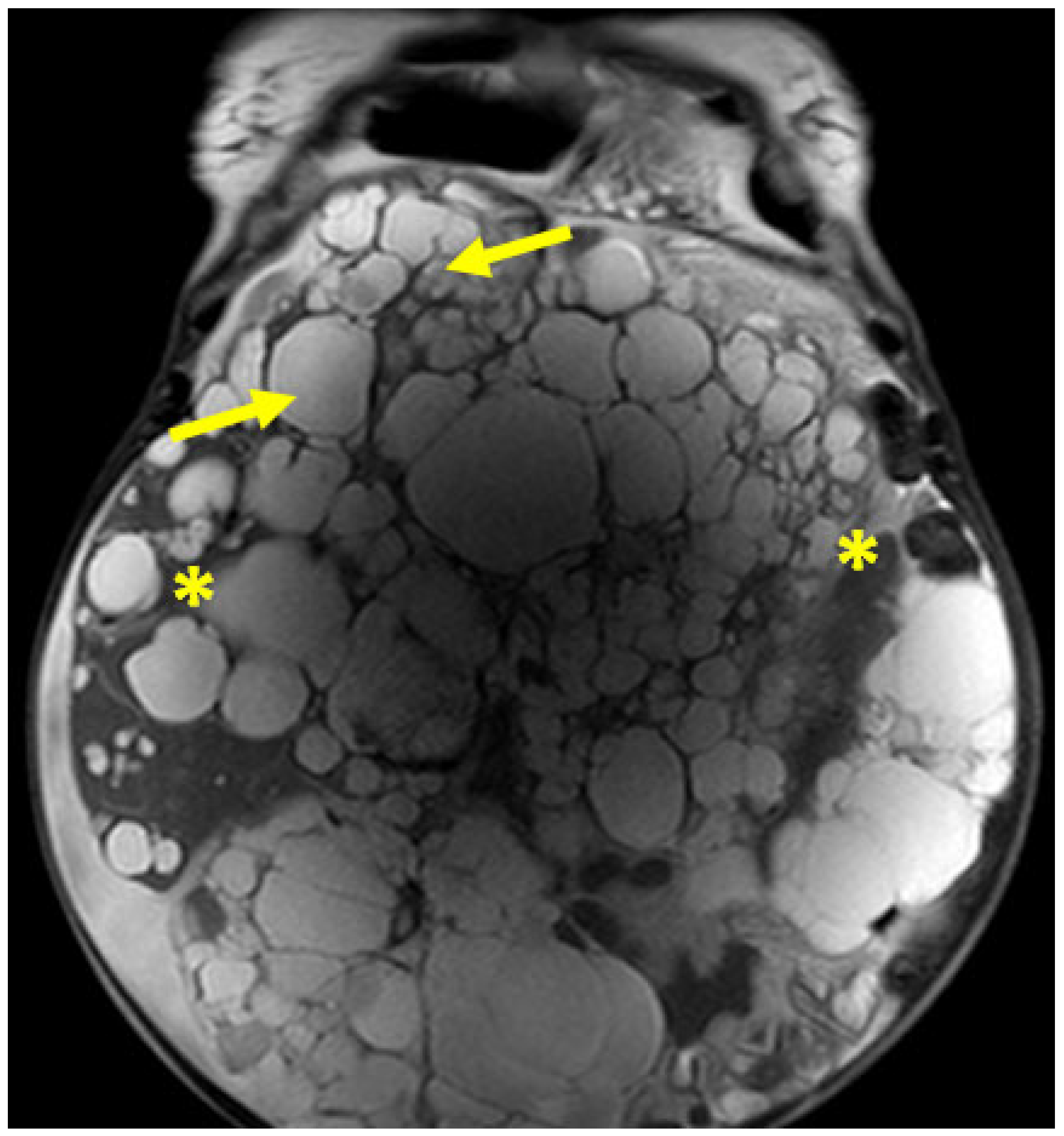
1.2. Renal Manifestations of Autosomal Dominant Polycystic Kidney Disease
1.3. Extrarenal Manifestations
1.4. Metabolic Abnormalities in ADPKD
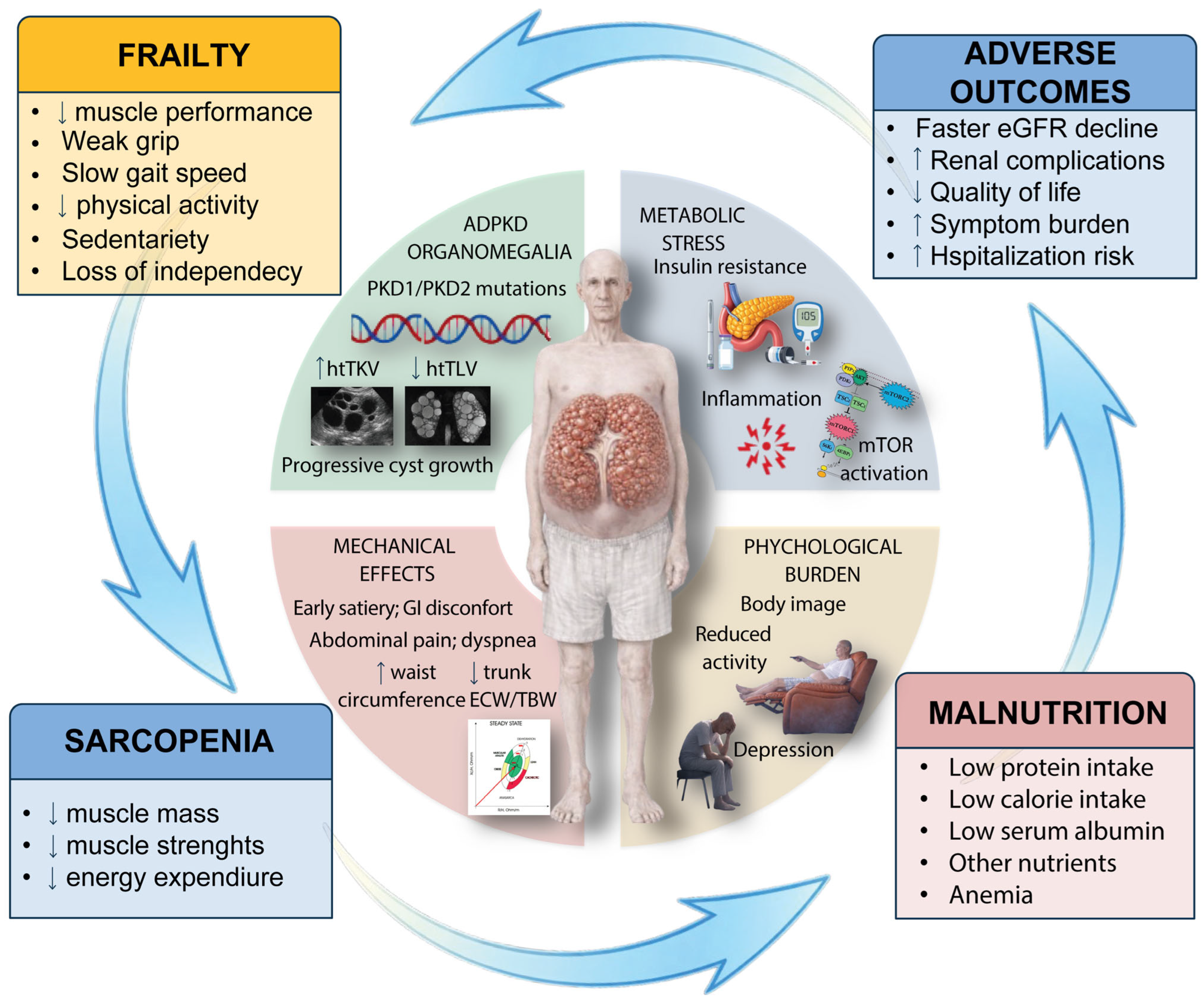
1.5. The “Body Phenotype” of Adult ADPKD
- Nutritional tissues (skeletal muscle, subcutaneous fat, energy stores), and
- Non-nutritional mass (cyst fluid, fibrotic tissue, expanded extracellular water).
2. Methods
2.1. Literature Search Strategy
2.2. Study Selection and Inclusion Criteria
2.3. Data Extraction and Quality Assessment
2.4. Data Synthesis and Presentation
3. Evidence for Malnutrition and Sarcopenia in Adult ADPKD
3.1. Organ Volume and Nutritional Status: The htTKLV Signal
3.2. Segmental BIA and the Body Composition Phenotype
3.3. Confirmation from a More Recent Cohort: Early Sarcopenia
3.4. Association with Renal Outcomes
3.5. Adiposity, Anthropometrics and the “Sarcopenic Obesity” Phenotype
4. Pathophysiology Mechanisms Linking Organomegaly, Malnutrition and Renal Trajectory
5. Clinical Implications and Practical Approach
6. Conclusions and Future Perspectives
Author Contributions
Funding
Institutional Review Board Statement
Informed Consent Statement
Data Availability Statement
Acknowledgments
Conflicts of Interest
Abbreviations
References
- Bergmann, C.; Guay-Woodford, L.M.; Harris, P.C.; Horie, S.; Peters, D.J.M.; Torres, V.E. Polycystic kidney disease. Nat. Rev. Dis. Primers 2018, 4, 50. [Google Scholar] [CrossRef]
- Pippias, M.; Kramer, A.; Noordzij, M.; Afentakis, N.; Alonso de la Torre, R.; Ambühl, P.M.; Aparicio Madre, M.I.; Arribas Monzón, F.; Åsberg, A.; Bonthuis, M.; et al. The European Renal Association—European Dialysis and Transplant Association Registry Annual Report 2014: A summary. Clin. Kidney J. 2017, 10, 154–169. [Google Scholar] [CrossRef] [PubMed]
- Chang, A.R.; Moore, B.S.; Luo, J.Z.; Sartori, G.; Fang, B.; Jacobs, S.; Abdalla, Y.; Taher, M.; Carey, D.J.; Triffo, W.J.; et al. Exome Sequencing of a Clinical Population for Autosomal Dominant Polycystic Kidney Disease. JAMA 2022, 328, 2412–2421. [Google Scholar] [CrossRef] [PubMed]
- Cornec-Le Gall, E.; Torres, V.E.; Harris, P.C. Genetic Complexity of Autosomal Dominant Polycystic Kidney and Liver Diseases. J. Am. Soc. Nephrol. 2018, 29, 13–23. [Google Scholar] [CrossRef] [PubMed]
- Cornec-Le Gall, E.; Audrézet, M.P.; Chen, J.M.; Hourmant, M.; Morin, M.P.; Perrichot, R.; Charasse, C.; Whebe, B.; Renaudineau, E.; Jousset, P.; et al. Type of PKD1 Mutation Influences Renal Outcome in ADPKD. J. Am. Soc. Nephrol. 2013, 24, 1006–1013. [Google Scholar] [CrossRef]
- Porath, B.; Gainullin, V.G.; Cornec-Le Gall, E.; Dillinger, E.K.; Heyer, C.M.; Hopp, K.; Edwards, M.E.; Madsen, C.D.; Mauritz, S.R.; Banks, C.J.; et al. Mutations in GANAB, Encoding the Glucosidase IIα Subunit, Cause Autosomal-Dominant Polycystic Kidney and Liver Disease. Am. J. Hum. Genet. 2016, 98, 1193–1207. [Google Scholar] [CrossRef]
- Cornec-Le Gall, E.; Olson, R.J.; Besse, W.; Heyer, C.M.; Gainullin, V.G.; Smith, J.M.; Audrézet, M.-P.; Hopp, K.; Porath, B.; Shi, B.; et al. Monoallelic Mutations to DNAJB11 Cause Atypical Autosomal-Dominant Polycystic Kidney Disease. Am. J. Hum. Genet. 2018, 102, 832–844. [Google Scholar] [CrossRef]
- Jawaid, T.; Elbarougy, D.E.; Lavu, S.; Buia, G.; Senum, S.R.; Olinger, E.; Yang, H.; McDonnell, S.K.; Bublitz, J.T.; Ma, J.; et al. Characterization of the Cystic Phenotype Associated with Monoallelic ALG8 and ALG9 Pathogenic Variants. J. Am. Soc. Nephrol. 2025, 36, 1056–1071. [Google Scholar] [CrossRef]
- Senum, S.R.; Li, Y.S.M.; Benson, K.A.; Joli, G.; Olinger, E.; Lavu, S.; Madsen, C.D.; Gregory, A.V.; Neatu, R.; Kline, T.L.; et al. Monoallelic IFT140 pathogenic variants are an important cause of the autosomal dominant polycystic kidney-spectrum phenotype. Am. J. Hum. Genet. 2022, 109, 136–156. [Google Scholar] [CrossRef]
- Bi, J.; Guo, W.; Ji, P.; Li, S.; Wang, P.; Li, Q.; Xie, Y. The spectrum of diseases, genetic landscape and new mutation sites of hereditary cystic kidney disease. Clin. Kidney J. 2025, 18, sfaf064. [Google Scholar] [CrossRef]
- Catania, M.; Mancassola, G.; De Rosa, L.I.; Kola, K.; Pepe, G.; Manunta, P.; Vezzoli, G.; Carrera, P.; Alibrandi, M.T.S. IFT140-related ADPKD. Kidney Int. Rep. 2025, 10, 618–619. [Google Scholar] [CrossRef] [PubMed]
- Chapman, A.B.; Devuyst, O.; Eckardt, K.U.; Gansevoort, R.T.; Harris, T.; Horie, S.; Kasiske, B.L.; Odland, D.; Pei, Y.; Perrone, R.D.; et al. Autosomal-dominant polycystic kidney disease (ADPKD): Executive summary from a Kidney Disease: Improving Global Outcomes (KDIGO) Controversies Conference. Kidney Int. 2015, 88, 17–27. [Google Scholar] [CrossRef] [PubMed]
- Chebib, F.T.; Hanna, C.; Harris, P.C.; Torres, V.E.; Dahl, N.K. Autosomal Dominant Polycystic Kidney Disease: A Review. JAMA 2025, 333, 1708–1719. [Google Scholar] [CrossRef] [PubMed]
- Grantham, J.J.; Cook, L.T.; Torres, V.E.; Bost, J.E.; Chapman, A.B.; Harris, P.C.; Guay-Woodford, L.; Bae, K. Determinants of renal volume in autosomal-dominant polycystic kidney disease. Kidney Int. 2008, 73, 108–116. [Google Scholar] [CrossRef]
- Bais, T.; Geertsema, P.; Knol, M.G.E.; Van Gastel, M.D.A.; De Haas, R.J.; Meijer, E.; Gansevoort, R.T.; DIPAK Consortium. Validation of the Mayo Imaging Classification System for Predicting Kidney Outcomes in ADPKD. Clin. J. Am. Soc. Nephrol. 2024, 19, 591–601. [Google Scholar] [CrossRef]
- Petrone, M.; Catania, M.; De Rosa, L.I.; Degliuomini, R.S.; Kola, K.; Lupi, C.; Pisoni, M.B.; Salvatore, S.; Candiani, M.; Vezzoli, G.; et al. Role of Female Sex Hormones in ADPKD Progression and a Personalized Approach to Contraception and Hormonal Therapy. J. Clin. Med. 2024, 13, 1257. [Google Scholar] [CrossRef]
- Bucci, R.; De Rosa, L.I.; Brambilla Pisoni, M.; Farinone, S.; Vespa, M.; Joli, G.; Catania, M.; Kola, K.; Tunesi, F.; Brioni, E.; et al. The Management of Patients with Adult Autosomal Dominant Polycystic Kidney Disease (ADPKD) Requires a Multidisciplinary Approach. G. Ital. Nefrol. Organo Uff. Soc. Ital. Nefrol. 2023, 40, 2023-vol6. [Google Scholar]
- Nowak, K.L.; Hopp, K. Metabolic Reprogramming in Autosomal Dominant Polycystic Kidney Disease: Evidence and Therapeutic Potential. Clin. J. Am. Soc. Nephrol. 2020, 15, 577–584. [Google Scholar] [CrossRef]
- Mao, Z.; Xie, G.; Ong, A.C.M. Metabolic abnormalities in autosomal dominant polycystic kidney disease. Nephrol. Dial. Transplant. 2015, 30, 197–203. [Google Scholar] [CrossRef]
- Nowak, K.L.; Steele, C.; Gitomer, B.; Wang, W.; Ouyang, J.; Chonchol, M.B. Overweight and Obesity and Progression of ADPKD. Clin. J. Am. Soc. Nephrol. 2021, 16, 908–915. [Google Scholar] [CrossRef]
- Capelli, I.; Lerario, S.; Aiello, V.; Provenzano, M.; Di Costanzo, R.; Squadrani, A.; Vella, A.; Vicennati, V.; Poli, C.; La Manna, G.; et al. Diet and Physical Activity in Adult Dominant Polycystic Kidney Disease: A Review of the Literature. Nutrients 2023, 15, 2621. [Google Scholar] [CrossRef] [PubMed]
- Khan, S.; Di Cola, S.; Lai, S.; Ferri, F.; Cardinale, V.; Merli, M. Key Aspects in the Nutritional Management of Polycystic Liver Disease Patients. Nutrients 2025, 17, 2380. [Google Scholar] [CrossRef] [PubMed]
- Ryu, H.; Kim, H.; Park, H.C.; Kim, H.; Cho, E.J.; Lee, K.B.; Chung, W.; Oh, K.-H.; Cho, J.Y.; Hwang, Y.-H.; et al. Total kidney and liver volume is a major risk factor for malnutrition in ambulatory patients with autosomal dominant polycystic kidney disease. BMC Nephrol. 2017, 18, 22. [Google Scholar] [CrossRef] [PubMed]
- Ryu, H.; Park, H.C.; Kim, H.; Heo, J.; Kang, E.; Hwang, Y.H.; Cho, J.Y.; Lee, K.-B.; Oh, Y.K.; Oh, K.-H.; et al. Bioelectrical impedance analysis as a nutritional assessment tool in Autosomal Dominant Polycystic Kidney Disease. PLoS ONE 2019, 14, e0214912. [Google Scholar] [CrossRef]
- Alibrandi, M.T.S.; Pisoni, M.B.; Rivera, R.F.; Catania, M.; Vespa, M.; De Rosa, L.I.; Bucci, R.; Kola, K.; Farinone, S.; Citterio, L.; et al. Body water distribution, early malnutrition and sarcopenia in ADPKD: Insights from a cross sectional study. J. Nephrol. 2025, 38, 1917–1925. [Google Scholar] [CrossRef]
- Lee, J.; Ryu, H.; Kim, Y.C.; Park, H.C.; Ahn, C.; Lee, K.B.; Kim, Y.H.; Kim, Y.; Han, S.; Bae, E.H.; et al. Nutritional Status is Associated With Preserved Kidney Function in Patients With Autosomal Dominant Polycystic Kidney Disease. J. Ren. Nutr. 2023, 33, 529–537. [Google Scholar] [CrossRef]
- Afsar, B.; Afsar, R.E.; Caliskan, Y.; Lentine, K.L. The Role of Adiposity and Anthropometrics on Disease Progression in Autosomal Dominant Polycystic Kidney Disease: A Narrative Review. Curr. Nutr. Rep. 2025, 14, 56. [Google Scholar] [CrossRef]
- Delli Zotti, G.B.; Sangiovanni, E.; Brioni, E.; Ratti, M.M.; Sciarrone Aliprandi, M.T.; Spotti, D.; Manunta, P.; Sarno, L. Psychological Assessment of a sample of women with ADPKD: Quality of life, body image, anxiety and depression. G. Ital. Nefrol. 2019, 36, 2019-vol2. [Google Scholar]
- Farinone, S.; Catania, M.; De Rosa, L.I.; Kola, K.; Petrone, M.; Brambilla Pisoni, M.; Gigliotti, A.; Bianca, P.; Maiucchi, P.; Citterio, L.; et al. Supporting complexity: The psychologist’s role in multidisciplinary management of polycystic kidney disease. G. Clin. Nefrol. Dial. 2024, 36, 36–40. [Google Scholar] [CrossRef]
- Menon, V.; Rudym, D.; Chandra, P.; Miskulin, D.; Perrone, R.; Sarnak, M. Inflammation, Oxidative Stress, and Insulin Resistance in Polycystic Kidney Disease. Clin. J. Am. Soc. Nephrol. 2011, 6, 7–13. [Google Scholar] [CrossRef]
- Fliszkiewicz, M.; Niemczyk, M.; Kulesza, A.; Łabuś, A.; Pączek, L. Glucose and Lipid Metabolism Abnormalities among Patients with Autosomal Dominant Polycystic Kidney Disease. Kidney Blood Press. Res. 2019, 44, 1416–1422. [Google Scholar] [CrossRef] [PubMed]
- Haumann, S.; Müller, R.U.; Liebau, M.C. Metabolic Changes in Polycystic Kidney Disease as a Potential Target for Systemic Treatment. Int. J. Mol. Sci. 2020, 21, 6093. [Google Scholar] [CrossRef] [PubMed]
- Magistroni, R.; Boletta, A. Defective glycolysis and the use of 2-deoxy-d-glucose in polycystic kidney disease: From animal models to humans. J. Nephrol. 2017, 30, 511–519. [Google Scholar] [CrossRef] [PubMed]
- Menezes, L.F.; Germino, G.G. The pathobiology of polycystic kidney disease from a metabolic viewpoint. Nat. Rev. Nephrol. 2019, 15, 735–749. [Google Scholar] [CrossRef]
- Fouque, D.; Kalantar-Zadeh, K.; Kopple, J.; Cano, N.; Chauveau, P.; Cuppari, L.; Franch, H.; Guarnieri, G.; Ikizler, T.A.; Kaysen, G.; et al. A proposed nomenclature and diagnostic criteria for protein–energy wasting in acute and chronic kidney disease. Kidney Int. 2008, 73, 391–398. [Google Scholar] [CrossRef]
- Barberi, L.; Scicchitano, B.M.; De Rossi, M.; Bigot, A.; Duguez, S.; Wielgosik, A.; Stewart, C.; McPhee, J.; Conte, M.; Narici, M.; et al. Age-dependent alteration in muscle regeneration: The critical role of tissue niche. Biogerontology 2013, 14, 273–292. [Google Scholar] [CrossRef]
- Pan, L.; Xie, W.; Fu, X.; Lu, W.; Jin, H.; Lai, J.; Zhang, A.; Yu, Y.; Li, Y.; Xiao, W. Inflammation and sarcopenia: A focus on circulating inflammatory cytokines. Exp. Gerontol. 2021, 154, 111544. [Google Scholar] [CrossRef]
- Dalle, S.; Rossmeislova, L.; Koppo, K. The Role of Inflammation in Age-Related Sarcopenia. Front. Physiol. 2017, 8, 1045. [Google Scholar] [CrossRef]
- Langen, R.C.J.; Schols, A.M.W.J.; Kelders, M.C.J.M.; Wouters, E.F.M.; Janssen-Heininger, Y.M.W. Inflammatory cytokines inhibit myogenic differentiation through activation of nuclear factor-κΒ. FASEB J. 2001, 15, 1169–1180. [Google Scholar] [CrossRef]
- Strubl, S.; Oehm, S.; Torres, J.A.; Grundmann, F.; Haratani, J.; Decker, M.; Vuong, S.; Bhandal, A.K.; Methot, N.; Haynie-Cion, R.; et al. Ketogenic dietary interventions in autosomal dominant polycystic kidney disease—A retrospective case series study: First insights into feasibility, safety and effects. Clin. Kidney J. 2022, 15, 1079–1092. [Google Scholar] [CrossRef]
- Oehm, S.; Steinke, K.; Schmidt, J.; Arjune, S.; Todorova, P.; Heinrich Lindemann, C.; Wöstmann, F.; Meyer, F.; Siedek, F.; Weimbs, T.; et al. RESET-PKD: A pilot trial on short-term ketogenic interventions in autosomal dominant polycystic kidney disease. Nephrol. Dial. Transplant. 2023, 38, 1623–1635. [Google Scholar] [CrossRef]
- Cukoski, S.; Lindemann, C.H.; Arjune, S.; Todorova, P.; Brecht, T.; Kühn, A.; Oehm, S.; Strubl, S.; Becker, I.; Kämmerer, U.; et al. Feasibility and impact of ketogenic dietary interventions in polycystic kidney disease: KETO-ADPKD—A randomized controlled trial. Cell Rep. Med. 2023, 4, 101283. [Google Scholar] [CrossRef]
- Dawson, J.; Rangan, A.; Rangan, G.K. Nutritional considerations for designing ketogenic dietary interventions for people with Autosomal Dominant Polycystic Kidney Disease. J. Nephrol. 2025, 38, 2173–2187. [Google Scholar] [CrossRef]



| Study | Design/Setting | Population | Main Tools/Exposures | Main Nutritional Body Composition Findings | Key Message |
|---|---|---|---|---|---|
| Ryu et al. [23] | Cross-sectional cohort | 288 ambulatory adults with ADPKD | Modified SGA; CT-based htTKLV | ~30% at risk of or malnourished; htTKLV is the strongest independent predictor of malnutrition; eGFR is a weaker correlate | In ambulatory ADPKD, intra-abdominal organomegaly (kidney + liver), rather than eGFR, drives malnutrition risk. |
| Ryu et al. [24] | Cross-sectional, same cohort as above | 288 ADPKD vs. healthy controls | Segmental BIA; htTKLV; SGA | ADPKD: ↑ TBW and ↑ ECW/TBW (trunk, legs); ↓ phase angle associated with worse SGA; trunk ECW/TBW strongly correlated with htTKLV | Defines an ADPKD-specific BIA phenotype linking organomegaly, ECW expansion and reduced phase angle to early sarcopenia. |
| Sciarrone Alibrandi et al. [25] | Cross-sectional, matched CKD cohort | 71 ADPKD vs. 147 non-ADPKD CKD (stages 1–5D); 1:1 matched | Whole-body BIA; organomegaly by MRI/US | ADPKD: ↑ TBW and ↑ ECW/TBW vs. non-ADPKD CKD; within ADPKD, organomegaly → ↓ phase angle, ↓ FFM/SMM and ↓ fat mass despite ↑ BMI | Early sarcopenia and altered body water distribution are distinctive, organ volume-linked features specific to ADPKD. |
| Lee et al. [26] | Multicenter prospective cohort | 236 “typical” ADPKD with 1-year follow-up | SGA (7 vs. 3–6); clinical data; imaging class | Baseline SGA 3–6 (at risk/malnourished) associated with higher odds of eGFR decline > 3 mL/min/1.73 m2 over 1 year | Nutritional status independently predicts short-term eGFR decline; malnutrition is a potential modifier of renal trajectory. |
| Afsar et al. [27] | Narrative review | N/A (review) | Anthropometry; adiposity; metabolic factors | Higher BMI, waist and visceral fat associated with larger TKV, faster eGFR loss and more symptoms; concern for sarcopenic obesity | Overweight ADPKD patients may be simultaneously obese and sarcopenic; anthropometry alone is insufficient. |
| Khan et al. [22] | Narrative review, PLD | PLD with or without ADPKD | Nutritional guidelines; clinical data | PLD: early satiety, reduced intake, high malnutrition and sarcopenia risk; recommends systematic screening and tailored diet | PLD provides a mechanistic template for organomegaly-driven malnutrition relevant to ADPKD with severe liver involvement. |
| Domain | Suggested Approach |
|---|---|
| Patients at higher nutritional risk |
|
| Baseline screening tools |
|
| Extended assessment (where available) |
|
| Red flags/concerning patterns |
|
| Management principles |
|
| Integration into ADPKD care |
|
Disclaimer/Publisher’s Note: The statements, opinions and data contained in all publications are solely those of the individual author(s) and contributor(s) and not of MDPI and/or the editor(s). MDPI and/or the editor(s) disclaim responsibility for any injury to people or property resulting from any ideas, methods, instructions or products referred to in the content. |
© 2026 by the authors. Licensee MDPI, Basel, Switzerland. This article is an open access article distributed under the terms and conditions of the Creative Commons Attribution (CC BY) license.
Share and Cite
Brambilla Pisoni, M.; Catania, M.; Rivera, R.F.; De Rosa, L.I.; Kola, K.; Paolisi, M.; Bianca, P.; Farinone, S.; Petrone, M.; Citterio, L.; et al. The Hidden Iceberg of ADPKD: Early Organomegaly-Driven Malnutrition and Sarcopenia Beyond Preserved eGFR. Int. J. Mol. Sci. 2026, 27, 1667. https://doi.org/10.3390/ijms27041667
Brambilla Pisoni M, Catania M, Rivera RF, De Rosa LI, Kola K, Paolisi M, Bianca P, Farinone S, Petrone M, Citterio L, et al. The Hidden Iceberg of ADPKD: Early Organomegaly-Driven Malnutrition and Sarcopenia Beyond Preserved eGFR. International Journal of Molecular Sciences. 2026; 27(4):1667. https://doi.org/10.3390/ijms27041667
Chicago/Turabian StyleBrambilla Pisoni, Matteo, Martina Catania, Rodolfo Fernando Rivera, Liliana Italia De Rosa, Kristiana Kola, Michele Paolisi, Pierpaolo Bianca, Sara Farinone, Micaela Petrone, Lorena Citterio, and et al. 2026. "The Hidden Iceberg of ADPKD: Early Organomegaly-Driven Malnutrition and Sarcopenia Beyond Preserved eGFR" International Journal of Molecular Sciences 27, no. 4: 1667. https://doi.org/10.3390/ijms27041667
APA StyleBrambilla Pisoni, M., Catania, M., Rivera, R. F., De Rosa, L. I., Kola, K., Paolisi, M., Bianca, P., Farinone, S., Petrone, M., Citterio, L., Vezzoli, G., & Sciarrone Alibrandi, M. T. (2026). The Hidden Iceberg of ADPKD: Early Organomegaly-Driven Malnutrition and Sarcopenia Beyond Preserved eGFR. International Journal of Molecular Sciences, 27(4), 1667. https://doi.org/10.3390/ijms27041667