


Abstract
Hydrogen sulfide (H2S) is a highly toxic, corrosive, and malodorous sulfur-containing pollutant emitted from diverse industrial and agricultural activities. Its low concentration, dispersed distribution, and intermittent emission characteristics often limit the effectiveness and economic feasibility of conventional desulfurization technologies. Photocatalytic desulfurization has emerged as a promising approach for H2S removal owing to its ability to utilize light energy under ambient conditions without generating secondary pollution. Among the various photocatalysts investigated, TiO2 remains the most extensively studied material. To improve photocatalytic performance, strategies such as elemental doping, defect engineering, heterojunction construction, and support coupling have been widely adopted to enhance visible-light absorption, promote charge separation, and improve resistance to deactivation. In addition, emerging photocatalysts, including metal–organic frameworks (MOFs), graphitic carbon nitride (g-C3N4), conjugated polymers, and carbon-based composites, have shown considerable potential for improving H2S adsorption, activation, and visible-light utilization. Photocatalytic H2S oxidation generally proceeds via sulfate or elemental sulfur formation pathways; however, both can result in sulfur accumulation on catalyst surfaces, leading to performance deterioration. Consequently, developing photocatalytic systems with efficient solar-light utilization, high sulfur tolerance, and long-term operational stability remains a critical challenge. This review summarizes recent advances in photocatalytic H2S oxidation, focusing on photocatalyst design, H2S removal performance, reaction mechanisms, and catalyst deactivation behaviors. Future challenges and research directions for the development of efficient and durable photocatalytic desulfurization technologies are also discussed.
1. Introduction
Hydrogen sulfide (H2S) is a gaseous pollutant characterized by an offensive odor, high toxicity, and strong corrosiveness, making its emissions a long-standing concern in the fields of industrial hygiene and environmental health [1]. Substantial quantities of H2S are released worldwide from a variety of anthropogenic activities [2], including natural gas extraction and purification, petroleum refining [3], biogas production [4], and livestock farming [5,6,7], as well as from natural processes such as volcanic eruptions, oceanic emissions, and volatilization from subtropical forest soils [8]. Global annual H2S emissions have been estimated at approximately 7.72 million tons [9]. H2S possesses an extremely low odor threshold of approximately 0.5 ppb. The Occupational Safety and Health Administration (OSHA) has established a workplace exposure limit of 20 ppm, whereas exposure to concentrations as high as 700 ppm can cause rapid fatality [10]. Therefore, the development of substantial H2S control technologies is substantial for practical applications [11,12].
Conventional H2S removal technologies, including the Claus process, wet and dry desulfurization, and chemical oxidation, have been extensively employed for industrial desulfurization [13,14,15,16,17,18,19,20]. However, these approaches generally suffer from high energy consumption, secondary pollutant generation, equipment corrosion, and limited effectiveness in treating dilute H2S streams [15,16,17,18,19,20,21,22]. Similarly, thermocatalytic oxidation is constrained by catalyst deactivation, limited catalyst durability, and inadequate product selectivity [23,24,25,26,27]. Consequently, there is an urgent need to develop energy-efficient and environmentally sustainable technologies capable of effectively removing dilute and dispersed H2S emissions.
Among emerging treatment technologies, photocatalytic oxidation (PCO) has attracted considerable attention because it can utilize light energy to drive chemical reactions under ambient temperature and pressure conditions, while offering simple process operation and eliminating the need for additional chemical reagents. In H2S treatment, photocatalytic processes generally proceed through two main pathways: (i) photocatalytic decomposition, which converts H2S into hydrogen and elemental sulfur (H2S → H2 + S) [28,29,30,31], and (ii) photocatalytic oxidation, which transforms H2S into sulfate species (H2S → SO42−) [32]. Compared with the photocatalytic decomposition, photocatalytic oxidation is more suitable for air purification [33] and the control of dispersed emission sources [5,34], as it avoids the safety risks and product separation challenges associated with hydrogen generation (Figure 1).
Figure 1.
Reaction pathways for photocatalytic H2S oxidation on photocatalysts under different reaction conditions.
From a thermodynamic perspective, H2S is favorable substrate for photocatalytic conversion. The minimum dissociation energy required for its decomposition into hydrogen and sulfur is approximately 0.2 eV per molecule, which is substantially lower than that required for water splitting. Despite this advantage, practical applications remain constrained by thermodynamic limitations and relatively low single-pass conversion efficiencies [3,35]. Two major challenges currently hinder the large-scale deployment of H2S photocatalytic systems. First, in liquid-phase systems, the accumulation of polysulfide ions (Sn2−) and sulfur deposition can hinder light penetration and cause photocatalyst deactivation [36]. Second, the rapid recombination of photogenerated charge carriers significantly decreases quantum efficiency [37], thereby necessitating larger reactor volumes to achieve the desired conversion performance. As a result, reactor construction costs may account for as much as 95% of the total capital investment [38].
Previous studies have demonstrated that in the presence of dissolved oxygen and under UVC irradiation, H2S conversion efficiencies exceeding 80% can be achieved at initial H2S concentrations of 5–14 mg L−1 and residence time of less than 5 min. Under these conditions, the quantum efficiency can reach 70%, and the reaction rate is approximately 1650 times greater than that of the corresponding dark oxidation process [39]. Compared with other H2S treatment technologies, including direct photocatalytic decomposition [40], electron-beam radiolysis [41], photoelectrochemical systems [42,43,44], plasma technologies [45], and advanced oxidation processes such as Fenton-based oxidation [3,17,46,47], photocatalytic oxidation offers notable advantages. These include a simple process flow, ease of miniaturization, and operation without the need for external chemical reagents. Moreover, the process can be powered directly by solar irradiation or energy-efficient LED light sources. These advantages highlight its potential for treating low-concentration and geographically dispersed H2S emissions from sources such as livestock farms and wastewater treatment facilities.
TiO2 remains the most extensively studied photocatalyst owing to its excellent chemical stability, low cost, and environmental benignity. However, its practical application is hindered by several intrinsic limitations, including a wide band gap (~3.2 eV), poor visible-light utilization, rapid electron–hole recombination, and sulfur-induced catalyst deactivation [48]. Although regeneration strategies, such as alkaline washing, can partially restore catalytic activity and adsorption capacity [49], the inherently weak interaction between H2S molecules and TiO2 surfaces continues to limit H2S adsorption and activation, thereby constraining the overall photocatalytic performance [50,51].
To overcome the limitations of conventional photocatalytic systems, various catalyst modification strategies have been developed, including metal and non-metal doping [52], heterojunction construction, morphology engineering, and defect engineering [53]. These approaches aim to enhance visible-light absorption, promote photogenerated charge separation, and improve long-term operational stability. Concurrently, advances in photocatalytic reactor design, such as annular reactors, packed-bed reactors, and honeycomb-supported configurations [54,55], combined with computational fluid dynamics (CFD) simulations [34], have provided crucial guidance for process optimization and scale-up.
In addition to photocatalyst engineering and reactor design, emerging photocatalytic materials have opened new avenues for efficient H2S oxidation. Photocatalysts based on metal–organic frameworks (MOFs) [56,57] and donor–acceptor heterostructure systems [58] have attracted increasing attention due to their enhanced visible-light absorption, superior charge separation, and high ROS generation efficiency. These advanced material platforms offer promising opportunities for developing highly efficient, stable, and sustainable photocatalytic technologies for H2S abatement.
In practical applications, H2S emissions are typically characterized by low concentrations, intermittent release patterns, and coexistence with complex gas mixtures, posing remarkable challenges for photocatalytic oxidation. For example, Lee et al. investigated a UV-A (365 nm)/TiO2 photocatalytic system under simulated poultry-house conditions containing low concentrations of mixed gaseous pollutants [59]. The study found that H2S removal was negligible, whereas NH3, N2O, and O3 were removed to varying extents, highlighting differences in photocatalytic reactivity and selectivity among pollutants [59,60]. Similarly, Ma et al. compared the photocatalytic hydrogen production performance of TiO2, CdS, and ZnS during H2S decomposition under anaerobic gas–solid conditions. CdS exhibited negligible activity in the gas phase (<0.5 μmol h−1), but significantly higher activity in liquid-phase systems [61], underscoring the critical influence of reaction phase. Such discrepancies likely arise from the presence of hole scavengers in liquid systems (e.g., sulfite ions, SO32−), which enhance charge separation and suppress electron–hole recombination, as well as differences in surface reaction pathways and reactant adsorption behavior between phases. Despite these advances, several challenges continue to impede practical deployment of photocatalytic H2S removal technologies. These include competitive adsorption at active sites, catalyst poisoning, and difficulties in separating and managing reaction products. As a result, photocatalytic oxidation for H2S abatement remains at approximately Technology Readiness Level (TRL) 3, corresponding to laboratory-scale proof-of-concept validation, and considerable barriers to industrial implementation persist [62].
Therefore, this review systematically summarizes recent advances in TiO2-based and TiO2-derived composite photocatalysts for photocatalytic H2S oxidation, with particular emphasis on photocatalyst design, reaction mechanisms, reactor engineering, catalyst deactivation and regeneration (Figure 2), and the key challenges and future directions toward practical implementation. By critically assessing the current state of the field and identifying remaining knowledge gaps, these efforts are expected to facilitate the rational design of high-performance photocatalytic systems and accelerate the translation of photocatalytic H2S oxidation from laboratory-scale research to real-world environmental applications, ultimately providing energy-efficient, environmentally sustainable, and economically viable solutions for H2S emission control.
Figure 2.
Catalyst types, preparation methods, and design criteria for photocatalytic H2S removal.
2. Advance in Photocatalysts for the Photocatalytic Oxidation of H2S
2.1. TiO2-Based Photocatalysts
Anatase and rutile are the two most common and extensively studied crystalline phases of TiO2. Compared with rutile, anatase has a wider band gap (~3.2 eV) and a more negative conduction band potential, enabling photogenerated electrons to exhibit stronger reducing power. Anatase also generally possesses a higher specific surface area and a greater concentration of surface oxygen vacancies, both of which facilitate reactant adsorption and enhance charge-carrier separation and migration. By contrast, rutile exhibits a narrower band gap (~3.0 eV), resulting in a broader light-response range, while its higher crystallinity and superior carrier mobility are beneficial for charge transport. Notably, mixed-phase anatase/rutile systems, such as the commercially available P25 photocatalyst (anatase/rutile mass ratio ≈ 80:20), often display higher photocatalytic activity than either pure phase. This enhancement is primarily attributed to the formation of a surface phase junction at the anatase-rutile interface, which promotes spatial separation of photogenerated electron–hole pairs and suppresses charge recombination [63]. In-doped TiO2 photocatalytic systems, photogenerated electrons generally exist in two forms. The first comprises accumulated electrons located in the conduction band or shallow trap states, which exhibit high mobility and strong reducing power, enabling direct participation in multielectron transfer reactions during H2S oxidation. The second consists of electrons trapped in intermediate or deep energy states. Owing to their lower reactivity, these trapped electrons can be effectively utilized only in the presence of electron acceptors with sufficiently positive electron affinity or favorable reduction potentials [64]. Therefore, regulating charge-carrier generation, separation, transport, and utilization has become a critical strategy for enhancing the photocatalytic performance of TiO2.
Photocatalytic H2S oxidation over TiO2-based catalysts generally proceeds through two competing pathways, as shown in Figure 3: selective partial oxidation to elemental sulfur (S0) and deeper oxidation to sulfate (SO42−), with product selectivity strongly influenced by surface defects, heterojunction structures, and reaction conditions. However, the accumulation of S0 and sulfate species on catalytically active sites can progressively inhibit H2S conversion and lead to catalyst deactivation. Various regeneration strategies, including thermal treatment, solvent washing, and chemical etching, have been explored to remove these surface deposits and recover catalytic activity (Figure 3). Nevertheless, maintaining catalyst stability over repeated regeneration cycles while minimizing regeneration energy, chemical consumption, and material loss remains a key challenge for the practical deployment of photocatalytic H2S oxidation.
Figure 3.
Photocatalytic H2S oxidation pathways and deactivation-regeneration of TiO2-based photocatalysts.
Defect engineering has emerged as an effective strategy for tailoring the photocatalytic properties of TiO2. For instance, black TiO2 produced via reduction treatment introduces abundant oxygen vacancies and Ti3+ defect sites while forming a disordered surface layer. These structural modifications markedly enhance visible-light absorption and facilitate the separation of photogenerated charge carriers [65], providing new avenues for the development of highly efficient TiO2-based photocatalysts. To date, multiple optimization strategies, including crystal-phase engineering, defect engineering, elemental doping, and heterostructure construction, have been extensively explored to further improve the photocatalytic performance of TiO2-based photocatalysts [66,67].
Canela et al. were the first to systematically demonstrate the crucial role of oxygen in the photocatalytic oxidation of H2S over TiO2 [68]. Under an air atmosphere (21% O2), nearly complete H2S conversion (99%) was achieved within 30 min of irradiation using a 30 W black-light lamp. In contrast, under a N2 atmosphere, the H2S conversion efficiency was only 17%, despite the presence of both TiO2 and irradiation. Control experiments confirmed that direct photocatalysis of H2S was negligible under the studied conditions. Oxygen not only serves as an electron scavenger to generate superoxide radicals (•O2−), but also participates in the formation of other ROS, including hydroxyl radicals (•OH) and hydrogen peroxide (H2O2). This pioneering work established the fundamental role of oxygen in H2S photocatalytic oxidation and has been consistently validated, forming a cornerstone for designing H2S photocatalytic systems.
Albalawi et al. systematically summarized the product selectivity of TiO2-mediated H2S photocatalytic oxidation [69]. Under oxygen-rich (aerobic) conditions, H2S undergoes complete oxidation via ROS, primarily •OH and •O2−, yielding predominantly sulfate species (SO42−). In contrast, under oxygen-deficient or oxygen-limited conditions, such as vacuum ultraviolet (VUV)-assisted systems, H2S is partially oxidized, producing elemental sulfur (S0), polysulfides, and other reduced sulfur intermediates. This distinction explains inconsistencies in product distributions reported in earlier studies and provides a theoretical basis for regulating reaction pathways and product selectivity in H2S photocatalytic system [69].
Alonso-Tellez et al. systematically compared the photocatalytic performance of two commercial TiO2 photocatalysts, Hombikat UV100 with a high specific surface area and the benchmark P25, for the gas-phase photocatalytic oxidation of H2S under UV-A irradiation [70]. Under identical conditions, UV100 maintained complete H2S conversion without detectable gaseous SO2 emission, whereas P25 exhibited pronounced on-stream deactivation, with the H2S conversion declining to approximately 90% after 5 h and 35–40% of sulfur-containing products released as SO2. Increasing catalyst loading to 1.77 mg cm−2 extended the total sulfur-removal duration of UV100 to 37 h at a gas velocity of 1.4 cm s−1, compared with only 6 h for P25. Even at 3.5 cm s−1, UV100 remained effective sulfur removal for around 20 h, whereas P25 was active for only 2 h. This performance difference is primarily attributed to the higher specific surface area of UV100, which provides greater storage capacity for sulfate species, delaying active-site blockage and suppressing SO2 release [70].
In a subsequent study, Alonso-Tellez et al. further investigated the effect of TiO2 P25 coating density on the H2S photocatalytic oxidation [71]. Increasing the catalyst loading effectively prolonged the duration of complete H2S conversion and delayed the formation of SO2. Under conditions of 15 ppm H2S and a gas flow rate of 500 mL min−1, a low coating density (0.04 mg cm−2) achieved only approximately 50% of H2S conversion with about 12% SO2 selectivity. When the coating density exceeded 0.44 mg cm−2, complete H2S conversion was attained and SO2 selectivity decreased significantly. Notably, non-illuminated inner layers of the TiO2 coating contributed by adsorbing SO2 and delaying its release, increasing the residence time of both H2S and SO2 within the coating and mitigating SO2 breakthrough [71].
Except for structural optimization, elemental doping has also been widely employed to enhance TiO2 photocatalytic activity. Huang et al. synthesized Al3+-, Ga3+-, and In3+-doped TiO2 photocatalysts via a Sol–gel method and systematically evaluated their performance for photocatalytic H2S oxidation under UV irradiation [72]. All doped samples outperformed pristine TiO2 and commercial P25, with 4% In-doped TiO2 exhibiting the best performance, maintaining complete H2S removal for 120 min, which was three times longer than P25. Combined ultraviolet photoelectron spectroscopy (UPS), valence-band X-ray photoelectron spectroscopy (VB-XPS), and density functional theory (DFT) analyses revealed that the incorporation of group IIIA metal ions introduced shallow acceptor levels above the valence band of TiO2, resulting in a shift in the conduction-band edge toward more negative potentials. This facilitated O2 reduction by photogenerated electrons to generate superoxide radicals (•O2−), thereby enhancing ROS formation and significantly improving H2S photocatalytic oxidation (Figure 4) [72].
Figure 4.
Photocatalytic H2S degradation mechanism of Al3+-, Ga3+-, and In3+-doped TiO2 photocatalysts [72].
Alonso-Tellez et al. were the first to incorporate WO3 into high-surface-area TiO2 (Hombikat UV100) and systematically investigated the effect of WO3 loadings ranging from 5 to 20 wt% on the H2S photocatalytic oxidation [73]. Under mild conditions (1.77 mg·cm−2 catalyst, 200 mL·min−1 gas flow), 10 wt% WO3/UV100 catalyst exhibited the best performance, increasing the total sulfur-removal duration from 37 h (pristine UV100) to 51 h, a 38% improvement. Although 20 wt% WO3/UV100 showed a sulfur-removal duration comparable to that of bare UV100, the SO2 release rate decreased markedly from 3.9% h−1 to 1.5% h−1, indicating that WO3 strongly adsorbs SO2 but has limited oxidation capability, thereby delaying SO2 breakthrough [73].
Brancher et al. immobilized P25 TiO2 onto fiberglass filters using an impregnation method, forming a porous nanoparticle film approximately 1.8 μm thick with high surface roughness [74]. The coated filters were integrated into an annular photocatalytic reactor to evaluate the long-term performance of H2S photocatalytic oxidation. Under optimized conditions (gas flow rate of 25 L h−1, residence time of 121 s, inlet H2S concentration of 18 ppm, and relative humidity of 65%), the H2S removal efficiency remained above 89% for 16 h and still reached 64% after 28 h of continuous operation without complete catalyst deactivation. These findings highlight the potential of fiberglass-supported TiO2 for the continuous treatment of low-concentration H2S streams. Moreover, catalyst immobilization eliminates the recovery and handling challenges associated with powdered photocatalysts, offering a practical strategy for reactor scale-up and industrial implementation.
Coronado et al. investigated the influence of support materials on H2S photocatalytic oxidation by depositing sol–gel-derived TiO2 onto borosilicate glass, polyethylene terephthalate (PET), and cellulose acetate (CA) substrates [75]. Among the tested materials, the uncalcined TiO2/CA coating exhibited the highest initial H2S conversion (about 65%), followed by uncalcined TiO2/PET and TiO2/glass coatings, whereas calcined TiO2/glass showed the lowest activity (circa 10%). The inferior performance of calcined TiO2 was attributed to grain growth during thermal treatment, which reduced the specific surface area and surface hydroxyl density, thereby diminishing photocatalytic activity.
Grzeskowiak et al. developed a three-dimensional photocatalytic system comprising TiO2 supported on quartz wool for the UV-A oxidation of high-concentration H2S (2000 ppm) [76]. Owing to the high UV-A transmittance of quartz fibers, ultraviolet light penetrated deeply into the composite structure, activating a larger fraction of TiO2 particles. Pure TiO2 powder reduced the H2S concentration by only approximately 10% and became completely deactivated within 200 min. In contrast, the TiO2/quartz wool composite maintained stable H2S removal for a substantially longer period under dry conditions. Nevertheless, a substantial decline in UV-A transmittance was observed after the reaction, indicating that sulfur deposition not only blocked active sites but also enhanced light-shielding effects, thereby accelerating catalyst deactivation through a positive-feedback mechanism.
Besides deactivation caused by sulfur deposition, catalyst poisoning by H2S remains a major challenge in heterogeneous catalysis. Kako et al. investigated the poisoning behavior of H2S toward noble-metal catalysts and demonstrated the protective role of TiO2 photocatalysis [77]. XPS analyses revealed that, in the absence of illumination, H2S readily reacted with Pd surfaces to form metal sulfides, leading to rapid catalyst deactivation. However, under UV irradiation, TiO2 photocatalytically oxidized H2S into sulfate species, thereby suppressing sulfide formation and preserving catalytic activity.
More recently, Sheng et al. synthesized sea-urchin-like TiO2@MIL-101(Cr) double-shell hollow particles using a hard-template approach combined with layer-by-layer self-assembly [78]. The MIL-101(Cr) component provided an exceptionally high specific surface area and strong H2S adsorption capacity, while the hollow TiO2 shell offered abundant photocatalytically active sites. Under UV irradiation, the TiO2@MIL-101(Cr) composite achieved 90.1% H2S conversion within 60 min at an inlet H2S concentration of 200 ppm, significantly outperforming both hollow TiO2 and bulk TiO2. In addition, the adsorption–degradation equilibrium time was reduced to 60 min, and the reaction rate nearly doubled relative to hollow TiO2. Notably, no significant loss of activity was observed after four consecutive cycles without regeneration. This study represents one of the earliest successful integrations of the strong adsorption capability of MOFs with the photocatalytic oxidation properties of TiO2, effectively overcoming the mass-transfer limitations arising from the limited adsorption capacity of conventional TiO2 photocatalysts.
Li et al. investigated ozone (O3)-assisted photocatalytic oxidation of H2S using a TiO2 photocatalyst supported on nickel foam and irradiated with a 185 nm ozone-generating UV lamp [79]. The standalone O3/UV system (without TiO2) achieved only about 30% H2S removal after 300 min, whereas the combined O3/UV/TiO2 system attained a maximum removal efficiency exceeding 97% within 90 min. Moreover, irradiation at 185 nm significantly outperformed 254 and 365 nm wavelengths, owing to its superior O3-generation capability. Ozone acts as an efficient electron scavenger, suppressing photogenerated electron–hole recombination while simultaneously decomposing to produce additional hydroxyl radicals (•OH). These results demonstrate that coupling ozone with photocatalysis is an effective strategy for enhancing H2S oxidation, particularly under humid conditions.
TiO2-based photocatalysts can be prepared and structurally engineered through several complementary approaches, as schematically illustrated in Figure 5. Sol–gel processing produces TiO2 nanoparticles that can be further assembled into films, whereas hydrothermal synthesis enables the formation of TiO2(B) nanotubes, which transform into mixed anatase/TiO2(B) phases at 450 °C and anatase nanorods at 700 °C, demonstrating effective control over phase composition and morphology. Reduction treatment introduces oxygen vacancies and Ti3+ defects into pristine TiO2, providing an additional means of tuning its electronic structure. TiO2 can also be immobilized on porous supports or integrated with other functional components through impregnation, dip-coating, or photodeposition, yielding architectures such as zeolite/TiO2, Ag-TiO2, WO3/TiO2, and TiO2@MOF. Overall, these synthetic strategies enable systematic engineering of TiO2 morphology, crystal phase, surface defects, and heterointerfaces, all of which are important for optimizing photocatalytic performance in applications such as UV-driven H2S conversion.
Figure 5.
Preparation and structural engineering strategies for TiO2-based photocatalysts.
Kato et al. prepared Ag nanoparticle-deposited TiO2 photocatalytic filter materials (Ag-PCFs) via a photodeposition method and evaluated their performance for H2S photocatalytic oxidation under UV irradiation [80]. Ag deposition markedly improved photocatalytic activity. Specifically, Ag-PCF(1.0) achieved an H2S removal efficiency of approximately 80%, compared with only 11% for the pristine photocatalytic filter material, corresponding to an approximately sevenfold increase in the degradation rate. XPS and TEM analyses confirmed the presence of uniformly dispersed metallic Ag and Ag2O nanoparticles on the TiO2 surface. No significant loss of activity was observed after 12 h of continuous operation, and XPS results indicated that the oxidation state of Ag remained unchanged throughout the reaction. Furthermore, Ag-PCF(1.0) exhibited appreciable H2S adsorption under dark conditions, whereas samples with lower Ag loadings showed negligible adsorption. These results suggest that Ag serves as an effective cocatalyst by enhancing H2S adsorption near the TiO2 surface and facilitating photogenerated charge separation, thereby promoting sulfate formation during photocatalytic oxidation.
To improve catalyst immobilization and facilitate practical reactor applications, Portela et al. deposited TiO2 sol onto glass Raschig rings via dip-coating and controlled the film thickness by varying the number of coating cycles [81]. The resulting materials were evaluated for H2S photocatalytic oxidation. However, excessively thick coatings compromised mechanical stability and increased preparation time, highlighting the need to balance catalytic performance with practical considerations.
In a subsequent study, Portela et al. compared the H2S photocatalytic oxidation performance for TiO2 immobilized on three support materials of glass Raschig rings, polyethylene terephthalate (PET), and cellulose acetate (CA) monolithic honeycomb structures [82]. Among these supports, TiO2-coated PET exhibited the highest initial photocatalytic activity of H2S and the best long-term stability, while also demonstrating excellent regenerability through repeated water-washing cycles. Although TiO2-coated CA initially showed relatively high activity, weak adhesion between the TiO2 layer and the polymer substrate, together with oxidative degradation of the CA support by photocatalytically generated reactive oxygen species, led to substantial performance deterioration after repeated regeneration. Glass Raschig rings also exhibited high photocatalytic activity; however, direct comparison with polymeric monoliths was complicated by differences in reactor geometry and available coating surface area [82].
Uesugi et al. synthesized TiO2 nanotubes via a two-step hydrothermal method and tailored their crystal phases through calcination at different temperatures [83]. X-ray diffraction (XRD) and TEM analyses revealed that calcination at 350 °C yielded pure TiO2(B) nanotubes, while treatment at 450 °C produced an anatase/TiO2(B) mixed-phase structure. Further increasing the calcination temperature to 700 °C transformed the nanotubes into anatase-dominated nanorods. The corresponding specific surface areas were 303, 277, and 57 m2 g−1, respectively. Under UV irradiation (254 nm) and an H2S concentration of 10 ppm in air, the sample calcined at 450 °C exhibited the highest photocatalytic activity. This superior performance was attributed to its relatively high specific surface area, which provided abundant adsorption and reaction sites, as well as the formation of a type-II heterojunction between anatase and TiO2(B). The heterojunction promoted electron transfer from anatase to TiO2(B) and hole migration in the opposite direction, thereby effectively suppressing charge-carrier recombination [83].
Hao et al. evaluated the regeneration performance of zeolite/TiO2 composite photocatalysts using a strategy that combined alkaline washing with NaOH solution (pH = 10) and subsequent calcination at 400 °C for 2 h [84]. After five regeneration cycles, the H2S removal efficiency of Reactor C (containing zeolite/TiO2) decreased only slightly from 97% to 91%, significantly outperforming Reactor A (containing zeolite) and Reactor D (containing zeolite/TiO2 and TiO2 film). The alkaline treatment imparted a negative surface charge to TiO2, facilitating sulfate desorption, while calcination improved TiO2 dispersion on the zeolite support and restored the specific surface area and pore volume. These results demonstrate that the proposed regeneration method is a simple and effective approach for sustaining the long-term performance of zeolite/TiO2 photocatalysts in biogas purification applications [84].
Similarly, Liu et al. prepared a composite photocatalyst by coating anatase TiO2 onto natural zeolite and evaluated its performance for H2S oxidation in simulated biogas streams [85]. Compared with pure zeolite and pristine TiO2, the composite catalyst exhibited a superior H2S removal capacity of 0.10 mmol g−1 under dry conditions, together with the lowest SO2 emission. Under humid conditions, the removal capacity further increased to 0.13 mmol g−1. The high specific surface area and alkaline nature of zeolite enhanced H2S adsorption and enrichment while promoting the capture and subsequent oxidation of SO2 intermediates into sulfate species, thereby mitigating secondary pollution. Although CO2 strongly competed with H2S for adsorption sites on zeolite, it exerted minimal influence on the TiO2 photocatalytic oxidation pathway. Consequently, the synergistic combination of zeolite adsorption and TiO2 photocatalysis enabled efficient and selective H2S removal even in CO2-rich biogas environments [85].
To elucidate the reaction mechanism of H2S photocatalytic oxidation, Kataoka et al. employed in situ transmission Fourier-transform infrared spectroscopy (FT-IR) to monitor the evolution of surface species on ultrathin TiO2 films (<0.3 μm) in real time [86]. In addition to the gradual accumulation of sulfate species, two weak absorption bands at 1093 and 996 cm−1 were detected. Their intensities reached a maximum after approximately 60 min and subsequently declined. Comparison with reference spectra in the literature assigned these bands to SO2− (sulfite radical anion) rather than SO3−, suggesting that SO2− is a key intermediate in the eight-electron oxidation pathway from H2S (S2−) to sulfate (S6+). In contrast, conventional diffuse reflectance infrared Fourier-transform spectroscopy (DRIFTS) detected only sulfate accumulation and failed to capture this transient intermediate, highlighting the unique capability of in situ FT-IR spectroscopy for mechanistic investigations [86].
Junkaew et al. compared two competing reaction pathways for H2S conversion on TiO2 surfaces: pathways leading to H2O formation (Path IA/IIA) and pathways producing H2 (Path IB/IIB) [87]. DFT calculations revealed that the rate-determining steps associated with H2O formation possessed relatively low activation barriers (11–13 kcal·mol−1) and were thermodynamically exothermic. In contrast, the pathways leading to H2 production required substantially higher activation energies (67–88 kcal·mol−1) and were endothermic. Consequently, TiO2(001) exhibited a strong kinetic and thermodynamic preference for H2O formation. These theoretical predictions are consistent with experimental observations, in which sulfate and water are the predominant products of H2S photocatalytic oxidation over TiO2, whereas H2 generation is negligible [87].
Liu et al. synthesized Mn-, Cu-, Ni-, and Co-doped TiO2 photocatalysts and systematically evaluated their H2S degradation performance under conventional UV photocatalytic oxidation (UV-PCO, 254 nm) and vacuum ultraviolet photocatalytic oxidation (VUV-PCO, 185 and 254 nm) [88]. Under UV-PCO conditions, H2S removal efficiencies were extremely low, reaching only 8.1% for pristine TiO2 and less than 5% for all doped samples. In contrast, VUV-PCO dramatically enhanced H2S removal, achieving efficiencies of 71.0–89.9%. Among the catalysts, 1% Mn-TiO2 exhibited the highest activity, attaining an H2S removal efficiency of 89.9% without detectable residual ozone in the outlet stream. Quantitative analysis showed that the overall VUV-PCO performance arose from direct VUV photolysis (68.1%), photocatalytic oxidation (3.0%), and ozone catalytic oxidation (18.7%). The superior performance of Mn-TiO2 was attributed to the presence of MnO2 species, which efficiently decomposed O3 into highly reactive O(1D) and •OH radicals, thereby promoting H2S oxidation [88].
Lied et al. compared the H2S photocatalytic oxidation performance of two commercial TiO2-based photocatalysts, Ag-containing Fotosan® and pure anatase InterBrasil® FA-101, under both UV and solar irradiation [89]. When coated onto fiber-cement roofing tiles, Fotosan® achieved H2S removal efficiencies of 77.4% under UV irradiation (gas flow rate of 2 L·min−1, residence time of 115 s) and 74.9% under solar irradiation. In contrast, InterBrasil® achieved only 40.9% removal under UV light, which further decreased to 19.8% under solar irradiation. XRD analysis confirmed the presence of Ag nanoparticles in Fotosan®, which enhanced charge separation by trapping photogenerated electrons while simultaneously reducing UV-Vis reflectance and improving light harvesting [89].
In a subsequent study, Lied et al. investigated a commercial rutile-based TiO2 coating, which differs from the anatase and P25 photocatalysts commonly used in H2S photocatalytic oxidation [90]. Under optimized conditions, the catalyst achieved an H2S removal efficiency of up to 94%. However, increasing the gas flow rate to 14 L·min−1 caused the removal efficiency to decline sharply to 33%, because the shorter gas–solid contact time limited mass transfer and surface reaction kinetics. By contrast, the inlet H2S concentration had a relatively minor effect on performance, suggesting that the photocatalytic oxidation process followed pseudo-first-order kinetics under the investigated conditions [90].
Lafjah et al. synthesized a series of anatase TiO2 nanorods via alkaline hydrolysis of commercial P25, followed by calcination at varying temperatures [91]. As the calcination temperature increased from 350 to 700 °C, the BET specific surface area decreased from 376 to 47 m2·g−1, whereas the crystallite size increased from 8 to 23 nm. All samples retained a pure anatase phase. Among them, the nanorods calcined at 380 °C exhibited the highest photocatalytic performance, maintaining 64% H2S conversion and 51% sulfur removal after 300 min. By comparison, commercial P25 achieved only 25% H2S conversion and 20% sulfur removal under the same conditions. Although the sample calcined at 350 °C had a higher specific surface area, its lower crystallinity limited H2S conversion to approximately 35%. Samples calcined above 500 °C experienced accelerated deactivation due to substantial surface-area loss. These results indicate that, in sulfate-sensitive photocatalytic systems, high specific surface area is more critical than crystallinity for sustaining long-term activity [91].
Monteiro et al. prepared nitrogen-doped titanate nanotubes (N1TiNT-400) using urea as the nitrogen source and evaluated their photocatalytic H2S oxidation under UVA and solar irradiation [92]. Under UVA illumination, the catalyst achieved 98% H2S conversion within 23 min with low SO2 selectivity. Under solar irradiation, conversion decreased to 78%, accompanied by a rise in SO2 selectivity to around 40%. This was attributed to the lower UVA fraction in solar light, which limited the generation of photogenerated electron–hole pairs and reactive oxygen species (•OH and •O2−), leading to incomplete oxidation of intermediates such as SO2.
Sun et al. applied Hg-modified TiO2 photocatalysts in a portable air purification system and investigated the effect of Hg loading on H2S removal [93]. The optimal catalyst, containing 2 wt% Hg, achieved 99.3% H2S removal within 360 s, corresponding to a clean air delivery rate of 17.9 L min−1, a reaction rate of 1.75 mmol·h−1·g−1, and a quantum yield of 2.04 × 10⁻¹ molecules photon−1, all significantly higher than pristine TiO2. Electrochemical impedance spectroscopy (EIS) and photoluminescence (PL) analyses confirmed that Hg incorporation reduced charge-transfer resistance and suppressed electron–hole recombination, enhancing photocatalytic activity. These findings demonstrate the effectiveness of Hg as a cocatalyst for H2S oxidation over TiO2.
Portela et al. fabricated TiO2/Cr-MCM-41 composites by incorporating Cr into mesoporous MCM-41 and loading 20 wt% TiO2 [94]. UV–Vis diffuse reflectance spectroscopy (UV–Vis DRS) showed strong absorption in the visible region (400–600 nm), with an apparent band gap of approximately 2.0 eV. Under visible-light irradiation, TiO2/Cr-MCM-41 achieved H2S conversion efficiencies two- to threefold higher than under UVA, with negligible SO2 formation. In contrast, TiO2/MCM-41 and P25-SiO2 without Cr exhibited pronounced SO2 generation. These results indicate that Cr incorporation not only extends the photoresponse of TiO2 into the visible range but also favors complete H2S oxidation to sulfate, reducing secondary pollution. Rapid catalyst deactivation, however, occurred due to sulfate accumulation and gradual reduction in Cr6+ during operation [94].
Huang et al. synthesized a visible-light-responsive heterojunction photocatalyst, boron-doped TiO2 coupled with MgAl-layered double hydroxides (B-TiO2/LDH), via a hydrothermal method (Figure 6a) [95]. Under visible light irradiation (λ > 420 nm), the 50% B-TiO2/LDH composite achieved complete H2S removal within 120 min, outperforming P25, B-TiO2, and pristine LDH. UV–Vis DRS analysis showed that boron doping shifted the absorption edge of TiO2 toward 750 nm, while coupling with LDH further enhanced visible-light absorption. Photocurrent measurements revealed that the heterojunction generated substantially higher photocurrent densities than either component alone, confirming efficient spatial separation of photogenerated charge carriers. During a 40-h stability test, the catalyst maintained 100% H2S removal for the first 20 h and >80% thereafter, demonstrating excellent long-term stability under visible-light irradiation. A photothermal synergistic effect in the B-TiO2/LDH heterostructure was proposed to enhance the catalytic oxidation of H2S. Further investigations revealed that surface-accumulated sulfate species could serve as additional active sites for H2S adsorption and subsequent oxidation, thereby promoting the overall catalytic oxidation process (Figure 6b) [95].
Figure 6.
(a) Schematic illustration of the synthesis route and heterojunction construction of B-TiO2/LDH nanocomposites for visible-light-driven H2S photocatalytic oxidation. (b) Schematic illustration of the proposed mechanisms for photocatalytic removing H2S on the B-TiO2/LDH nanocomposite [95].
2.2. Composite Photocatalysts
Although TiO2-based photocatalysts have been extensively studied for H2S oxidation and have provided fundamental insights into photocatalytic mechanisms, their practical desulfurization performance is constrained by intrinsic limitations, including a wide band gap (circa 3.2 eV), limited visible-light absorption, and rapid recombination of photogenerated charge carriers. To address these challenges, considerable efforts have focused on designing composite photocatalysts by integrating two or more materials with complementary band structures and functional properties. Through interfacial coupling and synergistic interactions, composite systems can extend the photo-response range, enhance charge-carrier separation, and generate abundant surface-active sites, thereby substantially improving photocatalytic H2S oxidation performance [96].
Various representative composite photocatalysts have been developed to enhance photocatalytic H2S removal by promoting interfacial charge separation and optimizing reaction pathways, as schematically illustrated in Figure 7. These systems employ distinct functional components to regulate H2S adsorption, charge transfer, reactive oxygen species generation, and product selectivity. For example, SiO2@α-Fe2O3@COF utilizes an S-scheme charge-transfer mechanism together with a protective COF shell, whereas TiO2/sepiolite promotes H2S enrichment while facilitating SO2 capture and sulfate retention. Other systems, such as CoP/CN, enhance O2 activation to generate •O2−, thereby favoring H2S oxidation, while MWNTs/TNTs facilitate interfacial electron transport and promote selective deposition of elemental sulfur. In addition, specific metal sites, such as Cu-N coordination environments or in situ-generated MoSx species, can regulate the reaction pathway and product selectivity, favoring either elemental sulfur (S0) or sulfate (SO42−) formation while mitigating excessive sulfate accumulation.
Figure 7.
Representative composite photocatalysts and their functional roles in photocatalytic H2S removal.
2.2.1. Heterojunction Photocatalysts
Heterojunction photocatalysts have attracted considerable attention because coupling two semiconductors facilitates the spatial separation of photogenerated electrons and holes, suppresses charge-carrier recombination, and enhances photocatalytic performance through efficient interfacial charge transfer [97]. Moreover, incorporating narrow-band-gap semiconductors extends the photoresponse into the visible-light region, thereby improving solar-energy utilization [98]. Based on their band alignment and interfacial charge-transfer mechanisms, heterojunction photocatalysts are generally classified into Type-II, Z-scheme, and S-scheme systems. In conventional Type-II heterojunctions, photogenerated electrons migrate from the conduction band (CB) of one semiconductor to the lower-lying CB of the other, while holes transfer in the opposite direction, as shown in Figure 8. Although this configuration effectively promotes charge separation, it inevitably weakens the redox capability because the remaining electrons and holes possess less negative and less positive potentials, respectively. In contrast, Z-scheme heterojunctions preserve strong oxidation and reduction abilities by allowing the recombination of low-energy electrons and weakly oxidative holes, while retaining highly reductive electrons and highly oxidative holes. Nevertheless, conventional Z-scheme systems often require electron mediators or rely on indirect charge-transfer pathways, which may increase system complexity and reduce charge-transfer efficiency. More recently, S-scheme heterojunctions have emerged as an advanced charge-transfer model. In these systems, band bending, an interfacial built-in electric field, and Coulomb interactions collectively drive the selective recombination of low-energy charge carriers while preserving highly energetic electrons and holes with strong redox potentials. Consequently, S-scheme heterojunctions are particularly promising for photocatalytic H2S oxidation, where efficient generation of ROS and strong oxidative capability are crucial for promoting H2S activation and the subsequent conversion of sulfur-containing intermediates into stable oxidation products [99,100].
Figure 8.
Heterojunction configurations and representative photocatalysts for H2S removal.
Pan et al. constructed a SiO2@α-Fe2O3@COF sandwich-structured core–shell S-scheme heterojunction photocatalyst through interfacial engineering. SiO2 nanospheres served as the core, providing structural stability and high surface area; α-Fe2O3 formed the intermediate layer; and a porous covalent organic framework (TAPB-DMTP-COF, BET surface area of 602 m2 g−1) constituted the outer shell. Under visible-light irradiation, this photocatalyst achieved 95.2% H2S conversion at 20 ppm, outperforming SiO2@COF (75.2%) and SiO2@α-Fe2O3. More importantly, the catalyst retained above 92% removal efficiency after five cycles. In contrast, the control SiO2@COF@α-Fe2O3, with α-Fe2O3 as the outer layer, rapidly deactivated due to sulfur accumulation. These results highlight the COF shell’s dual role in charge transfer and protection of the α-Fe2O3 active phase, enhancing long-term stability [101].
In a photoelectrochemical H2S splitting system, Wang et al. designed a dual-interface heterojunction photoanode consisting of one-dimensional TiO2 nanorod arrays, ZnIn2S4 nanoflowers, and Cu-doped CdIn2S4 nanosheets. TiO2 nanorods functioned as electron-transport pathways, while a Type-II heterojunction formed between TiO2 and ZnIn2S4 promoted electron transfer to TiO2 and hole migration in the opposite direction. Simultaneously, electrons in the conductive band (CB) of CdIn2S4 recombined with holes in the valence band (VB) of ZnIn2S4, forming an S-scheme heterojunction and retaining highly oxidative holes on the CdIn2S4 surface [102]. Although this study focused on photocatalytic H2S splitting for H2 production rather than aerobic oxidation, the dual-interface heterojunction strategy provides valuable insights for the design of highly efficient H2S oxidation photocatalysts.
Wang et al. employed an amino-functionalized Ti-based MOF (NH2-MIL-125) as a precursor to construct an M-TiO2@Cu2S S-scheme heterojunction (TCM2) via a thioacetamide-assisted solvothermal process [103]. The amino groups anchored Cu2+ ions, directing the homogeneous nucleation of Cu2S nanoparticles during thermal transformation, while simultaneously forming mesoporous TiO2 (M-TiO2) and partially retaining the porous structure of MOF. The resulting material exhibited a high specific surface area of 527.8 m2 g−1 and abundant channels for H2S adsorption and diffusion. High-resolution TEM (HRTEM) confirmed intimate heterointerfaces between M-TiO2 and Cu2S. DFT calculations indicated that the work function of M-TiO2 (4.969 eV) exceeded that of Cu2S (3.203 eV), driving spontaneous electron transfer from Cu2S to M-TiO2 and establishing an internal electric field at the interface. Under visible-light irradiation, TCM2 achieved over 97% H2S removal during a 6 h continuous operation, demonstrating excellent photocatalytic activity and stability [103].
A fundamental understanding of heterojunction photocatalytic mechanisms requires elucidating band alignment and charge-transfer pathways at the atomic scale. Wei et al. systematically investigated the electronic structure and interfacial charge-transfer behavior of a g-C3N4/r-TiO2 heterojunction using DFT calculations. The work functions of g-C3N4 (001) and r-TiO2(110) were determined to be 4.90 and 7.44 eV, respectively. Upon contact, electrons spontaneously transferred from g-C3N4 to r-TiO2, generating an internal electric field directed from g-C3N4 to r-TiO2 and resulting in an interfacial charge transfer of approximately 0.14 e. Under light irradiation, the heterojunction exhibits a staggered Type-II charge-transfer mechanism: photogenerated electrons in the CB of r-TiO2 recombine with photogenerated holes in the VB of g- C3N4. As a result, highly reductive electrons are retained in the CB of g-C3N4 (−1.71 V), while strongly oxidative holes remain in the VB of r-TiO2 (+3.22 V), promoting efficient photocatalytic redox reactions [104].
Huang et al. synthesized a novel ternary dual S-scheme heterojunction photocatalyst, In-TiO2@BiOBr@In-TCPP (IBP), via a hydrothermal method for pronounced visible-light-driven H2S photocatalytic oxidation. In this architecture, In3+-doped anatase TiO2 (3.11 eV) served as the primary active component, providing sites for H2S dissociation, while BiOBr (2.63 eV) acted as an electron-transfer mediator. The porphyrin-based MOF In-TCPP (1.38 eV) significantly broadened the photoresponse range to approximately 1200 nm (Figure 9a). Benefiting from the synergistic effects of the dual S-scheme heterojunction, the optimized IBP-3 photocatalyst achieved complete removal of 100 ppm H2S within 120 min under visible-light irradiation, markedly outperforming the individual components; under identical conditions, In-TiO2 achieved only 15.8% conversion. Moreover, H2S removal efficiencies exceeding 86% were maintained across a broad concentration range (50–250 ppm) and gas hourly space velocities (GHSV) of 3500–15,500 h−1. During an 8 h continuous operation test, the catalyst retained more than 70% of its initial activity and exhibited excellent structural stability after the reaction. These results demonstrate that the dual S-scheme architecture effectively enhances visible-light harvesting, charge-carrier separation, and photocatalytic H2S oxidation performance [105].
Figure 9.
(a) Proposed photocatalytic oxidation pathway of H2S over the IBP-3 dual S-scheme heterojunction photocatalyst under visible-light irradiation [105]. The “+” and “−” symbols represent positively and negatively charged regions, respectively, arising from interfacial charge redistribution upon contact. (b) Schematic illustration of the charge-separation and photocatalytic oxidation mechanism of In-TiO2@Bi2MoO6 S-scheme heterojunction photocatalyst [106].
Wang et al. synthesized flower-like In-TiO2@Bi2MoO6 S-scheme heterojunction photocatalysts via a hydrothermal method for visible-light-driven H2S oxidation (Figure 9b). The integration of layered Bi2MoO6 (2.30 eV) with In3+-doped anatase TiO2 (3.03 eV) induced a pronounced redshift in the optical absorption edge. The composite also exhibited enhanced photocurrent responses and stronger PL quenching compared with the individual components, indicating improved charge-carrier separation. The optimized In-TiO2-0.4@Bi2MoO6 catalyst achieved complete removal of 100 ppm H2S within 120 min under visible-light irradiation (λ > 420 nm), whereas pristine In-TiO2 and Bi2MoO6 removed only 15.8% and 44.8%, respectively. Even at an elevated H2S concentration of 250 ppm, the removal efficiency exceeded 90%, and a high GHSV of 22,500 h−1 still yielded 73.2% removal. During an 8 h continuous operation test, complete H2S removal was maintained for the first 6 h, and the catalyst retained more than 65% activity after 8 h. These results demonstrate that binary S-scheme heterojunctions effectively enhance visible-light activity, charge separation, and resistance to sulfur-induced deactivation, while the straightforward synthesis procedure underscores their potential for practical H2S abatement applications [106].
2.2.2. Other Composite Photocatalysts
Katayama and Nagata prepared a g-C3N4/CdS composite photocatalyst via a two-step synthesis route for visible-light-driven decomposition of low-concentration H2S [107]. Porous g-C3N4 (tCN), synthesized from thiourea, served as the support for uniformly dispersed CdS nanoparticles, forming a Z-scheme heterojunction. Under visible-light irradiation (λ > 400 nm), the tCN/CdS composite reduced 10 ppm H2S to 0.1 ppm within 30 min, significantly outperforming pristine g-C3N4, pure CdS, and commercial P25 under UV light irradiation. The enhanced photocatalytic activity is attributed to the narrow band gap of CdS (about 2.4 eV), enabling efficient visible-light absorption, and the Z-scheme charge-transfer pathway between g-C3N4 and CdS. This heterojunction effectively promotes the spatial separation of photogenerated charge carriers, suppresses electron–hole recombination, and thereby enhances photocatalytic activity [107].
Building on this system, Katayama and Nagata further introduced a Mo cocatalyst onto the g-C3N4/CdS composite via photodeposition, producing a ternary photocatalyst denoted as TCM for the visible-light-driven oxidation of low-concentration gaseous H2S [108]. Compared with the Mo-free tCN/CdS catalyst, TCM reduced H2S concentrations below the detection limit within 30 min and maintained high removal efficiency over 180 min of continuous operation. In contrast, the activity of the unmodified catalyst gradually declined due to sulfate accumulation on the catalyst surface. XPS analysis revealed a pronounced S6+ sulfate signal on the spent tCN/CdS catalyst, whereas only a negligible sulfate peak was detected on TCM. These findings indicate that Mo preferentially reacts with H2S to form MoSx species, thereby mitigating sulfate deposition on the CdS surface. Moreover, the in situ generated MoSx species exhibit intrinsic photocatalytic activity and further promote H2S decomposition, resulting in a synergistic effect that enhances both the activity and stability of the composite photocatalyst [108].
Rasmussen et al. combined natural sepiolite (SiMgOx) with TiO2 to fabricate plate-shaped composite photocatalysts via an extrusion process for the integrated adsorption and photocatalytic oxidation of H2S. Although pure P25 TiO2 exhibited high initial activity toward H2S oxidation, gaseous SO2 began to emerge after approximately 1 h of operation, and its concentration progressively increased until nearly all sulfur was converted to SO2. In contrast, the TiO2-SiMgOx composite completely suppressed SO2 emissions for at least 12 h while maintaining an H2S removal efficiency comparable to that of P25. The high specific surface area and alkaline surface characteristics of sepiolite not only enhanced H2S adsorption but also facilitated the capture of SO2 intermediates generated during photocatalytic oxidation. These intermediates were subsequently oxidized to sulfate species and retained on the catalyst surface. Thermogravimetric analysis coupled with mass spectrometry (TGA-MS) confirmed that sulfur accumulated predominantly in the form of sulfate after the reaction. This adsorption–photocatalysis synergistic strategy effectively eliminated secondary SO2 emissions and mitigated catalyst deactivation caused by sulfur accumulation, thereby offering a promising approach for sustainable H2S abatement [109].
Wang et al. synthesized a Ti-Cr-MCM-48 photocatalyst via a one-step room-temperature co-assembly strategy, whereby Ti and Cr species were simultaneously incorporated into the framework of the mesoporous MCM-48 molecular sieve. The resulting material preserved the three-dimensional ordered mesoporous architecture of MCM-48, with Ti species highly dispersed in tetrahedral coordination and Cr predominantly present as Cr6+. Under visible-light irradiation, Ti-Cr-MCM-48 achieved a H2S removal efficiency of 92% for an inlet concentration of 35 ppm within 60 min, significantly outperforming both Ti-MCM-48, which exhibited negligible photocatalytic activity, and Cr-MCM-48. Notably, no gaseous SO2 byproducts were detected throughout the reaction. Despite its high initial activity, the photocatalyst underwent rapid deactivation and became nearly inactive after approximately 2 h of operation. This performance decline was primarily attributed to the accumulation of sulfate species on the catalyst surface, which blocked the mesoporous channels and covered active sites, thereby impeding mass transfer and suppressing photocatalytic reactions [110].
In another study, Chen and Xie developed a dielectric barrier discharge (DBD)-assisted photocatalytic system by integrating a TiO2-coated sintered metal fiber (SMF) electrode with an activated carbon fiber (ACF) lining in a DBD reactor. In this hybrid configuration, the DBD plasma generated energetic electrons and reactive oxidizing species, including •O, •OH, and O3. Simultaneously, ACF served as an adsorptive medium for H2S, enriching the pollutant near the reaction zone and prolonging its residence time, while also promoting the adsorption and decomposition of excess ozone. In parallel, ultraviolet radiation emitted from the plasma activated TiO2, generating photogenerated charge carriers that further enhanced oxidative degradation. The synergistic effects of plasma oxidation, adsorption enrichment, and photocatalytic oxidation enabled the system to achieve an H2S removal efficiency of 99.9% at an applied voltage of 25 kV and a gas residence time of 2 s, substantially outperforming stand-alone DBD treatment (39%) and ACF adsorption alone (32%) [111].
Vu et al. fabricated composite photocatalysts composed of multi-walled carbon nanotubes (MWNTs) and titanate nanotubes (TNTs) for the photocatalytic oxidation of H2S under UV irradiation. PL spectra showed a marked reduction in the emission intensity of TNTs after incorporation of MWNTs, indicating efficient transfer of photogenerated electrons from TNTs to the highly conductive MWNT network and, consequently, suppressed electron–hole recombination. More importantly, the hydrophobic surface of MWNTs promoted the preferential deposition of elemental sulfur on the carbon nanotubes rather than on the active TNT surface. As a result, the MWNTs/TNTs composite with a 1:1 mass ratio maintained complete H2S conversion for over 1000 min, while preserving 100% sulfur selectivity during the first 200 min of operation. In contrast, the sulfur selectivity of pristine TNTs declined sharply after only 30 min of reaction [112]. These results demonstrate that carbon-based conductive supports can simultaneously enhance charge-carrier separation and regulate sulfur deposition, thereby significantly improving both photocatalytic activity and long-term stability in H2S oxidation systems.
Wang et al. introduced pyridine moieties into a covalent polymer framework (BTC-Py) via a Schiff-base condensation strategy, achieving highly efficient and selective photocatalytic oxidation of H2S under visible-light irradiation. The BTC-Py photocatalyst reached an H2S conversion of 95.1% with nearly 100% sulfur selectivity. The pyridine units served dual functions: as Lewis basic sites, they strengthened chemisorption of acidic H2S molecules, and as part of a donor–acceptor (D-A) electronic structure with adjacent phenyl groups, they narrowed the band gap from 2.48 eV to 2.28 eV. Consequently, PL intensity decreased significantly, and the charge-carrier lifetime increased from 0.508 to 0.831 ns, indicating enhanced charge separation and suppressed electron–hole recombination. This study highlights the effectiveness of incorporating nitrogen-containing basic functionalities into photocatalysts to improve H2S adsorption, activation, and overall photocatalytic performance [113].
Similarly, Zeng et al. demonstrated that Cu-N coordination structures formed between residual Cu species and pyridine nitrogen atoms in pyridine-based conjugated polymers can significantly enhance H2S adsorption and activation. XPS and X-ray absorption fine structure (XAFS) analyses revealed that Cu was present in mixed Cu+/Cu2+ oxidation states and coordinated with approximately three pyridine nitrogen atoms (coordination number of about 2.8). Comparison of BPy-1 containing 1.42 wt% Cu with the Cu-depleted counterpart BPy-1-PT containing only 0.18 wt% Cu showed a dramatic decrease in H2S conversion from 92% to 18% following Cu removal. Furthermore, in situ Raman and DRIFTS revealed weakening of the Cu-N coordination bonds and the concurrent formation of Cu-S bonds upon H2S exposure. Characteristic N-H vibrational bands also emerged, indicating dissociative adsorption of H2S at Cu sites, where sulfur coordinated with Cu while hydrogen was transferred to adjacent pyridine nitrogen atoms. These results demonstrate that Cu-N coordination sites serve as highly effective centers for H2S capture and activation, while strong metal–support interactions facilitate charge transfer and thereby enhance photocatalytic oxidation performance [114].
Ren et al. synthesized a mixed-phase graphitic carbon nitride photocatalyst (HTCN) composed of triazine (PTI) and heptazine (PHI) domains via a one-step molten-salt method by tuning the precursor composition. When the PTI and PHI phases were present in an approximately 1:1 ratio, lattice mismatch-induced structural distortion disrupted the planar framework symmetry and generated an internal polarization electric field at the phase interface. This interfacial effect activated otherwise forbidden n→π* electronic transitions and extended the optical absorption edge from 460 to 700 nm. Unlike conventional band-engineering strategies based on elemental doping or defect creation, this phase-engineering approach modulated the electronic structure without introducing impurity states or defect-induced recombination centers, thereby enhancing charge-carrier separation and photocatalytic performance [115].
Wang et al. developed a CoP/CN composite photocatalyst by loading cobalt phosphide (CoP) nanoparticles onto graphitic carbon nitride (CN) for substantial visible-light-driven oxidation of low-concentration H2S [116]. During 35 h of continuous operation, the H2S conversion decreased only slightly from 94.7% to 82.4%, indicating a much lower deactivation rate than conventional TiO2-based systems. XPS analysis showed that the gradual activity decline was mainly due to the accumulation of small amounts of sulfate species on the catalyst surface rather than structural degradation of the CoP cocatalyst. These sulfate deposits could be effectively removed by ultrasonic washing in dilute ammonia solution, leading to substantial recovery of catalytic activity. Moreover, the intrinsic sulfur tolerance of CoP suppressed the formation of CoS and CoSO4, highlighting sulfur-resistant cocatalyst design as a promising strategy for improving long-term stability in H2S photocatalytic oxidation. Mechanistic studies further confirmed that superoxide radicals (•O2−) are the primary reactive species responsible for H2S oxidation over CoP/CN, while photogenerated holes play no direct role in the reaction.
Xu et al. provided a theoretical explanation for the CoP/CN photocatalytic system in H2S oxidation using DFT calculations. The valence band potential of CN (~1.6 V vs. NHE) is too low to oxidize water into hydroxyl radicals (•OH), rendering molecular oxygen activation the primary oxidation pathway. As a cocatalyst, CoP effectively adsorbs and activates O2 molecules, enabling their reduction by photogenerated electrons to form •O2− radicals. Additionally, hydrogen-bond-assisted O2 activation via a quasi-Mars-van Krevelen (MvK) mechanism significantly lowers the activation barrier for O2 conversion. These theoretical insights is well consistent with experimental results, collectively confirming that H2S oxidation over CoP/CN is dominated by •O2− radicals [117].
Although a wide variety of photocatalysts have been developed for H2S removal, their practical applicability depends not only on initial removal efficiency but also on light-harvesting capability, sulfur tolerance, regeneration ability, synthesis complexity, long-term stability, and scalability. Pristine TiO2, particularly commercial P25, remains the benchmark photocatalyst because of its low cost, excellent chemical stability, and well-established large-scale production, despite its limited visible-light response and rapid charge-carrier recombination. Metal-doped and noble-metal-modified TiO2 photocatalysts can effectively improve charge separation and broaden the light absorption range. However, these modifications often increase synthesis complexity and cost, while excessive dopant loading may introduce charge-recombination centers, compromise structural stability, or reduce long-term catalytic performance. Heterojunction photocatalysts, including Type-II, Z-scheme, and S-scheme systems, generally exhibit superior photocatalytic performance owing to more efficient interfacial charge transfer and enhanced redox capability. Nevertheless, their durability under prolonged H2S oxidation remains inadequately understood, particularly with respect to sulfur accumulation, interfacial degradation, and structural stability under realistic operating conditions. Emerging photocatalysts, such as metal–organic frameworks (MOFs), conjugated polymers, and semiconductor quantum dots, offer considerable potential for visible-light-driven H2S oxidation because of their tunable crystal structures and electronic properties. However, their widespread implementation is still constrained by complex synthesis routes, limited mechanical and chemical stability, and the lack of scalable, cost-effective manufacturing technologies.
This section summarizes the reported studies on the photocatalytic oxidation of H2S, as compiled in Table 1 and Table 2. As evident from these tables, the experimental conditions vary considerably among the reported studies, making direct performance comparisons challenging. To enable a systematic evaluation, several key parameters were extracted and compared, including operating conditions (temperature, relative humidity, and reaction scale), light source and irradiance, initial H2S concentration, reactor configuration, reaction time, photocatalyst composition and dosage, and H2S removal or conversion efficiency. It should be noted that some operating parameters were not explicitly reported in the original publications and were therefore estimated or calculated from the available information where possible. Despite the variability in experimental conditions, the compiled data provide a comprehensive overview of the performance of different photocatalysts and reaction systems, offering valuable insights into the current state of photocatalytic H2S oxidation and the factors governing catalyst performance.
Table 1.
Summary of photocatalytic methods for H2S removal using TiO2-based photocatalysts.
Table 2.
Summary of photocatalytic methods for H2S removal using composite photocatalysts.
3. Engineering Challenges, Catalyst Stability and Practical Implementation
The engineering performance of photocatalytic reactors is governed by reactor configuration, light distribution, mass transfer, and hydrodynamic characteristics. Consequently, reactor design should maximize photon utilization and catalyst accessibility while minimizing mass-transfer limitations and energy consumption during long-term operation.
Representative reactor designs have employed different engineering strategies to enhance photocatalytic performance. An internally circulating photocatalytic reactor equipped with a 185 nm ozone-generating UV lamp and TiO2 immobilized on nickel foam improved gas–solid contact through forced gas recirculation, resulting in more uniform reactant distribution over the catalyst surface [79]. In contrast, a dielectric barrier discharge (DBD)-assisted photocatalytic reactor integrated TiO2-coated sintered metal fibers with activated carbon fiber (ACF), enabling in situ activation of the photocatalyst by plasma-generated UV irradiation while simultaneously enriching H2S near the catalyst surface through adsorption by the ACF layer [111]. Under a peak voltage of 25 kV and a gas residence time of 2 s, this integrated system achieved an H2S removal efficiency of 99.9% for an inlet concentration of 75 mg m−3, highlighting the strong synergistic effects of plasma activation, adsorption, and photocatalysis.
Light penetration remains a major challenge for the scale-up of photocatalytic reactors. Although the reflective inner wall of the internally circulating reactor improved photon utilization, it also underscored the rapid attenuation of UV irradiation within photocatalytic systems. Comparative studies using different irradiation wavelengths showed that a 185 nm UV source achieved an H2S removal efficiency of 97.4% after 3 h, whereas 254 and 365 nm irradiation resulted in efficiencies of only 39.1% and 33.1%, respectively [79]. In addition to its higher photon energy, the 185 nm source generated substantially higher ozone concentrations (5.95 ppm), which promoted hydroxyl radical formation and suppressed electron–hole recombination. However, short-wavelength UV light is also more readily absorbed by gas molecules and the outer catalyst layer, thereby reducing the effective light penetration depth. Consequently, optimizing catalyst coating thickness, reactor geometry, and light-source configuration is essential for maintaining efficient photon transport and catalytic performance during reactor scale-up.
Pressure drop is another critical engineering consideration, particularly in packed-bed and hybrid photocatalytic reactors. Although incorporating ACF significantly enhances H2S adsorption and prolongs gas residence time, it inevitably increases flow resistance. During prolonged operation, saturation of adsorption sites and inadequate adsorbent regeneration further exacerbate pressure drop, leading to higher energy consumption and reduced operational stability. Therefore, catalyst loading, adsorbent packing density, and regeneration strategies should be jointly optimized to achieve an appropriate balance between H2S removal efficiency and operating costs [84].
Operating conditions also exert a profound influence on reactor performance. Moderate relative humidity promotes hydroxyl radical (•OH) generation and enhances H2S oxidation, whereas excessive moisture suppresses photocatalytic activity through competitive adsorption on catalyst surfaces and quenching of plasma-generated reactive species. Similarly, an oxygen concentration close to that of ambient air (~21 vol%) provides optimal degradation performance by facilitating ROS generation without excessively competing with H2S for active adsorption sites. Increasing the gas residence time further improves H2S conversion by prolonging gas–solid contact and increasing the probability of surface reactions; however, these benefits are accompanied by lower throughput, higher pressure drop, and increased energy demand. On the whole, these observations demonstrate that the engineering optimization of photocatalytic reactors requires careful coordination of reaction kinetics, photon transport, mass transfer, hydrodynamic resistance, and energy efficiency to achieve stable and economically viable operation.
During photocatalytic H2S oxidation, catalyst deactivation primarily results from the accumulation of sulfur-containing intermediates on the catalyst surface. Among these species, elemental sulfur (S0) is widely regarded as the principal cause of TiO2 deactivation because of its low reactivity toward further oxidation and its strong tendency to cover catalytically active sites. The deposition of S0 not only blocks the adsorption and activation of H2S molecules but also impedes the interfacial transfer of photogenerated charge carriers, thereby suppressing the generation of ROS and progressively diminishing photocatalytic activity. X-ray photoelectron spectroscopy (XPS) analyses have shown that the surface S0/SO42− ratio increases markedly after catalyst deactivation, indicating that the accumulation of incompletely oxidized sulfur species is a characteristic indicator of catalyst poisoning [101].
Catalyst regeneration is fundamentally based on the removal or further oxidation of deposited sulfur species to restore accessible active sites. Li et al. demonstrated that TiO2 could be regenerated in situ using a 185 nm O3/UV system, in which ozone generated under UV irradiation, together with the associated ROS, oxidized deposited S0 into SO42− [79]. This process effectively regenerated surface-active sites and restored photocatalytic activity. Compared with conventional thermal regeneration, the O3/UV strategy eliminates the need for external heating and can be directly integrated into the photocatalytic process, making it particularly attractive for continuous operation [94]. Furthermore, SO42− is thermodynamically more stable than S0, and its formation suppresses the continuous accumulation of S0 deposits on the catalyst surface. Surface sulfate species may also modify the acidity of TiO2, which can contribute to improved long-term catalyst stability.
Current studies indicate that catalyst deactivation during photocatalytic H2S oxidation can generally be classified into three categories: (i) surface deposition of S0, which represents the predominant and largely reversible deactivation pathway; (ii) excessive accumulation of SO42− species, which may gradually block pores and reduce the accessible surface area during prolonged operation; and (iii) photocorrosion or structural degradation, which is relatively insignificant for TiO2 but can become severe in less stable photocatalysts, such as CdS [108]. Among these mechanisms, sulfur deposition remains the primary cause of reversible deactivation, highlighting the importance of in situ oxidation of sulfur species as the most effective regeneration strategy.
At present, pristine TiO2, particularly commercial P25, remains the most promising photocatalyst for practical applications because of its low cost, excellent chemical stability, well-established large-scale production, and reliable photocatalytic performance. Although modified photocatalysts, including metal-doped TiO2, heterojunctions, and MOF-based materials, generally exhibit superior H2S removal efficiencies under laboratory conditions, their practical deployment is still constrained by higher fabrication costs, more complex synthesis procedures, and insufficient evidence regarding long-term durability and operational reliability under realistic conditions. In practical environments, such as livestock facilities and wastewater treatment plants, catalyst performance may be substantially deteriorated by dust deposition, humidity fluctuations, and competitive adsorption from multicomponent gas mixtures, thereby diminishing the performance advantages of modified photocatalysts over pristine TiO2 and reducing their economic competitiveness [5].
The selection of the light source also has a profound influence on reactor economics and overall process sustainability. Although 185 nm ozone-generating UV lamps provide excellent H2S removal performance, their widespread application is limited by relatively high energy consumption, short service lifetimes, and the environmental concerns associated with mercury-containing lamps. By comparison, UV-LEDs offer lower power consumption, longer operational lifetimes, rapid start-up, and improved environmental compatibility. As their wall-plug efficiency and output power continue to improve, UV-LEDs are expected to become an increasingly attractive option for photocatalytic H2S treatment from both life-cycle and economic perspectives [101]. Furthermore, integrating non-thermal plasma with photocatalysis not only enhances H2S oxidation through the generation of additional reactive species but also enables in situ catalyst regeneration, thereby extending catalyst lifetime and reducing long-term operating costs. Consequently, commercial TiO2 currently offers the most favorable balance among performance, cost, durability, and engineering feasibility, whereas advanced composite photocatalysts are likely to become economically viable only if their superior activity can offset the additional material and fabrication costs or if their service life can be substantially prolonged through efficient in situ regeneration and optimized reactor design.
Taken together, the practical implementation of photocatalytic H2S oxidation depends not only on the intrinsic activity of photocatalysts but also on reactor engineering, catalyst durability, and process economics. Future research should therefore adopt an integrated design strategy that simultaneously optimizes photocatalyst composition, reactor geometry, light-source configuration, gas–solid mass transfer, and regeneration protocols. Particular emphasis should be placed on maximizing photon utilization, minimizing hydraulic resistance and energy consumption, and suppressing sulfur-induced deactivation through continuous in situ regeneration. Such a multidisciplinary approach is expected to enhance catalyst stability, improve overall process efficiency, and accelerate the scale-up and commercialization of photocatalytic H2S removal technologies.
4. Mechanisms of Photocatalytic Oxidation for H2S Removal
To date, substantial efforts have been devoted to elucidating the mechanisms of photocatalytic H2S oxidation over both TiO2-based and non-TiO2-based photocatalysts, with TiO2-based systems being the most extensively investigated. It is generally accepted that photocatalytic H2S oxidation involves four key stages: adsorption, activation, intermediate transformation, and deep oxidation. The reaction pathways and product distribution are determined by the interplay among ROS, catalyst surface properties, and operating conditions.
Adsorption of H2S onto the catalyst surface is a prerequisite for subsequent photocatalytic reactions. Previous studies have shown that O-Ti4+ sites on TiO2 serve as the primary active centers for H2S adsorption and activation. H2S molecules preferentially adsorb through coordination of the sulfur atom with surface Ti4+ sites rather than through interactions with surface hydroxyl groups (−OH) [71,87]. Only after saturation of the O-Ti4+ sites does adsorption on surface hydroxyl groups become outstanding. After adsorption, H2S can be activated by photogenerated holes (h+) or OH, generating the key hydrosulfide radical intermediate (•HS) [71], as described by Equations (1) and (2):
Notably, the oxidation potential of sulfide species, including H2S (approximately +1.8 V vs. NHE), is significantly lower than both the valence-band potential of TiO2 (approximately +3.0 V vs. NHE) and the redox potential required for •OH generation (+2.59 to +2.74 V vs. NHE). Therefore, H2S can be directly oxidized by photogenerated holes without exclusively relying on the indirect oxidation pathway mediated by •OH radicals. This feature makes H2S an important model compound for investigating direct hole-driven oxidation processes in photocatalytic systems [36].
Once •SH radicals are generated, their subsequent transformation is primarily controlled by oxygen availability, ROS composition, and the overall oxidation capacity of the photocatalytic system. Accordingly, two representative reaction pathways can be distinguished.
- (i)
- Sulfate (SO42−) formation pathway: deep oxidation process.
Under oxygen-rich conditions, •SH radicals can further react with adsorbed oxygen (O2,ads) or superoxide radicals (•O2−) to form •OOSH intermediates, which are subsequently transformed into adsorbed SO2 species. The generated SO2 is further oxidized to SO3 and ultimately hydrated to yield surface-bound sulfate species (H2SO4/SO42−) [34,71] (Figure 6a,b). The overall process can be expressed by Equations (3)–(6):
In addition, under strongly oxidative conditions, H2S can undergo direct eight-electron oxidation by highly reactive oxidizing species, such as •OH and H2O2, resulting in the complete conversion of S0 to SO42−. This pathway bypasses part of the sequential oxidation process involving sulfur-containing intermediates and facilitates the efficient mineralization of H2S in highly oxidative photocatalytic system [86]. The overall reaction can be expressed as Equation (7):
Sulfate is generally considered the predominant final product of H2S photocatalytic oxidation and can be readily detected using surface characterization techniques such as XPS and FTIR. However, the progressive accumulation of sulfate on the catalyst surface gradually blocks active sites and impedes the adsorption of reactant molecules, ultimately leading to catalyst deactivation and a decline in photocatalytic oxidation performance.
- (ii)
- Formation and reoxidation pathway of elemental sulfur (S0): incomplete oxidation process.
Under conditions of limited oxygen availability or insufficient oxidative capacity, •HS can undergo radical coupling or partial oxidation to yield elemental sulfur (S0), as described by Equations (8) and (9) [79]:
The generated elemental sulfur acts not only as an important reaction intermediate but also as a key factor in catalyst deactivation. It can subsequently undergo further oxidation to form sulfate species, as described by Equation (10):
Previous studies have shown that elemental sulfur (S0) accumulates rapidly on the catalyst surface during the initial stage of the reaction. As the reaction proceeds, a portion of the deposited S0 is gradually oxidized to SO42−, leading to a progressive decline in its surface concentration [118]. Therefore, enhancing the oxidative capacity of the reaction system, for example by increasing O2 concentration or introducing O3, can promote the deep oxidation of S0 and consequently mitigate catalyst deactivation.
- (iii)
- Formation and release of SO2 as a gaseous intermediate.
Under conditions such as elevated temperatures, low humidity, or severe catalyst deactivation, adsorbed SO2 species may desorb from the catalyst surface and be released into the gas phase, resulting in the formation of SO2 as an undesirable by-product. Previous studies have demonstrated that sulfate species accumulated on the catalyst surface can react with photogenerated holes during prolonged operation to generate sulfate radicals (•SO4−) [95] (Figure 6b), as described by Equation (11):
The sulfate radical (•SO4−) exhibits a very high oxidation potential (around +2.6 V vs. NHE) and can further drive the oxidation of H2S to SO2, thereby substantially enhancing SO2 selectivity. In severely deactivated systems, SO2 can even become the predominant sulfur-containing product, with selectivity approaching 100% [71].
In vacuum ultraviolet photocatalytic oxidation (VUV-PCO) systems, irradiation at 185 nm can directly photolyze molecular oxygen to generate O3, which subsequently decomposes into highly reactive species, such as O(1D) and •OH, thereby enhancing H2S photocatalytic oxidation. In addition, O3 can directly react with H2S to produce SO2, as described by Equation (12):
In addition to SO2 and S0, various oxygen-containing sulfur intermediates have been identified during the photocatalytic oxidation of H2S. Using in situ FTIR spectroscopy, Kataoka et al. observed weak absorption bands at 1093 and 996 cm−1 on TiO2 thin films during H2S photocatalytic oxidation, which were assigned to sulfite radical species (•SO3−). The intensities of these bands increased during the intermediate stage of the reaction and subsequently decreased, suggesting that •SO3− serves as a key transient intermediate in the oxidation pathway from H2S to SO42− [86]. Furthermore, Canela et al. detected additional sulfur oxyanion intermediates, including dithionate (S2O62−, 1215 cm−1) and metabisulfite (S2O52−, 1052 cm−1), providing further evidence that H2S photocatalytic oxidation proceeds via a complex, multistep reaction network rather than a direct one-step conversion [68].
Recent studies have demonstrated that certain photocatalysts, such as In-TiO2 and B-TiO2/LDH, exhibit pronounced photothermal synergistic effects during H2S oxidation (Figure 4). Even in the absence of light, these catalysts are capable of converting H2S into H2O and S0 via thermocatalytic pathways. Upon illumination, the generated S0 can be further oxidized to SO42−, thereby enhancing overall sulfur mineralization [72,95]. Moreover, light on–off–on cycling experiments have shown that catalysts pre-illuminated under irradiation retain remarkable activity during subsequent dark periods. This behavior indicates the formation of persistent surface oxidative species, such as SO42− and •SO4−, which continue to participate in H2S oxidation even after the light source is removed [95]. These observations highlight the importance of integrating photochemical and thermochemical processes to improve both catalyst durability and sulfur oxidation efficiency.
Humidity exerts a pronounced dual effect on the photocatalytic oxidation of H2S. On one hand, water molecules serve as a key source of •OH radicals, which facilitate the oxidative degradation of H2S. On the other hand, excessive humidity can negatively impact the reaction by competing with H2S for Ti4+ active sites and forming a water film on the catalyst surface, thereby increasing mass-transfer resistance and hindering reactant diffusion. Alonso-Tellez et al. reported that H2S removal was most effective under dry conditions in a UV-A (365 nm)/TiO2 system. As relative humidity increased from 0% to 100%, H2S conversion decreased from 56% to 20%, while SO2 selectivity rose from 14% to 50% [71], indicating that excessive moisture suppresses complete oxidation to sulfate and promotes SO2 release. In contrast, VUV/O3-assisted systems operating at 185 nm benefit from continuous ozone photolysis, which generates abundant •OH radicals, yielding an optimal relative humidity of approximately 80% [17,79]. Moreover, although elevated temperatures generally accelerate reaction kinetics, they simultaneously weaken the adsorption of both H2S and SO2 on catalyst surfaces, increasing the likelihood of SO2 desorption into the gas phase [71].
The electronic band structure of photocatalysts plays a pivotal role in determining the reaction pathway of H2S oxidation. For instance, In3+ doping shifts the CB edge of TiO2 from −0.29 to −0.50 eV, rendering it more negative than the reduction potential of O2/•O2− (−0.33 eV). This band-structure modulation enables the activation of molecular oxygen and the generation of •O2−, whereas pristine TiO2 predominantly produces •OH radicals. In addition, In3+ doping substantially decreases the oxygen-vacancy formation energy from +5.43 to −1.28 eV, thereby facilitating the formation of oxygen vacancies and enhancing H2S adsorption. Consequently, the adsorption energy of H2S increases markedly from −0.04 to −4.07 eV, accompanied by an elongation of the S-H bond length from 1.35 to 1.64 Å, indicating pronounced activation of the H2S molecule and weakening of the S-H bond [72]. Similar effects have been observed in CoP/CN heterojunction systems, where CoP serves as an electron extraction and accumulation center, promoting electron transfer to adsorbed O2 and thereby enhancing oxygen activation. The adsorption energy of O2 on CoP/CN reaches −1.74 eV, favoring the formation of •O2− rather than •OH radicals. Furthermore, the catalyst predominantly follows a two-electron oxygen reduction pathway (n = 2.21), which facilitates efficient generation of reactive oxygen species and contributes to its superior photocatalytic performance in H2S oxidation [116].
In summary, the fundamental mechanism of photocatalytic H2S oxidation can be described as follows: upon adsorption onto the catalyst surface, H2S is activated by photogenerated holes (h+) or •OH, forming •SH radicals. These •SH intermediates then undergo further oxidation, radical coupling, or deep mineralization reactions, ultimately yielding S0, SO2, and SO42−. Among these species, •SH serves as the key intermediate connecting multiple reaction pathways, and its subsequent transformation largely determines product selectivity and catalyst stability. The principal reactive species involved include •OH, •O2−, •SH, and •SO4−, whereas important reaction intermediates comprise •OOSH, •SO3−, S2O62−, S2O52−, SO2, and S0. Under varying reaction conditions, the distribution of products and overall photocatalytic performance are synergistically governed by factors such as oxygen availability, humidity, temperature, catalyst band structure, and surface properties.
5. Conclusions and Future Perspectives
Overall, photocatalytic oxidation has emerged as a green, efficient, and promising technology for H2S removal, particularly from low-concentration and dispersed emission sources. Significant advances have been achieved over the past decade. Extensive research efforts have focused on the development of TiO2-based photocatalysts through crystal-phase engineering, elemental doping, defect engineering, and heterojunction construction [119]. In parallel, emerging photocatalytic materials, including MOFs, g-C3N4, conjugated polymers, and carbon-based composites, have demonstrated considerable potential for H2S abatement. Despite these advances, current research remains dominated by TiO2-based systems, whereas investigations of alternative visible-light-responsive photocatalysts are still relatively limited. Moreover, the underlying reaction mechanisms, interfacial charge-transfer processes, and structure–activity relationships of these emerging materials remain insufficiently understood. Conventional photocatalysts also continue to suffer from intrinsic limitations, including narrow light-response ranges, rapid recombination of photogenerated charge carriers, and low solar energy utilization efficiency, resulting in photocatalytic performance and long-term stability that are often inadequate for practical industrial applications.
A major challenge in H2S photocatalytic oxidation is the accumulation of sulfur-containing oxidation products, particularly S0 and SO42−, on catalyst surfaces. These deposits progressively block active sites and exacerbate light-shielding effects, ultimately causing catalyst deactivation [120]. Under oxygen-rich conditions, H2S is preferentially converted to sulfate, which minimizes the emission of gaseous by-products such as SO2. However, excessive sulfate accumulation increases regeneration requirements and adversely affects long-term operational stability. Conversely, under oxygen-deficient conditions or when the oxidation capability of the catalyst is insufficient, H2S tends to undergo partial oxidation, producing elemental sulfur and polysulfide intermediates that can likewise induce catalyst poisoning and activity loss. Therefore, simultaneously achieving substantial H2S conversion, desirable product selectivity, and resistance to sulfur-induced deactivation remains a central challenge in the development of practical photocatalytic oxidation systems.
To address these limitations, various multi-field coupling strategies, including photothermal catalysis, ozone-assisted photocatalytic oxidation, and plasma-assisted processes, have been explored to enhance solar energy utilization and promote the ROS generation [121]. Among these approaches, photothermal catalysis is particularly attractive because localized thermal effects generated under light irradiation can accelerate surface reaction kinetics while facilitating charge-carrier migration and separation [122]. As a result, photothermal systems often exhibit superior H2S removal efficiency and operational stability compared with conventional photocatalytic processes. Nevertheless, previous studies have shown that sulfate and elemental sulfur deposition cannot be completely eliminated, even in synergistic catalytic systems, and catalyst deactivation remains evident during prolonged operation [123,124]. These observations suggest that simply enhancing oxidation capability is insufficient to fundamentally overcome the stability limitations of photocatalytic H2S oxidation.
Looking ahead, overcoming the current limitations of photocatalytic H2S oxidation will require the synergistic advancement of both photocatalyst design and reactor engineering. From a materials perspective, future research should prioritize the development of photocatalysts with enhanced visible-light harvesting, efficient charge separation, superior sulfur tolerance, and long-term structural stability. Rational design strategies, including S-scheme and Z-scheme heterojunction engineering, defect engineering, hierarchical architectures, and the integration of emerging material platforms such as MOFs, conjugated polymers, metal phosphides, single-atom catalysts, and semiconductor quantum dots, are expected to further improve photocatalytic activity, selectivity, and durability. From an engineering perspective, greater emphasis should be placed on optimizing reactor geometry, light-field distribution, catalyst immobilization, gas–solid mass transfer, and in situ regeneration strategies to maximize photon utilization, minimize mass-transfer resistance and pressure drop, and ensure stable long-term operation under practical conditions. Meanwhile, the integration of advanced in situ and operando characterization techniques with multiscale theoretical simulations, including DFT calculations, will provide deeper insight into the adsorption, activation, and transformation of H2S and sulfur-containing intermediates, thereby establishing mechanistic principles for the rational design of photocatalysts and photocatalytic reactors. Ultimately, the integration of advanced photocatalyst development with reactor engineering, mechanistic understanding, and process optimization will be essential for overcoming the remaining challenges of photocatalytic H2S oxidation. Such a multidisciplinary approach is expected to accelerate the translation of photocatalytic H2S removal from laboratory-scale demonstrations to scalable, energy-efficient, and economically viable technologies for practical environmental applications.
Author Contributions
Conceptualization, S.Y. and M.Z.; formal analysis, M.Z. and H.K.; resources, H.K. and S. W.; data curation, M.Z., H.K. and S.W.; writing—original draft preparation, M.Z., H.K. and S.W.; writing—review and editing, M.S. and S.Y.; supervision, S.Y.; project administration, S.Y.; funding acquisition, S.Y. All authors have read and agreed to the published version of the manuscript.
Funding
This research was funded by the Sichuan Provincial Science and Technology Support Program (Grant No. 2025YFHZ0126).
Data Availability Statement
No new data were created or analyzed in this study. Data sharing is not applicable to this article.
Acknowledgments
The authors sincerely appreciate Julong Li from Scientific Compass (www.shiyanjia.com) for providing invaluable assistance with the XPS characterization.
Conflicts of Interest
The authors declare no conflicts of interest.
References
- Zhong, T.; Long, X.H.; Yao, Z.N.; Li, T.; Zhao, H.N.; Tang, S.; Tian, S.H.; He, C. High value-added conversion of atmospheric pollutants and greenhouse gases: Assessment of bottlenecks and optimization strategies for mainstream catalytic technology. J. Clean Prod. 2025, 521, 146145. [Google Scholar] [CrossRef] [Scilit]
- Lin, Z.F.; Tong, X.; Shen, W.H.; Roux, J.C.; Xi, H.X. Humidity impact on photo-catalytic degradation: Adsorption behavior simulations and catalytic reaction mechanisms for main gaseous pollutants in papermaking industry. J. Clean Prod. 2020, 244, 118863. [Google Scholar] [CrossRef] [Scilit]
- De Crisci, A.G.; Moniri, A.; Xu, Y.M. Hydrogen from hydrogen sulfide: Towards a more sustainable hydrogen economy. Int. J. Hydrogen Energy 2019, 44, 1299–1327. [Google Scholar] [CrossRef] [Scilit]
- Fonseca-Bermúdez, O.J.; Giraldo, L.; Sierra-Ramírez, R.; Moreno-Piraján, J.C. Removal of hydrogen sulfide from biogas by adsorption and photocatalysis: A review. Environ. Chem. Lett. 2023, 21, 1059–1073. [Google Scholar] [CrossRef] [Scilit]
- Han, D.X.; Sun, Q.Q.; Yan, X.J.; Zhang, X.M.; Wang, X.S.; Wang, K.Y. Review on photocatalytic applications for deodorization in livestock and poultry farms. Agriculture 2024, 14, 2216. [Google Scholar] [CrossRef] [Scilit]
- Lee, M.S.; Koziel, J.A.; Murphy, W.; Jenks, W.S.; Chen, B.T.; Li, P.Y.; Banik, C. Evaluation of TiO2 based photocatalytic treatment of odor and gaseous emissions from swine manure with UV-A and UV-C. Animals 2021, 11, 1289. [Google Scholar] [CrossRef] [Scilit] [PubMed]
- Su, J.J.; Hong, Y.Y. Removal of hydrogen sulfide using a photocatalytic livestock biogas desulfurizer. Renew. Energy 2020, 149, 181–188. [Google Scholar] [CrossRef] [Scilit]
- Watts, S.F. The mass budgets of carbonyl sulfide, dimethyl sulfide, carbon disulfide and hydrogen sulfide. Atmos. Environ. 2000, 34, 761–779. [Google Scholar] [CrossRef] [Scilit]
- Yu, Q.; Si, G.; Zong, T.; Mulder, J.; Duan, L. High hydrogen sulfide emissions from subtropical forest soils based on field measurements in south China. Sci. Total Environ. 2019, 651, 1302–1309. [Google Scholar] [CrossRef] [Scilit] [PubMed]
- Yang, J.H. Hydrogen sulfide removal technology: A focused review on adsorption and catalytic oxidation. Korean J. Chem. Eng. 2021, 38, 674–691. [Google Scholar] [CrossRef] [Scilit]
- Obeso, J.L.; Flores, J.G.; Flores, C.V.; Huxley, M.T.; de los Reyes, J.A.; Peralta, R.A.; Ibarra, I.A.; Leyva, C. MOF-based catalysts: Insights into the chemical transformation of greenhouse and toxic gases. Chem. Commun. 2023, 59, 10226–10242. [Google Scholar] [CrossRef] [Scilit] [PubMed]
- Tian, Y.M.; Tao, Z.Y.; Ma, K.K.; Wang, X.L.; Yu, B.; Yip, Y.W.; Chen, Z.J.; Shang, J.; Fei, B. Metal-organic frameworks for gaseous pollutant management: From capture to neutralization and reutilization. Adv. Funct. Mater. 2026, 36, e31945. [Google Scholar] [CrossRef] [Scilit]
- Tambwekar, S.V.; Subrahmanyam, M. Photocatalytic generation of hydrogen from hydrogen sulfide: An energy bargain. Int. J. Hydrogen Energy 1997, 22, 959–965. [Google Scholar] [CrossRef] [Scilit]
- Preethi, V. Solar hydrogen production in India. Environ. Dev. Sustain. 2023, 25, 2105–2135. [Google Scholar] [CrossRef] [Scilit]
- Chan, Y.H.; Loy, A.C.M.; Cheah, K.W.; Chai, S.Y.W.; Ngu, L.H.; How, B.S.; Li, C.; Lock, S.S.M.; Wong, M.K.; Yiin, C.L.; et al. Hydrogen sulfide (H2S) conversion to hydrogen (H2) and value-added chemicals: Progress, challenges and outlook. Chem. Eng. J. 2023, 458, 141398. [Google Scholar] [CrossRef] [Scilit]
- PiÉPlu, A.; Saur, O.; Lavalley, J.-C.; Legendre, O.; NÉDez, C. Claus catalysis and h2s selective oxidation. Catal. Rev. 1998, 40, 409–450. [Google Scholar] [CrossRef] [Scilit]
- Yin, M.X.; Pillai, S.C.; Bolan, N.; Wang, H.L.; Yin, H.L.; Wu, Z.H.; Zheng, Y.; Zhao, L.; Fan, F.Y.; Hou, H. Low temperature selective catalytic oxidation of H2S: Influencing factors, mechanisms and regeneration. Chem. Eng. J. 2024, 479, 147854. [Google Scholar] [CrossRef] [Scilit]
- Dan, M.; Yu, S.; Li, Y.; Wei, S.Q.; Xiang, J.L.; Zhou, Y. Hydrogen sulfide conversion: How to capture hydrogen and sulfur byphotocatalysis. J. Photoch. Photobio. C 2020, 42, 100339. [Google Scholar] [CrossRef] [Scilit]
- Kailasa, S.K.; Koduru, J.R.; Vikrant, K.; Tsang, Y.F.; Singhal, R.K.; Hussain, C.M.; Kim, K.H. Recent progress on solution and materials chemistry for the removal of hydrogen sulfide from various gas plants. J. Mol. Liq. 2020, 297, 111886. [Google Scholar] [CrossRef] [Scilit]
- He, C.; Li, X.Z.; Sharma, V.K.; Li, S.Y. Elimination of sludge odor by oxidizing sulfur-containing compounds with ferrate(VI). Environ. Sci. Technol. 2009, 43, 5890–5895. [Google Scholar] [CrossRef] [Scilit] [PubMed]
- Zhou, X.Y.; Wang, T.Y.; Liu, H.; Gao, X.C.; Wang, C.Y.; Wang, G.X. Desulfurization through photocatalytic oxidation: A Critical Review. ChemSusChem 2021, 14, 492–511. [Google Scholar] [CrossRef] [Scilit] [PubMed]
- Chung, Y.C.; Ho, K.L.; Tseng, C.P. Treatment of high H2S concentrations by chemical absorption and biological oxidation process. Environ. Eng. Sci. 2006, 23, 942–953. [Google Scholar] [CrossRef] [Scilit]
- Davydov, A.A.; Marshneva, V.I.; Shepotko, M.L. Metal oxides in hydrogen sulfide oxidation by oxygen and sulfur dioxide I.: The comparison study of the catalytic activity.: Mechanism of the interactions between H2S and SO2 on some oxides. Appl. Catal. A-Gen. 2003, 244, 93–100. [Google Scholar]
- Goifman, A.; Gun, J.; Gitis, V.; Kamyshny, A., Jr.; Lev, O.; Donner, J.; Börnick, H.; Worch, E. Pyrolysed carbon supported cobalt porphyrin: A potent catalyst for oxidation of hydrogen sulfide. Appl. Catal. B-Environ. Energy. 2004, 54, 225–235. [Google Scholar] [CrossRef] [Scilit]
- Guerrero-Pérez, M.O. V-containing mixed oxide catalysts for reduction-oxidation-based reactions with environmental applications: A short review. Catalysts 2018, 8, 564. [Google Scholar] [CrossRef] [Scilit]
- Ngo, T.; Chiang, K.Y. Hydrogen sulfide removal from simulated synthesis gas using a hot gas cleaning system. J. Environ. Chem. Eng. 2023, 11, 109592. [Google Scholar] [CrossRef] [Scilit]
- Ma, G.Q.; Guo, Q.Q.; Hou, Y.Q.; Huang, Z.G.; Han, X.J.; Fang, Y.T. Influence of Calcination Temperature on the properties of titanium oxide sulfur recovery catalysts. J. Nanosci. Nanotechno. 2014, 14, 7181–7188. [Google Scholar] [CrossRef] [Scilit] [PubMed]
- Li, Y.T.; Bahamon, D.; Sinnokrot, M.; Al-Ali, K.; Palmisano, G.; Vega, L.F. Computational modeling of green hydrogen generation from photocatalytic H2S splitting: Overview and perspectives. J. Photoch. Photobio. C 2021, 49, 100456. [Google Scholar] [CrossRef] [Scilit]
- Aljama, H.; Alaithan, Z.; Almofleh, A. Catalytic conversion of H2S to H2: Challenges and catalyst limitations. J. Phys. Chem. C 2023, 127, 9022–9029. [Google Scholar] [CrossRef] [Scilit]
- Cong, T.Y.; Raj, A.; Chanaphet, J.; Mohammed, S.; Ibrahim, S.; Al Shoaibi, A. A detailed reaction mechanism for hydrogen production via hydrogen sulphide (H2S) thermolysis and oxidation. Int. J. Hydrogen Energy 2016, 41, 6662–6675. [Google Scholar] [CrossRef] [Scilit]
- Khan, H.A.; Elkhazraji, A.; Abou-Daher, M.; Alerigi, D.P.S.; Hazazi, K.; Farooq, A. Photochemical valorization of hydrogen sulfide: A study of UV-induced decomposition pathways. RSC Adv. 2025, 15, 37299–37308. [Google Scholar] [CrossRef] [Scilit] [PubMed]
- Herrmann, J.M.; Duchamp, C.; Karkmaz, M.; Hoai, B.T.; Lachheb, H.; Puzenat, E.; Guillard, C. Environmental green chemistry as defined by photocatalysis. J. Hazard Mater. 2007, 146, 624–629. [Google Scholar] [CrossRef] [Scilit] [PubMed]
- Jo, S.H.; Kim, K.H.; Kim, Y.H.; Lee, M.H.; Kim, B.W.; Ahn, J.H. Deodorization of food-related nuisances from a refrigerator: The feasibility test of photocatalytic system. Chem. Eng. J. 2015, 277, 260–268. [Google Scholar] [CrossRef] [Scilit]
- Boyjoo, Y.; Sun, H.Q.; Liu, J.; Pareek, V.K.; Wang, S.B. A review on photocatalysis for air treatment: From catalyst development to reactor design. Chem. Eng. J. 2017, 310, 537–559. [Google Scholar] [CrossRef] [Scilit]
- Dan, M.; Cai, Q.; Xiang, J.L.; Li, J.L.; Yu, S.; Zhou, Y. Metal sulfide semiconductors for photocatalytic hydrogen production from waste hydrogen sulfide. Prog. Chem. 2020, 32, 917–926. [Google Scholar]
- Vorontsov, A.V. Photocatalytic transformations of organic sulfur compounds and H2S. Chem. Rev. 2008, 77, 909–926. [Google Scholar] [CrossRef] [Scilit]
- Lou, M.H.; Wang, R.Y.; Song, H.T. Advances and challenges toward efficient utilization of H2S for H2 production. Renew. Sustain. Energy Rev. 2024, 199, 114529. [Google Scholar] [CrossRef] [Scilit]
- Oladipo, H.; Yusuf, A.; Al-Ali, K.; Palmisano, G. Techno-economic evaluation of photocatalytic H2S splitting. Energy Technol. 2021, 9, 2100163. [Google Scholar] [CrossRef] [Scilit]
- Tzvi, Y.; Paz, Y. Highly efficient method for oxidation of dissolved hydrogen sulfide in water, utilizing a combination of UVC light and dissolved oxygen. J. Photoch. Photobio. A 2019, 372, 63–70. [Google Scholar] [CrossRef] [Scilit]
- Baldovi, H.G.; Albero, J.; Ferrer, B.; Mateo, D.; Alvaro, M.; García, H. Gas-phase photochemical overall H2S splitting by UV light irradiation. ChemSusChem 2017, 10, 1996–2000. [Google Scholar] [CrossRef] [Scilit] [PubMed]
- Kim, T.H.; Kim, D.W.; Jo, S.H.; Son, J.; Yu, S.; Kim, T.H.; Park, J.S. Effects of gas flow rate and beam voltage on the radiolytic decomposition of H2S by electron beam in the continuous flow system. Radiat. Phys. Chem. 2026, 242, 113609. [Google Scholar] [CrossRef] [Scilit]
- Zong, X.; Chen, H.J.; Seger, B.; Pedersen, T.; Dargusch, M.S.; McFarland, E.W.; Li, C.; Wang, L.Z. Selective production of hydrogen peroxide and oxidation of hydrogen sulfide in an unbiased solar photoelectrochemical cell. Energy Environ. Sci. 2014, 7, 3347–3351. [Google Scholar] [CrossRef] [Scilit]
- Luo, T.; Bai, J.; Li, J.H.; Zeng, Q.Y.; Ji, Y.Z.; Qiao, L.; Li, X.Y.; Zhou, B.X. Self-driven photoelectrochemical splitting of H2S for S and H2 recovery and simultaneous electricity generation. Environ. Sci. Technol. 2017, 51, 12965–12971. [Google Scholar] [CrossRef] [Scilit] [PubMed]
- Zong, X.; Han, J.F.; Seger, B.; Chen, H.J.; Lu, G.Q.; Li, C.; Wang, L.Z. An integrated photoelectrochemical-chemical loop for solar-driven overall splitting of hydrogen sulfide. Angew. Chem. Int. Ed. 2014, 53, 4399–4403. [Google Scholar] [CrossRef] [Scilit] [PubMed]
- Spatolisano, E.; Restelli, F.; Pellegrini, L.A.; de Angelis, A.R. Waste to H2 sustainable processes: A review on H2S valorization technologies. Energies 2024, 17, 620. [Google Scholar] [CrossRef] [Scilit]
- Liu, Y.X.; Liu, L.; Wang, Y. A critical review on removal of gaseous pollutants using sulfate radical-based advanced oxidation technologies. Environ. Sci. Technol. 2021, 55, 9691–9710. [Google Scholar] [CrossRef] [Scilit] [PubMed]
- Liu, Y.X.; Shi, S.; Wang, Y. Removal of pollutants from gas streams using Fenton (-like)-based oxidation systems: A review. J. Hazard. Mater. 2021, 416, 125927. [Google Scholar] [CrossRef] [Scilit]
- Priya, A.K.; Suresh, R.; Kumar, P.S.; Rajendran, S.; Vo, D.V.N.; Soto-Moscoso, M. A review on recent advancements in photocatalytic remediation for harmful inorganic and organic gases. Chemosphere 2021, 284, 131344. [Google Scholar] [CrossRef] [Scilit] [PubMed]
- Portela, R.; Suárez, S.; Rasmussen, S.B.; Arconada, N.; Castro, Y.; Durán, A.; Avila, P.; Coronado, J.M.; Sánchez, B. Photocatalytic-based strategies for H2S elimination. Catal. Today 2010, 151, 64–70. [Google Scholar] [CrossRef] [Scilit]
- Mahyuddin, M.H.; Belosludov, R.V.; Khazaei, M.; Mizuseki, H.; Kawazoe, Y. Effects of alkali adatoms on CO and H2S adsorptions on the Fe(100) surface: A density functional theory study. J. Phys. Chem. C 2011, 115, 23893–23901. [Google Scholar] [CrossRef] [Scilit]
- Vikrant, K.; Kim, K.H.; Deep, A. Photocatalytic mineralization of hydrogen sulfide as a dual-phase technique for hydrogen production and environmental remediation. Appl. Catal. B-Environ. Energy 2019, 259, 118025. [Google Scholar] [CrossRef] [Scilit]
- Li, X.; Wang, X.Q.; Yuan, L.; Wang, L.L.; Ma, Y.X.; Wu, Y.; Xie, Y.B.; Cao, R.; Xiong, Y.R.; Ning, P. COS and H2S simultaneous removal from blast furnace gas over a tailored Cu/Zr co-doped K@TiO2 bifunctional catalyst under low temperature. Chem. Eng. J. 2023, 471, 144573. [Google Scholar] [CrossRef] [Scilit]
- Akram, M.Y.; Hu, B.; Jia, J.; Li, C.M.; Dong, H.J.; Lu, H.L. The science behind the scene: Theoretical and experimental foundations of metal sulfide photocatalyst modification. Int. J. Hydrogen Energy 2024, 93, 21–42. [Google Scholar] [CrossRef] [Scilit]
- Kako, T.; Nakajima, A.; Watanabe, T.; Hashimoto, K. Comparison of photocatalytic properties of a batch reactor with those of a flow reactor in a nearly controlled mass transport region. Res. Chem. Intermediat. 2005, 31, 371–378. [Google Scholar] [CrossRef] [Scilit]
- Preethi, V.; Kanmani, S. Performance of gas-phase photocatalytic reactors on hydrogen production. Int. J. Hydrogen Energy 2017, 42, 8997–9002. [Google Scholar] [CrossRef] [Scilit]
- Chen, J.Q.; Zhang, K.Y.; Zhang, X.D.; Huang, Z.Q.; Deng, H.; Zhao, Y.; Shi, Z.Z.; Sun, W.Y. A Green environmental protection photocatalytic molecular reactor for aerobic oxidation of sulfide to sulfoxide. Chemistry 2024, 30, e202303725. [Google Scholar] [CrossRef] [Scilit] [PubMed]
- Tzunux-Tzoc, F.; Percástegui, E.G. Gas transformations within metal-organic cages. Nanoscale 2026, 18, 2475–2490. [Google Scholar] [CrossRef] [Scilit] [PubMed]
- Siddique, R.; Yadav, R.K.; Singh, S.; Shahin, R.; Dubey, A.K.; Singh, A.K.; Singh, A.K.; Gupta, N.K.; Baeg, J.O.; Kim, T.W. Photocatalytic oxygenation of sulfide using solar light and ingenious GQDs@AQ catalyst: Mechanistic and synthetic investigations. Photochem. Photobiol. 2024, 100, 541–548. [Google Scholar] [CrossRef] [Scilit] [PubMed]
- Lee, M.; Wi, J.; Koziel, J.A.; Ahn, H.; Li, P.Y.; Chen, B.T.; Meiirkhanuly, Z.; Banik, C.; Jenks, W. Effects of UV-A light treatment on ammonia, hydrogen sulfide, greenhouse gases, and ozone in simulated poultry barn conditions. Atmosphere 2020, 11, 283. [Google Scholar] [CrossRef] [Scilit]
- Yao, H.; Feilberg, A. Characterisation of photocatalytic degradation of odorous compounds associated with livestock facilities by means of PTR-MS. Chem. Eng. J. 2015, 277, 341–351. [Google Scholar] [CrossRef] [Scilit]
- Ma, G.J.; Yan, H.J.; Zong, X.; Baojun, M.J.; Hongfu, J.F.; Fuyu, W.Y.; Can, L. Photocatalytic splitting of H2S to produce hydrogen by gas-solid phase reaction. Chin. J. Catal. 2008, 29, 313–315. [Google Scholar] [CrossRef] [Scilit]
- Ferree, M.; Kosco, J.; Laquai, F.; Sepulveda, A.C.; Alerigi, D.S. Solar fuel production from hydrogen sulfide: An upstream energy perspective. Adv. Energy Sust. Res. 2023, 4, 2200201. [Google Scholar] [CrossRef] [Scilit]
- Ma, Y.; Wang, X.; Jia, Y.; Chen, X.; Han, H.; Li, C. Titanium dioxide-based nanomaterials for photocatalytic fuel generations. Chem. Rev. 2014, 114, 9987–10043. [Google Scholar] [CrossRef] [Scilit] [PubMed]
- Kohtani, S.; Kawashima, A.; Miyabe, H. Reactivity of trapped and accumulated electrons in titanium dioxide photocatalysis. Catalysts 2017, 7, 303. [Google Scholar] [CrossRef] [Scilit]
- Yan, X.; Li, Y.; Xia, T. Black titanium dioxide nanomaterials in photocatalysis. Int. J. Photoenergy 2017, 2017, 8529851. [Google Scholar] [CrossRef] [Scilit]
- Haghighi, P.; Haghighat, F. TiO2-based photocatalytic oxidation process for indoor air VOCs removal: A comprehensive review. Build. Environ. 2024, 249, 111108. [Google Scholar] [CrossRef] [Scilit]
- Kafadi, A.D.G.; Hafeez, H.Y.; Mohammed, J.; Ndikilar, C.E.; Suleiman, A.B.; Isa, A.T.; Alharbi, F.K. Recent trends in hydrogen generation using TiO2-based photocatalyst via photocatalytic water splitting. Eur. J. Inorg. Chem. 2025, 28, e202500191. [Google Scholar] [CrossRef] [Scilit]
- Canela, M.C.; Alberici, R.M.; Jardim, W.F. Gas-phase destruction of H2S using TiO2/UV-VIS. J. Photoch. Photobio. A 1998, 112, 73–80. [Google Scholar] [CrossRef] [Scilit]
- Albalawi, K.M.; Eissa, M.E.; Rehman, K.U.; Alissa, M.; Alghamdi, S.A.; Alshehri, M.A.; Aloraini, G.S.; Alhegaili, A.S.; Abdel-Megid, M.; Abdelrahman, E.A. Advances in TiO2-based photocatalysts for environmental remediation: Structural engineering, mechanistic insights, and degradation pathways of organic and inorganic pollutants. Trends. Environ. Anal. 2026, 49, e00291. [Google Scholar] [CrossRef] [Scilit]
- Alonso-Tellez, A.; Masson, R.; Robert, D.; Keller, N.; Keller, V. Comparison of Hombikat UV100 and P25 TiO2 performance in gas-phase photocatalytic oxidation reactions. J. Photoch. Photobio. A 2012, 250, 58–65. [Google Scholar] [CrossRef] [Scilit]
- Alonso-Tellez, A.; Robert, D.; Keller, N.; Keller, V. A parametric study of the UV-A photocatalytic oxidation of H2S over TiO2. Appl. Catal. B Environ. Energy 2012, 115, 209–218. [Google Scholar] [CrossRef] [Scilit]
- Huang, L.J.; He, G.; Yuan, Y.; Zhang, T.C.; Wang, Y.; Yuan, S.J. Trivalent metal ions (Al, Ga, In)-doped TiO2 for enhanced photocatalytic desulfurization of H2S: Band structure regulation, performance, and mechanism. Ind. Eng. Chem. Res. 2024, 63, 7154–7165. [Google Scholar] [CrossRef] [Scilit]
- Alonso-Tellez, A.; Robert, D.; Keller, V.; Keller, N. H2S photocatalytic oxidation over WO3/TiO2 Hombikat UV100. Environ. Sci. Pollut. R 2014, 21, 3503–3514. [Google Scholar] [CrossRef] [Scilit] [PubMed]
- Brancher, M.; Franco, D.; Lisboa, H.D. Photocatalytic oxidation of H2S in the gas phase over TiO2-coated glass fiber filter. Environ. Technol. 2016, 37, 2852–2864. [Google Scholar] [CrossRef] [Scilit] [PubMed]
- Coronado, J.M.; Suárez, S.; Portela, R.; Sánchez, B. Preparation of photocatalytic coatings adapted to the elimination of airborne pollutants: Influence of the substrate on the degradation efficiency. J. Adv. Oxid. Technol. 2008, 11, 362–369. [Google Scholar] [CrossRef]
- Grzeskowiak, M.; Wróbel, R.J.; Moszynski, D.; Mozia, S.; Grzechulska-Damszel, J.; Morawski, A.W.; Przepiórski, J. TiO2 supported on quartz wool for photocatalytic oxidation of hydrogen sulphide. Adsorpt. Sci. Technol. 2014, 32, 765–773. [Google Scholar] [CrossRef] [Scilit]
- Kako, T.; Irie, H.; Hashimoto, K. Prevention against catalytic poisoning by H2S utilizing TiO2 photocatalyst. J. Photoch. Photobio. A 2005, 171, 131–135. [Google Scholar] [CrossRef] [Scilit]
- Sheng, H.B.; Chen, D.Y.; Li, N.J.; Xu, Q.F.; Li, H.; He, J.H.; Lu, J.M. Urchin-inspired TiO2@MIL-101 double-shell hollow particles: Adsorption and highly efficient photocatalytic degradation of hydrogen sulfide. Chem. Mater. 2017, 29, 5612–5616. [Google Scholar] [CrossRef] [Scilit]
- Li, X.; Zhang, G.Q.; Pan, H.G. Experimental study on ozone photolytic and photocatalytic degradation of H2S using continuous flow mode. J. Hazard. Mater. 2012, 199, 255–261. [Google Scholar] [CrossRef] [Scilit] [PubMed]
- Kato, S.; Hirano, Y.; Iwata, M.; Sano, T.; Takeuchi, K.; Matsuzawa, S. Photocatalytic degradation of gaseous sulfur compounds by silver-deposited titanium dioxide. Appl. Catal. B-Environ. Energy 2005, 57, 109–115. [Google Scholar] [CrossRef] [Scilit]
- Portela, R.; Sánchez, B.; Coronado, J.M. Photocatalytic oxidation of H2S on TiO2 and TiO2-ZrO2 thin films. J. Adv. Oxid. Technol. 2007, 10, 375–380. [Google Scholar] [CrossRef] [Scilit][Green Version]
- Portela, R.; Sánchez, B.; Coronado, J.M.; Candal, R.; Suárez, S. Selection of TiO2-support:: UV-transparent alternatives and long-term use limitations for H2S removal. Catal. Today 2007, 129, 223–230. [Google Scholar] [CrossRef] [Scilit]
- Uesugi, Y.; Nagakawa, H.; Nagata, M. Highly efficient photocatalytic degradation of hydrogen sulfide in the gas phase using anatase/TiO2(B) nanotubes. ACS Omega 2022, 7, 11946–11955. [Google Scholar] [CrossRef] [Scilit] [PubMed]
- Hao, X.Y.; Hou, G.Y.; Zheng, P.X.; Liu, R.T.; Liu, C.G. H2S in-situ removal from biogas using a tubular zeolite/TiO2 photocatalytic reactor and the improvement on methane production. Chem. Eng. J. 2016, 294, 105–110. [Google Scholar] [CrossRef] [Scilit]
- Liu, C.G.; Zhang, R.; Wei, S.; Wang, J.; Liu, Y.; Li, M.; Liu, R.T. Selective removal of H2S from biogas using a regenerable hybrid TiO2/zeolite composite. Fuel 2015, 157, 183–190. [Google Scholar] [CrossRef] [Scilit]
- Kataoka, S.; Lee, E.; Tejedor-Tejedor, M.I.; Anderson, M.A. Photocatalytic degradation of hydrogen sulfide and in situ FT-IR analysis of reaction products on surface of TiO2. Appl. Catal. B-Environ. Energy 2005, 61, 159–163. [Google Scholar] [CrossRef] [Scilit]
- Junkaew, A.; Maitarad, P.; Arróyave, R.; Kungwan, N.; Zhang, D.S.; Shi, L.Y.; Namuangruk, S. The complete reaction mechanism of H2S desulfurization on an anatase TiO2 (001) surface: A density functional theory investigation. Catal. Sci. Technol. 2017, 7, 356–365. [Google Scholar] [CrossRef] [Scilit]
- Liu, G.Y.; Ji, J.; Hu, P.; Lin, S.X.; Huang, H.B. Efficient degradation of H2S over transition metal modified TiO2 under VUV irradiation: Performance and mechanism. Appl. Surf. Sci. 2018, 433, 329–335. [Google Scholar] [CrossRef] [Scilit]
- Lied, E.B.; Morejon, C.F.M.; Basso, R.L.; Trevisan, A.P.; Tavares, F.D.; Boroski, M.; Honório, J.F. Photocatalytic properties of commercially available TiO2: Study of Fotosan® and InterBrasil® FA-101 for H2S degradation using UV and solar radiation. Water Air Soil Poll. 2020, 231, 193. [Google Scholar] [CrossRef] [Scilit]
- Lied, E.B.; Morejon, C.F.M.; Basso, R.L.D.; Trevisan, A.P.; Bittencourt, P.R.S.; Fronza, F.L. Photocatalytic degradation of H2S in the gas-phase using a continuous flow reactor coated with TiO2-based acrylic paint. Environ. Technol. 2019, 40, 2276–2289. [Google Scholar] [CrossRef] [Scilit] [PubMed]
- Lafjah, M.; Mayoufi, A.; Schaal, E.; Djafri, F.; Bengueddach, A.; Keller, N.; Keller, V. TiO2 nanorods for gas phase photocatalytic applications. Catal. Today 2014, 235, 193–200. [Google Scholar] [CrossRef] [Scilit]
- Monteiro, R.A.R.; Lopes, F.V.S.; Boaventura, R.A.R.; Silva, A.M.T.; Vilar, V.J.P. Synthesis and characterization of N-modified titania nanotubes for photocatalytic applications. Environ. Sci. Pollut. R 2015, 22, 810–819. [Google Scholar] [CrossRef] [Scilit] [PubMed]
- Sun, S.Q.; Vikrant, K.; Kim, K.H.; Boukhvalov, D.W. Titanium dioxide -supported mercury photocatalysts for oxidative removal of hydrogen sulfide from the air using a portable air purification unit. J. Hazard. Mater. 2024, 470, 134089. [Google Scholar] [CrossRef] [Scilit] [PubMed]
- Portela, R.; Canela, M.C.; Sánchez, B.; Marques, F.C.; Stumbo, A.M.; Tessinari, R.F.; Coronado, J.M.; Suárez, S. H2S photodegradation by TiO2/M-MCM-41 (M = Cr or Ce): Deactivation and by-product generation under UV-A and visible light. Appl. Catal. B-Environ. Energy 2008, 84, 643–650. [Google Scholar] [CrossRef] [Scilit]
- Huang, L.; Yuan, Y.; Wang, Y.; Yılmaz, M.; Zhang, T.C.; Yuan, S. Visible-Light-Driven photocatalytic oxidation of H2S by Boron-doped TiO2/LDH Heterojunction: Synthesis, performance, and reaction mechanism. Chem. Eng. J. 2022, 448, 137607. [Google Scholar] [CrossRef] [Scilit]
- Chen, Y.J.; Yu, S.; Zhong, Y.Q.; Wang, Y.; Ye, J.L.; Zhou, Y. Study of indium phosphide quantum dots/carbon quantum dots system for enhanced photocatalytic hydrogen production from hydrogen sulfide. Processes 2023, 11, 3160. [Google Scholar] [CrossRef] [Scilit]
- Ghanimati, M.; Lashgari, M.; Diego-Lopez, A.; Bosca, F.; Marin, L. Highly effective CNT-based magnetic pn-junction nanocomposite photocatalyst/solar-energy material for hazmat conversion to hydrogen fuel. Compos. Part B-Eng. 2024, 276, 111367. [Google Scholar] [CrossRef] [Scilit]
- Lashgari, M.; Ghanimati, M. An excellent heterojunction nanocomposite solar-energy material for photocatalytic transformation of hydrogen sulfide pollutant to hydrogen fuel and elemental sulfur: A mechanistic insight. J. Colloid Interf. Sci. 2019, 555, 187–194. [Google Scholar] [CrossRef] [Scilit] [PubMed]
- Ma, X.Y.; Xiao, Z.Y.; Hu, X.Q.; Hu, H.B.; Xue, W.H.; Liu, E.Z. Synergetic photocatalytic H2 evolution and H2S conversion over S-scheme Co3(PO4)2/CoSX/twinned-Cd0.5Zn0.5S. Chin. J. Catal. 2026, 80, 146–158. [Google Scholar] [CrossRef] [Scilit]
- Mamiyev, Z.; Balayeva, N.O. Metal Sulfide Photocatalysts for Hydrogen Generation: A Review of Recent Advances. Catalysts 2022, 12, 1316. [Google Scholar] [CrossRef] [Scilit]
- Pan, Y.M.; Huang, Z.C.; Zheng, D.D.; Yang, C. Interface engineering of sandwich SiO2@α-Fe2O3@COF core-shell S-scheme heterojunctions for efficient photocatalytic oxidation of gas-phase H2S. J. Colloid Interf. Sci. 2023, 644, 19–28. [Google Scholar] [CrossRef] [Scilit] [PubMed]
- Wang, G.Y.; Sun, X.; Meng, X.H.; Zhao, H.Y.; Li, H.Y.; Dong, B.H.; Xia, C.H.; Cao, L.X. TiO2/ZnIn2S4/Cu-doped CdIn2S4 dual-interface heterojunction for achieving efficient catalytic oxidation of H2S. Surf. Interfaces 2025, 56, 105634. [Google Scholar] [CrossRef] [Scilit]
- Wang, L.P.; Zhang, Q.Y.; Man, Z.; Meng, Y.; Wang, W.; Dai, X.R.; Xiao, H.; Liu, D.Z. Boosting photocatalytic desulfurization efficiency via in-situ Ti-MOF disassembly and reconstruction strategies on S-scheme M-TiO2@Cu2S heterojunction. Chem. Eng. J. 2025, 514, 163283. [Google Scholar] [CrossRef] [Scilit]
- Wei, S.Q.; Wang, F.; Yan, P.; Dan, M.; Cen, W.L.; Yu, S.; Zhou, Y. Interfacial coupling promoting hydrogen sulfide splitting on the staggered type II g-C3N4/r-TiO2 heterojunction. J. Catal. 2019, 377, 122–132. [Google Scholar] [CrossRef] [Scilit]
- Huang, L.; Shen, J.; Yuan, Y.; Huang, Y.; Liang, Y.; Yuan, S. In-TiO2@BiOBr@In-TCPP dual S-scheme heterojunction photocatalyst for enhanced photocatalytic H2S desulfurization: Synthesis, performance and mechanism. Sep. Purif. Technol. 2025, 378, 134779. [Google Scholar] [CrossRef] [Scilit]
- Wang, Y.; Shen, J.; Huang, L.; Yuan, Y.; Huang, Y.; He, G.; Wang, Y.; Yuan, S. Flower-like In-TiO2@Bi2MoO6 S-scheme heterojunction for efficient visible-light-driven photocatalytic desulfurization of H2S. Fuel 2026, 406, 137153. [Google Scholar] [CrossRef] [Scilit]
- Katayama, T.; Nagata, M. Visible-light-driven gas-phase hydrogen sulfide decomposition using organic-inorganic hybrid photocatalysts. ChemistrySelect 2023, 8, e202302709. [Google Scholar] [CrossRef] [Scilit]
- Katayama, T.; Nagata, M. Photocatalytic gas-phase hydrogen sulfide removal using Mo cocatalyst: Implementation of counter-poisoning photocycle. ACS Omega 2025, 10, 4670–4678. [Google Scholar] [CrossRef] [Scilit] [PubMed]
- Rasmussen, S.B.; Portela, R.; Suárez, S.; Coronado, J.M.; Rojas-Cervantes, M.L.; Avila, P.; Sánchez, B. Hybrid TiO2-SiMgOX composite for combined chemisorption and photocatalytic elimination of gaseous H2S. Ind. Eng. Chem. Res. 2010, 49, 6685–6690. [Google Scholar] [CrossRef] [Scilit]
- Wang, Z.; Ci, X.B.; Dai, H.J.; Yin, L.; Shi, H.X. One-step synthesis of highly active Ti-containing Cr-modified MCM-48 mesoporous material and the photocatalytic performance for decomposition of H2S under visible light. Appl. Surf. Sci. 2012, 258, 8258–8263. [Google Scholar] [CrossRef] [Scilit]
- Chen, J.; Xie, Z.M. Removal of H2S in a novel dielectric barrier discharge reactor with photocatalytic electrode and activated carbon fiber. J. Hazard. Mater. 2013, 261, 38–43. [Google Scholar] [CrossRef] [Scilit] [PubMed]
- Vu, T.H.T.; Au, H.T.; Nguyen, T.T.T.; Do, M.H.; Pham, M.T.; Bui, D.H.; Phan, T.S.; Nguyen, D.L. Synthesis of carbon nanotube/titanate nanotube composites with photocatalytic activity for H2S oxidation. J. Sulfur Chem. 2017, 38, 264–278. [Google Scholar] [CrossRef] [Scilit]
- Wang, W.Y.; Zhang, Z.B.; Han, J.Y.; Zhang, S.L.; Xiong, R.; Sa, B.S.; Yang, C. Engineering bifunctional sites in covalent polymers for boosting photocatalytic H2S oxidation. Surf. Interfaces 2024, 48, 104318. [Google Scholar] [CrossRef] [Scilit]
- Zeng, F.H.; Feng, Y.D.; Wang, J.L.; Lin, Y.F.; Xiong, R.; Wu, D.P.; Yang, C. Insight into the structure-dependent effects of metal residues in conjugated polymers. Chem. Commun. 2025, 61, 9626–9629. [Google Scholar] [CrossRef] [Scilit] [PubMed]
- Ren, Y.; Xiong, R.; Yang, C. Poly(heptazine-triazine) imide carbon nitride with tunable n→π* electronic transition for efficient solar H2S decontamination. Catalysts 2026, 16, 286. [Google Scholar] [CrossRef] [Scilit]
- Wang, J.L.; Chen, B.Q.; Zeng, F.H.; Lu, X.F.; Hou, Y.D.; Lin, W.; Yang, C. Boosting oxygen activation by CoP/carbon nitride photocatalyst in low-concentration H2S oxidation. J. Mater. Chem. A 2024, 12, 14508–14516. [Google Scholar] [CrossRef] [Scilit]
- Xu, H.L.; Yang, W.X.; Yang, C.; Lin, W. Unraveling the H2S selective oxidation in cobalt phosphate cluster loaded polymeric carbon nitride. Surf. Interfaces 2024, 46, 104111. [Google Scholar] [CrossRef] [Scilit]
- Gu, J.; Shen, X.; Liang, X.; Zhou, W. Research on the removal of H2S using dielectric barrier discharge combined with photocatalysis and the fate of sulfur in the reaction. Chem. Eng. Process. 2022, 176, 108984. [Google Scholar] [CrossRef] [Scilit]
- Chaudhari, N.S.; Bhirud, A.P.; Sonawane, R.S.; Nikam, L.K.; Warule, S.S.; Rane, V.H.; Kale, B.B. Ecofriendly hydrogen production from abundant hydrogen sulfide using solar light-driven hierarchical nanostructured ZnIn2S4 photocatalyst. Green Chem. 2011, 13, 2500–2506. [Google Scholar] [CrossRef] [Scilit]
- Yang, C.; de Falco, G.; Florent, M.; Fan, H.L.; Liang, M.S.; Bandosz, T.J. The effect of ZnFe2O4/activated carbon adsorbent photocatalytic activity on gas-phase desulfurization. Chem. Eng. J. 2021, 423, 130255. [Google Scholar] [CrossRef] [Scilit]
- Lee, E.J.; Lim, K.H. Transient behavior of hybrid system composed of a photo-catalytic reactor and a biofilter to treat waste-air containing highly concentrated-hydrogen sulfide with high loading. J. Chem. Eng. Jpn. 2013, 46, 636–647. [Google Scholar] [CrossRef] [Scilit]
- Burra, K.R.G.; Bassioni, G.; Gupta, A.K. Catalytic transformation of H2S for H2 production. Int. J. Hydrogen Energy 2018, 43, 22852–22860. [Google Scholar] [CrossRef] [Scilit]
- Portela, R.; Suárez, S.; Tessinari, R.F.; Hernández-Alonso, M.D.; Canela, M.C.; Sánchez, B. Solar/lamp-irradiated tubular photoreactor for air treatment with transparent supported photocatalysts. Appl. Catal. B-Environ. 2011, 105, 95–102. [Google Scholar] [CrossRef] [Scilit]
- Portela, R.; Tessinari, R.F.; Suárez, S.; Rasmussen, S.B.; Hernández-Alonso, M.D.; Canela, M.C.; Avila, P.; Sánchez, B. Photocatalysis for continuous air purification in wastewater treatment plants: From lab to reality. Environ. Sci. Technol. 2012, 46, 5040–5048. [Google Scholar] [CrossRef] [Scilit] [PubMed]
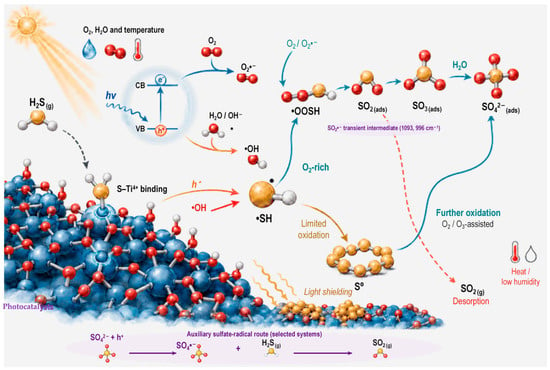
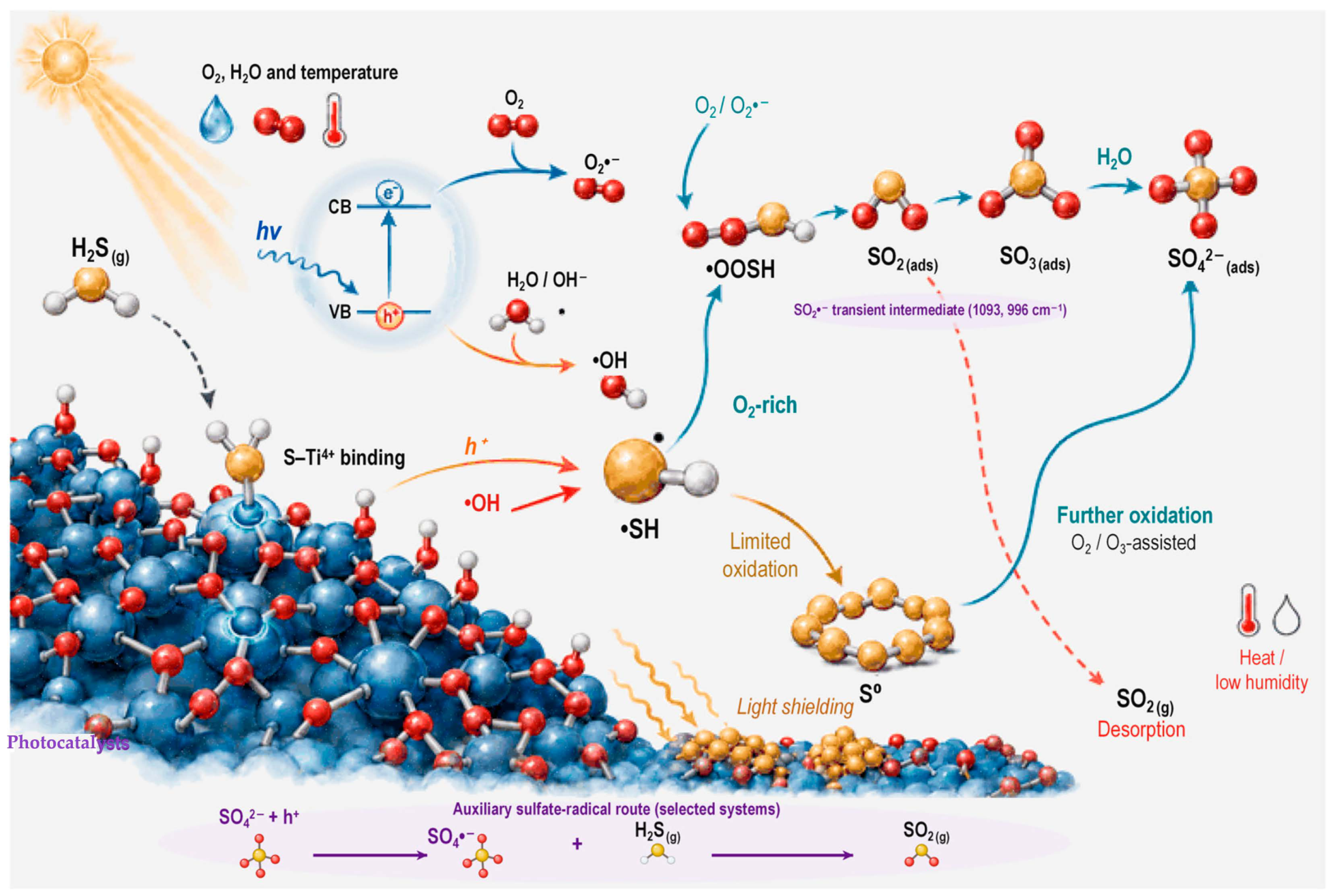
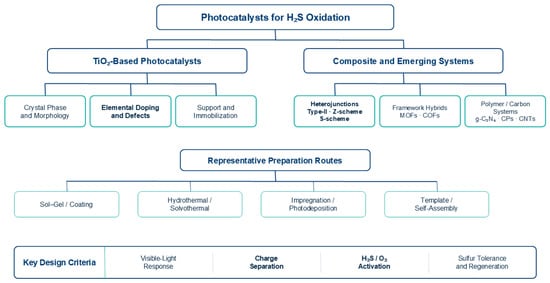
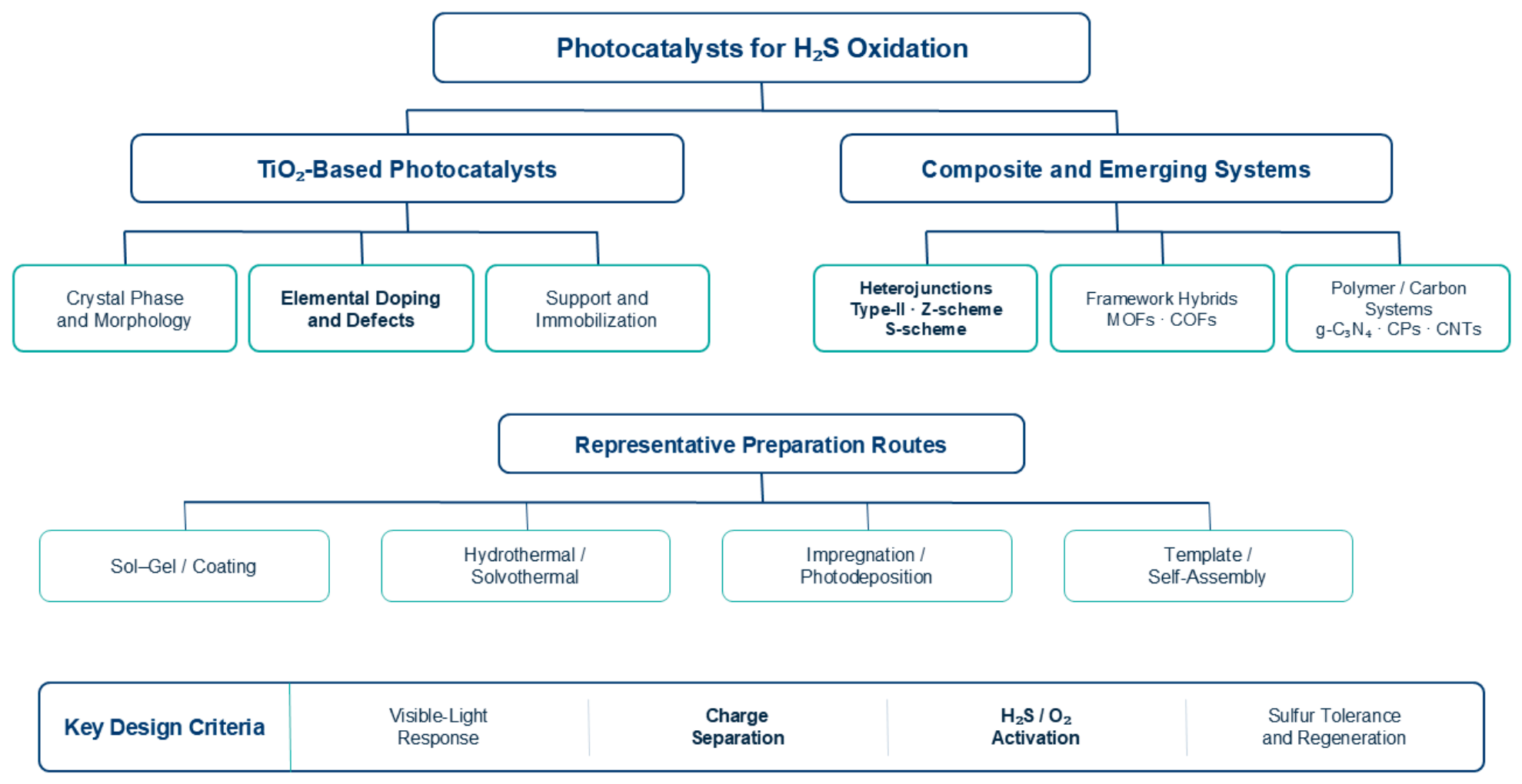
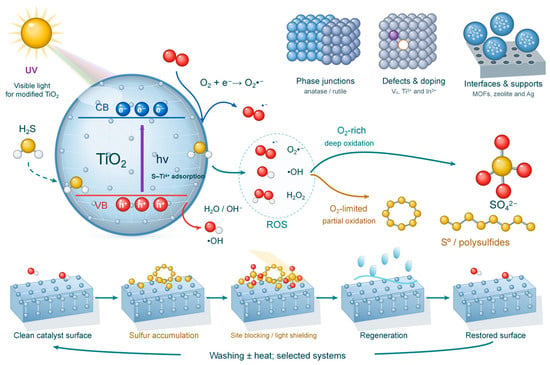
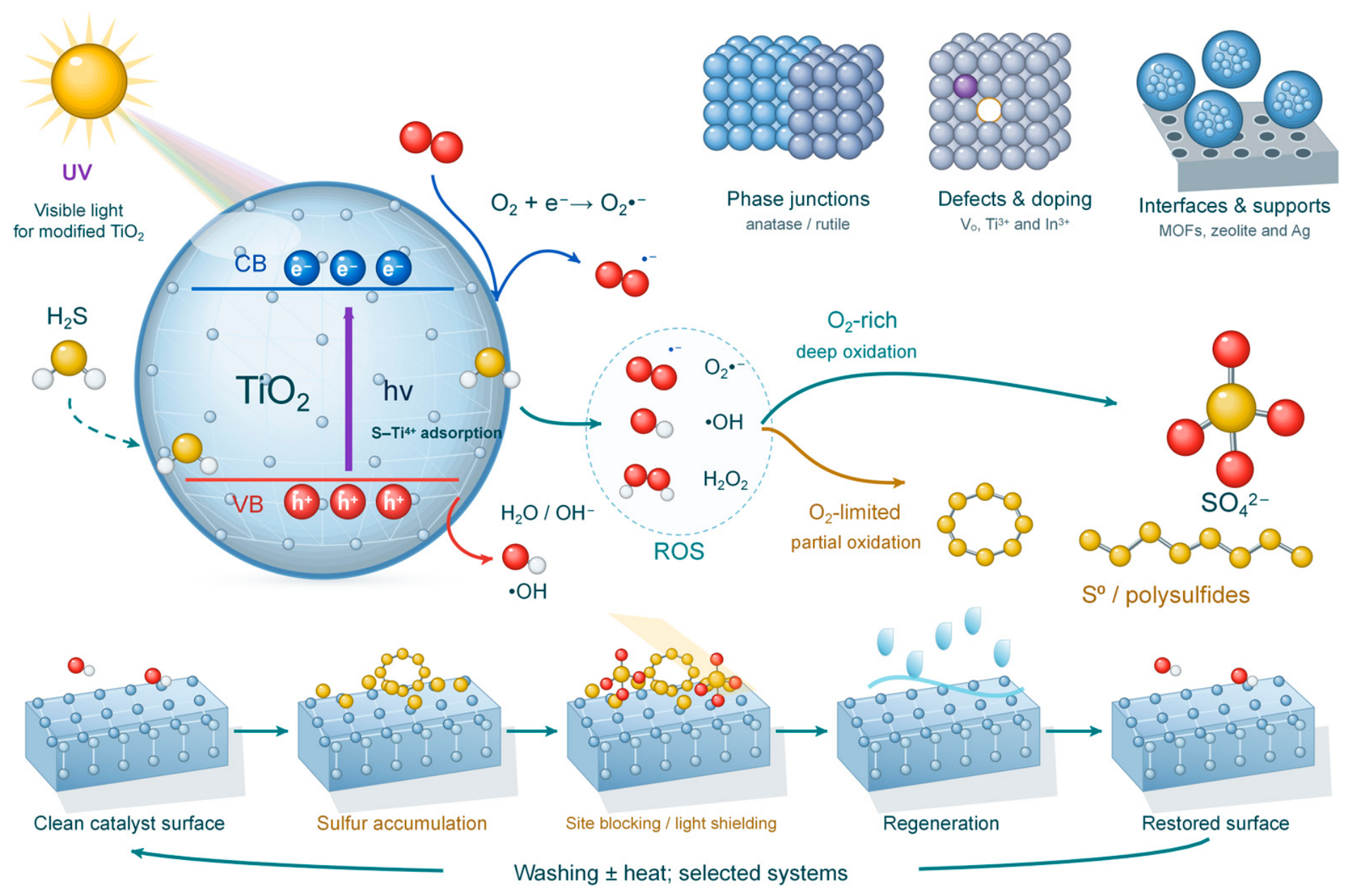
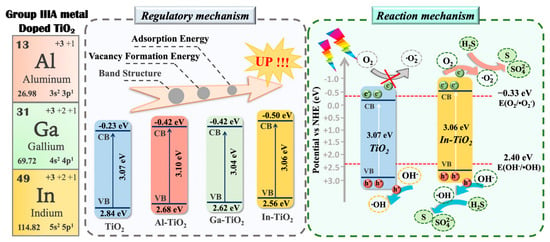
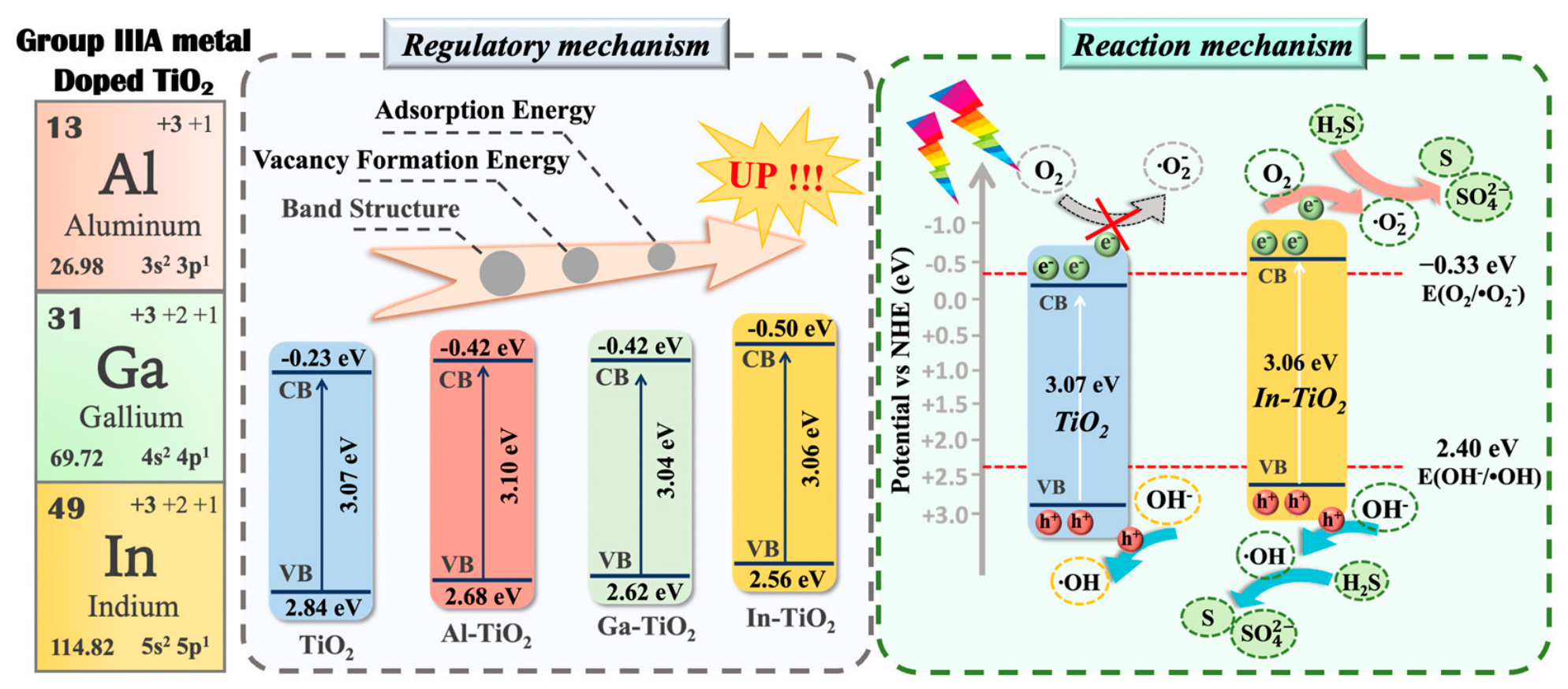
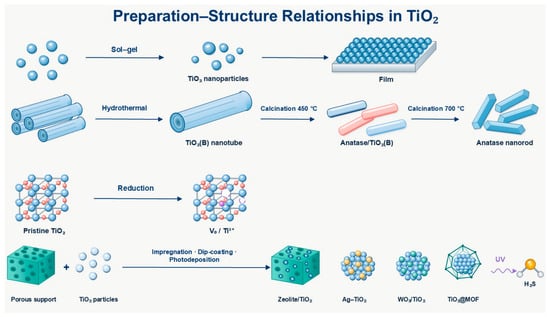
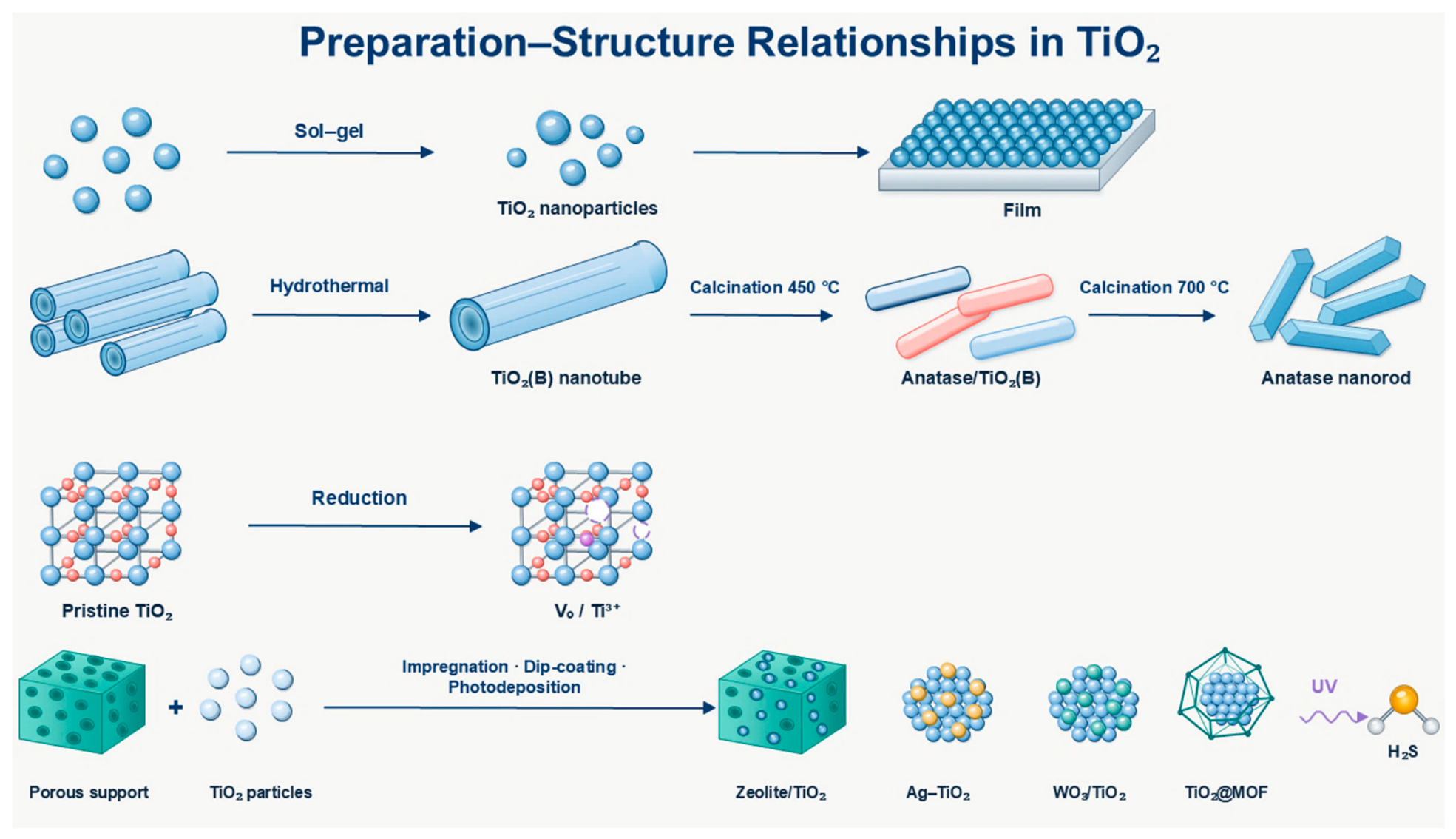
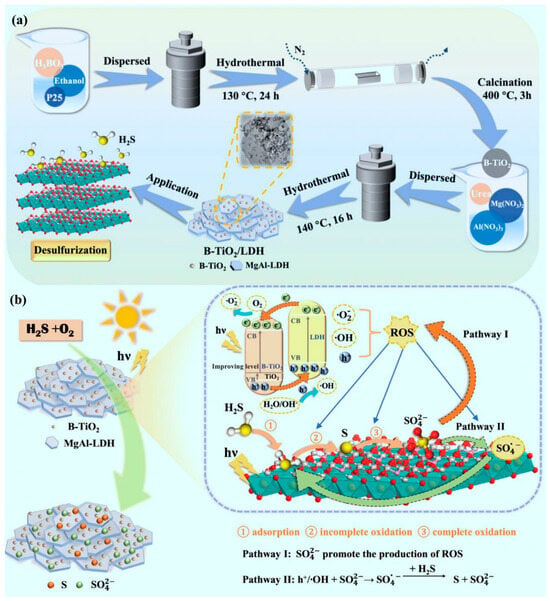
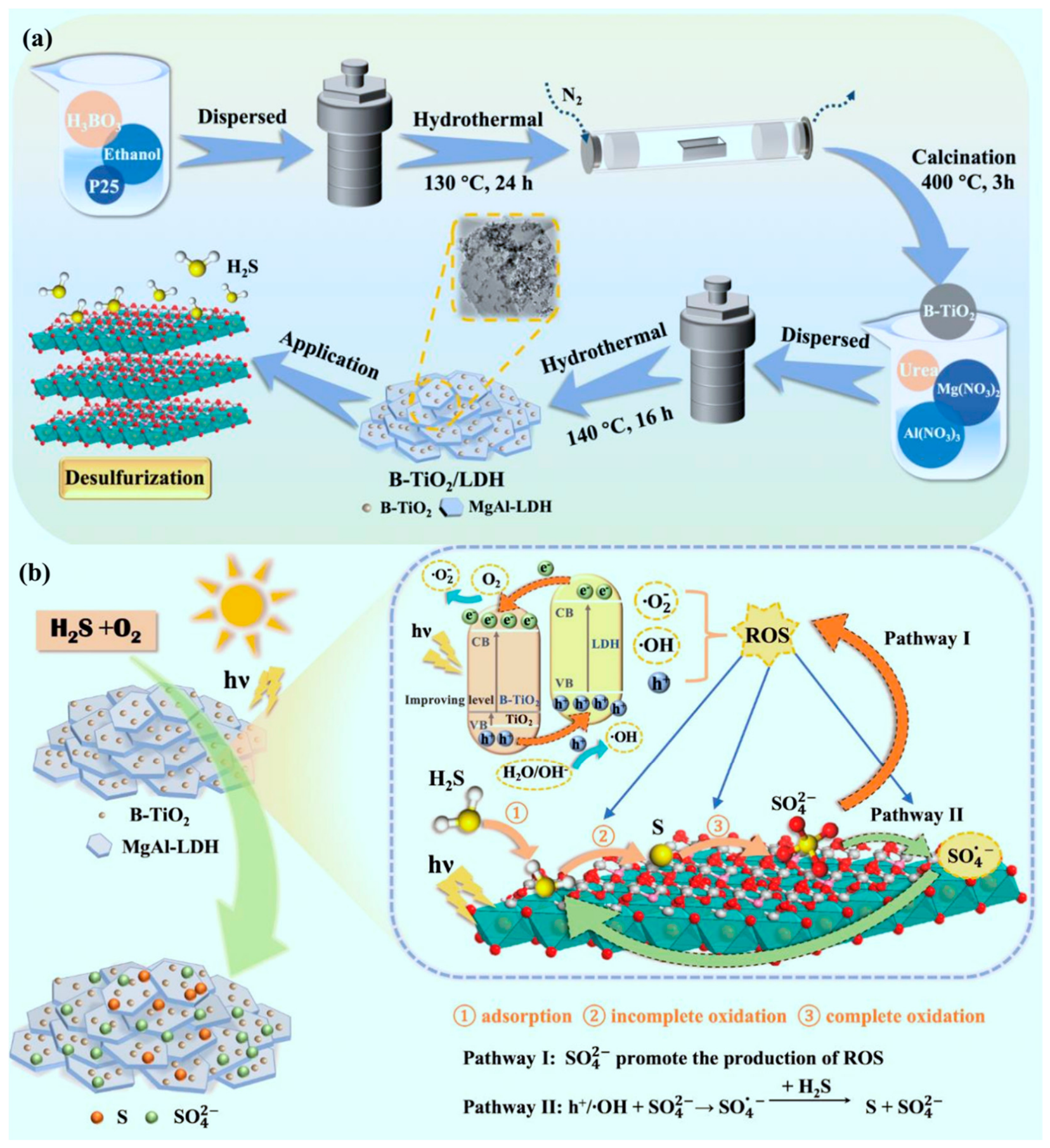
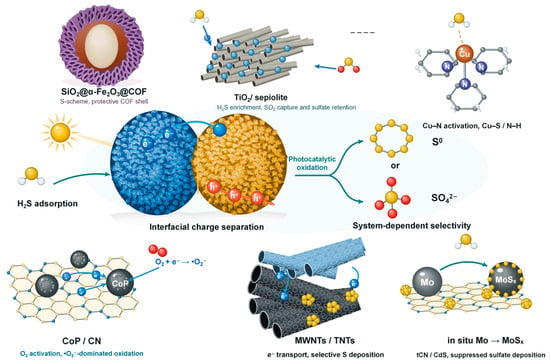
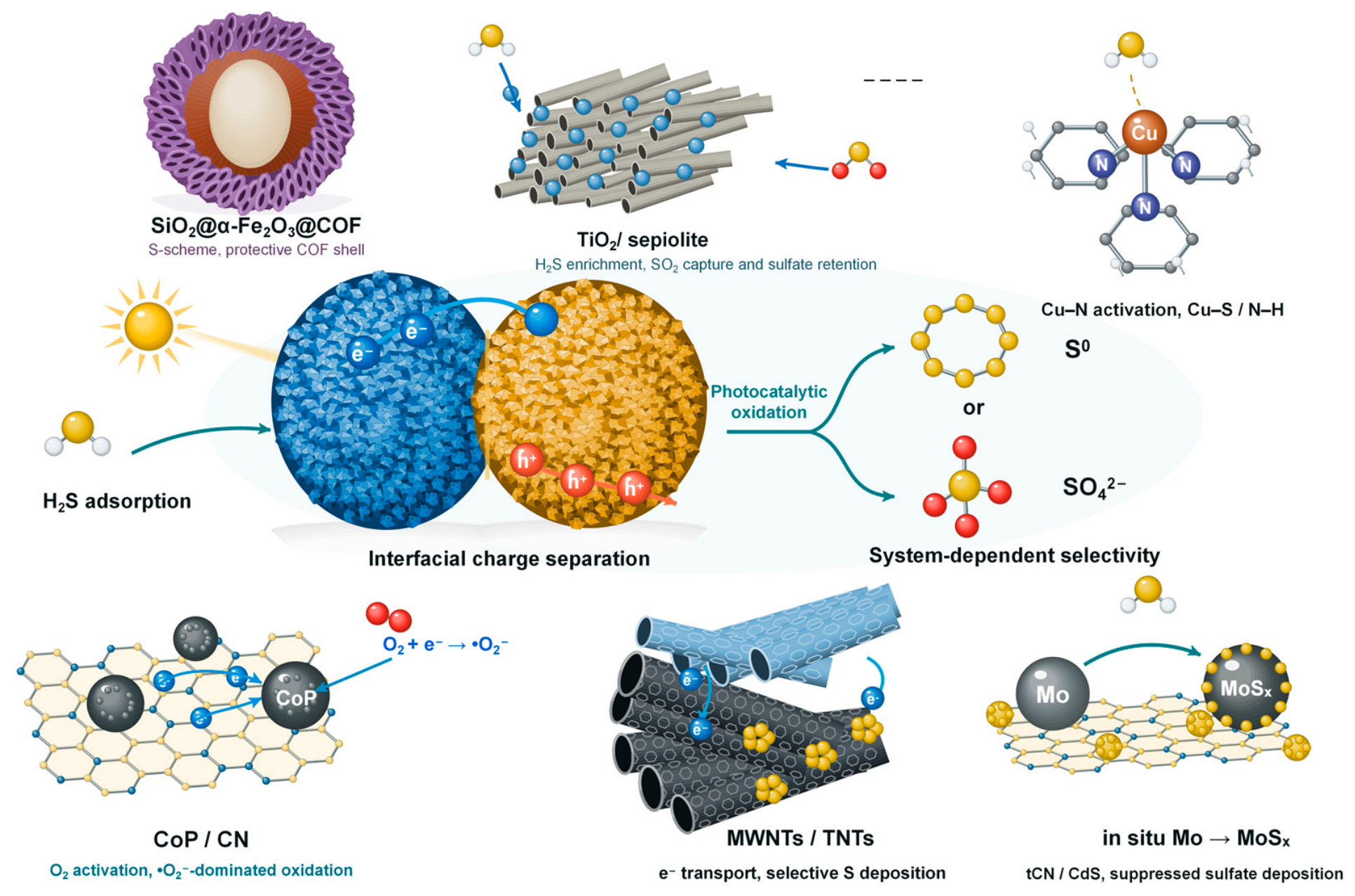
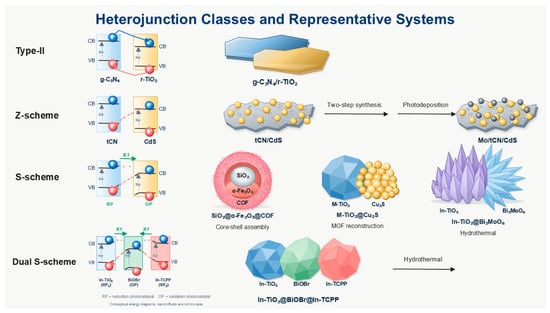
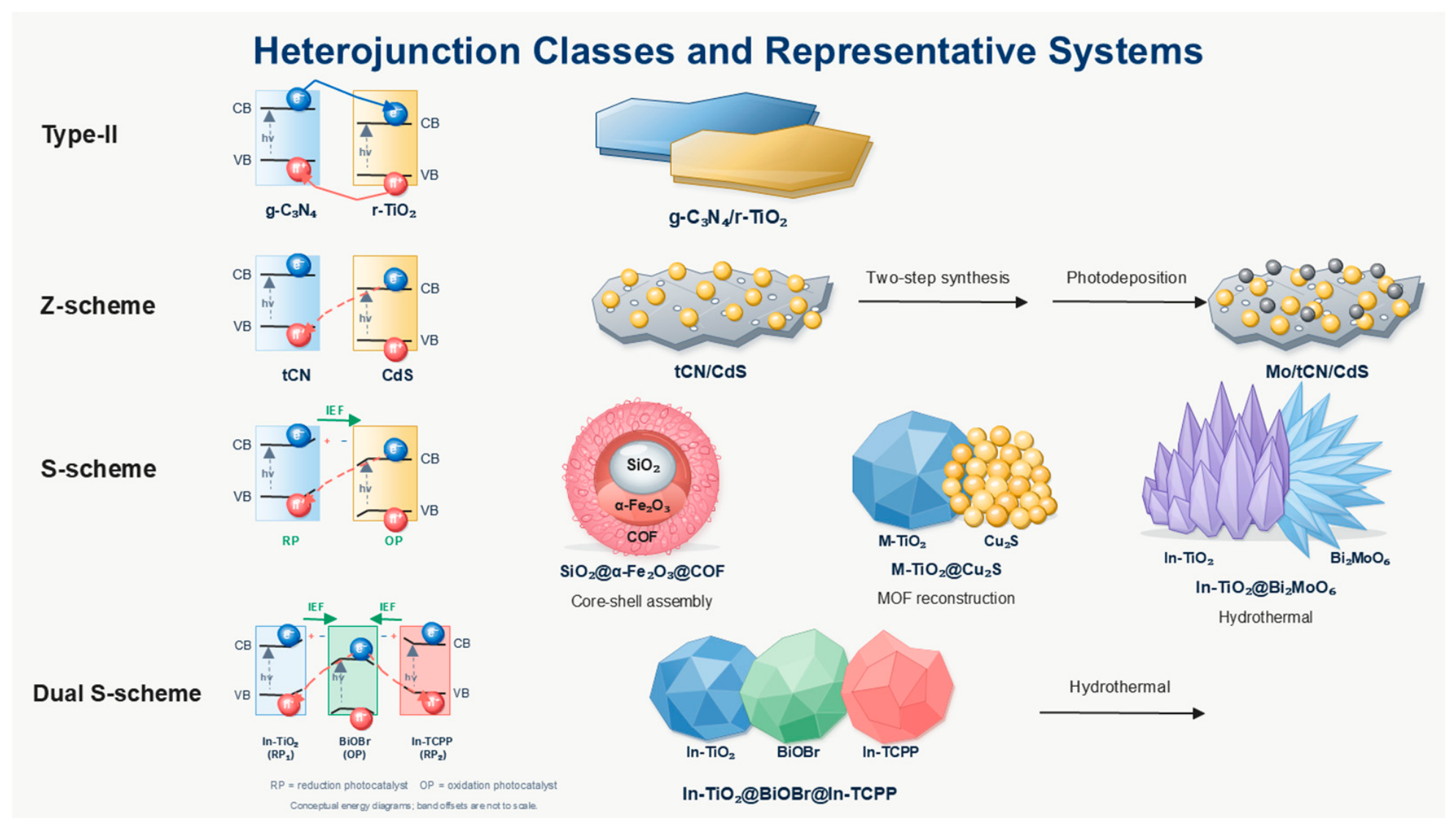
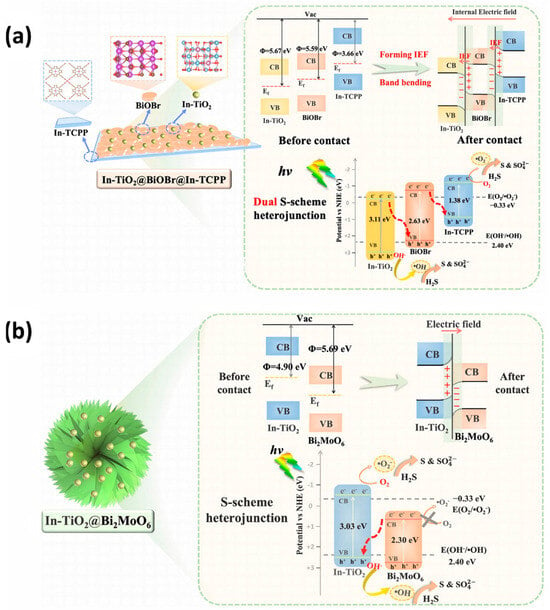
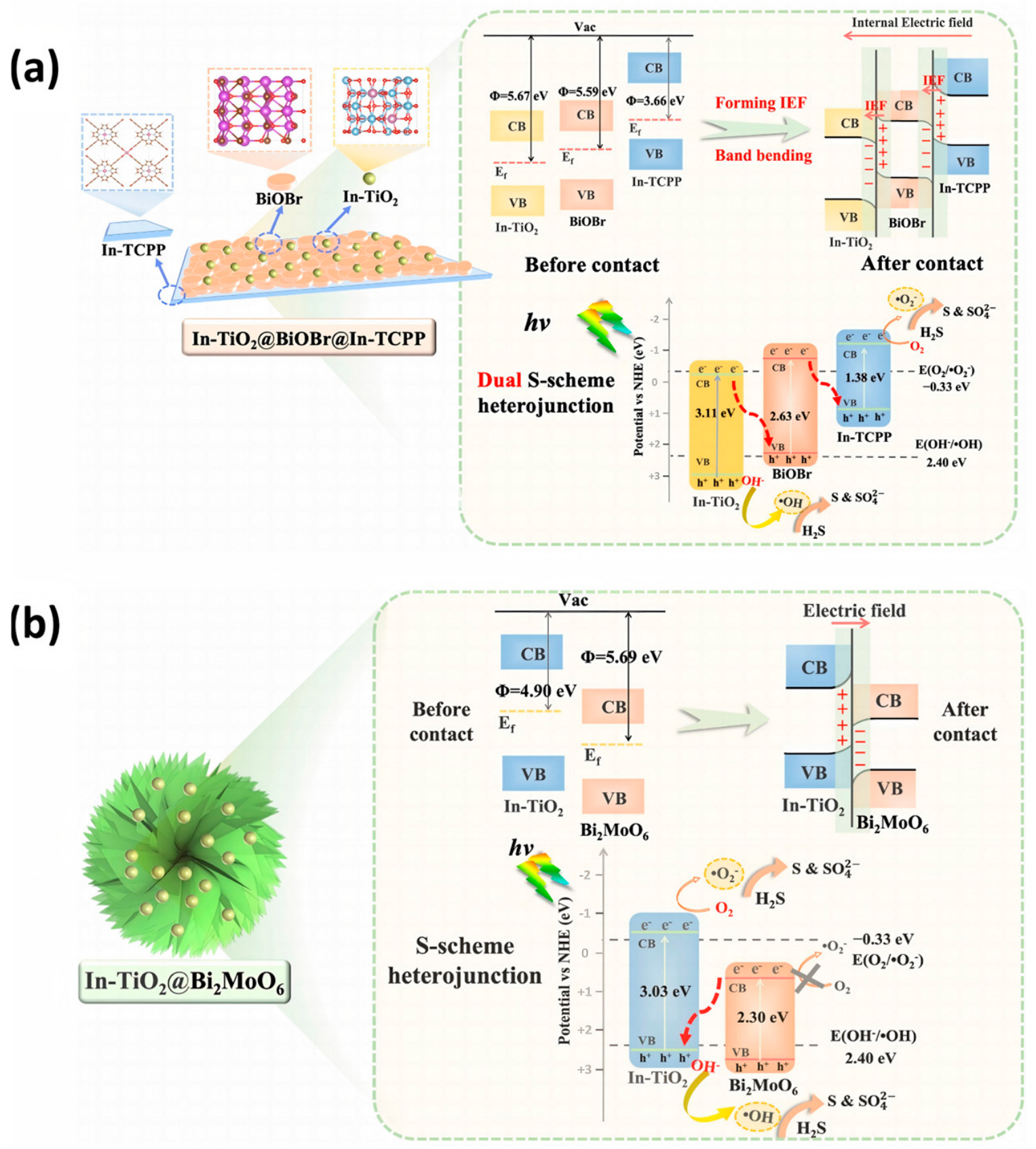

Disclaimer/Publisher’s Note: The statements, opinions and data contained in all publications are solely those of the individual author(s) and contributor(s) and not of MDPI and/or the editor(s). MDPI and/or the editor(s) disclaim responsibility for any injury to people or property resulting from any ideas, methods, instructions or products referred to in the content. |
© 2026 by the authors. Licensee MDPI, Basel, Switzerland. This article is an open access article distributed under the terms and conditions of the Creative Commons Attribution (CC BY) license.