


Abstract
Cystic fibrosis is a genetic disorder caused by pathogenic variants in the Cystic Fibrosis Transmembrane Conductance Regulator (CFTR) gene and may be complicated by hypokalemic hypochloremic metabolic alkalosis (HHMA), resulting from excessive electrolyte loss through sweat. This retrospective study aimed to clinically characterize individuals with cystic fibrosis who developed HHMA, characterize their CFTR genetic profile and compare it with that of other individuals with cystic fibrosis followed at a Brazilian tertiary referral center, and contextualize these findings within the available national and international literature. Among 257 individuals with cystic fibrosis followed at a tertiary referral center between 2014 and 2024, 41 (15.9%) developed HHMA. Most patients were male (29; 70.7%), the median age at the first episode was approximately four months, and episodes occurred predominantly during summer. The biochemical profile was characterized by metabolic alkalosis, hyponatremia, hypokalemia, and hypochloremia. The F508del variant was the most common allele [F508del homozygous, 9 (22.0%); F508del heterozygous, 21 (51.2%); without the F508del variant, 11 (26.8%)], particularly among patients with recurrent episodes, which occurred in 9/11 (81.8%) cases. The most frequent clinical manifestations were dehydration, cough, and vomiting, although some patients presented with minimal symptoms. Management primarily consisted of intravenous and oral hydration, electrolyte replacement, and antibiotic therapy when indicated, with no HHMA-related deaths observed. The characterization of the CFTR genetic profile and its comparison with the broader cystic fibrosis population followed at the reference center provide additional insights into the genetic background of HHMA in a genetically diverse population. Taken together with findings from the national and international literature, these results indicate that HHMA is a relatively frequent and potentially recurrent complication of cystic fibrosis, particularly during early life, and may be influenced by both genetic and environmental factors. Early recognition, systematic electrolyte monitoring, and appropriate salt and fluid replacement may prevent severe complications and improve clinical management.
1. Introduction
Cystic fibrosis (CF, OMIM No. 219700) is an autosomal recessive genetic disease caused by pathogenic variants in the Cystic Fibrosis Transmembrane Conductance Regulator (CFTR) gene, which clinically manifests with a multisystemic phenotypic expression [1,2,3,4,5]. In addition to the well-known pulmonary and pancreatic morbidities, CF may present with acid–base disturbances and electrolyte imbalances, such as hypokalemic hypochloremic metabolic alkalosis (HHMA), a condition that mimics Bartter syndrome, a hereditary tubulopathy affecting the ascending limb of the loop of Henle [6,7].
Dysfunctional CFTR protein in the sweat glands leads to excessive loss of chloride and sodium ions through sweat, a loss that is intensified on hot days due to increased sweat production, resulting in significant sodium depletion, reduced extracellular fluid volume, and secondary activation of the renin–angiotensin–aldosterone system [8]. Elevated aldosterone levels promote compensatory sodium reabsorption and the secretion of potassium and hydrogen ions in the renal collecting ducts, leading to hypokalemia and metabolic alkalosis [9]. Regarding chloride depletion through perspiration, this loss results in increased bicarbonate reabsorption in the renal tubules, shifting potassium ions into the intracellular compartment, which further contributes to hypokalemia [9].
This condition is an uncommon but well-recognized complication of CF [10]. It occurs most frequently during the neonatal period and is uncommon in older children [10,11]. As the sole manifestation of CF, however, it is extremely rare [10]. Chronic fluid and electrolyte loss through sweat may be exacerbated by acute conditions such as gastrointestinal losses, respiratory infections, excessive perspiration in hot climates, and inadequate salt intake in infants [8]. Due to hyponatremia and hypokalemia, affected patients often have reduced appetite, further aggravating electrolyte imbalance [12].
Early diagnosis is essential due to potentially severe consequences. Metabolic alkalosis reduces ionized calcium levels, which may lead to muscle spasm, tetany, and seizures. In severe cases, it may reduce cardiac output, increase peripheral vascular resistance, and cause arrhythmias [13]. Additionally, it may reduce respiratory drive, predisposing to hypoventilation and respiratory complications, while increased mucus viscosity may favor infections, reinforcing the importance of electrolyte monitoring, particularly in warmer seasons [14].
We aimed to characterize the epidemiological and clinical features of HHMA in individuals with CF followed at a tertiary referral center, with emphasis on its frequency, biochemical profile, seasonality, recurrence, clinical presentation, and management, and to characterize the CFTR genetic profile of affected individuals and compare it with that of the broader CF population followed at the same center.
2. Results
2.1. Prevalence and Demographics
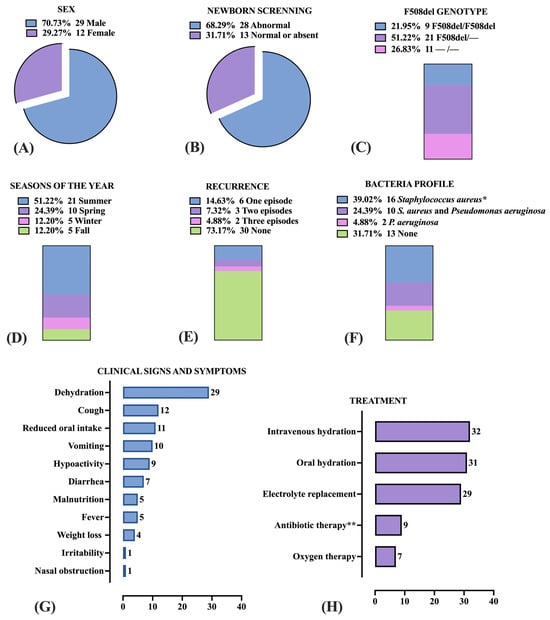
Among 257 individuals with CF followed at a tertiary referral center between January/2014 and January/2024, 41 (15.9%) patients fulfilled diagnostic criteria for HHMA. Of these patients, 29 (70.7%) were male, indicating a clear male predominance (Figure 1A, Supplementary Table S1). Age at the first HHMA episode ranged from 26 days to 13 years (Supplementary Table S1), with a median age of ~4 months, demonstrating that HHMA primarily manifests early in life but may also occur beyond infancy. This age distribution reinforces the vulnerability of infants and young children to hydroelectrolytic disturbances related to CFTR dysfunction.
Figure 1.
Genetic, demographic, clinical, microbiological, and treatment characteristics of patients with cystic fibrosis and hypokalemic hypochloremic metabolic alkalosis (HHMA). (A) sex distribution, (B) newborn screening results, (C) Cystic Fibrosis Transmembrane Conductance Regulator (CFTR) F508del genotype, (D) seasonal distribution of HHMA episodes, (E) recurrence profile, (F) bacterial profile, (G) clinical signs and symptoms, and (H) treatment strategies. Data are presented as number of patients and percentage [n (%)] or number of patients only, as appropriate. Other CFTR variants identified in the cohort are detailed in Table 1. For the seasonal distribution, recurrent HHMA episodes were identified, including 6 patients with one additional episode, 3 with two additional episodes, and 2 with three additional episodes. Recurrent episodes were analyzed separately in the seasonal distribution. *, One patient had co-detection of S. aureus, Escherichia coli, and Moraxella catarrhalis. **, Antibiotic therapy was administered both for decolonization and treatment of acute respiratory infections. Percentages may not sum exactly to 100% due to rounding. The symbol “—” indicates that the second allele is different from F508del and may correspond to another CFTR variant or, in rare cases, to no identifiable variant.
Newborn screening was abnormal in 28 (68.3%) patients, normal in 6 (14.6%), and unavailable in the remaining cases (Figure 1B, Supplementary Table S1). Among patients with documented neonatal screening, all had undergone screening before the occurrence of HHMA. For the remaining participants, the available data were insufficient to establish whether HHMA preceded CF diagnosis. All patients had abnormal sweat test results, confirming the diagnosis of CF according to established diagnostic criteria (Supplementary Table S1) [1].
2.2. Biochemical Profile
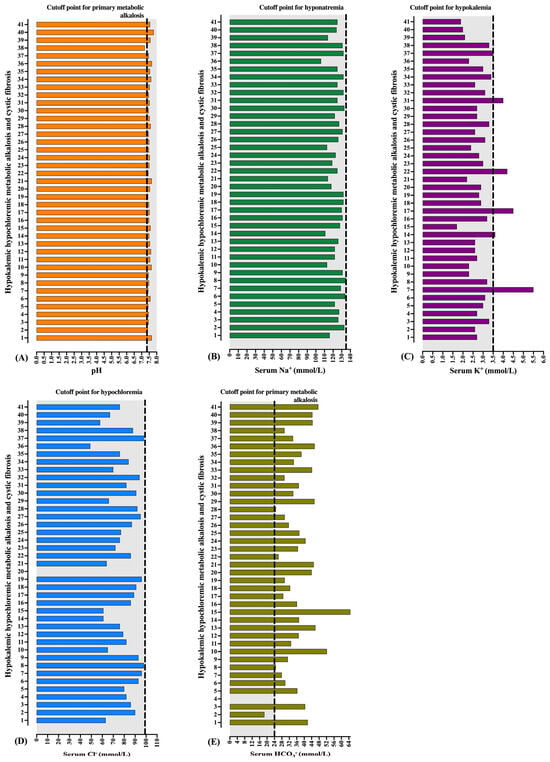
Laboratory findings obtained before treatment were consistent with the classical biochemical pattern of HHMA, showing median plasma values of potential of hydrogen (pH) 7.52 (IQR, 7.48–7.58), sodium of 126 (IQR, 122–131) mmol/L, potassium of 2.7 mmol/L, chloride of 82 (IQR, 71.5–90.3) mmol/L, and bicarbonate of 36.5 (IQR, 29.7–44.1), as detailed in Figure 2 and Supplementary Table S2. These findings are consistent with HHMA secondary to excessive salt loss.
Figure 2.
Distribution of arterial hydrogen potential (pH) (A), serum sodium (Na+; (B)), serum potassium (K+; (C)), serum chloride (Cl−; (D)), and serum bicarbonate (HCO3−; (E)) in patients with cystic fibrosis and hypokalemic hypochloremic metabolic alkalosis. Dashed lines indicate cutoff values for metabolic alkalosis (pH ≥ 7.45 and bicarbonate ≥ 24 mmol), hyponatremia (Na+ ≤ 135 mmol/L), hypochloremia (Cl− ≤ 99 mmol), and hypokalemia (K+ ≤ 3.5 mmol). mmol/L: millimoles per liter.
2.3. Genotype and Seasonality
Regarding CFTR genotypes, the most frequent category among patients with HHMA was F508del heterozygosity (21; 51.2%), followed by F508del homozygosity (9; 22.0%) and genotypes without the F508del variant (11; 26.8%) (Figure 1C). The detailed genotypic and CFTR variant-class profiles of the 41 patients with HHMA are presented in Table 1, which illustrates the substantial genetic heterogeneity of this group, including variants from Classes I to V. To provide a comprehensive comparison with the non-HHMA group, the genotypic profile of the 216 patients without HHMA is presented in Table 2. This comparison further demonstrates the predominance of F508del-containing genotypes in both groups, while also highlighting the broad spectrum of CFTR variants and variant classes identified in the study population.
Table 1.
Cystic Fibrosis Transmembrane Conductance Regulator (CFTR) genotypic and variant-class profile among patients with cystic fibrosis and hypokalemic hypochloremic metabolic alkalosis (HHMA) at a Brazilian referral center.
Table 2.
Cystic Fibrosis Transmembrane Conductance Regulator (CFTR) genotypic and variant-class profile among patients with cystic fibrosis without hypokalemic hypochloremic metabolic alkalosis (HHMA) at a reference center in Brazil.
HHMA episodes occurred throughout the year but were more frequent during summer (21; 51.2%) (Figure 1D, Supplementary Table S1). This seasonal pattern strongly supports the role of environmental temperature, sweating, and insensible salt loss as triggering factors for HHMA in individuals with CF [10].
2.4. Recurrence
Recurrence of HHMA was documented in 11 (26.8%) patients, accounting for 18 recurrent episodes, highlighting that HHMA may represent a recurrent metabolic complication rather than a single isolated event (Supplementary Table S3). Six patients experienced one additional episode, three experienced two additional episodes, and two experienced three additional episodes (Figure 1E, Supplementary Table S3). The age at recurrence ranged from 2 months and 11 days to 3 years and 9 months. Among the 18 recurrent episodes, 11 (61.1%) occurred during summer, five (27.8%) during spring, and two (11.1%) during fall, with no recurrent episodes reported during winter (Supplementary Table S3).
Among patients with recurrence, the majority carried at least one F508del allele, consistent with the association between F508del-containing genotypes and recurrent salt-loss phenotypes [3,13]. The predominance of both HHMA episodes overall and recurrent episodes during the warmer months supports the potential contribution of environmental temperature, increased sweating, and insensible salt and fluid losses as triggering factors for HHMA in individuals with CF [10].
2.5. Microbiological Findings, Clinical Presentation, and Management
Dehydration was the most frequent manifestation (29; 70.7%), followed by cough (12; 9.3%) and reduced oral intake (11; 26.8%), as summarized in Figure 1G and Supplementary Table S1. Vomiting, hypoactivity, and failure to thrive were also documented, particularly among infants. Notably, three patients (7.3%) were oligosymptomatic at the time of HHMA diagnosis, emphasizing that HHMA may be detected primarily through laboratory abnormalities and underscoring the importance of routine electrolyte monitoring in patients with CF.
Airway microbiology findings were available for patients with documented cultures or previous colonization. Staphylococcus aureus was the most frequently identified microorganism, either alone or in combination with Pseudomonas aeruginosa (Figure 1F, Supplementary Table S2). Although microbiological findings were not a primary outcome of this study, they provide clinical context regarding concurrent or previous respiratory colonization among patients experiencing HHMA.
Treatment strategies primarily included intravenous hydration (32; 78.0%), oral hydration (31; 75.6%), and electrolyte replacement (29; 70.7%) (Figure 1H and Supplementary Table S3). Antibiotic therapy was administered in 9 (21.9%) cases, mainly for acute respiratory infections or bacterial decolonization. Oxygen therapy was required in seven (17.1%) patients, including three who required invasive mechanical ventilation (Figure 1H and Supplementary Table S3). Additional individualized interventions included nutritional support via enteral or parenteral routes, bronchodilators, dornase alfa, and vitamin supplementation.
No HHMA-related deaths were identified, suggesting that timely recognition and appropriate management may prevent severe outcomes.
Individual patient-level clinical, biochemical, seasonal, recurrence, microbiological, and treatment characteristics are provided in Supplementary Tables S1–S3 to illustrate the clinical heterogeneity of HHMA presentations in this cohort. The data are presented in Figure 1 and Figure 2.
2.6. CFTR Genotype and Sex According to HHMA Status
Among the 257 patients included in the analysis, 41 (16.0%) had HHMA, whereas 216 (84.0%) did not. The distribution of the F508del genotype did not differ significantly between patients with and without HHMA. The homozygous F508del/F508del genotype was identified in 9 (22.0%) patients with HHMA and 68 (31.5%) patients without HHMA (OR = 0.614, 95% CI: 0.237–1.591; p-value = 0.340), while the F508del/— genotype was observed in 21 (51.2%) and 97 (44.9%) patients, respectively (OR = 1.004, 95% CI: 0.449–2.244; p-value = 1.000), using the —/— genotype as the reference (Table 3).
Table 3.
Comparison of Cystic Fibrosis Transmembrane Conductance Regulator (CFTR) genotype profile and sex between patients with and without hypokalemic hypochloremic metabolic alkalosis (HHMA).
In contrast, a significant difference was observed when CFTR genotypes were grouped according to variant classes. Two CFTR variants from classes I, II, and/or III were present in 39 (95.1%) patients with HHMA compared with 160 (74.1%) patients without HHMA, corresponding to significantly higher odds of HHMA (OR = 6.83, 95% CI: 1.60–29.19; p-value = 0.002) (Table 3). Conversely, variants from classes III, IV, and/or VI, or unclassified/not identified variants, were more frequent among patients without HHMA.
Sex was also significantly associated with HHMA. Male patients accounted for 29 (70.7%) of those with HHMA compared with 106 (49.1%) of those without HHMA, resulting in higher odds of HHMA among males (OR = 2.51, 95% CI: 1.22–5.17; p-value = 0.016) (Table 3). Female patients represented 12 (29.3%) of the HHMA group and 110 (50.9%) of the non-HHMA group.
2.7. Narrative Review
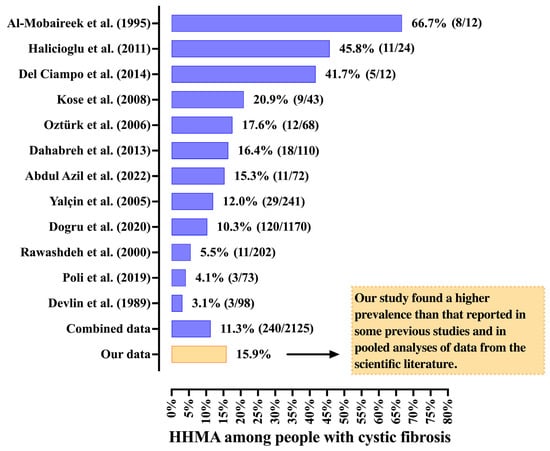
To provide context for and facilitate the interpretation of the findings of the present study, which investigated HHMA in individuals with CF at a Brazilian referral center, a narrative literature review was conducted. The main characteristics, clinical and genetic findings, and conclusions of the included studies are summarized in Figure 3, Supplementary Tables S4 and S5 [7,8,9,10,11,12,13,14,29,30,31,32,33,34,35,36,37,38,39,40,41,42,43,44,45,46,47,48,49,50,51,52,53,54,55,56,57,58,59,60,61].
Figure 3.
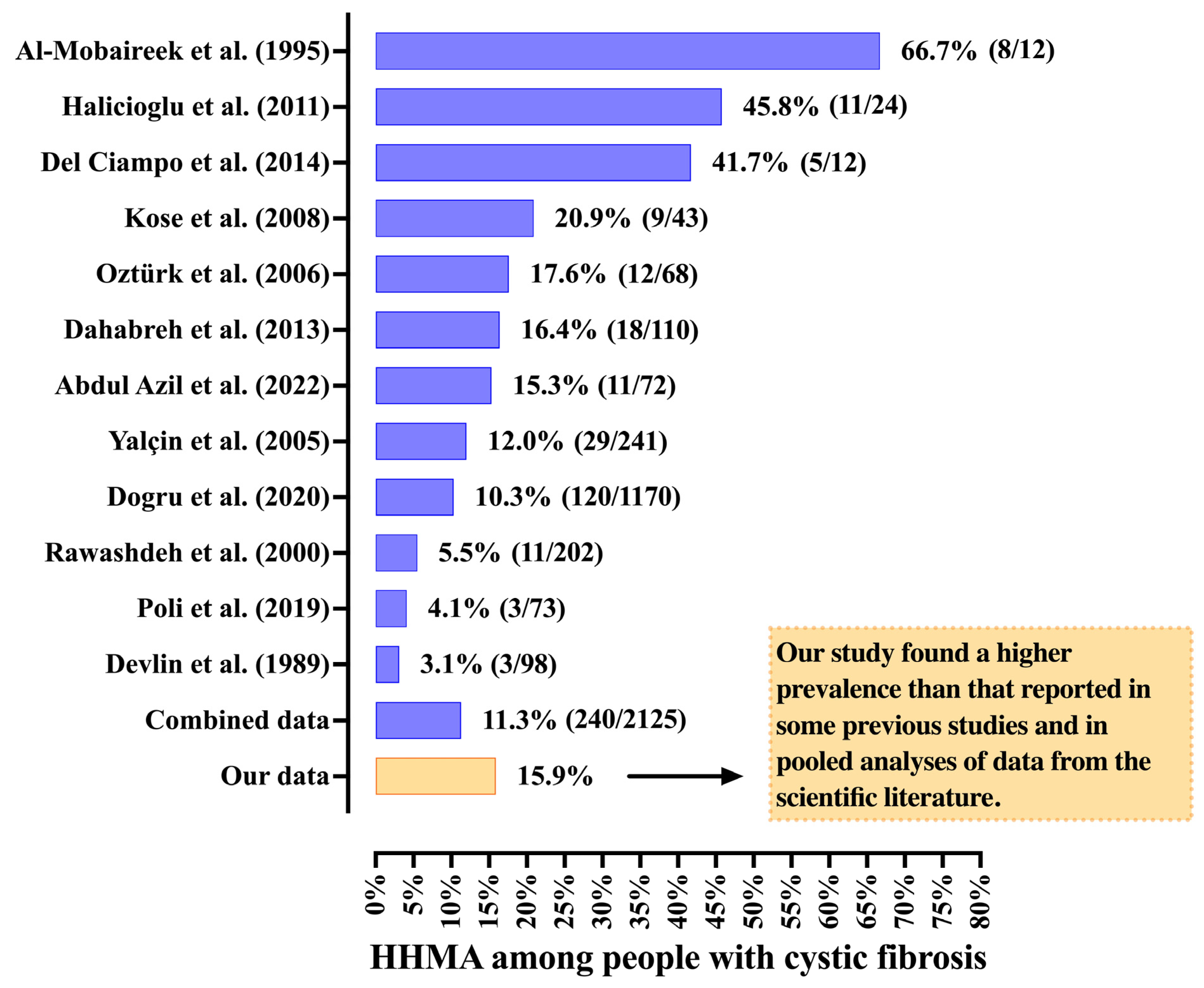
Prevalence of hypokalemic hypochloremic metabolic alkalosis (HHMA) among patients with cystic fibrosis (CF) reported in different studies. The bar chart compares the prevalence of HHMA in patients with CF found in our study (15.9%, 41/257 cases) with that reported by Devlin et al. (1989), Poli et al., (2019), Rawashdeh et al. (2000), Dogru et al. (2020), Yalçin et al. (2005), Abdul Azil et al. (2022), Dahabreh et al. (2013), Oztürk et al. (2006), Kose et al. (2008), Del Ciampo et al. (2014), Al-Mobaireek et al. (1995), and Halicioglu et al. (2011) [11,13,29,30,31,32,33,34,37,59,60,61]. The aggregated prevalence across these studies was 11.3% (240/2125), based on the total number of HHMA cases and individuals reported in the included studies. The prevalence observed in our study was higher than that reported in several individual studies and than the aggregated prevalence across the included studies. These findings highlight the importance of clinical awareness of HHMA in patients with CF, particularly in regions with warm climates and limited access to neonatal screening. Data are presented as percentages (number of patients with HHMA/number of patients with CF evaluated).
3. Discussion
In this retrospective study, HHMA was identified in 16.0% of individuals with CF, predominantly occurring in early life, with a recurrence rate of 26.8%, strong associations with severe CFTR genotypes and summer seasonality, and no related mortality.
The prevalence of HHMA observed in our cohort should be interpreted within the specific epidemiological, geographic, and healthcare context of Brazil. Previous Brazilian studies have reported substantial variability in the occurrence of HHMA among individuals with CF. In a cohort of infants diagnosed through newborn screening in Ribeirão Preto, São Paulo, HHMA was reported in 41.6% of 12 infants with CF [35]. Similarly, a more recent Brazilian case series from Bahia reported HHMA in 50% of 14 children with delayed CF diagnosis following false-negative or unsuccessful newborn screening [62]. In addition, a Brazilian case report described HHMA in a 5-year-old child with CF who developed severe electrolyte and acid–base disturbances during the summer in Brazil [63]. Although these studies differ substantially in design, age distribution, and clinical context, their findings indicate that HHMA is not an isolated manifestation in the Brazilian CF population and may represent a clinically relevant complication, particularly among infants and children.
The Brazilian literature is further supported by reports from other settings describing HHMA as an important early manifestation of CF. Fustik et al. reported HHMA in 18.8% of 85 infants newly diagnosed with CF, with a mean age of 3.5 months, highlighting the occurrence of this metabolic complication during infancy and its potential to represent the first manifestation of CF [64]. Similarly, Yalçin et al. identified HHMA in 12% of 241 children with CF, with a median age of 4 months at the first episode; recurrent episodes requiring hospitalization occurred in 12 of 29 affected patients [13]. More recently, Lopes et al. described HHMA as the initial presentation of CF in an infant hospitalized during the summer with dehydration, oliguria, and severe electrolyte and acid–base abnormalities, reinforcing the importance of recognizing this condition in young children, particularly during periods of increased sweating and additional sodium and chloride losses [6].
Environmental conditions, particularly high ambient temperatures, may contribute to the occurrence of HHMA by increasing sweat-mediated sodium and chloride losses in individuals with CF. The study conducted in Ribeirão Preto, a region characterized by a warm climate, specifically discussed climatic conditions as a potential contributing factor to the occurrence of HHMA [35]. The Brazilian case report by Lopes et al. also described the occurrence of severe HHMA during the summer, in association with gastrointestinal and urinary fluid losses, further illustrating how increased environmental temperature and additional losses may increase susceptibility to electrolyte disturbances [6]. However, these observations should be interpreted as a plausible association rather than evidence of a direct causal effect of climate. The occurrence of HHMA is likely influenced by multiple interacting factors, including age, nutritional status, pancreatic insufficiency, intercurrent gastrointestinal or respiratory illness, sodium intake, CFTR genotype, newborn screening performance, and access to specialized CF care.
Importantly, the Brazilian studies do not establish that climate directly causes a higher prevalence of HHMA. Rather, the findings from Ribeirão Preto and the Brazilian case report, together with the seasonal pattern observed in our cohort, support a biologically plausible association between warmer environmental conditions and increased risk of salt and fluid depletion. This interpretation is consistent with the pathophysiology of CF, in which defective CFTR-mediated chloride and sodium reabsorption in sweat ducts results in increased electrolyte losses, which may become clinically relevant when sweating is intensified. Therefore, environmental temperature should be considered a potential modifying factor rather than an independent causal determinant of HHMA.
Comparison with previously published Brazilian studies should therefore be interpreted cautiously because of differences in study design, sample size, age distribution, diagnostic strategies, clinical characteristics, and healthcare settings. The Ribeirão Preto study included infants identified through newborn screening [35], whereas the Bahia case series specifically evaluated children with delayed CF diagnosis after false-negative or unsuccessful newborn screening [62]. In contrast, the third Brazilian publication was a single case report involving a preschool child with severe electrolyte disturbances during the summer and concomitant gastrointestinal losses [63]. These differences may substantially influence both the observed prevalence and the clinical severity of HHMA. Therefore, the prevalence observed in our study should not be considered representative of the Brazilian CF population as a whole, particularly because our cohort was derived from a single specialized CF reference center. Nevertheless, the occurrence of HHMA in 41.6% of infants in the Ribeirão Preto cohort, 50% of children in the Bahia series, and the additional Brazilian case report demonstrates that this complication has been repeatedly documented in Brazil, despite the substantial heterogeneity of the available evidence. These findings, together with the 15.9% prevalence observed in our cohort, support the clinical relevance of HHMA in the Brazilian context and reinforce the importance of monitoring electrolyte disturbances in individuals with CF, particularly during early life and periods of high environmental temperature or increased fluid losses.
Importantly, the present study extends previous reports by providing a longitudinal characterization of HHMA in a relatively large cohort of individuals with CF followed at a single Brazilian referral center over a 10-year period. Beyond estimating the prevalence of HHMA, our study describes its age distribution, recurrence, seasonal pattern, clinical and biochemical characteristics, treatment, and, particularly, its genetic profile. The revised analysis includes a detailed comparison of CFTR genotypes between individuals with and without HHMA, including F508del status and the distribution of variants according to functional classes. This approach provides additional information on the genetic background of HHMA within the broader CF population and may help clarify potential genotype-related susceptibility to salt-wasting episodes. Nevertheless, the multifactorial nature of HHMA suggests that genetic background alone is unlikely to fully explain its occurrence. Host factors, epithelial ion transport, environmental exposure, nutritional status, and intercurrent infections or gastrointestinal losses may interact to determine the clinical expression of salt and fluid depletion.
Emerging evidence also suggests that epithelial responses to infection and inflammation may involve complex regulatory mechanisms that extend beyond CFTR dysfunction itself. Studies investigating host ribonucleic acid (RNA)-binding proteins have demonstrated their potential role in regulating infection-associated epithelial apoptosis and epithelial–mesenchymal changes [65]. Although these mechanisms were not directly evaluated in the present study and no causal relationship with HHMA can be established from our data, they provide a broader biological context in which host responses, epithelial integrity, and infection-related processes may potentially influence the susceptibility or clinical expression of electrolyte disturbances in CF. Future studies integrating CFTR genotype, epithelial function, inflammatory responses, infection status, and environmental exposure may help determine whether these pathways contribute to the heterogeneity of HHMA.
HHMA is a well-recognized electrolyte complication of CF and results from excessive sodium and chloride loss through sweat caused by CFTR dysfunction. In CF, impaired reabsorption of sodium and chloride in sweat ducts leads to extracellular volume depletion and activation of the renin–angiotensin–aldosterone system, resulting in renal potassium and hydrogen ion loss and hypokalemic metabolic alkalosis [8,10]. This mechanism directly explains the biochemical profile observed in our cohort. Infants are particularly vulnerable due to their higher body surface area–to–weight ratio, immature renal compensatory mechanisms, and potentially insufficient sodium intake. Severe CFTR variants, including F508del, may also be associated with more pronounced salt-loss phenotypes and recurrent metabolic disturbances [58,66]. Additionally, environmental factors such as high temperatures may increase sweat losses, while sex-related differences in sweat gland activity may contribute to the higher prevalence observed among males [11,13,67,68].
In this cohort, the prevalence of HHMA was higher than that reported in most international series [57]. This finding may reflect climatic conditions, increased clinical awareness, early diagnosis of CF through newborn screening, and systematic biochemical surveillance at a specialized referral center [13]. The predominance of the F508del variant aligns with global CF genetic epidemiology and supports its association with severe salt-loss phenotypes and recurrent metabolic disturbances [3]. The observed recurrence rate suggests that HHMA should be considered a long-term management issue rather than a transient neonatal phenomenon. This interpretation is consistent with the study by Yalçin et al., in which recurrent HHMA occurred in 12 of 29 affected children and was observed up to 48 months of age [13].
The clinical presentation of HHMA may range from mild electrolyte abnormalities to severe dehydration and neurological or cardiovascular complications. Yalçin et al. reported vomiting, loss of appetite, and dehydration as common manifestations among children with CF and HHMA [13], while Lopes et al. described an infant presenting with dehydration, oliguria, apathy, hypochloremic metabolic alkalosis, hypokalemia, and hyponatremia [6]. These observations emphasize that HHMA may occur even when classical pulmonary or gastrointestinal manifestations of CF are not prominent and that its recognition requires a high index of suspicion.
Sweat glands in individuals with CF, in contrast to those in healthy individuals, do not secrete sweat normally in response to β-adrenergic stimulation but retain responsiveness to cholinergic stimulation. Men generally exhibit a lower number of active sweat glands; however, they demonstrate a higher sweat secretion rate per gland compared with women, which may partly explain the higher prevalence observed among males in our study [69]. Nevertheless, sex differences should be interpreted cautiously because the mechanisms underlying HHMA are multifactorial and may be strongly influenced by age, genotype, environmental exposure, nutritional status, and intercurrent illness.
Early recognition of HHMA is essential, as metabolic alkalosis may lead to neuromuscular irritability, tetany, seizures, hypoventilation, cardiac arrhythmias, and worsening pulmonary disease due to increased mucus viscosity and impaired mucociliary clearance [10]. Moreover, HHMA may represent the first clinical manifestation of CF, particularly in infants, and should prompt diagnostic investigation even in the absence of classic respiratory or gastrointestinal symptoms [10,13]. This diagnostic relevance is supported by Fustik et al., who found HHMA in 18.8% of newly diagnosed infants and emphasized that CF should be considered in infants presenting with metabolic alkalosis and hypoelectrolytemia, regardless of the presence of respiratory or gastrointestinal manifestations [64]. Similarly, Lopes et al. emphasized that HHMA may be an initial manifestation of CF and that clinical awareness is essential for timely diagnosis [6].
From a clinical perspective, our findings reinforce the importance of systematic electrolyte monitoring in patients with CF, particularly in early life and during warmer seasons, together with proactive counseling on adequate salt and fluid intake. Preventive salt supplementation and hydration strategies should be reinforced during periods of increased sweating or intercurrent illness, particularly in patients with previous HHMA episodes. Furthermore, clinicians should recognize HHMA as a potential presenting feature of CF.
Preventive strategies should also be incorporated into the routine care of individuals with CF who are at risk of HHMA [70]. Adequate sodium and fluid intake is particularly important during hot weather, periods of increased sweating, fever, respiratory or gastrointestinal illness, and reduced oral intake, when salt and water losses may increase substantially. Caregivers should receive clear guidance regarding adequate salt supplementation according to age and clinical circumstances, as well as appropriate hydration and early recognition of warning signs such as reduced oral intake, vomiting, lethargy, weight loss, or dehydration. Patients with a previous episode of HHMA may benefit from closer electrolyte monitoring during high-risk periods, given the recurrence observed in our cohort [6,9,71]. These preventive measures may help reduce the risk of severe electrolyte disturbances and facilitate earlier intervention.
The treatment approaches described in previous studies also support the importance of early recognition and electrolyte replacement. In the cohort reported by Yalçin et al., all patients received intravenous fluids and sodium chloride supplementation, reflecting the severity of the episodes in that population [13]. In contrast, the Ribeirão Preto cohort demonstrated that early detection through systematic screening and oral electrolyte replacement was sufficient in all five affected infants, with relatively mild clinical manifestations [35]. The Brazilian case reported by Lopes et al. required intravenous rehydration and sodium and chloride supplementation, with complete recovery [6]. Taken together, these studies suggest that the clinical severity of HHMA may vary considerably and that early detection may allow less intensive treatment and potentially prevent severe complications.
An additional consideration is the progressive availability of CFTR-modulator therapies in Brazil during the study period. Access to these therapies was initially restricted to specific genetic and clinical indications. Ivacaftor was incorporated into the Brazilian Unified Health System (SUS—Sistema Único de Saúde) in 2021 for patients with specific responsive CFTR variants [72,73], whereas lumacaftor/ivacaftor and tezacaftor/ivacaftor were not incorporated into the SUS. Elexacaftor/tezacaftor/ivacaftor was subsequently incorporated into the SUS in September 2023 for eligible patients aged ≥ 6 years carrying at least one F508del variant [74,75].
Importantly, none of the 41 patients in our cohort was receiving CFTR-modulator therapy at the time of the HHMA episode. Thus, all HHMA episodes analyzed in the present study occurred without concomitant CFTR-modulator exposure. This context is relevant when interpreting our findings, as the cohort predominantly reflects the clinical characteristics of HHMA before the widespread availability of highly effective CFTR-modulator therapy in Brazil. Importantly, emerging evidence suggests that highly effective CFTR modulation may directly influence salt and fluid homeostasis. In a recent study of 50 individuals with CF initiating elexacaftor/tezacaftor/ivacaftor, treatment increased plasma sodium concentration and the diuretic response to sodium and volume loading, while reducing aldosterone levels, venous total CO2, and the proportion of patients with low plasma sodium, suggesting improved sodium chloride and fluid conservation [76]. These findings raise the possibility that highly effective CFTR modulation may reduce susceptibility to salt-wasting and HHMA. Therefore, the absence of CFTR-modulator exposure in our cohort is particularly relevant, as the prevalence and recurrence patterns observed may differ in contemporary populations with broader access to highly effective modulator therapy.
The potential effect of CFTR modulators on HHMA also highlights an important area for future research. If restoration of CFTR function improves epithelial sodium and chloride handling, as suggested by Berg et al. [76], widespread access to highly effective modulator therapy could alter the epidemiology, recurrence, and severity of salt-wasting episodes. However, these effects should not be extrapolated directly to infants or to all individuals with CF, particularly because access to modulators, age at initiation, genotype, and treatment eligibility vary substantially. Prospective studies evaluating electrolyte balance, sweat electrolyte concentrations, sodium requirements, and HHMA incidence before and after CFTR-modulator initiation will be important to determine whether the apparent correction of salt-wasting translates into a clinically meaningful reduction in HHMA.
Overall, our findings, considered together with previous Brazilian and international evidence, indicate that HHMA remains a clinically relevant complication of CF, particularly during early life and under conditions that increase fluid and electrolyte losses. The Brazilian literature includes a cohort of infants with a 41.6% prevalence [35], a case series reporting a 50% prevalence among children with delayed CF diagnosis [62], and a Brazilian case report of severe HHMA during the summer [63]. Although these studies cannot establish a causal relationship between climate and HHMA, they provide convergent evidence that warm environmental conditions may represent an important contextual factor in susceptible individuals. The present study extends these observations by demonstrating HHMA in a larger CF cohort, including recurrent episodes and a clear seasonal pattern, while also providing evidence relevant to the pre-modulator era. Continued clinical surveillance, preventive electrolyte management, and timely recognition of salt-wasting episodes remain important components of CF care, particularly in regions characterized by high environmental temperatures.
Limitations
This study has several limitations that should be considered when interpreting its findings. First, its retrospective design and reliance on medical records may have resulted in incomplete or inconsistently documented clinical, laboratory, and treatment-related information. Second, the study was conducted at a single specialized CF referral center, which may limit the generalizability of the findings to the broader CF population in Brazil and other healthcare settings. Third, although the overall cohort included 257 individuals with CF, only 41 patients met the criteria for HHMA. Moreover, recurrent episodes occurred in a relatively small proportion of these patients, substantially limiting the statistical power to perform reliable comparisons between recurrent and non-recurrent cases. Therefore, the observed relationship between the F508del genotype and recurrence should be interpreted as an exploratory finding rather than as evidence of a statistically established association.
Another limitation is the descriptive nature of the statistical analysis, which precluded robust adjustment for potential confounding factors and prevented the assessment of independent predictors of HHMA or recurrence. In addition, the odds ratios presented in Table 3 are not adjusted for multiple comparisons and should therefore be interpreted cautiously, particularly given the number of genetic comparisons performed. The observed seasonal pattern should likewise be interpreted cautiously, as environmental temperature, hydration status, intercurrent illness, nutritional status, sodium intake, pancreatic insufficiency, and other clinical factors may interact and could not be comprehensively controlled for in the retrospective dataset. Accordingly, the study cannot establish a causal relationship between environmental conditions and HHMA occurrence.
In addition, although CF diagnosis was confirmed by at least two sweat chloride measurements above 60 mEq/L, the exact sweat chloride values at diagnosis were not available in the database, precluding an assessment of their potential relationship with HHMA occurrence or severity. Baseline pancreatic insufficiency status was also not systematically available and could not be reliably evaluated as a potential clinical factor associated with HHMA. These limitations are particularly relevant because both the degree of CFTR dysfunction and pancreatic phenotype may influence the clinical expression of salt-wasting episodes.
The revised study includes a comparative analysis of pathogenic CFTR variants between patients with HHMA and the broader CF cohort followed at our reference center, providing a more detailed assessment of the genetic profile of both groups. However, a comprehensive comparison of all clinical characteristics between patients with and without HHMA was not possible because several variables were incompletely documented or unavailable for the broader cohort. Furthermore, the relatively small number of HHMA cases limits the ability to draw definitive genotype–phenotype conclusions for individual CFTR variants.
Finally, the study’s retrospective and single-center nature, together with the limited number of recurrent cases, restricts the ability to identify independent clinical, environmental, or genetic predictors of HHMA recurrence. Future multicenter studies with larger cohorts and prospective follow-up should evaluate these factors systematically and should also investigate whether contemporary CFTR-modulator therapies modify the incidence, recurrence, or severity of HHMA.
4. Materials and Methods
An analytical, retrospective study was conducted at a university-based CF referral center, including 257 individuals with CF followed between January 2014 and January 2024. All consecutive HHMA cases in the center during the study period were included. Data were obtained from medical records and an institutional database, including demographic, clinical, genetic, laboratory, microbiological, seasonal, and treatment-related variables.
CF diagnosis was established based on compatible clinical features and/or family history, associated with two sweat chloride tests ≥ 60 mEq/L and/or identification of two pathogenic CFTR variants [77,78,79]. HHMA was defined by the presence of: (i) primary metabolic alkalosis (pH ≥ 7.45 and bicarbonate ≥ 24 mmol/L); (ii) hyponatremia (≤135 mmol/L); (iii) hypochloremia (≤99 mmol/L); and (iv) hypokalemia (≤3.5 mmol/L) [13]. The classification of metabolic alkalosis was based on the concomitant elevation of pH and bicarbonate, together with the characteristic clinical context of salt and fluid loss. Respiratory compensation was considered an expected physiological response to metabolic alkalosis and was not considered evidence against the diagnosis of HHMA. A primary respiratory acid–base disorder was not considered when there was no clinical or laboratory evidence suggesting an independent respiratory disturbance. When blood gas measurements were available, the acid–base profile was interpreted in the context of the expected respiratory compensation for metabolic alkalosis rather than as a criterion for excluding HHMA.
A total of 41 patients met the diagnostic criteria and were included in the analysis. Variables collected included sex, age at first HHMA episode, clinical manifestations, newborn screening results, CFTR genotype, recurrence, seasonality, laboratory parameters (pH, serum sodium, serum potassium, serum chloride, and serum bicarbonate), microbiological profile, and treatment strategies. All electrolyte and acid–base measurements included in the analysis were obtained at the time of HHMA diagnosis and before the initiation of intravenous or oral fluid, electrolyte, or other specific treatment for the episode.
Regarding the temporal relationship between HHMA and CF diagnosis, all patients who had undergone neonatal screening had received this screening before the occurrence of HHMA. Therefore, in these patients, HHMA was not the clinical finding that led to the diagnosis of CF. For participants without documented neonatal screening, the available records did not allow reliable retrospective determination of whether HHMA preceded the diagnosis of CF.
The CFTR gene genotype was identified as previously described [16,17]. CFTR variants were assigned to functional classes (Classes I–VI) according to the traditional CFTR variant classification system, based on their established or reported effects on CFTR protein production, processing, regulation, conductance, synthesis, and stability, as described in the published literature [15,16,17,18,19,20,21,22,23,24,25,26,27,28].
Class I variants are characterized by absent or severely defective CFTR protein production, typically resulting from premature termination, abnormal splicing, or other mechanisms that prevent the production of functional protein. Class II variants result in defective CFTR protein processing, folding, and maturation, leading to impaired trafficking of the protein to the cell surface. Class III variants are associated with defective CFTR regulation or gating, resulting in impaired channel activation despite the presence of CFTR at the cell membrane. Class IV variants cause defective chloride conductance through the CFTR channel, with reduced ion transport despite relatively preserved protein expression and channel regulation. Class V variants are associated with reduced CFTR protein synthesis, generally resulting in decreased amounts of functional CFTR at the cell surface. Class VI variants are characterized by reduced CFTR protein stability, leading to increased turnover and a shortened residence time of functional CFTR at the cell membrane. When the available evidence was insufficient to assign a variant reliably to one of these functional classes, the variant was categorized as not classified.
Data were analyzed using descriptive statistics, with continuous variables summarized as median (interquartile range) and categorical variables expressed as absolute frequencies and percentages [n (%)]. Comparisons between patients with and without HHMA were performed using Pearson’s chi-square test or Fisher’s exact test, as appropriate. Odds ratios (ORs) and 95% confidence intervals (95% CIs) were calculated to estimate the strength and precision of associations, with patients without HHMA considered the reference group. For the F508del genotype analysis, the —/— genotype was used as the reference category. For grouped CFTR genotype and sex analyses, the second category of each variable was used as the reference (Table 3). Statistical analyses and graphical representations were performed using GraphPad Prism (version 10.5.0; GraphPad Software, San Diego, CA, USA) and IBM SPSS (Statistical Package for the Social Sciences) Statistics (version 26; IBM Corp., Armonk, NY, USA). All tests were two-sided, and a p-value < 0.05 was considered statistically significant.
The study was approved by the Research Ethics Committee of the University of Campinas (No. 43787320.100000.5404), in accordance with Resolution No. 466/12 of the National Health Council. Written informed consent was obtained from all individual participants included in the study or from their legal guardians in the case of minors or individuals unable to provide consent.
5. Conclusions
Our findings highlight that HHMA is a frequent, early, and potentially recurrent complication of CF, strongly influenced by genotype and environmental factors, and should be systematically considered in clinical practice to improve early diagnosis and management.
Supplementary Materials
The following supporting information can be downloaded at https://www.mdpi.com/article/10.3390/ijms27177668/s1.
Author Contributions
Conceptualization, A.O.P., L.F.S., C.B.S., D.S.P.B., N.M.S.S., A.A.D.C.T., A.d.M.A.F., F.A.L.M. and J.D.R.; methodology, A.O.P., L.F.S., C.B.S., D.S.P.B., N.M.S.S., A.A.D.C.T., A.d.M.A.F., F.A.L.M. and J.D.R.; validation, A.O.P., L.F.S., C.B.S., D.S.P.B., N.M.S.S., A.A.D.C.T., A.d.M.A.F., F.A.L.M. and J.D.R.; formal analysis, A.O.P. and F.A.L.M.; investigation, A.O.P., L.F.S., C.B.S., D.S.P.B., N.M.S.S., A.A.D.C.T., A.d.M.A.F., F.A.L.M. and J.D.R.; resources, A.O.P., L.F.S., C.B.S., D.S.P.B., N.M.S.S., A.A.D.C.T., A.d.M.A.F., F.A.L.M. and J.D.R.; data curation, A.O.P., L.F.S., C.B.S., D.S.P.B., N.M.S.S., A.A.D.C.T., A.d.M.A.F., F.A.L.M. and J.D.R.; writing—original draft preparation, A.O.P., L.F.S., C.B.S., D.S.P.B., N.M.S.S., A.A.D.C.T., A.d.M.A.F., F.A.L.M. and J.D.R.; writing—review and editing, A.O.P., L.F.S., C.B.S., D.S.P.B., N.M.S.S., A.A.D.C.T., A.d.M.A.F., F.A.L.M. and J.D.R.; visualization, A.O.P., L.F.S., C.B.S., D.S.P.B., N.M.S.S., A.A.D.C.T., A.d.M.A.F., F.A.L.M. and J.D.R.; supervision, A.O.P., L.F.S., C.B.S., D.S.P.B., N.M.S.S., A.A.D.C.T., A.d.M.A.F., F.A.L.M. and J.D.R.; project administration, A.O.P., L.F.S., C.B.S., D.S.P.B., N.M.S.S., A.A.D.C.T., A.d.M.A.F., F.A.L.M. and J.D.R.; funding acquisition, F.A.L.M. and J.D.R. All authors have read and agreed to the published version of the manuscript.
Funding
F.A.L.M. received a grant from the National Council for Scientific and Technological Development (CNPq—Conselho Nacional de Desenvolvimento Científico e Tecnológico), grant No. 305906/2024-0. J.D.R. received a grant from the CNPq, Grant No. 300024/2025-8.
Institutional Review Board Statement
The study was conducted in accordance with the Declaration of Helsinki and was approved by the Research Ethics Committee of the University of Campinas (ethical approval No. 43787320.1.0000.5404; study approval No. 4675629; approval date: 28 May 2021).
Informed Consent Statement
Written informed consent was obtained from all individual participants included in the study or from their legal guardians in the case of minors or individuals unable to provide consent.
Data Availability Statement
The material used to conduct this study is available upon request from the corresponding authors.
Conflicts of Interest
The authors declare no conflicts of interest.
Abbreviations
The following abbreviations are used in this manuscript:
| ± | Plus or minus |
| % | Percentage |
| ≥ | Greater than or equal to |
| ≤ | Less than or equal to |
| 95% CI | 95% confidence interval |
| CA | California |
| CF | Cystic fibrosis |
| CFTR | Cystic Fibrosis Transmembrane Conductance Regulator |
| Cl− | Chloride |
| CLCNKB | Chloride Voltage-Gated Channel Kb |
| CO2 | Carbon dioxide |
| d | Days |
| Fem | Female |
| H+ | Hydrogen ion |
| HCO3− | Bicarbonate |
| HHMA | Hypokalemic hypochloremic metabolic alkalosis |
| HSD11B2 | Hydroxysteroid 11-Beta Dehydrogenase 2 |
| IQR | Interquartile range |
| K+ | Potassium |
| Kg | kilogram |
| m | Months |
| MCT | Medium-Chain Triglycerides |
| mEq/L | Milliequivalents per liter |
| MG | Minas Gerais |
| mmol/L | Millimoles per liter |
| N | Number of individuals |
| Na+ | Sodium |
| NaCl | Sodium chloride |
| NC | Not confirmed |
| NBS | Newborn screening |
| NR | Not reported |
| NY | New York |
| OMIM | Online Mendelian Inheritance in Man |
| OR | Odds ratio |
| pH | Hydrogen potential |
| PUC-Campinas | Pontifícia Universidade Católica de Campinas |
| Ref | Reference |
| RNA | Ribonucleic acid |
| SD | Standard deviation |
| SLC26A3 | Solute Carrier Family 26 Member 3 |
| SLC26A4 | Solute Carrier Family 26 Member 4 |
| SP | São Paulo |
| SPSS | Statistical Package for the Social Sciences |
| SUS | Sistema Único de Saúde |
| Unicamp | Universidade de Campinas |
| Univás | Universidade do Vale do Sapucaí |
| USA | United States of America |
| USF | Universidade São Francisco |
| y | Years |
References
- O’Sullivan, B.P.; Freedman, S.D. Cystic Fibrosis. Lancet 2009, 373, 1891–1904. [Google Scholar] [CrossRef] [Scilit] [PubMed]
- Grasemann, H.; Ratjen, F. Cystic Fibrosis. N. Engl. J. Med. 2023, 389, 1693–1707. [Google Scholar] [CrossRef] [Scilit] [PubMed]
- Marson, F.A.L.; Bertuzzo, C.S.; Ribeiro, J.D. Classification of CFTR Mutation Classes. Lancet Respir. Med. 2016, 4, e37–e38. [Google Scholar] [CrossRef] [Scilit] [PubMed]
- Marques, L.S.; Firmida, M.C.; Marson, F.A.L. Were Deaths Recorded in Brazil Due to Cystic Fibrosis or Pulmonary Fibrosis? A Data-Based Analysis. Front. Med. 2024, 11, 1459785. [Google Scholar] [CrossRef] [Scilit] [PubMed]
- de Azevedo, L.V.F.; Cruz, F.C.R.M.; Martins, J.P.; Marson, F.A.L. Cystic Fibrosis: A Descriptive Analysis of Deaths in a Two-Decade Period in Brazil According to Age, Race, and Sex. Diagnostics 2023, 13, 763. [Google Scholar] [CrossRef] [Scilit] [PubMed]
- Lopes, C.F.; Almeida, V.; Gomes, S.; Cruz, C. Pseudo-Bartter Syndrome as the Initial Presentation of Cystic Fibrosis in Children: An Important Diagnosis Not to Be Missed. BMJ Case Rep. 2024, 17, e257348. [Google Scholar] [CrossRef] [Scilit] [PubMed]
- Mantoo, M.R.; Kabra, M.; Kabra, S.K. Cystic Fibrosis Presenting as Pseudo-Bartter Syndrome: An Important Diagnosis That Is Missed! Indian J. Pediatr. 2020, 87, 726–732. [Google Scholar] [CrossRef] [Scilit] [PubMed]
- Marah, M.A. Pseudo-Bartter as an Initial Presentation of Cystic Fibrosis. A Case Report and Review of the Literature. East. Mediterr. Health J. 2010, 16, 699–701. [Google Scholar] [CrossRef] [Scilit]
- Shen, Y.; Tang, X.; Liu, J.; Li, H.; Zhao, S. Pseudo-Bartter Syndrome in Chinese Children with Cystic Fibrosis: Clinical Features and Genotypic Findings. Pediatr. Pulmonol. 2020, 55, 3021–3029. [Google Scholar] [CrossRef] [Scilit] [PubMed]
- Kennedy, J.D.; Dinwiddie, R.; Daman-Willems, C.; Dillon, M.J.; Matthew, D.J. Pseudo-Bartter’s Syndrome in Cystic Fibrosis. Arch. Dis. Child. 1990, 65, 786–787. [Google Scholar] [CrossRef] [Scilit] [PubMed]
- Dahabreh, M.M.; Najada, A.S. Pseudo-Bartter Syndrome, Pattern and Correlation with Other Cystic Fibrosis Features. Saudi J. Kidney Dis. Transpl. 2013, 24, 292–296. [Google Scholar] [CrossRef] [Scilit] [PubMed]
- Vilotijević-Dautović, G.; Stojanović, V. Pseudo-Bartter’s Syndrome in Patients with Cystic Fibrosis: A Case Series and Review of the Literature. Srp. Arh. Celok. Lek. 2015, 143, 748–751. [Google Scholar] [CrossRef] [Scilit] [PubMed]
- Yalçin, E.; Kiper, N.; Doğru, D.; Ozçelik, U.; Aslan, A.T. Clinical Features and Treatment Approaches in Cystic Fibrosis with Pseudo-Bartter Syndrome. Ann. Trop. Paediatr. 2005, 25, 119–124. [Google Scholar] [CrossRef] [Scilit] [PubMed]
- Kintu, B.; Brightwell, A. Episodic Seasonal Pseudo-Bartter Syndrome in Cystic Fibrosis. Paediatr. Respir. Rev. 2014, 15, 19–21. [Google Scholar] [CrossRef] [Scilit] [PubMed]
- Orozco, L.; Velázquez, R.; Zielenski, J.; Tsui, L.C.; Chávez, M.; Lezana, J.L.; Saldaña, Y.; Hernández, E.; Carnevale, A. Spectrum of CFTR Mutations in Mexican Cystic Fibrosis Patients: Identification of Five Novel Mutations (W1098C, 846delT, P750L, 4160insGGGG and 297-1G→A). Hum. Genet. 2000, 106, 360–365. [Google Scholar] [CrossRef] [Scilit] [PubMed]
- Pereira, L.R.; Lima, T.M.; Melani, V.F.; Mendes, M.F.; Pereira, S.V.; Bertuzzo, C.S.; Marson, F.A.L. Impact of CFTR Large Deletions and Insertions on the Clinical and Laboratory Severity of Cystic Fibrosis: A Serial Case Report. Pulmonology 2022, 28, 235–238. [Google Scholar] [CrossRef] [Scilit] [PubMed]
- Pereira, S.V.-N.; Ribeiro, J.D.; Ribeiro, A.F.; Bertuzzo, C.S.; Marson, F.A.L. Novel, Rare and Common Pathogenic Variants in the CFTR Gene Screened by High-Throughput Sequencing Technology and Predicted by in Silico Tools. Sci. Rep. 2019, 9, 6234. [Google Scholar] [CrossRef] [Scilit] [PubMed]
- Bihler, H.; Sivachenko, A.; Millen, L.; Bhatt, P.; Patel, A.T.; Chin, J.; Bailey, V.; Musisi, I.; LaPan, A.; Allaire, N.E.; et al. In Vitro Modulator Responsiveness of 655 CFTR Variants Found in People with Cystic Fibrosis. J. Cyst. Fibros. 2024, 23, 664–675. [Google Scholar] [CrossRef] [Scilit] [PubMed]
- Gené, G.G.; Llobet, A.; Larriba, S.; de Semir, D.; Martínez, I.; Escalada, A.; Solsona, C.; Casals, T.; Aran, J.M. N-Terminal CFTR Missense Variants Severely Affect the Behavior of the CFTR Chloride Channel. Hum. Mutat. 2008, 29, 738–749. [Google Scholar] [CrossRef] [Scilit] [PubMed]
- Claustres, M.; Altiéri, J.-P.; Guittard, C.; Templin, C.; Chevalier-Porst, F.; Des Georges, M. Are p.I148T, p.R74W and p.D1270N Cystic Fibrosis Causing Mutations? BMC Med. Genet. 2004, 5, 19. [Google Scholar] [CrossRef] [Scilit] [PubMed][Green Version]
- Molina, M.; Yoldi, A.; Navas, P.; Gañán, M.; Vaquero, Á.; Del Pico, J.L.; Ramírez, J.P.; Castilla, J.A. Carriers of Cystic Fibrosis among Sperm Donors: Complete CFTR Gene Analysis versus CFTR Genotyping. Fertil. Steril. 2020, 114, 524–534. [Google Scholar] [CrossRef] [Scilit] [PubMed]
- Masvidal, L.; Giménez, J.; Ramos, M.D.; Domingo, C.; Farré, A.; Bassas, L.; Casals, T. The p.Arg258Gly Mutation in Intracellular Loop 2 of CFTR Is Associated with CFTR-Related Disorders. Genet. Test. Mol. Biomark. 2009, 13, 765–768. [Google Scholar] [CrossRef] [Scilit] [PubMed]
- Polizzi, A.; Tesse, R.; Santostasi, T.; Diana, A.; Manca, A.; Logrillo, V.P.; Cazzato, M.D.; Pantaleo, M.G.; Armenio, L. Genotype-Phenotype Correlation in Cystic Fibrosis Patients Bearing [H939R;H949L] Allele. Genet. Mol. Biol. 2011, 34, 416–420. [Google Scholar] [CrossRef] [Scilit] [PubMed][Green Version]
- Spicuzza, L.; Sciuto, C.; Di Dio, L.; Mattina, T.; Leonardi, S.; del Giudice, M.M.; La Rosa, M. Mild Cystic Fibrosis in Patients with the Rare P5L CFTR Mutation. J. Cyst. Fibros. 2012, 11, 30–33. [Google Scholar] [CrossRef] [Scilit] [PubMed][Green Version]
- Burgel, P.-R.; Girodon, E.; Sharma, N.; Raynal, C.; Da Silva, J.; Sasorith, S.; Martin, C.; Sermet-Gaudelus, I.; Raraigh, K. Elexacaftor-Tezacaftor-Ivacaftor in People with Cystic Fibrosis Harbouring Two CFTR Class I Variants: Real-World Data from the French Compassionate Programme. eClinicalMedicine 2025, 88, 103476. [Google Scholar] [CrossRef] [Scilit] [PubMed]
- Bieniek, J.M.; Lapin, C.D.; Jarvi, K.A. Genetics of CFTR and Male Infertility. Transl. Androl. Urol. 2021, 10, 1391–1400. [Google Scholar] [CrossRef] [Scilit] [PubMed]
- Veit, G.; Avramescu, R.G.; Chiang, A.N.; Houck, S.A.; Cai, Z.; Peters, K.W.; Hong, J.S.; Pollard, H.B.; Guggino, W.B.; Balch, W.E.; et al. From CFTR Biology toward Combinatorial Pharmacotherapy: Expanded Classification of Cystic Fibrosis Mutations. Mol. Biol. Cell 2016, 27, 424–433. [Google Scholar] [CrossRef] [Scilit] [PubMed]
- Ramalho, S.S.; Silva, I.A.L.; Amaral, M.D.; Farinha, C.M. Rare Trafficking CFTR Mutations Involve Distinct Cellular Retention Machineries and Require Different Rescuing Strategies. Int. J. Mol. Sci. 2021, 23, 24. [Google Scholar] [CrossRef] [Scilit] [PubMed]
- Halicioglu, O.; Akman, S.A.; Sutcuoglu, S.; Coker, I. Diverse Genotypical Features and Impacts on Clinical Course and Severity of Cystic Fibrosis: Early Childhood Experience. Minerva Pediatr. 2011, 63, 169–175. [Google Scholar] [PubMed]
- Dogru, D.; Çakır, E.; Şişmanlar, T.; Çobanoğlu, N.; Pekcan, S.; Cinel, G.; Yalçın, E.; Kiper, N.; Şen, V.; S Şen, H.; et al. Cystic Fibrosis in Turkey: First Data from the National Registry. Pediatr. Pulmonol. 2020, 55, 541–548. [Google Scholar] [CrossRef] [Scilit] [PubMed]
- Abdul Aziz, D.; Siddiqui, F.; Abbasi, Q.; Iftikhar, H.; Shahid, S.; Mir, F. Characteristics of Electrolyte Imbalance and Pseudo-Bartter Syndrome in Hospitalized Cystic Fibrosis Children and Adolescents. J. Cyst. Fibros. 2022, 21, 514–518. [Google Scholar] [CrossRef] [Scilit] [PubMed]
- Oztürk, Y.; Soylu, O.B.; Arslan, N. Prevalence and Clinical Features of Cystic Fibrosis with Pseudo-Bartter Syndrome. Ann. Trop. Paediatr. 2006, 26, 155. [Google Scholar] [CrossRef] [Scilit] [PubMed]
- Devlin, J.; Beckett, N.S.; David, T.J. Elevated Sweat Potassium, Hyperaldosteronism and Pseudo-Bartter’s Syndrome: A Spectrum of Disorders Associated with Cystic Fibrosis. J. R. Soc. Med. 1989, 82, 38–43. [Google Scholar] [PubMed]
- Del Ciampo, I.R.L.; Martins, N.; Sawamura, R.; Facincani, I.; Del Ciampo, L.A.; Fernandes, M.I.M. Prevalence and Nutritional Status of Infants with Cystic Fibrosis and Pseudo-Bartter Syndrome During the First Year of Life. ICAN Infant Child Adolesc. Nutr. 2014, 6, 313–319. [Google Scholar] [CrossRef] [Scilit]
- Abu Sirhan, M.; Kalinin, M.; Cohen, L.; Gurevich, E. Uncommon Presentation of Cystic Fibrosis: A Case Report and Literature Review. Cureus 2023, 15, e45186. [Google Scholar] [CrossRef] [Scilit] [PubMed]
- Kumar, M.; Varkki, S.D. Pseudo-Bartter Syndrome and Intermediate Sweat Chloride Levels-It Could Still Be Cystic Fibrosis! Indian J. Pediatr. 2021, 88, 600. [Google Scholar] [CrossRef] [Scilit] [PubMed]
- Al-Mobaireek, K.F.; Abdullah, A.M. Cystic Fibrosis in Saudi Arabia: Common and Rare Presentations. Ann. Trop. Paediatr. 1995, 15, 269–272. [Google Scholar] [CrossRef] [Scilit] [PubMed]
- Escobar Castro, H.; Medina, E.; Kirchschläger, E.; Camarero, C.; Suarez, L. Metabolic Alkalosis with Hypo-Electrolytaemia or Pseudo-Bartter Syndrome as a Presentation of Cystic Fibrosis in Infancy. Discription of Three Cases. Eur. J. Pediatr. 1995, 154, 868–869. [Google Scholar] [CrossRef] [Scilit] [PubMed]
- Tanigasalam, V.; Naranje, K.; Ahuja, R.; Pandita, A.; Gupta, G. Hot Summer Shines Light on Diagnosis of Pseudo-Bartter Syndrome. Indian J. Pediatr. 2020, 87, 473. [Google Scholar] [CrossRef] [Scilit] [PubMed]
- Faraji-Goodarzi, M. Pseudo-Bartter Syndrome in Children with Cystic Fibrosis. Clin. Case Rep. 2019, 7, 1123–1126. [Google Scholar] [CrossRef] [Scilit] [PubMed]
- Yucel, H.; Akcaboy, M.; Oguz, M.M.; Demir, E.; Senel, S. Vomiting May Be the Only Sign of Cystic Fibrosis: A Case Report. Gazi Med. J. 2018, 29, 236. [Google Scholar] [CrossRef] [Scilit]
- Palladino, F.; Fedele, M.C.; Casertano, M.; Liguori, L.; Esposito, T.; Guarino, S.; Miraglia Del Giudice, E.; Marzuillo, P. Dehydrated Patient without Clinically Evident Cause: A Case Report. World J. Clin. Cases 2020, 8, 4838–4843. [Google Scholar] [CrossRef] [Scilit] [PubMed]
- Khorasani, E.N. Case of Pseudo-Bartter’s Syndrome: An Atypical Presentation of Cystic Fibrosis. J. Nepal Paediatr. Soc. 2011, 31, 121–123. [Google Scholar] [CrossRef] [Scilit]
- Lahiri, T.; VanNostrand, J.; Faricy, L.; Twichell, S. Profound Electrolyte and Acid-Base Disturbances in an Infant with Cystic Fibrosis. Pediatr. Pulmonol. 2024, 59, 1466–1468. [Google Scholar] [CrossRef] [Scilit] [PubMed]
- La Bella, S.; Fiorentino, R.; Carabotta, M.; Lizzi, M.; Rosato, T.; Trotta, D.; Aricò, M. A Difficult Case of Hyponatremic and Hypokalemic Metabolic Alkalosis: Answers. Pediatr. Nephrol. 2022, 37, 3065–3067. [Google Scholar] [CrossRef] [Scilit] [PubMed]
- Nahida, E.-R.; Mohammed, H.; Guy, L. Pseudo-Bartter’s Syndrome Revealing Cystic Fibrosis in an Infant Caused by 3849 + 1G>A and 4382delA Compound Heterozygosity. Acta Paediatr. 2011, 100, e234–e235. [Google Scholar] [CrossRef] [Scilit] [PubMed]
- Yao, Y.; Feng, X.-L.; Xu, B.-P.; Shen, K.-L. Pseudo-Bartter Syndrome in a Chinese Infant with Cystic Fibrosis Caused by c.532G>A Mutation in CFTR. Chin. Med. J. 2017, 130, 2771. [Google Scholar] [CrossRef] [Scilit] [PubMed]
- Davison, A.G.; Snodgrass, G.J. Cystic Fibrosis Mimicking Bartter’s Syndrome. Acta Paediatr. Scand. 1983, 72, 781–783. [Google Scholar] [CrossRef] [Scilit] [PubMed]
- Başaran, A.E.; Karataş-Torun, N.; Maslak, İ.C.; Bingöl, A.; Alper, Ö.M. Normal Sweat Chloride Test Does Not Rule out Cystic Fibrosis. Turk. J. Pediatr. 2017, 59, 68–70. [Google Scholar] [CrossRef] [Scilit] [PubMed]
- Souza, E.L.; Ribeiro Mota, L.; Leite Ferreira de Lima, R.L.; Horejs Bittencourt, P.; Castro Ribeiro Guedes, V.M.; Salinas, D. K162E—A Rare and Uncategorized CFTR Variant Causing Cystic Fibrosis. J. Cyst. Fibros. 2021, 20, 489–491. [Google Scholar] [CrossRef] [Scilit] [PubMed]
- Sovtić, A.; Minić, P.; Bogdanović, R.; Stajić, N.; Rodić, M.; Marković-Sovtić, G. Atypical Presentation of Cystic Fibrosis--Obese Adolescent with Hypertension and Pseudo-Bartter’s Syndrome. Vojnosanit. Pregl. 2012, 69, 367–369. [Google Scholar] [CrossRef] [Scilit]
- Tinsa, F.; Hadj Fredj, S.; Bel Hadj, I.; Khalsi, F.; Abdelhak, S.; Boussetta, K.; Messaoud, T. Pseudo-Bartter Syndrome as the Sole Manifestation of Cystic Fibrosis in a Child with 711+G>T/IVS8-5T Mutation: A New Face of an Old Disease. Ann. Biol. Clin. 2017, 75, 466–473. [Google Scholar] [CrossRef] [Scilit] [PubMed]
- Poddighe, D.; Castelli, L.; Comi, E.V.; Brambilla, I.; Bruni, P. Metabolic Alkalosis with Multiple Salt Unbalance: An Atypical Onset of Cystic Fibrosis in a Child. J. Pediatr. Neonatal Individ. Med. (JPNIM) 2018, 7, e070105. [Google Scholar] [CrossRef] [Scilit] [PubMed]
- Geara, A.S.; Parikh, A.; Rekhtman, Y.; Rao, M.K. The Case ∣ Metabolic Alkalosis in a Patient with Cystic Fibrosis. Kidney Int. 2012, 81, 421–422. [Google Scholar] [CrossRef] [Scilit] [PubMed][Green Version]
- Najafi, M.; Kordi-Tamandani, D.M.; Behjati, F.; Sadeghi-Bojd, S.; Bakey, Z.; Karimiani, E.G.; Schüle, I.; Azarfar, A.; Schmidts, M. Mimicry and Well Known Genetic Friends: Molecular Diagnosis in an Iranian Cohort of Suspected Bartter Syndrome and Proposition of an Algorithm for Clinical Differential Diagnosis. Orphanet J. Rare Dis. 2019, 14, 41. [Google Scholar] [CrossRef] [Scilit] [PubMed]
- Yalçin, S.S.; Akça, T.; Genç, O.; Celik, M.; Doğru, D.; Ozçelik, U. Modified Oral Rehydration Therapy in a Case with Cystic Fibrosis. Turk. J. Pediatr. 2007, 49, 102–104. [Google Scholar] [PubMed]
- Asfuroglu, P.; Sismanlar Eyuboglu, T.; Aslan, A.T.; Gursoy, T.R.; Emiralioglu, N.; Yalcin, E.; Kiper, N.; Sen, V.; Sen, H.S.; Altintas, D.U.; et al. The Success of the Cystic Fibrosis Registry of Turkey for Improvement of Patient Care. Pediatr. Pulmonol. 2022, 57, 1245–1252. [Google Scholar] [CrossRef] [Scilit] [PubMed]
- Sismanlar Eyuboglu, T.; Dogru, D.; Çakır, E.; Cobanoglu, N.; Pekcan, S.; Cinel, G.; Yalçın, E.; Kiper, N.; Sen, V.; Selimoglu Sen, H.; et al. Clinical Features and Accompanying Findings of Pseudo-Bartter Syndrome in Cystic Fibrosis. Pediatr. Pulmonol. 2020, 55, 2011–2016. [Google Scholar] [CrossRef] [Scilit] [PubMed]
- Poli, P.; De Rose, D.U.; Timpano, S.; Savoldi, G.; Padoan, R. Should Isolated Pseudo-Bartter Syndrome Be Considered a CFTR-Related Disorder of Infancy? Pediatr. Pulmonol. 2019, 54, 1578–1583. [Google Scholar] [CrossRef] [Scilit] [PubMed]
- Kose, M.; Pekcan, S.; Ozcelik, U.; Cobanoglu, N.; Yalcin, E.; Dogru, D.; Kiper, N. An Epidemic of Pseudo-Bartter Syndrome in Cystic Fibrosis Patients. Eur. J. Pediatr. 2008, 167, 115–116. [Google Scholar] [CrossRef] [Scilit] [PubMed]
- Rawashdeh, M.; Manal, H. Cystic Fibrosis in Arabs: A Prototype from Jordan. Ann. Trop. Paediatr. 2000, 20, 283–286. [Google Scholar] [CrossRef] [Scilit] [PubMed]
- Godoy, C.; Radel, I.; Mota, L.R.; Santos, M.A.; Terse, R.; Souza, E.L. Fibrose cística: Quando a triagem neonatal é insatisfatória para o diagnóstico precoce. Rev. Bras. Saude Mater. Infant. 2024, 24, e20230235. [Google Scholar] [CrossRef] [Scilit]
- Machado, R.A.D.G.; Massabki, L.H.P.; Sandy, N.S.; Ribeiro, A.F.; Lomazi, E.A. Apresentação da Síndrome de Pseudo-Bartter em pré-escolar com Fibrose Cística. Resid. Pediatr. 2021, 11, 1–3. [Google Scholar] [CrossRef] [Scilit]
- Fustik, S.; Jakovska, T.; Spirevska, L. PO-0074 Pseudo-Bartter’s Syndrom As A First Manifestation Of Cystic Fibrosis In Infancy. Arch. Dis. Child. 2014, 99, A274. [Google Scholar] [CrossRef] [Scilit][Green Version]
- Wang, C.; Jiang, Y.; Yang, Z.; Xu, H.; Khalid, A.K.; Iftakhar, T.; Peng, Y.; Lu, L.; Zhang, L.; Bermudez, L.; et al. Host Factor RBMX2 Promotes Epithelial Cell Apoptosis by Downregulating APAF-1’s Retention Intron after Mycobacterium Bovis Infection. Front. Immunol. 2024, 15, 1431207. [Google Scholar] [CrossRef] [Scilit] [PubMed]
- Berg, P.; Jeppesen, M.; Leipziger, J. Cystic Fibrosis in the Kidney: New Lessons from Impaired Renal HCO3- Excretion. Curr. Opin. Nephrol. Hypertens. 2021, 30, 437–443. [Google Scholar] [CrossRef] [Scilit] [PubMed]
- Faria, A.G.; Marson, F.A.L.; Ribeiro, A.F.; Ribeiro, J.D. The Correlation between Age and Sweat Chloride Levels in Sweat Tests. Rev. Port. Pneumol. 2017, 23, 227–230. [Google Scholar] [CrossRef] [Scilit] [PubMed]
- Faria, A.G.; Marson, F.A.L.; Gomez, C.C.d.S.; Ribeiro, M.Â.G.d.O.; Morais, L.B.; Servidoni, M.d.F.; Bertuzzo, C.S.; Sakano, E.; Goto, M.; Paschoal, I.A.; et al. Quality of Sweat Test (ST) Based on the Proportion of Sweat Sodium (Na) and Sweat Chloride (Cl) as Diagnostic Parameter of Cystic Fibrosis: Are We on the Right Way? Diagn. Pathol. 2016, 11, 103, Erratum in Diagn. Pathol. 2017, 12, 22. [Google Scholar] [CrossRef] [Scilit] [PubMed]
- Faria, A.G.; Marson, F.A.L.; Gomez, C.C.S.; Servidoni, M.d.F.; Ribeiro, A.F.; Ribeiro, J.D. Thirty Years of Sweat Chloride Testing at One Referral Center. Front. Pediatr. 2017, 5, 222. [Google Scholar] [CrossRef] [Scilit] [PubMed]
- Turck, D.; Braegger, C.P.; Colombo, C.; Declercq, D.; Morton, A.; Pancheva, R.; Robberecht, E.; Stern, M.; Strandvik, B.; Wolfe, S.; et al. ESPEN-ESPGHAN-ECFS Guidelines on Nutrition Care for Infants, Children, and Adults with Cystic Fibrosis. Clin. Nutr. 2016, 35, 557–577. [Google Scholar] [CrossRef] [Scilit] [PubMed]
- Toyoda, J.; Adachi, M.; Ochi, A.; Okada, Y.; Honda, A.; Mizuno, K.; Nozu, K. Pseudo-Bartter Syndrome in an Infant without Obvious Underlying Conditions: A Case Report. Clin. Pediatr. Endocrinol. 2023, 32, 155–160. [Google Scholar] [CrossRef] [Scilit] [PubMed]
- Azevedo, M.F.M.F.; Zeitune, D.C.; Argolo, C.O.; Amaral, A.P.G.; Buarque, C.D. Síntese Didática do Ivacaftor: Integrando Reações-Chave e Prática Laboratorial na Formação de Estudantes de Química. Quím. Nova 2026, 49, e-20260063. [Google Scholar] [CrossRef] [Scilit]
- Nacional, I. Portaria SCTIE/MS No 68, de 30 de Dezembro de 2020—DOU—Imprensa Nacional. Available online: https://www.in.gov.br/en/web/dou/-/portaria-sctie/ms-n-68-de-30-de-dezembro-de-2020-297224526 (accessed on 10 August 2026).
- em 06/08/2026 17h32, P. em 06/08/2026 16h59 A. Medicamento Inovador Ofertado no SUS Reduz em até 85% as Internações de Pessoas com Fibrose Cística. Available online: https://www.gov.br/saude/pt-br/assuntos/noticias-ms/2026/agosto/medicamento-inovador-ofertado-no-sus-reduz-em-ate-85-as-internacoes-de-pessoas-com-fibrose-cistica (accessed on 10 August 2026).
- Portaria Sectics-MS No 47. Available online: https://www.gov.br/conitec/pt-br/midias/relatorios/portaria/2023/portaria-sectics-ms-no-47 (accessed on 10 August 2026).
- Berg, P.; Rousing, A.Q.; Jensen-Fangel, S.; Bandulik, S.; Warth, R.; Sørensen, M.V.; Jeppesen, M.; Leipziger, J. Elexacaftor/Tezacaftor/Ivacaftor Corrects Salt-Wasting in Cystic Fibrosis. J. Cyst. Fibros. 2026, 25, 32–37. [Google Scholar] [CrossRef] [Scilit] [PubMed]
- Farrell, P.M.; White, T.B.; Ren, C.L.; Hempstead, S.E.; Accurso, F.; Derichs, N.; Howenstine, M.; McColley, S.A.; Rock, M.; Rosenfeld, M.; et al. Diagnosis of Cystic Fibrosis: Consensus Guidelines from the Cystic Fibrosis Foundation. J. Pediatr. 2017, 181, S4–S15.e1, Erratum in J. Pediatr. 2017, 184, 243. [Google Scholar] [CrossRef] [Scilit] [PubMed]
- Sosnay, P.R.; Salinas, D.B.; White, T.B.; Ren, C.L.; Farrell, P.M.; Raraigh, K.S.; Girodon, E.; Castellani, C. Applying Cystic Fibrosis Transmembrane Conductance Regulator Genetics and CFTR2 Data to Facilitate Diagnoses. J. Pediatr. 2017, 181, S27–S32.e1. [Google Scholar] [CrossRef] [Scilit] [PubMed]
- Athanazio, R.A.; da Silva Filho, L.V.R.F.; Vergara, A.A.; Ribeiro, A.F.; Riedi, C.A.; Procianoy, E.d.F.A.; Adde, F.V.; Reis, F.J.C.; Ribeiro, J.D.; Torres, L.A.; et al. Brazilian Guidelines for the Diagnosis and Treatment of Cystic Fibrosis. J. Bras. Pneumol. 2017, 43, 219–245. [Google Scholar] [CrossRef] [Scilit] [PubMed]

Disclaimer/Publisher’s Note: The statements, opinions and data contained in all publications are solely those of the individual author(s) and contributor(s) and not of MDPI and/or the editor(s). MDPI and/or the editor(s) disclaim responsibility for any injury to people or property resulting from any ideas, methods, instructions or products referred to in the content. |
© 2026 by the authors. Licensee MDPI, Basel, Switzerland. This article is an open access article distributed under the terms and conditions of the Creative Commons Attribution (CC BY) license.