


Abstract
Medicinal plants are rich sources of bioactive secondary metabolites, yet their long-term effects on the rhizosphere (RS) microbial communities remain poorly understood, particularly with respect to microbial selection and functional potential. This study evaluated the number of selected groups of microorganisms culturable in vitro in the RS and bulk soil (BS) within 10-year monocultures of 11 medicinal plant species, and as a targeted case study, we performed shotgun metagenomic profiling for Allium ursinum. The abundance of microorganisms differed markedly among plant species, indicating species-specific RS selection. Azotobacter spp. showed the strongest variation: they were not detected in the RS of Allium ursinum, Thymus vulgaris, and Carum carvi, whereas higher counts were observed under Artemisia dracunculus (135.1 × 10² CFU g−1 DM), Melissa officinalis (67.1 × 10² CFU g−1 DM) and Calendula officinalis (38.8× 10² CFU g−1 DM). Azotobacter spp. may serve as a sensitive candidate indicator of RS imbalance. Metagenomic analysis of the A. ursinum-associated soil revealed fine-scale taxonomic restructuring, while major functional categories remained broadly similar between the RS and BS. The novelty of this study lies in the development of the Integrated Microbiological Health Soil Index (IMHSI) and the proposal of a Nitrogen Enrichment Index (NEI) as exploratory composite metrics that integrate selected functional microbial groups.
1. Introduction
The global demand for medicinal and aromatic plants (MAPs) has increased in recent decades, driven by their essential applications in the pharmaceutical, cosmetic, and food industries [1,2,3]. As a result, the cultivation of these species has shifted from wild harvesting to controlled long-term monoculture systems. While the pharmacological properties of secondary metabolites produced by these plants—such as essential oils, flavonoids, and alkaloids—are well documented [4,5,6], their ecological impact on the belowground environment remains poorly understood. Medicinal plants function as active “chemical factories”, releasing significant quantities of bioactive compounds into the soil through root exudates, tissue decomposition, and volatilization [7,8]. Species such as Salvia officinalis, Thymus vulgaris, and Allium ursinum are increasingly used in biological systems because their metabolites may exhibit antimicrobial, insecticidal, fungicidal, allelopathic, and signaling activities [9,10]. However, in repeated monoculture systems, the continuous accumulation of these antimicrobial substances can exert strong selective pressure on the rhizosphere microbiome [11]. Previous ecological studies have shown that plant species identity and root exudation patterns are primary drivers of microbial community structure and function [12,13,14]. Mechanisms such as nutrient availability regulation [15,16] and carbon source allocation [17] play key roles in these interactions. Yet, the specific impact of bioactive metabolites from medicinal plants on rhizosphere microbial imbalance, allelopathic pressure, and microbiome-level responses remains a critical knowledge gap.
This concept is particularly relevant for long-term monocultures of medicinal plants, whose bioactive secondary metabolites may alter rhizosphere microbial equilibrium even in the absence of severe physicochemical degradation. Such deterioration typically proceeds as a cascade of interconnected processes. Repeated cultivation of the same plant species can lead to the accumulation of root-derived metabolites and crop residues, which, in turn, modify the rhizosphere chemical environment, including nutrient balance and pH. These changes act as ecological filters on the soil microbiome, promoting stress-tolerant or pathogenic taxa while reducing the abundance of beneficial microorganisms involved in nutrient transformation, stress adaptation, and plant-associated microbial homeostasis. As a result, long-term monoculture can weaken soil self-regulation, disrupt microbial interactions, and impair rhizosphere functioning. In medicinal plants, this cascade may be intensified by the continuous input of biologically active secondary metabolites with allelopathic and antimicrobial properties [18].
Despite increasing recognition of the soil microbiome as a cornerstone of sustainable agriculture and microbiome-mediated rhizosphere functioning [19], standard physicochemical analyses are often insufficient to detect early signs of biological degradation in the rhizosphere microbial communities associated with medicinal plants. Soil health is inherently linked to the functional capacity of the microbiome [20,21,22,23,24,25,26]. Therefore, there is a critical need to identify sensitive metagenomic and microbiological indicators that can diagnose the specific impact of medicinal plants on rhizosphere functionality before broad functional disruption becomes apparent. Recent advances suggest that integrating classical culture-dependent methods with modern metagenomic approaches provides a comprehensive assessment of rhizosphere microbial status [27]. While metagenomics offers insight into taxonomic shifts and potential functional stability [28], culture-dependent methods retain value by quantifying viable, physiologically active microbial guilds, such as aerobic free-living diazotrophs (Azotobacter spp.). Azotobacter spp. are particularly promising bioindicators due to their high sensitivity to environmental stress and chemical pollution [29], yet their response to herbal allelopathy remains underexplored.
In contrast to studies focused on single species, our work compares 11 noteworthy medicinal plant species, enabling us to identify species-specific patterns in the abundance of rhizosphere microorganisms. The novelty of this study lies in linking culture-dependent microbial indicators with shotgun metagenomic evidence to assess rhizosphere responses under long-term Allium ursinum monoculture, with particular emphasis on the transition from microbial stimulation to allelopathic suppression. A further element of novelty is the proposal of the Integrated Microbiological Health Soil Index (IMHSI) and the Nitrogen Enrichment Index (NEI) as exploratory composite metrics integrating selected functional microbial groups into a more synthetic interpretation of rhizosphere microbial status. In this context, the study offers an integrative framework for assessing metagenomic and microbiological indicators of rhizosphere responses in medicinal plant monocultures.
Hypothesis and Objectives. We hypothesized that the bioactive root exudates of medicinal plants exert species-specific selective pressure on the rhizosphere microbiome, inhibiting sensitive functional groups—specifically nitrogen-fixing bacteria—while maintaining overall metagenomic functional potential through taxonomic restructuring and broad functional similarity at the metagenomic level. To test this hypothesis, this study aimed to:
- Evaluate rhizosphere responses under long-term monoculture of 11 distinct medicinal plant species by estimating the abundance of selected groups of microorganisms relevant to rhizosphere functioning using selective media.
- Choose a sensitive microbiological index for the cultivation of medicinal plants.
- Apply shotgun metagenomics to the rhizosphere of Allium ursinum—a species with strong antimicrobial properties—to assess whether microbial taxonomic shifts are accompanied by changes in metabolic potential.
- Propose integrated microbial indices, specifically the Integrated Microbiological Health Soil Index (IMHSI) and the Nitrogen Enrichment Index (NEI), as exploratory tools for the integrated assessment of rhizosphere microbial status in medicinal plant monocultures.
2. Results
2.1. Modulation of Edaphic Properties by Long-Term Monoculture
The establishment of long-term monocultures led to significant heterogeneity in the soil matrix physicochemical profile (Table 1). While soil reaction (pHKCl) remained relatively stable across treatments (5.3–6.0), reflecting the high buffering capacity of the Eutric Cambisol, significant variation in nutrient stoichiometry was observed. Detailed analysis of the Allium ursinum niche (Table 2) identified the rhizosphere as a biogeochemical hotspot. Compared to bulk soil, the Allium spp. rhizosphere was significantly enriched in organic carbon (Corg), potassium (+57%), and calcium (+45%). Notably, significantly elevated levels of sulfate sulfur (S-SO4) were retained in the rhizosphere (0.025% vs. 0.022% in bulk soil), directly correlating with the plant’s chemotaxonomic profile and the exudation of sulfur-containing secondary metabolites.
Table 1.
Selected chemical properties of the bulk soil (BS) on which the medicinal plants are grown, mean values (n = 3).
Table 2.
Selected chemical properties of tested soils under wild Garlic soil; mean values (n = 3).
2.2. Host-Mediated Differentiation of Microbial Communities
Culture-dependent microbial communities differed significantly among the studied medicinal plant species (p ≤ 0.05), confirming that the rhizosphere effect varied in both magnitude and direction depending on the host plant (Table 3).
Table 3.
The number of microorganisms in 1 g of dry mass of soil under the cultivation of medicinal plants (n = 3).
The abundance of heterotrophic bacteria (Lb) showed a particularly strong variation across rhizospheres. The highest value was recorded in the rhizosphere of Allium ursinum (3982.0 × 107 CFU g−1 DW), while the lowest was observed for Calendula officinalis (16.0 × 10⁷ CFU g−1 DW). This contrast indicates substantial differences in the size of the culturable heterotrophic fraction among the studied plant species. In some cases, elevated bacterial counts in the rhizosphere may reflect copiotrophic enrichment and potentially greater availability of readily utilizable root-derived substrates [30]; however, this mechanism was not directly assessed in the present study.
The fungal component of the culturable microbiome also responded differently depending on plant species. The highest number of microscopic fungi (Lgm) was observed in the rhizospheres of Allium ursinum and Carum carvi, while lower values were found for the remaining plants. This indicates that plant-dependent rhizosphere effects were not limited to bacteria but also extended to fungal populations.
Distinct differences were also observed in the functional groups involved in organic matter decomposition. The highest abundance of cellulolytic microorganisms (LTMMC) was recorded in the rhizosphere of Thymus vulgaris, while amylolytic microorganisms (LTA) reached their highest values under Allium ursinum. These patterns suggest that medicinal plant species differ not only in their effects on total microbial abundance but also in the functional structure of the culturable microbiome.
2.3. Allelopathic Suppression of the Diazotrophic Guild
A critical ecological divergence was observed in the population of free-living nitrogen-fixing bacteria (Azotobacter spp.), distinguishing “Regenerative” from “Depletive” crops.
Stimulation via priming: Contrary to the hypothesis of a universal allelopathy, the rhizosphere of Artemisia dracunculus supported the highest density of Azotobacter spp. (Laz) (1351.0 × 10 MPN g−1 DM), significantly exceeding bulk soil populations (Table 3). Similar stimulatory trends were observed for Melissa officinalis and Calendula officinalis. This suggests that for these species, the metabolic benefit of carbohydrate-rich exudates outweighs potential chemical toxicity.
Intentional exclusion: In contrast, the elimination of Azotobacter spp. was observed in the rhizospheres of Allium ursinum, Carum carvi, Thymus vulgaris, Saponaria officinalis, Arnica montana, and Salvia officinalis. In these rhizospheres, the absence of Azotobacter spp. indicates a deliberate exclusion mechanism, likely due to the sensitivity of Gram-negative diazotrophs to various bioactive compounds, including antibiotics, saponins, and specific terpenes.
2.4. Multivariate Differentiation of Community Structure
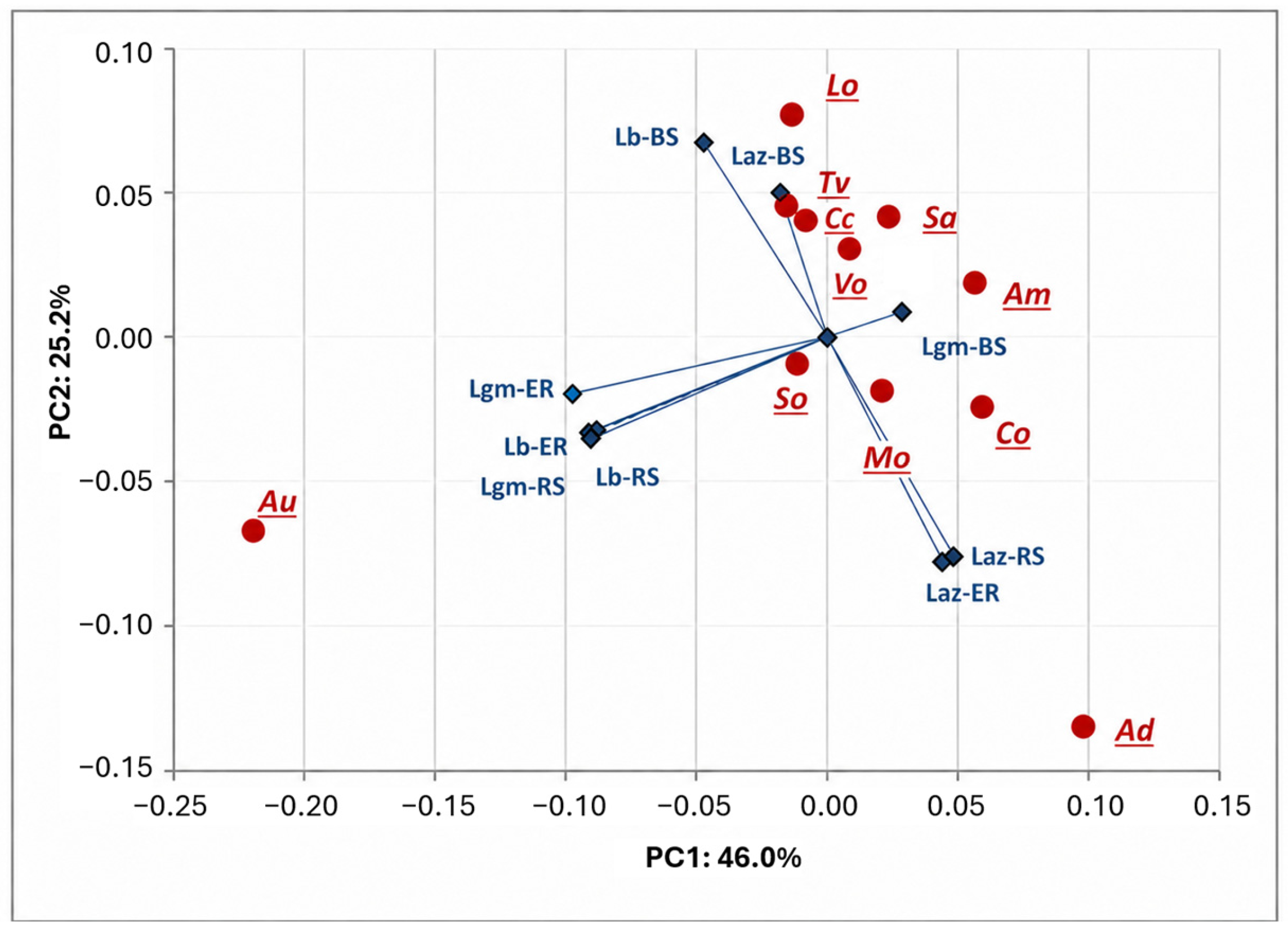
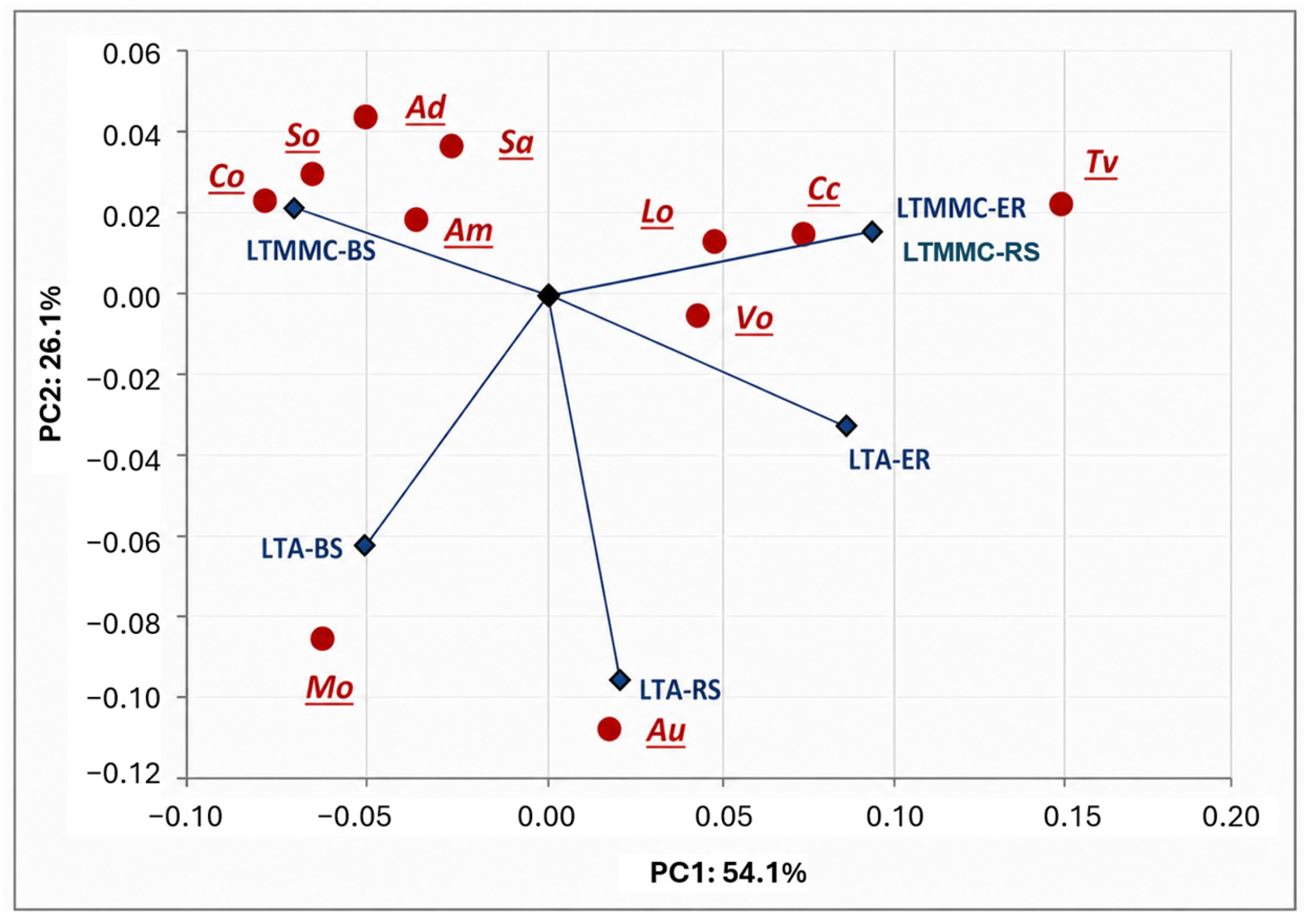
Principal Component Analysis (PCA) illustrated the multivariate differentiation of the studied objects. Figure 1 confirmed the formation of two distinct clusters: a “Diazotroph-Permissive Cluster” (dominated by Artemisia dracunculus L.) and a “Suppressive Cluster” (Levisticum officinale), corroborating the density data. Furthermore, PCA of polysaccharide decomposition (Figure 2) visualized a functional divergence driven by substrate quality. Plants with lignified root systems, such as Thymus vulgaris, were strongly correlated with cellulolytic microorganisms (LTMMC), whereas the fleshy, carbohydrate-rich bulbs of Allium ursinum favored amylolytic guilds (LTA).
Figure 1.
PCA results showing the multi-trait diversity of the studied objects and the relationship between the number of soil bacteria, microscopic fungi, and Azotobacter sp. in RS—rhizosphere and BS—bulk soil under the cultivation of the studied medicinal plants. Legend: Vo—Valerian (Valeriana officinalis L.), Au—wild garlic (Allium ursinum L.), Cc—caraway (Carum carvi L.), Lo—garden lovage (Levisticum officinale W.D.J. Koch), Tv—Thyme (Thymus vulgaris L.), Co—marigold (Calendula officinalis L.), Am—mountain arnica (Arnica montana L.), Mo—lemon balm (Melissa officinalis L.), So—soapwort (Saponaria officinalis L.), Sa—sage (Salvia officinalis L.), Ad—Tarragon (Artemisia dracunculus L.). Lb—number of bacteria; Lgm—number of microscopic fungi; Laz—number of Azotobacter sp.; BS—bulk soil; RS—rhizosphere; ER—rhizosphere effect.
Figure 2.
PCA results showing the multi-trait diversity of the studied objects and the relationship between the number of microorganisms involved in the decomposition of polysaccharides (cellulose and starch) in RS-rhizosphere and BS-bulk soil under the cultivation of the studied medicinal plants. Legend: Vo—Valerian (Valeriana officinalis L.), Au—wild garlic (Allium ursinum L.), Cc—caraway (Carum carvi L.), Lo—garden lovage (Levisticum officinale W.D.J. Koch), Tv—Thyme (Thymus vulgaris L.), Co—marigold (Calendula officinalis L.), Am—mountain arnica (Arnica montana L.), Mo—lemon balm (Melissa officinalis L.), So—soapwort (Saponaria officinalis L.), Sa—sage (Salvia officinalis L.), Ad—Tarragon (Artemisia dracunculus L.), LTMMC—number of aerobic cellulolytic microorganisms; LTA—number of aerobic amylolytic microorganisms; BS—bulk soil; RS—rhizosphere; ER—rhizosphere effect.
2.5. Complementary Patterns Revealed by IMHSI and NEI
The synthetic indices provided a more integrated, yet still differentiated, view of rhizosphere microbial status across the studied rhizospheres (Table 4). The Integrated Microbiological Health Soil Activity Index (IMHSI) and the Nitrogen Enrichment Index (NEI) did not always change in parallel, indicating that they reflected partly different aspects of the microbial response.
Table 4.
Microbial indicators of soil biological activity under medicinal plant cultivation: Fungal-to-Bacteria Index (FBI), Nitrogen Enrichment Index (NEI), Carbon Mineralization Index (CMI), Integrated Microbiological Health Soil Index (IMHSI).
In several cases, relatively high IMHSI values co-occurred with low or undetectable Azotobacter spp. counts (Table 4). This pattern was especially evident in the rhizosphere of Allium ursinum, where high heterotrophic abundance was accompanied by an absence of detectable Azotobacter spp. under the applied culture conditions (Table 3 and Table 4). In contrast, species such as Artemisia dracunculus and Melissa officinalis showed higher NEI values along with moderate or variably high IMHSI values (Table 4).
Overall, the results indicate that IMHSI and NEI captured different dimensions of rhizosphere microbial status, and their responses were not uniform across the studied rhizospheres.
2.6. Evaluation of Sequencing Depth and Species Richness
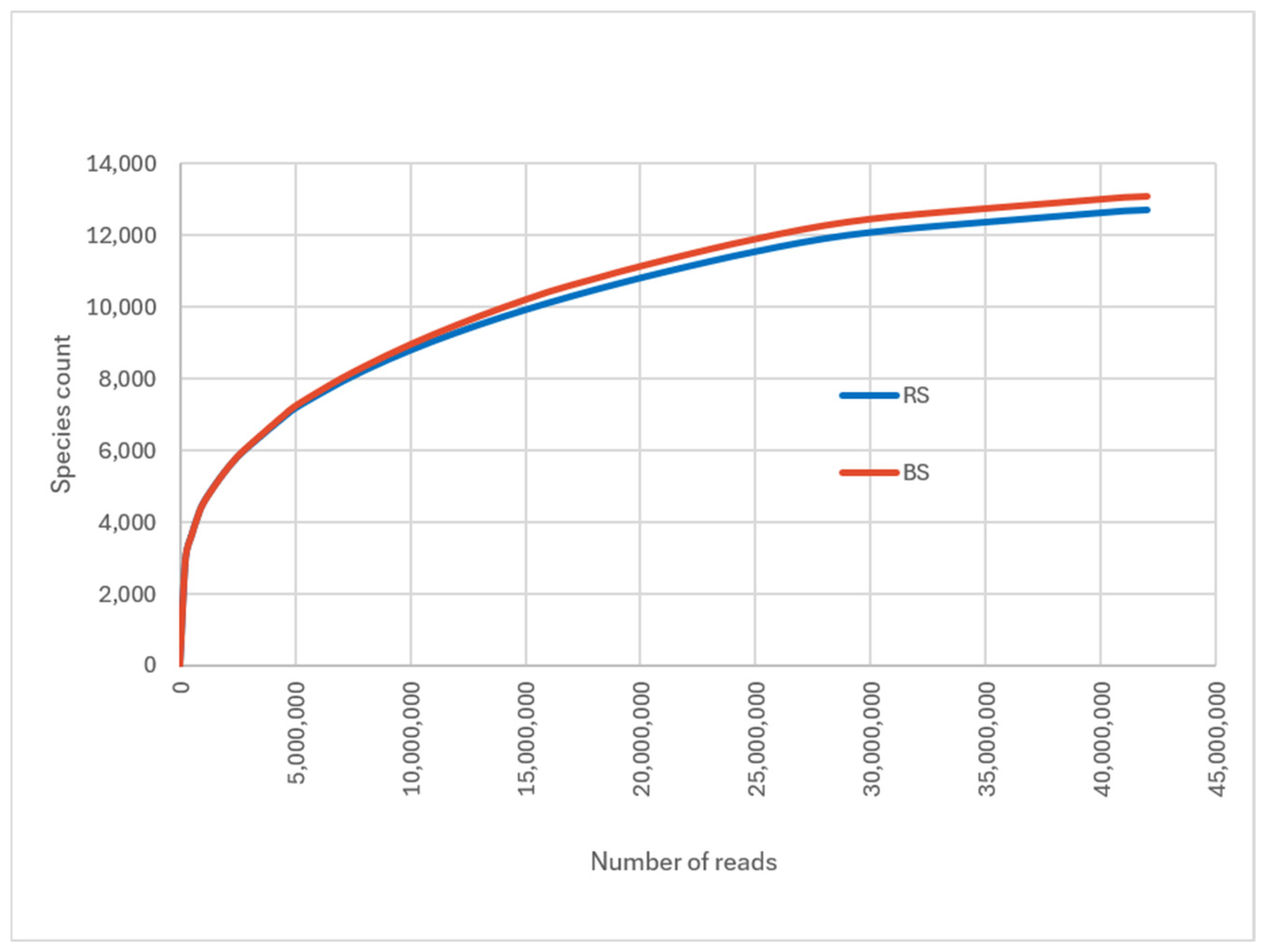
Shotgun sequencing yielded a total of 84,365,273 sequences, including 42,393,362 from bulk soil (BS) and 41,971,911 from the garlic rhizosphere (RS).
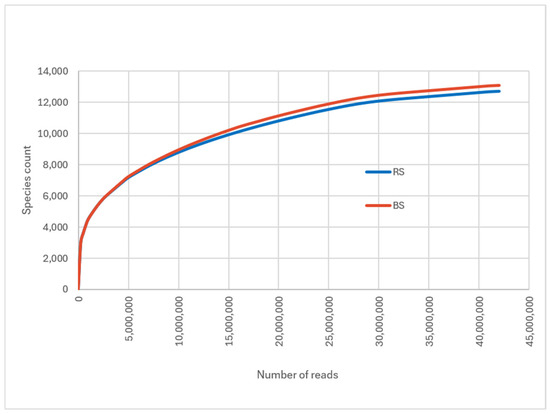
To validate the coverage of the metagenomic dataset, rarefaction analysis was performed (Figure 3). The curves for both the Allium ursinum rhizosphere (RS) and bulk soil (BS) approached a saturation plateau at approximately 4.5 × 10⁷ reads, indicating that the sequencing depth was sufficient to capture the vast majority of the extractable microbial diversity, including rare taxa.
Figure 3.
The rarefaction curves calculated at species count for RS—rhizosphere of garlic plants (blue color) and the bulk soil BS (red color).
Notably, a clear separation in species richness was observed. The bulk soil (BS) red line) showed higher species richness (approximately 13,500 OTUs) than the rhizosphere (RS blue line, approximately 12,800 OTUs). This reduction in diversity within the rhizosphere supports the “Ecological Filtering Hypothesis”: although the root zone supports higher biomass, the chemical pressure of exudates selects for specifically adapted taxa, resulting in a slight decrease in overall alpha diversity compared to the more heterogeneous bulk soil.
2.7. Metagenomic Resolution of Rhizosphere Stability
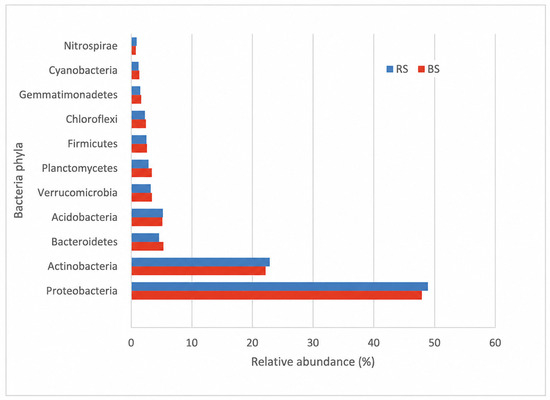
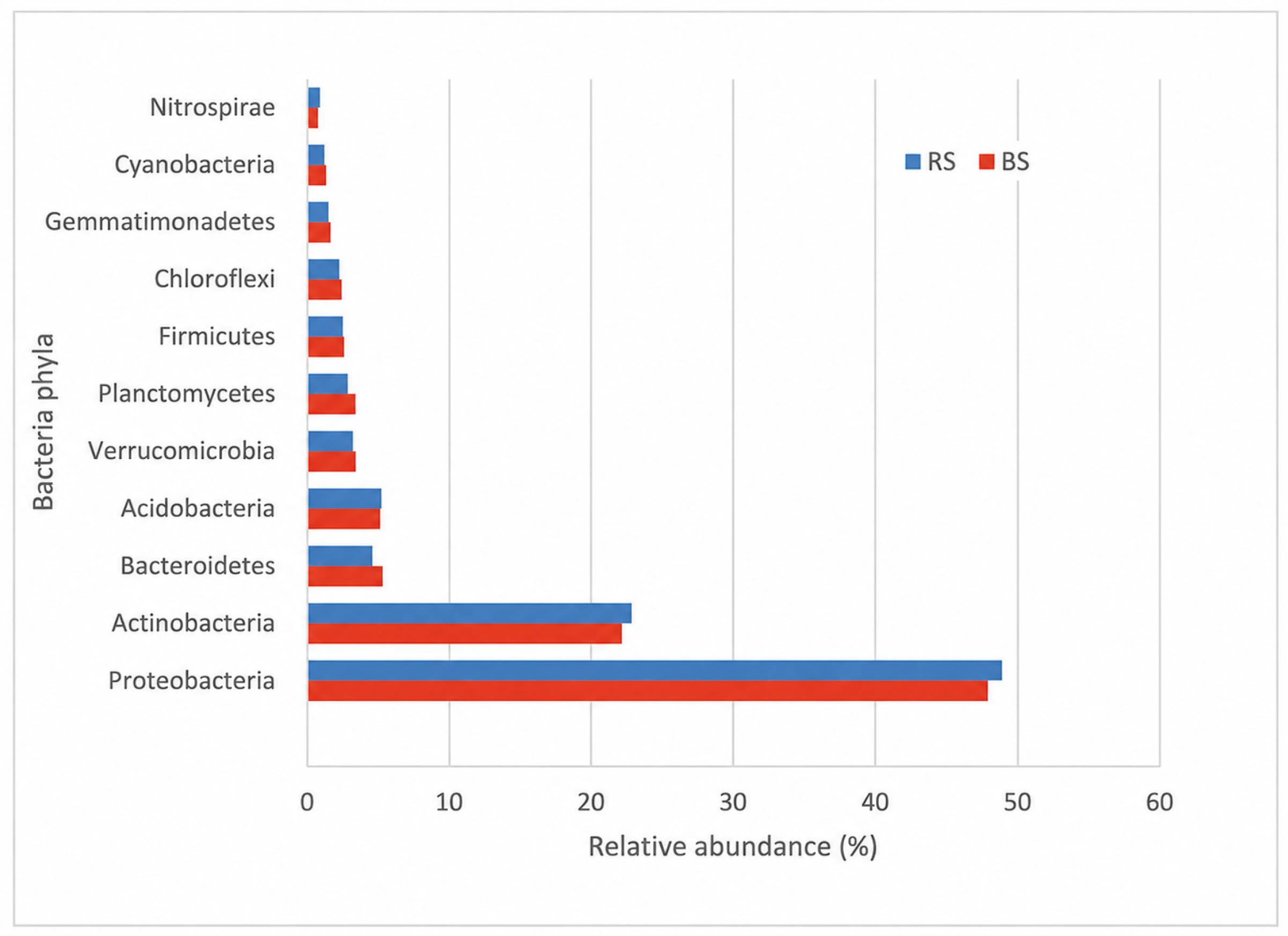
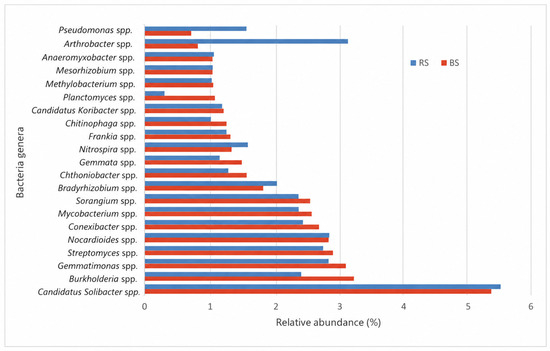
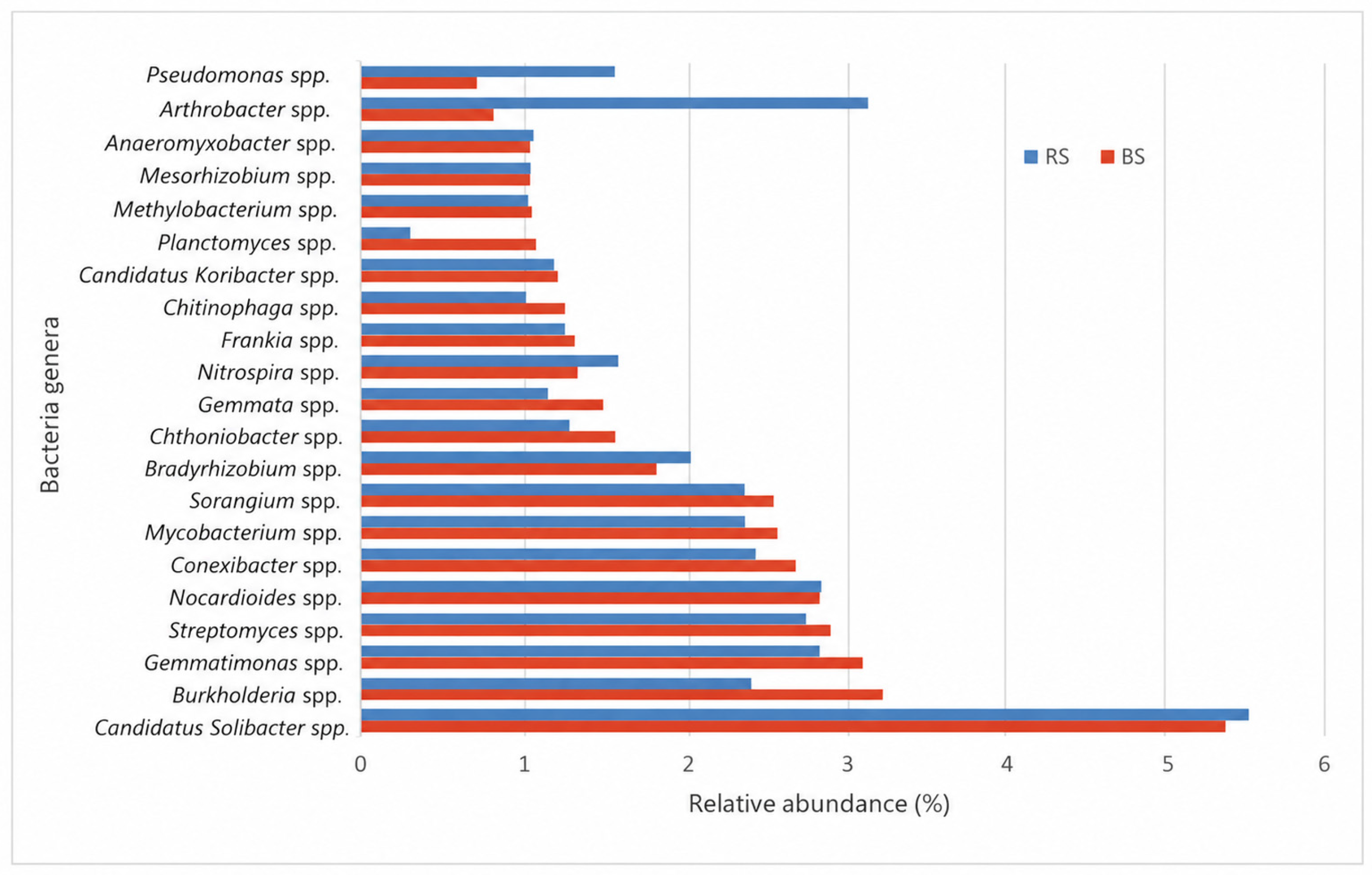
Metagenomic profiling of the Allium ursinum rhizosphere provided high-resolution insights into community structure, contrasting with culture-dependent observations. Unlike the fluctuations seen in culturable counts, the core microbiome showed remarkable stability at higher taxonomic ranks (Figure 4). The relative abundance of the dominant phyla, particularly Proteobacteria (~48%) and Actinobacteria (~22%), remained nearly identical between the rhizosphere (RS) and bulk soil (BS). This contradicts the hypothesis of broad-scale taxonomic dysbiosis. However, analysis at the genus level (Figure 5) revealed specific restructuring events within these broad groups. While the phylum-level structure remained intact, significant shifts occurred in the abundance of certain genera (e.g., the differential recruitment of Arthrobacter spp. and Pseudomonas spp.). This suggests that the rhizosphere effect in Allium ursinum monocultures operates through taxonomic fine-tuning, selecting for specifically adapted variants within major phyla rather than causing a community-wide collapse.
Figure 4.
Relative abundance of dominant bacteria at phylum rank in bulk soil (BS) and rhizosphere (RS) soil of wild garlic.
Figure 5.
Relative abundance of dominant bacteria at the rank of genus in bulk soil (BS) and rhizosphere (RS) soil of wild garlic.
2.8. Functional Redundancy and Stress Adaptation
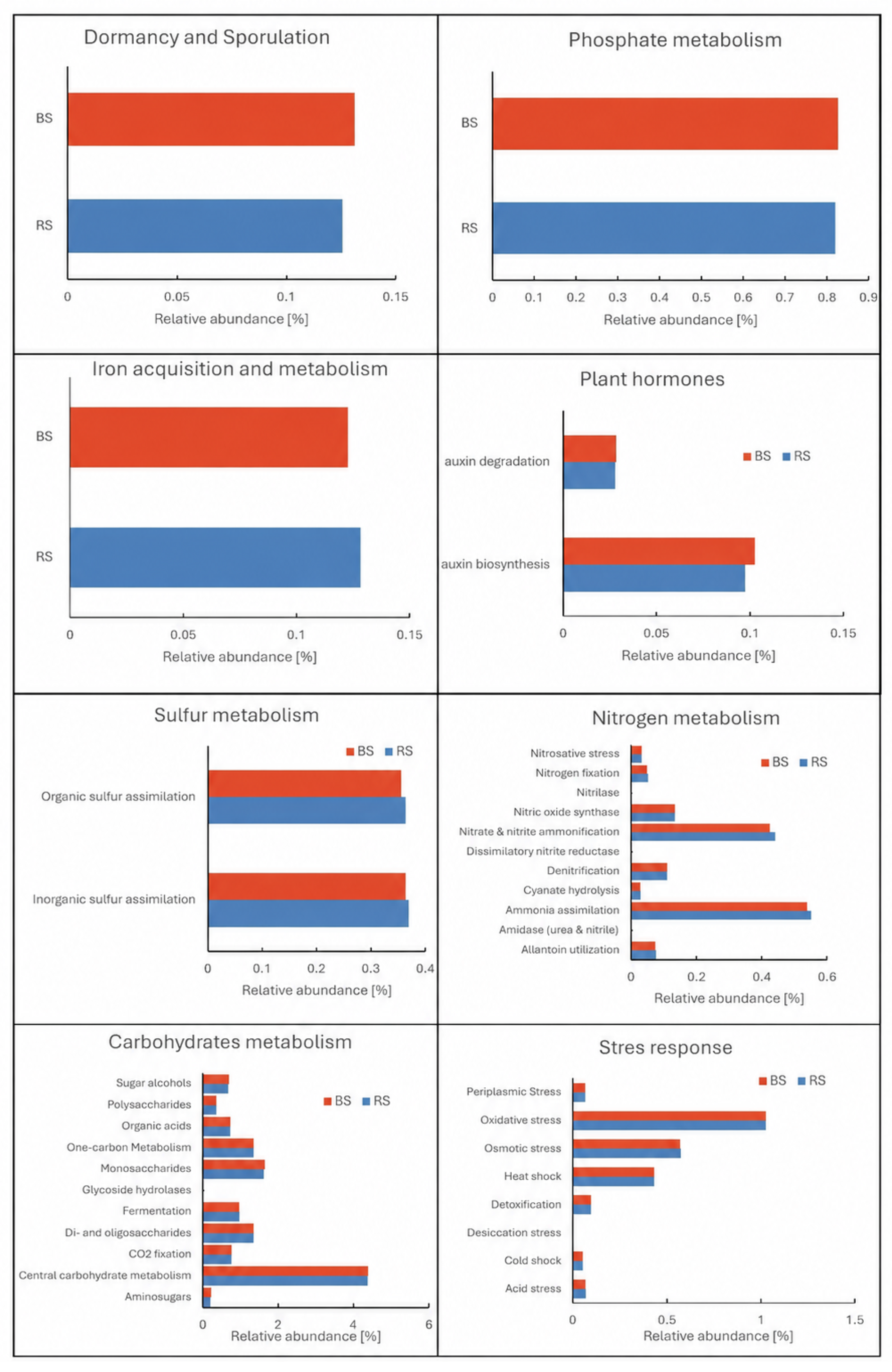
Functional annotation using SEED subsystems (Table 5, Figure 6) demonstrated a high degree of functional redundancy within the microbiome. Core metabolic pathways, including “Carbohydrates” and “Amino Acids and Derivatives,” showed no statistically significant difference in relative abundance between the rhizosphere and bulk soil (p > 0.05). This suggests that fundamental ecosystem services related to nutrient cycling are preserved.
Table 5.
Functional composition of the soil metagenomes. Relative distribution (in percentage of annotated reads) of 28 major metabolic subsystems (using SEED subsystems in the MG-RAST program) detected in the rhizosphere (RS) and bulk soil (BS) metagenomes of wild garlic.
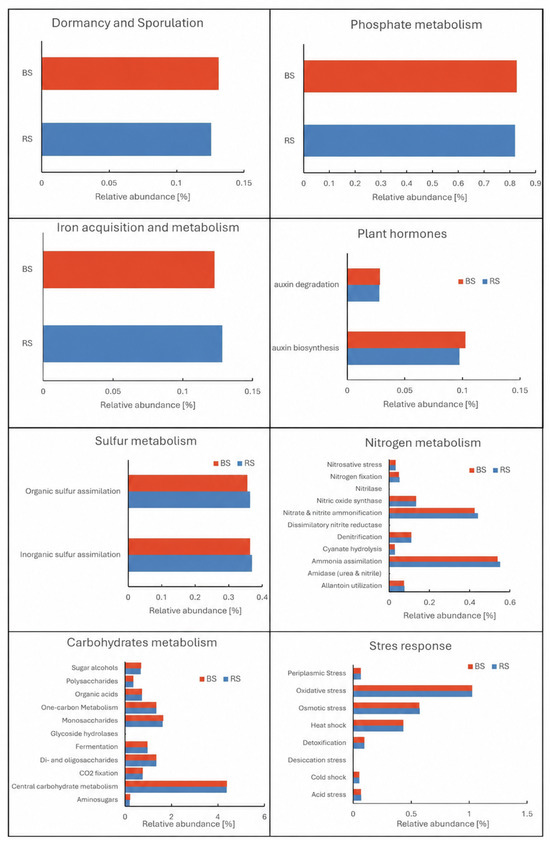
Figure 6.
Relative abundance of sequences affiliated with functional SEED Subsystems levels in the rhizospheric (RS) and bulk soil (BS). Values of relative abundance refer to the total sum of genes found in each category in a metagenome, normalized by the number of total genes detected in that metagenome [dormancy and sporulation (SEED Subsytems Level 2), phosphate metabolism (SEED Subsytems Level 2), iron acquisition (SEED Subsytems Level 2), plant hormones (SEED Subsystems Level 3), nitrogen metabolism (SEED Subsystems Level 3), carbohydrate metabolism (SEED Subsystems Level 2), stress metabolism (SEED Subsystems Level 2), sulfur metabolism (SEED Subsystems Level 2)].
However, a statistically significant upregulation (p < 0.05) was detected in the “Stress Response” (specifically oxidative stress defense) and “Sulfur Metabolism” subsystems. This indicates that while the community maintains metabolic homeostasis, it operates under chronic chemical stress imposed by the sulfur-rich organosulfur exudates of garlic [31,32]. The microbiome adapts by allocating increased genomic potential to detoxification and sulfur assimilation pathways, confirming a trade-off between growth and stress survival.
3. Discussion
3.1. Species-Dependent Rhizosphere Responses Under Medicinal Plant Monocultures
The present results show that medicinal plants may shape the rhizosphere microbiological community in a clearly species-dependent manner. Instead of producing a uniform response under long-term monoculture, the studied species were associated with distinct microbial patterns, suggesting that each plant creates a specific rhizosphere environment for microbial development (Table 3). This observation is consistent with the broader ecological view that plant identity and rhizosphere chemistry together structure soil microbial communities [12,13,14,22,23,33,34,35]. The total number of saprophytic bacteria in the rhizosphere of wild garlic (Allium ursinum) depends not only on the chemical compounds of root exudates but also on the physicochemical properties of the soil, as confirmed by the results of a study conducted by Borozan and Rab [36] on acidic forest soils in Romania. The researchers recorded only 120 CFU g−1 DM of saprophytic bacteria in the plant rhizosphere, which is drastically lower than our results from growing wild garlic in alluvial soil (Table 3). These findings directly support the usefulness of microbiological indicators for interpreting rhizosphere responses to medicinal plant monocultures.
A particularly interesting example was provided by Allium ursinum, which produces potent bactericidal substances (allicin and sulfur compounds) [37]; however, its rhizosphere showed high heterotrophic bacterial numbers, while low detectable counts of Azotobacter spp. were observed under the applied culture conditions (Table 3 and Table 4). The high abundance of microflora in the garlic rhizosphere suggests that bacteria have evolved resistance to these bactericidal substances and derive carbohydrate units (e.g., fructans) directly from the plant exudates as a carbon and energy source [38].
This contrast suggests that different microbial groups may respond differently to the same rhizosphere environment. One possible explanation is that some features of the rhizosphere may favor fast-growing heterotrophic microorganisms while being less suitable for more sensitive functional groups. However, because neither root exudate composition nor rhizosphere carbon fluxes were directly measured, this interpretation should be considered a plausible ecological explanation rather than a directly demonstrated mechanism.
More generally, the observed patterns indicate that microbial responses in medicinal plant monocultures are likely shaped by a combination of nutritional conditions, plant-derived bioactive compounds, and species-specific plant–microbe interactions. In this context, the results are better interpreted as evidence of selective rhizosphere structuring along a continuum from microbial stimulation to possible allelopathic suppression rather than as support for a single dominant process acting across all species. This broader interpretation is also consistent with the concept of soil fatigue as a biologically mediated deterioration of rhizosphere functioning under long-term monoculture [18].
3.2. Azotobacter spp. as a Sensitive Indicator of Rhizosphere Imbalance
The response of aerobic, free-living nitrogen-fixing Azotobacter spp. was among the most distinctive microbiological indicators observed in this study (Table 3 and Table 4). Compared with other microbial groups, Azotobacter spp. showed particularly strong variation among the studied rhizospheres, ranging from relatively high abundance in some plant species to undetectable counts in others under the applied culture conditions. This suggests that the diazotrophic component of the culturable microbiome may be especially sensitive to plant-dependent rhizosphere conditions.
A contrasting pattern was observed among the medicinal plant species. In the rhizospheres of Artemisia dracunculus, Melissa officinalis, and Calendula officinalis, Azotobacter spp. counts were relatively high, whereas in the rhizospheres of Allium ursinum, Carum carvi, Thymus vulgaris, Saponaria officinalis, Arnica montana, and Salvia officinalis, these bacteria were not detected (Table 3). Adamović et al. [39] determined the abundance of various microbial groups in the rhizosphere of medicinal and aromatic plants, including marigold (Calendula officinalis), and demonstrated a stimulating effect of the plant on the abundance of Azotobacter spp. in the marigold rhizosphere, which is also confirmed by the results of our investigation (Table 3).
These differences indicate that long-term medicinal plant monocultures may differentially affect diazotrophic microorganisms, possibly through a combination of rhizosphere chemistry, nutrient availability, and plant-derived bioactive compounds, as well as the multiplication of bacteriophages [40]. The ecological importance of Azotobacter spp. and their sensitivity to soil conditions have been emphasized previously, particularly in relation to nutrient status, pH, and environmental stress [29,41,42].
At the same time, the present data do not justify interpreting the absence of detectable Azotobacter as evidence of a complete functional collapse of nitrogen cycling. Rather, the results suggest that this group may serve as a particularly responsive microbial component reflecting biological imbalance in the rhizosphere. This interpretation is also supported by the partial divergence between Azotobacter spp.-based NEI values and the more general IMHSI scores (Table 4), indicating that the diazotrophic response and broader microbial abundance do not necessarily change in parallel.
3.3. Functional Differentiation of Decomposer Groups in the Rhizosphere
The studied medicinal plants also differed in their effects on microbial groups involved in the decomposition of polysaccharides (Table 3). This was especially evident for cellulolytic and amylolytic microorganisms, whose abundance varied substantially among rhizospheres. These differences suggest that medicinal plant species may influence not only total microbial abundance but also the functional structure of the culturable microbiome.
An interesting example was provided by Thymus vulgaris, whose rhizosphere supported relatively high counts of cellulolytic microorganisms, while the rhizospheres of Allium ursinum and Melissa officinalis were characterized by a high abundance of amylolytic microorganisms (Table 3). These differences may reflect plant-dependent variations in rhizosphere conditions and substrate availability. Specifically, the woody roots of thyme provide lignocellulose to the rhizosphere, while Allium ursinum provides starch, which induces the multiplication of cellulolytic and amylolytic microorganisms, respectively. However, the precise mechanisms behind these patterns could not be determined based on the current data. Similar ecological interpretations have been made in studies linking the abundance of specific microbial groups to organic matter turnover and the broader functional traits of the microbiome [21,43].
Taken together, these patterns indicate that medicinal plant species may create distinct microbial niches in the rhizosphere, reflected not only in total microbial abundance but also in the relative development of selected functional groups. However, because root morphology, substrate composition, and exudate chemistry were not directly measured in this study, these relationships should be interpreted as ecological associations rather than as directly demonstrated causal mechanisms.
3.4. Metagenomic Perspective on Rhizosphere Restructuring
The metagenomic analysis of soil under Allium ursinum provided an important complement to the culture-dependent microbiological indicators. While culture-based methods revealed pronounced differences in selected microbial groups (Table 3 and Table 4), the metagenomic data suggested a more stable overall functional picture. At higher taxonomic levels, the dominant phyla Proteobacteria (including classes: α-, β-, γ-, and δ-Proteobacteria), Actinobacteria, Bacteroidetes, and Acidobacteria remained broadly similar between the rhizosphere and bulk soil (Figure 4), whereas at finer taxonomic resolution, a restructuring of selected genera was observed (Figure 5). Yu et al. [44] demonstrated that rhizosphere soil under garlic (Allium sativum L.) cultivation in China was dominated by bacterial taxa from the phyla Proteobacteria, Chloroflexi, and Acidobacteria, findings that partially match our results. The dominant species in both studied soil zones were representatives of the genus Candidatus solibacter, which is consistent with the results of Yu et al. [44], followed by Burkholderia sp. and Gemmatimonas sp. (Figure 5). An increase in the relative occurrence of bacterial species of the genus Candidatus Solibacter and a decrease in Burkholderia sp. and Pseudomonas sp. were observed in the garlic rhizosphere. A positive effect on soil properties was also observed, namely an increase in the relative abundance of PGPR bacteria of the genera Burkholderia sp. and Pseudomonas sp. [45] in the Allium ursinum rhizosphere compared to the bulk soil.
Among the taxa at the rank of genus in the rhizosphere and in the bulk soil, the dominant representatives were the actinomycetes Streptomyces sp., Nocardioides sp., Conexibacter sp., Mycobacterium sp., Frankia sp., and Arthrobacter sp. Their relative occurrence in the rhizosphere, however, was lower, except for Nocardioides (Figure 5), which is an unfavorable phenomenon given the important functions that actinomycetes perform in agricultural ecosystems [46].
At the same time, the relative distribution of the main functional categories in the rhizosphere soil and the Allium ursinum bulk soil remained broadly comparable in both soil zones (Table 5; Figure 6).
This finding suggests that changes in selected culturable microbial groups do not necessarily translate into equally pronounced shifts in the overall metabolic profile of the soil microbiome. In other words, the rhizosphere of Allium ursinum appeared to undergo taxonomic restructuring while maintaining broad functional similarity at the metagenomic level. A similar distinction between taxonomic change and functional stability has been discussed in broader metagenomic and microbial ecology studies, which indicate that microbial communities may retain major ecosystem-related functions despite compositional shifts [21,28]. This supports the interpretation of the study as an integrated assessment of rhizosphere responses rather than as a conventional rhizosphere microbial status assessment alone.
For this reason, the metagenomic results are interpreted here as evidence of broad functional similarity despite taxonomic restructuring, rather than as proof of complete functional redundancy or resilience. This distinction is important because metagenomic potential does not necessarily correspond to actual gene expression or process rates in soil. The observed stability of major SEED functional categories (Table 5; Figure 6; Files S1 and S2) therefore complements, rather than contradicts, the culture-based evidence of selective shifts in sensitive microbial groups.
3.5. Implications for Rhizosphere Microbial Status Assessment in Medicinal Plant
The results of this study indicate that the biological assessment of the rhizosphere in medicinal plant monocultures, specifically regarding the microbial community and microbiome (Allium spp.) benefits from the combination of multiple lines of evidence focused on rhizosphere responses. Physicochemical parameters provide the necessary environmental context (Table 1 and Table 2), but they do not always capture microbiome-level differences among rhizospheres. In the present study, soils with relatively similar basic chemical characteristics differed markedly in the abundance of selected microbial groups (Table 1 and Table 3). This interpretation is consistent with the broader view that soil health and rhizosphere microbial status are closely linked to the taxonomic and functional organization of the microbiome and cannot be fully described by physicochemical properties alone [19,20,21].
In this context, the combined use of the IMHSI and the NEI appears informative because the two indices do not represent the same ecological dimension. The IMHSI integrates the abundance of selected microbial groups, thereby providing a more synthetic description of the culturable fraction of the rhizosphere microbiome. The NEI, in contrast, is based specifically on the response of free-living diazotrophs represented by Azotobacter spp., and thus reflects a narrower but functionally important component of the rhizosphere microbiome. The fact that the two indices did not always change in parallel (Table 4) suggests that an increase in the abundance of some microbial groups does not necessarily imply the maintenance of all ecologically relevant microbial functions. Similar caution in interpreting composite indices has been emphasized in studies on soil quality and rhizosphere microbiome assessment, where multiple biological variables are integrated but should still be read in relation to specific microbiome functions [47,48].
This point is particularly important for interpreting the rhizosphere of medicinal plants. In several cases, relatively high IMHSI values co-occurred with low or undetectable Azotobacter counts, indicating that a general increase in culturable microbial abundance may occur alongside the decline of a sensitive functional group. Conversely, rhizospheres with lower or moderate integrated microbial scores may still retain relatively high diazotrophic potential. Because Azotobacter is known to be sensitive to environmental stress and soil chemical conditions [29,41,42], their response may provide information not captured by general abundance-based indices alone. For this reason, the relationship between IMHSI and NEI should not be understood as a simple contrast between “beneficial stimulation” and “functional degradation,” but rather as a reflection of the fact that different microbial functions may respond differently to the same rhizosphere environment.
This interpretation also agrees with the broader ecological perspective that soil microbial communities can show uneven responses across taxonomic and functional levels [28,49]. In the present study, the divergence between culture-based indices (Table 4) and the relatively stable functional metagenomic profile of Allium ursinum soil (Table 5; Figure 6) suggests that function-specific microbial indicators may respond more sensitively than broad SEED-level functional categories. Accordingly, the IMHSI is best understood as an index of integrated culturable microbial potential, whereas the NEI reflects the response of a particularly sensitive diazotrophic group.
Importantly, the interpretation of these indices should remain proportional to the scope of the data. Neither IMHSI nor NEI should be regarded here as a fully validated diagnostic tool, and neither index alone is sufficient to define soil quality or rhizosphere functioning in absolute terms. However, when combined with culture-based counts, physicochemical context, and shotgun metagenomic profiling, they provide a useful framework for identifying species-specific differences in rhizosphere functioning under long-term medicinal plant monocultures. In this sense, the study supports the inclusion of metagenomic and microbiological indicators in the assessment of rhizosphere responses in medicinal plant rhizospheres, especially where plant-derived secondary metabolites may influence rhizosphere microbiome organization in subtle but ecologically relevant ways [18,19].
4. Materials and Methods
4.1. Study Location and Experimental Design
The field experiment was conducted at the experimental station of the Faculty of Horticulture, Warsaw University of Life Sciences (SGGW), Poland (52°09′38.6″ N 21°06′02.0″ E). The soil was classified according to the WRB system as an Eutric Gleyic Fluvic Cambisol (silt loam texture). Developed from Holocene alluvial deposits of the Vistula River, this soil is characterized by a high content of silt and clay fractions, which ensures favorable water retention capacity while maintaining adequate aeration. The study site has a temperate climate with an average annual temperature of 8.5 °C and an annual precipitation of 550 mm.
The experimental design included 11 species of medicinal plants cultivated in long-term monocultures (established 10 years before sampling) on 5 m2 plots, with three replications each: Valeriana officinalis L. (Valerian, Vo), Allium ursinum L. (Wild garlic, Au), Carum carvi L. (Caraway, Cc), Levisticum officinale W.D.J. Koch (Lovage, Lo), Thymus vulgaris L. (Thyme, Tv), Calendula officinalis L. (Pot marigold, Co), Arnica montana L. (Mountain arnica, Am), Melissa officinalis L. (Lemon balm, Mo), Saponaria officinalis L. (Soapwort, So), Salvia officinalis L. (Sage, Sa), Artemisia dracunculus L. (Tarragon, Ad).
4.2. Soil Sampling Strategy
Soil samples were collected during the active growing season (10 June 2015) from two distinct zones to assess the rhizosphere effect:
- Bulk Soil (BS): Composite samples were prepared from six random locations per plot, collected approximately 20 cm from the plant root system using an Egner stick (0–20 cm depth).
- Rhizosphere Soil (RS): Six plants per plot were excavated with their root balls. The root systems were shaken to remove loose soil, and the soil tightly adhering to the roots (approximately 1–2 mm) was recovered by washing with sterile distilled water.
Three representative samples of the rhizosphere, as well as the bulk soil taken from each plot, were prepared for chemical and microbiological analysis. For classical microbiological analyses, fresh samples were processed immediately. For metagenomic analysis, performed specifically for Allium ursinum, samples were flash-frozen on dry ice and stored at −80 °C until DNA extraction and were transported directly from the field to the Genomed S.A. Company in a refrigerated container for immediate processing.
4.3. Physicochemical Analysis
Selected physicochemical properties were determined in air-dried soil samples sieved through a 2 mm mesh. The analysis included:
- pH: Determined potentiometrically in 1 M KCl and H2O.
- Organic Carbon (Corg) and Total Nitrogen (N): Determined according to standard ISO protocols (PN-ISO 10,694 [50] and PN-ISO 11261 [51], respectively).
- Available Macroelements: Phosphorus (P), Potassium (K), Calcium (Ca2+), Magnesium (Mg), Sodium (Na), and Sulfur (S) were extracted with 0.03 M acetic acid according to the universal method described by Nowosielski [52], and the ion content was quantified using Inductively Coupled Plasma Atomic Emission Spectrometry (ICP-AES).
4.4. Culture-Dependent Microbiological Analyses
The abundance of specific physiological groups was determined using the serial dilution pour plate method on selective media.
- Soil heterotrophic bacteria (Lb): Grown on Bunt and Rovira’s medium [53] supplemented with the antifungal antibiotic cycloheximide (50 µg/mL).
- Microscopic fungi (Lgm): Grown on Martin’s medium [54] supplemented with streptomycin (50 µg/mL), which kills sensitive bacteria, and rose bengal (50 µg/mL), which inhibits the growth of streptomycin-resistant bacteria.
- Cellulolytic microorganisms (LTMMC): Cultivated on Dubos agar with 1% carboxymethylcellulose (CMC) [55]. Hydrolysis zones were visualized using 0.1% Congo red.
- Amylolytic bacteria (LTA): Grown on starch agar medium; hydrolysis was visualized using Lugol’s iodine [56]
- Azotobacter spp. (Laz): The Most Probable Number (MPN) of bacteria was determined using the three-tube method on Winogradsky’s nitrogen-free liquid medium. Additionally, to assess the presence of Azotobacter spp. in soil samples, both in bulk and in the rhizosphere, they were inoculated onto the surface of a Winogradsky’s nitrogen-free solid medium. After one week, results were evaluated based on macroscopic and microscopic observations of the cultures. The presence of Azotobacter spp. cells in the culture medium was confirmed on wet and negatively stained microscope slides. Bacterial cell counts were calculated using McCrady’s tables for triplicates [57].
All microbial cultures were incubated for 7 to 14 days (soil heterotrophic bacteria) at 28 °C.
4.5. Metagenomic Analysis
Total genomic DNA was extracted from the rhizosphere and bulk soil of Allium ursinum using the Genomic Mini AX Bacteria+ kit (A&A Biotechnology Innovating life Science, Gdańsk, Poland) with an additional mechanical lysis step (bead-beating), following protocols optimized for local soils [58]. DNA quality and the presence of bacterial DNA were verified by real-time PCR targeting the 16S rRNA gene with universal primers 1055F and 1392R [59].
Shotgun sequencing libraries were prepared using the NEBNext DNA Library Prep Master Mix (New England Biolabs, Ipswich, MA, USA) and sequenced on the Illumina HiSeq 4000 platform (San Diego, CA, USA). Raw reads were demultiplexed, quality-trimmed, and annotated using the MG-RAST server (Argonne National Laboratory (Lemont, IL, USA), University of Chicago (Chicago, IL, USA), and San Diego State University (San Diego, CA, USA)) with the SEED subsystems database [60].
4.6. Calculation of Soil Health Indices
To integrate the microbiological data into actionable rhizosphere microbial status metrics, the following synthetic indices were calculated:
4.6.1. Integrated Microbiological Health Soil Index (IMHSI): Represents the Overall Microbial Potential
IMHSI = z(Lb) + z(Laz) + z(LTMMC) + z(LTA)
To synthetically interpret rhizosphere microbial status, an index integrating the abundance of selected microbial groups was constructed. This index was calculated as the sum of standardized values (z-scores) of logarithmically transformed counts of soil heterotrophic bacteria (Lb), bacteria of the genus Azotobacter (Laz), cellulolytic microorganisms (LTMMC), and amylolytic microorganisms (LTA). This approach was adopted to integrate several microbiological parameters describing various aspects of soil microbiome functioning, such as total bacterial count, nitrogen transformation potential, and organic matter degradation capacity. Standardization of variables was necessary due to the different orders of magnitude and varying statistical variability of the analyzed parameters.
The approach is consistent with the commonly used methodology for constructing synthetic soil quality indices, in which individual biological parameters are first transformed and normalized, then aggregated into a single index describing the overall functioning of the soil ecosystem. A similar approach has been used in numerous studies assessing soil quality and microbiological activity [14,21,47,48,61,62,63].
4.6.2. The Nitrogen Enrichment Index (NEI) Indicates the Potential for Non-Symbiotic Nitrogen Fixation [41]
NEI = log(Laz+ 1)
4.6.3. Carbon Mineralization Index (CMI): Reflects the Efficiency of Organic Matter Decomposition [43]
CMI = LTMMC/Lb
4.6.4. Fungal–Bacterial Index (FBI): An Indicator of Ecosystem Stability and Succession [64]
FBI = Lgm/Lb
4.7. Statistical Analysis
The significance of differences in microbial counts between plant species and soil zones (RS vs. BS) was assessed using one-way analysis of variance (ANOVA). Homogeneous groups were identified using Tukey’s HSD (honest significant difference) test at a significance level of α ≤ 0.05. Principal component analysis (PCA) was performed to visualize the multivariate relationships between microbial groups and plant species.
5. Conclusions
This study showed that long-term monocultures of medicinal plants were associated with clear, species-dependent differences in rhizosphere microbiome status, indicating that rhizosphere responses were not uniform. Among the analyzed microbial groups, Azotobacter spp. displayed particularly strong variation, and in several rhizospheres, its abundance remained undetectable under the applied culture conditions. This pattern suggests that Azotobacter spp. may be a sensitive candidate microbiological indicator of rhizosphere imbalance and possible allelopathic pressure in rhizosphere systems exposed to medicinal plant-derived bioactive inputs.
The integration of culture-dependent analyses with shotgun metagenomics provided a broader perspective on the organization and functional potential of the rhizosphere microbiome. In the case of Allium ursinum, marked shifts observed in selected culturable microbial groups co-occurred with broadly similar functional profiles at the metagenomic level. Because metagenomic profiling was performed only for Allium ursinum, these results should be interpreted as a species-specific case study that complements the culture-based analyses rather than as a direct representation of all medicinal plant species included in the experiment. This finding indicates that changes in sensitive microbial groups do not necessarily imply parallel changes in the overall metabolic potential of the rhizosphere microbiome.
For this reason, the Integrated Microbiological Health Soil Index (IMHSI) and the Nitrogen Enrichment Index (NEI) are interpreted here as exploratory complementary metrics reflecting different dimensions of rhizosphere microbial status rather than as fully validated diagnostic tools. Taken together, the results highlight the value of combining metagenomic and microbiological indicators to provide a more nuanced interpretation of rhizosphere responses at the microbiome level in medicinal plant monocultures, ranging from microbial stimulation to allelopathic suppression.
Supplementary Materials
The following supporting information can be downloaded at: https://www.mdpi.com/article/10.3390/ijms27135665/s1.
Author Contributions
Conceptualization, E.B.G., E.O., B.G., W.S. and D.G.; methodology, E.B.G., B.G., W.S. and M.K.; software, E.B.G., B.G., W.S., D.G., S.O. and J.C.; validation, E.B.G., B.G., W.S. and D.G.; formal analysis, E.B.G., B.G., W.S., D.G., S.O. and J.C.; investigation, E.B.G., E.O. and M.K.; resources, E.B.G., B.G., W.S. and M.K.; data curation, M.W., E.B.G., W.S. and M.K.; writing—original draft preparation, E.B.G., E.O., B.G., S.O., J.F.-J., A.C. and J.C.; writing—review and editing, E.B.G., B.G., D.G., S.O., J.C., J.F.-J. and E.H.; visualization, E.B.G., S.O., D.G. and I.N.S.G.; supervision, E.B.G., B.G., W.S., D.G., S.O. and J.C.; project administration, E.B.G., B.G., W.S. and D.G.; funding acquisition, W.S., E.B.G., E.O., B.G., A.C. and J.C. All authors have read and agreed to the published version of the manuscript.
Funding
This research was funded by national funds through FCT—Fundação para a Ciência e a Tecnologia I.P., under the project/grant UID/50006 + LA/P/0094/2020 (doi.org/10.54499/LA/P/0094/2020 (Portugal). (AC and INS-G) and acknowledge were funded by the Polish Ministry of Science and Higher Education (Decision 8762E-385/SPUB/2018/31.07.2018) (WS). The APC was partly funded by WULS-SGGW.
Institutional Review Board Statement
Not applicable.
Informed Consent Statement
Not applicable.
Data Availability Statement
The original contributions presented in this study are included in the article/Supplementary Materials. Further inquiries can be directed to the corresponding author.
Conflicts of Interest
The authors declare no conflicts of interest. The funders had no role in the design of the study; in the collection, analyses, or interpretation of data; in the writing of the manuscript; or in the decision to publish the results.
Abbreviations
The following abbreviations are used in this manuscript:
| Ad | Artemisia dracunculus L., tarragon |
| Am | Arnica montana L., mountain arnica |
| ANOVA | Analysis of variance |
| Au | Allium ursinum L., wild garlic |
| BS | Bulk soil |
| Cc | Carum carvi L., caraway |
| CFU | Colony-forming units |
| CMI | Carbon Mineralization Index |
| CMC | Carboxymethylcellulose |
| Corg | Soil organic carbon |
| DM | Dry matter |
| DNA | Deoxyribonucleic acid |
| DW | Dry weight |
| ER | Rhizosphere effect |
| FBI | Fungal-Bacterial Index |
| ICP-AES | Inductively coupled plasma atomic emission spectrometry |
| IMHSI | Integrated Microbiological Health Soil Index |
| Laz | Abundance of Azotobacter spp. |
| Lb | Soil heterotrophic bacteria |
| Lgm | Microscopic fungi |
| Lo | Levisticum officinale W.D.J. Koch, garden lovage |
| LTA | Number of amylolytic microorganisms |
| LTMMC | Number of aerobic mesophilic cellulolytic microorganisms |
| MAPs | Medicinal and Aromatic Plants |
| Mo | Melissa officinalis L., lemon balm |
| MPN | Most Probable Number |
| NEI | Nitrogen Enrichment Index |
| OTU | Operational Taxonomic Unit |
| PCA | Principal Component Analysis |
| PGPR | Plant growth-promoting rhizobacteria |
| RS | Rhizospheric soil |
| Sa | Salvia officinalis L., sage |
| So | Saponaria officinalis L., soapwort |
| Tv | Thymus vulgaris L., thyme |
| Vo | Valeriana officinalis L., valerian |
| WRB | World Reference Base for Soil Resources |
References
- Sivakumar, T.; Balasubramanian, D. A review on some folk medicinal plants and their common uses. Res. Biot. Int. J. 2020, 3, 131–134. [Google Scholar] [CrossRef] [Scilit]
- Hussain, F.; Pathan, S.; Sahu, K.; Gupta, B.K. Herbs as cosmetics for natural care: A review. GSC Biol. Pharm. Sci. 2022, 19, 316–622. [Google Scholar] [CrossRef] [Scilit]
- Rivera, J.O.; Loya, A.M.; Ceballos, R.J.A.I.M. Use of herbal medicines and implications for conventional drug therapy medical sciences. Altern. Integ. Med. 2013, 2, 1–6. [Google Scholar] [CrossRef] [Scilit]
- Mudondo, J.; Happy, K.; Gang, R.; Ban, Y.; Kang, Y. From nature to nutrition: Exploring the synergistic benefits of functional foods and herbal medicines for holistic health. Appl. Biol. Chem. 2025, 68, 17. [Google Scholar] [CrossRef] [Scilit]
- Ahmadi, S.; Ahmadi, G.; Ahmadi, H. A review on antifungal and antibacterial activities of some medicinal plants. Micro Nano Bio Asp. 2022, 1, 10–17. [Google Scholar] [CrossRef] [Scilit]
- Kozak, M.; Sobczak, P.; Żukiewicz-Sobczak, W. Health properties of selected herbal plants. Health Probl. Civiliz. 2016, 10, 64–70. [Google Scholar] [CrossRef] [Scilit]
- Lin, H.; Lai, C.; Yu, G.; Sunahara, G.I.; Liu, L.; Ullah, H.; Liu, J. Root exudate-driven rhizospheric recruitment of plant growth-promoting rhizobacteria. Pedosphere 2025, 35, 216–228. [Google Scholar] [CrossRef] [Scilit]
- Djurdjevic, L.; Mitrovic, M.; Pavlovic, P.; Mitrovic, M.; Karadzic, B.; Tesevic, V. Allelopathic potential of Allium ursinum. Plant Soil 2004, 265, 122–129. [Google Scholar]
- Fragkouli, R.; Antonopoulou, M.; Asimakis, E.; Spyrou, A.; Kosma, C.; Zotos, A.; Tsiamis, G.; Patakas, A.; Triantafyllidis, V. Mediterranean plants as potential source of biopesticides: An overview of current research and future trends. Metabolites 2023, 13, 967. [Google Scholar] [CrossRef] [Scilit] [PubMed]
- Gyawali, K.; Acharya, P.; Poudel, D. Environmental Pollution and Its Effects on Human Health. Interdiscip. Res. Educ. 2023, 8, 84–94. [Google Scholar] [CrossRef] [Scilit]
- Boruga, O.; Jianu, C.; Misca, C.; Golet, I.; Gruia, A.T.; Horhat, F.G. Thymus vulgaris essential oil: Chemical composition and antimicrobial activity. J. Med. Life 2014, 7, 56–60. [Google Scholar] [PubMed]
- Berg, G.; Smalla, K. Plant species and soil type cooperatively shape the structure and function of microbial communities in the rhizosphere. FEMS Microbiol. Ecol. 2009, 68, 1–13. [Google Scholar] [CrossRef] [Scilit] [PubMed]
- Girvan, M.S.; Campbell, C.D.; Killham, K.; Prosser, J.I.; Glover, L.A. Bacterial diversity promotes community stability and functional resilience after perturbation. Environ. Microbiol. 2005, 7, 301–313. [Google Scholar] [CrossRef] [Scilit] [PubMed]
- Wagg, C.; Bender, S.F.; Widmer, F.; van der Heijden, M.G.A. Soil biodiversity and soil community composition determine ecosystem multifunctionality. Proc. Natl. Acad. Sci. USA 2014, 111, 5266–5270. [Google Scholar] [CrossRef] [Scilit] [PubMed]
- López-Bucio, J.; Cruz-Ramírez, A.; Herrera-Estrella, L. The role of nutrient availability in regulating root architecture. Curr. Opin. Plant Biol. 2003, 6, 280–287. [Google Scholar] [CrossRef] [Scilit] [PubMed]
- Zhang, Y.; Huang, K.; Zhang, T.; Zhu, J.; Di, Y. Soil nutrient availability regulated global carbon use efficiency. Glob. Planet. Change 2019, 173, 47–52. [Google Scholar] [CrossRef] [Scilit]
- Newman, E.I. The rhizosphere: Carbon sources and microbial populations. In Ecological Interactions in Soil: Plants, Microbes and Animals; CABI: Oxfordshire, UK, 1985; Volume 4, pp. 107–121. [Google Scholar]
- Volosciuc, L.; Josu, V. Ecological Agriculture to Mitigate Soil Fatigue. In Soil as World Heritage; Dent, D., Ed.; Springer: Dordrecht, The Netherlands, 2014; pp. 431–435. [Google Scholar] [CrossRef] [Scilit]
- Bünemann, E.K.; Bongiorno, G.; Bai, Z.; Creamer, R.E.; De Deyn, G.; de Goede, R.; Fleskens, L.; Geissen, V.; Kuyper, T.W.; Mäder, P.; et al. Soil quality—A critical review. Soil Biol. Biochem. 2018, 120, 105–125. [Google Scholar] [CrossRef] [Scilit]
- Bastida, F.; Eldridge, D.J.; García, C.; Kenny, P.; Bowker, M.A. The central role of microbial diversity and networking in the adaptation of soil ecosystems to global change. Glob. Change Biol. 2021, 27, 4027–4043. [Google Scholar]
- Schloter, M.; Dilly, O.; Munch, J.C. Indicators for evaluating soil quality. Agric. Ecosyst. Environ. 2003, 98, 255–262. [Google Scholar] [CrossRef] [Scilit]
- Qu, P.; Wang, B.; Qi, M.; Lin, R.; Chen, H.; Xie, C.; Zhang, Z.; Qiu, J.; Du, H.; Ge, Y. Medicinal plant root exudate metabolites shape the rhizosphere microbiota. Int. J. Mol. Sci. 2024, 25, 7786. [Google Scholar] [CrossRef] [Scilit] [PubMed]
- Jabborova, D.; Mamarasulov, B.; Davranov, K.; Enakiev, Y.; Bisht, N.; Singh, S.; Stoyanov, S.; Garg, A.P. Diversity and plant growth properties of rhizospheric bacteria associated with medicinal plants. Indian J. Microbiol. 2024, 64, 409–417. [Google Scholar] [CrossRef] [Scilit] [PubMed]
- Wankhade, A.; Wilkinson, E.; Britt, D.W.; Kaundal, A. A review of plant–microbe interactions in the rhizosphere and the role of root exudates in microbiome engineering. Appl. Sci. 2025, 15, 7127. [Google Scholar] [CrossRef] [Scilit]
- Wu, L.; Weston, L.A.; Zhu, S.; Zhou, X. Rhizosphere interactions: Root exudates and the rhizosphere microbiome. Front. Plant Sci. 2023, 14, 1281010. [Google Scholar] [CrossRef] [Scilit] [PubMed]
- Sumbul, A.; Ansari, R.A.; Rizvi, R.; Mahmood, I. Azotobacter: A potential bio-fertilizer for soil and plant health management. Saudi J. Biol. Sci. 2020, 27, 3634–3640. [Google Scholar] [CrossRef] [Scilit] [PubMed]
- Lema, N.K.; Gemeda, M.T.; Woldesemayat, A.A. Recent advances in metagenomic approaches, applications, and challenges. Curr. Microbiol. 2023, 80, 347. [Google Scholar] [CrossRef] [Scilit] [PubMed]
- Alves, L.d.F.; Westmann, C.A.; Lovate, G.L.; de Siqueira, G.M.V.; Borelli, T.C.; Guazzaroni, M.-E. Metagenomic approaches for understanding new concepts in microbial science. Int. J. Genom. 2018, 2018, 2312987. [Google Scholar] [CrossRef] [Scilit]
- Sindhu, S.S.; Grover, V.; Narula, N.; Lakshminarayana, K. Occurrence of multiple antibiotic resistance in Azotobacter chroococcum: Multiple antibiotikaresistenz bei Azotobacter chroococcum. Zentralbl. Bakteriol. Mikrobiol. Hyg. 1989, 144, 97–101. [Google Scholar]
- Soler-Bistué, A.; Couso, L.L.; Sánchez, I.E. The evolving copiotrophic/oligotrophic dichotomy: From Winogradsky to physiology and genomics. Environ. Microbiol. 2023, 25, 1232–1237. [Google Scholar] [CrossRef] [Scilit] [PubMed]
- Radulović, N.S.; Miltojević, A.B.; Stojković, M.B.; Blagojević, P.D. New volatile sulfur-containing compounds from wild garlic (Allium ursinum L., Liliaceae). Food Res. Int. 2015, 78, 1–10. [Google Scholar] [CrossRef] [Scilit] [PubMed]
- Rose, P.; Moore, P.K.; Whiteman, M.; Zhu, Y.Z. An appraisal of developments in allium sulfur chemistry: Expanding the pharmacopeia of garlic. Molecules 2019, 24, 4006. [Google Scholar] [CrossRef] [Scilit] [PubMed]
- Gyawali, N.; Rayamajhi, A.; Karki, D.; Pokhrel, T.; Adhikari, A. Arnica montana L.: Traditional uses, bioactive chemical constituents, and pharmacological activities. In Medicinal Plants of the Asteraceae Family; Devkota, H.P., Aftab, T., Eds.; Springer: Singapore, 2022. [Google Scholar]
- Adeoyo, O.R.; Adeleke, B.S. Roles and influence of rhizobacteria on development of plants. Plant Physiol. Soil Chem. 2026, 6, 20–27. [Google Scholar]
- Muñoz-Ramírez, Z.Y.; González-Escobedo, R.; Avila-Quezada, G.D.; Ramírez-Sánchez, O.; Higareda-Alvear, V.M.; Zapata-Chávez, E.; Borrego-Loya, A.; Muñoz-Castellanos, L.N. Exploring microbial rhizosphere communities in asymptomatic and symptomatic apple trees using amplicon sequencing and shotgun metagenomics. Agronomy 2024, 14, 357. [Google Scholar] [CrossRef] [Scilit]
- Borozan, A.B.; Raba, D. Evaluation of bacterial community and of actinomycetes composition from the Allium ursinum L. species rhizosphere. Lucr. Stiintifice Ser. Agron. 2016, 59, 31–34. [Google Scholar]
- Burton, G.P.; Prescott, T.A.K.; Fang, R.; Lee, M.A. Regional variation in the antibacterial activity of a wild plant, wild garlic (Allium ursinum L.). Plant Physiol. Biochem. 2023, 202, 107959. [Google Scholar] [CrossRef] [Scilit] [PubMed]
- Jiang, X.Y.; Liang, J.Y.; Jiang, S.Y.; Zhao, P.; Tao, F.; Li, J.; Li, X.X.; Zhao, D.S. Garlic polysaccharides: A review on their extraction, isolation, structural characteristics, and bioactivities. Carbohydr. Res. 2022, 518, 108599. [Google Scholar] [CrossRef] [Scilit] [PubMed]
- Adamović, D.; Đalović, I.; Mrkovački, N. Microbial abundance in rhizosphere of medicinal and aromatic plant species in conventional and organic growing systems. Ratar. Povrt. 2015, 52, 1–6. [Google Scholar] [CrossRef] [Scilit]
- Akanbi, T.M.; Labat, M.; Sun, T.; Smith, D.A.; Bagby, S.C. Isolation and characterization of TayeBlu, a novel bacteriophage of Azotobacter vinelandii. Microbiol. Spectr. 2025, 14, e01286-25. [Google Scholar] [PubMed]
- Kennedy, I.R.; Choudhury, A.T.M.A.; Kecskes, M.L. Non-symbiotic bacterial diazotrophs in crop-farming systems: Can their potential for plant growth promotion be better exploited? Soil Biol. Biochem. 2004, 36, 1229–1244. [Google Scholar] [CrossRef] [Scilit]
- Kozieł, M.; Gałązka, A.; Martyniuk, S. Factors determining the occurrence and number of bacteria of the genus Azotobacter in the soil environment. Pol. J. Agron. 2023, 52, 136–145. [Google Scholar]
- Insam, H.; Domsch, K.H. Relationship between soil organic carbon and microbial biomass on chronosequences of reclamation sites. Microb. Ecol. 1988, 15, 177–188. [Google Scholar] [CrossRef] [Scilit] [PubMed]
- Yu, J.; Liu, Y.; Wang, Z.; Huang, X.; Chai, D.; Gu, Y.; Zhao, K.; Yu, X.; Shuai, Z.; Liu, H.; et al. The cropping obstacle of garlic was associated with changes in soil physicochemical properties, enzymatic activities and bacterial and fungal communities. Front. Microbiol. 2022, 13, 828196. [Google Scholar] [CrossRef] [Scilit] [PubMed]
- Devi, S.; Chand, S.; Sharma, P.; Katna, S.; Sharma, A.M. Plant growth-promoting rhizobacteria in pesticide biodegradation: A comprehensive review. Soil Sediment Contam. 2026, 35, 437–473. [Google Scholar]
- Bhatti, A.A.; Haq, S.; Bhat, R.A. Actinomycetes benefaction role in soil and plant health. Microb. Pathog. 2017, 111, 458–467. [Google Scholar] [CrossRef] [Scilit] [PubMed]
- Andrews, S.S.; Karlen, D.L.; Cambardella, C.A. The soil management assessment framework: A quantitative soil quality evaluation method. Soil Sci. Soc. Am. J. 2004, 68, 1945–1962. [Google Scholar]
- Bastida, F.; Zsolnay, A.; Hernández, T.; García, C. Past, present and future of soil quality indices. Geoderma 2008, 147, 159–171. [Google Scholar] [CrossRef] [Scilit]
- Schloter, M.; Nannipieri, P.; Sørensen, S.J.; van Elsas, J.D. Microbial indicators for soil quality. Biol. Fertil. Soils 2018, 54, 1–10. [Google Scholar]
- PN-ISO 10694; Soil Quality—Determination of Organic and Total Carbon After Dry Combustion (Elementary Analysis). Polski Komitet Normalizacyjny (PKN): Warsaw, Poland, 2002.
- PN-ISO 11261; Soil Quality—Determination of Total Nitrogen—Modified Kjeldahl Method. Polski Komitet Normalizacyjny (PKN): Warsaw, Poland, 2002.
- Nowosielski, O. Metody Oznaczania Potrzeb Nawożenia [Methods for Determining Fertilization Needs]; PWRiL: Warsaw, Poland, 1972. [Google Scholar]
- Bunt, J.S.; Rovira, A.D. Microbiological studies of some subantarctic soils. J. Soil Sci. 1955, 6, 119–128. [Google Scholar] [CrossRef] [Scilit]
- Martin, J.P. Use of acid, rose bengal, and streptomycin in the plate method for estimating soil fungi. Soil Sci. 1950, 69, 215–232. [Google Scholar] [CrossRef] [Scilit]
- Dubos, R.J. The decomposition of cellulose by aerobic bacteria. J. Bacteriol. 1928, 15, 223–234. [Google Scholar] [CrossRef] [Scilit] [PubMed]
- Elechi, D.P.; Jason, O.C.; Onyewuchi, A.; Akuma, O. Isolation and identification of amylase-producing microorganisms. GSC Biol. Pharm. Sci. 2022, 20, 76–82. [Google Scholar] [CrossRef] [Scilit]
- Girard, H.; Rougieux, R. Techniques de Microbiologie Agricole; Dunod: Paris, France, 1967. [Google Scholar]
- Górska, E.B.; Stępień, W.; Cunha, A.; Sierra-Garcia, I.N.; Szyszkowska, K.; Gozdowski, D.; Gworek, B.; Sas-Paszt, L.; Lisek, A.; Hewelke, E.; et al. Microbial diversity as an indicator of a diversified cropping system for luvisoils in a moderate climate. Case study—Long term experiments from Poland. Ecol. Indic. 2022, 141, 109–133. [Google Scholar] [CrossRef] [Scilit]
- Ferris, M.J.; Muyzer, G.; Ward, D.M. Denaturing gradient gel electrophoresis profiles of 16S rRNA-defined populations inhabiting a hot spring microbial mat community. Appl. Environ. Microbiol. 1996, 62, 340–346. [Google Scholar] [CrossRef] [Scilit] [PubMed]
- Meyer, F.; Paarmann, D.; D’Souza, M.; Olson, R.; Glass, E.M.; Kubal, M.; Paczian, T.; Rodriguez, A.; Stevens, R.; Wilke, A.; et al. The metagenomics RAST server—A public resource for the automatic phylogenetic and functional analysis of metagenomes. BMC Bioinform. 2008, 9, 386. [Google Scholar] [CrossRef] [Scilit]
- Laurentiis, V.; Secchi, M.; Bos, U.; Horn, R.; Laurent, A.; Sala, S. Soil quality index: Exploring options for a comprehensive assessment of land use impacts in LCA. J. Clean. Prod. 2019, 215, 63–74. [Google Scholar] [CrossRef] [Scilit] [PubMed]
- Raiesi, F. A minimum data set and soil quality index to quantify the effect of land use conversion on soil health. Ecol. Indic. 2017, 75, 307–320. [Google Scholar] [CrossRef] [Scilit]
- Baig, A.; Shoumik, A.; Błońska, E.; Lasota, J. Soil Quality index according to diverse land use systems across the Europe. Land Degrad. Dev. 2025, 36, 1467–1482. [Google Scholar]
- Bardgett, R.D.; McAlister, E. The measurement of soil fungal: Bacterial biomass ratios as an indicator of ecosystem self-regulation in temperate meadow grasslands. Biol. Fertil. Soils 1999, 29, 282–290. [Google Scholar] [CrossRef] [Scilit]

Disclaimer/Publisher’s Note: The statements, opinions and data contained in all publications are solely those of the individual author(s) and contributor(s) and not of MDPI and/or the editor(s). MDPI and/or the editor(s) disclaim responsibility for any injury to people or property resulting from any ideas, methods, instructions or products referred to in the content. |
© 2026 by the authors. Licensee MDPI, Basel, Switzerland. This article is an open access article distributed under the terms and conditions of the Creative Commons Attribution (CC BY) license.