


Abstract
Respiratory viral infections present significant global health challenges, causing substantial morbidity and mortality, particularly among highly susceptible components of the population. The emergence of pandemics and epidemics, such as those caused by influenza viruses and coronaviruses, emphasizes the urgent need for effective antiviral therapeutics. In this review, we explore the potential of broad-spectrum antiviral agents targeting respiratory RNA viruses, including influenza viruses, coronaviruses, respiratory syncytial virus, human metapneumovirus, human parainfluenza viruses, and rhinoviruses. Various broad-spectrum direct-acting and host-targeting antivirals are discussed, including monoclonal antibodies targeting conserved regions of viral surface proteins, molecules interfering with host cell receptors or viral replication machinery, viral protease inhibitors, siRNA therapies, ribonuclease, and 3D8 scFv. Advancements in host-targeting approaches to reduce resistance and RNA-based therapeutics offer significant potential for combating respiratory viral threats. Despite challenges, broad-spectrum antiviral agents represent a crucial strategy, particularly when specific viral pathogens are unidentified or rapid intervention is essential, such as during pandemics or outbreaks.
1. Introduction
Respiratory viral infections pose significant global health challenges, constituting a primary cause of morbidity and mortality worldwide, particularly affecting vulnerable populations such as infants, older adults, and immunocompromised individuals [1,2,3]. In particular, the 20th century has witnessed three influenza pandemics, viz., in 1918 (associated with H1N1 with about 20–100 million deaths), 1957 (associated with H2N2 with 1.1 million deaths worldwide), and 1968 (associated with H3N2 with 1 million deaths worldwide) [4,5,6,7,8,9,10]. The emergence of the novel H1N1/pdm09 pandemic in 2009 marked the first influenza pandemic of the 21st century, causing approximately 151,700–575,400 deaths worldwide during its inaugural year of circulation [10,11,12,13]. Before the COVID-19 pandemic, lower respiratory tract infections caused 2.6 million deaths in 2019 and 3.2 million deaths in 2015 [14].
Annually, seasonal influenza accounts for billions of cases worldwide, with 3–5 million cases causing severe disease and 290,000–650,000 respiratory fatalities, especially 99% mortality in children aged <5 years with influenza infections in developing countries [15,16,17,18]. Furthermore, among seven coronaviruses capable of infecting humans, four coronaviruses (OC43, HKU1, NL63, and 229E) induce mild symptoms, whereas others (SARS-CoV-1, MERS-CoV, and SARS-CoV-2) are associated with severe syndromes [19,20]. The emergence of COVID-19 in 2019 has resulted in more than 45 million confirmed cases in 2020, and up to the time of writing this review, more than 775 million reported cases and more than 7 million deaths as of March 2024 [21,22].
Over the past two decades, respiratory RNA viruses (RRVs) have dominated recent epidemics/pandemics, including SARS-CoV, the influenza H1N1 virus in 2009, Middle East respiratory syndrome coronavirus (MERS-CoV), and the ongoing SARS-CoV-2 outbreak [21,23,24]. Several other human RNA viruses have also been implicated in upper and lower respiratory tract infections, as summarized in Table 1. In particular, RNA viruses belonging to the paramyxoviridae family, typically respiratory syncytial virus (RSV), human metapneumovirus (HMPV), and human parainfluenza viruses (HPIVs) types 1–3 predominantly cause bronchiolitis and pneumonia in young children [25]. RSV infections contribute to approximately 3.6 million hospitalizations and more than 100,000 deaths, and HMPV infections present a significant threat to the health of >86% of children aged <5 years [26,27,28,29]. Unlike the influenza virus or SARS-CoV-2, which have been partially controlled through vaccination programs, vaccines for RSV infections were approved only for adults in 2023 and not for children, and there is currently no vaccine on the market for HMPV infections [30,31]. There are also currently no approved antiviral drugs for infections caused by rhinoviruses (HRV), HMPV, and HPIV [31,32,33]. Consequently, RRVs have the potential to induce severe respiratory illnesses and impose substantial socioeconomic and healthcare burdens.
RRVs possess negative-sense or positive-sense RNA, exhibit higher mutation rates, rapid replication cycles, and the ability to adapt and evolve rapidly, thereby bypassing or avoiding the immunogenic response of host cells and increasing the risk of antiviral drug resistance [24,34,35]. Therefore, there exists an urgent need for effective therapeutics and prophylaxis targeting RRVs to combat infectious diseases. Nevertheless, the continuous evolution of RNA viruses, coupled with the surgency or resurgence of viruses and the development of antiviral drug resistance, presents additional challenges for already strained healthcare systems in response to epidemics or pandemics, as exemplified by the ongoing COVID-19 pandemic [36,37,38]. Hence, the development of drugs with broad-spectrum antiviral activities is imperative [24,39]. In this review, we explore promising candidates that have demonstrated broad-spectrum antiviral activity against various respiratory viruses, focusing on both direct-acting antivirals and host-targeted antivirals at different stages of the viral life cycle. We assess their mechanisms of action, evaluate the challenges of drug resistance, and reflect on key lessons learned from the COVID-19 pandemic to inform future strategies for combating respiratory viral threats.
Table 1.
Overview of RRVs and their impact on human health.
4. Conclusions
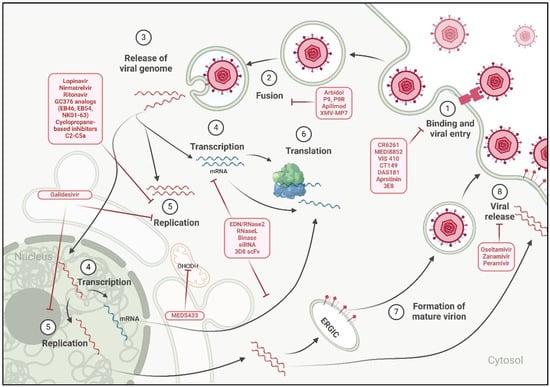
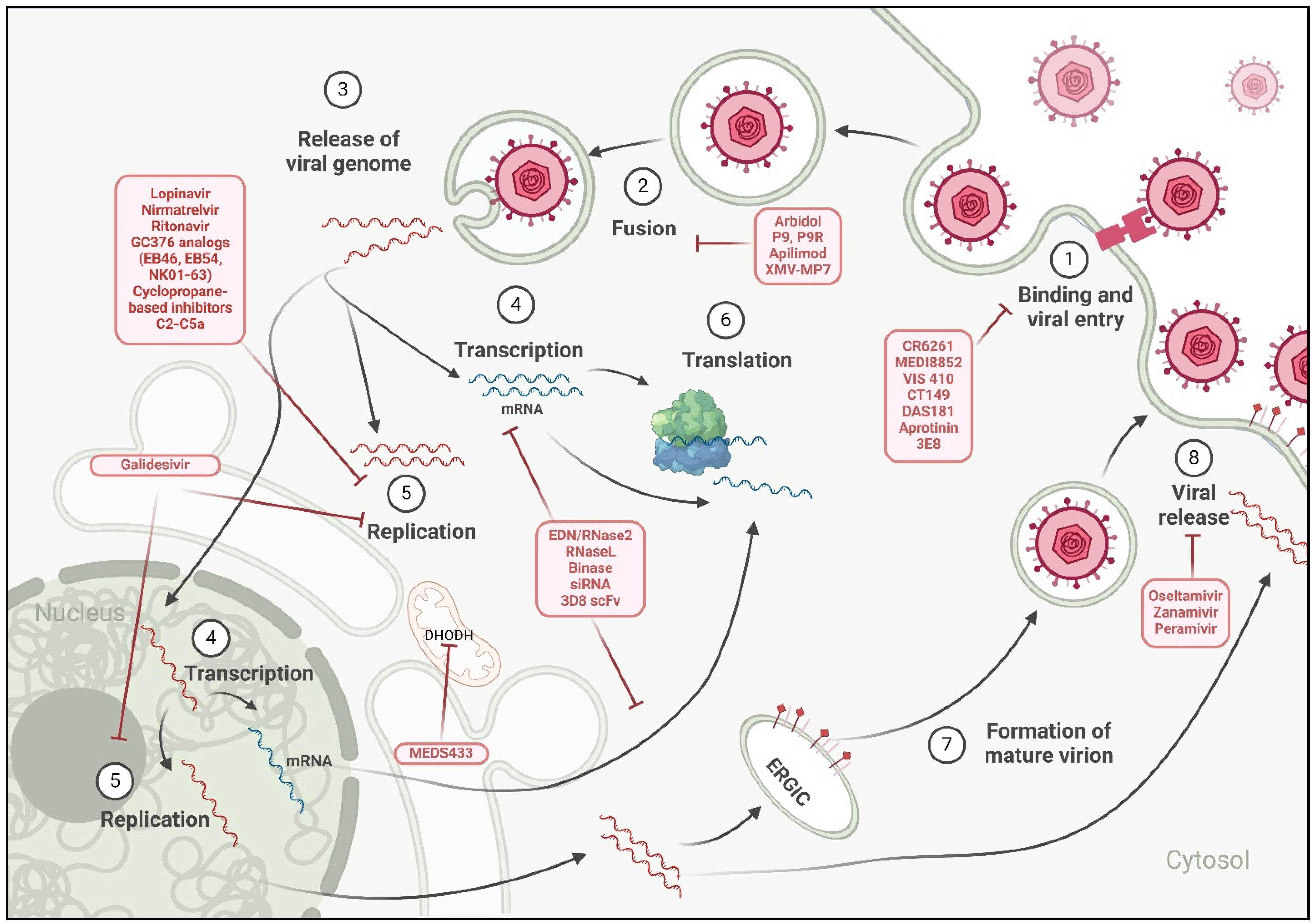
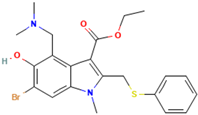
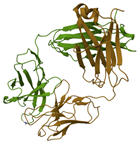
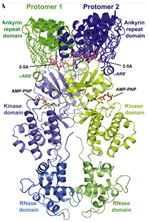
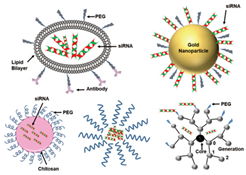
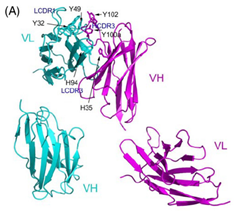
The development of broad-spectrum antiviral agents targeting respiratory viruses holds tremendous promise in addressing the global burden of respiratory infections. By targeting conserved viral components or host factors that are crucial for viral replication, these agents provide the potential to combat a wide range of RRVs, including influenza viruses, coronaviruses, and RSVs. Diverse approaches (summarized in Figure 2 and Table 3) encompass monoclonal antibodies such as CR6261 and VIS410, focusing on the conserved regions of viral surface proteins, as well as host-directed antiviral agents such as DAS181 and umifenovir, which disrupt host cell receptors or interfere with viral replication machinery. Furthermore, viral protease inhibitors, siRNA therapies, ribonucleases, and the 3D8 scFv have demonstrated potential efficacy against various RRVs. Nonetheless, there are challenges such as drug resistance, viral evolution, and host toxicity that must be carefully addressed in the pursuit of effective therapeutics. Thus, further evaluation of host-targeted antivirals should be prioritized to minimize resistance driven by viral mutations. Studies should emphasize understanding host–pathogen interactions to refine these interventions. In addition, optimizing delivery systems to improve stability and bioavailability, especially for siRNA and ribonuclease-based therapies, is crucial. Despite these challenges, the potential broad-spectrum antiviral agents warrant further investigation and clinical verification.
Figure 2.
Antiviral strategies block key steps of the viral replication cycle against respiratory RNA viruses (RRVs) by broad-spectrum antiviral agents that are currently in use or under investigation. The viral life cycle involves several key steps: (1) binding and entry of the virus into the host cell, (2) membrane fusion, (3) release of the viral genome into the host cell, (4) transcription, (5) replication, (6) translation, (7) assembly of mature virions, and (8) viral release. Both cytoplasmic and nuclear viruses share most of these steps, except for transcription (step 4) and replication (step 5). For nuclear viruses, the viral genome is transported to the nucleus, where transcription and replication occur. In contrast, cytoplasmic viruses replicate and transcribe their genome within the cytoplasm. These antiviral drugs target one of each step of the viral replication cycle, viz, inhibit viral attachment, or fusion, or viral replication, or directly target the viral RNA genome, or viral mRNA steps. Created using BioRender.com.
Table 3.
Summary of broad-spectrum antiviral agents described in this article.
The COVID-19 pandemic highlighted the critical need for rapid response frameworks. Global collaborations among researchers, clinicians, and pharmaceutical companies demonstrated the value of pooling data and resources to expedite drug evaluations. The development of Paxlovid exemplifies how partnerships between governments, academia, and industry can accelerate innovation. To sustain such progress, it is essential to establish international coalitions that provide long-term funding for broad-spectrum antiviral agents (BSAAs). Incentivizing pharmaceutical investment in antiviral R&D, alongside leveraging bioinformatics and AI, can enhance the prediction of viral evolution and guide BSAA development. Additionally, fostering data-sharing initiatives across borders will ensure the integration of preclinical and clinical findings, facilitating faster decision-making. By focusing on these strategies, the global scientific community can build a resilient framework to combat future respiratory viral threats effectively.
Author Contributions
S.L. and Q.X.T.L. outlined and conceptualized the review. Q.X.T.L. drafted the manuscript. S.L., P.T.H. (Phuong Thi Hoang), P.T.H. (Phuong Thi Ho) and R.Q.A. provided critical feedback on the outline of the review. The project was supervised by T.K.L. and S.L. All authors contributed to the article and agreed to the submitted version. All authors have read and agreed to the published version of the manuscript.
Funding
This research was supported by a grant of the Korea Health Technology R&D Project through the Korea Health Industry Development Institute (KHIDI), funded by the Ministry of Health & Welfare, Republic of Korea (HI23C0710), and the Korea Institute of Marine Science & Technology Promotion (KIMST), funded by the Ministry of Oceans and Fisheries, Republic of Korea (20210466).
Acknowledgments
We wish to thank Ika Agus Rini for helping with the illustrated figure.
Conflicts of Interest
The authors declare that the research was conducted in the absence of any commercial or financial relationships that could be construed as a potential conflict of interest.
References
- Huang, K.; Ying, T.; Wu, Y. Single-Domain Antibodies as Therapeutics for Respiratory RNA Virus Infections. Viruses 2022, 14, 1162. [Google Scholar] [CrossRef] [Scilit] [PubMed]
- Hodinka, R.L. Respiratory RNA Viruses. Microbiol. Spectr. 2016, 4, 233–271. [Google Scholar] [CrossRef] [Scilit]
- Santiago-Olivares, C.; Martínez-Alvarado, E.; Rivera-Toledo, E. Persistence of RNA Viruses in the Respiratory Tract: An Overview. Viral Immunol. 2023, 36, 3–12. [Google Scholar] [CrossRef] [Scilit] [PubMed]
- Kilbourne, E.D. Influenza Pandemics of the 20th Century. Emerg. Infect. Dis. 2006, 12, 9–14. [Google Scholar] [CrossRef] [Scilit] [PubMed]
- Jordan, E.O. Epidemic Influenza. A Survey; CABI Publishing: Wallingford, UK, 1927; p. 599. [Google Scholar]
- Patterson, K.D.; Pyle, G.F. The geography and mortality of the 1918 Influenza pandemic. Bull. Hist. Med. 1991, 65, 4–21. [Google Scholar]
- Johnson, N.P.A.S.; Mueller, J. Updating the Accounts: Global Mortality of the 1918–1920 “Spanish” Influenza Pandemic. Bull. Hist. Med. 2002, 76, 105–115. [Google Scholar] [CrossRef] [Scilit]
- Spreeuwenberg, P.; Kroneman, M.; Paget, J. Reassessing the Global Mortality Burden of the 1918 Influenza Pandemic. Am. J. Epidemiology 2018, 187, 2561–2567. [Google Scholar] [CrossRef] [Scilit]
- Morens, D.M.; Fauci, A.S. The 1918 Influenza Pandemic: Insights for the 21st Century. J. Infect. Dis. 2007, 195, 1018–1028. [Google Scholar] [CrossRef] [Scilit] [PubMed]
- World Health Organization. Report of the Review Committee on the Functioning of the International Health Regulations (2005) in Relation to Pandemic (H1N1) 2009; World Health Organization: Geneva, Switzerland, 2005. [Google Scholar]
- Baldo, V.; Bertoncello, C.; Cocchio, S.; Fonzo, M.; Pillon, P.; Buja, A.; Baldovin, T. The new pandemic influenza A/(H1N1)pdm09 virus: Is it really “new”? J. Prev. Med. Hyg. 2016, 57, E19–E22. [Google Scholar]
- Dawood, F.S.; Iuliano, A.D.; Reed, C.; I Meltzer, M.; Shay, D.K.; Cheng, P.-Y.; Bandaranayake, D.; Breiman, R.F.; Brooks, W.A.; Buchy, P.; et al. Estimated global mortality associated with the first 12 months of 2009 pandemic influenza A H1N1 virus circulation: A modelling study. Lancet Infect. Dis. 2012, 12, 687–695. [Google Scholar] [CrossRef] [Scilit]
- Centers for Disease Control and Prevention. 2009 H1N1 Pandemic (H1N1pdm09 virus). June 2019. Available online: https://archive.cdc.gov/#/details?url=https://www.cdc.gov/flu/pandemic-resources/2009-h1n1-pandemic.html (accessed on 12 September 2024).
- World Health Organization. The Top 10 Causes of Death. August 2024. Available online: https://www.who.int/news-room/fact-sheets/detail/the-top-10-causes-of-death (accessed on 12 September 2024).
- Nair, H.; Brooks, W.A.; Katz, M.; Roca, A.; Berkley, J.A.; Madhi, S.A.; Simmerman, J.M.; Gordon, A.; Sato, M.; Howie, S.; et al. Global burden of respiratory infections due to seasonal influenza in young children: A systematic review and meta-analysis. Lancet 2011, 378, 1917–1930. [Google Scholar] [CrossRef] [Scilit]
- Ruf, B.R.; Knuf, M. The burden of seasonal and pandemic influenza in infants and children. Eur. J. Pediatr. 2014, 173, 265–276. [Google Scholar] [CrossRef] [Scilit]
- Shi, T.; Nie, Z.; Huang, L.; Fan, H.; Lu, G.; Yang, D.; Zhang, D. Mortality risk factors in children with severe influenza virus infection admitted to the pediatric intensive care unit. Medicine 2019, 98, e16861. [Google Scholar] [CrossRef] [Scilit] [PubMed]
- World Health Organization. Influenza (Seasonal). October 2023. Available online: https://www.who.int/news-room/fact-sheets/detail/influenza-(seasonal) (accessed on 1 October 2024).
- King, A. An uncommon cold. New. Sci. 2020, 246, 32–35. [Google Scholar] [CrossRef] [Scilit]
- Centers for Disease Control and Prevention. National Trends for Common Human Coronaviruses. April 2024. Available online: http://archive.cdc.gov/#/details?q=coronavirus%20national%20trends&start=0&rows=10&url=https://www.cdc.gov/surveillance/nrevss/coronavirus/natl-trends.html (accessed on 1 October 2024).
- Harfouch, R.; Moualla, Y.M. Epidemiology of COVID-19 in the Most Pandemic countries: A review article. Acad J. Biotechnol. 2021; 9, pp. 21–27.
- World Health Organization. WHO COVID-19 dashboard. 24. March 2024. Available online: https://data.who.int/dashboards/covid19/deaths (accessed on 1 October 2024).
- Hoang, P.T.; Luong, Q.X.T.; Ayun, R.Q.; Lee, Y.; Vo, T.T.B.; Kim, T.; Lee, S. A Novel Approach of Antiviral Drugs Targeting Viral Genomes. Microorganisms 2022, 10, 1552. [Google Scholar] [CrossRef] [Scilit] [PubMed]
- Petrone-García, V.M.; Castellanos-Huerta, I.; Tellez-Isaias, G. Editorial: High-impact respiratory RNA virus diseases. Front. Veter-Sci. 2023, 10, 1273650. [Google Scholar] [CrossRef] [Scilit]
- Moscona, A. Entry of parainfluenza virus into cells as a target for interrupting childhood respiratory disease. J. Clin. Investig. 2005, 115, 1688–1698. [Google Scholar] [CrossRef] [Scilit]
- Li, Y.; Wang, X.; Blau, D.M.; Caballero, M.T.; Feikin, D.R.; Gill, C.J.; A Madhi, S.; Omer, S.B.; Simões, E.A.F.; Campbell, H.; et al. Global, regional, and national disease burden estimates of acute lower respiratory infections due to respiratory syncytial virus in children younger than 5 years in 2019: A systematic analysis. Lancet 2022, 399, 2047–2064. [Google Scholar] [CrossRef] [Scilit] [PubMed] [PubMed Central]
- Bergh, A.V.D.; Bailly, B.; Guillon, P.; von Itzstein, M.; Dirr, L. Antiviral strategies against human metapneumovirus: Targeting the fusion protein. Antivir. Res. 2022, 207, 105405. [Google Scholar] [CrossRef] [Scilit]
- Feng, Y.; He, T.; Zhang, B.; Yuan, H.; Zhou, Y. Epidemiology and diagnosis technologies of human metapneumovirus in China: A mini review. Virol. J. 2024, 21, 59. [Google Scholar] [CrossRef] [Scilit] [PubMed]
- Sheikh, Z.; Potter, E.; Li, Y.; A Cohen, R.; Dos Santos, G.; Bont, L.; Nair, H. Validity of clinical severity scores for respiratory syncytial virus: A systematic review. J. Infect. Dis. 2023, 229, S8–S17. [Google Scholar] [CrossRef] [Scilit]
- Soni, A.; Kabra, S.K.; Lodha, R. Respiratory Syncytial Virus Infection: An Update. Indian J. Pediatr. 2023, 90, 1245–1253. [Google Scholar] [CrossRef] [Scilit] [PubMed]
- Van den Bergh, A.; Guillon, P.; von Itzstein, M.; Bailly, B.; Dirr, L. Drug Repurposing for Therapeutic Discovery against Human Metapneumovirus Infection. Antimicrob. Agents Chemother. 2022, 66, e0100822. [Google Scholar] [CrossRef] [Scilit] [PubMed]
- Jacobs, S.E.; Lamson, D.M.; George, K.S.; Walsh, T.J. Human Rhinoviruses. Clin. Microbiol. Rev. 2013, 26, 135–162. [Google Scholar] [CrossRef] [Scilit]
- Shahani, L.; Shahani, L.; Ariza-Heredia, E.J.; Ariza-Heredia, E.J.; Chemaly, R.F.; Chemaly, R.F. Antiviral therapy for respiratory viral infections in immunocompromised patients. Expert Rev. Anti-Infect. Ther. 2017, 15, 401–415. [Google Scholar] [CrossRef] [Scilit] [PubMed]
- Domingo, E.; Holland, J.J. RNA virus mutations and fitness for survival. Annu. Rev. Microbiol. 1997, 51, 151–178. [Google Scholar] [CrossRef] [Scilit]
- Combe, M.; Sanjuán, R. Variability in the Mutation Rates of RNA Viruses. Futur. Virol. 2014, 9, 605–615. [Google Scholar] [CrossRef] [Scilit]
- Hussain, M.; Galvin, H.D.; Haw, T.Y.; Nutsford, A.N.; Husain, M. Drug resistance in influenza A virus: The epidemiology and management. Infect. Drug Resist. 2017, ume 10, 121–134. [Google Scholar] [CrossRef] [Scilit]
- Vitiello, A. Sars-Cov-2 and risk of antiviral drug resistance. Ir. J. Med Sci. 2021, 191, 2367–2368. [Google Scholar] [CrossRef] [Scilit] [PubMed]
- Nooruzzaman, M.; Johnson, K.E.E.; Rani, R.; Finkelsztein, E.J.; Caserta, L.C.; Kodiyanplakkal, R.P.; Wang, W.; Hsu, J.; Salpietro, M.T.; Banakis, S.; et al. Emergence of transmissible SARS-CoV-2 variants with decreased sensitivity to antivirals in immunocompromised patients with persistent infections. Nat. Commun. 2024, 15, 7999. [Google Scholar] [CrossRef] [Scilit] [PubMed]
- Luong, Q.X.T.; Hoang, P.T.; Lee, Y.; Ayun, R.Q.; Na, K.; Park, S.; Lin, C.; Lee, T.-K.; Lee, S. An RNA-hydrolyzing recombinant minibody prevents both influenza A virus and coronavirus in co-infection models. Sci. Rep. 2024, 14, 8472. [Google Scholar] [CrossRef] [Scilit] [PubMed]
- Han, S.; Xu, B.; Feng, Q.; Feng, Z.; Zhu, Y.; Ai, J.; Deng, L.; Li, C.; Cao, L.; Sun, Y.; et al. Multicenter analysis of epidemiological and clinical features of pediatric acute lower respiratory tract infections associated with common human coronaviruses in China, 2014–2019. Virol. J. 2023, 20, 229. [Google Scholar] [CrossRef] [Scilit] [PubMed]
- Centers for Disease Control and Prevention. Types of COVID-19 Treatment. July 2024. Available online: https://www.cdc.gov/covid/treatment/index.html (accessed on 28 November 2024).
- IDSA. IDSA Guidelines on the Treatment and Management of Patients with COVID-19. August 2024. Available online: https://www.idsociety.org/practice-guideline/covid-19-guideline-treatment-and-management/#Recommendation:NeutralizingAntibodiesforProphylaxisPemivibart (accessed on 28 November 2024).
- Centers for Disease Control and Prevention. About Middle East Respiratory Syndrome (MERS). May 2024. Available online: https://www.cdc.gov/mers/about/ (accessed on 15 October 2024).
- World Health Organization. Middle East Respiratory Syndrome Coronavirus (MERS-CoV). August 2022. Available online: https://www.who.int/news-room/fact-sheets/detail/middle-east-respiratory-syndrome-coronavirus-(mers-cov)?gad_source=1&gclid=Cj0KCQiAo5u6BhDJARIsAAVoDWvUuypyq4b63a53x-w7cdQ2oSJC5OV4j_FSW3FaHuX2mf7QBUawDCIaApp1EALw_wcB (accessed on 20 September 2024).
- Princeton BioMeditech. STATUS™ COVID-19/FLU A&B May 2023. Available online: https://www.fda.gov/media/145696/download (accessed on 28 November 2024).
- Uyeki, T.M.; Bernstein, H.H.; Bradley, J.S.; A Englund, J.; File, T.M.; Fry, A.M.; Gravenstein, S.; Hayden, F.G.; A Harper, S.; Hirshon, J.M.; et al. Clinical Practice Guidelines by the Infectious Diseases Society of America: 2018 Update on Diagnosis, Treatment, Chemoprophylaxis, and Institutional Outbreak Management of Seasonal Influenza. Clin. Infect. Dis. 2019, 68, 895–902. [Google Scholar] [CrossRef] [Scilit] [PubMed]
- Centers for Disease Control and Prevention. Treatment of Flu. September 2024. Available online: https://www.cdc.gov/flu/treatment/ (accessed on 30 November 2024).
- Gálvez, N.M.S.; Andrade, C.A.; Pacheco, G.A.; Soto, J.A.; Stranger, V.; Rivera, T.; Vásquez, A.E.; Kalergis, A.M. Host Components That Modulate the Disease Caused by hMPV. Viruses 2021, 13, 519. [Google Scholar] [CrossRef] [Scilit] [PubMed]
- Soto, J.A.; Gálvez, N.M.S.; Benavente, F.M.; Pizarro-Ortega, M.S.; Lay, M.K.; Riedel, C.; Bueno, S.M.; Gonzalez, P.A.; Kalergis, A.M. Human Metapneumovirus: Mechanisms and Molecular Targets Used by the Virus to Avoid the Immune System. Front. Immunol. 2018, 9, 2466. [Google Scholar] [CrossRef] [Scilit] [PubMed]
- Centers for Disease Control and Prevention. Human Metapneumovirus (HMPV) National Trends. April 2024. Available online: https://archive.cdc.gov/#/details?url=https://www.cdc.gov/surveillance/nrevss/hmpv/natl-trend.html (accessed on 18 September 2024).
- Centers for Disease Control and Prevention. About Human Metapneumovirus. April 2024. Available online: https://www.cdc.gov/human-metapneumovirus/about/ (accessed on 18 September 2024).
- DeGroote, N.P.; Haynes, A.K.; Taylor, C.; Killerby, M.E.; Dahl, R.M.; Mustaquim, D.; Gerber, S.I.; Watson, J.T. Human parainfluenza virus circulation, United States, 2011-2019. J. Clin. Virol. 2020, 124, 104261. [Google Scholar] [CrossRef] [Scilit] [PubMed]
- Centers for Disease Control and Prevention. Clinical Overview of Human Parainfluenza Viruses (HPIVs). June 2024. Available online: https://www.cdc.gov/parainfluenza/hcp/clinical-overview/ (accessed on 12 September 2024).
- Luganini, A.; Sibille, G.; Pavan, M.; Grand, M.M.; Sainas, S.; Boschi, D.; Lolli, M.L.; Chiorino, G.; Gribaudo, G. Mechanisms of antiviral activity of the new hDHODH inhibitor MEDS433 against respiratory syncytial virus replication. Antivir. Res. 2023, 219, 105734. [Google Scholar] [CrossRef] [Scilit]
- Centers for Disease Control and Prevention. RSV National Trends. April 2024. Available online: https://archive.cdc.gov/#/details?url=https://www.cdc.gov/surveillance/nrevss/rsv/natl-trend.html (accessed on 12 September 2024).
- Bhatia, R. Respiratory Syncytial Virus (RSV) and Human Metapneumovirus Infections. March 2024. Available online: https://www.msdmanuals.com/professional/pediatrics/respiratory-disorders-in-young-children/respiratory-syncytial-virus-rsv-and-human-metapneumovirus-infections (accessed on 15 September 2024).
- Centers for Disease Control and Prevention. Symptoms and Care of RSV. August 2024. Available online: https://www.cdc.gov/rsv/symptoms/index.html (accessed on 1 October 2024).
- Service, N.H. Respiratory Syncytial Virus (RSV). July 2024. Available online: https://www.nhs.uk/conditions/respiratory-syncytial-virus-rsv/ (accessed on 12 September 2024).
- Warner, S.M.; Wiehler, S.; Michi, A.N.; Proud, D. Rhinovirus replication and innate immunity in highly differentiated human airway epithelial cells. Respir. Res. 2019, 20, 150. [Google Scholar] [CrossRef] [Scilit]
- Kenmoe, S.; Kengne-Nde, C.; Ebogo-Belobo, J.T.; Mbaga, D.S.; Modiyinji, A.F.; Njouom, R. Systematic review and meta-analysis of the prevalence of common respiratory viruses in children <2 years with bronchiolitis in the pre-COVID-19 pandemic era. PLoS ONE 2020, 15, e0242302. [Google Scholar] [CrossRef] [Scilit]
- Krumbein, H.; Kümmel, L.S.; Fragkou, P.C.; Thölken, C.; Hünerbein, B.L.; Reiter, R.; Papathanasiou, K.A.; Renz, H.; Skevaki, C. Respiratory viral co-infections in patients with COVID-19 and associated outcomes: A systematic review and meta-analysis. Rev. Med Virol. 2022, 33, e2365. [Google Scholar] [CrossRef] [Scilit] [PubMed]
- Pratt, M.T.G.; Abdalla, T.; Richmond, P.C.; Moore, H.C.; Snelling, T.L.; Blyth, C.C.; Bhuiyan, M.U. Prevalence of respiratory viruses in community-acquired pneumonia in children: A systematic review and meta-analysis. Lancet Child Adolesc. Health 2022, 6, 555–570. [Google Scholar] [CrossRef] [Scilit] [PubMed]
- Ljubin-Sternak, S. and T. Meštrović, Rhinovirus—A True Respiratory Threat or a Common Inconvenience of Childhood? Viruses 2023, 15, 825. [Google Scholar] [CrossRef] [Scilit] [PubMed]
- Centers for Disease Control and Prevention. About Rhinoviruses. April 2024. Available online: https://www.cdc.gov/rhinoviruses/about/index.html (accessed on 12 September 2024).
- Liu, Q.; Zhou, Y.-H.; Ye, F.; Yang, Z.-Q. Antivirals for Respiratory Viral Infections: Problems and Prospects. Semin. Respir. Crit. Care Med. 2016, 37, 640–646. [Google Scholar] [CrossRef] [Scilit] [PubMed]
- Vardanyan, R.; Hruby, V. Antiviral Drugs. In Synthesis of Best Seller Drugs; Academic Press: New York, NY, USA, 2016; pp. 687–736. [Google Scholar]
- Prada, L.S.-D.; Sanz-Muñoz, I.; Sun, W.; Palese, P.; de Lejarazu, R.O.; Eiros, J.M.; García-Sastre, A.; Aydillo, T. Group 1 and group 2 hemagglutinin stalk antibody response according to age. Front. Immunol. 2023, 14, 1194073. [Google Scholar] [CrossRef] [Scilit]
- Heida, R.; Bhide, Y.C.; Gasbarri, M.; Kocabiyik, Ö.; Stellacci, F.; Huckriede, A.L.; Hinrichs, W.L.; Frijlink, H.W. Advances in the development of entry inhibitors for sialic-acid-targeting viruses. Drug Discov. Today 2020, 26, 122–137. [Google Scholar] [CrossRef] [Scilit]
- Yi, K.S.; Choi, J.-A.; Kim, P.; Ryu, D.-K.; Yang, E.; Son, D.; Shin, J.; Park, H.; Lee, S.; Lee, H.; et al. Broader neutralization of CT-P27 against influenza A subtypes by combining two human monoclonal antibodies. PLoS ONE 2020, 15, e0236172. [Google Scholar] [CrossRef] [Scilit] [PubMed]
- Han, A.; Czajkowski, L.; Rosas, L.A.; Cervantes-Medina, A.; Xiao, Y.; Gouzoulis, M.; Lumbard, K.; Hunsberger, S.; Reed, S.; Athota, R.; et al. Safety and Efficacy of CR6261 in an Influenza A H1N1 Healthy Human Challenge Model. Clin. Infect. Dis. 2020, 73, e4260–e4268. [Google Scholar] [CrossRef] [Scilit] [PubMed]
- Ekiert, D.C.; Bhabha, G.; Elsliger, M.-A.; Friesen, R.H.E.; Jongeneelen, M.; Throsby, M.; Goudsmit, J.; Wilson, I.A. Antibody Recognition of a Highly Conserved Influenza Virus Epitope. Science 2009, 324, 246–251. [Google Scholar] [CrossRef] [Scilit] [PubMed]
- Throsby, M.; van den Brink, E.; Jongeneelen, M.; Poon, L.L.M.; Alard, P.; Cornelissen, L.; Bakker, A.; Cox, F.; Van Deventer, E.; Guan, Y.; et al. Heterosubtypic Neutralizing Monoclonal Antibodies Cross-Protective against H5N1 and H1N1 Recovered from Human IgM+ Memory B Cells. PLoS ONE 2008, 3, e3942. [Google Scholar] [CrossRef] [Scilit]
- Eller, M.W.; Siaw, M.H.; Dyer, R.B. Stability of HA2 Prefusion Structure and pH-Induced Conformational Changes in the HA2 Domain of H3N2 Hemagglutinin. Biochemistry 2021, 60, 2623–2636. [Google Scholar] [CrossRef] [Scilit]
- van Dongen, M.J.P.; Kadam, R.U.; Juraszek, J.; Lawson, E.; Brandenburg, B.; Schmitz, F.; Schepens, W.B.G.; Stoops, B.; van Diepen, H.A.; Jongeneelen, M.; et al. A small-molecule fusion inhibitor of influenza virus is orally active in mice. Science 2019, 363, eaar6221. [Google Scholar] [CrossRef] [Scilit]
- Dreyfus, C.; Laursen, N.S.; Kwaks, T.; Zuijdgeest, D.; Khayat, R.; Ekiert, D.C.; Lee, J.H.; Metlagel, Z.; Bujny, M.V.; Jongeneelen, M.; et al. Highly Conserved Protective Epitopes on Influenza B Viruses. Science 2012, 337, 1343–1348. [Google Scholar] [CrossRef] [Scilit]
- Cui, W.; Wang, K.; Ruan, J.; Qi, Z.; Feng, Y.; Shao, Y.; Tuszynski, J.A. The Molecular Mechanism of Action of the CR6261-Azichromycin Combination Found through Computational Analysis. PLoS ONE 2012, 7, e37790. [Google Scholar] [CrossRef] [Scilit]
- I Paules, C.; Lakdawala, S.; McAuliffe, J.M.; Paskel, M.; Vogel, L.; Kallewaard, N.L.; Zhu, Q.; Subbarao, K. The Hemagglutinin A Stem Antibody MEDI8852 Prevents and Controls Disease and Limits Transmission of Pandemic Influenza Viruses. J. Infect. Dis. 2017, 216, 356–365. [Google Scholar] [CrossRef] [Scilit] [PubMed]
- Kallewaard, N.L.; Corti, D.; Collins, P.J.; Neu, U.; McAuliffe, J.M.; Benjamin, E.; Wachter-Rosati, L.; Palmer-Hill, F.J.; Yuan, A.Q.; Walker, P.A.; et al. Structure and Function Analysis of an Antibody Recognizing All Influenza A Subtypes. Cell 2016, 166, 596–608. [Google Scholar] [CrossRef] [Scilit]
- Sloan, S.E.; Szretter, K.J.; Sundaresh, B.; Narayan, K.M.; Smith, P.F.; Skurnik, D.; Bedard, S.; Trevejo, J.M.; Oldach, D.; Shriver, Z. Clinical and virological responses to a broad-spectrum human monoclonal antibody in an influenza virus challenge study. Antivir. Res. 2020, 184, 104763. [Google Scholar] [CrossRef] [Scilit] [PubMed]
- Moirangthem, R.; Cordela, S.; Khateeb, D.; Shor, B.; Kosik, I.; Schneidman-Duhovny, D.; Mandelboim, M.; Jönsson, F.; Yewdell, J.W.; Bruel, T.; et al. Dual neutralization of influenza virus hemagglutinin and neuraminidase by a bispecific antibody leads to improved antiviral activity. Mol. Ther. 2024, 32, 3712–3728. [Google Scholar] [CrossRef] [Scilit] [PubMed]
- Doud, M.B.; Lee, J.M.; Bloom, J.D. How single mutations affect viral escape from broad and narrow antibodies to H1 influenza hemagglutinin. Nat. Commun. 2018, 9, 386. [Google Scholar] [CrossRef] [Scilit]
- Park, J.-K.; Xiao, Y.; Ramuta, M.D.; Rosas, L.A.; Fong, S.; Matthews, A.M.; Freeman, A.D.; Gouzoulis, M.A.; Batchenkova, N.A.; Yang, X.; et al. Pre-existing immunity to influenza virus hemagglutinin stalk might drive selection for antibody-escape mutant viruses in a human challenge model. Nat. Med. 2020, 26, 1240–1246. [Google Scholar] [CrossRef] [Scilit]
- Lim, K.K.; Ng, K.; Balachandran, S.; Russell, M.D.; Boalch, A.; Sinclair, A.; Coker, B.; Vinnakota, K.; Mansoor, R.; Douiri, A.; et al. Measuring the impact of monoclonal antibody therapies. Front. Med. 2023, 10, 1256712. [Google Scholar] [CrossRef] [Scilit] [PubMed]
- Hershberger, E.; Sloan, S.; Narayan, K.; Hay, C.A.; Smith, P.; Engler, F.; Jeeninga, R.; Smits, S.; Trevejo, J.; Shriver, Z.; et al. Safety and efficacy of monoclonal antibody VIS410 in adults with uncomplicated influenza A infection: Results from a randomized, double-blind, phase-2, placebo-controlled study. EBioMedicine 2019, 40, 574–582. [Google Scholar] [CrossRef] [Scilit]
- Malakhov, M.P.; Aschenbrenner, L.M.; Smee, D.F.; Wandersee, M.K.; Sidwell, R.W.; Gubareva, L.V.; Mishin, V.P.; Hayden, F.G.; Kim, D.H.; Ing, A.; et al. Sialidase Fusion Protein as a Novel Broad-Spectrum Inhibitor of Influenza Virus Infection. Antimicrob. Agents Chemother. 2006, 50, 1470–1479. [Google Scholar] [CrossRef] [Scilit]
- Triana-Baltzer, G.B.; Sanders, R.L.; Hedlund, M.; Jensen, K.A.; Aschenbrenner, L.M.; Larson, J.L.; Fang, F. Phenotypic and genotypic characterization of influenza virus mutants selected with the sialidase fusion protein DAS181. J. Antimicrob. Chemother. 2010, 66, 15–28. [Google Scholar] [CrossRef] [Scilit] [PubMed]
- Nicholls, J.M.; Moss, R.B.; Haslam, S.M. The use of sialidase therapy for respiratory viral infections. Antivir. Res. 2013, 98, 401–409. [Google Scholar] [CrossRef] [Scilit] [PubMed]
- Chemaly, R.F.; Marty, F.M.; Wolfe, C.R.; Lawrence, S.J.; Dadwal, S.; Soave, R.; Farthing, J.; Hawley, S.; Montanez, P.; Hwang, J.; et al. DAS181 Treatment of Severe Lower Respiratory Tract Parainfluenza Virus Infection in Immunocompromised Patients: A Phase 2 Randomized, Placebo-Controlled Study. Clin. Infect. Dis. 2021, 73, e773–e781. [Google Scholar] [CrossRef] [Scilit]
- Triana-Baltzer, G.B.; Gubareva, L.V.; Klimov, A.I.; Wurtman, D.F.; Moss, R.B.; Hedlund, M.; Larson, J.L.; Belshe, R.B.; Fang, F. Inhibition of Neuraminidase Inhibitor-Resistant Influenza Virus by DAS181, a Novel Sialidase Fusion Protein. PLoS ONE 2009, 4, e7838. [Google Scholar] [CrossRef] [Scilit]
- Moss, R.B.; Hansen, C.; Sanders, R.L.; Hawley, S.; Li, T.; Steigbigel, R.T. A Phase II Study of DAS181, a Novel Host Directed Antiviral for the Treatment of Influenza Infection. J. Infect. Dis. 2012, 206, 1844–1851. [Google Scholar] [CrossRef] [Scilit]
- ClinicalTrials.gov. A Phase II, Randomized, Double-blind, Placebo-Controlled Study to Examine the Effects of DAS181 in Immunocompromised Subjects with Lower Respiratory Tract Parainfluenza Infection on Supplemental Oxygen (DAS181-2-05). September 2017. Available online: https://classic.clinicaltrials.gov/ct2/show/NCT01644877?term=DAS181&draw=2&rank=4 (accessed on 12 September 2024).
- Nojomi, M.; Yassin, Z.; Keyvani, H.; Makiani, M.J.; Roham, M.; Laali, A.; Dehghan, N.; Navaei, M.; Ranjbar, M. Effect of Arbidol (Umifenovir) on COVID-19: A randomized controlled trial. BMC Infect. Dis. 2020, 20, 954. [Google Scholar] [CrossRef] [Scilit] [PubMed]
- Leneva, I.; Kartashova, N.; Poromov, A.; Gracheva, A.; Korchevaya, E.; Glubokova, E.; Borisova, O.; Shtro, A.; Loginova, S.; Shchukina, V.; et al. Antiviral Activity of Umifenovir In Vitro against a Broad Spectrum of Coronaviruses, Including the Novel SARS-CoV-2 Virus. Viruses 2021, 13, 1665. [Google Scholar] [CrossRef] [Scilit]
- Blaising, J.; Polyak, S.J.; Pécheur, E.-I. Arbidol as a broad-spectrum antiviral: An update. Antivir. Res. 2014, 107, 84–94. [Google Scholar] [CrossRef] [Scilit]
- Brooks, M.; Sasadeusz, J.; Tannock, G. Antiviral chemotherapeutic agents against respiratory viruses: Where are we now and what’s in the pipeline? Curr. Opin. Pulm. Med. 2004, 10, 197–203. [Google Scholar] [CrossRef] [Scilit]
- Brooks, M.; Burtseva, E.; Ellery, P.; Marsh, G.; Lew, A.; Slepushkin, A.; Crowe, S.; Tannock, G. Antiviral Activity of Arbidol, a Broad-Spectrum Drug for Use Against Respiratory Viruses, Varies According to Test Conditions. J. Med. Virol. 2012, 84, 170–181. [Google Scholar] [CrossRef] [Scilit] [PubMed]
- Liu, Q.; Xiong, H.-R.; Lu, L.; Liu, Y.-Y.; Luo, F.; Hou, W.; Yang, Z.-Q. Antiviral and anti-inflammatory activity of arbidol hydrochloride in influenza A (H1N1) virus infection. Acta Pharmacol. Sin. 2013, 34, 1075–1083. [Google Scholar] [CrossRef] [Scilit]
- Pshenichnaya, N.; Bulgakova, V.; Selkova, E.; Maleyev, V.; Lvov, N.; Leneva, I.; Grekova, A.; Shestakova, I. Umifenovir in treatment of influenza and acute respiratory viral infections in outpatient care. Int. J. Infect. Dis. 2019, 79, 103. [Google Scholar] [CrossRef] [Scilit]
- Deng, L.; Li, C.; Zeng, Q.; Liu, X.; Li, X.; Zhang, H.; Hong, Z.; Xia, J. Arbidol combined with LPV/r versus LPV/r alone against Corona Virus Disease 2019: A retrospective cohort study. J. Infect. 2020, 81, e1–e5. [Google Scholar] [CrossRef] [Scilit]
- Yang, C.; Ke, C.; Yue, D.; Li, W.; Hu, Z.; Liu, W.; Hu, S.; Wang, S.; Liu, J. Effectiveness of Arbidol for COVID-19 Prevention in Health Professionals. Front. Public Health 2020, 8, 249. [Google Scholar] [CrossRef] [Scilit] [PubMed]
- Leneva, I.A.; Falynskova, I.N.; Makhmudova, N.R.; Poromov, A.A.; Yatsyshina, S.B.; Maleev, V.V. Umifenovir susceptibility monitoring and characterization of influenza viruses isolated during ARBITR clinical study. J. Med Virol. 2018, 91, 588–597. [Google Scholar] [CrossRef] [Scilit]
- Feng, T.; Zhang, X.; Sun, Y.; Yang, J.; Du, H.; Guo, J.; Tang, R. A systematic review and meta-analysis of Arbidol therapy for acute respiratory viral infections: A potential treatment for COVID-19. Exp. Ther. Med. 2022, 24, 736. [Google Scholar] [CrossRef] [Scilit]
- Huang, D.; Yu, H.; Wang, T.; Yang, H.; Yao, R.; Liang, Z. Efficacy and safety of umifenovir for coronavirus disease 2019 (COVID-19): A systematic review and meta-analysis. J. Med Virol. 2020, 93, 481–490. [Google Scholar] [CrossRef] [Scilit]
- Song, E.-J.; Españo, E.; Shim, S.-M.; Nam, J.-H.; Kim, J.; Lee, K.; Park, S.-K.; Lee, C.-K.; Kim, J.-K. Inhibitory effects of aprotinin on influenza A and B viruses in vitro and in vivo. Sci. Rep. 2021, 11, 9427. [Google Scholar] [CrossRef] [Scilit] [PubMed]
- Zhirnov, O.; Klenk, H.; Wright, P. Aprotinin and similar protease inhibitors as drugs against influenza. Antivir. Res. 2011, 92, 27–36. [Google Scholar] [CrossRef] [Scilit]
- Zhirnov, O.P.; Golyando, P.B.; Ovcharenko, A.V. Replication of Influenza B virus in chicken embryos is suppressed by exogenous aprotinin. Arch. Virol. 1994, 135, 209–216. [Google Scholar] [CrossRef] [Scilit]
- Ivachtchenko, A.V.; Ivashchenko, A.A.; Shkil, D.O.; Ivashchenko, I.A. Aprotinin—Drug against Respiratory Diseases. Int. J. Mol. Sci. 2023, 24, 11173. [Google Scholar] [CrossRef] [Scilit] [PubMed]
- Redondo-Calvo, F.J.; Padín, J.F.; Muñoz-Rodríguez, J.R.; Serrano-Oviedo, L.; López-Juárez, P.; Porras Leal, M.L.; González Gasca, F.J.; Rodríguez Martínez, M.; Pérez Serrano, R.; Sánchez Cadena, A.; et al. Aprotinin treatment against SARS-CoV-2: A randomized phase III study to evaluate the safety and efficacy of a pan-protease inhibitor for moderate COVID-19. Eur. J. Clin. Investig. 2022, 52, e13776. [Google Scholar] [CrossRef] [Scilit] [PubMed]
- Redondo-Calvo, F.J.; Padín, J.F.; Martínez-Alarcón, J.; Muñoz-Rodríguez, J.R.; Serrano-Oviedo, L.; López-Juárez, P.; Porras Leal, M.; González Gasca, F.J.; Rodríguez Martínez, M.; Pérez Serrano, R.; et al. Inhaled aprotinin reduces viral load in mild-to-moderate inpatients with SARS-CoV-2 infection. Eur. J. Clin. Investig. 2022, 52, e13850. [Google Scholar] [CrossRef] [Scilit]
- Goto, H.; Wells, K.; Takada, A.; Kawaoka, Y. Plasminogen-Binding Activity of Neuraminidase Determines the Pathogenicity of Influenza A Virus. J. Virol. 2001, 75, 9297–9301. [Google Scholar] [CrossRef] [Scilit] [PubMed]
- Yamaya, M.; Shimotai, Y.; Hatachi, Y.; Lusamba Kalonji, N.; Tando, Y.; Kitajima, Y.; Matsuo, K.; Kubo, H.; Nagatomi, R.; Hongo, S.; et al. The serine protease inhibitor camostat inhibits influenza virus replication and cytokine production in primary cultures of human tracheal epithelial cells. Pulm. Pharmacol. Ther. 2015, 33, 66–74. [Google Scholar] [CrossRef] [Scilit]
- Bojkova, D.; Bechtel, M.; McLaughlin, K.-M.; McGreig, J.E.; Klann, K.; Bellinghausen, C.; Rohde, G.; Jonigk, D.; Braubach, P.; Ciesek, S.; et al. Aprotinin Inhibits SARS-CoV-2 Replication. Cells 2020, 9, 2377. [Google Scholar] [CrossRef] [Scilit] [PubMed]
- Chen, Y.; Zhang, Y.-N.; Yan, R.; Wang, G.; Zhang, Y.; Zhang, Z.-R.; Li, Y.; Ou, J.; Chu, W.; Liang, Z.; et al. ACE2-targeting monoclonal antibody as potent and broad-spectrum coronavirus blocker. Signal Transduct. Target. Ther. 2021, 6, 315. [Google Scholar] [CrossRef] [Scilit] [PubMed]
- Zhang, F.; Jenkins, J.; de Carvalho, R.V.H.; Nakandakari-Higa, S.; Chen, T.; Abernathy, M.E.; Baharani, V.A.; Nyakatura, E.K.; Andrew, D.; Lebedeva, I.V.; et al. Pan-sarbecovirus prophylaxis with human anti-ACE2 monoclonal antibodies. Nat. Microbiol. 2023, 8, 1051–1063. [Google Scholar] [CrossRef] [Scilit] [PubMed]
- García-Cárceles, J.; Caballero, E.; Gil, C.; Martínez, A. Kinase Inhibitors as Underexplored Antiviral Agents. J. Med. Chem. 2021, 65, 935–954. [Google Scholar] [CrossRef] [Scilit] [PubMed]
- Logue, J.; Chakraborty, A.R.; Johnson, R.; Goyal, G.; Rodas, M.; Taylor, L.J.; Baracco, L.; McGrath, M.E.; Haupt, R.; Furlong, B.A.; et al. PIKfyve-specific inhibitors restrict replication of multiple coronaviruses in vitro but not in a murine model of COVID-19. Commun. Biol. 2022, 5, 808. [Google Scholar] [CrossRef] [Scilit]
- Hasegawa, J.; Strunk, B.S.; Weisman, L.S. PI5P and PI(3,5)P2: Minor, but Essential Phosphoinositides. Cell Struct. Funct. 2017, 42, 49–60. [Google Scholar] [CrossRef] [Scilit] [PubMed]
- Su, J.; Zheng, J.; Huang, W.; Zhang, Y.; Lv, C.; Zhang, B.; Jiang, L.; Cheng, T.; Yuan, Q.; Xia, N.; et al. PIKfyve inhibitors against SARS-CoV-2 and its variants including Omicron. Signal Transduct. Target. Ther. 2022, 7, 167. [Google Scholar] [CrossRef] [Scilit] [PubMed]
- Cerny, J.; Feng, Y.; Yu, A.; Miyake, K.; Borgonovo, B.; Klumperman, J.; Meldolesi, J.; McNeil, P.L.; Kirchhausen, T. The small chemical vacuolin–1 inhibits Ca2+ dependent lysosomal exocytosis but not cell resealing. EMBO Rep. 2004, 5, 883–888. [Google Scholar] [CrossRef] [Scilit] [PubMed]
- Le Blanc, I.; Luyet, P.-P.; Pons, V.; Ferguson, C.; Emans, N.; Petiot, A.; Mayran, N.; Demaurex, N.; Fauré, J.; Sadoul, R.; et al. Endosome-to-cytosol transport of viral nucleocapsids. Nat. Cell Biol. 2005, 7, 653–664. [Google Scholar] [CrossRef] [Scilit] [PubMed]
- Baker, J.; Ombredane, H.; Daly, L.; Knowles, I.; Rapeport, G.; Ito, K. Pan-antiviral effects of a PIKfyve inhibitor on respiratory virus infection in human nasal epithelium and mice. Antimicrob. Agents Chemother. 2024, 68, e0105023. [Google Scholar] [CrossRef] [Scilit]
- Zhao, H.; To, K.K.W.; Sze, K.-H.; Yung, T.T.-M.; Bian, M.; Lam, H.; Yeung, M.L.; Li, C.; Chu, H.; Yuen, K.-Y. A broad-spectrum virus- and host-targeting peptide against respiratory viruses including influenza virus and SARS-CoV-2. Nat. Commun. 2020, 11, 4252. [Google Scholar] [CrossRef] [Scilit]
- Zhao, H.; Zhou, J.; Zhang, K.; Chu, H.; Liu, D.; Poon, V.K.-M.; Chan, C.C.-S.; Leung, H.-C.; Fai, N.; Lin, Y.-P.; et al. A novel peptide with potent and broad-spectrum antiviral activities against multiple respiratory viruses. Sci. Rep. 2016, 6, 22008. [Google Scholar] [CrossRef] [Scilit]
- Huotari, J.; Helenius, A. Endosome maturation. EMBO J. 2011, 30, 3481–3500. [Google Scholar] [CrossRef] [Scilit] [PubMed]
- Skoreński, M.; Grzywa, R.; Sieńczyk, M. Viral Proteases. In Encyclopedia of Molecular Pharmacology; Offermanns, S., Rosenthal, W., Eds.; Springer International Publishing: Cham, Switzerland, 2020; pp. 1–9. [Google Scholar] [CrossRef] [Scilit]
- Zephyr, J.; Kurt Yilmaz, N.; Schiffer, C.A. Chapter Nine—Viral proteases: Structure, mechanism and inhibition. In The Enzymes; Cameron, C.E., Arnold, J.J., Kaguni, L.S., Eds.; Academic Press: Cambridge, MA, USA, 2021; pp. 301–333. [Google Scholar]
- Patick, A.K.; Potts, K.E. Protease Inhibitors as Antiviral Agents. Clin. Microbiol. Rev. 1998, 11, 614–627. [Google Scholar] [CrossRef] [Scilit] [PubMed]
- Dampalla, C.S.; Nguyen, H.N.; Rathnayake, A.D.; Kim, Y.; Perera, K.D.; Madden, T.K.; Thurman, H.A.; Machen, A.J.; Kashipathy, M.M.; Liu, L.; et al. Broad-Spectrum Cyclopropane-Based Inhibitors of Coronavirus 3C-like Proteases: Biochemical, Structural, and Virological Studies. ACS Pharmacol. Transl. Sci. 2023, 6, 181–194. [Google Scholar] [CrossRef] [Scilit] [PubMed]
- Liu, H.; Iketani, S.; Zask, A.; Khanizeman, N.; Bednarova, E.; Forouhar, F.; Fowler, B.; Hong, S.J.; Mohri, H.; Nair, M.S.; et al. Development of optimized drug-like small molecule inhibitors of the SARS-CoV-2 3CL protease for treatment of COVID-19. Nat. Commun. 2022, 13, 1891. [Google Scholar] [CrossRef] [Scilit] [PubMed]
- Zumla, A.; Chan, J.F.W.; Azhar, E.I.; Hui, D.S.C.; Yuen, K.-Y. Coronaviruses—Drug discovery and therapeutic options. Nat. Rev. Drug Discov. 2016, 15, 327–347. [Google Scholar] [CrossRef] [Scilit]
- Lee, H.; Lei, H.; Santarsiero, B.D.; Gatuz, J.L.; Cao, S.; Rice, A.J.; Patel, K.; Szypulinski, M.Z.; Ojeda, I.; Ghosh, A.K.; et al. Inhibitor Recognition Specificity of MERS-CoV Papain-like Protease May Differ from That of SARS-CoV. ACS Chem. Biol. 2015, 10, 1456–1465. [Google Scholar] [CrossRef] [Scilit]
- Chaudhuri, R.; Tang, S.; Zhao, G.; Lu, H.; Case, D.A.; Johnson, M.E. Comparison of SARS and NL63 Papain-Like Protease Binding Sites and Binding Site Dynamics: Inhibitor Design Implications. J. Mol. Biol. 2011, 414, 272–288. [Google Scholar] [CrossRef] [Scilit] [PubMed]
- Mengist, H.M.; Dilnessa, T.; Jin, T. Structural Basis of Potential Inhibitors Targeting SARS-CoV-2 Main Protease. Front. Chem. 2021, 9, 622898. [Google Scholar] [CrossRef] [Scilit]
- Chan, S.-W. Current and Future Direct-Acting Antivirals Against COVID-19. Front. Microbiol. 2020, 11, 587944. [Google Scholar] [CrossRef] [Scilit]
- Cao, B.; Wang, Y.; Wen, D.; Liu, W.; Wang, J.; Fan, G.; Ruan, L.; Song, B.; Cai, Y.; Wei, M.; et al. A Trial of Lopinavir–Ritonavir in Adults Hospitalized with Severe COVID-19. N. Engl. J. Med. 2020, 382, 1787–1799. [Google Scholar] [CrossRef] [Scilit]
- Griffin, S. COVID-19: Lopinavir-ritonavir does not benefit hospitalised patients, UK trial finds. BMJ 2020, 370, m2650. [Google Scholar] [CrossRef] [Scilit] [PubMed]
- Ma, C.; Sacco, M.D.; Hurst, B.; Townsend, J.A.; Hu, Y.; Szeto, T.; Zhang, X.; Tarbet, B.; Marty, M.T.; Chen, Y.; et al. Boceprevir, GC-376, and calpain inhibitors II, XII inhibit SARS-CoV-2 viral replication by targeting the viral main protease. Cell Res. 2020, 30, 678–692. [Google Scholar] [CrossRef] [Scilit] [PubMed]
- Nutho, B.; Mahalapbutr, P.; Hengphasatporn, K.; Pattaranggoon, N.C.; Simanon, N.; Shigeta, Y.; Hannongbua, S.; Rungrotmongkol, T. Why Are Lopinavir and Ritonavir Effective against the Newly Emerged Coronavirus 2019? Atomistic Insights into the Inhibitory Mechanisms. Biochemistry 2020, 59, 1769–1779. [Google Scholar] [CrossRef] [Scilit] [PubMed]
- Yu, W.; Wu, X.; Zhao, Y.; Chen, C.; Yang, Z.; Zhang, X.; Ren, J.; Wang, Y.; Wu, C.; Li, C.; et al. Computational Simulation of HIV Protease Inhibitors to the Main Protease (Mpro) of SARS-CoV-2: Implications for COVID-19 Drugs Design. Molecules 2021, 26, 7385. [Google Scholar] [CrossRef] [Scilit] [PubMed]
- Yao, T.; Qian, J.; Zhu, W.; Wang, Y.; Wang, G. A systematic review of lopinavir therapy for SARS coronavirus and MERS coronavirus—A possible reference for coronavirus disease-19 treatment option. J. Med Virol. 2020, 92, 556–563. [Google Scholar] [CrossRef] [Scilit]
- Nukoolkarn, V.; Lee, V.S.; Malaisree, M.; Aruksakulwong, O.; Hannongbua, S. Molecular dynamic simulations analysis of ritronavir and lopinavir as SARS-CoV 3CLpro inhibitors. J. Theor. Biol. 2008, 254, 861–867. [Google Scholar] [CrossRef] [Scilit] [PubMed]
- Chen, F.; Chan, K.H.; Jiang, Y.; Kao, R.Y.T.; Lu, H.T.; Fan, K.W.; Cheng, V.C.C.; Tsui, W.H.W.; Hung, I.F.N.; Lee, T.S.W.; et al. In vitro susceptibility of 10 clinical isolates of SARS coronavirus to selected antiviral compounds. J. Clin. Virol. 2004, 31, 69–75. [Google Scholar] [CrossRef] [Scilit] [PubMed]
- Chu, C.M.; Cheng, V.C.C.; Hung, I.F.N.; Wong, M.M.L.; Chan, K.H.; Chan, K.S.; Kao, R.Y.T.; Poon, L.L.M.; Wong, C.L.P.; Guan, Y.; et al. Role of lopinavir/ritonavir in the treatment of SARS: Initial virological and clinical findings. Thorax 2004, 59, 252–256. [Google Scholar] [CrossRef] [Scilit]
- de Wilde Adriaan, H.; Jochmans, D.; Posthuma Clara, C.; Zevenhoven-Dobbe Jessika, C.; van Nieuwkoop, S.; Bestebroer Theo, M.; van den Hoogen Bernadette, G.; Neyts, J.; Snijder Eric, J. Screening of an FDA-Approved Compound Library Identifies Four Small-Molecule Inhibitors of Middle East Respiratory Syndrome Coronavirus Replication in Cell Culture. Antimicrob. Agents Chemother. 2014, 58, 4875–4884. [Google Scholar] [CrossRef] [Scilit]
- Sheahan, T.P.; Sims, A.C.; Leist, S.R.; Schäfer, A.; Won, J.; Brown, A.J.; Montgomery, S.A.; Hogg, A.; Babusis, D.; Clarke, M.O.; et al. Comparative therapeutic efficacy of remdesivir and combination lopinavir, ritonavir, and interferon beta against MERS-CoV. Nat. Commun. 2020, 11, 222. [Google Scholar] [CrossRef] [Scilit]
- Chan, J.F.-W.; Yao, Y.; Yeung, M.L.; Deng, W.; Bao, L.; Jia, L.; Li, F.; Xiao, C.; Gao, H.; Yu, P.; et al. Treatment with Lopinavir/Ritonavir or Interferon-β1b Improves Outcome of MERS-CoV Infection in a Nonhuman Primate Model of Common Marmoset. J. Infect. Dis. 2015; 212, pp. 1904–1913.
- Gallucci, L.; Bazire, J.; Davidson, A.D.; Shytaj, I.L. Broad-spectrum antiviral activity of two structurally analogous CYP3A inhibitors against pathogenic human coronaviruses in vitro. Antivir. Res. 2023, 221, 105766. [Google Scholar] [CrossRef] [Scilit] [PubMed]
- Chan, J.F.-W.; Yao, Y.; Yeung, M.-L.; Deng, W.; Bao, L.; Jia, L.; Li, F.; Xiao, C.; Gao, H.; Yu, P.; et al. Treatment With Lopinavir/Ritonavir or Interferon-β1b Improves Outcome of MERS-CoV Infection in a Nonhuman Primate Model of Common Marmoset. J. Infect. Dis. 2015, 212, 1904–1913. [Google Scholar] [CrossRef] [Scilit] [PubMed]
- Li, J.; Wang, Y.; Solanki, K.; Atre, R.; Lavrijsen, M.; Pan, Q.; Baig, M.S.; Li, P. Nirmatrelvir exerts distinct antiviral potency against different human coronaviruses. Antivir. Res. 2023, 211, 105555. [Google Scholar] [CrossRef] [Scilit] [PubMed]
- Heilmann, E.; Costacurta, F.; Moghadasi, S.A.; Ye, C.; Pavan, M.; Bassani, D.; Volland, A.; Ascher, C.; Weiss, A.K.H.; Bante, D.; et al. SARS-CoV-2 3CLpro mutations selected in a VSV-based system confer resistance to nirmatrelvir, ensitrelvir, and GC376. Sci. Transl. Med. 2023, 15, eabq7360. [Google Scholar] [CrossRef] [Scilit] [PubMed]
- Mahase, E. COVID-19: Pfizer’s paxlovid is 89% effective in patients at risk of serious illness, company reports. BMJ 2021, 375, n2713. [Google Scholar] [CrossRef] [Scilit] [PubMed]
- Geng, L.N.; Bonilla, H.; Hedlin, H.; Jacobson, K.B.; Tian, L.; Jagannathan, P.; Yang, P.C.; Subramanian, A.K.; Liang, J.W.; Shen, S.; et al. Nirmatrelvir-Ritonavir and Symptoms in Adults with Postacute Sequelae of SARS-CoV-2 Infection: The STOP-PASC Randomized Clinical Trial. JAMA Intern. Med. 2024, 184, 1024–1034. [Google Scholar] [CrossRef] [Scilit] [PubMed]
- Pérez-Vargas, J.; Worrall, L.; Olmstead, A.; Ton, A.-T.; Lee, J.; Villanueva, I.; Thompson, C.; Dudek, S.; Ennis, S.; Smith, J.; et al. A novel class of broad-spectrum active-site-directed 3C-like protease inhibitors with nanomolar antiviral activity against highly immune-evasive SARS-CoV-2 Omicron subvariants. Emerg. Microbes Infect. 2023, 12, 2246594. [Google Scholar] [CrossRef] [Scilit] [PubMed]
- Taylor, R.; Kotian, P.; Warren, T.; Panchal, R.; Bavari, S.; Julander, J.; Dobo, S.; Rose, A.; El-Kattan, Y.; Taubenheim, B.; et al. BCX4430—A broad-spectrum antiviral adenosine nucleoside analog under development for the treatment of Ebola virus disease. J. Infect. Public Heal. 2016, 9, 220–226. [Google Scholar] [CrossRef] [Scilit]
- Julander, J.G.; Demarest, J.F.; Taylor, R.; Gowen, B.B.; Walling, D.M.; Mathis, A.; Babu, Y. An update on the progress of galidesivir (BCX4430), a broad-spectrum antiviral. Antivir. Res. 2021, 195, 105180. [Google Scholar] [CrossRef] [Scilit] [PubMed]
- Warren, T.K.; Wells, J.; Panchal, R.G.; Stuthman, K.S.; Garza, N.L.; Van Tongeren, S.A.; Dong, L.; Retterer, C.J.; Eaton, B.P.; Pegoraro, G.; et al. Protection against filovirus diseases by a novel broad-spectrum nucleoside analogue BCX4430. Nature 2014, 508, 402–405. [Google Scholar] [CrossRef] [Scilit]
- Gribaudo, G.; Riera, L.; Rudge, T.L.; Caposio, P.; Johnson, L.F.; Landolfo, S. Human cytomegalovirus infection induces cellular thymidylate synthase gene expression in quiescent fibroblasts. J. Gen. Virol. 2002, 83, 2983–2993. [Google Scholar] [CrossRef] [Scilit]
- Munger, J.; Bennett, B.D.; Parikh, A.; Feng, X.-J.; McArdle, J.; Rabitz, H.A.; Shenk, T.; Rabinowitz, J.D. Systems-level metabolic flux profiling identifies fatty acid synthesis as a target for antiviral therapy. Nat. Biotechnol. 2008, 26, 1179–1186. [Google Scholar] [CrossRef] [Scilit] [PubMed]
- Reis, R.A.; Calil, F.A.; Feliciano, P.R.; Pinheiro, M.P.; Nonato, M.C. The dihydroorotate dehydrogenases: Past and present. Arch. Biochem. Biophys. 2017, 632, 175–191. [Google Scholar] [CrossRef] [Scilit]
- Löffler, M.; Carrey, E.A.; Knecht, W. The pathway to pyrimidines: The essential focus on dihydroorotate dehydrogenase, the mitochondrial enzyme coupled to the respiratory chain. Nucleosides, Nucleotides Nucleic Acids 2020, 39, 1281–1305. [Google Scholar] [CrossRef] [Scilit]
- Sibille, G.; Luganini, A.; Sainas, S.; Boschi, D.; Lolli, M.L.; Gribaudo, G. The Novel hDHODH Inhibitor MEDS433 Prevents Influenza Virus Replication by Blocking Pyrimidine Biosynthesis. Viruses 2022, 14, 2281. [Google Scholar] [CrossRef] [Scilit]
- Calistri, A.; Luganini, A.; Mognetti, B.; Elder, E.; Sibille, G.; Conciatori, V.; Del Vecchio, C.; Sainas, S.; Boschi, D.; Montserrat, N.; et al. The New Generation hDHODH Inhibitor MEDS433 Hinders the In Vitro Replication of SARS-CoV-2 and Other Human Coronaviruses. Microorganisms 2021, 9, 1731. [Google Scholar] [CrossRef] [Scilit] [PubMed]
- Li, J.; Boix, E. Host Defence RNases as Antiviral Agents against Enveloped Single Stranded RNA Viruses. Virulence 2021, 12, 444–469. [Google Scholar] [CrossRef] [Scilit] [PubMed]
- Salganik, R.I.; Batalina, T.A.; Berdichevskaia, L.S.; Mosolov, A.N. Inhibition of RNA synthesis and reproduction of tick-encephalitis virus under the influence of ribonuclease. Dokl. Akad. Nauk. SSSR 1968, 180, 1473–1475. [Google Scholar] [PubMed]
- Rosenberg, H.F. Eosinophil-Derived Neurotoxin (EDN/RNase 2) and the Mouse Eosinophil-Associated RNases (mEars): Expanding Roles in Promoting Host Defense. Int. J. Mol. Sci. 2015, 16, 15442–15455. [Google Scholar] [CrossRef] [Scilit] [PubMed]
- Domachowske, J.B.; Dyer, K.D.; Bonville, C.A.; Rosenberg, H.F. Recombinant Human Eosinophil-Derived Neurotoxin/RNase 2 Functions as an Effective Antiviral Agent against Respiratory Syncytial Virus. J. Infect. Dis. 1998, 177, 1458–1464. [Google Scholar] [CrossRef] [Scilit]
- Cooper, D.A.; Banerjee, S.; Chakrabarti, A.; García-Sastre, A.; Hesselberth, J.R.; Silverman, R.H.; Barton, D.J. RNase L Targets Distinct Sites in Influenza A Virus RNAs. J. Virol. 2015, 89, 2764–2776. [Google Scholar] [CrossRef] [Scilit] [PubMed]
- Behera, A.K.; Kumar, M.; Lockey, R.F.; Mohapatra, S.S. 2′-5′ Oligoadenylate synthetase plays a critical role in interferon-gamma inhibition of respiratory syncytial virus infection of human epithelial cells. J. Biol. Chem. 2002, 277, 25601–25608. [Google Scholar] [CrossRef] [Scilit]
- Comar, C.E.; Goldstein, S.A.; Li, Y.; Yount, B.; Baric, R.S.; Weiss, S.R. Antagonism of dsRNA-Induced Innate Immune Pathways by NS4a and NS4b Accessory Proteins during MERS Coronavirus Infection. mBio 2019, 10, e00319-19. [Google Scholar] [CrossRef] [Scilit] [PubMed]
- Müller, C.; Ulyanova, V.; Ilinskaya, O.; Pleschka, S.; Shah Mahmud, R. A Novel Antiviral Strategy against MERS-CoV and HCoV-229E Using Binase to Target Viral Genome Replication. Bionanoscience 2017, 7, 294–299. [Google Scholar] [CrossRef] [Scilit] [PubMed]
- Shah Mahmud, R.; Müller, C.; Romanova, Y.; Mostafa, A.; Ulyanova, V.; Pleschka, S.; Ilinskaya, O. Ribonuclease from Bacillus Acts as an Antiviral Agent against Negative- and Positive-Sense Single Stranded Human Respiratory RNA Viruses. BioMed Res. Int. 2017, 2017, 5279065. [Google Scholar] [CrossRef] [Scilit]
- Mehta, A.; Michler, T.; Merkel, O.M. siRNA Therapeutics against Respiratory Viral Infections—What Have We Learned for Potential COVID-19 Therapies? Adv. Healthc. Mater. 2021, 10, 2001650. [Google Scholar] [CrossRef] [Scilit]
- Baldassi, D.; Ambike, S.; Feuerherd, M.; Cheng, C.-C.; Peeler, D.J.; Feldmann, D.P.; Porras-Gonzalez, D.L.; Wei, X.; Keller, L.-A.; Kneidinger, N.; et al. Inhibition of SARS-CoV-2 replication in the lung with siRNA/VIPER polyplexes. J. Control. Release 2022, 345, 661–674. [Google Scholar] [CrossRef] [Scilit] [PubMed]
- Bitko, V.; Musiyenko, A.; Shulyayeva, O.; Barik, S. Inhibition of respiratory viruses by nasally administered siRNA. Nat. Med. 2004, 11, 50–55. [Google Scholar] [CrossRef] [Scilit] [PubMed]
- Chang, Y.C.; Yang, C.F.; Chen, Y.F.; Yang, C.C.; Chou, Y.L.; Chou, H.W.; Chang, T.Y.; Chao, T.L.; Hsu, S.C.; Ieong, S.M.; et al. A siRNA targets and inhibits a broad range of SARS-CoV-2 infections including Delta variant. EMBO Mol. Med. 2022, 14, e15298. [Google Scholar] [CrossRef] [Scilit]
- El-Sayed, A.Y.; Shehata, M.; Mahmoud, S.H.; ElHefnawi, M.; Seoudi, D.M.; Ali, M.A. Evaluation of Predicted siRNA as an Antiviral against MERS-CoV Targeting the Membrane Gene in the Vero Cell Line. Microbiol. Res. 2023, 14, 1687–1701. [Google Scholar] [CrossRef] [Scilit]
- Nakazawa, M.; Kadowaki, S.-E.; Watanabe, I.; Kadowaki, Y.; Takei, M.; Fukuda, H. PA subunit of RNA polymerase as a promising target for anti-influenza virus agents. Antivir. Res. 2008, 78, 194–201. [Google Scholar] [CrossRef] [Scilit] [PubMed]
- Shi, Y.; Yang, D.H.; Xiong, J.; Jia, J.; Huang, B.; Jin, Y.X. Inhibition of genes expression of SARS coronavirus by synthetic small interfering RNAs. Cell Res. 2005, 15, 193–200. [Google Scholar] [CrossRef] [Scilit]
- Meng, B.; Lui, Y.-W.; Meng, S.; Cao, C.; Hu, Y. Identification of Effective siRNA Blocking the Expression of SARS Viral Envelope E and RDRP Genes. Mol. Biotechnol. 2006, 33, 141–148. [Google Scholar] [CrossRef] [Scilit] [PubMed]
- Barik, S. siRNA for Influenza Therapy. Viruses 2010, 2, 1448–1457. [Google Scholar] [CrossRef] [Scilit] [PubMed]
- Jiang, M.; Österlund, P.; Westenius, V.; Guo, D.; Poranen, M.M.; Bamford, D.H.; Julkunen, I. Efficient Inhibition of Avian and Seasonal Influenza A Viruses by a Virus-Specific Dicer-Substrate Small Interfering RNA Swarm in Human Monocyte-Derived Macrophages and Dendritic Cells. J. Virol. 2019, 93, e01916-18. [Google Scholar] [CrossRef] [Scilit]
- DeVincenzo, J.; Cehelsky, J.E.; Alvarez, R.; Elbashir, S.; Harborth, J.; Toudjarska, I.; Nechev, L.; Murugaiah, V.; Van Vliet, A.; Vaishnaw, A.K.; et al. Evaluation of the safety, tolerability and pharmacokinetics of ALN-RSV01, a novel RNAi antiviral therapeutic directed against respiratory syncytial virus (RSV). Antivir. Res. 2007, 77, 225–231. [Google Scholar] [CrossRef] [Scilit] [PubMed]
- Alvarez, R.; Elbashir, S.; Borland, T.; Toudjarska, I.; Hadwiger, P.; John, M.; Roehl, I.; Morskaya, S.S.; Martinello, R.; Kahn, J.; et al. RNA Interference-Mediated Silencing of the Respiratory Syncytial Virus Nucleocapsid Defines a Potent Antiviral Strategy. Antimicrob. Agents Chemother. 2009, 53, 3952–3962. [Google Scholar] [CrossRef] [Scilit] [PubMed]
- DeVincenzo, J.; Lambkin-Williams, R.; Wilkinson, T.; Cehelsky, J.; Nochur, S.; Walsh, E.; Meyers, R.; Gollob, J.; Vaishnaw, A. A randomized, double-blind, placebo-controlled study of an RNAi-based therapy directed against respiratory syncytial virus. Proc. Natl. Acad. Sci. USA 2010, 107, 8800–8805. [Google Scholar] [CrossRef] [Scilit] [PubMed]
- Astor, T.L. RNA interference, RSV, and lung transplantation: A promising future for siRNA therapeutics. Am. J. Respir. Crit. Care Med. 2011, 183, 427–428. [Google Scholar] [CrossRef] [Scilit] [PubMed]
- Gottlieb, J.; Zamora, M.R.; Hodges, T.; Musk, A.; Sommerwerk, U.; Dilling, D.; Arcasoy, S.; DeVincenzo, J.; Karsten, V.; Shah, S.; et al. ALN-RSV01 for prevention of bronchiolitis obliterans syndrome after respiratory syncytial virus infection in lung transplant recipients. J. Hear. Lung Transplant. 2016, 35, 213–221. [Google Scholar] [CrossRef] [Scilit] [PubMed]
- Zamora, M.; Budev, M.; Rolfe, M.; Gottlieb, J.; DeVincenzo, J.; Cehelsky, J.; Albert, G.; Gollob, J.; Nochur, S.; Vaishnaw, A.; et al. 41: Results of a Randomized Phase 2 Trial of ALN-RSV01, an RNAi Therapeutic, Lung Transplant (LTX) Patients Infected with Respiratory Syncytial Virus (RSV). J. Hear. Lung Transplant. 2010, 29, S20. [Google Scholar] [CrossRef] [Scilit]
- Ge, Q.; McManus, M.T.; Nguyen, T.; Shen, C.-H.; Sharp, P.A.; Eisen, H.N.; Chen, J. RNA interference of influenza virus production by directly targeting mRNA for degradation and indirectly inhibiting all viral RNA transcription. Proc. Natl. Acad. Sci. 2003, 100, 2718–2723. [Google Scholar] [CrossRef] [Scilit] [PubMed]
- Hartawan, R.; Pujianto, D.A.; Dharmayanti, N.L.P.I.; Soebandrio, A. Improving siRNA design targeting nucleoprotein gene as antiviral against the Indonesian H5N1 virus. J. Veter- Sci. 2022, 23, e24. [Google Scholar] [CrossRef] [Scilit] [PubMed]
- Khantasup, K.; Kopermsub, P.; Chaichoun, K.; Dharakul, T. Targeted Small Interfering RNA-Immunoliposomes as a Promising Therapeutic Agent against Highly Pathogenic Avian Influenza A (H5N1) Virus Infection. Antimicrob. Agents Chemother. 2014, 58, 2816–2824. [Google Scholar] [CrossRef] [Scilit]
- Linke, L.M.; Wilusz, J.; Pabilonia, K.L.; Fruehauf, J.; Magnuson, R.; Olea-Popelka, F.; Triantis, J.; Landolt, G.; Salman, M. Inhibiting avian influenza virus shedding using a novel RNAi antiviral vector technology: Proof of concept in an avian cell model. AMB Express 2016, 6, 16. [Google Scholar] [CrossRef] [Scilit]
- Tompkins, S.M.; Lo, C.Y.; Tumpey, T.M.; Epstein, S.L. Protection against lethal influenza virus challenge by RNA interference in vivo. Proc. Natl. Acad. Sci. USA 2004, 101, 8682–8686. [Google Scholar] [CrossRef] [Scilit]
- Friedrich, M.; Pfeifer, G.; Binder, S.; Aigner, A.; Vollmer Barbosa, P.; Makert, G.R.; Fertey, J.; Ulbert, S.; Bodem, J.; König, E.-M.; et al. Selection and Validation of siRNAs Preventing Uptake and Replication of SARS-CoV-2. Front. Bioeng. Biotechnol. 2022, 10, 801870. [Google Scholar] [CrossRef] [Scilit] [PubMed]
- Merkel, O.M.; Kissel, T. Quo vadis polyplex? J. Control. Release 2014, 190, 415–423. [Google Scholar] [CrossRef] [Scilit]
- Merkel, O.M.; Kissel, T. Nonviral Pulmonary Delivery of siRNA. Accounts Chem. Res. 2011, 45, 961–970. [Google Scholar] [CrossRef] [Scilit]
- Janas, M.M.; Schlegel, M.K.; Harbison, C.E.; Yilmaz, V.O.; Jiang, Y.; Parmar, R.; Zlatev, I.; Castoreno, A.; Xu, H.; Shulga-Morskaya, S.; et al. Selection of GalNAc-conjugated siRNAs with limited off-target-driven rat hepatotoxicity. Nat. Commun. 2018, 9, 723. [Google Scholar] [CrossRef] [Scilit] [PubMed]
- Kim, D.-H.; A Behlke, M.; Rose, S.D.; Chang, M.-S.; Choi, S.; Rossi, J.J. Synthetic dsRNA Dicer substrates enhance RNAi potency and efficacy. Nat. Biotechnol. 2004, 23, 222–226. [Google Scholar] [CrossRef] [Scilit] [PubMed]
- Behlke, M.A. Progress towards in Vivo Use of siRNAs. Mol. Ther. 2006, 13, 644–670. [Google Scholar] [CrossRef] [Scilit] [PubMed]
- Kim, Y.R.; Kim, J.S.; Lee, S.H.; Lee, W.R.; Sohn, J.N.; Chung, Y.C.; Shim, H.K.; Lee, S.C.; Kwon, M.H.; Kim, Y.S. Heavy and light chain variable single domains of an anti-DNA binding antibody hydrolyze both double- and single-stranded DNAs without sequence specificity. J. Biol. Chem. 2006, 281, 15287–15295. [Google Scholar] [CrossRef] [Scilit]
- Hoang, P.T.; Luong, Q.X.T.; Ayun, R.Q.; Lee, Y.; Oh, K.-J.; Kim, T.; Lee, T.-K.; Lee, S. A synergistic therapy against influenza virus A/H1N1/PR8 by a HA1 specific neutralizing single-domain VL and an RNA hydrolyzing scFv. Front. Microbiol. 2024, 15, 1355599. [Google Scholar] [CrossRef] [Scilit] [PubMed]
- Lee, Y.; Hoang, P.T.; Kim, D.; Ayun, R.Q.; Luong, Q.X.T.; Na, K.; Kim, T.; Oh, Y.; Kim, W.-K.; Lee, S. A Therapeutically Active Minibody Exhibits an Antiviral Activity in Oseltamivir-Resistant Influenza-Infected Mice via Direct Hydrolysis of Viral RNAs. Viruses 2022, 14, 1105. [Google Scholar] [CrossRef] [Scilit] [PubMed]
- Kwon, M.H.; Lee, M.S.; Kim, K.H.; Park, S.; Shin, H.J.; Jang, Y.J.; Kim, H.I. Production and characterization of an anti-idiotypic single chain Fv that recognizes an anti-DNA antibody. Immunol. Investig. 2002, 31, 205–218. [Google Scholar] [CrossRef] [Scilit] [PubMed]
- Jung, Y.; Rhee, Y.; Auh, C.-K.; Shim, H.; Choi, J.-J.; Kwon, S.-T.; Yang, J.-S.; Kim, D.; Kwon, M.-H.; Kim, Y.-S.; et al. Production of recombinant single chain antibodies (scFv) in vegetatively reproductive Kalanchoe pinnata by in planta transformation. Plant Cell Rep. 2009, 28, 1593–1602. [Google Scholar] [CrossRef] [Scilit] [PubMed]
- Hoang, P.M.; Cho, S.; Kim, K.E.; Byun, S.J.; Lee, T.-K.; Lee, S. Development of Lactobacillus paracasei harboring nucleic acid-hydrolyzing 3D8 scFv as a preventive probiotic against murine norovirus infection. Appl. Microbiol. Biotechnol. 2014, 99, 2793–2803. [Google Scholar] [CrossRef] [Scilit] [PubMed]
- Park, H.; Kim, M.; Kim, H.-J.; Lee, Y.; Seo, Y.; Pham, C.D.; Lee, J.; Byun, S.J.; Kwon, M.-H. Heparan sulfate proteoglycans (HSPGs) and chondroitin sulfate proteoglycans (CSPGs) function as endocytic receptors for an internalizing anti-nucleic acid antibody. Sci. Rep. 2017, 7, 14373. [Google Scholar] [CrossRef] [Scilit]
- Jang, J.Y.; Jeong, J.G.; Jun, H.R.; Lee, S.C.; Kim, J.S.; Kim, Y.S.; Kwon, M.H. A nucleic acid-hydrolyzing antibody penetrates into cells via caveolae-mediated endocytosis, localizes in the cytosol and exhibits cytotoxicity. Cell. Mol. Life Sci. 2009, 66, 1985–1997. [Google Scholar] [CrossRef] [Scilit]
- Cho, S.; Youn, H.N.; Hoang, P.M.; Cho, S.; Kim, K.E.; Kil, E.J.; Lee, G.; Cho, M.J.; Hong, J.; Byun, S.J.; et al. Preventive Activity against Influenza (H1N1) Virus by Intranasally Delivered RNA-Hydrolyzing Antibody in Respiratory Epithelial Cells of Mice. Viruses 2015, 7, 5133–5144. [Google Scholar] [CrossRef] [Scilit]
- Kumari, R.; Sharma, S.D.; Kumar, A.; Ende, Z.; Mishina, M.; Wang, Y.; Falls, Z.; Samudrala, R.; Pohl, J.; Knight, P.R.; et al. Antiviral Approaches against Influenza Virus. Clin. Microbiol. Rev. 2023, 36, e0004022. [Google Scholar] [CrossRef] [Scilit] [PubMed]
- Ginex, T.; Luque, F.J. Searching for effective antiviral small molecules against influenza A virus: A patent review. Expert Opin. Ther. Patents 2020, 31, 53–66. [Google Scholar] [CrossRef] [Scilit] [PubMed]
- Russell, R.J.; Haire, L.F.; Stevens, D.J.; Collins, P.J.; Lin, Y.P.; Blackburn, G.M.; Hay, A.J.; Gamblin, S.J.; Skehel, J.J. The structure of H5N1 avian influenza neuraminidase suggests new opportunities for drug design. Nature 2006, 443, 45–49. [Google Scholar] [CrossRef] [Scilit]
- Gubareva, L.V.; Kaiser, L.; Hayden, F.G. Influenza virus neuraminidase inhibitors. Lancet 2000, 355, 827–835. [Google Scholar] [CrossRef] [Scilit]
- Loregian, A.; Mercorelli, B.; Nannetti, G.; Compagnin, C.; Palù, G. Antiviral strategies against influenza virus: Towards new therapeutic approaches. Cell. Mol. Life Sci. 2014, 71, 3659–3683. [Google Scholar] [CrossRef] [Scilit]
- Shie, J.-J.; Fang, J.-M. Development of effective anti-influenza drugs: Congeners and conjugates—A review. J. Biomed. Sci. 2019, 26, 84. [Google Scholar] [CrossRef] [Scilit] [PubMed]
- Maffei, M.E.; Salata, C.; Gribaudo, G. Tackling the Future Pandemics: Broad-Spectrum Antiviral Agents (BSAAs) Based on A-Type Proanthocyanidins. Molecules 2022, 27, 8353. [Google Scholar] [CrossRef] [Scilit] [PubMed]
- Martinez, J.P.; Sasse, F.; Brönstrup, M.; Diez, J.; Meyerhans, A. Antiviral drug discovery: Broad-spectrum drugs from nature. Nat. Prod. Rep. 2014, 32, 29–48. [Google Scholar] [CrossRef] [Scilit] [PubMed]
- Lin, K.; Gallay, P. Curing a viral infection by targeting the host: The example of cyclophilin inhibitors. Antivir. Res. 2013, 99, 68–77. [Google Scholar] [CrossRef] [Scilit]
- Zeisel, M.B.; Lupberger, J.; Fofana, I.; Baumert, T.F. Host-targeting agents for prevention and treatment of chronic hepatitis C—Perspectives and challenges. J. Hepatol. 2012, 58, 375–384. [Google Scholar] [CrossRef] [Scilit]
- Dunning, J.; Baillie, J.K.; Cao, B.; Hayden, F.G. Antiviral combinations for severe influenza. Lancet Infect. Dis. 2014, 14, 1259–1270. [Google Scholar] [CrossRef] [Scilit] [PubMed]
- Harrington, M.; Carpenter, C.C. Hit HIV-1 hard, but only when necessary. Lancet 2000, 355, 2147–2152. [Google Scholar] [CrossRef] [Scilit]
- Voelker, R. Combination Drug for HCV Infection. JAMA 2017, 318, 790. [Google Scholar] [CrossRef] [Scilit] [PubMed]
- Kojima, Y.; Nakakubo, S.; Kamada, K.; Yamashita, Y.; Takei, N.; Nakamura, J.; Matsumoto, M.; Horii, H.; Sato, K.; Shima, H.; et al. Combination therapy with remdesivir and immunomodulators improves respiratory status in COVID-19: A retrospective study. J. Med Virol. 2022, 94, 5702–5712. [Google Scholar] [CrossRef] [Scilit]
- Chatterjee, B.; Thakur, S.S. Remdesivir and Its Combination with Repurposed Drugs as COVID-19 Therapeutics. Front. Immunol. 2022, 13, 830990. [Google Scholar] [CrossRef] [Scilit] [PubMed]
- Vallianou, N.G.; Tsilingiris, D.; Christodoulatos, G.S.; Karampela, I.; Dalamaga, M. Anti-viral treatment for SARS-CoV-2 infection: A race against time amidst the ongoing pandemic. Metab. Open 2021, 10, 100096. [Google Scholar] [CrossRef] [Scilit] [PubMed]
- Gao, L.-H.; Nie, Q.-H.; Zhao, X.-T. Drug–Drug Interactions of Newly Approved Direct-Acting Antiviral Agents in Patients with Hepatitis C. Int. J. Gen. Med. 2021, ume 14, 289–301. [Google Scholar] [CrossRef] [Scilit]
- Duval, X.; van der Werf, S.; Blanchon, T.; Mosnier, A.; Bouscambert-Duchamp, M.; Tibi, A.; Enouf, V.; Charlois-Ou, C.; Vincent, C.; Andreoletti, L.; et al. Efficacy of Oseltamivir-Zanamivir Combination Compared to Each Monotherapy for Seasonal Influenza: A Randomized Placebo-Controlled Trial. PLoS Med. 2010, 7, e1000362. [Google Scholar] [CrossRef] [Scilit]
- Néant, N.; Solas, C. Drug-Drug Interactions Potential of Direct-Acting Antivirals for the treatment of Chronic Hepatitis C Virus infection. Int. J. Antimicrob. Agents 2020, 56, 105571. [Google Scholar] [CrossRef] [Scilit] [PubMed]
- Wu, Y.; Cho, M.; Shore, D.; Song, M.; Choi, J.; Jiang, T.; Deng, Y.-Q.; Bourgeois, M.; Almli, L.; Yang, H.; et al. A potent broad-spectrum protective human monoclonal antibody crosslinking two haemagglutinin monomers of influenza A virus. Nat. Commun. 2015, 6, 7708. [Google Scholar] [CrossRef] [Scilit]
- National Center for Biotechnology Information (2024). PubChem Compound Summary for CID 131411, Arbidol. 2024. Available online: https://pubchem.ncbi.nlm.nih.gov/compound/Arbidol (accessed on 7 May 2024).
- National Center for Biotechnology Information (2024). PubChem Compound Summary for CID 16130295, Trasylol. 2024. Available online: https://pubchem.ncbi.nlm.nih.gov/compound/Trasylol (accessed on 7 May 2024).
- National Center for Biotechnology Information (2024). PubChem Compound Summary for CID 10173277, Apilimod. 2024. Available online: https://pubchem.ncbi.nlm.nih.gov/compound/Apilimod (accessed on 7 May 2024).
- National Center for Biotechnology Information (2024). PubChem Compound Summary for CID 92727, Lopinavir. 2024. Available online: https://pubchem.ncbi.nlm.nih.gov/compound/Lopinavir (accessed on 7 May 2024).
- Huang, H.; Zeqiraj, E.; Dong, B.; Jha, B.K.; Duffy, N.M.; Orlicky, S.; Thevakumaran, N.; Talukdar, M.; Pillon, M.C.; Ceccarelli, D.F.; et al. Dimeric Structure of Pseudokinase RNase L Bound to 2-5A Reveals a Basis for Interferon-Induced Antiviral Activity. Mol. Cell 2014, 53, 221–234. [Google Scholar] [CrossRef] [Scilit]
- Chandela, A.; Ueno, Y. Systemic Delivery of Small Interfering RNA Therapeutics: Obstacles and Advances. Rev. Agric. Sci. 2019, 7, 10–28. [Google Scholar] [CrossRef] [Scilit]

Disclaimer/Publisher’s Note: The statements, opinions and data contained in all publications are solely those of the individual author(s) and contributor(s) and not of MDPI and/or the editor(s). MDPI and/or the editor(s) disclaim responsibility for any injury to people or property resulting from any ideas, methods, instructions or products referred to in the content. |
© 2025 by the authors. Licensee MDPI, Basel, Switzerland. This article is an open access article distributed under the terms and conditions of the Creative Commons Attribution (CC BY) license (https://creativecommons.org/licenses/by/4.0/).