


Abstract
Recent reports demonstrate an association between distinct bacteria or bacteria-derived metabolites originating from the gut microbiome and the onset or progression of cardiovascular disease (CVD). This raises the opportunity to modulate the gut microbiome to prevent or treat CVD. To investigate whether intestinal microbiome modulation can prevent or treat CVD, this systematic literature review includes all randomized clinical trials on microbiome modulation and its effects on CVD risk published between August 2018 and August 2023. Within this review, we report the modulation of the gut microbiome by a variety of interventions and their effects on CVD, focusing on cardiovascular risk factors and risk markers of CVD. Beneficial effects were observed upon lifestyle intervention and probiotics use. The most promising diets for reducing risk factors of CVD were the Mediterranean diet, high-fiber diets, polyphenol-rich diets, and diets containing polyunsaturated fatty acids. Among drug interventions, only empagliflozin showed beneficial effects on CVD risk factors. Many dietary interventions were less conclusive because of the heterogeneity of study populations, small sample sizes, and short intervention windows or follow-up. Diet, lifestyle, probiotics, or drug interventions can modulate the gut microbiome and decrease risk markers or risk factors related to CVD. Yet, their effects on clinical endpoints remain to be determined.
1. Introduction
Cardiovascular diseases (CVDs) are the leading cause of mortality, accounting for 32% of all deaths worldwide; a total of 17.9 million people died from CVDs in 2019 [1]. A total of 85% of all deaths by CVDs were related to coronary artery disease (CAD) or stroke [1]. In recent years, preventive medicine has made progress in reducing cardiovascular risk factors by encouraging physical activity as well as by the use of medications, such as statins, antihypertensives, and antidiabetics [2]. Nevertheless, despite all the efforts put into reducing the burden of CVDs, morbidity and mortality remain high. In addition to the established risk factors for CVDs, emerging evidence suggests that the gut microbiome may principally be involved in the pathogenesis of CVD [3,4,5].
The gut microbiota comprise all living microorganisms in the gut, including bacteria, archaea, protozoa, and fungi [6]. The microbiome includes not only microorganisms but also microbial structural elements (structural DNA/RNA, proteins/peptides, lipids, and polysaccharides), metabolites (signaling molecules, toxins, organic, and inorganic molecules), and molecules produced by the host and the environmental conditions. Even genetic elements such as phages, viruses, plasmids, prions, and virions are considered as part of the microbiome [7,8]. Numerous studies have shown a relationship between the gut microbiome and biological processes in various organ systems [9,10,11,12,13]. Moreover, recent advances in the availability of microbiome data, together with the technical progress achieved in the analysis of microbial interactions, have enhanced our understanding of the microbiome. Thus, intestinal microbiota are now increasingly considered as a target of personalized medicine to prevent and treat metabolic diseases [14].
1.1. Associations of the Microbiome or Microbial Metabolites with CVDs
Many recent studies published showed associations between the gut microbiome and CVD; they identified numerous pathways by which the gut microbiome could impact CVD. Recent studies have discovered several metabolites and mediators produced by the microbiome that affect the onset and/or outcome of CVD [15]. These factors are discussed more in detail as follows:
Phenylacetylglutamine (PAG) is generated from phenylalanine by the intestinal flora. PAG was shown to activate adrenergic receptors on platelets, leading to the hyperactivation of platelets and atherothrombosis, suggesting that this process could provoke major adverse cardiovascular events (MACEs) such as myocardial infarction, stroke, or death [16].
Short-chain fatty acids (SCFAs) are produced by the fermentation of indigestible dietary fibers in the colon by the gut microbiota. In a randomized controlled trial, Haghikia et al. showed the association of propionate administration with a reduction in low-density lipoprotein cholesterol (LDL-C), total cholesterol (TC), and non-high-density lipoprotein cholesterol (non-HDL-C) levels [17]. SCFAs have, furthermore, been demonstrated to have anti-inflammatory effects [18].
Many studies have examined an association between Trimethylamine N-oxide (TMAO) and CVD. Many food components, such as betaine (spinach and beetroot), L-carnitine (meat), ergothionein (mushrooms and nuts), choline, and choline-containing compounds (animal products) are metabolized to trimethylamine (TMA) by the gut microbiome [19,20]. TMAO may lead to increased platelet reactivity via a higher Ca2+ release and an increased thrombogenic potential [21]. A study of 4000 individuals demonstrated an association between higher TMAO levels and the risk of MACE [22].
Recent studies have demonstrated that amino acids might influence the pathogenesis of atherosclerosis. Imidazole propionate levels increase the risk of atherosclerosis and [23] are associated with increased inflammatory cytokine levels, which are associated with cardiometabolic disease progression [24]. The metabolism of bile acid is influenced by the activity of the microbiome and its concentration has been demonstrated to predict CVD [25,26,27,28,29].
Several studies have demonstrated that the microbiome or specific bacterial species thereof may trigger immune-mediated heart diseases [12]. An impaired intestinal barrier leads to the translocation of bacteria into the bloodstream and finally, inflammation. Inflammation can then trigger immune-mediated CVDs such as cardiomyopathy, atherosclerosis, and heart failure [12]. Mimic peptides from commensal bacteria can imprint cardiac myosin-specific TH17 cells and lead to a worsening of inflammatory cardiomyopathy [30]. Furthermore, the bacterial wall component, lipopolysaccharide (LPS), activates pro-inflammatory cells, and therefore, represents a risk factor for the progression of atherosclerosis [12,31].
1.2. Aims of the Systematic Literature Review on the Intestinal Microbiome and CVD
Most of these studies were cross-sectional or association studies and are, therefore, neither able to prove a causal effect of the gut microbiome on CVDs nor to demonstrate a therapeutic impact of microbiome modulation on CVDs in humans. Nevertheless, approaches to modulate the gut microbiome in order to prevent and treat CVDs based on pathophysiological considerations already exist. The aim of this review was to
- Provide an overview of clinical intervention trials on gut microbiome modulation as a therapeutic target for CVDs;
- Understand how gut microbiome modulation influences the risk of CVDs;
- Show evidence that gut microbiome modulation prevents or treats CVDs.
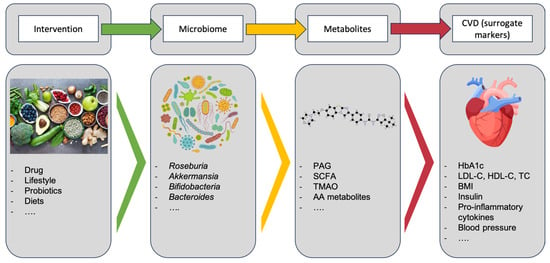
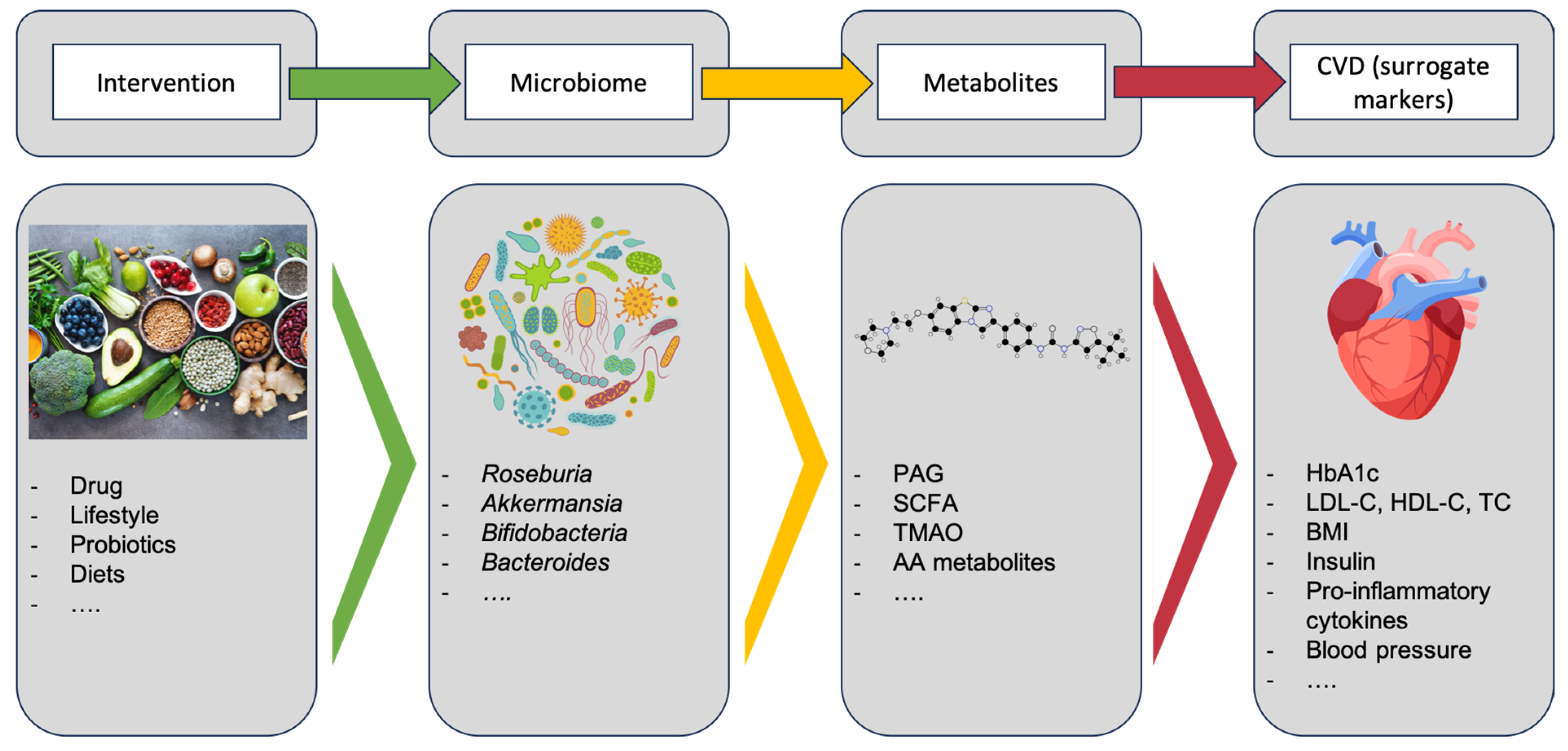
Figure 1 provides an overview of the possible interventions on the gut microbiome and its metabolites to affect cardiovascular risk.
Figure 1.
From gut microbiome intervention to modulation of metabolites and CVD risk; PAG: Phenylacetylglutamine; SCFA: short-chain fatty acid; TMAO: trimethylamine N-oxide; AA metabolites: amino acid metabolites; HbA1c: hemoglobin A1c; LDL-C: low-density lipoprotein-cholesterol; HDL-C: high-density lipoprotein cholesterol; TC: total cholesterol; BMI: body mass index.
2. Methodology
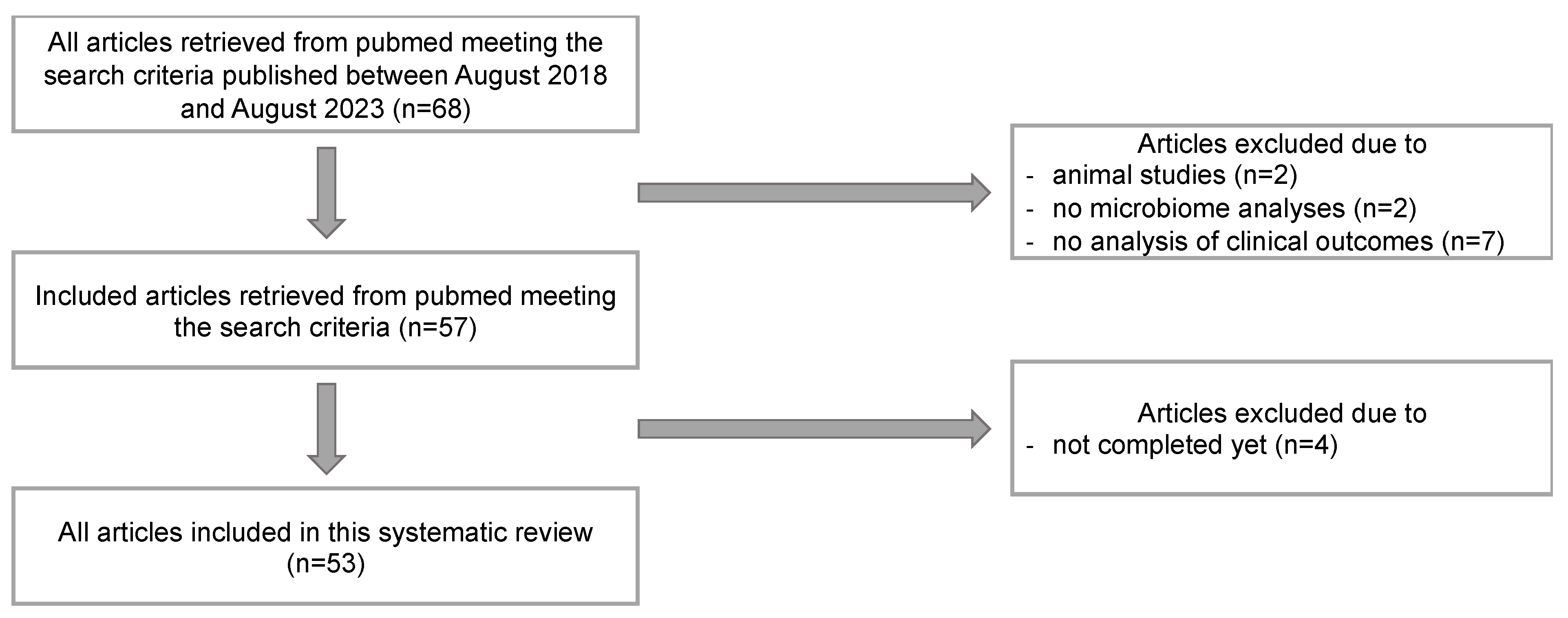
A systematic literature analysis was conducted on PubMed, extracting articles published between 28 August 2018 and 28 August 2023 using a variety of different search terms to find all relevant articles. The following search algorithm was employed: (“gut microbiome” or “gut microbiota” or “gut microbioma”) and (“cardiovascular disease” or “cardiovascular diseases” or “atherosclerosis” or “atheromathosis” or “heart failure” or “cardiomyopathy” or “coronary heart disease”). Filters for language (English), study design (randomized, controlled trials), and publication date (5 years) were applied. The study design “randomized controlled trials” was chosen because this study design represents the highest level of evidence [32]. A total of 68 articles were identified that finally met the search criteria.
2.1. Inclusion and Exclusion Criteria
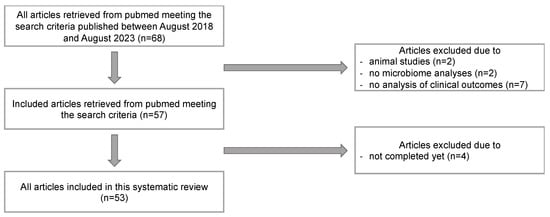
The studies were limited to clinical trials; therefore, studies performed on animals were excluded (n = 2). Studies were excluded if they did not include an analysis of the microbiome (n = 2) or an analysis of clinical outcomes (n = 7). Randomized controlled trials that were not completed were excluded (n = 4). Figure 2 provides an overview of the selection process applied in this literature review. The 53 remaining randomized controlled trials were included in this systematic review. The data are presented according to the PRISMA statement [33].
Figure 2.
Flow diagram of literature analysis (PRISMA-based).
2.2. Risk of Bias
The risk of bias was assessed for each article using the Cochrane Collaboration’s tool for assessing the risk of bias in randomized trials [34].
2.3. Data Extraction and Analysis
The 53 randomized controlled trials were divided into the following five subgroups: lifestyle interventions, diets, probiotics, prebiotics, and drug interventions. Tables were generated to summarize the studies categorized under each of these five subgroups. For each of the studies, participant characteristics, number of participants, intervention, intervention period, effects on the gut microbiome, effects on cardiovascular endpoints, and references are listed.
3. Results
The following section demonstrates the effects of various interventions on the intestinal microbiome and cardiovascular endpoints. We distinguish between CV risk factors that are causally linked to an increased risk of a disease, and CV risk markers that are associated with the disease but are not causally linked.
3.1. Lifestyle Interventions
We first focused on the articles that studied the effects of lifestyle interventions on the intestinal microbiome and featured clinical endpoints. Five studies [35,36,37,38,39] analyzed the effects of lifestyle interventions on the intestinal microbiome and their impact on the risk of CVD (Table 1). We could include three hypocaloric diets, one endurance exercise study, and one study that differed between extensive lunches and extensive dinners. All five studies showed a significant effect on the intestinal microbiome. A significant positive clinical outcome was observed in four studies. Three studies [35,38,39] were based on a hypocaloric diet (energy-restricted diet or intermittent fasting). All these studies showed a significant positive impact on cardiovascular endpoints (e.g., a significant decrease in metabolic syndrome (MetS), LDL-C, glucose intolerance, fat mass, weight, waist circumference, and fasting glucose; significantly improved body composition, insulin sensitivity, cholesterol, and inflammatory cytokines). In parallel, significant changes in the microbiome could be demonstrated, including an increase in SCFA-producing bacteria, an increase in SCFAs, a decrease in LPS levels, and a decrease in the percentage change in TMAO. An endurance exercise study [36] also showed a significant beneficial effect on the intestinal microbiome (significant increase in Oscillospira; significant decrease in Clostridium difficile) and on clinical outcome (significant increase in VO2 peak and HDL-C levels; significant decrease in intrahepatic fat content and HbA1c). Of note, the timing of the main meal (extensive lunch or extensive dinner) [37] only showed an increase in Escherichia coli after the extensive lunch but no clinical outcomes. Four studies [35,36,38,39] found a positive correlation between changes in the intestinal microbiome and changes in CVD risk factors and markers. The results are in line with previous studies, that have also shown that an increase in SCFA-producing bacteria and SCFAs and a decrease in LPS and TMAO positively affect CVD risk factors and markers such as glucose metabolism, inflammation, atherosclerosis, blood pressure, and dyslipidemia [12,17,21,22,31,40,41,42]. To date, the effect of lifestyle interventions on the intestinal microbiome has only been demonstrated in a few studies [43]. Our review highlights that lifestyle interventions consistently result in positive effects on the microbiome. The positive clinical effect of lifestyle interventions on the risk of CVD is multifactorial and could be party explained by changes in the microbiome.
Table 1.
Studies with lifestyle interventions. Significantly increased: ↑↑, and significantly decreased: ↓↓.
3.2. Diets
A total of 35 studies analyzed the effect of specific diets on the microbiome and on the risk of CVD. Given the heterogeneity among diets, a division was made into seven subgroups according to the dietary intervention. These were the Mediterranean diet, high-fiber diets, polyphenol-rich diets and polyphenol-rich phytotherapy, low- to high-fat diets, fish and meat interventions, polyunsaturated fatty acids (PUFAs), and other diets.
3.2.1. Mediterranean Diet
Five studies [44,45,46,47,48] analyzed the effects of a Mediterranean diet (high in nuts, vegetables, fruits, and fish, and low in red meat) on the intestinal microbiome and the impact on the risk of CVD (Table 2). Four studies [44,45,46,47] showed significant beneficial effects on the microbiome (significant change in the abundance of different bacteria, e.g., increase in Akkermansia muciniphila, decrease in Bifidobacterium; significant increase in SCFA). A significant reduction in the risk factors and risk markers for CVD (e.g., an improved postprandial glucose metabolism and insulin sensitivity) was observed in these same articles [44,45,46,47]. In two studies Akkermansia muciniphila was increased; this SCFA-producing bacteria [49] has previously been shown to exert protective effects on CVD [50] (attenuating atherosclerotic lesions by improving metabolic inflammation [51], reducing plasma TMAO by increasing the urinary excretion of TMAO and TMA [52]). In addition, SCFA levels were increased in two studies [44,47] and the SCFA-producing Prevotella was increased in one study [45]. The study by Griffin et al. [48] comparing a healthy diet with a Mediterranean diet showed neither an effect on the microbiome nor a change in CVD risk after the Mediterranean diet. Four studies [44,45,46,47] demonstrated a positive correlation between intestinal microbiome modulation and a reduction in biomarkers related to CVD risk. A positive effect of a Mediterranean diet on risk reduction is already known [2,53]. Our review confirmed the effect of the Mediterranean diet on positive changes in the microbiome and CVD risk factor reduction.
3.2.2. High-Fiber Diet
Seven studies [54,55,56,57,58,59,60] analyzed the effects of high-fiber diets (whole grain, oat porridge, flaxseed, etc.) on the intestinal microbiome and the effect on the risk of CVD (Table 2). Six studies [55,56,57,58,59,60] showed a significant change in the microbiome, including an increase in SCFA-producing bacteria (e.g., Akkermansia, Ruminococcaceae, Lactobacillus, and Bifidobacterium) and SCFAs (serum acetic acid, propionic acid, and valeric acid). A beneficial outcome regarding CV risk factors and risk markers (e.g., a significant decrease in serum TC, LDL-C, non-HDL-C, and insulin resistance) was observed in four studies [55,56,58,59]. Three studies [55,56,58] showed a positive correlation between the intestinal microbiome and reduction in cardiovascular risk factors and markers. Dietary fibers provide a substrate for the gut microbiota, and thus can influence the microbiome for positive outcomes [61]. SCFAs have already been shown to have anti-inflammatory effects and a positive effect on cholesterol levels [17,18]. Based on our review, high-fiber diets may reduce risk factors for CVD by modulating the gut microbiome.
Table 2.
Studies with Mediterranean diet and high-fiber diet. Significantly increased: ↑↑, and significantly decreased: ↓↓.
3.2.3. Polyphenol-Rich Diet and Polyphenol-Rich Phytotherapy
Ten studies [62,63,64,65,66,67,68,69,70,71] analyzed the effects of polyphenol-rich diets (five studies) or polyphenol-rich phytotherapy (five studies) (aronia, raspberries, red wine, etc.) on the intestinal microbiome and the impact on the risk of CVD (Table 3). Eight studies [62,63,65,66,67,68,69,70] showed a significant change in the microbiome (reduction in TMAO and plasma LPS; increase in SCFA-producing bacteria and microbial diversity). These modulations of the intestinal microbiome have previously been shown to have a beneficial effect on the risk of CVD [12,17,21,22,31,40,41,42] (via anti-inflammatory effects and reduced thrombogenic potential). A beneficial outcome concerning the risk of CVD was observed in seven articles [62,63,65,66,68,69,70] (risk factors such as significantly reduced plasma TC and LDL-C, blood pressure, and fasting blood glucose). The study with red wine [67] showed an effect on the intestinal microbiome (a significant remodeling of the gut microbiota) but failed to demonstrate beneficial effects on CV risk (no change in CV risk associated with TMAO concentrations). Phytotherapeutic studies with trans-resveratrol [64] and flavanols [71], both rich in polyphenols, neither demonstrated significant effects on the microbiome nor on clinical outcomes. Five studies [63,65,66,69,70] showed a positive correlation between microbiome modulation and a reduction in biomarkers related to CVD risk. The effect of polyphenol-rich foods to alter the intestinal microbiome composition has been demonstrated previously [72]. A polyphenol-rich diet has demonstrated cardioprotective effects in a previous trial [73]. Our review demonstrates a beneficial effect of a polyphenol-rich diet/phytotherapy on the microbiome and risk of CVD (risk factors).
Table 3.
Studies with polyphenol-rich diet and polyphenol-rich phytotherapy. Decreased: ↓, significantly increased: ↑↑, and significantly decreased: ↓↓.
3.2.4. Low- or High-Fat Diet
Two studies [74,75] analyzed the effects of low- versus high-fat diets on the intestinal microbiome and the impact on the risk of CVD (Table 4). Both studies investigating a low-fat diet group showed positive changes in CVD risk factors and markers (significantly decreased LDL-C/HDL-C ratio, non-HDL-C, TC, LDL-C, and waist circumference) but only one study [75] demonstrated a significant effect on the intestinal microbiome (increase in Blautia and Faecalibacterium, both SCFA-producing bacteria). The positive effects on CVD risk parameters could be partly explained by the increase in SCFA-producing bacteria [76,77]. The Atkins diet [74] (high-fat diet) showed effects on the microbiome (significantly increased Actinobacteria) and on CV risk factors and markers. Increased Actinobacteria led to significantly decreased serum LDL-C/HDL-C ratio and non-HDL-C levels. Wan et al. [75] included an intervention group with a high-fat diet and demonstrated that in addition to the positive effects in the low-fat group, the high-fat group had negative effects on the microbiome and on clinical outcomes (hs-CRP). The high-fat diet led to an increase in Alistipes and to a decrease in Faecalibacterium and Blautia. Alistipes has already been associated with several cardiovascular risk factors and CVDs such as hypertension and atherosclerosis in previous studies [3]. The decrease in Faecalibacterium and Blautia, both SCFA-producing bacteria, and a decrease in SCFA may also partly explain the negative influence on CVDs [17,42]. The negative effect of a high-fat diet on the microbiome by reducing the diversity and richness of the gut microbiome compared to a low-fat diet has already been demonstrated [78,79]. In our review, the effects of low- or high-fat diets on the microbiome and CVD risk were inconsistent.
3.2.5. Fish or Meat Intervention
Two studies [80,81] analyzed the effects of fish and meat interventions on the intestinal microbiome and the impact on CV risk factors (Table 4). Both studies showed a significant change in the intestinal microbiome. Wang et al. [80] compared non-meat protein sources, red meat, and white meat, and demonstrated that red meat consumption may be associated with a higher risk of CVD (due to elevated TMAO concentrations in the red meat group). Schmedes et al. [81] compared lean-seafood diet and non-seafood diet. The study showed an association between different gut bacteria and CV risk factors. Specific gut bacteria were associated with circulating TMAO levels: lower Clostridium cluster IV in the non-seafood diet was associated with lower TMAO levels and therefore, might be associated with lower risk of CVD. Specific gut bacteria were significantly associated with circulating triacylglycerol (TAG) and TC/HDL-C. For example, Roseburia, Sutterella, and Erysipelotrichaceae significantly and positively correlated with the TC/HDL-C ratio. Based on the two heterogeneous studies in this dietary group, no definitive statement is feasible about the effects of fish or meat interventions on the microbiome and CVD risk.
3.2.6. Polyunsaturated Fatty Acids (PUFAs)
Three studies [82,83,84] analyzed the effects of polyunsaturated fatty acids (PUFAs) (walnuts, margarine, etc.) on the intestinal microbiome and the impact on the risk of CVD (Table 4). All three studies showed a beneficial effect on CV risk factors, but interestingly, only the diet groups with polyunsaturated fats [82,84] but not the capsule [83] altered the intestinal microbiome. Telle-Hansen et al. [82] investigated the effect of margarine (rich in PUFA) and showed a significant change in the microbiome with a significant increase in SCFA-producing bacteria (Lachnospiraceae and Bifidobacterium) and butyrate. The study demonstrated a significant reduction in a CV risk factor (TC). The study by Vetrani et al. [69] discussed a diet containing long-chain n-3-polyunsaturated fatty acids in the polyphenol-rich diet group. This intervention group showed a similar increase in Bifidobacteria, but did not demonstrate a change in CV risk factors. Tindall et al. [84] investigated the effect of walnuts (rich in PUFA) on the intestinal microbiome and the impact on the risk of CVD. The study showed a significant alteration in the microbiome and beneficial effects on CV risk factors (more Lachnospiraceae correlated with lower blood pressure and lipid levels (TC and non-HDL-C); more Eubacterium eligens was associated with lower brachial MAP, blood pressure, and central MAP). Storm-Larsen et al. [83] analyzed the effect of an omega-3 PUFA capsule intervention [83] and demonstrated a significant positive clinical outcome (significant decrease in LDL-C, TC, and TAG) but no alteration in the microbiome. The two studies with an intestinal microbiome modulation demonstrated a positive correlation between bacterial changes and improvement of risk factors for CVD risk after polyunsaturated fatty acid intervention. A correlation between omega-3 fatty acids and beneficial changes in the gut microbiota has already been published [85,86]. In addition, the effectiveness of replacing saturated fatty acids with PUFA in reducing cholesterol levels [87] and thus the risk of CVD [88] has already been demonstrated. Taken together, PUFAs may reduce the risk of CVD by modulating the gut microbiome.
Table 4.
Studies with low- or high-fat diets, diets with fish or meat intervention, and diets with polyunsaturated fatty acids. Increased: ↑, significantly increased: ↑↑, and significantly decreased: ↓↓.
3.2.7. Other Diets
The last subgroup is a heterogeneous group of six studies [90,91,92,93,94,95] analyzing the effect of different diets on the intestinal microbiome and the effect on CVD risk factors and markers (Table 5). Ben-Yacov et al. [90] investigated the effect of a personalized postprandial targeting diet (PPT) and showed a change in the intestinal microbiome (significant increase in alpha diversity) for the PPT. A causal analysis revealed nine species mediating an association between dietary changes and clinical outcomes and three species mediating an association between PPT adherence and HbA1c, HDL-C, and TAG. The study aims to support the role of the intestinal microbiome in influencing the effects of dietary modifications on cardiometabolic outcomes.
Table 5.
Studies with other diets. Significantly increased: ↑↑, and significantly decreased: ↓↓.
A whole egg intervention [92] did not show an effect on the gut microbiome composition nor on the CVD-associated clinical risk. Two diets, a lacto-ovo vegetarian diet (LOV) [91] and a multifunctional diet (MFD) [93], both showed a change in the microbiome (changes in bacteria) and a significant beneficial effect on CVD risk factors and markers (e.g., significantly reduced TC and LDL-C).
Two studies [94,95] analyzed the effects of dairy products on the intestinal microbiome and the effect on the risk of CVD. Burton et al. [94] showed a significant positive effect on the microbiome for the group with fermented dairy products (yogurt and cheese) (significant reduction in postprandial TMAO responses in urine and plasma). The intervention group with non-fermented dairy products did not show a change in the microbiome (no change in the TMAO levels). Fermented dairy products led to a significantly lower risk of CVD associated with TMAO concentrations. Vors et al. [95] did not show an effect on the microbiome in the group with milk polar lipids but demonstrated a significant positive impact on CV risk factors. Both studies had small sample sizes (23 participants and 58 participants) and short invention periods (up to 4 weeks). These diet groups were heterogeneous and most had small sample sizes and short intervention and follow-up periods. Therefore, it is not possible to definitively state the effect of these diets on the microbiome and the CVD risk.
3.3. Probiotics
Probiotics are live microorganisms that are intended to provide health benefits by improving or restoring the gut microbiota [96]. There is a high interest in whether such bacteria might be able to exert beneficial effects on CVD. Eight studies [97,98,99,100,101,102,103,104] investigated the impact of probiotics on the composition of the intestinal microbiome and the risk of CVD (Table 6). The studies mainly applied Lactobacilli [97,102,103] and/or Bifidobacteria [98,99,100,101,103,104], (both are SCFA-producing bacteria [105,106]), together with other species. As expected, all eight studies showed an effect on the gut microbiome. The probiotic intervention led to an increase in SCFA-producing bacteria (for example, Bifidobacterium and Akkermansia spp.) and the studies partly showed a decrease in TMAO levels, which has previously been shown to have a beneficial impact on the risk of CVD [21,22]. Five probiotic studies [98,99,100,102,104] reported significant beneficial effects on CVD risk factors and markers (e.g., a significant decrease in TC, non-HDL-C, insulin, and blood pressure). In one study with different probiotic interventions [100], only the group supplemented with Bacillus subtilis strain DE111 showed positive effects on CVD risk factors (significant reduction in TC and non-HDL-C).
Table 6.
Studies with probiotics. Increased: ↑, significantly increased: ↑↑, and significantly decreased: ↓↓.
Two studies [101,103] with patients suffering from end-stage renal disease and treated with hemodialysis failed to demonstrate beneficial effects on CVD risk factors. The lack of clinical risk reduction in patients with end-stage renal disease [101,103] may be explained by the characteristics of chronic renal disease including metabolic and immune dysregulation due to uremia and an altered gut microbiome [103].
Four studies [98,99,101,104] demonstrated a positive correlation between specific intestinal microbiome changes and CVD risk improvements on a biomarker level. The positive effect of probiotics on cardiometabolic risk was already known from previous analyses [107] and was well confirmed in our study. The positive effect on CVD risk factors could be partly explained by changes in the microbiome based on our review.
3.4. Prebiotics
Prebiotics are food components that are intended to encourage the growth of beneficial microorganisms in the gut [96]. There was only one study that met the search criteria in the prebiotics group [108]. This trial is ongoing and was therefore excluded.
3.5. Drug Interventions
Five studies [109,110,111,112,113] investigated the effects of drugs (empagliflozin, rifaximin, rosuvastatin, and choline) on the microbiome composition and the risk of CVD (Table 7). Three of these studies showed a significant effect on the microbiome [109,111,113], while a significant beneficial effect on CVD risk factors and markers was observed in only one of those studies [109]. An interesting intervention with positive effects was the use of the sodium–glucose transporter (SGLT)-2 inhibitor empagliflozin [109]. Deng et al. [109] showed significant positive effects of empagliflozin on the microbiome with a significant increase in gut microbiota richness and diversity as well as increased abundances of SCFA-producing bacteria (Roseburia, Eubacterium, and Faecalibacterium). Importantly, they also observed beneficial effects on the CVD risk profile (significant reduction in risk factors for CVD such as HbA1c levels and blood pressure). The findings are in line with previous studies that had also shown that SCFA-producing bacteria and SCFAs have a beneficial effect on CVD risk parameters (glucose metabolism, inflammation, atherosclerosis, and the development of atherosclerosis, blood pressure, and dyslipidemia) [40,41,42]. The increase in SCFA-producing bacteria after empagliflozin intake could, thus, potentially explain the improvement in CVD risk parameters. Based on these results, the cardioprotective effects of empagliflozin are associated with an altered gut microbiome. Nevertheless, a causal role of the gut microbiome in CVD risk reduction can still not be proven.
Table 7.
Studies with drug interventions. Increased: ↑, significantly increased: ↑↑, and significantly decreased: ↓↓.
One study demonstrated a negative effect on a risk marker related to CVD (TMAO) [113]. Here, Cho et al. [113] demonstrated that different forms of choline supplementation had a different effect on the microbiome, more specifically on TMAO production. Choline bitartrate led to significantly greater plasma TMAO changes than phosphatidylcholine and therefore, to a significantly greater risk of CVD associated with TMAO concentrations. Drug studies with rifaximin [110,111] and rosuvastatin [112] showed no significant difference in the risk of CVD between the intervention and the control group.
4. Summary
4.1. Strengths and Limitations
To the best of our knowledge, this study is the first systematic review of randomized controlled trials investigating the association between the gut microbiome and the risk of CVD. This review supports the paradigm that several microbiome interventions may beneficially affect the cardiovascular risk profile. Due to the design of this review, which only included randomized intervention studies, the review could demonstrate an association and partial correlation between microbiome modulation and a change in CV risk markers or risk factors.
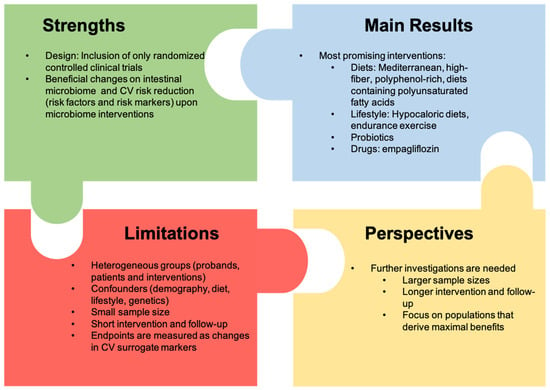
The study has several limitations. For a better interpretation of the study results, the studies were stratified into different intervention groups. A possible limitation resulting from this strategy is that the included participants and the interventions are heterogeneous, limiting the generalizability of the results. Furthermore, the effects of intestinal microbiome modulation are measured as changes in surrogate markers of cardiovascular risk. There is evidence that changes in risk factors translate long-term into changes in CV outcomes, but strictly speaking, these trials do not yet provide sufficient evidence for this. Despite a careful literature search using different search terms, we cannot claim that all relevant studies could be found and included. It is possible that microbiome interventions with positive outcomes were published preferentially (publication bias). Many of the studies included in this review had a small sample size, and therefore, reached low statistical power. Additionally, the intervention period and follow-up time were short in most of the studies (Figure 3).
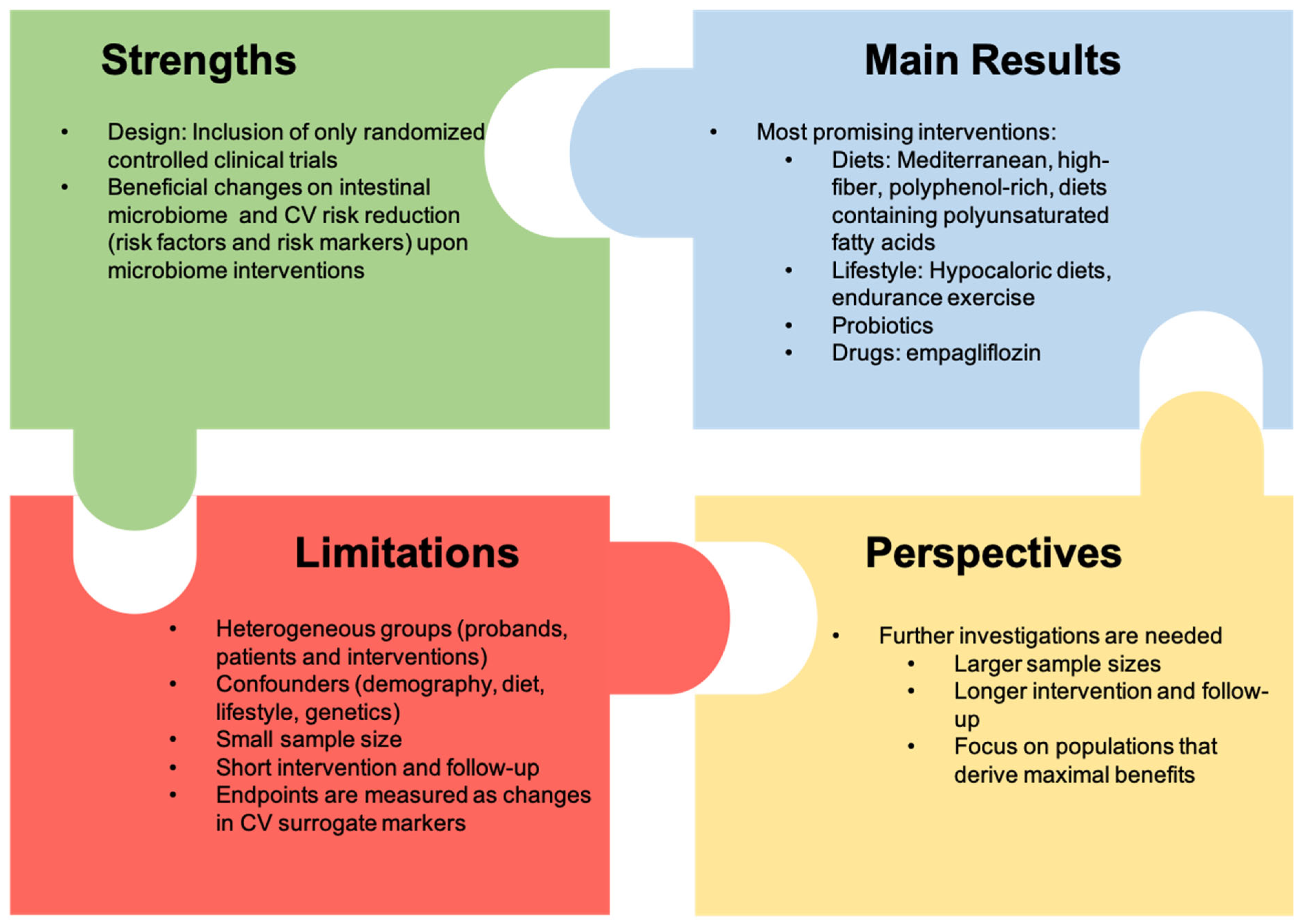
Figure 3.
Strengths, limitations, main results, and perspectives of this study.
4.2. Conclusions
This literature review has demonstrated the modulation of the gut microbiome by a variety of interventions. These changes in the gut microbiome were often associated and partly correlated with a decrease in cardiovascular risk markers and risk factors. Lifestyle interventions (hypocaloric diet and exercise training) and probiotics (mainly Lactobacilli and Bifidobacteria) demonstrated beneficial effects on CV risk. The most promising diets for reducing the risk of CVD were the Mediterranean diets, high-fiber diets, polyphenol-rich diets, and diets with PUFAs due to beneficial effects on risk factors and risk markers for CVDs in the majority of studies. With the exception of empagliflozin, no drug intervention trial showed beneficial effects on CV risk reduction.
4.3. Perspectives
Studies with longer intervention periods or follow-up times and larger sample sizes focusing on populations that derive maximal benefits are needed to clarify the effects of interventions on the gut microbiome to reduce the risk of CVD. With larger sample sizes and longer follow-up times, other factors such as demography, lifestyle, and genetics, which also influence the microbiome, might be detected.
Funding
C.M.M. is funded by the Swiss National Science Foundation (310030-146923 and 310030-165990), the Swiss Heart Foundation and the Lindenberg Family Office. B.S. has been supported by a donation of H.H. Sheikh Khalifa bin Hamad Al-Thani to the University of Zurich, Switzerland, and research grants to the institution from the OPO Foundation, the Iten-Kohaut Foundation, Boston Scientific, and Edwards Lifesciences. M.S.: received funding from the InnoSuisse—Swiss Innovation Agency, Swiss Cancer Foundation, Swiss National Science Foundation, ISREC Foundation, EoE Foundation and the Comprehensive Cancer Center Zurich.
Conflicts of Interest
C.M.M. has received research grants to the institution from EliLilly, AstraZeneca, Roche, Amgen, Novartis, NovoNordisk and MSD including speaker or consultant fees. B. S. has received consulting and speaker fees from Boston Scientific, Abbott Vascular, and MedAlliance. M.S. has shares and is co-founder of Recolony AG, Zurich, CH and has shares in PharmaBiome AG, Zurich, CH. M.S. served as Advisor for Abbvie, Gilead, Fresenius, Topadur, Takeda, Roche and Celltrion. M.S. received speaker’s honoraria from Janssen, Falk Pharma, Vifor Pharma, Pileje, Phytolis and Bromatech. M.S. received research grants to the institution from Abbvie, Takeda, Gilead, Gnubiotics, Roche, Axalbion, Pharmabiome, Topadur, Basilea, MBiomics, Storm Therapeutics, LimmatTech, Zealand Pharma, NodThera, Calypso Biotech, Pileje, Herbodee, Vifor, Menarini.
References
- WHO. Cardiovascular Diseases (CVDs). Available online: https://www.who.int/news-room/fact-sheets/detail/cardiovascular-diseases-(cvds) (accessed on 15 July 2023).
- Arnett, D.K.; Blumenthal, R.S.; Albert, M.A.; Buroker, A.B.; Goldberger, Z.D.; Hahn, E.J.; Himmelfarb, C.D.; Khera, A.; Lloyd-Jones, D.; McEvoy, J.W.; et al. 2019 ACC/AHA Guideline on the Primary Prevention of Cardiovascular Disease: Executive Summary: A Report of the American College of Cardiology/American Heart Association Task Force on Clinical Practice Guidelines. Circulation 2019, 140, e563–e595. [Google Scholar] [CrossRef] [Scilit] [PubMed]
- Jie, Z.; Xia, H.; Zhong, S.-L.; Feng, Q.; Li, S.; Liang, S.; Zhong, H.; Liu, Z.; Gao, Y.; Zhao, H.; et al. The gut microbiome in atherosclerotic cardiovascular disease. Nat. Commun. 2017, 8, 845. [Google Scholar] [CrossRef] [Scilit] [PubMed]
- Karlsson, F.H.; Fåk, F.; Nookaew, I.; Tremaroli, V.; Fagerberg, B.; Petranovic, D.; Bäckhed, F.; Nielsen, J. Symptomatic atherosclerosis is associated with an altered gut metagenome. Nat. Commun. 2012, 3, 1245. [Google Scholar] [CrossRef] [Scilit] [PubMed]
- Yoshida, N.; Yamashita, T.; Kishino, S.; Watanabe, H.; Sasaki, K.; Sasaki, D.; Tabata, T.; Sugiyama, Y.; Kitamura, N.; Saito, Y.; et al. A possible beneficial effect of Bacteroides on faecal lipopolysaccharide activity and cardiovascular diseases. Sci. Rep. 2020, 10, 13009. [Google Scholar] [CrossRef] [Scilit] [PubMed]
- Marchesi, J.R.; Ravel, J. The vocabulary of microbiome research: A proposal. Microbiome 2015, 3, 31. [Google Scholar] [CrossRef] [Scilit]
- Berg, G.; Rybakova, D.; Fischer, D.; Cernava, T.; Vergès, M.-C.C.; Charles, T.; Chen, X.; Cocolin, L.; Eversole, K.; Corral, G.H.; et al. Microbiome definition re-visited: Old concepts and new challenges. Microbiome 2020, 8, 103. [Google Scholar] [CrossRef] [Scilit]
- Dupré, J.; O’Malley, M.A. Varieties of Living Things: Life at the Intersection of Lineage and Metabolism. In Vitalism and the Scientific Image in Post-Enlightenment Life Science; Springer: Amsterdam, The Netherlands, 2013; pp. 1800–2010. [Google Scholar]
- Peirce, J.M.; Alvina, K. The role of inflammation and the gut microbiome in depression and anxiety. J. Neurosci. Res. 2019, 97, 1223–1241. [Google Scholar] [CrossRef] [Scilit]
- Jiang, H.; Ling, Z.; Zhang, Y.; Mao, H.; Ma, Z.; Yin, Y.; Wang, W.; Tang, W.; Tan, Z.; Shi, J.; et al. Altered fecal microbiota composition in patients with major depressive disorder. Brain Behav. Immun. 2015, 48, 186–194. [Google Scholar] [CrossRef] [Scilit]
- Hilty, M.; Burke, C.; Pedro, H.; Cardenas, P.; Bush, A.; Bossley, C.; Davies, J.; Ervine, A.; Poulter, L.; Pachter, L.; et al. Disordered microbial communities in asthmatic airways. PLoS ONE 2010, 5, e8578. [Google Scholar] [CrossRef] [Scilit]
- Rogler, G.; Rosano, G. The heart and the gut. Eur. Heart J. 2014, 35, 426–430. [Google Scholar] [CrossRef] [Scilit]
- Scharl, M.; Rogler, G. Inflammatory bowel disease pathogenesis. Curr. Opin. Gastroenterol. 2012, 28, 301–309. [Google Scholar] [CrossRef] [Scilit] [PubMed]
- Zmora, N.; Soffer, E.; Elinav, E. Transforming medicine with the microbiome. Sci. Transl. Med. 2019, 11, eaaw1815. [Google Scholar] [CrossRef] [Scilit] [PubMed]
- Mamic, P.; Chaikijurajai, T.; Tang, W.H.W. Gut microbiome—A potential mediator of pathogenesis in heart failure and its comorbidities: State-of-the-art review. J. Mol. Cell Cardiol. 2021, 152, 105–117. [Google Scholar] [CrossRef] [Scilit] [PubMed]
- Nemet, I.; Saha, P.P.; Gupta, N.; Zhu, W.; Romano, K.A.; Skye, S.M.; Cajka, T.; Mohan, M.L.; Li, L.; Wu, Y.; et al. A Cardiovascular Disease-Linked Gut Microbial Metabolite Acts via Adrenergic Receptors. Cell 2020, 180, 862–877.e822. [Google Scholar] [CrossRef] [Scilit]
- Haghikia, A.; Zimmermann, F.; Schumann, P.; Jasina, A.; Roessler, J.; Schmidt, D.; Heinze, P.; Kaisler, J.; Nageswaran, V.; Aigner, A.; et al. Propionate attenuates atherosclerosis by immune-dependent regulation of intestinal cholesterol metabolism. Eur. Heart J. 2022, 43, 518–533. [Google Scholar] [CrossRef] [Scilit]
- Saemann, M.D.; Bohmig, G.A.; Osterreicher, C.H.; Burtscher, H.; Parolini, O.; Diakos, C.; Stockl, J.; Horl, W.H.; Zlabinger, G.J. Anti-inflammatory effects of sodium butyrate on human monocytes: Potent inhibition of IL-12 and up-regulation of IL-10 production. FASEB J. 2000, 14, 2380–2382. [Google Scholar] [CrossRef] [Scilit]
- Janeiro, M.H.; Ramirez, M.J.; Milagro, F.I.; Martinez, J.A.; Solas, M. Implication of Trimethylamine N-Oxide (TMAO) in Disease: Potential Biomarker or New Therapeutic Target. Nutrients 2018, 10, 1398. [Google Scholar] [CrossRef] [Scilit]
- Sitaraman, R. Phospholipid catabolism by gut microbiota and the risk of cardiovascular disease. J. Med. Microbiol. 2013, 62, 948–950. [Google Scholar] [CrossRef] [Scilit]
- Zhu, W.; Gregory, J.C.; Org, E.; Buffa, J.A.; Gupta, N.; Wang, Z.; Li, L.; Fu, X.; Wu, Y.; Mehrabian, M.; et al. Gut Microbial Metabolite TMAO Enhances Platelet Hyperreactivity and Thrombosis Risk. Cell 2016, 165, 111–124. [Google Scholar] [CrossRef] [Scilit]
- Tang, W.H.; Wang, Z.; Levison, B.S.; Koeth, R.A.; Britt, E.B.; Fu, X.; Wu, Y.; Hazen, S.L. Intestinal microbial metabolism of phosphatidylcholine and cardiovascular risk. N. Engl. J. Med. 2013, 368, 1575–1584. [Google Scholar] [CrossRef] [Scilit]
- Tang, W.H.W.; Backhed, F.; Landmesser, U.; Hazen, S.L. Intestinal Microbiota in Cardiovascular Health and Disease: JACC State-of-the-Art Review. J. Am. Coll. Cardiol. 2019, 73, 2089–2105. [Google Scholar] [CrossRef] [Scilit] [PubMed]
- Molinaro, A.; Bel Lassen, P.; Henricsson, M.; Wu, H.; Adriouch, S.; Belda, E.; Chakaroun, R.; Nielsen, T.; Bergh, P.-O.; Rouault, C.; et al. Imidazole propionate is increased in diabetes and associated with dietary patterns and altered microbial ecology. Nat. Commun. 2020, 11, 1–10. [Google Scholar] [CrossRef] [Scilit] [PubMed]
- Chong Nguyen, C.; Duboc, D.; Rainteau, D.; Sokol, H.; Humbert, L.; Seksik, P.; Bellino, A.; Abdoul, H.; Bouazza, N.; Treluyer, J.-M.; et al. Circulating bile acids concentration is predictive of coronary artery disease in human. Sci. Rep. 2021, 11, 1–10. [Google Scholar] [CrossRef] [Scilit] [PubMed]
- Bishop-Bailey, D.; Walsh, D.T.; Warner, T.D. Expression and activation of the farnesoid X receptor in the vasculature. Proc. Natl. Acad. Sci. USA 2004, 101, 3668–3673. [Google Scholar] [CrossRef] [Scilit]
- Kawamata, Y.; Fujii, R.; Hosoya, M.; Harada, M.; Yoshida, H.; Miwa, M.; Fukusumi, S.; Habata, Y.; Itoh, T.; Shintani, Y.; et al. A G protein-coupled receptor responsive to bile acids. J. Biol. Chem. 2003, 278, 9435–9440. [Google Scholar] [CrossRef] [Scilit]
- Li, Y.T.; Swales, K.E.; Thomas, G.J.; Warner, T.D.; Bishop-Bailey, D. Farnesoid x receptor ligands inhibit vascular smooth muscle cell inflammation and migration. Arterioscler. Thromb. Vasc. Biol. 2007, 27, 2606–2611. [Google Scholar] [CrossRef] [Scilit]
- Ryan, P.M.; Stanton, C.; Caplice, N.M. Bile acids at the cross-roads of gut microbiome–host cardiometabolic interactions. Diabetol. Amp; Metab. Syndr. 2017, 9, 102. [Google Scholar] [CrossRef] [Scilit]
- Gil-Cruz, C.; Perez-Shibayama, C.; De Martin, A.; Ronchi, F.; van der Borght, K.; Niederer, R.; Onder, L.; Lutge, M.; Novkovic, M.; Nindl, V.; et al. Microbiota-derived peptide mimics drive lethal inflammatory cardiomyopathy. Science 2019, 366, 881–886. [Google Scholar] [CrossRef] [Scilit]
- Sieve, I.; Ricke-Hoch, M.; Kasten, M.; Battmer, K.; Stapel, B.; Falk, C.S.; Leisegang, M.S.; Haverich, A.; Scherr, M.; Hilfiker-Kleiner, D. A positive feedback loop between IL-1beta, LPS and NEU1 may promote atherosclerosis by enhancing a pro-inflammatory state in monocytes and macrophages. Vasc. Pharmacol. 2018, 103–105, 16–28. [Google Scholar] [CrossRef] [Scilit]
- Charrois, T.L. Systematic Reviews: What Do You Need to Know to Get Started? Can. J. Hosp. Pharm. 2015, 68, 144–148. [Google Scholar] [CrossRef] [Scilit]
- Page, M.J.; McKenzie, J.E.; Bossuyt, P.M.; Boutron, I.; Hoffmann, T.C.; Mulrow, C.D.; Shamseer, L.; Tetzlaff, J.M.; Akl, E.A.; Brennan, S.E.; et al. The PRISMA 2020 statement: An updated guideline for reporting systematic reviews. Rev. Esp. Cardiol. 2021, 74, 790–799. [Google Scholar] [CrossRef] [PubMed]
- Higgins, J.P.; Altman, D.G.; Gotzsche, P.C.; Juni, P.; Moher, D.; Oxman, A.D.; Savovic, J.; Schulz, K.F.; Weeks, L.; Sterne, J.A.; et al. The Cochrane Collaboration’s tool for assessing risk of bias in randomised trials. BMJ 2011, 343, d5928. [Google Scholar] [CrossRef] [Scilit] [PubMed]
- Guevara-Cruz, M.; Flores-López, A.G.; Aguilar-López, M.; Sánchez-Tapia, M.; Medina-Vera, I.; Díaz, D.; Tovar, A.R.; Torres, N. Improvement of Lipoprotein Profile and Metabolic Endotoxemia by a Lifestyle Intervention That Modifies the Gut Microbiota in Subjects With Metabolic Syndrome. J. Am. Heart Assoc. 2019, 8, e012401. [Google Scholar] [CrossRef] [Scilit]
- Taniguchi, H.; Tanisawa, K.; Sun, X.; Kubo, T.; Hoshino, Y.; Hosokawa, M.; Takeyama, H.; Higuchi, M. Effects of short-term endurance exercise on gut microbiota in elderly men. Physiol. Rep. 2018, 6, e13935. [Google Scholar] [CrossRef] [Scilit]
- Papadopoulou, R.T.; Theodorou, M.R.; Ieong, C.S.; Ballantyne, K.; Marshall, D.; Verney, A.; Roig, M.; Nichols, B.; Gerasimidis, K. The Acute Effect of Meal Timing on the Gut Microbiome and the Cardiometabolic Health of the Host: A Crossover Randomized Control Trial. Ann. Nutr. Metab. 2020, 76, 322–333. [Google Scholar] [CrossRef] [Scilit]
- Guo, Y.; Luo, S.; Ye, Y.; Yin, S.; Fan, J.; Xia, M. Intermittent Fasting Improves Cardiometabolic Risk Factors and Alters Gut Microbiota in Metabolic Syndrome Patients. J. Clin. Endocrinol. Metab. 2021, 106, 64–79. [Google Scholar] [CrossRef] [Scilit]
- Erickson, M.L.; Malin, S.K.; Wang, Z.; Brown, J.M.; Hazen, S.L.; Kirwan, J.P. Effects of Lifestyle Intervention on Plasma Trimethylamine N-Oxide in Obese Adults. Nutrients 2019, 11, 179. [Google Scholar] [CrossRef] [Scilit]
- Yang, J.Y.; Lee, Y.S.; Kim, Y.; Lee, S.H.; Ryu, S.; Fukuda, S.; Hase, K.; Yang, C.S.; Lim, H.S.; Kim, M.S.; et al. Gut commensal Bacteroides acidifaciens prevents obesity and improves insulin sensitivity in mice. Mucosal Immunol. 2017, 10, 104–116. [Google Scholar] [CrossRef] [Scilit]
- Das, B.; Singh, V. (Eds.) Human Microbiome in Health and Disease—Part B; Academic Press: Cambridge, MA, USA, 2022. [Google Scholar]
- Kasahara, K.; Krautkramer, K.A.; Org, E.; Romano, K.A.; Kerby, R.L.; Vivas, E.I.; Mehrabian, M.; Denu, J.M.; Bäckhed, F.; Lusis, A.J.; et al. Interactions between Roseburia intestinalis and diet modulate atherogenesis in a murine model. Nat. Microbiol. 2018, 3, 1461–1471. [Google Scholar] [CrossRef] [Scilit]
- Cignarella, F.; Cantoni, C.; Ghezzi, L.; Salter, A.; Dorsett, Y.; Chen, L.; Phillips, D.; Weinstock, G.M.; Fontana, L.; Cross, A.H.; et al. Intermittent Fasting Confers Protection in CNS Autoimmunity by Altering the Gut Microbiota. Cell Metab. 2018, 27, 1222–1235.e1226. [Google Scholar] [CrossRef] [Scilit]
- Vitale, M.; Giacco, R.; Laiola, M.; Della Pepa, G.; Luongo, D.; Mangione, A.; Salamone, D.; Vitaglione, P.; Ercolini, D.; Rivellese, A.A. Acute and chronic improvement in postprandial glucose metabolism by a diet resembling the traditional Mediterranean dietary pattern: Can SCFAs play a role? Clin. Nutr. 2021, 40, 428–437. [Google Scholar] [CrossRef] [Scilit] [PubMed]
- Rinott, E.; Meir, A.Y.; Tsaban, G.; Zelicha, H.; Kaplan, A.; Knights, D.; Tuohy, K.; Scholz, M.U.; Koren, O.; Stampfer, M.J.; et al. The effects of the Green-Mediterranean diet on cardiometabolic health are linked to gut microbiome modifications: A randomized controlled trial. Genome Med. 2022, 14, 29. [Google Scholar] [CrossRef] [Scilit] [PubMed]
- Tagliamonte, S.; Laiola, M.; Ferracane, R.; Vitale, M.; Gallo, M.A.; Meslier, V.; Pons, N.; Ercolini, D.; Vitaglione, P. Mediterranean diet consumption affects the endocannabinoid system in overweight and obese subjects: Possible links with gut microbiome, insulin resistance and inflammation. Eur. J. Nutr. 2021, 60, 3703–3716. [Google Scholar] [CrossRef] [Scilit]
- Pagliai, G.; Russo, E.; Niccolai, E.; Dinu, M.; Di Pilato, V.; Magrini, A.; Bartolucci, G.; Baldi, S.; Menicatti, M.; Giusti, B.; et al. Influence of a 3-month low-calorie Mediterranean diet compared to the vegetarian diet on human gut microbiota and SCFA: The CARDIVEG Study. Eur. J. Nutr. 2020, 59, 2011–2024. [Google Scholar] [CrossRef] [Scilit]
- Griffin, L.E.; Djuric, Z.; Angiletta, C.J.; Mitchell, C.M.; Baugh, M.E.; Davy, K.P.; Neilson, A.P. A Mediterranean diet does not alter plasma trimethylamine N-oxide concentrations in healthy adults at risk for colon cancer. Food Funct. 2019, 10, 2138–2147. [Google Scholar] [CrossRef] [Scilit]
- Rey, F.E.; Faith, J.J.; Bain, J.; Muehlbauer, M.J.; Stevens, R.D.; Newgard, C.B.; Gordon, J.I. Dissecting the in vivo metabolic potential of two human gut acetogens. J. Biol. Chem. 2010, 285, 22082–22090. [Google Scholar] [CrossRef] [Scilit]
- Yan, J.; Sheng, L.; Li, H. Akkermansia muciniphila: Is it the Holy Grail for ameliorating metabolic diseases? Gut Microbes 2021, 13, 1984104. [Google Scholar] [CrossRef] [Scilit]
- Li, J.; Lin, S.; Vanhoutte, P.M.; Woo, C.W.; Xu, A. Akkermansia Muciniphila Protects Against Atherosclerosis by Preventing Metabolic Endotoxemia-Induced Inflammation in Apoe-/-Mice. Circulation 2016, 133, 2434–2446. [Google Scholar] [CrossRef] [Scilit]
- Plovier, H.; Everard, A.; Druart, C.; Depommier, C.; Van Hul, M.; Geurts, L.; Chilloux, J.; Ottman, N.; Duparc, T.; Lichtenstein, L.; et al. A purified membrane protein from Akkermansia muciniphila or the pasteurized bacterium improves metabolism in obese and diabetic mice. Nat. Med. 2017, 23, 107–113. [Google Scholar] [CrossRef] [Scilit]
- Salas-Salvadó, J.; Becerra-Tomás, N.; García-Gavilán, J.F.; Bulló, M.; Barrubés, L. Mediterranean Diet and Cardiovascular Disease Prevention: What Do We Know? Prog. Cardiovasc. Dis. 2018, 61, 62–67. [Google Scholar] [CrossRef] [Scilit]
- Kemp, J.A.; Dos Santos, H.F.; de Jesus, H.E.; Esgalhado, M.; de Paiva, B.R.; Azevedo, R.; Stenvinkel, P.; Bergman, P.; Lindholm, B.; Ribeiro-Alves, M.; et al. Resistant Starch Type-2 Supplementation Does Not Decrease Trimethylamine N-Oxide (TMAO) Plasma Level in Hemodialysis Patients. J. Am. Nutr. Assoc. 2022, 41, 788–795. [Google Scholar] [CrossRef] [Scilit] [PubMed]
- Ranaivo, H.; Zhang, Z.; Alligier, M.; Van Den Berghe, L.; Sothier, M.; Lambert-Porcheron, S.; Feugier, N.; Cuerq, C.; Machon, C.; Neyrinck, A.M.; et al. Chitin-glucan supplementation improved postprandial metabolism and altered gut microbiota in subjects at cardiometabolic risk in a randomized trial. Sci. Rep. 2022, 12, 8830. [Google Scholar] [CrossRef] [Scilit] [PubMed]
- Xu, D.; Pan, D.; Liu, H.; Yang, C.; Yang, X.; Wang, X.; Liu, F.; Feng, M.; Wu, Q.; Shen, Y.; et al. Improvement in cardiometabolic risk markers following an oatmeal diet is associated with gut microbiota in mildly hypercholesterolemic individuals. Food Res. Int. 2022, 160, 111701. [Google Scholar] [CrossRef] [Scilit] [PubMed]
- Fava, F.; Ulaszewska, M.M.; Scholz, M.; Stanstrup, J.; Nissen, L.; Mattivi, F.; Vermeiren, J.; Bosscher, D.; Pedrolli, C.; Tuohy, K.M. Impact of wheat aleurone on biomarkers of cardiovascular disease, gut microbiota and metabolites in adults with high body mass index: A double-blind, placebo-controlled, randomized clinical trial. Eur. J. Nutr. 2022, 61, 2651–2671. [Google Scholar] [CrossRef] [Scilit]
- Ranaivo, H.; Thirion, F.; Bera-Maillet, C.; Guilly, S.; Simon, C.; Sothier, M.; Van Den Berghe, L.; Feugier-Favier, N.; Lambert-Porcheron, S.; Dussous, I.; et al. Increasing the diversity of dietary fibers in a daily-consumed bread modifies gut microbiota and metabolic profile in subjects at cardiometabolic risk. Gut Microbes 2022, 14, 2044722. [Google Scholar] [CrossRef] [Scilit]
- McCann, S.E.; Hullar, M.A.J.; Tritchler, D.L.; Cortes-Gomez, E.; Yao, S.; Davis, W.; O'Connor, T.; Erwin, D.; Thompson, L.U.; Yan, L.; et al. Enterolignan Production in a Flaxseed Intervention Study in Postmenopausal US Women of African Ancestry and European Ancestry. Nutrients 2021, 13, 919. [Google Scholar] [CrossRef] [Scilit]
- Eriksen, A.K.; Brunius, C.; Mazidi, M.; Hellstrom, P.M.; Riserus, U.; Iversen, K.N.; Fristedt, R.; Sun, L.; Huang, Y.; Norskov, N.P.; et al. Effects of whole-grain wheat, rye, and lignan supplementation on cardiometabolic risk factors in men with metabolic syndrome: A randomized crossover trial. Am. J. Clin. Nutr. 2020, 111, 864–876. [Google Scholar] [CrossRef] [Scilit]
- de Mello, V.D.; Paananen, J.; Lindström, J.; Lankinen, M.A.; Shi, L.; Kuusisto, J.; Pihlajamäki, J.; Auriola, S.; Lehtonen, M.; Rolandsson, O.; et al. Indolepropionic acid and novel lipid metabolites are associated with a lower risk of type 2 diabetes in the Finnish Diabetes Prevention Study. Sci. Rep. 2017, 7, 46337. [Google Scholar] [CrossRef] [Scilit]
- Rehman, A.; Tyree, S.M.; Fehlbaum, S.; DunnGalvin, G.; Panagos, C.G.; Guy, B.; Patel, S.; Dinan, T.G.; Duttaroy, A.K.; Duss, R.; et al. A water-soluble tomato extract rich in secondary plant metabolites lowers trimethylamine-n-oxide and modulates gut microbiota: A randomized, double-blind, placebo-controlled cross-over study in overweight and obese adults. J. Nutr. 2023, 153, 96–105. [Google Scholar] [CrossRef] [Scilit]
- Le Sayec, M.; Xu, Y.; Laiola, M.; Gallego, F.A.; Katsikioti, D.; Durbidge, C.; Kivisild, U.; Armes, S.; Lecomte, M.; Fanca-Berthon, P.; et al. The effects of Aronia berry (poly)phenol supplementation on arterial function and the gut microbiome in middle aged men and women: Results from a randomized controlled trial. Clin. Nutr. 2022, 41, 2549–2561. [Google Scholar] [CrossRef] [Scilit]
- Alvarenga, L.; Cardozo, L.; Leal, V.O.; Kemp, J.A.; Saldanha, J.F.; Ribeiro-Alves, M.; Meireles, T.; Nakao, L.S.; Mafra, D. Can Resveratrol Supplementation Reduce Uremic Toxin Plasma Levels From the Gut Microbiota in Nondialyzed Patients With Chronic Kidney Disease? J. Ren. Nutr. 2022, 32, 685–691. [Google Scholar] [CrossRef] [Scilit] [PubMed]
- Zhang, X.; Zhao, A.; Sandhu, A.K.; Edirisinghe, I.; Burton-Freeman, B.M. Red Raspberry and Fructo-Oligosaccharide Supplementation, Metabolic Biomarkers, and the Gut Microbiota in Adults with Prediabetes: A Randomized Crossover Clinical Trial. J. Nutr. 2022, 152, 1438–1449. [Google Scholar] [CrossRef] [Scilit] [PubMed]
- Taladrid, D.; de Celis, M.; Belda, I.; Bartolome, B.; Moreno-Arribas, M.V. Hypertension- and glycaemia-lowering effects of a grape-pomace-derived seasoning in high-cardiovascular risk and healthy subjects. Interplay with the gut microbiome. Food Funct. 2022, 13, 2068–2082. [Google Scholar] [CrossRef] [Scilit] [PubMed]
- Haas, E.A.; Saad, M.J.A.; Santos, A.; Vitulo, N.; Lemos, W.J.F.; Martins, A.M.A.; Picossi, C.R.C.; Favarato, D.; Gaspar, R.S.; Magro, D.O.; et al. A red wine intervention does not modify plasma trimethylamine N-oxide but is associated with broad shifts in the plasma metabolome and gut microbiota composition. Am. J. Clin. Nutr. 2022, 116, 1515–1529. [Google Scholar] [CrossRef] [Scilit] [PubMed]
- Gargari, G.; Taverniti, V.; Del Bo, C.; Bernardi, S.; Hidalgo-Liberona, N.; Merono, T.; Andres-Lacueva, C.; Kroon, P.A.; Cherubini, A.; Riso, P.; et al. Higher bacterial DNAemia can affect the impact of a polyphenol-rich dietary pattern on biomarkers of intestinal permeability and cardiovascular risk in older subjects. Eur. J. Nutr. 2022, 61, 1209–1220. [Google Scholar] [CrossRef] [Scilit]
- Vetrani, C.; Maukonen, J.; Bozzetto, L.; Della Pepa, G.; Vitale, M.; Costabile, G.; Riccardi, G.; Rivellese, A.A.; Saarela, M.; Annuzzi, G. Diets naturally rich in polyphenols and/or long-chain n-3 polyunsaturated fatty acids differently affect microbiota composition in high-cardiometabolic-risk individuals. Acta Diabetol. 2020, 57, 853–860. [Google Scholar] [CrossRef] [Scilit]
- Istas, G.; Wood, E.; Le Sayec, M.; Rawlings, C.; Yoon, J.; Dandavate, V.; Cera, D.; Rampelli, S.; Costabile, A.; Fromentin, E.; et al. Effects of aronia berry (poly)phenols on vascular function and gut microbiota: A double-blind randomized controlled trial in adult men. Am. J. Clin. Nutr. 2019, 110, 316–329. [Google Scholar] [CrossRef] [Scilit]
- Angiletta, C.J.; Griffin, L.E.; Steele, C.N.; Baer, D.J.; Novotny, J.A.; Davy, K.P.; Neilson, A.P. Impact of short-term flavanol supplementation on fasting plasma trimethylamine N-oxide concentrations in obese adults. Food Funct. 2018, 9, 5350–5361. [Google Scholar] [CrossRef] [Scilit]
- Li, Z.; Henning, S.M.; Lee, R.P.; Lu, Q.Y.; Summanen, P.H.; Thames, G.; Corbett, K.; Downes, J.; Tseng, C.H.; Finegold, S.M.; et al. Pomegranate extract induces ellagitannin metabolite formation and changes stool microbiota in healthy volunteers. Food Funct. 2015, 6, 2487–2495. [Google Scholar] [CrossRef] [Scilit]
- Costabile, G.; Vitale, M.; Luongo, D.; Naviglio, D.; Vetrani, C.; Ciciola, P.; Tura, A.; Castello, F.; Mena, P.; Del Rio, D.; et al. Grape pomace polyphenols improve insulin response to a standard meal in healthy individuals: A pilot study. Clin. Nutr. 2019, 38, 2727–2734. [Google Scholar] [CrossRef] [Scilit]
- Haji-Ghazi Tehrani, L.; Mousavi, S.N.; Chiti, H.; Afshar, D. Effect of Atkins versus a low-fat diet on gut microbiota, and cardiometabolic markers in obese women following an energy-restricted diet: Randomized, crossover trial. Nutr. Metab. Cardiovasc. Dis. 2022, 32, 1734–1741. [Google Scholar] [CrossRef] [Scilit] [PubMed]
- Wan, Y.; Wang, F.; Yuan, J.; Li, J.; Jiang, D.; Zhang, J.; Li, H.; Wang, R.; Tang, J.; Huang, T.; et al. Effects of dietary fat on gut microbiota and faecal metabolites, and their relationship with cardiometabolic risk factors: A 6-month randomised controlled-feeding trial. Gut 2019, 68, 1417–1429. [Google Scholar] [CrossRef] [Scilit] [PubMed]
- Liu, X.; Mao, B.; Gu, J.; Wu, J.; Cui, S.; Wang, G.; Zhao, J.; Zhang, H.; Chen, W. Blautia-A New Funct. Genus Potential Probiotic Prop? Gut Microbes 2021, 13, 1–21. [Google Scholar] [CrossRef] [Scilit] [PubMed]
- Quevrain, E.; Maubert, M.A.; Michon, C.; Chain, F.; Marquant, R.; Tailhades, J.; Miquel, S.; Carlier, L.; Bermudez-Humaran, L.G.; Pigneur, B.; et al. Identification of an anti-inflammatory protein from Faecalibacterium prausnitzii, a commensal bacterium deficient in Crohn’s disease. Gut 2016, 65, 415–425. [Google Scholar] [CrossRef] [Scilit] [PubMed]
- de Wit, N.; Derrien, M.; Bosch-Vermeulen, H.; Oosterink, E.; Keshtkar, S.; Duval, C.; de Vogel-van den Bosch, J.; Kleerebezem, M.; Müller, M.; van der Meer, R. Saturated fat stimulates obesity and hepatic steatosis and affects gut microbiota composition by an enhanced overflow of dietary fat to the distal intestine. Am. J. Physiol. Gastrointest. Liver Physiol. 2012, 303, G589–G599. [Google Scholar] [CrossRef] [Scilit]
- De Filippo, C.; Cavalieri, D.; Di Paola, M.; Ramazzotti, M.; Poullet, J.B.; Massart, S.; Collini, S.; Pieraccini, G.; Lionetti, P. Impact of diet in shaping gut microbiota revealed by a comparative study in children from Europe and rural Africa. Proc. Natl. Acad. Sci. USA 2010, 107, 14691–14696. [Google Scholar] [CrossRef] [Scilit]
- Wang, Z.; Bergeron, N.; Levison, B.S.; Li, X.S.; Chiu, S.; Jia, X.; Koeth, R.A.; Li, L.; Wu, Y.; Tang, W.H.W.; et al. Impact of chronic dietary red meat, white meat, or non-meat protein on trimethylamine N-oxide metabolism and renal excretion in healthy men and women. Eur. Heart J. 2019, 40, 583–594. [Google Scholar] [CrossRef] [Scilit]
- Schmedes, M.; Brejnrod, A.D.; Aadland, E.K.; Kiilerich, P.; Kristiansen, K.; Jacques, H.; Lavigne, C.; Graff, I.E.; Eng, O.; Holthe, A.; et al. The Effect of Lean-Seafood and Non-Seafood Diets on Fecal Metabolites and Gut Microbiome: Results from a Randomized Crossover Intervention Study. Mol. Nutr. Food Res. 2019, 63, e1700976. [Google Scholar] [CrossRef] [Scilit]
- Telle-Hansen, V.H.; Gaundal, L.; Bastani, N.; Rud, I.; Byfuglien, M.G.; Gjovaag, T.; Retterstol, K.; Holven, K.B.; Ulven, S.M.; Myhrstad, M.C.W. Replacing saturated fatty acids with polyunsaturated fatty acids increases the abundance of Lachnospiraceae and is associated with reduced total cholesterol levels-a randomized controlled trial in healthy individuals. Lipids Health Dis. 2022, 21, 92. [Google Scholar] [CrossRef] [Scilit]
- Storm-Larsen, C.; Hande, L.N.; Kummen, M.; Thunhaug, H.; Vestad, B.; Hansen, S.H.; Hovland, A.; Troseid, M.; Lappegard, K.T.; Hov, J.R. Reduced gut microbial diversity in familial hypercholesterolemia with no effect of omega-3 polyunsaturated fatty acids intervention—A pilot trial. Scand. J. Clin. Lab. Investig. 2022, 82, 363–370. [Google Scholar] [CrossRef] [Scilit]
- Tindall, A.M.; McLimans, C.J.; Petersen, K.S.; Kris-Etherton, P.M.; Lamendella, R. Walnuts and Vegetable Oils Containing Oleic Acid Differentially Affect the Gut Microbiota and Associations with Cardiovascular Risk Factors: Follow-up of a Randomized, Controlled, Feeding Trial in Adults at Risk for Cardiovascular Disease. J. Nutr. 2020, 150, 806–817. [Google Scholar] [CrossRef] [Scilit] [PubMed]
- Noriega, B.S.; Sanchez-Gonzalez, M.A.; Salyakina, D.; Coffman, J. Understanding the Impact of Omega-3 Rich Diet on the Gut Microbiota. Case Rep. Med. 2016, 2016, 3089303. [Google Scholar] [CrossRef] [Scilit] [PubMed]
- Costantini, L.; Molinari, R.; Farinon, B.; Merendino, N. Impact of Omega-3 Fatty Acids on the Gut Microbiota. Int. J. Mol. Sci. 2017, 18, 2645. [Google Scholar] [CrossRef] [Scilit] [PubMed]
- Gaundal, L.; Myhrstad, M.C.W.; Leder, L.; Byfuglien, M.G.; Gjøvaag, T.; Rud, I.; Retterstøl, K.; Holven, K.B.; Ulven, S.M.; Telle-Hansen, V.H. Beneficial effect on serum cholesterol levels, but not glycaemic regulation, after replacing SFA with PUFA for 3 d: A randomised crossover trial. Br. J. Nutr. 2021, 125, 915–925. [Google Scholar] [CrossRef] [Scilit]
- Schwab, U.; Lauritzen, L.; Tholstrup, T.; Haldorssoni, T.; Riserus, U.; Uusitupa, M.; Becker, W. Effect of the amount and type of dietary fat on cardiometabolic risk factors and risk of developing type 2 diabetes, cardiovascular diseases, and cancer: A systematic review. Food Nutr. Res. 2014, 58, 25145. [Google Scholar] [CrossRef] [Scilit]
- Wolk, A. Potential health hazards of eating red meat. J. Intern. Med. 2017, 281, 106–122. [Google Scholar] [CrossRef] [Scilit]
- Ben-Yacov, O.; Godneva, A.; Rein, M.; Shilo, S.; Lotan-Pompan, M.; Weinberger, A.; Segal, E. Gut microbiome modulates the effects of a personalised postprandial-targeting (PPT) diet on cardiometabolic markers: A diet intervention in pre-diabetes. Gut 2023, 72, 1486–1496. [Google Scholar] [CrossRef] [Scilit]
- Wang, Y.; Lindemann, S.R.; Cross, T.L.; Tang, M.; Clark, C.M.; Campbell, W.W. Effects of Adding Lean Red Meat to a U.S.-Style Healthy Vegetarian Dietary Pattern on Gut Microbiota and Cardiovascular Risk Factors in Young Adults: A Crossover Randomized Controlled Trial. J. Nutr. 2023, 153, 1439–1452. [Google Scholar] [CrossRef] [Scilit]
- Zhu, C.; Sawrey-Kubicek, L.; Bardagjy, A.S.; Houts, H.; Tang, X.; Sacchi, R.; Randolph, J.M.; Steinberg, F.M.; Zivkovic, A.M. Whole egg consumption increases plasma choline and betaine without affecting TMAO levels or gut microbiome in overweight postmenopausal women. Nutr. Res. 2020, 78, 36–41. [Google Scholar] [CrossRef] [Scilit]
- Marungruang, N.; Tovar, J.; Bjorck, I.; Hallenius, F.F. Improvement in cardiometabolic risk markers following a multifunctional diet is associated with gut microbial taxa in healthy overweight and obese subjects. Eur. J. Nutr. 2018, 57, 2927–2936. [Google Scholar] [CrossRef] [Scilit]
- Burton, K.J.; Kruger, R.; Scherz, V.; Munger, L.H.; Picone, G.; Vionnet, N.; Bertelli, C.; Greub, G.; Capozzi, F.; Vergeres, G. Trimethylamine-N-Oxide Postprandial Response in Plasma and Urine Is Lower After Fermented Compared to Non-Fermented Dairy Consumption in Healthy Adults. Nutrients 2020, 12, 234. [Google Scholar] [CrossRef] [Scilit] [PubMed]
- Vors, C.; Joumard-Cubizolles, L.; Lecomte, M.; Combe, E.; Ouchchane, L.; Drai, J.; Raynal, K.; Joffre, F.; Meiller, L.; Le Barz, M.; et al. Milk polar lipids reduce lipid cardiovascular risk factors in overweight postmenopausal women: Towards a gut sphingomyelin-cholesterol interplay. Gut 2020, 69, 487–501. [Google Scholar] [CrossRef] [Scilit] [PubMed]
- Ayyash, M.; Liu, S.Q. Special Issue Probiotics, Prebiotics and Functional Foods: Health Benefits and Biosafety. Microorganisms 2023, 11, 1218. [Google Scholar] [CrossRef] [Scilit] [PubMed]
- Pushpass, R.G.; Alzoufairi, S.; Mancini, A.; Quilter, K.; Fava, F.; Delaiti, S.; Vrhovsek, U.; Christensen, C.; Joyce, S.A.; Tuohy, K.M.; et al. Chronic consumption of probiotics, oats, and apples has differential effects on postprandial bile acid profile and cardiometabolic disease risk markers compared with an isocaloric control (cornflakes): A randomized trial. Am. J. Clin. Nutr. 2023, 117, 252–265. [Google Scholar] [CrossRef] [Scilit] [PubMed]
- Wang, S.; Ren, H.; Zhong, H.; Zhao, X.; Li, C.; Ma, J.; Gu, X.; Xue, Y.; Huang, S.; Yang, J.; et al. Combined berberine and probiotic treatment as an effective regimen for improving postprandial hyperlipidemia in type 2 diabetes patients: A double blinded placebo controlled randomized study. Gut Microbes 2022, 14, 2003176. [Google Scholar] [CrossRef] [Scilit]
- Companys, J.; Calderon-Perez, L.; Pla-Paga, L.; Llaurado, E.; Sandoval-Ramirez, B.A.; Gosalbes, M.J.; Arregui, A.; Barandiaran, M.; Caimari, A.; Del Bas, J.M.; et al. Effects of enriched seafood sticks (heat-inactivated B. animalis subsp. lactis CECT 8145, inulin, omega-3) on cardiometabolic risk factors and gut microbiota in abdominally obese subjects: Randomized controlled trial. Eur. J. Nutr. 2022, 61, 3597–3611. [Google Scholar] [CrossRef] [Scilit]
- Trotter, R.E.; Vazquez, A.R.; Grubb, D.S.; Freedman, K.E.; Grabos, L.E.; Jones, S.; Gentile, C.L.; Melby, C.L.; Johnson, S.A.; Weir, T.L. Bacillus subtilis DE111 intake may improve blood lipids and endothelial function in healthy adults. Benef. Microbes 2020, 11, 621–630. [Google Scholar] [CrossRef] [Scilit]
- Liu, S.; Liu, H.; Chen, L.; Liang, S.S.; Shi, K.; Meng, W.; Xue, J.; He, Q.; Jiang, H. Effect of probiotics on the intestinal microbiota of hemodialysis patients: A randomized trial. Eur. J. Nutr. 2020, 59, 3755–3766. [Google Scholar] [CrossRef] [Scilit]
- Moludi, J.; Saiedi, S.; Ebrahimi, B.; Alizadeh, M.; Khajebishak, Y.; Ghadimi, S.S. Probiotics Supplementation on Cardiac Remodeling Following Myocardial Infarction: A Single-Center Double-Blind Clinical Study. J. Cardiovasc. Transl. Res. 2021, 14, 299–307. [Google Scholar] [CrossRef] [Scilit]
- Borges, N.A.; Stenvinkel, P.; Bergman, P.; Qureshi, A.R.; Lindholm, B.; Moraes, C.; Stockler-Pinto, M.B.; Mafra, D. Effects of Probiotic Supplementation on Trimethylamine-N-Oxide Plasma Levels in Hemodialysis Patients: A Pilot Study. Probiotics Antimicrob. Proteins 2019, 11, 648–654. [Google Scholar] [CrossRef] [Scilit]
- Pedret, A.; Valls, R.M.; Calderon-Perez, L.; Llaurado, E.; Companys, J.; Pla-Paga, L.; Moragas, A.; Martin-Lujan, F.; Ortega, Y.; Giralt, M.; et al. Effects of daily consumption of the probiotic Bifidobacterium animalis subsp. lactis CECT 8145 on anthropometric adiposity biomarkers in abdominally obese subjects: A randomized controlled trial. Int. J. Obes. 2019, 43, 1863–1868. [Google Scholar] [CrossRef] [Scilit]
- Koh, A.; De Vadder, F.; Kovatcheva-Datchary, P.; Bäckhed, F. From Dietary Fiber to Host Physiology: Short-Chain Fatty Acids as Key Bacterial Metabolites. Cell 2016, 165, 1332–1345. [Google Scholar] [CrossRef] [Scilit]
- LeBlanc, J.G.; Chain, F.; Martín, R.; Bermúdez-Humarán, L.G.; Courau, S.; Langella, P. Beneficial effects on host energy metabolism of short-chain fatty acids and vitamins produced by commensal and probiotic bacteria. Microb. Cell Fact. 2017, 16, 79. [Google Scholar] [CrossRef] [Scilit]
- Borgeraas, H.; Johnson, L.K.; Skattebu, J.; Hertel, J.K.; Hjelmesaeth, J. Effects of probiotics on body weight, body mass index, fat mass and fat percentage in subjects with overweight or obesity: A systematic review and meta-analysis of randomized controlled trials. Obes. Rev. 2018, 19, 219–232. [Google Scholar] [CrossRef] [Scilit]
- Headley, S.A.; Chapman, D.J.; Germain, M.J.; Evans, E.E.; Hutchinson, J.; Madsen, K.L.; Ikizler, T.A.; Miele, E.M.; Kirton, K.; O’Neill, E.; et al. The effects of 16-weeks of prebiotic supplementation and aerobic exercise training on inflammatory markers, oxidative stress, uremic toxins, and the microbiota in pre-dialysis kidney patients: A randomized controlled trial-protocol paper. BMC Nephrol. 2020, 21, 1–9. [Google Scholar] [CrossRef] [Scilit]
- Deng, X.; Zhang, C.; Wang, P.; Wei, W.; Shi, X.; Wang, P.; Yang, J.; Wang, L.; Tang, S.; Fang, Y.; et al. Cardiovascular Benefits of Empagliflozin Are Associated With Gut Microbiota and Plasma Metabolites in Type 2 Diabetes. J. Clin. Endocrinol. Metab. 2022, 107, 1888–1896. [Google Scholar] [CrossRef] [Scilit]
- Awoyemi, A.; Mayerhofer, C.; Felix, A.S.; Hov, J.R.; Moscavitch, S.D.; Lappegård, K.T.; Hovland, A.; Halvorsen, S.; Halvorsen, B.; Gregersen, I.; et al. Rifaximin or Saccharomyces boulardii in heart failure with reduced ejection fraction: Results from the randomized GutHeart trial. eBioMedicine 2021, 70, 103511. [Google Scholar] [CrossRef] [Scilit]
- Kimber, C.; Zhang, S.; Johnson, C.; West, R.E., 3rd; Prokopienko, A.J.; Mahnken, J.D.; Yu, A.S.; Hoofnagle, A.N.; Ir, D.; Robertson, C.E.; et al. Randomized, Placebo-Controlled Trial of Rifaximin Therapy for Lowering Gut-Derived Cardiovascular Toxins and Inflammation in CKD. Kidney360 2020, 1, 1206–1216. [Google Scholar] [CrossRef] [Scilit]
- Kummen, M.; Solberg, O.G.; Storm-Larsen, C.; Holm, K.; Ragnarsson, A.; Troseid, M.; Vestad, B.; Skardal, R.; Yndestad, A.; Ueland, T.; et al. Rosuvastatin alters the genetic composition of the human gut microbiome. Sci. Rep. 2020, 10, 5397. [Google Scholar] [CrossRef] [Scilit]
- Cho, C.E.; Aardema, N.D.J.; Bunnell, M.L.; Larson, D.P.; Aguilar, S.S.; Bergeson, J.R.; Malysheva, O.V.; Caudill, M.A.; Lefevre, M. Effect of Choline Forms and Gut Microbiota Composition on Trimethylamine-N-Oxide Response in Healthy Men. Nutrients 2020, 12, 2220. [Google Scholar] [CrossRef] [Scilit]

Disclaimer/Publisher’s Note: The statements, opinions and data contained in all publications are solely those of the individual author(s) and contributor(s) and not of MDPI and/or the editor(s). MDPI and/or the editor(s) disclaim responsibility for any injury to people or property resulting from any ideas, methods, instructions or products referred to in the content. |
© 2024 by the authors. Licensee MDPI, Basel, Switzerland. This article is an open access article distributed under the terms and conditions of the Creative Commons Attribution (CC BY) license (https://creativecommons.org/licenses/by/4.0/).