Review

Nanocarrier-Based Drug Delivery for Melanoma Therapeutics
State Key Laboratory of Natural Medicines and School of Life Science and Technology, China Pharmaceutical University, Nanjing 211198, China
*
Authors to whom correspondence should be addressed.
Int. J. Mol. Sci. 2021, 22(4), 1873; https://doi.org/10.3390/ijms22041873
Submission received: 25 January 2021 / Revised: 10 February 2021 / Accepted: 11 February 2021 / Published: 13 February 2021
(This article belongs to the Section Biochemistry)

Abstract

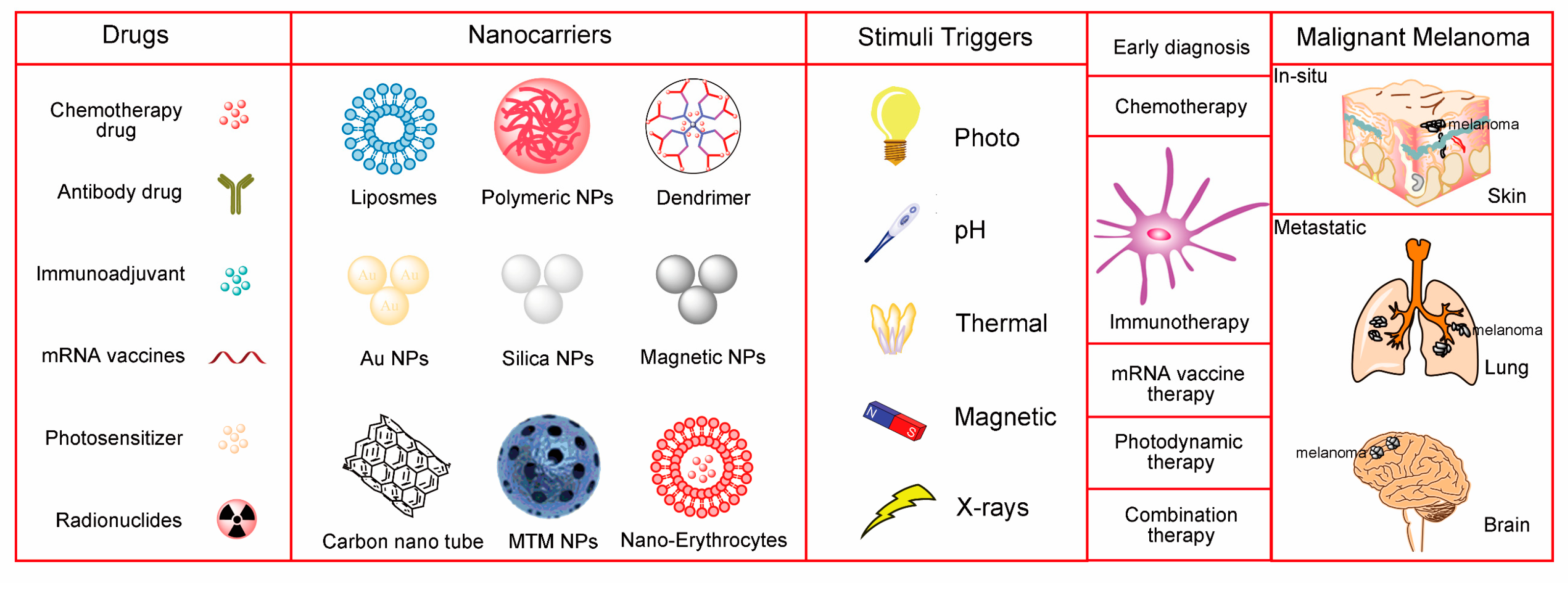
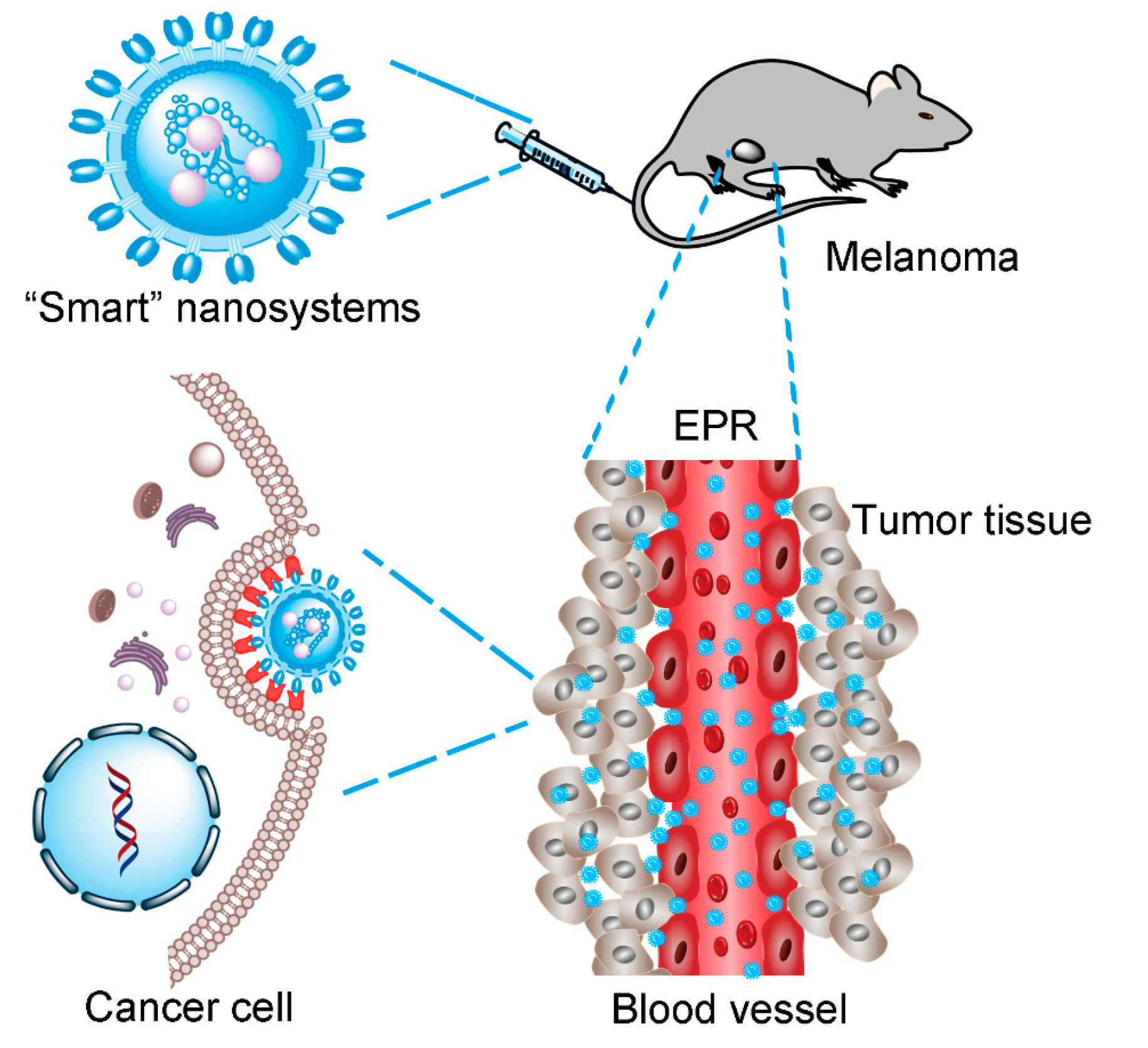
Melanoma, as a tumor cell derived from melanocyte transformation, has the characteristics of malignant proliferation, high metastasis, rapid recurrence, and a low survival rate. Traditional therapy has many shortcomings, including drug side effects and poor patient compliance, and so on. Therefore, the development of an effective treatment is necessary. Currently, nanotechnologies are a promising oncology treatment strategy because of their ability to effectively deliver drugs and other bioactive molecules to targeted tissues with low toxicity, thereby improving the clinical efficacy of cancer therapy. In this review, the application of nanotechnology in the treatment of melanoma is reviewed and discussed. First, the pathogenesis and molecular targets of melanoma are elucidated, and the current clinical treatment strategies and deficiencies of melanoma are then introduced. Following this, we discuss the main features of developing efficient nanosystems and introduce the latest reports in the literature on nanoparticles for the treatment of melanoma. Subsequently, we review and discuss the application of nanoparticles in chemotherapeutic agents, immunotherapy, mRNA vaccines, and photothermal therapy, as well as the potential of nanotechnology in the early diagnosis of melanoma.
Keywords: melanoma; drug delivery systems; immunotherapy; gene therapy; photodynamic therapy; combination therapy melanoma; drug delivery systems; immunotherapy; gene therapy; photodynamic therapy; combination therapy