


Abstract
An essential multiprotein complex in the innate immune system is the NOD-like receptor family, pyrin domain-containing 3 (NLRP3) inflammasome. Through the coordination of upstream sensors and the adaptor protein ASC, which converge on the inflammasome complex in response to pathogens and cellular homeostatic disruptions, a broad range of metabolic danger signals activate the NLRP3 inflammasome. New research demonstrates the anti-inflammatory qualities of natural products, suggesting that they could be used as supplemental treatments for a number of chronic inflammatory conditions, such as diabetes mellitus and cardiovascular disorders. The literature related to inhibition of the NLRP3 inflammasome was compiled using keywords such as “NLRP3 Inflammasome”, “Natural products”, and “Inhibitor” from scientific databases, including “China Knowledge Resource Integrated Databases (CNKI)”, “Google Scholar”, “PubMed”, and “Web of Science” and so on, covering the period from 1997 to 2025. Herbal remedies have shown protection against the activation of the NLRP3 inflammasome. For the treatment of chronic inflammatory illnesses, natural products’ capacity to prevent NLRP3 inflammasome activation offers a novel and practical therapeutic approach. The impact of natural compounds made from medicinal plants on NLRP3 inflammasome activation and their underlying mechanisms of action are the main topics of this review.
1. Introduction
Inflammasomes are cytosolic signalling complexes that coordinate host defence mechanisms by recognising danger-associated molecular patterns (DAMPs) from sterile tissue damage and pathogen-associated molecular patterns (PAMPs) from infections [1]. In addition to identifying a wide range of pro-inflammatory stimuli, NOD-like receptors (NLRs) and AIM2-like receptors (ALRs) coordinate inflammasome activation to control the production of the highly inflammatory cytokines IL-1β and IL-18. Members of the NLR family are distinguished structurally by a core nucleotide-binding and oligomerisation (NACHT) domain, which is surrounded by an N-terminal caspase recruitment (CARD) or pyrin (PYD) domain and C-terminal leucine-rich repeats (LRRs). Functionally, the CARD or PYD domains enable downstream signalling via homotypic protein–protein interactions, whereas the LRRs are in charge of ligand detection and autoinhibition [2]. The NLR family is divided into three main subfamilies by phylogenetic analysis of the NACHT domain: the NOD subfamily (which includes NOD1, NOD2, NLRC3, NLRC5, NLRX1, and CIITA); the NLRP subfamily (NLRP1-14); and the IPAF subfamily (which includes NLRC4 and NAIP). The NLRP3 complex is an essential innate immune sensor and the most well-studied inflammasome. The NLRP3 scaffold, the adaptor protein ASC, and the effector caspase-1 are its three main constituents, and it is triggered by a variety of pathogenic, endogenous, and environmental stimuli [3].
The critical significance of the NLRP3 inflammasome in inflammatory reactions has been highlighted by recent research. Numerous inflammatory, autoinflammatory, autoimmune, and chronic inflammatory and metabolic disorders, such as atherosclerosis, type 2 diabetes, metabolic syndrome, Parkinson’s disease, Alzheimer’s disease (AD), multiple sclerosis, amyotrophic lateral sclerosis, major depressive disorder, intestinal inflammation, arthritis, gout, prion diseases, Crohn’s disease, and septic shock are all linked to dysregulated NLRP3 inflammasome activation [4,5,6,7,8,9,10].
The pathophysiology of many diseases is probably significantly influenced by abnormal activation of the NLRP3 inflammasome, which has been demonstrated to cause excessive inflammation. As a result, inflammasome activation needs to be strictly controlled. According to earlier research, herbal remedies may have positive benefits by modifying the NLRP3 inflammasome. The purpose of this review is to provide an overview of how natural products affect the NLRP3 inflammasome and to clarify the underlying mechanisms of action.
2. Review Methodology
The data acquisition for this manuscript involved the systematic searching, screening, and selection of relevant scientific literature focused on natural products as NLRP3 inflammasome inhibitors. The literature was compiled from both print media (scientific journals) and electronic databases, including CNKI, Google Scholar, PubMed, Baidu Scholar, and Web of Science. A variety of keywords were used during the literature search, including “NLRP3 Inflammasome”, “Natural products”, “Inhibitor”, “Medicinal plants”. Notably, the search encompassed articles published in the timeframe spanning from 1997 to 2025.
Inclusion criteria: studies were included if they (i) reported original data on a natural product (pure compound or well-characterised extract) tested in cellular or animal models of NLRP3 inflammasome activation; (ii) measured at least one functional endpoint of inflammasome activity (e.g., IL-1β/IL-18 release, caspase-1 cleavage, ASC oligomerisation, pyroptosis); (iii) provided a mechanistic hypothesis (signalling pathway, direct target, or upstream event).
From an initial screening of 1247 records, 211 full-text articles were assessed, and 111 met the inclusion criteria. For the purpose of this review, an NLRP3 inhibitor is defined as any natural product that reduces at least two independent NLRP3-dependent outputs (e.g., IL-1β secretion and caspase-1 activation) in a model where NLRP3 is genetically or pharmacologically validated as the principal inflammasome sensor. Compounds that only suppress priming (e.g., NF-κB-dependent NLRP3 transcription) without affecting the activation step are noted as ‘indirect’ in Table 1 but are still included as modulators.
Table 1.
Natural products modulating the NLRP3 inflammasome: classification, mechanisms, and pharmacological considerations (Direct inhibition: evidence from biochemical assays (e.g., ATPase activity, target engagement by surface plasmon resonance, isothermal titration calorimetry, covalent labelling) or structural biology (e.g., co-crystallisation, molecular docking with experimental validation) demonstrating physical interaction with NLRP3 or its obligate partners (NEK7, ASC); Indirect inhibition: effects mediated solely through upstream pathways (e.g., NF-κB suppression, ROS reduction, Nrf2 activation, autophagy enhancement) without evidence of direct binding to the inflammasome core machinery; Mixed inhibition: compounds that show both direct engagement and indirect pathway modulation).
Structure verification: All chemical structures were drawn using ChemDraw Professional 21.0. Each structure was verified against the primary isolation paper and cross-checked with PubChem and ChemSpider (A complete structure verification table listing ChemSpider IDs for all compounds is provided in Supplementary Table S1). For glycosides, nucleosides and saponins, the anomeric configuration (α/β) and interglycosidic linkages are explicitly shown using Haworth projections with wedge/dash stereochemistry. Atom valences and ring atom counts were manually validated for every compound.
3. Chemistry and Pharmacology of NLRP3 Inhibitors Derived from Nature
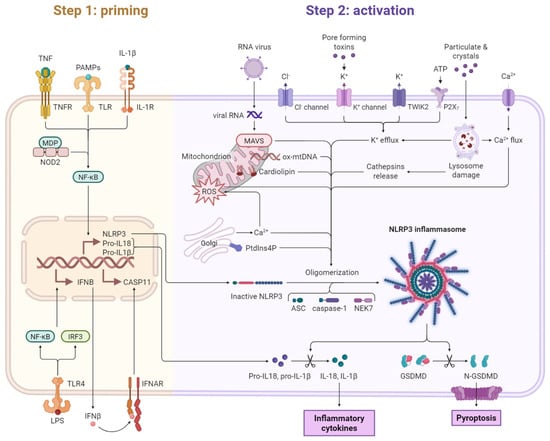
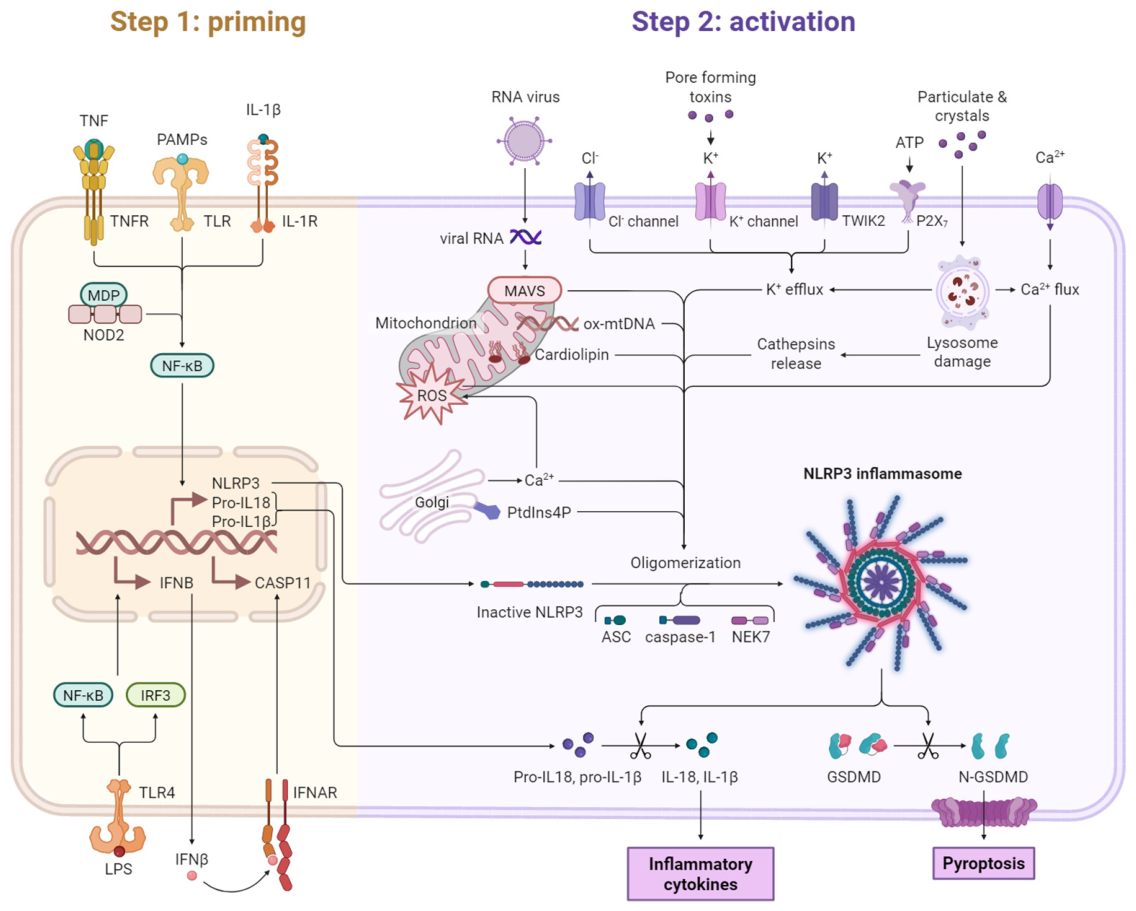
Natural bioactive compounds inhibit NLRP3 inflammasome activation at both the “priming” and “activation” stages (Figure 1). During priming, lipopolysaccharide (LPS) activates TLR4-mediated NF-κB signaling, leading to the transcriptional upregulation of NLRP3 and pro-inflammatory cytokines, which is suppressed by natural products. During activation, stimuli such as ATP, ion flux disturbances, mitochondrial dysfunction, and reactive oxygen species (ROS) promote NLRP3 inflammasome assembly. Natural compounds interfere with this process by inhibiting NLRP3 oligomerization, ASC recruitment, NEK7 interaction, mitochondrial ROS production, and P2X7-mediated potassium efflux and calcium influx. These coordinated effects suppress caspase-1 activation, reduce IL-1β and IL-18 maturation, inhibit gasdermin D cleavage, and attenuate pyroptosis and inflammatory responses.
Figure 1.
Inhibitory effects of natural bioactive compounds on NLRP3 inflammasome activation.
Phenols, terpenoids and alkaloids are among the many natural compounds with different structural characteristics that have been shown to target the NLRP3 inflammasome in recent years [11]. Through a variety of mechanisms, compounds like quercetin, celastrol, and cordycepin block NLRP3 inflammasome activation and show promise as treatments for disorders associated with NLRP3 inflammasomes. Many natural compounds and therapeutic plants that target the NLRP3 inflammasome are introduced in the section that follows (Table 1).
3.1. Phenols and Flavonoids
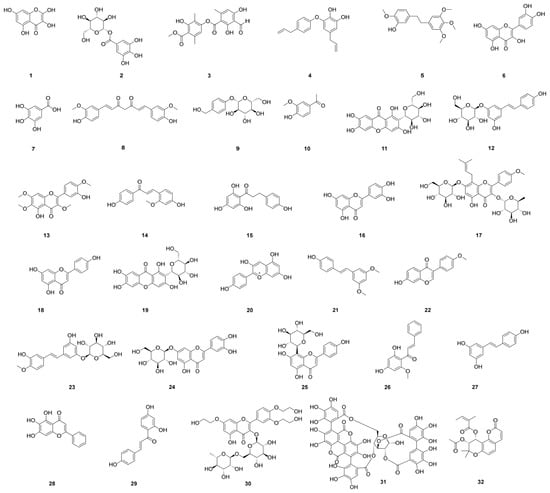
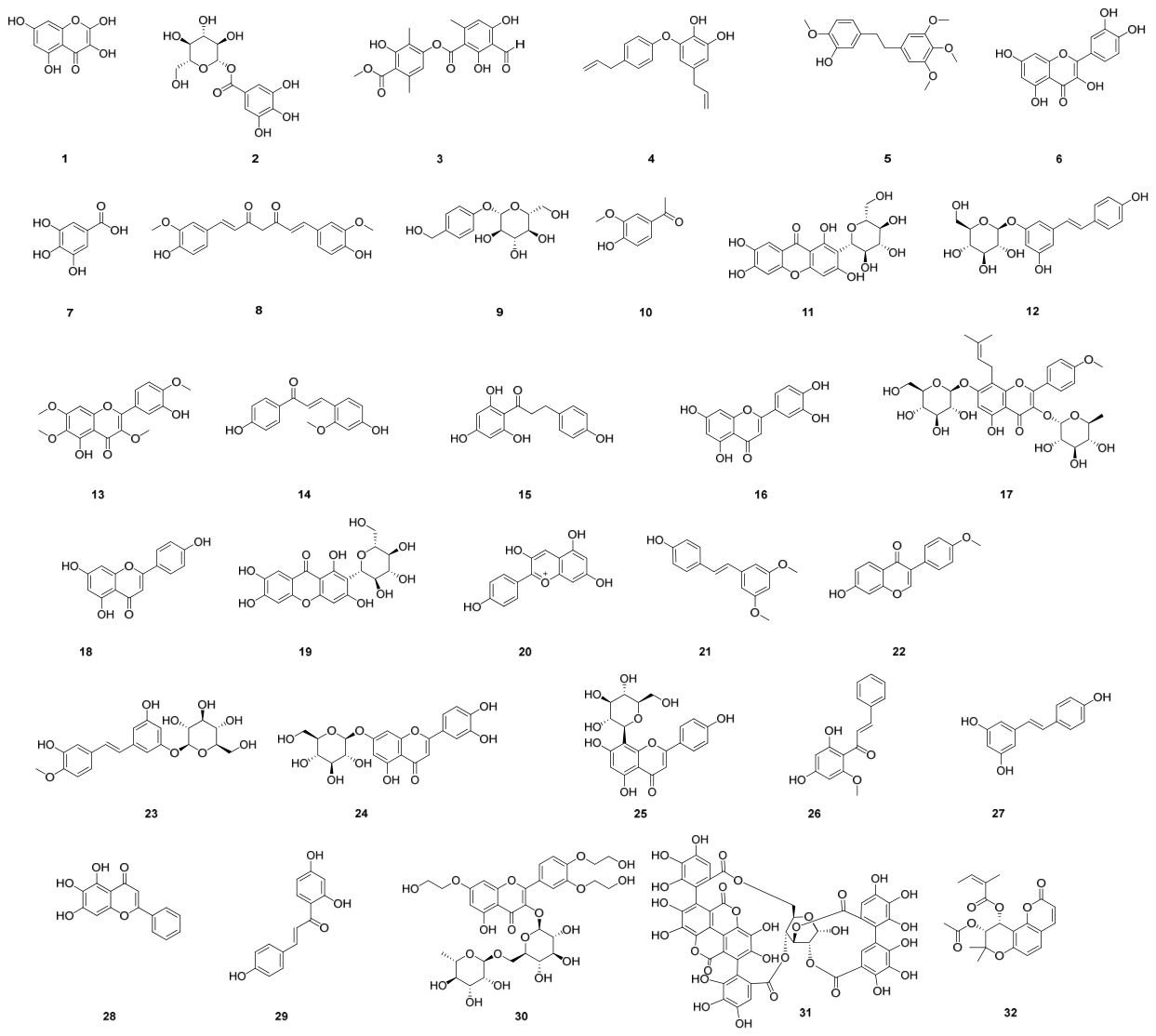
The rhizome of Kaempferia galanga is a rich source of kaempferol (1), a naturally occurring flavonoid that also serves as the primary bioactive component in Toona sinensis seeds (Figure 2). Pharmacological studies have demonstrated that kaempferol suppresses the NLRP3 inflammasome and reduces the production of inflammatory mediators through inhibition of the p38 MAPK/NF-κB signaling pathway [12]. β-glucogallin (2), a plant-derived polyphenolic ester, has a strong anti-inflammatory effect by inhibiting the production of NLRP3 and IL-1β. This is accomplished by reducing oxidative stress and LPS-induced JNK/p38 activation, which lowers reactive oxygen species (ROS) levels [13,14]. It was recently shown that atranorin (3) effectively inhibits the NLRP3 inflammasome in both dendritic cells and macrophages. By directly attaching to the ASC protein and stopping its oligomerisation, it mechanistically inhibits NLRP3-induced cytokine production and pyroptosis [15]. By preventing ASC pyroptosome formation and mitochondrial ROS generation, the biphenolic substance obovatol (4), which is produced from Magnolia obovata, was found to be a broad-spectrum inflammasome inhibitor that suppresses the activation of NLRP3, AIM2, and non-canonical inflammasomes [16]. Isolated from Dendrobium chrysotoxum, the natural substance Erianin (5) has strong anti-inflammatory properties and functions as a direct NLRP3 inhibitor. By binding to the Walker A motif in the NACHT domain, it directly prevents inflammasome assembly and lowers NLRP3 ATPase activity. Its therapeutic effectiveness in mice models of type 2 diabetes, gouty arthritis, and peritonitis is based on this mechanism [17].
Figure 2.
Chemical structures of phenols and flavonoids (1–32). Structures were drawn and verified as described in the Section 2. Complete stereochemical definitions are provided for all chiral centres, glycosidic bonds and nucleoside linkages.
In a combined regimen, quercetin (6), a naturally occurring flavonoid with established anti-inflammatory and antioxidant qualities, was assessed. In a rat model, co-treatment with allopurinol, quercetin, and rutin was shown to inhibit NLRP3 inflammasome activation and decrease kidney lipid accumulation [18]. In a different study, Wang’s group [19] showed that supplementing with 6 and allopurinol reduced hyperuricemia by suppressing renal NLRP3 inflammasome activation and regulating renal urate transport-related proteins. The potential pharmacological activity of gallic acid (7) was investigated in a previous study [20]. In summary, 7 exhibited anti-inflammatory effects by significantly suppressing activation of the NLRP3 inflammasome. This was achieved through inhibition of ASC oligomerization, disruption of the NLRP3–NEK7 interaction, inactivation of caspase-1, and reduction of IL-1β release. Furthermore, 7 inhibited pyroptosis in a manner dependent on nuclear factor erythroid 2–related factor 2 (Nrf2) signaling. One of the primary bioactive components of Curcuma longa and other Curcuma species is curcumin (8), a polyphenolic compound that has been shown to suppress NLRP3 inflammasome activation by controlling NF-κB downregulation, suppressing TLR4/myeloid differentiation factor (MyD88)/NF-κB, and suppressing purinergic 2X7 receptor (P2X7R) pathways [21]. Gastrodin (9) ameliorates cognitive impairments induced by diabetes. Its protective effects are mediated through the inhibition of NLRP3 inflammasome activation and the attenuation of oxidative stress, endoplasmic reticulum stress, and apoptotic pathways in the hippocampus [22]. As an inhibitor of ROS, apocynin (10) has been shown by Xin’s group [23] to be able to reduce renal fibrosis by downregulating the expression of NLRP3 and X-linked inhibitor of apoptosis protein (XIAP). Isomangiferin (11) was isolated from the tubers of Pueraria tuberosa (designated PT-Mangiferin) and its anti-inflammatory activity was evaluated using a well-established mouse air-pouch model of inflammation. The results indicate that the anti-inflammatory effects of 11 are mediated through suppression of the NLRP3 inflammasome complex and its downstream signaling molecules [24]. In their analysis of the anti-inflammatory effect of polydatin (12), Lv’s group found that it significantly reduced the expression of inflammatory mediators by suppressing NLRP3 inflammasome inhibition in rat conjunctival tissues induced by dry eye disease (DED) in vitro and restored corneal tissue damage caused by DED in vivo [25].
Casticin (13), a methoxylated flavonol derived from Viticis fructus, alleviates monoiodoacetic acid-induced knee osteoarthritis by inhibiting HIF-1α/NLRP3 inflammasome activation [26]. Echinatin (14), a bioactive flavonoid isolated from Glycyrrhiza species, has been identified as an inhibitor of the NLRP3 inflammasome. Its mechanism involves direct binding to heat-shock protein 90 (HSP90), thereby suppressing HSP90 ATPase activity and disrupting the interaction between the cochaperone SGT1 and the HSP90–NLRP3 complex. In vivo studies demonstrate that 14 treatment significantly reduces NLRP3 inflammasome activation and ameliorates LPS-induced septic shock as well as dextran sodium sulfate (DSS)-induced colitis in mice. Furthermore, in a mouse model of NASH, echinatin exerted beneficial pharmacological effects by attenuating liver inflammation and fibrosis [27]. Apples and strawberries are the primary sources of phloretin (15), a dihydrogen chalcone flavonoid. Pharmacological studies showed that by controlling the NLRP3 inflammasome, 15 reduced the inflammatory response [28]. Essential phytochemicals were isolated from the active fraction of Wedelia chinensis, a medicinal plant demonstrated to possess potent anti-colitis properties. Among these compounds, luteolin (16) exhibited the most pronounced anti-inflammatory effect in vivo. It was found to significantly suppress the DSS-activated IL-17 pathway in colon tissue and inhibit the expression of both NLRP3 and NLRP1 [29,30]. The extract of Epimedium brevicornu, icariin (17), was found to be the most potent component, exhibiting anti-inflammatory and anti-osteoporotic properties. Recent research on the anti-inflammatory potential of 17 was published by Zu’s group [31]. 17 demonstrated anti-inflammatory action, reducing the production of collagen in chondrocytes and inhibiting LPS-induced inflammation. According to additional research, 17 may reduce pyroptosis brought on by LPS by blocking the NLRP3 inflammasome-mediated caspase-1 signalling cascade. Apigenin (18) is a non-toxic and non-mutagenic dietary flavonoid that is mostly present in fruits and vegetables such as kiwi, celery and coriander [32]. Apigenin (25 and 50 μmol/L) treatment for 24 h significantly inhibited LPS and oil Lipid accumulation in HepG2 cells induced by oleic acid is decreased protein expression of NLRP3 and NF-κB p65 [33]. In order to examine the anti-inflammatory properties of mangiferin (19), Qu’s group [34] created an LPS-induced mastitis in mice. According to experiments, 19 significantly reduced the expression of pro-inflammatory cytokines TNF-α, IL-1β, and IL-6. It also prevented LPS-induced activation of NF-κB and NLRP3 inflammasomes.
Pelargonidin (20), an anthocyanidin, exhibits significant anti-inflammatory therapeutic properties. Research indicates that it ameliorates CCl4-induced liver fibrosis, likely through Nrf2-mediated inhibition of the ROS–NLRP3–IL-1β signaling axis [35]. A significant bioactive component of blueberries, pterostilbene (21) has grown in popularity due to its potential health advantages [36,37]. By stimulating AMPK/Nrf2/HO-1 signalling in diabetic rats, 21 reduced cardiac hypertrophy, hypertension, oxidative stress, inflammation, NF-κB expression, and the NLRP3 inflammasome, according to Kosuru’s group [38]. A methoxy isoflavone found in a variety of plants and herbs, formononetin (22) is especially prevalent in Astragalus membranaceus and Trifolium pratense [39]. Treatment with compound 22 significantly suppressed the levels of pro-inflammatory cytokines (TNF-α, IL-1β, and IL-6) and improved cardiac function in the experimental model [40]. It prevented the TXNIP-NLRP3 interaction and the activation of the NLRP3 inflammasome in vivo. Thus, it reduced myocardial ischemia/reperfusion injury and suppressed the NLRP3 inflammasome by blocking the ROS-TXNIP-NLRP3 pathway. The anti-colitis potential of rhapontin (23) was investigated both in vivo and in vitro. In a murine model, treatment with 23 markedly attenuated DSS-induced intestinal pathological damage and inflammatory cell infiltration. In vitro, using LPS-stimulated human THP-1-derived macrophages, 23 significantly suppressed NLRP3 inflammasome activation, as evidenced by reduced levels of cleaved caspase-1 and IL-1β secretion. The collective findings indicate that 23 exerts its protective effects by targeting SIRT1, suggesting its therapeutic potential for the treatment of colitis [41]. A derivative of flavonoids, luteoloside (24) may have anti-inflammatory properties [42]. Pharmacological studies revealed that 24 inhibits the NLRP3 inflammasome to prevent the growth, invasion, and metastasis of hepatocellular carcinoma cells [43]. Vitexin (25), a bioactive compound present in various medicinal plants, possesses notable anti-inflammatory and antioxidant properties [44]. Recent pharmacological studies have demonstrated that 25 effectively ameliorates LPS-induced inflammation by suppressing the elevation of pro-inflammatory cytokines and reducing neutrophil infiltration. Furthermore, 25 was found to inhibit activation of the NLRP3 inflammasome via modulation of the Nrf2 signaling pathway [45]. The primary active component of Alpinia katsumadai, cardamonin (26), has demonstrated outstanding anti-inflammatory properties [46]. The results of pharmacological tests demonstrated that 26 inhibits both canonical and noncanonical NLRP3 inflammasome activation brought on by various stressors. Additionally, 26 inhibits the NLRP3 inflammasome in a dose-dependent manner by preventing ASC oligomerisation and speckle formation [47].
Red wine is rich in polyphenols, among which resveratrol (27) is a well-characterized antioxidant compound [48]. Chang’s group [49] discovered that 27 increased autophagy and maintained mitochondrial integrity to decrease NLRP3 inflammasome activation. Chalons’s team [50] focused on examining complex polyphenol combinations, like red wine extract (RWE), for its potential to reduce inflammation. The findings demonstrated that RWE reduced inflammation via modifying the NLRP3 inflammasome pathway and IL-1β release. Baicalein (28), a flavonoid derived from the traditional Chinese medicinal herb Scutellaria baicalensis, has been shown to ameliorate MPTP-induced neuroinflammation in mice by inhibiting the NLRP3/caspase-1/GSDMD pathway [51]. Isoliquiritigenin (29) is a powerful inhibitor of NLRP3 inflammasome activation and diet-induced adipose tissue inflammation, as demonstrated by Honda’s group [52]. Troxerutin (30) has been shown to mitigate tissue damage induced by BDE47. Furthermore, it significantly inhibits D-galactose-induced NLRP3 inflammasome activation in human umbilical vein endothelial cells [53]. Punicalagin (31) has been shown to exhibit both anti-inflammatory and antioxidative effects in microglia. Pharmacological evaluation indicates that it attenuates LPS-induced inflammation by suppressing the expression of iNOS and COX-2, inhibiting the MAPK/NF-κB signaling pathway and NLRP3 inflammasome activation, and reducing intracellular ROS production. These collective mechanisms support the potential utility of 31 in the management of neurodegenerative diseases [54]. Pteryxin (32), a natural coumarin compound derived from the traditional Chinese herb “Qianhu” (Peucedanum praeruptorum), has been identified as a promising anti-inflammatory agent [55]. Mechanistic studies demonstrate that its activity is mediated through the dual inhibition of the NF-κB and MAPK signaling pathways, as well as the suppression of NLRP3 inflammasome priming and activation.
3.2. Terpenoids and Saponins
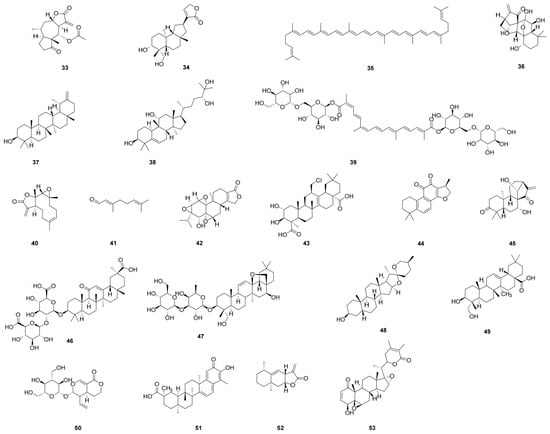
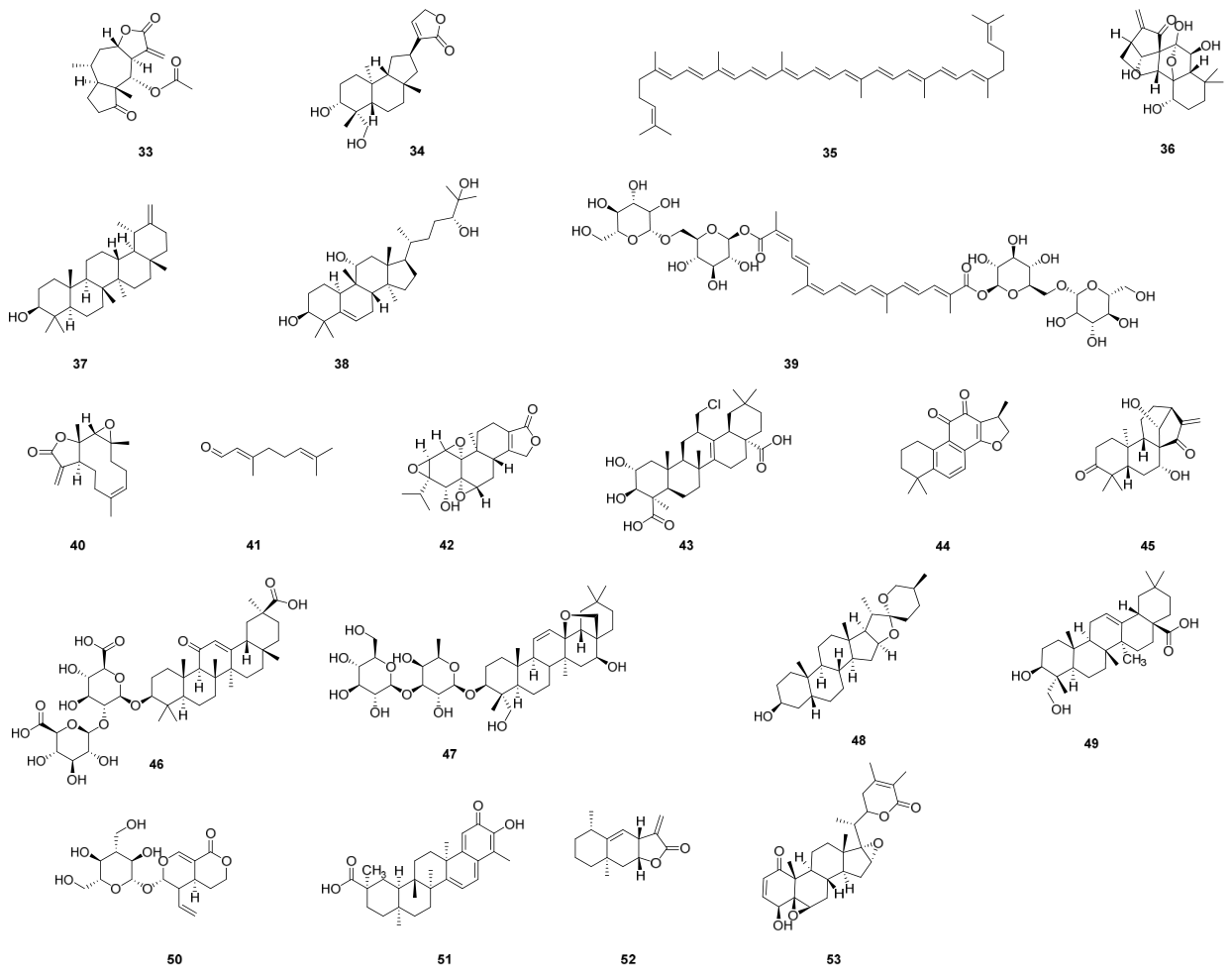
Ergolide (33), a sesquiterpene lactone derived from Inula britannica (Asteraceae), is employed in traditional medicine for the treatment of various ailments (Figure 3) [56]. Research demonstrates that 33 acts as a potent inhibitor of NLRP3 inflammasome activation by effectively suppressing NLRP3-mediated pyroptosis. This activity is achieved through covalent binding to the NACHT domain of NLRP3, which prevents the assembly and subsequent activation of the inflammasome [57]. The anti-inflammatory activity of isoandrographolide (34), a diterpenoid lactone abundant in Andrographis paniculata, has been investigated. Studies demonstrate that 34 suppresses the expression of NLRP3 inflammasome components (NLRP3, ASC, and caspase-1) both in vitro and in vivo. Molecular docking analysis further suggests that 34 may directly bind to NLRP3, potentially interacting with key residues LYS26 and GLU47 [58]. Pharmacological studies suggest that lycopene (35), a naturally occurring antioxidant, may inhibit DEHP-induced caspase-1-dependent pyroptosis and the accompanying inflammatory response [59]. The main active constituent of the traditional Chinese medicinal herb Rabdosia rubescens is oridonin (36), a bioactive ent-kaurane diterpenoid with anti-inflammatory properties [60]. The anti-inflammatory therapeutic action of 36 was identified by He’s group and confirmed as a selective and covalent inhibitor of the NLRP3 inflammasome. Compound 36 inhibits NLRP3 inflammasome formation and activation by forming a covalent connection with NLRP3’s cysteine 279 in the NACHT domain. This prevents NLRP3 from interacting with NEK7 [61]. Taraxasterol (37), a bioactive pentacyclic triterpene, and its anti-inflammatory properties and underlying mechanisms against arthritis were examined by Chen’s group [62]. The findings showed that 37 reduced collagen-induced arthritis in mice and IL-1β-stimulated human fibroblast-like synoviocytes rheumatoid arthritis in vitro. Additionally, by preventing the expression of NLRP3, ASC, and caspase-1 in mice, 37 reduced NLRP3 inflammasomes.
Figure 3.
Chemical structures of terpenoids and saponins (33–53).
Mogrol (38) is a triterpenoid aglycone derived from Siraitia grosvenorii and serves as the core structure for various bioactive mogrosides [63]. Through the AMP-activated protein kinase (AMPK) and NF-κB signaling pathways, it significantly attenuates ulcerative colitis, reduces colon injury, suppresses inflammatory infiltration, and ameliorates the aberrant expression of the NLRP3 inflammasome, based on the in vitro and in vivo findings reported by Liang’ group [64]. Crocin (39), a water-soluble carotenoid derived from Crocus sativus and Gardenia jasminoides, alleviates LPS-induced anxiety- and depression-like behaviors by inhibiting the NLRP3 and NF-κB signaling pathways [65]. Parthenolide (40), a sesquiterpene lactone originally isolated from Tanacetum parthenium, specifically inhibits NLRP3 inflammasome activation by blocking upstream signaling and preventing complex assembly [66]. Citral (41), a key bioactive component of Litsea cubeba, ameliorates accelerated and severe lupus nephritis in a mouse model. This effect is mediated via dual mechanisms: activation of the Nrf2 pathway and inhibition of NLRP3 inflammasome signaling [67]. The anti-inflammatory mechanism of triptolide (42) was investigated, and pharmacological studies revealed that it alleviates cardiac pressure overload by suppressing the activation of the NLRP3 inflammasome [68]. Senegenin (43), a significant bioactive constituent of Polygala tenuifolia, has been shown to be crucial in the treatment of depression brought on by long-term, unpredictable mild stress in rats, potentially through the regulation of pathway activation linked to the NLRP3 inflammasome [69]. Cryptotanshinone (44), a major bioactive component of the traditional medicinal plant Salvia miltiorrhiza Bunge, is a specific inhibitor of the NLRP3 inflammasome [70]. While it effectively suppresses NLRP3 inflammasome activity in macrophages, it exhibits no effect on the activation of AIM2 or NLRC4 inflammasomes. Mechanistically, 44 acts by inhibiting two critical upstream events in NLRP3 activation: the generation of mitochondrial ROS and Ca2+ signaling [71]. Glaucocalyxin A (45), an ent-kauranoid diterpenoid derived from Rabdosia japonica, suppresses LPS-induced septic shock and inflammation by inhibiting NLRP3 inflammasome activation. These findings highlight its potential as a therapeutic candidate for NLRP3-driven diseases [72]. Glycyrrhizin (46), a bioactive compound extracted from licorice (Glycyrrhiza spp.), demonstrates significant hepatoprotective effects in both preclinical models and clinical studies [73]. In a murine model of methionine-choline-deficient (MCD) diet-induced NASH, compound 46 significantly attenuated hepatic steatosis, inflammation, and fibrosis. This therapeutic effect was associated with the inhibition of NLRP3 inflammasome activation [74]. One of the most significant active saikosaponins extracted from Bupleurum falcatum is Saikosaponin A (47), a triterpenoid saponin. According to Piao’s group [75], 47 may reduce OVA-induced allergy rhinitis via controlling the expression of IL-6/ROR-γt/STAT3/IL-17/NF-κB signalling. The findings suggest that 47 might be a potential treatment option for allergic rhinitis.
Sarsasapogenin (48), a principal sapogenin derived from the traditional herb Anemarrhena asphodeloides, significantly ameliorates diabetic nephropathy in rats [76]. Its protective effect is mediated through dual mechanisms: inhibition of NLRP3 inflammasome activation and disruption of the interaction between advanced glycation end products (AGEs) and their receptors [77]. Hederagenin (49), a pentacyclic triterpenoid derived from Hedera helix (common ivy), exerts a protective effect against sepsis-induced acute lung injury. This benefit is mediated through the attenuation of inflammatory response and macrophage M1 polarization, involving the suppression of NLRP3 inflammasome activation modulated by the NF-κB pathway [78]. According to Yang’s group [79], in non-alcoholic steatohepatitis (NASH), the iridoid glycoside sweroside (50) significantly suppressed hepatic NLRP3 inflammasome activation by reducing hepatic IL-1β and caspase-1 production. According to another study, 50 inhibited the liver’s de novo synthesis of mitochondrial DNA, which helped to decrease the NLRP3 inflammasome. Celastrol (51), a pentacyclic triterpenoid derived from Tripterygium wilfordii, exhibits significant therapeutic potential for inflammatory conditions [80]. Recent studies have demonstrated that 51 markedly attenuates B19V NS1-induced inflammatory responses by substantially reducing the protein levels of NLRP3, ASC, caspase-1, and IL-18 [81]. Alantolactone (52), a natural compound isolated from the medicinal plant Saussurea lappa, was traditionally used in ancient China to treat gastrointestinal disorders [82]. Through a screen of an internal natural product library, Li’s group identified 52 as a potent natural inhibitor of the NLRP3 inflammasome, demonstrating exceptional activity [83]. Tubocapsanolide A (53), a bioactive withanolide primarily isolated from Tubocapsicum anomalum, exhibits a broad spectrum of biological activities including immunosuppressive, anti-inflammatory, antibacterial, and anticancer properties [84]. Recent research has further identified 53 as a novel inhibitor of the NLRP3 inflammasome with therapeutic potential for colitis [85].
3.3. Alkaloids
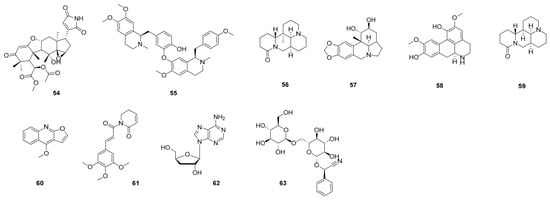
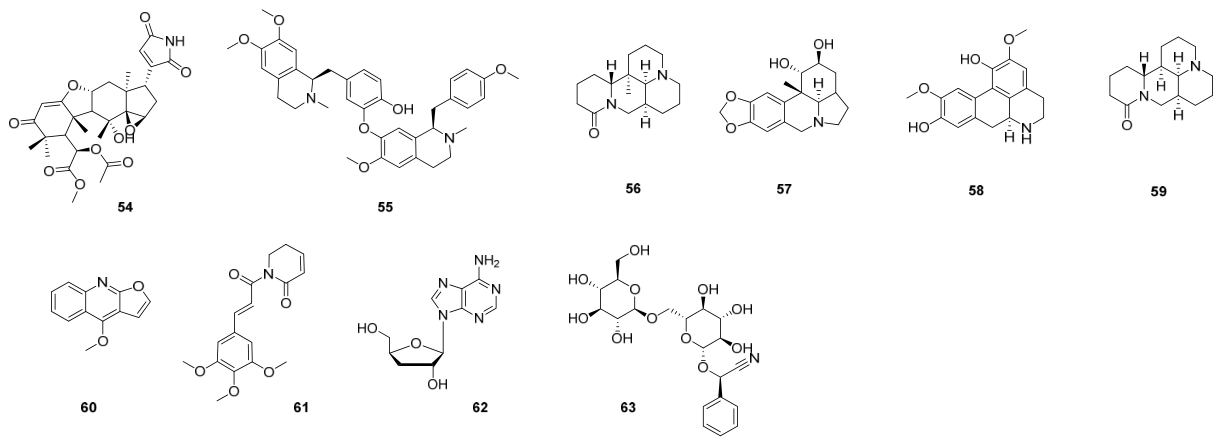
From the ethyl acetate extract of Toona ciliata, Shi’s group identified twelve limonoids as its key bioactive constituents (Figure 4). Among these, ciliatone D (54) exhibited notable inhibitory activity against the NLRP3 inflammasome, with IC50 values of 9.7 ± 3.7 μM (against lactate dehydrogenase, LDH) and 7.8 ± 4.9 μM (against IL-1β). These findings support the potential of T. ciliata as a source of natural NLRP3 inflammasome inhibitors for therapeutic development [86]. Neferine (55), a unique bis-benzylisoquinoline alkaloid extracted from Nelumbo nucifera (lotus) seed embryos, has been shown to ameliorate memory and cognitive impairment [87]. Mechanistic studies reveal that 55 reduces hippocampal levels of thioredoxin-interacting protein (TXNIP), NLRP3 inflammasome components (ASC), and IL-1β, thereby suppressing the NLRP3 inflammasome pathway [88]. Matrine (56), an alkaloid originally isolated from Sophora flavescens, has been shown to prevent MCD diet-induced non-alcoholic steatohepatitis [89]. Its mechanism involves the upregulation of HSP72 and downregulation of mTOR, distinct from the action of metformin [90]. Lycorine (57), an alkaloid derived from plants of the Amaryllidaceae family, exhibits a range of significant biological activities, including anti-inflammatory, antiviral, and anti-tumor effects [91,92]. In a study investigating its impact on pulmonary fibrosis, lycorine was found to attenuate bleomycin (BLM)-induced idiopathic lung fibrosis. The underlying mechanism involves the inhibition of NLRP3 inflammasome activation and associated pyroptosis [93]. Norisoboldine (58), derived from Lindera aggregata, alleviates TNBS-induced colitis in mice by inhibiting NLRP3 inflammasome activation. The compound specifically reduces the expression of NLRP3, cleaved caspase-1, and IL-1β (but not ASC) in both colonic tissue and stimulated macrophages, a process governed by the AhR/Nrf2/ROS signaling pathway [94,95]. Sinomenine (59), derived from the traditional Chinese herb Sinomenium acutum, has been shown to significantly alleviate depressive-like behaviors in a chronic unpredictable mild stress (CUMS) mouse model [96]. Treatment with 59 reduced CUMS-induced elevations of hippocampal pro-inflammatory cytokines, including IL-1β, IL-6, and TNF-α. Furthermore, 59 inhibited the activation of both the p38 MAPK-NF-κB pathway and the NLRP3 inflammasome, suggesting a multi-target mechanism underlying its antidepressant-like effects [97]. Dictamnine (60), a pharmacologically active component of Dictamnus dasycarpus, exhibits anti-inflammatory properties [98]. In an in vitro HaCaT keratinocyte model of inflammation, 60 effectively reduced ROS and mitochondrial ROS (mtROS) levels. Furthermore, it downregulated the expression of pro-inflammatory cytokines (IL-1β, TNF-α), suppressed NLRP3 inflammasome activation, and inhibited NF-κB signaling. These results indicate that the anti-inflammatory mechanism of 60 involves the coordinated inhibition of the NF-κB pathway and downregulation of the NLRP3 inflammasome. Piplartine (61), a naturally occurring alkaloid, exhibits broad anti-inflammatory activity as demonstrated in vitro, ex vivo, and in vivo [99]. It alleviates LPS-induced sepsis and inflammation, and further studies confirm its efficacy in suppressing NLRP3-dependent inflammatory models, including LPS-induced endotoxemia and MSU-induced peritonitis. These findings collectively underscore its therapeutic potential for the treatment of sepsis [100].
Figure 4.
Chemical structures of alkaloids and other compounds (54–63).
3.4. Others
In addition to the conventional classes of natural products described above, hybrid natural compounds have also been identified as exhibiting anti-inflammatory and NLRP3-inhibitory properties. Cordycepin (62), a major bioactive constituent of Cordyceps militaris, is known for its diverse biological activities and has been utilized in treating various inflammatory conditions [101]. Studies demonstrate that 62 suppresses LPS-induced inflammatory responses in both murine and human macrophages by inhibiting the activation of the NLRP3 inflammasome and the ERK1/2 signaling pathway, as well as attenuating COX-2-mediated inflammation [102,103]. Similar research revealed that amygdalin (63) may be able to reduce acute lung injury caused by LPS/GalN by blocking the NLRP3 inflammasome and NF-κB signalling pathways. Furthermore, it was demonstrated that 63 inhibited the Nrf2/NQO1 signalling pathway [104].
4. Mechanistic Synthesis and Translational Considerations
The class-by-class survey above reveals that natural products inhibit NLRP3 inflammasome activation at multiple discrete nodes. Grouping compounds by mechanism rather than chemical origin provides clearer translational insights. Priming-stage inhibitors (NF-κB/TLR4/MAPK): A large number of flavonoids and polyphenols (kaempferol, quercetin, curcumin, mangiferin, apigenin, sinomenine) suppress the LPS-TLR4-NF-κB axis, thereby reducing NLRP3 and pro-IL-1β transcription. While effective in many models, their lack of selectivity for the activation step limits their use as specific NLRP3 probes.
Only a subset of compounds (oridonin, erianin, ergolide, cryptotanshinone) have been tested against AIM2 and NLRC4 inflammasomes; most show selectivity for NLRP3, which is encouraging for avoiding off-target inflammasome effects. The strong-evidence direct inhibitors are particularly promising as lead compounds for drug development, whereas the weak-evidence indirect inhibitors may still have value as dietary supplements or adjuvant therapies where broad anti-inflammatory effects are desired.
This mechanistic synthesis clarifies that while many natural products can suppress NLRP3-driven inflammation, the level of evidence and mechanism of action vary widely. Future studies should prioritise direct target engagement assays and selectivity panels to advance the most promising candidates.
5. Conclusions and Perspective
This review has compiled evidence demonstrating that a wide range of herbal nutraceuticals can significantly suppress NLRP3 inflammasome activation and its downstream signaling, including the production of key inflammatory cytokines such as IL-1β. Given the systemic and multi-organ nature of many NLRP3-driven conditions, combination therapies targeting complementary pathways may offer particular therapeutic advantages. The compounds discussed herein thus emerge as novel, accessible, and potential candidates for managing NLRP3-mediated chronic inflammation.
To further contextualize the findings summarized above, it is essential to consider both classical mechanistic insights and recent advances in the field. In addition to the studies discussed above, it is important to highlight several seminal mechanistic studies that have significantly advanced the understanding of NLRP3 inflammasome activation. Structural and biochemical investigations have revealed key regulatory processes, including NEK7–NLRP3 interaction, ATPase activity within the NACHT domain, and ASC oligomerization, which together govern inflammasome assembly and activation [105,106]. These foundational insights provide a critical framework for interpreting how natural products may modulate NLRP3 signaling at different stages.
Furthermore, recent studies have expanded this field by integrating structure-based drug design, computational screening, and multi-target pharmacology approaches to identify novel natural compounds and optimize their activity [107,108,109,110]. Emerging experimental evidence also indicates that certain natural products can simultaneously regulate both priming and activation processes of the NLRP3 inflammasome [111]. Collectively, these advances highlight the evolving understanding of NLRP3 regulation and provide new directions for future research.
In addition to mechanistic considerations, the safety profiles of natural products should be carefully evaluated when assessing their therapeutic potential. Although many compounds discussed in this review, particularly flavonoids and polyphenols such as quercetin, kaempferol, and resveratrol, are generally regarded as safe and exhibit relatively low toxicity, this is not universally applicable to all natural products. Notably, certain compounds, especially diterpenoids such as triptolide and celastrol, have been associated with significant toxicity, including hepatotoxicity, nephrotoxicity, and narrow therapeutic windows, which substantially limit their clinical applicability. Furthermore, some compounds, such as amygdalin, may pose specific safety risks due to their metabolic conversion into toxic intermediates. Therefore, it is critical to distinguish between compounds with favorable safety profiles and those with potential toxic effects, rather than assuming that all natural products are inherently safe. Future studies should prioritize comprehensive toxicological evaluation, dose optimization, and pharmacokinetic characterization to facilitate the safe translation of NLRP3-targeting natural products into clinical applications.
Ongoing preclinical research continues to identify additional nutraceuticals and herbal extracts with NLRP3-inhibitory potential. To translate these promising findings into clinical practice, future work must prioritize rigorously designed randomized controlled trials employing validated diagnostic and outcome measures. Such studies are essential to definitively establish the efficacy of these plant-based agents. Furthermore, before these compounds can be integrated into mainstream therapy as standalone or adjuvant treatments, comprehensive safety evaluations, optimization of formulations to enhance bioavailability, and the development of standardized dosing regimens must be thoroughly addressed. Through this multifaceted and rigorous approach, herbal-derived natural products may ultimately fulfill their potential as effective, safe, and widely available therapeutic options for controlling NLRP3-driven inflammation and ameliorating associated chronic diseases.
Supplementary Materials
The following supporting information can be downloaded at: https://www.mdpi.com/article/10.3390/molecules31091483/s1, Table S1: ChemSpider ID of all compounds.
Funding
This study was supported by grant from The Scientific Research Program of FuRong Laboratory (grant No. 2023SK2097).
Institutional Review Board Statement
Not applicable.
Informed Consent Statement
Not applicable.
Data Availability Statement
No new data were created or analyzed in this study.
Conflicts of Interest
The authors declare no conflicts of interest.
Abbreviations
| NLRP3 | NOD-like receptor family, pyrin domain-containing 3 |
| TLR4 | Toll-like receptor 4 |
| IL-1β | Interleukin-1β |
| LPS | Lipopolysaccharide |
| ROS | Reactive oxygen species |
| Nrf2 | Nuclear factor erythroid 2–related factor 2 |
| HO-1 | Heme oxygenase |
| NASH | Non-alcoholic steatohepatitis |
| HSP90 | Heat-shock protein 90 |
| COX-2 | Cyclooxygenase-2 |
| IC50 | Half maximal inhibitory concentration |
References
- Martinon, F.; Burns, K.; Tschopp, J. The inflammasome: A molecular platform triggering activation of inflammatory Caspases and processing of proIL-β. Mol. Cell 2002, 10, 417–426. [Google Scholar] [CrossRef] [Scilit]
- Schroder, K.; Tschopp, J. The inflammasomes. Cell 2010, 140, 821–832. [Google Scholar] [CrossRef] [Scilit]
- Sutterwala, F.S.; Haasken, S.; Cassel, S.L. Mechanism of NLRP3 inflammasome activation. Ann. N. Y. Acad. Sci. 2014, 1319, 82–95. [Google Scholar] [CrossRef] [Scilit] [PubMed]
- Zhou, R.; Tardivel, A.; Thorens, B.; Choi, I.; Tschopp, J. Thioredoxin-interacting protein links oxidative stress to inflammasome activation. Nat. Immunol. 2010, 11, 136–140. [Google Scholar] [CrossRef] [Scilit]
- Ozaki, E.; Campbell, M.; Doyle, S.L. Targeting the NLRP3 inflammasome in chronic inflammatory diseases: Current perspectives. J. Inflamm. Res. 2015, 8, 15–27. [Google Scholar] [CrossRef] [Scilit]
- Yang, Y.; Wang, H.; Kouadir, M.; Song, H.; Shi, F. Recent advances in the mechanisms of NLRP3 inflammasome activation and its inhibitors. Cell Death Dis. 2019, 10, 128. [Google Scholar] [CrossRef] [Scilit]
- Pellegrini, C.; Fornai, M.; Antonioli, L.; Blandizzi, C.; Calderone, V. Phytochemicals as novel therapeutic strategies for NLRP3 inflammasome-related neurological, metabolic, and inflammatory diseases. Int. J. Mol. Sci. 2019, 20, 2876. [Google Scholar] [CrossRef] [Scilit]
- Vande Walle, L.; Van Opdenbosch, N.; Jacques, P.; Fossoul, A.; Verheugen, E.; Vogel, P.; Beyaert, R.; Elewaut, D.; Kanneganti, T.D.; van Loo, G.; et al. Negative regulation of the NLRP3 inflammasome by A20 protects against arthritis. Nature 2014, 512, 69–73. [Google Scholar] [CrossRef] [Scilit] [PubMed]
- Jo, E.K.; Kim, J.K.; Shin, D.M.; Sasakawa, C. Molecular mechanisms regulating NLRP3 inflammasome activation. Cell. Mol. Immunol. 2016, 13, 148–159. [Google Scholar] [CrossRef] [Scilit]
- Martinon, F.; Petrilli, V.; Mayor, A.; Tardivel, A.; Tschopp, J. Gout-associated uric acid crystals activate the NALP3 inflammasome. Nature 2006, 440, 237–241. [Google Scholar] [CrossRef] [Scilit] [PubMed]
- Jahan, S.; Kumar, D.; Chaturvedi, S.; Rashid, M.; Wahajuddin, M.; Khan, Y.A.; Goyal, S.N.; Patil, C.R.; Mohanraj, R.; Subramanya, S.; et al. Therapeutic targeting of NLRP3 inflammasomes by natural products and pharmaceuticals: A novel mechanistic approach for inflammatory diseases. Curr. Med. Chem. 2017, 24, 1645–1670. [Google Scholar] [CrossRef] [Scilit] [PubMed]
- Cai, M.; Zhuang, W.; Lv, E.; Liu, Z.; Wang, Y.; Zhang, W.; Fu, W. Kaemperfol alleviates pyroptosis and microglia-mediated neuroinflammation in Parkinson’s disease via inhibiting p38MAPK/NF-kappaB signaling pathway. Neurochem. Int. 2022, 152, 105221. [Google Scholar] [CrossRef] [Scilit]
- Singh, R.; Chandel, S.; Ghosh, A.; Matta, T.; Gautam, A.; Bhattacharya, A.; Babu, S.S.; Sukla, S.; Nag, D.; Ravichandiran, V.; et al. Glucogallin attenuates the LPS-induced signaling in macrophages and protects mice against sepsis. Int. J. Mol. Sci. 2022, 23, 11254. [Google Scholar] [CrossRef] [Scilit]
- Chang, K.C.; Laffin, B.; Ponder, J.; Enzsoly, A.; Nemeth, J.; LaBarbera, D.V.; Petrash, J.M. Beta-glucogallin reduces the expression of lipopolysaccharide-induced inflammatory markers by inhibition of aldose reductase in murine macrophages and ocular tissues. Chem.-Biol. Interact. 2013, 202, 283–287. [Google Scholar] [CrossRef] [Scilit] [PubMed]
- Wang, H.Y.; Lin, X.; Huang, G.G.; Zhou, R.; Lei, S.Y.; Ren, J.; Zhang, K.R.; Feng, C.L.; Wu, Y.W.; Tang, W. Atranorin inhibits NLRP3 inflammasome activation by targeting ASC and protects NLRP3 inflammasome-driven diseases. Acta. Pharmacol. Sin. 2023, 44, 1687–1700. [Google Scholar] [CrossRef] [Scilit]
- Kim, J.; Ahn, H.; Han, B.C.; Shin, H.; Kim, J.C.; Jung, E.M.; Kim, J.; Yang, H.; Lee, J.; Kang, S.G.; et al. Obovatol inhibits NLRP3, AIM2, and non-canonical inflammasome activation. Phytomedicine 2019, 63, 153019. [Google Scholar] [CrossRef] [Scilit] [PubMed]
- Zhang, X.; Hu, L.; Xu, S.; Ye, C.; Chen, A. Erianin: A direct NLRP3 inhibitor with remarkable anti-inflammatory activity. Front. Immunol. 2021, 12, 739953. [Google Scholar] [CrossRef] [Scilit]
- Hu, Q.; Zhang, X.; Pan, Y.; Li, Y.C.; Kong, L. Corrigendum to “Allopurinol, quercetin and rutin ameliorate renal NLRP3 inflammasome activation and lipid accumulation in fructose-fed rats”. Biochem. Pharmacol. 2022, 198, 114971. [Google Scholar] [CrossRef] [Scilit]
- Wang, C.; Pan, Y.; Zhang, Q.Y.; Wang, F.M.; Kong, L.D. Quercetin and allopurinol ameliorate kidney injury in STZ-treated rats with regulation of renal NLRP3 inflammasome activation and lipid accumulation. PLoS ONE 2012, 7, e38285. [Google Scholar] [CrossRef] [Scilit]
- Lin, Y.; Luo, T.; Weng, A.; Huang, X.; Yao, Y.; Fu, Z.; Li, Y.; Liu, A.; Li, X.; Chen, D.; et al. Gallic acid alleviates gouty arthritis by inhibiting NLRP3 inflammasome activation and pyroptosis through enhancing Nrf2 signaling. Front. Immunol. 2020, 11, 580593. [Google Scholar] [CrossRef] [Scilit]
- Kong, F.; Ye, B.; Cao, J.; Cai, X.; Lin, L.; Huang, S.; Huang, W.; Huang, Z. Curcumin represses NLRP3 inflammasome activation via TLR4/MyD88/NF-κB and P2X7R signaling in PMA-Induced macrophages. Front. Pharmacol. 2016, 7, 369. [Google Scholar] [CrossRef] [Scilit]
- Ye, T.; Meng, X.; Zhai, Y.; Xie, W.; Wang, R.; Sun, G.; Sun, X. Gastrodin ameliorates cognitive dysfunction in diabetes rat model via the suppression of endoplasmic reticulum stress and NLRP3 inflammasome activation. Front. Pharmacol. 2018, 9, 1346. [Google Scholar] [CrossRef] [Scilit]
- Xin, R.; Sun, X.; Wang, Z.; Yuan, W.; Jiang, W.; Wang, L.; Xiang, Y.; Zhang, H.; Li, X.; Hou, Y.; et al. Apocynin inhibited NLRP3/XIAP signalling to alleviate renal fibrotic injury in rat diabetic nephropathy. Biomed. Pharmacother. 2018, 106, 1325–1331. [Google Scholar] [CrossRef] [Scilit] [PubMed]
- Bulugonda, R.K.; Kumar, K.A.; Gangappa, D.; Beeda, H.; Philip, G.H.; Muralidhara Rao, D.; Faisal, S.M. Mangiferin from Pueraria tuberosa reduces inflammation via inactivation of NLRP3 inflammasome. Sci. Rep. 2017, 7, 42683. [Google Scholar] [CrossRef] [Scilit] [PubMed]
- Lv, R.; Du, L.; Liu, X.; Zhou, F.; Zhang, Z.; Zhang, L. Polydatin alleviates traumatic spinal cord injury by reducing microglial inflammation via regulation of iNOS and NLRP3 inflammasome pathway. Int. Immunopharmacol. 2019, 70, 28–36. [Google Scholar] [CrossRef] [Scilit] [PubMed]
- Li, X.; Mei, W.; Huang, Z.; Zhang, L.; Zhang, L.; Xu, B.; Shi, X.; Xiao, Y.; Ma, Z.; Liao, T.; et al. Casticin suppresses monoiodoacetic acid-induced knee osteoarthritis through inhibiting HIF-1alpha/NLRP3 inflammasome signaling. Int. Immunopharmacol. 2020, 86, 106745. [Google Scholar] [CrossRef] [Scilit]
- Xu, G.; Fu, S.; Zhan, X.; Wang, Z.; Zhang, P.; Shi, W.; Qin, N.; Chen, Y.; Wang, C.; Niu, M.; et al. Echinatin effectively protects against NLRP3 inflammasome-driven diseases by targeting HSP90. JCI Insight 2021, 6, e134601. [Google Scholar] [CrossRef] [Scilit]
- Zhang, Z.; Li, S.; Cao, H.; Shen, P.; Liu, J.; Fu, Y.; Cao, Y.; Zhang, N. The protective role of phloretin against dextran sulfate sodium-induced ulcerative colitis in mice. Food Funct. 2019, 10, 422–431. [Google Scholar] [CrossRef] [Scilit]
- Lin, T.J.; Yin, S.Y.; Hsiao, P.W.; Yang, N.S.; Wang, I.J. Transcriptomic analysis reveals a controlling mechanism for NLRP3 and IL-17A in dextran sulfate sodium (DSS)-induced colitis. Sci. Rep. 2018, 8, 14927. [Google Scholar] [CrossRef] [Scilit]
- Lin, W.C.; Wen, C.C.; Chen, Y.H.; Hsiao, P.W.; Liao, J.W.; Peng, C.I.; Yang, N.S. Integrative approach to analyze biodiversity and anti-inflammatory bioactivity of Wedelia medicinal plants. PLoS ONE 2015, 10, e0129067. [Google Scholar] [CrossRef] [Scilit]
- Zu, Y.; Mu, Y.; Li, Q.; Zhang, S.T.; Yan, H.J. Icariin alleviates osteoarthritis by inhibiting NLRP3-mediated pyroptosis. J. Orthop. Surg. Res. 2019, 14, 307. [Google Scholar] [CrossRef] [Scilit]
- Salehi, B.; Venditti, A.; Sharifi-Rad, M.; Kręgiel, D.; Sharifi-Rad, J.; Durazzo, A.; Lucarini, M.; Santini, A.; Souto, E.B.; Novellino, E.; et al. The therapeutic potential of apigenin. Int. J. Mol. Sci. 2019, 20, 1305. [Google Scholar] [CrossRef] [Scilit]
- Lu, Z.; Liu, L.; Zhao, S.X.; Zhao, J.T.; Li, S.J.; Li, M.Y. Apigenin attenuates atherosclerosis and non-alcoholic fatty liver disease through inhibition of NLRP3 inflammasome in mice. Sci. Rep. 2023, 13, 7996. [Google Scholar] [CrossRef] [Scilit]
- Qu, S.; Wang, W.; Li, D.; Li, S.; Zhang, L.; Fu, Y.; Zhang, N. Mangiferin inhibits mastitis induced by LPS via suppressing NF-kB and NLRP3 signaling pathways. Int. Immunopharmacol. 2017, 43, 85–90. [Google Scholar] [CrossRef] [Scilit]
- Shi, Y.S.; Li, X.X.; Li, H.T.; Zhang, Y. Pelargonidin ameliorates CCl4-induced liver fibrosis by suppressing the ROS-NLRP3-IL-1beta axis via activating the Nrf2 pathway. Food Funct. 2020, 11, 5156–5165. [Google Scholar] [CrossRef] [Scilit]
- Yu, Z.; Wang, S.; Zhang, X.; Li, Y.; Zhao, Q.; Liu, T. Pterostilbene protects against myocardial ischemia/reperfusion injury via suppressing oxidative/nitrative stress and inflammatory response. Int. Immunopharmacol. 2017, 43, 7–15. [Google Scholar] [CrossRef] [Scilit] [PubMed]
- Kosuru, R.; Singh, S. Pterostilbene ameliorates insulin sensitivity, glycemic control and oxidative stress in fructose-fed diabetic rats. Life Sci. 2017, 182, 112–121. [Google Scholar] [CrossRef] [Scilit] [PubMed]
- Kosuru, R.; Kandula, V.; Rai, U.; Prakash, S.; Xia, Z.; Singh, S. Pterostilbene decreases cardiac oxidative stress and inflammation via activation of AMPK/Nrf2/HO-1 pathway in fructose-fed diabetic rats. Cardiovasc. Drugs Ther. 2018, 32, 147–163. [Google Scholar] [CrossRef] [Scilit]
- Nie, T.; Zhao, S.; Mao, L.; Yang, Y.; Sun, W.; Lin, X.; Liu, S.; Li, K.; Sun, Y.; Li, P.; et al. The natural compound, formononetin, extracted from Astragalus membranaceus increases adipocyte thermogenesis by modulating PPARγ activity. Brit. J. Pharmacol. 2018, 175, 1439–1450. [Google Scholar] [CrossRef] [Scilit] [PubMed]
- Wang, D.S.; Yan, L.Y.; Yang, D.Z.; Lyu, Y.; Fang, L.H.; Wang, S.B.; Du, G.H. Formononetin ameliorates myocardial ischemia/reperfusion injury in rats by suppressing the ROS-TXNIP-NLRP3 pathway. Biochem. Biophys. Res. Commun. 2020, 525, 759–766. [Google Scholar] [CrossRef] [Scilit]
- Wei, W.; Wang, L.; Zhou, K.; Xie, H.; Zhang, M.; Zhang, C. Rhapontin ameliorates colonic epithelial dysfunction in experimental colitis through SIRT1 signaling. Int. Immunopharmacol. 2017, 42, 185–194. [Google Scholar] [CrossRef] [Scilit]
- Chun, H.; David, D.K. Luteolin and luteolin-7-O-glucoside from dandelion flower suppress iNOS and COX-2 in RAW264.7 cells. Mol. Cell. Biochem. 2004, 265, 107–113. [Google Scholar] [CrossRef] [Scilit]
- Fan, S.H.; Wang, Y.Y.; Lu, J.; Zheng, Y.L.; Wu, D.M.; Li, M.Q.; Hu, B.; Zhang, Z.F.; Cheng, W.; Shan, Q. Luteoloside suppresses proliferation and metastasis of hepatocellular carcinoma cells by inhibition of NLRP3 inflammasome. PLoS ONE 2014, 9, e89961. [Google Scholar] [CrossRef] [Scilit]
- Wu, J.; Peng, W.; Qin, R.; Zhou, H. Crataegus pinnatifida: Chemical constituents, pharmacology, and potential applications. Molecules 2014, 19, 1685–1712. [Google Scholar] [CrossRef] [Scilit]
- Lu, Y.; Yu, T.; Liu, J.; Gu, L. Vitexin attenuates lipopolysaccharide-induced acute lung injury by controlling the Nrf2 pathway. PLoS ONE 2018, 13, e0196405. [Google Scholar] [CrossRef] [Scilit] [PubMed]
- Chen, H.; Shi, D.; Niu, P.; Zhu, Y.; Zhou, J. Anti-inflammatory effects of cardamonin in ovarian cancer cells are mediated via mTOR suppression. Planta Med. 2018, 84, 1183–1190. [Google Scholar] [CrossRef] [Scilit] [PubMed]
- Wang, Z.; Xu, G.; Gao, Y.; Zhan, X.; Qin, N.; Fu, S.; Li, R.; Niu, M.; Wang, J.; Liu, Y.; et al. Cardamonin from a medicinal herb protects against LPS-induced septic shock by suppressing NLRP3 inflammasome. Acta Pharm. Sin. B 2019, 9, 734–744. [Google Scholar] [CrossRef] [Scilit]
- Scalbert, A.; Johnson, I.T.; Saltmarsh, M. Polyphenols: Antioxidants and beyond. Am. J. Clin. Nutr. 2005, 81, 215S–217S. [Google Scholar] [CrossRef] [Scilit]
- Chang, Y.P.; Ka, S.M.; Hsu, W.H.; Chen, A.; Chao, L.K.; Lin, C.C.; Hsieh, C.C.; Chen, M.C.; Chiu, H.W.; Ho, C.L.; et al. Resveratrol inhibits NLRP3 inflammasome activation by preserving mitochondrial integrity and augmenting autophagy. J. Cell. Physiol. 2015, 230, 1567–1579. [Google Scholar] [CrossRef] [Scilit]
- Chalons, P.; Amor, S.; Courtaut, F.; Cantos-Villar, E.; Richard, T.; Auger, C.; Chabert, P.; Schni-Kerth, V.; Aires, V.; Delmas, D. Study of potential anti-Inflammatory effects of red wine extract and resveratrol through a modulation of interleukin-1-beta in macrophages. Nutrients 2018, 10, 1856. [Google Scholar] [CrossRef] [Scilit]
- Rui, W.; Li, S.; Xiao, H.; Xiao, M.; Shi, J. Baicalein attenuates neuroinflammation by inhibiting NLRP3/caspase-1/GSDMD pathway in MPTP-induced mice model of parkinson’s disease. Int. J. Neuropsychopharmacol. 2020, 23, 762–773. [Google Scholar] [CrossRef] [Scilit]
- Honda, H.; Nagai, Y.; Matsunaga, T.; Okamoto, N.; Watanabe, Y.; Tsuneyama, K.; Hayashi, H.; Fujii, I.; Ikutani, M.; Hirai, Y.; et al. Isoliquiritigenin is a potent inhibitor of NLRP3 inflammasome activation and diet-induced adipose tissue inflammation. J. Leukoc. Biol. 2014, 96, 1087–1100. [Google Scholar] [CrossRef] [Scilit]
- Shan, Q.; Zheng, G.H.; Han, X.R.; Wen, X.; Wang, S.; Li, M.Q.; Zhuang, J.; Zhang, Z.F.; Hu, B.; Zhang, Y.; et al. Troxerutin protects kidney tissue against BDE-47-induced inflammatory damage through CXCR4-TXNIP/NLRP3 signaling. Oxidative Med. Cell. Longev. 2018, 2018, 9865495. [Google Scholar] [CrossRef] [Scilit]
- Lo, J.; Liu, C.C.; Li, Y.S.; Lee, P.Y.; Liu, P.L.; Wu, P.C.; Lin, T.C.; Chen, C.S.; Chiu, C.C.; Lai, Y.H.; et al. Punicalagin attenuates LPS-induced inflammation and ROS production in microglia by Inhibiting the MAPK/NF-κB signaling pathway and NLRP3 inflammasome activation. J. Inflamm. Res. 2022, 15, 5347–5359. [Google Scholar] [CrossRef] [Scilit]
- Zhen, D.; Xuan, T.Q.; Hu, B.; Bai, X.; Fu, D.N.; Wang, Y.; Wu, Y.; Yang, J.; Ma, Q. Pteryxin attenuates LPS-induced inflammatory responses and inhibits NLRP3 inflammasome activation in RAW264.7 cells. J. Ethnopharmacol. 2022, 284, 114753. [Google Scholar] [CrossRef] [Scilit] [PubMed]
- Khan, A.L.; Hussain, J.; Hamayun, M.; Gilani, S.A.; Ahmad, S.; Rehman, G.; Kim, Y.H.; Kang, S.M.; Lee, I.J. Secondary metabolites from Inula britannica L. and their biological activities. Molecules 2010, 15, 1562–1577. [Google Scholar] [CrossRef] [Scilit] [PubMed]
- Ren, M.; Chen, J.; Xu, H.; Li, W.; Wang, T.; Chi, Z.; Lin, Y.; Zhang, A.; Chen, G.; Wang, X.; et al. Ergolide covalently binds NLRP3 and inhibits NLRP3 inflammasome-mediated pyroptosis. Int. Immunopharmacol. 2023, 120, 110292. [Google Scholar] [CrossRef] [Scilit]
- Song, Z.; Wang, L.; Cao, Y.; Liu, Z.; Zhang, M.; Zhang, Z.; Jiang, S.; Fan, R.; Hao, T.; Yang, R.; et al. Isoandrographolide inhibits NLRP3 inflammasome activation and attenuates silicosis in mice. Int. Immunopharmacol. 2022, 105, 108539. [Google Scholar] [CrossRef] [Scilit]
- Dai, X.Y.; Li, X.W.; Zhu, S.Y.; Li, M.Z.; Zhao, Y.; Talukder, M.; Li, Y.H.; Li, J.L. Lycopene ameliorates Di(2-ethylhexyl) phthalate-induced pyroptosis in spleen via suppression of classic Caspase-1/NLRP3 pathway. J. Agric. Food Chem. 2021, 69, 1291–1299. [Google Scholar] [CrossRef] [Scilit] [PubMed]
- Kadota, S.; Basnet, P.; Ishii, E.; Tamura, T.; Namba, T. Antibacterial activity of trichorabdal a from rabdosia trichocarpa against helicobacter pylori. Zentralblatt Bakteriol. 1997, 286, 63–67. [Google Scholar] [CrossRef] [Scilit]
- He, H.; Jiang, H.; Chen, Y.; Ye, J.; Wang, A.; Wang, C.; Liu, Q.; Liang, G.; Deng, X.; Jiang, W.; et al. Oridonin is a covalent NLRP3 inhibitor with strong anti-inflammasome activity. Nat. Commun. 2018, 9, 2550. [Google Scholar] [CrossRef] [Scilit]
- Chen, J.; Wu, W.; Zhang, M.; Chen, C. Taraxasterol suppresses inflammation in IL-1beta-induced rheumatoid arthritis fibroblast-like synoviocytes and rheumatoid arthritis progression in mice. Int. Immunopharmacol. 2019, 70, 274–283. [Google Scholar] [CrossRef] [Scilit]
- Liu, C.; Zeng, Y. Mogrol represents a novel leukemia therapeutic, via ERK and STAT3 inhibition. Am. J. Cancer Res. 2015, 5, 1308–1318. [Google Scholar] [PubMed]
- Liang, H.; Cheng, R.; Wang, J.; Xie, H.; Li, R.; Shimizu, K.; Zhang, C. Mogrol, an aglycone of mogrosides, attenuates ulcerative colitis by promoting AMPK activation. Phytomedicine 2021, 81, 153427. [Google Scholar] [CrossRef] [Scilit]
- Zhang, L.; Previn, R.; Lu, L.; Liao, R.; Jin, Y.; Wang, R. Crocin, a natural product attenuates lipopolysaccharide-induced anxiety and depressive-like behaviors through suppressing NF-kB and NLRP3 signaling pathway. Brain Res. Bull. 2018, 142, 352–359. [Google Scholar] [CrossRef] [Scilit]
- Liu, L.; Feng, L.; Gao, J.; Hu, J.; Li, A.; Zhu, Y.; Zhang, C.; Qiu, B.; Shen, Z. Parthenolide targets NLRP3 to treat inflammasome-related diseases. Int. Immunopharmacol. 2023, 119, 110229. [Google Scholar] [CrossRef] [Scilit]
- Ka, S.; Lin, J.; Lin, T.; Liu, F.; Chao, L.; Ho, C.; Yeh, L.; Sytwu, H.; Hua, K.; Chen, A. Citral alleviates an accelerated and severe lupus nephritis model by inhibiting the activation signal of NLRP3 inflammasome and enhancing Nrf2 activation. Arthritis Res. Ther. 2015, 17, 331. [Google Scholar] [CrossRef] [Scilit]
- Li, R.; Lu, K.; Wang, Y.; Chen, M.; Zhang, F.; Shen, H.; Yao, D.; Gong, K.; Zhang, Z. Triptolide attenuates pressure overload-induced myocardial remodeling in mice via the inhibition of NLRP3 inflammasome expression. Biochem. Biophys. Res. Commun. 2017, 485, 69–75. [Google Scholar] [CrossRef] [Scilit]
- Li, H.; Lin, S.; Qin, T.; Li, H.; Ma, Z.; Ma, S. Senegenin exerts anti-depression effect in mice induced by chronic un-predictable mild stress via inhibition of NF-kappaB regulating NLRP3 signal pathway. Int. Immunopharmacol. 2017, 53, 24–32. [Google Scholar] [CrossRef] [Scilit] [PubMed]
- Liu, H.; Zhan, X.; Xu, G.; Wang, Z.; Li, R.; Wang, Y.; Qin, Q.; Shi, W.; Hou, X.; Yang, R.; et al. Cryptotanshinone specifically suppresses NLRP3 inflammasome activation and protects against inflammasome-mediated diseases. Pharmacol. Res. 2021, 164, 105384. [Google Scholar] [CrossRef] [Scilit] [PubMed]
- Hou, X.; Xu, G.; Wang, Z.; Zhan, X.; Li, H.; Li, R.; Shi, W.; Wang, C.; Chen, Y.; Ai, Y.; et al. Glaucocalyxin A alleviates LPS-mediated septic shock and inflammation via inhibiting NLRP3 inflammasome activation. Int. Immunopharmacol. 2020, 81, 106271. [Google Scholar] [CrossRef] [Scilit]
- Li, J.Y.; Cao, H.Y.; Liu, P.; Cheng, G.H.; Sun, M.Y. Glycyrrhizic acid in the treatment of liver diseases: Literature review. BioMed Res. Int. 2014, 2014, 872139. [Google Scholar] [CrossRef] [Scilit]
- Yan, T.; Wang, H.; Cao, L.; Wang, Q.; Takahashi, S.; Yagai, T.; Li, G.; Krausz, K.W.; Wang, G.; Gonzalez, F.J.; et al. Glycyrrhizin alleviates nonalcoholic steatohepatitis via modulating bile acids and meta-inflammation. Drug Metab. Dispos. 2018, 46, 1310–1319. [Google Scholar] [CrossRef] [Scilit] [PubMed]
- Liang, Z.; Oh, K.; Wang, Y.; Yi, T.; Chen, H.; Zhao, Z. Cell type-specific qualitative and quantitative analysis of saikosaponins in three Bupleurum species using laser microdissection and liquid chromatography-quadrupole/time of flight-mass spectrometry. J. Pharm. Biomed. Anal. 2014, 97, 157–165. [Google Scholar] [CrossRef] [Scilit]
- Piao, C.H.; Song, C.H.; Lee, E.J.; Chai, O.H. Saikosaponin A ameliorates nasal inflammation by suppressing IL-6/ROR-gammat/STAT3/IL-17/NF-kappaB pathway in OVA-induced allergic rhinitis. Chem.-Biol. Interact. 2020, 315, 108874. [Google Scholar] [CrossRef] [Scilit]
- Wang, Y.; Dan, Y.; Yang, D.; Hu, Y.; Zhang, L.; Zhang, C.; Zhu, H.; Cui, Z.; Li, M.; Liu, Y. The genus Anemarrhena Bunge: A review on ethnopharmacology, phytochemistry and pharmacology. J. Ethnopharmacol. 2014, 153, 42–60. [Google Scholar] [CrossRef] [Scilit]
- Liu, Y.W.; Hao, Y.C.; Chen, Y.J.; Yin, S.Y.; Zhang, M.Y.; Kong, L.; Wang, T.Y. Protective effects of sarsasapogenin against early stage of diabetic nephropathy in rats. Phytother. Res. 2019, 33, 2470. [Google Scholar] [CrossRef] [Scilit]
- Wang, L.; Zhao, M. Suppression of NOD-like receptor protein 3 inflammasome activation and macrophage M1 polarization by hederagenin contributes to attenuation of sepsis-induced acute lung injury in rats. Bioengineered 2022, 13, 7262–7276. [Google Scholar] [CrossRef] [Scilit]
- Yang, G.; Jang, J.H.; Kim, S.W.; Han, S.H.; Ma, K.H.; Jang, J.K.; Kang, H.C.; Cho, Y.Y.; Lee, H.S.; Lee, J.Y. Sweroside prevents non-alcoholic steatohepatitis by suppressing activation of the NLRP3 inflammasome. Int. J. Mol. Sci. 2020, 21, 2790. [Google Scholar] [CrossRef] [Scilit]
- Cascao, R.; Fonseca, J.E.; Moita, L.F. Celastrol: A spectrum of treatment opportunities in chronic diseases. Front. Med. 2017, 4, 69. [Google Scholar] [CrossRef] [Scilit] [PubMed]
- Huang, C.L.; Chen, D.Y.; Tzang, C.C.; Lin, J.W.; Tzang, B.S.; Hsu, T.C. Celastrol attenuates human parvovirus B19 NS1-induced NLRP3 inflammasome activation in macrophages. Mol. Med. Rep. 2023, 28, 193. [Google Scholar] [CrossRef] [Scilit]
- Pandey, M.M.; Rastogi, S.; Rawat, A.K. Saussurea costus: Botanical, chemical and pharmacological review of an ayurvedic medicinal plant. J. Ethnopharmacol. 2007, 110, 379–390. [Google Scholar] [CrossRef] [Scilit] [PubMed]
- Li, W.; Xu, H.; Shao, J.; Chen, J.; Lin, Y.; Zheng, Z.; Wang, Y.; Luo, W.; Liang, G. Discovery of alantolactone as a naturally occurring NLRP3 inhibitor to alleviate NLRP3-driven inflammatory diseases in mice. Br. J. Pharmacol. 2023, 180, 1634–1647. [Google Scholar] [CrossRef] [Scilit]
- Chen, L.X.; He, H.; Qiu, F. Natural withanolides: An overview. Nat. Prod. Rep. 2011, 28, 705–740. [Google Scholar] [CrossRef] [Scilit]
- Chen, C.; Liu, X.; Gong, L.; Zhu, T.; Zhou, W.; Kong, L.; Luo, J. Identification of tubocapsanolide A as a novel NLRP3 inhibitor for potential treatment of colitis. Biochem. Pharmacol. 2021, 190, 114645. [Google Scholar] [CrossRef] [Scilit]
- Shi, Q.; Wang, T.; Zhang, X.; Pu, Y.; Ji, X.; Li, X.; Dai, X.; Zeb, M.; Zhang, R.; Xiao, W. The bioactive limonoids from Toona ciliate as NLRP3 inflammasome inhibitors. Ind. Crops Prod. 2021, 167, 113533. [Google Scholar] [CrossRef] [Scilit]
- Marthandam Asokan, S.; Mariappan, R.; Muthusamy, S.; Velmurugan, B.K. Pharmacological benefits of neferine—A comprehensive review. Life Sci. 2018, 199, 60–70. [Google Scholar] [CrossRef] [Scilit] [PubMed]
- Wu, X.L.; Deng, M.Z.; Gao, Z.J.; Dang, Y.Y.; Li, Y.C.; Li, C.W. Neferine alleviates memory and cognitive dysfunction in diabetic mice through modulation of the NLRP3 inflammasome pathway and alleviation of endoplasmic-reticulum stress. Int. Immunopharmacol. 2020, 84, 106559. [Google Scholar] [CrossRef] [Scilit]
- Cheng, H.; Xia, B.; Zhang, L.; Zhou, F.; Zhang, Y.X.; Ye, M.; Hu, Z.G.; Li, J.; Li, J.; Wang, Z.L.; et al. Matrine improves 2,4,6-trinitrobenzene sulfonic acid-induced colitis in mice. Pharmacol. Res. 2006, 53, 202–208. [Google Scholar] [CrossRef] [Scilit]
- Mahzari, A.; Li, S.; Zhou, X.; Li, D.; Fouda, S.; Alhomrani, M.; Alzahrani, W.; Robinson, S.R.; Ye, J.M. Matrine protects against MCD-induced development of nASH via upregulating HSP72 and downregulating mTOR in a manner distinctive from metformin. Front. Pharmacol. 2019, 10, 405. [Google Scholar] [CrossRef] [Scilit]
- Kang, J.; Zhang, Y.; Cao, X.; Fan, J.; Li, G.; Wang, Q.; Diao, Y.; Zhao, Z.; Luo, L.; Yin, Z. Lycorine inhibits lipopolysaccharide-induced iNOS and COX-2 up-regulation in RAW264.7 cells through suppressing P38 and STATs activation and increases the survival rate of mice after LPS challenge. Int. Immunopharmacol. 2012, 12, 249–256. [Google Scholar] [CrossRef] [Scilit]
- Cao, Z.; Yu, D.; Fu, S.; Zhang, G.; Pan, Y.; Bao, M.; Tu, J.; Shang, B.; Guo, P.; Yang, P.; et al. Lycorine hydrochloride selectively inhibits human ovarian cancer cell proliferation and tumor neovascularization with very low toxicity. Toxicol. Lett. 2013, 218, 174–185. [Google Scholar] [CrossRef] [Scilit]
- Liang, Q.; Cai, W.; Zhao, Y.; Xu, H.; Tang, H.; Chen, D.; Qian, F.; Sun, L. Lycorine ameliorates bleomycin-induced pulmonary fibrosis via inhibiting NLRP3 inflammasome activation and pyroptosis. Pharmacol. Res. 2020, 158, 104884. [Google Scholar] [CrossRef] [Scilit]
- Wei, Z.F.; Tong, B.; Xia, Y.F.; Lu, Q.; Chou, G.X.; Wang, Z.T.; Dai, Y. Norisoboldine suppresses osteoclast differentiation through preventing the accumulation of TRAF6-TAK1 complexes and activation of MAPKs/NF-kappaB/c-Fos/NFATc1 Pathways. PLoS ONE 2013, 8, e59171. [Google Scholar] [CrossRef] [Scilit]
- Wei, Z.F.; Jiao, X.L.; Wang, T.; Lu, Q.; Xia, Y.F.; Wang, Z.T.; Guo, Q.L.; Chou, G.X.; Dai, Y. Norisoboldine alleviates joint destruction in rats with adjuvant-induced arthritis by reducing RANKL, IL-6, PGE(2), and MMP-13 expression. Acta Pharmacol. Sin. 2013, 34, 403–413. [Google Scholar] [CrossRef] [Scilit] [PubMed]
- Lv, Q.; Wang, K.; Qiao, S.M.; Dai, Y.; Wei, Z. Norisoboldine, a natural aryl hydrocarbon receptor agonist, alleviates TNBS-induced colitis in mice, by inhibiting the activation of NLRP3 inflammasome. Chin. J. Nat. Med. 2018, 14, 161–174. [Google Scholar] [CrossRef] [Scilit]
- Liu, S.; Xu, S.; Wang, Z.; Guo, Y.; Pan, W.; Shen, Z. Anti-depressant-like effect of sinomenine on chronic unpredictable mild stress-induced depression in a mouse model. Med. Sci. Monit. 2018, 24, 7646–7653. [Google Scholar] [CrossRef] [Scilit]
- Lin, C.Y.; Hsieh, Y.T.; Chan, L.Y.; Yang, T.Y.; Maeda, T.; Chang, T.M.; Huang, H.C. Dictamnine delivered by PLGA nanocarriers ameliorated inflammation in an oxazolone-induced dermatitis mouse model. J. Control. Release 2021, 329, 731–742. [Google Scholar] [CrossRef] [Scilit] [PubMed]
- Huang, C.H.; Wang, S.C.; Chen, I.C.; Chen, Y.T.; Liu, P.L.; Fang, S.H.; Huang, S.P.; Yeh, H.C.; Liu, C.C.; Lee, P.Y.; et al. Protective effect of piplartine against LPS-Induced sepsis through attenuating the MAPKs/NF-κB signaling pathway and NLRP3 inflammasome activation. Pharmaceuticals 2021, 14, 588. [Google Scholar] [CrossRef] [Scilit]
- Shi, J.; Xia, Y.; Wang, H.; Yi, Z.; Zhang, R.; Zhang, X. Piperlongumine is an NLRP3 inhibitor with anti-inflammatory activity. Front. Pharmacol. 2021, 12, 818326. [Google Scholar] [CrossRef] [Scilit] [PubMed]
- Ramesh, T.; Yoo, S.; Kim, S.; Hwang, S.; Sohn, S.; Kim, I.; Kim, S. Cordycepin (3′-deoxyadenosine) attenuates age-related oxidative stress and ameliorates antioxidant capacity in rats. Exp. Gerontol. 2012, 47, 979–987. [Google Scholar] [CrossRef] [Scilit]
- Hu, P.; Chen, W.; Bao, J.; Jiang, L.; Wu, L. Cordycepin modulates inflammatory and catabolic gene expression in interleukin-1beta-induced human chondrocytes from advanced-stage osteoarthritis: An in vitro study. Int. J. Clin. Exp. Pathol. 2014, 7, 6575–6584. [Google Scholar] [PubMed]
- Yang, J.; Li, Y.Z.; Hylemon, P.B.; Zhang, L.Y.; Zhou, H.P. Cordycepin inhibits LPS-induced inflammatory responses by modulating NOD-Like Receptor Protein 3 inflammasome activation. Biomed. Pharmacother. 2017, 95, 1777–1788. [Google Scholar] [CrossRef] [Scilit]
- Tang, F.; Fan, K.; Wang, K.; Bian, C. Amygdalin attenuates acute liver injury induced by D-galactosamine and lipopolysaccharide by regulating the NLRP3, NF-kappaB and Nrf2/NQO1 signalling pathways. Biomed. Pharmacother. 2019, 111, 527–536. [Google Scholar] [CrossRef] [Scilit]
- He, Y.; Zeng, M.Y.; Yang, D.; Motro, B.; Núñez, G. NEK7 Is an Essential Mediator of NLRP3 Activation Downstream of Potassium Efflux. Nature 2016, 530, 354–357. [Google Scholar] [CrossRef] [Scilit] [PubMed]
- Liu, C.X.; Li, X.; Nan, F.; Jiang, S.; Gao, X.; Guo, S.K.; Xue, W.; Cui, Y.; Dong, K.; Ding, H.; et al. Structure and degradation of circular RNAs regulate PKR activation in innate immunity. Cell 2019, 177, 1036–1047. [Google Scholar] [CrossRef] [Scilit]
- Singh, D.D. NLRP3 Inflammasome: Structure, Mechanism, Drug-Induced Organ Toxicity, Therapeutic Strategies, and Future Perspectives. RSC Med. Chem. 2025, 16, 2937–2957. [Google Scholar] [CrossRef] [Scilit]
- Kumar, R.; Singh, A.; Tripathi, S.; Salahuddin Abdullah, M.M. Targeting the NLRP3 Inflammasome with Natural Products for Ischemia–Reperfusion Injury: Mechanisms and Delivery Strategies. Inflammopharmacology 2025, 33, 6589–6634. [Google Scholar] [CrossRef] [Scilit] [PubMed]
- Meng, J.; Wang, Q.; Wang, H.; Shen, X.; Qin, T.; Zhao, W.; Li, H.; Yuan, Z. Natural Products Targeting NLRP3 Inflammasome for Metabolic Dysfunction-Associated Fatty Liver Disease. Chin. J. Nat. Med. 2025, 23, 1036–1046. [Google Scholar] [CrossRef] [Scilit]
- Liu, Y.; Wu, Q.; Shao, J.; Mei, Y.; Zhang, J.; Xu, Q.; Mao, L. Natural Products Targeting NLRP3 Inflammasome in Atherosclerosis: Mechanisms and Therapeutic Potential. Front. Immunol. 2025, 16, 1568722. [Google Scholar] [CrossRef] [Scilit]
- McMahon, E.; El-Sayed, S.; Green, J.; Hoyle, C.; FitzPatrick, L.; Jones, E.V.; Corrie, E.; Kelly, R.L.; Challinor, M.; Freeman, S.; et al. Brazilin Is a Natural Product Inhibitor of the NLRP3 Inflammasome. iScience 2024, 27, 108968. [Google Scholar] [CrossRef] [Scilit] [PubMed]

Disclaimer/Publisher’s Note: The statements, opinions and data contained in all publications are solely those of the individual author(s) and contributor(s) and not of MDPI and/or the editor(s). MDPI and/or the editor(s) disclaim responsibility for any injury to people or property resulting from any ideas, methods, instructions or products referred to in the content. |
© 2026 by the authors. Licensee MDPI, Basel, Switzerland. This article is an open access article distributed under the terms and conditions of the Creative Commons Attribution (CC BY) license.