


Abstract
Meat and meat products are highly perishable matrices affected by microbial growth, oxidation, color changes, exudate, temperature, and packaging conditions. This critical narrative review, supported by a structured literature search (2015–2026), examines nano-enabled active and intelligent packaging as distinct technologies that can be integrated with modified atmosphere packaging (MAP) for refrigerated minimally processed meat. Nanocellulose, nanoclays, metallic nanoparticles, nanoemulsions, nanocapsules, nanofibers, hydrogels, and colorimetric indicators are evaluated for barrier performance, controlled release, antimicrobial and antioxidant activity, and freshness monitoring. The review develops an integrated meat–package–atmosphere framework, establishes packaging selection criteria based on matrix-specific spoilage mechanisms, and compares quantitative preservation outcomes and experimental controls in evidence tables. Findings predominantly support complementary preservation effects: MAP regulates O2/CO2 availability and microbial ecology, while nano-enabled packaging influences mass transfer, oxidation, active-compound availability, and sensing. Synergy cannot be established without appropriate factorial controls and interaction analyses. Evidence remains heterogeneous, particularly regarding experimental controls and validation under realistic cold-chain conditions. Industrial implementation requires benchmarking against conventional MAP, shelf-life and sensory studies, migration and toxicological assessments, regulatory compliance, scalability, and life-cycle evaluation. Emerging approaches include adaptive MAP, stimulus-responsive release, quantitative sensing, and safe-by-design strategies.
1. Introduction
Nano-enabled active packaging (NEAP) and nano-enabled intelligent packaging for meat and meat products should not be considered in isolation, but rather as integrated systems in which food–package–headspace interactions occur. The performance of a nanostructured material cannot be fully explained by in vitro studies of antimicrobial or antioxidant activity, changes in permeability, or mechanical properties. Instead, its technological effectiveness depends on its performance under realistic conditions of refrigerated storage and distribution, retail display, temperature abuse, and variability in product composition. Therefore, a critical consideration is whether packaging functionality can be synchronized with the deterioration kinetics of meat and meat products [1].
Modified atmosphere packaging (MAP) remains a widely used technology for extending the shelf life of refrigerated meat products; however, it has important limitations that justify its integration with active packaging systems. Oxygen-rich atmospheres favor oxymyoglobin formation and maintain the desirable red color of meat but can accelerate lipid and protein oxidation. In contrast, CO2-rich atmospheres inhibit the growth of many aerobic spoilage microorganisms, although excessive CO2 absorption may promote package collapse, exudate formation, surface acidification, and undesirable sensory changes. Nitrogen helps displace oxygen and maintain package volume but does not directly prevent oxidative deterioration or the accumulation of spoilage-related metabolites. Therefore, combining MAP with functional packaging materials offers an approach to controlling deterioration through complementary mechanisms, including gas-barrier regulation, antimicrobial and antioxidant activity, moisture management, and controlled release of active compounds. Intelligent packaging can additionally provide information on product freshness and changes occurring during storage [2,3].
In this review, MAP is not considered a subcategory of active or intelligent packaging, but a distinct packaging technology. MAP consists of replacing the air inside the package with a defined gas mixture, usually O2, CO2, and N2, at the time of sealing; after sealing, the headspace composition is not deliberately controlled and changes as a result of O2 consumption by the meat and its microbiota, CO2 dissolution, and gas permeation through the packaging material [4]. In contrast, according to Regulation (EC) No. 450/2009, active materials deliberately incorporate components that release substances into, or absorb substances from, the packaged food or its environment, whereas intelligent materials monitor the condition of the packaged food or its environment [5]. Thus, MAP establishes the initial package atmosphere, active systems modify the package environment during storage, and intelligent systems provide information about it. These technologies are not mutually exclusive, and active and intelligent components are frequently combined with MAP [6].
MAP was included in this review for three reasons. First, MAP is one of the most widely used commercial formats for fresh retail meat; therefore, nano-enabled active and intelligent systems intended for industrial use are likely to be applied within MAP packs rather than replace them [2,7]. Second, headspace composition directly affects the performance of nano-enabled systems: O2 and CO2 levels influence the oxidation of both the meat and the active compounds, the release of volatile agents into the headspace, the selection of the spoilage microbiota, and the response of indicators sensitive to CO2, pH, or volatile amines. Third, the contribution of a nano-enabled component can only be assessed when it is compared with the MAP condition under which it is used; for this reason, the studies reviewed in Section 8 were compared according to whether MAP-only controls were included. Accordingly, MAP is treated here as the packaging environment in which nano-enabled active and intelligent systems operate, and not as one of the active or intelligent technologies under review.
Nanotechnology provides opportunities to improve these functions through the incorporation of nanostructured materials with high specific surface area and tunable physicochemical properties. Nanoclays, nanocellulose, metallic and metal oxide nanoparticles, nanoemulsions, electrospun nanofibers, nanocapsules, nanostructured biopolymers, and hybrid systems can modify permeability, reinforce the packaging matrix, protect volatile active compounds, modulate their release, and enhance antimicrobial or antioxidant efficiency. Nanostructured components may also improve the stability and sensitivity of freshness indicators. However, these advantages are not universal and depend on particle size, morphology, dispersion, compatibility with the polymer matrix, stability during processing, interactions with meat constituents, and the potential migration of nanomaterials or active substances into the food. Consequently, improved material properties or biological activity cannot automatically be interpreted as better preservation performance in a complex meat matrix.
There has been substantial growth in the development of active packaging for meat and meat products, including nanoencapsulated essential oils, plant extracts, phenolic compounds, peptides, enzymes, bacteriophages, inorganic nanoparticles, and biodegradable matrices. Nevertheless, a large proportion of these studies remains in preliminary stages and is based mainly on antimicrobial assays against model microorganisms or antioxidant tests that do not always correlate with the actual oxidative stability of meat and meat products. Furthermore, the contribution of nanostructuring is not always distinguished from the intrinsic activity of the incorporated compounds, particularly when equivalent non-nanoformulated controls are unavailable. In many cases, the migration and release of active substances, sensory changes, and performance under realistic storage conditions have not been sufficiently evaluated. These limitations complicate the interpretation of preservation benefits and restrict industrial implementation, where efficacy must be accompanied by safety, reproducibility, manufacturing feasibility, and regulatory compliance [1,8,9].
Previous reviews have addressed adjacent aspects of this topic; however, to our knowledge and within the search strategy described in Section 2, none has evaluated nano-enabled packaging for meat as an integrated system that includes the package atmosphere. Our earlier reviews examined nanosystems as carriers of natural additives, such as essential oils and plant extracts, applied through coatings, marinades, formulations, or animal feed, and mainly described preparation methods and antioxidant and antimicrobial effects [10,11]. Jacinto-Valderrama et al. [9] reviewed nanotechnology-based active packaging to inhibit oxidation and microbial growth in muscle foods, and Yan et al. [2] reviewed the combination of MAP with plant extracts, although without nanostructured materials as the organizing axis. Other reviews have covered intelligent packaging for meat [3], antibacterial and antioxidant packaging materials [12]. These works document material development and preservation mechanisms well, but they generally report benefits at face value and do not ask three questions that determine whether a combined system can be justified: (i) whether the benefit comes from the nanostructure, the incorporated compound, or their combination; (ii) whether combining a nano-enabled material with MAP produces an effect that exceeds the expected combined effect of both technologies (synergy); and (iii) whether safety, regulatory status, and life-cycle performance support industrial use. The present review addresses these questions by (a) relating dominant spoilage mechanisms of each meat matrix to the function required of the package and the atmosphere, (b) appraising each reported study according to its experimental controls, namely MAP alone, material without nanostructure, free versus nanoformulated compound, and factorial or interaction analysis, and (c) considering migration, nanospecific regulation, and avoided meat waste alongside preservation performance. In this context, a more integrated evaluation is needed to establish how the characteristics of the meat matrix, MAP composition, nanostructure functionality, and deterioration kinetics determine the effectiveness of combined packaging systems. This approach extends beyond describing packaging technologies by providing criteria for interpreting their performance and assessing their suitability for specific meat products and storage conditions.
Experimental validation should therefore include representative meat matrices and appropriate controls, together with microbiological, oxidative, physicochemical, and sensory measurements. Particular attention should be given to spoilage microorganisms and relevant pathogens, lipid and protein oxidation, myoglobin stability, color, texture, exudate formation, headspace gas evolution, and consumer acceptance. For active packaging, release and migration kinetics should be evaluated in relation to the period during which deterioration occurs, whereas intelligent systems should demonstrate that their responses correlate with measurable changes in product quality or spoilage [1,3,12,13].
The industrial applicability of these technologies also depends on regulatory compliance, material safety, production costs, scalability, and environmental performance. The sustainability of NEAP should be evaluated comprehensively, considering not only polymer biodegradability but also its overall impact on food preservation, material efficiency, recyclability, and the reduction of meat losses and waste [14]. This distinction is important because improvements in packaging functionality do not necessarily result in greater sustainability unless their environmental impacts are evaluated together with the shelf-life benefits achieved.
Accordingly, the objective of this review is to critically analyze recent advances in active and intelligent nano-enabled packaging for meat and meat products, emphasizing their integration with modified atmosphere packaging (MAP) and evaluating their antimicrobial and antioxidant performance, freshness-monitoring capabilities, and potential for industrial implementation. By relating meat deterioration mechanisms to packaging architecture, atmosphere composition, and preservation outcomes, this review establishes technological selection criteria and assesses the experimental evidence supporting the effectiveness and safety of combined MAP–NEAP systems. Nevertheless, the scope is limited to fresh and refrigerated minimally processed meat, including whole-muscle red meat, ground meat, poultry, and selected ready-to-cook products; shelf-stable cured, highly processed meat products, and seafood are excluded. Figure 1 summarizes the conceptual framework of this review, from meat spoilage to MAP design, nanopackaging architecture, active and intelligent mechanisms, and industrial validation.
Figure 1.
Transition from meat spoilage to MAP design, nanopackaging architecture, active mechanisms, and industrial validation. Created using FigureLabs AI Scientific Figure Generator (FigureLabs, https://figurelabs.ai, Plus/Pro commercial subscription, accessed on 7 November 2026).
2. Methodology
This study was conducted as a critical narrative review supported by a structured literature search, focusing on active and intelligent packaging systems in which nanosystems were applied to the preservation of meat and meat products. Searches were performed in Web of Science Core Collection and Scopus between June and November 2026, and Google Scholar was used as a complementary source to identify additional relevant publications. Search terms included combinations of “meat packaging”, “active packaging”, “intelligent packaging”, “nano-enabled packaging”, “nanopackaging”, “nanocomposite”, “nanocellulose”, “nanoclay”, “metal oxide nanoparticles”, “nanocapsules”, “nanofiber”, “freshness indicator”, “nanosensor”, “modified atmosphere packaging” or “MAP”, “controlled release”, “antimicrobial”, “antioxidant”, “migration”, and “shelf life”.
The search covered peer-reviewed publications from 2015 to 2026, prioritizing the most recent evidence. Earlier studies were included when they provided established mechanistic information on microbiological spoilage, oxidation, meat quality, and MAP, or when they supplied relevant experimental evidence for comparisons between MAP and nano-enabled packaging systems. The selection emphasized original experimental studies evaluating packaging functionality in meat matrices, while review articles were used primarily to establish the technological background, identify previous developments, and contextualize the findings. Previous reviews by the authors [10,11] were used only to define the scope and background of the present work and were not included as sources of experimental evidence in the comparative tables.
Studies were considered relevant when they reported at least one of the following aspects: physicochemical or functional characterization of nanostructured packaging materials; antimicrobial, antioxidant, or freshness-monitoring performance; interactions between packaging materials and MAP conditions; or changes in meat quality or shelf life during refrigerated storage. Priority was given to studies that provided experimental information on meat type, packaging composition, storage conditions, control treatments, and measurable preservation outcomes. Studies limited to model systems or in vitro assays were considered for mechanistic interpretation but were not treated as direct evidence of preservation efficacy in meat.
For the purposes of this review, packaging systems were considered nano-enabled when at least one functional component (particles, droplets, fibers, or platelets) had a reported dimension of approximately 500 nm or less. This operational criterion is consistent with the screening threshold used by EFSA to identify a fraction of small particles and does not correspond to the EU legal definition of nanomaterial (Section 9). Systems slightly above this value were retained when they contained a nanoscale functional component; for example, electrospun fibers with diameters of approximately 530–540 nm were included because they encapsulated a nanoemulsion of 88 nm (Section 6). Studies in which the original authors described the system as nanostructured but did not report particle size were also retained and are indicated as “not reported” in the comparative tables (Section 6, Section 7 and Section 8); for these systems, the nanoscale nature could not be confirmed.
The review focused on refrigerated meat and meat products, including whole-muscle red meat, ground or minced meat, poultry, and selected ready-to-cook, marinated, or seasoned products. Shelf-stable cured meats, highly processed meat products, seafood, and applications unrelated to refrigerated meat preservation were excluded from the main analysis. Studies lacking sufficient information to establish their relevance to the selected packaging technologies or meat matrices were not prioritized for comparative evaluation.
Studies were critically evaluated according to the meat–package–atmosphere interaction, considering meat composition and processing conditions, dominant spoilage mechanisms, MAP composition, nanostructure characteristics and technological function, location of the active compound, antimicrobial and antioxidant effects, and physicochemical changes associated with shelf life. Particular attention was given to the availability of appropriate experimental controls, including comparisons between conventional and nano-enabled packaging and between MAP alone and combined MAP–NEAP treatments. When factorial designs or interaction analyses were unavailable, improvements observed under combined treatments were interpreted as complementary effects rather than evidence of synergy. In this review, complementary effects refer to improvements obtained by combining preservation technologies with distinct mechanisms of action, without assuming a statistically demonstrated interaction. Additive effects require that the combined response be consistent with an expected effect defined from the individual treatments using a reference model, such as the interaction term of a factorial analysis of variance (for responses such as log reductions or TBARS values), Bliss independence (for probabilities of microbial survival or inhibition), or Loewe additivity, commonly evaluated through isobolograms or the fractional inhibitory concentration index. Synergistic and antagonistic effects require statistically supported positive or negative deviations, respectively, from that reference model. Packaging performance was therefore interpreted as the result of interactions among the food matrix, headspace gas composition, package characteristics, and the behavior of the active or intelligent component.
The main limitations of this review arise from its narrative approach and the heterogeneity of the available experimental evidence. Although a structured search was used to identify relevant publications, the study was not designed as an exhaustive systematic review or meta-analysis. Consequently, the selection and interpretation of studies may be influenced by publication availability and the emphasis placed on technological relevance. Moreover, differences in meat matrices, MAP composition, storage conditions, packaging formulations, experimental controls, and reported quality indicators limit direct quantitative comparisons. Many studies also lack information on gas evolution, active-compound release, migration, sensory acceptance, or the independent contribution of nanostructuring. These limitations restrict the possibility of establishing generalized preservation effects or demonstrating synergy between MAP and nano-enabled packaging. Therefore, the conclusions are intended to identify technological relationships, evaluate the strength of the available evidence, and establish research priorities rather than provide universally applicable performance estimates. Generative AI tools were used only as described in the Acknowledgments; all AI-assisted text and figures were reviewed, verified against the original sources, and edited by the authors.
3. Meat and Meat Product Spoilage: Critical Variables for Packaging Design
Meat is a highly perishable food matrix due to its high moisture content and abundance of proteins, lipids, heme pigments, and low-molecular-weight metabolites. Its shelf life is influenced by interactions among microbial populations, oxygen availability, temperature, pH, water activity (aw), product composition, and packaging atmosphere, as well as lipid, protein, and myoglobin oxidation [7,15,16,17,18]. Headspace O2 concentration affects meat color by shifting the equilibrium among deoxymyoglobin, oxymyoglobin, and metmyoglobin [19,20], while light exposure during retail display can accelerate myoglobin photooxidation, depending on the wavelength of the incident light [21]. Packaging barrier and mechanical properties further influence gas transmission and headspace stability [22]. Therefore, nano-enabled packaging should be designed according to the dominant spoilage mechanisms of each meat matrix under realistic storage, distribution, and retail conditions, rather than focusing solely on the incorporation of antimicrobial or antioxidant agents.
It is important to emphasize that oxygen availability also has a major influence on the development of spoilage microorganisms. Under aerobic conditions, Pseudomonas spp. have a competitive advantage because of their psychrotrophic metabolism and ability to utilize nitrogenous compounds, which are associated with the development of undesirable odors, surface slime, and volatile metabolites. Under MAP or vacuum conditions with restricted O2 availability, microbial selection shifts toward lactic acid bacteria, Brochothrix thermosphacta, Carnobacterium, Leuconostoc, and CO2-tolerant Enterobacteriaceae. However, this microbial succession is not universal, since it is also influenced by the type of meat, fat content, exposed surface area (as in ground meat), the presence of antimicrobial ingredients, lactate, salt, marinades, and distribution temperature, all of which can modify microbial growth and the resulting spoilage pattern [18,23]. Therefore, the design of NEAP for meat should not focus solely on minimizing O2 permeability but rather on achieving an appropriate balance among oxidative stability, atmosphere composition, gas-to-product ratio, selective O2/CO2 permeability, and control of microbial metabolism during refrigerated storage [16,24,25].
Temperature is the operational variable with the greatest impact on spoilage-related changes in meat and meat products because it modulates microbial growth, chemical oxidation, and the migration of active compounds from the packaging material. Accordingly, a large proportion of studies validate packaging systems at a constant temperature of approximately 4 °C; however, they often do not consider that products may be exposed to temperature excursions during transportation, distribution, retail display, or domestic handling. In ready-to-cook, marinated, or restructured meat products, additional factors must also be considered, including potential post-processing recontamination, greater exposed surface area, and heterogeneous distribution of exudates. These conditions can generate microenvironments in which the active compound may become diluted, adsorbed, or exhibit altered release behavior, resulting in concentrations below the effective level previously established under controlled conditions. Therefore, the efficacy of active packaging systems should be evaluated in real meat matrices under representative storage conditions, considering the influence of food composition, temperature, and packaging conditions on active-compound availability and antimicrobial performance [1,26,27]. For example, studies using essential oils such as carvacrol, cinnamaldehyde, and thymol incorporated into marinades have reported that temperature, packaging system, and marinade composition can modify the microbial response. In the development of active packaging using CaCO3 as a porous carrier for thyme and rosemary, the system showed good antimicrobial efficacy in vitro; however, the authors noted that this activity may decrease or change when the active compounds interact with a real meat matrix, where fat, proteins, moisture, exudates, exposed surface area, and heterogeneous microenvironments can influence their availability and antimicrobial performance [28].
In red meat, color changes depend on the dynamic equilibrium among deoxymyoglobin, oxymyoglobin, and metmyoglobin. Oxygen-rich atmospheres favor the formation of oxymyoglobin and therefore a bright red color associated with greater visual consumer acceptance; however, they can also accelerate lipid, protein, and pigment oxidation during retail display. Vacuum packaging or atmospheres with very low oxygen levels reduce oxidative stress but favor the predominance of deoxymyoglobin, which produces a purple-red color that is generally less attractive to consumers. In addition, when residual oxygen is present within a critical concentration range, metmyoglobin formation may be promoted, resulting in surface browning [20]. Figure 2 illustrates the mechanisms involved in meat spoilage and the key factors that should be considered in packaging design.
Figure 2.
Conceptual framework of meat deterioration and its interaction with modified atmosphere, active packaging, and intelligent packaging systems. Created using FigureLabs AI Scientific Figure Generator (FigureLabs, https://figurelabs.ai, Plus/Pro commercial subscription, accessed on 7 November 2026).
From an innovation perspective, the critical question is not whether nano-enabled active packaging inhibits microorganisms or oxidation under ideal conditions, but whether the release or availability of the active compound is synchronized with the actual spoilage kinetics of meat. Rapid release may control initial recontamination but may become depleted before the end of shelf life, whereas slow release may fail to reach an effective concentration during the accelerated microbial growth phase or during periods of increased oxidative reactions. Therefore, rational design should integrate O2/CO2 permeability, exudate absorption, compatibility with the meat matrix, active-compound distribution, release kinetics, migration into the food or food simulants, and regulatory compliance for active food-contact materials. The regulatory requirements and nanospecific characterization criteria applicable to these materials are discussed in Section 9 [8,29]. Likewise, in nanostructured systems, safety related to migration and exposure should be incorporated into the technological evaluation before establishing their potential for food applications. This approach prevents overestimation of material functionality when only in vitro inhibition or antioxidant capacity based on chemical assays has been demonstrated and facilitates comparison among technologies using criteria that are relevant to industrial transfer, scale-up, and eventual regulatory acceptance [30]. Table 1 summarizes the main spoilage mechanisms affecting meat and meat products, together with the key technological criteria that should be considered when selecting or evaluating a nano-enabled active packaging system.
Table 1.
Deterioration mechanism and technological selection criteria.
4. Modified Atmosphere Packaging in Meat: Passive Preservation and Active Design Using Nano-Enabled Active Packaging
Modified atmosphere packaging (MAP) remains a widely used strategy for extending the shelf life of fresh meat and refrigerated meat products; however, its performance largely depends on the dynamic balance among gas composition, packaging material permeability, gas-to-product ratio, temperature, initial microbial load, and the characteristics of the meat matrix. MAP does not completely prevent meat deterioration; rather, it slows the rate of deterioration by modifying O2 availability, promoting CO2 dissolution in the aqueous phase, and exerting selective pressure on aerobic microorganisms, facultative anaerobes, and CO2-tolerant bacteria. Therefore, its integration with NEAP should be approached as an integrated control system involving the package atmosphere, barrier properties, active-compound release, and spoilage kinetics [12,26,36]. Studies on MAP systems for beef have shown that meat color cannot be interpreted as a static phenomenon determined solely by the initial O2 concentration. Rather, color results from a dynamic system in which the oxygen concentration within the package changes during storage in response to O2 consumption by the meat and associated microbiota, the redox state of myoglobin, and the progression of oxidative reactions during storage and retail display [19,20]. Consequently, a high-O2 atmosphere can maintain the desirable red color during the initial retail period but may accelerate oxidative deterioration if it is not complemented by antioxidants, or materials with selective barrier properties. This trade-off is one of the main arguments supporting the integration of MAP with antioxidant NEAP systems designed for controlled release.
Maintaining the cold chain is essential for MAP systems because increases in temperature accelerate microbial metabolism, gas diffusion, exudate production, and oxidative reactions, thereby altering the headspace gas composition and the permeability behavior of the packaging material. For example, as reviewed by Kandeepan and Tahseen [37], studies using O2/CO2/N2 mixtures in chicken have shown that reducing O2 and increasing CO2 can decrease TBARS values and modify microbial evolution within the package; however, these benefits are highly dependent on maintaining appropriate refrigeration conditions throughout storage and distribution.
From a technological perspective, vacuum packaging, high-O2 MAP, low-O2/high-CO2 MAP, and active CO2-emitter systems are not equivalent preservation strategies because they operate through different mechanisms. Vacuum and low-O2 systems reduce oxidative reactions but favor deoxymyoglobin-dominated color in red meat. High-O2 MAP supports oxymyoglobin formation and initial redness but increases the risk of lipid, protein, and pigment oxidation. CO2-rich MAP suppresses aerobic spoilage bacteria; however, CO2 dissolution and pressure changes may promote package collapse and increase purge if the gas-to-product ratio is not appropriately designed. CO2 emitters can partly compensate for headspace-volume loss caused by gas absorption, although their effectiveness depends on release rate, package permeability, product surface area, and storage temperature. In all cases, temperature abuse accelerates microbial growth, gas transfer, oxidation, and active-compound release. Therefore, MAP composition should be selected for the specific meat matrix and evaluated jointly with the function of the nano-enabled packaging rather than as an independent preservation factor [19,26,36,37].
Oxygen scavengers should not be treated as a general solution within high-O2 MAP for fresh red meat, because premature O2 depletion can destabilize oxymyoglobin and shorten the period of bright-red color expected during retail display. Their use is more defensible in low-O2 systems, in secondary or outer packaging, or in temporally or spatially controlled designs activated after the desired color-display period. In high-O2 retail packs, antioxidant nanocarriers and selective-barrier control are generally more compatible with maintaining oxymyoglobin while limiting oxidation. Any scavenger–high-O2 MAP design should therefore be validated by monitoring headspace O2 kinetics, a* values, metmyoglobin formation, lipid/protein oxidation, and sensory acceptance [7,12,19].
5. Nano-Enabled Active Packaging: Matrices, Nanostructures, and Mechanisms of Action
The functionality of nano-enabled active packaging lies not only in reducing additive size but also in controlling the food–package–environment interface. At the nanoscale, these systems can increase specific surface area, improve active-compound dispersion, reinforce packaging matrices, modify permeability, and regulate release throughout the intended storage period [26]. In refrigerated meat, their effectiveness depends on interactions with water, lipids, myofibrillar proteins, heme pigments, salts, exudates, residual oxygen, and psychrotrophic microbiota. Therefore, packaging performance must be evaluated within the meat matrix rather than exclusively through isolated material characterization.
The main nanostructures used in active packaging for meat and meat products include nanocellulose, nanoclays, chitosan- and alginate-based nanoparticles, metallic and metal oxide nanoparticles, nanoemulsions, electrospun nanofibers, nanostructured hydrogels, liposomes, solid lipid nanoparticles (SLN), nanostructured lipid carriers (NLC), and nanocarrier systems incorporating cyclodextrin inclusion complexes. These materials perform different technological functions. Nanocellulose and nanoclays primarily reinforce packaging matrices and modify gas-barrier properties, whereas nanoemulsions, polymeric nanoparticles, liposomes, SLN, and NLC protect sensitive compounds, improve their dispersion, and modulate antimicrobial or antioxidant release [38]. Their performance depends on polymer compatibility, moisture absorption, swelling, active-compound partitioning, and interactions with meat constituents, which determine the concentration of active compounds available at the food–package interface. Consequently, improved in vitro activity does not necessarily demonstrate greater preservation efficacy in refrigerated meat [26]. However, these functions are rarely quantified within the same study, and barrier improvements may be offset by nanofiller agglomeration or by increased gas permeability. A comparison of these platforms in terms of barrier effect, release behavior, and main limitations, restricted to studies in which these properties were experimentally measured, is provided in Section 8.
In fresh chicken, chitosan films reinforced with nanocellulose and essential oils from Aloysia citrodora or Cymbopogon citratus delayed lipid oxidation and Enterobacteriaceae growth during refrigerated storage [39]. Nanocellulose contributed to the structural properties of the chitosan matrix, while essential oils provided antioxidant and antimicrobial functionality. The films also exhibited gradual migration of phenolic compounds in food simulants, supporting the importance of active-compound retention and release behavior. Similarly, chitosan/starch films containing cellulose nanofibers and cinnamon essential oil reduced microbial loads in stored raw beef [40]. These studies demonstrate the preservation potential of combining nanostructured reinforcement with plant-derived active compounds, although their individual contributions cannot always be distinguished without appropriate experimental controls.
Antimicrobial activity in nano-enabled packaging can operate through four principal mechanisms: (i) release of active compounds, including essential oils, phenolic extracts, antimicrobial peptides, organic acids, bacteriophages, or enzymes; (ii) contact-mediated interactions between microbial membranes and functional surfaces, particularly cationic polymers such as chitosan; (iii) membrane damage, oxidative stress, or ionic release associated with metallic and metal oxide nanoparticles; and (iv) immobilization of antimicrobial agents within hydrogels, pads, or nanofibers that regulate their availability at the meat surface [9]. In poultry applications, nanocellulose/alginate hydrogels containing silver nanoparticles have been evaluated for antimicrobial activity, thermal and mechanical properties, Caco-2 cytocompatibility, total volatile basic nitrogen (TVB-N), and biodegradation [41]. These findings highlight the importance of balancing antimicrobial efficacy with cytocompatibility, exudate management, and material performance when selecting nanoparticle concentrations.
Antioxidant activity involves mechanisms determined by the chemical characteristics of the incorporated compounds. Phenolic antioxidants can inhibit oxidative chain reactions through free-radical scavenging by hydrogen-atom transfer and electron-transfer reactions, and through metal chelation. Nanoencapsulation provides additional technological benefits by protecting oxidation-sensitive phenolics and volatile compounds from premature degradation, improving their distribution within packaging matrices, and regulating their release during storage [9,38]. These functions can contribute to controlling lipid and protein oxidation, limiting myoglobin oxidation and color deterioration, and delaying the formation of rancidity-related compounds. However, antioxidant effectiveness must be demonstrated through measurements in the meat matrix, including thiobarbituric acid-reactive substances (TBARS), protein carbonyls, sulfhydryl groups, myoglobin oxidation, and color stability, rather than inferred exclusively from chemical antioxidant assays [9].
An important distinction in evaluating antimicrobial performance is the difference between controlling spoilage microorganisms and inhibiting foodborne pathogens. Reductions in total viable counts, psychrotrophic microorganisms, Pseudomonas spp., or Enterobacteriaceae indicate delayed microbial deterioration but do not necessarily demonstrate improved microbiological safety [40,41]. Pathogen control requires specific evaluation against microorganisms relevant to the meat product, such as Listeria monocytogenes, Salmonella spp., or pathogenic Escherichia coli, preferably through challenge tests conducted in the actual meat matrix under representative storage conditions [33]. Therefore, in vitro antimicrobial activity, inhibition of spoilage microorganisms, and pathogen control in meat should be interpreted as distinct levels of experimental evidence.
Finally, the technological benefits of nano-enabled active packaging must be assessed alongside migration, potential exposure, nanoparticle transformation, and material safety [30]. Preservation effects should be attributed to the complete packaging formulation unless appropriate controls demonstrate the independent contribution of the nanostructure or incorporated active compound. Establishing relationships among nanostructure characteristics, release kinetics, antimicrobial and antioxidant responses, and meat quality will strengthen the evaluation of these technologies for refrigerated meat preservation. Representative experimental systems, their technological performance, and the limitations of the available evidence are summarized in Section 7.
6. Nano-Enabled Intelligent Packaging and Colorimetric Indicators for Meat Freshness
Intelligent packaging systems are not necessarily designed to release active compounds; in general, their primary function is to provide information on the condition of the food or on changes occurring in the headspace of the packaged product. In meat and meat products, the most relevant indicators respond to changes in pH, volatile and biogenic amines, volatile organic compounds, CO2, H2S, residual O2, time–temperature history, or specific metabolites associated with spoilage during storage [42]. An important tool for the development of intelligent packaging is the use of natural pigments, such as betalains and curcumin, due to their colorimetric response to changes in pH [43]. However, environmental factors such as humidity, temperature, light, and oxygen can affect pigment stability and, consequently, interfere with the colorimetric signal. Within nano-enabled intelligent packaging, nanostructured matrices and carriers can improve pigment incorporation, increase the surface available for interaction with spoilage-related compounds, and enhance the stability and sensitivity of the sensing response.
Recent developments are moving toward systems that combine preservation and monitoring within the same packaging material. This approach is particularly useful for refrigerated meat, since consumers often make purchasing or consumption decisions based on color, package appearance, and expiration date, indicators that do not always accurately reflect microbial load or the product’s temperature history. Halochromic systems developed for chicken and pork, together with active–intelligent films containing anthocyanins and polyphenols, illustrate a pathway toward labels or packaging films capable of integrating freshness monitoring, quality preservation, and communication with the consumer [3,44,45]. Table 2 summarizes representative studies on nano-enabled intelligent packaging systems for monitoring meat freshness, highlighting their sensing mechanisms, responses to spoilage-related changes, and experimental validation in meat matrices.
Although pH-responsive colorimetric indicators remain the most frequently reported nano-enabled intelligent systems for meat packaging, recent developments show a broader range of sensing mechanisms. Nanostructured platforms have been designed to detect spoilage-related gases such as NH3, H2S, and sulfur-containing volatile compounds through nanoparticle sulfidation, fluorescence-ratiometric responses, or changes in electrical resistance. These approaches provide more specific information on chemical changes occurring in the package headspace and complement pigment-based indicators that indirectly follow spoilage through pH or TVB-N-related changes. In parallel, active–intelligent nano-enabled systems combine these monitoring functions with antimicrobial, antioxidant, controlled-release, or exudate-absorption properties, allowing the same packaging material to both indicate and delay deterioration.
From the perspective of nano-enabled intelligent packaging, the relevant contribution of nanostructures is their ability to improve the interaction between the sensing element and spoilage-related compounds. High specific surface area, controlled immobilization of pigments or recognition molecules, and changes in optical or electrical properties at the nanoscale can increase sensitivity and facilitate the conversion of physicochemical changes occurring during meat deterioration into readable signals. This distinction is important because the presence of digital communication technology or a freshness indicator does not by itself make a packaging system nano-enabled.
Table 2.
Nano-enabled colorimetric intelligent packaging systems for meat: sensing mechanisms and validation evidence.
Important challenges must be addressed to enable the industrial-scale implementation of intelligent packaging. The indicator should demonstrate a quantitative correlation with product deterioration, for example with TVB-N production, pH, microbial counts, biogenic amines, odor development, or sensory rejection. In addition, changes in the spoilage indicator should be irreversible or clearly interpretable according to a predefined scale, remain stable under retail lighting, be readable through the package, and avoid migration of indicator compounds that could compromise food safety. Validation should also include temperature abuse conditions, different batches of meat products, and variability in the product’s initial pH. For nano-enabled systems, validation should additionally establish that the nanostructured component improves sensing performance, signal stability, or response time under realistic, refrigerated storage conditions rather than only under model conditions.
Specificity and response time also differ among indicator types. H2S-responsive Ag nanoparticle-based films react selectively with sulfur-containing spoilage volatiles and are therefore most suitable for products that release H2S during spoilage, such as poultry [46], whereas anthocyanin- and betalain-based halochromic systems respond to pH changes caused by volatile amines and ammonia and may therefore also be affected by other factors that modify pH or pigment stability, including humidity, temperature, light and, under MAP, CO2 dissolution. In addition, reported response times were obtained mainly in buffer solutions or ammonia vapor rather than in packaged meat: 2–10 min in buffers of different pH for a montmorillonite/PVA–starch film [44], a continuous color change within 30 min of exposure to ammonia vapor for κ-carrageenan/PVA electrospun mats [49], and less than 130 s for core–shell electrospun nanofibers [53]. Consequently, response time should be reported as the delay between the attainment of a defined spoilage threshold in the meat (e.g., a TVB-N or microbial limit) and a visually or instrumentally detectable color change under the actual storage conditions.
Most nano-enabled freshness indicators summarized in Table 2 were validated under refrigerated packaging conditions rather than under rigorously controlled MAP. Their performance should therefore not be extrapolated to MAP without specific validation. High CO2 can dissolve in meat and exudate and alter surface pH, while changes in headspace volume and gas composition can modify the partitioning, accumulation, and transport of amines and other spoilage-related volatiles toward the sensing layer. MAP validation of pH or amine-responsive indicators should consequently report initial and evolving gas composition, headspace volume, temperature, relative humidity, sensor location, and the correlation of the signal with total volatile basic nitrogen (TVB-N), pH, microbial counts, and sensory rejection.
7. Nano-Enabled Active Films, Coatings, and Nanofibers Applied to Meat and Meat Products
Packaging development is shifting from conventional active films toward multifunctional coatings, biodegradable nanofiber-reinforced films, bilayer systems, and intelligent packaging. Table 3 summarizes representative experimental studies on nano-enabled active packaging systems applied to meat and meat products. In these studies, nanostructured systems can stabilize the incorporation of multiple functional components because, despite the high antimicrobial and antioxidant activity of plant extracts, these compounds often show limited stability when incorporated directly into packaging materials [54]. Another strategy for developing active coatings is the use of electrospun nanofibers, which can entrap natural bioactive compounds while improving mechanical strength and better controlling active-compound release [27,55]. Across these systems, the reported outcomes include reduced microbial counts and delayed lipid oxidation (Table 3). However, only two studies reported a quantitative shelf-life extension relative to their controls: PCL/HPMC nanofibers containing carbon dots extended the refrigerated shelf life of beef by more than 5 days [27], and CMC films containing nanoformulated pomegranate extract maintained aerobic plate counts below 106 CFU/g for 12 days, whereas the controls exceeded this limit by day 3 in chicken and day 5 in beef, corresponding to extensions of at least 9 and 7 days, respectively [54]. The remaining studies reported improvements in microbial or oxidative indicators without quantifying the shelf-life extension. Moreover, most studies compare the complete active formulation with a film without the active agent, rather than with an equivalent film containing the free (non-nanoformulated) compound. Therefore, the reported benefits can be attributed to the whole formulation, but not specifically to nanostructuring. The reported findings in Table 3 are critically examined considering the experimental controls and limitations in distinguishing the contribution of nanostructured materials from that of the incorporated active compounds.
Table 3.
Representative recent studies on nano-enabled and active packaging applied to meat and meat products.
8. Technological Design of Nano-Enabled Active Packaging Combined with Modified Atmosphere Packaging (MAP)
The design of active packaging combined with MAP and nanoscale systems should begin with the identification of spoilage mechanisms that limit shelf-life. Gas composition, barrier properties, the placement of the nanoscale component, and the release or immobilization of the active compound are interdependent variables. Consequently, packaging performance should not be attributed separately to MAP or to the nanomaterial, but rather to the interaction among the meat matrix, package headspace, packaging structure, active agent, and storage conditions [9,34,36]. Figure 3 presents an evidence-informed selection framework for MAP and nano-enabled packaging strategies based on meat type, dominant spoilage mechanisms, relevant quality indicators, packaging functionality, and critical acceptance variables. For each meat category, it links the dominant deterioration pathway with a MAP strategy and a nano-enabled intervention; for example, high-O2 MAP for retail display combined with antioxidant nanocarriers and barrier control in whole-muscle red meat, and CO2-rich MAP combined with antimicrobial films and exudate absorbents in poultry. These recommendations are qualitative and should be adjusted according to product-specific validation.
Figure 3.
Evidence-informed framework for selecting modified atmosphere packaging (MAP) and nano-enabled packaging strategies according to meat type, dominant spoilage mechanisms, and critical quality and acceptance variables. Arrows and numbers (1–6) indicate the sequence. Created using FigureLabs AI Scientific Figure Generator (FigureLabs, https://figurelabs.ai, Plus/Pro commercial subscription, accessed on 7 November 2026).
The available evidence indicates that the combined use of nano-enabled active packaging and modified atmosphere packaging can improve meat preservation; however, the magnitude and nature of this interaction vary considerably among studies. In most cases, the reported benefits are based on comparisons with MAP-only or conventional-packaging controls and are reflected in lower microbial growth, delayed lipid oxidation, improved color stability, or extended refrigerated shelf life. Nevertheless, because only one of the studies summarized in Table 4 tested a formal interaction between the packaging atmosphere and the nano-enabled component, these improvements cannot be interpreted as definitive evidence of synergy. Accordingly, the available studies predominantly support complementary preservation effects, in which MAP modifies gas availability and microbial ecology while nano-enabled packaging contributes antimicrobial, antioxidant, barrier, or controlled-release functions. For example, a UV-activated chitosan coating containing nano-TiO2 and nisin, followed by MAP (50% CO2/50% N2), extended the shelf life of chilled pork from 7 to 20 days at 4 °C, although this outcome also includes a UV treatment and was not compared with MAP alone [58]. Moreover, some studies report limited additional benefit or even unfavorable responses under specific conditions, indicating that the effectiveness of the combined system depends on the meat matrix, gas composition, nanomaterial, active compound, storage conditions, and the response variable evaluated.
These combinations are also consistent with the concept of hurdle technology: MAP modifies gas availability and microbial ecology, while refrigeration, nano-enabled barriers, active compounds, edible coatings, exudate-control systems, and, when present, high-voltage electrostatic field or irradiation constitute additional preservation hurdles. The objective is not to maximize each hurdle independently, but to combine technologically compatible hurdles so that the integrated system suppresses deterioration without compromising color, texture, sensory quality, or safety. When high-voltage electrostatic field or irradiation is included, the resulting shelf-life extension should therefore be interpreted as a multi-hurdle outcome rather than being attributed specifically to MAP-NEAP [1,59].
The integration of these technologies is particularly relevant for red meat, since MAP systems with high O2 concentrations promote the initial formation and stabilization of oxymyoglobin, thereby maintaining a bright red color. However, the high availability of O2 can also accelerate lipid, protein, and myoglobin oxidation [60]. In this context, antioxidant-functionalized nanosystems can help counteract the pro-oxidative effects of HiOx-MAP by improving the stability, dispersion, and controlled availability of phenolic compounds, essential oils, or other antioxidant agents incorporated into the packaging matrix [9,34,54,61]. In MAP systems with low O2 concentrations and high CO2 levels, the technological function of NEAP can primarily complement the bacteriostatic effect of the atmosphere, maintaining effective antimicrobial activity at the food–package interface, and contributing to the control of gas exchange through materials with appropriate barrier properties [58]. Nanostructures incorporated into active packaging do not behave in the same way from a technological perspective. Nanoclays, nanocellulose, and other nanoreinforcements can increase the tortuosity of gas-diffusion pathways and modify the mechanical and barrier properties of the packaging material. On the other hand, nanoemulsions, nanoliposomes, solid lipid nanoparticles, and other nanocarriers primarily function to protect, transport, and modulate the release of bioactive compounds [38].
Metallic and metal oxide nanoparticles can exert antimicrobial activity through different mechanisms, including direct interaction with microbial cells, generation of reactive oxygen species, and ion release [9,62]. Electrospun nanofibers, due to their high surface-to-volume ratio, porosity, and encapsulation capacity, are particularly suitable platforms for the incorporation and controlled release of bioactive compounds. Consequently, when these materials are combined with MAP, nanosystem selection should be based on the required functionality—barrier reinforcement, antimicrobial activity, antioxidant activity, or controlled release—and on its complementarity with the gas composition and the dominant spoilage mechanism of the meat matrix [9,38]. The potential improvement in barrier properties provided by nanoactive packaging is particularly important because, although the initial MAP gas composition does not necessarily remain constant, atmospheric stability can be achieved during storage. It should be considered that CO2 is more soluble in meat tissues than N2 and may therefore reduce headspace volume and cause package collapse. In addition, CO2 dissolution contributes to the bacteriostatic effect; however, excessive concentrations may increase exudate formation or induce undesirable sensory changes. Therefore, indiscriminately reducing gas permeability through the incorporation of nanofillers does not necessarily ensure improved performance. Rather, the packaging material should be designed to maintain a functional atmosphere while avoiding excessive gas accumulation or inappropriate gas losses [37].
Hydrophilic films prepared from gelatin, chitosan, starch, alginate, or cellulose derivatives can absorb water, swell, and lose mechanical strength upon contact with fresh meat. Moisture increases polymer-chain mobility and may accelerate both gas permeation and active-compound release. In addition, agglomeration of nanosystems or poor compatibility with the packaging matrix can generate discontinuities and microvoids that reduce mechanical resistance and increase permeability. Therefore, properties determined under dry conditions do not necessarily reflect material performance inside refrigerated MAP systems; characterization should be conducted under humidity, temperature, and food-contact conditions representative of the intended application [34,63].
Table 4 summarizes studies that combine nanostructured active packaging with MAP, with an emphasis on lipid oxidation and quality preservation. Studies evaluating low-density polyethylene (LDPE) nanocomposite films containing silver nanoparticles at concentrations of 0.5–1% in combination with MAP (40% CO2 and 60% N2) for chicken breast preservation showed that the active films delayed microbial growth and provided additional preservation benefits compared with conventional LDPE films under the same MAP conditions. However, no clear concentration-dependent response to the silver nanoparticles was observed, and their effect against lactic acid bacteria and Brochothrix thermosphacta was limited. These findings suggest that the additional benefit of incorporating nanoparticles may depend on the microbial populations already controlled by MAP, although this interpretation requires appropriate interaction analysis [64].
In another study using high-O2 MAP for pork loin, a pectin coating containing an oregano essential oil nanoemulsion and resveratrol contributed to reducing changes in pH and color, lipid and protein oxidation, loss of tenderness, and microbial growth during storage. The comparison with conventional emulsions also supports the technological contribution of nanoscale droplet size to preservation performance, although MAP–NEAP synergy was not independently demonstrated [61].
Similarly, a gelatin-based cling film containing silver–kaolinite nanoparticles was evaluated in combination with vacuum packaging or MAP at 4 °C. The active film reduced microbial counts without significant adverse effects on pH or color; however, its effectiveness depended on the packaging system and the microbial group evaluated. Under MAP conditions, a reduction in Pseudomonas spp. was observed, although the use of the active film was also associated with increased weight loss. This result demonstrates that antimicrobial improvements do not necessarily translate into overall preservation benefits when moisture loss and other quality attributes are considered [65].
In a study developing a UV-C-photocrosslinked gelatin film using riboflavin and an antimicrobial nanoemulsion, crosslinking improved mechanical strength and reduced both solubility and water vapor permeability, while the nanoemulsion provided effective antimicrobial activity. Release behavior was found to be predominantly Fickian. When combined with MAP, the nanoemulsion-containing film reduced lipid oxidation, with TBARS reductions of approximately 85–87% relative to the corresponding MAP-only controls on day 16, while delaying microbial deterioration and maintaining color stability during refrigerated storage [34].
Nevertheless, comparative evidence remains heterogeneous. Ag-based nanocomposites generally showed more modest or time-dependent effects, including the absence of a sustained antioxidant advantage in turkey breast [66], whereas nanoemulsion-containing films provided more pronounced reductions in lipid oxidation [34]. Moreover, studies incorporating high-voltage electrostatic fields or irradiation represent multi-hurdle preservation systems whose effects cannot be attributed exclusively to MAP–NEAP interactions [67,68]. Differences in meat matrices, packaging formulations, storage conditions, experimental controls, and analytical methods limit direct quantitative comparisons. Therefore, the available evidence primarily supports complementary preservation benefits rather than statistically demonstrated synergy.
Direct comparison among the studies summarized in Table 4 should be made cautiously because meat matrices, gas compositions, storage periods, control treatments, and outcome metrics differ substantially. Furthermore, the hypothesis that the incremental benefit of a nanomaterial may diminish when MAP already controls the same microbial groups cannot be confirmed without appropriate factorial designs and interaction analyses.
Only one study tested a formal interaction, between packaging atmosphere (MAP or vacuum) and a nano-silver coating, and found no advantage of the nanomaterial [66]. Other studies that included individual and combined treatments compared means by analysis of variance without testing the interaction, even when the authors described the outcome as synergistic [34,67,68].
Regarding the level of evidence, none of the MAP–NEAP studies summarized in Table 4 included a challenge test with pathogenic microorganisms in meat. Their microbiological outcomes were based on native spoilage microbiota, while antimicrobial activity was assessed only in vitro, against pathogens [65] or spoilage bacteria [68]. One study inoculated turkey meat with an extended-spectrum β-lactamase-producing E. coli, but under vacuum rather than MAP, and observed no antimicrobial effect of the nano-silver film [66]. Among all studies reviewed, only one performed a pathogen challenge in meat, without MAP [54]. Therefore, the available MAP–NEAP evidence supports the control of spoilage microorganisms but does not demonstrate improved microbiological safety.
Table 4.
Effect of nano-enabled active packaging systems combined with modified atmosphere packaging on the quality and preservation of meat and meat products.
Release kinetics should also be synchronized with the factor limiting shelf life. Although a high initial release may rapidly reduce surface contamination, its protective function will be lost if the active compound is depleted too quickly. Conversely, excessively slow release may fail to reach the minimum inhibitory or antioxidant concentration during the critical stage of storage. The release rate depends on diffusion, polymer swelling, relaxation or degradation, and interactions between the packaging material and the food matrix [1,38,63].
This interaction is particularly important in meat products. Fat and proteins can retain hydrophobic compounds, while salt content, pH, water activity, and ionic strength can modify their solubility, diffusion, and antimicrobial activity. Therefore, the total amount released does not necessarily correspond to the free and microbiologically available fraction. Although nanoencapsulation can improve dispersion, protect volatile components, and modulate their release, it does not eliminate interactions between the active compound and the meat matrix once the compound has been released [11].
Fickian diffusion, Higuchi, and Korsmeyer–Peppas models are useful for comparing release behavior among formulations and for identifying the possible contribution of diffusion, swelling, or polymer relaxation. However, mathematical fitting alone does not demonstrate technological effectiveness. Release profiles should therefore be correlated with microbial counts, lipid and protein oxidation, myoglobin redox forms, color, exudate, texture, volatile release, and sensory acceptance. In addition, establishing a mass balance is important to distinguish between the fraction of active compound retained in the packaging material, the fraction released and absorbed by the meat or meat product, and the fraction transferred to the package headspace and the fractions degraded or lost through volatilization [38,63].
Currently, a substantial proportion of studies combining MAP with active nanosystems focus on a single meat matrix, small experimental batches, and tightly controlled storage temperatures. Therefore, the optimal formulation is not necessarily the one containing the highest concentration of CO2, O2, or nanostructure additive, nor the one that provides the fastest release. Rather, it is the system capable of maintaining a functional atmosphere and an effective concentration of the active compound throughout the critical storage period without promoting oxidation, exudate formation, texture loss, sensory alterations, or unacceptable exposure to the nanomaterial. Commercial development will require factorial experimental designs, validation under realistic storage and distribution conditions, migration and exposure studies, and demonstration that color preservation does not mask microbiological spoilage. In addition, characterization of the nanoscale fraction and safety assessment should be conducted in accordance with the applicable requirements for food-contact materials and nanomaterials present in the food chain [8].
The available MAP–NEAP evidence remains heterogeneous, with several earlier studies focused on Ag- or Ag/ZnO-based systems and more recent studies incorporating nanoemulsions and additional preservation hurdles. Therefore, the reported benefits should be interpreted according to the specific meat matrix, atmosphere composition, active system, and experimental controls used in each study.
Table 5 compares the main nanostructured platforms reviewed here in terms of barrier effect, release behavior, and limitations, considering only studies in which these properties were experimentally measured. Nanoclays reduced water vapor permeability through a tortuous-path effect, but only within a narrow concentration range, since higher loadings promoted agglomeration and void formation [44]. Polymeric nanoparticles improved moisture resistance while increasing oxygen permeability [54], and electrospun fibers showed an initial burst followed by slower release, although their porosity limited their barrier function [49,53]. In nanocellulose-based hydrogels, exudate management and cytocompatibility were addressed, but neither barrier properties nor silver release were quantified [41]. Overall, barrier and release data were rarely obtained in the meat matrix or under MAP, which limits direct comparison among platforms.
Table 5.
Comparison of nanostructured platforms used in active and intelligent packaging for meat, based on studies in which barrier or release properties were experimentally measured.
9. Safety and Regulatory Considerations
The fact that nano-enabled packaging improves the functionality of a MAP system does not necessarily imply that the resulting packaging is safer. Reducing particle size alters the specific surface area, reactivity, dissolution rate, and bioavailability of the material; therefore, both the nanosystem incorporated into the packaging and the transformations it may undergo during processing, food contact, and storage must be evaluated. According to EFSA guidance, this assessment requires characterization of composition, morphology, number-based particle size distribution, surface area and surface chemistry, aggregation or agglomeration state, solubility, dissolution rate, and degradation, together with toxicological aspects and potential exposure [8,29]. When a material may contain small particles, the absence of a nanoscale fraction cannot be established solely based on the average particle size, because this value may mask a numerically relevant proportion of smaller particles. Therefore, the absence of a nanoscale fraction should be verified using methods capable of determining number-based particle size distributions and, preferably, through complementary analytical techniques [8]. EFSA uses 500 nm as a practical upper screening threshold for identifying a fraction of small particles; however, this criterion should not be interpreted as the legal definition of nanomaterial [29].
Importantly, efficacy and regulatory authorization are not equivalent to demonstrated safety for the specific experimental systems summarized in Table 3 and Table 4. In many Ag- and ZnO-based preservation studies, migration of intact nanoparticles versus dissolved ionic species and chronic toxicological exposure were not evaluated within the meat-packaging experiment. Among the metal- and metal oxide-containing systems (Ag, ZnO, and TiO2) summarized in Table 3 and Table 4, only one study assessed metal migration, using an aqueous food simulant, and reported values within legal limits [69]; one study evaluated in vitro cytocompatibility in Caco-2 cells to select the silver nanoparticle concentration, without assessing migration [41]; and the remaining studies did not report migration, particle or ion release, or toxicological assessments in the full text or in the supplementary materials of the original articles [56,58,64,65,66,70]. Two of these studies cited previous migration data for similar Ag/polyolefin or Ag/PVC nanocomposites rather than measuring migration [64,70], one explicitly noted that the silver release rate remains to be established [65], and one observed by electron microscopy a reduction of silver nanoparticles on the film surface after meat contact, attributed to interaction with meat exudate, without quantifying silver transfer to the meat [66]. None distinguished intact nanoparticles from dissolved ionic species. Antimicrobial or antioxidant efficacy should therefore not be interpreted as a complete safety assessment. Immobilized nanoparticles with negligible transfer potential and intentionally releasable nanosystems require different exposure scenarios, and both should be evaluated under the intended food-contact time, temperature, food or simulant, and storage conditions.
For regulatory purposes in the European Union, Commission Recommendation 2022/C 229/01 defines a nanomaterial as a natural, incidental, or manufactured material consisting of solid particles in which 50% or more of the particles in the number-based size distribution meet specified nanoscale dimensional criteria, principally one or more external dimensions between 1 and 100 nm [71]. Therefore, systems with mean dimensions above 100 nm may still require nanospecific characterization when they contain a relevant fraction of smaller particles or exhibit nanoscale-related properties. This distinction is particularly important for nanoemulsions and carrier systems in the 100–500 nm range included in the present review, which are considered here using an operational criterion for nano-enabled systems rather than as automatically meeting the EU legal definition of a nanomaterial.
Active nano-enabled packaging systems, including those composed primarily of natural polymers, are not exempt from regulatory assessment solely because of the biological origin of their components. In the European Union, these materials must comply with Regulation (EC) No. 1935/2004. When the system is designed to release or absorb substances, Regulation (EC) No. 450/2009 is also applicable; under this regulation, active components must not pose a risk to human health, cause unacceptable changes in the composition or organoleptic properties of the food, or result in the migration of potentially hazardous substances. If the packaging structure contains plastic materials, Regulation (EU) No. 10/2011 must also be fulfilled, including requirements concerning authorized substances, overall and specific migration limits, and the declaration of compliance. This regulation further establishes that substances in nanoform may only be used when that specific form has been explicitly evaluated and authorized; therefore, authorization of a substance in its conventional form does not automatically extend to its nanoscale counterpart [5,72,73]. It should be noted that the Union list of authorized substances for active and intelligent components foreseen in Regulation (EC) No. 450/2009 has not yet been adopted; until it is, national provisions on the composition of these components continue to apply, and released active substances must comply with the Union and national provisions applicable to food [5].
This distinction is directly relevant to the nanomaterials included in the studies summarized in this review. Under Regulation (EU) No. 10/2011, ZnO nanoparticles are explicitly authorized only under specified conditions, including coated ZnO nanoparticles (FCM No. 1046) and uncoated ZnO nanoparticles (FCM No. 1050), both restricted to use in unplasticized polymers [73]. In contrast, silver nanoparticles are not explicitly included as an authorized nanoform in the Union list in Annex I [73]. Therefore, the technological effectiveness of Ag-containing packaging reported in experimental studies should not be interpreted as equivalent to regulatory authorization for food-contact use in the EU.
In the United States, the FDA does not have a specific regulation for nano-enabled food packaging; instead, it applies the Federal Food, Drug, and Cosmetic Act and the provisions governing food-contact substances under 21 CFR Parts 170 and 174–178 [74]. Depending on its intended function and level of exposure, a component may require a Food Contact Notification (FCN) (Section 409(h) of the Act; 21 CFR 170.100–170.106), be covered by a prior authorization for indirect food additives (21 CFR Parts 174–178), qualify for an exemption under the Threshold of Regulation provisions in 21 CFR 170.39, or be otherwise legally exempt from the food-additive definition for its intended use. However, an existing authorization for a conventional material should not automatically be assumed to cover a nanostructured form when nanoscale engineering produces significant changes in physicochemical or biological properties. The FDA recommends determining whether particle-size reduction or the manufacturing process alters properties such as surface area, reactivity, solubility, migration, bioavailability, or toxicity. If these changes are significant, a new safety assessment or regulatory review may be required [75]. Therefore, it is not sufficient to state that the individual ingredients of a nano-enabled packaging system have an established history of use. It must be demonstrated that each substance is authorized for the intended function, concentration, food type, contact temperature, and contact time, and that nanoscale-derived properties do not alter the conclusions of the safety assessment.
Other international regulatory frameworks primarily follow approaches based on the application of existing legislation and case-specific risk assessments for nanomaterials. In Canada, nanomaterials, including those used in foods and food packaging, are regulated under the existing legislative and regulatory frameworks, and Health Canada applies a working definition of nanomaterial to identify these materials and gather the safety information needed for their assessment [76]. In Japan, amendments to the Food Sanitation Act introduced a positive-list system for materials used in utensils, containers, and packaging, particularly synthetic resins (MHLW Public Notice No. 196, 2020), which has applied since 2020 and operates under the revised positive-list framework in force from 1 June 2025 [77]. At the international level, harmonization programs for nanomaterial testing methods have identified particle size and size distribution, morphology, surface area, aggregation/agglomeration state, solubility/dissolution, dispersion, and other physicochemical properties as essential characterization parameters influencing nanomaterial behavior and toxicity [78]. However, the absence of a single globally harmonized regulatory framework and the analytical difficulties in distinguishing among the migration of particulate forms, ionic species, and other nanomaterial-derived products remain important limitations [79]. Consequently, safety assessment should consider the nanosystem in its final form of use, including its migration potential under representative food-contact conditions, material transformations during storage and following gastrointestinal exposure, as well as dietary exposure and the potential toxicological effects of migrating species [79,80].
10. Sustainability, End-of-Life, and Life-Cycle Considerations
Multilayer packaging combines mechanical strength, sealability, optical performance, and gas and moisture barrier properties required for packaging meat products. These structures are commonly designed by combining polymers with complementary functions; for meat packaging, representative systems include PA/PE, PE/EVOH, PA/EVOH/PE, and other high-barrier multilayer combinations [81,82]. However, integrating these functions into a single structure can compromise its recyclability because multi-material multilayer packaging is difficult to separate and is not always compatible with conventional mechanical recycling streams [83,84]. Commercial meat packaging commonly contains polyethylene (PE), polyamide (PA), ethylene vinyl alcohol (EVOH), polypropylene (PP), adhesives, and other functional layers, each designed to provide specific barrier, mechanical, sealing, or processing functions [81,82]. Nevertheless, when different polymers are processed together, incompatibility between phases may generate heterogeneous blends with weak interfacial adhesion and reduced mechanical properties, particularly when adequate sorting or compatibilization is not achieved [85]. For PE/PA- and PE/PA/EVOH-based multilayer meat packaging, PA can become a limiting component for recycling in PE streams because PE and PA are immiscible, whereas EVOH may be tolerated at relatively low concentrations depending on the recycling system and packaging composition [82]. Compatibilization represents one strategy to improve the processing of these heterogeneous polymer mixtures. Maleic-anhydride-based compatibilizers have been shown to promote interfacial interaction between PE and PA phases and substantially improve elongation at break in mechanically recycled multilayer meat-packaging films [82]. However, compatibilization is not universally applicable to all multilayer structures, and melt-processing approaches may be insufficient when packages also contain metallic foils or metallized polymer layers [83]. More broadly, the recyclability of multilayer packaging depends on material selection, layer architecture, adhesion, sorting efficiency, and the recycling infrastructure available. Current recycling systems are primarily optimized for monomaterial streams, while multi-material multilayers remain difficult to recover at high quality, and no single recycling route is presently applicable to all multilayer configurations [84,85]. Therefore, recyclability demonstrated for a specific multilayer formulation under controlled conditions should not automatically be extrapolated to post-consumer packaging under real waste-management conditions.
In addition to the limitations associated with multilayer architectures, the effects of nanostructures on material behavior during recycling and degradation must be considered. Their incorporation can modify the viscosity, crystallization, thermal stability, color, and mechanical properties of the packaging matrix, thereby affecting its subsequent recyclability or biodegradation. Therefore, the recyclability of a nanocomposite should not be inferred solely from that of its polymer matrix. Polymer degradation under composting or other controlled conditions depends on the composition and concentration of the nanofiller, its dispersion and interactions with the matrix, and its influence on polymer structure. The incorporation of nanoclay into PLA films reduced their enzymatic degradation rate, an effect associated with changes in water diffusion, and in the structural organization of the polymer matrix [86]. In contrast, the incorporation of ZnO particles into a commercial PLA/PBAT blend accelerated disintegration under composting conditions, mainly due to the catalytic effect of ZnO on the hydrolytic degradation of the polyester matrix [87]. These contrasting results indicate that the effect of nanofillers on the end-of-life behavior of biodegradable polymers is highly system-dependent and may either retard or accelerate degradation depending on the physicochemical characteristics of the nanomaterial, its concentration and dispersion, and its interactions with the polymer matrix. The environmental impact associated with nanostructure production must also be considered. Their synthesis may require high-purity precursors, reducing and stabilizing agents, solvents, water, electricity, and additional purification, centrifugation, or drying operations. A comparative assessment of different silver nanoparticle synthesis routes showed that their environmental impacts differed substantially depending on the production method and its chemical and energy requirements [88].
MAP also influences the sustainability of the packaging system because its implementation generally requires packaging structures capable of maintaining the selected headspace composition throughout storage. However, the environmental burden of a MAP system cannot be assessed from the packaging material alone, since shelf-life extension and the associated reduction in food waste can substantially modify its overall life-cycle performance [89]. A cradle-to-grave life-cycle assessment was compared to overwrap, high-O2 MAP, and vacuum-skin packaging for 500 g portions of beef. When only the packaging life cycle was considered, overwrap showed the lowest environmental impact in most categories; however, when the potential beef waste associated with differences in shelf life was included, vacuum-skin packaging, which provided the longest shelf life, showed the best overall environmental performance. Consequently, assessing the sustainability of MAP–NEAP systems requires consideration of the packaging material and design, nanomaterial production, MAP conditions, storage performance, achieved shelf-life extension, and the amount of product waste effectively prevented. Finally, the environmental impacts associated with the production and end-of-life management of MAP–NEAP systems should be assessed alongside the environmental burden of meat waste, given the substantial resource consumption and emissions associated with meat production [90]. Life-cycle assessments have shown that accounting for avoided beef waste can change the relative environmental performance of packaging alternatives, with systems that extend shelf life potentially offsetting their greater material and production impacts [89]. However, within the search strategy described in Section 2, no comparative life-cycle assessment of MAP combined with nano-enabled packaging for meat was identified; the available assessments address either conventional packaging formats, including MAP [89], or the production of nanomaterials such as silver nanoparticles [88]. Therefore, the sustainability of MAP–NEAP should be evaluated through an integrated product–package life-cycle assessment that considers packaging production, end-of-life management, and the food waste actually prevented.
11. Future Trends and Technological Innovations
Adaptive MAP and active gas management. Systems integrating modified atmosphere packaging (MAP) and nanotechnology are expected to evolve toward multifunctional platforms capable not only of preserving meat products, but also of monitoring and regulating package conditions during storage. A major research direction will be the transition from static MAP toward adaptive systems incorporating selectively permeable nanostructured layers, oxygen scavengers, and CO2 emitters or absorbers whose performance is adjusted to headspace volume, film permeability, temperature, and spoilage kinetics. Such systems could respond dynamically to variations in humidity, temperature, or gas composition instead of relying exclusively on the atmosphere initially introduced into the package [91].
Integrated predictive design. This development requires moving from the independent optimization of gas composition, barrier properties, and active-agent concentration toward an integrated meat–package–atmosphere design. Future studies should establish quantitative relationships among O2 and CO2 transfer, active-compound release, oxidation, microbial growth, and sensory deterioration. Because spoilage mechanisms differ among whole red meat, ground meat, poultry, and cooked or sliced products, predictive models will need to be calibrated for specific matrices. The objective should therefore be to determine the minimum effective combination of atmosphere, active material, and compound concentration required to achieve the desired shelf life without compromising color, aroma, texture, or safety [59].
Stimuli-responsive release. Another relevant trend is the transition from continuous-release systems toward stimuli-responsive platforms. Changes in humidity, pH, temperature, enzymatic activity, microbial metabolites, or volatile compounds could trigger the release of antimicrobial or antioxidant agents, activate oxygen-scavenging mechanisms, or modify local mass-transfer properties [92]. Battery-free prototypes integrating gas detection, wireless communication, and controlled release have already been reported, although their validation has mainly involved food matrices other than meat [93]. Their application to meat will require demonstrating that the triggering signal occurs before microbiological, physicochemical, or sensory rejection limits are reached and that the resulting response is sufficient to modify spoilage kinetics.
Quantitative and connected sensing. Monitoring technologies are likewise expected to progress from qualitative color indicators toward quantitative sensors coupled with predictive models. Smartphones, industrial cameras, near-field communication (NFC) or radio-frequency identification (RFID) could integrate gas composition, microbial metabolites, and thermal history to estimate the remaining shelf life of individual packages. However, implementation will require product-specific databases and validation against microbial counts, oxidation, color, and sensory rejection. Artificial intelligence and digital twins may strengthen this approach, although their application to MAP meat systems remains an emerging research field rather than an established technology [94].
Predictive modeling. Predictive approaches for MAP–NEAP systems can be grouped into kinetic, mechanistic, and data-driven models. Kinetic models describe the growth of specific spoilage organisms as a function of storage conditions; for example, a modified Arrhenius model for the combined effect of temperature and pH on spoilage bacteria in ground meat was validated under fluctuating temperatures, and the shelf life predicted from pseudomonad growth differed by 13.1% on average from the sensory shelf life [95]. Mechanistic models can couple gas transfer through the package with microbial growth; such a model predicted headspace O2, CO2, and N2 and the growth of the target microorganisms in MAP-packed poultry meat without parameter identification [96]. Data-driven chemometric and machine-learning models relate spectroscopic, imaging, or volatile profiles to microbial counts; in minced beef stored aerobically and under MAP, several regression algorithms were compared to identify the most suitable model for each analytical platform [97]. However, these approaches have not yet incorporated the release kinetics of active compounds or the properties of nano-enabled packaging. Future models for MAP–NEAP systems should therefore be calibrated for the specific meat matrix, atmosphere, and active system and externally validated with independent batches and dynamic temperature profiles, reporting performance indices such as bias and accuracy factors or prediction errors, rather than being evaluated only with the data used for model fitting.
Safe-by-design regulation. From a regulatory perspective, the most realistic pathway is a safe-by-design strategy prioritizing immobilized nanostructures, supported particles, localized coatings, and functional layers that minimize direct nanoparticle migration. Migration studies should distinguish intact particles, aggregates, dissolved species, and degradation products and should be integrated into material design rather than treated solely as a final verification step [91].
Industrial compatibility and sustainability. Industrial implementation will additionally require compatibility with existing forming, filling, and heat-sealing operations. Hybrid structures combining recyclable substrates, thin nanobarrier layers, localized active coatings, and detachable sensors or absorbers may therefore be more feasible than replacing conventional MAP materials with single-layer nanocomposite films. Their sustainability must nevertheless be demonstrated through life-cycle assessment considering both packaging impacts and avoided meat waste.
Realistic validation and benchmarking. Finally, validation should progress beyond isothermal storage and isolated microbiological assays toward realistic cold-chain fluctuations, package leakage, variable product-to-headspace ratios, batch variability, and conditions after package opening. New systems should be benchmarked against conventional MAP and evaluated simultaneously for gas dynamics, spoilage microbiota, oxidation, color, exudate, sensory quality, migration, cost, and environmental impact [32,59]. A critical future advance will be demonstrating that MAP–NEAP integration provides a reproducible, safe, scalable, and economically justified advantage over currently available packaging technologies. Table 6 summarizes, for each trend, the scientific problem addressed, the remaining limitation, and the validation experiment required.
Table 6.
Future trends in MAP–NEAP for meat and meat products: scientific problem, remaining limitation, and required validation experiment.
12. Conclusions
The integration of modified atmosphere packaging (MAP) with nano-enabled active and intelligent packaging offers opportunities to improve the preservation and quality monitoring of refrigerated meat and meat products. However, the evidence reviewed indicates that their benefits are primarily complementary, while true synergistic effects remain insufficiently demonstrated. The effectiveness of these systems depends on matching packaging functionality with the dominant deterioration mechanisms of each meat matrix, considering gas composition, barrier properties, active-compound availability, and storage conditions. Although nanostructured materials can improve the stability and delivery of antimicrobial and antioxidant agents, their contribution must be distinguished from the intrinsic activity of the incorporated compounds.
A major limitation identified in the reviewed studies is the lack of standardized experimental controls and comprehensive validation under realistic storage conditions, which restricts comparisons across technologies and their applicability in industrial settings. Future developments should prioritize quantitative relationships between packaging characteristics and preservation outcomes, alongside migration and safety assessments, regulatory compliance, and industrial scalability. Furthermore, the environmental benefits of these technologies should be established through life-cycle assessments that account for both packaging impacts and avoided meat waste. Ultimately, industrial adoption will depend on demonstrating measurable preservation benefits, safety, technical feasibility, and environmental performance compared with conventional packaging systems.
Author Contributions
M.L.Z.-Z.: Investigation, Conceptualization, Project administration, Resources, Funding acquisition, Visualization, Writing—review & editing. C.I.G.-B.: Conceptualization, Formal analysis, Investigation, Validation, Funding acquisition, Writing—original draft, Writing—review & editing. S.A.O.-P.: Investigation, Validation, Funding acquisition, Writing—original draft, Writing—review & editing. A.U.-S.: Investigation, Visualization, Writing—original draft. L.E.S.-M.: Investigation, Writing—original draft. S.A.R.-S.: Investigation, Writing—original draft, Visualization, Formal analysis. All authors have read and agreed to the published version of the manuscript.
Funding
This research was funded by COMECYT, grant number CIKAS-FICDTEM-25-11; by DGAPA-UNAM, grant numbers PAPIIT IN217726 and PAPIIT IA207026; and by Facultad de Estudios Superiores Cuautitlán, UNAM, grant numbers PIAPIME 1.13.28.26 and FESC-CI2640.
Institutional Review Board Statement
Not applicable.
Informed Consent Statement
Not applicable.
Data Availability Statement
No new data were created or analyzed in this study. Data sharing is not applicable to this article.
Acknowledgments
During the preparation of this manuscript, the authors used FigureLabs AI Scientific Figure Generator (FigureLabs, https://figurelabs.ai, Plus/Pro commercial subscription, accessed on 7 November 2026) to assist in the creation of the conceptual illustrations in Figure 1, Figure 2 and Figure 3, and Claude (Anthropic; model Claude Opus 5.5) to assist with English language editing and grammatical review of the manuscript text. The FigureLabs commercial license grants the authors the rights to publish the generated figures, including under a Creative Commons Attribution (CC BY) license; FigureLabs claims no ownership of user-generated figures. The authors reviewed and edited all AI-assisted content and take full responsibility for the scientific accuracy of the final text and figures.
Conflicts of Interest
The authors declare no conflicts of interest.
Abbreviations
The following abbreviations are used in this manuscript:
| MAP | Modified atmosphere packaging |
| NFC | Near Field Communication |
| RFID | Radio-Frequency Identification |
| FDA | Food and Drug Administration |
| CFR | Code of Federal Regulations |
| FCN | Food Contact Notification |
| LDPE | Low-density polyethylene |
| AgNP | Silver nanoparticle |
| MDA | Malondialdehyde |
| NEAP | Nano-enabled active packaging |
| SLN | Solid Lipid Nanoparticles |
| CMC | Carboxymethyl Cellulose |
| TVC | Total Viable Count |
| TBARS | Thiobarbituric Acid Reactive Substances |
| TVB-N | Total Volatile Basic Nitrogen |
| PVA | Poly(vinyl alcohol) |
| PVC | Poly(vinyl chloride) |
| EVOH | Ethylene–vinyl alcohol copolymer |
| HPMC | Hydroxypropyl methylcellulose |
| UV | Ultraviolet |
| EFSA | European Food Safety Authority |
| EU | European Union |
| FCM | Food contact material |
| ZnO | Zinc oxide |
| PE | Polyethylene |
| PA | Polyamide |
| PP | Polypropylene |
| PLA | Poly(lactic acid) |
| PCL | Polycaprolactone |
| CFU | Colony-forming units |
| LAB | Lactic acid bacteria |
| NLC | Nanostructured lipid carriers |
| EGCG | Epigallocatechin gallate |
| HVEF | High-voltage electrostatic field |
| CNE | Cinnamaldehyde nanoemulsion |
| OEO | Oregano essential oil |
| NE | Nanoemulsion |
| AI | Artificial intelligence |
| WVP | Water vapor permeability |
| WVTR | Water vapor transmission rate |
| OTR | Oxygen transmission rate |
| MMT | Montmorillonite |
| CNC | Cellulose nanocrystal |
| HiOx-MAP | High-oxygen modified atmosphere packaging |
| RES | Resveratrol |
| STEC | Shiga toxin-producing Escherichia coli |
| PBAT | Poly(butylene adipate-co-terephthalate) |
| RGB | Red–green–blue |
| HSV | Hue–saturation–value |
| ANOVA | Analysis of variance |
| PCA | Principal component analysis |
References
- Malekjani, N.; Karimi, R.; Assadpour, E.; Jafari, S.M. Control of Release in Active Packaging/Coating for Food Products; Approaches, Mechanisms, Profiles, and Modeling. Crit. Rev. Food Sci. Nutr. 2024, 64, 10789–10811. [Google Scholar] [CrossRef] [Scilit] [PubMed]
- Yan, Y.; Zhang, Y.; Fang, Z.; Wang, Z.C.; Nan, Y.; Shi, H.; Zhang, H.; Song, W.; Gu, H. Modified Atmosphere Packaging and Plant Extracts Synergistically Enhance the Preservation of Meat: A Review. Food Control 2024, 164, 110622. [Google Scholar] [CrossRef] [Scilit]
- Khodaei, S.M.; Gholami-Ahangaran, M.; Sani, I.K.; Esfandiari, Z.; Eghbaljoo, H. Application of Intelligent Packaging for Meat Products: A Systematic Review. Vet. Med. Sci. 2023, 9, 481–493. [Google Scholar] [CrossRef] [Scilit] [PubMed]
- McMillin, K.W. Where Is MAP Going? A Review and Future Potential of Modified Atmosphere Packaging for Meat. Meat Sci. 2008, 80, 43–65. [Google Scholar] [CrossRef] [Scilit] [PubMed]
- European Commission. Commission Regulation (EC) No 450/2009 of 29 May 2009 on Active and Intelligent Materials and Articles Intended to Come into Contact with Food. Off. J. Eur. Union 2009, L135, 3–11. [Google Scholar]
- Kerry, J.P.; O’Grady, M.N.; Hogan, S.A. Past, Current and Potential Utilisation of Active and Intelligent Packaging Systems for Meat and Muscle-Based Products: A Review. Meat Sci. 2006, 74, 113–130. [Google Scholar] [CrossRef] [Scilit] [PubMed]
- Li, S.; Guo, X.; Shen, Y.; Pan, J.; Dong, X. Effects of Oxygen Concentrations in Modified Atmosphere Packaging on Pork Quality and Protein Oxidation. Meat Sci. 2022, 189, 108826. [Google Scholar] [CrossRef] [Scilit] [PubMed]
- EFSA Scientific Committee; More, S.; Bampidis, V.; Benford, D.; Bragard, C.; Halldorsson, T.; Hernández-Jerez, A.; Bennekou, S.H.; Koutsoumanis, K.; Lambré, C.; et al. Guidance on Risk Assessment of Nanomaterials to Be Applied in the Food and Feed Chain: Human and Animal Health. EFSA J. 2021, 19, e06768. [Google Scholar] [CrossRef] [Scilit] [PubMed]
- Jacinto-Valderrama, R.A.; Andrade, C.T.; Pateiro, M.; Lorenzo, J.M.; Conte-Junior, C.A. Recent Trends in Active Packaging Using Nanotechnology to Inhibit Oxidation and Microbiological Growth in Muscle Foods. Foods 2023, 12, 3662. [Google Scholar] [CrossRef] [Scilit] [PubMed]
- Ulloa-Saavedra, A.; García-Betanzos, C.; Zambrano-Zaragoza, M.; Quintanar-Guerrero, D.; Mendoza-Elvira, S.; Velasco-Bejarano, B. Recent Developments and Applications of Nanosystems in the Preservation of Meat and Meat Products. Foods 2022, 11, 2150. [Google Scholar] [CrossRef] [Scilit] [PubMed]
- Ojeda-Piedra, S.A.; Zambrano-Zaragoza, M.L.; González-Reza, R.M.; García-Betanzos, C.I.; Real-Sandoval, S.A.; Quintanar-Guerrero, D. Nano-Encapsulated Essential Oils as a Preservation Strategy for Meat and Meat Products Storage. Molecules 2022, 27, 8187. [Google Scholar] [CrossRef] [Scilit] [PubMed]
- Guo, X. Research Progress of Antibacterial and Antioxidant Packaging Materials for Meat: A Review. J. Food Process Eng. 2024, 47, e14690. [Google Scholar] [CrossRef] [Scilit]
- Zhang, J.; Zhang, J.; Zhou, L.; Yasen, N.; Abudinaibi, A.; Huang, X.; Zhai, X.; Li, Z.; Shi, J.; Sobhy, R.; et al. Two Different Fabrication Method of High-Hydrophobic Bi-Layer Indicators Based on Sodium Alginate-Polyvinyl Alcohol/Chitosan-Zein Incorporated with alizarin@ZIF-8 for Beef Freshness Visualization. Int. J. Biol. Macromol. 2025, 307, 141954. [Google Scholar] [CrossRef] [Scilit] [PubMed]
- Operato, L.; Panzeri, A.; Masoero, G.; Gallo, A.; Gomes, L.; Hamd, W. Food Packaging Use and Post-Consumer Plastic Waste Management: A Comprehensive Review. Front. Food Sci. Technol. 2025, 5, 1520532. [Google Scholar] [CrossRef] [Scilit]
- Chen, Y.; Yang, C.; Yang, Y.; Lin, H.; Cui, L.; Zhen, Z.; Li, X.; Zhang, C.; Li, X.; Li, J. Evaluation of the Water State and Protein Characteristics of Tibetan Pork under the Storage Conditions of Modified Atmosphere Packaging: Effect of Oxygen Concentration. Food Chem. X 2024, 24, 101825. [Google Scholar] [CrossRef] [Scilit] [PubMed]
- Kang, J.; Kim, B.H.; Yoon, Y. Meat Spoilage by Bacteria: Influencing Factors, Volatile Compounds, and Organoleptic Alterations. Food Sci. Anim. Resour. 2026, 46, 42. [Google Scholar] [CrossRef] [Scilit] [PubMed]
- Nychas, G.-J.E.; Skandamis, P.N.; Tassou, C.C.; Koutsoumanis, K.P. Meat Spoilage during Distribution. Meat Sci. 2008, 78, 77–89. [Google Scholar] [CrossRef] [Scilit] [PubMed]
- Zhu, Y.; Wang, W.; Li, M.; Zhang, J.; Ji, L.; Zhao, Z.; Zhang, R.; Cai, D.; Chen, L. Microbial Diversity of Meat Products under Spoilage and Its Controlling Approaches. Front. Nutr. 2022, 9, 1078201. [Google Scholar] [CrossRef] [Scilit] [PubMed]
- Krell, J.; Aeckerle, L.; Poveda-Arteaga, A.; Weiss, J.; Terjung, N.; Gibis, M. Influence of Low Oxygen Concentrations on Color Stability of Modified Atmosphere Packaged Beef. Appl. Food Res. 2026, 6, 101686. [Google Scholar] [CrossRef] [Scilit]
- Krell, J.; Poveda-Arteaga, A.; Weiss, J.; Witte, F.; Terjung, N.; Gibis, M. Influence of Different Storage Atmospheres in Packaging on Color Stability of Beef. J. Food Sci. 2024, 89, 5774–5787. [Google Scholar] [CrossRef] [Scilit] [PubMed]
- Waga, M.; Nakade, K. Light Wavelengths That Induce Oxidation of Oxymyoglobin in Meat. Meat Sci. 2025, 219, 109664. [Google Scholar] [CrossRef] [Scilit] [PubMed]
- Brandelli, A. Nanocomposites and Their Application in Antimicrobial Packaging. Front. Chem. 2024, 12, 1356304. [Google Scholar] [CrossRef] [Scilit] [PubMed]
- Poirier, S.; Coeuret, G.; Champomier-Vergès, M.C.; Desmonts, M.H.; Werner, D.; Feurer, C.; Frémaux, B.; Guillou, S.; Luong, N.D.M.; Rué, O.; et al. Holistic Integration of Omics Data Reveals the Drivers That Shape the Ecology of Microbial Meat Spoilage Scenarios. Front. Microbiol. 2023, 14, 1286661. [Google Scholar] [CrossRef] [Scilit] [PubMed]
- Chen, L.; Mardiansyah, S.T.; Kuuliala, L.; Somrani, M.; Walgraeve, C.; Demeestere, K.; Devlieghere, F. Selected-Ion Flow-Tube Mass Spectrometry for the Identification of Volatile Spoilage Markers for Fresh Pork Packaged under Modified Atmospheres. Food Chem. 2023, 423, 136318. [Google Scholar] [CrossRef] [Scilit] [PubMed]
- Hansen, A.Å.; Langsrud, S.; Carlehög, M.; Haugen, J.E.; Moen, B. CO2 Packaging Increases Shelf Life through Reduction of Off-Odor Production by CO2 Tolerant Bacteria in Addition to Growth Inhibition of the Spoilage Bacteriota. Food Control 2023, 144, 109390. [Google Scholar] [CrossRef] [Scilit]
- García-Anaya, M.C.; Sepúlveda, D.R.; Acosta-Muñiz, C.H. Contributing Factors to the Migration of Antimicrobials in Active Packaging Films. Food Res. Int. 2025, 200, 115514. [Google Scholar] [CrossRef] [Scilit] [PubMed]
- Ahmadi, S.; Khoshkalampour, A.; Ghorbani, M.; Ramezani, S.; Ghasempour, Z.; Ghareaghajlou, N. Development of Active Packaging Material Based on Polycaprolactone/Hydroxypropyl Methylcellulose Nanofibers Containing Carbon Dot Nanoparticles for Meat Preservation. LWT 2024, 197, 115913. [Google Scholar] [CrossRef] [Scilit]
- Rüegg, N.; Teixeira, S.R.; Beck, B.M.; Monnard, F.W.; Menard, R.; Yildirim, S. Application of Antimicrobial Packaging Based on Modified Calcium Carbonate and EOs for RTE Meat Products. Food Packag. Shelf Life 2022, 34, 100982. [Google Scholar] [CrossRef] [Scilit]
- EFSA Scientific Committee; More, S.; Bampidis, V.; Benford, D.; Bragard, C.; Halldorsson, T.; Hernández-Jerez, A.; Bennekou, S.H.; Koutsoumanis, K.; Lambré, C.; et al. Guidance on Technical Requirements for Regulated Food and Feed Product Applications to Establish the Presence of Small Particles Including Nanoparticles. EFSA J. 2021, 19, e06769. [Google Scholar] [CrossRef] [Scilit] [PubMed]
- Wang, J.; Liang, X.; Hou, H.; Deng, J.; Lin, Q.; Li, W.; Bai, J. A Review on Migration Behavior and Safety Regulation of Inorganic Nanoparticles in Food Packaging: Multi-Scale Mechanisms, Risk Assessment, and Innovative Strategies. Food Control 2025, 178, 111490. [Google Scholar] [CrossRef] [Scilit]
- Isvand, A.; Karimaei, S.; Amini, M. Assessment of Chitosan Coating Enriched with Citrus limon Essential Oil on the Quality Characteristics and Shelf Life of Beef Meat during Cold Storage. Int. J. Food Microbiol. 2024, 423, 110825. [Google Scholar] [CrossRef] [Scilit] [PubMed]
- Mortazavi, S.M.H.; Kaur, M.; Farahnaky, A.; Torley, P.J.; Osborn, A.M. Microbial and Quality Attributes of Beef Steaks under High-CO2 Packaging: Emitter Pads versus Gas Flushing. Foods 2024, 13, 2913. [Google Scholar] [CrossRef] [Scilit] [PubMed]
- Lanni, L.; Morena, V.; Scattareggia Marchese, A.; Destro, G.; Ferioli, M.; Catellani, P.; Giaccone, V. Challenge Test as Special Tool to Estimate the Dynamic of Listeria monocytogenes and Other Foodborne Pathogens. Foods 2022, 11, 32. [Google Scholar] [CrossRef] [Scilit] [PubMed]
- Mahmud, J.; Muranyi, P.; Salmieri, S.; Shankar, S.; Lacroix, M. UV-C-Activated Riboflavin Crosslinked Gelatin Film with Bioactive Nanoemulsion for Enhanced Preservation of Fresh Beef in Modified Atmosphere Packaging. Foods 2024, 13, 3504. [Google Scholar] [CrossRef] [Scilit] [PubMed]
- Kwak, M.; Min, S.C. Monitoring Meat Freshness with Intelligent Colorimetric Labels Containing Red Cabbage Anthocyanins Copigmented with Gelatin and Gallic Acid. Foods 2024, 13, 3464. [Google Scholar] [CrossRef] [Scilit] [PubMed]
- Yang, J.; Xu, Y.; Zhang, Y.; Liang, R.; Zhu, L.; Mao, Y.; Luo, X.; Yang, X. Genome Sequence and Metabolic Analysis of Pseudomonas fragi Unveil the Meat Spoilage and CO2-Antibacterial Mechanism under High-Oxygen Modified Atmosphere Packaging. Food Sci. Anim. Prod. 2024, 2, 9240084. [Google Scholar] [CrossRef] [Scilit]
- Kandeepan, G.; Tahseen, A. Modified Atmosphere Packaging (MAP) of Meat and Meat Products: A Review. J. Packag. Technol. Res. 2022, 6, 137–148. [Google Scholar] [CrossRef] [Scilit]
- Xu, Z.; Chen, J.; Lv, Y.; Du, J.; Rojas, O.J.; Wang, H. Controlled Release of Active Food Packaging by Nanocarriers: Design, Mechanism, Models and Applications. Food Packag. Shelf Life 2025, 49, 101524. [Google Scholar] [CrossRef] [Scilit]
- Silva, S.J.; Samba, N.; Mendes, J.; Pires, J.R.A.; Rodrigues, C.; Curto, J.; Gomes, A.; Fernando, A.L.; Silva, L. Sustainable Food Packaging with Chitosan Biofilm Reinforced with Nanocellulose and Essential Oils. Macromol 2023, 3, 704–722. [Google Scholar] [CrossRef] [Scilit]
- Sreekanth, K.; Sharath, K.P.; Dominic, C.D.M.; Mathew, D.; Radhakrishnan, E.K. Microbial Load Reduction in Stored Raw Beef Meat Using Chitosan/Starch-Based Active Packaging Films Incorporated with Cellulose Nanofibers and Cinnamon Essential Oil. Meat Sci. 2024, 216, 109552. [Google Scholar] [CrossRef] [Scilit] [PubMed]
- Somsesta, N.; Jinnapat, A.; Fakpiam, S.; Suksanguan, C.; Wongsan, V.; Ouneam, W.; Wattanaeabpun, S.; Hongrattanavichit, I. Antimicrobial and Biodegradable Hydrogel Based on Nanocellulose/Alginate Incorporated with Silver Nanoparticles as Active Packaging for Poultry Products. Sci. Rep. 2024, 14, 27135. [Google Scholar] [CrossRef] [Scilit] [PubMed]
- Zhai, X.; Xue, Y.; Sun, Y.; Ma, X.; Ban, W.; Marappan, G.; Tahir, H.E.; Huang, X.; Wu, K.; Chen, Z.; et al. Colorimetric Food Freshness Indicators for Intelligent Packaging: Progress, Shortcomings, and Promising Solutions. Foods 2025, 14, 2813. [Google Scholar] [CrossRef] [Scilit] [PubMed]
- Ahmad, H.N.; Yong, Y.; Tang, Z.; Li, R.; Munawar, N.; Zhu, J. Multifunctional Layer-by-Layer Smart Film with Betalains and Selenium Nanoparticles for Intelligent Meat Freshness Monitoring and Preservation. Food Chem. 2025, 471, 142737. [Google Scholar] [CrossRef] [Scilit] [PubMed]
- Sharaby, M.R.; Soliman, E.A.; Khalil, R. Halochromic Smart Packaging Film Based on Montmorillonite/Polyvinyl Alcohol-High Amylose Starch Nanocomposite for Monitoring Chicken Meat Freshness. Int. J. Biol. Macromol. 2024, 258, 128910. [Google Scholar] [CrossRef] [Scilit] [PubMed]
- Yang, L.; Chen, S.; Jiang, Z.; Ding, X.; Chen, W.; Ma, N.; Xu, S.; Zhang, H. Application of Sodium Alginate-Pectin Active Intelligent Film Containing Anthocyanins from Aronia melanocarpa and Tea Polyphenols in Pork Preservation and Freshness Monitoring. Meat Sci. 2025, 230, 109931. [Google Scholar] [CrossRef] [Scilit] [PubMed]
- Kwon, S.; Ko, S. Colorimetric Freshness Indicator Based on Cellulose Nanocrystal–Silver Nanoparticle Composite for Intelligent Food Packaging. Polymers 2022, 14, 3695. [Google Scholar] [CrossRef] [Scilit] [PubMed]
- Han, T.; Xia, C.; Huang, Y.; Sun, C.; Liu, D.; Xu, W.; Wang, D. An Electrospun Sensing Label Based on Poly(Vinyl Alcohol)-Ag-Grape Seed Anthocyanidin Nanofibers for Smart, Real-Time Meat Freshness Monitoring. Sens. Actuators B Chem. 2023, 376, 132975. [Google Scholar] [CrossRef] [Scilit]
- Jang, J.H.; Kang, H.J.; Adedeji, O.E.; Kim, G.Y.; Lee, J.K.; Kim, D.H.; Jung, Y.H. Development of a pH Indicator for Monitoring the Freshness of Minced Pork Using a Cellulose Nanofiber. Food Chem. 2023, 403, 134366. [Google Scholar] [CrossRef] [Scilit] [PubMed]
- Goudarzi, J.; Moshtaghi, H.; Shahbazi, Y. Kappa-Carrageenan-Poly(Vinyl Alcohol) Electrospun Fiber Mats Encapsulated with Prunus domestica Anthocyanins and Epigallocatechin Gallate to Monitor the Freshness and Enhance the Shelf-Life Quality of Minced Beef Meat. Food Packag. Shelf Life 2023, 35, 101017. [Google Scholar] [CrossRef] [Scilit]
- Huang, K.; Wang, L.; Deng, Y.; Zheng, H.; Wu, S.; Li, Z.; Lei, H.; Yu, Q.; Guo, Z. Development of Amine-Sensitive Intelligent Film with MIL-100(Fe) as Function Filler Based on Anthocyanins/Pectin for Monitoring Chilled Meat Freshness. Int. J. Biol. Macromol. 2024, 270, 132463. [Google Scholar] [CrossRef] [Scilit] [PubMed]
- Khaledian, Y.; Moshtaghi, H.; Shahbazi, Y. Development and Characterization of Smart Double-Layer Nanofiber Mats Based on Potato Starch-Turnip Peel Anthocyanins and Guar Gum-Cinnamaldehyde. Food Chem. 2024, 434, 137462. [Google Scholar] [CrossRef] [Scilit] [PubMed]
- Huang, Y.; Lang, C.; Ren, F.; Fu, J.; Liu, S.; Zhang, C.; Shan, K.; Li, C.; Chen, W.; Zhang, M.; et al. pH and Polyphenol-Controlled Release Dual-Responsive Intelligent Hydrogel Absorbent Pad Strategy: Methylcellulose–Sodium Alginate and Anthocyanin@MOFs for Chilled Pork Preservation. Food Res. Int. 2026, 240, 119580. [Google Scholar] [CrossRef] [Scilit] [PubMed]
- Lv, H.; He, D.; Xu, E.; Jin, Z.; Zhao, H.; Yuan, C.; Zhao, M.; Gao, W.; Li, J.; Liu, Y.; et al. Starch-Based Biodegradable Active Intelligent Packaging with Color Superimposition via Emulsion Electrospinning Nanofiber for Meat Freshness Monitoring and Shelf-Life Extension. Carbohydr. Polym. 2025, 367, 123940. [Google Scholar] [CrossRef] [Scilit] [PubMed]
- Khalid, S.A.; Ghanem, A.F.; Abd-El-Malek, A.; Ammar, M.A.; El-khateib, T.; El-Sherbiny, I.M. Free-Standing Carboxymethyl Cellulose Film Incorporating Nanoformulated Pomegranate Extract for Meat Packaging. Carbohydr. Polym. 2024, 332, 121915. [Google Scholar] [CrossRef] [Scilit] [PubMed]
- Nasiri, A.; Zeinali, T.; Ansarifar, E. Electrospun Polyvinyl Alcohol/Chitosan Nanofibers Film Loaded With Artemisia Essential Oil: A Strategy for Extending Shelf Life and Enhancing Quality of Minced Beef. Food Sci. Nutr. 2025, 13, e71330. [Google Scholar] [CrossRef] [Scilit] [PubMed]
- Pandey, S.; Sekar, H.; Gundabala, V. Development and Characterization of Bilayer Chitosan/Alginate Cling Film Reinforced with Essential Oil Based Nanocomposite for Red Meat Preservation. Int. J. Biol. Macromol. 2024, 279, 135524. [Google Scholar] [CrossRef] [Scilit] [PubMed]
- Riahi, Z.; Khan, A.; Shin, G.H.; Rhim, J.-W.; Kim, J.T. Sustainable Chitosan/Polyvinyl Alcohol Composite Film Integrated with Sulfur-Modified Montmorillonite for Active Food Packaging Applications. Prog. Org. Coat. 2024, 192, 108474. [Google Scholar] [CrossRef] [Scilit]
- Yan, R.; Liu, M.; Zeng, X.; Du, Q.; Wu, Z.; Guo, Y.; Tu, M.; Pan, D. Preparation of Modified Chitosan-Based Nano-TiO2–Nisin Composite Packaging Film and Preservation Mechanism Applied to Chilled Pork. Int. J. Biol. Macromol. 2024, 269, 131873. [Google Scholar] [CrossRef] [Scilit] [PubMed]
- Uysal-Unalan, I.; Sogut, E.; Realini, C.E.; Cakmak, H.; Oz, E.; Espinosa, E.; Morcillo-Martín, R.; Oz, F.; Nurmi, M.; Cerqueira, M.A.; et al. Bioplastic Packaging for Fresh Meat and Fish: Current Status and Future Direction on Mitigating Food and Packaging Waste. Trends Food Sci. Technol. 2024, 152, 104660. [Google Scholar] [CrossRef] [Scilit]
- Kim, Y.H.; Huff-Lonergan, E.; Sebranek, J.G.; Lonergan, S.M. High-Oxygen Modified Atmosphere Packaging System Induces Lipid and Myoglobin Oxidation and Protein Polymerization. Meat Sci. 2010, 85, 759–767. [Google Scholar] [CrossRef] [Scilit] [PubMed]
- Xiong, Y.; Li, S.; Warner, R.D.; Fang, Z. Effect of Oregano Essential Oil and Resveratrol Nanoemulsion Loaded Pectin Edible Coating on the Preservation of Pork Loin in Modified Atmosphere Packaging. Food Control 2020, 114, 107226. [Google Scholar] [CrossRef] [Scilit]
- Packialakshmi, J.S.; Kang, J.; Jayakumar, A.; Park, S.; Chang, Y.; Kim, J.T. Insights into the Antibacterial and Antiviral Mechanisms of Metal Oxide Nanoparticles Used in Food Packaging. Food Packag. Shelf Life 2023, 40, 101213. [Google Scholar] [CrossRef] [Scilit]
- Westlake, J.R.; Tran, M.W.; Jiang, Y.; Zhang, X.; Burrows, A.D.; Xie, M. Biodegradable Active Packaging with Controlled Release: Principles, Progress, and Prospects. ACS Food Sci. Technol. 2022, 2, 1166–1183. [Google Scholar] [CrossRef] [Scilit]
- Azlin-Hasim, S.; Cruz-Romero, M.C.; Morris, M.A.; Cummins, E.; Kerry, J.P. Effects of a Combination of Antimicrobial Silver Low Density Polyethylene Nanocomposite Films and Modified Atmosphere Packaging on the Shelf Life of Chicken Breast Fillets. Food Packag. Shelf Life 2015, 4, 26–35. [Google Scholar] [CrossRef] [Scilit]
- Nur Hanani, Z.A.; Reich, F.; Tolksdorf, T.; Siemen, H.; Bandick, N. Monitoring the Effect of Active Packaging Films with Silver-Kaolinite Using Different Packaging Systems on the Quality of Beef Meat. Heliyon 2022, 8, e11019. [Google Scholar] [CrossRef] [Scilit] [PubMed]
- Deus, D.; Kehrenberg, C.; Schaudien, D.; Klein, G.; Krischek, C. Effect of a Nano-Silver Coating on the Quality of Fresh Turkey Meat during Storage after Modified Atmosphere or Vacuum Packaging. Poult. Sci. 2017, 96, 449–457. [Google Scholar] [CrossRef] [Scilit] [PubMed]
- Yu, Q.; Zhang, M.; Mujumdar, A.S.; Rui, L. Extending Shelf Life of Chilled Pork Pretreated with High-Voltage Electrostatic Field in Modified Atmosphere Packaging by Cinnamaldehyde Nanoemulsion at Non-Contact Mode. Meat Sci. 2025, 225, 109802. [Google Scholar] [CrossRef] [Scilit] [PubMed]
- Mahmud, J.; Muranyi, P.; Sharaby, M.R.; Sarmast, E.; Salmieri, S.; Lacroix, M. Effect of Low-Energy X-Ray/High-Energy Gamma-Ray Combined with Modified Atmosphere Packaging and Encapsulated Nanoemulsion on Microbiological and Physicochemical Properties of Seasoned Ground Beef. Food Control 2026, 182, 111800. [Google Scholar] [CrossRef] [Scilit]
- Panea, B.; Ripoll, G.; González, J.; Fernández-Cuello, Á.; Albertí, P. Effect of Nanocomposite Packaging Containing Different Proportions of ZnO and Ag on Chicken Breast Meat Quality. J. Food Eng. 2014, 123, 104–112. [Google Scholar] [CrossRef] [Scilit]
- Azlin-Hasim, S.; Cruz-Romero, M.C.; Morris, M.A.; Padmanabhan, S.C.; Cummins, E.; Kerry, J.P. The Potential Application of Antimicrobial Silver Polyvinyl Chloride Nanocomposite Films to Extend the Shelf-Life of Chicken Breast Fillets. Food Bioprocess Technol. 2016, 9, 1661–1673. [Google Scholar] [CrossRef] [Scilit]
- European Commission. Commission Recommendation of 10 June 2022 on the Definition of Nanomaterial (2022/C 229/01). Off. J. Eur. Union 2022, C229, 1–5. [Google Scholar]
- European Parliament; Council of the European Union. Regulation (EC) No 1935/2004 of the European Parliament and of the Council of 27 October 2004 on Materials and Articles Intended to Come into Contact with Food and Repealing Directives 80/590/EEC and 89/109/EEC. Off. J. Eur. Union 2004, L338, 4–17. [Google Scholar]
- European Commission. Commission Regulation (EU) No 10/2011 of 14 January 2011 on Plastic Materials and Articles Intended to Come into Contact with Food (Consolidated Version of 16 March 2025). Off. J. Eur. Union 2011, L12, 1. Available online: https://eur-lex.europa.eu/eli/reg/2011/10/2025-03-16/eng (accessed on 14 November 2026).
- U.S. Food and Drug Administration. Food for Human Consumption. In Code of Federal Regulations; Title 21, Chapter I, Subchapter B, Parts 170–178; Food and Drug Administration, Department of Health and Human Services: Silver Spring, MD, USA, 2026. Available online: https://www.ecfr.gov/current/title-21/chapter-I/subchapter-B (accessed on 14 November 2026).
- U.S. Food and Drug Administration. Guidance for Industry: Assessing the Effects of Significant Manufacturing Process Changes, Including Emerging Technologies, on the Safety and Regulatory Status of Food Ingredients and Food Contact Substances, Including Food Ingredients That Are Color Additives; FDA: College Park, MD, USA, 2014. Available online: https://www.fda.gov/regulatory-information/search-fda-guidance-documents/guidance-industry-assessing-effects-significant-manufacturing-process-changes-including-emerging (accessed on 14 November 2026).
- Health Canada. Policy Statement on Health Canada’s Working Definition for Nanomaterial. Available online: https://www.canada.ca/en/health-canada/services/science-research/reports-publications/nanomaterial/policy-statement-health-canada-working-definition.html (accessed on 14 November 2026).
- Ministry of Health, Labour and Welfare (Japan). Positive List System for Utensils, Containers and Packaging (Target: Synthetic Resin). Available online: https://www.mhlw.go.jp/content/outline.pdf (accessed on 14 November 2026).
- Rasmussen, K.; Rauscher, H.; Mech, A.; Sintes, J.R.; Gilliland, D.; González, M.; Kearns, P.; Moss, K.; Visser, M.; Groenewold, M.; et al. Physico-Chemical Properties of Manufactured Nanomaterials—Characterisation and Relevant Methods. An Outlook Based on the OECD Testing Programme. Regul. Toxicol. Pharmacol. 2018, 92, 8–28. [Google Scholar] [CrossRef] [Scilit] [PubMed]
- Ansari, M.D.I.; Principato, L.; De Nardo, L.; Punta, C. Nanomaterials in Food Packaging: An Overview of Regulatory Frameworks and Migration Assessment. Food Control 2026, 181, 111707. [Google Scholar] [CrossRef] [Scilit]
- Priyadarshi, R.; Khan, A.; Riahi, Z.; Rhim, J.-W. Toxicity and Safety of Nanomaterials in Food Packaging Applications: A Dimension-Based Review. Compr. Rev. Food Sci. Food Saf. 2026, 25, e70374. [Google Scholar] [CrossRef] [Scilit] [PubMed]
- Pauer, E.; Tacker, M.; Gabriel, V.; Krauter, V. Sustainability of Flexible Multilayer Packaging: Environmental Impacts and Recyclability of Packaging for Bacon in Block. Clean. Environ. Syst. 2020, 1, 100001. [Google Scholar] [CrossRef] [Scilit]
- Turriziani, B.B.; Vieira, R.P.; Júnior, L.M.; Alves, R.M.V. Mechanical Recycling of Multilayer Flexible Packaging Employing Maleic Anhydride as Compatibilizer. J. Polym. Environ. 2024, 32, 1393–1405. [Google Scholar] [CrossRef] [Scilit]
- Mulakkal, M.C.; Ekins, C.; Wen, J.; Ramchandran, R.; Taylor, A.C.; Pimenta, S.; Charalambides, M.N. Evaluation of Recyclable Multilayer Packaging Designs Utilising Controlled Interlayer Adhesion. Exp. Mech. 2025, 65, 1199–1212. [Google Scholar] [CrossRef] [Scilit] [PubMed]
- Soares, C.T.d.M.; Ek, M.; Östmark, E.; Gällstedt, M.; Karlsson, S. Recycling of Multi-Material Multilayer Plastic Packaging: Current Trends and Future Scenarios. Resour. Conserv. Recycl. 2022, 176, 105905. [Google Scholar] [CrossRef] [Scilit]
- Schyns, Z.O.G.; Shaver, M.P. Mechanical Recycling of Packaging Plastics: A Review. Macromol. Rapid Commun. 2021, 42, 2000415. [Google Scholar] [CrossRef] [Scilit] [PubMed]
- Oliver-Ortega, H.; Vandemoortele, V.; Bala, A.; Julian, F.; Méndez, J.A.; Espinach, F.X. Nanoclay Effect into the Biodegradation and Processability of Poly(Lactic Acid) Nanocomposites for Food Packaging. Polymers 2021, 13, 2741. [Google Scholar] [CrossRef] [Scilit] [PubMed]
- del Campo, A.; de Lucas-Gil, E.; Rubio-Marcos, F.; Arrieta, M.P.; Fernández-García, M.; Fernández, J.F.; Muñoz-Bonilla, A. Accelerated Disintegration of Compostable Ecovio Polymer by Using ZnO Particles as Filler. Polym. Degrad. Stab. 2021, 185, 109501. [Google Scholar] [CrossRef] [Scilit]
- Temizel-Sekeryan, S.; Hicks, A.L. Global Environmental Impacts of Silver Nanoparticle Production Methods Supported by Life Cycle Assessment. Resour. Conserv. Recycl. 2020, 156, 104676. [Google Scholar] [CrossRef] [Scilit]
- Casson, A.; Giovenzana, V.; Frigerio, V.; Zambelli, M.; Beghi, R.; Pampuri, A.; Tugnolo, A.; Merlini, A.; Colombo, L.; Limbo, S.; et al. Beyond the Eco-Design of Case-Ready Beef Packaging: The Relationship between Food Waste and Shelf-Life as a Key Element in Life Cycle Assessment. Food Packag. Shelf Life 2022, 34, 100943. [Google Scholar] [CrossRef] [Scilit]
- Asem-Hiablie, S.; Battagliese, T.; Stackhouse-Lawson, K.R.; Rotz, C.A. A Life Cycle Assessment of the Environmental Impacts of a Beef System in the USA. Int. J. Life Cycle Assess. 2019, 24, 441–455. [Google Scholar] [CrossRef] [Scilit]
- Peng, B.; Qin, J.; Li, Y.; Wu, K.; Kuang, Y.; Jiang, F. Recent Advances in Nanomaterials-Enabled Active Food Packaging: Nanomaterials Synthesis, Applications and Future Prospects. Food Control 2024, 163, 110542. [Google Scholar] [CrossRef] [Scilit]
- Hou, Y.; Xie, F.; Zhao, J.; Jin, P.; Wu, Z.; Zheng, Y.; Wang, X. Intelligent Active Food Packaging Systems: Controllability, Visualization, and Integration. Food Packag. Shelf Life 2026, 55, 101754. [Google Scholar] [CrossRef] [Scilit]
- Douaki, A.; Ahmed, M.; Longo, E.; Windisch, G.; Riaz, R.; Inam, S.; Tran, T.N.; Papadopoulou, E.L.; Athanassiou, A.; Boselli, E.; et al. Battery-Free, Stretchable, and Autonomous Smart Packaging. Adv. Sci. 2025, 12, 2417539. [Google Scholar] [CrossRef] [Scilit] [PubMed]
- Rashvand, M.; Ren, Y.; Sun, D.-W.; Senge, J.; Krupitzer, C.; Fadiji, T.; Miró, M.S.; Shenfield, A.; Watson, N.J.; Zhang, H. Artificial Intelligence for Prediction of Shelf-Life of Various Food Products: Recent Advances and Ongoing Challenges. Trends Food Sci. Technol. 2025, 159, 104989. [Google Scholar] [CrossRef] [Scilit]
- Koutsoumanis, K.; Stamatiou, A.; Skandamis, P.; Nychas, G.-J.E. Development of a Microbial Model for the Combined Effect of Temperature and pH on Spoilage of Ground Meat, and Validation of the Model under Dynamic Temperature Conditions. Appl. Environ. Microbiol. 2006, 72, 124–134. [Google Scholar] [CrossRef] [Scilit] [PubMed]
- Guillard, V.; Couvert, O.; Stahl, V.; Hanin, A.; Denis, C.; Huchet, V.; Chaix, E.; Loriot, C.; Vincelot, T.; Thuault, D. Validation of a Predictive Model Coupling Gas Transfer and Microbial Growth in Fresh Food Packed under Modified Atmosphere. Food Microbiol. 2016, 58, 43–55. [Google Scholar] [CrossRef] [Scilit] [PubMed]
- Estelles-Lopez, L.; Ropodi, A.; Pavlidis, D.; Fotopoulou, J.; Gkousari, C.; Peyrodie, A.; Panagou, E.; Nychas, G.-J.; Mohareb, F. An Automated Ranking Platform for Machine Learning Regression Models for Meat Spoilage Prediction Using Multi-Spectral Imaging and Metabolic Profiling. Food Res. Int. 2017, 99, 206–215. [Google Scholar] [CrossRef] [Scilit] [PubMed]
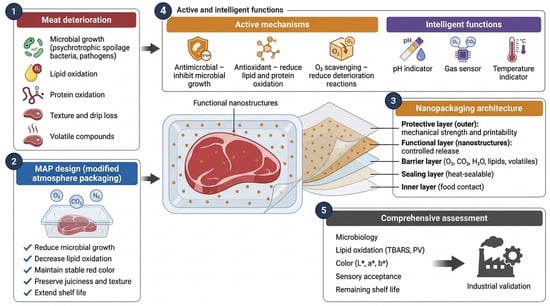
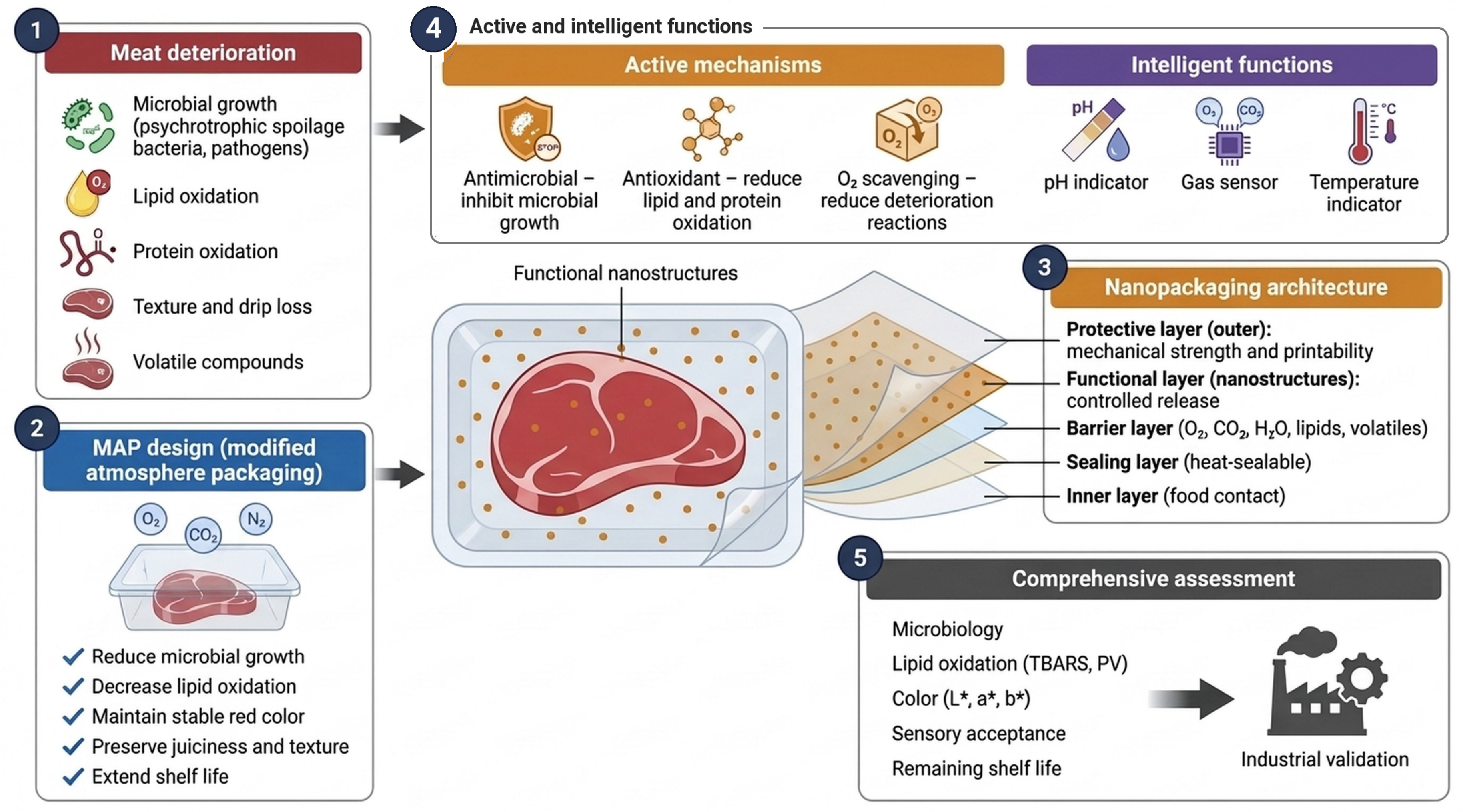
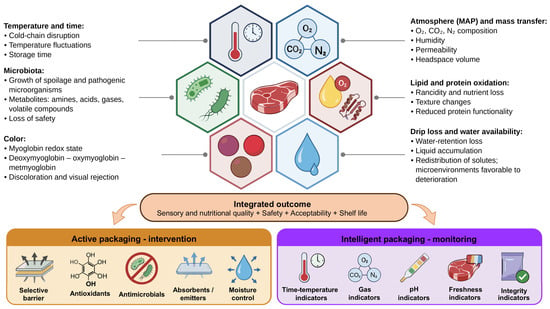
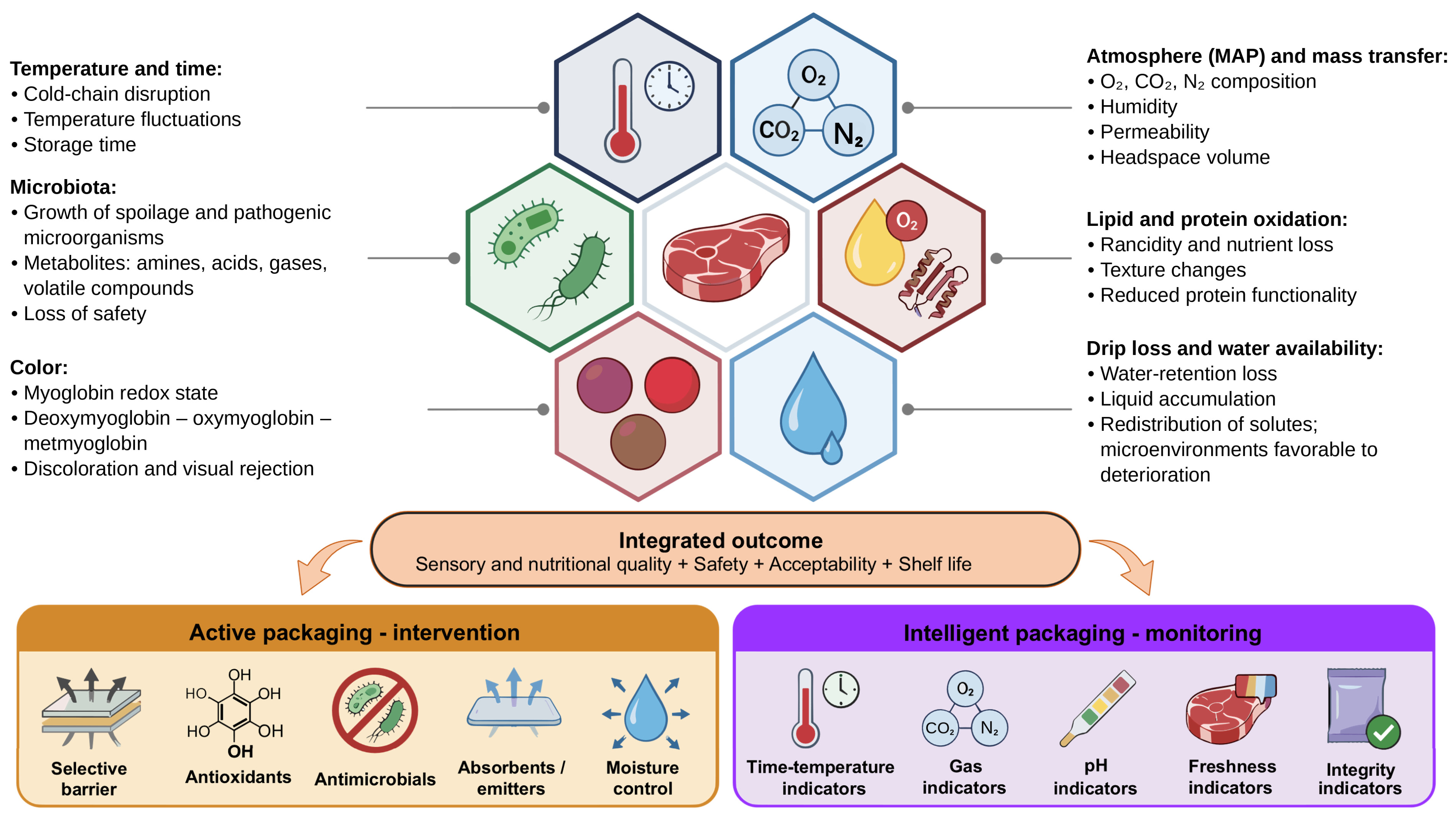
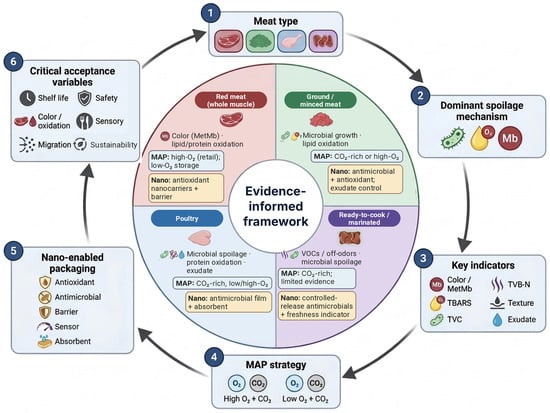
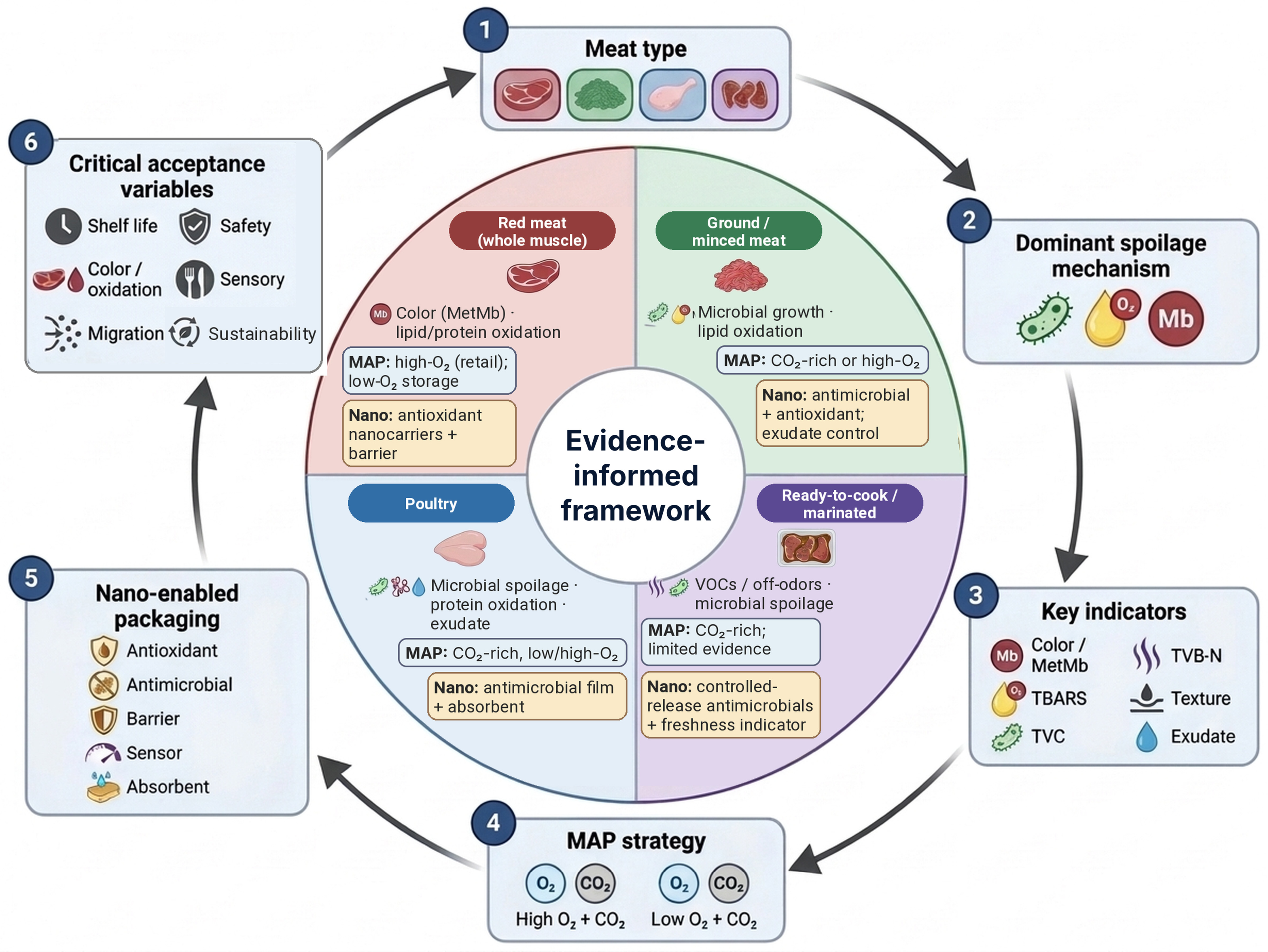
Disclaimer/Publisher’s Note: The statements, opinions and data contained in all publications are solely those of the individual author(s) and contributor(s) and not of MDPI and/or the editor(s). MDPI and/or the editor(s) disclaim responsibility for any injury to people or property resulting from any ideas, methods, instructions or products referred to in the content. |
© 2026 by the authors. Licensee MDPI, Basel, Switzerland. This article is an open access article distributed under the terms and conditions of the Creative Commons Attribution (CC BY) license.