


Abstract
Fermentation is one of the oldest methods for transforming food through microbial action, imparting distinctive flavors while reflecting regional culinary traditions. However, traditional fermentation relies on spontaneous microbial communities and variable environmental conditions, which often produce inconsistent flavor profiles and unpredictable production cycles. This review introduces the microbial metabolism of flavor compound formation during fermentation, focusing on how interactions among flavor compounds and between these compounds and the food matrix shape the final sensory profile. The distinct role of fermentation in developing the major taste categories (sour, umami, salty, sweet, and bitter) and their functional applications in food products are also discussed. Finally, it surveys modern techniques for characterizing fermentation flavors, detailing the principles, applications, and future prospects of electronic sensory systems, chromatography–mass spectrometry, spectroscopy, and deep learning models. A central bottleneck in current flavor analysis is that most studies remain at the level of qualitative and quantitative description of volatile substances, without sufficiently resolving the nonlinear mapping between odor activity values (OAVs), taste activity values (TAVs), matrix-dependent thresholds and sensory perception; consequently, analytical data often deviate substantially from actual consumer experience. This gap requires integrating OAV/TAV analysis, GC–olfactometry, and sensory recombination and omission experiments, while distinguishing spectral library matches from confirmed identification and relative peak areas from absolute concentrations. The potential of deep learning in predicting fermentation flavors has initially emerged, but its industrial application is still constrained by bottlenecks such as the lack of standardized data collection systems, incomplete cross-regional batch databases, and immature multi-source heterogeneous information fusion frameworks. By analyzing the microbial metabolic pathways and flavor formation in fermented foods, this review aims to provide guidance for intelligent regulation and analysis of fermented flavors through comprehensive and multi-dimensional discussions.
1. Introduction
Flavor is a core determinant of consumer acceptance, shaping sensory experiences and purchasing decisions while embodying deep regional and cultural traditions [1]. Among the techniques used to develop flavors, fermentation is one of the oldest. It is a biotransformation in which microorganisms and endogenous enzymes convert raw materials into tastes and aromas that are far richer than those of the unfermented substrate [2,3]. This process underpins the culinary heritage worldwide. In Asia, traditional soy sauce is produced through sequential stewing, koji-making, and moromi fermentation, yielding savory profiles central to many regional cuisines [4,5]. In Europe, fermented meats rely on specific regional microbial communities, and their characteristic flavors are closely tied to the accumulation of microbial metabolites [6].
Because traditional fermentation is rooted in the ecology and microbial communities of a particular region, it serves as an important carrier of culinary heritage [3]. However, its dependence on spontaneous microbiota and sensitivity to fluctuating production conditions often lead to inconsistent flavor, limited efficiency, and potential safety risks. As consumer expectations for quality, safety, and health continue to rise, a central goal of modern food science is to place fermentation on a controllable, efficient, and safe footing, while preserving its traditional flavor. Modern approaches pursue this by screening starter cultures and optimizing process conditions [7]. Kanjan et al. [8], for example, isolated Staphylococcus simulans PMRS35 from high-salt fermented fish sauce (Budu); its strong lipolytic and moderate proteolytic activities indicate its potential as a starter for stabilizing flavor in fermented fish products. Similarly, Zeng et al. [9] found that high-salt environments (10–20% NaCl) favor the proliferation of Staphylococcus species and the formation of characteristic aroma compounds. These findings show that selecting functional strains and controlling parameters, such as pH, salinity, and temperature, can markedly improve the flavor quality of fermented products.
Fermentation flavor emerges from the interplay between microbial metabolic networks and food matrices. Microorganisms generate a broad range of flavor-active compounds, including organic acids (OAs), alcohols, aldehydes, ketones, esters, and umami peptides, through amino acid metabolism, lipid degradation and oxidation, and carbohydrate transformation [10]. These metabolites then undergo further cross-reactions and interact dynamically with the matrix, together constructing a harmonious sensory profile that distinguishes fermented foods [11]. Fermentation not only adds aroma but also reshapes the basic taste dimensions of sour, umami, salty, sweet, and bitter; therefore, the role of fermentation in shaping each taste category merits dedicated attention.
Although microbial metabolism, flavor formation, and instrumental flavor analysis have received considerable attention, current approaches that traditionally use a single analytical technique for static measurements are insufficient to characterize the connections underlying flavor. At the same time, in constructing a coherent mechanism-to-sensory framework, the dynamic and system-level regulation of these metabolic networks, as well as the quantitative links among microbial metabolic flux, flavor-active metabolite pools, matrix partitioning, and final sensory outcomes, remain unclear. Deep learning models can integrate multidimensional data from electronic sensors, chromatography, and spectroscopy with chemometrics to extract, predict, and interpret flavor-related information associated with process parameters and sensory outcomes. Such integration is crucial for intelligent flavor analysis and fermentation control, yet it has been little explored, especially with respect to quantitatively linking instrumental measurements with flavor-active metabolites, matrix partitioning, and sensory perception [12].
A literature review was conducted to explore the microbial mechanisms underlying flavor formation in fermented food. The literature search focused on research articles and review papers published between 2021 and 2026, indexed in the Web of Science database. The keywords used for retrieval included “fermented foods”, “microbial metabolism”, “flavor” and “flavor regulation”. After summarizing the collected materials, we carried out a critical analysis by reapplying these keywords to locate additional relevant studies.
Although there is currently a review on the impact of microbial metabolism on the key flavors of traditional fermented foods, there has been no comprehensive and multi-dimensional discussion on the unique role of fermentation in developing major flavor categories (sour, umami, salty, sweet, and bitter), as well as how modern analytical techniques and deep learning can decode complex flavors and predict their formation [13]. This review first provides an overview of how fermentation produces flavor compounds and how these compounds interact, with emphasis on the microbial metabolic sources of flavor-active metabolites and their retention/release behavior. It then examines how the five basic tastes are formed during fermentation, including how taste-active chemicals are converted into sensory perception. Next, it evaluates the principles, applications, and prospects of modern analytical techniques (such as electronic nose and tongue systems, chromatography–mass spectrometry, and spectroscopy) in flavor analysis during fermentation. Finally, we review how deep learning can decode complex flavors and predict their formation by integrating data. This paper aims to provide theoretical guidance for the intelligent regulation and analysis of fermentation flavors through an analysis of microbial metabolic pathways and flavor formation in fermented foods.
2. Mechanisms Underlying the Effects of Fermentation Processes on Raw Material Flavor
2.1. Microbial Metabolism and Flavor Compound Generation
The flavor of a fermented product is fundamentally shaped by microbial metabolic networks, among which three pathways predominate: amino acid, fatty acid (lipid), and carbohydrate metabolism [13]. Each generates a characteristic set of flavor-active compounds, and the flux through each is closely related to the fermentation environment [14]. Amino acid metabolism supplies many key flavor precursors. Branched-chain amino acids (e.g., valine, leucine, isoleucine) can be catabolized by lactic acid bacteria (e.g., Lactococcus lactis) and staphylococci (e.g., Staphylococcus xylosus) through reversible transamination catalyzed by branched-chain aminotransferase, with α-ketoglutarate as the amino acceptor, to form the corresponding α-keto acids. These α-keto acids are subsequently decarboxylated to branched-chain aldehydes and then reduced by alcohol dehydrogenases to the corresponding alcohols, which are key factors for malty and fruity notes *. Fermentation temperature can modulate the expression or activity of branched-chain aminotransferase and downstream α-keto acid decarboxylases and alcohol dehydrogenases, thereby regulating the formation rates of branched-chain aldehydes and alcohols and altering the intensity and balance of fruity aroma in the final product [15].
Aromatic amino acids (e.g., phenylalanine, tyrosine, and tryptophan) are mainly catabolized by certain yeasts (e.g., Saccharomyces cerevisiae) and aspergilli (e.g., Aspergillus oryzae) via the Ehrlich pathway, while phenylalanine ammonia-lyase (PAL) represents a distinct route where present. The Ehrlich pathway proceeds through transamination by an aromatic amino acid aminotransferase to the corresponding α-keto acid, decarboxylation to an aldehyde, and subsequent reduction or oxidation to the corresponding alcohol or acid. This route produces 2-phenylethanol and phenylacetaldehyde from phenylalanine, tyrosol from tyrosine, and tryptophol and other indole derivatives from tryptophan. PAL, by contrast, catalyzes the non-oxidative deamination of phenylalanine to trans-cinnamic acid, and ammonia and does not directly produce 2-phenylethanol. Downstream conversion of cinnamate can contribute benzaldehyde-related aroma. Therefore, in soy sauce and miso, the Ehrlich pathway is the main route to 2-phenylethanol and floral volatiles, whereas cinnamate-derived benzaldehyde contributes an almond-like note [16]. Sulfur-containing amino acids (e.g., methionine, cysteine) are predominantly degraded by bacilli (e.g., Bacillus subtilis) and certain lactococci, with key enzymes including cystathionine-γ-lyase and methionine-γ-lyase. Methionine-γ-lyase catalyzes the α,γ-elimination of methionine to methanethiol, ammonia, and α-ketobutyrate, whereas cystathionine-γ-lyase acts on cystathionine and contributes to cysteine-derived H2S/thiol pools. Methanethiol can then be methylated to dimethyl sulfide or oxidized to dimethyl disulfide, while methional (3-(methylthio)propanal) can arise via Strecker degradation of methionine. Together with cysteine-derived H2S and thiols, these volatiles contribute meaty, grilled, and egg-like flavors.
Lipid metabolism is a major driver of quality changes during processing and storage. Fermentation first hydrolyzes lipids into free fatty acids, which then undergo oxidation to yield alcohols, aldehydes, ketones, and esters that affect both the color and flavor [17]. The net effect on flavor depends on the balance achieved: controlled lipolysis and oxidation generate desirable aroma compounds, whereas excessive oxidation tends to produce off-flavors. Chen et al. [18] examined how Pediococcus pentosaceus (P. pentosaceus), Lactobacillus curvatus (L. curvatus), Lactobacillus sakei (L. sakei), and Staphylococcus xylosus (S. xylosus) affect lipolysis, lipid oxidation, and flavor development in Harbin dry sausage. Inoculating specific consortia, notably P. pentosaceus R1 with S. xylosus A1 and L. curvatus or P. pentosaceus R1 with S. xylosus A1 and L. sakei, significantly raised free fatty acid levels, chiefly palmitic, stearic, and oleic acids. Fermentation with multiple strains reduced undesirable flavor development.
Carbohydrate metabolism proceeds through four main routes: the Embden–Meyerhof–Parnas (EMP), hexose monophosphate (HMP), Entner–Doudoroff (ED), and phosphoketolase (PK) pathways, all of which converge on pyruvate [12]. As a central metabolic node, pyruvate flux is tightly controlled by the ambient pH. In homofermentative lactic acid bacteria, low pH, together with anaerobiosis, excess glucose and the need for NAD+ regeneration, can favor lactate dehydrogenase-mediated conversion of pyruvate to lactate. In heterofermentative microorganisms, the phosphoketolase pathway may produce lactate, ethanol and CO2, with carbon flux distribution depending on substrate type, sugar limitation and redox state. In yeasts such as S. cerevisiae, pyruvate is mainly diverted to ethanol and acetaldehyde via pyruvate decarboxylase and alcohol dehydrogenase under anaerobic, high-sugar and NAD+-regenerating conditions. Therefore, pH should be interpreted together with oxygen availability, carbon source, substrate availability, redox balance and strain-specific pathway architecture rather than as a single determinant of pyruvate flux [19]. Carbohydrate sources further shape the metabolite pool. Using gas chromatography–ion mobility spectrometry (GC–IMS), Han et al. [20] compared greengage wine fermented with sucrose versus glutinous rice and found that both substrates released abundant monosaccharides that were converted into esters, alcohols, and aldehydes, the principal volatiles of the wine; however, 1-hexanol and benzaldehyde appeared only in the glutinous-rice version.
2.2. Transformation and Interaction of Flavor Compounds
It is useful to distinguish four stages between microbial formation and perceived in-tensity, with formation setting compound identity and amount, retention determining the free, mobilizable fraction through partitioning and binding, release being the dynamic mass transfer driven by mastication, saliva, and temperature, and perception integrating the time-resolved release flux with receptor sensitivity. Once formed, flavor compounds do not remain independent of their surroundings; they continuously interact with the food matrix, polysaccharides and polyphenols, and these interactions determine how flavor is retained, released, and ultimately perceived [21,22]. The binding of volatile compounds to matrix proteins is a key example. Lv et al. [23] examined how trypsin concentration affects the binding of aldehydes and ketones to myosin and found that higher trypsin levels markedly strengthened it. They attributed this effect to the greater amino group reactivity and sulfhydryl content, which promoted the development of the protein secondary structure and, in turn, a stronger association with volatiles. Qian et al. [24] noted that protein–flavor interactions are governed by both intrinsic factors (protein and flavor compound properties, pH, temperature, and hydration capacity) and external factors (ionic strength and oxidation conditions) [25].
The consequences of this binding and restructuring become most apparent during eating, when flavor release becomes a dynamic process (Figure 1) [26]. As food enters the mouth, mastication, dilution by saliva, and temperature changes drive the partitioning and mass transfer of compounds previously bound to the matrix, releasing new flavor profiles during consumption [27]. The oral surface can also directly transform these compounds. Using gas chromatography–mass spectrometry (GC-MS), Ployon et al. [28] showed that an oral mucosal cell model (TR146/MUC1) hydrolyzed ethyl hexanoate into hexanoic acid and oxidized trans-2-hexen-1-al to the corresponding hexenoic acid, confirming that oral mucosal cells can metabolize aroma compounds into new flavor metabolites.
Figure 1.
Oral release mechanism diagram of flavor compounds in fermented foods.
In addition to mediating compound binding, fermentation actively remodels the matrix, reshaping the environment in which flavor is retained and released. Two common modifications are protein gelation driven by lactic acid bacteria (LAB) and fat redistribution accompanying lipolysis. Ren et al. [29] tracked soybean protein during fermentation with LAB strains (Lactobacillus casei, L. paracasei, and L. plantarum) and found that extracellular proteases degraded it into fragments smaller than 30 kDa, which then formed insoluble aggregates through hydrophobic interactions and disulfide crosslinking. Xiang et al. [30] hydrolyzed recombined milk with several commercial lipases (AY 30SD, DF15, and MER) and showed that lipolysis altered the physical state of the lipids, releasing abundant short- and medium-chain free fatty acids that were subsequently converted into volatiles such as methyl ketones. These fermentation-induced changes in protein network porosity, binding-site accessibility, and lipid-phase volume fraction alter the partitioning of volatiles between the matrix, headspace, and saliva, and therefore the timing and intensity of oral release.
Taken together, fermentation shapes flavor not only through the specific metabolites it produces, but also, more importantly, through the micro-matrix environment it constructs. This environment governs the timing and intensity of flavor release in the oral cavity, thereby determining the overall sensory experience. However, inferring flavor formation from taxonomic composition alone—for example, 16S rRNA gene profiling or metagenomic read counts—is not mechanistically sufficient: the presence or relative abundance of a taxon does not demonstrate that it is metabolically active, that the relevant pathway is expressed, or that a measured metabolite can be attributed to it. Although taxon–metabolite correlations are widely reported, correlation alone cannot establish causation; functional evidence from metatranscriptomics, metaproteomics, stable-isotope probing, and sensory-validated synthetic consortia is required. Moreover, because matrix binding decouples analytical concentration from the in-mouth concentration available to receptors, flavor release and sensory validation must accompany metabolite quantification. Only when microbe–metabolite links are functionally validated and integrated with matrix-release behavior and sensory outcomes can they reliably inform flavor interpretation and predictive modeling.
3. Fermentation Flavor Categories and Roles
In addition to volatile aroma compounds, microbial fermentation produces non-volatile taste-active substances, such as OAs, amino acids, peptides, and sugar alcohols, which act directly on the human gustatory system. Among the basic tastes perceived by this system, five are recognized as the core modalities of food flavor: sour, umami, salty, sweet, and bitter. Each has distinct sensory qualities and physiological roles, and is shaped, enhanced, or balanced by microbial metabolism and matrix interactions during fermentation. Fermented foods are complex ecosystems in which endogenous enzymes act in conjunction with microbial metabolism. Process variables, such as salt concentration, particle size, temperature, and oxygen level, strongly influence the taste reactions. The five basic tastes and their functions are shown in Figure 2.
Figure 2.
Five basic tastes of fermented food and their applications.
3.1. Sour
Sourness is one of the most characteristic tastes of fermented foods, arising chiefly from organic, lactic, acetic, citric, and malic acids, generated by LAB, acetic acid bacteria, and other microorganisms. The specific acids and their concentrations, and hence the quality and intensity of sourness, are determined by the metabolic route taken. LAB produce lactic acid mainly through homofermentative pathways (e.g., the Embden–Meyerhof–Parnas pathway), which convert glucose to pyruvate and then to lactate, or through heterofermentative pathways that additionally yield acetic acid, ethanol, and CO2 [31]. In contrast, acetic acid bacteria oxidize ethanol to acetic acid under aerobic conditions. The resulting acids do more than just impart sourness. In culinary terms, sourness stimulates salivation and appetite [32], and the accompanying decrease in pH promotes protein coagulation, improving the texture [33]. Both the level and balance of sourness are governed by fermentation conditions. Pyruvate is a central metabolic node, but its flux is not controlled by ambient pH alone. At low pH, lactate dehydrogenase can channel pyruvate toward lactic acid in homofermentative lactic acid bacteria when anaerobiosis and NAD+ regeneration favor this route, thereby contributing to sourness. In heterofermentative microorganisms, pyruvate equivalents can be partitioned among lactate, ethanol, acetate and CO2 via the phosphoketolase pathway, depending on substrate and redox conditions. Under weakly acidic to neutral conditions, pyruvate decarboxylase and alcohol dehydrogenase can divert pyruvate toward ethanol and acetaldehyde in yeasts, particularly under anaerobic and high-sugar conditions. Thus, the distribution of carbon flux among lactate, ethanol, acetate, acetoin and other fermentation products depends on microbial physiology, pathway architecture, substrate availability, redox balance, oxygen availability and environmental conditions [34]. Crucially, acid production must remain within the bounds set by microbial safety requirements [35]. Therefore, controlling sourness means optimizing these conditions to direct the target microorganisms toward the required acids and concentrations while keeping the process within a safe fermentation framework, balancing quality and safety.
3.2. Umami
Umami has long been prized in traditional fermented foods, from soy sauce in Asia to aged cheese in Europe [36]. Recognized as the fifth basic taste, umami is defined by two properties that make it central to flavor design: it acts synergistically with other tastes, enhancing saltiness while suppressing bitterness [37,38]. The main contributors to this flavor are umami peptides, free amino acids (FAAs), flavor nucleotides, and OAs [39]. Among these, umami peptides are of particular interest. Beyond conferring a rounder, more multidimensional umami than single amino acids or nucleotides [40], some umami peptides also exhibit antioxidant, lipid-lowering, and hypoglycemic activities [41], giving them value as functional and flavor ingredients. Umami peptides can be prepared by enzymatic hydrolysis, microbial fermentation, solvent extraction, and Maillard reaction [42], but microbial fermentation stands out for its low cost, ease of cultivation, relatively high yield, and good acceptability [39]. During fermentation, microorganisms drive umami formation along two coordinated routes: they secrete extracellular proteases that hydrolyze proteins into small peptides and FAAs, and through endogenous metabolism, they convert precursors into umami-active nucleotides and OAs [43]. This dual action has been resolved at the molecular level in various systems. Using UPLC-MS/MS, Cao et al. [37] identified four umami peptides, ME, EL, EA, and EV, in soybean meal fermented with Aspergillus oryzae, of which EV exhibited the strongest umami-enhancing effect. Zhang et al. [44], applying continuous chromatography and UPLC-ESI-QTOF-MS/MS to peanut protein isolate hydrolysate (PPIH), isolated six umami peptides, including DQR, NNP, EGF, EDG, TESSE, and RGENESEEEGAIVT, among which RGENESEEEGAIVT is a tetradecapeptide possessing both umami and umami-enhancing capabilities. A significant advantage of the fermentation route is stability: the umami thresholds of umami peptides in fermented foods are usually more stable, whereas those of umami peptides in non-fermented foods are more widely distributed [41]. This has practical significance for flavor enhancement. Fermentation-derived umami compounds are technologically relevant as potential umami enhancers; however, their use for partial replacement of MSG requires dose-matched sensory validation in real food matrices, process and storage stability testing, and safety and cost assessment. Monosodium glutamate (MSG) is widely used to boost umami flavor; however, concerns persist regarding the possible health effects of excessive intake [45]. Umami peptides are a promising alternative as natural and functionally active flavor sources. Future studies on the screening, identification, and evaluation of umami peptides from fermented foods could support the development of novel umami additives.
3.3. Salty
Saltiness is an indispensable component of fermented-food flavor; however, unlike other tastes, it is not a microbial product, but originates almost entirely from added NaCl [46]. Salt is integral to the processing of many traditional fermented foods, including pickled vegetables, sauerkraut, and ham [47,48]. In addition to taste, it functions as a selective agent. High-salt conditions suppress most spoilage organisms and pathogens while favoring beneficial fermentation such as LAB, halotolerant yeasts, and molds [49]. Salt concentration steers the direction of flavor development by controlling water activity (Aw) and shaping the microbial community. Liu et al. [50] examined soy sauce fermented at 8%, 12%, 16%, and 20% salt and found that lower concentrations supported higher microbial abundance and greater accumulation of amino nitrogen (AN), FAAs, and volatile compounds (VCs). Liang et al. [51], combining Illumina HiSeq sequencing with GC-MS in sauerkraut, showed that LAB dominated at every salt level, while genera such as Pediococcus, Leuconostoc, Weissella, Sphaerotilus, Azospirillum, Klebsiella, Acinetobacter, and Cladosporium were markedly affected by it; salt also reshaped the VC distribution and lowered isothiocyanate content. Together, these results define the central role of salt in fermentation: lower salt content enriches flavor and microbial activity, yet safety and stability set a lower bound. This tension has become pressing due to health concerns. Excessive salt intake is linked to hypertension, stroke, cardiovascular diseases, and gastric cancer [52,53], and the average consumption of 9–12 g/day far exceeds the WHO-recommended maximum of 5 g/day [54]. This has driven the development of low-sodium fermented foods through strategies that should be clearly distinguished. The first is reducing NaCl concentration directly, thereby lowering total sodium intake, although this can compromise safety, shelf life, and sensory quality. The second is partially replacing NaCl with non-sodium salts (e.g., KCl) or with flavor-enhancing ingredients, which aims to reduce total sodium while maintaining saltiness. A third strategy, modifying NaCl crystal structure or physical form, may alter saltiness perception and processing performance but does not necessarily reduce total sodium. Importantly, replacing NaCl with other sodium-containing salts does not necessarily lower total dietary sodium and should not be conflated with sodium reduction [55,56]. The challenge is that removing sodium degrades sensory quality, as sodium not only conveys saltiness but also promotes the release of VCs from the matrix, suppresses bitterness, and shapes the microbial community. Overcoming this sensory penalty is now the key challenge in sodium reduction, and both physical and microbial strategies are being explored, including odor-induced saltiness enhancement, tailored starter cultures, flavor enhancers, and non-thermal processing. Microbial approaches are particularly promising. Salt-tolerant organisms, such as halophilic archaea Halolalama and Tetragenococcus halophilus, accumulate the umami amino acids glutamate and aspartate through protein hydrolysis and can be assembled into stable synthetic communities, compensating for the sensory loss of sodium reduction and reinforcing salt perception at lower sodium levels [57].
3.4. Sweet
Sweetness is transduced by type 1 taste receptors T1R2 and T1R3, which assemble into a heterodimer of the class C G-protein-coupled receptor (GPCR) family capable of recognizing sugars, amino acids, peptides, proteins, and other organic compounds [58]. In fermented foods, this receptor is engaged by sweetness from three main sources: residual substrate sugars, fermentation-derived sugar alcohols, and sweet amino acids or peptides generated during fermentation [59,60]. Residual substrate sugar is the most direct source. Early in fermentation, microbial amylases and sucrases can hydrolyze starch and sucrose, respectively, into reducing sugars such as maltose, glucose, and fructose; this release results from substrate hydrolysis rather than microbial sugar biosynthesis, and persistent sugars lend the product a natural sweetness. In winemaking, for example, Yaa’ri et al. [61] noted that yeast converts grape glucose and fructose into ethanol and CO2. However, incomplete fermentation leaves residual sugar that sets the sweetness of the finished wine. Sugar alcohols are a second source with particular technological value. Unlike residual sugars, erythritol and mannitol that accumulate during fermentation are fermentation-derived metabolites formed through microbial conversion of sugar precursors; they combine clean, refreshing sweetness with low absorbability, making them well-suited for sweetness modulation in low-calorie fermented foods [62]. The third source is proteolysis of substrate proteins: the resulting sweet-tasting peptides and amino acid derivatives are fermentation-derived products, not residual sugars. Liang et al. [58] reported that yeast-extract peptides enhanced sweetness in sensory tests, with molecular docking suggesting interactions with T1R2/T1R3; some glycine- or alanine-containing peptides have also been associated with sweet taste [59]. Receptor-based work on umami dipeptides further demonstrates sequence-dependent recognition at T1R1/T1R3 [63]. These findings support ligand-dependent activation or enhancement, not a general microbial increase in T1R2/T1R3 sensitivity; the latter would require direct functional evidence at the receptor level. Sweetness does not act in isolation but interacts strongly with other tastes, particularly sourness and bitterness. In a review of suppressive interactions in binary taste mixtures, Green et al. [64] noted that the measured sweetness can mask bitterness, enhance umami, and temper the sharpness of sourness. However, excessive sweetness can flatten the complexity that defines fermented flavors. Therefore, regulating sweetness means balancing the microbial pathways, substrate composition, and target flavor profile of the product.
3.5. Bitter
Bitterness is detected by type 2 taste receptors (T2Rs), a large subfamily of GPCRs whose breadth allows them to recognize a wide range of compounds [65]. Bitter perception evolved as a warning against ingesting toxins; however, in a number of traditional fermented foods, including cheese and beer, a measured bitterness is an essential and valued part of the flavor [66,67,68]. Its sources are correspondingly diverse, spanning peptides, amino acids, polyphenols, and microbial metabolites [69], which fall into two groups: compounds already present in or derived from the substrate and compounds generated by fermentation itself. Among substrate-derived sources, amino acids and polyphenols are the most important. Several sulfur-containing (methionine and cysteine) and aromatic amino acids (phenylalanine and tyrosine) are intrinsically bitter [70], whereas polyphenols contribute to both bitterness and astringency. For example, in wine, bitterness arises chiefly from flavonoid phenolics and intensifies as these polymerize into higher-molecular-weight forms; this relationship depends on the phenolic structure, degree of polymerization, concentration, and interaction with salivary proteins [71]. Fermentation then acts in two opposing directions on this baseline. On the one hand, it can generate bitterness: microbial proteases hydrolyze proteins into hydrophobic peptides rich in proline, leucine, or phenylalanine and, under certain conditions, biotransform precursors into bitter amino acids and phenolic derivatives. Yu et al. [72] captured this temperature dependence in Huangjiu, showing by GC-O and GC-MS that fermentation at higher ambient temperatures (across the 4.75 to 16.36 °C range studied) promoted bitter-associated compounds such as benzaldehyde, furfural, ethyl nonanoate, and phenylalanine, with Saccharomyces and Lactobacillus closely correlated with the synthesis of bitter amino acids. On the other hand, fermentation can also attenuate bitterness. Camu et al. [73] found that during cocoa bean fermentation, the bitter constituents epicatechin and theobromine declined through diffusion out of the cotyledons and oxidative polymerization of polyphenols, and that their residual levels set the bitterness of the finished chocolate, making the controlled degradation of bitter polyphenols a key step in developing a balanced chocolate flavor. Fermentation can both add and remove bitterness; therefore, the goal is to steer it to an appropriate level rather than eliminate it. To curb bitterness, options include selecting starter cultures with low proteolytic activity, optimizing fermentation temperature and time to limit the build-up of bitter peptides, and applying post-fermentation debittering or masking with other flavor compounds [74]. Bitterness can also play a functional role beyond the taste. Qiao et al. [69] reported that bitter compounds bind to bacterial membranes and cell walls (including Gram-positive bacteria and Gram-negative bacteria), compromising their integrity and producing an antibacterial effect. Therefore, managing and balancing bitterness is an indispensable aspect of flavor control in fermented foods.
3.6. Other Flavor Types
Although sourness, umami, saltiness, sweetness, and bitterness are recognized as the five basic tastes, the sensory integrity of fermented foods is significantly regulated by three other non-basic taste attributes, namely astringency, kokumi, and trigeminal sensations. Although they do not rely solely on taste receptor cells, they significantly regulate flavor profiles through oral tactile, chemical, and somatosensory pathways, and therefore cannot be ignored in sensory evaluation of fermented foods. Astringency is primarily an oral tactile sensation rather than a basic taste. It is usually perceived as dryness, roughness, or puckering of the oral mucosa and mainly reflects interactions between polyphenols (e.g., tannins and catechins) and salivary proline-rich proteins, leading to reduced salivary lubrication. In fermented foods, the source of astringency is bidirectional: on the one hand, high concentrations of polyphenols naturally exist in tea, red wine, and immature fruit fermented products. On the other hand, tannase and phenolic decarboxylase secreted by lactic acid bacteria (such as Lactobacillus plantarum) and Aspergillus oryzae can partially hydrolyze and polymerize tannins, reducing astringency. However, in long-term fermentation systems such as soy sauce and fermented black beans, moderately retained phenolic substances actually impart complex levels of astringency to the product. Kokumi refers to a prolonged, full-bodied, and heavy taste that is different from umami. It does not present a distinct flavor on its own, but can enhance the persistence and fullness of sweetness, saltiness, and umami. Its chemical basis is mainly composed of gamma glutamyl peptides (such as γ-Glu-Val-Gly) and sulfur-containing peptides (such as glutathione), which are produced by Bacillus subtilis and yeast through the hydrolysis of proteins by glutaminase and peptidase during fermentation. The trigeminal nerve sensation includes pungency, cooling, tingling, and burning in the mouth, which are directly responded to by the trigeminal nerve endings in response to chemical stimuli. During the fermentation process, capsaicin, allicin, and Sichuan peppercorn extract can significantly activate TRPV1 and TRPA1 ion channels. These stimuli do not rely on taste buds, but change the taste perception threshold through somatosensory interactions. For example, trace amounts of spicy stimuli can enhance umami sensitivity, while tingling sensations can prolong the aftertaste of bitterness. Overall, although astringency, strong flavor, and trigeminal sensation do not occupy a central position in traditional taste classification, they make significant contributions to flavor complexity, taste, and aftertaste persistence in the actual consumption experience of fermented foods.
4. Analytical Techniques for Fermentation Flavor
Flavor quality strongly influences consumer acceptance and market value of fermented foods [75], making its reliable measurement a scientific and practical concern. Sensory evaluation by trained human panels remains the most direct gauge of perceived flavor, because it captures integration, harmony, and hedonic impact, although variability limits reproducibility and throughput. Instrumental methods therefore provide complementary, objective information. Crucially, no single instrument captures flavor in full; sensor arrays provide holistic fingerprints, chromatographic methods resolve molecular identity and abundance, and spectroscopic methods capture chemical or structural pat-terns. This section compares these techniques according to the type of evidence they provide and then sets out the analytical steps required to connect chemical measurements with perceived flavor.
4.1. E-Nose and E-Tongue
The E-nose and E-tongue are the instrumental analogs of the two chemical senses: both couple an array of partially selective sensors to pattern-recognition software, converting a complex mixture into a characteristic response profile, an electronic “fingerprint” of smell or taste. Rather than identifying individual compounds, they classify and compare whole samples, making them fast and objective tools for flavor analysis of fermented foods.
The E-nose targets the volatile fraction. Its sensor array, built from metal-oxide semiconductors, conductive polymers, or quartz-crystal microbalances, undergoes reversible interactions with VCs that alter a measurable physical property, such as resistance, oscillation frequency, or capacitance, which are digitized into an aroma profile. This makes it suitable for monitoring aroma across fermentation stages, optimizing processes and verifying authenticity. Zhang et al. [76] tracked LAB-fermented chickpea milk by E-nose with principal component analysis (PCA); the W2S and W3S response patterns were consistent with the presence of alcohols, aldehydes, and aliphatic compounds, although these assignments require independent confirmation by GC-MS or other analytical methods. Li et al. [77] followed Chinese shrimp paste through fermentation and found that response values of W1S, W1W, and W2S changed as fermentation advanced, and these patterns were suggestive of changes in short-chain alkanes, inorganic sulfides, alcohols, aldehydes and ketones, but compound-level identification was not established by the E-nose alone, indicating a strong effect of fermentation on flavor formation. However, the resolution of the E-nose is limited by the number and type of sensors, and its sensitivity to particular compound classes can be poor. Feng et al. [78] found the instrument showed differential response patterns across eight Chinese Huajiao (Sichuan pepper) samples that were consistent with organosulfur compounds, terpenes and nitrogen oxides, while alcohols were not detected; these observations reflect sensor-dependent discrimination rather than definitive compound identification. These applications demonstrate discrimination, but not compound identification. Sensor responses may be correlated with trained-panel scores after sample-specific calibration; such correlations require independent-batch and, ideally, independent-instrument validation and do not establish which compounds drive the observed difference. More fundamentally, the E-nose discriminates overall odor but cannot identify or quantify specific volatiles.
The E-tongue applies the same principle to the water-soluble, taste-active fraction, using a multi-sensor array to profile the basic taste attributes and their intensities [79]. It is used to characterize the overall taste of products such as pickled vegetables, soy sauce, and fermented meat, supporting standardization and flavor regulation. Its speed, repeatability, and freedom from subjective bias make it particularly useful for screening large batches. Deng et al. [80], for example, profiled opossum shrimp paste fermented for 1, 2, 3, and 8 years and found changes in umami, richness, and bitter aftertaste responses. However, the sensors suffer from low selectivity and high cross-sensitivity; therefore, they are best interpreted as pattern-based screening tools and generally cannot resolve individual taste compounds within a complex matrix [81]. Any predictive relationship with sensory intensity must be calibrated using independent samples and reported within the validated sample domain.
Together, the E-nose and E-tongue deliver rapid, objective fingerprints of aroma and taste that are valuable for industrial quality control and early product development. Their shared limitation is equally clear: because they capture holistic patterns rather than molecular details, neither can identify or quantify the specific compounds behind a flavor, and neither reproduces the integrative judgment of a human panel. E-nose and E-tongue responses are instrument- and sensor-dependent, and sensor signals should not be interpreted as definitive identification or quantification of individual chemical classes without independent analytical confirmation, such as GC-MS or LC-MS. Resolving flavor at the molecular level calls for the separation and identification power of chromatography–mass spectrometry, discussed next, while fuller interpretation increasingly depends on coupling sensor data with pattern recognition and multimodal data fusion algorithms, which are the basis of the deep-learning approaches considered later in this section.
4.2. Chromatographic Analysis Techniques
Whereas the E-nose and E-tongue characterize flavor as a holistic pattern, chromatography–mass spectrometry resolves it at the molecular level, providing compound-by-compound identification and quantification that sensor arrays cannot. These methods are divided along the same volatile and non-volatile axes that distinguish smell from taste: GC-MS analyzes volatile aroma compounds, whereas liquid chromatography–mass spectrometry (LC-MS) analyzes non-volatile taste-active compounds. They complement each other, forming the main analytical framework for the chemical basis of fermentation flavor (Table 1). However, it cannot cover all flavor and flavor compounds. For example, some compounds with low abundance, high polarity, or thermal instability or beyond the conventional mass spectrometry detection range may still be missed. Therefore, they still need to be combined with other analytical methods to obtain a more complete understanding.
GC-MS is suitable for volatile and semi-volatile compounds. Samples are first concentrated using pretreatments such as headspace sampling or solid-phase microextraction. The components are then separated in the gas chromatograph according to volatility and polarity before entering the mass spectrometer, with identification supported by mass spectra, retention indices, and authentic standards; quantification requires calibration with internal or external standards [82]. Chen et al. [83] identified 115 volatile flavor compounds (VFCs) in Koji-fermented Douchi, reporting that most alcohols and acids declined as fermentation proceeded while esters, ketones, pyrazines, and phenols accumulated during pile fermentation. Related configurations extend the basic technique in various directions. Gas chromatography–olfactometry–mass spectrometry (GC-O-MS) places a human assessor at the detector outlet, allowing compounds contributing most to the perceived aroma to be distinguished from those merely present, while GC-IMS provides rapid, highly sensitive volatile profiling with minimal sample preparation. Using GC-IMS, Zhao et al. [84] compared sour pork and sour goose and identified 94 volatile compounds. Accordingly, GC-MS is preferred for compound identification and target quantification when standards and calibration are available, GC-O-MS for prioritizing odor-active candidates, and GC-IMS for fingerprinting or classification. The main constraints of GC-MS are that extraction and enrichment are often required and that thermally unstable or highly polar compounds may be inadequately covered.
The excluded compounds, which are non-volatile and often polar, are precisely the taste-active substances that LC-MS can address, which makes the two techniques complementary rather than competing. LC-MS analysis was used to analyze non-volatile compounds such as umami peptides, OAs, and polyphenols. Although these compounds do not contribute to aroma, they are central to taste and govern the fullness, persistence, and balance of the overall flavor [85]. Yu et al. [85] examined salt-free fermented fish sauce and identified 357 peptide fragments, finding that Val, Leu, Pro, His, and Asp contributed prominently to umami, while Dai et al. [86] identified 11 bitterness-associated peptides in Jinhua ham, of which PKAPPAK, VTDTTR, and YIIEK were the principal bitter components. However, the application of LC-MS to fermented foods is limited by two related problems. First, proteins, polysaccharides, lipids, and salts of a complex matrix produce matrix effects that suppress or enhance ionization, reducing quantitative accuracy and causing low-abundance compounds to be missed altogether. Second, structural analogs such as peptide homologs and phenolic derivatives place high demands on separation and mass-spectrometric resolution, a difficulty compounded by the incomplete coverage of fermentation-specific compounds in existing spectral databases [87]. Strategies to address these problems follow the same division. Chen et al. [79] proposed that matrix interference and quantification are improved through optimized pretreatment, including solid-phase extraction [88], QuEChERS [89], and isotope-labeled internal standards, while the identification of unknown compounds and the mapping of their formation pathways are advanced by combining LC-MS with molecular networking [90] and sensory-directed screening [91]. Although LC-MS is less sensitive than GC-MS for volatile aroma compounds, its capacity to resolve non-volatile taste compounds makes it indispensable for a complete account of fermentation flavor. Reliable targeted quantification therefore requires authentic standards, isotope-labeled internal standards where possible, matrix-matched calibration, and validation of recovery and precision. Untargeted LC-MS combined with molecular networking is valuable for discovering unknowns and mapping putative transformation pathways, but networking alone is not a routine quantitative method. LC-MS results, like other chemical measurements, should not be interpreted as direct measures of taste perception without threshold, dose–response, and sensory validation.
Taken together, GC-MS and LC-MS provide detailed and reliable molecular information, but both are relatively time-consuming, depend on extensive sample preparation, and consume the sample during the process. These constraints have motivated the adoption of rapid and largely non-destructive spectroscopic techniques.
Table 1.
Comparison of common chromatographic techniques in fermented flavor research.
4.3. Spectroscopic Analysis Techniques
Spectroscopic techniques measure how matter interacts with electromagnetic radiation, and they share a set of properties that complement chromatography–mass spectrometry: they are rapid and largely non-destructive and require little sample preparation, which makes them well-suited for following the dynamic changes in key components as fermentation proceeds. The three methods most often applied to fermented foods differ mainly in the balance they strike between molecular details and speed. Nuclear magnetic resonance (NMR) provides the most comprehensive information and is best suited for metabolic profiling. Infrared (IR) spectroscopy occupies a middle ground and is the principal tool for real-time monitoring of processes. Ultraviolet–visible (UV-Vis) spectroscopy is the simplest and fastest method, but it is the most limited in scope, serving mainly for targeted screening (Table 2). A recurring feature across all three is that the main weakness of each is addressed by coupling it with a complementary separation or a computational method.
NMR exploits the resonance of atomic nuclei in a magnetic field to identify and quantify small-molecule metabolites, such as organic acids, amino acids, and sugars, without destroying the sample. Because it is highly reproducible and can measure many metabolites simultaneously, it is particularly suited for reconstructing the metabolic trajectory of fermentation [96]. Cusano et al. [97], for example, used NMR to follow the accumulation of secondary metabolites including trigonelline and tyrosol during apple juice fermentation, illustrating its value for process monitoring. Its principal constraint is sensitivity in complex matrices; in semi-solid or highly viscous systems such as soybean paste and cheese, intense signals from abundant proteins and lipids tend to obscure lower-concentration flavor metabolites, including specific umami peptides and trace esters, which restrict in situ detection in these matrices [98,99]. This limitation, together with the high cost of instrumentation, has slowed its wider adoption. Extending NMR to low-abundance targets will likely depend on more effective sample preparation or coupling with liquid chromatography.
IR spectroscopy measures the vibrational absorption of chemical bonds, and its speed and robustness make it especially suitable for online, real-time monitoring on production lines. Its two main variants serve different purposes. Near-infrared (NIR) spectroscopy can track the concentrations of major components in real time. Duran et al. [100] monitored ethanol, acetic acid, and ethyl acetate simultaneously during acetic acid fermentation using NIR, avoiding the sampling delay of conventional methods and providing immediate data for process control. Mid-infrared (MIR) spectroscopy, usually implemented as Fourier-transform infrared (FTIR) spectroscopy, resolves the molecular structure in greater detail, including the protein secondary structure derived from the amide I band. Li et al. [101] applied FTIR to corn and soybean meal fermentation and found that α-helix and β-sheet contents peaked at 48 h while random coil and β-turn reached their minima, providing a non-destructive view of the matrix structural changes that govern how flavor compounds bind to and release from the protein network, the same protein–flavor interactions examined in Section 2.2. The principal limitation of IR, and NIR in particular, is that overlapping absorption bands give it limited intrinsic resolution. However, combined with chemometric methods such as principal component analysis and partial least squares regression, these broad spectral fingerprints can be converted into quantitative indicators for process control.
UV-Vis spectroscopy relies on the absorption of ultraviolet and visible light by chromophores, which are conjugated or unsaturated groups within a molecule. It is simple to operate and responds rapidly, making it an effective online tool for following markers that carry such chromophores [102]. In winemaking, it is used to monitor the extraction and polymerization of anthocyanins and to assess color development non-destructively. Aleixandre-Tudo et al. [103] tracked phenolic changes during wine fermentation by UV-Vis spectroscopy and attributed the rise in absorption between 520 and 540 nm in the early stage to the extraction of anthocyanins from grape skins. The technique is inherently blind to compounds that lack a chromophore, including alcohols and most saturated carbonyls; therefore, its scope is narrow. Within that scope, its speed makes it valuable for the preliminary screening of fermentation progress and endpoint determination.
Across spectroscopic methods, as with the sensor arrays and chromatographic techniques already described, the raw output is high-dimensional and not directly interpretable, and its conversion into usable flavor information increasingly depends on chemometric and, more recently, machine-learning analysis. This growing reliance on computational modeling has led to the consideration of deep-learning approaches in the following section.
Table 2.
Common spectroscopic techniques in fermentation flavor research.
5. Deep Learning Models
The instrumental methods described above generate large volumes of high-dimensional data from multiple sources; however, extracting flavor-relevant information from these data and mapping them to the final product quality remains difficult. Deep learning is well suited to this task; unlike conventional chemometric methods, it learns discriminative features directly from raw data without manual feature engineering and recognizes the complex, nonlinear relationships between these data and product quality. In fermentation flavor research, deep learning has been applied along a progression that runs from flavor classification and identification, through the prediction of flavor formation, toward the design and discovery of flavor molecules (Figure 3), with the most established applications at the classification stage. A benefit that recurs across all three is interpretability: beyond predictive accuracy, these models can increasingly indicate which spectral bands, sensor responses, process parameters, or molecular features drive a given result, linking data-driven prediction to flavor chemistry. These applications differ in maturity. Classification is well established, whereas quantitative prediction of flavor compounds, prediction of sensory attributes, and closed-loop optimization of fermentation remain far less developed.
Figure 3.
Applications of deep learning in flavor analysis of fermented foods. NIR, near-infrared.
At the classification and identification stage, deep learning models discriminate the quality, geographical origin, and storage age of fermented products [107]. Convolutional neural networks (CNNs) are the most widely used, and the appropriate variant depends on the form of the input [108]. For one-dimensional sequences produced by many flavor instruments, such as near-infrared spectra and E-nose or E-tongue response curves, one-dimensional CNNs (1D-CNNs) capture local patterns along the sequence. Bi et al. [109] reported 94% recognition for closed-set classification of Chinese liquor aging within a single product; because the dataset size, independent batch partitioning and class balance were not reported, this result should not be interpreted as evidence of flavor prediction or cross-batch generalizability. For hyperspectral images (HSI), which contain both spatial and spectral information, three-dimensional CNNs (3D-CNNs) simultaneously extract features across both dimensions. Although minced meat is not a fermented matrix, Ayaz et al. [110] used a 3D-CNN to classify minced meat (non-fermented meat products) from hyperspectral data, addressing the spatial variability that earlier approaches neglected, and achieved 94% accuracy. In contrast, two-dimensional CNNs (2D-CNNs) operate on conventional images and have been used to classify fermentation batches as successful or unsuccessful based on visual monitoring [111]. Interpretability techniques, such as feature-map visualization, can then identify which spectral bands or sensor responses most influenced a classification, effectively pointing back to the compound groups associated with a given quality attribute.
Predicting flavor development requires models that capture temporal dependence because fermentation is a dynamic process. Recurrent neural networks (RNNs), and in particular long short-term memory networks (LSTMs), are designed for sequential data of this type [112]. Chen et al. [113] used an LSTM to extract features from the full time-series response of an E-nose array and classified five types of Chinese vinegar with up to 95.8% accuracy, again a single-product classification result rather than a test of flavor prediction. Applications so far, including this one, remain largely classificatory; the more ambitious goal is to combine sensor time series with records of process parameters such as temperature, pH, and salinity to predict the final flavor from the trajectory of the fermentation. A sensor time-series obtained by measuring an already-fermented sample is not equivalent to a fermentation-time trajectory. The former captures instrument response variation, whereas the latter requires repeated sampling across fermentation and is necessary to predict flavor development over time. Interpretability is central to the value of such models because analyzing which time windows and parameters most affect the outcome would reveal not only when key flavor compounds form but also which conditions govern their formation.
In addition to analyzing existing products, deep learning is increasingly used to predict and discover flavor-active molecules. Sequence-based models have been used to identify umami peptides directly from their sequences [114]. For example, Geng et al. [114] combined Transformer and LSTM architectures to screen peptides from fermented sausage and selected ten candidate umami sequences, outperforming conventional models. Graph neural networks (GNNs) take a structural approach, representing a molecule as a graph of atoms and bonds and learning to predict its taste or odor properties from that structure [115]. Ma et al. [116] applied a GNN to rapidly screen three novel umami peptides, GYSSYK, LYSDSK, and TRTKASY, from traditionally fermented sour fish. Generative adversarial network (GAN)-based augmentation may help enlarge small datasets, but synthetic data should be used only as a supplement and must be evaluated against independent real observations. Reported gains from synthetic augmentation should not be interpreted as evidence of real-world generalizability until externally validated [117]. Interpretability methods such as Shapley Additive Explanations (SHAP) can quantify the contribution of individual amino acid positions and their charge to model predictions, but they identify features associated with predictions rather than establishing mechanistic causality. Such associations require chemical and experimental validation before mechanistic conclusions can be drawn. These methods can generate hypotheses about the structural basis of taste, but they do not by themselves validate a model’s reasoning or reveal flavor mechanisms. Moreover, product classification, prediction of chemical or sensory properties, and closed-loop fermentation control represent different levels of application: classification is currently the most established, whereas quantitative prediction and closed-loop control remain largely prospective. The molecular-level insights discussed here should therefore be understood as hypothesis-generating rather than as demonstrated mechanisms, and they may provide a rational basis for designing novel fermented condiments only after independent experimental confirmation. Such molecular-level insights provide a rational basis for designing novel fermented condiments with targeted flavors or functional properties [114].
Despite these advances, several obstacles limit their practical deployment. Reported accuracies typically come from small, single-product datasets split without an independent external test set, so overfitting and information leakage cannot be excluded. Prospective validation on new batches or products is rarely reported, and generalizability across fermentation systems remains largely untested. Interpretability analyses, although useful for identifying influential spectral bands or sensor responses, remain largely descriptive rather than causal. Model performance depends heavily on the scale and quality of the training data, whereas fermentation datasets are often small, costly to annotate, and poorly standardized [118]. Fermented systems also differ widely, and a model trained on one product transfers poorly to another. Data scarcity is being addressed through transfer learning, few-shot learning, and the generative augmentation noted above, all of which reduce dependence on large annotated datasets. However, the most far-reaching direction is multimodal fusion. Because no single instrument captures flavor completely, integrating the complementary outputs of the E-nose, E-tongue, chromatography, spectroscopy, imaging, and sensory evaluation within one model offers a more complete and robust representation of flavor than any method alone. Such integrated systems are a practical route to the central aim of this review: models that not only predict flavor but also identify the compounds and process parameters that determine it, and thus enable intelligent optimization and precise control of fermentation. The integrated conceptual framework connecting microbial metabolism, analytical measurements, sensory validation, and predictive modeling is summarized in Figure 4. Reliable process-level control therefore remains conditional on two developments: external, batch-independent validation of predictive models, and the embedding of experimentally verified metabolic routes as structural constraints rather than treating microbial and spectral inputs as unstructured covariates. Models that merely mirror the covariance between taxa and flavor compounds will fail whenever strain composition, substrate, or process scale changes; only mechanistically constrained and externally validated models are likely to move fermentation from empirical production to rational, data-driven design. Table 3 summarizes the representative deep-learning discussed by input data, prediction target, algorithm, validation strategy, and principal limitation.
Figure 4.
Full-chain conceptual framework of fermented food flavor formation, analysis, and intelligent prediction.
Table 3.
Representative deep-learning applications in fermentation flavor research.
6. Conclusions
This review examined fermentation flavor from three connected perspectives—microbial mechanisms of flavor formation, the shaping of the five basic tastes, and the analytical techniques used to characterize and predict flavor—and argues that fermentation flavor arises as microbial metabolic networks remodel the food matrix, producing compounds whose interactions with one another and with the matrix define the sensory profile of fermented foods. Electronic sensing systems, chromatography–mass spectrometry, and spectroscopy currently offer complementary perspectives spanning from global fingerprints to molecular details, and their integration with deep learning is shifting this field from descriptive to predictive research. Nevertheless, the transition from analytical characterization to reliable prediction and automatic control of fermentation flavor still requires methodological validation across varied microbial communities, raw materials and industrial conditions, alongside tighter integration of chemical measurements and sensory evaluation. Meanwhile, traditional fermentation processes are difficult to control and replicate. The system-level regulation that connects microbial metabolism to final flavor is only partially elucidated. Flavor maintenance becomes increasingly difficult in low-salt and reduced-sugar formulations. Restricted by small, non-standardized datasets and poor transferability among fermentation systems, deep learning is still largely confined to classification tasks. To tackle these challenges, future research should prioritize the mechanistic validation of microbial flavor pathways. Where appropriate, multiomics and AI-assisted network modeling should be adopted, combined with chemical and sensory measurements, to develop standardized, interoperable datasets and annotation protocols. External validation of predictive models should also be conducted across different microbial communities, raw materials and industrial settings. Harnessing fermentation-derived functional compounds and taste–taste interactions to compensate for sodium and sugar reduction remains a promising strategy. Accordingly, progress toward these goals relies on a broader paradigm shift from empiricism-based fermentation to data-driven design. Such a transition can sustain the consistency and safety of fermented foods while enabling rational, product-specific flavor innovation when applicable, laying a scientific foundation for the modernization of traditional fermented foods and the development of next-generation fermented foods.
Author Contributions
B.Z. (Bowen Zan): writing—review and editing, writing—original draft, validation, investigation, funding acquisition. Q.H.: validation, software, investigation. L.L. (Liangju Li): methodology, investigation, formal analysis. L.Y.: validation, software, investigation. B.Z. (Bangmeng Zhou): validation, software, investigation. G.T.: validation, investigation. K.H.: validation, investigation. L.L. (Liu Lin): writing—review and editing, supervision. Q.C.: validation, software, investigation. Y.Z.: validation, software, investigation. L.W.: validation, software, investigation. W.W.: validation, software, investigation. X.X.: writing—review and editing, supervision. All authors have read and agreed to the published version of the manuscript.
Funding
This work was supported by the Longquanyi District Science and Technology Project in Chengdu City (2024LQRD009), and the Open Funding Project of the Meat Processing Key Laboratory of Sichuan Province (26-R-08).
Institutional Review Board Statement
Not applicable.
Informed Consent Statement
Not applicable.
Data Availability Statement
No new data were created or analyzed in this study. Data sharing is not applicable to this article.
Conflicts of Interest
The authors declare no conflicts of interest.
Abbreviations
organic acids, OAs; Pediococcus pentosaceus, P. pentosaceus; Lactobacillus curvatus, L. curvatus; Lactobacillus sakei, L. sakei; Staphylococcus xylosus, S. xylosus; Embden–Meyerhof–Parnas, EMP; hexose monophosphate, HMP; Entner–Doudoroff, ED; phosphoketolase, PK; phenylalanine ammonia-lyase, PAL; gas chromatography–ion mobility spectrometry, GC–IMS; lactic acid bacteria, LAB; free amino acids, FAAs; peanut protein isolate hydrolysate, PPIH; monosodium glutamate, MSG; water activity, Aw; amino nitrogen, AN; volatile compounds, VCs; G-protein-coupled receptor, GPCR; type 2 taste receptors, T2Rs; principal component analysis, PCA; liquid chromatography–mass spectrometry, LC-MS; volatile flavor compounds, VFCs; gas chromatography–olfactometry–mass spectrometry, GC-O-MS; gas chromatography–mass spectrometry, GC-MS; nuclear magnetic resonance, NMR; infrared, IR; ultraviolet–visible, UV-Vis; near-infrared, NIR; mid-infrared, MIR; Fourier-transform infrared, FTIR; convolutional neural networks, CNNs; one-dimensional CNNs, 1D-CNNs; support vector machine, SVM; random forest, RF; hyperspectral images, HSIs; three-dimensional CNNs, 3D-CNNs; two-dimensional CNNs, 2D-CNNs; recurrent neural networks, RNNs; long short-term memory networks, LSTMs; graph neural networks, GNNs; generative adversarial networks, GANs; Shapley Additive Explanations, SHAP.
References
- Bai, T.; Wang, W.; Tang, L.; Du, W.; Zhang, J.; Cheng, J.; Ji, L. The effect of different heat treatment methods on the content and profile of volatile flavor compounds of pork tenderloin. LWT 2025, 231, 118358. [Google Scholar] [CrossRef] [Scilit]
- Zhu, J.; Xu, Y.; Fang, Z.; Shaw, S.-L.; Liu, X. Geographic prevalence and mix of regional cuisines in Chinese cities. ISPRS Int. J. Geo-Inf. 2018, 7, 183. [Google Scholar] [CrossRef] [Scilit]
- Ray, R.C.; Paramithiotis, S.; Thekkangil, A.; Nethravathy, V.; Rai, A.K.; Martin, J.G.P. Food Fermentation and Its Relevance in the Human History. In Trending Topics on Fermented Foods; Springer: Cham, Switzerland, 2024; pp. 1–57. [Google Scholar] [CrossRef] [Scilit]
- Yang, Y.; Deng, Y.; Jin, Y.; Liu, Y.; Xia, B.; Sun, Q. Dynamics of microbial community during the extremely long-term fermentation process of a traditional soy sauce. J. Sci. Food Agric. 2017, 97, 3220–3227. [Google Scholar] [CrossRef] [Scilit] [PubMed]
- Kho, K.L. Phoenix Claws and Jade Trees: Essential Techniques of Authentic Chinese Cooking: A Cookbook; Clarkson Potter: New York, NY, USA, 2015. [Google Scholar]
- Van Reckem, E.; Geeraerts, W.; Charmpi, C.; Van der Veken, D.; De Vuyst, L.; Leroy, F. Exploring the Link Between the Geographical Origin of European Fermented Foods and the Diversity of Their Bacterial Communities: The Case of Fermented Meats. Front. Microbiol. 2019, 10, 2302. [Google Scholar] [CrossRef] [Scilit] [PubMed]
- Marco, M.L.; Sanders, M.E.; Gänzle, M.; Arrieta, M.C.; Cotter, P.D.; De Vuyst, L.; Hill, C.; Holzapfel, W.; Lebeer, S.; Merenstein, D.; et al. The International Scientific Association for Probiotics and Prebiotics (ISAPP) consensus statement on fermented foods. Nat. Rev. Gastroenterol. Hepatol. 2021, 18, 196–208. [Google Scholar] [CrossRef] [Scilit] [PubMed]
- Kanjan, P.; Sakpetch, P. Functional and safety assessment of Staphylococcus simulans PMRS35 with high lipase activity isolated from high salt-fermented fish (Budu) for starter development. LWT 2020, 124, 109183. [Google Scholar] [CrossRef] [Scilit]
- Zeng, X.; He, L.; Guo, X.; Deng, L.; Yang, W.; Zhu, Q.; Duan, Z. Predominant processing adaptability of Staphylococcus xylosus strains isolated from Chinese traditional low-salt fermented whole fish. Int. J. Food Microbiol. 2017, 242, 141–151. [Google Scholar] [CrossRef] [Scilit] [PubMed]
- Feng, L.; Tang, N.; Liu, R.; Gong, M.; Wang, Z.; Guo, Y.; Wang, Y.; Zhang, Y.; Chang, M. The relationship between flavor formation, lipid metabolism, and microorganisms in fermented fish products. Food Funct. 2021, 12, 5685–5702. [Google Scholar] [CrossRef] [Scilit] [PubMed]
- Guichard, E.; Salles, C. Retention and release of taste and aroma compounds from the food matrix during mastication and ingestion. In Flavor; Elsevier: Amsterdam, The Netherlands, 2016; pp. 3–22. [Google Scholar] [CrossRef] [Scilit]
- Zhou, X.H.; Huang, Y.; Liu, Y.P.; Sun, Z.Y.; Hu, Y.X.; Xu, M.F.; Yang, X.Q.; Yu, R.R. Ionic liquid and deep eutectic solvent-enabled food freshness sensing: From molecular interactions to integrated intelligent monitoring systems. Trends Food Sci. Tech. 2026, 177, 105985. [Google Scholar] [CrossRef] [Scilit]
- Zhang, K.; Zhang, T.-T.; Guo, R.-R.; Ye, Q.; Zhao, H.-L.; Huang, X.-H. The regulation of key flavor of traditional fermented food by microbial metabolism: A review. Food Chem. X 2023, 19, 100871. [Google Scholar] [CrossRef] [Scilit] [PubMed]
- Zhao, G.; Yao, Y.; Wang, C.; Tian, F.; Liu, X.; Hou, L.; Yang, Z.; Zhao, J.; Zhang, H.; Cao, X. Transcriptome and Proteome Expression Analysis of the Metabolism of Amino Acids by the FungusAspergillus oryzaein Fermented Soy Sauce. BioMed Res. Int. 2015, 2015, 456802. [Google Scholar] [CrossRef] [Scilit] [PubMed]
- Liu, X.; Yuan, L.; Ma, D.; Liu, S.; Ji, Z.; Han, X.; Shen, C.; Mao, J. Relationship between microbial protein and amino acid metabolism in fermented grains of long fermentation period strong-flavor Baijiu. Syst. Microbiol. Biomanuf. 2025, 5, 112–126. [Google Scholar] [CrossRef] [Scilit]
- Ardö, Y. Flavour formation by amino acid catabolism. Biotechnol. Adv. 2006, 24, 238–242. [Google Scholar] [CrossRef] [Scilit] [PubMed]
- Xia, L.; Qian, M.; Cheng, F.; Wang, Y.; Han, J.; Xu, Y.; Zhang, K.; Tian, J.; Jin, Y. The effect of lactic acid bacteria on lipid metabolism and flavor of fermented sausages. Food Biosci. 2023, 56, 103172. [Google Scholar] [CrossRef] [Scilit]
- Chen, Q.; Kong, B.; Han, Q.; Xia, X.; Xu, L. The role of bacterial fermentation in lipolysis and lipid oxidation in Harbin dry sausages and its flavour development. LWT 2017, 77, 389–396. [Google Scholar] [CrossRef] [Scilit]
- Bartowsky, E.J.; Pretorius, I.S. Microbial formation and modification of flavor and off-flavor compounds in wine. In Biology of Microorganisms on Grapes, in Must and in Wine; Springer: Berlin/Heidelberg, Germany, 2009; pp. 209–231. [Google Scholar] [CrossRef] [Scilit] [PubMed]
- Han, X.; Peng, Q.; Yang, H.; Hu, B.; Shen, C.; Tian, R. Influence of different carbohydrate sources on physicochemical properties and metabolites of fermented greengage (Prunus mume) wines. LWT 2020, 121, 108929. [Google Scholar] [CrossRef] [Scilit]
- Guo, J.; He, Z.; Wu, S.; Zeng, M.; Chen, J. Effects of concentration of flavor compounds on interaction between soy protein isolate and flavor compounds. Food Hydrocoll. 2020, 100, 105388. [Google Scholar] [CrossRef] [Scilit]
- Wollgast, J.; Anklam, E. Review on polyphenols in Theobroma cacao: Changes in composition during the manufacture of chocolate and methodology for identification and quantification. Food Res. Int. 2000, 33, 423–447. [Google Scholar] [CrossRef] [Scilit]
- Lv, T.; Wang, Y.; Pan, D.; Cao, J.; Zhang, X.; Sun, Y.; Chen, Y.; Liu, Y. Effect of trypsin treatments on the structure and binding capacity of volatile compounds of myosin. Food Chem. 2017, 214, 710–716. [Google Scholar] [CrossRef] [Scilit] [PubMed]
- Qian, R.; Sun, C.; Bai, T.; Yan, J.; Cheng, J.; Zhang, J. Recent advances and challenges in the interaction between myofibrillar proteins and flavor substances. Front. Nutr. 2024, 11, 1378884. [Google Scholar] [CrossRef] [Scilit] [PubMed]
- Huang, Z.W.; Liu, Y.P.; Sun, Z.Y.; Zhou, X.H.; Yang, A.F.; Xu, M.F.; Yu, R.R. Quercetin-associated structural rearrangement and functional modulation of silkworm Pupa protein: Comparison of covalent and non-covalent interactions. Food Chem. X 2026, 39, 104427. [Google Scholar] [CrossRef] [Scilit] [PubMed]
- Mu, R.; Chen, J. Oral bio-interfaces: Properties and functional roles of salivary multilayer in food oral processing. Trends Food Sci. Technol. 2023, 132, 121–131. [Google Scholar] [CrossRef] [Scilit]
- Schwartz, M.; Canon, F.; Feron, G.; Neiers, F.; Gamero, A. Impact of oral microbiota on flavor perception: From food processing to in-mouth metabolization. Foods 2021, 10, 2006. [Google Scholar] [CrossRef] [Scilit] [PubMed]
- Ployon, S.; Brulé, M.; Andriot, I.; Morzel, M.; Canon, F. Understanding retention and metabolization of aroma compounds using an in vitro model of oral mucosa. Food Chem. 2020, 318, 126468. [Google Scholar] [CrossRef] [Scilit] [PubMed]
- Ren, Y.; Li, L. The influence of protease hydrolysis of lactic acid bacteria on the fermentation induced soybean protein gel: Protein molecule, peptides and amino acids. Food Res. Int. 2022, 156, 111284. [Google Scholar] [CrossRef] [Scilit] [PubMed]
- Xiang, Q.; Xia, Y.; Chen, L.; Chen, M.; Wang, D.; Zhong, F. Flavor precursors and flavor compounds in Cheddar-flavored enzyme-modified cheese due to pre-enzymolysis combined with lactic acid bacteria fermentation. Food Biosci. 2023, 53, 102698. [Google Scholar] [CrossRef] [Scilit]
- Yuan, W.; Du, Y.; Yu, K.; Xu, S.; Liu, M.; Wang, S.; Yang, Y.; Zhang, Y.; Sun, J. The production of pyruvate in biological technology: A critical review. Microorganisms 2022, 10, 2454. [Google Scholar] [CrossRef] [Scilit] [PubMed]
- Andrés-Bello, A.; Barreto-Palacios, V.; García-Segovia, P.; Mir-Bel, J.; Martínez-Monzó, J. Effect of pH on Color and Texture of Food Products. Food Eng. Rev. 2013, 5, 158–170. [Google Scholar] [CrossRef] [Scilit]
- Mulheren, R.W.; Kamarunas, E.; Ludlow, C.L. Sour taste increases swallowing and prolongs hemodynamic responses in the cortical swallowing network. J. Neurophysiol. 2016, 116, 2033–2042. [Google Scholar] [CrossRef] [Scilit] [PubMed]
- Peetermans, A.; Foulquié-Moreno, M.R.; Thevelein, J.M. Mechanisms underlying lactic acid tolerance and its influence on lactic acid production in Saccharomyces cerevisiae. Microb. Cell 2021, 8, 111. [Google Scholar] [CrossRef] [Scilit] [PubMed]
- Paker, I.; Beamer, S.; Jaczynski, J.; Matak, K.E. pH shift protein recovery with organic acids on texture and color of cooked gels. J. Sci. Food Agric. 2014, 95, 275–280. [Google Scholar] [CrossRef] [Scilit] [PubMed]
- Zhang, J.; Sun-Waterhouse, D.; Su, G.; Zhao, M. New insight into umami receptor, umami/umami-enhancing peptides and their derivatives: A review. Trends Food Sci. Technol. 2019, 88, 429–438. [Google Scholar] [CrossRef] [Scilit]
- Cao, C.; Kang, H.; Mu, Y.; Zhang, J.; Sun, W.; Zhao, M.; Su, G. Isolation and identification of novel umami-enhancing peptides from fermented soybean meal hydrolysate by consecutive chromatography and UPLC–ESI–QTOF–MS/MS. Food Biosci. 2024, 58, 103661. [Google Scholar] [CrossRef] [Scilit]
- Fan, Y.; Gan, R.; Zhang, Z.; Xu, J.; Liu, S.; Bu, Y.; Cao, C.; Liu, Q.; Xia, X.; Kong, B.; et al. Flavor effect, application status, and research trend of umami peptides based on microbial fermentation in food. Food Microbiol. 2025, 130, 104769. [Google Scholar] [CrossRef] [Scilit] [PubMed]
- Hao, L.; Fan, Y.; Tian, Q.; Fan, C.; Zhang, Y.; Dong, P.; Wang, Y.; Hou, H. Current progress in umami peptides from blue foods: Preparation, screening, evaluation, synergistic effects, and taste mechanism. Trends Food Sci. Technol. 2024, 149, 104567. [Google Scholar] [CrossRef] [Scilit]
- Qi, L.; Gao, X.; Pan, D.; Sun, Y.; Cai, Z.; Xiong, Y.; Dang, Y. Research progress in the screening and evaluation of umami peptides. Compr. Rev. Food Sci. Food Saf. 2022, 21, 1462–1490. [Google Scholar] [CrossRef] [Scilit] [PubMed]
- Wu, Y.; Shi, Y.; Qiu, Z.; Zhang, J.; Liu, T.; Shi, W.; Wang, X. Food-derived umami peptides: Bioactive ingredients for enhancing flavor. Crit. Rev. Food Sci. Nutr. 2024, 65, 5970–5986. [Google Scholar] [CrossRef] [Scilit] [PubMed]
- An, J.; Wicaksana, F.; Woo, M.W.; Liu, C.; Tian, J.; Yao, Y. Current food processing methods for obtaining umami peptides from protein-rich foods: A review. Trends Food Sci. Technol. 2024, 153, 104704. [Google Scholar] [CrossRef] [Scilit]
- An, F.; Cao, K.; Ji, S.; Wang, Y.; Pan, G.; Ma, Y.; Zhao, Y.; Wu, J.; Wu, R. Identification, taste characterization, and molecular docking study of a novel microbiota-derived umami peptide. Food Chem. 2023, 404, 134583. [Google Scholar] [CrossRef] [Scilit] [PubMed]
- Zhang, J.; Zhao, M.; Su, G.; Lin, L. Identification and taste characteristics of novel umami and umami-enhancing peptides separated from peanut protein isolate hydrolysate by consecutive chromatography and UPLC–ESI–QTOF–MS/MS. Food Chem. 2019, 278, 674–682. [Google Scholar] [CrossRef] [Scilit] [PubMed]
- Feng, X.; Wang, R.; Lu, J.; Du, Q.; Cai, K.; Zhang, B.; xu, B. Taste properties and mechanism of umami peptides from fermented goose bones based on molecular docking and molecular dynamics simulation using umami receptor T1R1/T1R3. Food Chem. 2024, 443, 138570. [Google Scholar] [CrossRef] [Scilit] [PubMed]
- Man, C.M.D. Technological functions of salt in food products. In Reducing Salt in Foods; Elsevier: Cambridge, UK, 2007; pp. 157–173. [Google Scholar]
- Tan, X.; Cui, F.; Wang, D.; Lv, X.; Li, X.; Li, J. Fermented Vegetables: Health Benefits, Defects, and Current Technological Solutions. Foods 2023, 13, 38. [Google Scholar] [CrossRef] [Scilit] [PubMed]
- Li, Y.; Shan, L.; Zhang, C.; Lei, Z.; Shang, Y. Isolation and Antibiotic Resistant Research of Tetragenococcus halophilus from Xuanwei Ham, A China High-Salt-Fermented Meat Products. Antibiotics 2019, 8, 151. [Google Scholar] [CrossRef] [Scilit] [PubMed]
- Barcenilla, C.; Álvarez-Ordóñez, A.; López, M.; Alvseike, O.; Prieto, M. Microbiological Safety and Shelf-Life of Low-Salt Meat Products—A Review. Foods 2022, 11, 2331. [Google Scholar] [CrossRef] [Scilit] [PubMed]
- Liu, H.; Yang, S.; Liu, J.; Lu, J.; Wu, D. Effect of salt concentration on Chinese soy sauce fermentation and characteristics. Food Biosci. 2023, 53, 102825. [Google Scholar] [CrossRef] [Scilit]
- Liang, H.; He, Z.; Wang, X.; Song, G.; Chen, H.; Lin, X.; Ji, C.; Li, S. Effects of salt concentration on microbial diversity and volatile compounds during suancai fermentation. Food Microbiol. 2020, 91, 103537. [Google Scholar] [CrossRef] [Scilit] [PubMed]
- Ma, H.; Wang, X.; Li, X.; Heianza, Y.; Qi, L. Adding Salt to Foods and Risk of Cardiovascular Disease. J. Am. Coll. Cardiol. 2022, 80, 2157–2167. [Google Scholar] [CrossRef] [Scilit] [PubMed]
- He, F.J.; MacGregor, G.A. Reducing Population Salt Intake Worldwide: From Evidence to Implementation. Prog. Cardiovasc. Dis. 2010, 52, 363–382. [Google Scholar] [CrossRef] [Scilit] [PubMed]
- Ha, S.K. Dietary Salt Intake and Hypertension. Electrolytes Blood Press. 2014, 12, 7–18. [Google Scholar] [CrossRef] [Scilit] [PubMed]
- Viander, B.; Mäki, M.; Palva, A. Impact of low salt concentration, salt quality on natural large-scale sauerkraut fermentation. Food Microbiol. 2003, 20, 391–395. [Google Scholar] [CrossRef] [Scilit]
- dos Santos, B.A.; Campagnol, P.C.B.; Cavalcanti, R.N.; Pacheco, M.T.B.; Netto, F.M.; Motta, E.M.P.; Celeguini, R.M.S.; Wagner, R.; Pollonio, M.A.R. Impact of sodium chloride replacement by salt substitutes on the proteolysis and rheological properties of dry fermented sausages. J. Food Eng. 2015, 151, 16–24. [Google Scholar] [CrossRef] [Scilit]
- Yao, H.; Liu, S.; Liu, T.; Ren, D.; Zhou, Z.; Yang, Q.; Mao, J. Microbial-derived salt-tolerant proteases and their applications in high-salt traditional soybean fermented foods: A review. Bioresour. Bioprocess. 2023, 10, 82. [Google Scholar] [CrossRef] [Scilit] [PubMed]
- Liang, L.; Hao, Z.; Zhang, J.; Sun, B.; Xiong, J.; Li, K.; Zhang, Y. Characterization and sweetness-enhancing effect of peptides from yeast extract based on sensory evaluation and molecular docking approaches. Food Res. Int. 2024, 178, 113908. [Google Scholar] [CrossRef] [Scilit] [PubMed]
- Zhao, S.; Zheng, H.; Lu, Y.; Zhang, N.; Soladoye, O.P.; Zhang, Y.; Fu, Y. Sweet taste receptors and associated sweet peptides: Insights into structure and function. J. Agric. Food Chem. 2023, 71, 13950–13964. [Google Scholar] [CrossRef] [Scilit] [PubMed]
- Maicas, S. Advances in Wine Fermentation. Fermentation 2021, 7, 187. [Google Scholar] [CrossRef] [Scilit]
- Yaa’ri, R.; Schneiderman, E.; Ben Aharon, V.; Stanevsky, M.; Drori, E. Development of a Novel Approach for Controlling and Predicting Residual Sugars in Wines. Fermentation 2024, 10, 125. [Google Scholar] [CrossRef] [Scilit]
- Park, Y.-C.; Oh, E.J.; Jo, J.-H.; Jin, Y.-S.; Seo, J.-H. Recent advances in biological production of sugar alcohols. Curr. Opin. Biotechnol. 2016, 37, 105–113. [Google Scholar] [CrossRef] [Scilit] [PubMed]
- Hu, K.; Sun, G.; Yu, W.; Zhang, M.; Wang, S.; Cao, Y.; Hu, D.; Liang, L.; He, G.; Hu, J.; et al. Molecular recognition and modification strategies of umami dipeptides with T1R1/T1R3 receptors. Molecules 2025, 30, 2774. [Google Scholar] [CrossRef] [Scilit] [PubMed]
- Green, B.G.; Lim, J.; Osterhoff, F.; Blacher, K.; Nachtigal, D. Taste mixture interactions: Suppression, additivity, and the predominance of sweetness. Physiol. Behav. 2010, 101, 731–737. [Google Scholar] [CrossRef] [Scilit] [PubMed]
- Jiang, S.; Wang, X.; Yu, M.; Tian, J.; Chang, P.; Zhu, S. Bitter Peptides in Fermented Soybean Foods–A Review. Plant Foods Hum. Nutr. 2023, 78, 261–269. [Google Scholar] [CrossRef] [Scilit] [PubMed]
- Gaudette, N.J.; Pickering, G.J. Modifying bitterness in functional food systems. Crit. Rev. Food Sci. Nutr. 2013, 53, 464–481. [Google Scholar] [CrossRef] [Scilit] [PubMed]
- Jaskula, B.; Syryn, E.; Goiris, K.; De Rouck, G.; Van Opstaele, F.; De Clippeleer, J.; Aerts, G.; De Cooman, L. Hopping technology in relation to beer bitterness consistency and flavor stability. J. Am. Soc. Brew. Chem. 2007, 65, 38–46. [Google Scholar] [CrossRef] [Scilit]
- Habibi-Najafi, M.B.; Lee, B.H.; Law, B. Bitterness in cheese: A review. Crit. Rev. Food Sci. Nutr. 1996, 36, 397–411. [Google Scholar] [CrossRef] [Scilit] [PubMed]
- Qiao, K.; Zhao, M.; Huang, Y.; Liang, L.; Zhang, Y. Bitter Perception and Effects of Foods Rich in Bitter Compounds on Human Health: A Comprehensive Review. Foods 2024, 13, 3747. [Google Scholar] [CrossRef] [Scilit] [PubMed]
- Matsuo, Y.; Akita, K.; Taguchi, H.; Fujii, S.; Yoshie-Stark, Y.; Araki, T. Utilization and evaluation of Citrus natsudaidai peel waste as a source of natural food additives. Food Chem. 2022, 373, 131464. [Google Scholar] [CrossRef] [Scilit] [PubMed]
- Soares, S.; Brandão, E.; Mateus, N.; de Freitas, V. Sensorial properties of red wine polyphenols: Astringency and bitterness. Crit. Rev. Food Sci. Nutr. 2016, 57, 937–948. [Google Scholar] [CrossRef] [Scilit] [PubMed]
- Yu, H.; Wang, L.; Li, Q.; Wang, X.; Chen, C.; Ge, C.; Tian, H. Ambient temperature-dependent variations in bitter compounds and microbial dynamics in traditional huangjiu fermentation. Food Biosci. 2024, 62, 105347. [Google Scholar] [CrossRef] [Scilit]
- Camu, N.; De Winter, T.; Addo, S.K.; Takrama, J.S.; Bernaert, H.; De Vuyst, L. Fermentation of cocoa beans: Influence of microbial activities and polyphenol concentrations on the flavour of chocolate. J. Sci. Food Agric. 2008, 88, 2288–2297. [Google Scholar] [CrossRef] [Scilit]
- Liu, B.; Li, N.; Chen, F.; Zhang, J.; Sun, X.; Xu, L.; Fang, F. Review on the release mechanism and debittering technology of bitter peptides from protein hydrolysates. Compr. Rev. Food Sci. Food Saf. 2022, 21, 5153–5170. [Google Scholar] [CrossRef] [Scilit] [PubMed]
- Hu, Y.Y.; Badar, I.H.; Zhang, L.; Yang, L.W.; Xu, B.C. Odor and taste characteristics, transduction mechanism, and perceptual interaction in fermented foods: A review. Crit. Rev. Food Sci. 2025, 65, 3947–3965. [Google Scholar] [CrossRef] [Scilit] [PubMed]
- Zhang, X.; Tian, W.; Xie, B.; Sun, Z. Insight into the influence of lactic acid bacteria fermentation on the variations in flavor of chickpea milk. Foods 2022, 11, 2445. [Google Scholar] [CrossRef] [Scilit] [PubMed]
- Li, Y.; Yuan, L.; Liu, H.; Liu, H.; Zhou, Y.; Li, M.; Gao, R. Analysis of the changes of volatile flavor compounds in a traditional Chinese shrimp paste during fermentation based on electronic nose, SPME-GC-MS and HS-GC-IMS. Food Sci. Hum. Wellness 2023, 12, 173–182. [Google Scholar] [CrossRef] [Scilit]
- Feng, X.; Wang, H.; Wang, Z.; Huang, P.; Kan, J. Discrimination and characterization of the volatile organic compounds in eight kinds of huajiao with geographical indication of China using electronic nose, HS-GC-IMS and HS-SPME-GC–MS. Food Chem. 2022, 375, 131671. [Google Scholar] [CrossRef] [Scilit] [PubMed]
- Chen, B.; Lin, X.; Liang, Z.; Chang, X.; Wang, Z.; Huang, M.; Zeng, X.-A. Advances in food flavor analysis and sensory evaluation techniques and applications: Traditional vs. emerging. Food Chem. 2025, 494, 146235. [Google Scholar] [CrossRef] [Scilit] [PubMed]
- Deng, Y.; Wang, R.; Zhang, Y.; Li, X.; Gooneratne, R.; Li, J. Comparative analysis of flavor, taste, and volatile organic compounds in opossum shrimp paste during long-term natural fermentation using E-nose, E-tongue, and HS-SPME-GC-MS. Foods 2022, 11, 1938. [Google Scholar] [CrossRef] [Scilit] [PubMed]
- Garcia-Hernandez, C.; Garcia-Cabezon, C.; Rodriguez-Mendez, M.L.; Martin-Pedrosa, F. Electronic Tongue Technology Applied to the Analysis of Grapes and Wines: A Comprehensive Review from Its Origins. Chemosensors 2025, 13, 188. [Google Scholar] [CrossRef] [Scilit]
- Wei, G.; Dan, M.; Zhao, G.; Wang, D. Recent advances in chromatography-mass spectrometry and electronic nose technology in food flavor analysis and detection. Food Chem. 2023, 405, 134814. [Google Scholar] [CrossRef] [Scilit] [PubMed]
- Chen, Y.; Li, P.; Liao, L.; Qin, Y.; Jiang, L.; Liu, Y. Characteristic fingerprints and volatile flavor compound variations in Liuyang Douchi during fermentation via HS-GC-IMS and HS-SPME-GC-MS. Food Chem. 2021, 361, 130055. [Google Scholar] [CrossRef] [Scilit] [PubMed]
- Zhao, X.; Feng, J.; Laghi, L.; Deng, J.; Dao, X.; Tang, J.; Ji, L.; Zhu, C.; Picone, G. Characterization of flavor profile of “nanx wudl” sour meat fermented from goose and pork using gas chromatography–ion mobility spectrometry (GC–IMS) combined with electronic nose and tongue. Foods 2023, 12, 2194. [Google Scholar] [CrossRef] [Scilit] [PubMed]
- Yu, H.; Qu, C.; Peng, P.; Xian, M.; Guo, Z.; Mutethya, E.; Xiao, J. Preparation of no-salt-added fish sauce with aroma and umami coexistence from yellowfin tuna dark meat. npj Sci. Food 2025, 9, 222. [Google Scholar] [CrossRef] [Scilit] [PubMed]
- Dai, W.; Xiang, A.; Pan, D.; Xia, Q.; Sun, Y.; Wang, Y.; Wang, W.; Cao, J.; Zhou, C. Insights into the identification of bitter peptides from Jinhua ham and its taste mechanism by molecular docking and transcriptomics analysis. Food Res. Int. 2024, 189, 114534. [Google Scholar] [CrossRef] [Scilit] [PubMed]
- Gauglitz, J.M.; Aceves, C.M.; Aksenov, A.A.; Aleti, G.; Almaliti, J.; Bouslimani, A.; Brown, E.A.; Campeau, A.; Caraballo-Rodríguez, A.C.; Chaar, R.; et al. Untargeted mass spectrometry-based metabolomics approach unveils molecular changes in raw and processed foods and beverages. Food Chem. 2020, 302, 125290. [Google Scholar] [CrossRef] [Scilit] [PubMed]
- Zhang, C.; Xing, H.; Yang, L.; Fei, P.; Liu, H. Development trend and prospect of solid phase extraction technology. Chin. J. Chem. Eng. 2022, 42, 245–255. [Google Scholar] [CrossRef] [Scilit]
- Casado, N.; Morante-Zarcero, S.; Sierra, I. Application of the QuEChERS strategy as a useful sample preparation tool for the multiresidue determination of pyrrolizidine alkaloids in food and feed samples: A critical overview. Appl. Sci. 2022, 12, 4325. [Google Scholar] [CrossRef] [Scilit]
- Aron, A.T.; Gentry, E.C.; McPhail, K.L.; Nothias, L.-F.; Nothias-Esposito, M.; Bouslimani, A.; Petras, D.; Gauglitz, J.M.; Sikora, N.; Vargas, F.; et al. Reproducible molecular networking of untargeted mass spectrometry data using GNPS. Nat. Protoc. 2020, 15, 1954–1991. [Google Scholar] [CrossRef] [Scilit] [PubMed]
- Frank, O.; Blumberg, S.; Kunert, C.; Zehentbauer, G.; Hofmann, T. Structure determination and sensory analysis of bitter-tasting 4-vinylcatechol oligomers and their identification in roasted coffee by means of LC-MS/MS. J. Agric. Food Chem. 2007, 55, 1945–1954. [Google Scholar] [CrossRef] [Scilit] [PubMed]
- Wang, L.; Yang, K.; Liu, L. Comparative flavor analysis of four kinds of sweet fermented grains by sensory analysis combined with GC-MS. Int. J. Food Eng. 2022, 18, 75–85. [Google Scholar] [CrossRef] [Scilit]
- Chai, Y.; Li, Z.; Wei, G.; Zheng, W.; Tao, W.; Wang, Y.; Wang, Y.; Zhang, W.; Wang, D.; Shi, J. GC-O-MS volatilomics combined lipidomics revealed the key volatile flavor compounds and their precursor in fermented cream driven by Lactiplantibacillus plantarum B22. Food Res. Int. 2025, 222, 117698. [Google Scholar] [CrossRef] [Scilit] [PubMed]
- Guo, W.; Cheng, M.; Dong, X.; Liu, C.; Miao, Y.; Du, P.; Chu, H.; Li, C.; Liu, L. Analysis of flavor substances changes during fermentation of Chinese spicy cabbage based on GC-IMS and PCA. Food Res. Int. 2024, 192, 114751. [Google Scholar] [CrossRef] [Scilit] [PubMed]
- Zhang, Y.-Y.; Zhang, P.; Le, M.-M.; Qi, Y.; Yang, Z.; Hu, F.-L.; Ling, T.-J.; Bao, G.-H. Improving flavor of summer Keemun black tea by solid-state fermentation using Cordyceps militaris revealed by LC/MS-based metabolomics and GC/MS analysis. Food Chem. 2023, 407, 135172. [Google Scholar] [CrossRef] [Scilit] [PubMed]
- Consonni, R.; Cagliani, L.R. The potentiality of NMR-based metabolomics in food science and food authentication assessment. Magn. Reson. Chem. 2019, 57, 558–578. [Google Scholar] [CrossRef] [Scilit] [PubMed]
- Cusano, E.; Simonato, B.; Consonni, R. Fermentation process of apple juice investigated by NMR spectroscopy. LWT 2018, 96, 147–151. [Google Scholar] [CrossRef] [Scilit]
- Marcone, M.F.; Wang, S.; Albabish, W.; Nie, S.; Somnarain, D.; Hill, A. Diverse food-based applications of nuclear magnetic resonance (NMR) technology. Food Res. Int. 2013, 51, 729–747. [Google Scholar] [CrossRef] [Scilit]
- Alexandersson, E. Reducing signal interference in complex NMR spectra. Acta Univ. Agric. Sueciae 2024, 49. [Google Scholar] [CrossRef] [Scilit]
- Durán, E.; Palma, M.; Natera, R.; Castro, R.; Barroso, C.G. New FT-IR method to control the evolution of the volatile constituents of vinegar during the acetic fermentation process. Food Chem. 2010, 121, 575–579. [Google Scholar] [CrossRef] [Scilit]
- Li, L.; Zhang, Q.; Yuan, X.; Yang, H.; Qin, S.; Hong, L.; Pu, L.; Li, L.; Zhang, P.; Zhang, J. Study of the molecular structure of proteins in fermented Maize-Soybean meal-based rations based on FTIR spectroscopy. Food Chem. 2024, 441, 138310. [Google Scholar] [CrossRef] [Scilit] [PubMed]
- Haque, F.; Bubli, S.Y.; Khan, M.S. UV–Vis spectroscopy for food analysis. In Techniques to Measure Food Safety and Quality: Microbial, Chemical, and Sensory; Springer: Berlin/Heidelberg, Germany, 2021; pp. 169–193. [Google Scholar] [CrossRef] [Scilit]
- Aleixandre-Tudo, J.L.; Nieuwoudt, H.; Olivieri, A.; Aleixandre, J.L.; du Toit, W. Phenolic profiling of grapes, fermenting samples and wines using UV-Visible spectroscopy with chemometrics. Food Control 2018, 85, 11–22. [Google Scholar] [CrossRef] [Scilit]
- Cusano, E.; Cagliani, L.R.; Consonni, R.; Simonato, B.; Zapparoli, G. NMR-based metabolic profiling of different yeast fermented apple juices. LWT 2020, 118, 108771. [Google Scholar] [CrossRef] [Scilit]
- Kasemsumran, S.; Boondaeng, A.; Jungtheerapanich, S.; Ngowsuwan, K.; Apiwatanapiwat, W.; Janchai, P.; Vaithanomsat, P. Assessing fermentation broth quality of pineapple vinegar production with a near-infrared fiber-optic probe coupled with stability competitive adaptive reweighted sampling. Molecules 2023, 28, 6239. [Google Scholar] [CrossRef] [Scilit] [PubMed]
- Ordoudi, S.A. MIR/FTIR spectroscopy for precision winemaking in smart wineries: State of the art, challenges, and prospects. Appl. Spectrosc. Rev. 2026, 61, 967–993. [Google Scholar] [CrossRef] [Scilit]
- Yee, C.S.; Zahia-Azizan, N.A.; Abd Rahim, M.H.; Mohd Zaini, N.A.; Raja-Razali, R.B.; Ushidee-Radzi, M.A.; Ilham, Z.; Wan-Mohtar, W.A.A.Q.I. Smart fermentation technologies: Microbial process control in traditional fermented foods. Fermentation 2025, 11, 323. [Google Scholar] [CrossRef] [Scilit]
- Pinaya, W.H.L.; Vieira, S.; Garcia-Dias, R.; Mechelli, A. Convolutional neural networks. In Machine Learning; Elsevier: Amsterdam, The Netherlands, 2020; pp. 173–191. [Google Scholar]
- Bi, Y.; Zhu, Y.; Liu, J.; Yu, D.; Fan, Q.; Hu, X.; Zhang, W. Molecular-Level Identification of Liquor Vintage via an Intelligent Electronic Tongue Integrated with a One-Dimensional Convolutional Neural Network. Sensors 2025, 25, 7350. [Google Scholar] [CrossRef] [Scilit] [PubMed]
- Ayaz, H.; Ahmad, M.; Mazzara, M.; Sohaib, A. Hyperspectral imaging for minced meat classification using nonlinear deep features. Appl. Sci. 2020, 10, 7783. [Google Scholar] [CrossRef] [Scilit]
- Wu, C.-C.; Chen, J.-S.; Lu, Y.-C.; Wu, J.-S.; Huang, Y.-F.; Liao, C.-S. Predictive Fermentation Control of Lactiplantibacillus plantarum Using Deep Learning Convolutional Neural Networks. Microorganisms 2025, 13, 2601. [Google Scholar] [CrossRef] [Scilit] [PubMed]
- Huang, Y.; Zhao, J.; Zheng, C.; Li, C.; Wang, T.; Xiao, L.; Chen, Y. The Fermentation Degree Prediction Model for Tieguanyin Oolong Tea Based on Visual and Sensing Technologies. Foods 2025, 14, 983. [Google Scholar] [CrossRef] [Scilit] [PubMed]
- Chen, Y.; Fu, J.; Weng, X.; Chen, J.; Hu, R.; Zhu, Y. A feature extractor for temporal data of electronic nose based on parallel long short-term memory network in flavor discrimination of Chinese vinegars. J. Food Eng. 2024, 379, 112132. [Google Scholar] [CrossRef] [Scilit]
- Geng, H.; Xu, C.; Ma, H.; Dai, Y.; Jiang, Z.; Yang, M.; Zhu, D. In Silico Discovery and Sensory Validation of Umami Peptides in Fermented Sausages: A Study Integrating Deep Learning and Molecular Modeling. Foods 2025, 14, 2422. [Google Scholar] [CrossRef] [Scilit] [PubMed]
- Ma, P.; Zhang, Z.; Jia, X.; Peng, X.; Zhang, Z.; Tarwa, K.; Wei, C.-I.; Liu, F.; Wang, Q. Neural network in food analytics. Crit. Rev. Food Sci. Nutr. 2024, 64, 4059–4077. [Google Scholar] [CrossRef] [Scilit] [PubMed]
- Ma, H.; Dai, Y.; Xu, C.; Geng, H.; Li, R.; Wang, S.; Yang, M. Identification of Three Novel Umami Peptides from Metagenomics of Traditional Fermented Fish, Suanyu, and Receptor Binding Mechanism via the Graph Neural Network-Based Model and Molecular Dynamics Simulation. J. Agric. Food Chem. 2026, 74, 3879–3891. [Google Scholar] [CrossRef] [Scilit] [PubMed]
- Gbashi, S.; Maselesele, T.L.; Njobeh, P.B.; Molelekoa, T.B.J.; Oyeyinka, S.A.; Makhuvele, R.; Adebo, O.A. Application of a generative adversarial network for multi-featured fermentation data synthesis and artificial neural network (ANN) modeling of bitter gourd–grape beverage production. Sci. Rep. 2023, 13, 11755. [Google Scholar] [CrossRef] [Scilit] [PubMed]
- Zinno, P.; Calabrese, F.M.; Schifano, E.; Sorino, P.; Di Cagno, R.; Gobbetti, M.; Parente, E.; De Angelis, M.; Devirgiliis, C. FDF-DB: A database of traditional fermented dairy foods and their associated microbiota. Nutrients 2022, 14, 4581. [Google Scholar] [CrossRef] [Scilit] [PubMed]
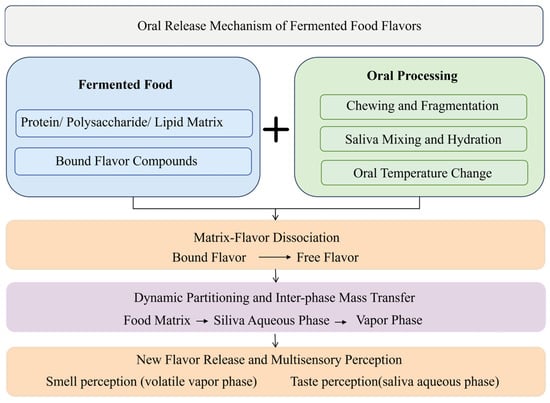
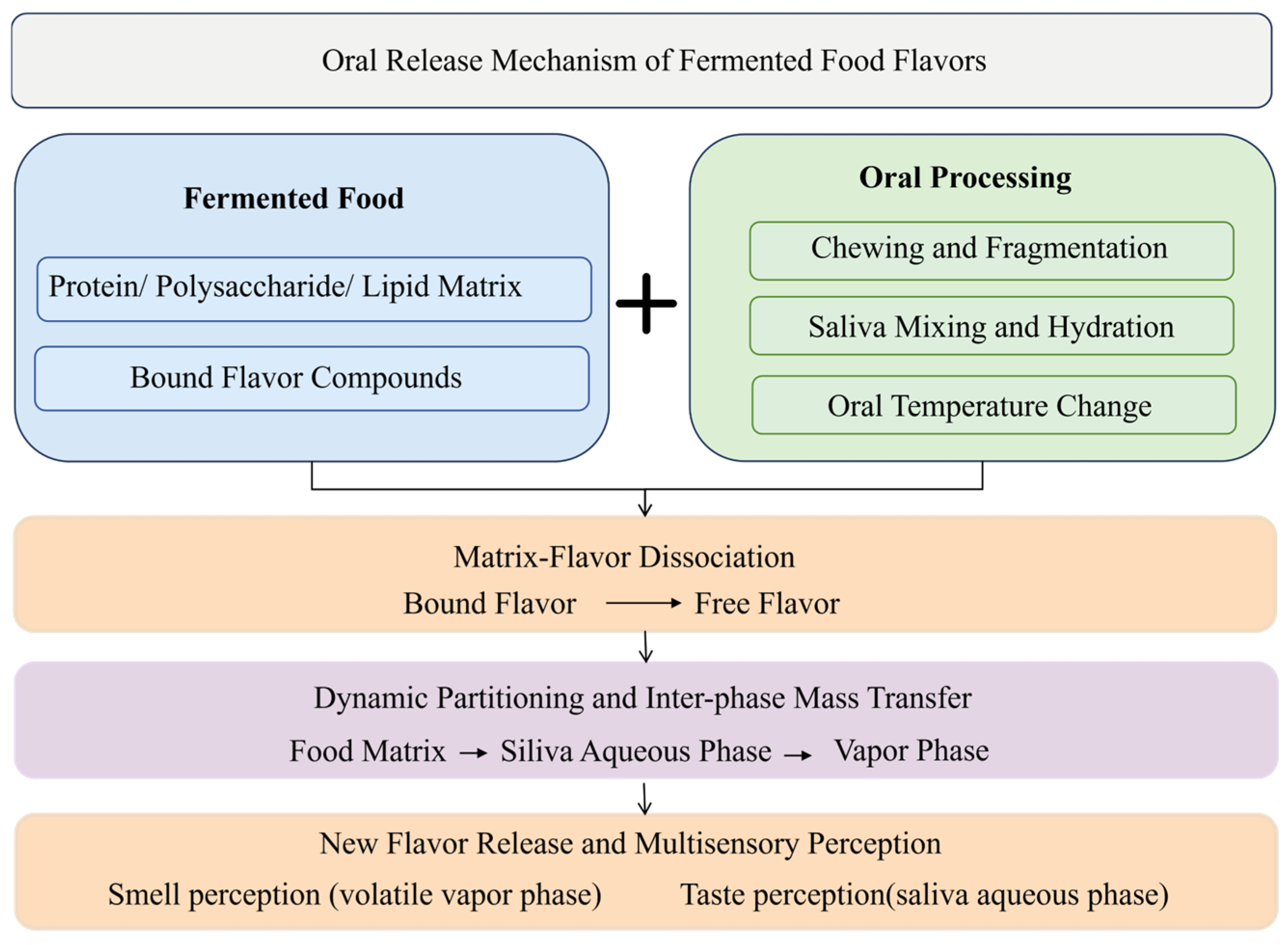
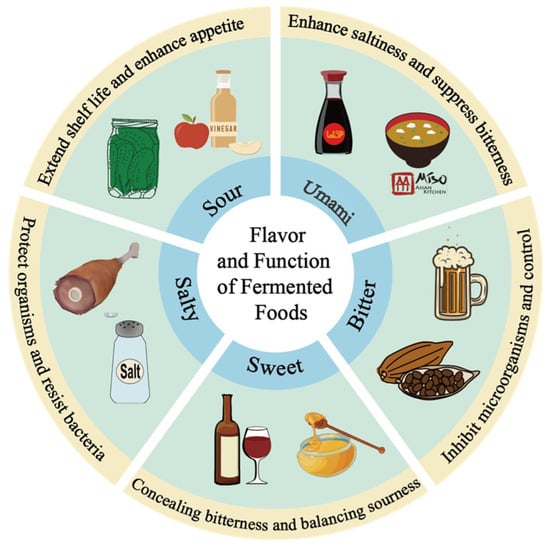
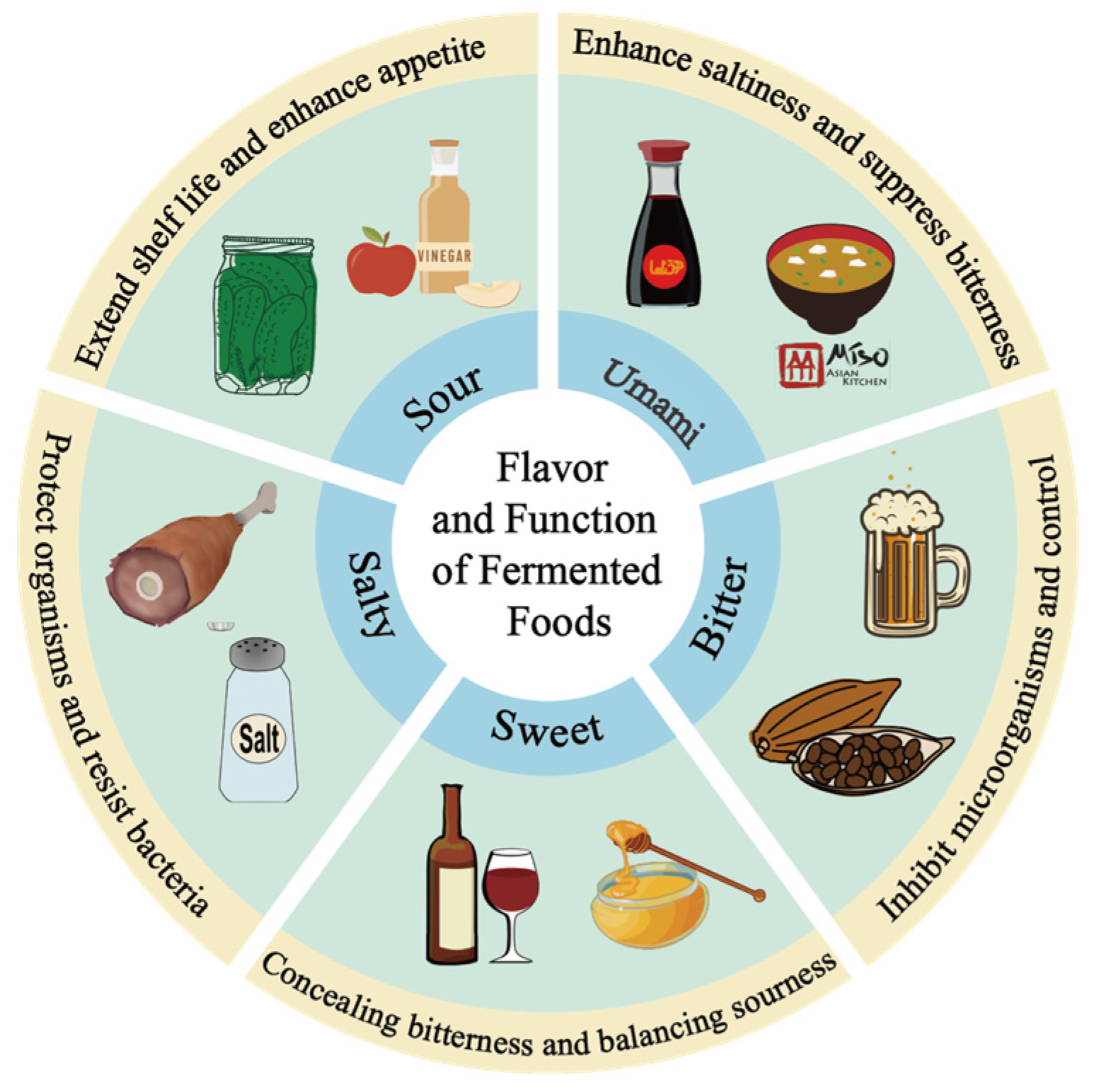
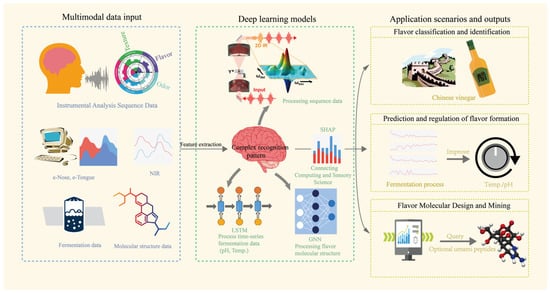
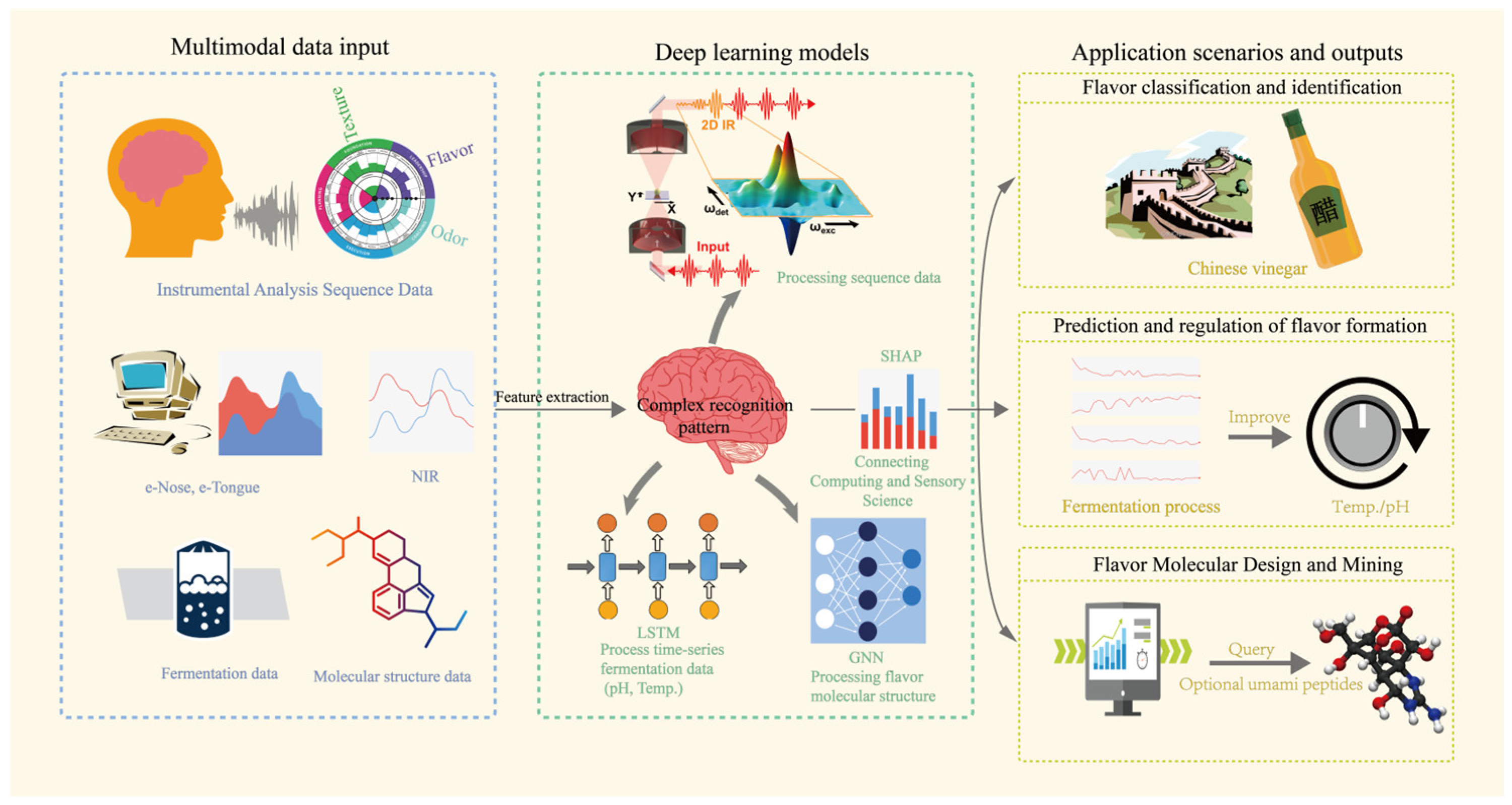
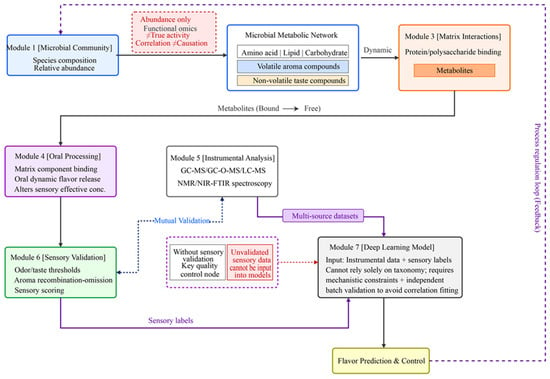
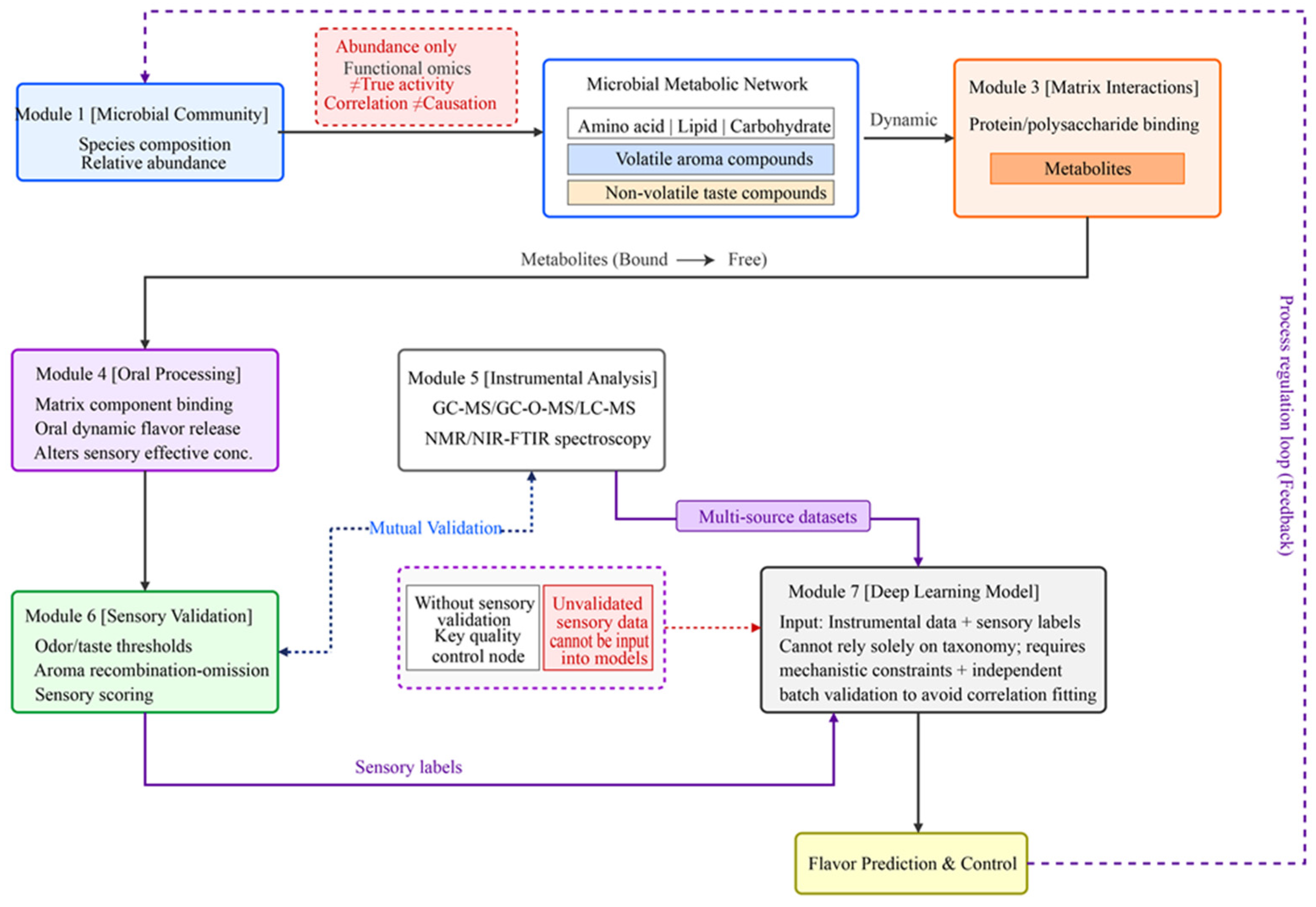

Disclaimer/Publisher’s Note: The statements, opinions and data contained in all publications are solely those of the individual author(s) and contributor(s) and not of MDPI and/or the editor(s). MDPI and/or the editor(s) disclaim responsibility for any injury to people or property resulting from any ideas, methods, instructions or products referred to in the content. |
© 2026 by the authors. Licensee MDPI, Basel, Switzerland. This article is an open access article distributed under the terms and conditions of the Creative Commons Attribution (CC BY) license.