


Abstract
Background: Unconventional carbon sources may expand the feedstock base of alcoholic fermentation, but their conversion depends on yeast metabolic capabilities and the temporal pattern of substrate availability. This review examines how substrate identity, mixtures, and feeding sequences influence fermentation performance and product composition. Methods: A narrative synthesis of the literature was undertaken, focusing on substrate transport, carbon catabolite repression, metabolic adaptation, redox balance, and carbon allocation in Saccharomyces cerevisiae and selected non-Saccharomyces yeasts. Simultaneous addition, sequential feeding, and controlled co-feeding were considered in relation to substrate utilisation, ethanol production, and metabolite formation. Results: The reviewed evidence indicates that total carbon supply alone does not predict fermentation outcomes. Transport competition, pathway functionality, cofactor requirements, and cultivation history jointly determine whether substrates are co-utilised, consumed sequentially, or incompletely converted. Controlled feeding may limit substrate accumulation and facilitate metabolic transitions, but its effectiveness depends on strain characteristics, supplementation timing, and environmental conditions. Changes in carbon availability can also modify glycerol, xylitol, organic acid, and aroma compound formation; comparative studies linking feeding sequence to sensory outcomes are needed. Conclusions: Temporal control of carbon supply is a promising, context-dependent strategy for improving unconventional substrate utilisation and modulating fermentation profiles. Establishing its technological value requires controlled comparisons at equivalent total carbon inputs, time-resolved metabolic measurements, and validation in industrial strains and actual fermentation matrices.
1. Introduction
1.1. Carbon Source as a Factor Shaping Fermentation
The performance of alcoholic fermentation depends on the identity of the available carbon sources, the metabolic capabilities of the yeast strain, and the way substrates are supplied. Mixed substrates can interact at the levels of transport, regulation and cofactor metabolism; consequently, an identical total carbon input does not necessarily produce the same conversion profile [1,2,3].
Saccharomyces cerevisiae remains the principal microorganism used in industrial alcoholic fermentation, combining high fermentative activity with tolerance to increasing ethanol concentrations and fluctuating environmental conditions. However, its adaptation to the rapid utilisation of readily available sugars does not ensure equally efficient conversion of all feedstock components. In the case of pentoses, lactose, cellobiose, or glycerol, substrate utilisation may be limited by the absence of an appropriate transporter, an incomplete metabolic pathway, or an unfavorable redox balance. Non-Saccharomyces yeasts expand the range of potentially utilizable alternative substrates and enable different patterns of carbon allocation among metabolic products. However, their technological suitability depends on the characteristics of the individual strain, as the ability to assimilate a compound does not necessarily imply its efficient fermentation to ethanol [1,4,5].
In this review, the term unconventional carbon source is used relative to the yeast strain and the intended fermentation process. Glucose and fructose are major sugars in fruit-based media, sucrose is important in sugar-rich feedstocks, and maltose and maltotriose are relevant to wort fermentation [6,7]. Standard S. cerevisiae strains cannot directly ferment lactose, whereas suitable Kluyveromyces strains or engineered S. cerevisiae can be used for lactose-containing feedstocks [5]. Galactose is a native substrate of many S. cerevisiae strains, although its utilisation is subject to glucose-dependent regulation [8].
It is also important to distinguish an alternative substrate from an alternative fermentation matrix. Glucose derived from waste biomass retains the metabolic characteristics of this sugar; however, its conversion may be influenced by the presence of pentoses, organic acids, and inhibitors generated during feedstock processing. Therefore, the properties of the carbon source and the composition of the surrounding medium jointly determine the actual availability of the substrate and its technological relevance [9,10,11].
1.2. Metabolic Consequences of Utilising Substrate Mixtures
Carbon allocation in S. cerevisiae links biomass formation with ethanol production and the synthesis of other metabolites [12]. At high glucose availability, alcoholic fermentation can occur even in the presence of oxygen, consistent with the Crabtree-positive phenotype [13]. Glucose also regulates the expression of alternative carbon-utilisation pathways, while competition at shared transporters can independently restrict pentose uptake [8,14]. Figure 1 summarizes the principal routes linking pyruvate to respiration and alcoholic fermentation.
Figure 1.
Simplified representation of pyruvate partitioning between mitochondrial respiration and alcoholic fermentation in yeast. Glycolysis produces two pyruvate molecules and a net yield of two ATP per glucose molecule. The respiratory route involves acetyl-CoA formation, the tricarboxylic acid cycle and oxidative phosphorylation. During alcoholic fermentation, pyruvate decarboxylation releases CO2, and acetaldehyde reduction regenerates NAD+. Author’s own synthesis. Boxes identify metabolites and pathways; stoichiometric coefficients are not shown for every reaction. Boxes identify metabolites and pathways; arrows indicate the direction of metabolic conversion.
In natural and industrial fermentation matrices, substrates typically occur as mixtures whose behaviour cannot be predicted solely from the fermentation characteristics of their individual components. The simultaneous presence of two assimilable compounds may result in their parallel conversion, sequential utilisation, or the persistence of one substrate in the medium. These outcomes are determined by interactions at the transport and regulatory levels, as well as by the ability of the cells to maintain metabolic flux through the pathways involved [2,3,14].
The importance of substrate identity becomes particularly evident in cofactor metabolism. The fermentation of glucose to ethanol enables the regeneration of NAD+ reduced during glycolysis, whereas alternative carbon utilisation pathways may impose different redox requirements. In the xylose metabolic pathway involving xylose reductase and xylitol dehydrogenase, differences in the cofactor specificities of these enzymes may restrict further conversion and promote xylitol accumulation. Thus, substrate availability alone does not guarantee efficient utilisation when cofactor regeneration is insufficient to meet pathway requirements [1,15,16].
Changes in carbon allocation also influence the formation of glycerol, organic acids, and aroma compounds. Glycerol synthesis contributes to redox homeostasis and osmotic adaptation, whereas the formation of higher alcohols and esters depends on interactions between carbon and nitrogen metabolism. Consequently, reduced ethanol production may be accompanied by either desirable modifications of product characteristics or unfavorable accumulation of by-products. The technological suitability of an alternative substrate therefore depends on its overall conversion profile [17,18,19,20].
Substrate proportions and instantaneous concentrations influence mixed-sugar conversion. Excessive sugar concentrations can impose substrate inhibition and osmotic stress, while glucose can restrict the uptake or regulation of alternative substrates [2,14,21]. Controlled feeding is therefore a process-design variable, but its benefits must be evaluated for the particular strain and substrate mixture rather than inferred from total carbon input alone [3].
1.3. Sequence of Substrate Availability and Its Technological Significance
Many S. cerevisiae wine strains consume glucose and fructose concurrently but preferentially utilise glucose, resulting in fructose enrichment of the residual sugar pool [22]. The consequences of delayed substrate conversion depend on the physiological conditions prevailing at that stage. In an engineered glucose–xylose consortium, ethanol accumulation and possible oxygen limitation impaired late xylose utilisation, providing a system-specific example of this relationship [23].
Sequential substrate supplementation provides a means of influencing this relationship by modifying the fermentation environment over time. Supplying glucose as the initial substrate may support rapid biomass accumulation; however, subsequent utilisation of an alternative compound may require relief from catabolite repression and induction of the corresponding metabolic functions. Reversing the order of substrate addition may favour earlier activation of these pathways, provided that the initial substrate is sufficient to maintain cellular activity. Nevertheless, subsequent glucose supplementation may again suppress the consumption of the alternative substrate. The benefits of a particular supplementation sequence therefore depend on the physiological state of the culture, the amount of the subsequently supplied substrate, and the timing of its introduction [3,8,24].
Controlled substrate feeding enables the preferred sugar to remain available without excessive accumulation in the fermentation medium. This approach may alleviate carbon catabolite repression, reduce osmotic stress, and promote the utilisation of the remaining components of the substrate mixture. However, its effectiveness requires the substrate feeding rate to be adjusted to the current consumption capacity of the culture. Furthermore, this strategy cannot compensate for missing metabolic functions: reducing glucose concentrations will not enable the fermentation of a compound for which the strain lacks an appropriate transporter or metabolic pathway. The simultaneous and sequential addition strategies for glucose and an alternative carbon source are illustrated in Figure 2 [1,2,25].
Figure 2.
Carbon-source addition schedules. Arrows indicate addition events for simultaneous addition (A), glucose-first addition (B), and alternative-substrate-first addition (C). Event spacing is illustrative and does not specify depletion time, dose, consumption rate, or fermentation outcome. Author-generated qualitative schematic; construction is described in Section 2.
The sequence of substrate addition should be distinguished from the sequential inoculation of mixed cultures. Yeasts introduced at an earlier stage modify sugar availability but also consume nitrogen and oxygen and release metabolites that influence the subsequently introduced population. Consequently, this approach involves more extensive changes in the fermentation environment than those resulting solely from altered carbon availability [26,27,28].
The preceding evidence identifies substrate transport, glucose-dependent regulation, redox balance and environmental inhibition as interacting determinants of mixed-substrate conversion [2,3,25]. This review examines how unconventional carbon sources and the temporal organisation of their availability affect yeast physiology, alcoholic fermentation and product composition. It distinguishes substrate feeding from sequential consumption and sequential inoculation, and assesses the extent to which findings from other yeast bioprocesses can inform ethanol-producing systems.
Previous reviews have synthesised the engineering of mixed-sugar utilisation, native and heterologous transport systems, and metabolic complementation between substrates [1,2,3,29]. The contribution of the present review is to organise these established mechanisms around the temporal availability of carbon: which substrate is available first, which conversion capacity is present at the transition, and which physiological conditions prevail when the remaining carbon is used. We distinguish four interventions that are often conflated: simultaneous substrate addition, sequential addition of different substrates, controlled release or co-feeding, and sequential inoculation. An observed sequence of consumption is considered an outcome, not evidence that the substrates were added sequentially.
This temporal framework links transport, repression, induction and redox requirements to ethanol yield, conversion time, residual carbon and product composition. It also separates evidence from native strains, recombinant strains and process configurations, allowing the transferability of an apparent feeding advantage to be assessed. The novelty is therefore the comparative organisation and appraisal of timing-dependent evidence, rather than the discovery of a new yeast regulatory mechanism or a claim that sequential feeding is universally superior. Direct comparisons and the limits of causal attribution are developed in Section 6.2, Section 6.3, Section 6.4 and Section 6.5 and the industrial assessment in Section 8.3.
2. Materials and Methods
This article was prepared as a narrative review examining the relationships between unconventional carbon sources, the temporal organisation of their availability, and yeast metabolism during alcoholic fermentation. The literature was critically discussed to integrate biochemical mechanisms with their consequences for substrate utilisation, fermentation performance, and the chemical composition of fermentation products. The review does not constitute a systematic review or a quantitative meta-analysis. Bibliographic identifiers and source scope were checked using PubMed/Europe PMC records, Crossref metadata, publisher pages and accessible full texts.
The scope encompassed conventional fermentable sugars as reference substrates and alternative carbon sources, including pentoses, galactose, lactose and its hydrolysis products, cellobiose, and glycerol. Particular attention was given to S. cerevisiae, including engineered and adaptively evolved strains, and selected non-Saccharomyces yeasts. Evidence from other microbial systems was considered where it provided mechanistic context, with its applicability to alcoholic fermentation evaluated separately. Original experimental studies formed the basis of the mechanistic discussion, while review articles provided broader physiological and technological context.
For the revision, a targeted literature update was performed on 10 November 2026 using web searches of indexed scholarly records, including PubMed/PMC records and publisher full texts. The searches combined yeast and mixed-sugar terms with sequential feeding, simultaneous co-fermentation, ethanol yield, productivity, substrate conversion, scale-up and cost. Representative executed searches were “yeast mixed sugars sequential feeding ethanol yield productivity”, “simultaneous saccharification scale-up cost ethanol feeding”, and “sequential feeding Saccharomyces cerevisiae ethanol”. Searches for the full titles of relevant primary studies were used to retrieve and verify their experimental details. These searches supplemented the existing narrative evidence base; they are not presented as a reconstruction of an undocumented original database search.
Studies were selected for the revised comparisons when they identified the yeast background, substrate arrangement and cultivation conditions and reported interpretable fermentation outcomes or an explicit process–economic comparison. Primary comparisons of feeding or process configurations were prioritised over isolated endpoint reports. Studies of transporter/pathway engineering were retained to establish biological prerequisites, while non-ethanol studies were used only as clearly labelled mechanistic context. Patents, unverified numerical claims, and studies lacking sufficient information to distinguish feeding from inoculation order were not used as quantitative evidence for a feeding advantage. Foundational studies were retained regardless of publication year when needed to explain a mechanism. The targeted update did not apply a systematic screening flow or produce a pooled effect estimate.
The analysis was organised around substrate transport and hydrolysis, carbon catabolite repression, metabolic adaptation, cofactor balance, and the redistribution of carbon fluxes. Simultaneous substrate addition, sequential feeding, controlled co-feeding, and gradual substrate release were distinguished from the actual sequence of substrate consumption. Sequential inoculation was considered separately because it modifies microbial population composition in addition to nutrient availability.
The interpretation of individual studies accounted for yeast species and strain, genetic modifications, substrate identity and concentration, medium composition, oxygen availability, cultivation mode, and inoculum history, where reported. Fermentation outcomes were considered in terms of individual substrate consumption; adaptation periods; biomass formation; cell viability; ethanol concentration; yield; productivity; and the formation of polyols, organic acids, and volatile compounds. Substrate assimilation and growth were distinguished from fermentative conversion to ethanol. Similarly, evidence obtained from lipid production, respiratory cultivation, or heterologous biosynthesis was used to support mechanistic interpretation rather than treated as direct evidence of improved alcoholic fermentation.
The synthesis emphasised whether reported effects could be attributed to substrate identity or feeding sequence, or whether they coincided with changes in total carbon input, instantaneous substrate concentration, culture volume, nutrient availability, osmotic conditions, or inhibitor exposure. Direct experimental observations were distinguished from proposed mechanisms and potential technological applications. Differences between model media and complex fermentation matrices were also considered when assessing the transferability of findings.
For each quantitative comparison, the reported strain class, feedstock, initial or supplied carbon, feeding schedule, temperature, oxygen regime, scale, conversion time and yield denominator were considered where available. Yield on consumed sugar was distinguished from overall yield on supplied carbohydrate, and volumetric concentration from productivity. Values were transcribed on their original basis. Calculated concentration/time quotients are explicitly identified as endpoint-based approximations; they are not substituted for time-resolved productivity measurements. Evidence was appraised qualitatively for within-study controls, co-varying interventions and relevance to the intended application, without assigning a formal risk-of-bias score.
Because the reviewed studies differed substantially in their experimental designs, microbial systems, and outcome measures, findings were synthesised qualitatively without pooling numerical results. The tables summarise substrate characteristics, regulatory mechanisms, feeding strategies, and relevant process indicators. Conceptual figures represent the authors’ synthesis of the discussed mechanisms and do not constitute newly generated experimental data.
Figure construction was based on pathway connectivity and experimentally demonstrated mechanisms, rather than fitted fermentation kinetics. Figure 1 summa-rizes cytosolic fermentation and mitochondrial respiration [12,13,16]. Figure 2 was drawn by placing substrate-addition arrows on three qualitative schedules; no dose, concentration, depletion time or rate was assigned.The compartmental organisation schematic was assembledby separating extracellular hydrolysis, plasma-membrane transport, cytosolic sugar conversion and mitochondrial metabolism, and then linking the relevant enzymes and transporters described in the cited literature [1,5,7,16,30,31,32,33,34]. Routes from different yeast species and engineered backgrounds were explicitly treated as alternatives.The transporter schematic summarizestransporter classes and the dis-tinct effects of substrate competition, specificity engineering and membrane reten-tion [30,33,34,35,36,37,38,39,40]. Neither diagram is a stoichiometric or flux-balance model.
For the qualitative carbon-source transition panel, the qualitative sequence was defined as preferred-sugar availability, declining glucose availability, and conditional alternative-substrate conversion, based on transport competition and adaptation studies [14,24,41,42]. Boxes and arrows express conditional biological relationships without numerical axes, rate constants, parameter fitting or simulated biomass growth.The Hxt11 uptake panel was redrawndirectly from the apparent uptake Km means and standard deviations in the uptake-kinetics table of Shin et al. [40], retaining the four Hxt11 variants, glucose/xylose categories and mM units. No normalization, interpolation or new statistical analysis was applied; error bars represent the source standard deviations (n = 2). These uptake parameters are not fermentation rate con-stants and were not used to generate a dynamic model.
ChatGPT (OpenAI, San Francisco, CA, USA; https://chatgpt.com/) was used as an AI-assisted tool for the generation and graphical visualisation of conceptual figures based on information derived from the scientific literature cited in this review. All generated figures were subsequently reviewed and verified by the authors to ensure the scientific accuracy of biochemical pathways, metabolic relationships, and mechanistic representations. The authors take full responsibility for the accuracy and integrity of the final figures.
3. Carbon Sources in Alcoholic Fermentation
3.1. Conventional Carbon Sources as a Reference
3.1.1. Feedstock Composition and Actual Sugar Availability
Glucose, fructose, sucrose, maltose, and maltotriose provide the principal reference points for evaluating unconventional substrates. Their utilisation demonstrates that even sugars readily metabolized by yeast do not constitute a metabolically equivalent group. They differ in their mechanisms of cellular availability, transport-associated energy requirements, and susceptibility to glucose-dependent regulation [6,7,43].
In fruit-based matrices, glucose and fructose are available without prior hydrolysis, although their relative consumption rates depend on strain characteristics and fermentation conditions. In sucrose-rich feedstocks, hexose availability is additionally determined by invertase activity. In contrast, the utilisation of the predominant α-glucosides in malt wort requires efficient maltose and maltotriose transport. Consequently, identical total sugar concentrations may correspond to different levels of metabolic availability even at the beginning of fermentation [7,22,30,43].
Feedstock composition also determines the conditions under which carbohydrates are utilised. Molasses, grape must, and wort differ in nitrogen availability, mineral composition, and the presence of compounds affecting yeast activity. Comparing these matrices solely on the basis of their predominant sugars would overlook matrix effects that may either enhance or diminish the benefits associated with specific substrate properties [6,44,45,46,47].
3.1.2. Transport and Hydrolysis as Regulators of Carbon Supply
The intracellular availability of glucose and fructose is primarily determined by hexose transporters. Differences in transporter affinity and expression enable cells to adjust sugar uptake to changing substrate concentrations while simultaneously creating opportunities for competition between substrates. Preferential transport of one compound may restrict the utilisation of another without completely suppressing its metabolic pathway [14,31,35].
Sucrose utilisation by S. cerevisiae commonly involves invertase-mediated hydrolysis outside the plasma membrane, followed by glucose and fructose uptake. Some strains can also import sucrose for intracellular hydrolysis [7,48]. Consequently, extracellular hexose availability reflects the balance between sucrose hydrolysis and monosaccharide uptake; sucrose should not automatically be regarded as a slow-release carbon source that alleviates glucose repression.
Maltose and maltotriose are taken up by specific α-glucoside transporters and subsequently hydrolysed intracellularly. The substrate specificity of the transport system is particularly important, as the ability to ferment maltose does not guarantee equally efficient maltotriose utilisation. Residual maltotriose may therefore indicate a transport limitation rather than a general loss of fermentative activity [30].
3.1.3. Hierarchy of Substrate Utilisation
Sugar-consumption patterns reflect interactions among transport competition, glucose-dependent regulation and strain physiology [2,8,14]. Preferential utilisation does not necessarily imply completely separated phases: substrate consumption can overlap, and the extent of overlap changes with strain engineering and cultivation conditions [2].
From a technological perspective, it is important that the substrate utilised last is converted under conditions characterised by the greatest accumulation of fermentation products. Its complete utilisation therefore depends not only on the initial fermentative capabilities of the strain but also on its ability to maintain these functions after the preferentially consumed sugars have been depleted. This relationship provides a basis for considering the sequence of unconventional carbon source availability as a factor influencing fermentation completeness [21,23].
Substrate disappearance and ethanol formation must be interpreted through a carbon balance rather than an assumed universal consumption hierarchy. A sustained increase in ethanol requires conversion of an identified carbon pool; it cannot be attributed to maltose or xylose while their amounts remain unchanged. If extracellular sugars no longer decrease, possible contributions from ongoing disaccharide hydrolysis, other measured substrates, or intracellular reserves must be tested rather than presumed. Residual substrates, biomass, CO2 and by-products should be included, with volume changes and losses accounted for. No hypothetical concentration–time curves are used here to infer ethanol formation [2,7,30].
3.2. Unconventional Carbon Sources
3.2.1. Diversity of Substrates and Fermentation Matrices
Unconventional carbon sources do not constitute a homogeneous group in terms of their metabolic requirements. Pentoses must be converted into intermediates of the pentose phosphate pathway, cellobiose and lactose require appropriate transport and hydrolysis mechanisms, whereas glycerol imposes distinct requirements for redox balance. A common characteristic of these substrates is their limited suitability for processes relying on standard yeast strains and fermentation conditions optimised for readily available hexoses [1,5,32,49].
Lignocellulosic hydrolysates provide substrate mixtures whose composition depends on the structure of the biomass and the severity of pretreatment. Glucose is primarily derived from cellulose, whereas hemicelluloses may release xylose, arabinose, mannose, and galactose. Incomplete hydrolysis also leaves residual disaccharides and oligomers, indicating that carbon availability depends on the extent of biomass degradation rather than solely on its total carbon content [10,11].
Lactose is the predominant carbohydrate in whey, and its direct utilisation requires metabolic capabilities different from those involved in glucose fermentation. In contrast, glycerol derived from industrial processes may occur in mixtures containing salts, residual processing reagents, and other components that influence yeast activity. In both cases, substrate evaluation must therefore consider its purity and the form in which it is supplied during processing [5,32]. Table 1 summarises these aspects.
Table 1.
Carbon sources relevant to the analysis of conventional and alternative alcoholic fermentation substrates.
3.2.2. Pentoses: The Relationship Between Transport and Redox Balance
Xylose is an important example of a substrate whose utilisation is simultaneously constrained at several levels of metabolic organisation. Standard S. cerevisiae strains do not efficiently ferment xylose to ethanol; therefore, its conversion requires either yeasts naturally capable of fermenting this sugar or the introduction of appropriate metabolic functions [1,10].
In the oxidoreductive pathway, xylose is converted into xylitol by xylose reductase and subsequently into xylulose by xylitol dehydrogenase. Following phosphorylation, xylulose enters the non-oxidative branch of the pentose phosphate pathway. If the first reaction predominantly utilizes NADPH and the second requires NAD+, metabolic flux through this pathway may result in an imbalance between cofactor consumption and regeneration. Limited NAD+ regeneration may consequently restrict xylitol oxidation and promote its accumulation [1,10].
The xylose isomerase pathway bypasses the xylose reductase–xylitol dehydrogenase reaction pair, but it does not remove limitations in transport or downstream pentose metabolism [1]. The performance of specific pathway modifications depends on enzyme identity and pathway background; for example, the effects of xylose epimerase differ between XI- and XR–XDH-based strains [51]. These differences should be considered when designing substrate-supply experiments.
In mixed-substrate systems, glucose may restrict xylose uptake through competition for transporters and effects on cellular regulation. Reducing its instantaneous concentration may improve pentose utilisation; however, an insufficient supply of readily assimilable carbon may simultaneously decrease cellular activity. The optimal substrate addition sequence must therefore balance the alleviation of repression with the maintenance of the culture’s metabolic activity [2,3,14].
3.2.3. Galactose and Lactose Hydrolysis Products
Galactose differs from xylose in that many S. cerevisiae strains possess a native metabolic pathway for its utilisation. Consequently, the primary limitation in substrate mixtures may arise from regulatory mechanisms rather than the absence of metabolic functions. The presence of glucose suppresses activation of the GAL regulatory system, delaying galactose utilisation and potentially prolonging fermentation after the preferred hexose has been depleted [8,52].
This relationship is particularly relevant to the fermentation of lactose hydrolysates. Lactose hydrolysis removes the barrier associated with direct disaccharide utilisation but produces a mixture of glucose and galactose that remains subject to hierarchical consumption. Therefore, preliminary hydrolysis does not necessarily produce a medium characterised by uniform metabolic substrate availability [5].
Lactose hydrolysis produces glucose and galactose, whose subsequent utilisation by S. cerevisiae remains dependent on strain-specific transport and regulation [5]. It is therefore appropriate to investigate whether the delivery rate and prior galactose exposure influence conversion of the hydrolysate. Such an effect should be treated as a hypothesis for the target fermentation system, rather than as a demonstrated benefit of gradual lactose-hydrolysate feeding.
3.2.4. Cellobiose: The Importance of the Site of Glucose Release
Cellobiose demonstrates that the metabolic behaviour of a carbon source depends not only on the products of its hydrolysis but also on the location at which these products are generated. Extracellular hydrolysis releases glucose into the surrounding medium, allowing its uptake by different cells and maintaining regulatory signals associated with its presence. In contrast, direct cellobiose transport followed by intracellular hydrolysis modifies the mechanism by which glucose is supplied to central carbon metabolism [33,34].
The latter strategy may reduce competition at the level of extracellular glucose transport and promote the utilisation of other components of the substrate mixture. However, its effectiveness depends on matching the rate of cellobiose uptake with β-glucosidase activity and downstream metabolic capacity. Introducing a hydrolytic enzyme alone, without ensuring adequate substrate transport, is insufficient to achieve efficient direct fermentation [33,34].
From the perspective of substrate addition sequence, cellobiose may therefore serve a different metabolic function than an equivalent amount of free glucose. This does not imply the automatic elimination of glucose-dependent regulation but rather a modification of the spatial and temporal organisation of carbon supply [8,33,34].
3.2.5. Glycerol and Limitations Associated with Substrate Reduction State
Glycerol requires separate consideration because its conversion imposes different redox requirements from those associated with hexose fermentation. In S. cerevisiae, native glycerol utilisation is linked to respiratory metabolism. Therefore, the ability to grow on glycerol under aerobic conditions does not demonstrate the capacity for its efficient fermentation to ethanol [32].
In engineered S. cerevisiae, replacement of the native glycerol-catabolic route with an NAD-dependent dihydroxyacetone pathway, together with expression of a heterologous aquaglyceroporin, enabled ethanol formation from glycerol [32]. Oxygen availability remained an important process variable. This example does not demonstrate that adding a fermentable sugar is sufficient to enable glycerol fermentation in an unmodified strain.
Glycerol depletion should be interpreted together with the intended product. Growth on glycerol, incorporation into biomass or lipids, and conversion into ethanol are distinct outcomes and cannot be established from substrate disappearance alone [3,32]. Any benefit of sequential glycerol supply should therefore be demonstrated using product measurements and an appropriate carbon balance.
Unconventional fermentation matrices may simultaneously supply metabolizable substrates and compounds that restrict their conversion. In lignocellulosic hydrolysates, relevant inhibitory compounds include furfural, 5-hydroxymethylfurfural, weak organic acids, and phenolic compounds. Their effects include disturbances of membrane function, increased cellular maintenance requirements, and the consumption of cofactors during detoxification reactions [9,10,11].
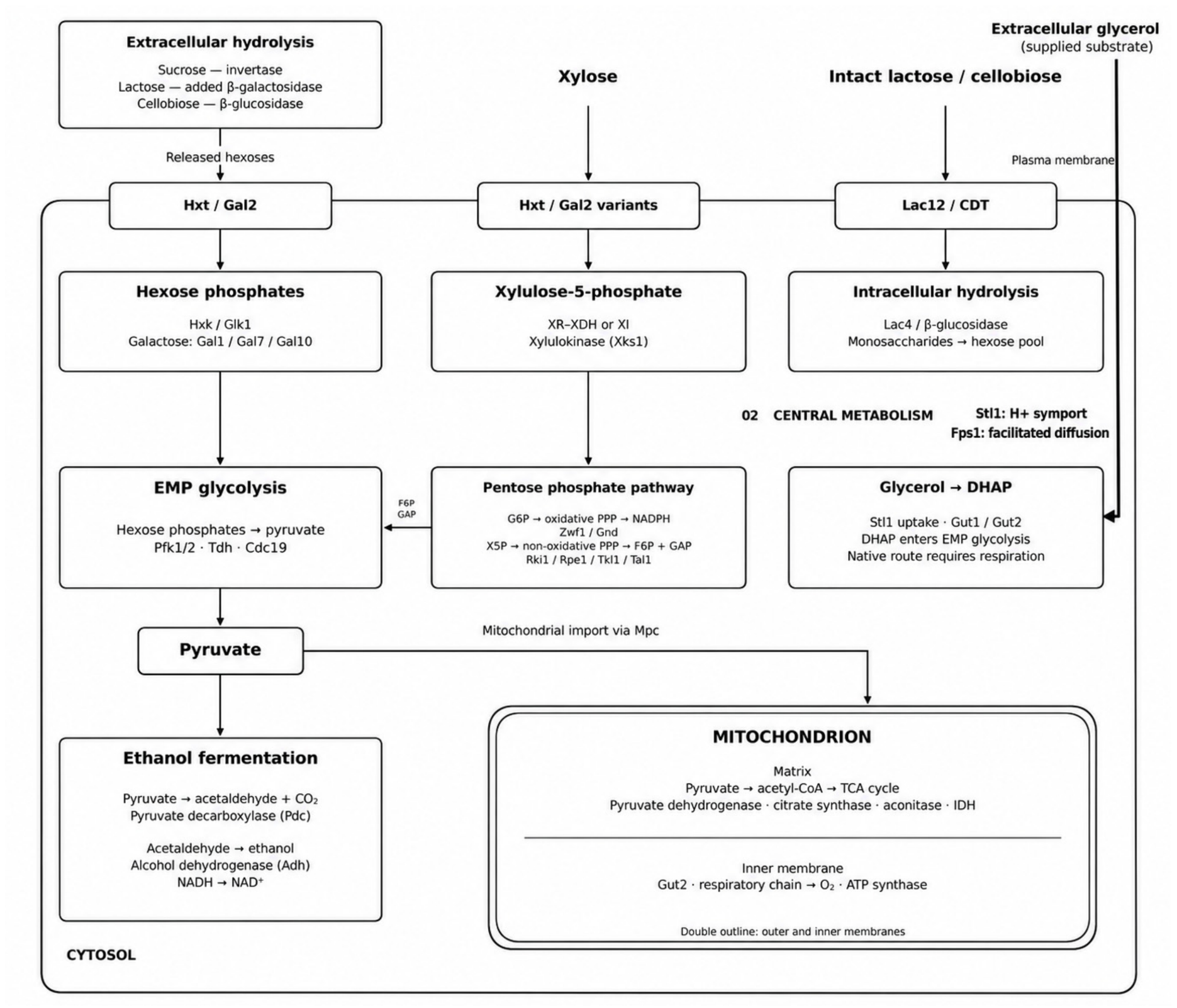
Feeding hydrolysates changes the supply of sugars and potentially the exposure to inhibitory compounds at the same time [9,25]. Fed-batch feeding has also been investigated in hydrolysate-based lipid production by Rhodosporidium toruloides [53]. That result is relevant to process design but does not directly establish an improvement in alcoholic fermentation. Comparisons intended to isolate a substrate-order effect should account for inhibitor load as well as carbon input. Figure 3 summarizes the principal entry routes for the selected unconventional substrates.
Figure 3.
Compartmental organisation of carbon-source conversion in yeast. Extracellular sucrose, lactose and cellobiose hydrolysis is distinguished from intact-disaccharide import and intracellular hydrolysis. Hxt/Gal2, Lac12 and heterologous cellodextrin transporters (CDT) represent sub-strate-dependent uptake routes. EMP, Embden–Meyerhof–Parnas pathway; PPP, pentose phos-phate pathway; X5P, xylulose-5-phosphate; F6P, fructose-6-phosphate; GAP, glyceralde-hyde-3-phosphate; G3P, glycerol-3-phosphate; DHAP, dihydroxyacetone phosphate; Mpc, mito-chondrial pyruvate carrier; XR/XDH, xylose reductase/xylitol dehydrogenase; XI, xylose isomerase. Cytosolic Pdc/Adh reactions generate ethanol; mitochondrial pyruvate oxidation, the TCA cycle and respiration form a separate branch. Gut2 acts at the inner mitochondrial membrane; the mi-tochondrial outer membrane, inner membrane and matrix are delineated. The diagram combines native and engineered capabilities from different strains and does not imply that all routes occur in one strain. Main enzymes and transporter classes are shown; arrows indicate pathway connectivity, not flux magnitude [1,5,7,16,30,31,32,33,34]. The glycerol-to-DHAP route depicts the utilisation of extra-cellularly supplied glycerol, imported through the Stl1 H+/glycerol symporter under appropriate physiological conditions; Fps1-mediated facilitated diffusion and limited simple passive diffusion are also possible, depending on conditions. This substrate route is distinct from endogenous glycerol biosynthesis from DHAP via glycerol-3-phosphate.
3.3. Yeast Capacity to Utilise Different Carbon Sources
3.3.1. Selection of Yeast Strains According to Substrate Composition and Addition Sequence
The suitability of yeast strains for utilising unconventional carbon sources depends on the combination of their substrate utilisation range, fermentative capacity, and tolerance to process conditions. The ability to assimilate a broad range of substrates does not necessarily translate into high ethanol production, while favourable initial metabolic activity does not guarantee sustained conversion following changes in medium composition [1,5,9].
Strain-specific differences are also important among conventional fermentative yeasts. In S. cerevisiae and Saccharomyces pastorianus, variation in α-glucoside transport systems influences maltose and maltotriose utilisation. This demonstrates that the sequence of substrate consumption is not determined solely by the composition of the mixture but rather by its interaction with the specific yeast genotype [30,43].
Yeasts of the genus Kluyveromyces expand the possibilities for utilising lactose-containing feedstocks, whereas Scheffersomyces stipitis possesses native metabolic pathways enabling xylose fermentation. In contrast, fructophilic yeasts, such as Starmerella bacillaris, may alter the proportions of hexoses remaining available to subsequently introduced yeast populations. In mixed cultures, the substrate utilisation capabilities of individual yeast species therefore contribute to determining which components are consumed during the early stages and which remain available for subsequent fermentation [1,5,54,55]. Table 2 summarises these aspects.
Table 2.
Selected yeast groups and their relevance to alternative carbon sources and substrate sequencing.
3.3.2. Expanding the Substrate Utilisation Range Through Metabolic Engineering
Metabolic engineering can expand the range of substrates utilised by industrial S. cerevisiae. Effective designs must coordinate substrate uptake, entry reactions and downstream metabolism, because improving one step can expose another limiting process [1,2].
For xylose utilisation, the xylose reductase–xylitol dehydrogenase (XR–XDH) pathway or xylose isomerase pathway is employed, supported by adequate xylulokinase activity and the non-oxidative branch of the pentose phosphate pathway. Additional modifications may reduce xylitol formation or improve metabolic flux distribution. However, their effectiveness remains dependent on the genetic background of the strain, as the same modification may have different consequences depending on whether substrate transport, cofactor balance, or enzymatic capacity constitutes the primary limitation [1,51,58].
A similar principle applies to cellobiose, whose direct fermentation requires the coordinated activity of a cellobiose transporter and an intracellular β-glucosidase. In each case, the key consideration is not only the expansion of the substrate utilisation range but also the maintenance of fermentation efficiency and metabolic stability in the presence of other medium components [33,34]. Table 3 summarises these aspects.
Table 3.
Engineering targets relevant to alternative substrate utilisation and the control of consumption order in S. cerevisiae.
For interpretation throughout this review, “conventional” denotes a strain used with its existing substrate repertoire, rather than a synonym for the species S. cerevisiae. Native galactose or maltose utilisation, lactose utilisation by suitable Kluyveromyces strains, and xylose fermentation by S. stipitis are biologically different starting points [1,5,8,30,57]. In contrast, XUSEA, cellobiose-transporter/β-glucosidase strains and the engineered glycerol-conversion strain require introduced or deliberately modified functions [32,33,34,58]. A process change that improves expression of a native pathway cannot be assumed to supply a missing heterologous pathway.
Adaptive laboratory evolution is also identified separately from physiological conditioning. An evolved strain may already contain recombinant pathways, so the term “evolved” does not by itself establish a non-recombinant background [50,59,60]. Likewise, the industrial origin of a parental strain does not demonstrate that its engineered derivative is validated at production scale. Practical transfer requires the actual strain’s conversion capacity, genetic stability, inhibitor and ethanol tolerance, propagation needs and suitability for the intended product to be assessed. The quantitative comparisons below therefore identify recombinant and native-process examples explicitly rather than treating all S. cerevisiae results as equivalent.
3.3.3. Linking Strain Capabilities to Carbon Availability Strategies
The substrate utilisation range determines which compounds a yeast strain can metabolize, whereas the substrate supply strategy influences when and how efficiently these metabolic capabilities are expressed. Even a strain possessing a complete metabolic pathway for an alternative substrate may exhibit delayed consumption if high glucose availability restricts substrate transport or maintains an unfavorable regulatory state [1,2,14].
Conversely, limiting glucose supply cannot compensate for missing enzymes or insufficient metabolic pathway capacity. Strain selection and feeding strategy are therefore interdependent elements of fermentation process design. The most favourable substrate addition sequence cannot be determined solely from the chemical classification of the substrates but requires identification of the predominant limitations affecting their conversion [1,2,3].
For unconventional carbon sources, it is therefore essential to determine whether modifying the substrate addition sequence enhances the induction of relevant metabolic functions, reduces competition for transport systems, stabilizes redox balance, or merely alleviates environmental stress. This approach enables observed fermentation kinetics to be linked to underlying mechanisms and helps explain why an identical substrate addition sequence may improve substrate utilisation in one system while restricting it in another [2,3,25].
4. Mixtures of Different Carbon Sources in Yeast Fermentation
Media derived from lignocellulosic biomass, algae, and agri-food industry by-products contain mixtures of compounds with varying metabolic availability. In addition to glucose, these media may contain galactose, mannose, xylose, and arabinose, as well as disaccharides, oligosaccharides, and uronic acids, depending on the feedstock and the extent of hydrolysis. The composition of such media determines the potential pool of available carbon, whereas the extent of its utilisation depends on the ability of yeast cells to transport and metabolize individual components [10,11,61].
In substrate mixtures, the properties of individual compounds become evident through their interactions. A compound that is efficiently utilised as the sole carbon source may be consumed more slowly in the presence of glucose, and its conversion may begin only after a change in the physiological state of the culture. Therefore, the chemical composition of the hydrolysate, the relative proportions of its components, and the manner in which they are made available should be considered together. The characteristic components of selected fermentation matrices are summarised in Table 4 [2,14,62].
Table 4.
Representative carbohydrate components of renewable feedstocks used in yeast fermentation.
4.1. Simultaneous Presence of Different Carbon Sources
4.1.1. Competition for Membrane Transport
The cell membrane represents the first site of interaction between substrates. In S. cerevisiae, the transport of various monosaccharides is mediated by Hxt transporters and the Gal2 permease. Some of these transporters are also capable of transporting pentoses but generally exhibit more favourable transport characteristics for glucose. Consequently, the presence of glucose restricts xylose or arabinose uptake, even when the cells possess functional pathways for their subsequent metabolism [14,35,63].
The magnitude of this interaction depends on transporter specificity, the concentrations of competing sugars, and the composition of membrane-associated transport proteins. Therefore, it is not an inherent or constant characteristic of every glucose–pentose mixture. The regulation of transporter abundance through protein synthesis, internalization, and degradation also plays an important role. Maintaining an active transport system may be as important as introducing the enzymes required for alternative substrate metabolism [35,39].
4.1.2. Effects of Substrate Proportions and Concentrations
Competition for substrate transport is determined not only by the total sugar content but also by the relative proportions and instantaneous concentrations of individual sugars. A high proportion of glucose may restrict pentose uptake, whereas its gradual depletion reduces competition for shared transporters and facilitates the uptake of less-preferred substrates. However, there is no universal glucose concentration threshold below which all yeast strains initiate efficient substrate co-utilisation [2,14,35].
The use of separate transport systems for individual compounds may modify this relationship. Supplying carbon in the form of a disaccharide transported by a distinct system and hydrolysed intracellularly may reduce direct competition with pentoses for hexose transporters. However, this approach does not automatically eliminate intracellular regulatory mechanisms. Its effectiveness depends on whether the primary limitation involves substrate transport or downstream metabolic conversion [14,33,34].
4.1.3. Metabolic Interactions and Diauxic Growth
Sequential sugar consumption may cause a temporary reduction in culture activity associated with adjustments in gene expression, substrate transport, and metabolic flux distribution. When this transition involves two clearly separated growth phases, the resulting pattern is characteristic of diauxic growth. However, delayed consumption of a second sugar alone is insufficient to demonstrate diauxic growth [24,41,59].
During hydrolysate fermentation, this transitional period is technologically relevant because it prolongs the process and may reduce volumetric ethanol productivity. Even when the final extent of sugar utilisation is comparable, differences in the temporal overlap of substrate consumption may substantially affect overall process efficiency [23,29,59].
4.2. Substrate Preference and Utilisation Sequence
4.2.1. Regulation of Glucose Repression
Preferential glucose utilisation reflects both competition for substrate transport and glucose-dependent regulation of alternative pathways [8,14,64]. In this section, these mechanisms explain mixed-substrate behaviour; the Snf1–Mig1 network and its associated regulators are discussed in Section 5.2.
4.2.2. Hierarchy of Sugar Utilisation
Many S. cerevisiae strains preferentially utilise glucose and efficiently metabolize mannose, whereas fructose consumption may occur simultaneously but at a different rate. Sucrose does not occupy a fixed position within this hierarchy because its hydrolysis may begin early, releasing hexoses whose concentrations are determined by the balance between hydrolysis and uptake rates [7,10,22].
Galactose is frequently consumed after a delay associated with regulation of the GAL system. In contrast, xylose and arabinose consumption requires yeast strains equipped with the corresponding metabolic pathways. In such systems, their utilisation may increase as glucose concentrations decline, although the extent of overlap between consumption phases depends on strain engineering and process conditions [1,50,62].
Galacturonic acid and sugars less frequently encountered in conventional fermentation media require distinct transport and enzymatic functions. These compounds should not automatically be placed at the end of a universal substrate consumption sequence, as they may remain entirely unutilized in the absence of appropriate metabolic capabilities. Thus, substrate utilisation hierarchy is dependent on both the yeast strain and the fermentation matrix, and its progression may be modified through feeding strategies [10,61].
4.2.3. Delayed Consumption and Residual Sugar Accumulation
The transition to a less-preferred substrate may require increased transporter and enzyme activity, although the extent of this adaptation depends on their prior expression levels. In engineered strains, certain metabolic functions may be expressed constitutively, even when substrate uptake remains restricted by competition for transport systems [35,39,51].
Following glucose depletion, yeast cells operate in an environment containing accumulated ethanol and inhibitory compounds originating from the hydrolysate. If pentose utilisation rates are insufficient, ATP generation may fail to meet the energy requirements associated with cellular maintenance, substrate transport, and stress resistance. This creates a feedback relationship between restricted substrate consumption and deteriorating physiological conditions, making fermentation completion increasingly difficult. Consequently, initiating alternative substrate utilisation at an earlier stage may be more important than merely shortening the adaptation period [21,23].
4.3. Co-Utilisation of Carbon Sources by Yeast
Substrate co-utilisation refers to the temporally overlapping consumption of at least two carbon sources. When both substrates contribute to ethanol production, the process can be described as co-fermentation. Increasing the extent of simultaneous substrate consumption may shorten fermentation and prevent less-preferred sugars from remaining until the stages when the culture experiences the greatest physiological stress. However, this does not guarantee improved ethanol yield if the additional carbon is predominantly directed toward biomass formation or by-product synthesis [2,3,29].
4.3.1. Modification of Glucose Regulation
Modifications involving HXK2 and components of the Snf1 regulatory complex may alter glucose-dependent regulation and increase the expression of metabolic functions required for alternative substrate utilisation. These interventions can affect the transcriptional response to glucose availability, potentially facilitating the earlier activation of pathways involved in the metabolism of less-preferred carbon sources [8,52].
However, alleviating glucose repression does not necessarily eliminate competition for membrane transport or limitations in downstream metabolic pathways. Moreover, alterations in global regulatory networks may affect growth, carbon flux distribution, and stress tolerance. Therefore, improvements in simultaneous substrate consumption should be evaluated alongside ethanol yield, volumetric productivity, and the physiological stability of the engineered strain [2,52,60].
Lane et al. [52] directly linked mixed-sugar regulation to the rate of intracellular glucose phosphorylation, using hexokinase deletions and altered expression of a mutant GLK1 allele. This strategy can reduce the dominance of glucose even without eliminating its uptake. Its practical objective is to balance glucose entry with alternative-sugar conversion, rather than maximize either uptake rate alone. Regulatory engineering should therefore be tested across the intended glucose-to-alternative-sugar ratio: a construct that improves the relative contribution of xylose may still reduce total sugar conversion if glucose phosphorylation becomes limiting. GAL induction and transporter competition remain separate targets [14,52].
4.3.2. Transporter Engineering
Transporter engineering provides a more direct approach to overcoming competition between conventional and unconventional carbon sources. Modifying transporter substrate specificity may reduce competitive inhibition of pentose uptake by glucose while maintaining sufficient transport capacity for the alternative substrate. Such modifications are particularly relevant to engineered xylose-fermenting S. cerevisiae strains, in which pentose uptake frequently depends on transport systems that preferentially recognise hexoses [36,37,38].
An additional strategy involves improving transporter stability at the plasma membrane by limiting internalization and degradation. Maintaining active transport proteins may increase substrate availability during later fermentation stages, when changes in sugar concentrations and cellular physiology can restrict uptake. However, increasing substrate influx is beneficial only when downstream metabolic pathways can accommodate the additional carbon flux. Transporter modifications should therefore be coordinated with the enzymatic capacity and regulatory characteristics of the engineered strain [35,39].
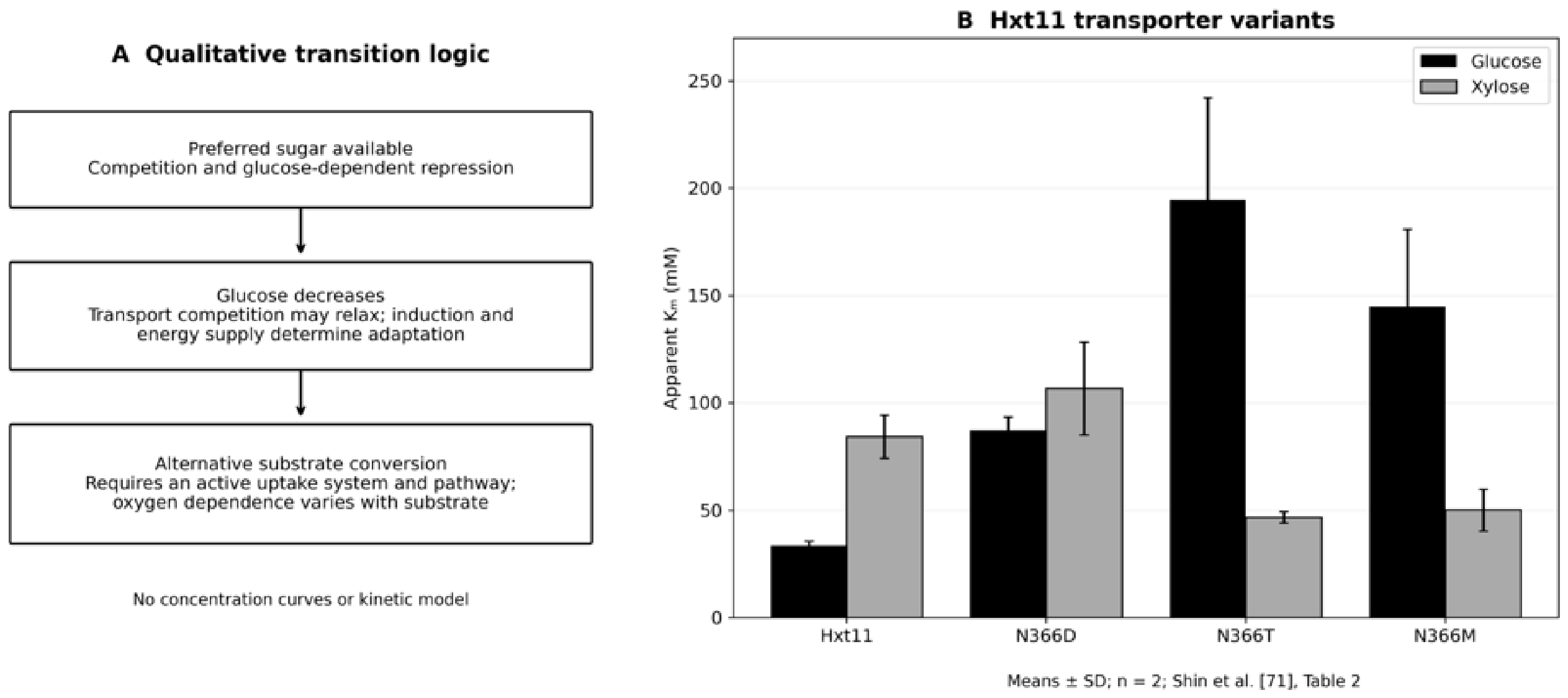
Representative approaches include modification of endogenous hexose transporters [36,38], directed evolution of Gal2 [37], and prevention of transporter ubiquitination [39]. Shin et al. [40] identified Hxt11 residue N366 as a specificity target: N366T increased apparent glucose Km while decreasing apparent xylose Km compared with Hxt11 (as discussed in Section 5). This shifts substrate preference and differs mechanistically from simply increasing transporter abundance. Selection in a glucose-phosphorylation-deficient host enables screening for xylose uptake despite glucose competition; a selected transporter must subsequently be validated in an ethanol-producing background. Measurements should include both substrates, Vmax, membrane localization and ethanol production, because improved apparent affinity alone does not establish improved process productivity [36,37,38,39,40].
4.3.3. Intracellular Cellobiose Hydrolysis
Intracellular cellobiose hydrolysis represents an alternative strategy for reducing the inhibitory influence of extracellular glucose on pentose utilisation. In this approach, cellobiose is transported into yeast cells by a specific cellodextrin transporter and subsequently hydrolysed into glucose by an intracellular β-glucosidase. Unlike extracellular hydrolysis, this mechanism limits the accumulation of free glucose in the surrounding medium, thereby reducing competition for hexose transporters involved in pentose uptake [33,34].
Experimental studies using engineered S. cerevisiae strains have demonstrated that combining cellobiose transport and intracellular hydrolysis with a functional xylose fermentation pathway enables simultaneous utilisation of cellobiose and xylose. This strategy can improve ethanol production by reducing transporter-level interference between substrates and enabling overlapping carbon conversion [33,34].
Nevertheless, intracellular glucose release does not automatically eliminate all glucose-dependent regulatory effects. The effectiveness of this approach depends on the coordinated activity of the cellobiose transporter, β-glucosidase, and downstream metabolic pathways. Consequently, the benefits of intracellular hydrolysis must be assessed in relation to the overall metabolic capacity of the engineered strain and the composition of the fermentation medium [8,33,34].
4.3.4. Enforced Metabolic Co-Utilisation
Forced co-utilisation can be established by engineering metabolic dependencies between substrates. Papapetridis et al. combined PGI1 and RPE1 deletions with a modified oxidative pentose phosphate pathway in a xylose-isomerase-based S. cerevisiae strain to impose glucose–xylose co-consumption during laboratory evolution [60]. This is a direct yeast example of metabolic coupling and should be distinguished from the use of substrate-specialist microbial consortia.
The coupling design blocks glucose-6-phosphate entry through phosphoglucose isomerase and prevents ribulose-5-phosphate conversion through Rpe1, making complementary entry from xylose necessary for effective central-carbon metabolism. A modified oxidative PPP accommodates the redox requirements of the design. Selection then favors variants that relieve the imposed metabolic bottlenecks rather than variants that merely grow faster on glucose. Because the evolved strains were characterised under defined aerobic conditions, transferring the design to oxygen-limited ethanol production requires separate assessment of redox balance, growth and product yield. Engineered dependency is therefore a selection principle, rather than evidence that any glucose–xylose mixture will support obligatory co-fermentation [60].
4.3.5. Microbial Consortia and Division of Metabolic Functions
An alternative to integrating all conversion pathways into a single strain is to combine substrate-specialist yeast populations. Verhoeven et al. investigated a consortium of single-sugar-fermenting S. cerevisiae strains [65]. Shin et al. subsequently showed that the initial strain proportions and inoculation delay can modify glucose–xylose consumption and ethanol production [23]. In the latter system, initiating xylose fermentation before inoculating the glucose specialist alleviated the disadvantage associated with late xylose utilisation. This was a sequential-inoculation strategy in a mixed-sugar medium, not sequential sugar addition.
Division of labor reduces the need to optimise every transport and catabolic route in a single genotype, but introduces population-level constraints. Each specialist must retain sufficient access to its target substrate, nitrogen and other growth factors; different growth rates can change the specialist ratio during cultivation. In a mixed-sugar medium, early consumption of glucose may expose the xylose specialist to accumulated ethanol before sufficient pentose conversion occurs. Starting the xylose specialist earlier addresses that timing problem without changing the sugar-addition order [23,65]. Consortium comparisons should therefore report inoculum proportions, inoculation times and population trajectories alongside substrate and ethanol profiles, and compare the consortium with a co-fermenting single strain under the same total carbon and nutrient supply.
4.3.6. Adaptive Laboratory Evolution
Evolutionary engineering has improved mixed-sugar utilisation in xylose-fermenting S. cerevisiae strains [59]. Selection strategies have also been developed for faster utilisation of glucose–xylose–arabinose mixtures and for forced glucose–xylose co-consumption [50,60]. The evolved phenotype must be assessed in the intended medium; improved sugar conversion under the selection conditions should not be equated with demonstrated inhibitor tolerance.
The selection regime determines the trait favoured by evolution. Serial growth on a mixture can preferentially select rapid consumption of the easiest sugar, whereas alternating substrate exposure or an engineered metabolic dependency places selection pressure on the delayed substrate [50,59,60]. Growth-based selection also need not favour ethanol yield if respiratory growth is permitted. A useful validation sequence is to compare ancestral and evolved strains in the same mixed-sugar medium, test conversion after glucose depletion, and quantify ethanol and by-products under the intended oxygen regime. Stability after nonselective propagation and performance in actual hydrolysate should be evaluated separately from the selection phenotype. ALE changes heritable strain properties; short-term physiological conditioning of an inoculum is a distinct intervention [50,59,60].
4.3.7. Integration of Hydrolysis with Fermentation and Process Condition Control
Simultaneous saccharification and fermentation (SSF), or simultaneous saccharification and co-fermentation (SSCF) when multiple sugars are converted, can limit free-glucose accumulation when uptake keeps pace with enzymatic release. This does not require the enzyme and yeast to share a temperature optimum. Many cellulase preparations favour temperatures above those tolerated by conventional ethanol-producing yeasts; operation at a compromise temperature retains hydrolytic activity below its maximum while supporting fermentation. Enzyme loading, pH, solids content and feeding rate must therefore be adjusted together. Separate hydrolysis followed by fermentation, or a prehydrolysis stage followed by cooling and inoculation, permits different temperatures when a simultaneous configuration is unsuitable [66,67].
Olofsson et al. [66] conducted SSCF of pretreated wheat straw at 34 °C with recombinant xylose-fermenting S. cerevisiae TMB3400 and commercial enzyme preparations. Combined enzyme and substrate feeding increased xylose conversion from 40% to 50% relative to substrate feeding alone. This is a demonstrated temperature compromise, not evidence for a shared thermal optimum. The genetic modification supplied xylose-fermentation capability; it was not the explanation for cellulase activity below its optimum. Enzyme feeding can regulate glucose release [67], but release exceeding uptake causes accumulation, whereas insufficient release can reduce total conversion. These conditional effects must be verified for the chosen enzyme preparation and strain.
The strategies discussed operate at different levels of process organisation and may complement one another. Their selection should be based on identifying the predominant limitation within a given substrate mixture, as summarised in Table 5 [2,35].
Table 5.
Strategies supporting the co-utilisation of mixed carbon sources by yeast.
5. Mechanistic Basis of Substrate Preference in Yeast
5.1. Transport and Uptake of Carbon Sources
Transport across the cell membrane determines the rate at which substrates enter cellular metabolism and may limit their utilisation despite the presence of appropriate intracellular enzymes. In S. cerevisiae, glucose uptake is primarily mediated by Hxt transporters belonging to the major facilitator superfamily (MFS). Individual transport proteins differ in substrate affinity, maximum transport capacity, and regulation of gene expression. Consequently, the composition of transporters present in the plasma membrane changes in response to carbon availability and the physiological state of the culture [31,35].
Low-affinity transporters, such as Hxt1 and Hxt3, contribute to glucose uptake at relatively high extracellular concentrations. Under conditions of limited sugar availability, high-affinity transporters, particularly Hxt6 and Hxt7, become increasingly important. Hxt2 and Hxt4 contribute to the adaptation of glucose transport to lower substrate concentrations, whereas HXT5 expression is strongly associated with growth rate and nutrient availability. Gal2 performs a distinct function, primarily mediating galactose transport while also facilitating the uptake of certain other monosaccharides under appropriate conditions. However, the Hxt family does not constitute a homogeneous group of glucose transporters, as some of its members are primarily involved in polyol transport [31,35,39,69].
For a given transporter and assay system, a lower apparent Km indicates that half-maximal uptake is reached at a lower substrate concentration. Overall transport performance also depends on maximal uptake capacity and transporter abundance [31,35]. Therefore, Km values from different proteins or studies should not be compared without identifying the transporter variant and measurement conditions. Table 6 summarises these aspects.
Table 6.
Functional characteristics of selected sugar transporters in S. cerevisiae.
In the case of xylose and arabinose, a major limitation is their dependence on transporters that preferentially recognise glucose. Consequently, the presence of glucose may restrict pentose uptake through competition for substrate-binding sites. This phenomenon should be distinguished from transcriptional repression: a transporter may remain present and active while predominantly transporting the preferred hexose [14,35].
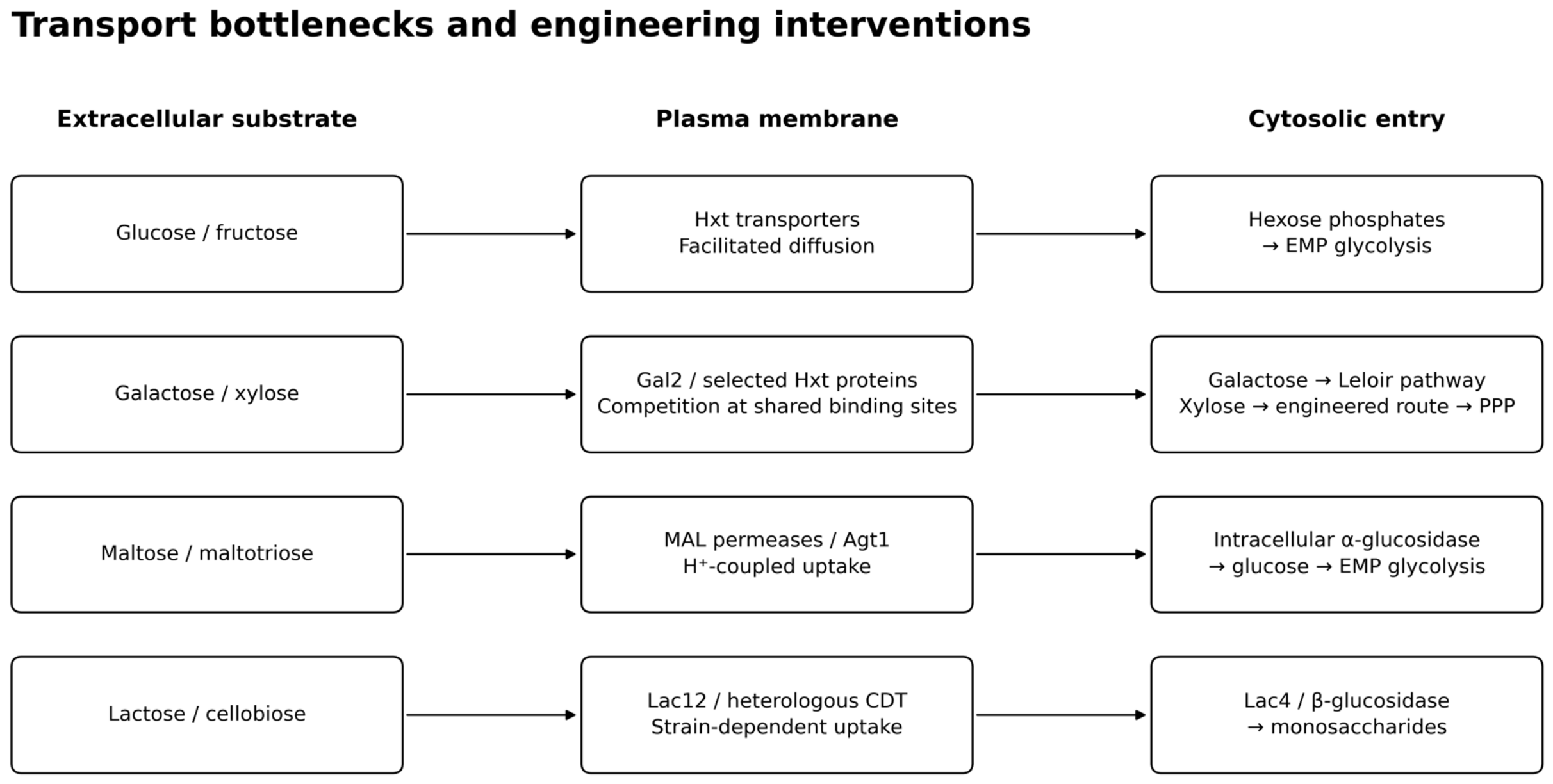
Figure 4 summarizes these uptake routes and the principal transport-engineering targets.
Transporter stability is distinct from substrate selectivity. Preventing ubiquitination of selected Hxt proteins improved their retention at the plasma membrane and enhanced late-stage pentose fermentation [39]. In contrast, mutations affecting substrate recognition can reduce glucose interference with xylose uptake [36]. These approaches address different limitations and should not be described as interchangeable transporter modifications.
Figure 4.
Plasma-membrane transport of selected carbon sources and opportunities for engineering. Hxt and Gal2-mediated monosaccharide uptake is distinguished from proton-coupled α-glucoside uptake and strain-dependent lactose/cellobiose import. Competition at shared binding sites differs from transcriptional repression. Altered selectivity, improved transporter retention and coordinated intracellular conversion address different bottlenecks. The schematic summarizes Section 5.1; pathways are not all native to a single strain [30,33,34,35,36,37,38,39,40].
5.2. Carbon Catabolite Repression and Glucose Repression
Carbon catabolite repression coordinates carbon-source use with glucose availability. In S. cerevisiae, glucose represses functions involved in alternative carbon utilisation, gluconeogenesis and respiration [8,64,70]. The underlying machinery is not identical in all yeasts: genome-wide analysis in Schizosaccharomyces pombe identified regulatory roles for Scr1, Tup/Ssn6 and Rst2 [71]. These species-specific findings provide comparative context and should not be interpreted as a direct demonstration of the same regulatory network in S. cerevisiae.
A central component of this regulatory mechanism is the Snf1–Mig1 signaling axis. Under conditions of high glucose availability, the Glc7–Reg1 phosphatase complex contributes to maintaining low Snf1 kinase activity. Mig1 consequently retains its ability to repress target genes in the nucleus through interactions with the Cyc8–Tup1 corepressor complex. In addition to its role in sugar phosphorylation, hexokinase Hxk2 also performs regulatory functions associated with glucose signaling [8,70].
A reduction in glucose availability promotes Snf1 activation through phosphorylation at Thr210 by the upstream kinases Sak1, Tos3, and Elm1. Activated Snf1 phosphorylates Mig1, altering its subcellular localization and alleviating transcriptional repression. This enables the activation of metabolic functions required for the utilisation of alternative carbon sources. However, derepression does not necessarily result in the complete activation of every metabolic pathway. Galactose metabolism additionally requires activation of the GAL regulatory system, whereas maltose utilisation depends on the appropriate transport and regulatory functions [8,70].
These regulatory mechanisms explain why the sequence of substrate availability may influence fermentation performance. Introducing glucose into a culture previously utilising an alternative carbon source may re-establish repression of the functions required for its metabolism. Conversely, maintaining low glucose concentrations may favour the activity of these pathways, provided that the cells retain sufficient transport capacity and energy availability [8,24,41].
5.3. Metabolic Adaptation to Changes in Carbon Source
A change in the predominant carbon source requires adjustments in substrate transport, enzymatic activity, and cofactor metabolism. This transition may be accompanied by a period of reduced growth or substrate consumption, the duration of which depends on the extent of metabolic reorganization required and the functions retained from the preceding cultivation stage. Therefore, adaptation does not necessarily involve the de novo synthesis of the entire metabolic machinery [24,41,72].
The nature of this adaptation depends primarily on the carbon source subsequently utilised. The transition from glucose to galactose requires activation of the appropriate transport systems and the Leloir pathway but does not necessarily involve a shift toward respiratory growth. A different metabolic reorganization occurs during the utilisation of ethanol or other non-fermentable carbon sources, when mitochondrial respiration; gluconeogenesis; and, depending on the substrate, the glyoxylate cycle become particularly important. These processes should not be regarded as a universal response to every alternative sugar [8,32,41].
The utilisation of two-carbon compounds requires the conservation of carbon for biosynthetic processes and the regeneration of sugar precursors. Under these conditions, enzymes such as isocitrate lyase, malate synthase, phosphoenolpyruvate carboxykinase, and fructose-1,6-bisphosphatase become particularly important. In contrast, during the transition to pentose utilisation, the principal limitations may involve substrate transport, initial conversion reactions, and metabolic flux through the pentose phosphate pathway [1,8,73]. Table 7 summarises these aspects.
Table 7.
Metabolic functions involved in adaptation to changes in carbon-source availability.
Respiratory capacity can influence adaptation even when the new substrate is fermentable. In glucose-to-galactose transitions, Perez-Samper et al. identified respiratory-chain functions as determinants of lag duration, and HAP4 overexpression shortened the lag phase under the tested conditions [41]. This finding should be presented as a result for that transition and experimental system, rather than as a universal consequence of increasing respiratory activity.
In practice, a particularly unfavorable situation occurs when the consumption rate of the initial substrate declines before efficient metabolism of the subsequent substrate has been established. Under these conditions, limited ATP generation may impair the synthesis of proteins required for continued substrate utilisation. Gradual changes in medium composition may alleviate this metabolic gap by maintaining energy availability during the adaptation of cellular metabolic machinery [24,41].
Adaptation should be resolved relative to a measured transition point, such as glucose depletion or a defined feed switch, rather than compared at arbitrary culture ages. The pretransition state includes transporter abundance, retained catabolic enzymes, respiratory capacity and remaining nitrogen; the posttransition response includes uptake recovery, induction and ATP/redox adjustment. In a glucose-to-galactose transition, GAL activation and Leloir-pathway capacity become relevant; in glucose-to-xylose conversion, pentose uptake and the engineered entry pathway remain necessary even after repression relaxes. A transition to ethanol consumption additionally requires respiratory conditions and represents product reassimilation rather than continued alcoholic fermentation [14,24,41,42]. Time-resolved sugar measurements, CO2/oxygen exchange and product balances are needed to distinguish a true induction lag from inhibitor-driven arrest or loss of viability. Respiratory support and GAL transcriptional memory explain different aspects of adaptation and should not be combined into a universal mechanism [41,42].
5.4. Metabolic Switching Between Carbon Sources
Metabolic switching involves changes in the relative contributions of individual carbon sources to cellular metabolism. In certain systems, this transition results in diauxic growth, characterised by two distinct growth phases separated by an adaptation period. In other systems, carbon source utilisation partially overlaps, and the transition between predominant substrates occurs without a pronounced interruption of growth. Diauxic growth therefore represents one possible outcome of metabolic switching rather than an inherent characteristic of every substrate mixture [24,41,59].
Previous galactose exposure can accelerate GAL-gene reactivation after an intervening period of growth on glucose. Zacharioudakis et al. showed that residual Gal1 activity contributes to this transcriptional memory [42]. This GAL-specific mechanism should be distinguished from the respiratory-state mechanism described for history-dependent glucose-to-maltose transitions [24].
The persistence of a faster response after earlier galactose exposure depends on retention of the relevant molecular state [42]. Whether an alternative-substrate-first feeding strategy provides a comparable advantage in a particular fermentation should be established experimentally, because substrate feeding, prior cultivation and subsequent glucose exposure are different interventions.
History-dependent lag duration can affect growth after carbon-source transitions [24,41]. From a process-design perspective, any advantage of maintaining readiness for an alternative substrate should be evaluated against biomass formation, overall conversion time and product yield. These trade-offs are evaluation criteria proposed here, rather than a universal quantitative growth penalty demonstrated for all substrate combinations.
Transport, glucose-dependent regulation and physiological readiness jointly determine whether declining glucose is followed by alternative-substrate conversion. Figure 5A summarizes this conditional transition without assuming universal kinetic curves, while Figure 5B illustrates experimentally measured changes in substrate affinity for Hxt11 variants [14,24,40,41,42].
Figure 5.
Conditional carbon-source transitions and Hxt11 uptake characteristics. (A) Qualitative sequence of regulatory and physiological states; arrows indicate conditional progression and do not encode time, concentration, biomass or rate. (B) Apparent glucose and xylose Km values redrawn from the uptake-kinetics table of Shin et al. [40] for Hxt11 and N366D, N366T and N366M variants. Bars show means ± SD (n = 2) in mM, without additional normalization or fitting. Lower Km indi-cates half-maximal uptake at a lower concentration; Vmax, transporter abundance and down-stream metabolism also determine performance. Panel (B) is adapted from a CC BY 4.0 source (https://creativecommons.org/licenses/by/4.0/); layout and colors have been changed. Construction of both panels is described in Section 2. The numerical source citation is provided in this caption.
6. Sequential Availability of Carbon Sources
6.1. Concept and Models of Sequential Substrate Availability
Sequential carbon source availability refers to changes in the composition or relative proportions of substrates available to yeast cells according to a defined temporal sequence. This may result from the successive addition of compounds to the fermentation medium, modifications in the composition of the feeding solution, or the gradual release of substrates from the fermentation matrix. This concept should be distinguished from the sequential utilisation of substrates that are simultaneously present in the medium. In the latter case, the order of consumption is primarily determined by the transport and regulatory characteristics of the cells [2,3,68].
In batch cultures, depletion of a preferred sugar can trigger a physiological transition without any additional substrate being supplied [24,41]. In a feeding experiment, by contrast, the timing and composition of the carbon supply are imposed externally. A gradual A-to-B feed transition is one possible experimental design, but a general benefit of this design should not be inferred from studies of intracellular pathway switching or product-specific cofeeding [3].
Sequential inoculation represents a distinct strategy involving the successive introduction in different yeast strains or species. This approach modifies the microbial population composition, whereas sequential substrate availability concerns the organisation of the nutritional environment and can be applied in both pure and mixed cultures. Although these strategies may be combined, their effects on fermentation should be evaluated separately [26,27,28]. Table 8 summarises these aspects.
Table 8.
Models of temporally controlled carbon-source availability in yeast cultures.
6.2. Simultaneous Versus Sequential Availability of Carbon Sources
Simultaneous and sequential substrate addition result in different patterns of cellular substrate exposure but do not inherently determine the order in which substrates are consumed. A mixture containing substrates A and B may undergo either simultaneous or sequential utilisation, whereas successive substrate additions may result in partially overlapping availability if the initial compound has not been completely depleted [2,3,14].
In glucose-containing mixtures, the uptake of a second substrate may be restricted by competition for transport systems and carbon catabolite repression. However, the extent of this inhibition depends on the yeast strain, sugar concentrations, and the characteristics of the metabolic pathways involved. Therefore, glucose availability should not be assumed to completely suppress the utilisation of another substrate under all conditions. In the case of galactose, induction of the GAL regulatory system plays a particularly important role, whereas xylose utilisation may remain limited at the transport level despite the presence of active intracellular enzymes [8,14,52].
Sequential substrate addition can reduce simultaneous exposure to competing sugars, but it can also create a transition requiring physiological adaptation [14,41]. This motivates testing whether a controlled overlap in substrate availability maintains activity more effectively than complete separation. The latter comparison is a process-design hypothesis and should not be presented as a general advantage established by studies of sequential inoculation or pathway switching.
A comparison of combined process strategies is available from Nielsen et al. [75] using recombinant, evolved S. cerevisiae KE6-12. Prefermentation of separated xylose-rich liquor for 48 h, followed by solids addition at 48 and 72 h, raised overall ethanol yield for severe wheat-straw slurry from 56% to 84% of theoretical and xylose utilisation from 65% to 92%. However, fractionation, temperature, enzyme dosing and reactor scale also changed; the improvement therefore supports the combined process, not an isolated substrate-order effect.
This process-based evidence contrasts with strain-based co-fermentation. Tran et al. [58] reported 30.1 g/L ethanol in 24 h at 0.48 g/g for engineered XUSEA on a glucose–xylose hydrolysate. The endpoint quotient is approximately 1.25 g L−1 h−1, calculated as reported final ethanol concentration divided by fermentation time. It indicates the scale of performance, but the result combines strain engineering and cultivation conditions and does not compare alternative feed orders. A shorter process with a co-fermenting strain can therefore be preferable to staged feeding when both sugars remain convertible under the same conditions; the studies cannot establish that ranking without matched feedstocks and operating conditions. The reported yield of 0.48 g/g refers to ethanol per gram of the combined initial glucose and xylose (39.6 + 23.1 g/L) in the Miscanthus hydrolysate, under microaerobic fermentation at 33 °C with high initial cell density (OD600 = 20) [50]; it is not a substrate-specific yield.
The comparison also depends on the objective. In the native wine-yeast feeding study [76], continuous dosing reduced residual sugar and acetate, but endpoint ethanol concentrations did not differ significantly between strategies. This supports improved completion or by-product control rather than a demonstrated increase in ethanol yield or productivity. Conversely, a higher ethanol yield in an extended lignocellulosic process may be offset by longer vessel occupancy. These outcome bases must be distinguished; percentage of theoretical yield, g/g yield, endpoint titre and conversion time are not interchangeable indicators of superiority.
Evidence from oleaginous yeasts concerns cultivation regimes designed for biomass or lipid production and must not be transferred directly to ethanol-oriented fermentation. Nitrogen limitation in the presence of excess carbon can favour triacylglycerol accumulation when cytosolic acetyl-CoA and NADPH supply are adequate. Such lipid-production processes generally use oxygenated conditions, whereas ethanol production commonly relies on oxygen limitation; limitation of growth nutrients can also restrict sustained sugar conversion. Cofeeding may complement carbon and reducing-equivalent supply in a lipogenic process, but this does not establish simultaneous enhancement of ethanol production, biomass and lipids under the same conditions [53,77,78]. A staged process could separate an oxygenated biomass/lipid phase from an ethanol-production phase, but its advantage would require direct validation and carbon/redox balances. The lipogenic studies cited here do not demonstrate that simultaneous assimilation improves alcoholic fermentation under oxygen-limited conditions. Table 9 summarises these aspects.
Table 9.
Comparison of simultaneous addition, sequential feeding and controlled co-feeding.
6.3. Effects of Substrate Availability Sequence
The sequences A → B and B → A expose the second substrate to different physiological states. Cultivation history can influence lag duration and the ability to resume growth after a carbon-source transition [24,41]. Therefore, feeding-order comparisons should standardize inoculum preparation and record the duration of the first cultivation stage.
For glucose followed by galactose or maltose, the transition depends on induction and the availability of the corresponding transport and metabolic functions [8,24,42]. For glucose followed by xylose, a functional pentose-conversion pathway and adequate transport are additional prerequisites [1,14]. The mechanistic basis of metabolic memory and respiratory support is discussed in Section 5.3 and Section 5.4; these mechanisms do not establish a universal optimum for the feeding order. Table 10 summarises these aspects.
Table 10.
Physiological consequences of selected carbon-source sequences.
6.4. Gradual Substrate Feeding and Fed-Batch Systems
Fed-batch cultivation enables control of carbon supply independently of the total amount of substrate introduced into the process. In fed-batch systems, substrates are supplied continuously or intermittently, allowing their accumulation to be limited and the metabolic load to be adjusted to the current activity of the culture [3,25,53].
Pulse feeding creates repeated changes in substrate availability and can be used to investigate dynamic metabolic responses. Suarez-Mendez et al. studied repeated substrate perturbations using dynamic 13C tracing [79]. In fed-batch process design, online signals may support feeding decisions, but dissolved oxygen or off-gas changes should not be treated as unambiguous proof of substrate depletion. Such control rules require calibration against direct substrate measurements.
The significance of restricting glucose supply depends on the objective of the fermentation process. During biomass production, maintaining glucose uptake below the respiratory capacity of the culture may limit ethanol formation. In alcoholic fermentation, however, ethanol production is the intended outcome, and substrate feeding primarily aims to reduce osmotic stress, inhibition, and unfavorable patterns of sequential substrate consumption. Therefore, no universal glucose uptake threshold can ensure optimal performance across all these processes [13,25].
Auxiliary substrates can support specific biosynthetic requirements when their metabolism supplies a limiting resource. Park et al. demonstrated gluconate-supported NADPH generation during acetate-driven lipogenesis in Yarrowia lipolytica [78]. This product- and substrate-specific result illustrates cofactor complementation, but it does not show that glucose addition universally increases NADPH availability or improves ethanol fermentation.
Mixed-carbon feeding can be used to influence non-ethanol products, but these examples must retain their original biological context. Patel et al. investigated lipid accumulation in Rhodosporidium kratochvilovae [77], while Fei et al. compared hydrolysate-feeding strategies in R. toruloides [53]. Park et al. examined substrate cofeeding and reductive metabolism in Y. lipolytica [78]. None of these results alone establishes an improvement in yeast ethanol fermentation.
6.5. Effects of Substrate Feeding Sequence on the Utilisation of Individual Carbon Sources
The effectiveness of a particular substrate addition sequence depends on the compatibility between the feeding strategy and the metabolic characteristics of the yeast strain. Improving xylose transport may increase its uptake but does not eliminate the effects of previous cultivation on glucose or limitations associated with downstream metabolism. Similarly, maintaining active transporters in the plasma membrane may facilitate the initiation of the subsequent fermentation stage but does not ensure complete substrate conversion when cofactors or essential nutrients are insufficient [14,36,39].
Carbon-source-responsive promoters provide a means of linking gene expression to cultivation conditions [74]. Peng et al. used regulatory patterns associated with process conditions to optimise sesquiterpene production [80]. Such studies concern the control of pathway expression and should not be presented as direct evidence that a particular sugar-feeding order improves ethanol production. For native GAL regulation, relief from glucose repression and galactose-dependent induction should also be distinguished [8,42].
In sequential mixed-yeast fermentations, the first population changes nutrient availability and thereby influences subsequent S. cerevisiae activity. Studies of nitrogen preferences and nutrient availability directly link these interactions with fermentation behaviour and aroma formation [27,28]. Changes in product composition in such systems cannot be attributed to carbon-source sequence alone.
Oleaginous yeasts provide further examples of directing carbon from substrate mixtures toward biomass and lipid production. However, their metabolic behaviour does not justify assuming that this entire group lacks glucose repression. The extent of substrate co-utilisation depends on the specific substrate combination, yeast strain, and cultivation conditions [53,77]. Table 11 summarises these aspects.
Table 11.
Relationships between substrate-supply strategies and yeast process performance.
Representative experimental results and their outcome measures are summarised in Table 12.
Table 12.
Representative experimental results relevant to alternative carbon conversion and temporal process organisation.
7. Metabolic and Chemical Consequences of Sequential Carbon Source Availability
7.1. Fermentation Kinetics and Substrate Utilisation
The effects of sequential carbon source availability are reflected in the uptake rates of individual substrates, the duration of adaptation periods, and the time required to achieve the final extent of substrate conversion. Maximum specific growth rate alone does not fully characterize these relationships. A yeast culture that rapidly consumes glucose may simultaneously exhibit a limited capacity to complete the fermentation of a less-preferred sugar [23,56,82].
A controlled transition between substrates may minimize interruptions in metabolic activity if the pathway required for the second substrate is activated before cellular energy reserves become depleted. Conversely, excessively delayed substrate addition may coincide with elevated ethanol concentrations and limited availability of nitrogen or vitamins. An excessive supply of the preferred sugar may also reinforce carbon catabolite repression and delay the utilisation of the remaining substrate components [8,21,41,47].
CO2 evolution can support monitoring of overall culture activity, but it does not identify which component of a substrate mixture is being consumed. Respiratory and fermentative metabolism can both generate CO2 [6,83]. For this reason, mixed-substrate experiments should combine gas measurements with separate analyses of substrates and products. Table 13 summarises these aspects.
Table 13.
Kinetic indicators relevant to the assessment of sequential carbon-source availability.
7.2. Ethanol Production and Yield
The influence of carbon source composition on ethanol production should be evaluated by distinguishing between final ethanol concentration, yield relative to consumed substrate, and productivity. A high ethanol concentration may result from a large initial substrate load despite incomplete carbon utilisation, whereas a higher ethanol yield does not necessarily indicate a faster fermentation process [21,25,84].
For idealized conversion without biomass or by-product formation, the theoretical ethanol yield from glucose is approximately 0.511 g per g of glucose. The same mass-based value follows for idealized xylose fermentation, whereas hydrolysis and fermentation of a disaccharide such as sucrose gives approximately 0.538 g of ethanol per g of the anhydrous disaccharide. These values follow from the respective balanced reactions. Actual yields depend on carbon allocation and process conditions [1,81]. Comparisons involving glycerol require an explicitly defined redox and electron-acceptor balance [32].
In constant-volume cultivation, ethanol yield can be expressed as:
where ΔP = Pf − P0 is the increase in ethanol concentration and ΔS = S_0 − S_f is the decrease in the concentration of the specified substrate. For a mixture, the denominator includes the consumed amount of each substrate on an explicitly defined mass or carbon basis. In fed-batch systems, substrate consumption equals the initial amount plus the amount supplied, minus residual substrate and substrate removed in samples. Ethanol formation must likewise account for volume changes, product removal and relevant losses. Concentration differences alone are insufficient when culture volume changes [3,82].
Gradual sugar feeding may reduce initial osmotic stress and improve the extent of substrate utilisation. However, this strategy does not eliminate product inhibition, as increasing ethanol concentrations disrupt membrane function, substrate transport, and cellular homeostasis. Ethanol tolerance depends on the yeast strain, temperature, and medium composition; therefore, no single ethanol concentration can be regarded as a universal threshold for fermentation arrest [21,25,85].
Ethanol-exposure experiments should be interpreted according to how stress was imposed. A defined ethanol challenge provides information about the response to that exposure, whereas gradual ethanol accumulation during fermentation coincides with other physiological changes [21,85]. The origin of ethanol alone is insufficient to explain differences in toxicity between experimental designs. Table 14 summarises these aspects.
Table 14.
Effects of substrate and product exposure on ethanol-production indicators.
7.3. Redistribution of Metabolic Fluxes and Redox Balance
Changes in carbon source availability modify the points at which substrates enter central metabolism and the mechanisms involved in ATP, NADH, and NADPH generation. During glucose fermentation, the principal metabolic flux proceeds through glycolysis, whereas the oxidative branch of the pentose phosphate pathway provides NADPH required for biosynthesis and protection against oxidative stress. The relative contributions of these pathways depend on the current metabolic requirements of the cell [12,15,16].
Glycerol and acetate should not be treated as metabolically equivalent substrates. Native glycerol utilisation in S. cerevisiae is respiratory, while engineered dihydroxyacetone-pathway strains can produce ethanol from glycerol under suitable conditions [32]. Acetate utilisation involves acetyl-CoA metabolism and, for net formation of carbohydrate precursors, glyoxylate-cycle and gluconeogenic functions [8,73].
In the XR–XDH pathway, different cofactor preferences of the two entry reactions can contribute to redox imbalance and xylitol accumulation [1]. Comparative metabolite profiling also demonstrates that xylose-fermenting S. cerevisiae and S. stipitis need not exhibit identical metabolic responses [87]. The consequences of supplying an additional substrate should therefore be established for the specific pathway and strain, rather than inferred from substrate presence alone.
Expression of a water-forming NADH oxidase can provide an additional route for NADH oxidation, but the reaction depends on oxygen. Heux et al. evaluated this strategy in a wine yeast under controlled microoxygenation and observed reduced ethanol production together with changes in other metabolites [88]. It should therefore not be proposed as an oxygen-independent correction of cofactor imbalance or as a route that directly regenerates NADPH.
Redox balance should be discussed separately for NAD(H) and NADP(H). The NADP-dependent acetaldehyde dehydrogenase Ald6 links acetaldehyde oxidation with NADPH formation [1]. Glucose-derived ethanol can also be reassimilated and contribute to acetyl-unit and reducing-equivalent metabolism during fermentative growth [89]. Oxygen availability affects cofactor pools and fermentation by-product profiles [15]. None of these observations demonstrates that a feeding-order change necessarily increases NADPH availability without direct measurements. Table 15 summarises these aspects.
Table 15.
Carbon-flux and redox consequences of selected substrate-conversion routes.
7.4. Formation of Glycerol, Xylitol, and Organic Acids
Product profiles should be related to defined changes in carbon availability. For a batch glucose–xylose mixture, the relevant stages are glucose-dominated conversion, declining glucose with possible uptake overlap, and the post-glucose xylose phase. For a feeding process, the timing and rate of each addition must also be specified. These regimes differ mechanistically: disappearance of glucose may relieve competition while simultaneously reducing glycolytic support for the pentose pathway. Metabolite formation rates and yields on consumed substrate are therefore more informative than endpoint concentrations alone [14,15,50].
During an initial high-sugar stage or an abrupt concentrated-sugar pulse, osmotic stress can increase glycerol retention and synthesis. In the cytosol, Gpd1/Gpd2 reduce dihydroxyacetone phosphate using NADH, and Gpp1/Gpp2 release glycerol; this also disposes of surplus cytosolic NADH. Gradual feeding is expected to moderate the osmotic transient relative to an equal carbon dose added at once, but it need not lower cumulative glycerol if biomass-associated redox demand increases. After a glucose-to-xylose transition, glycerol formation depends on the cofactor requirements of the entry route and cannot be predicted from glucose depletion alone [16,17,84,90].
A quantitative example is provided by Krahulec et al. [90]. With 10 g/L glucose plus 10 g/L xylose, the strains consumed glucose before xylose. In the xylose phase, replacing an NADPH-preferring XR with an NADH-preferring variant reduced xylitol yield from 0.36 to 0.26 g/g and glycerol yield from 0.072 to 0.023 g/g, while ethanol yield increased from 0.23 to 0.30 g/g. Maintaining low residual glucose by feeding supported xylose conversion and gave 0.19 g xylitol/g xylose. Thus, the metabolic state during the transition, including XR cofactor preference and residual glucose, changes product partitioning. These values are strain- and condition-specific, rather than universal feeding thresholds.
Acetate must be distinguished from succinate and citrate. Continued glucose supply can sustain acetaldehyde formation and its oxidation through aldehyde dehydrogenases, including NADP-dependent Ald6; the resulting acetate may be excreted or activated to acetyl-CoA. Following a shift to carbon limitation, net acetate concentration reflects both formation and reassimilation, so a lower endpoint does not establish lower synthesis [17,89,91]. Succinate formation involves TCA-associated oxidative or reductive routes and depends on oxygen/redox conditions; a switch from glucose to a respirable substrate changes its interpretation relative to oxygen-limited sugar fermentation [16,17]. Substrate- and oxygen-dependent citrate production by Y. lipolytica is evidence from a different process [92]. No universal increase or decrease in these acids can be assigned to A → B versus B → A from the cited evidence; individual time courses and carbon balances are required.
An experimentally resolved glucose-to-ethanol transition provides a time reference for organic-acid and glycerol responses. Zampar et al. [93] aligned measurements to glucose exhaustion (t = 0 h) in S. cerevisiae. Between −2.1 and −0.6 h, specific succinate and glycerol excretion rates declined by 28% and 23%, respectively. Following depletion, ethanol was consumed, extracellular pyruvate was taken up during the first 2 h, and acetate production subsequently declined to zero at 6 h. The associated switch toward gluconeogenesis and glyoxylate-cycle operation explains why acid formation does not simply follow the presence of residual carbon. These observations concern an oxygenated diauxic transition, not anaerobic continuation of ethanol production; the times and directions should not be transferred unchanged to glucose-to-xylose fermentation.
For temporally controlled sugar supply, Deng et al. [76] compared whole-batch and fed-batch grape-juice fermentation. At 320 g/L sugars, continuous feeding began at 72 h and lasted 72 h; intermittent additions occurred at 96 and 144 h. Final acetate/glycerol concentrations were 1.18/11.80 g/L in whole-batch, 0.57/6.30 g/L with continuous feeding, and 0.74/7.54 g/L with intermittent feeding. ACS2 up-regulation and GPD1 down-regulation supported a proposed mechanism, without directly measuring metabolic flux.
These examples distinguish three transitions: declining glucose followed by xylose conversion [90], glucose depletion followed by respiratory ethanol consumption [93], and renewed sugar availability during a delayed feed [76]. In the first, XR–XDH cofactor matching affects xylitol and glycerol partitioning; in the second, respiratory and gluconeogenic reorganization changes organic-acid exchange; and in the third, instantaneous sugar exposure and nutrient delivery affect osmotic and redox demands. For an alternative-substrate-first sequence followed by glucose, renewed competition and repression are expected only where the relevant transporters and regulatory pathways are glucose sensitive [8,14]. That conditional prediction does not establish a measured increase in every by-product. Net concentrations during feeding also include dilution and therefore require amount-based balances before being interpreted as changes in production rates. Table 16 summarises these aspects.
Table 16.
Selected products associated with carbon-source conversion and physiological adaptation.
7.5. Effects on Aroma Compounds and the Chemical Profile of the Final Product
Changes in carbon supply influence the chemical profile of the final product by modifying precursor availability, cofactor balance, and enzymatic activity. In fermented beverages, higher alcohols, esters, aldehydes, and sulfur-containing compounds are particularly important. However, not all of these compounds are strictly classified as secondary metabolites, as some are directly associated with central carbon metabolism and amino acid biosynthesis [20,94,95].
Higher alcohols are formed from α-keto acids derived from amino acid catabolism or de novo biosynthesis. In the Ehrlich pathway, transamination precedes decarboxylation and the subsequent reduction of the resulting aldehyde to the corresponding alcohol. Valine serves as a precursor of isobutanol, leucine of isoamyl alcohol, isoleucine of 2-methylbutan-1-ol, and phenylalanine of 2-phenylethanol. Changes in carbon supply may influence these transformations, although their metabolic response is strongly associated with nitrogen availability and the sequence of nitrogen source utilisation [20,94,96,97].
Acetate esters are formed from alcohols and acetyl-CoA through reactions catalysed by enzymes including Atf1 and Atf2. In contrast, ethyl esters of medium-chain fatty acids are associated with the availability of ethanol and the corresponding acyl-CoA derivatives, as well as the activity of enzymes such as Eeb1 and Eht1. The substrate addition sequence may therefore modify the relative proportions of alcohols and esters by influencing precursor availability. However, an increase in alcohol concentration does not necessarily result in a proportional increase in the corresponding ester concentration [20,94].
Carbon-source identity and supply timing should be separated when interpreting volatile profiles. A glucose pulse can renew glycolytic precursor supply and osmotic stress, whereas a gradual feed supplies the same carbon over a longer interval and changes its overlap with nitrogen uptake and ester-synthesizing activity. These mechanisms predict possible differences in acetate, medium-chain fatty acids, acetate esters and ethyl esters, but not a universal direction of change. Acetate, hexanoate, octanoate and decanoate should be reported individually rather than grouped into an undifferentiated VFA response. Direct sequential-versus-simultaneous sugar comparisons require matched total carbon, nitrogen, oxygen, temperature and sampling time [20,94].
Acetaldehyde is formed during pyruvate conversion and can be reduced to ethanol or further metabolized. Diacetyl formation is associated with alpha-acetolactate originating from branched-chain amino acid biosynthesis, while subsequent reduction produces acetoin and 2,3-butanediol [6,20]. Acetoin should therefore be distinguished from vicinal diketones. The final concentrations also depend on the course of fermentation and subsequent maturation.
The formation of sulfur-containing compounds and the release of thiols are linked to nitrogen and sulfur metabolism, as well as the presence of appropriate precursors in the fermentation matrix. The influence of carbon source availability sequence on these processes is often indirect. Particularly in mixed cultures, changes in aroma composition result from interactions among medium composition, the metabolic activities of individual microbial populations, and the inoculation sequence [20,27,28,98].
Substrate identity provides complementary evidence: Piddocke et al. [99] compared glucose- and maltose-syrup enrichment of wort and documented changes in final ethyl acetate and isoamyl acetate with gravity. However, sugar composition, feeding schedule and microbial succession must remain distinct explanatory variables. Seguinot et al. [28] and Renault et al. [98] investigated sequential inoculation; their results cannot be used as measurements of sugar-addition order. Direct evidence for temporal feeding effects is instead provided by the studies below [76,100].
In the high-gravity comparison of Deng et al. [76], continuous feeding increased ethyl acetate from 13.50 to 42.31 mg/L and decreased octanoic and decanoic acids from 47.08 to 38.03 and 28.01 to 26.00 mg/L, respectively. Hexanoic acid was detected only in whole-batch wine; phenylethyl acetate only in fed-batch wine. Thus, temporal supply altered individual acids and esters, rather than shifting all aroma compounds uniformly. These were semiquantitative GC–MS measurements.
Visinoni et al. [100] provide an independent timed-feeding example in S. cerevisiae NCYC 505 at 20 °C: half the nutrients were supplied initially and the remainder was fed from 48 to 68 h, with comparison at 76 h. Fed-batch increased total higher alcohols by 60%, propanol 2.5-fold, and isoamyl alcohol and isobutanol by more than 50%, whereas phenylethyl alcohol was higher in batch. Ethyl decanoate was approximately threefold higher in batch; ethyl hexanoate and ethyl octanoate did not differ significantly, and ethyl acetate increased with feeding. The schedule changed carbon and other nutrients together, so it supports a temporal nutrient-supply effect rather than an isolated sugar-order effect.
Mechanistically, the feeding window determines whether glycolytic carbon delivery overlaps with growth, amino-acid precursor formation, acetyl-CoA availability and esterification. Alcohol acetyltransferases use alcohols and acetyl-CoA, whereas medium-chain fatty-acid ethyl ester formation depends on ethanol and acyl-CoA supply [20,94]. Consequently, an increase in one ester can coexist with a decrease in its free-acid pool or with unchanged concentrations of other esters. Endpoint profiles also integrate synthesis, reassimilation, hydrolysis and volatile losses. The direct comparisons above establish metabolite-specific effects of dosing strategy; they do not establish a universal VFA signature for glucose → xylose versus xylose → glucose. Such a claim would require a matched comparison of those two substrate orders.
The technological significance of these metabolic transformations depends on the intended application of the final product. In bioethanol production, directing carbon toward additional metabolites may reduce the yield of the primary product. In fermented beverages, however, the same compounds contribute to sensory quality, with their desirable effects depending on their concentrations and the composition of the fermentation matrix. Therefore, substrate feeding sequences should be evaluated by considering both carbon conversion efficiency and the desired chemical profile of the final product [6,20,84]. Table 17 summarises these aspects.
Table 17.
Volatile Compounds and Related Products Influenced by Carbon Allocation During Yeast Fermentation.
8. Research Gaps and Future Perspectives
8.1. Limitations of Current Research
Studies of unconventional carbon utilisation and mixed-sugar conversion frequently evaluate ethanol yield, productivity and residual substrates, particularly in lignocellulosic biofuel processes [84,86]. Beverage fermentation additionally requires consideration of compounds affecting aroma and other product characteristics [6,20]. These two evaluation frameworks should be distinguished when interpreting the technological significance of carbon allocation.
Comparisons between studies are complicated by differences in yeast species and strains, inoculum preparation history, and cultivation conditions. Oxygen availability, nitrogen concentration, pH, and the presence of inhibitors may influence both substrate consumption hierarchy and carbon allocation among metabolic products. Distinguishing substrate assimilation from fermentation is also essential, as efficient utilisation of a substrate mixture for growth or lipid production does not necessarily indicate its suitability for ethanol production [9,15,46,47,57].
A key question emerging from this review is whether changing substrate addition order has an effect that can be distinguished from changes in instantaneous concentration, culture volume, inhibitor exposure and inoculum history. These factors should be controlled explicitly when comparing simultaneous addition with A-to-B and B-to-A feeding. Demonstrating a difference in final ethanol concentration alone is insufficient to identify the underlying mechanism.
8.2. Future Research Directions and Technological Significance
Future experiments should compare simultaneous addition, A-to-B feeding and B-to-A feeding using the same strain, a standardised inoculum and equivalent total carbon inputs. The second substrate should be introduced at defined physiological stages, including before, at and after depletion of the first substrate. Volume changes, nutrient supply and inhibitor load should be recorded so that feeding-order effects can be interpreted separately from differences in exposure.
Measurements should include time-resolved concentrations of each substrate, ethanol and relevant by-products, together with biomass and viability. Where the mechanism is under investigation, transporter measurements, expression analyses and appropriately designed isotope-tracing experiments can complement these profiles [79,101]. For beverage applications, chemical profiling should be linked with sensory assessment. Sampling around the substrate transition is particularly important for separating adaptation from inhibition.
Promising feeding strategies should subsequently be tested in the intended fermentation matrix and with industrially relevant strains. Validation should examine robustness to variation in substrate proportions, nutrient availability, inhibitor load and oxygen transfer. Technological value should be assessed through reproducible substrate conversion, process duration and the intended product profile.
8.3. Industrial Feasibility and Constraints
Sequential feeding is most plausible when the delayed substrate retains economic value but loses convertibility during the process, and when its early exposure can be implemented with manageable additional equipment. For liquid sugar streams, timing can be changed by dosing pumps and feed storage; separating pentose-rich liquor from glucan-rich solids additionally requires fraction handling and changes the upstream process. A feed programme must therefore be evaluated as part of the complete conversion train, including propagation, hydrolysis, fermentation and product recovery, rather than as a cost-free adjustment to sugar order [75,81,102].
Wang et al. [81] demonstrated multi-feed SSCF with recombinant/evolved KE6-12.A, obtaining 57 g/L ethanol in 72 h in the laboratory and 52 g/L at 10 m3 scale. This establishes scale-up feasibility for an integrated substrate/cell/enzyme strategy, not for arbitrary sequential feeding. Viscosity, mixing and inhibition remained central constraints. Their finding that initial enzyme loading and renewed cell supply affected performance illustrates why the optimal enzyme schedule cannot be generalised across feedstocks.
Operational assessment should include feed-pump and storage capacity, reliable sugar measurements, mixing and heat removal, enzyme consumption, inoculum production, contamination control and the time required for filling, fermentation and cleaning. At high solids, a low average glucose concentration does not exclude local substrate or inhibitor gradients. A pre-set laboratory schedule may therefore require feedback adjustment when hydrolysis rate, inhibitor load or viable biomass changes. Adding fresh cells may preserve conversion but also adds propagation and separation costs; adding extra water may ease handling while lowering ethanol titre and increasing downstream separation demand [66,81]. These are assessment criteria, not quantified savings established for every feeding configuration.
A process–economic example is provided by Dutta et al. [102]. Their bench-data-based comparison of corn-stover configurations using Z. mobilis and Saccharomyces found a US$0.27 per gallon difference between the highest and lowest modelled ethanol costs. Separate solid/liquor fermentation with liquor recycle performed best, primarily through higher ethanol concentrations. This is historical, configuration-specific evidence that stream integration and titre can outweigh a simple preference for simultaneous or staged operation; it is not a current cost estimate or a saving attributable solely to yeast feeding order.
A practical decision should therefore compare additional recoverable ethanol and any reduction in downstream losses against extra equipment, utilities, enzymes, biomass preparation and cycle time. Higher final yield alone is insufficient if the second stage lowers annual throughput or markedly dilutes the product. Fuel-ethanol and beverage processes also require different acceptance criteria: the former prioritises recoverable ethanol per unit feedstock and production capacity, whereas the latter must additionally preserve a reproducible chemical and sensory profile. Native-strain dosing results can be implemented only within native substrate capabilities; recombinant pentose or glycerol conversion requires the corresponding strain and application-specific deployment assessment [32,58,75,76,81,102].
9. Conclusions
The technological suitability of unconventional carbon sources in alcoholic fermentation depends on the compatibility between substrate chemistry, yeast metabolic capabilities, and the temporal organisation of carbon supply. Total carbon content alone does not adequately describe substrate availability, as conversion may be constrained by membrane transport, carbon catabolite repression, pathway functionality, and cofactor balance. Accordingly, the capacity to assimilate a compound should not be equated with its efficient fermentation to ethanol.
Sequential substrate feeding offers a means of modifying the physiological conditions under which individual carbon sources are utilised. Its potential benefits include limiting excessive sugar accumulation, reducing competition between substrates, and supporting metabolic adaptation before cellular activity declines. However, sequential addition does not necessarily produce sequential consumption, and simultaneous addition does not guarantee co-utilisation. The effectiveness of a feeding strategy depends on the identity and order of the substrates, their instantaneous concentrations, the timing of supplementation, and the physiological state of the culture. Adjusting these variables cannot compensate for missing transporters or incomplete metabolic pathways.
The consequences of altered carbon availability extend beyond ethanol production to the allocation of carbon among biomass, polyols, organic acids, and aroma-related compounds. These changes require application-specific interpretation: carbon diversion toward additional metabolites may be unfavorable in fuel ethanol production but relevant to the chemical and sensory characteristics of fermented foods and beverages. Nevertheless, a modified metabolite profile should not be interpreted as improved product quality without appropriate sensory validation.
The studies discussed here do not establish a universally optimal substrate feeding sequence. Direct comparisons of simultaneous addition, alternative addition orders, and controlled co-feeding remain necessary under equivalent total carbon inputs and carefully controlled cultivation conditions. Time-resolved substrate and product measurements, supported by carbon balances and targeted physiological or molecular analyses, are essential to distinguish metabolic adaptation from changes in osmotic stress, nutrient availability, or inhibitor exposure. Integrating these measurements with validation in industrial strains and actual fermentation matrices will clarify when temporal control of carbon supply can improve conversion efficiency and reproducibly shape the final product profile.
The comparative evidence supports temporal control as a conditional process-design tool rather than a replacement for strain capability. Sequential targeting can recover otherwise poorly converted carbon, while engineered co-fermentation can shorten conversion where pathway capacity is sufficient. Industrial selection should be based on matched carbon balances, total cycle productivity, robustness and integrated process cost; neither a high laboratory titre nor an improved percentage conversion alone establishes commercial advantage.
Author Contributions
Conceptualization, Ł.K. and G.Z.; methodology, Ł.K. and G.Z.; software, Ł.K. and G.Z.; validation, Ł.K., J.J., K.K., C.P. and G.Z.; formal analysis, Ł.K. and G.Z.; investigation, Ł.K., J.J., K.K., C.P. and G.Z.; resources, Ł.K., J.J., K.K., C.P. and G.Z.; data curation, Ł.K., J.J., K.K., C.P. and G.Z.; writing—original draft preparation, Ł.K., J.J., K.K., C.P. and G.Z.; writing—review and editing, C.P.; visualization, Ł.K., J.J., K.K., C.P. and G.Z.; supervision, C.P.; project administration, C.P.; funding acquisition, C.P. All authors have read and agreed to the published version of the manuscript.
Funding
This research received no external funding.
Institutional Review Board Statement
Not applicable.
Informed Consent Statement
Not applicable.
Data Availability Statement
No new experimental data were generated. The uptake Km values replotted in Figure 5B are available in the uptake-kinetics table of Shin et al. [40]. The remaining figures are qualitative literature-based schematics.
Conflicts of Interest
Author Julia Jastrzębska was employed by Medical Centre in Łancut LLC. The remaining authors declare that the research was conducted in the absence of any commercial or financial relationships that could be construed as a potential conflict of interest.
References
- Ruchala, J.; Kurylenko, O.O.; Dmytruk, K.V.; Sibirny, A.A. Construction of advanced producers of first- and second-generation ethanol in Saccharomyces cerevisiae and selected species of non-conventional yeasts (Scheffersomyces stipitis, Ogataea polymorpha). J. Ind. Microbiol. Biotechnol. 2020, 47, 109–132. [Google Scholar] [CrossRef] [Scilit] [PubMed]
- Gao, M.; Ploessl, D.; Shao, Z. Enhancing the co-utilization of biomass-derived mixed sugars by yeasts. Front. Microbiol. 2019, 9, 3264. [Google Scholar] [CrossRef] [Scilit] [PubMed]
- Liu, N.; Santala, S.; Stephanopoulos, G. Mixed carbon substrates: A necessary nuisance or a missed opportunity? Curr. Opin. Biotechnol. 2020, 62, 15–21. [Google Scholar] [CrossRef] [Scilit] [PubMed]
- Albergaria, H.; Arneborg, N. Dominance of Saccharomyces cerevisiae in alcoholic fermentation processes: Role of physiological fitness and microbial interactions. Appl. Microbiol. Biotechnol. 2016, 100, 2035–2046. [Google Scholar] [CrossRef] [Scilit] [PubMed]
- Guimarães, P.M.R.; Teixeira, J.A.; Domingues, L. Fermentation of lactose to bio-ethanol by yeasts as part of integrated solutions for the valorisation of cheese whey. Biotechnol. Adv. 2010, 28, 375–384. [Google Scholar] [CrossRef] [Scilit] [PubMed]
- Walker, G.M.; Stewart, G.G. Saccharomyces cerevisiae in the production of fermented beverages. Beverages 2016, 2, 30. [Google Scholar] [CrossRef] [Scilit]
- Marques, W.L.; Raghavendran, V.; Stambuk, B.U.; Gombert, A.K. Sucrose and Saccharomyces cerevisiae: A relationship most sweet. FEMS Yeast Res. 2016, 16, fov107. [Google Scholar] [CrossRef] [Scilit] [PubMed]
- Kayikci, Ö.; Nielsen, J. Glucose repression in Saccharomyces cerevisiae. FEMS Yeast Res. 2015, 15, fov068. [Google Scholar] [CrossRef] [Scilit] [PubMed]
- Radecka, D.; Mukherjee, V.; Mateo, R.Q.; Stojiljkovic, M.; Foulquié-Moreno, M.R.; Thevelein, J.M. Looking beyond Saccharomyces: The potential of non-conventional yeast species for desirable traits in bioethanol fermentation. FEMS Yeast Res. 2015, 15, fov053. [Google Scholar] [CrossRef] [Scilit] [PubMed]
- van Maris, A.J.A.; Abbott, D.A.; Bellissimi, E.; van den Brink, J.; Kuyper, M.; Luttik, M.A.H.; Wisselink, H.W.; Scheffers, W.A.; van Dijken, J.P.; Pronk, J.T. Alcoholic fermentation of carbon sources in biomass hydrolysates by Saccharomyces cerevisiae: Current status. Antonie Van Leeuwenhoek 2006, 90, 391–418. [Google Scholar] [CrossRef] [Scilit] [PubMed]
- Zhao, J.; Zhao, Y.; Wu, L.; Yan, N.; Yang, S.; Xu, L.; He, D.; Li, H.; Bao, X. Development of a robust Saccharomyces cerevisiae strain for efficient co-fermentation of mixed sugars and enhanced inhibitor tolerance through protoplast fusion. Microorganisms 2024, 12, 1526. [Google Scholar] [CrossRef] [Scilit] [PubMed]
- Nidelet, T.; Brial, P.; Camarasa, C.; Dequin, S. Diversity of flux distribution in central carbon metabolism of S. cerevisiae strains from diverse environments. Microb. Cell Fact. 2016, 15, 58. [Google Scholar] [CrossRef] [Scilit] [PubMed]
- Hagman, A.; Piškur, J. A study on the fundamental mechanism and the evolutionary driving forces behind aerobic fermentation in yeast. PLoS ONE 2015, 10, e0116942. [Google Scholar] [CrossRef] [Scilit] [PubMed]
- Subtil, T.; Boles, E. Competition between pentoses and glucose during uptake and catabolism in recombinant Saccharomyces cerevisiae. Biotechnol. Biofuels 2012, 5, 14. [Google Scholar] [CrossRef] [Scilit] [PubMed]
- Duncan, J.D.; Devillers, H.; Camarasa, C.; Setati, M.E.; Divol, B. Oxygen alters redox cofactor dynamics and induces metabolic shifts in Saccharomyces cerevisiae during alcoholic fermentation. Food Microbiol. 2024, 124, 104624. [Google Scholar] [CrossRef] [Scilit] [PubMed]
- Bakker, B.M.; Overkamp, K.M.; van Maris, A.J.A.; Kötter, P.; Luttik, M.A.H.; van Dijken, J.P.; Pronk, J.T. Stoichiometry and compartmentation of NADH metabolism in Saccharomyces cerevisiae. FEMS Microbiol. Rev. 2001, 25, 15–37. [Google Scholar] [CrossRef] [PubMed]
- Monnin, L.; Nidelet, T.; Noble, J.; Galeote, V. Insights into intraspecific diversity of central carbon metabolites in Saccharomyces cerevisiae during wine fermentation. Food Microbiol. 2024, 121, 104513. [Google Scholar] [CrossRef] [Scilit] [PubMed]
- Peltier, E.; Vion, C.; Abou Saada, O.; Friedrich, A.; Schacherer, J.; Marullo, P. Flor yeasts rewire the central carbon metabolism during wine alcoholic fermentation. Front. Fungal Biol. 2021, 2, 733513. [Google Scholar] [CrossRef] [Scilit] [PubMed]
- Eder, M.; Sanchez, I.; Brice, C.; Camarasa, C.; Legras, J.-L.; Dequin, S. QTL mapping of volatile compound production in Saccharomyces cerevisiae during alcoholic fermentation. BMC Genom. 2018, 19, 166. [Google Scholar] [CrossRef] [Scilit] [PubMed]
- Dzialo, M.C.; Park, R.; Steensels, J.; Lievens, B.; Verstrepen, K.J. Physiology, ecology and industrial applications of aroma formation in yeast. FEMS Microbiol. Rev. 2017, 41, S95–S128. [Google Scholar] [CrossRef] [Scilit] [PubMed]
- Zhang, Q.; Wu, D.; Lin, Y.; Wang, X.; Kong, H.; Tanaka, S. Substrate and product inhibition on yeast performance in ethanol fermentation. Energy Fuels 2015, 29, 1019–1027. [Google Scholar] [CrossRef] [Scilit]
- Berthels, N.J.; Cordero Otero, R.R.; Bauer, F.F.; Thevelein, J.M.; Pretorius, I.S. Discrepancy in glucose and fructose utilisation during fermentation by Saccharomyces cerevisiae wine yeast strains. FEMS Yeast Res. 2004, 4, 683–689. [Google Scholar] [CrossRef] [Scilit] [PubMed]
- Shin, J.; Liao, S.; Kuanyshev, N.; Xin, Y.; Kim, C.; Lu, T.; Jin, Y.-S. Compositional and temporal division of labor modulates mixed sugar fermentation by an engineered yeast consortium. Nat. Commun. 2024, 15, 781. [Google Scholar] [CrossRef] [Scilit] [PubMed]
- Cerulus, B.; Jariani, A.; Perez-Samper, G.; Vermeersch, L.; Pietsch, J.M.J.; Crane, M.M.; New, A.M.; Gallone, B.; Roncoroni, M.; Dzialo, M.C.; et al. Transition between fermentation and respiration determines history-dependent behavior in fluctuating carbon sources. eLife 2018, 7, e39234. [Google Scholar] [CrossRef] [Scilit] [PubMed]
- Tse, T.J.; Wiens, D.J.; Reaney, M.J.T. Production of bioethanol—A review of factors affecting ethanol yield. Fermentation 2021, 7, 268. [Google Scholar] [CrossRef] [Scilit]
- Comitini, F.; Agarbati, A.; Canonico, L.; Ciani, M. Yeast interactions and molecular mechanisms in wine fermentation: A comprehensive review. Int. J. Mol. Sci. 2021, 22, 7754. [Google Scholar] [CrossRef] [Scilit] [PubMed]
- Gobert, A.; Tourdot-Maréchal, R.; Morge, C.; Sparrow, C.; Liu, Y.; Quintanilla-Casas, B.; Vichi, S.; Alexandre, H. Non-Saccharomyces yeasts nitrogen source preferences: Impact on sequential fermentation and wine volatile compounds profile. Front. Microbiol. 2017, 8, 2175. [Google Scholar] [CrossRef] [Scilit] [PubMed]
- Seguinot, P.; Ortiz-Julien, A.; Camarasa, C. Impact of nutrient availability on the fermentation and production of aroma compounds under sequential inoculation with M. pulcherrima and S. cerevisiae. Front. Microbiol. 2020, 11, 305. [Google Scholar] [CrossRef] [Scilit] [PubMed]
- Jiang, L.; Song, J.; Qi, M.; Cao, Y.; Li, Y.; Xu, M.; Li, L.; Zhang, D.; Wang, C.; Li, H. Carbon and nitrogen sources consumption by ale and lager yeast strains: A comparative study during fermentation. Appl. Microbiol. Biotechnol. 2023, 107, 6937–6947. [Google Scholar] [CrossRef] [Scilit] [PubMed]
- Alves, S.L., Jr.; Herberts, R.A.; Hollatz, C.; Trichez, D.; Miletti, L.C.; de Araujo, P.S.; Stambuk, B.U. Molecular analysis of maltotriose active transport and fermentation by Saccharomyces cerevisiae reveals a determinant role for the AGT1 permease. Appl. Environ. Microbiol. 2008, 74, 1494–1501. [Google Scholar] [CrossRef] [Scilit] [PubMed]
- Long, X.-F.; Xu, Y.-L.; Zhao, X.-M. Response mechanism of Saccharomyces cerevisiae under benzoic acid stress in ethanol fermentation. Sci. Rep. 2024, 14, 28757. [Google Scholar] [CrossRef] [Scilit] [PubMed]
- Mekoue Nguela, J.; Vernhet, A.; Julien-Ortiz, A.; Sieczkowski, N.; Mouret, J.-R. Effect of grape must polyphenols on yeast metabolism during alcoholic fermentation. Food Res. Int. 2019, 121, 161–175. [Google Scholar] [CrossRef] [Scilit] [PubMed]
- Kemsawasd, V.; Viana, T.; Ardö, Y.; Arneborg, N. Influence of nitrogen sources on growth and fermentation performance of different wine yeast species during alcoholic fermentation. Appl. Microbiol. Biotechnol. 2015, 99, 10191–10207. [Google Scholar] [CrossRef] [Scilit] [PubMed]
- Tesnière, C.; Brice, C.; Blondin, B. Responses of Saccharomyces cerevisiae to nitrogen starvation in wine alcoholic fermentation. Appl. Microbiol. Biotechnol. 2015, 99, 7025–7034. [Google Scholar] [CrossRef] [Scilit] [PubMed]
- Bisson, L.F.; Fan, Q.; Walker, G.A. Sugar and glycerol transport in Saccharomyces cerevisiae. In Yeast Membrane Transport (Advances in Experimental Medicine and Biology); Ramos, J., Sychrová, H., Kschischo, M., Eds.; Springer: Berlin/Heidelberg, Germany, 2016; Volume 892, pp. 125–168. [Google Scholar] [CrossRef] [Scilit] [PubMed]
- Nijland, J.G.; Driessen, A.J.M. Engineering of pentose transport in Saccharomyces cerevisiae for biotechnological applications. Front. Bioeng. Biotechnol. 2020, 7, 464. [Google Scholar] [CrossRef] [Scilit] [PubMed]
- Badotti, F.; Dário, M.G.; Alves, S.L., Jr.; Cordioli, M.L.A.; Miletti, L.C.; de Araujo, P.S.; Stambuk, B.U. Switching the mode of sucrose utilization by Saccharomyces cerevisiae. Microb. Cell Fact. 2008, 7, 4. [Google Scholar] [CrossRef] [Scilit] [PubMed]
- Aßkamp, M.R.; Klein, M.; Nevoigt, E. Saccharomyces cerevisiae exhibiting a modified route for uptake and catabolism of glycerol forms significant amounts of ethanol from this carbon source considered as ‘non-fermentable’. Biotechnol. Biofuels 2019, 12, 257. [Google Scholar] [CrossRef] [Scilit] [PubMed]
- Wu, Y.; Shen, X.; Yuan, Q.; Yan, Y. Metabolic engineering strategies for co-utilization of carbon sources in microbes. Bioengineering 2016, 3, 10. [Google Scholar] [CrossRef] [Scilit] [PubMed]
- Wisselink, H.W.; Toirkens, M.J.; Wu, Q.; Pronk, J.T.; van Maris, A.J.A. Novel evolutionary engineering approach for accelerated utilization of glucose, xylose, and arabinose mixtures by engineered Saccharomyces cerevisiae strains. Appl. Environ. Microbiol. 2009, 75, 907–914. [Google Scholar] [CrossRef] [Scilit] [PubMed]
- Li, S.; Du, J.; Sun, J.; Galazka, J.M.; Glass, N.L.; Cate, J.H.D.; Yang, X.; Zhao, H. Overcoming glucose repression in mixed sugar fermentation by co-expressing a cellobiose transporter and a β-glucosidase in Saccharomyces cerevisiae. Mol. Biosyst. 2010, 6, 2129–2132. [Google Scholar] [CrossRef] [Scilit] [PubMed]
- Ha, S.-J.; Galazka, J.M.; Kim, S.R.; Choi, J.-H.; Yang, X.; Seo, J.-H.; Glass, N.L.; Cate, J.H.D.; Jin, Y.-S. Engineered Saccharomyces cerevisiae capable of simultaneous cellobiose and xylose fermentation. Proc. Natl. Acad. Sci. USA 2011, 108, 504–509. [Google Scholar] [CrossRef] [Scilit] [PubMed]
- Persson, V.C.; Perruca Foncillas, R.; Anderes, T.R.; Ginestet, C.; Gorwa-Grauslund, M. Impact of xylose epimerase on sugar assimilation and sensing in recombinant Saccharomyces cerevisiae carrying different xylose-utilization pathways. Biotechnol. Biofuels Bioprod. 2023, 16, 168. [Google Scholar] [CrossRef] [Scilit] [PubMed]
- Lane, S.; Xu, H.; Oh, E.J.; Kim, H.; Lesmana, A.; Jeong, D.; Zhang, G.; Tsai, C.-S.; Jin, Y.-S.; Kim, S.R. Glucose repression can be alleviated by reducing glucose phosphorylation rate in Saccharomyces cerevisiae. Sci. Rep. 2018, 8, 2613. [Google Scholar] [CrossRef] [Scilit] [PubMed]
- Fei, Q.; O’Brien, M.; Nelson, R.; Chen, X.; Lowell, A.; Dowe, N. Enhanced lipid production by Rhodosporidium toruloides using different fed-batch feeding strategies with lignocellulosic hydrolysate as the sole carbon source. Biotechnol. Biofuels 2016, 9, 130. [Google Scholar] [CrossRef] [Scilit] [PubMed]
- Harlé, O.; Legrand, J.; Tesnière, C.; Pradal, M.; Mouret, J.-R.; Nidelet, T. Investigations of the mechanisms of interactions between four non-conventional species with Saccharomyces cerevisiae in oenological conditions. PLoS ONE 2020, 15, e0233285. [Google Scholar] [CrossRef] [Scilit] [PubMed]
- Raymond Eder, M.L.; Rosa, A.L. Genetic, physiological, and industrial aspects of the fructophilic non-Saccharomyces yeast species, Starmerella bacillaris. Fermentation 2021, 7, 87. [Google Scholar] [CrossRef] [Scilit]
- Nascimento, V.M.; Fonseca, G.G. Effects of the carbon source and the interaction between carbon sources on the physiology of the industrial Saccharomyces cerevisiae CAT-1. Prep. Biochem. Biotechnol. 2020, 50, 349–356. [Google Scholar] [CrossRef] [Scilit] [PubMed]
- Su, Y.-K.; Willis, L.B.; Jeffries, T.W. Effects of aeration on growth, ethanol and polyol accumulation by Spathaspora passalidarum NRRL Y-27907 and Scheffersomyces stipitis NRRL Y-7124. Biotechnol. Bioeng. 2015, 112, 457–469. [Google Scholar] [CrossRef] [Scilit] [PubMed]
- Tran, P.H.N.; Ko, J.K.; Gong, G.; Um, Y.; Lee, S.-M. Improved simultaneous co-fermentation of glucose and xylose by Saccharomyces cerevisiae for efficient lignocellulosic biorefinery. Biotechnol. Biofuels 2020, 13, 12. [Google Scholar] [CrossRef] [Scilit] [PubMed]
- Nijland, J.G.; Shin, H.Y.; de Jong, R.M.; de Waal, P.P.; Klaassen, P.; Driessen, A.J.M. Engineering of an endogenous hexose transporter into a specific D-xylose transporter facilitates glucose-xylose co-consumption in Saccharomyces cerevisiae. Biotechnol. Biofuels 2014, 7, 168. [Google Scholar] [CrossRef] [Scilit] [PubMed]
- Reznicek, O.; Facey, S.J.; de Waal, P.P.; Teunissen, A.W.R.H.; de Bont, J.A.M.; Nijland, J.G.; Driessen, A.J.M.; Hauer, B. Improved xylose uptake in Saccharomyces cerevisiae due to directed evolution of galactose permease Gal2 for sugar co-consumption. J. Appl. Microbiol. 2015, 119, 99–111. [Google Scholar] [CrossRef] [Scilit] [PubMed]
- Reider Apel, A.; Ouellet, M.; Szmidt-Middleton, H.; Keasling, J.D.; Mukhopadhyay, A. Evolved hexose transporter enhances xylose uptake and glucose/xylose co-utilization in Saccharomyces cerevisiae. Sci. Rep. 2016, 6, 19512. [Google Scholar] [CrossRef] [Scilit] [PubMed]
- Jeong, D.; Ye, S.; Park, H.; Kim, S.R. Simultaneous fermentation of galacturonic acid and five-carbon sugars by engineered Saccharomyces cerevisiae. Bioresour. Technol. 2020, 295, 122259. [Google Scholar] [CrossRef] [Scilit] [PubMed]
- Park, J.-H.; Kim, S.-H.; Park, H.-D.; Kim, J.S.; Yoon, J.-J. Simultaneous utilization of galactose and glucose by Saccharomyces cerevisiae mutant strain for ethanol production. Renew. Energy 2014, 65, 213–218. [Google Scholar] [CrossRef] [Scilit]
- Jojima, T.; Omumasaba, C.A.; Inui, M.; Yukawa, H. Sugar transporters in efficient utilization of mixed sugar substrates: Current knowledge and outlook. Appl. Microbiol. Biotechnol. 2010, 85, 471–480. [Google Scholar] [CrossRef] [Scilit] [PubMed]
- Nijland, J.G.; Vos, E.; Shin, H.Y.; de Waal, P.P.; Klaassen, P.; Driessen, A.J.M. Improving pentose fermentation by preventing ubiquitination of hexose transporters in Saccharomyces cerevisiae. Biotechnol. Biofuels 2016, 9, 158. [Google Scholar] [CrossRef] [Scilit] [PubMed]
- Kuyper, M.; Toirkens, M.J.; Diderich, J.A.; Winkler, A.A.; van Dijken, J.P.; Pronk, J.T. Evolutionary engineering of mixed-sugar utilization by a xylose-fermenting Saccharomyces cerevisiae strain. FEMS Yeast Res. 2005, 5, 925–934. [Google Scholar] [CrossRef] [Scilit] [PubMed]
- Perez-Samper, G.; Cerulus, B.; Jariani, A.; Vermeersch, L.; Barrajón Simancas, N.; Bisschops, M.M.M.; van den Brink, J.; Solis-Escalante, D.; Gallone, B.; De Maeyer, D.; et al. The Crabtree effect shapes the Saccharomyces cerevisiae lag phase during the switch between different carbon sources. mBio 2018, 9, e01331-18. [Google Scholar] [CrossRef] [Scilit] [PubMed]
- Kim, S.R.; Ha, S.-J.; Wei, N.; Oh, E.J.; Jin, Y.-S. Simultaneous co-fermentation of mixed sugars: A promising strategy for producing cellulosic ethanol. Trends Biotechnol. 2012, 30, 274–282. [Google Scholar] [CrossRef] [Scilit] [PubMed]
- Wu, D.; Cheng, Y.; Jiang, J.; Liu, Y.; Song, Y. Mechanism of glucose repression in yeast. Acta Microbiol. Sin. 2023, 63, 3409–3427. [Google Scholar] [CrossRef]
- Papapetridis, I.; Verhoeven, M.D.; Wiersma, S.J.; Goudriaan, M.; van Maris, A.J.A.; Pronk, J.T. Laboratory evolution for forced glucose-xylose co-consumption enables identification of mutations that improve mixed-sugar fermentation by xylose-fermenting Saccharomyces cerevisiae. FEMS Yeast Res. 2018, 18, foy056. [Google Scholar] [CrossRef] [Scilit] [PubMed]
- Verhoeven, M.D.; de Valk, S.C.; Daran, J.-M.G.; van Maris, A.J.A.; Pronk, J.T. Fermentation of glucose-xylose-arabinose mixtures by a synthetic consortium of single-sugar-fermenting Saccharomyces cerevisiae strains. FEMS Yeast Res. 2018, 18, foy075. [Google Scholar] [CrossRef] [Scilit] [PubMed]
- Ishola, M.M.; Brandberg, T.; Taherzadeh, M.J. Simultaneous glucose and xylose utilization for improved ethanol production from lignocellulosic biomass through SSFF with encapsulated yeast. Biomass Bioenergy 2015, 77, 192–199. [Google Scholar] [CrossRef] [Scilit]
- Jordan, P.; Choe, J.-Y.; Boles, E.; Oreb, M. Hxt13, Hxt15, Hxt16 and Hxt17 from Saccharomyces cerevisiae represent a novel type of polyol transporters. Sci. Rep. 2016, 6, 23502. [Google Scholar] [CrossRef] [Scilit] [PubMed]
- Kalender, Ö.; Çalık, P. Transcriptional regulatory proteins in central carbon metabolism of Pichia pastoris and Saccharomyces cerevisiae. Appl. Microbiol. Biotechnol. 2020, 104, 7273–7311. [Google Scholar] [CrossRef] [Scilit] [PubMed]
- Vassiliadis, D.; Wong, K.H.; Andrianopoulos, A.; Monahan, B.J. A genome-wide analysis of carbon catabolite repression in Schizosaccharomyces pombe. BMC Genom. 2019, 20, 251. [Google Scholar] [CrossRef] [Scilit] [PubMed]
- Tripodi, F.; Nicastro, R.; Reghellin, V.; Coccetti, P. Post-translational modifications on yeast carbon metabolism: Regulatory mechanisms beyond transcriptional control. Biochim. Biophys. Acta–General. Subj. 2015, 1850, 620–627. [Google Scholar] [CrossRef] [Scilit] [PubMed]
- Chew, S.Y.; Chee, W.J.Y.; Than, L.T.L. The glyoxylate cycle and alternative carbon metabolism as metabolic adaptation strategies of Candida glabrata: Perspectives from Candida albicans and Saccharomyces cerevisiae. J. Biomed. Sci. 2019, 26, 52. [Google Scholar] [CrossRef] [Scilit] [PubMed]
- Zacharioudakis, I.; Gligoris, T.; Tzamarias, D. A yeast catabolic enzyme controls transcriptional memory. Curr. Biol. 2007, 17, 2041–2046. [Google Scholar] [CrossRef] [Scilit] [PubMed]
- Shin, H.Y.; Nijland, J.G.; de Waal, P.P.; de Jong, R.M.; Klaassen, P.; Driessen, A.J.M. An engineered cryptic Hxt11 sugar transporter facilitates glucose–xylose co-consumption in Saccharomyces cerevisiae. Biotechnol. Biofuels 2015, 8, 176. [Google Scholar] [CrossRef] [Scilit] [PubMed]
- Peng, B.; Williams, T.C.; Henry, M.; Nielsen, L.K.; Vickers, C.E. Controlling heterologous gene expression in yeast cell factories on different carbon substrates and across the diauxic shift: A comparison of yeast promoter activities. Microb. Cell Fact. 2015, 14, 91. [Google Scholar] [CrossRef] [Scilit] [PubMed]
- Suarez-Mendez, C.A.; Ras, C.; Wahl, S.A. Metabolic adjustment upon repetitive substrate perturbations using dynamic 13C-tracing in yeast. Microb. Cell Fact. 2017, 16, 161. [Google Scholar] [CrossRef] [Scilit] [PubMed]
- Patel, A.; Pruthi, V.; Singh, R.P.; Pruthi, P.A. Synergistic effect of fermentable and non-fermentable carbon sources enhances TAG accumulation in oleaginous yeast Rhodosporidium kratochvilovae HIMPA1. Bioresour. Technol. 2015, 188, 136–144. [Google Scholar] [CrossRef] [Scilit] [PubMed]
- Peng, B.; Plan, M.R.; Carpenter, A.; Nielsen, L.K.; Vickers, C.E. Coupling gene regulatory patterns to bioprocess conditions to optimize synthetic metabolic modules for improved sesquiterpene production in yeast. Biotechnol. Biofuels 2017, 10, 43. [Google Scholar] [CrossRef] [Scilit] [PubMed]
- Valencia-Velásquez, J.; Yaker-Moreno, H.A.; Martínez-Guerrero, A.; Ibáñez-Espinel, F.; Pérez-Correa, J.R.; Caicedo-Ortega, N.H. Advancing hybrid modeling of Saccharomyces cerevisiae fermentation with mixed carbon sources and urea in a mini-stirred tank reactor. Bioprocess Biosyst. Eng. 2025, 48, 1919–1937. [Google Scholar] [CrossRef] [Scilit] [PubMed]
- Olivares-Marin, I.K.; González-Hernández, J.C.; Regalado-Gonzalez, C.; Madrigal-Perez, L.A. Saccharomyces cerevisiae exponential growth kinetics in batch culture to analyze respiratory and fermentative metabolism. J. Vis. Exp. 2018, 139, e58192. [Google Scholar] [CrossRef] [Scilit] [PubMed]
- Gombert, A.K.; van Maris, A.J.A. Improving conversion yield of fermentable sugars into fuel ethanol in 1st generation yeast-based production processes. Curr. Opin. Biotechnol. 2015, 33, 81–86. [Google Scholar] [CrossRef] [Scilit] [PubMed]
- Park, J.O.; Liu, N.; Holinski, K.M.; Emerson, D.F.; Qiao, K.; Woolston, B.M.; Xu, J.; Lazar, Z.; Islam, M.A.; Vidoudez, C.; et al. Synergistic substrate cofeeding stimulates reductive metabolism. Nat. Metab. 2019, 1, 643–651. [Google Scholar] [CrossRef] [Scilit] [PubMed]
- Ming, M.; Wang, X.; Lian, L.; Zhang, H.; Gao, W.; Zhu, B.; Lou, D. Metabolic responses of Saccharomyces cerevisiae to ethanol stress using gas chromatography-mass spectrometry. Mol. Omics 2019, 15, 216–221. [Google Scholar] [CrossRef] [Scilit] [PubMed]
- Alfenore, S.; Molina-Jouve, C. Current status and future prospects of conversion of lignocellulosic resources to biofuels using yeasts and bacteria. Process Biochem. 2016, 51, 1747–1756. [Google Scholar] [CrossRef] [Scilit]
- Shin, M.; Kim, J.-W.; Ye, S.; Kim, S.; Jeong, D.; Lee, D.Y.; Kim, J.N.; Jin, Y.-S.; Kim, K.H.; Kim, S.R. Comparative global metabolite profiling of xylose-fermenting Saccharomyces cerevisiae SR8 and Scheffersomyces stipitis. Appl. Microbiol. Biotechnol. 2019, 103, 5435–5446. [Google Scholar] [CrossRef] [Scilit] [PubMed]
- Heux, S.; Sablayrolles, J.-M.; Cachon, R.; Dequin, S. Engineering a Saccharomyces cerevisiae wine yeast that exhibits reduced ethanol production during fermentation under controlled microoxygenation conditions. Appl. Environ. Microbiol. 2006, 72, 5822–5828. [Google Scholar] [CrossRef] [Scilit] [PubMed]
- Xiao, T.; Khan, A.; Shen, Y.; Chen, L.; Rabinowitz, J.D. Glucose feeds the tricarboxylic acid cycle via excreted ethanol in fermenting yeast. Nat. Chem. Biol. 2022, 18, 1380–1387. [Google Scholar] [CrossRef] [Scilit] [PubMed]
- Shang, Y.-H.; Zeng, Y.-J.; Zhu, P.; Zhong, Q.-P. Acetate metabolism of Saccharomyces cerevisiae at different temperatures during lychee wine fermentation. Biotechnol. Biotechnol. Equip. 2016, 30, 512–520. [Google Scholar] [CrossRef] [Scilit]
- Sabra, W.; Bommareddy, R.R.; Maheshwari, G.; Papanikolaou, S.; Zeng, A.-P. Substrates and oxygen dependent citric acid production by Yarrowia lipolytica: Insights through transcriptome and fluxome analyses. Microb. Cell Fact. 2017, 16, 78. [Google Scholar] [CrossRef] [Scilit] [PubMed]
- Hirst, M.B.; Richter, C.L. Review of aroma formation through metabolic pathways of Saccharomyces cerevisiae in beverage fermentations. Am. J. Enol. Vitic. 2016, 67, 361–370. [Google Scholar] [CrossRef] [Scilit]
- Stanzer, D.; Hanousek Čiča, K.; Blesić, M.; Smajić Murtić, M.; Mrvčić, J.; Spaho, N. Alcoholic fermentation as a source of congeners in fruit spirits. Foods 2023, 12, 1951. [Google Scholar] [CrossRef] [Scilit] [PubMed]
- Li, W.; Chen, S.-J.; Wang, J.-H.; Zhang, C.-Y.; Shi, Y.; Guo, X.-W.; Chen, Y.-F.; Xiao, D.-G. Genetic engineering to alter carbon flux for various higher alcohol productions by Saccharomyces cerevisiae for Chinese Baijiu fermentation. Appl. Microbiol. Biotechnol. 2018, 102, 1783–1795. [Google Scholar] [CrossRef] [Scilit] [PubMed]
- Crépin, L.; Truong, N.M.; Bloem, A.; Sanchez, I.; Dequin, S.; Camarasa, C. Management of multiple nitrogen sources during wine fermentation by Saccharomyces cerevisiae. Appl. Environ. Microbiol. 2017, 83, e02617-16. [Google Scholar] [CrossRef] [Scilit] [PubMed]
- Renault, P.; Coulon, J.; Moine, V.; Thibon, C.; Bely, M. Enhanced 3-sulfanylhexan-1-ol production in sequential mixed fermentation with Torulaspora delbrueckii/Saccharomyces cerevisiae reveals a situation of synergistic interaction between two industrial strains. Front. Microbiol. 2016, 7, 293. [Google Scholar] [CrossRef] [Scilit] [PubMed]
- Paulo, J.A.; O’Connell, J.D.; Everley, R.A.; O’Brien, J.; Gygi, M.A.; Gygi, S.P. Quantitative mass spectrometry-based multiplexing compares the abundance of 5000 S. cerevisiae proteins across 10 carbon sources. J. Proteom. 2016, 148, 85–93. [Google Scholar] [CrossRef] [Scilit] [PubMed]
- Olofsson, K.; Palmqvist, B.; Lidén, G. Improving simultaneous saccharification and co-fermentation of pretreated wheat straw using both enzyme and substrate feeding. Biotechnol. Biofuels 2010, 3, 17. [Google Scholar] [CrossRef] [Scilit] [PubMed]
- Olofsson, K.; Wiman, M.; Lidén, G. Controlled feeding of cellulases improves conversion of xylose in simultaneous saccharification and co-fermentation for bioethanol production. J. Biotechnol. 2010, 145, 168–175. [Google Scholar] [CrossRef] [Scilit] [PubMed]
- Krahulec, S.; Petschacher, B.; Wallner, M.; Longus, K.; Klimacek, M.; Nidetzky, B. Fermentation of mixed glucose-xylose substrates by engineered strains of Saccharomyces cerevisiae: Role of the coenzyme specificity of xylose reductase, and effect of glucose on xylose utilization. Microb. Cell Fact. 2010, 9, 16. [Google Scholar] [CrossRef] [Scilit] [PubMed]
- Piddocke, M.P.; Kreisz, S.; Heldt-Hansen, H.P.; Nielsen, K.F.; Olsson, L. Physiological characterization of brewer’s yeast in high-gravity beer fermentations with glucose or maltose syrups as adjuncts. Appl. Microbiol. Biotechnol. 2009, 84, 453–464. [Google Scholar] [CrossRef] [Scilit] [PubMed]
- Zampar, G.G.; Kümmel, A.; Ewald, J.; Jol, S.; Niebel, B.; Picotti, P.; Aebersold, R.; Sauer, U.; Zamboni, N.; Heinemann, M. Temporal system-level organization of the switch from glycolytic to gluconeogenic operation in yeast. Mol. Syst. Biol. 2013, 9, 651. [Google Scholar] [CrossRef] [Scilit] [PubMed]
- Deng, H.; Wang, M.; Li, E. Continuous fed-batch strategy decreases acetic acid production and increases volatile ester formation in wines under high-gravity fermentation. OENO One 2023, 57, 363–374. [Google Scholar] [CrossRef] [Scilit]
- Visinoni, F.; Zhang, P.; Hollywood, K.A.; Carlin, S.; Vrhovsek, U.; Winterburn, J.; Delneri, D. Volatile aroma compound production is affected by growth rate in S. cerevisiae. Appl. Environ. Microbiol. 2022, 88, e01509-22. [Google Scholar] [CrossRef] [Scilit] [PubMed]
- Nielsen, F.; Zacchi, G.; Galbe, M.; Wallberg, O. Sequential targeting of xylose and glucose conversion in fed-batch simultaneous saccharification and co-fermentation of steam-pretreated wheat straw for improved xylose conversion to ethanol. BioEnergy Res. 2017, 10, 800–810. [Google Scholar] [CrossRef] [Scilit]
- Wang, R.; Unrean, P.; Franzén, C.J. Model-based optimization and scale-up of multi-feed simultaneous saccharification and co-fermentation of steam pre-treated lignocellulose enables high gravity ethanol production. Biotechnol. Biofuels 2016, 9, 88. [Google Scholar] [CrossRef] [Scilit] [PubMed]
- Dutta, A.; Dowe, N.; Ibsen, K.N.; Schell, D.J.; Aden, A. An economic comparison of different fermentation configurations to convert corn stover to ethanol using Z. mobilis and Saccharomyces. Biotechnol. Prog. 2010, 26, 64–72. [Google Scholar] [CrossRef] [Scilit] [PubMed]
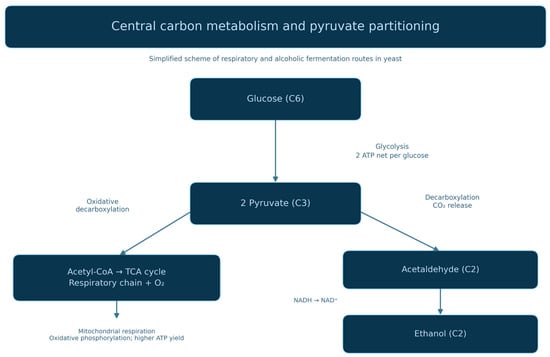
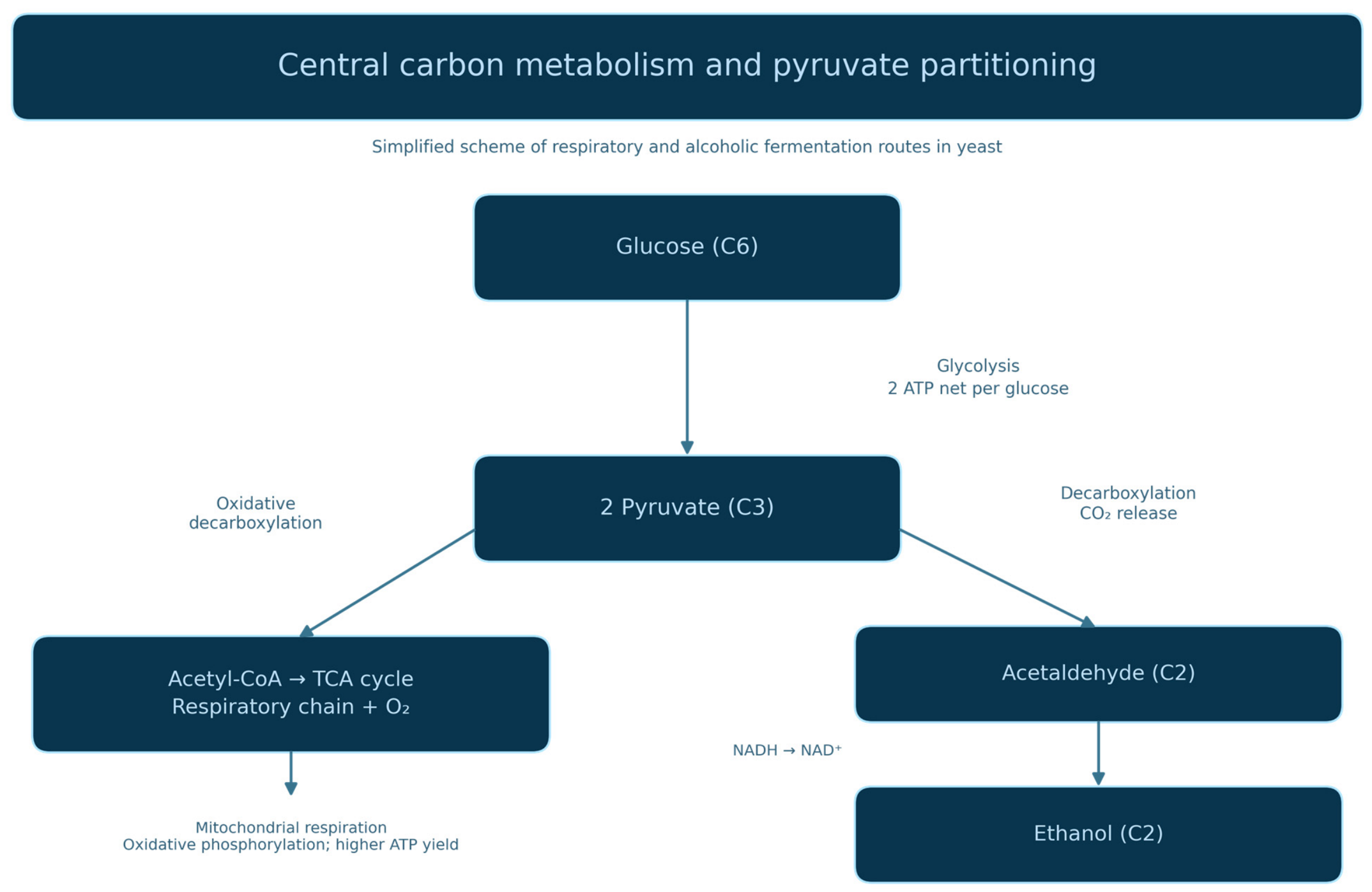
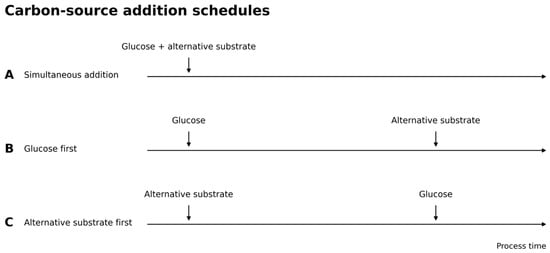
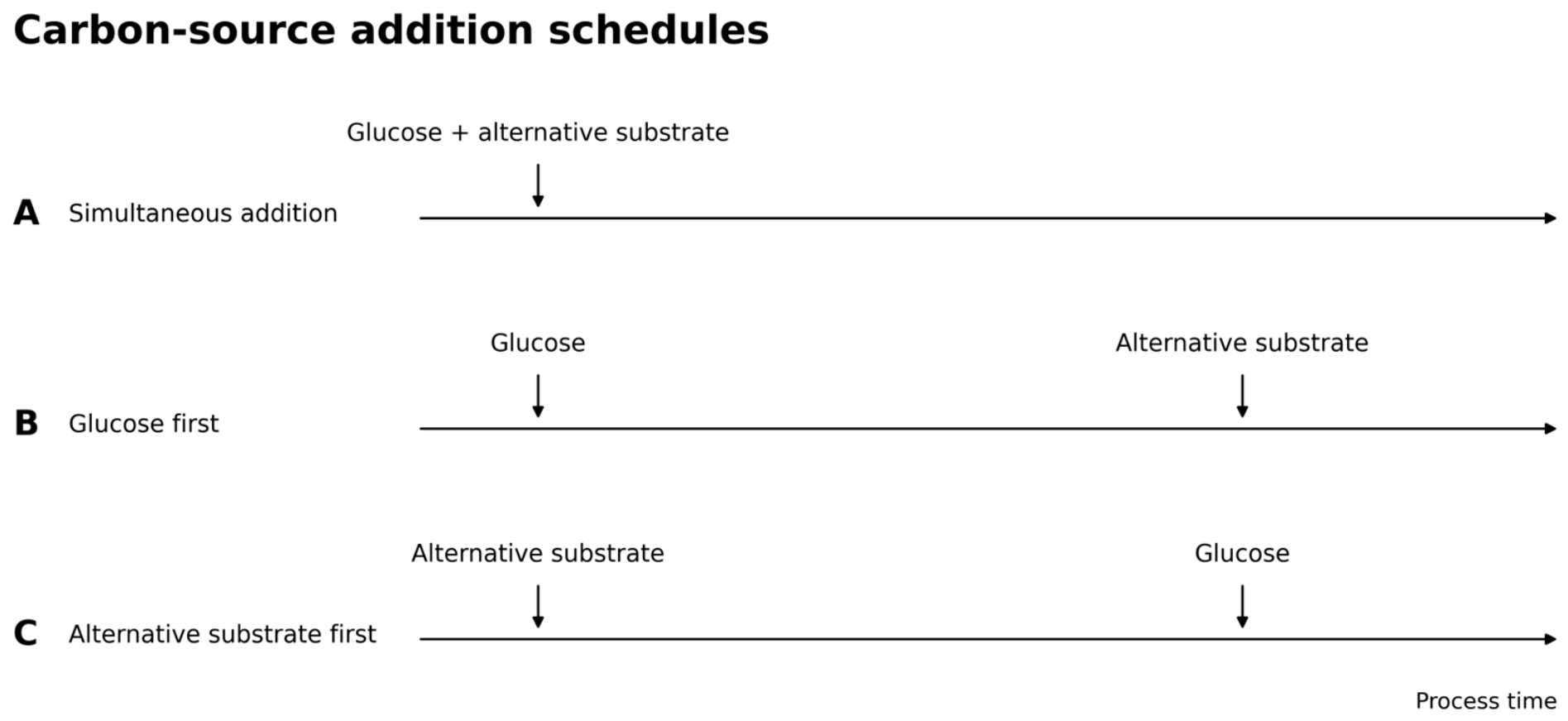
Disclaimer/Publisher’s Note: The statements, opinions and data contained in all publications are solely those of the individual author(s) and contributor(s) and not of MDPI and/or the editor(s). MDPI and/or the editor(s) disclaim responsibility for any injury to people or property resulting from any ideas, methods, instructions or products referred to in the content. |
© 2026 by the authors. Licensee MDPI, Basel, Switzerland. This article is an open access article distributed under the terms and conditions of the Creative Commons Attribution (CC BY) license.