


Abstract
Avocado peel (Persea americana Mill var. Hass) is an important source of bioactive compounds with antioxidant activity; however, once extracted from the peel, these compounds are susceptible to deterioration caused by environmental factors such as light, oxygen, and temperature and therefore require protection. The objective of this study was to extract and microencapsulate the bioactive compounds from avocado peel and evaluate their stability during storage. Extraction conditions were optimized using a Box–Behnken design, resulting in 65 °C, 40%V ethanol, and two sequential 60-min extractions. Microencapsulation was performed by spray drying using 10%W and 20%W gum arabic (GA) as wall material in the feed solution. The optimal drying conditions were 160/70 °C for 10%W GA and 170/80 °C for 20%W GA. Microcapsules containing 20%W GA showed greater retention and stability of bioactive compounds than those containing 10%W GA during 60 days of storage. At both GA concentrations, microcapsules stored at 4 °C showed greater stability than those stored at 30 °C. The results indicate that microencapsulated bioactive compounds extracted from avocado peel could be used in the food industry to develop functional foods or nutraceuticals.
1. Introduction
In recent years, interest in the development of functional foods obtained from natural sources has increased because, in addition to providing nutritional value, they offer additional health benefits [1,2].
Among the compounds of greatest interest are plant-derived bioactive compounds, also known as phytochemicals (e.g., phenolic acids, terpenes, flavonoids, and tannins), which are secondary plant metabolites. These compounds exhibit antioxidant, antimicrobial, anti-inflammatory, and other biological activities of interest to the food and pharmaceutical industries [3,4,5].
Fruits and vegetables are currently recognized as important sources of bioactive compounds; however, during their consumption and processing, only the pulp is generally consumed, generating by-products such as peels and seeds that are discarded even though they may contain higher amounts of bioactive compounds than the edible portion [6]. This is the case for avocado (Persea americana Mill var. Hass), one of the tropical fruits of greatest economic importance worldwide because of its extensive production [7].
Avocado is consumed mainly fresh; however, a substantial proportion of production is intended for industrial processing into oils, puree, guacamole, frozen cubes, and other derived products. Consequently, large amounts of agro-industrial waste are generated, mainly peel and seed, which account for approximately 30% of the total fruit weight. These by-products are commonly discarded, generating environmental problems and costs associated with their handling and final disposal [8,9].
Several studies have shown that avocado peel is an important source of phenolic compounds with notable biological activity, as it has a higher antioxidant content than the fruit pulp, even exceeding that of fresh blueberries [5,10,11].
Because of these characteristics, avocado peel has attracted interest as a raw material for obtaining bioactive compounds for potential incorporation into food products, since peel extracts have shown protective effects against oxidative stress and apoptosis in neuronal cell models [12,13].
Once extracted, these bioactive compounds are susceptible to degradation caused by several factors, including temperature, moisture, light, and oxygen [14]. These conditions may lead to losses in biological activity and antioxidant capacity; therefore, microencapsulation by spray drying has emerged as a strategy to protect bioactive compounds, because this technique allows the properties of the compounds to be preserved during processing and storage [15,16,17].
Although studies have focused on the extraction, identification, and quantification of bioactive compounds present in avocado peel, most have centered on evaluating their chemical composition and biological activity. Consequently, limited information is available on the protection of avocado peel bioactive compounds through spray-drying microencapsulation using gum arabic as the wall material.
Likewise, few studies have evaluated the stability of encapsulated bioactive compounds during storage, which is essential for determining their potential incorporation into functional foods.
Based on the above, the objective of this study was to extract bioactive compounds from avocado peel (Persea americana Mill var. Hass), microencapsulate them by spray drying using gum arabic as wall material, and evaluate the stability of the microencapsulated bioactive compounds during storage, analyzing the effect of wall material concentration on bioactive compounds retention, to assess its potential use in the development of functional foods and nutraceuticals.
2. Results and Discussion
2.1. Effect of Raw-Material Drying Temperature on the Concentration of Phenolic Compounds
Total phenolic compound (TPC) content was used as the response variable. The highest TPC concentration (43.31 mg GAE/gdw) was obtained in the sample dried at 40 °C for 24 h, representing a 5.64% increase relative to the control treatment dried at room temperature for 48 h (41.00 mg GAE/gdw).
In contrast, the sample dried at 50 °C for 24 h had a lower concentration (40.52 mg GAE/gdw) than the control, corresponding to 98.83% of the value observed in the latter. This result is consistent with the findings reported by Castillo-Zapata et al. [18], who indicated that the higher the drying temperature, the greater the decrease in phenolic compound content.
2.2. Extraction Under the Conditions Reported in Literature
The modifications made to the original method of Melgar et al. [19] (manual agitation every 10 min instead of constant agitation and a sample-to-solvent ratio of 1:10 instead of 1:25) resulted in the extraction of 91% of the phenolic compounds compared with the original method of Melgar et al. [19]. Therefore, for practical reasons, these modifications were adopted for the extraction of bioactive compounds from avocado peel in all subsequent stages of this study.
Because the phenolic compound content obtained using the modifications to the method of Melgar et al. [19], 21.90 mg GAE/gdw, was below the values reported by Salmerón-Ruíz [20], who reported 53.67 mg GAE/gdw, and Rodríguez-Carpena et al. [21], who reported 78.41 mg GAE/gdw, optimization of the extraction conditions was undertaken to maximize the recovery of phenolic compounds present in avocado peel.
2.3. Optimization of Extraction Conditions
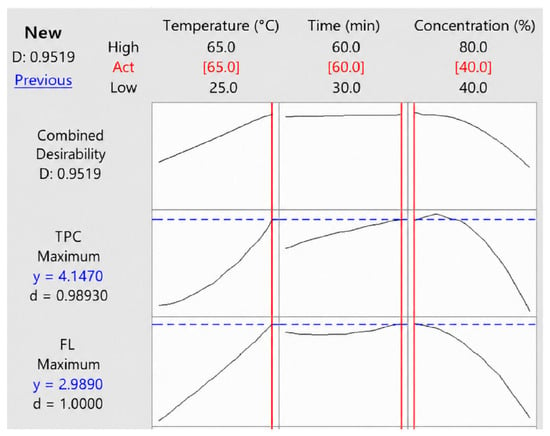
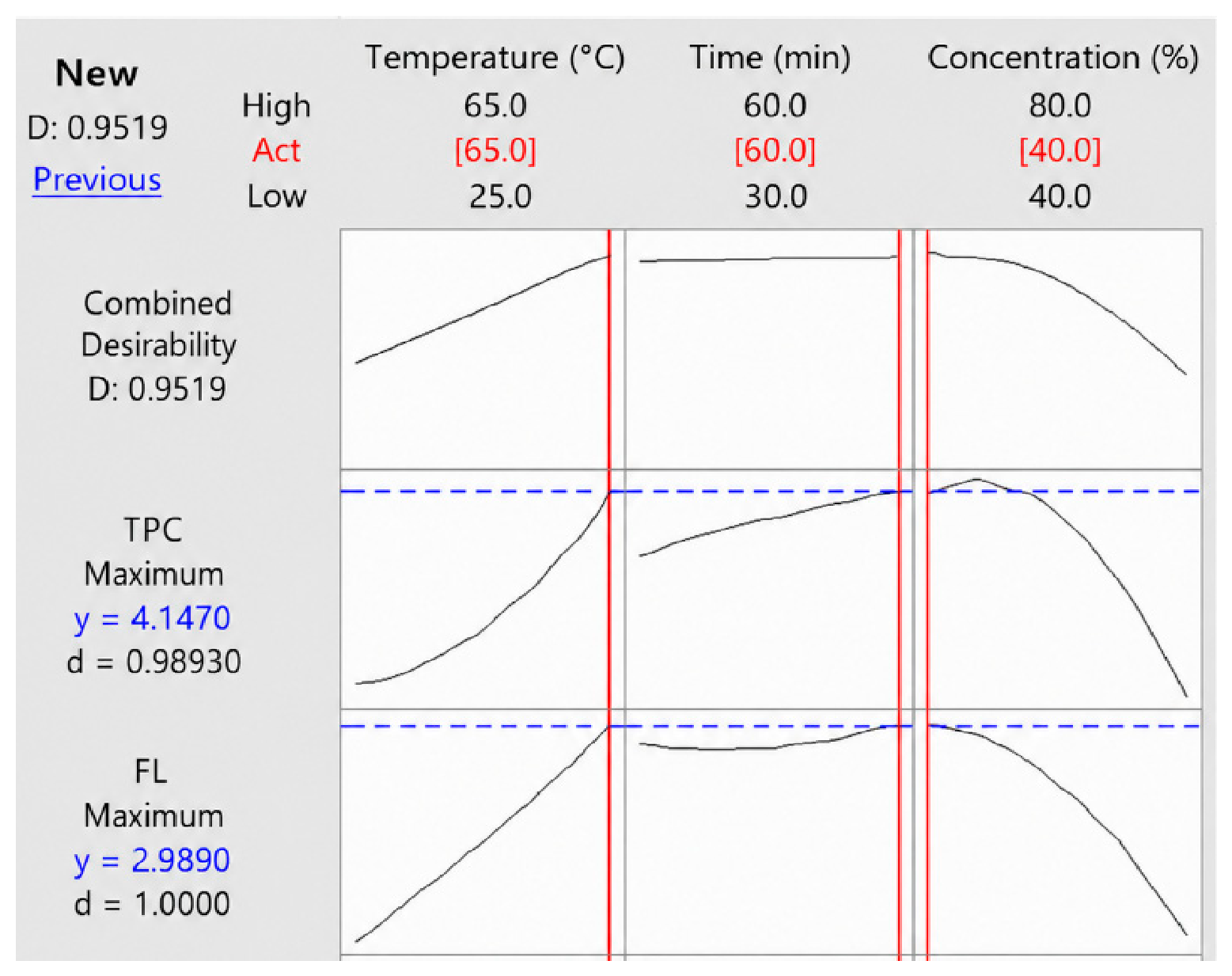
Optimization of the extraction conditions using the Box–Behnken experimental design established the following optimal conditions: a temperature of 65 °C, a time of 60 min, and an ethanol concentration of 40%V (Figure 1).
Figure 1.
Optimal extraction conditions using the Box–Behnken design.
Under these conditions, the highest recovery of phenolic compounds and flavonoids from avocado peel was obtained, with a composite desirability of 0.9519. According to Derringer and Suich [22] and Aguirre-Solís [23], a desirability close to 1 indicates a high probability of achieving the optimal conditions for maximizing the extraction of phenolic compounds and flavonoids.
Figure 1 also presents plots of the effects of temperature, ethanol concentration, and time on the extraction of phenolic compounds and flavonoids. As temperature increases and ethanol concentration decreases from 80%V to 40%V, the extraction of phenolic compounds and flavonoids increases. With respect to time, the response tends to remain nearly constant.
Once the optimal conditions had been determined through analysis of the experimental design, the values predicted by the model were compared with those obtained experimentally under these conditions. The results are presented in Table 1.
Table 1.
Comparison of experimental values with predicted values by the model of Hass avocado peel under optimal conditions.
As shown in this table, the values predicted by the model and the experimental values did not differ significantly, indicating that the model generated using Minitab 22 software provided a good representation of the experimental results.
2.4. Extraction Kinetics
Once the optimal extraction conditions had been obtained and verified, extraction kinetics were evaluated to determine whether two 60 min extractions, as established by the method originally adopted from Melgar et al. [19], were actually necessary. The results showed that two consecutive 1 h extractions recovered more than 90% of these compounds, with cumulative recoveries of 91.30% for TPC and values above 90% for FL. In the third extraction, an additional 5.61% recovery was observed for phenolic compounds, whereas an additional 6.24% was obtained for flavonoids. Because of the low recovery percentages obtained in this final stage, two consecutive 1 h extractions were selected, since they were sufficient to achieve efficient recovery of phenolic compounds and flavonoids (>90%), consistent with Melgar et al. [19], who suggest this number of extractions.
2.5. Characterization of Bioactive Compounds Present in Avocado Peel Using Optimal Extraction Conditions
Table 2 presents the results corresponding to the characterization of bioactive compounds present in Hass avocado peel obtained under optimal extraction conditions (65 °C, 60 min, and 40%V ethanol with two sequential extractions).
Table 2.
Bioactive compounds of Hass avocado peel under optimal extraction conditions.
TPC results (Table 2) are comparable to those reported in the literature. Tremocoldi et al. [24] reported 63.5 ± 7.2 mg GAE/g of freeze-dried peel; Salmerón-Ruíz [20] reported 53.67 mg GAE/gdw; and Rodríguez-Carpena et al. [21] reported 78.41 mg GAE/gdw. These variations may be attributed to differences in extraction conditions, the type of solvent used, and sample pretreatment, such as freeze-drying.
For flavonoids, direct comparisons with other studies were not possible because those studies used quercetin (QE), rather than catechin (CE), as the reference compound.
The content of condensed and hydrolyzable tannins obtained in this study (31.81 ± 1.69 mg CE/gdw, 13.47 ± 0.93 mg TA/gdw) was higher than that reported by Salmerón-Ruíz [20], who reported values of 1.63 ± 0.01 mg CE/gdw for condensed tannins and 5.79 ± 0.05 mg GAE/gdw for hydrolyzable tannins. These differences could be attributed to several factors, including soil nutrient availability and fruit maturity [25].
It has been reported that lower nitrogen availability favors the accumulation of condensed tannins, whereas hydrolyzable tannins tend to occur at higher concentrations when plants reach advanced stages of maturation or are subjected to stress conditions, acting as defense mechanisms [26,27]. Likewise, changes in tannin structure occur during ripening, with an increase in the degree of polymerization of condensed tannins as this process progresses [28].
Regarding antioxidant capacity, the values obtained (Table 2) using DPPH (433.77 ± 20.86 µmol TE/gdw) and ABTS (503.67 ± 13.21 µmol TE/gdw) were within the ranges reported in other studies. For ABTS, Kosińska et al. [10] reported lower values (161 µmol TE/gdw), whereas Tremocoldi et al. [24] reported higher values of 791.5 ± 35.9 µmol TE/gdw. For DPPH, the value obtained in the present study was higher than that reported by Tremocoldi et al. [24], who obtained 310 ± 36.9 µmol TE/gdw. These variations may be associated with factors such as fruit origin, growing conditions, maturity, storage, and the extraction conditions used [29].
2.6. Determination of Bioactive Compounds and Antioxidant Capacity of Concentrated Avocado Peel Extract
Because the extract contained 40%V ethanol, this solvent had to be removed by rotary evaporation. This step is essential to prevent the precipitation of the wall material during the preparation of the feed solution [30].
Table 3 presents the results obtained for the concentrated and unconcentrated extracts under the optimal extraction conditions, showing an increase in bioactive compound content due to ethanol evaporation.
Table 3.
Bioactive compounds and antioxidant capacity of optimized (unconcentrated) and concentrated extract.
The concentration of total phenolic compounds increased by 70% after the concentration process. Similarly, flavonoids increased by 89.13%, whereas hydrolyzable and condensed tannins increased by only 53.08% and 63.42%, respectively.
Likewise, antioxidant capacity increased by 50.22% and 66.02%, as determined by the DPPH and ABTS methods, respectively, which indicates that the antioxidant capacity determined by both methods is not directly related to phenol and flavonoid content, but probably to other compounds present in the extract, not determined in this work, and to CT and HT content, which showed similar percentage increment.
2.7. Optimization of the Spray-Drying Microencapsulation Process
Retention efficiency (%RE) and the content of bioactive compounds were determined in the microcapsules obtained under the different spray-drying conditions and wall-material concentrations (10%w and 20% w gum arabic).
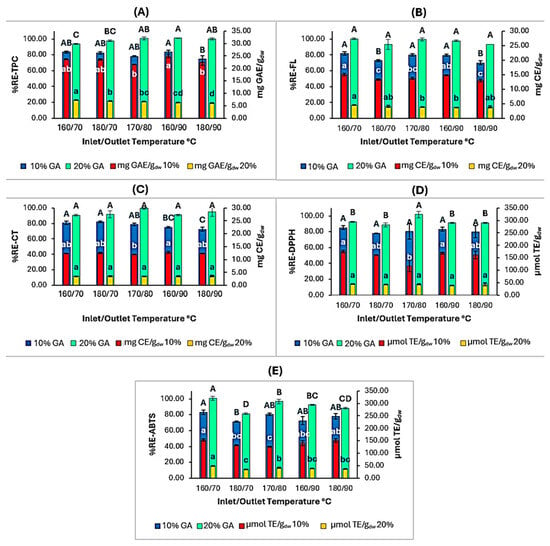
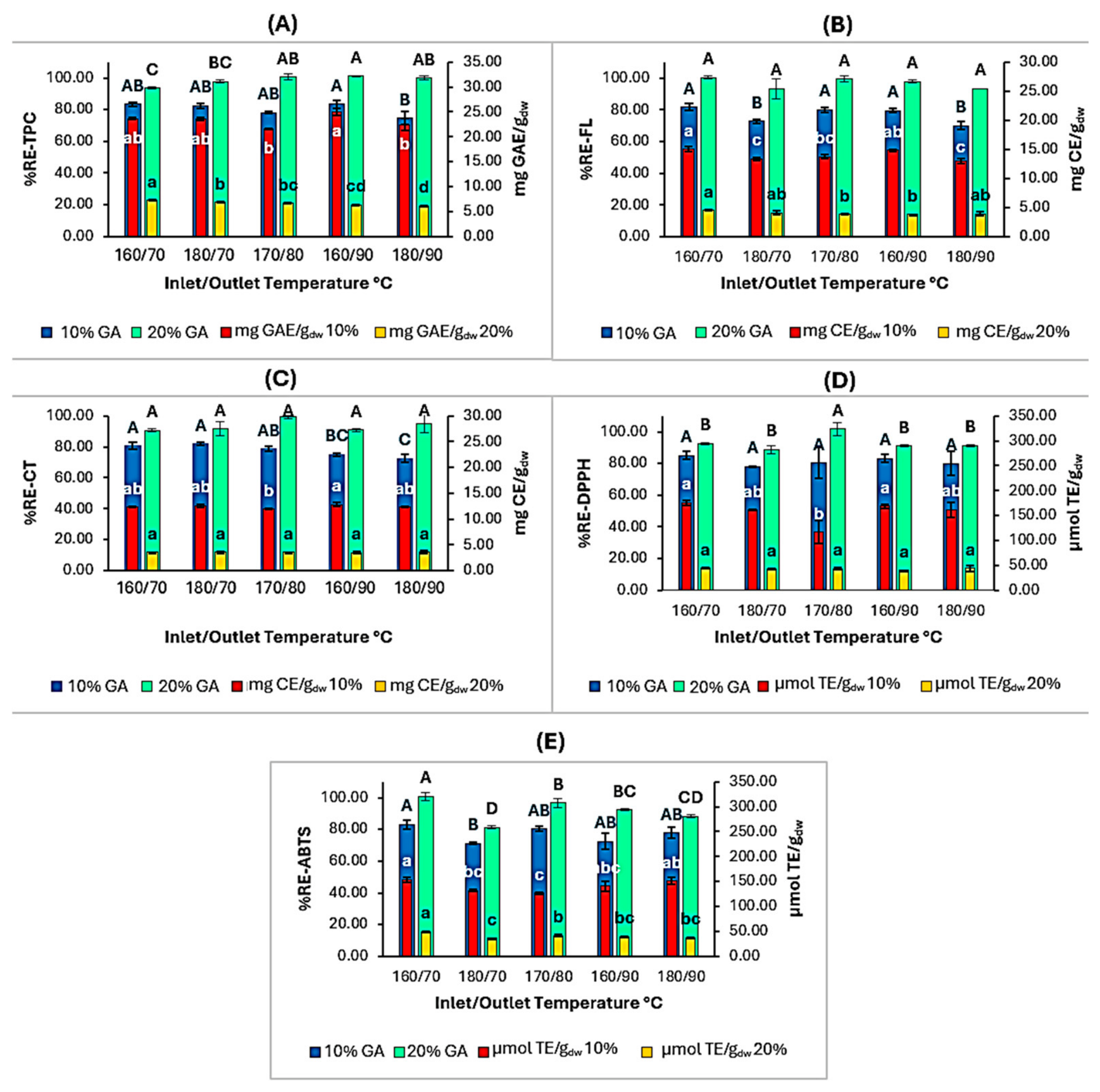
Figure 2 shows the %RE values and concentrations of total phenolic compounds (TPC), flavonoids (FL), condensed tannins (CT), and antioxidant capacity (DPPH and ABTS; see the Abbreviations section). It should be noted that results for hydrolyzable tannins (HT) are not presented because they were not detectable in the samples analyzed after drying. The possible reason for this could be thermal degradation during the drying process plus the needed dilution of the sample to precipitate the wall material in microcapsules before analysis, which could make them undetectable by the analytical method used. It has been reported that HT are more sensitive to thermal degradation than CT [31,32,33]. Carsote et al. [31] and Miranda et al. [32] mention that due to the lower stability of chemical bonds in HT, they can be fragmented at lower temperatures than CT; therefore, CT are thermally more stable than HT. Pizzi et al. [33] indicate that in raw extracts containing carbohydrates, HT degradation temperature starts at approximately 150 °C. Since the inlet drying air temperature used in this work was 160–180 °C, this could cause degradation of the HT in microcapsules to a level that made them undetectable by the analytical method used.
Figure 2.
Retention efficiency (%RE) and bioactive compound content of microcapsules with 10%W and 20%W gum arabic. (A) Total phenolic compounds (TPC); (B) total flavonoids (FL); (C) condensed tannins (CT); antioxidant activity by: (D) DPPH; (E) ABTS. Data are expressed as mean ± standard deviation. Different letters indicate a significant difference (p ≤ 0.05) between drying conditions. Blue uppercase letters indicate a significant difference between formulations with 10%W GA. Black uppercase letters compare formulations with 20%W GA. White lowercase letters indicate a significant difference in bioactive compound content for formulations with 10%W GA. Black lowercase letters compare formulations with 20%W GA. See the Abbreviations section.
As shown in Figure 2, in general, formulations prepared with 20%W gum arabic exhibited higher retention percentages for all compounds evaluated, whereas those formulated with 10%W showed higher concentrations of bioactive compounds, which is attributed to the smaller amount of wall material added.
The higher retention percentages of bioactive compounds observed in the microcapsules prepared with 20%W GA are due to the protective effect of a greater proportion of gum arabic during spray drying, favoring the formation of a more stable encapsulating barrier that limits exposure of the bioactive compounds to the thermal conditions of the process.
Considering all treatments, Figure 2 shows that, overall, drying conditions had little effect on the retention of bioactive compounds, although significant differences were observed under some drying conditions for specific bioactive compounds.
In some cases, retention values slightly higher than 100% were observed in some formulations, especially in those capsules obtained with 20%W GA. This could be due to the high inlet air temperatures used during the drying process, which could cause some phenolic compounds to be liberated from their conjugated form, increasing their reactivity to the Folin–Ciocalteu reagent. Similar results have been reported by Días et al. [34] and Toledo-Madrid et al. [35].
2.8. Optimal Spray-Drying Conditions for Avocado Peel Microcapsules
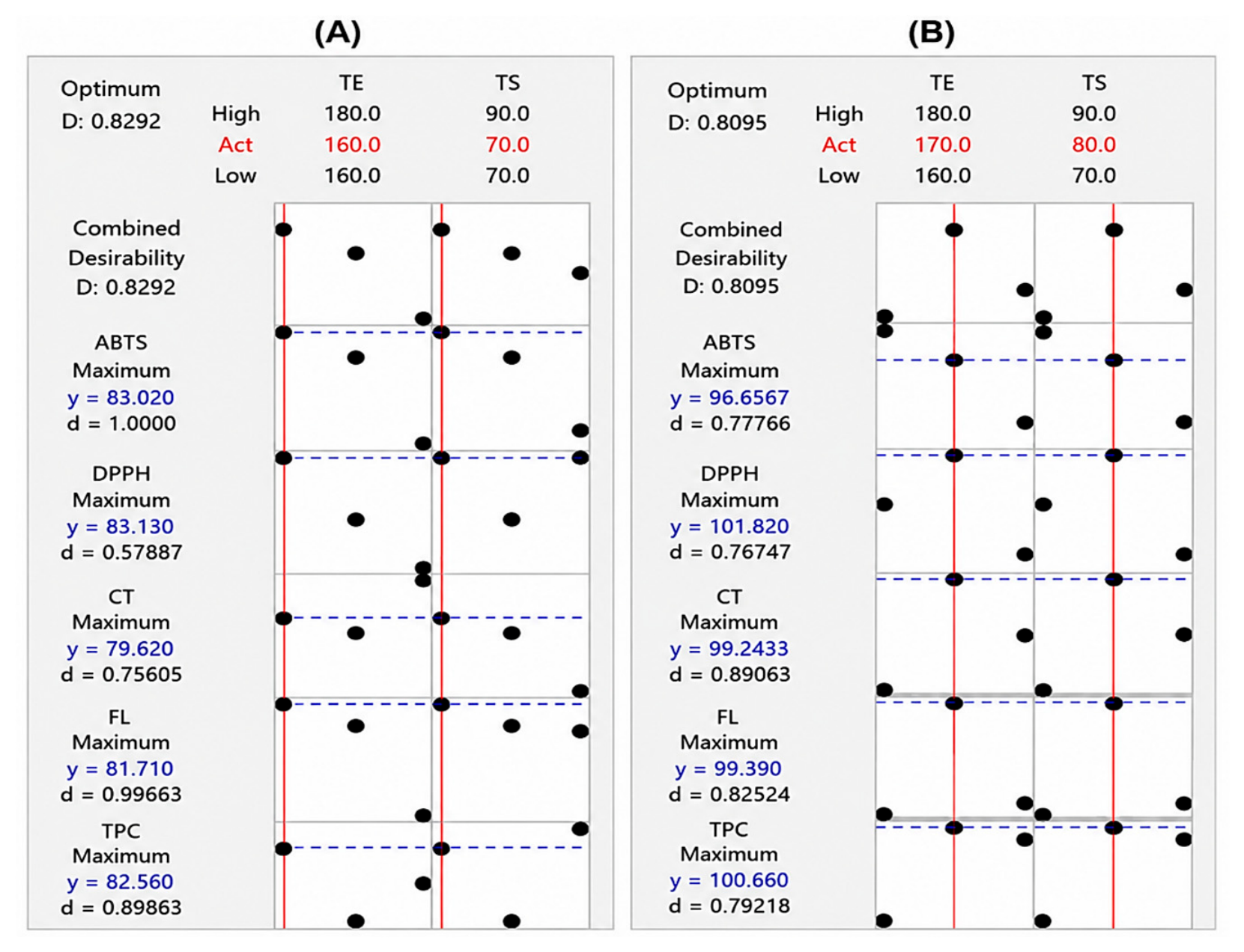
Figure 3 shows the optimal spray-drying conditions and the composite desirability plots obtained for formulations containing 10%W (A) and 20%W (B) gum arabic as the wall material.
Figure 3.
Optimal spray-drying conditions for microcapsules with 10%W (A) and 20%W (B) gum arabic.
In both cases, the optimization aimed to maximize antioxidant capacity and the content of phenolic compounds retained in Hass avocado peel microcapsules.
For the formulation containing 10%W GA (Figure 3A), the software predicted an inlet temperature of 160 °C and an outlet temperature of 70 °C as the optimal conditions, reaching a composite desirability of 0.8292. In contrast, for the formulation containing 20%W wall material (Figure 3B), the optimal conditions were an inlet temperature of 170 °C and an outlet temperature of 80 °C, with a composite desirability of 0.8095.
The differences in drying conditions between the two treatments may be attributed to the concentration of the wall material because a higher gum arabic content favors the formation of a more resistant wall during drying, allowing operation at slightly higher temperatures without compromising the stability of the bioactive compounds.
Table 4 shows the results predicted by the model and the values obtained experimentally under optimal drying conditions: 160/70 °C for 10%W GA and 170/80 °C for 20%W GA. As shown in this table, the predicted values were similar to those obtained experimentally, with no significant differences between them, indicating that the model was suitable for predicting optimal spray-drying conditions.
Table 4.
Comparison between predicted and experimental values for the retention of bioactive compounds and antioxidant capacity of microcapsules (10%W and 20%W of gum arabic, GA) obtained under optimal spray-drying conditions.
2.9. Characterization of Microcapsules Under Optimal Drying Conditions
2.9.1. Particle Size and Particle-Size Distribution
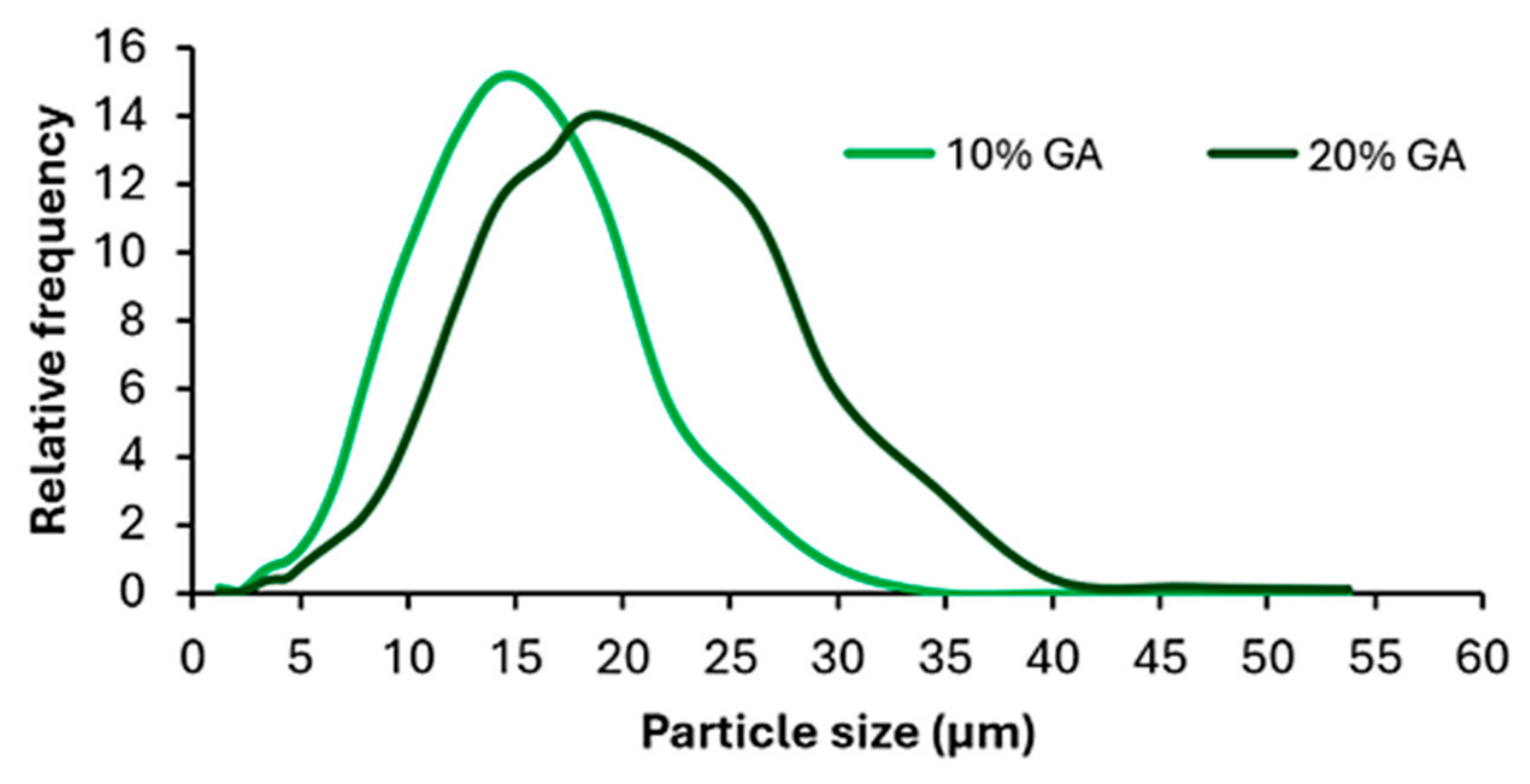
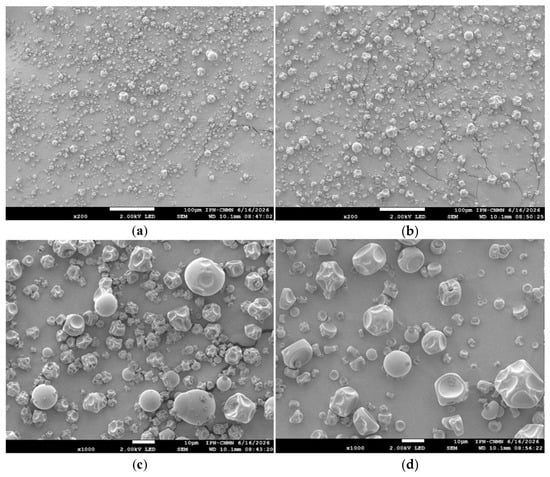
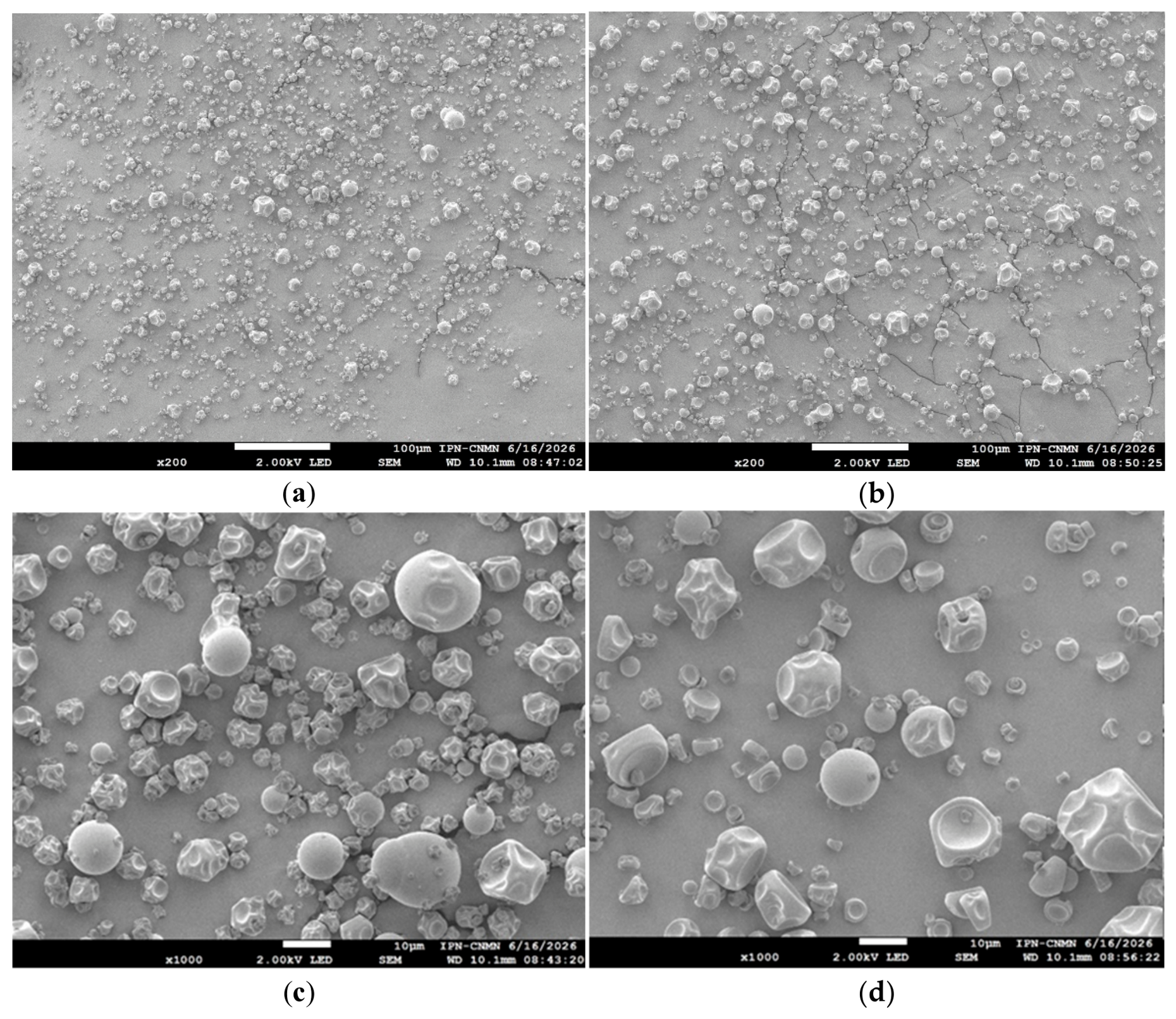
The particle-size distribution of the microcapsules obtained is shown in Figure 4. Increasing the gum arabic concentration from 10%W to 20%W shifted the distribution toward larger sizes and increased its breadth, indicating greater dispersion in particle size, which can also be observed in Figure 5a–d.
Figure 4.
Particle-size distribution of microcapsules.
Figure 5.
Scanning electron microscopy (SEM) micrographs of microcapsules. Microcapsules with 10%W GA: (a) 200×; (b) 1000×. Microcapsules with 20%W GA: (c) 200×; (d) 1000×.
Sauter diameter D [2,3] increased from 11.11 µm for 10%W GA to 14.96 µm for 20%W GA, whereas the equivalent sphere diameter D [3,4] increased from 13.56 to 18.35 µm, respectively. This behavior may be attributed to the increase in density and viscosity of the feed solution as the wall-material concentration increased [17]. Increased viscosity and density of the solution favor the formation of larger droplets during atomization, resulting in larger particles after drying [36,37].
2.9.2. Microcapsule Morphology
Figure 5 presents images of avocado extract microcapsules obtained by spray drying using scanning electron microscopy (SEM).
In the micrographs corresponding to the formulation containing 10%W gum arabic (Figure 5a,b), particles with surface deformations, such as wrinkles and shrunken surfaces, were observed, but with no evidence of fractures. These characteristics may be attributed to the drying conditions, since low or intermediate temperatures may lead to the formation of collapsed particles [38]. This phenomenon occurs when water diffuses from the interior of the particle through a wall that is more permeable to water vapor, allowing more time for the structures to deform, shrink, and ultimately collapse during the drying process [39].
In contrast, the micrographs corresponding to the formulation containing 20%W GA (Figure 5c,d) show a predominance of larger particles than those obtained with 10%W GA, consistent with the results in Figure 4. These particles also exhibited surface deformations, such as wrinkles and shrunken surfaces, but they were less pronounced than in microcapsules containing 10%W GA. This morphology is similar to that reported by other authors who microencapsulated bioactive compounds extracted from different fruits and vegetable residues [30,40,41]. The increase in particle size with wall material concentration is related to the increase in both the concentration of wall material and the viscosity of the solution fed to the dryer, which favors the formation of larger particles with greater structural stability during drying and a surface less permeable to water vapor, reducing wall collapse and producing more well-defined microcapsules [17,42,43].
2.9.3. Moisture Content and Water Activity (wa)
The moisture content of avocado peel extract microcapsules containing 10%W and 20%W GA ranged from 5.13 ± 0.305 to 5.53 ± 0.568%, values within the range reported for powders obtained by spray drying (1.50–9.55%) [44].
Water activity was low in both formulations, with values of 0.23 ± 0.009 for microcapsules prepared with 10%W gum arabic and 0.17 ± 0.003 for those prepared with 20%W gum arabic. These values are below the water activity of 0.3 reported for powders obtained by spray drying [45], which is considered favorable for maintaining product stability during storage [44]. Likewise, water activity values below 0.5 represent unfavorable conditions for microbial growth and development, contributing to the microbiological stability of the product [46].
2.9.4. Phenolic Compounds on the Surface of the Microcapsules
Using the technique applied, detectable results for surface phenolics were obtained only for avocado peel microcapsules containing 10%W GA. This behavior is consistent with the findings reported by Karamanoglu et al. [47], who stated that surface phenolic content decreases as the concentration of wall material increases.
The microcapsules formulated with 10%W GA had a TPC content of 0.376 mg GAE/gdw, corresponding to 1.39% of the phenolic compounds present in the microcapsules. These results indicate that the vast majority of the phenolic compounds retained in the microcapsules are protected within the encapsulating matrix.
Using Equation 2, the encapsulation efficiency (%E), relative to the phenolic compound content in the feed solution, was determined to be 83.28%.
For the microcapsules formulated with 20%W GA, the encapsulation efficiency was equal to or very close to the retention efficiency, indicating that virtually all of the retained compounds were encapsulated within the matrix.
2.10. Stability of Bioactive Compounds in Avocado Peel Microcapsules During Storage
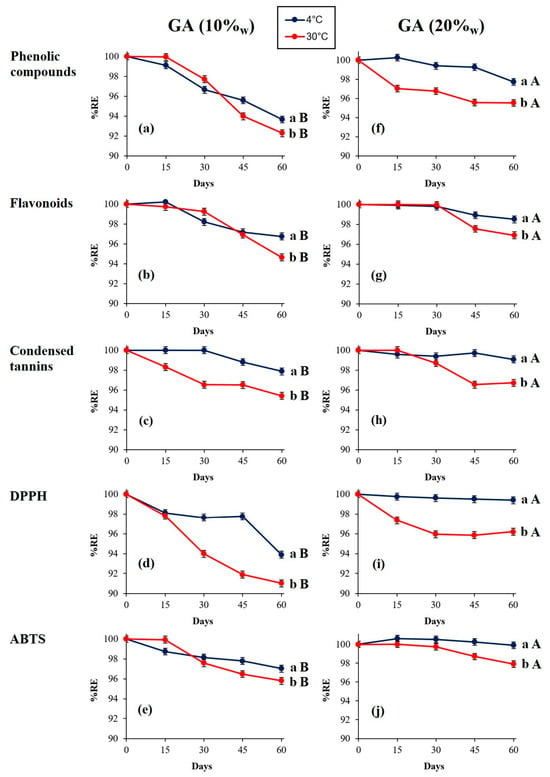
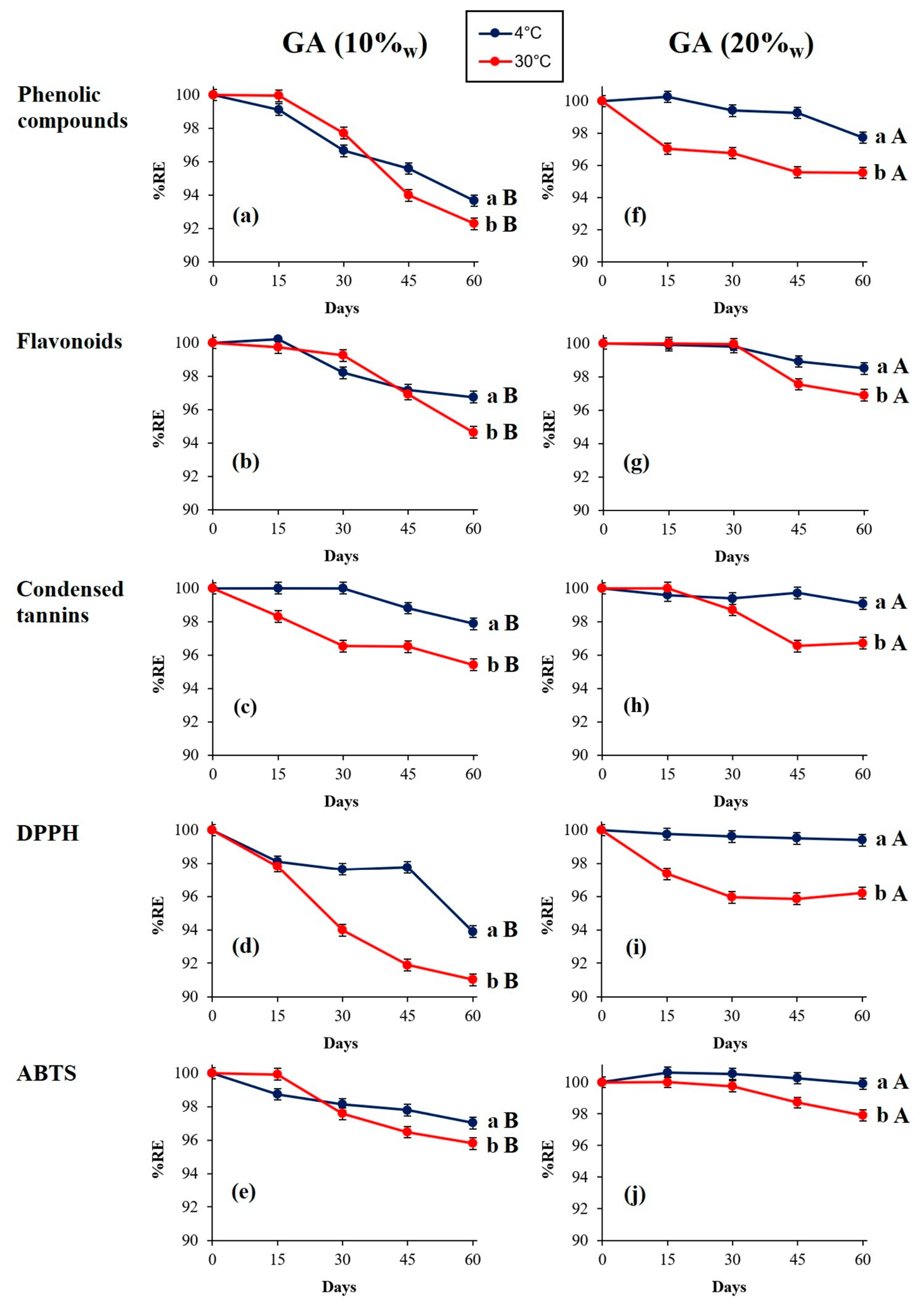
Figure 6a–f shows that microcapsules containing either 10%W or 20%W wall material and stored at 4 °C exhibited greater stability than those stored at 30 °C, demonstrating the effect of storage temperature on the bioactive compounds. A three-way ANOVA (gum arabic concentration, storage temperature, storage time) was performed; main effects and interaction effects on each bioactive compound and antioxidant capacity are in Figures S1–S5. Raw retention data at each sampling time-point are in Table S1.
Figure 6.
Retention efficiency (%RE) of bioactive compounds and antioxidant capacity of microcapsules with gum arabic (GA) at 10%w (a–e) and 20%w (f–j). Data are expressed as mean ± standard deviation. Means with different lowercase letters are significantly different (p ≤ 0.05) between temperatures for the same bioactive compound or antioxidant capacity at the same GA concentration. Means with different uppercase letters are significantly different (p ≤ 0.05) between GA concentrations for the same bioactive compound or antioxidant capacity at the same temperature.
Microcapsules containing 10%W GA stored at 30 °C showed the greatest losses of bioactive compounds. TPC showed losses of 6.34% at 4 °C and 7.72% at 30 °C, whereas flavonoids decreased by 3.26% and 5.37%, respectively.
Regarding antioxidant capacity evaluated by the DPPH method, the microcapsules showed greater decreases than those observed for phenolic compounds and flavonoids, with losses of 6.10% at 4 °C and 8.99% at 30 °C. In contrast, condensed tannins and antioxidant capacity measured by the ABTS assay showed smaller variations, with losses below 4.5% at both temperatures.
Microcapsules with 20%W gum arabic concentration enhanced the protection of bioactive compounds, reducing degradation at both storage temperatures. At 30 °C, compound losses increased, especially for phenolic compounds (4.46%); however, these losses were lower than those observed with 10%W GA.
The results obtained are consistent with previous studies reporting greater preservation of compounds in microencapsulated systems stored under refrigeration and formulated with different concentrations of gum arabic [17,48].
Finally, the results obtained during storage showed that 20%W GA at 4 °C was the most suitable condition for preserving bioactive compounds and antioxidant capacity in avocado peel microcapsules. However, in addition to retention percentage, the final concentration of bioactive compounds is important to consider because a higher wall-material content improves stability but reduces the concentration of the encapsulated bioactive compounds.
3. Materials and Methods
3.1. Reagents and Wall Material
Gallic acid, Trolox (6-hydroxy-2,3,7,8-tetramethylchroman-2-carboxylic acid), aluminum chloride, potassium iodate, vanillin, tannic acid, 2,2′-azino-bis (3-ethylbenzothiazoline-6-sulfonic acid) (ABTS), and 2,2-diphenyl-1-picrylhydrazyl (DPPH) were purchased from Sigma-Aldrich (St. Louis, MO, USA). The Folin–Ciocalteu reagent was obtained from Hycel Reactivos Químicos (Mexico City, Mexico). Sodium carbonate, sodium nitrite, ethanol, methanol, and hexane were obtained from Meyer (Mexico City, Mexico). Hydrochloric acid and sodium hydroxide were obtained from Materiales y Abastos Especializados (Zapopan, Jalisco, Mexico). Gum arabic was purchased from Reasol (Mexico City, Mexico).
3.2. Avocado Samples
Avocado fruits (Persea americana Mill var. Hass) were obtained from different retail sources located in Ecatepec de Morelos, State of Mexico, including the Central de Abastos and supermarkets. In addition, avocado peels were collected from food preparation establishments to obtain a representative sample of this waste. Avocado peels from the different sources were analyzed for phenolic compounds using the methodology proposed by Melgar et al. [19]. The variation was from 15 to 25 mg GAE/gdw depending on the source. Since most of the samples showed phenolic compound concentrations between 20 and 25 mg GAE/gdw, this range was adopted. Samples that complied with this criterion were mixed together to obtain a representative sample for bioactive compounds extraction.
3.3. Sample Preparation
Avocado peels were selected, cleaned, and washed with abundant water. Excess moisture was removed with absorbent paper, and the peels were subsequently stored in airtight bags at −20 °C until use.
Before processing, the samples were thawed at room temperature. Thawed peels were cut into approximately 1 × 1 cm pieces and subjected to three drying treatments to evaluate the effect of raw-material drying on the extraction of bioactive compounds: (a) room temperature (27 °C ± 2 °C) for 48 h; (b) 40 °C in an oven (JEIO.TECH, OV-12, Waltham, MA, USA) for 24 h; and (c) 50 °C in an oven (JEIO.TECH, OV-12, Waltham, MA, USA) for 24 h.
The dried samples were ground using a food processor (Magic Bullet, MB1001, Los Angeles, CA, USA), and the resulting powder was sieved through a No. 20 mesh (850 µm). Finally, the samples were collected, labeled, and stored in airtight bags at −20 °C until use.
3.4. Extraction of Bioactive Compounds
Avocado peel extracts were obtained using the methodology proposed by Melgar et al. [19] with a ratio of 1 g of dry sample to 25 mL of ethanol (80%V), two sequential 1 h extractions at 25 °C, and constant agitation (150 rpm). These conditions were modified by using a sample-to-solvent ratio of 1:10, and constant agitation was replaced by manual agitation every 10 min during the extraction process.
Each extraction lasted 60 min, after which the samples were centrifuged at 3500 rpm for 15 min. The recovered supernatant was retained, and the solid residue was subjected to a second extraction under the same conditions. The supernatants obtained from both extractions were then combined and centrifuged again at 3500 rpm for 15 min. Finally, the extract was stored under refrigeration in amber glass bottles.
3.5. Optimization of Extraction Conditions
Extraction was optimized using a Box–Behnken experimental design. Due to the wide variability of extraction conditions for avocado peel bioactive compounds reported in the literature, including ethanol concentration (80%v to 40%v), temperature (25 °C to 65 °C) and extraction time (30 min–60 min) [19,24,49,50], the variables considered for the optimization at two different levels (low and high) were: temperature (25 °C and 65 °C), time (30 min and 60 min), and ethanol concentration (40%V and 80%V).
The experimental design was performed using MINITAB 22 software with a 95% confidence level and five replicates at the center point, yielding an experimental matrix of 17 runs shown in Table 5. The response variables were total phenolic compounds and flavonoids.
Table 5.
Box–Behnken experimental matrix.
Once the optimal extraction conditions were obtained, extraction kinetics were evaluated over five consecutive extractions to determine the number of sequential extractions required to recover at least 90% of phenolic compounds and flavonoids.
3.6. Analytical Methods
3.6.1. Total Phenolic Compounds (TPC)
TPC was determined using the Folin–Ciocalteu method described by Singleton and Rossi [51]. Sample absorbance was read at 750 nm (Jenway 6305, Long Branch, NJ, USA). The standard curve was prepared with gallic acid (0.01–0.2 mg/mL). For the extract, results were expressed as mg gallic acid equivalents per gram of extract (mg GAE/gext), and for the microcapsules as mg gallic acid equivalents per gram of dry weight (mg GAE/gdw).
3.6.2. Determination of Flavonoids (FLs)
FLs were determined using the colorimetric method described by Zhishen et al. [52]. Sample absorbance was read at 510 nm (Jenway 6305, Long Branch, NJ, USA). The standard curve was prepared with catechin (0.03–0.3 mg/mL). For the extract, results were expressed as mg catechin equivalents per gram of extract (mg CE/gext), and for the microcapsules as mg catechin equivalents per gram of dry weight (mg CE/gdw).
3.6.3. Determination of Condensed Tannins (CTs)
CTs were determined using the method of Sun et al. [53]. Sample absorbance was read at 500 nm (Jenway 6305, Long Branch, NJ, USA). The standard curve was prepared with catechin (0.015–0.120 mg/mL). For the extract, results were expressed as mg catechin equivalents per gram of extract (mg CE/gext), and for the microcapsules as mg catechin equivalents per gram of dry weight (mg CE/gdw).
3.6.4. Determination of Hydrolyzable Tannins (HTs)
HTs were determined using the method proposed by Çam and Hışıl [54]. Sample absorbance was read at 550 nm (Jenway 6305, Long Branch, NJ, USA). The standard curve was prepared with tannic acid (0.25–2.0 mg/mL). For the extract, results were expressed as mg tannic acid equivalents per gram of extract (mg TA/gext), and for the microcapsules as mg tannic acid equivalents per gram of dry weight (mg TA/gdw).
3.6.5. Determination of Antioxidant Capacity (AC)
AC was determined using two free-radical inhibition methods (DPPH and ABTS). For the DPPH method, the methodology proposed by Brand-Williams et al. [55] was followed: sample absorbance was read at 515 nm (Jenway 6305, Long Branch, NJ, USA). The standard curve was prepared with Trolox, 4 mM (40–1200 µmol). For the ABTS method, the methodology proposed by Re et al. [56] was followed: sample absorbance was read at 734 nm (Jenway 6305, Long Branch, NJ, USA). The standard curve was prepared with Trolox, 7 mM (50–2000 µmol). For both methods, results were expressed as micromoles of Trolox equivalents per gram of extract (µmol TE/gext) for the extract and as micromoles of Trolox equivalents per gram of dry weight (µmol TE/gdw) for the microcapsules.
3.7. Microencapsulation
The hydroalcoholic avocado peel extract was subjected to evaporation to remove ethanol because its presence causes precipitation of the wall material (gum arabic) upon incorporation. Evaporation was carried out in a rotary evaporator (BUCHI, R-300, Flawil, Switzerland) at 120 rpm, 40 °C, and 77 mBar.
A 30%W gum arabic solution in distilled water (w/w) was subsequently prepared. The mixture was homogenized and allowed to stand for 12 h to remove air trapped in the solution. A mass balance was then performed using this solution to calculate the amounts of gum arabic and concentrated extract (resulting from ethanol evaporation) required to adjust the wall-material concentration to 10%W and 20%W in the feed solution intended for spray drying.
The microencapsulation process was carried out using a semi-pilot spray dryer (GEA-NIRO Atomizer, Mobile Minor, Copenhagen, Denmark), which was equipped with a two-fluid spraying nozzle and a cyclone separator to gather the powder. The air spraying pressure was 0.5 kgf/cm2. Microencapsulation was performed at different inlet and air temperatures according to the experimental design mentioned in the next section. The powders obtained (microcapsules) were stored at −20 °C until analysis.
3.7.1. Optimization of Spray-Drying Operating Conditions
Optimization was carried out using a factorial experimental design 22 with three replicates at the center point. The variables evaluated in this design were inlet temperature (160 °C and 180 °C) and outlet temperature (70 °C and 90 °C). These conditions were selected based on previous reports on spray drying microencapsulation of bioactive compounds from other agro-industrial waste [35,41,57].
This analysis was performed independently for the two wall-material concentrations (10%W and 20%W). The response variables were the retention efficiency (%RE) of TPC, FL, CT, HT, and AC (DPPH, ABTS). %RE was calculated using Equation (1).
3.7.2. Characterization of Microcapsules Under Optimal Drying Conditions
Microcapsules were reconstituted in water to the same solids content as the feed solution. Subsequently, for the determination of TPC, FL, CT, HT, and AC, the wall material had to be removed by ethanol precipitation to prevent interference from gum arabic in the measurements [41].
To precipitate the wall material, 1 mL of either the feed solution or the reconstituted microcapsules, as appropriate, was mixed with 1 mL of distilled water. From this mixture, 1 mL was taken, and 1.5 mL of absolute ethanol was added. The mixture was centrifuged (DESEGO, mCV-8, Mexico City, Mexico) at 10,000 rpm for 15 min, and the liquid phase was separated for analysis. This wall material precipitation method was validated against the theoretical content of each bioactive compound in the solution to be dried, based on the bioactive compound content in the concentrated extract of Table 3 and the amount of this solution required to prepare the drying solution for each wall material concentration.
3.7.3. Determination of Surface Phenolic Compounds and Encapsulation Efficiency
The content of surface phenolic compounds was used as an indicator of the bioactive compounds present on the surface of the microcapsules, following the methodology proposed by Robert et al. [58]. Two grams of microcapsules were weighed, and 2 mL of a methanol:ethanol solution (1:1) was added. The mixture was then vortexed (Cole-Parmer 4554-10, Vernon Hills, IL, USA) for 1 min and subsequently vacuum-filtered (Whatman No. 1). Finally, the filtrate was analyzed to determine TPC. The encapsulation efficiency was determined using Equation (2):
3.7.4. Moisture Content and Water Activity (aw)
Moisture content was determined using a moisture analyzer (OHAUS MB23, Mexico City, Mexico) at 100 °C for 15 min. Water activity (aw) was measured using an AquaLab Cx-3 (Decagon, Pullman, WA, USA).
3.7.5. Particle Size and Particle-Size Distribution
The particle size and particle-size distribution of the microcapsules were determined using a Malvern laser-diffraction particle-size analyzer (IM 026 2006, Malvern, UK), with a 100 mm lens and hexane as the dispersing fluid.
3.7.6. Microcapsule Morphology
Particle morphology was analyzed using a field-emission scanning electron microscope (FE-SEM, JEOL-JSM-7800F, Tokyo, Japan) operated at an accelerating voltage of 2 kV. Images were obtained at magnifications of 200× and 1000×. The analysis was performed at the Centro de Nanociencias y Micro y Nanotecnologías del Instituto Politécnico Nacional (CNMN-IPN).
3.7.7. Stability of Bioactive Compounds of Microcapsules During Storage
Storage was carried out for 60 days at 4 °C and 30 °C. TPC, FL, CT, HT, and AC were analyzed every 15 days. Results were expressed as retention percentages based on the initial content (day 0) of bioactive compounds.
For storage, 3 g of microcapsules were weighed into amber bottles, which were labeled according to the analysis date (two bottles per date, independent replicates). The bottles were then closed and sealed with Parafilm to prevent moisture absorption. Analysis of each bioactive compound was performed in triplicate for each bottle every 15 days during storage, and the results were averaged.
3.8. Statistical Analysis
Results were evaluated by one-way analysis of variance (ANOVA), followed by comparison of means using Tukey’s test (p ≤ 0.05) with Minitab 22 software (Minitab, Inc., State College, PA, USA). Also, a three-way ANOVA (gum arabic concentration, storage temperature, and storage time) was performed to evaluate the main effects and interactions regarding each bioactive compound and antioxidant capacity during storage.
4. Conclusions
Optimal extraction conditions obtained with the Box–Behnken design were 65 °C, 40%V ethanol, and 60 min, with two sequential extractions and agitation every 10 min, which allowed for recovery of more than 90% of the bioactive compounds present in avocado peel.
Regarding the optimization of spray drying, the optimal conditions were 160/70 °C (inlet/outlet temperature) for formulations containing 10%W gum arabic and 170/80 °C for those containing 20%W. Microcapsules formulated with 20%W gum arabic showed greater retention of phenolic compounds and antioxidant capacity, as well as greater stability during storage, particularly at 4 °C. However, increasing the wall-material concentration also reduced the concentration of phenolic compounds; therefore, selection of the most appropriate formulation will depend on the intended use of the potential functional food product. Thus, formulations with a lower wall-material concentration (10%W) may be preferable for products with a short shelf life under refrigeration because of their higher initial concentration of bioactive compounds, whereas formulations with a higher wall-material concentration (20%W) may be more suitable for products with a long shelf life at room temperature.
Finally, considering the retention of bioactive compounds as well as stability during storage, it can be concluded that microcapsules obtained by spray drying avocado peel extract could represent a promising alternative for use in the development of functional foods and nutraceuticals.
In future work, HPLC analysis will be performed on both the concentrated extract and microcapsules to identify the main bioactive compounds that were retained during the microencapsulation process, and not only as total phenolic compounds and flavonoids, as done in the present work. Also, although the total solids content in the concentrated extract is very low (about 1%W), efforts will be made to obtain the extract in powder form, probably by spray or freeze drying, to compare it with microcapsules during storage under the same conditions and in simulated digestion to evaluate the bioaccessibility of bioactive compounds in the extract and microcapsules.
Supplementary Materials
The following supporting information can be downloaded at: https://www.mdpi.com/article/10.3390/molecules31213821/s1, Figure S1: Main effects plot for phenolic compounds. Figure S2: Main effects plot for flavonoids. Figure S3: Main effects plot for tannins. Figure S4: Main effects plot for DPPH. Figure S5: Main effects plot for ABTS. Table S1: Raw storage data.
Author Contributions
Conceptualization: A.T.L.-C. and G.O.-R.; Methodology: A.T.L.-C., O.G.M.-M., G.O.-R., T.G.-V. and O.A.R.-M.; Formal Analysis: O.G.M.-M., G.O.-R., T.G.-V. and O.A.R.-M.; Investigation: A.T.L.-C.; Resources: G.O.-R.; Writing—Original Draft Preparation: A.T.L.-C. and O.G.M.-M.; Writing—Review & Editing: O.G.M.-M. and G.O.-R.; Visualization: G.O.-R.; Supervision: G.O.-R.; Project Administration: G.O.-R.; Funding Acquisition: G.O.-R. All authors have read and agreed to the published version of the manuscript.
Funding
A.T.C.-L. wishes to express her gratitude to Secretaría de Ciencia, Humanidades, Tecnología e Innovación (Secihti) for the scholarship they provided (number 1351011).
Institutional Review Board Statement
Not applicable.
Informed Consent Statement
Not applicable.
Data Availability Statement
The original contributions presented in the study are included in the article; further inquiries can be directed to the corresponding author.
Acknowledgments
Secretaría de Investigación y Posgrado-Instituto Politécnico Nacional (SIP-IPN), Centro de Nanociencias y Micro y Nanotecnologías (CNMN-IPN) and the Secretaría de Ciencia, Humanidades, Tecnología e Innovación (Secihti).
Conflicts of Interest
The authors declare no conflicts of interest.
Abbreviations
The following abbreviations are used in this manuscript:
| GA | Gum arabic |
| ABTS | 2,2′-Azino-bis (3-ethylbenzothiazoline-6-sulfonic acid |
| DPPH | 2,2-Diphenyl-1-picrylhydrazyl |
| TPC | Total phenolic compounds |
| FL | Flavonoid |
| CT | Condensed tannin |
| HT | Hydrolyzable tannin |
| AC | Antioxidant capacity |
| %RE | Retention efficiency |
| GAE | Gallic acid equivalents |
| CE | Catechin equivalents |
| TA | Tannic acid |
| µmol TE | Micromol of Trolox equivalents |
References
- Jadhav, H.B. Functional Triacylglycerols from Microalgae and Their Use in the Formulation of Functional Foods—Review. Food Chem. Adv. 2024, 4, 100695. [Google Scholar] [CrossRef] [Scilit]
- Mondal, D.; Awana, M.; Mandal, S.; Pandit, K.; Singh, A.; Syeunda, C.O.; Thandapilly, S.J.; Krishnan, V. Functional Foods with a Tailored Glycemic Response Based on Food Matrix and Its Interactions: Can It Be a Reality? Food Chem. 2024, 22, 101358. [Google Scholar] [CrossRef] [Scilit] [PubMed]
- Gasaly, N.; Riveros, K.; Gotteland, M.; Gasaly, N.; Riveros, K.; Gotteland, M. Fitoquímicos: Una Nueva Clase de Prebióticos. Rev. Chil. Nutr. 2020, 47, 317–327. [Google Scholar] [CrossRef] [Scilit]
- Urrialde, R.; Gómez-Cifuentes, A.; Pintos, B.; Gómez-Garay, M.A.; Cifuentes, B. Compuestos Bioactivos de Origen Vegetal: Desarrollo de Nuevos Alimentos. Nutr. Hosp. 2022, 39, 8–11. [Google Scholar] [PubMed]
- Zaldivar-Ortega, A.K.; Barrera-Jiménez, J.A.; Cenobio-Galindo, A.d.J.; Pérez-Soto, E.; Franco-Fernández, M.J.; Campos-Montiel, R.G. Potencial uso de la cáscara y semilla de aguacate como fuente de compuestos bioactivos con actividades funcionales para un desarrollo sustentable. Bol. Cienc. Agropecu. ICAP. 2023, 9, 30–33. [Google Scholar] [CrossRef] [Scilit]
- Cid-Pérez, T.S.; Hernández-Carranza, P.; Ochoa-Velasco, C.E.; Ruiz-López, I.I.; Nevárez-Moorillón, G.V.; Ávila-Sosa, R. Avocado seeds (Persea americana cv. Criollo sp.): Lipophilic compound profile and biological activities. Saudi J. Biol. Sci. 2021, 28, 3384–3390. [Google Scholar] [CrossRef] [Scilit] [PubMed]
- Muhammad, D.R.A.; Ayouaz, S.; Rachmawati, A.N.; Madani, K.; Fibri, D.L.N.; Rafi, M.; Julianti, E.; Fahmy, K. Advanced and Potential Methods for Extraction of Bioactive Compounds from Avocado Peel—A Review. Appl. Sci. 2024, 14, 6018. [Google Scholar] [CrossRef] [Scilit]
- Avila, N.d.D.; Tirado-Gallegos, J.M.; Rios-Velasco, C.; Esquivel, G.L.; Virgen, M.O.E.; Campos, O.J.C. Propiedades composicionales, estructurales y fisicoquímicas de las semillas de aguacate y sus potenciales usos agroindustriales. Cienc. Tecnol. Agropecu. 2023, 24, 1–24. [Google Scholar] [CrossRef] [Scilit]
- Salazar-López, N.J.; Domínguez-Avila, J.A.; Yahia, E.M.; Belmonte-Herrera, B.H.; Wall-Medrano, A.; Montalvo-González, E.; González-Aguilar, G.A. Avocado Fruit and By-Products as Potential Sources of Bioactive Compounds. Food Res. Int. 2020, 138, 109774. [Google Scholar] [CrossRef] [Scilit] [PubMed]
- Kosińska, A.; Karamać, M.; Estrella, I.; Hernández, T.; Bartolomé, B.; Dykes, G.A. Phenolic Compound Profiles and Antioxidant Capacity of Persea americana Mill. Peels and Seeds of Two Varieties. J. Agric. Food Chem. 2012, 60, 4613–4619. [Google Scholar] [CrossRef] [Scilit] [PubMed]
- Velderrain-Rodríguez, G.R.; Quero, J.; Osada, J.; Martín-Belloso, O.; Rodríguez-Yoldi, M.J. Phenolic-Rich Extracts from Avocado Fruit Residues as Functional Food Ingredients with Antioxidant and Antiproliferative Properties. Biomol. 2021, 11, 977. [Google Scholar] [CrossRef] [Scilit] [PubMed]
- Nascimento, A.P.S.; Duarte, M.E.M.; Rocha, A.P.T.; Barros, A.N. Valorization of Avocado (Persea americana) Peel and Seed: Functional Potential for Food and Health Applications. Antioxidants 2025, 14, 1032. [Google Scholar] [CrossRef] [Scilit] [PubMed]
- Nyakang’i, C.O.; Ebere, R.; Marete, E.; Arimi, J.M. Avocado production in Kenya in relation to the world, Avocado by-products (seeds and peels) functionality and utilization in food products. App. Food Res. 2023, 3, 100275. [Google Scholar] [CrossRef] [Scilit]
- Laureanti, E.J.G.; Paiva, T.S.; de Matos Jorge, L.M.; Jorge, R.M.M. Microencapsulation of Bioactive Compound Extracts Using Maltodextrin and Gum Arabic by Spray and Freeze-Drying Techniques. Int. J. Biol. Macromol. 2023, 253, 126969. [Google Scholar] [CrossRef] [Scilit] [PubMed]
- Ortiz Sánchez, C.A.; Bonilla Zavaleta, E.; Urrea García, G.R.; Luna Solano, G.; Rascón Díaz, M.P. Krill oil microencapsulation: Antioxidant activity, astaxanthin retention, encapsulation efficiency, fatty acids profile, in vitro bioaccessibility and storage stability. LWT 2021, 147, 111476. [Google Scholar] [CrossRef] [Scilit]
- Zafar, T.; Sidhu, J.S. Avocado: Production, Quality, and Major Processed Products. In Handbook of Vegetables and Vegetable Processing, 1st ed.; Sinha, N., Ed.; John Wiley & Sons: New York, NY, USA, 2011; Volume 1, pp. 525–543. [Google Scholar]
- Quiroz Zarco, J.E.; Meza-Márquez, O.G.; Osorio-Revilla, G.; Gallardo-Velázquez, T.; Ramos-Monroy, O.A. Stability of Phytochemical Compounds and Antioxidant Capacity of Garambullo (Myrtillocactus geometrizans) Extract Microencapsulated with Different Concentrations of Wall Material (Gum Arabic) During Storage and In Vitro Digestion. Foods 2026, 15, 2900. [Google Scholar] [CrossRef] [Scilit] [PubMed]
- Castillo-Zapata, K.C.; Reyes-Diaz, J.D.; Cornelio-Santiago, H.P.; Espinoza-Espinoza, L.A.; Valdiviezo-Marcelo, J.; Ruiz-Flores, L.A. Efecto del secado con aire caliente en el contenido de fenólicos totales y capacidad antioxidante de la cáscara de pitahaya roja (Hylocereus guatemalensis). Rev. Investig. Univ. Cordon Bleu 2024, 11, 97–106. [Google Scholar] [CrossRef] [Scilit]
- Melgar, B.; Dias, M.I.; Ciric, A.; Sokovic, M.; Garcia-Castello, E.M.; Rodriguez-Lopez, A.D.; Barros, L.; Ferreira, I.C.R.F. Caracterización Bioactiva de Los Subproductos de Persea americana Mill.: Una Rica Fuente de Antioxidantes Inherentes. Ind. Crops Prod. 2018, 111, 212–218. [Google Scholar]
- Salmerón-Ruíz, M. Fracción Indigestible, Bioaccesibilidad In Vitro y Actividad Antioxidante, de Compuestos Fenólicos de la Cáscara de Aguacate cv. ‘Hass’. Master’s Thesis, Centro de Investigación en Alimentación y Desarrollo, Hermosillo, Sonora, Mexico, 2014. [Google Scholar]
- Rodríguez-Carpena, J.-G.; Morcuende, D.; Andrade, M.-J.; Kylli, P.; Estévez, M. Avocado (Persea americana Mill.) Phenolics, in Vitro Antioxidant and Antimicrobial Activities, and Inhibition of Lipid and Protein Oxidation in Porcine Patties. J. Agric. Food Chem. 2011, 59, 5625–5635. [Google Scholar] [CrossRef] [Scilit] [PubMed]
- Derringer, G.; Suich, R. Simultaneous Optimization of Several Response Variables. J. Qual. Technol. 1980, 12, 214–219. [Google Scholar] [CrossRef] [Scilit]
- Aguirre-Solís, J.J.; Portillo, R.A.C.; Hernández, M.G.G.; Hernández, P.R.G.; Ibarra-Mejía, G.; Anaya, L.G.G. Rediseño de estación de trabajo mediante simulación humano digital y diseño de experimentos. Cult. Cient. Tecnol. 2024, 21, E39–E53. [Google Scholar] [CrossRef] [Scilit]
- Tremocoldi, M.A.; Rosalen, P.L.; Franchin, M.; Massarioli, A.P.; Denny, C.; Daiuto, É.R.; Paschoal, J.A.R.; Melo, P.S.; Alencar, S.M. de Exploration of Avocado By-Products as Natural Sources of Bioactive Compounds. PLoS ONE 2018, 13, e0192577. [Google Scholar] [CrossRef] [Scilit] [PubMed]
- Lyu, X.; Agar, O.T.; Barrow, C.J.; Dunshea, F.R.; Suleria, H.A.R. Phenolic Compounds Profiling and Their Antioxidant Capacity in the Peel, Pulp, and Seed of Australian Grown Avocado. Antioxidants 2023, 12, 185. [Google Scholar] [CrossRef] [Scilit] [PubMed]
- Olivas-Aguirre, F.J.; Wall-Medrano, A.; González-Aguilar, G.A.; López-Díaz, J.A.; Álvarez-Parrilla, E.; Rosa, L.A.d.l.; Ramos-Jimenez, A. Taninos Hidrolizables: Bioquímica, Aspectos Nutricionales y Analíticos y Efectos En La Salud. Nutr. Hosp. 2015, 31, 55–66. [Google Scholar]
- Vaca-Sánchez, M.S.; González-Rodríguez, A.; Maldonado-López, Y.; Fernandes, W.G.; Cuevas-Reyes, P. Importancia de los taninos en especies del género Quercus como metabolitos secundarios asociados a defensa contra insectos herbívoros. Biológicas 2016, 18, 10–20. [Google Scholar]
- Vázquez-Flores, A.A.; Álvarez-Parrilla, E.; López-Díaz, J.A.; Wall-Medrano, A.; Rosa, L.A.D. la Taninos hidrolizables y condensados: Naturaleza química, ventajas y desventajas de su consumo: Hydrolyzable and condensed tannins: Chemistry, advantages and disadvantages of their intake. Tecnocienc. Chihuah. 2012, 6, 84–93. [Google Scholar]
- Staveckienė, J.; Kulaitienė, J.; Levickienė, D.; Vaitkevičienė, N.; Vaštakaitė-Kairienė, V. The Effect of Ripening Stages on the Accumulation of Polyphenols and Antioxidant Activity of the Fruit Extracts of Solanum Species. Plants 2023, 12, 2672. [Google Scholar] [CrossRef] [Scilit] [PubMed]
- Roa-Tort, A.; Meza-Márquez, O.G.; Osorio-Revilla, G.; Gallardo-Velázquez, T.; Ramos-Monroy, O.A. Extraction and Microencapsulation of Phytochemical Compounds from Mango Peel (Mangifera indica L.) Var. “Kent” and Assessment of Bioaccessibility through In Vitro Digestion. Processes 2024, 12, 154. [Google Scholar] [CrossRef] [Scilit]
- Carsote, C.; Balzano, A.; Colombini, M.P.; Coniglio Moskovics, R.; Degano, I.; Herrera Diaz, R.; Karapanagiotis, I.; Kilic-Pekgözlü, A.; Lucejko, J.J.; Yuste Córdoba, F.J.; et al. Analytical Approaches for the Identification and Characterization of Tannins in Natural Matrices. A Comprehensive Review. Crit. Rev. Anal. Chem. 2026, 1–29. [Google Scholar] [CrossRef] [Scilit] [PubMed]
- Miranda, R.; Sosa, E.; Bustos, C.; Navarrete, J. Pyrolysis-GC/MS and TGA analysis of condensed tannins extracted from Acacia mearnsii bark. J. Anal. Appl. Pyrolysis. 2019, 139, 147–155. [Google Scholar]
- Pizzi, A. Tannins: Major Sources, Properties and Applications. J. Wood Chem. Technol. 2009, 29, 181–213. [Google Scholar]
- Díaz, Y.L.; Torres, L.S.; Serna, J.A.; Sotelo, L.L. Efecto de la encapsulación en secado por atomización de biocomponentes de pitahaya amarilla con interés funcional. Inf. Tecnol. 2017, 28, 23–34. [Google Scholar] [CrossRef] [Scilit][Green Version]
- Toledo-Madrid, K.; Gallardo-Velázquez, T.; Osorio-Revilla, G. Microencapsulation of Purple Cactus Pear Fruit (Opuntia ficus indica) Extract by the Combined Method W/O/W Double Emulsion-Spray Drying and Conventional Spray Drying: A Comparative Study. Processes 2018, 6, 189. [Google Scholar] [CrossRef] [Scilit]
- Esquivel-González, B.E.; Ochoa-Martínez, L.A.; Rutiaga-Quiñones, O.M. Microencapsulación mediante secado por aspersión de compuestos bioactivos. Rev. Iber. Tecnol. Postcosecha 2015, 16, 180–192. [Google Scholar]
- Ruíz-Aguilar, I.; Meza-Márquez, O.G.; Osorio-Revilla, G.; Gallardo-Velázquez, T.; Ramos-Monroy, O.A. Phytochemical Compounds, and Antioxidant, Anti-Hyperglycemic, and Anti-Inflammatory Activity of Microencapsulated Garambullo (Myrtillocactus geometrizans) Extract During In Vitro Digestion and Storage. Processes 2024, 12, 2526. [Google Scholar] [CrossRef] [Scilit]
- Jimenez-Gonzalez, O.; Luna-Guevara, J.J.; Ramírez-Rodrigues, M.M.; Luna-Vital, D.; Luna-Guevara, M.L. Microencapsulation of Renealmia alpinia (Rottb.) Maas Pulp Pigment and Antioxidant Compounds by Spray-Drying and Its Incorporation in Yogurt. J. Food Sci. Technol. 2022, 59, 1162–1172. [Google Scholar] [CrossRef] [Scilit] [PubMed]
- Rodsuwan, U.; Vatanyoopaisarn, S.; Thumthanaruk, B.; Thisayakorn, K.; Uttapap, D.; Zhong, Q.; Rungsardthong, V. Physicochemical Properties of Spray-Dried Microcapsules Prepared with Gamma Oryzanol Pre-encapsulated in Zein Nanoparticles and Maltodextrin as a Drying Agent. Food Bioprocess Technol. 2025, 18, 3585–3598. [Google Scholar] [CrossRef] [Scilit]
- Ramírez Damián, M.; Meza-Márquez, O.G.; Osorio-Revilla, G.; Gallardo-Velázquez, T.; Téllez-Medina, D.I.; Ramos-Monroy, O.A. Microencapsulation of Red Banana Peel Extract and Bioaccessibility Assessment by In Vitro Digestion. Processes 2022, 10, 768. [Google Scholar] [CrossRef] [Scilit]
- Boyano-Orozco, L.; Gallardo-Velázquez, T.; Meza-Márquez, O.G.; Osorio-Revilla, G. Microencapsulation of Rambutan Peel Extract by Spray Drying. Foods 2020, 9, 899. [Google Scholar] [CrossRef] [Scilit] [PubMed]
- Masters, K. Spray Drying Handbook, 4th ed.; George Godwin: London, UK, 1985; pp. 171–257. [Google Scholar]
- Le, P.-Q.; Kim, J.H.; Park, K.; Lee, B.-J. Design and Physicochemical Characterization of Spray-Dried Microcapsules Encapsulating o/w Emulsion-Based Drug Combinations. Int. J. Pharm. 2026, 705, 1–13. [Google Scholar] [CrossRef] [Scilit] [PubMed]
- Sirichokworrakit, S.; Aukkanit, N.; Sangsuwon, C. Optimización de Las Estrategias de Encapsulación Para Mejorar La Estabilidad Antioxidante de Los Extractos de Wolffia globosa: Un Estudio Comparativo de Maltodextrina, Goma Arábiga y Concentrado de Proteína de Suero. Appl. Food Res. 2025, 5, 101030. [Google Scholar]
- Rezende, Y.R.R.S.; Nogueira, J.P.; Narain, N. Microencapsulación de Extractos de Compuestos Bioactivos Obtenidos de Pulpa y Residuos de Acerola (Malpighia emarginata DC) Mediante Secado Por Aspersión y Liofilización: Caracterización Química, Morfológica y Quimiométrica. Food Chem. 2018, 254, 281–291. [Google Scholar] [PubMed]
- Fennema, O.R. Agua y hielo. In Química de los Alimentos, 3rd ed.; Fennema, O., Ed.; Acribia: Madrid, España, 2000; pp. 19–109. [Google Scholar]
- Karamanoglu, A.A.; Tarakçi, Z.; Karagol, M.A. Encapsulation of Cherry Laurel (Prunus laurocerasus) Extracts via Spray and Freeze Drying: Effects on Bioactive Compounds, Volatile Profile, and Physicochemical Properties of the Powder. Food Sci. Nutr. 2026, 14, e71775. [Google Scholar] [CrossRef] [Scilit] [PubMed]
- Chen, S.; Fan, L.; Chen, X.; Guo, Z.; Zhang, B. Microencapsulación Del Extracto de Orujo de Lonicera Caerulea Mediante Secado Por Aspersión: Caracterización y Estudios de Estabilidad. LWT 2025, 223, 117778. [Google Scholar]
- Araujo, R.G.; Rodríguez-Jasso, R.M.; Ruíz, H.A.; Govea-Salas, M.; Pintado, M.; Aguilar, C.N. Recovery of Bioactive Components from Avocado Peels Using Microwave-Assisted Extraction. Food Bioprod. Process. 2021, 127, 152–161. [Google Scholar] [CrossRef] [Scilit]
- Segovia, F.J.; Hidalgo, G.I.; Villasante, J.; Ramis, X.; Almajano, M.P. Avocado Seed: A Comparative Study of Antioxidant Content and Capacity in Protecting Oil Models from Oxidation. Molecules 2018, 23, 2421. [Google Scholar] [CrossRef] [Scilit] [PubMed]
- Singleton, V.; Rossi, J.A. Colorimetry of total phenolics with phosphomolybdic-phosphotungstic and reagents. Am. J. Enol. Vitic. 1965, 16, 144–158. [Google Scholar] [CrossRef] [Scilit]
- Jia, Z.; Tang, M.; Wu, J. The Determination of Flavonoid Contents in Mulberry and Their Scavenging Effects on Superoxide Radicals. Food Chem. 1999, 64, 555–559. [Google Scholar] [CrossRef] [Scilit]
- Sun, B.; Ricardo-da-Silva, J.M.; Spranger, I. Critical Factors of Vanillin Assay for Catechins and Proanthocyanidins. J. Agric. Food Chem. 1998, 46, 4267–4274. [Google Scholar] [CrossRef] [Scilit]
- Çam, M.; Hışıl, Y. Pressurised Water Extraction of Polyphenols from Pomegranate Peels. Food Chem. 2010, 123, 878–885. [Google Scholar] [CrossRef] [Scilit]
- Brand-Williams, W.; Cuvelier, M.E.; Berset, C. Use of a Free Radical Method to Evaluate Antioxidant Activity. LWT-Food Sci. Technol. 1995, 28, 25–30. [Google Scholar] [CrossRef] [Scilit]
- Re, R.; Pellegrini, N.; Proteggente, A.; Pannala, A.; Yang, M.; Rice-Evans, C. Antioxidant Activity Applying an Improved ABTS Radical Cation Decolorization Assay. Free Radic. Biol. Med. 1999, 26, 1231–1237. [Google Scholar] [CrossRef] [Scilit] [PubMed]
- Castro-Alatorre, N.C.; Gallardo-Velázquez, T.; Boyano-Orozco, L.C.; Téllez-Medina, D.I.; Meza-Márquez, O.G.; Osorio-Revilla, G. Extraction and Microencapsulation of Bioactive Compounds from Muicle (Justicia spicigera) and Their Use in the Formulation of Functional Foods. Foods 2021, 10, 1747. [Google Scholar] [CrossRef] [Scilit] [PubMed]
- Robert, P.; Gorena, T.; Romero, N.; Sepulveda, E.; Chavez, J.; Saenz, C. Encapsulation of Polyphenols and Anthocyanins from Pomegranate (Punica granatum) by Spray Drying. Int. J. Food Sci. Technol. 2010, 45, 1386–1394. [Google Scholar] [CrossRef] [Scilit]

Disclaimer/Publisher’s Note: The statements, opinions and data contained in all publications are solely those of the individual author(s) and contributor(s) and not of MDPI and/or the editor(s). MDPI and/or the editor(s) disclaim responsibility for any injury to people or property resulting from any ideas, methods, instructions or products referred to in the content. |
© 2026 by the authors. Licensee MDPI, Basel, Switzerland. This article is an open access article distributed under the terms and conditions of the Creative Commons Attribution (CC BY) license.