


Abstract
In this study, we report the facile synthesis of perovskite CoTiO3 nanorods and their application as an efficient, noble-metal-free cocatalyst for visible-light-driven photocatalytic CO2 reduction to CO. Under optimized conditions (MeCN/H2O/TEOA, λ > 420 nm), CoTiO3-600 enhanced the CO yield by more than 15-fold compared to the system without CoTiO3, achieving 29.9 μmol of CO after 1 h of irradiation. Isotopic labeling with 13CO2 confirmed that the evolved CO originated solely from CO2. Mechanistic investigations revealed that CoTiO3 facilitates rapid electron transfer and suppresses charge recombination, as evidenced by photoluminescence quenching. Furthermore, the cocatalyst exhibited excellent stability and reusability, with no significant structural changes observed after multiple reaction cycles. Collectively, this work demonstrates that CoTiO3 serves as a cost-effective and robust cocatalyst, holding great promise for sustainable photocatalytic CO2 fixation.
1. Introduction
Fossil fuel depletion and the ever-increasing atmospheric CO2 emissions are closely linked to global climate change. These intertwined challenges have emerged as formidable issues confronting human society in recent years [1,2,3,4,5]. Consequently, extensive research efforts have been devoted worldwide to exploring clean, renewable energy sources and developing effective strategies to reduce atmospheric CO2 levels. Solar energy, being an inexhaustible and environmentally friendly resource, offers a compelling solution [6,7]. In particular, visible-light-driven CO2 conversion into energy-rich molecules has long been regarded as one of the most promising approaches to addressing the above challenges, as it not only mitigates CO2 emissions but also generates valuable chemicals or fuels, thereby alleviating energy shortages [8,9,10].
Despite numerous efforts devoted to the development of photocatalytic CO2 reduction systems, the achieved catalytic yields remain insufficient for practical applications, primarily due to the intrinsic limitations of the applied photocatalysts and cocatalysts. Cocatalysts play a crucial role in significantly enhancing the efficiency of CO2 photofixation reactions [11,12,13]. The cocatalysts not only suppress electron–hole recombination to enhance charge transport, but also provide extra active sites to lower both thermodynamic and kinetic barriers. Consequently, there is an urgent need to develop cost-effective, highly efficient, and stable cocatalysts for CO2 photoreduction that can serve as alternatives to the commonly used noble metal-based materials.
Among the numerous reported photocatalysts, perovskite oxide CoTiO3 has aroused much interest recently owing to its superior photoelectronic properties, visible-light-responsive band gap, and high carrier mobility. In particular, its unique ABO3 structure can increase ionic defects or oxygen vacancies via holding more cations, resulting in improved photocatalytic performances. Recently, CoTiO3 has been intensively investigated in the fields of energy conversion and storage [14,15,16]. Nguyen reported that the CoTiO3/TiO2 heterojunction nanocatalysts exhibit excellent photocatalytic performance for degradation of cinnamic acid, due to the formed heterojunction between CoTiO3 and TiO2 [17]. Zheng demonstrated that the constructed heterojunction in CdS@CoTiO3 could contribute to the photocatalytic degradation of 2,4-DCP and TC [18]. These studies imply that the CoTiO3 can both construct heterojunctions with other photocatalysts as well as function as cocatalysts to facilitate electron migration, thereby benefiting photocatalytic reaction.
Herein, we report a facile synthesis of CoTiO3 and its use as an efficient, stable cocatalyst for photocatalytic CO2 reduction under mild conditions. The synthesized CoTiO3 product was fully characterized by physical and chemical measurements. The CoTiO3 cocatalyst boosted the catalytic efficiency of the CO2-to-CO photoreduction by more than 15-fold. Isotopic labeling with 13CO2 confirmed that the produced CO originated from CO2. After exploring and optimizing various reaction parameters, a possible mechanism was proposed for the CoTiO3 promoted photocatalytic CO2 conversion. Furthermore, the excellent stability and reusability of CoTiO3 were firmly established, highlighting its great potential for constructing robust photocatalytic CO2 fixation systems when integrated with conventional semiconductor photocatalysts.
2. Results and Discussion
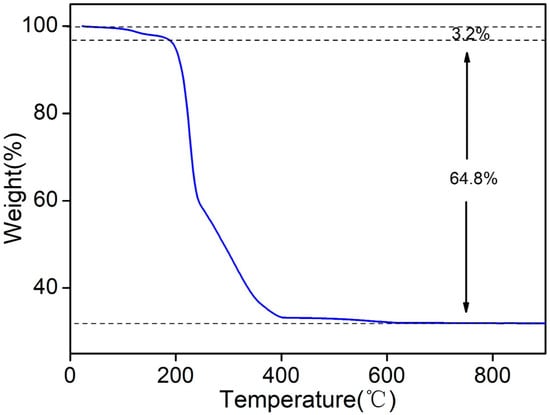
Figure 1 shows the thermogravimetric (TG) analysis curve of the CoTiO3 nanorods precursor. The TG curve reveals two distinct weight loss stages during the calcination process. Below 200 °C, a weight loss of 3.2% is primarily attributed to the desorption of physically adsorbed H2O from the surface of the cobalt titanate precursor. Another significant weight loss occurs in the range of 350–600 °C, with a weight loss rate of approximately 64.8%, which is primarily ascribed to the reaction between metal oxides to form CoTiO3. The TG curve of the precursor confirms that 600 °C is the minimum temperature required for the formation of CoTiO3 nanorods. By varying the calcination temperature, a series of samples were obtained, enabling the investigation of the effects of various calcination temperatures on the crystal structure, morphology, and other characteristics of the CoTiO3 samples.
Figure 1.
TG curve of the CoTiO3 nanorod precursor.
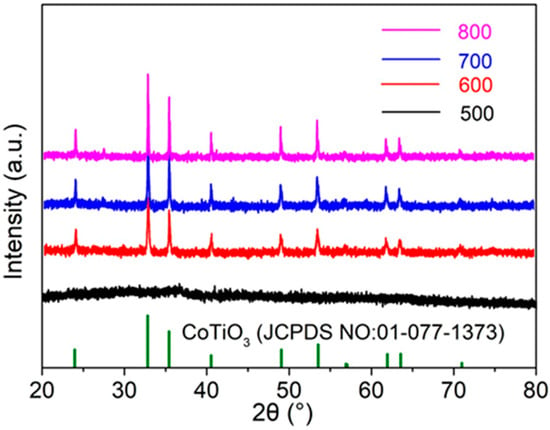
X-ray diffraction (XRD) analysis was performed to investigate the crystalline structure of CoTiO3 nanorods synthesized at different calcination temperatures. As shown in Figure 2, no characteristic diffraction peaks corresponding to CoTiO3 were observed for the sample calcined at 500 °C, indicating that the CoTiO3 had not yet formed and the sample remained in an intermediate state of the calcination process. This finding is consistent with the previous TG analysis results. In contrast, when the calcination temperature ranged from 600 to 800 °C, the diffraction peaks located at 23.9°, 32.8°, 35.4°, 49.1°, 53.5° and 63.5° correspond to the (012), (104), (110), (024), (116), and (300) planes of the hexagonal CoTiO3 (JCPDS No. 01-077-1373), respectively. No other impurity peaks were detected in the XRD patterns, indicating that pure phase CoTiO3 nanorods can be obtained at calcination temperatures of 600–800 °C [19]. Moreover, the diffraction peak intensities increased progressively with higher calcination temperatures, indicating that the calcination temperature plays a crucial role in determining the crystallinity of CoTiO3. The average crystallite sizes of the samples were about 39 nm (600 °C), 52 nm (700 °C), and 63 nm (800 °C) by using the Scherrer equation, demonstrating the high temperature result in sintering.
Figure 2.
XRD patterns of CoTiO3 sample at different calcination temperature.
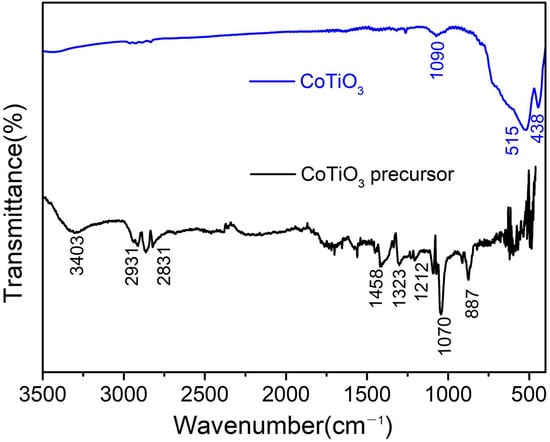
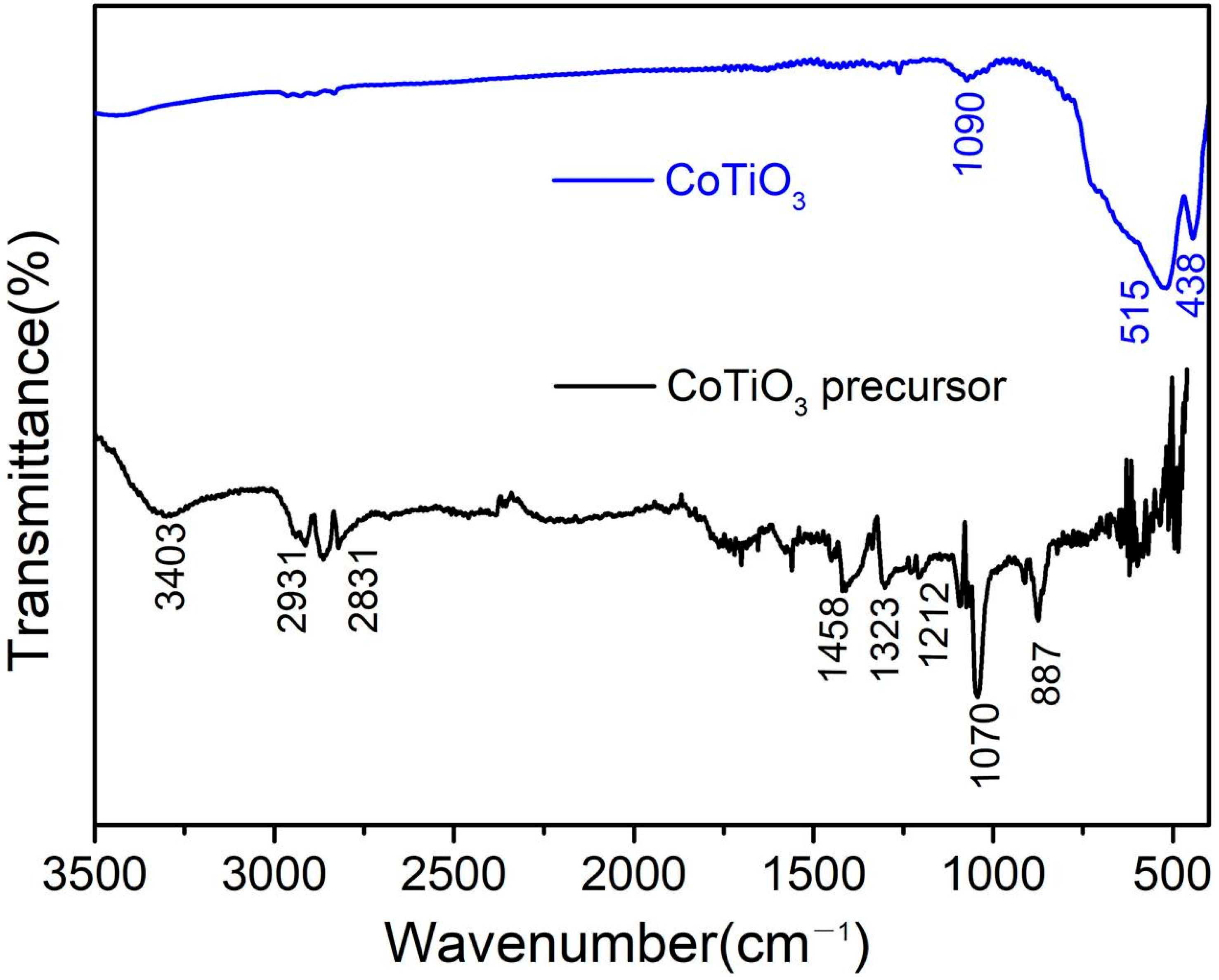
The FT-IR spectra of the CoTiO3 precursor are shown in Figure 3. It can be observed that the precursor exhibits strong absorption bands at 2831 and 2931 cm−1, which are attributed to the symmetric and asymmetric stretching vibrations of C-H bonds in -CH2- groups, respectively. The characteristic peaks at 3403, 1458, 1070, and 887 cm−1 correspond to the vibrations of C-O and O-H bonds in -CH2-OH groups. Meanwhile, the characteristic peaks at 1323 and 1212 cm−1 are assigned to the O-H and C-O absorption bands of -COOH groups. In comparison, the FT-IR spectrum of the as-synthesized CoTiO3 nanorods shows a weak absorption band at 1630 cm−1, which may arise from the O-H stretching vibration of H2O adsorbed on the sample surface. Additionally, the characteristic absorptions in the range of 400–800 cm−1 are attributed to Ti-O and Ti-O-Ti bonds, while the characteristic peak at 1090 cm−1 is caused by the combination of Co-O and Ti-O bonds, ultimately confirming the formation of the target CoTiO3 sample [17,20].
Figure 3.
FT-IR spectra of CoTiO3 and precursor.
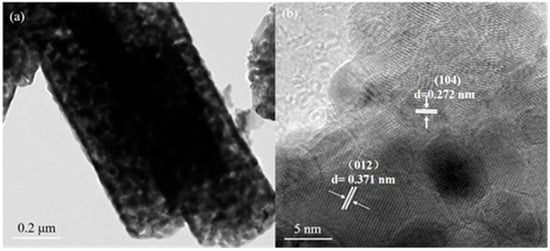
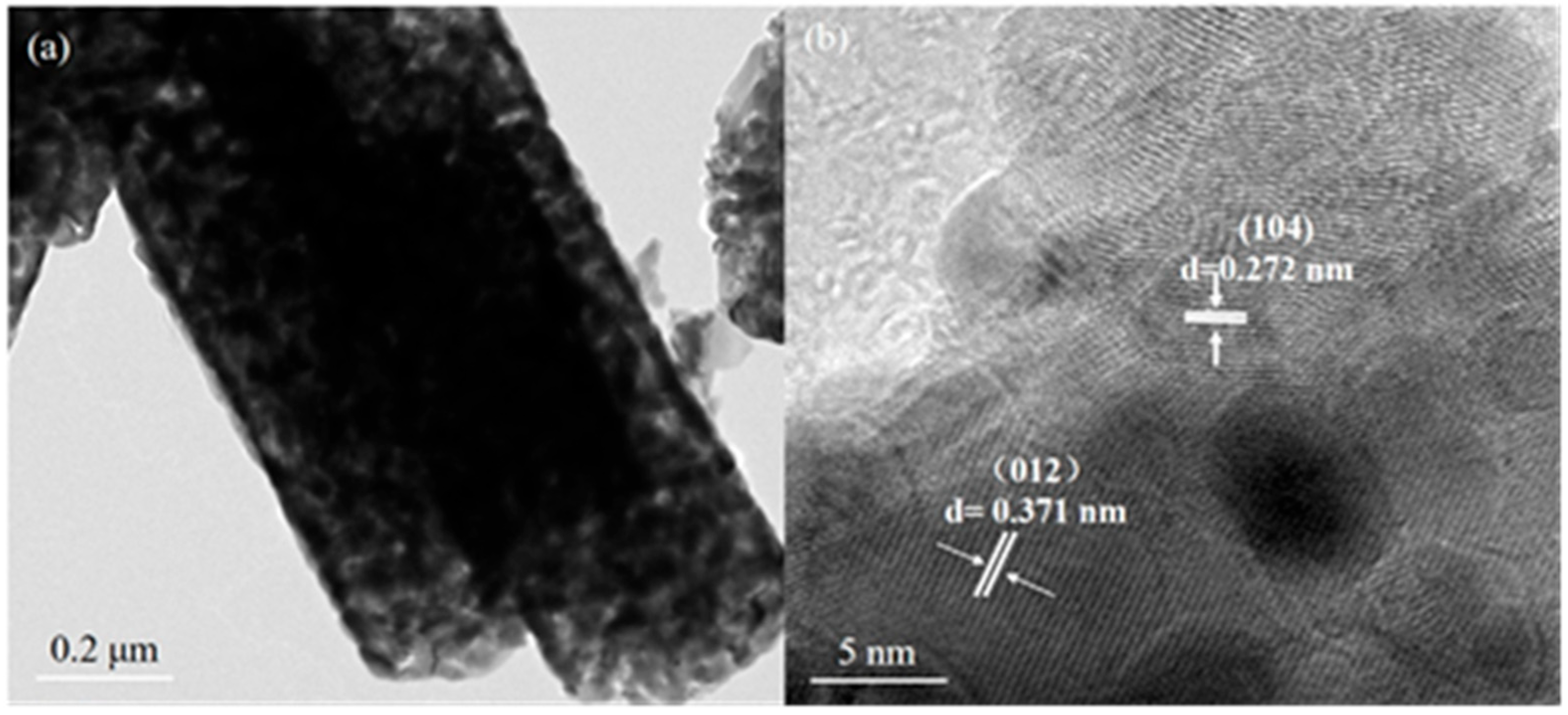
Scanning electron microscopy (SEM) was employed to characterize the morphology and particle size of CoTiO3 samples calcined at different temperatures. For CoTiO3-500 (Figure S1a), the target product CoTiO3 had not yet formed, and the sample exhibited a relatively smooth nanorod of 700 nm in diameter and 2 μm in length. With calcination temperature increasing to 600 °C, the surface of CoTiO3-600 became relatively rough, exhibiting nanorods shape composed of aggregated small nanoparticles (Figure S1b). In comparison with the sample calcined at 700 °C, the size of the nanorods showed no significant variation (Figure S1c). Upon further increasing the calcination temperature to 800 °C, the nanoparticles exhibit obvious aggregation (Figure S1d). The TEM image of the CoTiO3-600 shows lattice fringes of 0.272 nm and 0.371 nm (Figure 4), corresponding to the (104) and (012) crystal planes of the hexagonal phase CoTiO3, respectively [21,22]. The CoTiO3-600 °C was characterized by EDX and EDX-mapping. The EDX spectrum of CoTiO3-600 °C revealed that the material consisted of only Co, Ti and O elements (Figure S2a), with an atomic ratio of approximately 1:1:3 (Co:Ti:O). The EDX-mapping images clearly show that Co, Ti, and O are uniformly distributed across the sample surface (Figure S2b).
Figure 4.
Typical TEM images (a) and high-resolution TEM image (b) of CoTiO3 nanorods.
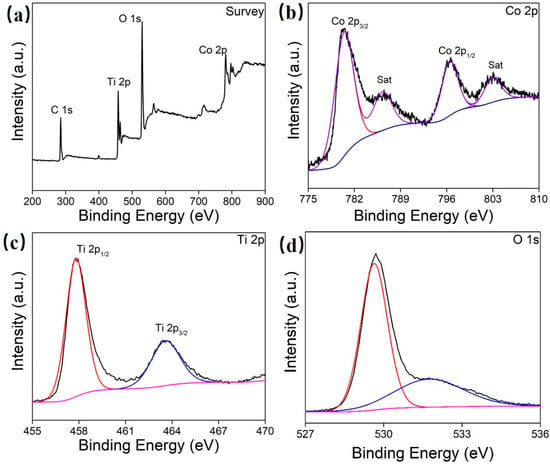
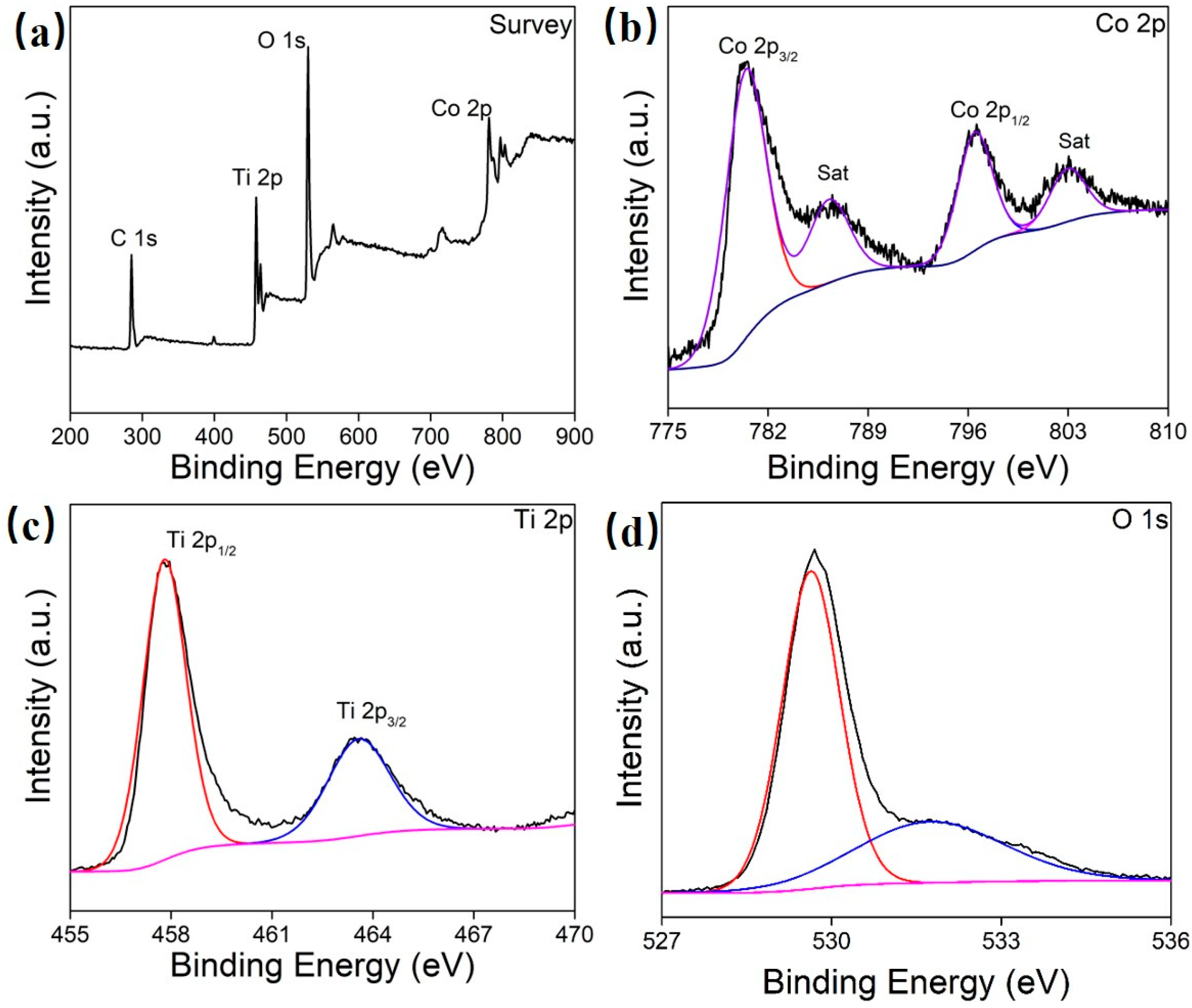
XPS characterization was carried out to get insights into the oxidation state of the elements of the prepared CoTiO3 solid. In the survey XPS spectrum shown in Figure 5a, only signal peaks corresponding to Co, Ti, and O were detected, which is consistent with the EDX characterization results. In the high-resolution Co 2p spectrum (Figure 5b), two strong main peaks at binding energies of 780.5 eV and 796.6 eV, along with two satellite peaks, are attributed to Co 2p1/2 and Co 2p3/2, respectively [23]. In the Ti spectrum (Figure 5c), the peaks at binding energies of 457.8 eV and 463.6 eV correspond to Ti 2p3/2 and Ti 2p1/2, respectively [24]. In the O XPS spectrum (Figure 5d), the binding energies of 529.6 eV and 531.8 eV are assigned to Ti-O and Co–O bonds, as well as to O-H bonds from H2O adsorbed on the surface [18]. The presence of surface O-H groups is beneficial for trapping photogenerated holes, thereby generating •OH radicals, which facilitates the photocatalytic reaction.
Figure 5.
XPS spectra of CoTiO3 nanorods: (a) survey spectrum, (b) Co 2p, (c) Ti 2p, (d) O 1s.
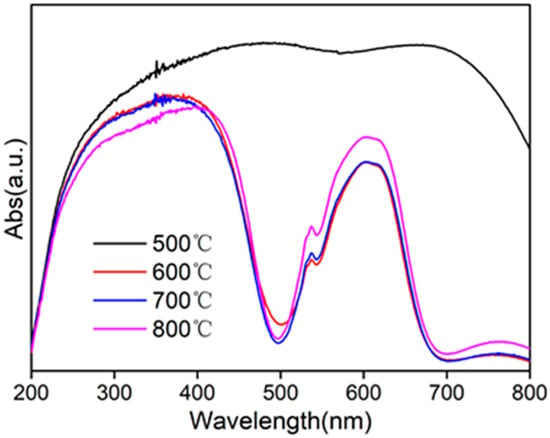
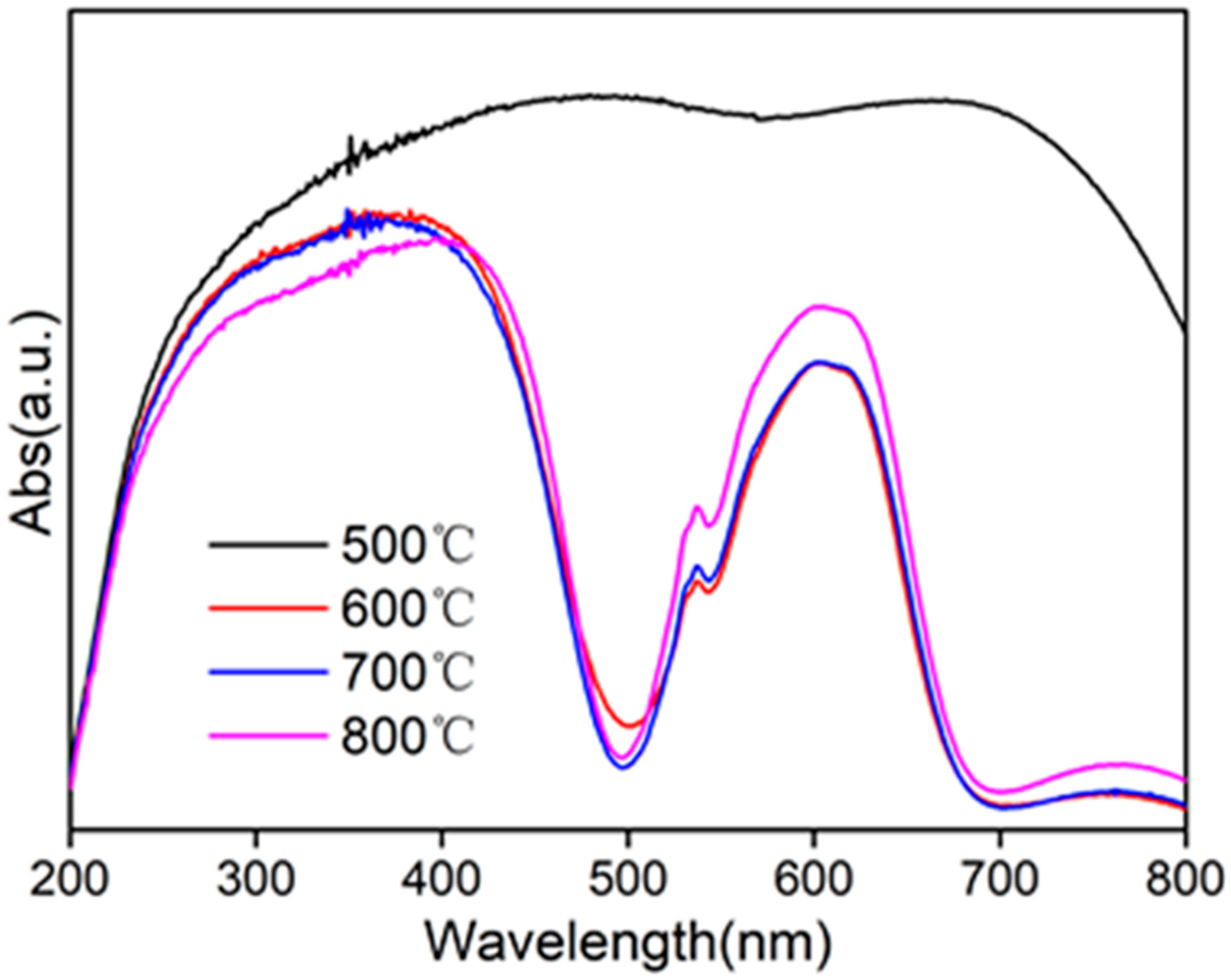
UV–vis diffuse reflectance spectroscopy (DRS) was conducted on CoTiO3 samples calcined at different temperatures (Figure 6). The sample calcined at 500 °C exhibited strong light absorption across the entire UV–vis region, which is primarily attributed to the formation of cobalt oxides during precursor calcination and the carbonization of organic matter. In contrast, when the calcination temperature was increased to 600 °C, 700 °C, and 800 °C, the resulting samples displayed markedly different light absorption characteristics in the UV–vis region compared to CoTiO3-500 °C. Specifically, a distinct downward trend in absorbance is observed in the range of 450–500 nm, which arises from charge transfer from O2− to Ti4+. In addition, strong characteristic peaks are observed at 536 nm and 604 nm, ascribed to the Co2+ → Ti4+ transition resulting from the splitting of the 3d8 energy level of Co2+ ions [25].
Figure 6.
The DRS spectra of CoTiO3 samples with different calcination temperatures.
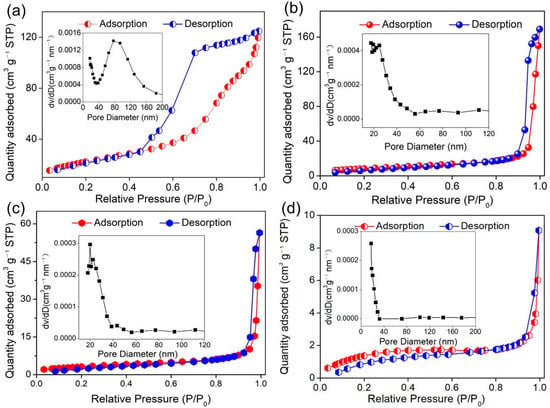
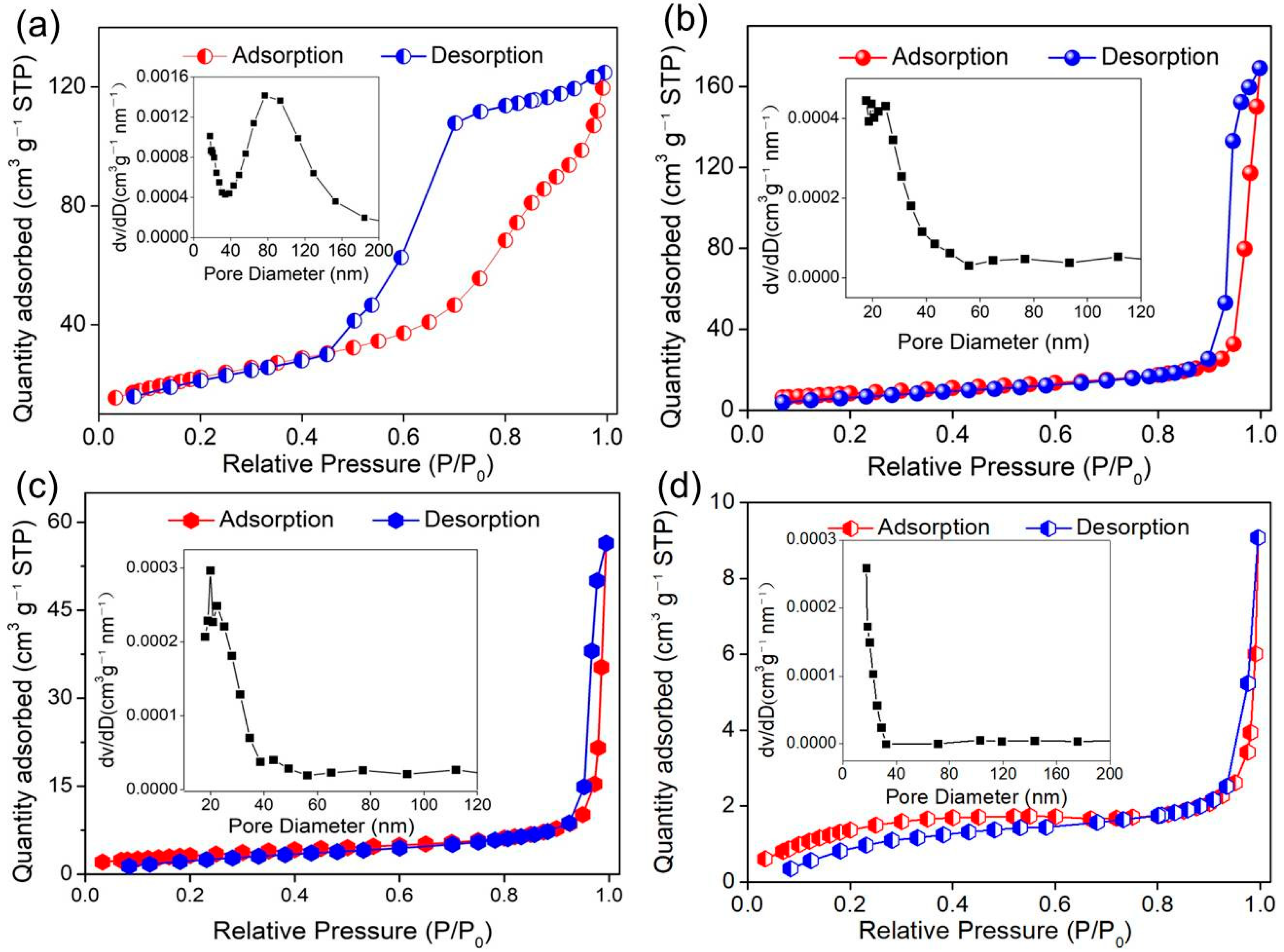
As shown in Figure 7, the adsorption types of the samples calcined at different temperatures all belong to Type IV isotherms. As shown in Table S1, the specific surface area follows the order: CoTiO3-500 > CoTiO3-600 > CoTiO3-700 > CoTiO3-800. Among these, CoTiO3-600 exhibits a relatively large specific surface area and pore volume. The CO2 adsorption plays a key role for CO2 reaction, and the CO2 adsorption capacity of CoTiO3-600 with a relatively large specific surface area was investigated. As revealed in Figure S3, the CoTiO3-600 shows that the maximum CO2 adsorption capacity of CoTiO3 is 5.8 cm3 g−1, which was comparable with other reported materials [26].
Figure 7.
N2-adsorption desorption isotherms of CoTiO3 in different calcination temperatures, insert is the pore size distribution curve: (a) CoTiO3-500, (b) CoTiO3-600, (c) CoTiO3-700, (d) CoTiO3-800.
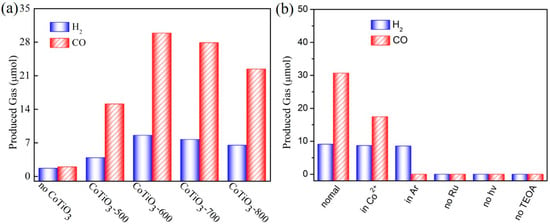
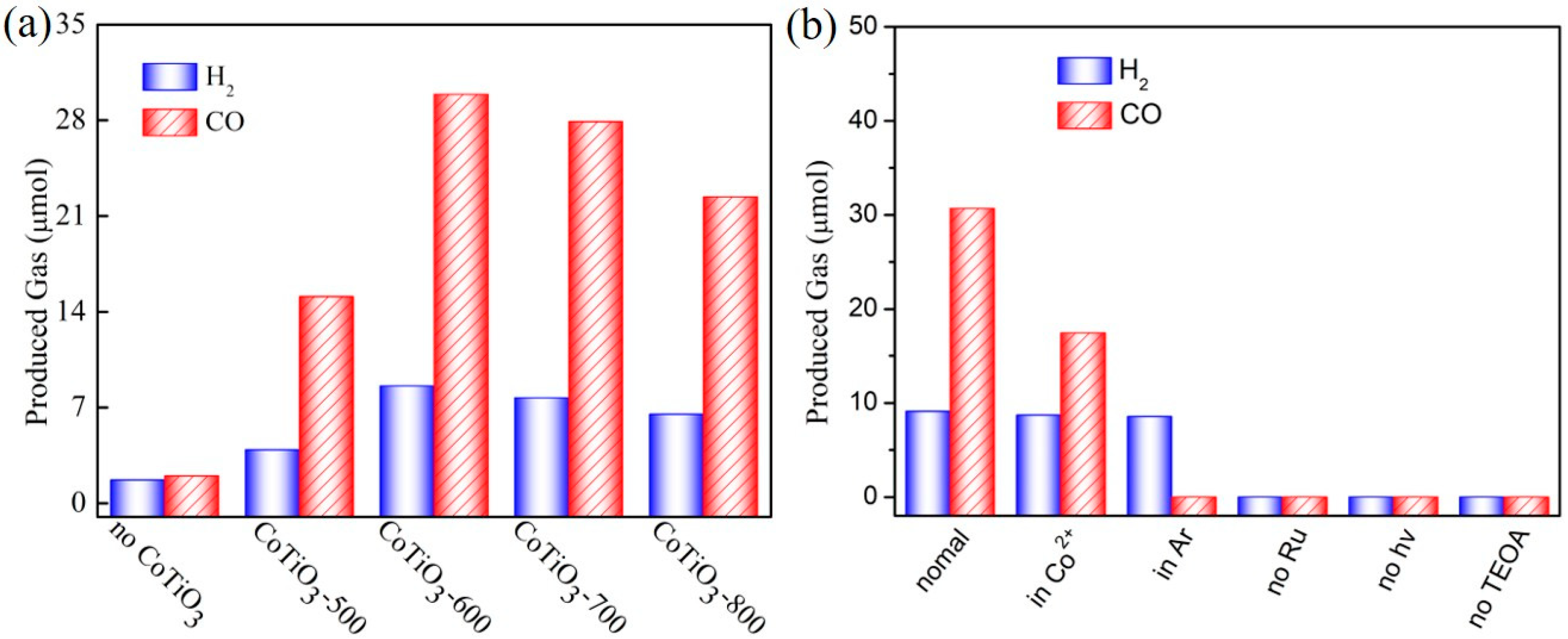
Figure 8a presents the photocatalytic CO2 reduction performance of CoTiO3 samples calcined at different temperatures. In the absence of CoTiO3, only 2.0 μmol CO and 1.7 μmol H2 were produced. Upon introducing the CoTiO3 sample calcined at 500 °C, the yields of CO and H2 increased to 15.1 μmol and 3.9 μmol, respectively. When the calcination temperature was raised to 600 °C, the sample exhibited optimal photocatalytic performance, yielding 29.9 μmol CO and 8.6 μmol H2. However, as the temperature further increased to 700 °C and 800 °C, a decline in CO and H2 production was observed, which may be attributed to the decreased specific surface area and the increased average crystallite sizes of the CoTiO3 samples calcined at higher temperatures. Therefore, the CoTiO3 sample calcined at 600 °C was selected for a more detailed study of the photocatalytic CO2 reduction reaction system.
Figure 8.
The comparison of CO2 activity reduction with CoTiO3 nanorods at different calcination temperatures (a). Photocatalytic reduction of CO2 system by CoTiO3 under different conditions (b).
To investigate the relationship between reaction system parameters and catalytic performance, a series of control experiments were designed. As shown in Figure 8b, under reaction conditions without a photosensitizer, light source, or sacrificial agent, almost no gaseous products (CO and H2) were detected after 1 h of reaction, indicating that all three components are essential for photocatalytic CO2 reduction. Under visible-light irradiation, the photosensitizer is photoexcited to generate photogenerated electrons. The presence of a sacrificial agent quenches the oxidized state of the photosensitizer, thereby prolonging the lifetime of the photogenerated electrons and consequently improving the reaction efficiency. Only 8.7 μmol H2 was produced under an Ar atmosphere, demonstrating that CO originated from CO2. When Co2+ was added to the reaction system as a substitute for the CoTiO3 catalyst, 8.7 μmol H2 and 17.4 μmol CO were generated. To verify the stability of the catalyst, the reaction filtrate of the system containing the CoTiO3 sample was analyzed by ICP-MS. The concentration of Co2+ was found to be below 10 ppm, demonstrating the stability of the CoTiO3 material and its ability to significantly enhance the photocatalytic CO2 reduction activity. To identify the carbon source of the produced CO, isotopic labeling experiments were conducted using 13CO2 as the feedstock under otherwise identical reaction conditions. After 1 h visible-light irradiation, the evolved gas was analyzed by GC-MS (Figure S4). The results demonstrate that only 13CO (m/z = 29) was detected when 13CO2 served as the feedstock. This result verifies that the generated CO stems from the reductive deoxygenation of CO2, not from any other organic components in the system.
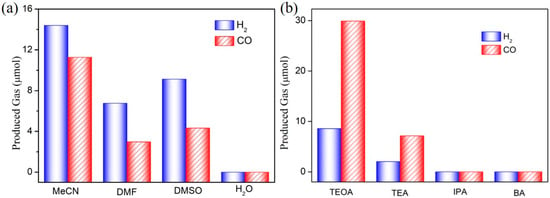
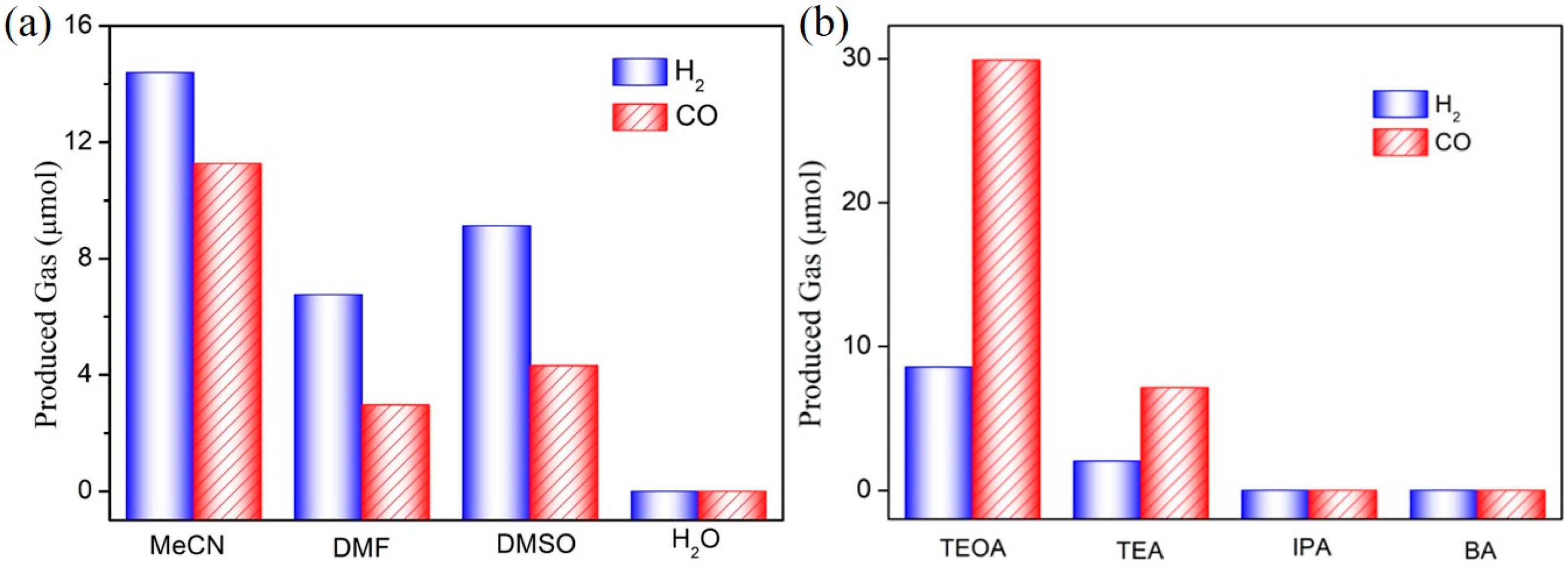
In the photocatalytic CO2 reduction reaction system, the reaction medium has a significant influence on the catalytic performance of the catalyst. Four kinds of aprotic solvents containing N or O atoms, MeCN, DMF, and DMSO were selected as the reaction media, and all the solvents exhibited CO2 reduction ability with different activity. The possible reason is that the different solvents possess different CO2 solubility, consequently affecting the CO2 reduction efficiency. CO2 exhibits Lewis acid–base interactions with heteroatoms such as N and O in aprotic solvents, which facilitates CO2 dissolution, thereby promoting its reduction. In contrast, in the protic solvent H2O, no gaseous products were detected (Figure 9a). which is caused by the weak chemical interactions (van der Waals forces) exist between H2O and CO2, making CO2 less soluble in the medium [27,28]. Among the solvents tested, MeCN gave the best activity, with a CO production rate of 11.3 μmol h−1, which was higher than that of DMSO (4.3 μmol h−1) and DMF (2.9 μmol h−1).
Figure 9.
The activity of CO2 reduction in different solvents (a). The different sacrificial agents on reaction performance (b).
However, during the CO2 reduction process, when protons participate in the multi-electron CO2 reduction reaction, the activation energy of the reaction can be significantly reduced. The introduction of H+ is beneficial for the smooth progress of the reaction [29].
CO2 + e− → CO2− E0 = −1.9 V
CO2 + 2H+ + 2e− → CO + H2O E0 = −0.53 V
Considering the above factors, MeCN was chosen as the solvent, and different amounts of H2O were added to further investigate the influence of mixed solvents on CO2 reduction performance.
As summarized in Table S2, all reaction conditions were kept constant except for the ratio of H2O/MeCN. Without changing the total solvent volume, different amounts of H2O were added to the system. When 1 mL H2O was added to the system, the reaction activity rapidly increased, with the yields of H2 and CO reaching 9.7 μmol and 20.3 μmol, respectively. When the amount of H2O was increased to 2 mL, the yields of H2 and CO reached 8.6 μmol and 29.9 μmol, with the highest CO consumption. With the increasing amount of added H2O, both H2 and CO yields decreased, indicating that an excessive amount of H2O is detrimental to the CO2 reduction reaction, which further confirms the previous hypothesis. Notably, the production of both H2 and CO increased significantly upon the addition of H2O to the system, indicating that the introduction of H2O enhances the catalytic activity for CO2 reduction.
In the photocatalytic CO2 reduction reaction, the type and amount of sacrificial agent may have a significant impact on the CO2 reduction reaction. As shown in Figure 9b, different sacrificial agents, triethanolamine (TEOA), triethylamine (TEA), isopropanol (IPA), and benzylamine (BA), resulted in different reaction activities. When TEOA was employed as the sacrificial agent, which showed the highest CO2 reduction catalytic activity, with gas product yields of 8.6 μmol H2 and 29.9 μmol CO. In contrast, no gas products were detected when IPA or BA was used.
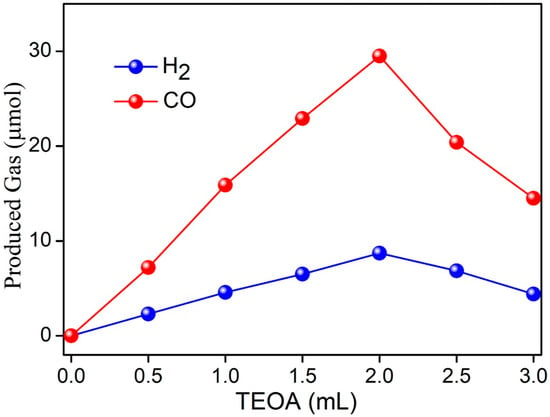
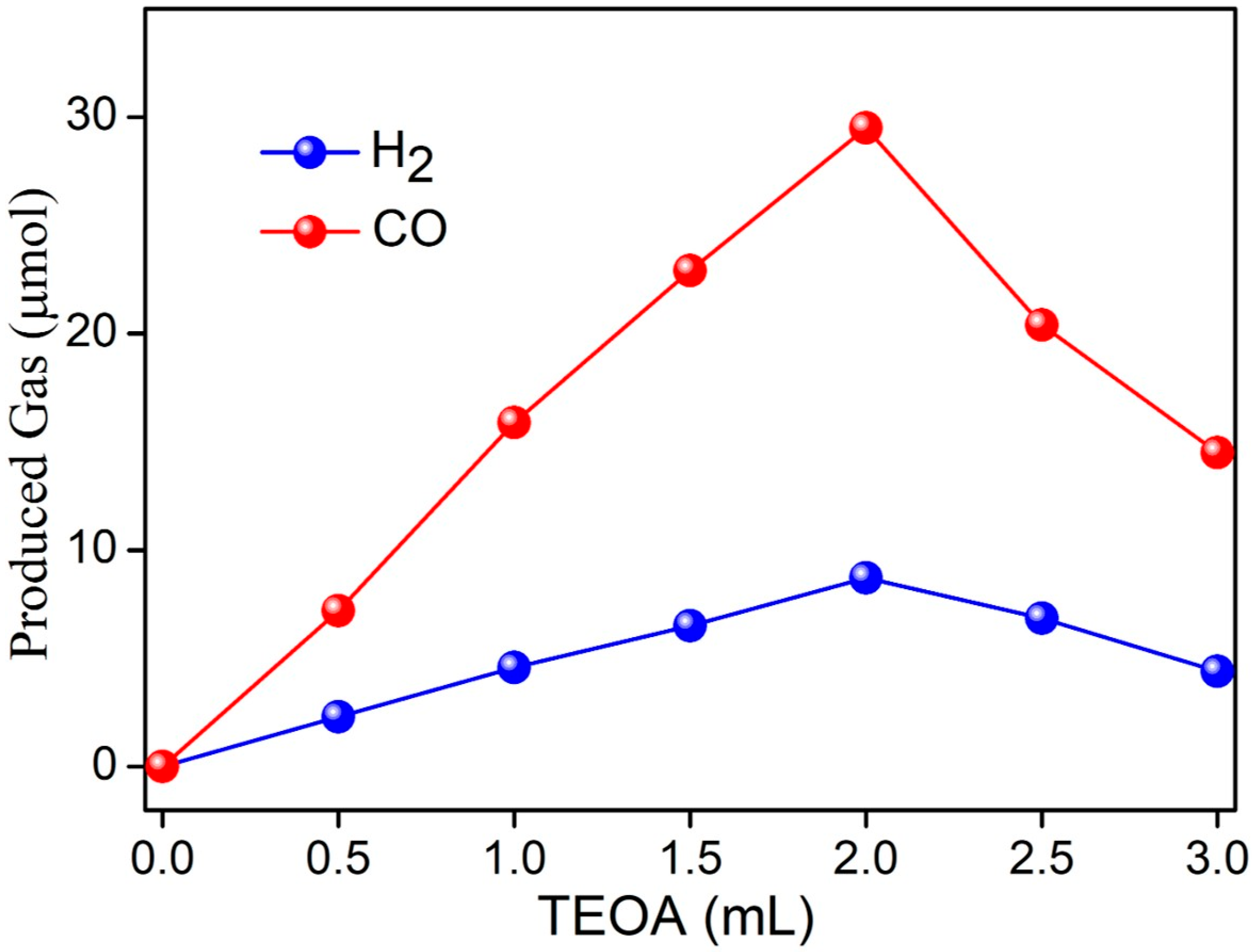
As shown in Figure 10, the amount of triethanolamine (TEOA) added has a significant influence on the activity of the reaction system in the same H2O/MeCN solvent ratio. No products were produced without TEOA. The addition of 0.5 mL of TEOA resulted in gas yields of 2.3 μmol for H2 and 7.2 μmol for CO. A maximum was achieved when the amount of TEOA was increased to 2 mL, with the yields of H2 and CO reaching 8.6 μmol and 29.9 μmol, respectively. Upon further addition of TEOA, the yields of H2 and CO decreased rapidly, this may be ascribed to the excessively strong alkalinity of the solution, which affects the reduction potential of the system and is unfavorable for the CO2 reduction reaction. The CO evolution was comparable with other reports (Table S3).
Figure 10.
Effect of the amount of sacrificial TEOA added on the reaction performance.
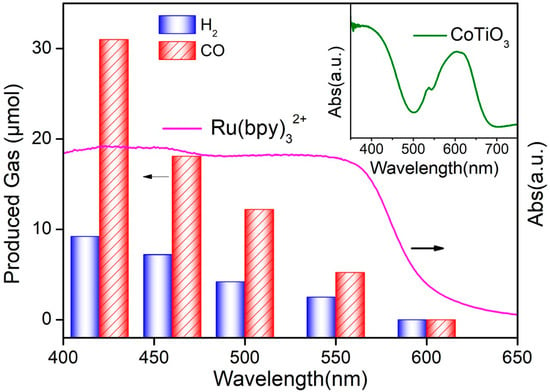
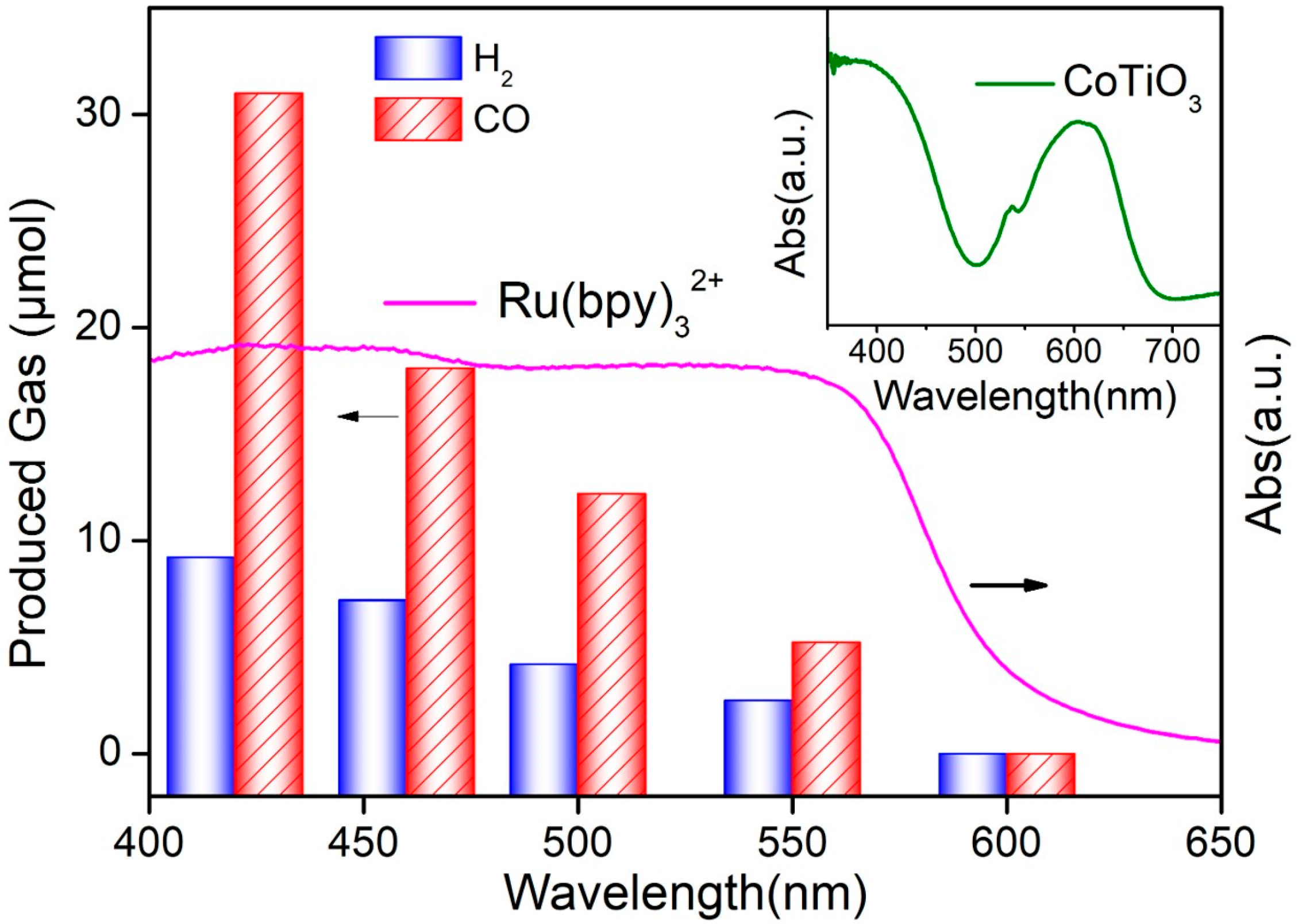
Figure 11 presents the activity of CoTiO3 in the photocatalytic CO2 reduction system as a function of incident light wavelength. When different cutoff filters were used to select specific wavelength bands, the highest yields of H2 (9.1 μmol) and CO (31.2 μmol) were achieved with a 420 nm cutoff filter. As the incident wavelength increased, the yields of both H2 and CO exhibited a clear downward trend. When the wavelength was further increased to 600 nm using a 600 nm cutoff filter, no gaseous products were detected. The dependence of the generation of CO/H2 corresponds well to the absorption spectrum of the Ru complex, rather than that of the CoTiO3 material, The results revealed that the CO2 photoreduction catalysis was actually initiated by the photoexcitation of the Ru light harvester, forming light-stimulated electrons for successive tandem photoredox reactions.
Figure 11.
Wavelength dependence of the evolution of CO/H2.
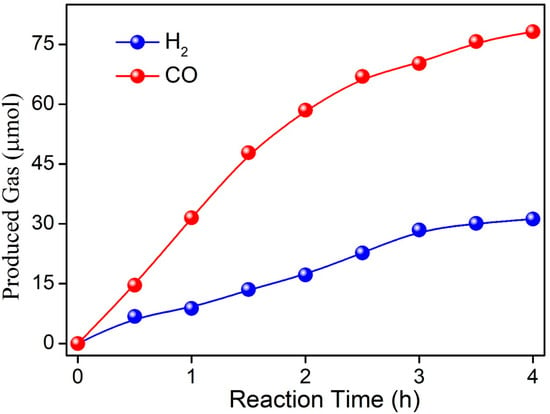
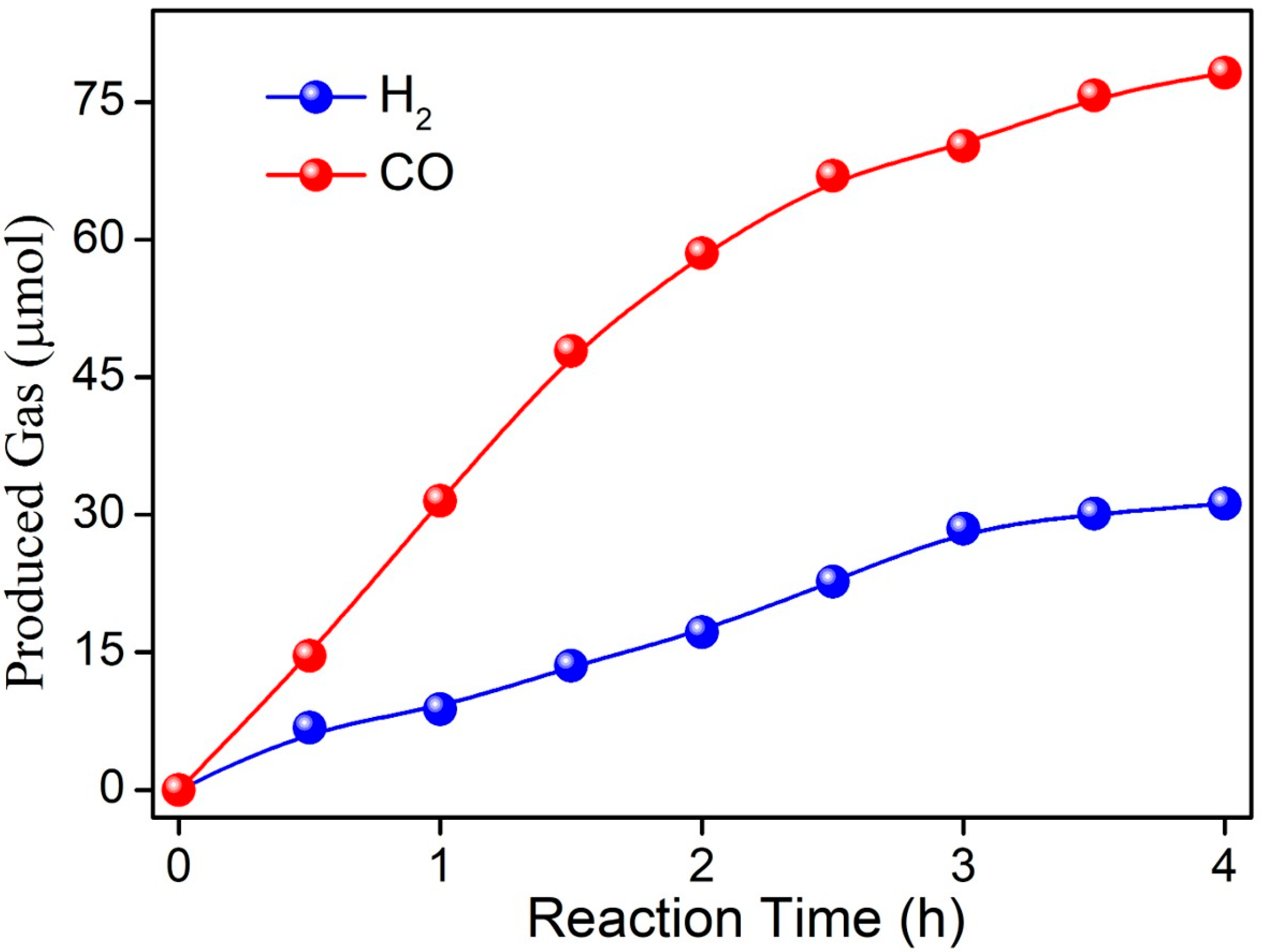
Figure 12 presents the time-dependent evolution curves of CO and H2 production in the CoTiO3-catalyzed CO2 reduction system. During the first hour, the yields of H2 and CO increased almost linearly. After visible-light photocatalysis for 4 h, the H2 and CO evolution reached 31.2 μmol and 78.2 μmol, respectively. As is revealed, the reaction rate first increased but then reduced gradually, possibly due to the gradual deactivation of the photosensitizer Ru(bpy)32+ during the reaction process, rather than the instability of the CoTiO3 cocatalyst, which will be solidly confirmed later on.
Figure 12.
Time–production curve of photoreduction of CO2 with CoTiO3 catalyst.
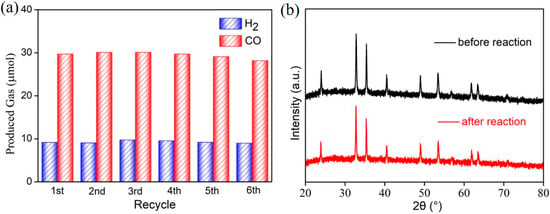
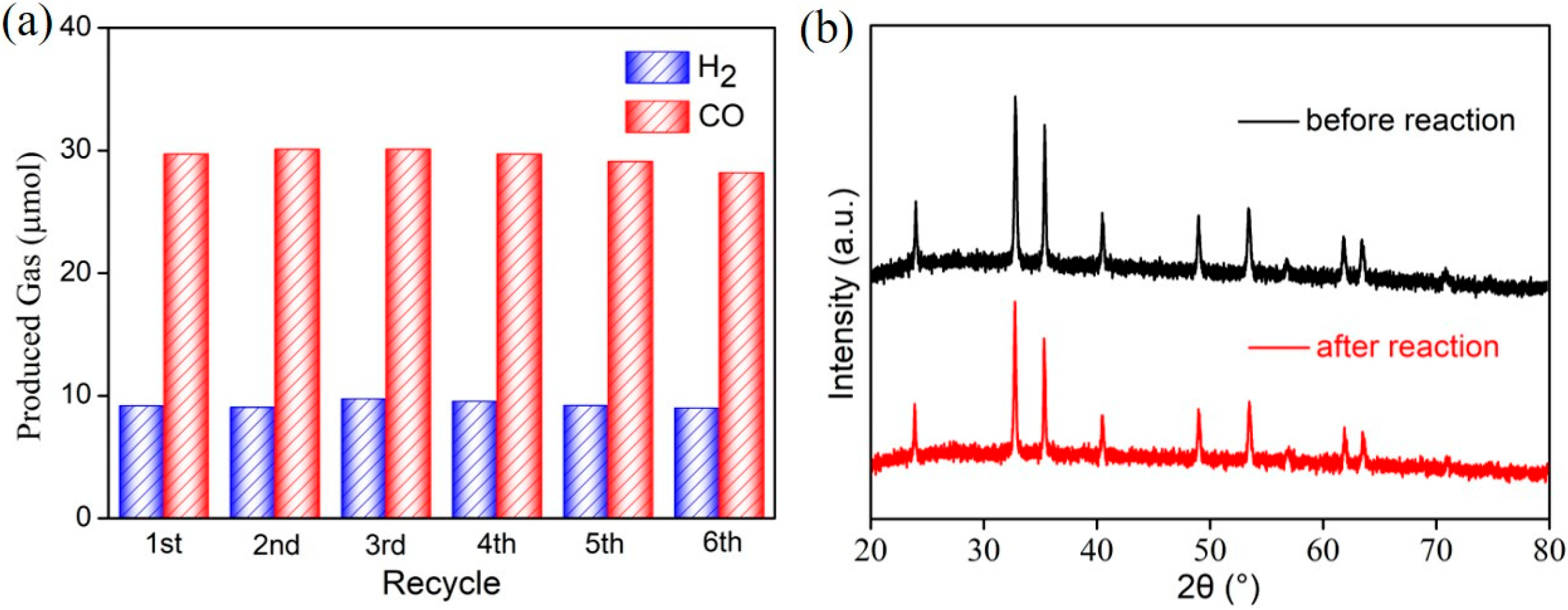
Finally, the stability and reusability of the CoTiO3 cocatalyst were examined, as these properties are of great importance for its further development. The results (Figure 13a) demonstrated that the CoTiO3 solid exhibited excellent activity stability, revealing its high reusability for the CO2 photofixation reaction. After the photocatalytic experiments, CoTiO3 was separated from the reaction mixture, washed with ethanol, and characterized by XRD. As shown in Figure 13b, no noticeable changes in the crystal structure or surface chemistry of the used sample were detected compared to the fresh CoTiO3 material, firmly confirming the high stability of the CoTiO3 cocatalyst in the present photochemical system.
Figure 13.
Activity stability test of CoTiO3 (a). XRD patterns of the CoTiO3 samples before and after reactions (b).
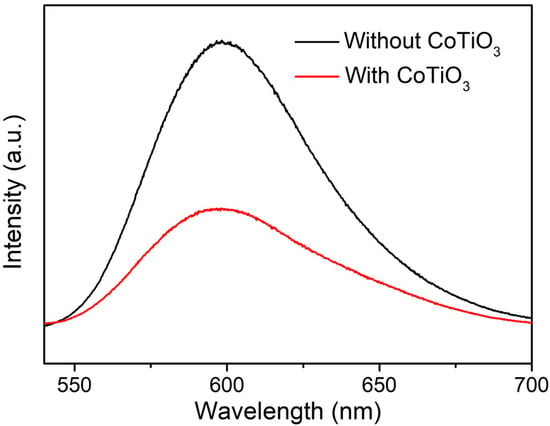
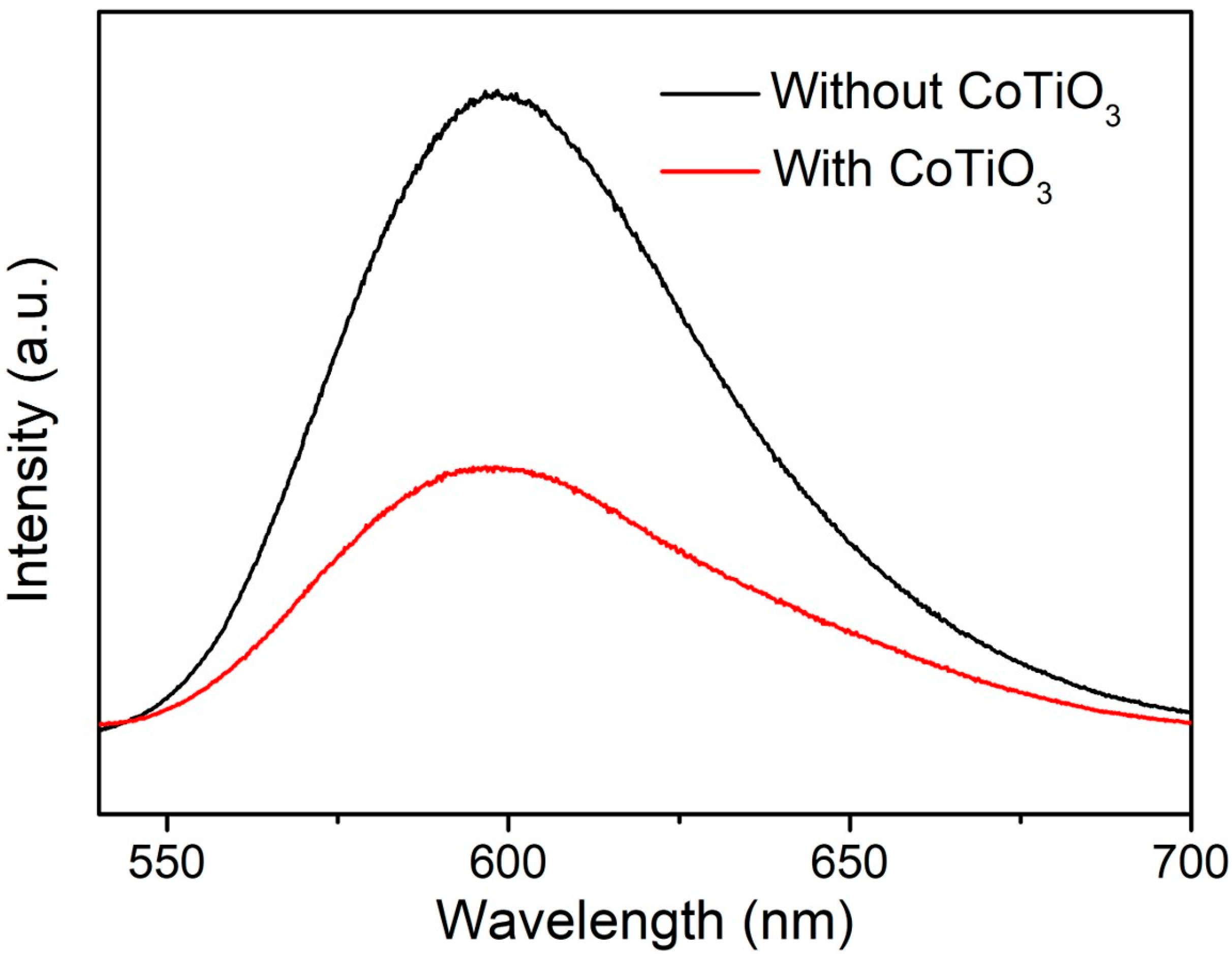
To demonstrate the ability of CoTiO3 to facilitate rapid electron transfer in the system, fluorescence spectroscopy was performed on the reaction system. As shown in Figure 14, Ru(bpy)32+ exhibited a broad luminescence band centered at 595 nm, which can be attributed to the transition from the surface trap states to the ground state of Ru(bpy)32+. In contrast, the addition of CoTiO3 nanorods to the reaction system significantly decreased the fluorescence intensity. This observation indicates that the introduction of CoTiO3 facilitates rapid electron transfer in the reaction system, accelerates the CO2 reduction rate, and improves the efficiency of photocatalytic CO2 reduction.
Figure 14.
PL spectra of photocatalytic reduction with and without CoTiO3 sample.
The flat band potential of CoTiO3 was further examined to elucidate the reaction pathway of CO2 photoconversion catalysis. Mott–Schottky analysis (Figure S5) revealed a flat band potential of -0.65 V (vs. NHE, pH 7.0), indicating that CoTiO3 possesses a suitable redox potential to accept photoinduced electrons from the Ru dye for CO2 reduction to CO. In addition, H2 was also generated due to the direct reduction of protons by the excited electrons. Furthermore, with triethanolamine (TEOA) as the sacrificial agent, the oxidized state of the Ru complex was effectively quenched, thus completing the photocatalytic cycle.
3. Materials and Methods
3.1. Materials
Co(CH3COO)2·4H2O and Ti(OC4H9)4 (Shanghai Aladdin Biochemical Technology Co., Ltd., Shanghai, China), Ethylene glycol (Sinopharm Chemical Reagent Co., Ltd., Shanghai, China), the figures were formed by Chem 3D v22 and Origin 2025b.
3.2. Synthesis of CoTiO3
Co(CH3COO)2·4H2O (0.01 mol) was dissolved in 60 mL of ethylene glycol, then tetrabutyl titanate (Ti(OC4H9)4) (0.01 mol) was added dropwise into the above solution. The mixture was stirred until homogeneous to form a mixed solution, which was then continuously stirred for 24 h at room temperature. The resulting CoTiO3 precursor was washed three times with ethanol and dried in a vacuum oven at 60 °C. To obtain the crystalline CoTiO3 sample, the precursor was annealed at between 500 and 800 °C, which were denoted as CoTiO3-500, CoTiO3-600, CoTiO3-700, and CoTiO3-800.
3.3. Characterization
X-ray diffraction (XRD) was performed on a Bruker D8 Advanceinstrument (Billerica, MA, USA) (Cu Kα irradiation, λ = 0.154 06 nm, U = 40 kV, I = 40 mA, 2θ = 20–80°). The XPS spectra were acquired on a PHI Quan-tum 2000 XPS system (Chanhassen, MN, USA) equipped with a monochromatic Al Kα source and a charge neutralizer. The TEM images were captured using a JEOL model JEM 2010 EX instrument (Akishima, Japan) with an accelerating voltage of 200 kV. The BET surface area and the pore size distribution curve of the catalysts were obtained by using an ASAP 2020M apparatus (Micromeritics, Norcross, GA, USA) with N2 absorption at 77 K.
3.4. Photocatalytic Evaluation
The photocatalytic reactions were carried out in a gas-closed glass reactor containing 15 mg of photocatalyst, 8 mg of [Ru(bpy)3]2+ photosensitizer (bpy = 2′2-bipyridine), 2 mL of H2O, 2 mL of MeCN, and 2 mL of TEOA. After introducing high-purity CO2 to 1 atm, the reactor was under irradiation by using a 300 W Xe lamp (Perfectlight, Beijing, China) with a 420 nm cutoff filter. The temperature was held at 30 °C with a cooling water system, and the suspension was kept under vigorous magnetic stirring. The produced H2 and CO were analyzed using an Agilent 7890B GC (Santa Clara, CA, USA) equipped with a TCD and a methanizer-coupled FID. To investigate the wavelength effect, the CO2 reduction activity was evaluated under irradiation through different long-pass cutoff filters (420, 450, 500, and 520 nm) while keeping all other conditions unchanged. In isotopic labeling experiments, the CO2 was replaced by using 13CO2 as the feedstock under identical reaction conditions.
4. Conclusions
In summary, the efficient CoTiO3 nanorod cocatalyst was successfully synthesized and fully characterized. The as-obtained CoTiO3-600 showed superior photocatalytic activity for CO2 reduction to CO, achieving more than a 15-fold enhancement compared to the system without CoTiO3, due to its ability to facilitate rapid electron transfer, suppress charge recombination, and provide abundant active sites. Isotopic labeling with 13CO2 confirmed that the produced CO originated from CO2. The CoTiO3 cocatalyst also exhibited excellent stability and reusability, with no significant changes in structure or surface chemistry after multiple reaction cycles. This work provides an effective strategy for enhancing visible-light-driven CO2 photoreduction based on a cost-effective and robust ternary metal oxide cocatalyst, which will be conducive to advancing sustainable solar fuel production in the future.
Supplementary Materials
The following supporting information can be downloaded at https://www.mdpi.com/article/10.3390/molecules31183281/s1. Refs. [27,28,29,30,31] are cited in the Supplementary Materials.
Author Contributions
Conceptualization, Z.W., W.S. and W.Z.; methodology, J.X.; software, J.X.; validation, J.X., W.Z. and Z.W.; formal analysis, J.X.; investigation, J.X.; resources, J.X.; data curation, J.X.; writing—original draft preparation, J.X.; writing—review and editing, J.X.; visualization, J.X.; supervision, W.S. and Z.W.; project administration, Z.W.; funding acquisition, Z.W. All authors have read and agreed to the published version of the manuscript.
Funding
This research was funded by the Science and Technology General Program of Fujian Province (No.2024J01969).
Institutional Review Board Statement
Not applicable.
Informed Consent Statement
Not applicable.
Data Availability Statement
The original contributions presented in this study are included in the article/Supplementary Materials. Further inquiries can be directed to the corresponding authors.
Acknowledgments
We thank the State Key Laboratory of Photocatalysis on Energy and Environment, College of Chemistry, Fuzhou University, for providing technical support in the XPS/isotopic labeling experiments/N2-adsorption desorption measurements/CO2 adsorption measurements.
Conflicts of Interest
The authors declare no conflicts of interest.
References
- Li, Y.C.; Pei, X.Y.; Wang, Z.J.; Shi, L.; Song, H.; Ye, J.H. Photothermal Catalytic CO2 Conversion to Value-Added Chemicals: Progress and Prospects. ACS Sustain. Chem. Eng. 2024, 12, 17069–17097. [Google Scholar] [CrossRef] [Scilit]
- Grim, R.G.; Badgett, A.; Braunecker, W.A.; Guarnieri, M.T.; Habas, S.F.; Hahn, C.; Neyerlin, K.; Prajapati, A.; Daniel, A.; Ruddy, D.A.; et al. The Chemistry of CO2 Conversion: A Review. Chem. Rev. 2026, 126, 5028–5082. [Google Scholar] [CrossRef] [Scilit] [PubMed]
- Zeng, X.Y.; Zhang, R.K.; Wu, H.B.; Xiang, X.B. Low-Temperature Methane Catalytic Combustion on a New Pt-Based Catalyst Confined in a MnO2/Al2O3 Carrier. Molecules 2026, 31, 1942. [Google Scholar] [CrossRef] [Scilit] [PubMed]
- Che, W.; Zhao, S.L.; Byun, W.J.; Tao, T.; Jeon, J.P.; Zhao, Q.N.; Shao, Y.H.; Li, J.; Kim, J.; Lee, J.S.; et al. From Carbon Nitrides to COFs: Opportunities and Prospects in Photocatalytic CO2 Reduction. Adv. Mater. 2025, 37, e06961. [Google Scholar] [CrossRef] [Scilit] [PubMed]
- Roth, S.; Skrzypczak, A.B.; Legens, C.; Raybaud, P. Meeting the Industrial Challenges of CO2 Photocatalytic Reduction: Moving From Molybdenum Disulfides to Oxysulfides Based Materials? ChemSusChem 2025, 18, e202400572. [Google Scholar] [CrossRef] [Scilit] [PubMed]
- Li, J.; Zhao, J.; Wang, Y.M.; Zhao, W.H.; Chai, Y.Z.; Zhang, X.C. Enhancing photocatalytic CO2 reduction with Z-scheme heterojunction Ag/Bi2MoO6/BiOBr composite films: Synthesis and mechanistic insights. J. Fuel Chem. Technol. 2026, 54, 20250226. [Google Scholar] [CrossRef] [Scilit]
- Lai, K.Z.; Sun, Y.X.; Li, L.P.; Shi, X.Q.; Zhou, X.S.; Li, N.; Gao, Y.Q.; Ge, L. Defect-mediated dual-site synergy in Zn-CuInS2 enables orbital-tailored high performance photocatalytic CO2-to-ethylene conversion. Chin. J. Catal. 2026, 85, 153–167. [Google Scholar] [CrossRef] [Scilit]
- Zhao, W.; Ren, S.J.; Zheng, Y.F.; Sun, Y.L.; Wu, X.D.; Liu, C.Y.; Shi, J.P.; Yang, K.; Ma, X.B.; Sheng Cui, S.; et al. Regulating a Co3O4/ZnO heterojunction aerogel with a built-in electric field for enhanced CO2 photoreduction to solar fuels from DFT insight. Nanoscale 2025, 17, 16725–16736. [Google Scholar] [CrossRef] [Scilit] [PubMed]
- Guo, R.T.; Zhang, Z.R.; Xia, C.X.; Li, C.F.; Pan, W.G. Recent progress of cocatalysts loaded on carbon nitride for selective photoreduction of CO2 to CH4. Nanoscale 2023, 15, 8548–8577. [Google Scholar] [CrossRef] [Scilit] [PubMed]
- Shooshtari, M.; Kim, S.Y.; Pahlavan, S.; Gotarredona, T.S.; Bisquert, J.; Barranco, B.L. Bio-Inspired Spike-Timing-Dependent Plasticity Learning with Metal Halide Perovskites: Toward Artificial Synaptic Functionality. ACS Appl. Mater. Interfaces 2026, 18, 7103–7114. [Google Scholar] [CrossRef] [Scilit] [PubMed]
- Huo, Y.T.; Wu, Z.; Yang, Y.H.; Dong, B.; Chang, Z.D. Enhanced Photocatalytic CO2 Reduction with Incorporation of WO3 Cocatalyst in g-C3N4-TiO2 Heterojunction. Molecules 2025, 30, 2317. [Google Scholar] [CrossRef] [Scilit] [PubMed]
- Zuo, C.; Qian, S.Q.; Jiang, Z.Y. Advances in the Application of Bi-Based Compounds in Photocatalytic Reduction of CO2. Molecules 2023, 28, 3982. [Google Scholar] [CrossRef] [Scilit]
- Kawata, K.; Maeda, S.; Iguchi, S.; Naniwa, S.; Nishimoto, M.; Teramura, K. Photocatalytic conversion of CO2 using various TiO2 modified with Ag and Co dual cocatalysts via an ultrasonic reduction method. Catal. Today 2026, 461, 115532. [Google Scholar] [CrossRef] [Scilit]
- Sreekanth, T.V.M.; Naresh, B.; Denardin, J.C.; Kim, J.; Yoo, K. Porous hexagonal CoTiO3 rods for efficient bifunctional oxygen evolution and urea oxidation electrocatalysis. J. Environ. Chem. Eng. 2026, 14, 122248. [Google Scholar] [CrossRef] [Scilit]
- Ding, M.J.; Li, M.; Yu, Q.Y.; Li, Z.Y.; Nie, J.Y.; Ping, A.H.; Ding, C.Q.; Li, H.B.; Yang, B.; Jin, Z.L. Construction of CoTiO3/CdS catalysts in-situ grown on recyclable chitosan hydrogel beads and their application in photocatalytic hydrogen evolution from water splitting. J. Environ. Chem. Eng. 2026, 14, 121573. [Google Scholar] [CrossRef] [Scilit]
- Li, D.; Long, M.Y.; Zhao, Q.Q.; Li, H.M.; Wen, Q.; Song, F. Synergetic effect of photocatalysis and peroxymonosulfate activation by CoTiO3/SBA-15, NiTiO3/SBA-15 and Fe2TiO5/SBA-15 for efficient photocatalytic removal of oxytetracycline hydrochloride. Environ. Sci. Water Res. Technol. 2022, 8, 1763–1776. [Google Scholar] [CrossRef] [Scilit]
- Ha, C.A.; Nguyen, D.T.; Nguyen, T. Green Fabrication of Heterostructured CoTiO3/TiO2 Nanocatalystsfor Efcient Pho-tocatalytic Degradation of Cinnamic Acid. ACS Omega 2022, 7, 40163−40175. [Google Scholar] [CrossRef] [Scilit] [PubMed]
- Zheng, J.H.; Gao, Y.M.; Wang, B.B.; Guan, Z.P.; Yin, G.M.; Zheng, H.S.; Li, Y.; Cao, X.Y.; Zheng, S.J. Constructing hollow core–shell Z-scheme heterojunction CdS@CoTiO3 nanorods for enhancing the photocatalytic degradation of 2,4-DCP and TC. Phys. Chem. Chem. Phys. 2024, 26, 14194–14204. [Google Scholar] [CrossRef] [Scilit] [PubMed]
- Xing, C.C.; Liu, Y.P.; Zhang, Y.; Wang, X.; Guardia, P.; Yao, L.; Han, X.; Zhang, T.; Arbiol, J.; Soler, L.; et al. A Direct Z-Scheme for the Photocatalytic Hydrogen Production from a Water Ethanol Mixture on CoTiO3/TiO2 Heterostructures. ACS Appl. Mater. Interfaces 2021, 13, 449−457. [Google Scholar] [CrossRef] [Scilit] [PubMed]
- Habibi, M.H.; Shojaee, E. Synthesis of a heterojunction CoTiO3/Co3O4 nano-composite thin film with superior photocatalytic activity and reusability: Effect of calcination temperature on phase transformation and effect of oxidants on enhanced degradation of Indo Light Blue dye. Spectrochim. Acta A 2020, 229, 117796. [Google Scholar] [CrossRef] [Scilit] [PubMed]
- Wang, Q.; Guo, Q.J.; Wang, L.P.; Li, B. The flux growth of single-crystalline CoTiO3 polyhedral particles and improved visible-light photocatalytic activity of heterostructured CoTiO3/g-C3N4 composites. Dalton Trans. 2016, 45, 17748–17758. [Google Scholar] [CrossRef] [Scilit] [PubMed]
- Huang, H.H.; Liu, X.Q.; Fang Li, F.; He, Q.Y.; Yu, C.L. In situ construction of a 2D CoTiO3/g-C3N4 photocatalyst with an S-scheme heterojunction and its excellent performance for CO2 reduction. Sustain. Energy Fuels. 2022, 6, 4903–4915. [Google Scholar] [CrossRef] [Scilit]
- Xu, Y.; Mo, J.; Liu, Q.; Wang, X.X.; Ding, S.J. Self-assembled CoTiO3 nanorods with controllable oxygen vacancies for the efficient photochemical reduction of CO2 to CO. Catal. Sci. Technol. 2020, 10, 2040–2046. [Google Scholar] [CrossRef] [Scilit]
- Zhang, Y.Y.; Yip, K.L.; Kim, Y.; Chouinard, C.; Licato, J.; Kim, J.H. Monolithic Ceramic CoTiO3/TiO2 Membrane Balancing Catalytic Efficiency and Durability in Advanced Oxidation Processes. Environ. Sci. Technol. 2025, 59, 6863–6871. [Google Scholar] [CrossRef] [Scilit] [PubMed]
- Wang, L.J.; Li, Q.; Lu, X.X.; Tian, Z.F.; He, S.W.; Zhang, J.F. A visible light driven 3D hierarchical CoTiO3/BiOBr direct Z-scheme heterostructure with enhanced photocatalytic degradation performance. New J. Chem. 2022, 46, 124–135. [Google Scholar] [CrossRef] [Scilit]
- Rasalingam, S.; Koodali, R.T. Visible-light driven oxygen evolution over CoTiO3 perovskites via a modified Pechini method: Impact of humidity on their phase composition. CrystEngComm 2016, 18, 868–871. [Google Scholar] [CrossRef] [Scilit]
- Wang, S.B.; Hou, Y.D.; Wang, X.C. Development of a Stable MnCo2O4 Cocatalyst for Photocatalytic CO2 Reduction with Visible Light. ACS Appl. Mater. Interfaces 2015, 7, 4327–4335. [Google Scholar] [CrossRef] [Scilit] [PubMed]
- Wang, S.B.; Guan, B.Y.; Lu, Y.; Lou, X.W. Formation of Hierarchical In2S3–CdIn2S4 Heterostructured Nanotubes for Efficient and Stable Visible Light CO2 Reduction. J. Am. Chem. Soc. 2017, 139, 17305–17308. [Google Scholar] [CrossRef] [Scilit] [PubMed]
- Wang, S.B.; Guan, B.Y.; Lou, X.W. Construction of ZnIn2S4–In2O3 Hierarchical Tubular Heterostructures for Efficient CO2 Photoreduction. J. Am. Chem. Soc. 2018, 140, 5037–5040. [Google Scholar] [CrossRef] [Scilit] [PubMed]
- Wang, Z.Y.; Jiang, M.; Qin, J.N.; Zhou, H.; Ding, Z.X. Reinforced photocatalytic reduction of CO2 to CO by a ternary metal oxide NiCo2O4. Phys. Chem. Chem. Phys. 2015, 17, 16040–16046. [Google Scholar] [CrossRef] [Scilit] [PubMed]
- Jiang, M.; Gao, Y.L.; Wang, Z.Y.; Ding, Z.X. Photocatalytic CO2 reduction promoted by a CuCo2O4 cocatalyst with homogeneous and heterogeneous light harvesters. Appl. Catal. B 2016, 198, 180–188. [Google Scholar] [CrossRef] [Scilit]
Disclaimer/Publisher’s Note: The statements, opinions and data contained in all publications are solely those of the individual author(s) and contributor(s) and not of MDPI and/or the editor(s). MDPI and/or the editor(s) disclaim responsibility for any injury to people or property resulting from any ideas, methods, instructions or products referred to in the content. |
© 2026 by the authors. Licensee MDPI, Basel, Switzerland. This article is an open access article distributed under the terms and conditions of the Creative Commons Attribution (CC BY) license.