


Abstract
An efficient and stereoselective method for the synthesis of chiral biheterocyclic N-Boc-protected pyrrolidine derivatives bearing indole, pyrazole, and indazole moieties is presented. In this approach, nucleophilic substitution of heterocyclic carboxylates with enantiomerically pure N-Boc-3-methanesulfonyloxypyrrolidines is used to afford N-(pyrrolidin-3-yl) derivatives in high yields with an inverted configuration. The methodology accommodates a range of substrates, enabling structural diversity. Reactions with pyrazole- and indazolecarboxylates generate regioisomeric products. Representative peptide-coupling reactions further demonstrated the synthetic utility of the synthesized chiral biheterocyclic pyrrolidine derivatives containing protected amino and carboxyl functionalities as building blocks for peptide synthesis. Halogenated indole and pyrazole derivatives underwent further functionalization via palladium-catalyzed cross-coupling to introduce aryl, heteroaryl, and alkynyl substituents. All of the N-Boc-substituted biheterocycle–pyrrolidine carboxylates displayed NMR spectra with two sets of signals, notable signal broadening, or both. These effects are due to the dynamic equilibrium between two conformers in a deuterated solvent and were studied in depth. The structures and stereochemistry of the synthesized compounds were confirmed by means of chiral HPLC, single-crystal X-ray diffraction, and advanced NMR analyses. This synthetic strategy provides access to chiral heterocyclic amino acid-like building blocks for peptide synthesis and medicinal chemistry.
1. Introduction
Biheterocycles are an essential class of heterocyclic compounds in medicinal chemistry. Their design involves combining two pharmacophoric scaffolds into a single molecule. This combination enhances pharmacological potency, often exceeding the effects of each component alone [1,2]. Biheterocycles exhibit a variety of complex frameworks, including linear [3], angular [4], spiro [5], fused [6], and bridged [7,8] heterocyclic rings, and frequently serve as scaffolds for the development of new biologically active molecules [9]. Linear biheterocycles can be symmetrical or unsymmetrical and connect two heterocyclic rings with a single bond. These structures provide a valuable platform for developing drugs targeting various diseases. They are commonly used as antitumor [10,11], antidiabetic [12], antifungal or antihelminthic [13], anti-inflammatory [14,15], antimicrobial [16], and antidepressant [17] agents as well as for other therapeutic purposes [18]. Many commercially available drugs contain a biheterocyclic moiety. For example, the linear biheterocycle tiabendazole (I) serves as an effective antifungal and antiparasitic agent [19] (Figure 1). Balversa (II) functions as a pan-fibroblast growth factor receptor inhibitor for the treatment of locally advanced or metastatic urothelial carcinoma [20]. The 1H-indole derivative osimertinib (III) is used to treat non-small-cell lung cancers with specific mutations [21]. Efaroxan (IV), with its imidazoline-benzofuran ring system, is a well-known α2-adrenergic receptor antagonist with antihyperglycemic effects [22]. Additionally, antibiotics such as norfloxacin and ciprofloxacin (V), which are fluoroquinolone-pyrazine derivatives, are broad-spectrum antimicrobial agents commonly used to treat infections [23]. There are also biheterocyclic pyrrolidine derivatives that have been approved as active drugs. For example, futibatinib (VI) is approved as an anticancer medication for treating a specific type of bile duct cancer [24], while pacritinib (VII) is approved for certain forms of myelofibrosis, a type of bone marrow cancer [25].
Figure 1.
Examples of selected biheterocyclic derivatives.
Linear biheterocycles often contain functional groups such as halogen, vinyl, alkynyl, hydroxyl, carbonyl, and primary or secondary amino groups, making them useful as reactive precursors for the synthesis of more complex biologically active molecules [18,26,27,28]. For example, triheterocyclic anticancer agents targeting colorectal lines were smoothly prepared by the Suzuki–Miyaura cross-coupling of brominated tetrahydroquinoline–indole hybrids with an aminopyrimidinyl boronic acid [29]. Similarly, the Knoevenagel condensation of purine–pyrazolecarbaldehydes with rhodanine-3-acetic acid derivatives under ammonium acetate catalysis yielded complex biheterocyclic scaffolds possessing potent antioxidant and antitumor properties [30]. Heterocycles conjugated to amino acids and peptides represent an impactful class of therapeutic agents [31,32]. Gowda’s group appended piperidinyl-benzisoxazole and piperazinyl-benzisothiazole platforms to distinct peptide fragments via solution-phase Boc chemistry to evaluate their inhibitory potential against pathogenic bacteria [33,34]. Concurrently, Katritzky’s team utilized benzotriazole chemistry to efficiently tether fluoroquinolones—such as norfloxacin and ciprofloxacin—to amino acid linkers, providing hybrid bis-conjugates with antibacterial activities matching those of the parent drugs [35].
Heterocyclic unnatural amino acids are also widely deployed as rigid structural building blocks in peptide engineering [32,36,37,38]. For instance, isoxazole–cycloamine frameworks have been synthesized and seamlessly incorporated into rigidified peptidomimetics [39,40]. Recently, our group developed robust methods combining simple NH-heterocyclic carboxylic esters with functionalized azetidines to generate achiral biheterocyclic building blocks aimed at similar peptidomimetic applications [41]. In the present work, this concept is further expanded to stereochemically defined biheterocyclic N-Boc amino esters, whose synthetic utility as peptide building blocks is demonstrated through representative peptide-coupling reactions.
This paper describes the design and synthesis of biheterocyclic hybrids derived from pyrazole-, indazole-, and indolecarboxylates, featuring functionalized pyrrolidine as novel chiral heterocyclic Boc-amino esters. Pyrrolidine is a key synthetic fragment in drug development that is critical in medicinal chemistry and the pharmaceutical industry [42,43]. Therefore, the newly developed biheterocycle–pyrrolidine hybrids may serve as useful isosteres and conformationally rigid amino acid-like units, with potential applications as biologically active compounds and peptidomimetics, including as chiral building blocks for synthesizing DNA-encoded compound libraries [44,45,46].
2. Results and Discussion
2.1. Chemistry
The development of a coupling reaction to access biheterocycle–pyrrolidine hybrids is outlined in Scheme 1. N-Boc-(S)-3-hydroxypyrrolidine ((S)-2) was selected as a stereochemically defined precursor for coupling with indole 1a to afford the corresponding N-alkylated target compounds (Scheme 1). The secondary hydroxy group of (S)-2 enables either direct coupling under Mitsunobu conditions or conversion into activated electrophilic derivatives suitable for nucleophilic substitution [47,48].
Scheme 1.
Preparation of 3-functionalized N-Boc-pyrrolidines and their coupling with methyl 1H-indole-3-carboxylate 1a. Reaction conditions are as follows. i: I2, imidazole, PPh3, toluene, 100 °C, 4 h; ii: Methanesulfonyl chloride, TEA, DCM, 0 °C to rt, 3 h. Asterisk (*) denotes a stereocenter.
Based on our previous studies [41], iodide (R)-3 and mesylate (S)-4 were prepared from alcohol (S)-2 to investigate leaving-group effects in the N-alkylation of indole 1a. Iodination under Appel conditions [49] afforded iodide (R)-3 with inversion at the stereogenic center, whereas mesylation with methanesulfonyl chloride [50] gave mesylate (S)-4. Compounds (S)-2, (R)-3, and (S)-4 were subsequently examined in reactions with indole 1a (Scheme 1).
The initial coupling of N-Boc-(S)-3-hydroxypyrrolidine ((S)-2) with indole 1a under Mitsunobu conditions [51] (Table 1, entry 1) afforded (R)-5a in an 11% yield. This stereochemical inversion is consistent with the known stereochemical course of the Mitsunobu reaction [52,53]. Reacting 1a with the iodide derivative (R)-3 also resulted in low yields of (S)-5a (19% and 8%—Table 1, entries 2 and 3). In both cases, the low yields resulted from incomplete conversion of the starting materials, while no significant side reactions were observed. In contrast, coupling of (S)-4 with 1a under Cs2CO3/DMF conditions at 80 °C for 4 h afforded (R)-5a in 92% yield (Table 1, entry 4). Given the excellent performance of the mesylate (S)-4, no additional sulfonate leaving groups were investigated, and this method was selected for subsequent studies. Using the same mesylation procedure, the enantiomeric mesylate (R)-4 was also prepared from the corresponding alcohol (R)-2 and subsequently employed in the synthesis of the corresponding enantiomeric indole derivatives.
Table 1.
Optimization of the coupling reaction of 1a with 3-functionalized N-Boc-pyrrolidines.
Under the optimized conditions in Table 1 (entry 4), N-unsubstituted methyl indole-3-, -5-, and -6-carboxylates 1a–c underwent N-alkylation with the chiral pyrrolidine mesylates (S)-4 and (R)-4 (Scheme 2). In all cases, nucleophilic substitution proceeded with inversion of configuration, yielding (R)-5a–c and (S)-5a–c in good yields (66–94%). These results demonstrate the general applicability of the developed SN2 N-alkylation protocol across differently substituted indole carboxylates.
Scheme 2.
Alkylation of methyl indolecarboxylates 1a–c with (S)-N-Boc-3-methanesulfonyloxypyrrolidine (S)-4 or (R)-N-Boc-3-methanesulfonyloxypyrrolidine (R)-4. Asterisk (*) denotes a stereocenter.
The synthesized chiral N-(pyrrolidin-3-yl)-1H-indolecarboxylates (R)- and (S)-5a–c exhibited optical activity, with the corresponding (R)- and (S)-enantiomers rotating plane-polarized light in opposite directions. All compounds were analyzed using chiral HPLC, confirming their high enantiomeric purity (see the Supporting Information Figures S204–S227). As shown in Figure 2, (R)-5a and (S)-5a were obtained with excellent enantiomeric excesses of 99.2% and 99.8%, respectively. Nucleophilic substitution at secondary alkyl electrophiles can be challenging because of steric constraints and competing elimination pathways, and various strategies, including transition-metal-catalyzed approaches, have been developed to address limitations in reactivity and stereochemical control [54,55,56]. In the present study, N-alkylation of the heterocyclic substrates with enantiomerically pure secondary pyrrolidine mesylates proceeded efficiently under the selected conditions (Cs2CO3, DMF, 80 °C), affording the corresponding products in high yields with complete inversion of configuration and essentially no loss of enantiomeric purity. These results are consistent with a stereospecific SN2 substitution pathway.
Figure 2.
Superimposed chromatogram view showing chromatograms for nucleophilic substitution products (R)-5a (black line, ee 99.2%) and (S)-5a (cyan line, ee 99.8%). Conditions: CHIRAL ART Cellulose-SB (100 × 4.6 mm I.D., S-3 μm); mobile phase: H2O + 0.1% HCOOH/MeCN 70:30 to 50:50 in 16 min; T = 36 °C; flow rate 1.0 mL/min. Samples were prepared in methanol. λdet = 245 nm.
Single-crystal X-ray diffraction analysis was performed to further confirm the molecular structures and absolute configurations of the synthesized compounds. Suitable single crystals of the representative enantiomeric pairs (S)-5b/(R)-5b and (S)-5c/(R)-5c were obtained via recrystallization from methanol (Figure 3).
Figure 3.
ORTEP view of crystals (S)-5b/(R)-5b and (S)-5c/(R)-5c and corresponding structural formulas: (A) methyl 1-[(3S)-1-(tert-butoxycarbonyl)pyrrolidin-3-yl]-1H-indole-5-carboxylate; (B) methyl 1-[(3R)-1-(tert-butoxycarbonyl)pyrrolidin-3-yl]-1H-indole-5-carboxylate; (C) methyl 1-[(3S)-1-(tert-butoxycarbonyl)pyrrolidin-3-yl]-1H-indole-6-carboxylate and (D) methyl 1-[(3R)-1-(tert-butoxycarbonyl)pyrrolidin-3-yl]-1H-indole-6-carboxylate.
The pyrrolidine ring in (S)-5b adopts a typical envelope conformation, with the C12 atom 0.539(2) Å out of the plane of the other atoms. The crystal structure features a CH···O hydrogen bond between the C23-H23B group and the carbonyl oxygen O21. The methyl group’s carbon, attached to the ester oxygen, is more electronegative, leading to a moderate CH···O hydrogen bond, as observed in similar cases. The bond length is 3.114(2) Å (H23B···O21 = 2.66 Å, C23-H23B···O21 = 109°). This hydrogen bond forms molecular chains along the monoclinic axis (Figure 4A). Because (S)-5b and (R)-5b are mirror images, these structural features are also present in the (R)-5b structure.
Figure 4.
Crystal structure of (A) methyl 1-[(3S)-1-(tert-butoxycarbonyl)pyrrolidin-3-yl]-1H-indole-5-carboxylate (S)-5b and (B) methyl 1-[(3S)-1-(tert-butoxycarbonyl)pyrrolidin-3-yl]-1H-indole-6-carboxylate (S)-5c.
Like the (S)-5b structure, the (S)-5c structure adopts an envelope conformation in the pyrrolidine ring. In this case, the C8 atom, rather than C12, protrudes by 0.541(3) Å from the plane defined by the other four atoms. The crystal structure displays relatively weak CH···O hydrogen bonds (Figure 4B). One such bond, C19-H19B···O14, measures 3.187(3) Å, with H19B···O14 = 2.87 Å and an angle of 100°. The second bond, C8-H8···O21, measures 3.300(3) Å; this interaction may contribute to the displacement of the C8 atom from the plane of the other pyrrolidine ring atoms. Its parameters are H8···O21 = 2.47 Å and an angle of 142°. These hydrogen bonds facilitate the formation of molecular networks or layers within the crystal structure, oriented perpendicular to the monoclinic axis. All these structural features are also present in the mirror-symmetric crystal structure of (R)-5c.
To demonstrate the synthetic utility of the synthesized chiral biheterocyclic building blocks, representative peptide-coupling reactions were performed (Scheme 3). Hydrolysis of methyl ester (R)-5a afforded the corresponding carboxylic acid (R)-6, which was subsequently coupled with L-valine methyl ester hydrochloride under standard HATU/DIPEA-mediated conditions [57] to furnish dipeptide (R,S)-7 in 79% yield. In a complementary approach, Boc deprotection of (R)-5a provided the corresponding amine (R)-8, which underwent coupling with Boc-L-valine under analogous conditions to afford dipeptide (R,S)-9 in 73% yield. In both cases, the products were isolated in good yield, and no additional diastereomeric signals were evident in the 1H NMR spectra. These complementary transformations demonstrate that both the amino and carboxyl functionalities of the synthesized pyrrolidine derivatives can be employed in peptide-bond formation. The successful preparation of representative dipeptides further demonstrates the potential of these chiral biheterocyclic derivatives as amino acid-like building blocks for peptide synthesis.
Scheme 3.
Synthesis of dipeptides (R,S)-7 and (R,S)-9.
Functionalization of heterocyclic compounds is a highly efficient and widely used strategy for expanding heterocyclic building-block libraries [58]. Palladium-catalyzed cross-coupling reactions are among the most powerful methods for modifying heteroaromatic systems, enabling the efficient and selective introduction of a wide range of substituents into the molecular framework [59,60,61]. The indole derivative (R)-5b was selected as a representative scaffold for further functionalization (Scheme 4). As reported in the literature, the indole core undergoes selective halogenation at the C-3 position [62]. The indole derivative (R)-5b was iodinated using iodine and potassium hydroxide in DMF according to a literature procedure [62,63] to afford compound (R)-10. The resulting 3-iodoindole derivative (R)-10 provided a suitable substrate for palladium-catalyzed cross-coupling reactions. Suzuki–Miyaura coupling of (R)-10 with phenylboronic acid 11a was investigated using selected palladium catalysts (Table 2, entries 1–3). Progress was monitored via thin-layer chromatography, and the reaction mixture was quenched upon complete consumption of the starting material.
Scheme 4.
Synthesis of C-3-substituted indole derivatives via iodination and palladium-catalyzed cross-coupling reactions. Reaction conditions: (i) I2, KOH, DMF, r.t., 2 h; (ii) Suzuki–Miyaura coupling—ArB(OH)2 (11a–c), 5 mol% Pd(dppf)Cl2·DCM, K3PO4, dioxane/H2O, 80 °C, MW, 100 W, 15 min; (iii) Suzuki–Miyaura coupling—4-Py-B(OH)2 (11d), 5 mol% Pd(dppf)Cl2·DCM, K3PO4, dioxane/H2O, 80 °C, 1 h; (iv) Sonogashira coupling—Ph–C≡CH, 5 mol% Pd(PPh3)2Cl2, CuI, Et3N, DMF, 65 °C, 1 h.
Table 2.
Screening of selected reaction conditions for the Suzuki–Miyaura coupling of 3-iodoindole (R)-10 with phenylboronic acid 11a.
Under typical Suzuki–Miyaura conditions, using Pd(PPh3)4 as the catalyst and K3PO4 as the base in dioxane at 100 °C [61,64,65], the reaction between 3-iodoindole (R)-10 and phenylboronic acid 11a was evaluated. Under these conditions, compound (R)-12a was obtained in a 32% yield after 2 h (Table 2, entry 1). Although the desired product had formed, the moderate yield indicated that further optimization of the catalytic system and reaction parameters was required.
Given reports of the high catalytic activity of N-heterocyclic carbene (NHC)-based palladium complexes in cross-coupling reactions, particularly with heteroaryl halides [66,67,68], Pd-PEPPSI-IPr was subsequently evaluated as an alternative catalytic system. However, in our case, this catalyst did not result in the expected improvement, affording the desired product (R)-12a in only a 6% yield after 4 h at 100 °C (Table 2, entry 2). This result indicates that the Pd-PEPPSI-IPr system is unsuitable for coupling 3-iodoindole (R)-10 under the conditions investigated.
Because the NHC-based catalyst did not provide satisfactory results, attention was then directed to phosphine-based ligand systems. Given reports that 1,1′-bis(diphenylphosphino)ferrocene (dppf) is an efficient ligand for Suzuki–Miyaura cross-coupling reactions involving heteroaryl halides [69,70,71], Pd(dppf)Cl2·DCM was examined as an alternative catalytic system. A significant improvement was observed when the reaction was carried out in a mixed dioxane/H2O solvent system in the presence of K3PO4. Under these conditions, at a lower temperature of 80 °C, the desired product (R)-12a was obtained in a 57% yield within 1 h (Table 2, entry 3), suggesting beneficial effects of the dppf ligand and the aqueous co-solvent on the efficiency of the coupling reaction.
Further enhancement was achieved by applying microwave irradiation under otherwise identical conditions. Heating at 100 W reduced the reaction time to 15 min and slightly increased the yield to 61% (Table 2, entry 4). Consequently, the combination of Pd(dppf)Cl2·DCM, K3PO4, and a dioxane/H2O solvent system under microwave irradiation was identified as the optimal set of conditions for the Suzuki–Miyaura coupling of 3-iodoindole (R)-10 with phenylboronic acid 11a.
Based on the screening results, the most efficient reaction conditions were selected for further studies. Under these conditions, 3-iodoindole (R)-10 was reacted with substituted arylboronic acids to evaluate the reaction scope. In particular, p-tolylboronic acid (11b), bearing an electron-donating substituent, afforded compound (R)-12b in a 69% yield, whereas 4-fluorophenylboronic acid (11c), bearing an electron-withdrawing substituent, produced compound (R)-12c in a 76% yield (Scheme 4). These results demonstrate that arylboronic acids with different electronic properties are well tolerated under the reaction conditions employed.
Owing to the reactivity and stability challenges associated with the deborylation of 4-pyridinylboronic acid (11d) [72,73], the procedure was slightly modified to enable the synthesis of the heteroaryl-substituted derivative (R)-12d. The reaction was carried out under the optimized Suzuki–Miyaura catalytic conditions at 80 °C using conventional thermal heating. The reaction mixture containing (R)-10 was heated to the reaction temperature, and 4-pyridinylboronic acid (11d) was added after 10 min; the reaction was then continued for 1 h, affording compound (R)-12d in a 55% yield (Scheme 4). This result suggests that the catalytic system is also applicable to heteroaryl substrates, although minor adjustments of the reaction protocol may be necessary.
In addition, the versatility of the iodinated intermediate (R)-10 was further demonstrated by its use in a Sonogashira cross-coupling reaction. The reaction of 3-iodoindole (R)-10 with phenylacetylene was carried out under standard Sonogashira conditions, using Pd(PPh3)2Cl2 and CuI as catalysts in the presence of Et3N in DMF at 65 °C [74]. Under these conditions, the desired 3-(2-phenylethynyl)-1H-indole derivative (R)-12e was obtained in a 92% yield (Scheme 4). This outcome highlights the high efficiency of the Sonogashira protocol for introducing alkynyl groups at the C-3 position of the indole scaffold.
Overall, these results demonstrate that the developed palladium-catalyzed cross-coupling protocols enable efficient introduction of aryl, heteroaryl, and alkynyl substituents at the C-3 position of the indole core. This approach is a robust, flexible strategy for systematically expanding the library of C-3-substituted indole derivatives and underscores the synthetic utility of 3-iodoindole (R)-10 as a versatile heterocyclic building block.
The next objective of this study was to synthesize N-(pyrrolidin-3-yl)-1H-pyrazolecarboxylates to expand the compound library by introducing an additional heteroaromatic scaffold. Accordingly, N-alkylation of ethyl 1H-pyrazole-4-carboxylate 13a with the chiral mesylates (S)-4 or (R)-4, using Cs2CO3 in DMF at 80 °C, afforded the corresponding N-alkylated products (R)-14a and (S)-14a in high yields of 94% and 89%, respectively (Scheme 5).
Scheme 5.
Alkylation of ethyl pyrazolecarboxylates 13a,b with (S)-N-Boc-3-methanesulfonyloxypyrrolidine (S)-4 or (R)-N-Boc-3-methanesulfonyloxypyrrolidine (R)-4. Asterisk (*) denotes a stereocenter.
The optimized alkylation conditions were subsequently applied to the unsymmetrical ethyl 1H-pyrazole-3-carboxylate 13b. DFT calculations reported in the literature [75] show that the N1 and N2 atoms of 3-CO2Et pyrazole have nearly identical nucleophilicity, predicting low regioselectivity, whereas the electron-withdrawing 3-NO2 group makes N1 more nucleophilic and drives selective alkylation. In our case, this lower regioselectivity is desirable, as both isolated regioisomers expand the molecular diversity of the building block library. In this instance, reaction with mesylate (S)-4 produced a mixture of two regioisomers, (R)-14b and (R)-15b, in an approximately 3:4 ratio. Separation by flash column chromatography afforded the corresponding products in 37% and 48% yields, respectively. Similarly, alkylation of pyrazole 13b with mesylate (R)-4 gave the analogous regioisomeric pair, (S)-14b and (S)-15b, in comparable yields (Scheme 5). Thus, alkylation of the pyrazole ring occurs at either nitrogen atom, yielding regioisomeric products.
To evaluate the transferability of the optimized catalytic system to structurally distinct heterocyclic scaffolds, the N-(pyrrolidin-3-yl)-substituted pyrazole derivative (R)-15b was selected for further functionalization via Suzuki–Miyaura cross-coupling. According to a reported NBS-mediated bromination procedure [76], compound (R)-15b underwent selective bromination with N-bromosuccinimide (NBS) in acetonitrile at room temperature, yielding the corresponding monobrominated pyrazole (R)-16 in a 48% yield (Scheme 6).
Scheme 6.
Synthesis of C-4-substituted pyrazole derivatives via bromination and Suzuki–Miyaura cross-coupling. Reaction conditions: (i) NBS, MeCN, r.t., 4h; (ii) R-B(OH)2 (11a–f), 5 mol% Pd(dppf)Cl2·DCM, K3PO4, dioxane/H2O, 80 °C, MW, 100 W, 15 min.
Subsequent Suzuki–Miyaura cross-coupling of intermediate (R)-16 was performed under palladium-catalyzed conditions previously optimized for the indole series, namely, Pd(dppf)Cl2·DCM (5 mol%) as the catalyst, K3PO4 as the base, and a dioxane/H2O solvent system under microwave irradiation at 80 °C (100 W, 15 min). These conditions enabled the synthesis of aryl- and heteroaryl-substituted pyrazole derivatives (R)-17a–f from the corresponding boronic acids (11a–f) (Scheme 6). As observed for the indole series, synthesis of the 4-pyridinyl-substituted derivative (R)-17d required conventional heating at 80 °C for 1 h because of the limited stability of 4-pyridinylboronic acid under microwave conditions. The aryl-substituted products (R)-17a–c and (R)-17e were obtained in good to excellent yields of 67–80%, indicating that arylboronic acids bearing both electron-donating and electron-withdrawing substituents are well tolerated under the reaction conditions employed. In contrast, the heteroaryl-substituted derivatives (R)-17d and (R)-17f, derived from 4-pyridinylboronic acid (11d) and 3-thienylboronic acid (11f), were isolated in slightly lower yet still synthetically useful yields of 56% and 63%, respectively.
Overall, these results demonstrate that the Suzuki–Miyaura coupling protocol optimized for the indole scaffold is readily applicable to N-pyrrolidinyl-substituted pyrazoles. The method efficiently accommodates both aryl and heteroaryl boronic acids, underscoring the generality and robustness of the developed catalytic system for constructing structurally diverse chiral heterocyclic building blocks.
This study was further extended to the synthesis of a series of chiral N-(pyrrolidin-3-yl)-1H-indazolecarboxylates to evaluate the applicability of the developed alkylation protocol to another structurally distinct heterocyclic scaffold. Because the indazole ring contains two nonequivalent nitrogen atoms, N-alkylation can occur at either position, yielding N-substituted regioisomers and thereby significantly broadening the range of accessible chiral building blocks.
Accordingly, methyl indazole-3-, 4-, and 5-carboxylates 18a–c were alkylated with chiral N-(pyrrolidin-3-yl)mesylates in both (S)- and (R)-configurations under previously optimized nucleophilic substitution conditions (Cs2CO3, DMF, 80 °C). As shown in Scheme 7, these reactions afforded two series of regioisomeric products, namely the N1-alkylated derivatives (R)-19a–c and (S)-19a–c, and the N2-alkylated derivatives (R)-20a–c and (S)-20a–c. Formation of the N1- and N2-alkylated regioisomers occurred with little regioselectivity, and both products were obtained in comparable yields. This outcome further demonstrates that the developed alkylation protocol is readily transferable to indazole systems and provides efficient access to a diverse set of chiral N-substituted indazole building blocks.
Scheme 7.
Alkylation of methyl indazole carboxylates 18a–c with (S)-N-Boc-3-methanesulfonyloxypyrrolidine (S)-4 or (R)-N-Boc-3-methanesulfonyloxypyrrolidine (R)-4. Asterisk (*) denotes a stereocenter.
2.2. NMR Spectroscopic Investigations
The structures of all major biheterocyclic pyrrolidines and their intermediates were confirmed using various spectroscopic techniques, including multinuclear NMR, infrared (IR) spectroscopy, and high-resolution mass spectrometry (HRMS). The main information for structure elucidation was obtained through a combination of standard NMR techniques—including 1H-13C HMBC, 1H-13C HSQC, 1H-13C H2BC, 1H-15N HMBC, 1H-15N HSQC, 1H-1H COSY, 1H-1H TOCSY, 1H-1H NOESY, 1D selective NOESY, and 1,1-ADEQUATE experiments—while in some challenging cases, advanced 2D band-selective 1H-13C HMBC experiments were also performed [77].
For instance, a representative indole–pyrrolidine derivative (R)-5a was subjected to in-depth NMR analysis. Key structural information was obtained primarily from the 1H-15N HMBC and 1H-1H NOESY spectra (Figure 5). Long-range correlations in the 1H-15N HMBC spectrum unambiguously confirmed the formation of pyrrolidin-3-yl-1H-indole-3-carboxylate. The indole N-1 (δ –232.3 ppm) nitrogen showed correlations with the nearby indole methine protons H-2 (δ 7.86 ppm) and H-7 (δ 7.37–7.42 ppm), as well as with the pyrrolidine methylene protons H-4′ (δ 2.28–2.35 and 2.40–2.48 ppm). These H-4′ protons also correlated with the pyrrolidine nitrogen N-1′ (δ –295.0 ppm), which appeared significantly upfield relative to indole N-1, as expected. The 1H-1H NOESY spectrum of (R)-5a further elucidated connectivities based on through-space correlations, showing unambiguous NOEs between the pyrrolidine methine proton H-3′ (δ 5.00–5.07 ppm) and the indole methine protons H-2 (δ 7.86 ppm) and H-7 (δ 7.37–7.42 ppm), confirming their proximity and the formation of the indole–pyrrolidine biheterocyclic system.
Figure 5.
Relevant 1H-13C HMBC, 1H-13C H2BC, 1H-15N HMBC, 1,1-ADEQUATE, and 1H-1H NOESY correlations, along with 1H NMR (italic), 13C NMR, and 15N NMR (bold) chemical shifts for compound (R)-5a; in the case of the major rotamer, the chemical shift value is underlined.
Initial 1H, 13C, 13C DEPT-90, and 13C DEPT-135 NMR spectral analysis of compound (R)-5a in CDCl3 revealed that some 1H and 13C signals were broadened or doubled, with varying intensities. These signals likely indicate the presence of equilibrating conformers arising from rotation of the tert-butoxycarbonyl (Boc) group around a C-N single bond. The amide bond has a partial double-bond character, which restricts C-N rotation. As a result, different conformers remain kinetically stable and can be detected separately via NMR at room temperature. These conformers typically fall within the NMR timescale and appear as distinct signals. Many N-acetyl, N-trifluoroacetyl, and N-Boc-protected heterocyclic compounds, such as oxazolidines [78,79], piperidines [40,80,81], and pyrrolidines [40,80,81,82,83,84], display two sets of NMR signals in deuterated solvents due to a dynamic equilibrium between conformers arising from rotation of their respective nitrogen-protecting groups, with both syn- and anti-orientations present in these molecules.
A significant broadening or doubling of 1H and 13C signals, with varying intensities, was also observed in our recent synthesis of a series of 5-(N-Boc-cycloaminyl)-1,2-oxazole-4-carboxylates [40]. In that case, some derivatives were treated with trifluoroacetic acid in dichloromethane. This step removed the N-Boc protecting group, allowing us to investigate its role in the formation of complex NMR spectra in CDCl3 solutions. The reaction produced the corresponding trifluoroacetates, which exhibited only sharp, single 1H and 13C NMR signals. These results unambiguously confirmed that the combination of the N-Boc protecting group and the carboxylate moiety in the compounds caused the observed rotational isomerism in solution during NMR measurements.
For compound (R)-5a, an in situ N-Boc deprotection was performed directly in an NMR tube using a CDCl3/CF3COOD (1:1, v/v) mixture, with CF3COOD serving as the lock signal during NMR measurements. This strategy was intended to significantly accelerate structure elucidation by avoiding additional synthesis and purification steps. As expected, the 1H and 13C NMR spectra (referenced to TMS) showed sharp signals without broadening or splitting, unlike those observed in pure CDCl3. Additionally, the 15N NMR spectral data (referenced to MeNO2 in a coaxial capillary), obtained via a 1H-15N HMBC experiment, showed that the pyrrolidine nitrogen N-1′ (δ −336.6 ppm) resonated significantly upfield relative to the δ −295.0 ppm value observed in CDCl3. This indicated successful N-Boc deprotection, yielding the expected pyrrolidin-1-ium trifluoroacetate. The indole nitrogen N-1 (δ −234.2 ppm) resonated at a chemical shift similar to that observed in CDCl3 (δ −232.3 ppm). Rotational isomerism in the N-Boc-protected compound (R)-5a in CDCl3 was most evident in its 13C and 13C DEPT-135 NMR spectra, particularly in the signals from the 1-(tert-butoxycarbonyl)pyrrolidin-3-yl group. Therefore, comparing these data with those obtained in the CDCl3/CF3COOD mixture clearly confirmed the absence of rotamers in that mixture. This comparison provides a much faster approach to structural elucidation and verification of rotational isomerism in N-Boc-protected compounds containing a carboxylate moiety (see the Supporting Information, Figures S12–S15). A complementary N-Boc deprotection and purification approach was also used in dipeptide synthesis (Scheme 3), yielding the corresponding amine (R)-8, which, as expected, displayed a single set of sharp NMR signals in CDCl3, without broadening or splitting (see the Supporting Information, Figures S44–S46).
Ley et al. demonstrated that selective chemical exchange NMR experiments are highly effective for identifying equilibrating rotamers, including chiral N-Boc derivatives, from non-equilibrating diastereomers [85]. Chemical exchange NMR methods, such as saturation transfer, are commonly used in these cases. For example, 1D-selective gradient NOESY is often employed. When 1H resonances are within the saturation timescale and the irradiated proton exchanges significantly with another proton, the second proton appears as a negative peak. Recently, we successfully applied this strategy for the structural elucidation of a series of chiral methyl 5-(N-Boc-cycloaminyl)-1,2-oxazole-4-carboxylates, some of which exhibited rotamer behavior [40].
Chemical exchange can easily be observed in 2D gradient NOESY because exchanging protons appear in phase with the diagonal. Recently, 1D and 2D gradient NOESY experiments were used to distinguish between E- and Z-isomers of conjugated enamino-carbonyl derivatives [81], and these NOESY techniques have proven highly useful for characterizing tautomeric 10-(1H-benzo[d]imidazole-2-yl)-3,4-dihydro-1H-[1,4]oxazino[4,3-a]indol-1-ones, providing valuable insights due to chemical exchange [86]. When 1D and 2D NOESY experiments are used specifically to study chemical exchange, they are called EXSY, which stands for NOESY/exchange spectroscopy, or referred to as NOESY/EXSY [87].
For compound (R)-5a, the 1H NMR spectrum showed two broad, overlapping singlets for the tert-butyl protons of the N-Boc protecting group at δ 1.49 and 1.51 ppm, indicating the presence of rotamers. However, the separation was too small to allow application of 1D or 2D NOESY/EXSY techniques. As reported by Ley et al. [85], we also confirmed that 1D selective chemical-exchange NMR techniques can identify rotamer peaks in spectra, even when separated by as little as 0.06 ppm at 700 MHz. Adequate signal separation is essential because the saturating pulse does not have a perfectly square frequency profile, increasing the risk that a second negative peak will result from overlap of the irradiation tail with the peak rather than from actual chemical exchange.
Given the minimal separation requirement for 1H signals, only one pair of protons from different syn- and anti-conformers in the entire 1H NMR spectrum meets this criterion for (R)-5a. This pair includes one of the geminal protons, Ha-2′, resonating at δ 3.78–3.83 and 3.66–3.71 ppm, from the pyrrolidine ring system. The 2D NOESY/EXSY spectrum unambiguously confirmed equilibrium between these protons by showing diagonal cross peaks of the same phase at δ 3.78–3.83 and 3.66–3.71 ppm. Additional confirmation was provided by the 1D-selective gradient NOESY/EXSY experiment. Upon irradiation at δ 3.78–3.83 ppm, two negative signals of the same phase appeared at δ 3.78–3.83 and 3.66–3.71 ppm, indicating chemical exchange and the presence of rotamers (Figure 6). For compound (R)-5a, the rotamer ratio was determined from the 1H NMR spectra to be 1:0.8, based on non-overlapping 1H signals.
Figure 6.
Superimposed 1H NMR and 1D gradient NOESY/EXSY spectra (A) with selective irradiation of the signal at δ 3.78–3.83 ppm, along with the relevant correlations in the 2D NOESY/EXSY spectra (B) (700 MHz, CDCl3, 25 °C) for compound (R)-5a.
Rotational isomerism was also observed for the dipeptides (R,S)-7 and (R,S)-9, thereby excluding diastereomeric mixtures, as confirmed by the corresponding 2D NOESY/EXSY spectral data. The structure elucidation strategy followed the same methodology as for the previously described compound (R)-5a, emphasizing long-range HMBC correlations and using 1H-1H NOESY spectral data to verify the spatial proximity of distinct heterocyclic moieties. Additionally, the inclusion of 1H-15N HSQC spectra enabled straightforward identification of protons directly bonded to nitrogen atoms, providing unequivocal evidence of peptide formation. For compound (R,S)-7, the proton resonating at δ 6.51 ppm showed direct connectivity to the nitrogen resonating at δ −272.8 ppm. In compound (R,S)-9, the proton of the major rotamer resonating at δ 5.24 ppm displayed an HSQC correlation with the nitrogen resonating at δ −296.2 ppm, and the proton of the minor rotamer resonating at δ 5.16–5.19 ppm correlated with the nitrogen resonating at δ −295.6 ppm (Figure 7).
Figure 7.
Relevant 1H-13C HMBC, 1H-15N HMBC, and 1H-1H NOESY correlations, along with 1H NMR (italic), 13C NMR, and 15N NMR (bold) chemical shifts for dipeptides (R,S)-7 and (R,S)-9; in the case of the major rotamer, the chemical shift value is underlined.
Discrimination between the regioisomeric compounds (R)-14b, (R)-15b, (R)-19a–c, and (R)-20a–c was achieved based on data from the 1H-13C HMBC, 1H-15N HMBC, 1H-1H NOESY, 1H-13C H2BC, and 1,1-ADEQUATE experiments. For example, in the 1H-1H NOESY spectrum of regioisomer (R)-14b, strong NOEs were observed between the pyrrolidine 3′-H proton (δ 5.01 ppm) and the 5-H proton (δ 7.43–7.47 ppm) of the pyrazole ring system. In contrast, the second regioisomer, (R)-15b, showed no distinct NOEs between these heterocyclic units. Instead, a weak three-bond correlation was observed between the pyrrolidine 3′-H proton (δ 5.79–5.88 ppm) and the pyrazole C-5 carbon (δ 132.2 ppm) in the 1H-13C HMBC spectrum (Figure 8).
Figure 8.
Relevant 1H-13C HMBC, 1H-13C H2BC, 1H-15N HMBC, 1,1-ADEQUATE, and 1H-1H NOESY correlations, along with 1H NMR (italic), 13C NMR, and 15N NMR (bold) chemical shifts for compounds (R)-14b and (R)-15b; in the case of the major rotamer, the chemical shift value is underlined.
Across the series of regioisomeric 1H- and 2H-indazole carboxylates, the primary information for structure elucidation was obtained from 1H-1H NOESY, 1H-13C HMBC, and 1H-15N HMBC spectral data (Figure 9). For example, in the 1H-indazole carboxylates (R)-19a–c, strong NOEs were observed only between the pyrrolidine 3′-H proton and the 7-H proton of the indazole moiety, confirming their proximity. Additionally, the pyrrolidine 3′-H proton showed a weak 1H-13C HMBC correlation with the C-7a quaternary carbon, which resonated from δ 139.8 to 141.0 ppm in the 1H-indazole carboxylates (R)-19a–c. In the case of (R)-19a, this finding was unambiguously confirmed by a combination of 1H-13C HSQC and 1,1-ADEQUATE experiments, which showed a strong correlation between the indazole methine C-7 carbon (δ 109.30 and 109.40 ppm for the major and minor rotamers, respectively) and the neighboring quaternary carbon C-7a (δ 140.44 and 140.41 ppm for the major and minor rotamers, respectively).
Figure 9.
Relevant 1H-13C HMBC, 1H-13C H2BC, 1H-15N HMBC, 1,1-ADEQUATE, and 1H-1H NOESY correlations, as well as 1H NMR (italic), 13C NMR, and 15N NMR (bold) chemical shifts of regioisomers, (R)-19a–c and (R)-20a–c; in the case of the major rotamer, the chemical shift value is underlined.
For the series of regioisomeric 2H-indazole carboxylates (R)-20a–c, the structural determination method remained consistent and relied primarily on 1H-1H NOESY, 1H-13C HMBC, and 1H-15N HMBC spectral data. For example, in the case of 2H-indazole carboxylates (R)-20b and (R)-20c, distinct NOEs were observed only between the pyrrolidine 3′-H proton and the indazole 3-H proton. Additionally, the pyrrolidine 3′-H proton showed a 1H-13C HMBC correlation with the methine C-3 carbon. As expected, in the case of 2H-indazole (R)-20a, no NOEs were observed between the pyrrolidine and indazole moieties in the 1H-1H NOESY spectrum, and structural determination mainly depended on a combination of variously optimized standard 1H-13C HMBC and 2D band-selective 1H-13C HMBC experiments, which led to the identification of an indazole quaternary C-3 carbon (δ 123.7 ppm). Lastly, the 1H-15N HMBC spectral data showed long-range correlations between nearby protons of the pyrrolidine and indazole moieties, and the 15N-NMR spectral data matched the values reported for N-substituted indazole compounds [88,89].
Generally, all the N-Boc-substituted biheterocycle–pyrrolidine carboxylates showed NMR spectra with either two sets of signals or noticeable signal broadening, due to a dynamic equilibrium between syn- and anti-conformers arising from Boc group rotation. Testing some compounds in different deuterated solvents did not significantly alter the conformer equilibrium, although some 2D NMR data, such as correlations, showed slight improvements, particularly in the HMBC spectra. The classical 2D HMBC NMR experiment, run under standard parameters, primarily detects three-bond couplings that depend on dihedral angles (Karplus-type relationship), making it difficult, or even impossible, to observe certain expected correlations in some compounds [87,90]. In our case, for very weak correlations, the 2D band-selective 1H-13C HMBC experiment proved particularly helpful, even when significant signal broadening was present [77].
3. Materials and Methods
3.1. General
All reagents and solvents were purchased from commercial sources and used without further purification. Flash column chromatography was performed on silica gel 60 Å (63–200 μm, Merck KGaA, Darmstadt, Germany). Thin-layer chromatography was carried out on silica gel plates (Merck Kieselgel 60 F254) and visualized under UV light (254 nm). Microwave reactions were conducted in a CEM Discover Synthesis Unit (CEM Corp., Matthews, NC, USA) using glass vessels (10 mL capacity) sealed with a septum. Pressure was controlled via a load cell connected to the vessel. The vessel contents were monitored with a calibrated infrared temperature controller mounted beneath the vessel. All experiments were performed with stirring. Melting points were determined on a Büchi M-565 melting point apparatus (Uster, Switzerland) and are uncorrected. Mass spectra were obtained on a Shimadzu LCMS 2020 single-quadrupole liquid chromatography–mass spectrometer (Nakagyo-ku, Japan). IR spectra were recorded on a Bruker Vertex 70v FT-IR spectrometer (Billerica, MA, USA) using neat samples. HRMS spectra were recorded with a Bruker micrOTOF-QIII spectrometer (ESI). Optical rotation data were recorded on a UniPol L SCHMIDT + HAENSCH polarimeter (Berlin, Germany) (the compound concentration (g/100 mL) was automatically included in the calculations). HPLC analysis was carried out on a Shimadzu LC-2030C apparatus with CHIRAL ART Amylose-SA (100 × 4.6 mm I.D.; S-3 μm), CHIRAL ART Cellulose-SJ (100 × 4.6 mm I.D.; S-3 μm), and CHIRAL ART Cellulose-SB (100 × 4.6 mm I.D.; S-3 μm) with a mobile phase of water + 0.1% formic acid/acetonitrile at a flow rate of 1 mL/min, maintaining the column temperature at 36 °C. Single crystals were investigated on a Rigaku XtaLAB Synergy Dualflex HyPix diffractometer (Akishima-shi, Japan). The crystals were kept at 160.0(2) K during data collection. The structures were solved with SHELXT (version 2014/4) [91] using Intrinsic Phasing. The absolute configuration of the asymmetric carbon atoms of the enantiomers has been determined using anomalous copper K-alpha X-ray scattering. For these single crystals, anomalous scattering causes small but measurable differences in intensity between reflections and Friedel’s pairs. Using refinement of the absolute structure parameter (Flack’s x parameter) [92], the absolute crystal structure was clearly established. Absolute structure parameter values range from −0.04(7) to 0.05(8) (expected value is 0 (within 3 esd’s) for correct absolute structure). For the calculations, the Olex2.refine refinement package [93] with Levenberg–Marquardt and Gauss–Newton minimization was used. 1H NMR, 13C NMR and 15N NMR spectra in appropriate deuterated solutions at 25 °C were recorded on a Bruker Avance III 700 instrument (700 MHz for 1H, 176 MHz for 13C) equipped with a 5 mm TCI 1H-13C/15N/D z-gradient cryoprobe. 19F NMR spectra (376 MHz, absolute referencing via Ξ ratio) were obtained on a Bruker Avance III 400 using a directly detecting BBO probe. Chemical shifts (δ) are expressed in ppm relative to tetramethylsilane (TMS). The 15N NMR spectrum was referenced to neat, external nitromethane (coaxial capillary).
3.2. Synthetic Procedures
- Synthesis of tert-butyl (3R)-3-iodopyrrolidine-1-carboxylate ((R)-3)
To a solution of (S)-N-Boc-3-hydroxypyrrolidine (S)-2 (300 mg, 1.6 mmol) in toluene (15 mL) were added imidazole (327 mg, 4.8 mmol), PPh3 (840 mg, 3.2 mmol), and I2 (610 mg, 2.4 mmol). The reaction mixture was heated at 110 °C for 4 h. The excess iodine was quenched with a 10% aqueous Na2S2O3 solution (20 mL). The mixture was extracted with EtOAc (3 × 20 mL). The combined organic layer was dried over sodium sulfate, filtered, and concentrated under reduced pressure. The residue was purified by flash column chromatography on silica gel using n-hexane/acetone (6/1, v/v). Yield 386 mg (91%), colorless oil. IR (νmax, cm−1): 2975 (-CH2-), 1689 (C=O), 1391 (-CH2-), 1154 (C-O). 1H NMR (700 MHz, CDCl3): δH 1.45–1.51 (m, 9H, C(CH3)3), 2.18–2.29 (m, 2H, 4-CH2), 3.38–3.47 (m, 1H, 5-CHA), 3.53–3.62 (m, 1H, 5-CHB), 3.64–3.89 (m, 2H, 2-CH2), 4.31–4.39 (m, 1H, 3-CH). 13C NMR (176 MHz, CDCl3): δC 20.08 and 20.11 (3-CH), 28.61 (C(CH3)3), 37.74 and 38.52 (4-CH2), 44.88 and 45.20 (5-CH2), 57.19 and 57.52 (2-CH2), 79.84 and 79.91 (C(CH3)3), 154.26 and 154.40 (Boc C=O). 15N NMR (71 MHz, CDCl3): δN −292.6. HRMS (ESI TOF): [M + Na]+, found 320.0121. [C9H16INO2 + Na]+ requires 320.0118.
- Synthesis of tert-butyl (3S)-3-[(methanesulfonyl)oxy]pyrrolidine-1-carboxylate ((S)-4)
A solution of (S)-N-Boc-3-hydroxypyrrolidine (S)-2 (2000 mg, 10.68 mmol) and triethylamine (1.49 mL, 10.68 mmol) in dichloromethane (20 mL) was cooled to 0 °C. Methanesulfonyl chloride (0.83 mL, 10.68 mmol) was added. The mixture was allowed to reach room temperature and stirred for 3 h. The mixture was then diluted with dichloromethane (50 mL), washed with water (30 mL), dried over sodium sulfate, filtered, and concentrated under reduced pressure. The crude product was obtained in sufficient purity and used in the subsequent reaction without further purification. Yield: 2780 mg (98%) as a yellow oil. IR (νmax, cm−1): 2977 (-CH2-), 1688 (C=O), 1404 (-CH2-), 1354 (-O-SO2-), 1163 (C-O). 1H NMR (700 MHz, CDCl3): δH 1.46 (s, 9H, C(CH3)3), 2.06–2.19 (m, 1H, 4-CHA), 2.21–2.34 (m, 1H, 4-CHB), 3.04 (s, 3H, CH3), 3.41–3.76 (m, 4H, 2-CH2 and 5-CH2), 5.24–5.28 (m, 1H, 3-CH). 13C NMR (176 MHz, CDCl3): δC 28.58 (C(CH3)3), 31.86 and 32.82 (4-CH2), 38.91 (CH3), 43.41 and 43.73 (5-CH2), 51.90 and 52.33 (2-CH2), 79.71 (3-CH), 80.06 (C(CH3)3), 154.33 (Boc C=O). 15N NMR (71 MHz, CDCl3): δN −294.0. HRMS (ESI TOF): [M + Na]+, found 288.0879. [C10H19NO5S + Na]+ requires 288.0876.
- Synthesis of tert-butyl (3R)-3-[(methanesulfonyl)oxy]pyrrolidine-1-carboxylate ((R)-4)
A solution of (R)-N-Boc-3-hydroxypyrrolidine (R)-2 (2000 mg, 10.68 mmol) and triethylamine (1.49 mL, 10.68 mmol) in dichloromethane (20 mL) was cooled to 0 °C. Methanesulfonyl chloride (0.83 mL, 10.68 mmol) was added. The mixture was allowed to reach room temperature and stirred for 3 h. The mixture was then diluted with dichloromethane (50 mL), washed with water (30 mL), dried over sodium sulfate, filtered, and concentrated under reduced pressure. The crude product was used directly in the subsequent reaction without further purification. Yield: 2745 mg (97%) as a yellow oil. IR (νmax, cm−1): 2978 (-CH2-), 1682 (C=O), 1404 (-CH2-), 1351 (-O-SO2-), 1162 (C-O). 1H NMR (700 MHz, CDCl3): δH 1.46 (s, 9H, C(CH3)3), 2.09–2.18 (m, 1H, 4-CHA), 2.20–2.34 (m, 1H, 4-CHB), 3.04 (s, 3H, CH3), 3.41–3.72 (m, 4H, 2-CH2 and 5-CH2), 5.23–5.28 (m, 1H, 3-CH). 13C NMR (176 MHz, CDCl3): δC 28.58 (C(CH3)3), 31.86 and 32.82 (4-CH2), 38.90 (CH3), 43.43 and 43.74 (5-CH2), 51.92 and 52.32 (2-CH2), 79.68 (3-CH), 80.06 (C(CH3)3), 154.30 (Boc C=O). 15N NMR (71 MHz, CDCl3): δN −294.0. HRMS (ESI TOF): [M + Na]+, found 288.0878. [C10H19NO5S + Na]+ requires 288.0876.
- General procedure for the N-alkylation of 1H-indolecarboxylates 1a–c with pyrrolidine mesylates (S)-4 and (R)-4 to afford compounds (R)-5a–c and (S)-5a–c, respectively.
To a solution of the appropriate 1H-indolecarboxylate (3 mmol) in dimethylformamide (8 mL), (S)- or (R)-N-Boc-3-methanesulfonyloxypyrrolidine ((S)-4 or (R)-4) (874 mg, 4.2 mmol) and Cs2CO3 (1467 mg, 4.5 mmol) were added, and the mixture was heated at 80 °C for 4 h. After cooling to room temperature, the mixture was diluted with water (20 mL) and extracted with ethyl acetate (3 × 20 mL). The combined organic layers were washed with brine (20 mL), dried over sodium sulfate, filtered, and concentrated under reduced pressure. The residue was purified by flash column chromatography using an appropriate eluent to afford the corresponding indole derivatives (R)-5a–c or (S)-5a–c.
- Methyl 1-[(3R)-1-(tert-butoxycarbonyl)pyrrolidin-3-yl]-1H-indole-3-carboxylate ((R)-5a)
The reaction was carried out using a general alkylation procedure using 1H-indole-3-carboxylate 1a and (S)-1-Boc-3-methanesulfonyloxypyrrolidine (S)-4, and the product was purified by column chromatography on silica gel using n-hexane/ethyl acetate (2/1, v/v). Yield 950 mg (92%), white solid, mp 116–117 °C. = −47.8° (c 1.82, MeOH). IR (νmax, cm−1): 2971 (-CH2-), 1682 (C=O), 1401 (-CH3), 1167 (C-O). 1H NMR (700 MHz, CDCl3): (two rotamers are present in the spectrum, ratio ~1:0.8) δH 1.48–1.52 (m, 9H, C(CH3)3), 2.28–2.35 (m, 1H, Pyrr 4-HA), 2.40–2.48 (m, 1H, Pyrr 4-HB), 3.48–3.66 (m, 2H, Pyrr 5-CH2), 3.66–3.71 (m, 0.55H, Pyrr 2-HA of major rotamer), 3.78–3.83 (m, 0.45H, Pyrr 2-HA of minor rotamer), 3.88–3.99 (m, 4H, CH3 and Pyrr 2-HB), 5.00–5.07 (m, 1H, Pyrr 3-H), 7.28–7.34 (m, 2H, 5-H and 6-H), 7.37–7.42 (m, 1H, 7-H), 7.86 (s, 1H, 2-H), 8.18–8.22 (m, 1H, 4-H). 13C NMR (176 MHz, CDCl3): δC 28.46 (C(CH3)3), 30.88 and 31.75 (Pyrr 4-CH2), 43.96 and 44.22 (Pyrr 5-CH2), 50.59 and 51.01 (Pyrr 2-CH2), 51.05 (CH3), 54.43 and 55.17 (Pyrr C-3), 80.19 and 80.24 (C(CH3)3), 107.93 and 107.97 (C-3), 109.79 and 109.86 (C-7), 122.00 (C-4), 122.30 (C-5), 123.04 (C-6), 126.78 (C-3a), 130.64 and 130.71 (C-2), 136.44 (C-7a), 154.26 and 154.40 (Boc C=O), 165.27 and 165.34 (C=O). 15N NMR (71 MHz, CDCl3): δN −295.0 (Pyrr N-1), −232.3 (N-1). HRMS (ESI TOF): [M + Na]+, found 367.1624. [C19H24N2O4 + Na]+ requires 367.1628.
- Methyl 1-[(3S)-1-(tert-butoxycarbonyl)pyrrolidin-3-yl]-1H-indole-3-carboxylate ((S)-5a)
The reaction was carried out using a general alkylation procedure using 1H-indole-3-carboxylate 1a and (R)-1-Boc-3-methanesulfonyloxypyrrolidine (R)-4, and the product was purified by column chromatography on silica gel using n-hexane/ethyl acetate (2/1, v/v). Yield 971 mg (94%), white solid, mp 116–117 °C. = 47.7° (c 1.96, MeOH). IR (νmax, cm−1): 2971 (-CH2-), 1686 (C=O), 1404 (-CH3), 1168 (C-O). 1H NMR (700 MHz, CDCl3): (two rotamers are present in the spectrum, ratio ~1:0.8) δH 1.48–1.52 (m, 9H, C(CH3)3), 2.28–2.35 (m, 1H, Pyrr 4-HA), 2.40–2.48 (m, 1H, Pyrr 4-HB), 3.49–3.66 (m, 2H, Pyrr 5-CH2), 3.66–3.72 (m, 0.55H, Pyrr 2-HA of major rotamer), 3.78–3.83 (m, 0.45H, Pyrr 2-HA of minor rotamer), 3.88–3.99 (m, 4H, CH3 and Pyrr 2-HB), 5.00–5.07 (m, 1H, Pyrr 3-H), 7.28–7.32 (m, 2H, 5-H and 6-H), 7.38–7.42 (m, 1H, 7-H), 7.86 (s, 1H, 2-H), 8.18–8.22 (m, 1H, 4-H). 13C NMR (176 MHz, CDCl3): δC 28.46 (C(CH3)3), 30.87 and 31.74 (Pyrr 4-CH2), 43.96 and 44.21 (Pyrr 5-CH2), 50.58 and 51.01 (Pyrr 2-CH2), 51.06 (CH3), 54.43 and 55.17 (Pyrr C-3), 80.21 and 80.26 (C(CH3)3), 107.92 and 107.97 (C-3), 109.79 and 109.87 (C-7), 121.99 (C-4), 122.30 (C-5), 123.04 (C-6), 126.78 (C-3a), 130.65 and 130.72 (C-2), 136.44 (C-7a), 154.27 and 154.40 (Boc C=O), 165.28 and 165.36 (C=O). 15N NMR (71 MHz, CDCl3): δN −295.1 (Pyrr N-1), −232.3 (N-1). HRMS (ESI TOF): [M + Na]+, found 367.1630. [C19H24N2O4 + Na]+ requires 367.1628.
- Methyl 1-[(3R)-1-(tert-butoxycarbonyl)pyrrolidin-3-yl]-1H-indole-5-carboxylate ((R)-5b)
The reaction was carried out using a general alkylation procedure using 1H-indole-5-carboxylate 1b and (S)-N-Boc-3-methanesulfonyloxypyrrolidine (S)-4, and the product was purified by column chromatography on silica gel using n-hexane/ethyl acetate (4/1, v/v). Yield 827 mg (80%), white solid, mp 117–118 °C. = −19.8° (c 1.76, CHCl3). IR (νmax, cm−1): 2974 (-CH2-), 1693 (C=O), 1395 (-CH3), 1124 (C-O). 1H NMR (700 MHz, CDCl3): (two rotamers are present in the spectrum, ratio ~1:0.8) δH 1.46–1.52 (m, 9H, C(CH3)3), 2.23–2.31 (m, 1H, Pyrr 4-HA), 2.37–2.45 (m, 1H, Pyrr 4-HB), 3.47–3.68 (m, 2.55H, Pyrr 5-CH2 and Pyrr 2-HA, of major rotamer), 3.77–3.82 (m, 0.45H, Pyrr 2-HA, of minor rotamer), 3.86–3.98 (m, 4H, CH3 and Pyrr 2-HB), 5.01–5.09 (m, 1H, Pyrr 3-H), 6.62–6.65 (m, 1H, 3-H), 7.19–7.22 (m, 1H, 2-H), 7.38 (d, J = 8.7 Hz, 1H, 7-H), 7.93 (d, J = 8.7 Hz, 1H, 6-H), 8.40 (s, 1H, 4-H). 13C NMR (176 MHz, CDCl3): δC 28.48 (C(CH3)3), 31.09 and 32.09 (Pyrr 4-CH2), 44.10 and 44.36 (Pyrr 5-CH2), 50.45 and 51.03 (Pyrr 2-CH2), 51.88 (CH3), 54.17 and 54.89 (Pyrr C-3), 80.06 (C(CH3)3), 103.74 and 103.87 (C-3), 108.91 and 108.94 (C-7), 121.93 (C-5), 123.16 (C-6), 124.13 (C-4), 125.47 (C-2), 128.19 and 128.23 (C-3a), 138.37 (C-7a), 154.31 and 154.40 (Boc C=O), 168.06 (C=O). 15N NMR (71 MHz, CDCl3): δN −294.5 (Pyrr N-1), −237.8 (N-1). HRMS (ESI TOF): [M + Na]+, found 367.1628. [C19H24N2O4 + Na]+ requires 367.1628.
- Methyl 1-[(3S)-1-(tert-butoxycarbonyl)pyrrolidin-3-yl]-1H-indole-5-carboxylate ((S)-5b)
The reaction was carried out using a general alkylation procedure using 1H-indole-5-carboxylate 1b and (R)-1-Boc-3-methanesulfonyloxypyrrolidine (R)-4, and the product was purified by column chromatography on silica gel using n-hexane/ethyl acetate (4/1, v/v). Yield 856 mg (83%), white solid, mp 117–118 °C. = 19.6° (c 1.76, CHCl3). IR (νmax, cm−1): 2969 (-CH2-), 1669 (C=O), 1409 (-CH3), 1132 (C-O). 1H NMR (700 MHz, CDCl3): (two rotamers are present in the spectrum, ratio ~1:0.8) δH 1.46–1.52 (m, 9H, C(CH3)3), 2.22–2.31 (m, 1H, Pyrr 4-HA), 2.37–2.44 (m, 1H, Pyrr 4-HB), 3.48–3.67 (m, 2.55H, Pyrr 5-CH2 and Pyrr 2-HA, of major rotamer), 3.75–3.82 (m, 0.45H, Pyrr 2-HA, of minor rotamer), 3.87–3.96 (m, 4H, CH3 and Pyrr 2-HB), 5.01–5.08 (m, 1H, Pyrr 3-H), 6.61–6.65 (m, 1H, 3-H), 7.18–7.22 (m, 1H, 2-H), 7.37 (d, J = 8.7 Hz, 1H, 7-H), 7.93 (d, J = 8.7 Hz, 1H, 6-H), 8.39 (s, 1H, 4-H). 13C NMR (176 MHz, CDCl3): δC 28.48 (C(CH3)3), 31.08 and 32.07 (Pyrr 4-CH2), 44.09 and 44.37 (Pyrr 5-CH2), 50.44 and 51.03 (Pyrr 2-CH2), 51.88 (CH3), 54.17 and 54.88 (Pyrr C-3), 80.07 (C(CH3)3), 103.73 and 103.86 (C-3), 108.91 and 108.94 (C-7), 121.92 (C-5), 123.15 (C-6), 124.12 (C-4), 125.48 (C-2), 128.20 and 128.23 (C-3a), 138.37 (C-7a), 154.32 and 154.41 (Boc C=O), 168.06 (C=O). 15N NMR (71 MHz, CDCl3): δN −294.5 (Pyrr N-1), −237.8 (N-1). HRMS (ESI TOF): [M + Na]+, found 367.1627. [C19H24N2O4 + Na]+ requires 367.1628.
- Methyl 1-[(3R)-1-(tert-butoxycarbonyl)pyrrolidin-3-yl]-1H-indole-6-carboxylate ((R)-5c)
The reaction was carried out using a general alkylation procedure using 1H-indole-6-carboxylate 1c and (S)-1-Boc-3-methanesulfonyloxypyrrolidine (S)-4, and the product was purified by column chromatography on silica gel using n-hexane/ethyl acetate (2/1, v/v). Yield 682 mg (66%), white solid, mp 96–97 °C. = 31.4° (c 1.85, MeOH). IR (νmax, cm−1): 2981 (-CH2-), 1697 (C=O), 1394 (-CH3), 1136 (C-O). 1H NMR (700 MHz, CDCl3): (two rotamers are present in the spectrum, ratio ~1:0.8) δH 1.47–1.51 (m, 9H, C(CH3)3), 2.21–2.31 (m, 1H, Pyrr 4-HA), 2.39–2.46 (m, 1H, Pyrr 4-HB), 3.47–3.67 (m, 2.55H, Pyrr 5-CH2 and Pyrr 2-HA, of major rotamer), 3.78–3.83 (m, 0.45H, Pyrr 2-HA, of minor rotamer), 3.88–3.97 (m, 4H, CH3 and Pyrr 2-HB), 5.08–5.16 (m, 1H, Pyrr 3-H), 6.55–6.59 (m, 1H, 3-H), 7.28–7.32 (m, 1H, 2-H), 7.64 (d, J = 8.3 Hz, 1H, 4-H), 7.81–7.83 (m, J = 8.3 Hz, 1H, 5-H), 8.15 (s, 1H, 7-H). 13C NMR (176 MHz, CDCl3): δC 28.49 (C(CH3)3), 31.22 and 32.28 (Pyrr 4-CH2), 44.10 and 44.37 (Pyrr 5-CH2), 50.56 and 51.23 (Pyrr 2-CH2), 52.02 (CH3), 54.04 and 54.73 (Pyrr C-3), 80.00 and 80.04 (C(CH3)3), 102.54 and 102.68 (C-3), 111.59 and 111.64 (C-7), 120.68 (C-4), 120.87 (C-5), 123.43 (C-6), 127.29 and 127.35 (C-2), 132.27 and 132.32 (C-3a), 135.40 (C-7a), 154.32 and 154.41 (Boc C=O), 168.09 (C=O). 15N NMR (71 MHz, CDCl3): δN −294.5 (Pyrr N-1), −237.4 (N-1). HRMS (ESI TOF): [M + Na]+, found 367.1628. [C19H24N2O4 + Na]+ requires 367.1628.
- Methyl 1-[(3S)-1-(tert-butoxycarbonyl)pyrrolidin-3-yl]-1H-indole-6-carboxylate ((S)-5c)
The reaction was carried out using a general alkylation procedure using 1H-indole-6-carboxylate 1c and (R)-1-Boc-3-methanesulfonyloxypyrrolidine (R)-4, and the product was purified by column chromatography on silica gel using n-hexane/ethyl acetate (2/1, v/v). Yield 713 mg (69%), white solid, mp 96–97 °C. = −31.4° (c 1.83, MeOH). IR (νmax, cm−1): 2981 (-CH2-), 1697 (C=O), 1394 (-CH3), 1136 (C-O). 1H NMR (700 MHz, CDCl3): (two rotamers are present in the spectrum, ratio ~1:0.8) δH 1.47–1.52 (m, 9H, C(CH3)3), 2.23–2.31 (m, 1H, Pyrr 4-HA), 2.39–2.47 (m, 1H, Pyrr 4-HB), 3.49–3.66 (m, 2.55H, Pyrr 5-CH2 and Pyrr 2-HA, of major rotamer), 3.79–3.84 (m, 0.45H, Pyrr 2-HA, of minor rotamer), 3.89–3.96 (m, 4H, CH3 and Pyrr 2-HB), 5.10–5.17 (m, 1H, Pyrr 3-H), 6.57–6.60 (m, 1H, 3-H), 7.28–7.32 (m, 1H, 2-H), 7.64 (d, J = 8.3 Hz, 1H, 4-H), 7.80–7.84 (m, 1H, 5-H), 8.15 (s, 1H, 7-H). 13C NMR (176 MHz, CDCl3): δC 28.49 (C(CH3)3), 31.23 and 32.30 (Pyrr 4-CH2), 44.11 and 44.37 (Pyrr 5-CH2), 50.57 and 51.24 (Pyrr 2-CH2), 52.03 (CH3), 54.05 and 54.73 (Pyrr C-3), 80.01 and 80.05 (C(CH3)3), 102.55 and 102.69 (C-3), 111.59 and 111.64 (C-7), 120.69 (C-4), 120.88 (C-5), 123.44 (C-6), 127.29 and 127.34 (C-2), 132.28 and 132.32 (C-3a), 135.40 (C-7a), 154.32 and 154.41 (Boc C=O), 168.11 (C=O). 15N NMR (71 MHz, CDCl3): δN −294.5 (Pyrr N-1), −237.4 (N-1). HRMS (ESI TOF): [M + Na]+, found 367.1623. [C19H24N2O4 + Na]+ requires 367.1628.
- Synthesis of 1-[(3R)-1-(tert-butoxycarbonyl)pyrrolidin-3-yl]-1H-indole-3-carboxylic acid ((R)-6)
The ester (R)-5a (150 mg) was dissolved in a MeOH and THF mixture (1/1, v/v, 2 mL) and treated with 1 N LiOH (1 mL). The solution was stirred at 60 °C for 6 h. After removal of the solvent in vacuo, the residue was purified by flash chromatography on silica gel using DCM/MeOH (20/1, v/v). Yield 141 mg (98%), white solid, mp 96–97 °C. IR (νmax, cm−1): 1682 (C=O), 1530 (C=C), 1399 (CH3), 1163 (C-O). 1H NMR (700 MHz, CDCl3): (two rotamers are present in the spectrum, ratio ~1:1) δH 1.47–1.54 (m, 9H, C(CH3)3), 2.31–2.38 (m, 1H, Pyrr 4-HA), 2.43–2.45 (m, 1H, Pyrr 4-HB), 3.52–3.68 (m, 2H, Pyrr 5-CH2), 3.68–3.74 (m, 0.5H, Pyrr 2-HA, of rotamer A), 3.79–3.86 (m, 0.5H, Pyrr 2-HA, of rotamer B), 3.92–3.97 (m, 0.5H, Pyrr 2-HA, of rotamer A), 3.97–4.03 (m, 0.5H, Pyrr 2-HA, of rotamer B), 5.02–5.09 (m, 1H, Pyrr 3-H), 7.30–7.37 (m, 2H, 5-H and 6-H), 7.40–7.44 (m, 1H, 7-H), 7.98 (s, 1H, 2-H), 8.24–8.29 (m, 1H, 4-H). 13C NMR (176 MHz, CDCl3): δC 28.47 (C(CH3)3), 30.83 and 31.68 (Pyrr 4-CH2), 43.96 and 44.22 (Pyrr 5-CH2), 50.60 and 50.95 (Pyrr 2-CH2), 54.58 and 55.32 (Pyrr C-3), 80.33 (C(CH3)3), 107.33 and 107.40 (C-3), 109.92 and 109.96 (C-7), 122.2 (C-4), 122.6 (C-5), 123.2 (C-6), 127.0 (C-3a), 132.0 (C-2), 136.6 (C-7a), 154.28 and 154.43 (Boc C=O), 170.1 (C=O). 15N NMR (71 MHz, CDCl3): δN −294.1 (Pyrr N-1), −230.2 (N-1). HRMS (ESI TOF): [M + Na]+, found 353.1473. [C18H22N2O4 + Na]+ requires 353.1472.
- Synthesis of methyl N-{1-[(3R)-1-(tert-butoxycarbonyl)pyrrolidin-3-yl]-1H-indole-3-carbonyl}-L-valinate ((R,S)-7)
DIPEA (55 µL, 0.3 mmol) was added to a mixture of carboxylic acid (R)-6 (100 mg, 0.3 mmol) and HATU (115 mg, 0.3 mmol) in anhydrous DMF (1 mL), and the solution was stirred at r.t. for 5 min. In a separate flask, L-valine methyl ester hydrochloride (51 mg, 0.3 mmol) and DIPEA (110 µL, 0.6 mmol) were dissolved in anhydrous DMF (1 mL). This solution was transferred dropwise to the activated acid mixture, and the resulting reaction mixture was stirred at room temperature for 1 h. The reaction mixture was diluted with EtOAc (10 mL), washed with 1 M KHSO4 (10 mL), 1 M NaHCO3 (10 mL), and brine (10 mL). The organic layer was dried with anhydrous sodium sulfate, filtered, and concentrated under reduced pressure. The crude product was purified by flash chromatography on silica gel using acetone/n-hexane (1/3, v/v). Yield 109 mg (79%), white solid, mp 61–62 °C. IR (νmax, cm−1): 3350 (CO-NH), 2966 (-CH2-), 1693 (C=O), 1402 (-CH3), 1164 (C-O). 1H NMR (700 MHz, CDCl3): (two rotamers are present in the spectrum, ratio ~1:1) δH 1.02 (d, J = 6.9 Hz, 3H, CH(CH3)2), 1.05 (d, J = 6.9 Hz, 3H, CH(CH3)2), 1.46–1.52 (m, 9H, C(CH3)3), 2.28–2.31 (m, 1H, NHCHCH), 2.31–2.35 (m, 1H, Pyrr 4-HA), 2.40–2.48 (m, 1H, Pyrr 4-HB), 3.53–3.65 (m, 2H, Pyrr 5-CH2), 3.65–3.69 (m, 0.5H, Pyrr 2-HA, of rotamer A), 3.74–3.78 (m, 0.5H, Pyrr 2-HA, of rotamer B), 3.79 (s, 3H, CH3), 3.89–3.94 (m, 0.5H, Pyrr 2-HA, of rotamer A), 3.94–4.00 (m, 0.5H, Pyrr 2-HA, of rotamer B), 4.87 (dd, J = 8.7, 4.9 Hz, 1H, NHCHCH), 4.99–5.08 (m, 1H, Pyrr 3-H), 6.51 (d, J = 7.4 Hz, 1H, NH), 7.29–7.35 (m, 2H, 5-H and 6-H), 7.40–7.45 (m, 1H, 7-H), 7.81 (s, 1H, 2-H), 7.98–8.03 (m, 1H, 4-H). 13C NMR (176 MHz, CDCl3): δC 18.1 and 19.1 (CH(CH3)2), 28.5(C(CH3)3), 30.9 and 31.6 (Pyrr 4-CH2), 31.7 (NHCHCH), 44.0 and 44.3 (Pyrr 5-CH2), 50.58 and 50.85 (Pyrr 2-CH2), 52.2 (CH3), 54.3 and 55.1 (Pyrr C-3), 56.9 (NHCHCH), 80.14 and 80.18 (C(CH3)3), 110.22 and 110.30 (C-7), 111.57 and 111.65 (C-3), 120.18 and 120.29 (C-4), 122.1 (C-5), 122.9 (C-6), 125.4 (C-3a), 128.24 and 128.35 (C-2), 136.6 (C-7a), 154.26 and 154.35 (Boc C=O), 164.7 (NH C=O), 173.1 (COOMe C=O). 15N NMR (71 MHz, CDCl3): δN −294.9 (Pyrr N-1), −272.8 (NH), −234.7 (N-1). HRMS (ESI TOF): [M + Na]+, found 466.2318. [C24H33N3O5 + Na]+ requires 466.2312.
- Synthesis of methyl 1-[(3R)-pyrrolidin-3-yl]-1H-indole-3-carboxylate ((R)-8)
To a solution of compound (R)-5a (150 mg, 0.45 mmol) in dichloromethane (2 mL) was added trifluoroacetic acid (1 mL), and the mixture was stirred at room temperature for 15 min. After removal of the solvent in vacuo, the residue was dissolved in EtOAc (20 mL), washed with 1 M Na2CO3 (10 mL) and brine (10 mL), dried over sodium sulfate, filtered, and concentrated under reduced pressure to afford the title compound (R)-8 as white crystals (90 mg, 84%), mp 160–161 °C. IR (νmax, cm−1): 3325 (N–H), 2942 (-CH2-), 1685 (C=O), 1450 (-CH2-), 1240 (C–O), 1160 (C–O). 1H NMR (700 MHz, CDCl3): δH 2.41–2.48 (m, 1H, Pyrr 4-CHA), 2.56–2.64 (m, 1H, Pyrr 4-CHB), 3.49–3.53 (m, 1H, Pyrr 5-CHA), 3.56–3.61 (m, 2H, Pyrr 5-CHB and Pyrr 2-CHA), 3.81 (s, 3H, CH3), 3.86–3.90 (m, 1H, Pyrr 2-CHB), 5.23–5.29 (m, 1H, Pyrr 3-H), 7.20–7.27 (m, 2H, 5-H and 6-H), 7.33 (d, J = 7.7 Hz, 1H, 7-H), 8.04 (s, 1H, 2-H), 8.09 (d, J = 7.7 Hz, 1H, 4-H), 10.33 (s, 1H, NH). 13C NMR (176 MHz, CDCl3): δC 29.9 (Pyrr 4-CH2), 43.3 (Pyrr 5-CH2), 47.7 (Pyrr 2-CH2), 50.2 (CH3), 53.1 (Pyrr 3-CH), 108.1 (C-3), 108.6 (C-7), 121.2 (C-4), 121.7 (C-5), 122.61 (C-6), 125.59 (C-3a), 129.3 (C-2), 135.5 (C-7a), 164.3 (C=O). 15N NMR (71 MHz, CDCl3): δN −335.7 (Pyrr N-1), −237.4 (N-1). HRMS (ESI TOF): [M + H]+, found 245.1285. [C14H16N2O2 + H]+ requires 245.1287.
- Synthesis of methyl 1-{(3R)-1-[N-(tert-butoxycarbonyl)-L-valyl]pyrrolidin-3-yl}-1H-indole-3-carboxylate ((R,S)-9)
DIPEA (55 µL, 0.3 mmol) was added to a mixture of Boc-L-valine (71 mg, 0.3 mmol) and HATU (124 mg, 0.3 mmol) in anhydrous DMF (1 mL), and the solution was stirred at r.t. for 5 min. In a separate flask, amine (R)-8 (51 mg, 0.3 mmol) and DIPEA (110 µL, 0.6 mmol) were dissolved in anhydrous DMF (1 mL). This solution was transferred dropwise to the activated acid mixture, and the resulting reaction mixture was stirred at room temperature for 1 h. The reaction mixture was diluted with EtOAc (10 mL), washed with 1 M KHSO4 (10 mL), 1 M NaHCO3 (10 mL), and brine (10 mL). The organic layer was dried with anhydrous sodium sulfate, filtered, and concentrated under reduced pressure. The crude product was purified by flash chromatography on silica gel using acetone/n-hexane (1/2, v/v). Yield 109 mg (73%), white solid, mp 65–66 °C. IR (νmax, cm−1): 3313 (CO-NH), 2967 (-CH2-), 1700 (C=O), 1435 (-CH3), 1168 (C-O). 1H NMR (700 MHz, CDCl3): (two rotamers are present in the spectrum, ratio ~1:0.4) δH 0.95–1.00 (m, 1.8H, CH(CH3)2, of minor rotamer), 1.00 (d, J = 6.9 Hz, 2.1H, CH(CH3)A, of major rotamer), 1.03 (d, J = 6.7 Hz, 2.1H, CH(CH3)B, of major rotamer), 1.40 (s, 2.6H, C(CH3)3, of minor rotamer), 1.45 (s, 6.4H, C(CH3)3, of major rotamer), 1.97–2.06 (m, 1H, NHCHCH, of both rotamers), 2.30–2.36 (m, 0.3H, Pyrr 4-HA, of minor rotamer), 2.37–2.43 (m, 0.7H, Pyrr 4-HA, of major rotamer), 2.43–2.49 (m, 0.3H, Pyrr 4-HB, of minor rotamer), 2.51–2.59 (m, 0.7H, Pyrr 4-HB, of major rotamer), 3.62–3.67 (m, 0.7H, Pyrr 5-HA, of major rotamer), 3.68–3.73 (m, 0.3H, Pyrr 5-HA, of minor rotamer), 3.77–3.83 (m, 0.3H, Pyrr 5-HB, of minor rotamer), 3.88 (s, 2.1H, CH3, of major rotamer), 3.88 (s, 0.9H, CH3, of minor rotamer), 4.00–4.05 (m, 1.4H, Pyrr 5-HB, of major rotamer and Pyrr 2-HA, of major rotamer), 4.05–4.09 (m, 0.7H, Pyrr 2-HB, of major rotamer), 4.11 (dd, J = 11.3, 6.8 Hz, 0.3H, Pyrr 2-HA, of minor rotamer), 4.13–4.17 (m, 0.3H, NHCHCH, of minor rotamer), 4.24 (dd, J = 11.3, 4.5 Hz, 0.3H, Pyrr 2-HB, of minor rotamer), 4.28 (dd, J = 9.2, 6.9 Hz, 0.7H, NHCHCH, of major rotamer), 5.05–5.10 (m, 0.7H, Pyrr 3-H, of major rotamer), 5.13–5.16 (m, 0.3H, Pyrr 3-H, of minor rotamer), 5.16–5.19 (m, 0.3H, NH, of minor rotamer), 5.24 (d, J = 9.4 Hz, 0.7H, NH, of major rotamer), 7.29–7.34 (m, 2H, 5-H and 6-H, of both rotamers), 7.37–7.41 (m, 1H, 7-H, of both rotamers), 7.76 (s, 0.7H, 2-H, of major rotamer), 7.85 (s, 0.3H, 2-H, of minor rotamer), 8.18–8.21 (m, 0.7H, 4-H, of major rotamer), 8.21–8.24 (m, 0.3H, 2-H, of minor rotamer). 13C NMR (176 MHz, CDCl3): δC 17.71, 17.95, 19.50 and 19.54 (CH(CH3)2), 28.27 and 28.37 (C(CH3)3), 30.3 and 32.06 (Pyrr 4-CH2), 31.0 and 31.3 (NHCHCH), 44.1 and 44.6 (Pyrr 5-CH2), 50.5 and 51.1 (Pyrr 2-CH2), 51.0 (CH3), 53.6 and 55.3 (Pyrr C-3), 57.1 and 57.5 (NHCHCH), 79.7 and 79.8 (C(CH3)3), 108.0 and 108.2 (C-3), 109.6 and 109.8 (C-7), 120.0 and 120.1 (C-4), 122.39 and 122.45 (C-5), 123.17 and 123.22 (C-6), 126.87 and 126.98 (C-3a), 130.2 and 130.4 (C-2), 136.30 and 136.35 (C-7a), 155.86 and 155.91 (Boc C=O), 165.06 and 165.09 (COOMe C=O), 171.3 and 171.7 (Pyr-N C=O). 15N NMR (71 MHz, CDCl3): δN −296.2 and −295.6 (NH), −261.4 (Pyrr N-1), −233.7 and −232.9 (N-1). HRMS (ESI TOF): [M + Na]+, found 466.2313. [C24H33N3O5 + Na]+ requires 466.2312.
- Synthesis of methyl 1-[(3R)-1-(tert-butoxycarbonyl)pyrrolidin-3-yl]-3-iodo-1H-indole-5-carboxylate ((R)-10)
To a solution of (R)-5b (689 mg, 2 mmol) in DMF (7 mL), KOH (224 mg, 4 mmol) was added, and the resulting suspension was stirred at room temperature for 20 min. A solution of I2 (508 mg, 2 mmol) in DMF (2 mL) was added dropwise, and after 1 h, the reaction mixture was poured into ice water (50 mL) and extracted with ethyl acetate (2 × 30 mL). The organic layer was washed with a 10% Na2S2O3 aqueous solution (20 mL) and brine (20 mL), dried over sodium sulfate, filtered, and concentrated under reduced pressure. The residue was purified by flash column chromatography on silica gel using n-hexane/acetone (6/1, v/v). Yield 783 mg (83%), white solid, mp 60–61 °C. IR (νmax, cm−1): 2975 (-CH2-), 1690 (C=O), 1395 (-CH3), 1128 (C-O). 1H NMR (700 MHz, CDCl3): (two rotamers are seen in the spectrum at a ratio of ~1:0.8) δH 1.45–1.52 (m, 9H, C(CH3)3), 2.18–2.32 (m, 1H, Pyrr 4-CHA), 2.35–2.49 (m, 1H, Pyrr 4-CHB), 3.45–3.68 (m, 2.55H, Pyrr 5-CH2 and Pyrr 2-CHA of major rotamer), 3.75–3.80 (m, 0.45H, Pyrr 2-CHA of minor rotamer), 3.84–4.04 (m, 4H, CH3 and Pyrr 2-CHB), 4.93–5.03 (m, 1H, Pyrr 3-H), 7.20–7.23 (m, 1H, 2-H), 7.29 (d, J = 8.7 Hz, 1H, 7-H), 7.91 (d, J = 8.7 Hz, 1H, 6-H), 8.12 (s, 1H, 4-H). 13C NMR (176 MHz, CDCl3): δC 28.49 (C(CH3)3), 31.20 and 32.12 (Pyrr 4-CH2), 44.04 and 44.28 (Pyrr 5-CH2), 50.59 and 51.11 (Pyrr 2-CH2), 52.06 (CH3), 54.72 and 55.39 (Pyrr C-3), 58.28 and 58.44 (C-3), 80.28 (C(CH3)3), 109.29 and 109.34 (C-7), 123.03 (C-5), 124.27 (C-6), 124.47 (C-4), 129.70 (C-2), 130.32 and 130.37 (C-3a), 138.53 (C-7a), 154.27 and 154.40 (Boc C=O), 167.63 (C=O). 15N NMR (71 MHz, CDCl3): δN −294.9 (Pyrr N-1), −231.2 (N-1). HRMS (ESI TOF): [M + Na]+, found 493.0600. [C19H23IN2O4 + Na]+ requires 493.0595.
- General procedure for the Suzuki–Miyaura coupling of 3-iodoindole ((R)-10) with arylboronic acids 11a–c to afford compounds (R)-12a–c.
To a solution of 3-iodoindole (R)-10 (94 mg, 0.2 mmol) in a dioxane/water mixture (4:1, v/v, 1 mL), the given amount of boronic acid (0.26 mmol), Pd(dppf)Cl2·DCM (8 mg, 5 mol%), and K3PO4 (127 mg, 0.6 mmol) were added. The reaction mixture was placed under an Ar atmosphere and stirred at 80 °C under microwave irradiation (100 W) for 15 min. After cooling to room temperature, the mixture was filtered over Celite® and the filter cake was washed with ethyl acetate (2 mL). The filtrate was diluted with ethyl acetate (20 mL), washed with brine (20 mL), dried over sodium sulfate, filtered, and concentrated under reduced pressure. The residue was purified by flash column chromatography on silica gel using an appropriate eluent to afford the corresponding indole derivatives (R)-12a–c.
- Methyl 1-[(3R)-1-(tert-butoxycarbonyl)pyrrolidin-3-yl]-3-phenyl-1H-indole-5-carboxylate ((R)-12a)
The reaction was carried out using a general Suzuki–Miyaura coupling procedure using (R)-10 and phenylboronic acid (11a) (32 mg, 0.26 mmol), and the product was purified by column chromatography on silica gel using n-hexane/acetone (6/1, v/v). Yield 51 mg (61%), white solid, mp 54–55 °C. IR (νmax, cm−1): 2976 (-CH2-), 1692 (C=O), 1397 (-CH3), 1125 (C-O). 1H NMR (700 MHz, CDCl3): (two rotamers are present in a ~1:0.8 ratio) δH 1.47–1.52 (m, 9H), 2.29–2.38 (m, 1H), 2.42–2.50 (m, 1H), 3.53–3.66 (m, 2.55H), 3.85–3.90 (m, 0.45H), 3.91–4.01 (m, 4H), 5.06–5.13 (m, 1H), 7.31–7.38 (m, 2H), 7.41–7.50 (m, 3H), 7.62–7.66 (m, 2H), 7.99 (d, J = 8.7 Hz, 1H), 8.67 (s, 1H). 13C NMR (176 MHz, CDCl3): δC 28.61, 31.28 and 32.27, 44.29 and 44.53, 50.64 and 51.22, 52.08, 54.37 and 55.05, 80.27, 109.34 and 109.39, 119.54 and 119.73, 122.62, 122.96 and 123.04, 123.34, 123.78, 126.22 and 126.29, 127.80, 128.88, 129.08, 134.52 and 134.58, 139.26, 154.45 and 154.58, 168.12. 15N NMR (71 MHz, CDCl3): δN −294.6, −237.7. HRMS (ESI TOF): [M + Na]+, found 443.1941. [C25H28N2O4 + Na]+ requires 443.1941.
- Methyl 1-[(3R)-1-(tert-butoxycarbonyl)pyrrolidin-3-yl]-3-(4-methylphenyl)-1H-indole-5-carboxylate ((R)-12b)
The reaction was carried out using a general Suzuki–Miyaura coupling procedure using (R)-10 and p-tolylboronic acid 11b (35 mg, 0.26 mmol), and the product was purified by column chromatography on silica gel using n-hexane/acetone (6/1, v/v). Yield 60 mg (69%), white solid, mp 64–65 °C. IR (νmax, cm−1): 2976 (-CH2-), 1693 (C=O), 1398 (-CH3), 1125 (C-O). 1H NMR (700 MHz, CDCl3): (two rotamers are present in a ~1:0.8 ratio) δH 1.47–1.52 (m, 9H), 2.28–2.36 (m, 1H), 2.40–2.50 (m, 4H), 3.52–3.66 (m, 1.55H), 3.66–3.72 (m, 1H), 3.84–3.89 (m, 0.45H), 3.90–4.00 (m, 4H), 5.06–5.12 (m, 1H), 7.25–7.33 (m, 3H), 7.41 (d, J = 8.7 Hz, 1H), 7.53 (d, J = 8.0 Hz, 2H), 7.98 (d, J = 8.7 Hz, 1H), 8.65 (s, 1H). 13C NMR (176 MHz, CDCl3): δC 21.33, 28.62, 31.28 and 32.28, 44.29 and 44.54, 50.63 and 51.22, 52.05, 54.34 and 55.02, 80.25, 109.27 and 109.33, 119.51 and 119.70, 122.48, 122.65 and 122.74, 123.39, 123.70, 126.29 and 126.37, 127.71, 129.77, 131.55 and 131.60, 136.40, 139.22, 154.45 and 154.57, 168.15. 15N NMR (71 MHz, CDCl3): δN −294.6, −238.2. HRMS (ESI TOF): [M + Na]+, found 457.2096. [C26H30N2O4 + Na]+ requires 457.2098.
- Methyl 1-[(3R)-1-(tert-butoxycarbonyl)pyrrolidin-3-yl]-3-(4-fluorophenyl)-1H-indole-5-carboxylate ((R)-12c)
The reaction was carried out using a general Suzuki–Miyaura coupling procedure using (R)-10 and 4-fluorophenylboronic acid (11c) (36 mg, 0.26 mmol), and the product was purified by column chromatography on silica gel using n-hexane/acetone (6/1, v/v). Yield 67 mg (76%), white solid, mp 58–59 °C. IR (νmax, cm−1): 2977 (-CH2-), 1692 (C=O), 1398 (-CH3), 1125 (C-O). 1H NMR (700 MHz, CDCl3): (two rotamers are present in a ~1:0.8 ratio) δH 1.47–1.52 (m, 9H), 2.29–2.37 (m, 1H), 2.42–2.50 (m, 1H), 3.53–3.66 (m, 1.55H), 3.66–3.72 (m, 1H), 3.84–3.90 (m, 0.45H), 3.94 (s, 4H), 5.06–5.13 (m, 1H), 7.13–7.19 (m, 2H), 7.27–7.31 (m, 1H), 7.42 (d, J = 8.6 Hz, 1H), 7.56–7.59 (m, 2H), 7.99 (d, J = 8.6 Hz, 1H), 8.58 (s, 1H). 13C NMR (176 MHz, CDCl3): δC 28.61, 31.27 and 32.26, 44.28 and 44.52, 50.63 and 51.22, 52.10, 54.38 and 55.06, 80.30, 109.39 and 109.43, 115.97 (d, J = 21.5 Hz), 118.60 and 118.78, 122.69, 122.82 and 122.88, 123.04, 123.85, 126.18 and 126.24, 129.29 (d, J = 7.8 Hz), 130.54 and 130.58, 139.16, 154.47 and 154.59, 161.92 (d, J = 245.8 Hz), 168.05. 15N NMR (71 MHz, CDCl3): δN −294.7, −237.8. 19F NMR (376 MHz, CDCl3): δF −116.1 and −116.0. HRMS (ESI TOF): [M + Na]+, found 461.1847. [C25H27FN2O4 + Na]+ requires 461.1847.
- Methyl 1-[(3R)-1-(tert-butoxycarbonyl)pyrrolidin-3-yl]-3-(pyridin-4-yl)-1H-indole-5-carboxylate ((R)-12d)
A solution of (R)-10 (94 mg, 0.2 mmol) in dioxane/H2O (1/1, v/v, 1 mL) was placed under an Ar atmosphere. Pd(dppf)Cl2·DCM (8 mg, 5 mol%) and K3PO4 (127 mg, 0.6 mmol) were added, and the reaction mixture was heated at 80 °C. After 10 min, 4-pyridinylboronic acid (11d) (32 mg, 0.26 mmol) was added and the reaction mixture was stirred at 80 °C for 1 h. After cooling to room temperature, the reaction mixture was filtered over Celite®, and the filter cake was washed with ethyl acetate (2 mL). The filtrate was diluted with ethyl acetate (20 mL), washed with brine (20 mL), dried over sodium sulfate, filtered, and concentrated under reduced pressure. The residue was purified by column chromatography on silica gel using n-hexane/acetone (6/1, v/v). Yield 46 mg (55%), yellow solid, mp 52–53 °C. IR (νmax, cm−1): 2974 (-CH2-), 1692 (C=O), 1399 (-CH3), 1126 (C-O). 1H NMR (700 MHz, CDCl3): (two rotamers are present in a ~1:0.8 ratio) δH 1.46–1.53 (m, 9H), 2.30–2.37 (m, 1H), 2.45–2.52 (m, 1H), 3.51–3.74 (m, 2.55H), 3.86–3.92 (m, 0.45H), 3.93–4.01 (m, 4H), 5.06–5.14 (m, 1H), 7.44–7.48 (m, 1H), 7.50 (s, 1H), 7.55–7.58 (m, 2H), 8.00–8.04 (m, 1H), 8.63–8.66 (m, 2H), 8.67–8.70 (m, 1H). 13C NMR (176 MHz, CDCl3): δC 28.60, 31.23 and 32.21, 44.22 and 44.43, 50.62 and 51.23, 52.23, 54.60 and 55.26, 80.45, 109.78 and 109.84, 116.50 and 116.69, 121.83, 122.96, 123.43, 124.29, 124.53 and 124.62, 125.63 and 125.70, 139.52, 142.38 and 142.44, 150.34, 154.40 and 154.58, 167.83. 15N NMR (71 MHz, CDCl3): δN −294.7, −234.7, −79.1. HRMS (ESI TOF): [M + H]+, found 422.2074. [C24H28N3O4 + H]+ requires 422.2074.
- Synthesis of methyl 1-[(3R)-1-(tert-butoxycarbonyl)pyrrolidin-3-yl]-3-(phenylethynyl)-1H-indole-5-carboxylate ((R)-12e)
To a solution of (R)-10 (94 mg, 0.2 mmol) in dry DMF (1 mL) under an argon atmosphere, TEA (139 µL, 1 mmol), phenylacetylene (83 µL, 0.75 mmol), Pd(PPh3)2Cl2 (7 mg, 5 mol%), and CuI (7 mg, 10 mol%) were added. The mixture was stirred for 1 h at 65 °C, cooled to room temperature, and poured into water (20 mL). The mixture was extracted with ethyl acetate (2 × 20 mL). The combined organic layers were washed with brine, dried over Na2SO4, and concentrated. The residue was purified by flash chromatography on silica gel using n-hexane/acetone (6/1, v/v). Yield 82 mg (92%), yellow solid, mp 71–72 °C. IR (νmax, cm−1): 2976 (-CH2-), 2210 (C≡C), 1693 (C=O), 1393 (-CH3), 1165 (C-O). 1H NMR (700 MHz, CDCl3): (two rotamers are present in a ~1:0.8 ratio) δH 1.48–1.53 (m, 9H), 2.24–2.31 (m, 1H), 2.40–2.48 (m, 1H), 3.50–3.71 (m, 2.55H), 3.78–3.85 (m, 0.45H), 3.88–3.99 (m, 4H), 5.03–5.09 (m, 1H), 7.31–7.42 (m, 4H), 7.47–7.49 (m, 1H), 7.56–7.60 (m, 2H), 8.00 (d, J = 8.6 Hz, 1H), 8.55 (s, 1H). 13C NMR (176 MHz, CDCl3): δC 28.61, 31.27 and 32.16, 44.18 and 44.39, 50.70 and 51.22, 52.17, 54.66 and 55.35, 80.39, 81.80 and 81.89, 92.16 and 92.25, 100.07 and 100.24, 109.48 and 109.55, 123.13, 123.45, 123.83, 124.47, 128.04, 128.49, 128.89 and 128.96, 129.06, 131.57, 138.00, 154.38 and 154.51, 167.92. 15N NMR (71 MHz, CDCl3): δN −294.8, −235.6. HRMS (ESI TOF): [M + Na]+, found 467.1941. [C27H28N2O4 + Na]+ requires 467.1941.
- General procedure for the N-alkylation of 1H-pyrazolecarboxylates 13a,b with pyrrolidine mesylates (S)-4 or (R)-4 to afford compounds (R)-14a,b and (R)-15b or compounds (S)-14a,b and (S)-15b, respectively.
To a solution of the appropriate ethyl 1H-pyrazolecarboxylate (420 mg, 3 mmol) in dimethylformamide (8 mL), (S)- or (R)-1-Boc-3-methanesulfonyloxypyrrolidine ((S)-4 or (R)-4) (874 mg, 4.2 mmol) and Cs2CO3 (1467 mg, 4.5 mmol) were added. The reaction mixture was heated at 80 °C for 4 h. After cooling to room temperature, the mixture was diluted with water (20 mL) and extracted with ethyl acetate (3 × 20 mL). The combined organic layers were washed with brine (20 mL), dried over sodium sulfate, filtered, and concentrated under reduced pressure. The residue was purified by flash column chromatography using an appropriate eluent.
- Ethyl 1-[(3R)-1-(tert-butoxycarbonyl)pyrrolidin-3-yl]-1H-pyrazole-4-carboxylate ((R)-14a)
The reaction was carried out using a general N-alkylation procedure using 1H-pyrazole-4-carboxylate 13a and pyrrolidine mesylate (S)-4, and the product was purified by column chromatography on silica gel using n-hexane/acetone (4/1, v/v). Yield 872 mg (93%), colorless oil. = −23.7° (c 2.41, MeOH). IR (νmax, cm−1): 2977 (-CH2-), 1690 (C=O), 1401 (-CH3), 1165 (C-O). 1H NMR (700 MHz, CDCl3): (two rotamers are present in the spectrum, ratio ~1:0.8) δH 1.34 (t, J = 7.2 Hz, 3H, CH2CH3), 1.48 (s, 9H, C(CH3)3), 2.36–2.41 (m, 2H, Pyrr 4-CH2), 3.51–3.59 (m, 1.45H, Pyrr 5-CHB of minor rotamer and Pyrr 5-CHA), 3.60–3.65 (m, 0.55H, Pyrr 5-CHB of major rotamer), 3.68–3.73 (m, 0.55H, Pyrr 2-CHA of major rotamer), 3.76–3.81 (m, 0.45H, Pyrr 2-CHA of minor rotamer), 3.83–3.88 (m, 1H, Pyrr 2-CHB), 4.29 (q, J = 7.1 Hz, 2H, CH2CH3), 4.89–4.91 (m, 1H, Pyrr 3-H), 7.93 (s, 2H, 3-H and 5-H). 13C NMR (176 MHz, CDCl3): δC 14.39 (CH2CH3), 28.46 (C(CH3)3), 31.00 and 31.94 (Pyrr 4-CH2), 43.94 and 44.29 (Pyrr 5-CH2), 50.80 and 51.12 (Pyrr 2-CH2), 60.26 (CH2CH3), 60.35 and 61.02 (Pyrr C-3), 79.96 and 80.01 (C(CH3)3), 115.36 (C-4), 130.99 and 141.24 (C-3 and C-5), 154.24 and 154.32 (Boc C=O), 162.88 (C=O). 15N NMR (71 MHz, CDCl3): δN −294.6 (Pyrr N-1), −161.4 (N-1), −76.3 (N-2). HRMS (ESI TOF): [M + Na]+, found 332.1579. [C15H23N3O4 + Na]+ requires 332.1581.
- Ethyl 1-[(3S)-1-(tert-butoxycarbonyl)pyrrolidin-3-yl]-1H-pyrazole-4-carboxylate ((S)-14a)
The reaction was carried out using a general alkylation procedure with 1H-pyrazole-4-carboxylate 13a and (R)-1-Boc-3-methanesulfonyloxypyrrolidine (R)-4. The reaction was run for 4 h, and the product was purified by column chromatography on silica gel using n-hexane/acetone (4/1, v/v). Yield: 826 mg (89%), colorless oil. = 23.9° (c 1.09, MeOH). IR (νmax, cm−1): 2978 (-CH2-), 1690 (C=O), 1401 (-CH3), 1165 (C-O). 1H NMR (700 MHz, CDCl3): (two rotamers are present in the spectrum, ratio ~1:0.8) δH 1.33 (t, J = 7.1 Hz, 3H, CH2CH3), 1.46 (s, 9H, C(CH3)3), 2.33–2.41 (m, 2H, Pyrr 4-CH2), 3.48–3.57 (m, 1.45H, Pyrr 5-CHB of minor rotamer and Pyrr 5-CHA), 3.58–3.66 (m, 0.55H, Pyrr 5-CHB of major rotamer), 3.66–3.73 (m, 0.55H, Pyrr 2-CHA of major rotamer), 3.75–3.80 (m, 0.45H, Pyrr 2-CHA of minor rotamer), 3.80–3.88 (m, 1H, Pyrr 2-CHB), 4.28 (q, J = 7.1 Hz, 2H, CH2CH3), 4.81–4.94 (m, 1H, Pyrr 3-H), 7.87–7.94 (m, 2H, 3-H and 5-H). 13C NMR (176 MHz, CDCl3): δC 14.39 (CH2CH3), 28.46 (C(CH3)3), 31.00 and 31.94 (Pyrr 4-CH2), 43.93 and 44.28 (Pyrr 5-CH2), 50.80 and 51.11 (Pyrr 2-CH2), 60.28 (CH2CH3), 60.35 and 61.02 (Pyrr C-3), 80.00 and 80.04 (C(CH3)3), 115.37 (C-4), 130.97 and 141.25 (C-3 and C-5), 154.25 and 154.33 (Boc C=O), 162.89 (C=O). 15N NMR (71 MHz, CDCl3): δN −294.6 (Pyrr N-1), −161.4 (N-1), −76.3 (N-2). HRMS (ESI TOF): [M + Na]+, found 332.1581. [C15H23N3O4 + Na]+ requires 332.1581.
- Ethyl 1-[(3R)-1-(tert-butoxycarbonyl)pyrrolidin-3-yl]-1H-pyrazole-3-carboxylate ((R)-14b)
The reaction was carried out using a general alkylation procedure using 1H-pyrazole-3-carboxylate 13b and pyrrolidine mesylate (S)-4, and the product was purified by column chromatography on silica gel using n-hexane/acetone (4/1, v/v). Yield 343 mg (37%), white solid, mp 95–96 °C. = −26.6° (c 1.60, MeOH). IR (νmax, cm−1): 2982 (-CH2-), 1683 (C=O), 1409 (-CH2CH3), 1170 (C-O). 1H NMR (700 MHz, CDCl3): (two rotamers are seen in the spectrum, ratio ~1:0.8) δH 1.40 (t, J = 7.1 Hz, 3H, CH2CH3), 1.45–1.48 (m, 9H, C(CH3)3), 2.36–2.48 (m, 2H, Pyrr 4-CH2), 3.49–3.58 (m, 1.45H, Pyrr 5-CHA and Pyrr 5-CHB of minor rotamer), 3.59–3.65 (m, 0.55H, Pyrr 5-CHB of major rotamer), 3.70–3.76 (m, 0.55H, Pyrr 2-CHB of major rotamer), 3.79–3.84 (m, 0.45H, Pyrr 2-CHB of minor rotamer), 3.84–3.89 (m, 1H, Pyrr 2-CHA), 4.41 (q, J = 7.1 Hz, 2H, CH2CH3), 5.01 (p, J = 6.0 Hz, 1H, Pyrr 3-H), 6.83 (d, J = 2.7 Hz, 1H, 4-H), 7.43–7.47 (m, 1H, 5-H). 13C NMR (176 MHz, CDCl3): δC 14.40 (CH2CH3), 28.45 (C(CH3)3), 31.14 and 32.21 (Pyrr 4-CH2), 43.91 and 44.23 (Pyrr 5-CH2), 50.74 and 51.20 (Pyrr 2-CH2), 60.87 and 61.53 (Pyrr C-3), 61.02 (CH2CH3), 80.01 (C(CH3)3), 109.22 (C-4), 128.55 and 128.64 (C-5), 143.90 (C-3), 154.26 and 154.31 (Boc C=O), 162.23 (C=O). 15N NMR (71 MHz, CDCl3): δN −294.8 (Pyrr N-1), −159.9 (N-1), −70.1 (N-2). HRMS (ESI TOF): [M + Na]+, found 332.1580. [C15H23N3O4 + Na]+ requires 332.1581.
- Ethyl 1-[(3S)-1-(tert-butoxycarbonyl)pyrrolidin-3-yl]-1H-pyrazole-3-carboxylate ((S)-14b)
The reaction was carried out using a general alkylation procedure using 1H-pyrazole-3-carboxylate 13b and pyrrolidine mesylate (R)-4, and the product was purified by column chromatography on silica gel using n-hexane/acetone (4/1, v/v). Yield 334 mg (37%), white solid, mp 95–96 °C. = 26.8° (c 0.82, MeOH). IR (νmax, cm−1): 2982 (-CH2-), 1683 (C=O), 1409 (-CH2CH3), 1171 (C-O). 1H NMR (700 MHz, CDCl3): (two rotamers are seen in the spectrum, ratio ~1:0.8) δH 1.40 (t, J = 7.1 Hz, 3H, CH2CH3), 1.41–1.51 (m, 9H, C(CH3)3), 2.37–2.47 (m, 2H, Pyrr 4-CH2), 3.49–3.58 (m, 1.45H, Pyrr 5-CHA and Pyrr 5-CHB of minor rotamer), 3.59–3.65 (m, 0.55H, Pyrr 5-CHB of major rotamer), 3.70–3.75 (m, 0.55H, Pyrr 2-CHB of major rotamer), 3.79–3.83 (m, 0.45H, Pyrr 2-CHB of minor rotamer), 3.84–3.89 (m, 1H, Pyrr 2-CHA), 4.41 (q, J = 7.1 Hz, 2H, CH2CH3), 5.01 (p, J = 6.0 Hz, 1H, Pyrr 3-H), 6.83 (d, J = 2.4 Hz, 1H, 4-H), 7.43–7.55 (m, 1H, 5-H). 13C NMR (176 MHz, CDCl3): δC 14.40 (CH2CH3), 28.46 (C(CH3)3), 31.14 and 32.22 (Pyrr 4-CH2), 43.91 and 44.23 (Pyrr 5-CH2), 50.75 and 51.21 (Pyrr 2-CH2), 60.87 and 61.54 (Pyrr C-3), 61.03 (CH2CH3), 80.03 (C(CH3)3), 109.23 (C-4), 128.54 and 128.62 (C-5), 143.91 (C-3), 154.25 and 154.30 (Boc C=O), 162.23 (C=O). 15N NMR (71 MHz, CDCl3): δN −294.9 (Pyrr N-1), −160.0 (N-1), −70.1 (N-2). HRMS (ESI TOF): [M + Na]+, found 332.1578. [C15H23N3O4 + Na]+ requires 332.1581.
- Ethyl 1-[(3R)-1-(tert-butoxycarbonyl)pyrrolidin-3-yl]-1H-pyrazole-5-carboxylate ((R)-15b)
The reaction was carried out using a general alkylation procedure using 1H-pyrazole-5-carboxylate 13b and (S)-1-Boc-3-methanesulfonyloxypyrrolidine (S)-4, and the product was purified by column chromatography on silica gel using n-hexane/acetone (6/1, v/v). Yield: 446 mg (48%), colorless oil. = 14.0° (c 1.09, MeOH). IR (νmax, cm−1): 2979 (-CH2-), 1690 (C=O), 1400 (-CH2CH3), 1165 (C-O). 1H NMR (700 MHz, CDCl3): δH 1.36–1.41 (m, 3H, CH2CH3), 1.44–1.48 (m, 9H, C(CH3)3), 2.28–2.36 (m, 1H, Pyrr 4-CHA), 2.43–2.54 (m, 1H, Pyrr 4-CHB), 3.47–3.55 (m, 1H, Pyrr 5-CHA), 3.63–3.74 (m, 2H, Pyrr 5-CHB and Pyrr 2-CHA), 3.79–3.87 (m, 1H, Pyrr 2-CHB), 4.31–4.38 (m, 2H, CH2CH3), 5.79–5.88 (m, 1H, Pyrr 3-H), 6.86 (d, J = 2.2 Hz, 1H, 4-H), 7.48–7.52 (m, 1H, 3-H). 13C NMR (176 MHz, CDCl3): δC 14.23 (CH2CH3), 28.50 (C(CH3)3), 31.00 and 31.55 (Pyrr 4-CH2), 44.55 and 45.12 (Pyrr 5-CH2), 51.27 and 51.56 (Pyrr 2-CH2), 58.35 and 58.84 (Pyrr C-3), 61.10 and 61.12 (CH2CH3), 79.38 and 79.45 (C(CH3)3), 111.75 and 111.82 (C-4), 132.19 (C-5), 138.03 and 138.19 (C-3), 154.42 (Boc C=O), 159.87 and 159.90 (C=O). 15N NMR (71 MHz, CDCl3): δN −293.4 (Pyrr N-1), −162.1 (N-1), −66.3 (N-2). HRMS (ESI TOF): [M + Na]+, found 332.1581. [C15H23N3O4 + Na]+ requires 332.1581.
- Ethyl 1-[(3S)-1-(tert-butoxycarbonyl)pyrrolidin-3-yl]-1H-pyrazole-5-carboxylate ((S)-15b)
The reaction was carried out using a general alkylation procedure using 1H-pyrazole-3-carboxylate 13b and pyrrolidine mesylate (R)-4, and the product was purified by column chromatography on silica gel using n-hexane/acetone (6/1, v/v). Yield 445 mg (48%), colorless oil. = −14.1° (c 1.68, MeOH). IR (νmax, cm−1): 2978 (-CH2-), 1694 (C=O), 1394 (-CH2CH3), 1162 (C-O). 1H NMR (700 MHz, CDCl3): δH 1.37–1.41 (m, 3H, CH2CH3), 1.44–1.48 (m, 9H, C(CH3)3), 2.29–2.35 (m, 1H, Pyrr 4-CHA), 2.43–2.54 (m, 1H, Pyrr 4-CHB), 3.47–3.55 (m, 1H, Pyrr 5-CHA), 3.63–3.74 (m, 2H, Pyrr 5-CHB and Pyrr 2-CHA), 3.79–3.87 (m, 1H, Pyrr 2-CHB), 4.32–4.38 (m, 2H, CH2CH3), 5.80–5.87 (m, 1H, Pyrr 3-H), 6.86 (d, J = 2.2 Hz, 1H, 4-H), 7.48–7.52 (m, 1H, 3-H). 13C NMR (176 MHz, CDCl3): δC 14.23 (CH2CH3), 28.51 (C(CH3)3), 31.00 and 31.55 (Pyrr 4-CH2), 44.55 and 45.12 (Pyrr 5-CH2), 51.27 and 51.56 (Pyrr 2-CH2), 58.35 and 58.84 (Pyrr C-3), 61.10 and 61.12 (CH2CH3), 79.38 and 79.46 (C(CH3)3), 111.75 and 111.82 (C-4), 132.19 (C-5), 138.03 and 138.20 (C-3), 154.43 (Boc C=O), 159.87 and 159.90 (C=O). 15N NMR (71 MHz, CDCl3): δN −293.0 (Pyrr N-1), −162.2 (N-1), −66.2 (N-2). HRMS (ESI TOF): [M + Na]+, found 332.1577. [C15H23N3O4 + Na]+ requires 332.1581.
- Synthesis of ethyl 4-bromo-1-[(3R)-1-(tert-butoxycarbonyl)pyrrolidin-3-yl]-1H-pyrazole-5-carboxylate ((R)-16)
To a solution of compound (R)-15b (885 mg, 3 mmol) in acetonitrile (12 mL), N-bromosuccinimide (1068 mg, 6 mmol) was added, and the mixture was stirred at rt for 4 h. The mixture was poured into water (20 mL), and the solution was extracted with ethyl acetate (2 × 20 mL). The combined organic layers were washed with brine (20 mL), dried over sodium sulfate, filtered, and concentrated under reduced pressure. The residue was purified by flash column chromatography on silica gel using n-hexane/acetone (8/1, v/v). Yield 559 mg (48%), colorless oil. IR (νmax, cm−1): 2978 (-CH2-), 1690 (C=O), 1400 (-CH2CH3), 1165 (C-O). 1H NMR (700 MHz, CDCl3): δH 1.40–1.46 (m, 12H, C(CH3)3 and CH2CH3), 2.25–2.33 (m, 1H, Pyrr 4-CHA), 2.42–2.49 (m, 1H, Pyrr 4-CHB), 3.45–3.52 (m, 1H, Pyrr 5-CHA), 3.60–3.71 (m, 2H, Pyrr 5-CHB and Pyrr 2-CHA), 3.77–3.82 (m, 1H, Pyrr 2-CHB), 4.41 (q, J = 7.0 Hz, 2H, CH2CH3), 5.68–5.77 (m, 1H, Pyrr 3-H), 7.52 (s, 1H, 3-H). 13C NMR (176 MHz, CDCl3): δC 14.21 (CH2CH3), 28.47 (C(CH3)3), 30.85 and 31.42 (Pyrr 4-CH2), 44.53 and 45.02 (Pyrr 5-CH2), 51.37 and 51.52 (Pyrr 2-CH2), 59.70 and 60.19 (Pyrr C-3), 61.74 (CH2CH3), 79.54 (C(CH3)3), 99.78 (C-4), 130.18 (C-5), 140.35 (C-3), 154.37 (Boc C=O), 159.17 (C=O). 15N NMR (71 MHz, CDCl3): δN −293.3 (Pyrr N-1), −160.7 (N-1), −68.2 (N-2). HRMS (ESI TOF): [M + Na]+, found 410.0686. [C15H2279BrN3O4 + Na]+ requires 410.0686; [M + Na]+, found 412.0668. [C15H2281BrN3O4 + Na]+ requires 412.0668.
- General procedure for the Suzuki–Miyaura coupling of bromopyrazole (R)-16 with boronic acids to afford compounds (R)-17a–f.
To a solution of bromopyrazole (R)-16 (78 mg, 0.2 mmol) in a dioxane/water mixture (4:1, v/v, 1 mL), the appropriate boronic acid (0.26 mmol), Pd(dppf)Cl2·DCM (8 mg, 5 mol%), and K3PO4 (127 mg, 0.6 mmol) were added. The reaction mixture was placed under an Ar atmosphere and stirred at 80 °C under microwave irradiation (100 W) for 15 min. After cooling to room temperature, the mixture was filtered over Celite®, and the filter cake was washed with ethyl acetate (2 mL). The filtrate was diluted with ethyl acetate (20 mL), washed with brine (20 mL), dried over sodium sulfate, filtered, and concentrated under reduced pressure. The residue was purified by flash column chromatography on silica gel using an appropriate eluent.
- Ethyl 1-[(3R)-1-(tert-butoxycarbonyl)pyrrolidin-3-yl]-4-phenyl-1H-pyrazole-5-carboxylate ((R)-17a)
The reaction was carried out using a general Suzuki–Miyaura coupling procedure using bromopyrazole ((R)-16) and phenylboronic acid 11a (32 mg, 0.26 mmol), and the product was purified by column chromatography on silica gel using n-hexane/acetone (8/1, v/v). Yield: 56 mg (72%), yellow oil. IR (νmax, cm−1): 2977 (-CH2-), 1694 (C=O), 1400 (-CH2CH3), 1166 (C-O). 1H NMR (700 MHz, CDCl3): δH 1.12 (t, J = 7.2 Hz, 3H), 1.47 (s, 9H), 2.31–2.38 (m, 1H), 2.49–2.60 (m, 1H), 3.49–3.55 (m, 1H), 3.69–3.78 (m, 2H), 3.83–3.88 (m, 1H), 4.18–4.24 (m, 2H), 5.68–5.73 (m, 1H), 7.30–7.38 (m, 5H), 7.50–7.55 (m, 1H). 13C NMR (176 MHz, CDCl3): δC 13.76, 28.62, 31.18 and 31.70, 44.69 and 45.29, 51.50 and 51.85, 58.93 and 59.39, 61.31, 79.57, 127.47, 127.75, 127.94, 129.08 and 129.14, 129.56, 132.62 and 132.68, 138.84 and 139.00, 154.54, 160.66. 15N NMR (71 MHz, CDCl3): δN −292.9, −162.5, −71.1. HRMS (ESI TOF): [M + Na]+, found 408.1888. [C21H27N3O4 + Na]+ requires 408.1894.
- Ethyl 1-[(3R)-1-(tert-butoxycarbonyl)pyrrolidin-3-yl]-4-(4-methylphenyl)-1H-pyrazole-5-carboxylate ((R)-17b)
The reaction was carried out using a general Suzuki–Miyaura coupling procedure using (R)-16 and p-tolylboronic acid 11b (35 mg, 0.26 mmol), and the product was purified by column chromatography on silica gel using n-hexane/ethyl acetate (8/1, v/v). Yield: 54 mg (67%), yellow oil. IR (νmax, cm−1): 2978 (-CH2-), 1695 (C=O), 1401 (-CH2CH3), 1166 (C-O). 1H NMR (700 MHz, CDCl3): δH 1.16 (t, J = 7.1 Hz, 3H), 1.46 (s, 9H), 2.30–2.41 (m, 4H), 2.49–2.59 (m, 1H), 3.48–3.55 (m, 1H), 3.69–3.77 (m, 2H), 3.82–3.88 (m, 1H), 4.19–4.26 (m, 2H), 5.66–5.71 (m, 1H), 7.17 (d, J = 8.2 Hz, 2H), 7.25 (d, J = 8.2 Hz, 2H), 7.51 (s, 1H). 13C NMR (176 MHz, CDCl3): δC 13.88, 21.34, 28.64, 31.19 and 31.71, 44.70 and 45.30, 51.52 and 51.85, 58.95 and 59.39, 61.31, 79.56, 127.77 and 127.86, 128.69, 129.01, 129.42, 129.60, 137.23, 138.93 and 139.04, 154.57, 160.76. 15N NMR (71 MHz, CDCl3): δN −293.1, −163.5, −71.1. HRMS (ESI TOF): [M + Na]+, found 422.2052. [C22H29N3O4 + Na]+ requires 422.2050.
- Ethyl 1-[(3R)-1-(tert-butoxycarbonyl)pyrrolidin-3-yl]-4-(4-fluorophenyl)-1H-pyrazole-5-carboxylate ((R)-17c)
The reaction was carried out using a general Suzuki–Miyaura coupling procedure using (R)-16 and 4-fluorophenylboronic acid 11c (36 mg, 0.26 mmol), and the product was purified by column chromatography on silica gel using n-hexane/ethyl acetate (8/1, v/v). Yield: 61 mg (76%), yellow oil. IR (νmax, cm−1): 2978 (-CH2-), 1692 (C=O), 1400 (-CH2CH3), 1161 (C-O). 1H NMR (700 MHz, CDCl3): δH 1.14 (t, J = 7.2 Hz, 3H), 1.46 (s, 9H), 2.29–2.39 (m, 1H), 2.48–2.61 (m, 1H), 3.48–3.57 (m, 1H), 3.67–3.80 (m, 2H), 3.82–3.91 (m, 1H), 4.17–4.25 (m, 2H), 5.67–5.76 (m, 1H), 7.02–7.08 (m, 2H), 7.30–7.34 (m, 2H), 7.46–7.53 (m, 1H). 13C NMR (176 MHz, CDCl3): δC 13.85, 28.64, 31.20 and 31.67, 44.70 and 45.31, 51.53 and 51.92, 59.08 and 59.52, 61.34 and 61.38, 79.58 and 79.63, 114.90 (d, J = 21.5 Hz), 126.83 and 126.98, 128.66 and 128.72, 129.08 and 129.14, 131.27 (d, J = 8.0 Hz), 138.82 and 138.98, 154.57, 160.43 and 160.48, 162.42 (d, J = 246.6 Hz). 15N NMR (71 MHz, CDCl3): δN −293.8, −162.6, −70.7. 19F NMR (376 MHz, CDCl3): δF −115.1 and −114.9. HRMS (ESI TOF): [M + Na]+, found 426.1800. [C21H26FN3O4 + Na]+ requires 426.1800.
- Ethyl 1-[(3R)-1-(tert-butoxycarbonyl)pyrrolidin-3-yl]-4-(pyridin-4-yl)-1H-pyrazole-5-carboxylate ((R)-17d)
To a solution of bromopyrazole ((R)-16) (78 mg, 0.2 mmol) in dioxane/H2O (1/1, v/v, 1 mL) under an Ar atmosphere, Pd(dppf)Cl2·DCM (8 mg, 5 mol%) and K3PO4 (127 mg, 0.6 mmol) were added. The reaction mixture was heated at 80 °C. After 10 min, 4-pyridinylboronic acid 11d (32 mg, 0.26 mmol) was added, and the mixture was stirred at 80 °C for 1 h. After cooling to room temperature, the mixture was filtered over Celite® and the filter cake was washed with ethyl acetate (2 mL). The filtrate was diluted with ethyl acetate (20 mL), washed with brine (20 mL), dried over sodium sulfate, filtered, and concentrated under reduced pressure. The residue was purified by column chromatography on silica gel using n-hexane/acetone (4/1, v/v). Yield: 43 mg (56%), yellow oil. IR (νmax, cm−1): 2977 (-CH2-), 1690 (C=O), 1400 (-CH2CH3), 1165 (C-O). 1H NMR (700 MHz, CDCl3): δH 1.13–1.19 (m, 3H), 1.43–1.49 (m, 9H), 2.31–2.40 (m, 1H), 2.47–2.60 (m, 1H), 3.49–3.58 (m, 1H), 3.66–3.79 (m, 2H), 3.82–3.90 (m, 1H), 4.17–4.32 (m, 2H), 5.67–5.75 (m, 1H), 7.28–7.31 (m, 2H), 7.52–7.60 (m, 1H), 8.57–8.62 (m, 2H). 13C NMR (176 MHz, CDCl3): δC 13.80, 28.62, 31.24 and 31.70, 44.68 and 45.28, 51.55 and 51.95, 59.28 and 59.73, 61.72 and 61.78, 79.65 and 79.70, 124.34 and 124.40, 124.86 and 125.00, 129.46 and 129.55, 138.53 and 138.71, 140.91 and 141.04, 149.35 and 149.41, 154.49 and 154.58, 160.03 and 160.10. 15N NMR (71 MHz, CDCl3): δN −293.2, −160.4, −75.6, −69.5. HRMS (ESI TOF): [M + H]+, found 387.2027. [C20H27N4O4 + H]+ requires 387.2027.
- Ethyl 1-[(3R)-1-(tert-butoxycarbonyl)pyrrolidin-3-yl]-4-[4-(trifluoromethyl)phenyl]-1H-pyrazole-5-carboxylate ((R)-17e)
The reaction was carried out using a general Suzuki–Miyaura coupling procedure using (R)-16 and 4-(trifluoromethyl)phenylboronic acid 11e (49 mg, 0.26 mmol), and the product was purified by column chromatography on silica gel using n-hexane/acetone (10/1, v/v). Yield: 73 mg (80%), yellow oil. IR (νmax, cm−1): 2980 (-CH2-), 1693 (C=O), 1402 (-CH2CH3), 1323 (-CF3), 1163 (C-O). 1H NMR (700 MHz, CDCl3): δH 1.12 (t, J = 7.1 Hz, 3H), 1.47 (s, 9H), 2.32–2.43 (m, 1H), 2.49–2.61 (m, 1H), 3.50–3.57 (m, 1H), 3.67–3.82 (m, 2H), 3.84–3.91 (m, 1H), 4.17–4.27 (m, 2H), 5.67–5.77 (m, 1H), 7.48 (d, J = 7.9 Hz, 2H), 7.51–7.57 (m, 1H), 7.62 (d, J = 8.1 Hz, 2H). 13C NMR (176 MHz, CDCl3): δC 13.79, 28.64, 31.26 and 31.70, 44.73 and 45.32, 51.59 and 51.95, 59.21 and 59.63, 61.56, 79.79, 115.63, 124.33 (q, J = 272.1 Hz), 124.90 (q, J = 3.7 Hz), 127.10 (q, J = 3.8 Hz), 129.37, 129.94, 136.52, 138.77 and 138.88, 154.64, 160.24. 15N NMR (71 MHz, CDCl3): δN −293.4, −161.4, −62.5. 19F NMR (376 MHz, CDCl3): δF −62.5. HRMS (ESI TOF): [M + Na]+, found 476.1766. [C22H26F3N3O4 + Na]+ requires 476.1768.
- Ethyl 1-[(3R)-1-(tert-butoxycarbonyl)pyrrolidin-3-yl]-4-(thiophen-3-yl)-1H-pyrazole-5-carboxylate ((R)-17f)
The reaction was carried out using a general Suzuki–Miyaura coupling procedure using (R)-16 and 3-thienylboronic acid 11f (33 mg, 0.26 mmol), and the product was purified by column chromatography on silica gel using n-hexane/acetone (10/1, v/v). Yield: 49 mg (63%), yellow oil. IR (νmax, cm−1): 2977 (-CH2-), 1691 (C=O), 1400 (-CH2CH3), 1165 (C-O). 1H NMR (700 MHz, CDCl3): δH 1.24 (t, J = 7.2 Hz, 3H), 1.46 (s, 9H), 2.29–2.38 (m, 1H), 2.47–2.60 (m, 1H), 3.47–3.55 (m, 1H), 3.67–3.77 (m, 2H), 3.81–3.88 (m, 1H), 4.24–4.33 (m, 2H), 5.65–5.71 (m, 1H), 7.15–7.19 (m, 1H), 7.29–7.32 (m, 1H), 7.33–7.36 (m, 1H), 7.56 (s, 1H). 13C NMR (176 MHz, CDCl3): δC 14.00, 28.62, 31.20 and 31.68, 44.71 and 45.27, 51.54 and 51.86, 59.12 and 59.55, 61.45, 79.57, 122.50, 123.46, 124.72, 128.96, 129.21, 132.37, 139.02, 154.54, 160.52. 15N NMR (71 MHz, CDCl3): δN −293.2, −163.3, −71.0. HRMS (ESI TOF): [M + Na]+, found 414.1458. [C19H25N3O4S + Na]+ requires 414.1458.
- General procedure for the alkylation of 1H-indazolecarboxylates 18a–c with pyrrolidine mesylates (S)-4 or (R)-4 to afford compounds (R)-19a–c and (R)-20a–c or compounds (S)-19a–c and (S)-20a–c, respectively.
To a solution of the appropriate 1H-indazolecarboxylate 18a–c (529 mg, 3 mmol) in dimethylformamide (8 mL), pyrrolidine mesylate (S)-4 or (R)-4 (1114 mg, 4.2 mmol) and Cs2CO3 (1467 mg, 4.5 mmol) were added. The reaction mixture was heated at 80 °C for 4 h. After cooling to room temperature, the mixture was diluted with water (20 mL) and extracted with ethyl acetate (3 × 20 mL). The combined organic layers were washed with brine (20 mL), dried over sodium sulfate, filtered, and concentrated under reduced pressure. The residue was purified by flash column chromatography using an appropriate eluent.
- Methyl 1-[(3R)-1-(tert-butoxycarbonyl)pyrrolidin-3-yl]-1H-indazole-3-carboxylate ((R)-19a)
The reaction was carried out using a general alkylation procedure with 1H-indazole-3-carboxylate 18a and pyrrolidine mesylate (S)-4, and the product was purified by column chromatography on silica gel using n-hexane/ethyl acetate (2/1, v/v). Yield 446 mg (43%), white solid, mp 118–119 °C. = −34.8° (c 0.99, MeOH). IR (νmax, cm−1): 2955 (-CH2), 1693 (C=O), 1397 (-CH3), 1158 (C-O). 1H NMR (700 MHz, CDCl3): (two rotamers are present in the spectrum, ratio ~1:0.8) δH 1.45–1.51 (m, 9H, C(CH3)3), 2.42–2.48 (m, 1H, Pyrr 4-CHA), 2.68–2.74 (m, 0.55H, Pyrr 4-CHB of major rotamer), 2.78–2.84 (m, 0.45H, Pyrr 4-CHB of minor rotamer), 3.53–3.58 (m, 1H, Pyrr 5-CHA), 3.76–3.88 (m, 2H, Pyrr 5-CHB and Pyrr 2-CHA), 3.93–4.01 (m, 1H, Pyrr 2-CHB), 4.04 (s, 3H, CH3), 5.22–5.33 (m, 1H, Pyrr 3-H), 7.32–7.37 (m, 1H, 5-H), 7.44–7.48 (m, 1H, 6-H), 7.48–7.53 (m, 1H, 7-H), 8.22–8.28 (m, 1H, 4-H). 13C NMR (176 MHz, CDCl3): δC 28.48 (C(CH3)3), 30.38 and 30.88 (Pyrr 4-CH2), 44.34 and 44.82 (Pyrr 5-CH2), 50.03 and 50.14 (Pyrr 2-CH2), 52.06 and 52.11 (CH3), 57.42 and 57.99 (Pyrr C-3), 79.77 and 79.84 (C(CH3)3), 109.30 and 109.40 (C-7), 122.54 (C-4), 123.45 (C-5), 124.02 and 124.06 (C-3a), 127.08 and 127.13 (C-6), 135.14 and 135.27 (C-3), 140.41 and 140.44 (C-7a), 154.33 (Boc C=O), 162.97 and 163.00 (C=O). 15N NMR (71 MHz, CDCl3): δN −294.5 (Pyrr N-1), −187.3 (N-1), −59.7 (N-2). HRMS (ESI TOF): [M + Na]+, found 368.1581. [C18H23N3O4 + Na]+ requires 368.1581.
- Methyl 1-[(3S)-1-(tert-butoxycarbonyl)pyrrolidin-3-yl]-1H-indazole-3-carboxylate ((S)-19a)
The reaction was carried out using a general alkylation procedure using 1H-indazole-3-carboxylate 18a and (R)-1-Boc-3-methanesulfonyloxypyrrolidine (R)-4, and the product was purified by column chromatography on silica gel using n-hexane/ethyl acetate (2/1, v/v). Yield 383 mg (37%), white solid, mp 118–119 °C. = 34.6° (c 1.47, MeOH). IR (νmax, cm−1): 2955 (-CH2), 1693 (C=O), 1397 (-CH3), 1158 (C-O). 1H NMR (700 MHz, CDCl3): (two rotamers are present in the spectrum at a ratio of ~1:0.8) δH 1.45–1.50 (m, 9H, C(CH3)3), 2.42–2.47 (m, 1H, Pyrr 4-CHA), 2.68–2.73 (m, 0.55H, Pyrr 4-CHB of major rotamer), 2.79–2.84 (m, 0.45H, Pyrr 4-CHB of minor rotamer), 3.54–3.58 (m, 1H, Pyrr 5-CHA), 3.77–3.88 (m, 2H, Pyrr 5-CHB and Pyrr 2-CHA), 3.93–4.01 (m, 1H, Pyrr 2-CHB), 4.04 (s, 3H, CH3), 5.25–5.31 (m, 1H, Pyrr 3-H), 7.33–7.36 (m, 1H, 5-H), 7.45–7.48 (m, 1H, 6-H), 7.48–7.53 (m, 1H, 7-H), 8.22–8.28 (m, 1H, 4-H). 13C NMR (176 MHz, CDCl3): δC 28.47 (C(CH3)3), 30.38 and 30.87 (Pyrr 4-CH2), 44.34 and 44.82 (Pyrr 5-CH2), 50.03 and 50.14 (Pyrr 2-CH2), 52.06 and 52.11 (CH3), 57.42 and 57.99 (Pyrr C-3), 79.77 and 79.84 (C(CH3)3), 109.30 and 109.39 (C-7), 122.54 (C-4), 123.45 (C-5), 124.02 and 124.05 (C-3a), 127.08 and 127.13 (C-6), 135.14 and 135.27 (C-3), 140.41 and 140.44 (C-7a), 154.33 (Boc C=O), 162.97 and 163.01 (C=O). 15N NMR (71 MHz, CDCl3): δN −294.4 (Pyrr N-1), −187.3 (N-1), −59.8 (N-2). HRMS (ESI TOF): [M + Na]+, found 368.1580. [C18H23N3O4 + Na]+ requires 368.1581.
- Methyl 2-[(3R)-1-(tert-butoxycarbonyl)pyrrolidin-3-yl]-2H-indazole-3-carboxylate ((R)-20a)
The reaction was carried out using a general alkylation procedure using 1H-indazole-3-carboxylate 18a and (S)-1-Boc-3-methanesulfonyloxypyrrolidine (S)-4, and the product was purified by column chromatography on silica gel using n-hexane/ethyl acetate (4/1, v/v). Yield 404 mg (39%), white solid, mp 92–93 °C. = −24.8° (c 1.06, MeOH). IR (νmax, cm−1): 2974 (-CH2-), 1681 (C=O), 1408 (-CH3), 1167 (C-O). 1H NMR (700 MHz, Acetone-d6): (two rotamers are present in the spectrum, ratio ~1:1) δH 1.39–1.48 (m, 9H, C(CH3)3), 2.45–2.64 (m, 2H, Pyrr 4-CHA and Pyrr 4-CHB), 3.53–3.60 (m, 1H, Pyrr 5-CHA), 3.70–3.78 (m, 1.6H, Pyrr 5-CHB and Pyrr 2-CHA of major rotamer), 3.82–3.86 (m, 0.4H, Pyrr 2-CHA of minor rotamer), 3.93–3.99 (m, 1H, Pyrr 2-CHB), 4.02–4.06 (m, 3H, CH3), 6.21–6.29 (m, 1H, Pyrr 3-H), 7.27–7.31 (m, 1H, 5-H), 7.33–7.38 (m, 1H, 6-H), 7.76–7.80 (m, 1H, 7-H), 8.01 (d, J = 8.5 Hz, 1H, 4-H). 13C NMR (176 MHz, Acetone-d6): δC 28.51 (C(CH3)3), 31.39 and 32.03 (Pyrr 4-CH2), 44.79 and 45.22 (Pyrr 5-CH2), 51.87 and 51.93 (Pyrr 2-CH2), 52.03 and 52.05 (CH3), 60.03 and 60.54 (Pyrr C-3), 79.48 and 79.56 (C(CH3)3), 118.59 (C-7), 121.29 and 121.33 (C-4), 123.58 and 123.60 (C-3a), 123.69 (C-3), 125.28 and 125.37 (C-5), 126.32 and 126.43 (C-6), 147.27 and 147.36 (C-7a), 154.41 (Boc C=O), 160.87 and 160.92 (C=O). 15N NMR (71 MHz, Acetone-d6): δN −292.8 (Pyrr N-1), −143.0 (N-2), −80.2 (N-1). HRMS (ESI TOF): [M + Na]+, found 368.1581. [C18H23N3O4 + Na]+ requires 368.1581.
- Methyl 2-[(3S)-1-(tert-butoxycarbonyl)pyrrolidin-3-yl]-2H-indazole-3-carboxylate ((S)-20a)
The reaction was carried out using a general alkylation procedure using 1H-indazole-3-carboxylate 18a and (R)-1-Boc-3-methanesulfonyloxypyrrolidine (R)-4, and the product was purified by column chromatography on silica gel using n-hexane/ethyl acetate (4/1, v/v). Yield 373 mg (36%), white solid, mp 92–93 °C. = 24.7° (c 1.49, MeOH). IR (νmax, cm−1): 2974 (-CH2-), 1682 (C=O), 1409 (-CH3), 1167 (C-O). 1H NMR (700 MHz, CDCl3): (two rotamers are present in the spectrum, ratio ~1:0.7) δH 1.44–1.50 (m, 9H, C(CH3)3), 2.42–2.48 (m, 1H, Pyrr 4-CHA), 2.61–2.69 (m, 1H, Pyrr 4-CHB), 3.55–3.62 (m, 1H, Pyrr 5-CHA), 3.76–3.86 (m, 1.6H, Pyrr 5-CHB and Pyrr 2-CHA of major rotamer), 3.88–3.91 (m, 0.4H, Pyrr 2-CHA of minor rotamer), 3.93–3.99 (m, 1H, Pyrr 2-CHB), 4.02–4.06 (m, 3H, CH3), 6.22–6.28 (m, 1H, Pyrr 3-H), 7.28–7.31 (m, 1H, 5-H), 7.34–7.37 (m, 1H, 6-H), 7.77–7.80 (m, 1H, 7-H), 8.01 (d, J = 8.4 Hz, 1H, 4-H). 13C NMR (176 MHz, CDCl3): δC 28.50 (C(CH3)3), 31.40 and 32.03 (Pyrr 4-CH2), 44.78 and 45.22 (Pyrr 5-CH2), 51.86 and 51.93 (Pyrr 2-CH2), 52.03 and 52.05 (CH3), 60.02 and 60.53 (Pyrr C-3), 79.48 and 79.56 (C(CH3)3), 118.60 (C-7), 121.29 and 121.33 (C-4), 123.58 and 123.61 (C-3a), 123.69 (C-3), 125.28 and 125.38 (C-5), 126.33 and 126.44 (C-6), 147.28 and 147.37 (C-7a), 154.41 (Boc C=O), 160.88 and 160.93 (C=O). 15N NMR (71 MHz, CDCl3): δN −292.8 (Pyrr N-1), −143.0 (N-2), −80.2 (N-1). HRMS (ESI TOF): [M + Na]+, found 368.1583. [C18H23N3O4 + Na]+ requires 368.1581.
- Methyl 1-[(3R)-1-(tert-butoxycarbonyl)pyrrolidin-3-yl]-1H-indazole-4-carboxylate ((R)-19b)
The reaction was carried out using a general alkylation procedure using 1H-indazole-4-carboxylate 18b and pyrrolidine mesylate (S)-4, and the product was purified by column chromatography on silica gel using n-hexane/ethyl acetate (2/1, v/v). Yield: 394 mg (38%), yellow oil. = −18.9° (c 0.73, MeOH). IR (νmax, cm−1): 2976 (-CH2-), 1688 (C=O), 1401 (-CH3), 1164 (C-O). 1H NMR (700 MHz, CDCl3): δH 1.45–1.50 (m, 9H, C(CH3)3), 2.39–2.44 (m, 1H, Pyrr 4-CHA), 2.57–2.69 (m, 1H, Pyrr 4-CHB), 3.55–3.60 (m, 1H, Pyrr 5-CHA), 3.73–3.82 (m, 2H, Pyrr 5-CHB and Pyrr 2-CHA), 3.89–3.97 (m, 1H, Pyrr 2-CHB), 4.02 (s, 3H, CH3), 5.15–5.27 (m, 1H, Pyrr 3-H), 7.43–7.49 (m, 1H, 6-H), 7.63–7.69 (m, 1H, 7-H), 7.94 (d, J = 7.2 Hz, 1H, 5-H), 8.48–8.52 (m, 1H, 3-H). 13C NMR (176 MHz, CDCl3): δC 28.50 (C(CH3)3), 30.59 and 31.19 (Pyrr 4-CH2), 44.43 and 44.91 (Pyrr 5-CH2), 50.35 and 50.44 (Pyrr 2-CH2), 52.19 (CH3), 56.56 and 57.25 (Pyrr C-3), 79.64 and 79.69 (C(CH3)3), 113.60 and 113.68 (C-7), 122.80 and 122.85 (C-3a), 123.12 and 123.15 (C-4), 124.43 (C-5), 125.66 (C-6), 134.19 and 134.34 (C-3), 139.76 (C-7a), 154.41 (Boc C=O), 166.67 (C=O). 15N NMR (71 MHz, CDCl3): δN −294.0 (Pyrr N-1), −192.8 (N-2), −65.6 (N-1). HRMS (ESI TOF): [M + Na]+, found 368.1581. [C18H23N3O4 + Na]+ requires 368.1581.
- Methyl 1-[(3S)-1-(tert-butoxycarbonyl)pyrrolidin-3-yl]-1H-indazole-4-carboxylate ((S)-19b)
The reaction was carried out using a general alkylation procedure using 1H-indazole-4-carboxylate 18b and (R)-1-Boc-3-methanesulfonyloxypyrrolidine (R)-4, and the product was purified by column chromatography on silica gel using n-hexane/ethyl acetate (2/1, v/v). Yield: 383 mg (37%), yellow oil. = 18.8° (c 0.81, MeOH). IR (νmax, cm−1): 2976 (-CH2-), 1688 (C=O), 1400 (-CH3), 1164 (C-O). 1H NMR (700 MHz, CDCl3): δH 1.45–1.50 (m, 9H, C(CH3)3), 2.39–2.45 (m, 1H, Pyrr 4-CHA), 2.58–2.68 (m, 1H, Pyrr 4-CHB), 3.55–3.60 (m, 1H, Pyrr 5-CHA), 3.73–3.82 (m, 2H, Pyrr 5-CHB and Pyrr 2-CHA), 3.89–3.97 (m, 1H, Pyrr 2-CHB), 4.02 (s, 3H, CH3), 5.18–5.24 (m, 1H, Pyrr 3-H), 7.44–7.48 (m, 1H, 6-H), 7.64–7.68 (m, 1H, 7-H), 7.94 (d, J = 7.2 Hz, 1H, 5-H), 8.50–8.53 (m, 1H, 3-H). 13C NMR (176 MHz, CDCl3): δC 28.50 (C(CH3)3), 30.59 and 31.19 (Pyrr 4-CH2), 44.43 and 44.91 (Pyrr 5-CH2), 50.35 and 50.44 (Pyrr 2-CH2), 52.19 (CH3), 56.56 and 57.25 (Pyrr C-3), 79.64 and 79.69 (C(CH3)3), 113.60 and 113.68 (C-7), 122.80 and 122.85 (C-3a), 123.12 and 123.15 (C-4), 124.43 (C-5), 125.66 (C-6), 134.19 and 134.34 (C-3), 139.76 (C-7a), 154.42 (Boc C=O), 166.68 (C=O). 15N NMR (71 MHz, CDCl3): δN −294.0 (Pyrr N-1), −192.8 (N-2), −65.6 (N-1). HRMS (ESI TOF): [M + Na]+, found 368.1583. [C18H23N3O4 + Na]+ requires 368.1581.
- Methyl 2-[(3R)-1-(tert-butoxycarbonyl)pyrrolidin-3-yl]-2H-indazole-4-carboxylate ((R)-20b)
The reaction was carried out using a general alkylation procedure using 1H-indazole-4-carboxylate 18b and (S)-1-Boc-3-methanesulfonyloxypyrrolidine (S)-4, and the product was purified by column chromatography on silica gel using n-hexane/ethyl acetate (2/1, v/v). Yield: 372 mg (36%), yellow oil. = −31.7° (c 0.89, MeOH). IR (νmax, cm−1): 2976 (-CH2-), 1690 (C=O), 1401 (-CH3), 1164 (C-O). 1H NMR (700 MHz, CDCl3): (two rotamers are present in the spectrum, ratio ~1:0.8) δH 1.46–1.52 (m, 9H, C(CH3)3), 2.50–2.55 (m, 1H, Pyrr 4-CHA), 2.57–2.62 (m, 1H, Pyrr 4-CHB), 3.57–3.64 (m, 1H, Pyrr 5-CHA), 3.66–3.71 (m, 0.45H, Pyrr 5-CHB of minor rotamer), 3.75–3.79 (m, 0.55H, Pyrr 5-CHB of major rotamer), 3.85–3.90 (m, 0.55H, Pyrr 2-CHA of major rotamer), 3.95–4.04 (m, 4.45H, Pyrr 2-CHA of minor rotamer, Pyrr 2-CHB and CH3), 5.21 (p, J = 6.3 Hz, 1H, Pyrr 3-H), 7.36 (t, J = 7.9 Hz, 1H, 6-H), 7.91–7.95 (m, 2H, 5-H and 7-H), 8.46–8.51 (m, 1H, 3-H). 13C NMR (176 MHz, CDCl3): δC 28.48 (C(CH3)3), 31.54 and 32.50 (Pyrr 4-CH2), 44.27 and 44.62 (Pyrr 5-CH2), 51.27 and 51.57 (Pyrr 2-CH2), 52.05 (CH3), 61.54 and 62.17 (Pyrr C-3), 79.90 and 79.96 (C(CH3)3), 119.87 (C-3a), 122.35 (C-4), 123.18 and 123.25 (C-3), 123.35 (C-7), 125.20 and 125.28 (C-6), 126.46 (C-5), 149.06 (C-7a), 154.28 and 154.32 (Boc C=O), 166.72 (C=O). 15N NMR (71 MHz, CDCl3): δN −294.7 (Pyrr N-1), −148.4 (N-1), −99.3 (N-2). HRMS (ESI TOF): [M + Na]+, found 368.1581. [C18H23N3O4 + Na]+ requires 368.1581.
- Methyl 2-[(3S)-1-(tert-butoxycarbonyl)pyrrolidin-3-yl]-2H-indazole-4-carboxylate ((S)-20b)
The reaction was carried out using a general alkylation procedure using 1H-indazole-4-carboxylate 18b and (R)-1-Boc-3-methanesulfonyloxypyrrolidine (R)-4, and the product was purified by column chromatography on silica gel using n-hexane/ethyl acetate (2/1, v/v). Yield 415 mg (40%), yellow oil. = 31.7° (c 1.72, MeOH). IR (νmax, cm−1): 2976 (-CH2-), 1689 (C=O), 1400 (-CH3), 1164 (C-O). 1H NMR (700 MHz, CDCl3): (two rotamers are present in the spectrum, ratio ~1:0.8) δH 1.46–1.51 (m, 9H, C(CH3)3), 2.50–2.56 (m, 1H, Pyrr 4-CHA), 2.57–2.62 (m, 1H, Pyrr 4-CHB), 3.56–3.64 (m, 1H, Pyrr 5-CHA), 3.66–3.71 (m, 0.45H, Pyrr 5-CHB of minor rotamer), 3.75–3.79 (m, 0.55H, Pyrr 5-CHB of major rotamer), 3.86–3.90 (m, 0.55H, Pyrr 2-CHA of major rotamer), 3.95–4.04 (m, 4.45H, Pyrr 2-CHA of minor rotamer, Pyrr 2-CHB and CH3), 5.21 (p, J = 6.1 Hz, 1H, Pyrr 3-H), 7.36 (t, J = 7.9 Hz, 1H, 6-H), 7.90–7.95 (m, 2H, 5-H and 7-H), 8.46–8.50 (m, 1H, 3-H). 13C NMR (176 MHz, CDCl3): δC 28.48 (C(CH3)3), 31.54 and 32.50 (Pyrr 4-CH2), 44.27 and 44.63 (Pyrr 5-CH2), 51.27 and 51.57 (Pyrr 2-CH2), 52.05 (CH3), 61.54 and 62.16 (Pyrr C-3), 79.90 and 79.95 (C(CH3)3), 119.88 (C-3a), 122.35 (C-4), 123.17 and 123.25 (C-3), 123.34 (C-7), 125.20 and 125.28 (C-6), 126.45 (C-5), 149.06 (C-7a), 154.28 (Boc C=O), 166.72 (C=O). 15N NMR (71 MHz, CDCl3): δN −294.7 (Pyrr N-1), −148.6 (N-1), −99.3 (N-2). HRMS (ESI TOF): [M + Na]+, found 368.1582. [C18H23N3O4 + Na]+ requires 368.1581.
- Methyl 1-[(3R)-1-(tert-butoxycarbonyl)pyrrolidin-3-yl]-1H-indazole-5-carboxylate ((R)-19c)
The reaction was carried out using a general alkylation procedure using 1H-indazole-5-carboxylate 18c and (S)-1-Boc-3-methanesulfonyloxypyrrolidine (S)-4, and the product was purified by column chromatography on silica gel using n-hexane/ethyl acetate (1/2, v/v). Yield 455 mg (44%), white solid, mp 86–87 °C. = 22.0° (c 1.90, MeOH). IR (νmax, cm−1): 2977 (-CH2-), 1693 (C=O), 1400 (-CH3), 1160 (C-O). 1H NMR (700 MHz, CDCl3): δH 1.44–1.52 (m, 9H, C(CH3)3), 2.39–2.45 (m, 1H, Pyrr 4-CHA), 2.55–2.65 (m, 1H, Pyrr 4-CHB), 3.55–3.60 (m, 1H, Pyrr 5-CHA), 3.72–3.83 (m, 2H, Pyrr 5-CHB and Pyrr 2-CHA), 3.89–3.97 (m, 4H, Pyrr 2-CHB and CH3), 5.15–5.24 (m, 1H, Pyrr 3-H), 7.42–7.48 (m, 1H, 7-H), 8.05–8.10 (m, 1H, 6-H), 8.10–8.13 (m, 1H, 3-H), 8.52 (s, 1H, 4-H). 13C NMR (176 MHz, CDCl3): δC 28.50 (C(CH3)3), 30.59 and 31.24 (Pyrr 4-CH2), 44.43 and 44.91 (Pyrr 5-CH2), 50.34 (Pyrr 2-CH2), 52.15 (CH3), 56.64 and 57.32 (Pyrr C-3), 79.68 and 79.72 (C(CH3)3), 108.48 and 108.52 (C-7), 123.26 (C-5), 124.01 (C-3a), 124.74 (C-4), 127.26 (C-6), 135.02 and 135.13 (C-3), 141.04 (C-7a), 154.40 (Boc C=O), 167.19 (C=O). 15N NMR (71 MHz, CDCl3): δN −294.7 (Pyrr N-1), −191.2 (N-2), −65.4 (N-1). HRMS (ESI TOF): [M + Na]+, found 368.1581. [C18H23N3O4 + Na]+ requires 368.1581.
- Methyl 1-[(3S)-1-(tert-butoxycarbonyl)pyrrolidin-3-yl]-1H-indazole-5-carboxylate ((S)-19c)
The reaction was carried out using a general alkylation procedure using 1H-indazole-5-carboxylate 18c and (R)-1-Boc-3-methanesulfonyloxypyrrolidine (R)-4, and the product was purified by column chromatography on silica gel using n-hexane/ethyl acetate (1/2, v/v). Yield 466 mg (45%), white solid, mp 86–87 °C. = −22.2° (c 1.39, MeOH). IR (νmax, cm−1): 2976 (-CH2-), 1693 (C=O), 1399 (-CH3), 1160 (C-O). 1H NMR (700 MHz, CDCl3): δH 1.44–1.52 (m, 9H, C(CH3)3), 2.38–2.45 (m, 1H, Pyrr 4-CHA), 2.55–2.65 (m, 1H, Pyrr 4-CHB), 3.55–3.60 (m, 1H, Pyrr 5-CHA), 3.72–3.83 (m, 2H, Pyrr 5-CHB and Pyrr 2-CHA), 3.89–3.97 (m, 4H, Pyrr 2-CHB and CH3), 5.16–5.23 (m, 1H, Pyrr 3-H), 7.43–7.46 (m, 1H, 7-H), 8.06–8.10 (m, 1H, 6-H), 8.10–8.13 (m, 1H, 3-H), 8.52 (s, 1H, 4-H). 13C NMR (176 MHz, CDCl3): δC 28.49 (C(CH3)3), 30.59 and 31.24 (Pyrr 4-CH2), 44.43 and 44.91 (Pyrr 5-CH2), 50.34 (Pyrr 2-CH2), 52.14 (CH3), 56.64 and 57.32 (Pyrr C-3), 79.67 and 79.71 (C(CH3)3), 108.48 and 108.52 (C-7), 123.24 (C-5), 124.01 (C-3a), 124.73 (C-4), 127.25 (C-6), 135.02 and 135.12 (C-3), 141.03 (C-7a), 154.39 (Boc C=O), 167.18 (C=O). 15N NMR (71 MHz, CDCl3): δN −294.5 (Pyrr N-1), −191.3 (N-2), −65.4 (N-1). HRMS (ESI TOF): [M + Na]+, found 368.1582. [C18H23N3O4 + Na]+ requires 368.1581.
- Methyl 2-[(3R)-1-(tert-butoxycarbonyl)pyrrolidin-3-yl]-2H-indazole-5-carboxylate ((R)-20c)
The reaction was carried out using a general alkylation procedure using 1H-indazole-5-carboxylate 18c and (S)-1-Boc-3-methanesulfonyloxypyrrolidine (S)-4, and the product was purified by column chromatography on silica gel using n-hexane/ethyl acetate (1/1, v/v). Yield 425 mg (41%), white solid, mp 96–97 °C. = −19.3° (c 0.88, MeOH). IR (νmax, cm−1): 2972 (-CH2-), 1690 (C=O), 1386 (-CH3), 1168 (C-O). 1H NMR (700 MHz, CDCl3): (two rotamers are present in a ~1:0.4 ratio) δH 1.46–1.52 (m, 9H, C(CH3)3), 2.49–2.59 (m, 2H, Pyrr 4-CH2), 3.58–3.64 (m, 1.4H, Pyrr 5-CH2 of major rotamer), 3.71–3.76 (m, 0.6H, Pyrr 5-CH2 of minor rotamer), 3.86–3.89 (m, 0.6H, Pyrr 2-CH2 of minor rotamer), 3.94 (s, 3H, CH3), 3.97–4.00 (m, 1.4H, Pyrr 2-CH2 of major rotamer), 5.20 (p, J = 6.0 Hz, 1H, Pyrr 3-H), 7.70 (d, J = 9.1 Hz, 1H, 7-H), 7.91 (d, J = 9.1 Hz, 1H, 6-H), 8.10 (s, 1H, 3-H), 8.49 (s, 1H, 4-H). 13C NMR (176 MHz, CDCl3): δC 28.47 (C(CH3)3), 31.50 and 32.53 (Pyrr 4-CH2), 44.17 and 44.45 (Pyrr 5-CH2), 51.13 and 51.58 (Pyrr 2-CH2), 52.09 (CH3), 61.67 and 62.34 (Pyrr C-3), 80.07 (C(CH3)3), 117.37 (C-7), 121.06 (C-3a), 123.61 and 123.65 (C-3), 124.00 and 124.06 (C-5), 124.87 (C-4), 126.01 and 126.08 (C-6), 150.06 (C-7a), 154.25 and 154.35 (Boc C=O), 167.41 (C=O). 15N NMR (71 MHz, CDCl3): δN −294.5 (Pyrr N-1), −147.1 (N-1), −98.9 (N-2). HRMS (ESI TOF): [M + Na]+, found 368.1581. [C18H23N3O4 + Na]+ requires 368.1581.
- Methyl 2-[(3S)-1-(tert-butoxycarbonyl)pyrrolidin-3-yl]-2H-indazole-5-carboxylate ((S)-20c)
The reaction was carried out using a general alkylation procedure using 1H-indazole-5-carboxylate 18c and (R)-1-Boc-3-methanesulfonyloxypyrrolidine (R)-4, and the product was purified by column chromatography on silica gel using n-hexane/ethyl acetate (1/1, v/v). Yield 456 mg (44%), white solid, mp 96–97 °C. = 19.5° (c 1.25, MeOH). IR (νmax, cm−1): 2975 (-CH2-), 1690 (C=O), 1393 (-CH3), 1161 (C-O). 1H NMR (700 MHz, CDCl3): (two rotamers are present in a ~1:0.4 ratio) δH 1.46–1.51 (m, 9H, C(CH3)3), 2.49–2.59 (m, 2H, Pyrr 4-CH2), 3.57–3.65 (m, 1.4H, Pyrr 5-CH2 of major rotamer), 3.72–3.76 (m, 0.6H, Pyrr 5-CH2 of minor rotamer), 3.86–3.90 (m, 0.6H, Pyrr 2-CH2 of minor rotamer), 3.94 (s, 3H, CH3), 3.96–4.00 (m, 1.4H, Pyrr 2-CH2 of major rotamer), 5.20 (p, J = 6.0 Hz, 1H, Pyrr 3-H), 7.70 (d, J = 9.1 Hz, 1H, 7-H), 7.91 (d, J = 9.1 Hz, 1H, 6-H), 8.11 (s, 1H, 3-H), 8.49 (s, 1H, 4-H). 13C NMR (176 MHz, CDCl3): δC 28.47 (C(CH3)3), 31.50 and 32.52 (Pyrr 4-CH2), 44.17 and 44.45 (Pyrr 5-CH2), 51.13 and 51.57 (Pyrr 2-CH2), 52.08 (CH3), 61.66 and 62.34 (Pyrr C-3), 80.07 (C(CH3)3), 117.36 (C-7), 121.06 (C-3a), 123.63 and 123.68 (C-3), 124.00 and 124.06 (C-5), 124.87 (C-4), 126.01 and 126.07 (C-6), 150.06 (C-7a), 154.25 and 154.36 (Boc C=O), 167.42 (C=O). 15N NMR (71 MHz, CDCl3): δN −294.5 (Pyrr N-1), −147.1 (N-1), −98.9 (N-2). HRMS (ESI TOF): [M + Na]+, found 368.1586. [C18H23N3O4 + Na]+ requires 368.1581.
4. Conclusions
To summarize, alkylation of indole-, pyrazole-, and indazolecarboxylates using chiral mesylated pyrrolidines produced a diverse library of biheterocyclic Boc-amino esters. For non-symmetrical pyrazole- and indazolecarboxylates, the reaction yielded mixtures of two regioisomers, which were separated via column chromatography. Stereochemical inversion during alkylation was confirmed by single-crystal X-ray diffraction. The enantiomeric purity of the products was assessed using chiral HPLC. Complementary dipeptide-coupling reactions confirmed that both the carboxyl and amino functionalities of the synthesized pyrrolidine hybrids can be selectively modified under standard HATU-mediated conditions. Selected representatives, namely, methyl 1-[(3R)-1-(tert-butoxycarbonyl)pyrrolidin-3-yl]-1H-indole-5-carboxylate and ethyl 1-[(3R)-1-(tert-butoxycarbonyl)pyrrolidin-3-yl]-1H-pyrazole-5-carboxylate, underwent further functionalization. This process included halogenation followed by palladium-catalyzed cross-coupling reactions to introduce aryl, heteroaryl, or alkynyl groups. Detailed NMR studies using standard and advanced methods enabled unambiguous assignment of all structures, while in some cases, additional band-selective HMBC and NOESY/EXSY experiments were required to resolve challenging assignments of certain N-Boc-substituted biheterocycle–pyrrolidine carboxylates. Overall, the developed methodology offers access to novel chiral heterocyclic building blocks for peptide engineering, medicinal chemistry, and DNA-encoded library applications.
Supplementary Materials
The following supporting information can be downloaded at: https://www.mdpi.com/article/10.3390/molecules31152736/s1, Figures S1–S199: NMR spectra and HRMS spectral data; Figures S200–S203 and Tables S1–S26: X-ray analysis; Figures S204–S227: Chiral HPLC chromatograms.
Author Contributions
Conceptualization, F.A.S., S.K. and A.Š.; methodology, R.J.; validation, R.J. and A.B.; formal analysis, A.B., M.D. and S.B.; investigation, R.J., A.B., M.D. and S.B.; resources, F.A.S., G.R. and A.Š.; data curation, R.J., A.B. and S.B.; writing—original draft preparation, R.J., A.Š., N.K. and A.B.; writing—review and editing, R.J., N.K. and A.B.; visualization, R.J., N.K. and A.B.; supervision, A.Š., and N.K.; project administration, N.K., G.R. and A.Š.; funding acquisition, A.Š. All authors have read and agreed to the published version of the manuscript.
Funding
This research was funded by Vipergen ApS.
Institutional Review Board Statement
Not applicable.
Informed Consent Statement
Not applicable.
Data Availability Statement
The original contributions presented in this study are included in the article/Supplementary Materials. Further inquiries can be directed to the corresponding authors.
Conflicts of Interest
Author Frank A. Sløk is an employee of the company Vipergen ApS. The remaining authors declare no conflicts of interest. The company had no role in the collection, analyses, or interpretation of data and in the writing of the manuscript.
References
- Singh, A.K.; Kumar, A.; Singh, H.; Sonawane, P.; Paliwal, H.; Thareja, S.; Pathak, P.; Grishina, M.; Jaremko, M.; Emwas, A.-H.; et al. Concept of Hybrid Drugs and Recent Advancements in Anticancer Hybrids. Pharmaceuticals 2022, 15, 1071. [Google Scholar] [CrossRef] [Scilit] [PubMed]
- Morais, T.S. Recent Advances in the Development of Hybrid Drugs. Pharmaceutics 2024, 16, 889. [Google Scholar] [CrossRef] [Scilit] [PubMed]
- Chen, L.-H.; Chang, C.-M.; Salunke, D.B.; Sun, C.-M. Divergent Synthesis of Unsymmetrical Annulated Biheterocyclic Compound Libraries: Benzimidazole Linked Indolo-Benzodiazepines/Quinoxaline. ACS Comb. Sci. 2011, 13, 391–398. [Google Scholar] [CrossRef] [Scilit] [PubMed]
- Maiti, B.; Chanda, K. Diversity Oriented Synthesis of Benzimidazole-Based Biheterocyclic Molecules by Combinatorial Approach: A Critical Review. RSC Adv. 2016, 6, 50384–50413. [Google Scholar] [CrossRef] [Scilit]
- Li, M.-M.; Chen, X.; Deng, Y.; Lu, J. Recent Advances of N-Heterocyclic Carbenes in the Applications of Constructing Carbo- and Heterocyclic Frameworks with Potential Biological Activity. RSC Adv. 2021, 11, 38060–38078. [Google Scholar] [CrossRef] [Scilit] [PubMed]
- Razmienė, B.; Řezníčková, E.; Dambrauskienė, V.; Ostruszka, R.; Kubala, M.; Žukauskaitė, A.; Kryštof, V.; Šačkus, A.; Arbačiauskienė, E. Synthesis and Antiproliferative Activity of 2,4,6,7-Tetrasubstituted-2H-Pyrazolo[4,3-c]Pyridines. Molecules 2021, 26, 6747. [Google Scholar] [CrossRef] [Scilit] [PubMed]
- Yazici, A.; Wille, U.; Pyne, S.G. Synthesis of Bridged Heterocycles via Sequential 1, 4- and 1, 2-Addition Reactions to α,β-Unsaturated N-Acyliminium Ions: Mechanistic and Computational Studies. J. Org. Chem. 2016, 81, 1434–1449. [Google Scholar] [CrossRef] [Scilit] [PubMed]
- Paliulis, O.; Peters, D.; Miknius, L.; Šačkus, A. Improved Synthesis of 8-Methyl-3, 8-Diazabicyclo [3.2.1] Octane. Org. Prep. Proced. Int. 2007, 39, 86–90. [Google Scholar] [CrossRef] [Scilit]
- Das, S. Stereoselective Synthesis of Fused-, Spiro- and Bridged Heterocycles via Cyclization of Isoquinolinium Salts: A Recent Update. Org. Biomol. Chem. 2022, 20, 1838–1868. [Google Scholar] [CrossRef] [Scilit] [PubMed]
- Kumar, A.; Singh, A.K.; Singh, H.; Vijayan, V.; Kumar, D.; Naik, J.; Thareja, S.; Yadav, J.P.; Pathak, P.; Grishina, M.; et al. Nitrogen Containing Heterocycles as Anticancer Agents: A Medicinal Chemistry Perspective. Pharmaceuticals 2023, 16, 299. [Google Scholar] [CrossRef] [Scilit] [PubMed]
- Varvuolytė, G.; Bieliauskas, A.; Kleizienė, N.; Žukauskaitė, A.; Šačkus, A. 2-([1,1′-Biphenyl]-4-Yl)-5-[(E)-2-(3-Methoxy-1-Phenyl-1H-Pyrazol-4-Yl)Ethenyl]-3,3-Dimethyl-3H-Indole. Molbank 2024, 2024, M1927. [Google Scholar] [CrossRef] [Scilit]
- Abbasi, M.A.; Rubab, K.; Rehman, A.U.; Siddiqui, S.Z.; Hassan, M.; Raza, H.; Shah, S.A.A.; Shahid, M.; Kloczkowski, A. Synthesis and Molecular Docking Studies of Novel Biheterocyclic Propanamides as Antidiabetic Agents Having Mild Cytotoxicity. ACS Omega 2023, 8, 22899–22911. [Google Scholar] [CrossRef] [Scilit] [PubMed]
- Iškauskienė, M.; Kadlecová, A.; Voller, J.; Janovská, L.; Malinauskienė, V.; Žukauskaitė, A.; Šačkus, A. Synthesis of 5-[(1H-Indol-3-Yl)Methyl]-1,3,4-Oxadiazole-2(3H)-Thiones and Their Protective Activity against Oxidative Stress. Arch. Der Pharm. 2021, 354, e2100001. [Google Scholar] [CrossRef] [Scilit] [PubMed]
- Basha, N.J. Small Molecules as Anti-Inflammatory Agents: Molecular Mechanisms and Heterocycles as Inhibitors of Signaling Pathways. ChemistrySelect 2023, 8, e202204723. [Google Scholar] [CrossRef] [Scilit]
- Kobayashi, K.; Chono, S.; Yamada, H. Mepirizole, a Non-Steroidal Antiinflammatory Compound, Its Ulcerogenicity and Inhibitory Action on Lesions Induced by Acidic Antiinflammatory Agents in the Rat Stomach. Gastroenterol. Jpn. 1980, 15, 427–432. [Google Scholar] [CrossRef] [Scilit] [PubMed]
- Badr, S.M.I.; Barwa, R.M. Synthesis of Some New [1, 2, 4] Triazolo [3, 4-b][1, 3, 4] Thiadiazines and [1, 2, 4] Triazolo [3, 4-b][1, 3, 4] Thiadiazoles Starting from 5-Nitro-2-Furoic Acid and Evaluation of Their Antimicrobial Activity. Bioorg. Med. Chem. 2011, 19, 4506–4512. [Google Scholar] [CrossRef] [Scilit] [PubMed]
- Moffett, R.B. Central Nervous System Depressants. VII. Pyridyl Coumarins. J. Med. Chem. 1964, 7, 446–449. [Google Scholar] [CrossRef] [Scilit] [PubMed]
- Karrouchi, K.; Radi, S.; Ramli, Y.; Taoufik, J.; Mabkhot, Y.N.; Al-aizari, F.A.; Ansar, M. Synthesis and Pharmacological Activities of Pyrazole Derivatives: A Review. Molecules 2018, 23, 134. [Google Scholar] [CrossRef] [Scilit] [PubMed]
- Battistini, F.; Zaias, N.; Sierra, R.; Rebell, G. Clinical Antifungal Activity of Thiabendazole. Arch. Dermatol. 1974, 109, 695–699. [Google Scholar] [CrossRef] [Scilit]
- Markham, A. Erdafitinib: First Global Approval. Drugs 2019, 79, 1017–1021. [Google Scholar] [CrossRef] [Scilit] [PubMed]
- Gen, S.; Tanaka, I.; Morise, M.; Koyama, J.; Kodama, Y.; Matsui, A.; Miyazawa, A.; Hase, T.; Hibino, Y.; Yokoyama, T.; et al. Clinical Efficacy of Osimertinib in EGFR-Mutant Non-Small Cell Lung Cancer with Distant Metastasis. BMC Cancer 2022, 22, 654. [Google Scholar] [CrossRef] [Scilit] [PubMed]
- Chopin, P.; Colpaert, F.C.; Marien, M. Effects of Alpha-2 Adrenoceptor Agonists and Antagonists on Circling Behavior in Rats with Unilateral 6-Hydroxydopamine Lesions of the Nigrostriatal Pathway. J. Pharmacol. Exp. Ther. 1999, 288, 798–804. [Google Scholar] [CrossRef] [Scilit]
- Fallica, A.N.; Barbaraci, C.; Amata, E.; Pasquinucci, L.; Turnaturi, R.; Dichiara, M.; Intagliata, S.; Gariboldi, M.B.; Marras, E.; Orlandi, V.T.; et al. Nitric Oxide Photo-Donor Hybrids of Ciprofloxacin and Norfloxacin: A Shift in Activity from Antimicrobial to Anticancer Agents. J. Med. Chem. 2021, 64, 11597–11613. [Google Scholar] [CrossRef] [Scilit] [PubMed]
- Javle, M.; King, G.; Spencer, K.; Borad, M.J. Futibatinib, an Irreversible FGFR1-4 Inhibitor for the Treatment of FGFR-Aberrant Tumors. Oncologist 2023, 28, 928–943. [Google Scholar] [CrossRef] [Scilit] [PubMed]
- Mascarenhas, J. Pacritinib for the Treatment of Patients with Myelofibrosis and Thrombocytopenia. Expert Rev. Hematol. 2022, 15, 671–684. [Google Scholar] [CrossRef] [Scilit] [PubMed]
- Hossain, M.; Habib, I.; Singha, K.; Kumar, A. FDA-Approved Heterocyclic Molecules for Cancer Treatment: Synthesis, Dosage, Mechanism of Action and Their Adverse Effect. Heliyon 2024, 10, e23172. [Google Scholar] [CrossRef] [Scilit] [PubMed]
- Peter, S.; Aderibigbe, B.A. Ciprofloxacin and Norfloxacin Hybrid Compounds: Potential Anticancer Agents. Curr. Top. Med. Chem. 2024, 24, 644–665. [Google Scholar] [CrossRef] [Scilit] [PubMed]
- Venier, O.; Pascal, C.; Braun, A.; Namane, C.; Mougenot, P.; Crespin, O.; Pacquet, F.; Mougenot, C.; Monseau, C.; Onofri, B.; et al. Pyrrolidine-Pyrazole Ureas as Potent and Selective Inhibitors of 11β-Hydroxysteroid-Dehydrogenase Type 1. Bioorg. Med. Chem. Lett. 2011, 21, 2244–2251. [Google Scholar] [CrossRef] [Scilit] [PubMed]
- Victoir, B.; Pertegaz, O.; Ducrocq, E.; Polomski, M.; Guéguinou, M.; Raoul, W.; Croix, C.; Prié, G. Synthesis and Biological Evaluation of New Tri-Heterocyclic Derivatives as Anti-Colorectal Cancer Agents. Results Chem. 2025, 13, 102015. [Google Scholar] [CrossRef] [Scilit]
- Afifi, O.S.; Shaaban, O.G.; Abd El Razik, H.A.; Shams El-Dine, S.E.-D.A.; Ashour, F.A.; El-Tombary, A.A.; Abu-Serie, M.M. Synthesis and Biological Evaluation of Purine-Pyrazole Hybrids Incorporating Thiazole, Thiazolidinone or Rhodanine Moiety as 15-LOX Inhibitors Endowed with Anticancer and Antioxidant Potential. Bioorg. Chem. 2019, 87, 821–837. [Google Scholar] [CrossRef] [Scilit] [PubMed]
- Wang, M.; Rakesh, K.P.; Leng, J.; Fang, W.-Y.; Ravindar, L.; Channe Gowda, D.; Qin, H.-L. Amino Acids/Peptides Conjugated Heterocycles: A Tool for the Recent Development of Novel Therapeutic Agents. Bioorg. Chem. 2018, 76, 113–129. [Google Scholar] [CrossRef] [Scilit] [PubMed]
- Gattu, R.; Ramesh, S.S.; Nadigar, S.; D, C.G.; Ramesh, S. Conjugation as a Tool in Therapeutics: Role of Amino Acids/Peptides-Bioactive (Including Heterocycles) Hybrid Molecules in Treating Infectious Diseases. Antibiotics 2023, 12, 532. [Google Scholar] [CrossRef] [Scilit] [PubMed]
- Suhas, R.; Chandrashekar, S.; Gowda, D.C. Synthesis of Elastin Based Peptides Conjugated to Benzisoxazole as a New Class of Potent Antimicrobials—A Novel Approach to Enhance Biocompatibility. Eur. J. Med. Chem. 2011, 46, 704–711. [Google Scholar] [CrossRef] [Scilit] [PubMed]
- Sharma, A.; Suhas, R.; Banu, S.H.; Chandrashekar, S.; Gowda, D.C. Implications of N-Capped Urea/Thiourea and C-Capped 3-(1-Piperazinyl)-1,2-Benzisothiazole with Bridging Gly-Val/Phe-Gly-Val-Pro as Therapeutic Targets. Eur. J. Med. Chem. 2014, 87, 657–661. [Google Scholar] [CrossRef] [Scilit] [PubMed]
- Panda, S.S.; Detistov, O.S.; Girgis, A.S.; Mohapatra, P.P.; Samir, A.; Katritzky, A.R. Synthesis and Molecular Modeling of Antimicrobial Active Fluoroquinolone-Pyrazine Conjugates with Amino Acid Linkers. Bioorg. Med. Chem. Lett. 2016, 26, 2198–2205. [Google Scholar] [CrossRef] [Scilit] [PubMed]
- Jones, R.C.F.; Hollis, S.J.; Iley, J.N. 3-(1-Aminoalkyl) Isoxazole-4-Carboxylic Acids as Peptide Bond Replacements. Tetrahedron Asymmetry 2000, 11, 3273–3276. [Google Scholar] [CrossRef] [Scilit]
- Hughes, R.A.; Moody, C.J. From Amino Acids to Heteroaromatics—Thiopeptide Antibiotics, Nature’s Heterocyclic Peptides. Angew. Chem. Int. Ed. 2007, 46, 7930–7954. [Google Scholar] [CrossRef] [Scilit] [PubMed]
- Matulevičiūtė, G.; Kleizienė, N.; Račkauskienė, G.; Martynaitis, V.; Bieliauskas, A.; Šachlevičiūtė, U.; Jankauskas, R.; Bartkus, M.R.; Sløk, F.A.; Šačkus, A. Facile Synthesis of New N-(Aminocycloalkylene)Amino Acid Compounds Using Chiral Triflate Esters with N-Boc-Aminopyrrolidines and N-Boc-Aminopiperidines. RSC Adv. 2023, 13, 21570–21586. [Google Scholar] [CrossRef] [Scilit] [PubMed]
- Chalyk, B.A.; Kandaurova, I.Y.; Hrebeniuk, K.V.; Manoilenko, O.V.; Kulik, I.B.; Iminov, R.T.; Kubyshkin, V.; Tverdokhlebov, A.V.; Ablialimov, O.K.; Mykhailiuk, P.K. A Base Promoted Multigram Synthesis of Aminoisoxazoles: Valuable Building Blocks for Drug Discovery and Peptidomimetics. RSC Adv. 2016, 6, 25713–25723. [Google Scholar] [CrossRef] [Scilit]
- Bruzgulienė, J.; Račkauskienė, G.; Bieliauskas, A.; Milišiūnaitė, V.; Dagilienė, M.; Matulevičiūtė, G.; Martynaitis, V.; Krikštolaitytė, S.; Sløk, F.A.; Šačkus, A. Regioselective Synthesis of Methyl 5-(N-Boc-Cycloaminyl)-1,2-Oxazole-4-Carboxylates as New Amino Acid-like Building Blocks. Beilstein J. Org. Chem. 2022, 18, 102–109. [Google Scholar] [CrossRef] [Scilit] [PubMed]
- Iškauskienė, M.; Ragaitė, G.; Sløk, F.A.; Šačkus, A. Facile Synthesis of Novel Amino Acid-like Building Blocks by N-Alkylation of Heterocyclic Carboxylates with N-Boc-3-Iodoazetidine. Mol. Divers. 2020, 24, 1235–1251. [Google Scholar] [CrossRef] [Scilit] [PubMed]
- Li Petri, G.; Raimondi, M.V.; Spanò, V.; Holl, R.; Barraja, P.; Montalbano, A. Pyrrolidine in Drug Discovery: A Versatile Scaffold for Novel Biologically Active Compounds. Top. Curr. Chem. 2021, 379, 34. [Google Scholar] [CrossRef] [Scilit] [PubMed]
- Smolobochkin, A.; Gazizov, A.; Appazov, N.; Sinyashin, O.; Burilov, A. Progress in the Stereoselective Synthesis Methods of Pyrrolidine-Containing Drugs and Their Precursors. Int. J. Mol. Sci. 2024, 25, 11158. [Google Scholar] [CrossRef] [Scilit] [PubMed]
- Blakskjær, P.; Hansen, T.N.; Petersen, L.K.; Sløk, F.A.; Hansen, N.J.V. Efficient 96-Well Plate Conjugation of Unnatural Amino Acid Building Blocks to DNA for DNA-Encoded Library Applications. Bioconjug. Chem. 2026, 37, 1115–1120. [Google Scholar] [CrossRef] [Scilit] [PubMed]
- Petersen, L.K.; Christensen, A.B.; Andersen, J.; Folkesson, C.G.; Kristensen, O.; Andersen, C.; Alzu, A.; Sløk, F.A.; Blakskjær, P.; Madsen, D.; et al. Screening of DNA-Encoded Small Molecule Libraries inside a Living Cell. J. Am. Chem. Soc. 2021, 143, 2751–2756. [Google Scholar] [CrossRef] [Scilit] [PubMed]
- Gironda-Martínez, A.; Donckele, E.J.; Samain, F.; Neri, D. DNA-Encoded Chemical Libraries: A Comprehensive Review with Succesful Stories and Future Challenges. ACS Pharmacol. Transl. Sci. 2021, 4, 1265–1279. [Google Scholar] [CrossRef] [Scilit] [PubMed]
- Jin, X.-Y.; Xie, L.-J.; Cheng, H.-P.; Liu, A.-D.; Li, X.-D.; Wang, D.; Cheng, L.; Liu, L. Ruthenium-Catalyzed Decarboxylative C–H Alkenylation in Aqueous Media: Synthesis of Tetrahydropyridoindoles. J. Org. Chem. 2018, 83, 7514–7522. [Google Scholar] [CrossRef] [Scilit] [PubMed]
- Glaisyer, E.L.; Watt, M.S.; Booker-Milburn, K.I. Pd(II)-Catalyzed [4 + 2] Heterocyclization Sequence for Polyheterocycle Generation. Org. Lett. 2018, 20, 5877–5880. [Google Scholar] [CrossRef] [Scilit] [PubMed]
- Barré, B.; Gonnard, L.; Campagne, R.; Reymond, S.; Marin, J.; Ciapetti, P.; Brellier, M.; Guérinot, A.; Cossy, J. Iron- and Cobalt-Catalyzed Arylation of Azetidines, Pyrrolidines, and Piperidines with Grignard Reagents. Org. Lett. 2014, 16, 6160–6163. [Google Scholar] [CrossRef] [Scilit] [PubMed]
- Liu, G.; Abraham, S.; Tran, L.; Vickers, T.D.; Xu, S.; Hadd, M.J.; Quiambao, S.; Holladay, M.W.; Hua, H.; Ford Pulido, J.M.; et al. Discovery of Highly Potent and Selective Pan-Aurora Kinase Inhibitors with Enhanced in Vivo Antitumor Therapeutic Index. J. Med. Chem. 2012, 55, 3250–3260. [Google Scholar] [CrossRef] [Scilit] [PubMed]
- Fletcher, S. The Mitsunobu Reaction in the 21st Century. Org. Chem. Front. 2015, 2, 739–752. [Google Scholar] [CrossRef] [Scilit]
- Beddoe, R.H.; Sneddon, H.F.; Denton, R.M. The Catalytic Mitsunobu Reaction: A Critical Analysis of the Current State-of-the-Art. Org. Biomol. Chem. 2018, 16, 7774–7781. [Google Scholar] [CrossRef] [Scilit] [PubMed]
- Liu, F.; Fang, J.-X.; Kong, X.-B.; Zhang, S.-F.; Zhang, Z. Stereospecific Synthesis of S-(−)-Trans-Verbenol and Its Antipode by Inversion of Sterically Hindered Alcohols. J. Asian Nat. Prod. Res. 2022, 24, 569–576. [Google Scholar] [CrossRef] [Scilit] [PubMed]
- Fu, G.C. Transition-Metal Catalysis of Nucleophilic Substitution Reactions: A Radical Alternative to SN1 and SN2 Processes. ACS Cent. Sci. 2017, 3, 692–700. [Google Scholar] [CrossRef] [Scilit] [PubMed]
- Jasti, R.; Rychnovsky, S.D. Racemization in Prins Cyclization Reactions. J. Am. Chem. Soc. 2006, 128, 13640–13648. [Google Scholar] [CrossRef] [Scilit] [PubMed]
- Bartoszewicz, A.; Matier, C.D.; Fu, G.C. Enantioconvergent Alkylations of Amines by Alkyl Electrophiles: Copper-Catalyzed Nucleophilic Substitutions of Racemic α-Halolactams by Indoles. J. Am. Chem. Soc. 2019, 141, 14864–14869. [Google Scholar] [CrossRef] [Scilit] [PubMed]
- Vrettos, E.I.; Sayyad, N.; Mavrogiannaki, E.M.; Stylos, E.; Kostagianni, A.D.; Papas, S.; Mavromoustakos, T.; Theodorou, V.; Tzakos, A.G. Unveiling and Tackling Guanidinium Peptide Coupling Reagent Side Reactions towards the Development of Peptide-Drug Conjugates. RSC Adv. 2017, 7, 50519–50526. [Google Scholar] [CrossRef] [Scilit]
- Bandini, M.; Eichholzer, A. Catalytic Functionalization of Indoles in a New Dimension. Angew. Chem. Int. Ed. Engl. 2009, 48, 9608–9644. [Google Scholar] [CrossRef] [Scilit] [PubMed]
- Magano, J.; Dunetz, J.R. Large-Scale Applications of Transition Metal-Catalyzed Couplings for the Synthesis of Pharmaceuticals. Chem. Rev. 2011, 111, 2177–2250. [Google Scholar] [CrossRef] [Scilit] [PubMed]
- Muzalevskiy, V.M.; Sizova, Z.A.; Nenajdenko, V.G. Synthesis and Reactions of 3-Halogenated 2-CF3-Indoles. Molecules 2022, 27, 8822. [Google Scholar] [CrossRef] [Scilit] [PubMed]
- Arbačiauskienė, E.; Vilkauskaitė, G.; Eller, G.A.; Holzer, W.; Šačkus, A. Pd-Catalyzed Cross-Coupling Reactions of Halogenated 1-Phenylpyrazol-3-Ols and Related Triflates. Tetrahedron 2009, 65, 7817–7824. [Google Scholar] [CrossRef] [Scilit]
- Scarpi, D.; Petrović, M.; Fiser, B.; Gómez-Bengoa, E.; Occhiato, E.G. Construction of Cyclopenta[b]Indol-1-Ones by a Tandem Gold(I)-Catalyzed Rearrangement/Nazarov Reaction and Application to the Synthesis of Bruceolline H. Org. Lett. 2016, 18, 3922–3925. [Google Scholar] [CrossRef] [Scilit] [PubMed]
- Navarro, L.; Rosell, G.; Sánchez, S.; Boixareu, N.; Pors, K.; Pouplana, R.; Campanera, J.M.; Pujol, M.D. Synthesis and Biological Properties of Aryl Methyl Sulfones. Bioorg. Med. Chem. 2018, 26, 4113–4126. [Google Scholar] [CrossRef] [Scilit] [PubMed]
- Cheng, H.; Wu, Q.-Y.; Han, F.; Yang, G.-F. Efficient Synthesis of 4-Substituted Pyrazole via Microwave-Promoted Suzuki Cross-Coupling Reaction. Chin. Chem. Lett. 2014, 25, 705–709. [Google Scholar] [CrossRef] [Scilit]
- Arbačiauskienė, E.; Vilkauskaitė, G.; Šačkus, A.; Holzer, W. Ethyl 3- and 5-Triflyloxy-1H-Pyrazole-4-Carboxylates in the Synthesis of Condensed Pyrazoles by Pd-Catalysed Cross-Coupling Reactions. Eur. J. Org. Chem. 2011, 2011, 1880–1890. [Google Scholar] [CrossRef] [Scilit]
- O’Brien, C.J.; Kantchev, E.A.B.; Valente, C.; Hadei, N.; Chass, G.A.; Lough, A.; Hopkinson, A.C.; Organ, M.G. Easily Prepared Air- and Moisture-Stable Pd–NHC (NHC=N-Heterocyclic Carbene) Complexes: A Reliable, User-Friendly, Highly Active Palladium Precatalyst for the Suzuki–Miyaura Reaction. Chem. Eur. J. 2006, 12, 4743–4748. [Google Scholar] [CrossRef] [Scilit] [PubMed]
- Navarro, O.; Marion, N.; Mei, J.; Nolan, S.P. Rapid room temperature Buchwald–Hartwig and Suzuki–Miyaura couplings of heteroaromatic compounds employing low catalyst loadings. Chem. Eur. J. 2006, 12, 5142–5148. [Google Scholar] [CrossRef] [Scilit] [PubMed]
- Organ, M.G.; Abdel-Hadi, M.; Avola, S.; Dubovyk, I.; Hadei, N.; Kantchev, E.A.B.; O’Brien, C.J.; Sayah, M.; Valente, C. Pd-Catalyzed Aryl Amination Mediated by Well Defined, N-Heterocyclic Carbene (NHC)-Pd Precatalysts, PEPPSI. Chemistry 2008, 14, 2443–2452. [Google Scholar] [CrossRef] [Scilit] [PubMed]
- Shimizu, H.; Yamasaki, T.; Yoneda, Y.; Muro, F.; Hamada, T.; Yasukochi, T.; Tanaka, S.; Toki, T.; Yokoyama, M.; Morishita, K.; et al. Discovery of Imidazo [1, 2-b] Pyridazines as IKKβ Inhibitors. Part 3: Exploration of Effective Compounds in Arthritis Models. Bioorg. Med. Chem. Lett. 2011, 21, 4550–4555. [Google Scholar] [CrossRef] [Scilit] [PubMed]
- Reutershan, M.H.; Machacek, M.R.; Altman, M.D.; Bogen, S.; Cai, M.; Cammarano, C.; Chen, D.; Christopher, M.; Cryan, J.; Daublain, P.; et al. Discovery of MK-4688: An Efficient Inhibitor of the HDM2–P53 Protein–Protein Interaction. J. Med. Chem. 2021, 64, 16213–16241. [Google Scholar] [CrossRef] [Scilit] [PubMed]
- Li, Y.; Zhao, J.; Gutgesell, L.M.; Shen, Z.; Ratia, K.; Dye, K.; Dubrovskyi, O.; Zhao, H.; Huang, F.; Tonetti, D.A.; et al. Novel Pyrrolopyridone Bromodomain and Extra-Terminal Motif (BET) Inhibitors Effective in Endocrine-Resistant ER+ Breast Cancer with Acquired Resistance to Fulvestrant and Palbociclib. J. Med. Chem. 2020, 63, 7186–7210. [Google Scholar] [CrossRef] [Scilit] [PubMed]
- Tomota, K.; Li, J.; Tanaka, H.; Nakamoto, M.; Tsushima, T.; Yoshida, H. Weak Base-Promoted Direct Cross-Coupling of Naphthalene-1,8-Diaminato-Substituted Arylboron Compounds. JACS Au 2024, 4, 3931–3941. [Google Scholar] [CrossRef] [Scilit] [PubMed]
- Hurtová, M.; Biedermann, D.; Osifová, Z.; Cvačka, J.; Valentová, K.; Křen, V. Preparation of Synthetic and Natural Derivatives of Flavonoids Using Suzuki–Miyaura Cross-Coupling Reaction. Molecules 2022, 27, 967. [Google Scholar] [CrossRef] [Scilit] [PubMed]
- Milišiūnaitė, V.; Arbačiauskienė, E.; Řezníčková, E.; Jorda, R.; Malínková, V.; Žukauskaitė, A.; Holzer, W.; Šačkus, A.; Kryštof, V. Synthesis and Anti-Mitotic Activity of 2,4- or 2,6-Disubstituted- and 2,4,6-Trisubstituted-2H-Pyrazolo [4, 3-c] Pyridines. Eur. J. Med. Chem. 2018, 150, 908–919. [Google Scholar] [CrossRef] [Scilit] [PubMed]
- Huang, A.; Wo, K.; Lee, S.Y.C.; Kneitschel, N.; Chang, J.; Zhu, K.; Mello, T.; Bancroft, L.; Norman, N.J.; Zheng, S.-L. Regioselective Synthesis, NMR, and Crystallographic Analysis of N1-Substituted Pyrazoles. J. Org. Chem. 2017, 82, 8864–8872. [Google Scholar] [CrossRef] [Scilit] [PubMed]
- Zhao, Z.; Wang, Z. Halogenation of Pyrazoles Using N-Halosuccinimides in CCl4 and in Water. Synth. Commun. 2007, 37, 137–147. [Google Scholar] [CrossRef] [Scilit]
- Claridge, T.D.W.; Pérez-Victoria, I. Enhanced 13C Resolution in Semi-Selective HMBC: A Band-Selective, Constant-Time HMBC for Complex Organic Structure Elucidation by NMR. Org. Biomol. Chem. 2003, 1, 3632–3634. [Google Scholar] [CrossRef] [Scilit] [PubMed]
- Avenoza, A.; Busto, J.H.; Corzana, F.; Jiménez-Osés, G.; Peregrina, J.M. Conformational Analysis of N-Boc-N,O-Isopropylidene-α-Serinals. A Combined DFT and NMR Study. Tetrahedron 2003, 59, 5713–5718. [Google Scholar] [CrossRef] [Scilit]
- Garner, P.; Park, J.M. The Synthesis and Configurational Stability of Differentially Protected. Beta.-Hydroxy-. Alpha.-Amino Aldehydes. J. Org. Chem. 1987, 52, 2361–2364. [Google Scholar] [CrossRef] [Scilit]
- Sheikh, N.S.; Leonori, D.; Barker, G.; Firth, J.D.; Campos, K.R.; Meijer, A.J.H.M.; O’Brien, P.; Coldham, I. An Experimental and in Situ IR Spectroscopic Study of the Lithiation–Substitution of N-Boc-2-Phenylpyrrolidine and -Piperidine: Controlling the Formation of Quaternary Stereocenters. J. Am. Chem. Soc. 2012, 134, 5300–5308. [Google Scholar] [CrossRef] [Scilit] [PubMed]
- Hussaini, S.R.; Kuta, A.; Pal, A.; Wang, Z.; Eastman, M.A.; Duran, R. Application of NMR Spectroscopy for the Detection of Equilibrating E–Z Diastereomers. ACS Omega 2020, 5, 24848–24853. [Google Scholar] [CrossRef] [Scilit] [PubMed]
- Bushweller, C.H.; O’Neil, J.W.; Halford, M.H.; Bissett, F.H. Barrier to Conformational Isomerism in an N-Acetylpyrrolidine by Total Nuclear Magnetic Resonance Line Shape Analysis and Direct Thermal Equilibration. J. Am. Chem. Soc. 1971, 93, 1471–1473. [Google Scholar] [CrossRef] [Scilit]
- Aliev, A.E.; Bhandal, S.; Courtier-Murias, D. Quantum Mechanical and NMR Studies of Ring Puckering and Cis/Trans-Rotameric Interconversion in Prolines and Hydroxyprolines. J. Phys. Chem. A 2009, 113, 10858–10865. [Google Scholar] [CrossRef] [Scilit] [PubMed]
- McLoughlin, E.C.; O’Brien, J.E.; Trujillo, C.; Meegan, M.J.; O’Boyle, N.M. Application of 2D EXSY and qNMR Spectroscopy for Diastereomeric Excess Determination Following Chiral Resolution of β-Lactams. ChemistryOpen 2023, 12, e202200119. [Google Scholar] [CrossRef] [Scilit] [PubMed]
- Hu, D.X.; Grice, P.; Ley, S.V. Rotamers or Diastereomers? An Overlooked NMR Solution. J. Org. Chem. 2012, 77, 5198–5202. [Google Scholar] [CrossRef] [Scilit] [PubMed]
- Zagorskytė, I.; Arbačiauskienė, E.; Račkauskienė, G.; Belyakov, S.; Bieliauskas, A.; Rollin, P.; Šačkus, A. A New Synthetic Approach to the 3,4-Dihydro-1H-[1, 4] Oxazino [4, 3-a] Indole System from Ethyl 1H-Indole-2-Carboxylates and Activated Glycerol Carbonate. RSC Adv. 2025, 15, 18947–18970. [Google Scholar] [CrossRef] [Scilit] [PubMed]
- Claridge, T.D.W. High-Resolution NMR Techniques in Organic Chemistry, 3rd ed.; Elsevier: Amsterdam, The Netherlands, 2016; pp. 368–371. [Google Scholar]
- Claramunt, R.M.; Santa María, M.D.; Sanz, D.; Alkorta, I.; Elguero, J. A 1H, 13C and 15N NMR Study in Solution and in the Solid State of Six N-Substituted Pyrazoles and Indazoles. Magn. Reson. Chem. 2006, 44, 566–570. [Google Scholar] [CrossRef] [Scilit] [PubMed]
- Doganc, F.; Göker, H. Differentiation of Regioisomeric N-Alkylation of Some Indazoles and Pyrazolopyridines by Advanced NMR Techniques. Magn. Reson. Chem. 2024, 62, 765–774. [Google Scholar] [CrossRef] [Scilit] [PubMed]
- Furrer, J. A Comprehensive Discussion of Hmbc Pulse Sequences, Part 1: The Classical HMBC. Concepts Magn. Reson. Part A 2012, 40A, 101–127. [Google Scholar] [CrossRef] [Scilit]
- Sheldrick, G.M. SHELXT–Integrated Space-Group and Crystal-Structure Determination. Acta Cryst. A 2015, 71, 3–8. [Google Scholar] [CrossRef] [Scilit] [PubMed]
- Flack, H.D.; Bernardinelli, G. Reporting and Evaluating Absolute-Structure and Absolute-Configuration Determinations. J. Appl. Cryst. 2000, 33, 1143–1148. [Google Scholar] [CrossRef] [Scilit]
- Bourhis, L.J.; Dolomanov, O.V.; Gildea, R.J.; Howard, J.A.K.; Puschmann, H. The Anatomy of a Comprehensive Constrained, Restrained Refinement Program for the Modern Computing Environment-Olex2 Dissected. Acta Crystallogr. A Found. Adv. 2015, 71, 59–75. [Google Scholar] [CrossRef] [Scilit] [PubMed]
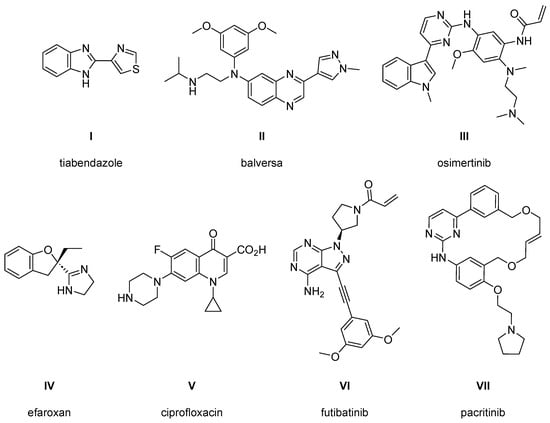
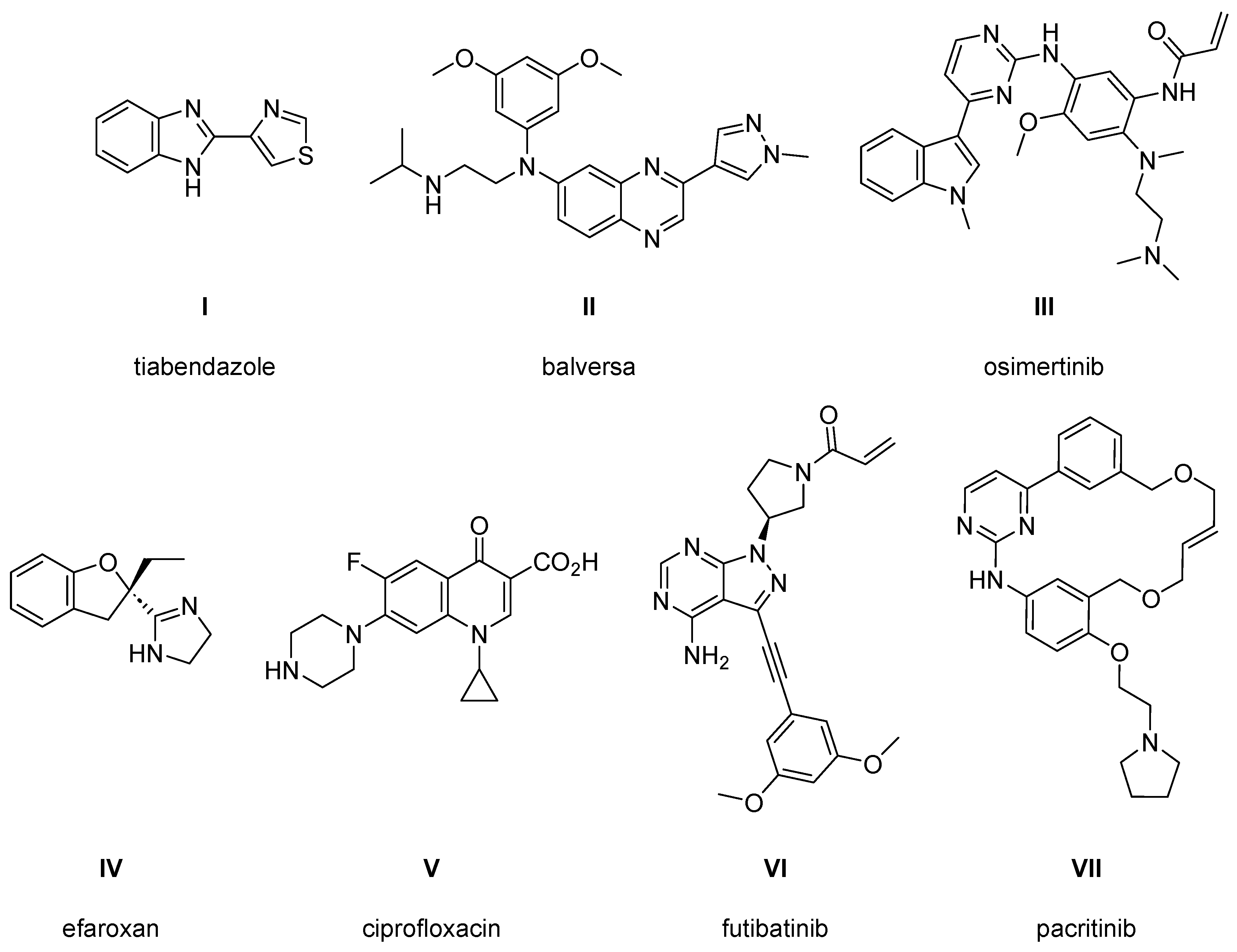
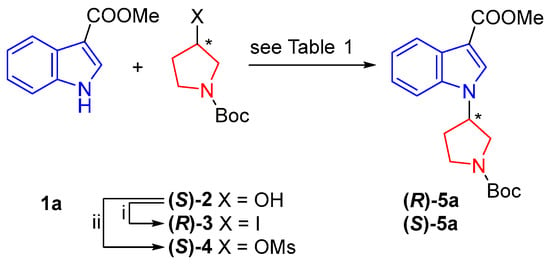
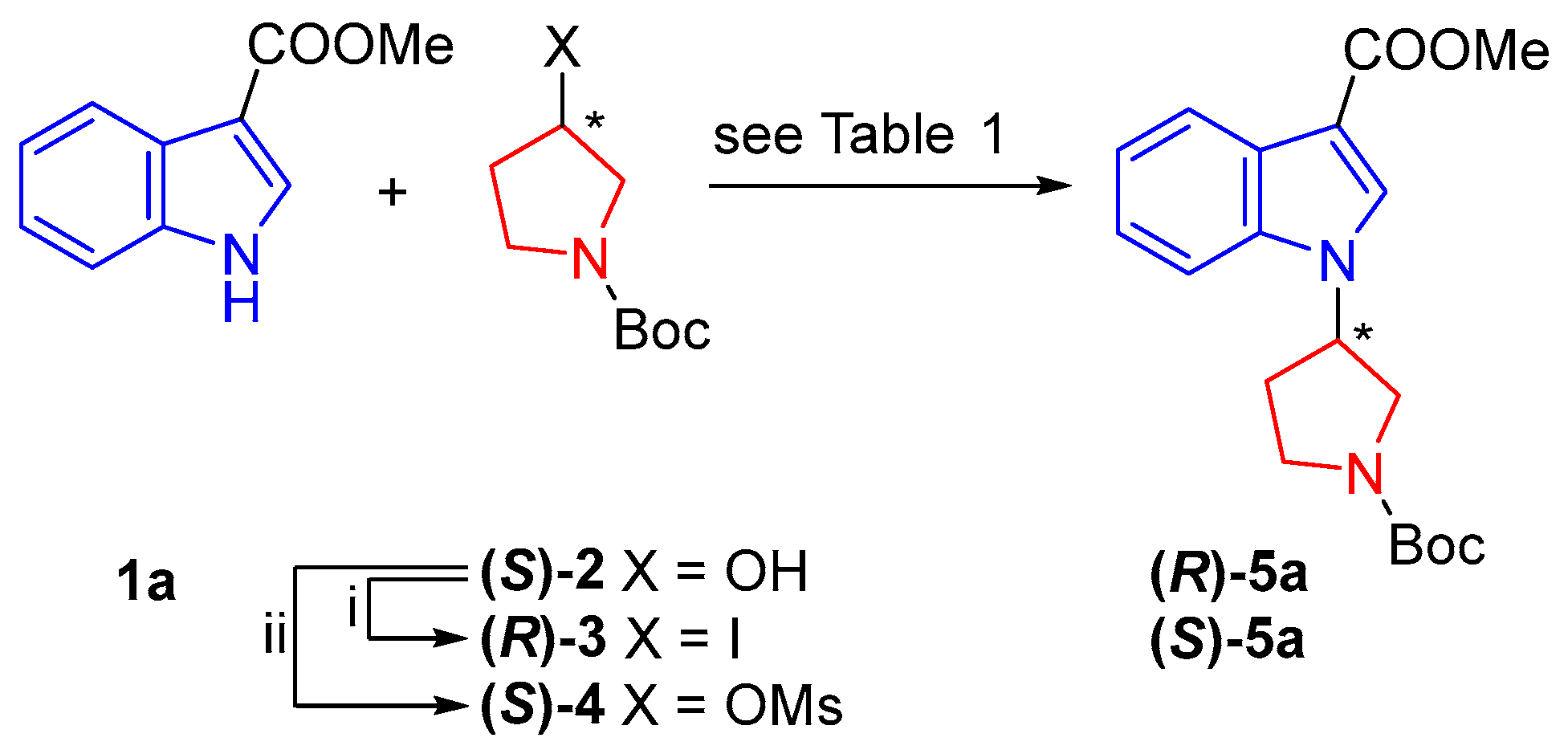
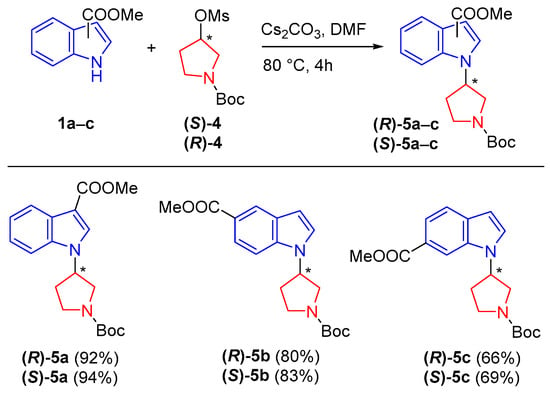
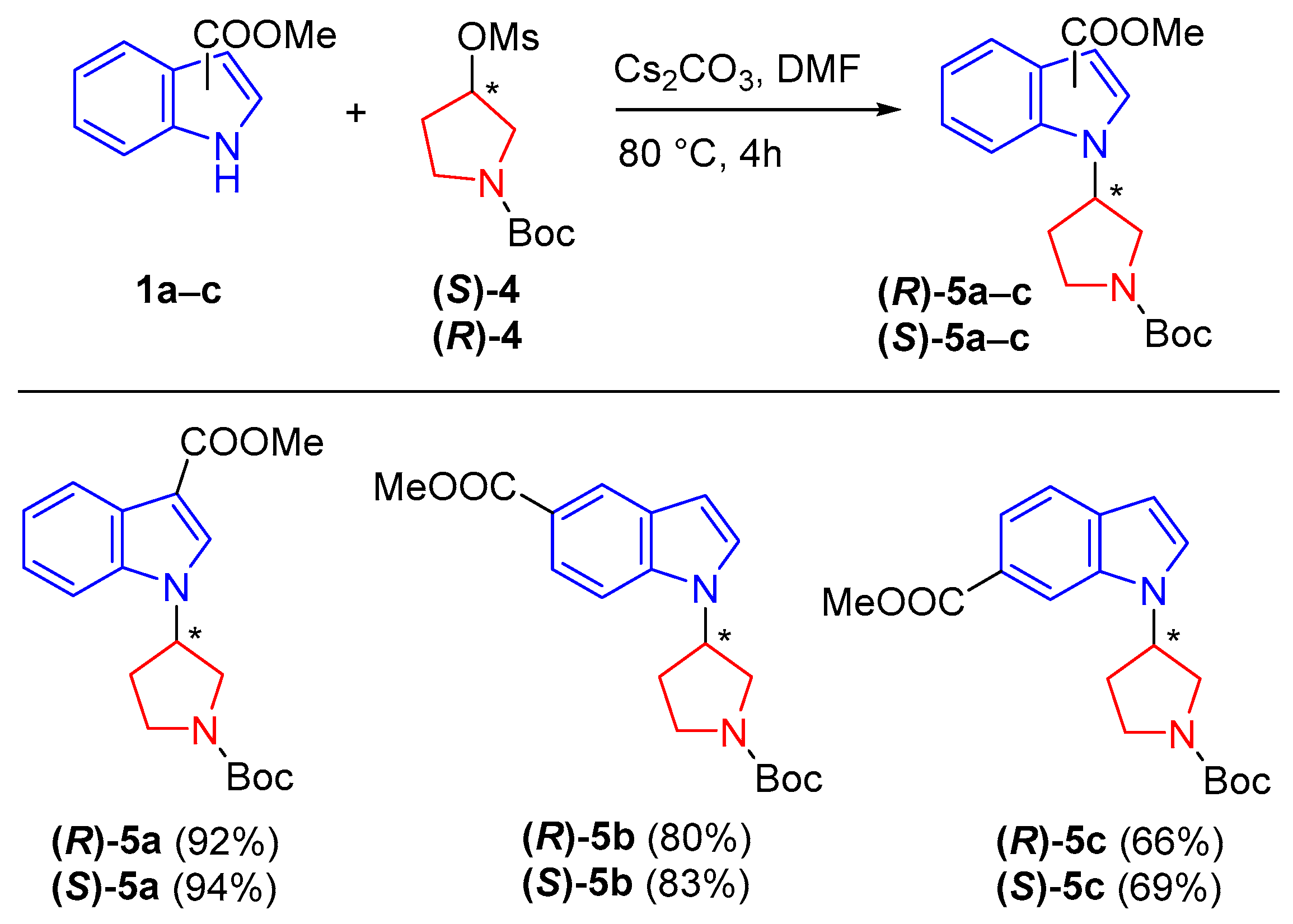
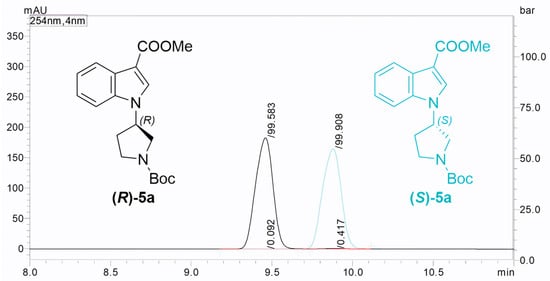
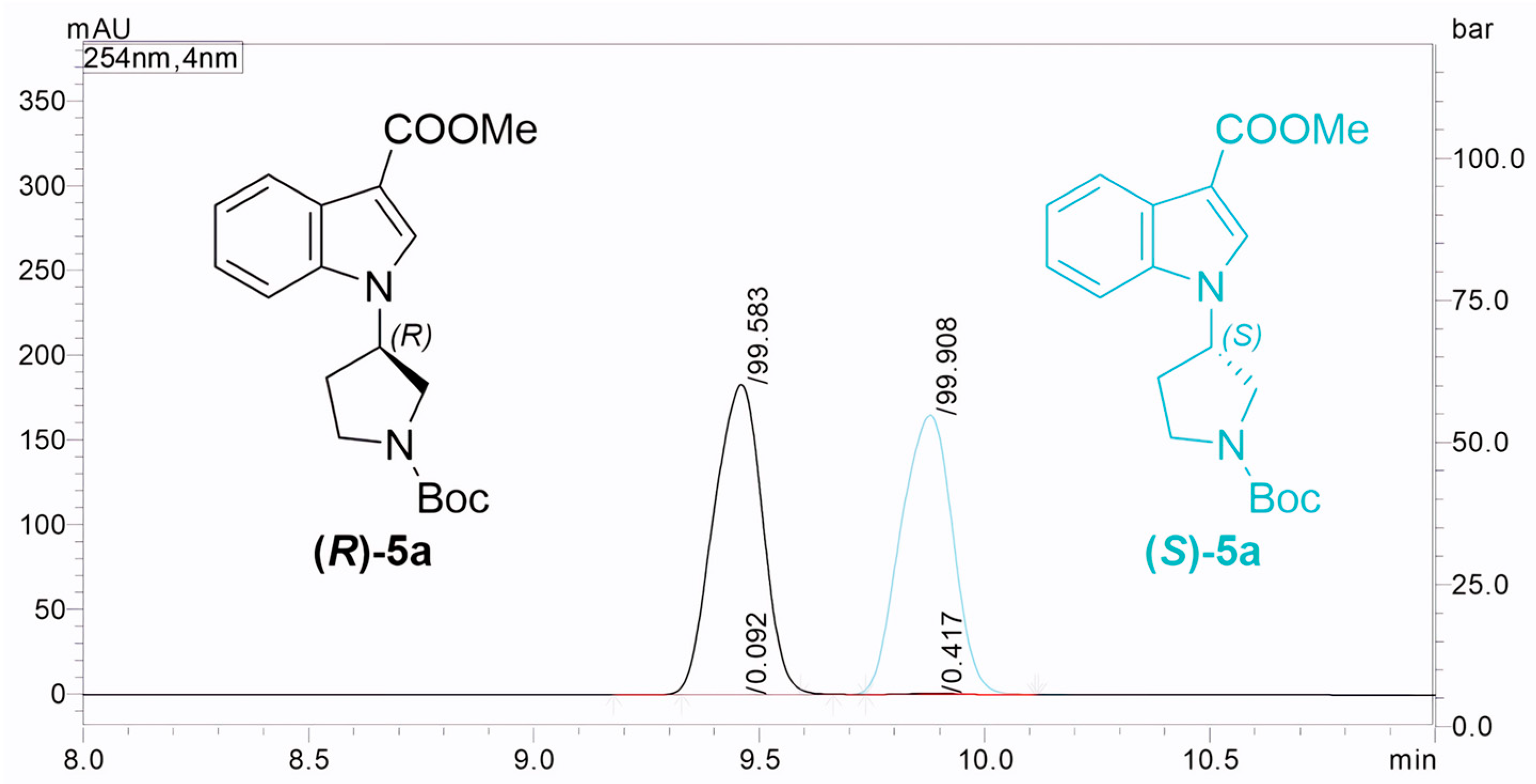
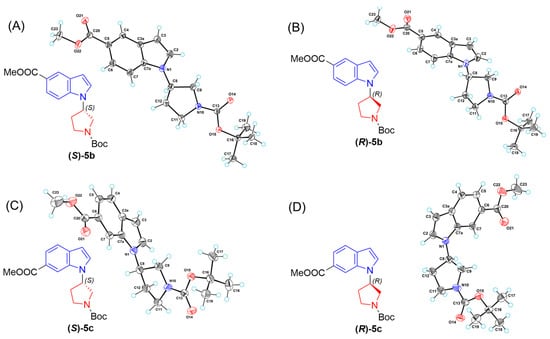
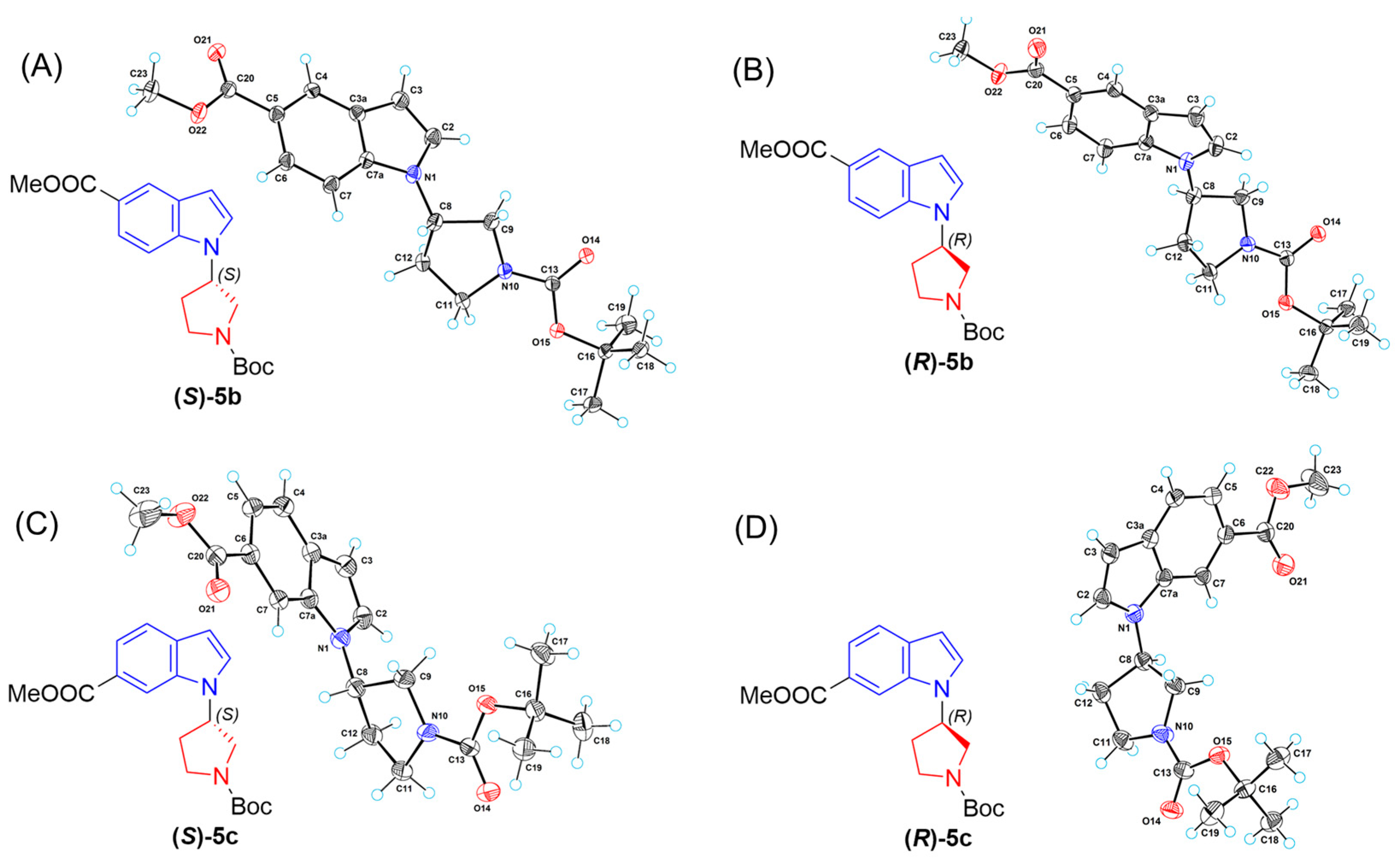
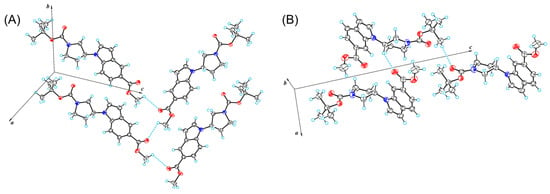
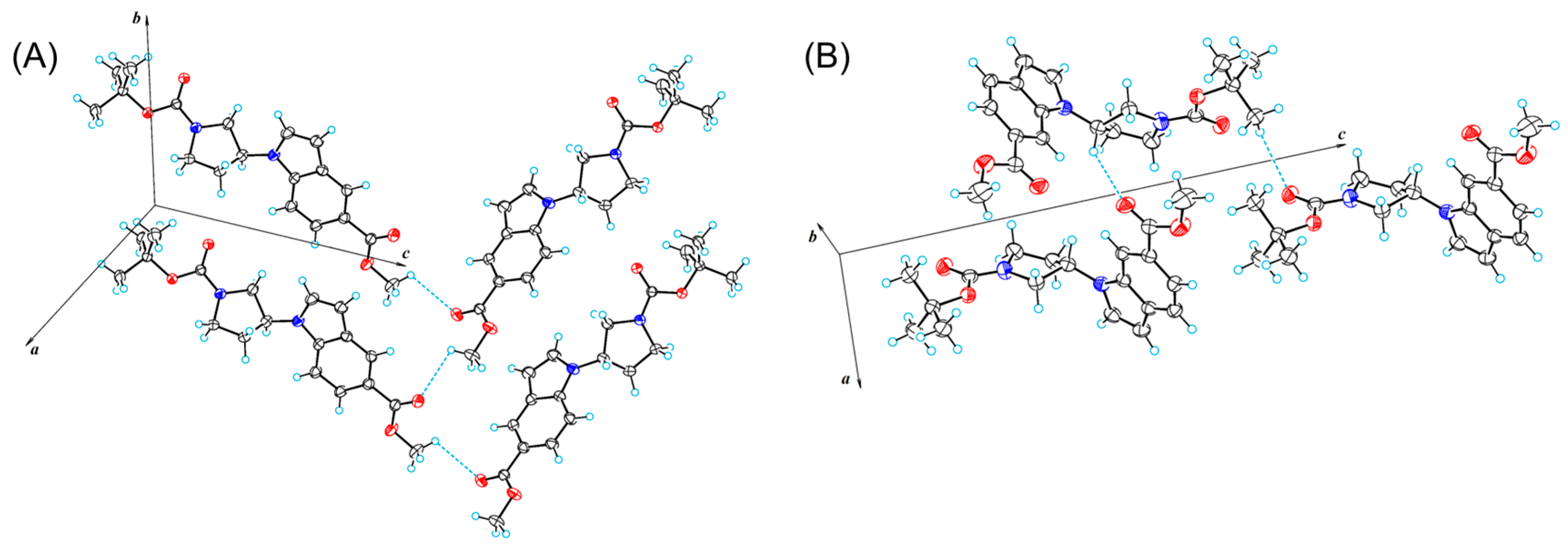
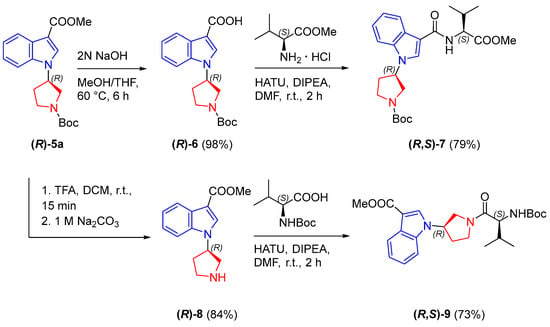
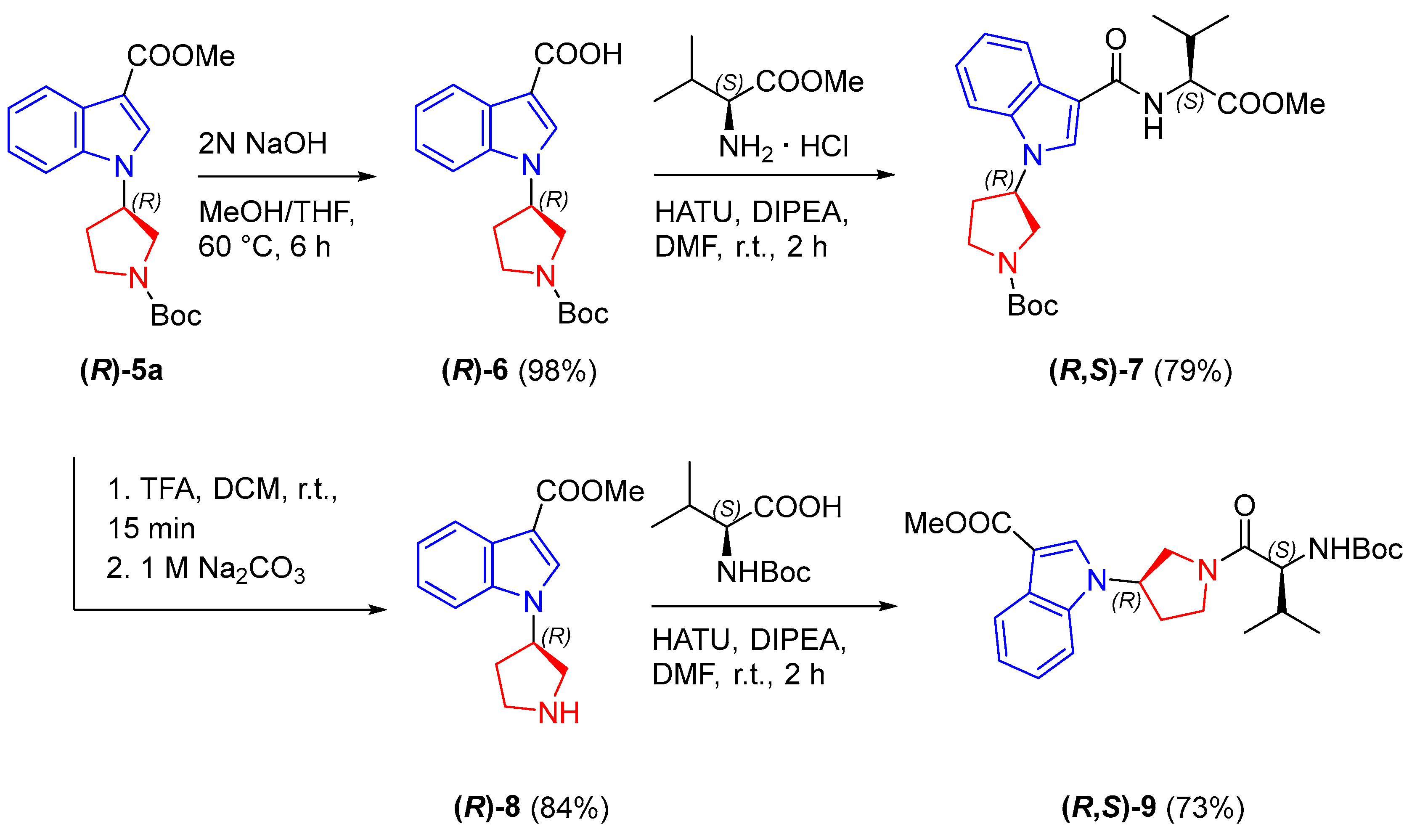
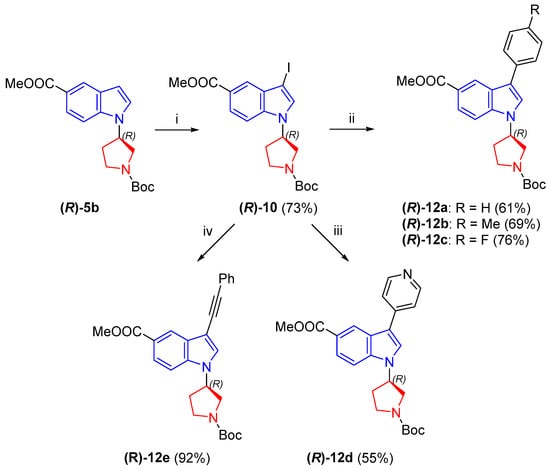
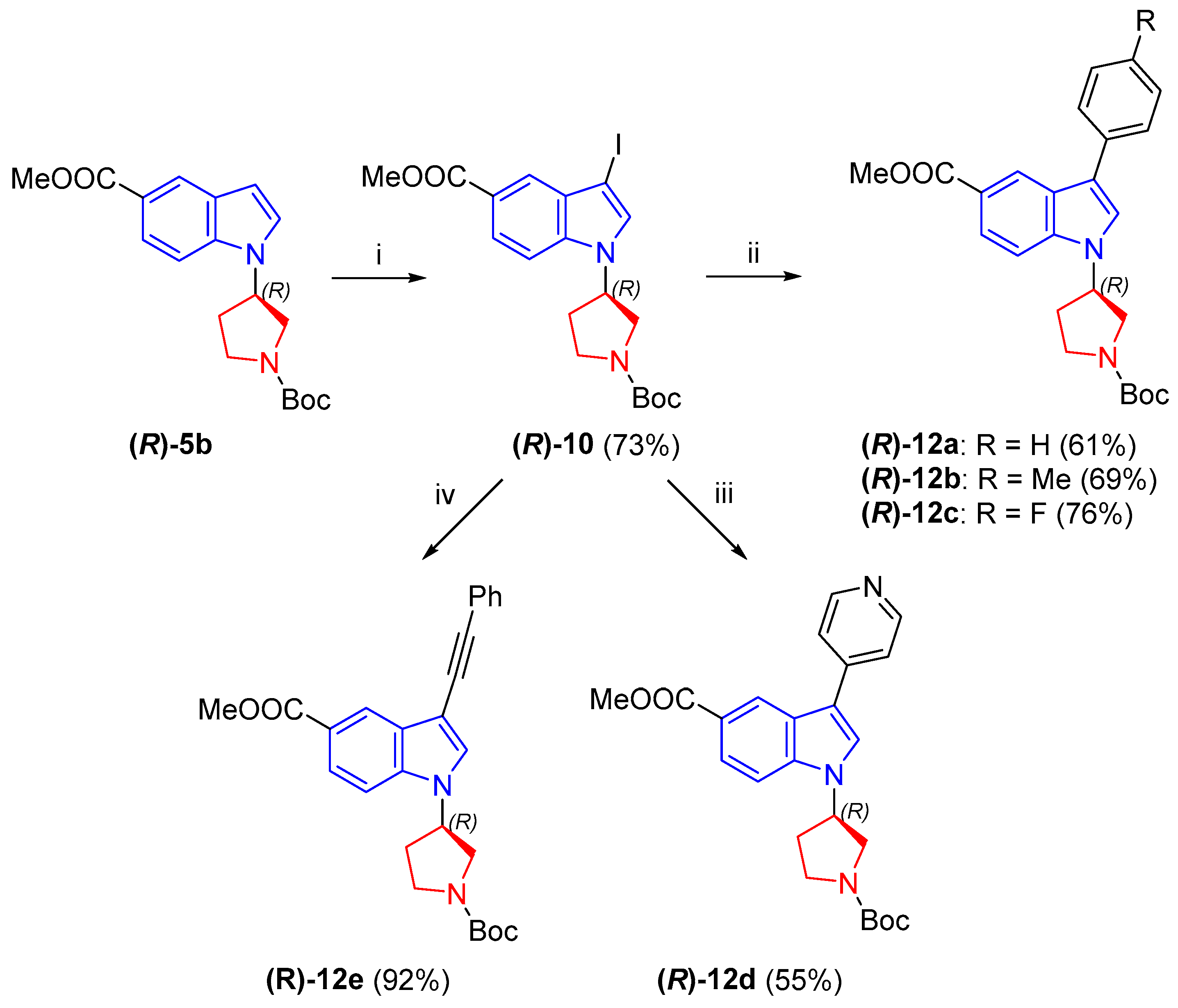
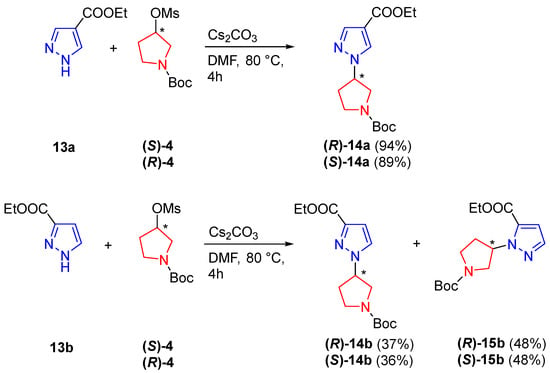
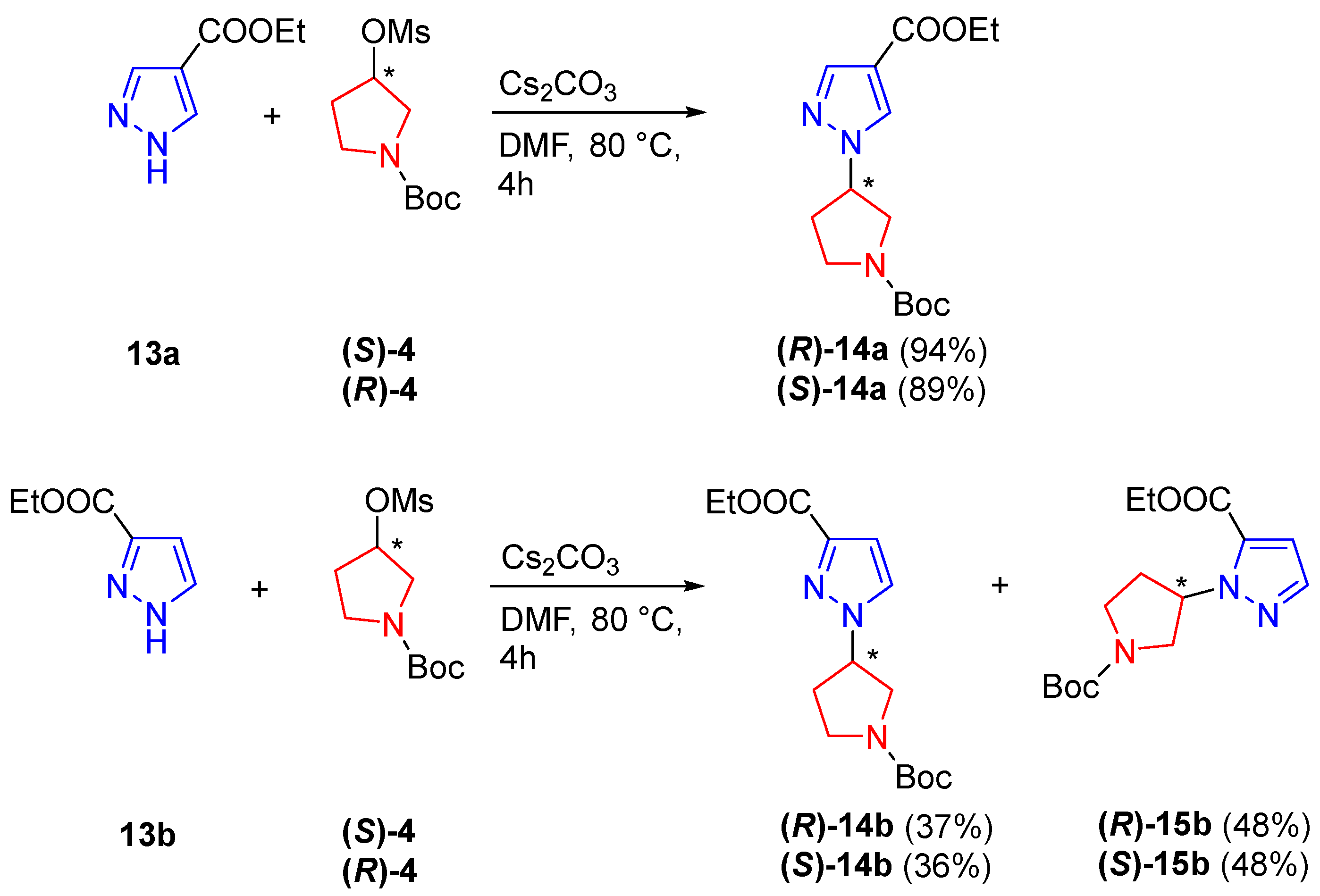
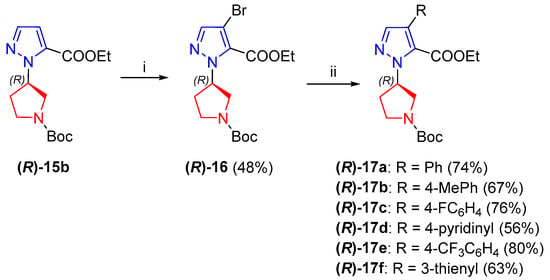
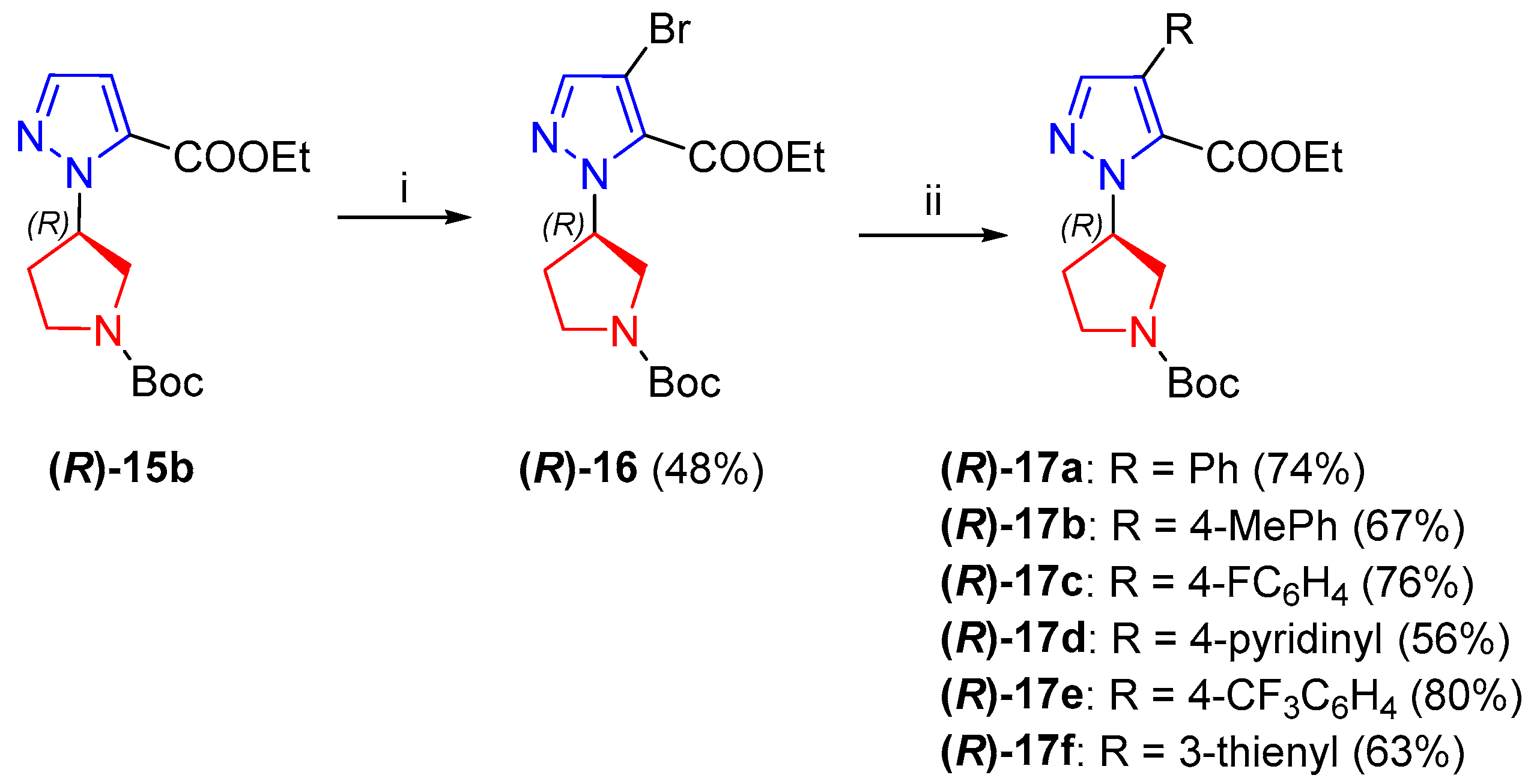
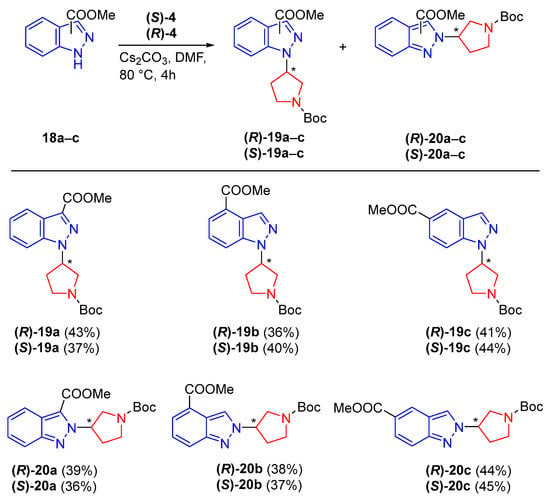
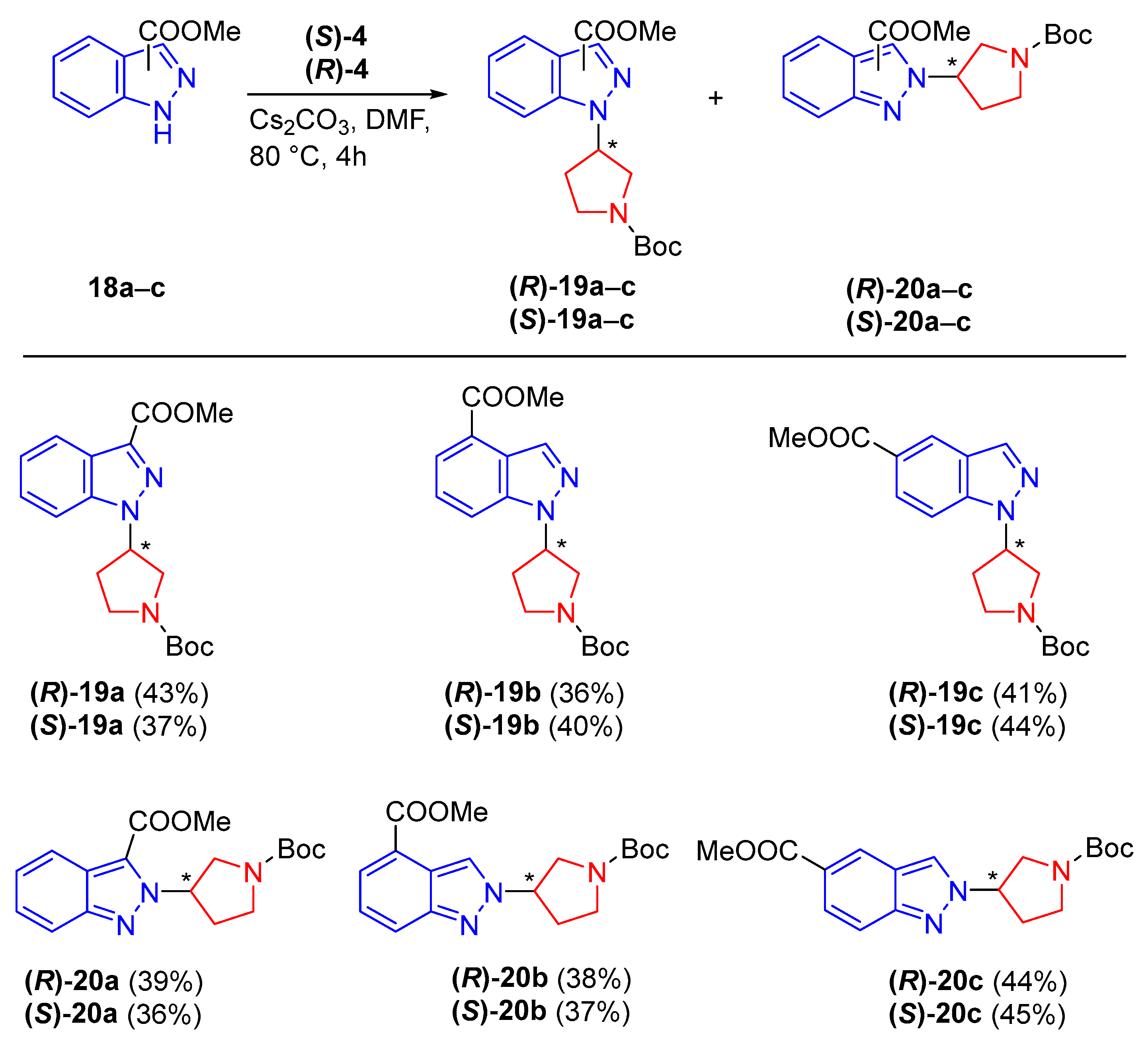
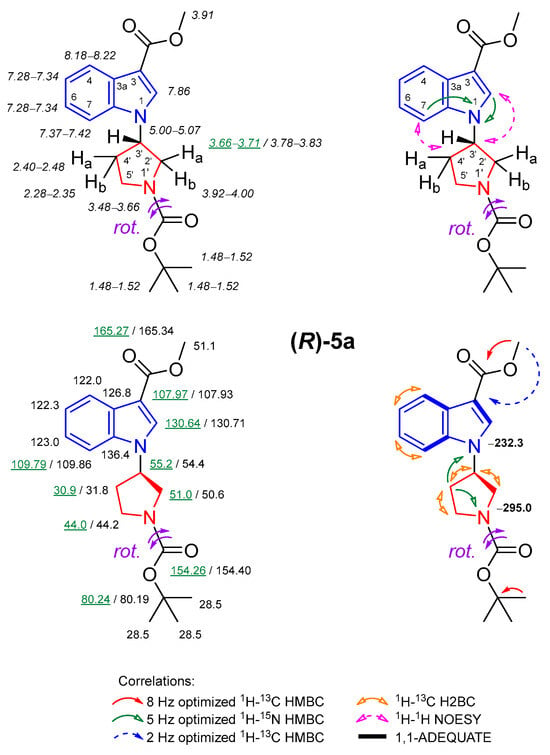
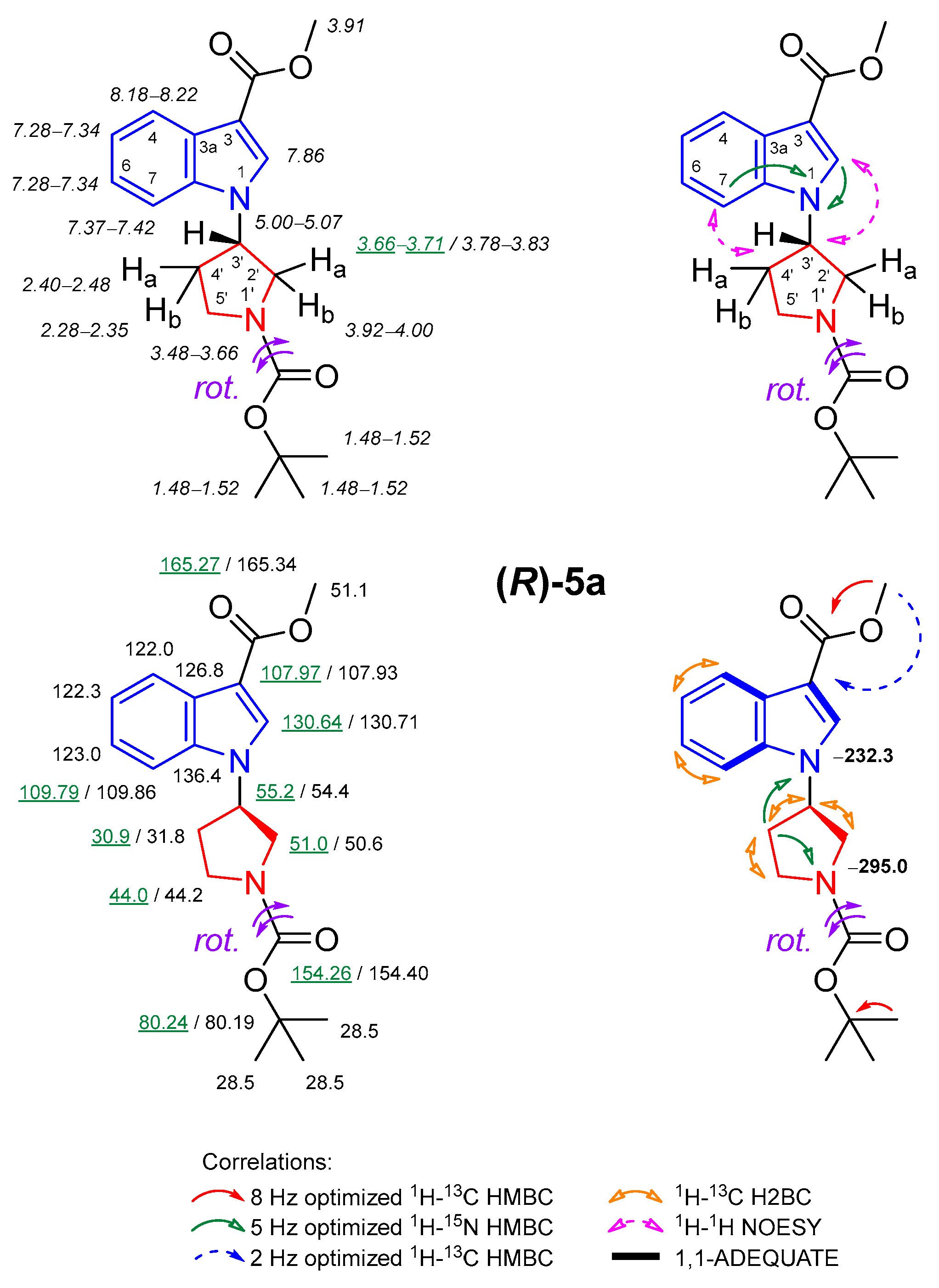
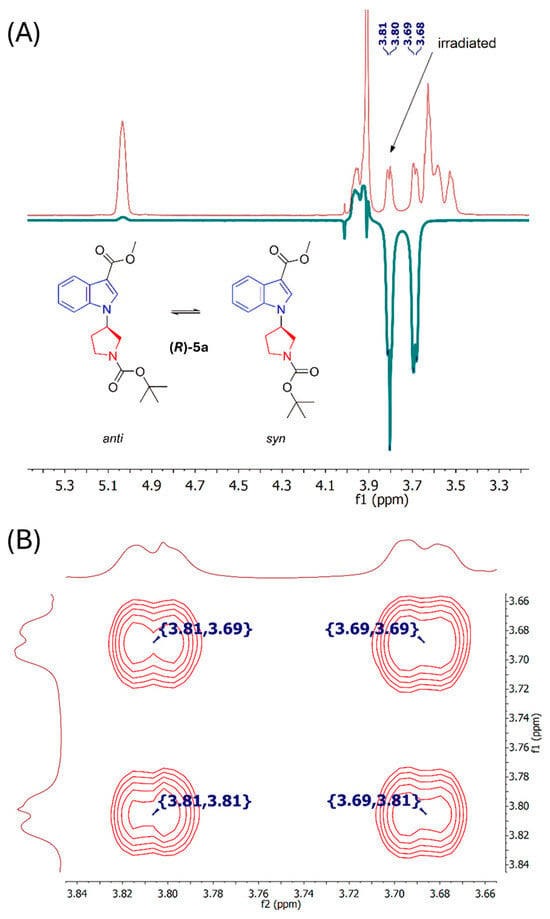
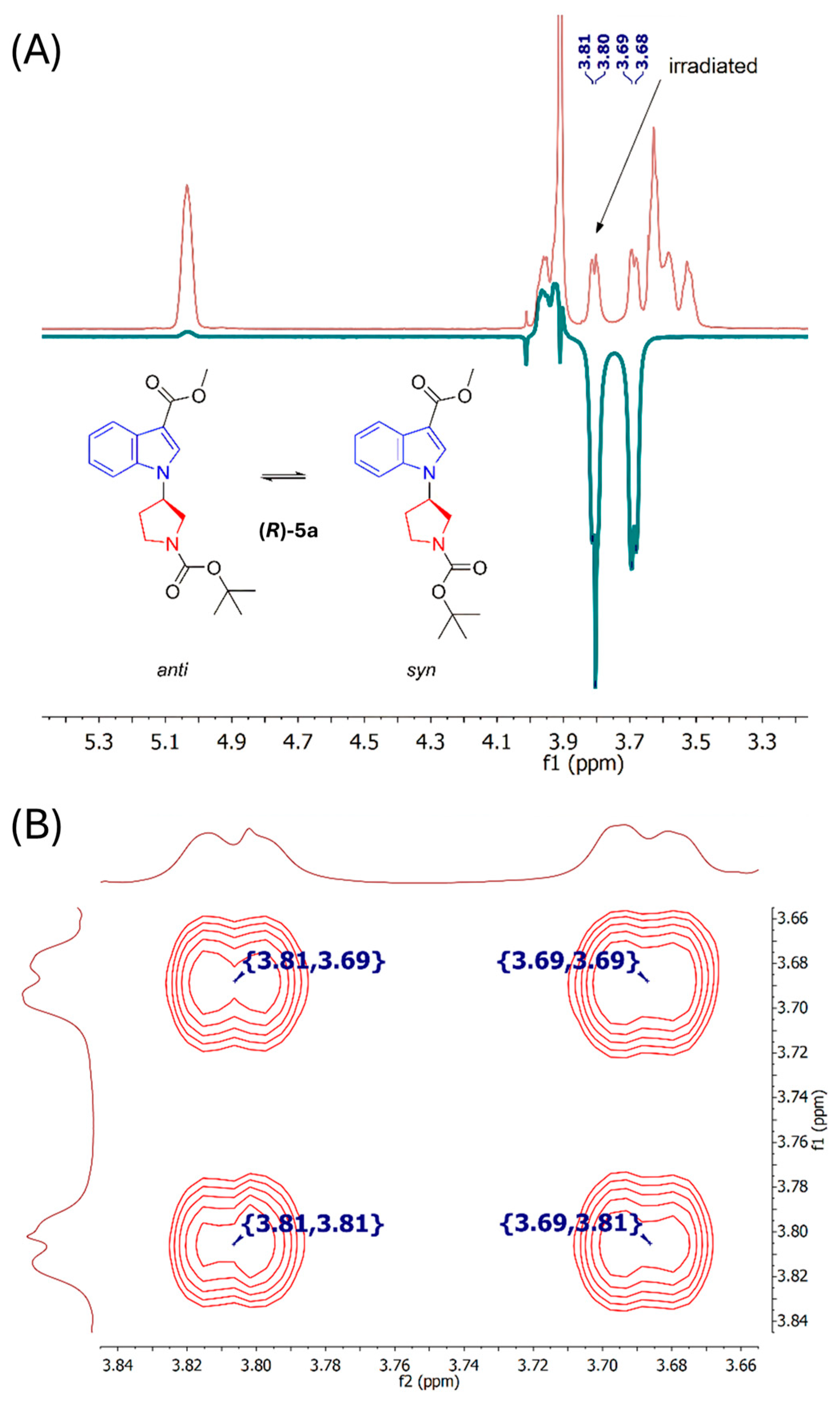
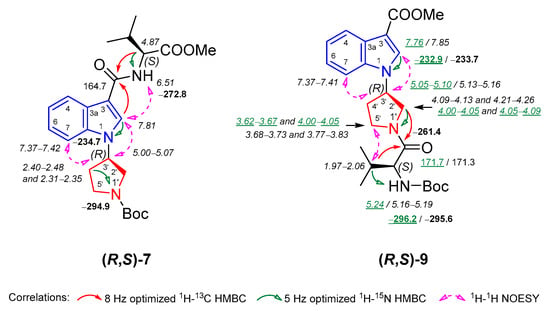
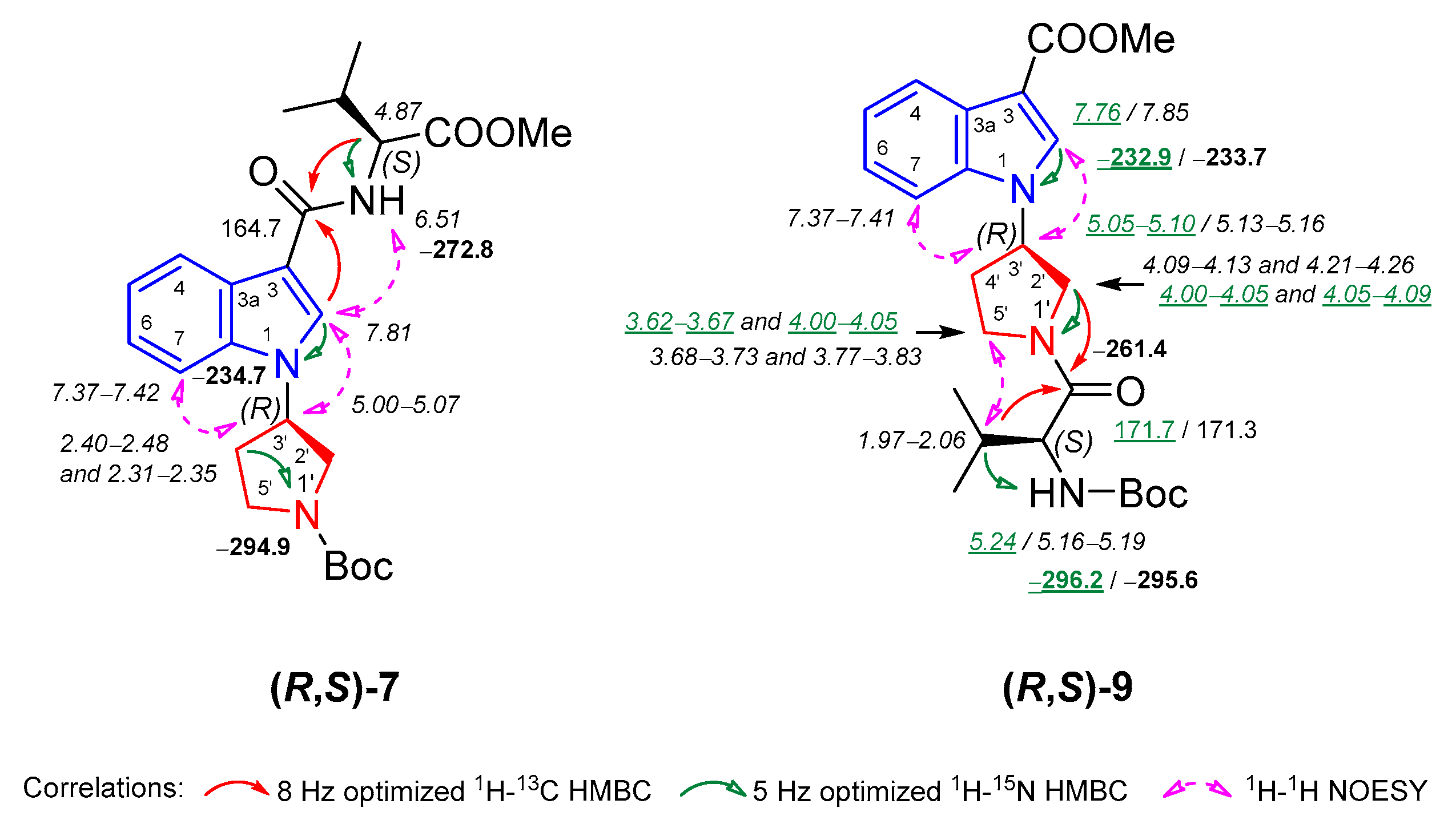
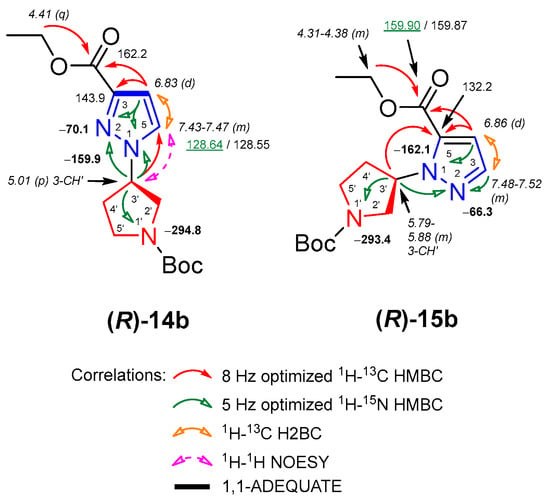
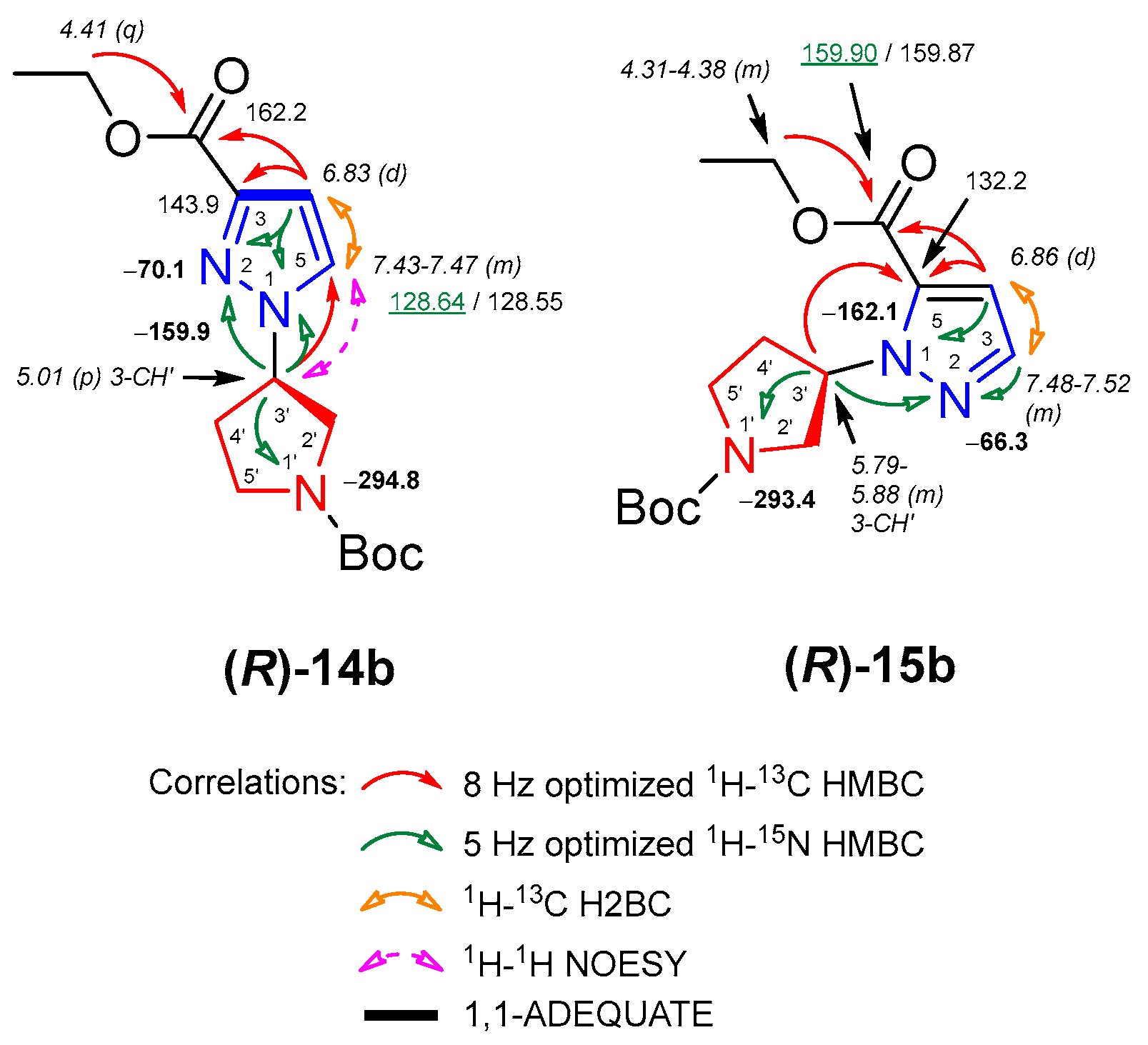
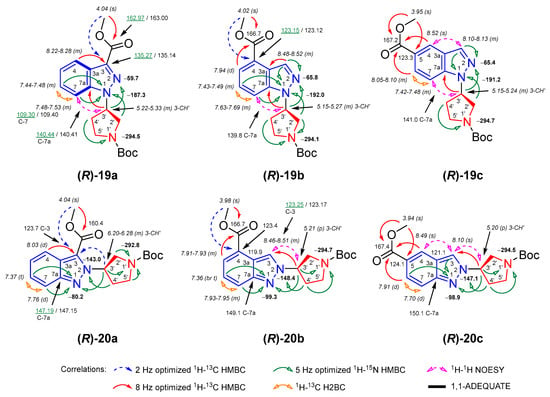
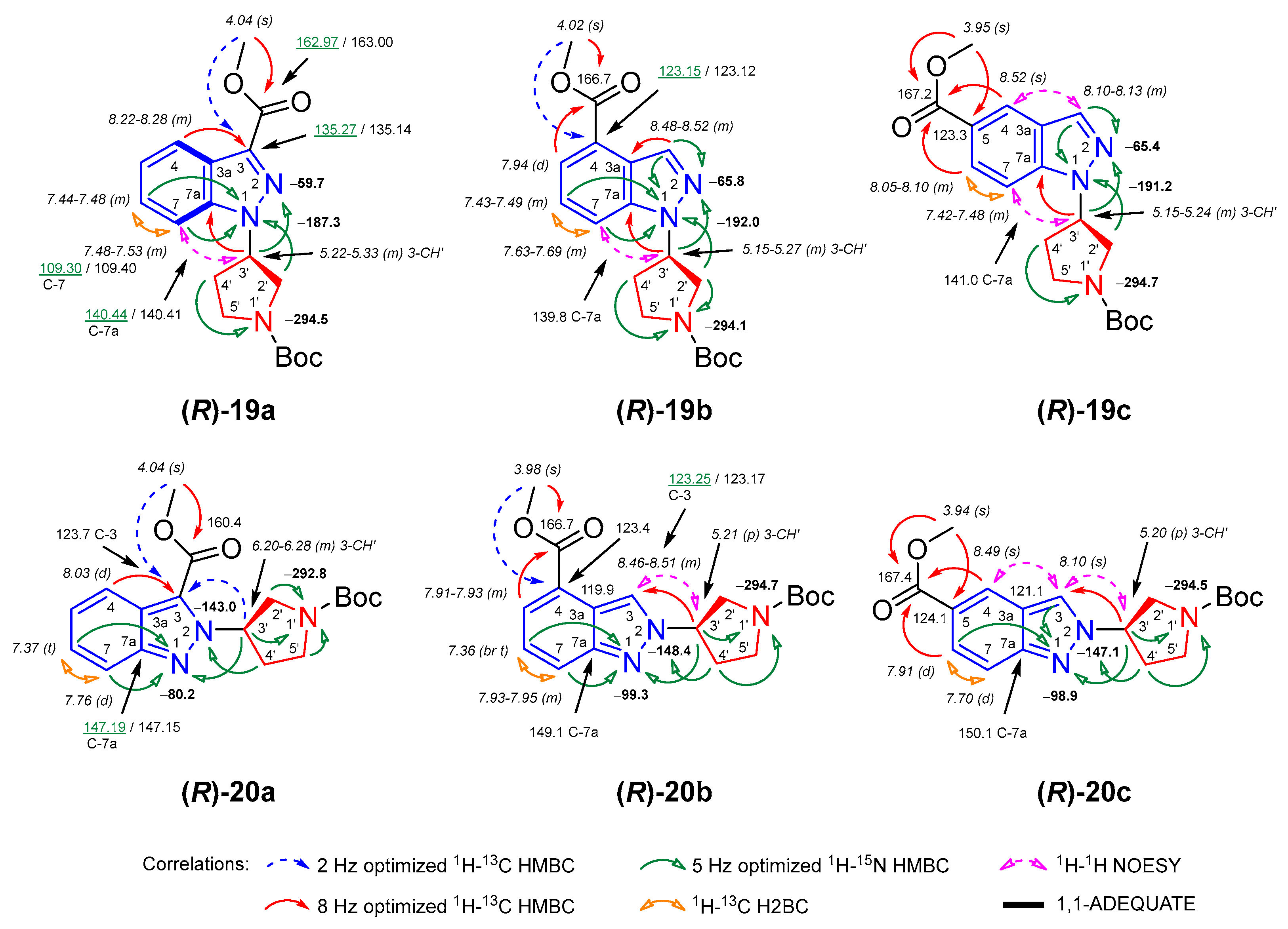

Disclaimer/Publisher’s Note: The statements, opinions and data contained in all publications are solely those of the individual author(s) and contributor(s) and not of MDPI and/or the editor(s). MDPI and/or the editor(s) disclaim responsibility for any injury to people or property resulting from any ideas, methods, instructions or products referred to in the content. |
© 2026 by the authors. Licensee MDPI, Basel, Switzerland. This article is an open access article distributed under the terms and conditions of the Creative Commons Attribution (CC BY) license.