Review

Molecular Mechanisms Linking Omega-3 Fatty Acids and the Gut–Brain Axis

by
Anna Zinkow
,
Wojciech Grodzicki
,
Malwina Czerwińska
and
Katarzyna Dziendzikowska
*
Department of Dietetics, Institute of Human Nutrition Sciences, Warsaw University of Life Sciences—SGGW, Nowoursynowska 159C, 02-776 Warsaw, Poland
*
Author to whom correspondence should be addressed.
Molecules 2025, 30(1), 71; https://doi.org/10.3390/molecules30010071

Submission received: 25 November 2024 / Revised: 20 December 2024 / Accepted: 26 December 2024 / Published: 28 December 2024
(This article belongs to the Special Issue Bioactive Compounds from Functional Foods, 2nd Edition)

Abstract

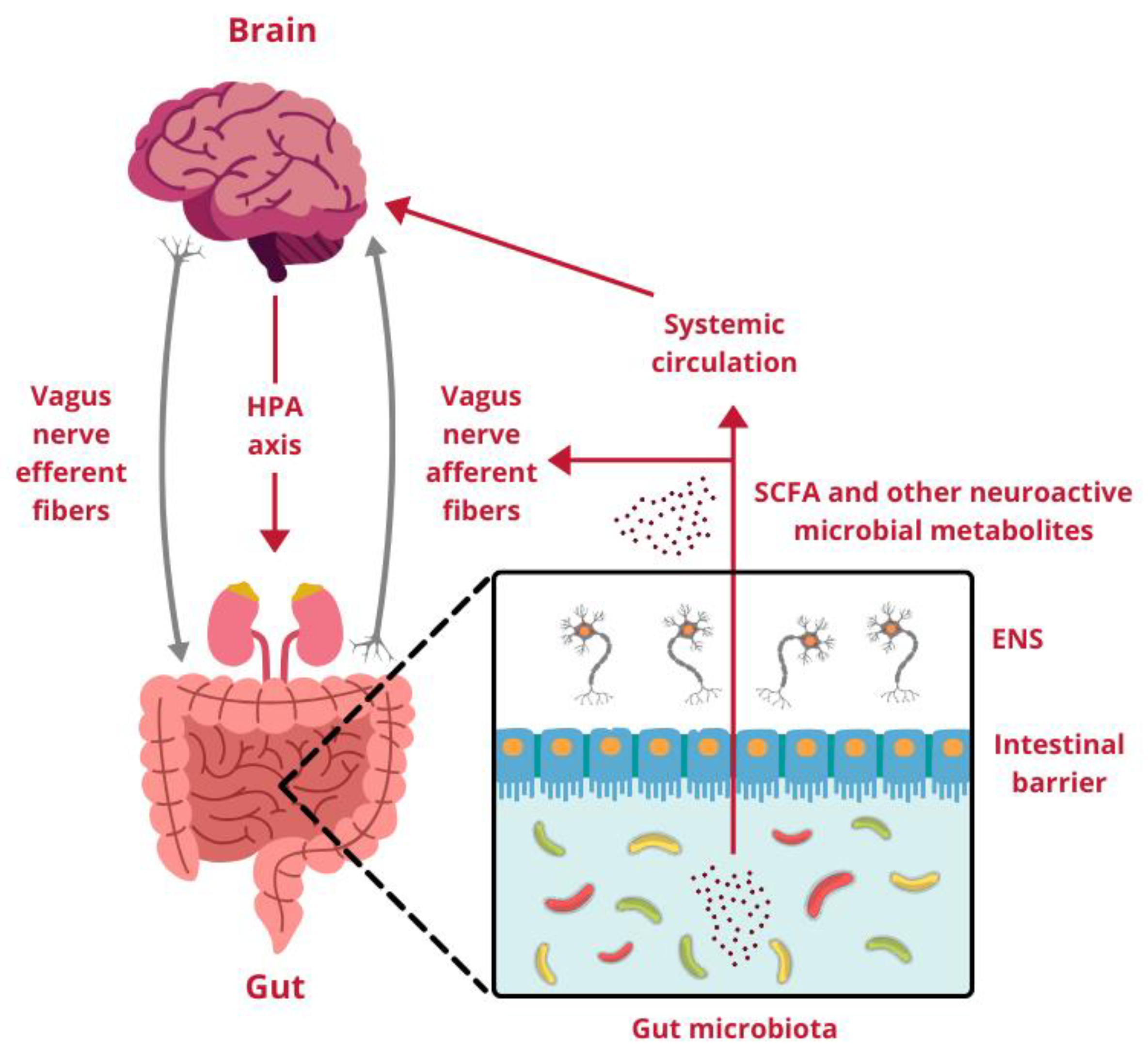
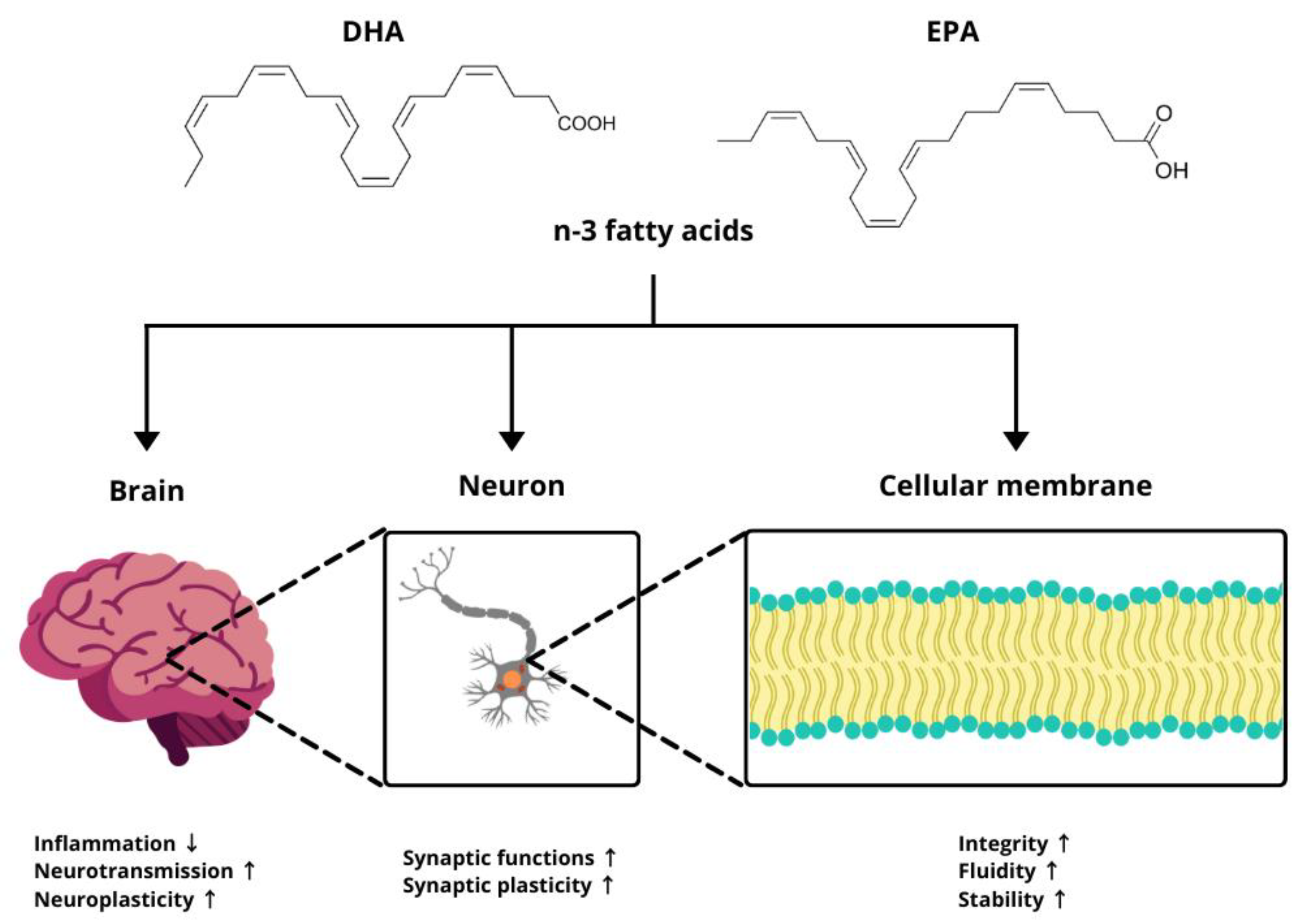
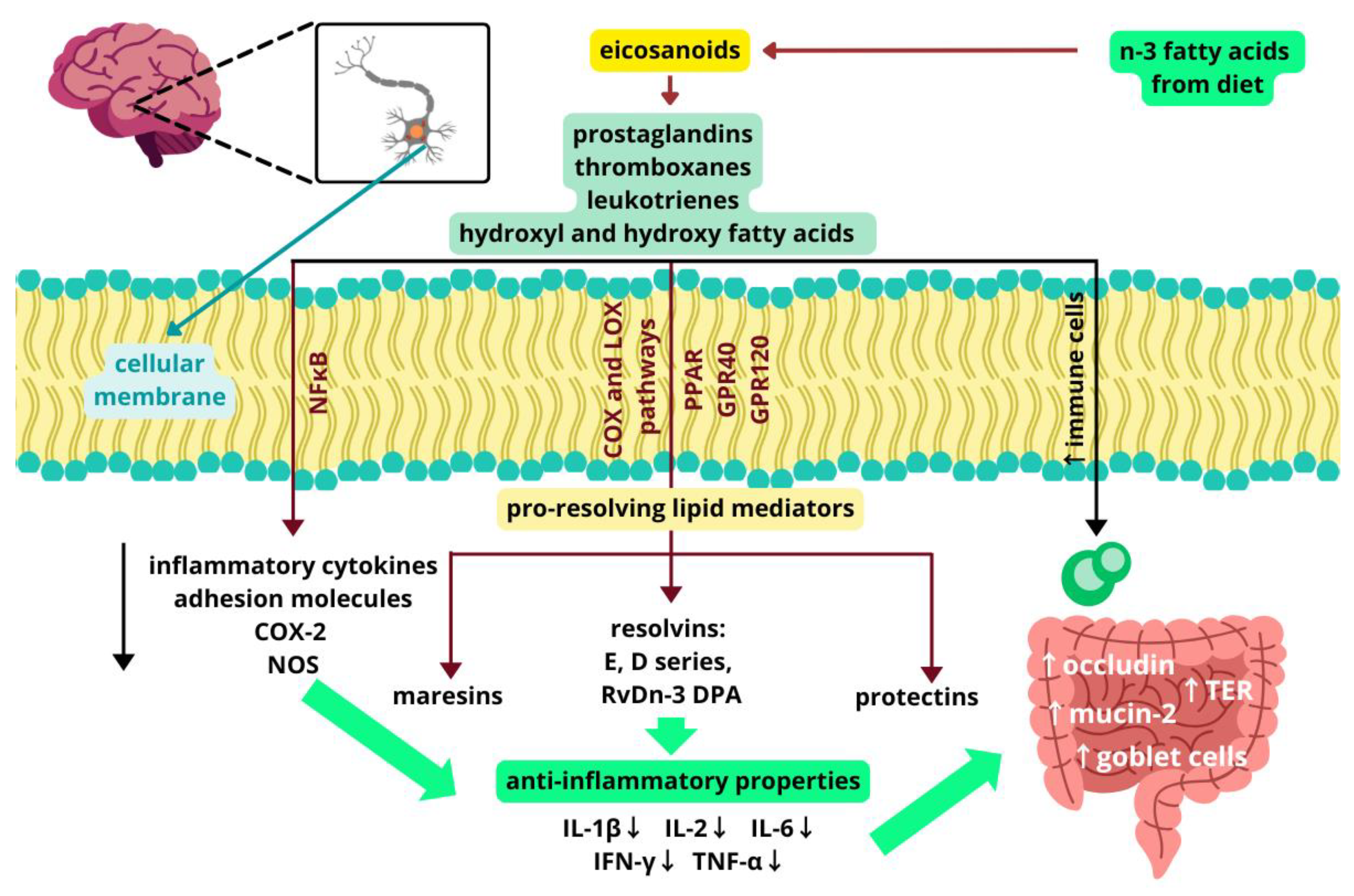
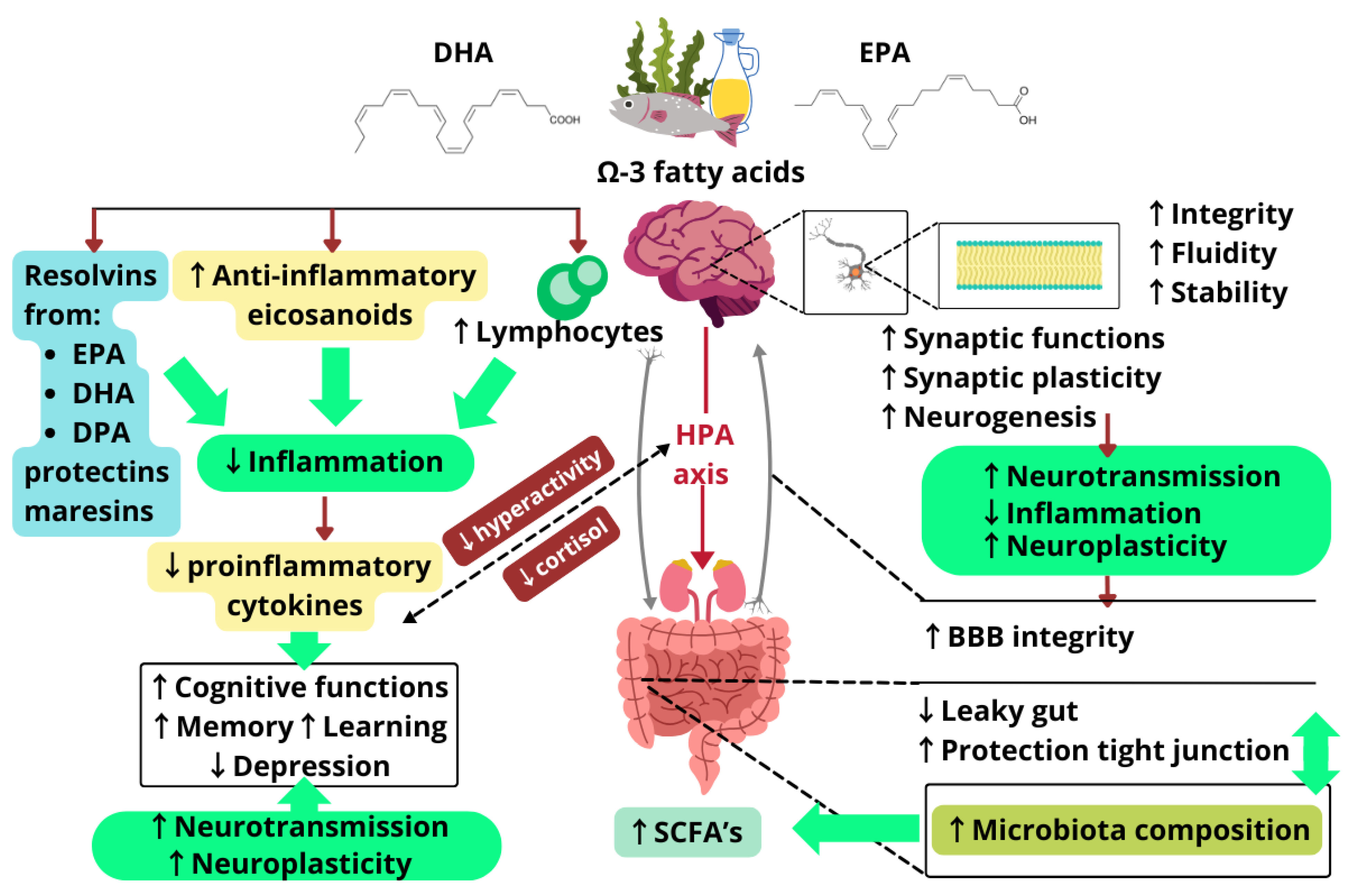
The gut–brain axis (GBA) is a complex communication network connecting the gastrointestinal tract (GIT) and the central nervous system (CNS) through neuronal, endocrine, metabolic, and immune pathways. Omega-3 (n-3) fatty acids, particularly eicosapentaenoic acid (EPA) and docosahexaenoic acid (DHA), are crucial food components that may modulate the function of this axis through molecular mechanisms. Derived mainly from marine sources, these long-chain polyunsaturated fatty acids are integral to cell membrane structure, enhancing fluidity and influencing neurotransmitter function and signal transduction. Additionally, n-3 fatty acids modulate inflammation by altering eicosanoid production, reducing proinflammatory cytokines, and promoting anti-inflammatory mediators. These actions help preserve the integrity of cellular barriers like the intestinal and blood–brain barriers. In the CNS, EPA and DHA support neurogenesis, synaptic plasticity, and neurotransmission, improving cognitive functions. They also regulate the hypothalamic–pituitary–adrenal (HPA) axis by reducing excessive cortisol production, associated with stress responses and mental health disorders. Furthermore, n-3 fatty acids influence the composition and function of the gut microbiota, promoting beneficial bacterial populations abundance that contribute to gut health and improve systemic immunity. Their multifaceted roles within the GBA underscore their significance in maintaining homeostasis and supporting mental well-being.
Keywords: cognitive function; docosahexaenoic acid (DHA); eicosapentaenoic acid (EPA); gut microbiota; gut–brain axis (GBA); hypothalamic–pituitary–adrenal (HPA) axis; inflammation; omega-3 (n-3) fatty acids cognitive function; docosahexaenoic acid (DHA); eicosapentaenoic acid (EPA); gut microbiota; gut–brain axis (GBA); hypothalamic–pituitary–adrenal (HPA) axis; inflammation; omega-3 (n-3) fatty acids