


Abstract
In spite of advances in vaccination, control of the COVID-19 pandemic will require the use of pharmacological treatments against SARS-CoV2. Their development needs to consider the existence of two phases in the disease, namely the viral infection and the inflammatory stages. The main targets for antiviral therapeutic intervention are: (a) viral proteins, including the spike (S) protein characteristic of the viral cover and the viral proteases in charge of processing the polyprotein arising from viral genome translation; (b) host proteins, such as those involved in the processes related to viral entry into the host cell and the release of the viral genome inside the cell, the elongation factor eEF1A and importins. The use of antivirals targeted at host proteins is less developed but it has the potential advantage of not being affected by mutations in the genome of the virus and therefore being active against all its variants. Regarding drugs that address the hyperinflammatory phase of the disease triggered by the so-called cytokine storm, the following strategies are particularly relevant: (a) drugs targeting JAK kinases; (b) sphingosine kinase 2 inhibitors; (c) antibodies against interleukin 6 or its receptor; (d) use of the traditional anti-inflammatory corticosteroids.
1. Introduction
Vaccines are the main method for the prevention of viral diseases, and the power of this approach has been recently exemplified by the speed of the development of COVID-19 vaccines [1]. Vaccine availability notwithstanding, it is of the greatest importance to also have access to antiviral pharmacological treatments to cure the disease if it becomes established. Indeed, for some viruses such as HIV, no effective vaccines have been marketed so far, but nevertheless the advances made in anti-HIV drugs have allowed a fatal disease to be turned into a chronic one. Thus, the pharmacological treatment of the COVID-19 disease would be complementary to vaccination, leading to a strategy similar to the one used in the case of influenza. In the specific case of COVID-19, there are several additional reasons that make imperative the development of pharmacological treatments:
- Currently known vaccines are not 100% effective, nor do they fully prevent the transmission of the disease.
- Worldwide vaccine distribution faces formidable logistic obstacles that have rendered it rather slow, especially in underdeveloped countries.
- It is necessary to treat those patients that develop the disease in spite of being vaccinated.
- A pharmacological treatment would lead to more benign symptoms and therefore the saturation of health systems by COVID-19 patients would be less likely.
- Pharmacological treatments can be designed to address multiple targets that are highly conserved among variants of the virus, or host-related targets. Thus, it has the potential to enable antiviral activity for all the viral variants.
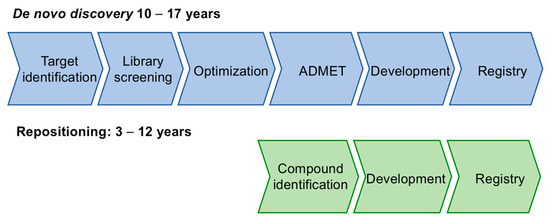
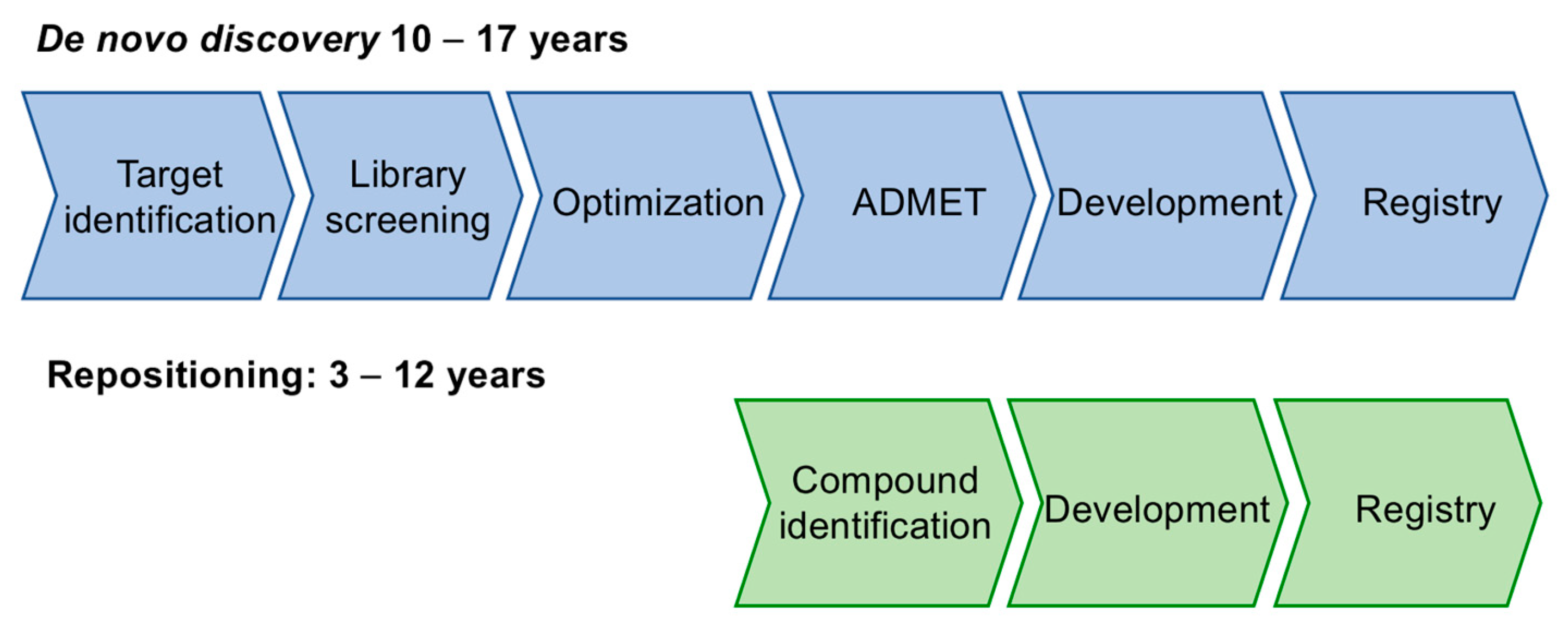
The traditional de novo drug discovery process is highly complex and requires an average of about 15 years to bring a molecule to the market. Due to the urgency of finding treatments for COVID-19, for the moment, research efforts have been focused on the alternative strategy, known as repositioning. This method involves using a previously known drug for a new indication, and can reduce drastically the time required for the drug discovery and development process (Figure 1).
Figure 1.
The drug repositioning process.
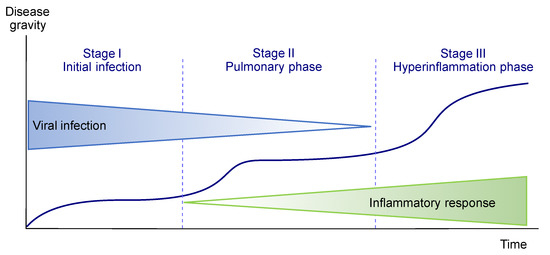
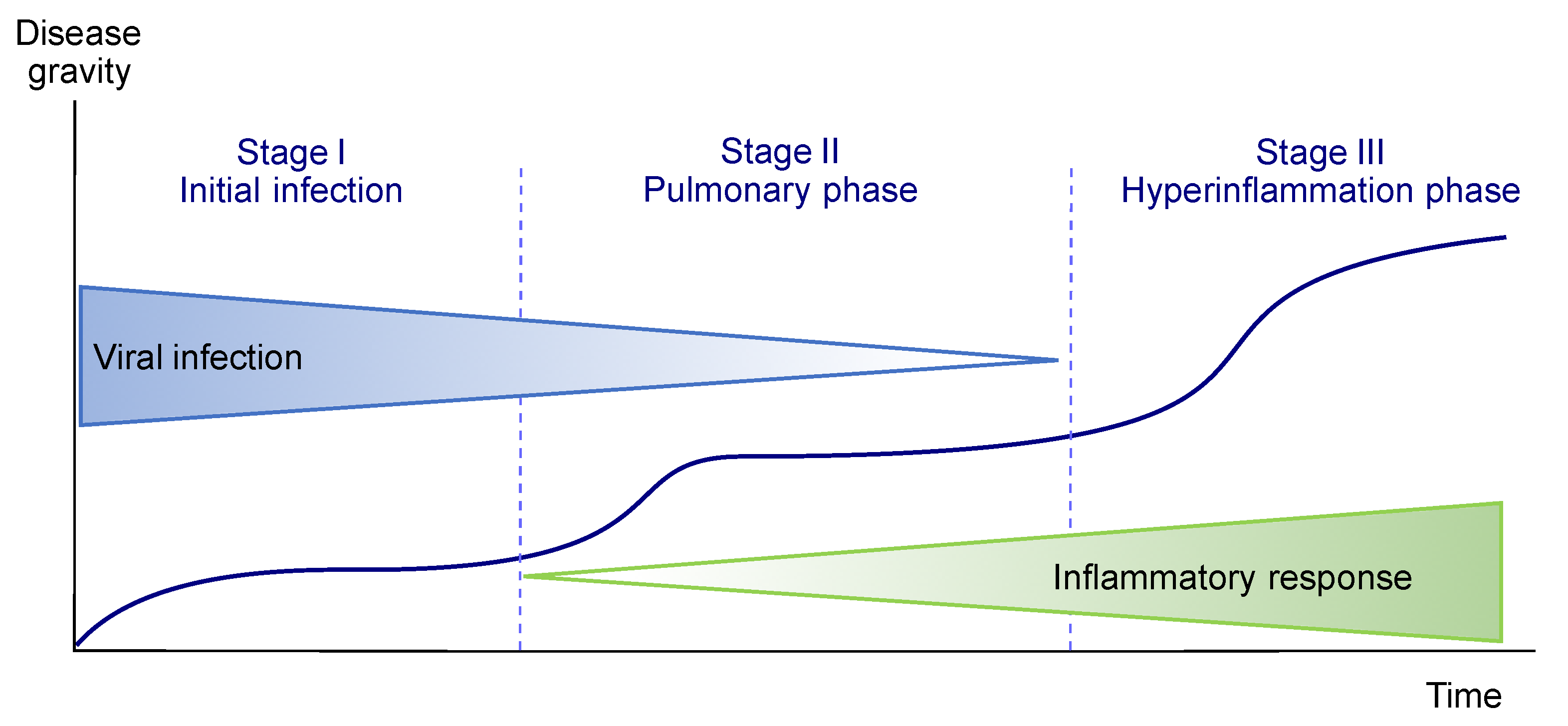
The temporal course of the COVID-19 infection has some peculiarities that should be taken into account when choosing a treatment. In the initial stages of the viral infection, symptoms are mild and include fever, myalgia and dry cough. At more advanced stages of the disease, pulmonary symptoms such as dyspnea and hypoxia appear. Although the viral load is diminishing, the condition of some patients worsens because of their own immune response. Thus, life-threatening COVID-19 disease is often associated to the cytokine release syndrome (CRS), i.e., a systemic inflammatory response that occurs when large numbers of white blood cells release inflammatory cytokines (“cytokine storm”), which in turn activate additional white blood cells (Figure 2). As a consequence, COVID-19 therapy should be addressed at the virus itself during early stages of the disease and to the exacerbated inflammatory response at late stages [2].
Figure 2.
Stages in the evolution of the COVID-19 infection.
One final remark regarding COVID-19 is that clinical experience shows it to be a very heterogeneous disease and that only clinical assays involving large numbers of patients give reliable information. Unfortunately, many of the known clinical assays, especially those performed in the early stages of the pandemic, do not comply with this requirement, potentially leading to erroneous conclusions regarding the usefulness of candidate molecules.
Due to the huge importance of the COVID-19 challenge worldwide, a large number of molecules have been assayed in vitro, and over 500 pharmacological treatments have undergone clinical assays [3]. We will discuss the most relevant ones in the following sections, using the molecular mechanism of action as the organizing principle. Criteria for compound inclusion were: (a) small-molecule or biological drugs that have been approved or were considered to be reasonably close to approval at the time of writing (late December 2021); (b) compounds that act by a particularly relevant mechanism that was considered likely to yield approved drugs in the future. These criteria provide a different perspective from previous reviews [4,5,6,7] describing the medicinal chemistry perspective towards the development of pharmacological treatments for COVID-19.
2. Structure of the SARS-CoV2 Virus
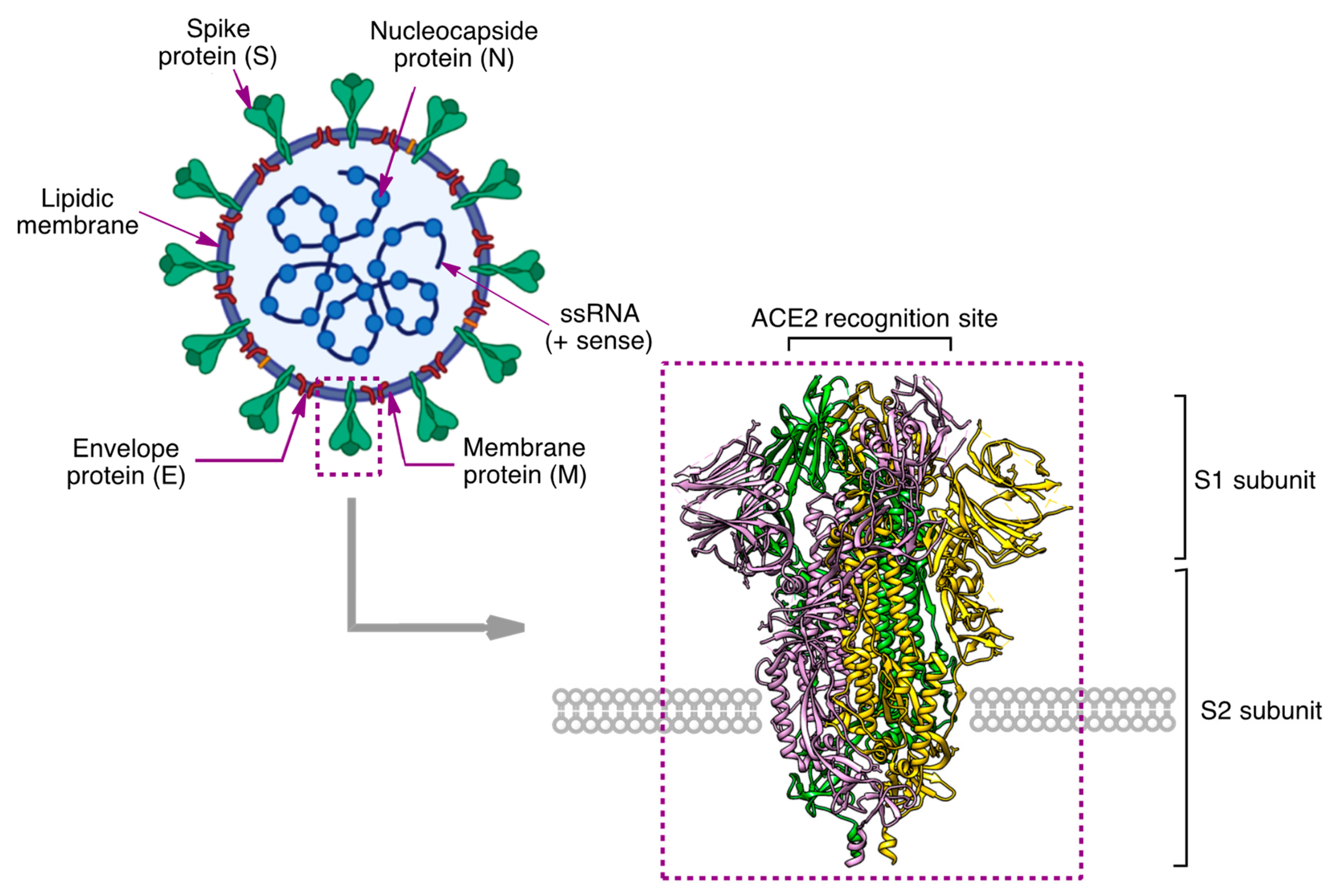
The SARS-CoV2 (severe acute respiratory syndrome coronavirus 2) virus belongs to the Coronaviridae family and is a positive-strand RNA virus. Its genome comprises around 30,000 nucleotides and contains four genes, which codify the surface protein characteristic of coronaviruses (Figure 3) [8,9]:
Figure 3.
Schematic structure of the SARS-CoV2 virus and its prefusion spike protein (pdb 6VXX).
- Glycoprotein S, which exists as a homotrimer and forms the characteristic spikes found in the viral surface. Acting as a fusion protein, it allows entry of the virus into the host cell following recognition by its ACE2 membrane protein.
- Envelope protein (E), which forms the virus cover.
- Membrane protein (M), which forms the matrix that connects the cover with the inner part of the virus.
- Nucleocapsid (N) phosphoprotein, which holds the viral genome, a piece of positive-strand RNA.
It also comprises the non-structural open reading frames that codify non-structural proteins such as viral enzymes needed for its intracellular replication.
The viral spike (S) glycoprotein is particularly important because it plays a key role in receptor recognition and cell membrane fusion. It contains 1273 amino acids, which form a signal peptide at the N-terminus (residues 1–13), the S1 subunit (residues 14–685), responsible for receptor binding, and the S2 subunit (residues 686–1273), involved in membrane fusion. Following the outbreak of COVID-19, the in vitro structures of the SARS-CoV-2 S protein in the prefusion state were solved by X-ray crystallography [10] (Figure 3), cryo-electron microscopy [11], and other techniques. Cryo-electron tomography allowed the in situ structure of the postfusion spike at nanometer resolution to be solved [12].
4. Drugs That Regulate the Host Immune Response
4.1. Inhibitors of the JAK-STAT Signaling Pathway
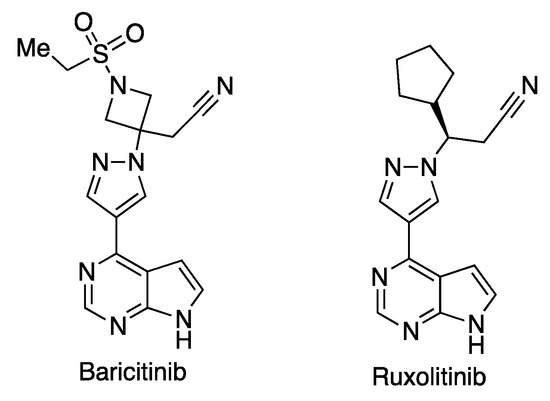
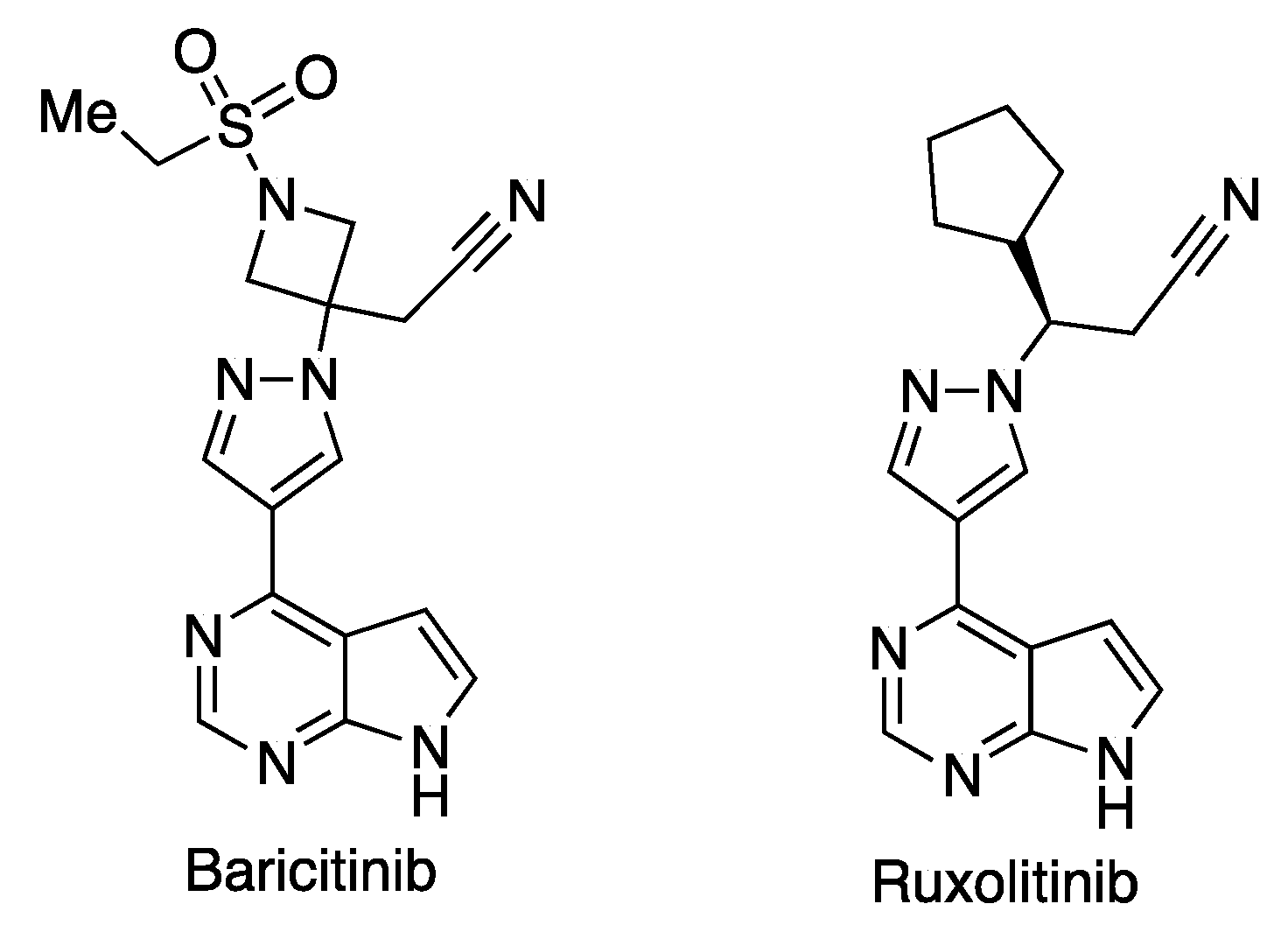
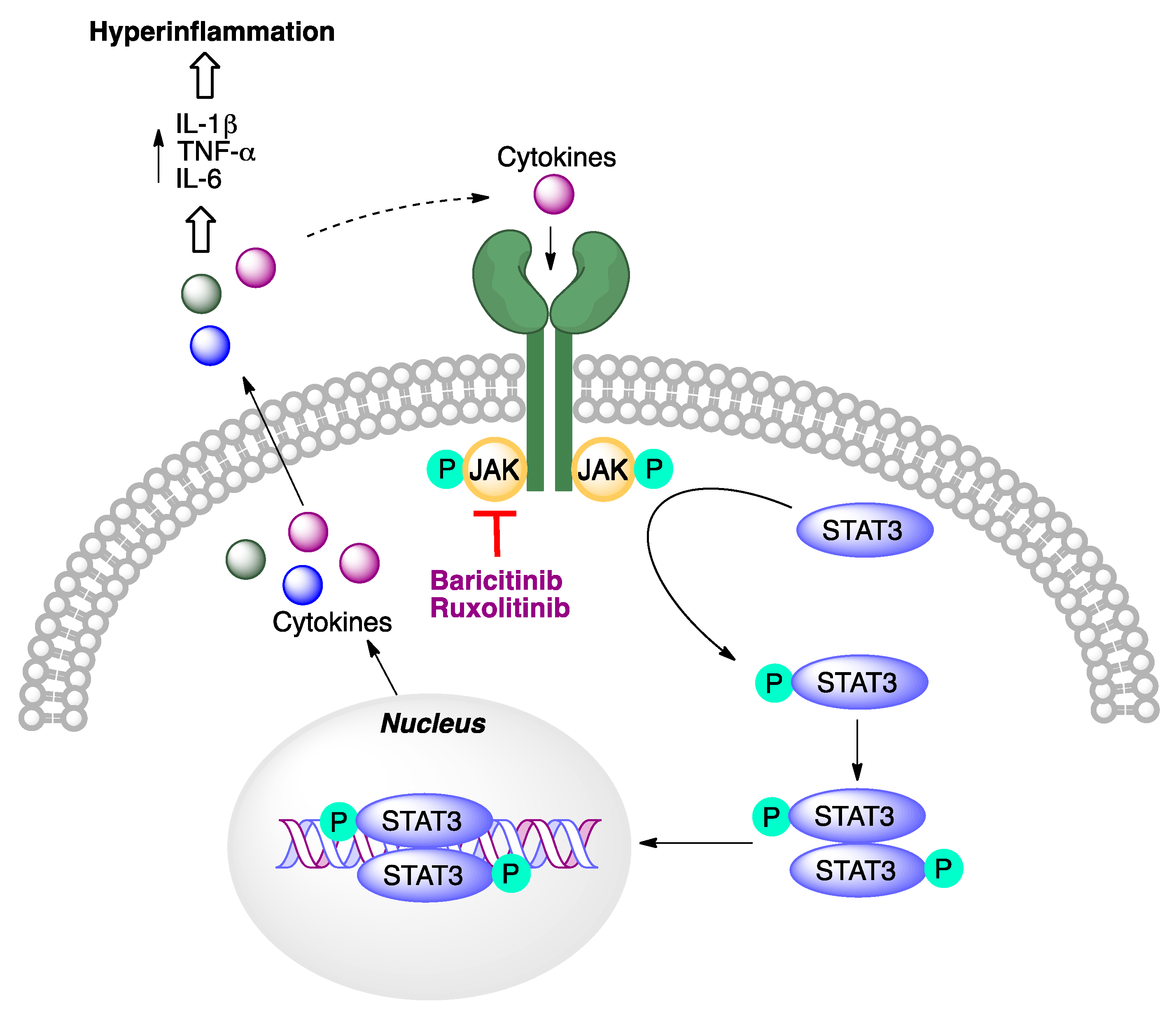
Baricitinib (Olumiant), from Eli Lilly, is an orally active selective inhibitor of JAK1/JAK2 kinases, approved for the treatment of rheumatoid arthritis due to its ability to regulate the inflammatory immune response [58]. In combination with remdesivir, it has been approved for emergency use in advanced stages of COVID-19. Clinical assays showed that, although treatment with baricitinib did not affect the course of the disease, its addition to the standard treatment led to a reduced mortality in hospitalized adult patients [59]. Moreover, a combination of baricitinib and remdesivir proved to be better than remdesivir alone in reducing recovery time and accelerating improvement in clinical status of patients of advanced COVID-19 [60]. A related molecule, ruxolitinib (Jakafi®) (Figure 26), from Incyte Corp in collaboration with Novartis, whose approved use is the treatment of high-risk myelofibrosis, a myeloproliferative disease affecting bone marrow, has been clinically assayed in Phase 3 for COVID-19 patients, but it showed no improvement in terms of the number of patients that evolve to the more advanced stages of the disease.
Figure 26.
Structures of JAK1/JAK2 kinase inhibitors used against COVID-19.
The rationale for the use of these molecules for the treatment of COVID-19 is connected to the role of the JAK-STAT signaling pathway in the biosynthesis of cytokines (Figure 27). For this reason, it was hypothesized that its inhibitors would be useful to modulate the immune response of patients and avoid the cytokine storm characteristic of the more severe stages of COVID-19.
Figure 27.
The role of the JAK-STAT pathway in COVID-related hyperinflammation.
4.2. Inhibitors of Sphingosine Kinase
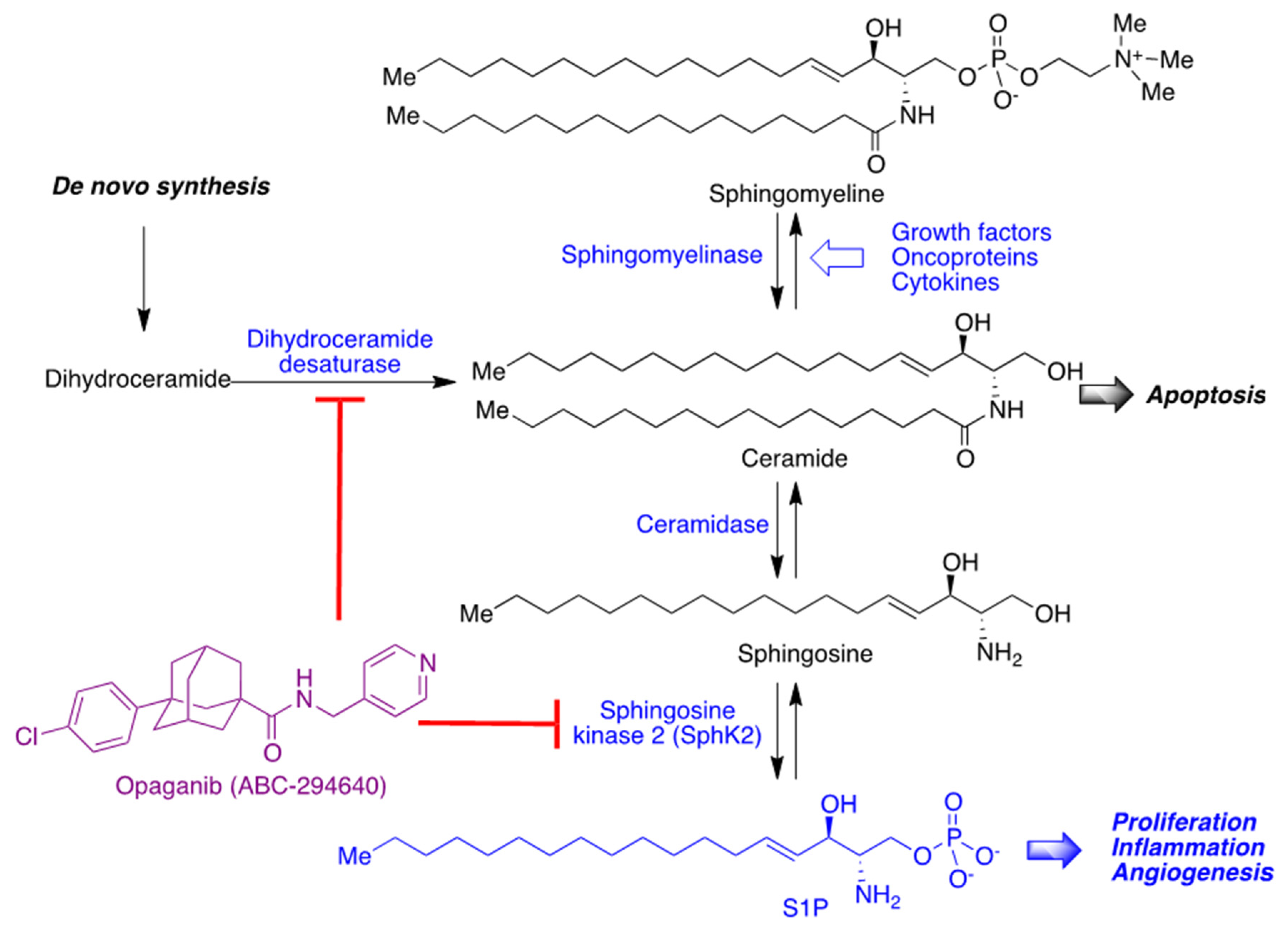
Sphingosine-1-phosphate (S1P) activates several signaling pathways and promotes the synthesis of the proinflammatory cytokines TNF-α and IL-6. It also has the capacity to promote the replication of the SARS-CoV-2 virus in vitro. Opaganib (ABC294640, Yeliva), from Red Hill BioPharma, inhibits sphingosine kinase 2 (SphK2), the enzyme responsible for the synthesis of S1P. It also inhibits the previous step in the biosynthetic route, i.e., the transformation of dihydroceramide into ceramide by dihydroceramide desaturase (Figure 28) [61]. Opaganib has been clinically studied in Phase 2/3, showing a good tolerability and activity and a 62% statistically significant reduction in mortality versus the placebo in moderately severe COVID-19 patients [62].
Figure 28.
Mechanism of action of opaganib.
4.3. Corticoids
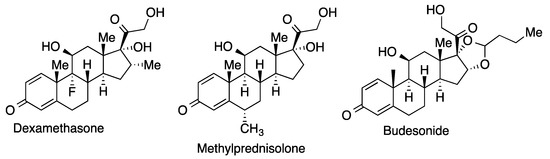
Dexamethasone, a synthetic corticoid with anti-inflammatory activity, was the first drug proved to improve the survival rate of hospitalized COVID-19 patients under oxygen therapy or forced ventilation. Other corticoids employed for the same indication are methylprednisolone and budesonide (Figure 29). Corticoid treatment is not recommended for patients in less severe stages of the disease, whose mortality rate they seem to increase.
Figure 29.
Some corticoids employed in COVID-19 patients.
4.4. Aviptadil
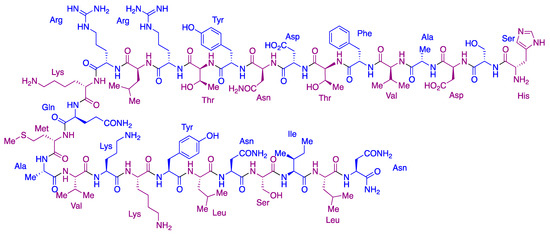
Aviptadil (RLF-100, Zyesami, Figure 30) is the vasoactive intestinal peptide (VIP), which binds specifically to the lung endothelium and reduces pulmonary inflammation by reducing the production of proinflammatory cytokines. NRx Pharmaceuticals has performed its clinical study in critical COVID-19 patients [63], finding good safety data, significative improvements in the levels of oxygenation and pulmonary function since the first days of treatment and a highly significant four-fold increased probability of survival. Based on these results, in late December 2021, the company filed a breakthrough therapy designation request for aviptadil in patients at immediate risk of death from COVID-19 despite treatment with other approved therapies.
Figure 30.
Structure of aviptadil.
4.5. Antibodies against Interleukin 6 or Its Receptors
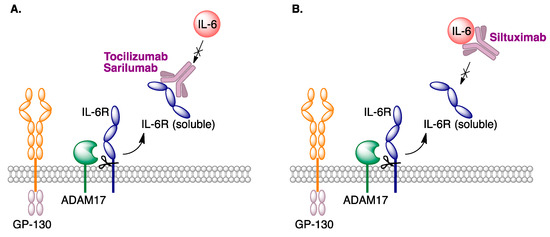
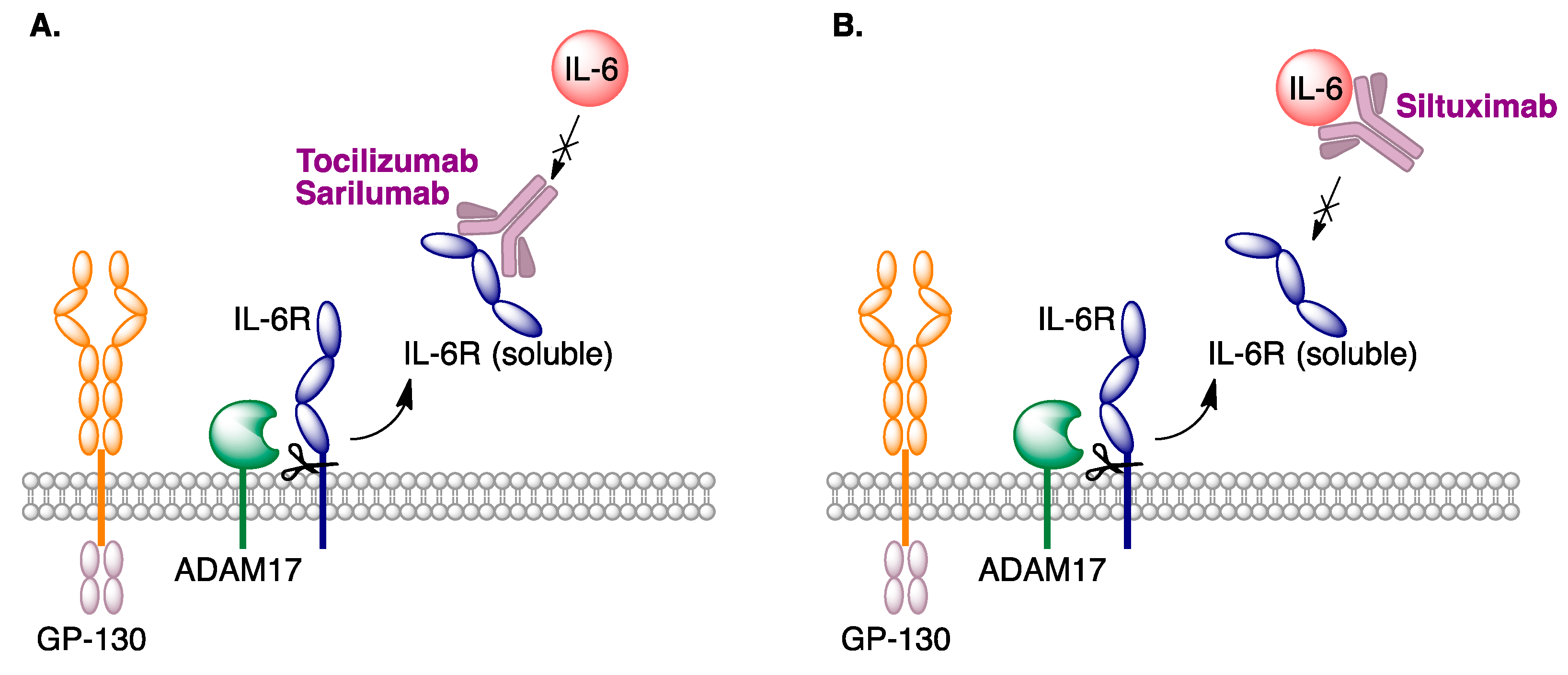
Interleukin 6 (IL-6) is a proinflammatory cytokine produced by several types of cells, including those of the bronchial epithelium [64]. In late-stage COVID-19 patients, an increase in the levels of this protein is associated to a hyperinflammatory response, and hence the modulation of IL-6 activity is likely to provide a therapeutic option for these patients. The FDA has approved two types of antibodies showing these effects, addressed either at the IL-6 receptor, such as tocilizumab (Actemra), from Genentech, and sarilumab (Kevzara), from Sanofi, or at IL-6 itself, such as siltuximab (Sylvant®), from EUSA Pharma (Figure 31). They have been evaluated in patients at the inflammatory phase of the disease, and the following recommendations [65] have been given regarding their use:
Figure 31.
Antibodies targeting: (A) Interleukin 6 receptor. (B) Interleukin 6.
- Tocilizumab, associated to dexamethasone, is recommended for hospitalized patients that show rapid respiratory distress as a consequence of the disease.
- There is not enough evidence to recommend the use of sarilumab.
- Siltuximab is not recommended, except in the context of clinical assays.
4.6. Other Immunomodulators
Polyphenols are naturally occurring compounds with immunomodulatory activity, and have a potential role in reducing inflammation and preventing the onset of the more serious symptoms of certain chronic diseases. Some clinical trials with polyphenols, most notably quercetin, for the treatment of COVID-19 have been approved, with some interesting results [66].
5. Conclusions
In spite of its great importance in the control of the pandemic, the pharmacological therapy of COVID-19 is still in its infancy. One of the main hurdles to overcome is the need to develop treatments in a very short time, which has led to a preference for the drug repurposing approach. Moreover, COVID-19 therapy is conditioned by the existence of two distinct phases in the disease, namely the viral infection and the inflammatory stages. The main viral targets for potential drugs are the viral S protein, host proteins involved in the processes related to viral entry into the host cell and release of the viral genome inside the cell and the viral proteases in charge of processing the polyprotein arising from its translation. The use of antivirals targeted at host proteins, such as serine proteases, the elongation factor eEF1A or importins, has the advantage of not being affected by viral mutations. Regarding drugs that address the hyperinflammatory phase of the disease (cytokine storm), besides the traditional anti-inflammatory corticosteroids, drugs targeting JAK kinases, sphingosine kinase 2 and interleukin 6 seem particularly promising. Regarding future directions for drug discovery in this area, achieving oral therapy is of the utmost importance to relieve pressure on primary medical assistance and hospitals, and it is much more likely to be achieved by small-molecule therapies. Once this goal has been reached through the drug repurposing approach, additional refinements will probably be associated with the use of target-based medicinal chemistry methods. It is to be hoped that research in this area will soon yield safe and efficient anti-COVID-19 drugs that contribute to bring human society back to normality.
Funding
This research received no external funding. The APC was not funded.
Institutional Review Board Statement
Not applicable.
Informed Consent Statement
Not applicable.
Acknowledgments
I thank the Ministerio de Ciencia e Innovación (RTI-2018-097662-B-I00) for continued support.
Conflicts of Interest
The author declares no conflict of interest.
References
- Tregoning, J.S.; Pierce, B.F. Progress of the COVID-19 vaccine effort: Viruses, vaccines and variants versus efficacy, effectiveness and escape. Nat. Rev. Immunol. 2021, 21, 626–636. [Google Scholar] [CrossRef] [Scilit]
- Siddiqi, H.K.; Mehra, M.R. COVID-19 illness in native and immunosuppressed states: A clinical-therapeutic staging proposal. J. Heart Lung Transplant. 2020, 39, 405–407. [Google Scholar] [CrossRef] [Scilit] [PubMed]
- COVID-19 Vaccine and Therapeutics Tracker. Available online: https://biorender.com/covid-vaccine-tracker/details/d-0118/interferon-alpha (accessed on 31 December 2021).
- Gil, C.; Ginex, T.; Maestro, I.; Nozal, V.; Barrado-Gil, L.; Cuesta-Geijo, M.Á.; Urquiza, J.; Ramírez, D.; Alonso, C.; Campillo, N.E.; et al. COVID-19: Drug targets and potential treatments. J. Med. Chem. 2020, 63, 12359–12386. [Google Scholar] [CrossRef] [Scilit]
- Ghosh, A.K.; Brindisi, M.; Shahabi, D.; Chapman, M.E.; Mesecar, A.D. Drug development and medicinal chemistry efforts toward SARS-coronavirus and COVID-19 therapeutics. ChemMedChem 2020, 15, 907–932. [Google Scholar] [CrossRef] [Scilit]
- Xu, J.; Xue, Y.; Zhou, R.; Shi, P.-Y.; Li, H.; Zhou, J. Drug repurposing approach to combating coronavirus: Potential drugs and drug targets. Med. Res. Rev. 2021, 41, 1375–1426. [Google Scholar] [CrossRef] [Scilit] [PubMed]
- Tarighi, P.; Eftekhari, S.; Chizari, M.; Sabernavaei, M.; Jafari, D.; Mirzabeigi, P. A review of potential suggested drugs for coronavirus disease (COVID-19) treatment. Eur. J. Pharmacol. 2021, 895, 173890. [Google Scholar] [CrossRef] [Scilit]
- Yang, M.Y.; Zhao, R.; Gao, L.-J.; Gao, X.-F.; Wang, D.-P.; Cao, J.-M. SARS-CoV-2: Structure, biology, and structure-based therapeutics development. Front. Cell Infect. Microbiol. 2020, 10, 587269. [Google Scholar]
- Wang, H.; Rao, Z. Structural biology of SARS-CoV-2 and implications for therapeutic development. Nat. Rev. Microbiol. 2021, 19, 685–700. [Google Scholar]
- Walls, A.C.; Park, Y.J.; Tortorici, M.A.; Wall, A.; McGuire, A.T.; Veesler, D. Structure, function, and antigenicity of the SARS-CoV-2 spike glycoprotein. Cell 2020, 181, 281. [Google Scholar] [CrossRef] [Scilit]
- Wrapp, D.; Wang, N.; Corbett, K.S.; Goldsmith, J.A.; Hsieh, C.L.; Abiona, O.; Graham, B.S.; McLellan, J.S. Cryo-EM structure of the 2019-nCoV spike in the prefusion conformation. Science 2020, 367, 1260–1263. [Google Scholar] [CrossRef] [Scilit] [PubMed]
- Taia, L.; Zhu, G.; Yanga, M.; Cao, L.; Xing, X.; Yin, G.; Chan, C.; Qin, C.; Rao, Z.; Wang, X.; et al. Nanometer-resolution in situ structure of the SARS-CoV-2 postfusion spike protein. Proc. Natl. Acad. Sci. USA 2021, 118, e2112703118. [Google Scholar] [CrossRef] [Scilit]
- Kumar, S.; Chandele, A.; Sharma, A. Current status of therapeutic monoclonal antibodies against SARS-CoV-2. PLOS Pathog. 2021, 17, e1009885. [Google Scholar] [CrossRef] [Scilit] [PubMed]
- Coronavirus (COVID-19) Update: FDA Authorizes New Long-Acting Monoclonal Antibodies for Pre-Exposure Prevention of COVID-19 in Certain Individuals. Available online: https://www.fda.gov/news-events/press-announcements/coronavirus-covid-19-update-fda-authorizes-new-long-acting-monoclonal-antibodies-pre-exposure (accessed on 31 December 2021).
- Liu, L.; Iketani, S.; Guo, Y.; Chan, J.F.-W.; Wang, M.; Liu, L.; Luo, Y.; Chu, H.; Huang, Y.; Nair, M.S.; et al. Striking antibody evasion manifested by the omicron variant of SARS-CoV-2. Nature 2021. [Google Scholar] [CrossRef] [PubMed]
- Shuster, A.; Pechalrieu, D.; Jackson, C.B.; Abegg, D.; Choe, H.; Adibekian, A. Clinical antiviral drug arbidol inhibits infection by SARS-CoV-2 and variants through direct binding to the spike protein. ACS Chem. Biol. 2021, 16, 2845–2851. [Google Scholar] [CrossRef] [Scilit]
- Pang, J.; Liu, M.; Ling, W.; Jin, T. Friend or foe? ACE2 inhibitors and GLP-1R agonists in COVID-19 treatment. Obes. Med. 2021, 22, 100312. [Google Scholar] [CrossRef] [Scilit] [PubMed]
- Rothlin, R.P.; Duarte, M.; Pelorosso, F.G.; Nicolosi, L.; Salgado, M.V.; Vetulli, H.M.; Spitzer, E. Angiotensin receptor blockers for COVID-19: Pathophysiological and pharmacological considerations about ongoing and future prospective clinical trials. Front. Pharmacol. 2021, 12, 603736. [Google Scholar] [CrossRef] [Scilit] [PubMed]
- Puskarich, M.A.; Cummins, N.W.; Ingraham, N.E.; Wacker, D.A.; Reilkoff, R.A.; Driver, B.E.; Biros, M.H.; Bellolio, F.; Chipman, J.G.; Nelson, A.C.; et al. A multi-center phase II randomized clinical trial of losartan on symptomatic outpatients with COVID-19. EClinicalMedicine 2021, 37, 100957. [Google Scholar] [CrossRef] [Scilit] [PubMed]
- Cohen, J.B.; Hanff, T.C.; William, P.; Sweitzer, N.; Rosado-Santander, N.R.; Medina, C.; Rodriguez-Mori, J.; Renna, N.; Chang, T.I.; Corrales-Medina, V.; et al. Continuation versus discontinuation of renin–angiotensin system inhibitors in patients admitted to hospital with COVID-19: A prospective, randomised, open-label trial. Lancet Respir. Med. 2021, 9, 275–284. [Google Scholar] [CrossRef] [Scilit]
- Rahbar Saadat, Y.; Hosseiniyan Khatibi, S.M.; Zununi Vahed, S.; Ardalan, M. Host serine proteases: A potential targeted therapy for COVID-19 and influenza. Front. Mol. Biosci. 2021, 8, 725528. [Google Scholar] [CrossRef] [Scilit]
- Jang, S.; Rhee, Y. Three cases of treatment with nafamostat in elderly patients with COVID-19 pneumonia who need oxygen therapy. Int. J. Infect. Dis. 2020, 96, 500–502. [Google Scholar] [CrossRef] [Scilit]
- Gunst, J.D.; Staerke, N.B.; Pahus, M.H.; Kristensen, L.H.; Bodilsen, J.; Søgaard, O.S.; Lohse, N.; Dalgaard, L.S.; Brønnum, D.; Fröbert, O.; et al. Efficacy of the TMPRSS2 inhibitor camostat mesilate in patients hospitalized with COVID-19-A double-blind randomized controlled trial. EClinicalMedicine 2021, 35, 100849. [Google Scholar] [CrossRef] [Scilit]
- Available online: https://clinicaltrials.gov/ct2/show/NCT04723537 (accessed on 31 December 2021).
- Bayati, A.; Kumar, R.; Francis, V.; McPherson, P.S. SARS-CoV-2 infects cells after viral entry via clathrin-mediated endocytosis. J. Biol. Chem. 2021, 296, 100306. [Google Scholar] [CrossRef] [Scilit]
- Wang, M.; Cao, R.; Zhang, L.; Yang, X.; Liu, J.; Xu, M.; Shi, Z.; Hu, Z.; Zhiongm, W.; Xiao, G. Remdesivir and chloroquine effectively inhibit the recently emerged novel coronavirus (2019-nCoV) in vitro. Cell Res. 2020, 30, 269–271. [Google Scholar] [CrossRef] [Scilit] [PubMed]
- Devaux, C.A.; Rolain, J.-M.; Colsona, P.; Raoult, D. New insights on the antiviral effects of chloroquine against coronavirus: What to expect for COVID-19? Int. J. Antimicrob. Agents 2020, 55, 105938. [Google Scholar] [CrossRef] [Scilit]
- Schrezenmeier, E.; Dörner, T. Mechanisms of action of hydroxychloroquine and chloroquine: Implications for rheumatology. Nat. Rev. Rheumatol. 2020, 16, 155–166. [Google Scholar] [CrossRef] [Scilit] [PubMed]
- Das, S.; Ramachandran, A.K.; Birangal, S.R.; Akbar, S.; Ahmed, B.; Joseph, A. The controversial therapeutic journey of chloroquine and hydroxychloroquine in the battle against SARS-CoV-2: A comprehensive review. Med. Drug Discov. 2021, 10, 100085. [Google Scholar] [CrossRef] [Scilit]
- Saghir, S.A.M.; AlGabri, N.A.; Alagawany, M.M.; Attia, Y.A.; Alyileili, S.R.; Elnesr, S.S.; Shafi, M.E.; Al-Shargi, O.Y.; Al-Balagi, N.; Alwajeeh, A.S.; et al. Chloroquine and hydroxychloroquine for the prevention and treatment of COVID-19: A fiction, hope or hype? An updated review. Ther. Clin. Risk Manag. 2021, 17, 371–387. [Google Scholar] [CrossRef] [Scilit]
- Ehianeta, T.S.; Akinyeye, R.O.; Orege, J.I.; Ejeromedoghene, O.; Adebule, A.P.; Okonkwo, B.O. Old drugs for a new indication: A review of chloroquine and analogue in COVID-19 treatment. Porto Biomed. J. 2021, 6, e132. [Google Scholar] [CrossRef] [Scilit] [PubMed]
- Teissier, E.; Zandomeneghi, G.; Loquet, A.; Lavillette, D.; Lavergne, J.-P.; Montserret, R.; Cosset, F.-L.; Böckmann, A.; Meier, B.H.; Penin, F.; et al. Mechanism of inhibition of enveloped virus membrane fusion by the antiviral drug arbidol. PLoS ONE 2011, 6, e15874. [Google Scholar] [CrossRef] [Scilit]
- Amani, B.; Amani, B.; Zareei, S.; Zareei, M. Efficacy and safety of arbidol (umifenovir) in patients with COVID-19: A systematic review and meta-analysis. Immun. Inflamm. Dis. 2021, 9, 1197–1208. [Google Scholar] [CrossRef] [Scilit]
- Bolcato, G.; Bissaro, M.; Pavan, M.; Sturlese, M.; Moro, S. Targeting the coronavirus SARS-CoV-2: Computational insights into the mechanism of action of the protease inhibitors lopinavir, ritonavir and nelinavir. Sci. Rep. 2020, 10, 20927. [Google Scholar] [CrossRef] [Scilit]
- Patel, T.; Patel, P.B.; Barvaliya, M.; Saurabh, M.K.; Bhalla, H.L.; Khosla, P.P. Efficacy and safety of lopinavir-ritonavir in COVID-19: A systematic review of randomized controlled trials. J. Infect. Public Health 2021, 14, 740–748. [Google Scholar] [CrossRef] [Scilit] [PubMed]
- Hoffman, R.L.; Kania, R.S.; Brothers, M.A.; Davies, J.F.; Ferre, R.A.; Gajiwala, K.S.; He, M.; Hogan, R.J.; Kozminski, K.; Li, L.Y.; et al. Discovery of ketone-based covalent inhibitors of coronavirus 3CL proteases for the potential therapeutic treatment of COVID-19. J. Med. Chem. 2020, 63, 12725–12747. [Google Scholar] [CrossRef] [Scilit]
- Zhao, Y.; Fang, C.; Zhang, Q. Crystal structure of SARS-CoV-2 main protease in complex with protease inhibitor PF-07321332. Protein Cell 2021. [Google Scholar] [CrossRef] [Scilit]
- Chien, M.; Anderson, T.K.; Jockusch, S.; Tao, C.; Li, X.; Kumar, S.; Russo, J.J.; Kirchdoerfer, R.N.; Ju, J. Nucleotide analogues as inhibitors of SARS-CoV-2 polymerase, a key drug target for COVID-19. J. Proteome Res. 2020, 19, 4690–4697. [Google Scholar] [CrossRef] [Scilit] [PubMed]
- Vicenti, I.; Zazzi, M.; Saladini, F. SARS-CoV-2 RNA-dependent RNA polymerase as a therapeutic target for COVID-19. Expert Opin. Ther. Pat. 2021, 31, 325–337. [Google Scholar] [CrossRef] [Scilit] [PubMed]
- Serpi, M.; Pertusati, F. An overview of ProTide technology and its implications to drug discovery. Expert Opin. Drug Discov. 2021, 16, 1149–1161. [Google Scholar] [CrossRef] [Scilit] [PubMed]
- Kokic, G.; Hillen, H.S.; Tegunov, D.; Dienemann, C.; Seitz, F.; Schmitzova, J.; Farnung, L.; Siewert, A.; Höbartner, C.; Cramer, P. Mechanism of SARS-CoV-2 polymerase stalling by remdesivir. Nat. Commun. 2021, 12, 279. [Google Scholar] [CrossRef] [Scilit] [PubMed]
- Byléhn, F.; Menéndez, C.A.; Pérez-Lemus, G.R.; Alvarado, W.; de Pablo, J.J. Modeling the binding mechanism of remdesivir, favilavir, and ribavirin to SARS-CoV-2 RNA-dependent RNA polymerase. ACS Cent. Sci. 2021, 7, 164–174. [Google Scholar] [CrossRef] [Scilit]
- Kaka, A.S.; MacDonald, R.; Greer, N.; Vela, K.; Duan-Porter, W.; Obley, A.; Wilt, T.J. Major update: Remdesivir for adults with COVID-19. A living systematic review and meta-analysis for the American College of Physicians Practice Points. Ann. Intern. Med. 2021, 174, 663–672. [Google Scholar] [CrossRef] [Scilit]
- Good, S.S.; Westover, J.; Jung, K.H.; Zhou, X.-J.; Moussa, A.; La Colla, P.; Collu, G.; Canard, B.; Sommadossia, J.-P. AT-527, a double prodrug of a guanosine nucleotide analog, is a potent inhibitor of SARS-CoV-2 in vitro and a promising oral antiviral for treatment of COVID-19. Antimicrob. Agents Chemother. 2021, 65, e02479-20. [Google Scholar] [CrossRef] [Scilit] [PubMed]
- Atea to Study AT-527 as Monotherapy and in Combination for COVID-19. Available online: https://www.pharmaceutical-technology.com/news/atea-at-527-monotherapy-covid-19/ (accessed on 31 December 2021).
- Reza Hasmenian, S.M.; Farhadi, T.; Velayati, A.A. A review on favipiravir: The properties, function, and usefulness to treat COVID-19. Expert Rev. Anti-Infect. Ther. 2021, 19, 1029–1037. [Google Scholar]
- Hassanipour, S.; Arab-Zozani, M.; Amani, B.; Heidarzad, F.; Fathalipour, M.; Martínez-de-Hoyo, R. The efficacy and safety of favipiravir in treatment of COVID-19: A systematic review and meta-analysis of clinical trials. Sci. Rep. 2021, 11, 11022. [Google Scholar] [CrossRef] [Scilit] [PubMed]
- Malone, B.; Campbell, E.A. Molnupiravir: Coding for catastrophe. Nat. Struct. Mol. Biol. 2021, 28, 706–708. [Google Scholar] [CrossRef] [Scilit] [PubMed]
- Jayk Bernal, A.; Gomes da Silva, M.M.; Musungaie, D.B.; Kovalchuk, E.; González, A.; Reyes, V.D.; Martín-Quirós, A.; Caraco, Y.; Williams-Diaz, A.; Brown, M.L.; et al. Molnupiravir for oral treatment of COVID-19 in nonhospitalized patients. N. Engl. J. Med. 2021. [Google Scholar] [CrossRef] [Scilit] [PubMed]
- Kozlov, M. Merck’s COVID pill loses its lustre: What that means for the pandemic. Nature 2021. [Google Scholar] [CrossRef] [Scilit] [PubMed]
- White, K.M.; Rosales, R.; Yildiz, S.; Kehrer, T.; Miorin, L.; Moreno, E.; Jangra, S.; Uccellini, M.B.; Rathnasinghe, R.; Coughlan, L.; et al. Plitidepsin has potent preclinical efficacy against SARS-CoV-2 by targeting the host protein eEF1A. Science 2021, 371, 926–931. [Google Scholar] [CrossRef] [Scilit]
- Papapanou, M.; Papoutsi, E.; Giannakas, T.; Katsaounou, P. Plitidepsin: Mechanisms and clinical profile of a promising antiviral agent against COVID-19. J. Pers. Med. 2021, 11, 668. [Google Scholar] [CrossRef] [Scilit] [PubMed]
- Varona, J.F.; Landete, P.; López-Martín, J.A.; Estrada, V.; Paredes, R.; Guisado-Vasco, P.; De Orueta, L.F.; Torralba, M.; Fortun, J.; Vates, R.; et al. Plitidepsin has a positive therapeutic index in adult patients with COVID-19 requiring hospitalization. MedRxiv 2021. [Google Scholar] [CrossRef] [Scilit]
- Yagisawa, M.; Foster, P.J.; Hanaki, H.; Ōmura, S. Global trends in clinical studies of ivermectin in COVID-19. Jpn. J. Antibiot. 2021, 74, 44–95. [Google Scholar]
- Bryant, A.; Lawrie, T.A.; Dowswell, T.; Fordham, E.J.; Mitchell, S.; Hill, S.; Tham, T.C. Ivermectin for prevention and treatment of COVID-19 infection: A systematic review, meta-analysis, and trial sequential analysis to inform clinical guidelines. Am. J. Ther. 2021, 28, e434–e460. [Google Scholar] [CrossRef] [Scilit]
- Lawrence, J.M.; Meyerowitz-Katz, G.; Heathers, J.A.J.; Brown, N.J.L.; Sheldrick, K.A. The lesson of ivermectin: Meta-analyses based on summary data alone are inherently unreliable. Nat. Med. 2021, 27, 1853–1854. [Google Scholar] [CrossRef] [Scilit] [PubMed]
- Popp, M.; Stegemann, M.; Metzendorf, M.I.; Gould, S.; Kranke, P.; Meybohm, P.; Skoetz, N.; Weibel, S. Ivermectin for preventing and treating COVID-19. Cochrane Database Syst. Rev. 2021, 7, CD015017. [Google Scholar] [CrossRef] [Scilit]
- Hu, X.; Ii, J.; Zhao, X.; Wang, W. The JAK/STAT signaling pathway: From bench to clinic. Signal Transduct. Target. Ther. 2021, 6, 402. [Google Scholar] [CrossRef] [Scilit]
- Marconi, V.C.; Ramanan, A.V.; de Bono, S.; Kartman, C.E.; Krishnan, V.; Liao, R.; Piruzeli, M.L.B.; Goldman, J.D.; Alatorre-Alexander, J.; Pellegrini, R.D.C.; et al. Efficacy and safety of baricitinib for the treatment of hospitalised adults with COVID-19 (COV-BARRIER): A randomised, double-blind, parallel-group, placebo-controlled phase 3 trial. Lancet Respir. Med. 2021, 9, 1407–1418. [Google Scholar] [CrossRef] [Scilit]
- Kalil, A.C.; Patterson, T.F.; Mehta, A.K.; Tomashek, K.M.; Wolfe, C.R. Baricitinib plus remdesivir for hospitalized adults with COVID-19. N. Engl. J. Med. 2021, 384, 795–807. [Google Scholar] [CrossRef] [Scilit]
- Neubauer, H.A.; Pitson, S.M. Roles, regulation and inhibitors of sphingosine kinase 2. FEBS J. 2013, 280, 5317–5336. [Google Scholar] [CrossRef] [Scilit] [PubMed]
- Opaganib Reduces COVID-19 Mortality by 62 Percent in Phase II/III Study. Available online: https://www.europeanpharmaceuticalreview.com/news/163742/opaganib-reduces-covid-19-mortality-by-62-percent-in-phase-ii-iii-study/ (accessed on 31 December 2021).
- Available online: https://clinicaltrials.gov/ct2/show/NCT04360096 (accessed on 31 December 2021).
- Schaper, F.; Rose-John, S. Interleukin-6: Biology, signaling and strategies of blockade. Cytokine Growth Factor Rev. 2015, 26, 475–487. [Google Scholar] [CrossRef] [Scilit]
- COVID-19 Treatment Guidelines. Interleukin-6 Inhibitors. Available online: https://www.covid19treatmentguidelines.nih.gov/therapies/immunomodulators/interleukin-6-inhibitors/ (accessed on 31 December 2021).
- Bernini, R.; Velotti, F. Natural polyphenols as immunomodulators to rescue immune response homeostasis: Quercetin as a research model against severe COVID-19. Molecules 2021, 26, 5803. [Google Scholar] [CrossRef] [Scilit] [PubMed]
Publisher’s Note: MDPI stays neutral with regard to jurisdictional claims in published maps and institutional affiliations. |
© 2022 by the author. Licensee MDPI, Basel, Switzerland. This article is an open access article distributed under the terms and conditions of the Creative Commons Attribution (CC BY) license (https://creativecommons.org/licenses/by/4.0/).