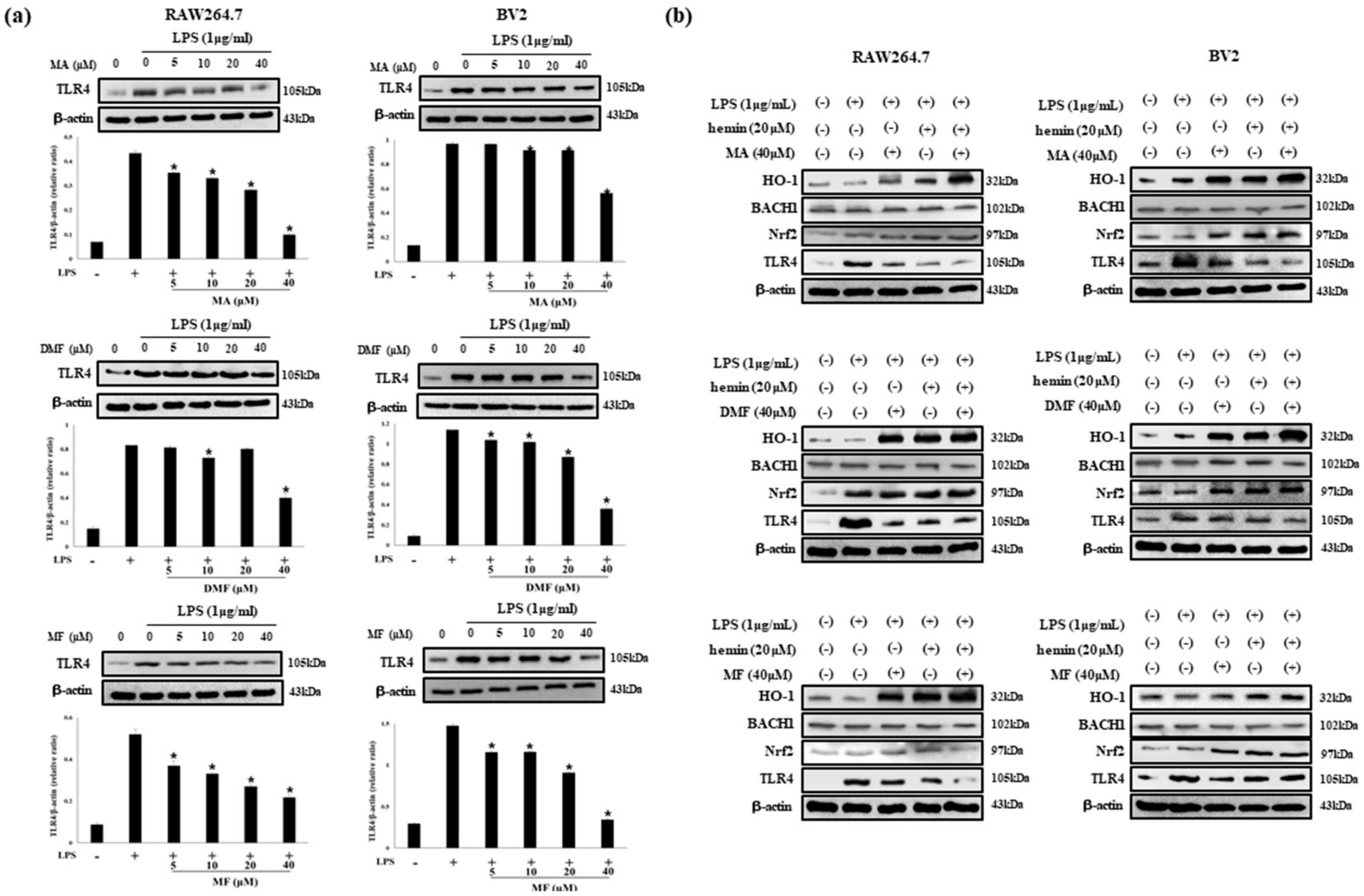
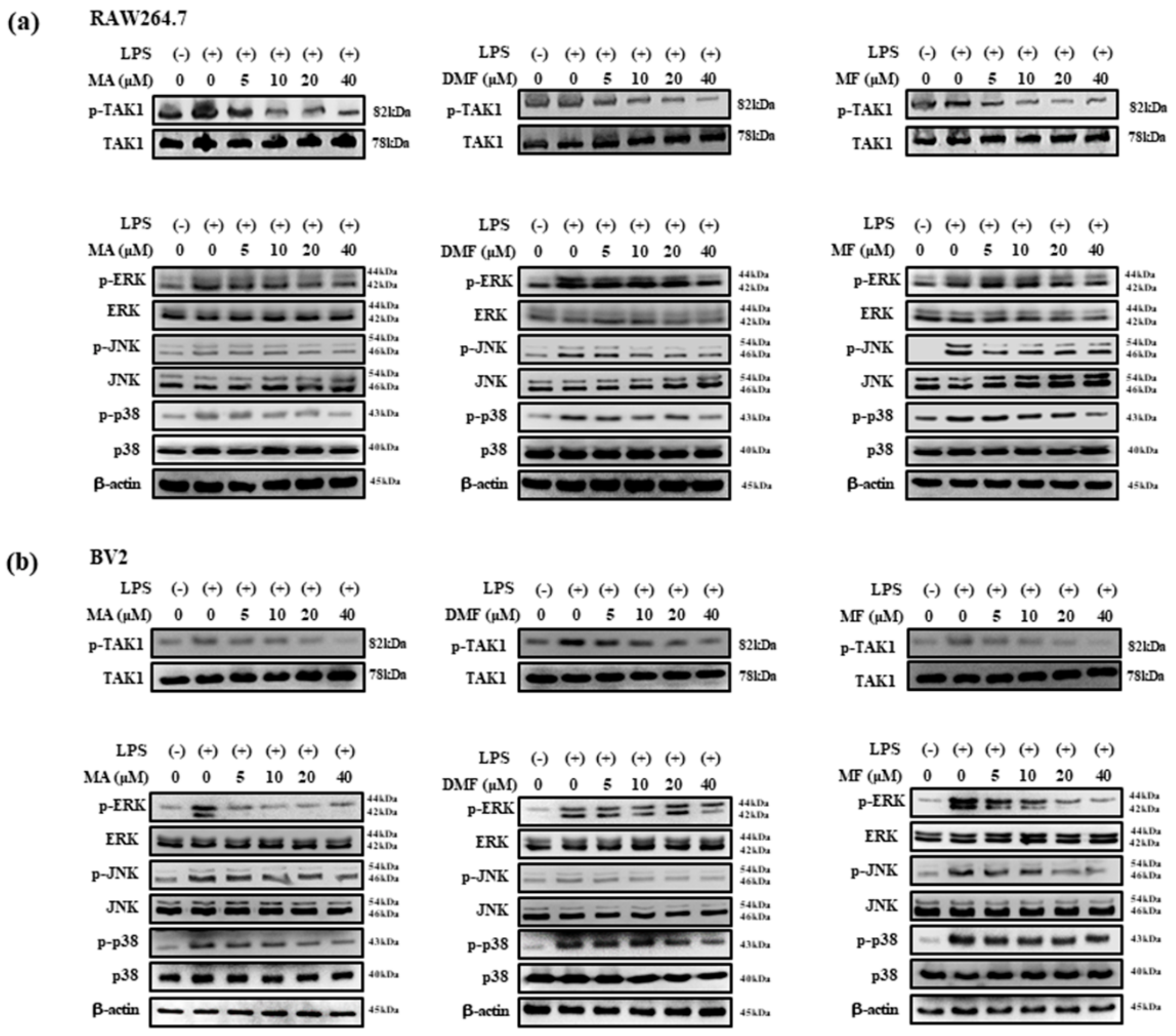
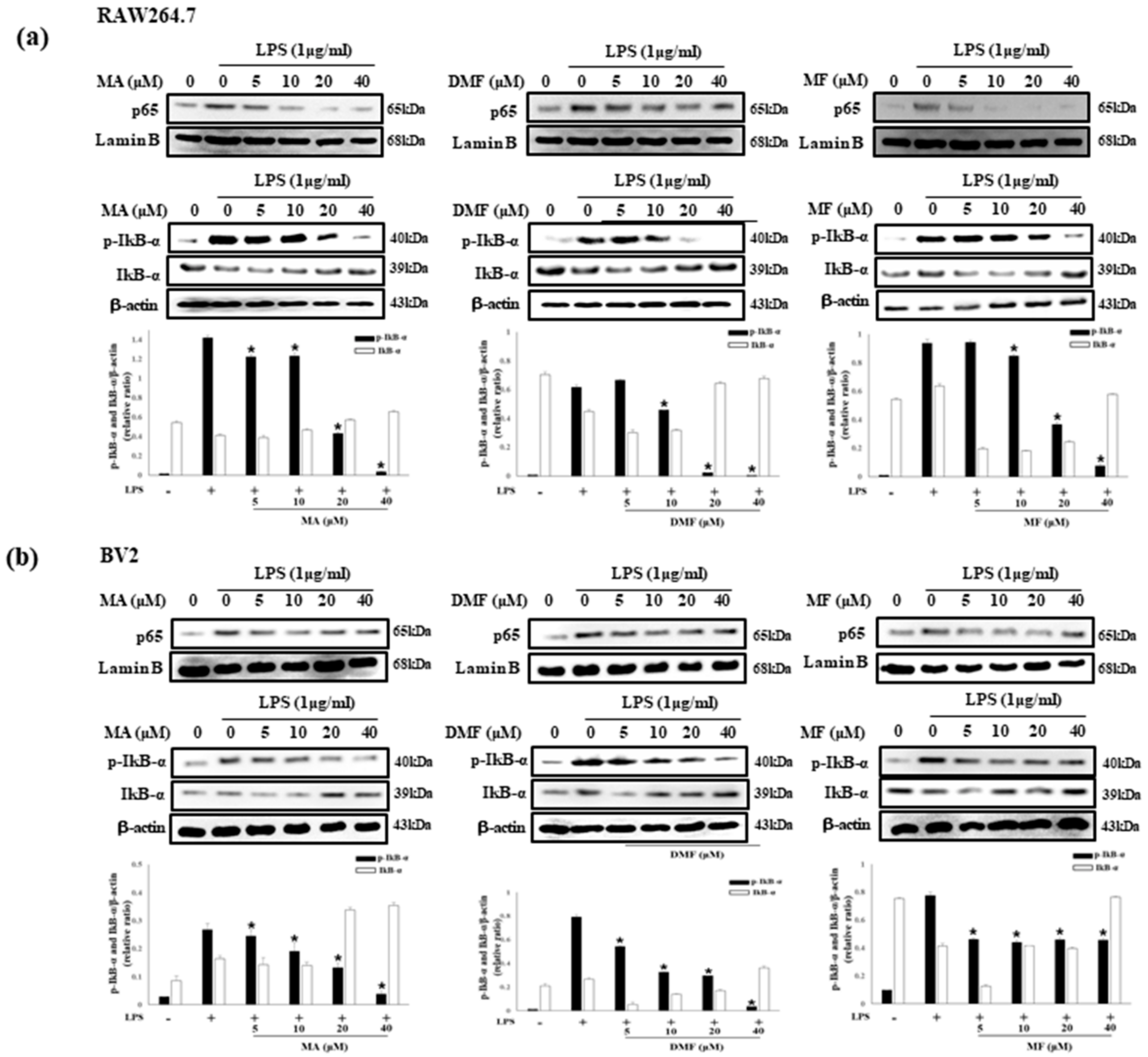
Marine Microorganism-Derived Macrolactins Inhibit Inflammatory Mediator Effects in LPS-Induced Macrophage and Microglial Cells by Regulating BACH1 and HO-1/Nrf2 Signals through Inhibition of TLR4 Activation


Abstract
Share and Cite
Kim, E.-N.; Gao, M.; Choi, H.; Jeong, G.-S. Marine Microorganism-Derived Macrolactins Inhibit Inflammatory Mediator Effects in LPS-Induced Macrophage and Microglial Cells by Regulating BACH1 and HO-1/Nrf2 Signals through Inhibition of TLR4 Activation. Molecules 2020, 25, 656. https://doi.org/10.3390/molecules25030656
Kim E-N, Gao M, Choi H, Jeong G-S. Marine Microorganism-Derived Macrolactins Inhibit Inflammatory Mediator Effects in LPS-Induced Macrophage and Microglial Cells by Regulating BACH1 and HO-1/Nrf2 Signals through Inhibition of TLR4 Activation. Molecules. 2020; 25(3):656. https://doi.org/10.3390/molecules25030656
Chicago/Turabian StyleKim, Eun-Nam, Ming Gao, Hyukjae Choi, and Gil-Saeng Jeong. 2020. "Marine Microorganism-Derived Macrolactins Inhibit Inflammatory Mediator Effects in LPS-Induced Macrophage and Microglial Cells by Regulating BACH1 and HO-1/Nrf2 Signals through Inhibition of TLR4 Activation" Molecules 25, no. 3: 656. https://doi.org/10.3390/molecules25030656
APA StyleKim, E.-N., Gao, M., Choi, H., & Jeong, G.-S. (2020). Marine Microorganism-Derived Macrolactins Inhibit Inflammatory Mediator Effects in LPS-Induced Macrophage and Microglial Cells by Regulating BACH1 and HO-1/Nrf2 Signals through Inhibition of TLR4 Activation. Molecules, 25(3), 656. https://doi.org/10.3390/molecules25030656