


Abstract
Livestream commerce has become a major retail interface, yet limited attention has been paid to how streamers’ language shapes consumer responses. This research examines the effect of streamer sensory language on consumer purchase in livestream commerce. Drawing on one field study using Douyin livestream data (Study 1: 31,254 min-level observations from 526 livestream sessions involving 136 streamers) and two experiments (Study 2: N = 200; Study 3: N = 320), we show that sensory language increases consumer purchase responses. Study 1 demonstrates a positive association between streamer sensory language and real-time purchase behavior and provides initial evidence for the moderating role of product type. Study 2 establishes the causal effect of sensory language on purchase intention and tests the serial mediation of mental imagery vividness and perceived authenticity. Study 3 further shows that the effect is stronger for experience goods than for search goods.
1. Introduction
In recent years, livestream commerce has evolved from a promotional format on digital platforms into a major retail interface that integrates content dissemination, real-time interaction, and instant transactions [1], fundamentally reshaping how consumers encounter products, process product information, and make purchase decisions across a wide range of consumption settings [2]. Globally, the livestream commerce market was estimated at approximately US $172.86 billion in 2025 and is expected to continue expanding rapidly in the coming years [3], indicating that livestream selling is no longer a short-lived phenomenon confined to a few local markets, but an important direction in the evolution of digital retail [4]. Against this backdrop, consumers’ purchase judgments in livestream rooms increasingly depend on how streamers organize information and construct product meaning through real-time presentation and interaction [5]. How product selling points are communicated and how experiential value is conveyed depend not only on the product itself, but also on the language strategies adopted by the streamer [6]. Emerging research has shown that the content and style of streamer language can significantly shape consumer interest, desire, and purchase intention. Streamer language has therefore become a consequential content variable in livestream commerce research [7].
Among the many linguistic cues used by streamers, sensory language deserves particular attention. Sensory language refers to expressions that evoke visual, auditory, gustatory, olfactory, or tactile experiences [8], such as “crispy,” “silky,” “juicy,” and “fragrant.” Research in sensory marketing has long shown that language can activate sensory cognition and shape consumers’ product perceptions and evaluations [9,10,11]. In influencer marketing contexts, sensory language has also been found to increase consumer engagement and purchase intention, in part because such expressions make consumers more likely to infer that the recommender has genuine experience with the product [12]. However, whether this conclusion extends to livestream commerce remains uncertain. Livestream commerce differs from conventional advertising and asynchronous influencer content because it combines synchronous video, verbal explanation, real-time interaction, and immediate transactions. In this setting, consumers do not merely read or view product information; they observe product demonstrations, listen to real-time descriptions, and make purchase decisions during the livestream. Therefore, the mechanism through which sensory language operates in livestream commerce may not simply mirror that observed in advertising or influencer marketing. Although prior livestream research has examined streamers’ speech acts, interactive cues, and authenticity, sensory language as a fine-grained linguistic cue has received limited systematic attention [7,13]. Moreover, existing sensory language research has mainly emphasized its effects on engagement or authenticity, but has paid less attention to the sequential psychological process through which sensory wording first helps consumers mentally simulate product experience and then shapes their judgment of the streamer’s authenticity. To address this gap, the present study integrates sensory marketing, signaling theory, and mental imagery research to explain how streamer sensory language translates into stronger purchase responses in livestream commerce.
Building on the characteristics of livestream commerce, this study proposes that sensory language may influence consumer purchase intention through two related psychological processes. First, sensory language may help consumers construct a more vivid mental representation of product experience [14]. Livestreaming can display product appearance, usage processes, and streamer reactions, yet many consumption attributes still need to be mentally completed by consumers themselves [15]. Descriptions involving taste, smell, and touch may therefore help consumers form more concrete and vivid usage scenarios. Second, when streamers describe products in sensory terms, consumers may be more likely to infer that the streamer is highly familiar with the product and may even possess first-hand usage experience, which can in turn enhance judgments of the authenticity of both the streamer and the recommendation [12,16]. Prior research suggests that sensory stimuli are closely tied to mental imagery, and that livestream shopping is more effective for certain products in part because it improves imagery quality and trust [10]; streamer authenticity, meanwhile, is closely associated with consumer purchase responses in livestream settings [13,17]. Against this background, the present research examines whether mental imagery vividness and perceived authenticity constitute a serial mediating process through which streamer sensory language is translated into stronger purchase intention.
This study also considers the boundary condition of product type. According to the classic distinction, the core attributes of experience goods often cannot be fully evaluated until after consumption, whereas search goods can be assessed more easily prior to purchase through parameters, specifications, or other objective information [18]. This distinction is particularly important in livestream commerce. For experience goods, consumers rely more heavily on imagining future consumption experiences when forming judgments, so language that evokes sensory experience should be more persuasive. For search goods, by contrast, consumer judgments rely more on objective information, making the marginal effect of sensory language likely to be more limited [19]. Prior research has suggested that streamers’ sensory expressions in livestream commerce may have different implications for the sales of different product types [5]. Following this logic, the present study treats product type (experience goods vs. search goods) as a boundary condition of the effect of sensory language and examines whether the effectiveness of sensory language varies across product contexts.
To address these questions, this research employs three interrelated studies. Study 1 uses secondary data from Douyin livestreams to examine the relationship between streamer sensory language and consumer purchase responses in a real market setting. Study 2 adopts an experimental design to establish causality and tests the serial mediating roles of mental imagery vividness and perceived authenticity. Study 3 introduces product type in an experimental setting to examine whether the effect of sensory language differs between experience goods and search goods. This research is expected to make three contributions. First, it moves research on language in livestream commerce beyond broad communication styles to more fine-grained sensory cues, addressing the limited attention that prior research has paid to the content of streamer language. Second, it brings sensory marketing into the context of livestream commerce and advances understanding of how language shapes consumer product perceptions and purchase decisions. Third, it shows that the effectiveness of streamer sensory language is context-dependent, thereby offering more specific implications for brands and streamers seeking to optimize livestream scripts.
2. Literature Review
2.1. Language Strategies in Livestream Commerce
One of the defining features of livestream commerce is that the selling process relies heavily on streamers’ real-time verbal expression [20]. Unlike traditional e-commerce, which primarily depends on product pages, technical specifications, and consumer reviews, livestream shopping constructs product information, usage scenarios, and consumption meaning through streamers’ ongoing explanation, demonstration, and interactive responses [21]. Streamer language therefore serves as an important content cue through which consumers understand products, assess value, and form purchase judgments [22]. Existing studies have shown that speech acts in livestreaming can significantly influence consumer interest, word-of-mouth intention, desire, and purchase intention [7]; more broadly, streamers’ discourse styles, persuasive language combinations, and linguistic features are also closely related to customer engagement and sales performance [7,23,24].
Existing research on language strategies in livestreaming can be broadly grouped into three streams. The first focuses on speech act categories, such as assertive, directive, expressive, and declarative expressions, and shows that different forms of language influence purchase intention by stimulating interest, desire, and word-of-mouth responses [7]. The second examines persuasive language combinations, such as the pairing of reward-oriented, exaggerated, and credible expressions, and finds that these combinations influence product sales through enhanced customer engagement [24]. The third focuses on more specific expressive dimensions, such as narrative style, streamers’ social-oriented versus task-oriented language [25], and the distinction between emotional and rational language use [26]. In B2B livestreaming contexts, assertive, directive, and expressive language have been shown to exert different effects on sales performance, and these effects vary with product novelty and category characteristics [23]. Taken together, these studies suggest that streamer language in livestream commerce can be decomposed into distinct persuasive resources. At the same time, recent reviews and meta-analytic work on livestream commerce note that, although substantial evidence has accumulated regarding platform mechanisms, streamer characteristics, and consumer psychological responses, content-level linguistic variables remain underdeveloped [27].
2.2. Sensory Language
Sensory language refers to linguistic expressions that evoke consumers’ visual, auditory, gustatory, olfactory, or tactile experiences, such as “crispy,” “silky,” “juicy,” “fragrant,” and “soft” [8]. Its theoretical foundation can be traced to grounded cognition, which holds that cognition does not operate independently of perception and bodily experience, but is closely tied to sensation, action, and situated simulation [28]. Building on this view, sensory marketing research has argued that consumer judgments do not rely solely on abstract propositional information; sensory cues shape perception, judgment, and behavior [9]. Prior studies have shown that sensory wording in advertising copy can activate sensory thoughts and alter taste evaluations, while research on sensory imagery suggests that imaginative sensory processing is an important means through which consumers mentally pre-experience consumption [10,11].
More recent research has extended sensory language from traditional advertising contexts to digital communication and influencer marketing. Cascio Rizzo et al. (2023) show that sensory language increases consumer engagement with and purchase intention toward sponsored content because consumers infer that influencers have actually used the products they endorse, which in turn strengthens perceived authenticity [12]. This finding is important because it suggests that sensory language not only enriches product representation, but also shapes how message recipients perceive the communicator. It is therefore necessary to distinguish sensory language from two related concepts. Sensory marketing refers to the broader use of sensory cues to influence consumer perception, judgment, and behavior, whereas sensory language is a specific linguistic cue within this broader domain. Mental imagery vividness, by contrast, is not a message feature but a consumer’s internal psychological response, reflecting how clearly and concretely the consumer can imagine product use. In this sense, sensory language can be understood as an external verbal cue that stimulates consumers’ internal mental imagery and subsequent evaluations.
Livestream commerce, however, differs from conventional image-based social media. It combines synchronous video, verbal explanation, real-time Q&A, and instant transactions, such that consumers can observe product displays and streamer reactions while still being unable to directly touch, taste, or smell the product. In this sense, the role of sensory language in livestreaming is likely to be more context-specific [29]. Examining sensory language separately in livestream commerce is therefore not simply a matter of transferring existing conclusions into a new setting. Rather, it offers an opportunity to reconsider how language shapes consumer decision making in a context characterized by greater media richness and stronger real-time persuasion. On this basis, the present study defines streamer sensory language as the use of expressions that evoke consumers’ sensory experiences to describe product attributes, usage processes, or consumption outcomes during livestreaming. Compared with general positive expressions such as “good,” “nice,” or “high quality,” sensory language points more directly to product features that can be experientially felt.
2.3. Mental Imagery Vividness and Perceived Authenticity
Mental imagery vividness refers to the clarity, concreteness, and vividness with which consumers form representations of a product, its usage context, or its consumption outcomes in their minds. Research on sensory imagery suggests that language, images, and other stimuli can trigger consumers’ mental simulation of products, and that the more concrete and elaborate such simulation is, the more easily consumers can pre-experience consumption in advance [10]. In digital marketing contexts, mental imagery has been regarded as an important mechanism linking information presentation to consumer responses [30]. For example, social commerce research has shown that imagery vividness positively influences purchase intention, and in livestream commerce, livestreaming is more effective than traditional e-commerce in increasing purchase intention for hedonic products partly because it enhances mental imagery quality [17]. These findings suggest that consumers in livestream settings are not simply passive recipients of information. Instead, they continuously complete product experience through watching, listening, and imagining.
Perceived authenticity is another important basis on which consumers evaluate communicators and content in digital consumption contexts [31]. Prior work conceptualizes authenticity as the perception that something is real, credible, and uncontrived, and shows that it shapes consumers’ evaluations of objects, brands, and recommenders [32]. In livestream commerce, authenticity is particularly important because consumers often face incomplete information and lack direct experiential access to products. Under such conditions, they must rely on the streamer’s verbal expression, behavior, and interaction to judge whether the recommendation is trustworthy [33]. Existing studies have found that streamer authenticity in livestream settings significantly increases consumer purchase intention, often through mechanisms such as flow experience, affective experience, or trust [13]. When streamers use sensory expressions that appear closer to actual usage experience, consumers are more likely to view such descriptions as grounded in experience rather than as mechanical repetitions of selling points. The authenticity judgments formed on this basis are likely to further promote purchase responses. Mental imagery vividness and perceived authenticity therefore jointly provide an important foundation for understanding the mechanism through which sensory language influences consumers.
Sensory language may also influence consumers by increasing both hedonic and utilitarian value perceptions. On the hedonic side, sensory descriptions such as taste, smell, texture, and bodily feeling make the consumption process more vivid, enjoyable, and emotionally engaging. On the utilitarian side, sensory language can reduce product uncertainty by providing more concrete and diagnostic information about product attributes that are difficult to evaluate online. In livestream commerce, these two routes are closely connected: richer sensory descriptions not only make the product experience more pleasurable to imagine, but also help consumers infer how the product may actually perform in use. Therefore, sensory language is expected to enhance mental imagery vividness by strengthening both experiential enjoyment and perceived diagnosticity.
3. Hypothesis
3.1. Streamer Sensory Language and Purchase Intention
Purchase judgments in livestream shopping are characterized by incomplete experience. Although consumers can observe product displays and streamer demonstrations, they cannot directly access many of the key attributes associated with actual product use [34]. Under such conditions, streamer language serves not only an informative function, but also an experiential one. By evoking taste, smell, touch, or richer visual and auditory associations, streamer sensory language can transform a product from an abstract description into an experience that is easier to perceive and imagine. Prior research provides support for this argument. Cascio Rizzo et al. (2023) show that sensory language enhances consumer engagement with and purchase responses to sponsored content [12]. Vazquez et al. (2023) find, in a social commerce context, that image quality and text type influence purchase intention through imagery vividness, and that texts conveying personal experience are more likely to elicit vivid mental representations [30]. Wu and Chen (2024) further demonstrate that incorporating olfactory- and gustatory-oriented sensory imagery into video advertising enhances persuasion and improves purchase-related responses [15]. Taken together with the established importance of language strategies in livestream commerce, these findings suggest that streamer sensory language should be more likely to elicit favorable consumer responses to products and, in turn, strengthen purchase intention in livestream settings. Therefore, this study proposes:
H1:
In livestream commerce, streamer sensory language, compared with non-sensory language, leads to higher purchase intention.
3.2. The Serial Mediating Roles of Mental Imagery Vividness and Perceived Authenticity
Streamer sensory language may influence purchase intention not simply because it makes communication more vivid, but because it triggers deeper psychological processing. First, sensory language can help consumers form more concrete and vivid mental representations of product experience, that is, higher levels of mental imagery vividness. Prior research shows that the sensory imagery and mental simulation consumers generate when exposed to information shape their anticipated product experience and purchase tendency [10,17]. Second, signaling theory suggests that consumers use observable cues to infer unobservable qualities under conditions of information asymmetry. In livestream commerce, consumers cannot fully verify whether the streamer has genuinely used the product or whether the recommendation is based on real experience [12]. Sensory language can therefore operate as an experiential signal because detailed descriptions of taste, smell, texture, touch, or usage feeling imply closer product familiarity than generic promotional claims. However, this signal is unlikely to influence authenticity judgments automatically. Consumers first need to form a vivid mental representation of the product experience; this mental imagery provides the cognitive basis for interpreting the streamer’s sensory description as experience-based rather than merely persuasive. In this way, mental imagery vividness links the external signal of sensory language to the internal judgment of perceived authenticity. Accordingly, this study proposes:
H2:
Mental imagery vividness and perceived authenticity serially mediate the effect of streamer sensory language on purchase intention. Specifically, streamer sensory language increases consumers’ purchase intention by enhancing mental imagery vividness and perceived authenticity.
3.3. The Moderating Role of Product Type
The effect of sensory language is unlikely to be equally strong across all products. According to the classic distinction in product classification, the key attributes of search goods can usually be evaluated prior to purchase through parameters, specifications, and other objective information, whereas the core attributes of experience goods are more fully understood only after actual use [35,36]. This distinction is particularly relevant in livestream commerce. For experience goods, consumers rely more heavily on anticipated consumption experience when forming judgments during livestream viewing. As a result, expressions that strengthen experiential perception and compensate for missing sensory information should be more influential in shaping purchase decisions. By contrast, judgments of search goods depend more on verifiable information. Although sensory language may still make the presentation more engaging, its marginal effect should be relatively weaker [19]. Prior research has shown that livestream commerce is more effective than traditional e-commerce in promoting purchases of hedonic products, in part because livestreaming enhances mental imagery quality and trust, and this effect is more pronounced for products with stronger experiential characteristics [17]. Following this logic, streamer sensory language should exert a stronger persuasive effect when the product being promoted is an experience good. Therefore, this study proposes:
H3:
Product type moderates the effect of streamer sensory language on purchase intention. Specifically, compared with search goods, streamer sensory language leads to higher purchase intention when promoting experience goods.
4. Research Method
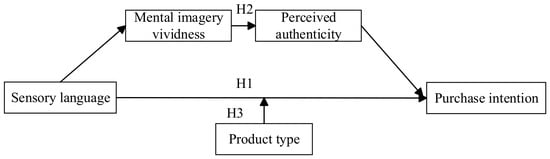
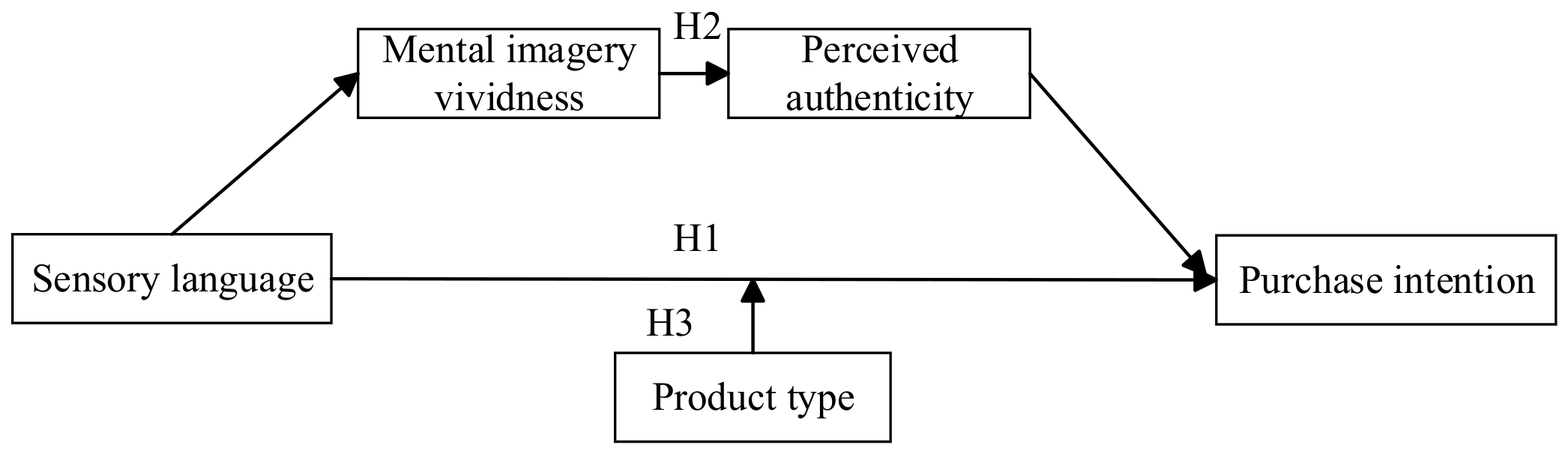
The research framework is presented in Figure 1.
Figure 1.
Research framework.
This research employs three complementary studies to examine the effect of streamer sensory language on consumer purchase responses, as well as the underlying mechanism and boundary condition of this effect. Study 1 uses secondary data from Douyin livestreams to test the relationship between streamer sensory language and consumer purchase behavior in a real market setting, while also providing an initial examination of the moderating role of product type. Study 2 adopts an experimental approach and manipulates whether the streamer uses sensory language while holding other information constant. It examines the causal effect of streamer sensory language on purchase intention and tests the serial mediating roles of mental imagery vividness and perceived authenticity. Study 3 further introduces product type (experience goods vs. search goods) in a controlled experimental setting and employs a 2 × 2 design to test whether the effect of streamer sensory language varies across product contexts.
4.1. Study 1
4.1.1. Data Source and Sample Construction
Study 1 first examines the relationship between streamer sensory language and consumer purchase behavior by using real transaction data from Douyin livestreams together with streamers’ spoken-text transcripts. Douyin is the largest livestream commerce platform in China. Recent studies have widely used Douyin data to investigate the effects of streamer language styles on consumer behavior, which also suggests that this platform provides an appropriate setting for identifying the sales effects of content-level variables in livestream commerce [22].
This study used Python 3.13 to collect Douyin livestream data from the livestream commerce data service platform Douchacha (https://www.douchacha.com/, accessed on 6 April 2026), covering the period from 5 March 2026 to 5 April 2026. Taking into account streamer follower size and livestream activity, we employed stratified sampling to select 526 livestream sessions from 136 streamers, with the aim of covering top-tier, upper-mid-tier, mid-tier, and long-tail streamers and thereby ensuring representativeness in terms of streamer scale. To reduce potential bias caused by time-slot variation, we restricted the sample window to the platform’s high-traffic livestream period (19:00–22:00). Such controls over streamer tier and broadcast time are common in livestream commerce research and help reduce the influence of traffic fluctuations associated with streamer level and time period [37].
The one-month period was selected because it avoided major national shopping festivals and platform-wide promotional events, thereby reducing abnormal sales fluctuations driven by large-scale campaigns. The period also covered both weekdays and weekends, allowing the sample to capture regular livestream traffic patterns. Missing observations mainly resulted from temporary transcript-recognition failure or incomplete minute-level transaction records. We removed observations with missing values on the dependent variable, focal independent variable, or key controls, and retained only livestream minutes for which spoken-text and transaction data could be matched.
At the data-processing stage, we collected two types of data. The first consisted of minute-level structured transaction data, including product sales increments per minute, concurrent viewers, listed product information, streamer characteristics, and livestream operational indicators. The second consisted of streamers’ spoken-text data during the livestream. Specifically, we monitored the livestream videos in real time and used speech-recognition technology to transcribe streamers’ oral communication into text. We then segmented the text using Jieba and conducted standard preprocessing procedures, including stop-word removal, special-character cleaning, and the deletion of emojis and links. The final panel dataset was constructed at the minute level, with each observation corresponding to the streamer’s spoken text for the focal product in a given minute and the product’s sales increment in that same minute. This procedure makes it possible to match what the streamer said with what consumers bought at a relatively fine temporal granularity, thereby capturing the immediacy of decision making in livestream shopping more closely. Sample characteristics are reported in Table 1.
Table 1.
Descriptive statistics of livestream samples.
4.1.2. Measures
(1) Independent variable
This study measures streamer sensory language using a natural language processing approach. Following prior research [38], we employed the perceptual processes category in the Linguistic Inquiry and Word Count (LIWC; [39]) dictionary. This category includes 433 sensory-related words, such as words associated with seeing, hearing, feeling, smelling, and tasting, and is closely linked to human perception.
Operationally, we first applied LIWC analysis to the streamer’s spoken text in each minute of the livestream and extracted the proportion of words that belonged to the perceptual processes category. This proportion was then used as the intensity indicator of streamer sensory language at the minute level. The measure was calculated as follows:
where denotes the number of words in streamer ’s spoken text at minute that belong to the perceptual processes category, and denotes the total number of words in that minute. To facilitate coefficient interpretation, this variable was standardized in the subsequent regression analyses.
(2) Dependent variable
The dependent variable in Study 1 is purchase behavior, operationalized as the incremental product sales per minute. Using minute-level data allows a closer temporal match between streamer language and changes in product sales, thereby enabling a more precise identification of the immediate sales effect of streamer language.
(3) Moderator
This study classifies product type into experience goods and search goods. Following the classic distinction in the literature, experience goods are products whose core quality attributes can be more fully evaluated only after actual use or consumption, whereas search goods are products whose key attributes can be assessed more easily prior to purchase through specifications, parameters, or other objective information [40].
Operationally, we invited 30 graduate students with backgrounds in marketing or e-commerce to participate in a pretest and classify the livestream products included in the sample. Each participant was randomly assigned to evaluate 100 products and rate them on two items: (1) “Consumers can evaluate the quality of this product reasonably well before purchase through objective information,” and (2) “Consumers need actual use or experience to evaluate the quality of this product reasonably well.” Both items were measured on seven-point scales. Based on the average scores, a product was classified as an experience good when the second item was rated higher than the first item; otherwise, it was classified as a search good. The final product type variable was coded as 1 = experience goods and 0 = search goods. Graduate students were selected because they had basic training in marketing or e-commerce and were therefore able to understand the distinction between search and experience goods. To reduce individual subjectivity, each product was evaluated by multiple coders, and the final classification was based on the average ratings rather than a single evaluator’s judgment.
(4) Control variables
To reduce the risk of omitted-variable bias, this study includes control variables at the streamer, text, product, and livestream-context levels. At the streamer level, we control for streamer gender, follower size, monthly livestream frequency, and sales reputation. A streamer’s follower base and livestreaming experience may influence traffic and sales conversion in the livestream room, while gender and prior sales reputation may also be associated with consumers’ purchase responses. At the text level, we control for text length, emotional valence, and readability. Text length is measured as the number of words spoken per minute. Emotional valence is calculated using the LIWC categories of positive and negative emotion words [41]. Readability is measured based on the proportion of easy words or average word length [42]. At the product and livestream-context levels, we further control for product price, concurrent viewers, product category, streamer fixed effects, and date fixed effects. The purpose of including these controls is to separate the effect of streamer sensory language from variation attributable to livestream traffic, pricing strategy, and temporal fluctuations across different time periods.
4.1.3. Model Specification
In Study 1, the dependent variable—incremental product sales per minute—is a non-negative integer and typically exhibits substantial right skewness and overdispersion. For this type of count outcome, negative binomial regression is more appropriate than ordinary least squares and is also better suited than Poisson regression for handling overdispersion [43]. Accordingly, this study employs a negative binomial regression model to examine the relationship between streamer sensory language and purchase behavior. In livestream commerce research, negative binomial models have been widely used when the dependent variable consists of count-based behavioral outcomes such as sales, comments, engagement, or other interaction indicators [44]. The model is specified as follows:
Equation (2) represents the main effect model, and Equation (3) represents the moderation model. In these equations, denotes the incremental sales of the focal product associated with streamer in minute , and represents the set of control variables. captures streamer fixed effects, and captures time fixed effects. denotes the type of the focal product currently being promoted (1 = experience goods; 0 = search goods). All continuous independent variables were standardized prior to estimation. In the formal results section, we further report statistics such as VIF, log likelihood, Wald , AIC, and BIC to assess model fit and multicollinearity.
4.1.4. Results
We first examined the main effect of streamer sensory language on purchase behavior. In Table 2, Model 1 serves as the baseline model and includes all control variables, as well as streamer fixed effects and time fixed effects. The results show that the model is statistically significant overall (Wald χ2 = 52.36, p < 0.001), indicating that the control variables jointly explain a substantial portion of the variation in consumer purchase behavior.
Table 2.
Negative binomial regression results for the effect of streamer sensory language on consumer purchasing behavior.
Model 2 adds streamer sensory language to Model 1. The results show that streamer sensory language has a significant positive effect on the incremental product sales per minute (β = 0.18, p < 0.001). Converting the coefficient into an incidence rate ratio (IRR) yields a value of 1.20, suggesting that, holding other factors constant, a one-unit increase in streamer sensory language is associated with an approximately 19.7% increase in the expected incremental product sales per minute. This result indicates that when streamers use more sensory language during livestreaming, consumers exhibit stronger immediate purchase behavior, thereby supporting H1.
Model 3 further adds product type and its interaction with streamer sensory language to Model 2. The interaction term between sensory language and product type is significantly positive (β = 0.14, p < 0.001; IRR = 1.15), indicating that product type moderates the relationship between streamer sensory language and purchase behavior. Using search goods as the reference group (ProductType = 0), the effect of sensory language on purchase behavior is 0.18 (IRR = 1.20). When the focal product is an experience good (ProductType = 1), the conditional effect of sensory language increases to 0.32, corresponding to an IRR of approximately 1.38. These results suggest that, compared with search goods, streamer sensory language is more effective in increasing consumer purchase behavior when promoting experience goods, thereby supporting H3.
With regard to the control variables, streamer gender, follower size, concurrent viewers, and product price all have significant positive effects on purchase behavior, suggesting that streamer characteristics, traffic volume, and product-related attributes remain important determinants of immediate purchase responses in livestream settings. By contrast, monthly livestream frequency, sales reputation, emotional valence, and readability do not show stable significant effects in the current models.
In addition, the maximum VIF across all models is 2.88, which is below the conventional threshold of 5, indicating that severe multicollinearity is not a concern. At the same time, log likelihood improves from Model 1 to Model 3, suggesting that model explanatory power increases after the inclusion of the focal independent variable and the interaction term. The changes in AIC and BIC also indicate improved model fit after the interaction term is added.
4.1.5. Robustness Checks
To assess the robustness of Study 1, we conducted additional analyses. First, we winsorized extreme values of minute-level sales and concurrent viewers to reduce the influence of abnormal traffic spikes, and the main results were unchanged. Second, we included additional fixed effects to control for unobserved heterogeneity across streamers and time periods. Across these checks, the positive effect of sensory language and its stronger effect for experience goods remained consistent, supporting the stability of the findings.
4.2. Study 2
Study 1, based on real livestream transaction data, established a positive relationship between streamer sensory language and consumer purchase behavior and provided initial evidence for the moderating role of product type. However, secondary data analysis is less well suited to identifying the internal psychological processes through which sensory language influences consumer responses. To address this issue, Study 2 adopts an experimental approach. By manipulating whether the streamer uses sensory language while holding all other information constant, this study examines the causal effect of streamer sensory language on purchase intention and further tests the serial mediating roles of mental imagery vividness and perceived authenticity.
4.2.1. Experimental Design and Participants
Study 2 employed a one-factor between-subjects design that manipulated the level of streamer sensory language (sensory language vs. non-sensory language). The main experiment recruited 200 participants through Credamo (M_age = 32.51, female = 106). Participants were randomly assigned to one of the two experimental conditions, with 100 participants in each condition. All participants were retained in the final analysis. Detailed sample characteristics are reported in Appendix A. Before entering the experiment, participants first read an informed consent statement, then watched a simulated livestream video, and finally completed the questionnaire after viewing the video.
We collaborated with a streamer who had eight years of livestream selling experience and produced two versions of a livestream video featuring the same product. The streamer, background, clothing, speaking rate, video length, price information, promotional format, demonstration actions, and basic product information were held constant across the two versions. The only difference lay in whether the streamer’s script contained sensory language. Because Study 2 focuses on the psychological mechanism of sensory language, we selected chocolate-filled butter biscuits as the focal product. This product was chosen for two reasons. First, biscuits are a common high-frequency food product in livestream shopping, making the purchase situation easy for participants to understand. Second, biscuits have salient sensory attributes, including taste, aroma, texture, and chewing experience, which makes them especially suitable for eliciting clear product-related imagery through streamer language. Research in sensory marketing and sensory language similarly suggests that food products are particularly appropriate for testing the effects of sensory expression because taste, smell, and texture are naturally central to such products.
In the non-sensory language condition, the streamer used general and informational expressions to introduce the biscuits, such as: “These biscuits are made with solid ingredients, come in individual packages, are easy to carry around, and are suitable for office snacking and afternoon tea. Overall, the quality is quite good.” In the sensory language condition, the streamer used more concrete sensory expressions to describe the same product, such as: “These biscuits are very crispy when you bite into them; the texture is crisp at first and then turns light and soft. The chocolate and buttery aroma blend together in the middle, and the more you chew, the more fragrant they become, without feeling dry or hard.” The two scripts were kept as similar as possible in total length, product selling points, price information, and overall positive tone, differing only in whether the wording directly evoked a sensory experience.
4.2.2. Pretest
Before conducting the main experiment, we first carried out a pretest to verify whether the sensory language manipulation was effective and to rule out potential confounds. The pretest also recruited 30 participants through Credamo (M_age = 28.52, female = 18). Participants were randomly assigned to watch one version of the livestream video and then completed the manipulation check along with several additional control measures.
The manipulation check assessed participants’ perceptions of the sensory nature of the streamer’s language using two seven-point items [12]: (1) “This streamer’s language contains a relatively high level of sensory descriptions,” and (2) “This streamer tends to introduce the product using language that allows people to feel the product experience.” In addition, to ensure that the two versions of the video differed only in sensory language, the pretest also measured informativeness, positivity, comprehensibility, and processing fluency.
The pretest results showed that participants in the sensory language condition perceived the streamer’s language as significantly more sensory than did those in the non-sensory language condition (, ; , ; , ), indicating that the manipulation was successful. At the same time, the two conditions did not differ significantly in informativeness, positivity, comprehensibility, or processing fluency (all s > 0.05), suggesting that the two video versions did not differ systematically apart from the sensory language manipulation. The detailed pretest results are reported in Appendix B.
4.2.3. Procedure and Measures
In the main experiment, participants were first informed that they would watch a livestream shopping video and then answer several questions based on their viewing experience. The system then presented one of the pre-produced livestream videos. After watching the video, participants completed the manipulation check, followed by measures of mental imagery vividness, perceived authenticity, and purchase intention, and then provided basic demographic information. To ensure data quality, an attention-check item was included in the questionnaire. All items were measured on seven-point Likert scales, with 1 indicating “strongly disagree” and 7 indicating “strongly agree.”
The focal variables in this study were mental imagery vividness [45], perceived authenticity [12], and purchase intention [46]. All scales were adapted from established measures and adjusted to fit the context of livestream commerce and the biscuit product used in this study. To verify the success of the sensory language manipulation, the same manipulation-check items used in the pretest were retained in the main experiment. All variables demonstrated satisfactory reliability and validity. The full items, sources, and reliability and validity results for all measures are reported in Appendix C.
4.2.4. Data Analysis and Results
We first conducted an independent-samples t-test to compare the two conditions on the manipulation check in order to confirm that the sensory language manipulation was effective. The results showed that participants in the sensory language condition perceived the streamer’s language as significantly more sensory than did those in the non-sensory language condition (, ; , ; , ), indicating that the manipulation was successful. At the same time, the two conditions did not differ significantly in informativeness, positivity, or processing fluency (all s > 0.05), suggesting that the two versions of the stimulus differed only in the sensory language manipulation.
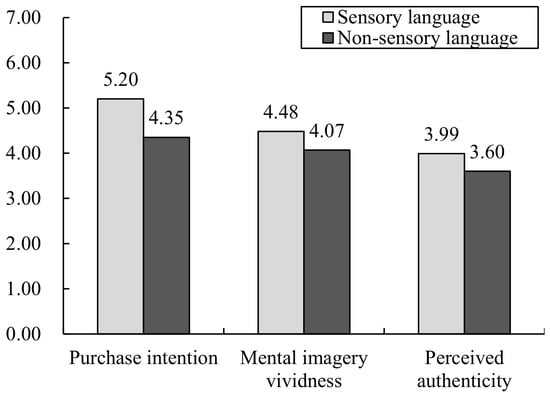
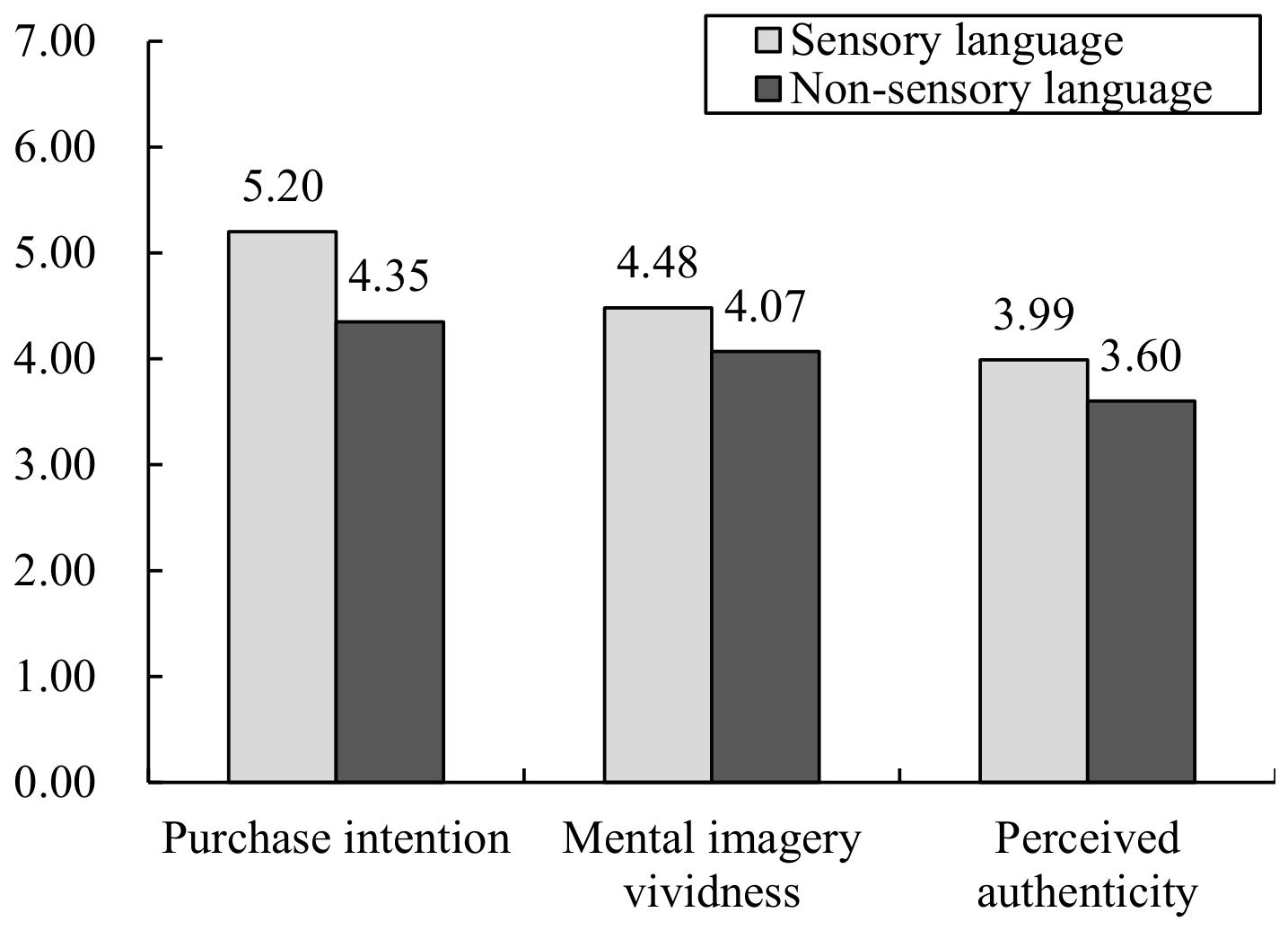
Next, we conducted an independent-samples t-test to examine the main effect of streamer sensory language on purchase intention. As shown in Figure 2, consistent with H1, participants in the sensory language condition reported significantly higher purchase intention than those in the non-sensory language condition (, ; , ; , ). This finding indicates that, in a livestream context, the use of sensory language by the streamer significantly increases consumers’ purchase intention.
Figure 2.
Results of study 2.
Finally, we used PROCESS Model 6 [47] to test the proposed serial mediation, with streamer sensory language as the independent variable, purchase intention as the dependent variable, and mental imagery vividness and perceived authenticity as sequential mediators. A bootstrap procedure with 5000 resamples and 95% confidence intervals was employed. The results showed that the total effect of streamer sensory language on purchase intention was significant (, , ). Further analysis indicated that sensory language significantly increased participants’ mental imagery vividness (, , ), and that mental imagery vividness in turn positively influenced perceived authenticity (, , ). Perceived authenticity was also positively associated with purchase intention (, , ). Most importantly, the serial indirect effect of streamer sensory language on purchase intention through mental imagery vividness and perceived authenticity was significant (indirect effect = 0.018, 95% CI [0.001, 0.043]). Because the confidence interval did not include zero, H2 was supported.
4.3. Study 3
4.3.1. Experimental Design and Participants
To test the moderating role of product type, Study 3 employed a 2 (sensory language: present vs. absent) × 2 (product type: experience goods vs. search goods) between-subjects experimental design. The main experiment recruited 320 participants through Credamo (, female = 195). Participants were randomly assigned to one of the four experimental conditions, with 80 participants in each condition. All participants were retained in the final analysis. Detailed sample characteristics are reported in Appendix A.
Consistent with Study 2, Study 3 also used simulated livestream videos as experimental stimuli. After entering the experiment, participants first read an informed consent statement, then watched a livestream shopping video, and finally completed the questionnaire after viewing the video. Study 3 retained the same measures of the dependent variable and mediators as Study 2 to ensure consistency in theoretical logic and measurement across the two experiments. The full items, as well as the reliability and validity results of the relevant scales, are reported in Appendix C.
4.3.2. Stimulus Development
Study 3 used sports Bluetooth earphones as the focal product. This product was selected because Bluetooth earphones contain both salient objective functional attributes and subjective experiential attributes. On the one hand, features such as Bluetooth version, battery life, waterproof rating, and noise-cancelling function can be understood before purchase through technical specifications. On the other hand, attributes such as wearing comfort, stability during exercise, sense of sound immersion, and overall listening experience depend more heavily on actual use. Sports Bluetooth earphones are therefore well suited to represent a product category that contains both search attributes and experience attributes, making them appropriate for testing the boundary condition of product type.
We again collaborated with the same streamer from Study 2 to produce four livestream videos featuring two different pairs of sports Bluetooth earphones. The streamer, background, clothing, speaking rate, video length, price information, promotional format, and demonstration actions were held constant across conditions. The manipulations were introduced only through the wording of sensory language and the framing of product type. In the search goods condition, the stimulus featured a function-oriented noise-cancelling earphone, and the introductory script emphasized its core selling points in terms of specifications and functional advantages. In the experience goods condition, the stimulus featured an experience-oriented noise-cancelling earphone, and the introductory script emphasized its wearing comfort and overall user experience. Within each product type condition, we further manipulated whether the streamer used sensory language. Apart from the presence or absence of sensory wording, all other elements of the verbal stimulus were kept as similar as possible, including sentence structure, informativeness, promotional information, and overall positive tone. In other words, the four versions were designed to be highly comparable in terms of product information, video length, price presentation, promotional content, and overall tone, with differences confined to product positioning and whether the streamer used sensory language.
4.3.3. Pretest
Before conducting the main experiment, we first carried out a pretest to verify whether the dual manipulations of product type and sensory language were successful. The pretest recruited 60 participants through Credamo. Participants were randomly assigned to watch one of the four versions of the livestream video and then completed the manipulation checks and several additional control measures. The manipulation checks assessed participants’ perceptions of the sensory nature of the streamer’s language, their judgment of the product type (search goods vs. experience goods), and their perceptions of informativeness, positivity, comprehensibility, and processing fluency.
The pretest results showed that participants in the sensory language condition perceived the streamer’s language as significantly more sensory than did those in the non-sensory language condition (, ; , ; , ), indicating that the sensory language manipulation was successful. In addition, the product type manipulation significantly influenced participants’ judgments of the product’s attributes. = 5.27, SD = 1.44; = 3.87, SD = 1.07; t (58) = 4.47, p < 0.001, indicating that the product type manipulation was also successful. At the same time, there were no significant differences across conditions in informativeness, positivity, comprehensibility, or processing fluency (all s > 0.11), suggesting that the four stimulus versions did not differ systematically apart from the intended manipulations. Detailed pretest results are reported in Appendix B.
4.3.4. Data Analysis and Results
We first conducted manipulation checks. The ANOVA results showed that the sensory language manipulation significantly influenced participants’ perceptions of the sensory nature of the streamer’s language (, ; , ; , ). At the same time, the product type manipulation significantly influenced participants’ judgments of the product’s attributes ( = 5.85, SD 0.97; = 2.82, SD = 0.98; , p < 0.001). These results indicate that both manipulations in Study 3 were successful. In addition, there were no significant differences across conditions in informativeness, positivity, or processing fluency (all > 0.26), suggesting that the stimulus materials did not differ systematically beyond the intended manipulations.
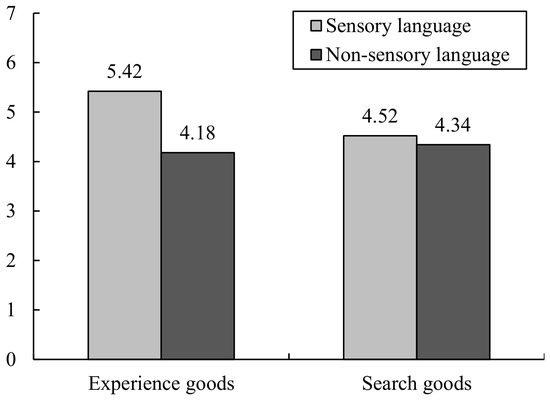
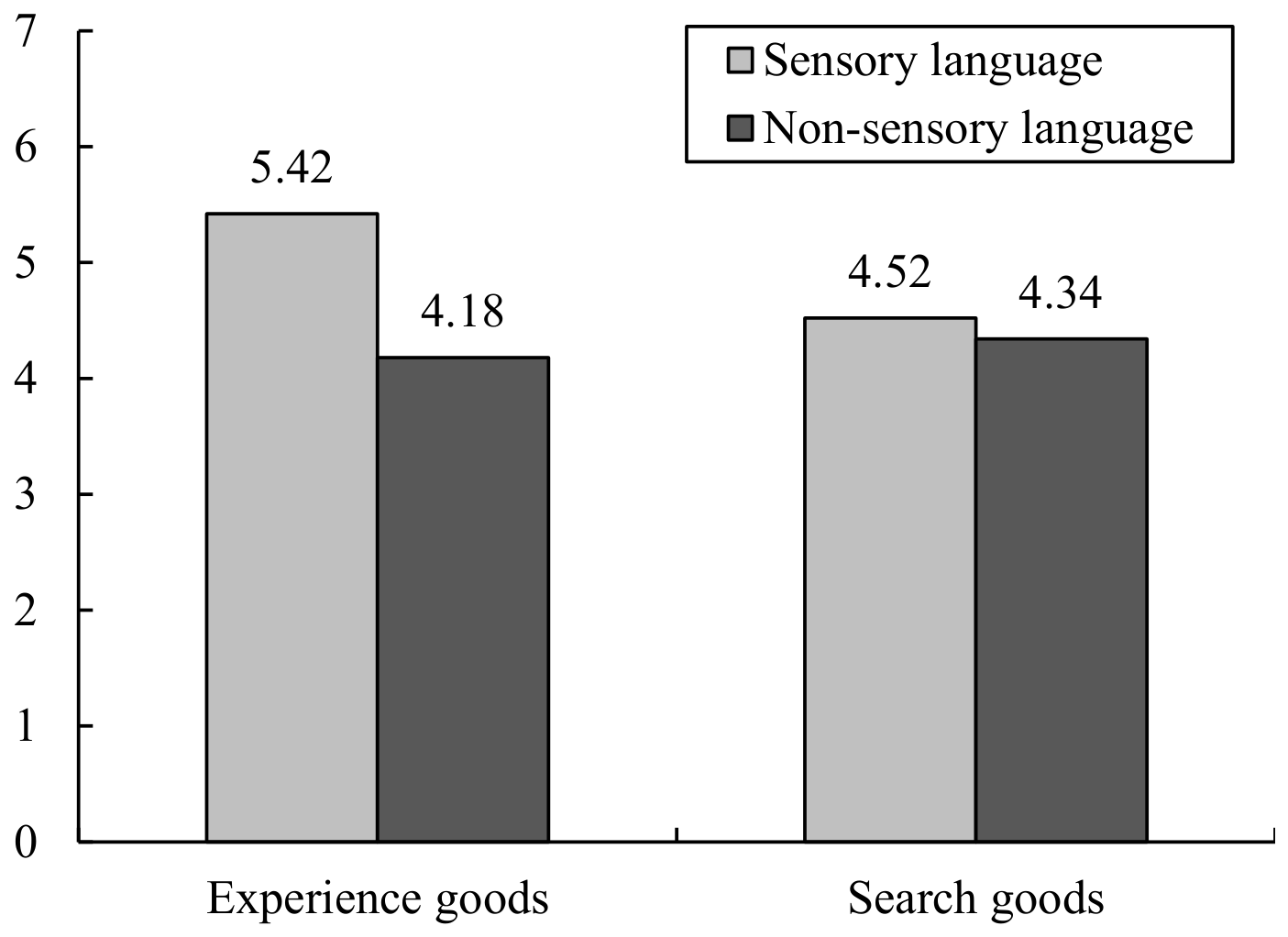
Next, we conducted a 2 × 2 ANOVA with purchase intention as the dependent variable. As shown in Figure 3, the results revealed a significant main effect of sensory language (, ; , ). More importantly, the interaction between sensory language and product type was significant (, ). Simple effects analyses further showed that, under the experience goods condition, participants in the sensory language condition reported significantly higher purchase intention than those in the non-sensory language condition (, ; , ; , ). By contrast, under the search goods condition, the difference between the two groups was not significant (, ; , ; , ). These results support H3.
Figure 3.
Results of study 3.
5. Conclusions and Discussion
This research examined the role of streamer sensory language in shaping consumer purchase behavior in livestream commerce through one field study using real platform data and two experiments. Three main findings emerged. First, the use of sensory language by streamers significantly increased consumer purchase responses. Second, this effect operated through mental imagery vividness and perceived authenticity. In other words, sensory language strengthened consumers’ internal representation of product experience and, in turn, enhanced their judgments of the authenticity of both the streamer and the recommendation. Third, the effect of sensory language was not equally strong across all product contexts. It was more pronounced for experience goods and relatively weaker for search goods. At the same time, the findings should be interpreted with caution. Sensory language is not inherently persuasive in all livestream settings. Its effectiveness depends on whether the language is congruent with product attributes and whether consumers perceive the description as grounded in actual use. Overly formulaic or exaggerated sensory expressions may undermine authenticity rather than enhance it. Thus, sensory language should be understood as a conditional communication cue rather than a universally effective persuasion tactic.
These findings connect several streams of prior research. Existing livestream commerce studies have shown that streamers’ speech acts, discourse styles, and language strategies influence consumer interest, engagement, and sales performance [7,23,24]. However, relatively limited attention has been given to how product experience is specifically organized and conveyed through language. The present research shows that streamer language matters not only because it transmits information or structures interaction, but also because it shapes how consumers experience the product psychologically. Prior research on sensory language in influencer marketing has shown that it can enhance consumer responses and is closely related to authenticity judgments [12]. The present findings extend that logic to the more interactive and transaction-oriented context of livestream commerce. In this setting, the persuasive value of sensory language lies not only in increasing perceived authenticity, but also in helping consumers form a richer mental representation of product experience. In addition, prior studies have shown that livestreaming tends to be more effective for products with stronger experiential attributes [17], and that search goods and experience goods differ systematically in their information requirements and evaluation processes [40,48]. The present research further shows that the effectiveness of sensory language depends on product attributes, especially on the extent to which consumers need language to anticipate product experience.
5.1. Theoretical Contributions
The first theoretical contribution of this research lies in advancing the study of language strategies in livestream commerce. Although prior studies have recognized the importance of streamer language, most discussions have focused on relatively broad dimensions such as speech acts, discourse styles, and interaction strategies [7,23,24]. The present research shows that streamer language also functions as a mechanism for conveying product experience. By identifying sensory language as a more fine-grained content cue, this study moves research on livestream language beyond general communication variables and toward a more direct account of how language constructs product experience.
Second, this research extends the applicability of sensory marketing to the context of livestream commerce. The sensory marketing literature has long established that consumer judgments are not based solely on abstract information and that sensory cues significantly shape perception, evaluation, and behavior [10,11]. Although previous work has demonstrated the effect of sensory language in influencer marketing [12], livestream commerce is characterized by greater interactivity and richer media conditions, and thus should not be treated merely as a repetition of prior settings. The present findings show that sensory language continues to exert a stable effect on purchase responses in livestream settings. This suggests that when consumers cannot directly experience the product, language itself becomes an important channel linking product experience to purchase decision making. More broadly, the findings indicate that sensory marketing research should pay closer attention to linguistic expression in highly interactive digital environments.
Third, this research contributes to signaling theory by identifying sensory language as an experiential signal in livestream commerce. Prior signaling research has mainly emphasized relatively observable or structural cues, such as seller reputation, platform design, product information, or streamer characteristics [17]. The present study shows that linguistic details can also serve as signals when consumers face uncertainty about product experience and recommendation authenticity. Specifically, sensory language helps consumers form vivid mental imagery of product use, and this imagery then provides a basis for interpreting the streamer’s description as grounded in genuine product familiarity. By showing how a verbal cue is transformed into perceived authenticity through mental imagery vividness, this research extends signaling theory from the presence of signals to the psychological process through which consumers interpret and act on such signals in livestream commerce.
5.2. Managerial Implications
The findings offer several direct implications for brands and streamers. First, for products with strong experiential attributes, sensory language should be treated as a scriptable communication resource rather than as an improvised verbal embellishment. For categories such as food, beauty, personal care, apparel, and home products, streamers can help consumers form more concrete consumption expectations by describing taste, texture, smell, touch, wearing comfort, or bodily sensations during use. Doing so is likely to strengthen purchase intention.
Second, sensory language should not be treated as a universal script template that applies equally well to all products. The present findings show that its advantage is concentrated in the context of experience goods. For search goods, consumers rely more heavily on objective information such as specifications, features, functionality, and price. In these cases, streamers should continue to prioritize such information. For experience goods, by contrast, more targeted sensory expression is likely to be more effective. For brands, this means that livestream script optimization should be based on product–message fit rather than on a one-size-fits-all template.
Finally, brands should pay attention to the relationship between sensory language and perceived authenticity in streamer training and content review. One reason why sensory language is effective is that it increases consumers’ sense that the streamer is genuinely familiar with the product. Accordingly, the effect of sensory expression is likely to be stronger when it is aligned with product display, trial use, and the specific details of the streamer’s explanation. By contrast, when such language appears formulaic or detached from the actual usage context, it may weaken consumers’ perceptions of authenticity.
5.3. Limitations
This research has several limitations. First, the field data in Study 1 came from a single platform. Although Douyin is highly representative, the empirical context is China-specific, and livestream commerce practices may differ across countries in terms of platform design, consumer trust, streamer norms, and regulatory environment. Future research should examine whether the present findings hold across platforms and cultural contexts. Second, the present study focused on the overall effect of sensory language and did not distinguish among different sensory modalities. Expressions related to taste, smell, touch, vision, and sound may differ in product fit and psychological impact. Third, this research did not directly measure whether sensory language increases hedonic value, utilitarian value, or both. Future work could examine these value perceptions as parallel or sequential mechanisms linking sensory language to mental imagery vividness and purchase responses. Fourth, although this study considered product type, it did not directly examine influencer-product fit. The same sensory language may be more persuasive when the streamer’s expertise, image, or prior experience fits the promoted product. Fifth, the experiments used purchase intention rather than actual payment behavior. Future work could combine experimental manipulation with behavioral outcomes such as clicks, add-to-cart behavior, dwell time, or payment. Finally, the empirical analyses tested the hypotheses through component-based models rather than a single integrated SEM model. This strategy was adopted because Study 1 used minute-level count data, whereas Studies 2 and 3 used experimental data with manipulated conditions and PROCESS-based mediation tests. Nevertheless, future research could use SEM or path analysis as an additional robustness test when all focal constructs are measured within the same dataset.
Author Contributions
Conceptualization, J.C. and Y.W.; Methodology, J.C. and Y.W.; Formal analysis, Y.W. and F.C.; Investigation, Q.Y.; Writing—original draft, J.C., Y.W., F.C. and Q.Y.; Writing—review & editing, Q.Y.; Visualization, F.C. All authors have read and agreed to the published version of the manuscript.
Funding
This research received no external funding.
Institutional Review Board Statement
The study was conducted in accordance with the Declaration of Helsinki, and approved by the Institutional Review Board of Business School, Nanjing Audit University (NAU_202601056, approval date 21 February 2026).
Informed Consent Statement
Informed consent was obtained from all subjects involved in the study.
Data Availability Statement
The data presented in this study are available on request from the corresponding author.
Conflicts of Interest
The authors declare no conflict of interest.
Appendix A. Study Overview and Sample Information
Table A1.
Summary of studies.
Table A2.
Demographic information of participants in Studies 2 and 3.
Appendix B. Pretest Results
Table A3.
Pretest results for sensory language manipulation.
Table A4.
Pretest results for informativeness.
Table A5.
Pretest results for positivity.
Appendix C. Measurement Items
Table A6.
Measurement items and reliability results.
References
- Wang, Q.; Li, X.; Yan, X.; Li, R. How to Enhance Consumers’ Purchase Intention in Live Commerce? An Affordance Perspective and the Moderating Role of Age. Electron. Commer. Res. Appl. 2024, 67, 101438. [Google Scholar] [CrossRef] [Scilit]
- Chen, H.; Chen, H.; Tian, X. The Dual-Process Model of Product Information and Habit in Influencing Consumers’ Purchase Intention: The Role of Live Streaming Features. Electron. Commer. Res. Appl. 2022, 53, 101150. [Google Scholar] [CrossRef] [Scilit]
- Grand View Research. Live Commerce Market (2026–2033). Size & Share|Industry Report. Available online: https://www.grandviewresearch.com/industry-analysis/live-commerce-market-report (accessed on 23 April 2026).
- Bai, X.; Cheng-Xi Aw, E.; Wei-Han Tan, G.; Ooi, K.-B. Livestreaming as the next Frontier of E-Commerce: A Bibliometric Analysis and Future Research Agenda. Electron. Commer. Res. Appl. 2024, 65, 101390. [Google Scholar] [CrossRef] [Scilit]
- Zhang, K.; Luo, B.; Yan, J.; Weng, X. The Art and Impact of Narrative: How Streamer Narrative Styles Shape Consumers’ Purchase Intention. J. Retail. Consum. Serv. 2025, 87, 104357. [Google Scholar] [CrossRef] [Scilit]
- Chen, Y.; Han, Q.; Lian, Z.; Zhu, W.; Jiang, Y. From Certainty to Doubt: The Impact of Streamer Expression Certainty on Consumer Purchase Behavior in Live-Stream E-Commerce. J. Theor. Appl. Electron. Commer. Res. 2025, 20, 138. [Google Scholar] [CrossRef] [Scilit]
- Chen, A.; Zhang, Y.; Liu, Y.; Lu, Y. Be a Good Speaker in Livestream Shopping: A Speech Act Theory Perspective. Electron. Commer. Res. Appl. 2023, 61, 101301. [Google Scholar] [CrossRef] [Scilit]
- Hu, H.; Ma, F. Human-like Bots Are Not Humans: The Weakness of Sensory Language for Virtual Streamers in Livestream Commerce. J. Retail. Consum. Serv. 2023, 75, 103541. [Google Scholar] [CrossRef] [Scilit]
- Elder, R.S.; Krishna, A. The Effects of Advertising Copy on Sensory Thoughts and Perceived Taste. J. Consum. Res. 2010, 36, 748–756. [Google Scholar] [CrossRef] [Scilit]
- Elder, R.S.; Krishna, A. A Review of Sensory Imagery for Consumer Psychology. J. Consum. Psychol. 2022, 32, 293–315. [Google Scholar]
- Krishna, A. An Integrative Review of Sensory Marketing: Engaging the Senses to Affect Perception, Judgment and Behavior. J. Consum. Psychol. 2012, 22, 332–351. [Google Scholar] [CrossRef] [Scilit]
- Cascio Rizzo, G.L.; Berger, J.; De Angelis, M.; Pozharliev, R. How Sensory Language Shapes Influencer’s Impact. J. Consum. Res. 2023, 50, 810–825. [Google Scholar] [CrossRef] [Scilit]
- Liu, Y.; Sun, X. Tourism E-Commerce Live Streaming: The Effects of Live Streamer Authenticity on Purchase Intention. Tour. Rev. 2024, 79, 1147–1165. [Google Scholar]
- Bai, S.; Gui, Z.; Zhou, J.; Zhao, J. Can Consumers Still Form Proximal Sensory Perception in Virtual Anchor Live Streaming? The Impact of the Fit Between Sensory Language Description and Product Attributes. J. Theor. Appl. Electron. Commer. Res. 2026, 21, 92. [Google Scholar] [CrossRef] [Scilit]
- Wu, Y.-L.; Chen, P.-C. Neurophysiology of Sensory Imagery: An Effort to Improve Online Advertising Effectiveness through Science Laboratory Experimentation. Inf. Manag. 2024, 61, 103708. [Google Scholar] [CrossRef] [Scilit]
- Song, S.; Xu, Y.; Ma, B.; Zong, X. Understanding How Streamer’s Self-Presentation in E-Commerce Live Streaming Affects Consumers: The Role of Persuasion Knowledge. J. Theor. Appl. Electron. Commer. Res. 2024, 19, 1922–1942. [Google Scholar] [CrossRef] [Scilit]
- Wang, B.; Xie, F.; Kandampully, J.; Wang, J. Increase Hedonic Products Purchase Intention through Livestreaming: The Mediating Effects of Mental Imagery Quality and Customer Trust. J. Retail. Consum. Serv. 2022, 69, 103109. [Google Scholar] [CrossRef] [Scilit]
- Pan, M.; Blut, M.; Ghiassaleh, A.; Lee, Z.W.Y. Influencer Marketing Effectiveness: A Meta-Analytic Review. J. Acad. Mark. Sci. 2025, 53, 52–78. [Google Scholar]
- Lopez, A.; Garza, R. Do Sensory Reviews Make More Sense? The Mediation of Objective Perception in Online Review Helpfulness. J. Res. Interact. Mark. 2022, 16, 438–456. [Google Scholar]
- Ma, X.; Ren, J.; Lang, X.; Yang, Z.; Li, T. The Influence of Live Video Hosts’ Speech Act on Purchase Behaviour. J. Retail. Consum. Serv. 2024, 81, 103984. [Google Scholar] [CrossRef] [Scilit]
- Liu, X.; Ma, T.; Han, Q.; Yang, Q. Beyond Words: How Streamers’ Dynamic Nonverbal Cues Increase Consumer Purchase Behavior Through Viewer Immersion. J. Theor. Appl. Electron. Commer. Res. 2026, 21, 106. [Google Scholar] [CrossRef] [Scilit]
- Luo, L.; Liu, L.; Zheng, Y.; Wang, Y. The Power of Voice: Investigating the Effects of Streamer Voice Characteristics on Sales Performance in Live Streaming E-Commerce. J. Retail. Consum. Serv. 2025, 84, 104260. [Google Scholar] [CrossRef] [Scilit]
- Liu, L.; Fang, J.; Yang, L.; Han, L.; Hossin, M.A.; Wen, C. The Power of Talk: Exploring the Effects of Streamers’ Linguistic Styles on Sales Performance in B2B Livestreaming Commerce. Inf. Process. Manag. 2023, 60, 103259. [Google Scholar] [CrossRef] [Scilit]
- Ma, X.; Ren, J.; Khor, X.; Wang, R.; Li, T.; Lang, X. Influencing Mechanisms of Live Streamer’s Language Strategies on Product Sales. J. Retail. Consum. Serv. 2025, 85, 104291. [Google Scholar] [CrossRef] [Scilit]
- Yao, R.; Qi, G.; Wu, Z.; Sun, H.; Sheng, D. Digital Human Calls You Dear: How Do Customers Respond to Virtual Streamers’ Social-Oriented Language in e-Commerce Livestreaming? A Stereotyping Perspective. J. Retail. Consum. Serv. 2024, 79, 103872. [Google Scholar] [CrossRef] [Scilit]
- Ma, E.; Liu, J.; Li, K. Exploring the Mechanism of Live Streaming E-Commerce Anchors’ Language Appeals on Users’ Purchase Intention. Front. Psychol. 2023, 14, 1109092. [Google Scholar] [CrossRef] [Scilit]
- Gong, X.; Sun, P. Can Virtual Streamers Express Emotions? Understanding the Language Style of Virtual Streamers in Livestreaming e-Commerce. J. Retail. Consum. Serv. 2025, 82, 104148. [Google Scholar] [CrossRef] [Scilit]
- Barsalou, L.W. Grounded Cognition. Annu. Rev. Psychol. 2008, 59, 617–645. [Google Scholar] [CrossRef] [Scilit] [PubMed]
- Chen, H.; Dou, Y.; Xiao, Y. Understanding the Role of Live Streamers in Live-Streaming e-Commerce. Electron. Commer. Res. Appl. 2023, 59, 101266. [Google Scholar] [CrossRef] [Scilit]
- Vazquez, E.E.; Patel, C.; Alvidrez, S.; Siliceo, L. Images, Reviews, and Purchase Intention on Social Commerce: The Role of Mental Imagery Vividness, Cognitive and Affective Social Presence. J. Retail. Consum. Serv. 2023, 74, 103415. [Google Scholar] [CrossRef] [Scilit]
- Cho, Y.Y. Virtual Influencers as Brand Endorsers: Developing and Validating a Multidimensional Evaluation Scale. J. Theor. Appl. Electron. Commer. Res. 2025, 20, 90. [Google Scholar] [CrossRef] [Scilit]
- Beverland, M.B.; Farrelly, F.J. The Quest for Authenticity in Consumption: Consumers’ Purposive Choice of Authentic Cues to Shape Experienced Outcomes. J. Consum. Res. 2010, 36, 838–856. [Google Scholar] [CrossRef] [Scilit]
- Chen, X.; Shen, J.; Wei, S. What Reduces Product Uncertainty in Live Streaming E-Commerce? From a Signal Consistency Perspective. J. Retail. Consum. Serv. 2023, 74, 103441. [Google Scholar] [CrossRef] [Scilit]
- Zhang, N. Product Presentation in the Live-Streaming Context: The Effect of Consumer Perceived Product Value and Time Pressure on Consumer’s Purchase Intention. Front. Psychol. 2023, 14, 1124675. [Google Scholar] [CrossRef] [Scilit] [PubMed]
- Nelson, P. Information and Consumer Behavior. J. Polit. Econ. 1970, 78, 311–329. [Google Scholar] [CrossRef] [Scilit]
- Willemsen, L.M.; Neijens, P.C.; Bronner, F.; De Ridder, J.A. “Highly Recommended!” The Content Characteristics and Perceived Usefulness of Online Consumer Reviews. J. Comput.-Mediat. Commun. 2011, 17, 19–38. [Google Scholar] [CrossRef] [Scilit]
- Bai, S.; Huang, X.; He, H.; Guo, H. Product or Cultural Knowledge: Where Should More Attention Be Directed? Analyzing the Heterogeneous Effects of Streamers’ Knowledge-Sharing on Consumer Purchases in Live Streaming. Sage Open 2025, 15, 21582440251384222. [Google Scholar] [CrossRef] [Scilit]
- Elder, R.S.; Schlosser, A.E.; Poor, M.; Xu, L. So Close I Can Almost Sense It: The Interplay between Sensory Imagery and Psychological Distance. J. Consum. Res. 2017, 44, 877–894. [Google Scholar] [CrossRef] [Scilit]
- Pennebaker, J.W.; Boyd, R.L.; Jordan, K.; Blackburn, K. The Development and Psychometric Properties of LIWC2015; University of Texas at Austin: Austin, TX, USA, 2015. [Google Scholar]
- Weathers, D.; Sharma, S.; Wood, S.L. Effects of Online Communication Practices on Consumer Perceptions of Performance Uncertainty for Search and Experience Goods. J. Retail. 2007, 83, 393–401. [Google Scholar] [CrossRef] [Scilit]
- Guo, W.; Sengul, M.; Yu, T. The Impact of Executive Verbal Communication on the Convergence of Investors’ Opinions. Acad. Manag. J. 2021, 64, 1763–1792. [Google Scholar] [CrossRef] [Scilit]
- Pancer, E.; Chandler, V.; Poole, M.; Noseworthy, T.J. How Readability Shapes Social Media Engagement. J. Consum. Psychol. 2019, 29, 262–270. [Google Scholar]
- Cao, X.; Yang, Z.; Wang, F.; Lu, C.; Wu, Y. From Keyword to Keywords: The Role of Keyword Portfolio Variety and Disparity in Product Sales. Asia Pac. J. Mark. Logist. 2022, 34, 1285–1302. [Google Scholar]
- Yang, Q.; Huo, J.; Li, H.; Xi, Y.; Liu, Y. Can Social Interaction-Oriented Content Trigger Viewers’ Purchasing and Gift-Giving Behaviors? Evidence from Live-Streaming Commerce. Internet Res. 2023, 33, 46–71. [Google Scholar] [CrossRef] [Scilit]
- Yoo, J.; Kim, M. The Effects of Online Product Presentation on Consumer Responses: A Mental Imagery Perspective. J. Bus. Res. 2014, 67, 2464–2472. [Google Scholar] [CrossRef] [Scilit]
- Bearden, W.; Lichtenstein, D.; Teel, J. Comparison Price, Coupon, and Brand Effects on Consumer Reactions to Retail Newspaper Advertisements. J. Retail. 1984, 60, 11–34. [Google Scholar]
- Hayes, A.F. Introduction to Mediation, Moderation, and Conditional Process Analysis: A Regression-Based Approach, 2nd ed.; The Guilford Press: New York, NY, USA, 2018. [Google Scholar]
- Bleier, A.; Harmeling, C.M.; Palmatier, R.W. Creating Effective Online Customer Experiences. J. Mark. 2019, 83, 98–119. [Google Scholar]
- Ducoffe, R.H. Advertising Value and Advertising on the Web. J. Advert. Res. 1996, 36, 21–35. [Google Scholar] [CrossRef] [Scilit]
- Hernández-Ortega, B. When the Performance Comes into Play: The Influence of Positive Online Consumer Reviews on Individuals’ Post-Consumption Responses. J. Bus. Res. 2020, 113, 422–435. [Google Scholar] [CrossRef] [Scilit]
- Lee, A.Y.; Aaker, J.L. Bringing the Frame Into Focus: The Influence of Regulatory Fit on Processing Fluency and Persuasion. J. Pers. Soc. Psychol. 2004, 86, 205–218. [Google Scholar] [CrossRef] [Scilit] [PubMed]

Disclaimer/Publisher’s Note: The statements, opinions and data contained in all publications are solely those of the individual author(s) and contributor(s) and not of MDPI and/or the editor(s). MDPI and/or the editor(s) disclaim responsibility for any injury to people or property resulting from any ideas, methods, instructions or products referred to in the content. |
© 2026 by the authors. Licensee MDPI, Basel, Switzerland. This article is an open access article distributed under the terms and conditions of the Creative Commons Attribution (CC BY) license.