


Abstract
Real-time interaction and immersive experience in livestream e-commerce greatly boost consumers’ impulse buying, yet few studies explore how streamer interaction quality affects impulse buying via emotional bonds. Drawing on the SOR framework, this study constructs a moderated mediation model with parasocial interaction as the mediator and self-construal as the moderator. Combining structural equation modeling (SEM) and fuzzy-set qualitative comparative analysis (fsQCA), we empirically analyze 406 valid questionnaires. The results show that: (1) four dimensions of streamer interaction quality (expertise, empathy, entertainment, reliability) positively predict impulse buying intention, with partial mediation of parasocial interaction; (2) the moderation effect is asymmetric: interdependent self-construal strengthens the positive link between parasocial interaction and impulse buying intention, while independent self-construal exerts no significant moderation; (3) fsQCA detects six equivalent configurations triggering high impulse buying intention, uncovering complementarity and substitution among interaction dimensions. This study clarifies the emotional transmission mechanism in livestream scenarios and offers tiered implications: streamers should uphold credibility as the baseline and adopt differentiated interaction strategies based on individual strengths; platforms should quantify interaction quality and implement targeted training and precision matching based on configurational paths; and merchants should match streamer characteristics to product types, strengthen group belonging for interdependent consumers, and reduce decision-making barriers for independent consumers.
1. Introduction
The widespread adoption of mobile internet and mature real-time livestreaming technology has driven livestream e-commerce to become a core business model of the digital economy worldwide [1]. Compared with traditional asynchronous e-commerce that only provides static text and images, livestream shopping enables real-time dialog, instant bullet interaction and an immersive atmosphere, thus greatly boosting consumers’ impulse purchase intention [2,3]. Impulse purchasing represents the dominant consumer behavior in livestream commerce and has garnered extensive research interest [1,4]. Most prior studies center on platform promotions, product attributes and audience peer cues, yet overlook the multi-dimensional interactive stimuli generated by streamers—the core human actors in shopping scenarios [5,6].
Numerous livestream studies adopting the SOR framework have explained how external situational factors drive impulsive consumption, yet a systematic literature review reveals two targeted research gaps instead of vague general limitations [7]. First, prior works often reduce streamer cues to unidimensional indicators like attractiveness or professionalism, without a unified four-dimensional scale integrating functional and emotional interactive traits [8]. Few scholars treat empathy and entertainment as distinct affective stimuli, failing to fully explain how diverse streamer interactions shape consumers’ inner emotional perceptions [9]. Second, most existing research relies only on SEM’s linear framework and fails to differentiate symmetric and heterogeneous boundary effects stemming from self-construal. Additionally, few livestream papers published in JTAER integrate fsQCA to explore the equifinal configurational paths leading to impulse buying [10,11].
Against the above targeted literature gaps, this study clarifies three distinct incremental theoretical contributions:
(1) This research constructs a novel four-dimensional typology of streamer interaction quality that distinguishes functional–cognitive versus hedonic–emotional stimulus categories. Unlike the prior literature, which overprioritizes entertainment attributes, this study empirically positions reliability as the foundational precursor of parasocial bonding, and optimizes the oversimplified single-stimulus setup adopted by traditional livestream SOR models.
(2) This work identifies the unbalanced moderating pattern of self-construal: interdependent self-construal amplifies the PSI–impulse buying association, whereas independent self-construal generates no meaningful moderating effect. It further supplies context-specific cultural explanations for this asymmetric outcome and extends cross-cultural insights into the understudied boundary conditions of parasocial interaction within digital retail [12].
(3) This study combines SEM linear effect estimation and fsQCA configurational analysis to break the dominant single-linear paradigm of existing SOR livestream research. Beyond verifying the unified mediating role of parasocial interaction, it reveals six equifinal causal pathways driving high impulse buying, alongside complementary and substitutive relationships among streamer interaction attributes, delivering a replicable multi-factor analytical framework for subsequent scholarship.
To fill the identified research voids, this paper establishes a moderated mediation model and adopts a mixed SEM-fsQCA design to answer two core research questions: (1) Does parasocial interaction mediate the separate predictive impacts of each streamer interaction dimension on impulse buying intention? (2) Does self-construal produce asymmetric moderation on the second-stage PSI–impulse buying relationship? The joint linear and configurational results also deliver differentiated operational guidance for streamers, e-commerce platforms and merchants.
2. Materials and Methods
2.1. Research Model and Research Hypotheses
2.1.1. Theoretical Foundation
(1) SOR Framework
The Stimulus–Organism–Response (SOR) model was developed by Mehrabian and Russell (1974) in environmental psychology and provides a classic framework for explaining human behavioral responses [7]. This theory suggests that external stimuli (S) alter individuals’ internal cognitive and affective states (O), which further triggers approach or avoidance behaviors (R) [13]. Unlike single-cognition theories (e.g., perceived trust, flow experience) that only explain partial psychological processes, the SOR model constructs a complete “stimulus–state–behavior” mechanism. Therefore, it is widely used to explore consumer impulsive consumption in digital retail and livestream shopping contexts [14].
In the livestream e-commerce context, this study redefines the three core components of the SOR chain using scenario-specific variables, drawing on existing livestream SOR research [15]. First, the four dimensions of streamer interaction quality are set as the exogenous Stimulus (S). Compared with static textual and visual product information in traditional e-commerce, real-time communication and emotional feedback between streamers and audiences provide ongoing multi-dimensional situational stimuli to consumers [16]. Second, Parasocial Interaction (PSI) serves as the core affective Organism (O). Distinct from common internal emotions such as trust or flow experience, PSI describes the one-sided virtual bonding between viewers and streamers, an emotional characteristic unique to livestream environments [17]. Most prior SOR-related livestream studies adopt general emotional perceptions as organism variables. By introducing PSI as a core affective mediator, this study improves the emotional dimension of the S-O pathway [18]. In addition, individual self-construal is included as an important boundary trait shaping how consumers process interactive emotional signals [8,16]. Third, consumers’ impulse buying intention represents the final Response (R), a typical approach behavior triggered by positive internal affective states.
Drawing on the S-O-R redefinition adapted to livestream contexts [13,14], this paper establishes a moderated mediation chain where self-construal moderates the PSI–impulse buying intention linkage. Most prior livestream research only adopts simple linear SOR models and ignores the heterogeneous boundary effects of individual traits [15,19]. The integrated SOR framework used in this study offers a systematic theoretical perspective to explain how multi-dimensional streamer interactive stimuli translate into impulse buying intention through virtual emotional ties. This mechanism cannot be fully captured by the fragmented single-variable models in prior research.
(2) Parasocial Interaction Theory
The concept of parasocial interaction (PSI) was first proposed by Horton and Wohl (1956) [20]. It describes the one-sided emotional bond between audiences and media figures without real reciprocal social interaction [21]. In traditional media settings, viewers build closeness, trust and emotional reliance on TV hosts and performers through virtual interpersonal connections. With the development of social commerce, researchers have extended PSI theory to livestream e-commerce contexts [17]. In live shopping scenarios, continuous real-time interaction allows consumers to form stable emotional ties with streamers and perceive them as virtual intimate companions.
Unlike prevalent psychological constructs in existing livestream research, including perceived trust, flow experience and emotional engagement, PSI uniquely fits the livestream commerce context. Perceived trust mirrors consumers’ rational risk assessment of streamers and products but cannot reflect the long-term companion attachment generated during live viewing. Flow experience centers on content-induced situational immersion and overlooks the exclusive one-sided emotional dependence between viewers and streamers. Although general emotional engagement captures affective reactions, it does not represent enduring relational bonds. In comparison, PSI accurately characterizes the sustained unilateral emotional attachment cultivated within interactive livestream environments. Such conceptual advantages render PSI suitable as the Organism variable in the SOR framework, acting as the core emotional carrier that transforms external interactive stimuli into purchase intention.
PSI can reduce consumers’ psychological defense and rational self-regulation, increasing their acceptance of streamer recommendations and thereby promoting impulse buying intention [22]. Ample empirical evidence supports the positive predictive effect of PSI on consumer purchase behaviors. Existing studies have confirmed that PSI acts as a critical mediator between livestream content design and purchase intention, and strengthens impulse buying tendency by improving perceived usefulness and social identity [19,23]. Context-specific research in China also verifies that streamer–consumer PSI strongly facilitates impulsive consumption, making it a core predictor of impulse buying intention in livestream commerce [20,21].
Despite such consistent findings, most prior studies treat PSI as a generalized mediator. They rarely explore how multi-dimensional streamer interaction quality collectively shapes parasocial bonding or incorporate self-construal as a boundary condition for the PSI–purchase linkage. To address these gaps and conform to the S-O-R theoretical chain, this study adopts PSI as the core organismic mediator that transforms multi-dimensional streamer interaction stimuli into consumers’ impulse buying intention. This theoretical setting relies on PSI’s unique advantage in capturing livestream-specific emotional attachment, which cannot be fully explained by alternative mediators such as trust, flow experience, or emotional engagement. This study further advances PSI research by offering a refined understanding of how and under what conditions streamer–consumer emotional bonds foster impulse purchases.
(3) Streamer Interaction Quality
Streamer interaction quality refers to consumers’ overall evaluation of streamers’ real-time communication, emotional feedback, and comprehensive interactive experience during live broadcasts [24]. Derived from traditional service quality theory, this concept has been further adapted to fit the immersive interpersonal interaction scenarios of livestream commerce.
Three core considerations justify the selection of streamer interaction quality as the key antecedent variable in this study. First, prior SOR-based livestream studies primarily focus on external contextual factors, including platform characteristics and promotional strategies, while neglecting streamer interpersonal interaction as a vital situational stimulus [23]. This study therefore incorporates streamer interaction quality into the stimulus layer of the SOR framework. Second, real-time streamer interaction serves as the core feature that differentiates livestream commerce from conventional text- and image-based e-commerce, making it a suitable and representative SOR stimulus. Third, the multi-dimensional framework of interaction quality provides hierarchical and actionable operational guidance for streamers and platforms. It also remedies the practical limitations of single-dimension research, which fails to deliver targeted and effective management strategies.
The extant literature has not reached a consensus regarding the dimensional structure of interaction quality. Several studies develop a four-dimensional framework adapted from the SERVQUAL scale [24], while others adopt grounded theory to identify six dimensions. International scholarship further highlights indicators including personalization and responsiveness. Nevertheless, all existing categorizations can be simplified into a cognitive–functional and affective–relational dual framework, matching the dual “transactional + social” characteristics of livestream commerce. Dimensions such as timeliness, visibility and platform responsiveness work well within customer service or short-video settings yet have limited applicability to the quasi-face-to-face real-time interaction between streamers and consumers. Accordingly, this study identifies expertise, reliability, empathy and entertainment as the four core dimensions of streamer interaction quality, supported by the following rationales. First, this four-dimensional structure follows the cognitive–affective dual framework and covers both consumers’ transactional demands and their need for emotional attachment. Second, every dimension rests on mature theoretical bases: expertise and reliability originate from source credibility theory and service quality theory; empathy is derived from interaction ritual chain theory; entertainment builds upon uses and gratifications theory. This framework excludes platform and technical indicators and retains dimensions directly tied to streamers’ interactive performance. This design maintains the theoretical focus and closely fits the research context.
In sum, streamer interaction quality is operationalized as a four-dimensional stimulus in the SOR model, which triggers parasocial interaction and further predicts impulse buying intention, laying a theoretical basis for the following hypotheses.
2.1.2. Research Model
This study constructs a chain of effects—“streamer interaction quality → parasocial interaction → impulse buying intention”—and introduces self-construal as a moderating variable, proposing specific research hypotheses regarding the relationships among these variables. The model clearly illustrates the relationships among direct effects, mediating effects, and moderating effects, as shown in Figure 1.
Figure 1.
Conceptual model framework.
2.1.3. Research Hypotheses
(1) The Direct Effect of Host Interaction Quality on Impulse Buying Intention
Streamer interaction quality represents consumers’ holistic perception of streamers’ real-time communication, emotional feedback and overall interactive performance [25]. Although an increasing number of studies explore the link between streamer-related cues and consumer purchase behavior, the existing results remain scattered and occasionally inconsistent. Hu et al. pointed out in a systematic review that research on livestream impulse buying has not reached agreement on the relative importance of various streamer attributes. Some studies highlight functional traits (expertise, reliability), whereas others attach greater importance to affective dimensions (entertainment, empathy) [26]. Such inconsistency demonstrates the necessity of further exploring how each dimension of interaction quality exerts distinct effects on impulse buying intention.
Streamer expertise reflects consumers’ perceptions of streamers’ product knowledge, professional explanatory capability and industry experience. Empirical findings regarding its influence remain mixed. Liu et al. verified that expertise significantly promotes impulse buying intention by lowering information asymmetry and perceived risk [27]. Likewise, Nguyen and Nguyen found that streamer competence improves perceived value and further stimulates impulsive purchasing [28]. Nevertheless, recent fsQCA research indicates that expertise alone cannot trigger strong emotional arousal or weaken cognitive control. Instead, it needs to work alongside other attributes, such as entertainment, to take effect [29]. Given the real-time transaction mode and prominent information asymmetry within livestream commerce, expertise acts as a core cognitive cue to eliminate uncertainty and strengthen consumers’ purchasing confidence.
Streamer empathy describes consumers’ perception that streamers understand their shopping needs and respond to their concerns. Existing studies generally confirm that empathetic streamer behaviors effectively improve consumers’ purchase intention [30]. Even so, scholars still debate whether empathy exerts stronger effects than other streamer attributes. Prior scenario-based experiments have proven that the effectiveness of empathy varies across streamer types and product presentation modes, indicating that its influence is highly context-dependent [31]. Although relevant research has identified contextual boundary conditions, existing evidence indicates that empathy acts as a vital affective stimulus in emotionally intense livestream scenarios. It shortens the psychological distance separating consumers and streamers, reduces mental defensiveness, and fosters spontaneous impulse purchases.
Streamer entertainment describes consumers’ perception that livestream sessions bring enjoyment, relaxation and engagement. Relevant findings verify that entertainment significantly boosts impulse buying tendency by generating positive emotions and lowering self-control [32]. Still, several studies warn that entertainment mainly exerts indirect effects via flow experience or emotional arousal, and its influence is weakened for consumers with utilitarian shopping goals [30]. Even so, livestream shopping bears obvious hedonic features: consumers view content and complete purchases at the same time. Accordingly, entertainment value helps build immersive feelings and promotes impulse buying intention.
Streamer reliability reflects consumers’ judgment of streamers’ trustworthiness in keeping promises, delivering accurate information and providing reliable after-sales services. Ample evidence shows that streamer credibility facilitates consumer purchase decisions [33]. However, one study adopting Trust Transfer Theory with Generation Z participants found that streamer trustworthiness has no direct significant effect on impulse buying intention. This result indicates that trust in streamers cannot always be directly converted into impulsive purchases [34]. Moreover, fsQCA research demonstrates that reliability can be replaced by other attributes within certain configurational combinations. This study explains these conflicting outcomes by clarifying reliability’s dual function. It acts as a cognitive basis to reduce transaction uncertainty, and also influences outcomes indirectly by strengthening parasocial interaction. Livestream commerce carries inherent financial transactions and after-sales risks. Accordingly, reliability acts as a fundamental prerequisite for the formation of consumer impulse buying intention.
Based on this, this study proposes the following hypotheses:
H1:
Interaction quality has a positive effect on consumer impulse buying intention.
H1a:
Interaction expertise has a positive effect on consumer impulse buying intention.
H1b:
Interaction empathy has a positive effect on consumer impulse buying intention.
H1c:
Interaction entertainment value has a positive effect on consumer impulse buying intention.
H1d:
Interaction reliability has a positive effect on consumer impulse buying intention.
(2) The Impact of Interaction Quality on Social Interaction
PSI describes the one-sided quasi-interpersonal emotional bond developed between audiences and media figures, without real reciprocal social interaction [35]. In livestream shopping contexts, continuous real-time communication allows consumers to establish stable emotional ties with streamers and perceive them as virtual intimate companions. Existing studies have validated PSI as a critical predictor of consumer purchase behaviors [23]. Nevertheless, the current literature pays limited attention to the antecedents of PSI, and, specifically, how distinct dimensions of streamer interaction quality differentially shape PSI formation remains underexplored.
Streamer expertise reflects consumers’ perceptions of streamers’ product knowledge, professional explanation capability and industry experience. Liu verified that perceived streamer expertise effectively strengthens PSI [36]. Related research also confirms that expertise improves consumer behavioral responses by enhancing streamer trustworthiness [25]. However, contradictory results exist in the prior literature. One study found that trustworthiness exerts no significant influence on PSI [35], while research focusing on new farmer streamers further proves that the predictive strength of different streamer traits varies across scenarios [27]. These inconsistent findings suggest that expertise acts as a critical cognitive foundation for PSI formation. When streamers demonstrate solid product knowledge and professional explanatory ability, consumers recognize their competence and credibility. This process reduces psychological barriers and further promotes the development of virtual emotional bonding between consumers and streamers.
Streamer empathy reflects consumers’ perception that streamers understand their shopping demands and address their core concerns. Empirical studies have proven that empathic care and emotional connection serve as key driving factors of PSI formation [37]. A TikTok livestream commerce study further validates that narrative and emotional involvement acts as the most powerful antecedent of PSI. This finding weakens the traditional research focus on static personal attractiveness and highlights the vital role of streamers’ dynamic affective interaction in building virtual emotional bonds [23]. Interaction ritual chain theory states that collective emotional experiences strengthen group cohesion. From this theoretical perspective, empathy functions as a key affective trigger that shortens psychological distance and expedites PSI.
Streamer entertainment reflects consumers’ perception of enjoyment, relaxation and engagement throughout livestream sessions. Existing studies confirm that entertainment value and immersive experience significantly strengthen viewers’ PSI [37]. Nevertheless, a systematic review points out that entertainment primarily exerts indirect effects on PSI through emotional arousal or flow experience [38]. Its influencing magnitude also differs according to different audience participation patterns. While the prior literature records such subtle heterogeneous findings, entertainment functions as a core affective trigger in hedonic livestream shopping, generating positive affect, reducing mental defensiveness, and expediting PSI.
Streamer reliability reflects consumers’ perception of streamers’ trustworthiness in keeping promises, delivering accurate information and providing dependable after-sales services. Based on source credibility theory, existing studies identify trustworthiness as a fundamental prerequisite for parasocial relationship development [39]. Research on new farmer streamers also verifies that trustworthiness positively affects purchase intention via PSI mediation [35]. Nevertheless, Liu’s study draws a contradictory conclusion that trustworthiness has no significant impact on PSI [36], implying that the reliability–PSI pathway is more complicated than assumed. Such inconsistent results may be explained by reliability’s unique working mechanism. It mainly generates cognitive trust rather than directly fostering affective emotional bonds. Additionally, reliability may act as a boundary condition that strengthens the transformation of other interactive attributes into consumer emotional bonding. Livestream e-commerce is inherently accompanied by monetary transactions and after-sales risks. Reliability thus acts as a foundational condition to mitigate perceived uncertainty and supply the psychological security required for the development of PSI.
Based on this, this study proposes the following hypotheses:
H2:
Interaction quality has a positive effect on parasocial interaction.
H2a:
Interaction expertise has a positive effect on parasocial interaction.
H2b:
Interaction empathy has a positive effect on parasocial interaction.
H2c:
Interaction entertainment value has a positive effect on parasocial interaction.
H2d:
Interaction reliability has a positive effect on parasocial interaction.
(3) The Effect of Parasocial Interaction on Impulse Buying Intention
PSI describes the one-sided emotional bond between viewers and media figures. Consumers regard media personalities as virtual companions even without mutual interaction [25]. This pseudo-relationship carries notable implications in livestream shopping. Theoretically, once consumers build parasocial attachment to streamers, they view streamers’ recommendations as personal advice from trusted acquaintances. Such perceptions lower psychological defense and rational self-construal, making consumers more likely to engage in unplanned purchases.
A wealth of empirical evidence supports this linkage, yet findings reveal subtle differences. One study focusing on livestream e-commerce confirms that PSI positively predicts impulsive purchase and mediates the effects of individual traits such as empathic ability and social avoidance [26]. Likewise, research on sports livestream commerce shows that interactivity and authenticity promote purchase intention through the mediating role of PSI [40]. Zhu and Vijayan further indicate that PSI enhances consumers’ perceived enjoyment and impulsive buying urge [31]. Even so, several studies argue that PSI may affect impulse buying indirectly via perceived enjoyment, utilitarian value or emotional arousal, rather than acting as a direct driver in all scenarios [41]. In addition, the magnitude of PSI’s influence differs across product categories and consumer groups. Partner-oriented PSI works better for experience goods, while mentor-oriented PSI is more effective for search goods [23].
These divergent results notwithstanding, the underlying theoretical logic remains persuasive. PSI narrows the psychological distance between consumers and streamers, turning commercial promotion into interpersonal-style advice. This mechanism tends to be more prominent in livestream environments, where real-time communication and immersive atmosphere strengthen emotional engagement. It should be noted, however, that this study does not test these intermediate processes directly. Hence, the above interpretations remain tentative and require further empirical verification.
Based on this, this paper proposes the following hypothesis:
H3:
Parasocial interaction has a positive effect on consumers’ impulse buying intention
(4) The Mediating Role of Parasocial Interaction
Drawing on H1 (streamer interaction quality → impulse buying intention) and H3 (PSI → impulse buying intention), this study proposes that PSI acts as a vital mediator connecting streamer interaction quality with impulse buying intention. The theoretical logic is as follows. Interaction quality serves as situational stimuli that first foster consumers’ PSI (emotional bonding). Once such emotional ties are formed, they tend to reduce rational self-construal and amplify emotional arousal, which further triggers impulse buying intention.
Empirical evidence generally supports the mediating function of PSI, yet relevant findings also highlight critical boundary conditions. Research on new farmer streamers verifies that PSI mediates the impacts of authenticity, trustworthiness, affinity and interactivity on purchase intention [24]. Another study concerning streamer attractiveness identifies parallel and sequential mediation of PSI and fear of missing out in the linkage between streamer attractiveness and impulse buying [25]. In addition, livestream e-commerce research on individual consumer traits shows that PSI mediates the effects of empathy, loneliness and social avoidance on impulsive purchase [23]. Nevertheless, the same study notes that PSI generates significant mediation for some paths but not for others, such as social responsibility [25]. This indicates that PSI’s mediating effect is partial and context-specific instead of universally applicable. In addition, several fsQCA studies reveal that PSI constitutes a sufficient rather than necessary condition for high impulse buying intention. If other interaction dimensions (entertainment, reliability) reach adequate levels, consumers may form purchase intention without developing emotional bonding [36].
As real-time streamer–audience interaction defines livestream shopping scenarios, PSI functions as the most theoretically consistent emotional bridge linking streamer interaction quality to consumers’ impulse buying intention. A plausible theoretical explanation is that high levels of streamer expertise, empathy, entertainment and reliability serve as effective situational stimuli. These interactive cues are perceived and processed by consumers to foster parasocial attachment with streamers. The resulting emotional bond further promotes impulse buying intention by lowering consumers’ rational defenses. Nevertheless, since this study does not directly examine the underlying mediating pathways, the above interpretations remain theoretical inferences rather than empirically validated findings. Future research could conduct targeted tests to verify such mechanisms.
Based on this, this study proposes the following hypotheses:
H4a:
Parasocial interaction mediates the relationship between expertise and impulse buying intention.
H4b:
Parasocial interaction mediates the relationship between empathy and impulse buying intention.
H4c:
Parasocial interaction mediates the relationship between entertainment value and impulse buying intention.
H4d:
Parasocial interaction mediates the relationship between reliability and impulse buying intention.
(5) The Moderating Role of Self-Construal
Self-construal describes how individuals define themselves relative to others. It is generally divided into independent self-construal (highlighting autonomy and personal goals) and interdependent self-construal (focusing on social ties and collective harmony) [42]. This study argues that self-construal moderates the linkage between PSI and impulse buying intention, yet scholars have not reached consistent conclusions regarding the direction of such a moderating effect.
Empirical findings about the moderating effect of self-construal within livestream settings reveal notable inconsistencies. On the one hand, research on fitness livestreams indicates that trust in livestream courses generates a stronger mediating effect among consumers with interdependent self-construal compared with those holding independent self-construal [6]. This supports the theoretical view that interdependent individuals are more sensitive to social information and interpersonal relationships, so they respond more strongly to emotional bonds built via PSI. On the other hand, another study concerning livestream atmospheric cues shows that consumers with prominent independent self-construal are more prone to impulse buying than interdependent counterparts when immersed in flow experience [21]. This implies that under specific conditions, such as deep immersion, independent individuals may unexpectedly become more susceptible to impulsive purchases. A possible explanation is that their autonomy-centered decision-making mode is temporarily disrupted within highly engaging environments.
Existing findings become even more complicated from additional evidence. Research on virtual streamers indicates that self-construal moderates the interactive relationship between virtual streamer operators and product sensitivity via mental perception, and ultimately promotes purchase intention. Drawing on self-construal theory, other studies further examine the joint effect of loneliness and PSI on purchase intention, demonstrating that the boundary conditions shaping PSI’s outcomes remain underexplored [25].
In light of these inconsistent results, this study develops theoretical arguments as follows. For individuals with interdependent self-construal, interpersonal relationships lie at the heart of their self-concept. Such consumers depend heavily on social cues during decision-making. The parasocial bonds built with streamers can better match their self-construal characteristics, strengthening the transformation of emotional attachment into impulse buying intention. In contrast, consumers with independent self-construal prioritize self-expression and personal goals and tend to adopt rational evaluation standards. Even after establishing PSI, their emotional bonds with streamers are less likely to translate into impulsive purchases, because they keep greater psychological distance from social influences.
Nevertheless, consistent with the asymmetric pattern reported in prior studies, independent self-construal frequently exhibits an insignificant moderating effect instead of a negative one under high-arousal conditions [36]. Accordingly, we tentatively infer that such a non-significant moderating pattern may also exist within livestream shopping scenarios. All the above arguments stem from the existing literature and logical reasoning, and their validity requires verification via the hypothesis tests of this study.
Based on this, this study proposes the following hypotheses:
H5:
Self-construal type moderates the relationship between parasocial interaction and impulse buying intention.
H5a:
For interdependent self-construal types, the effect of parasocial interaction on impulse buying intention is stronger.
H5b:
For independent self-construal types, the effect of parasocial interaction on impulse buying intention is weaker.
2.2. Research Design
2.2.1. Measurement of Variables
This study examined eight variables: interaction expertise, interaction empathy, interaction entertainment, interaction reliability, parasocial interaction, impulse buying intention, independent self-construal, and interdependent self-construal. To ensure the reliability and validity of the measurements, the study drew upon established scales from both domestic and international sources, which were then discussed and appropriately modified to suit the research context. All variables were measured using a 5-point Likert scale, where 1 indicates “strongly disagree” and 5 indicates “strongly agree.” Specific measurement items are presented in Table 1.
Table 1.
Research instruments.
2.2.2. Sample and Data Collection
This study utilized the online survey platform “Wenjuanxing” to collect data through online channels such as Weibo, Xiaohongshu, Douyin, WeChat, and QQ. The target population of this study comprises consumers with livestream shopping experience. The selected platforms have extensive user coverage among Chinese internet users, and their combination enables effective reach to livestream shopping consumers across different age groups and social preferences. International platforms such as Facebook, Instagram, and the international version of TikTok are not feasible as survey channels for Chinese consumers. A screening question was set at the start of the questionnaire to filter participants with livestream shopping experience. Respondents lacking relevant experience were automatically excluded from the survey and not included in the final sample statistics. Furthermore, minor monetary rewards (e.g., cash red envelopes) and lucky draw activities were provided to improve questionnaire completion rates.
A total of 424 questionnaires were returned, and after screening, 406 valid responses were obtained, resulting in a response rate of 95.8%. Descriptive statistics for the sample are presented in Table 2. Men accounted for 47.8% and women for 52.2%; female respondents slightly outnumbered male respondents, indicating a relatively balanced gender ratio; The age distribution of respondents was dominated by young people, with those aged 18–35 accounting for a combined 75.4%, indicating a generally younger demographic; educational attainment was relatively high, with over half (52.2%) holding a bachelor’s degree, suggesting that respondents generally have a high level of education; income distribution was relatively dispersed, with a predominance of middle-income earners, and the 2000–5000 yuan bracket having the highest proportion (31.5%), indicating that low- to middle-income groups constitute a significant portion of the population. The frequency of livestream viewing is relatively high, with 6–10 times per week being the most common (32%); the majority of respondents watch livestreams at least three times a week, indicating a strong viewing habit. In terms of shopping platforms used for livestreaming, Douyin (TikTok) has the highest usage rate (60.3%). Overall, the sample group has sufficient experience and is representative.
Table 2.
Descriptive statistics.
2.2.3. Research Methods
This study employs a mixed-method design combining SEM and fsQCA. The rationale for this integration is twofold: SEM is suited for testing linear causal relationships, mediating effects, and moderating effects based on variance theory, whereas fsQCA complements this by uncovering multiple equivalent configurations (i.e., combinations of antecedent conditions) that lead to the same outcome from a configurational perspective. This combined approach allows us to examine both the net effects of individual variables and the complex interplay among them, providing a more holistic understanding of impulse buying in livestream e-commerce.
We used AMOS 28.0 (IBM, Chicago, IL, USA) to estimate the measurement model and the structural model. The maximum likelihood estimation method was applied. Model fit was evaluated using multiple indices: , GFI, AGFI, CFI, NFI, and RMSEA. To test mediating effects, we employed the Bootstrap procedure with 5000 resamples and a 95% bias-corrected confidence interval. Moderated mediation was tested using PROCESS Model 14, which examines whether self-construal moderates the second stage of the mediation pathway.
We used fsQCA 4.1 (Ragin Innovations, Irvine, CA, USA) software for configurational analysis. The direct calibration method was applied, with the 95th percentile set as full membership, the 50th percentile (median) as the crossover point, and the 5th percentile as full non-membership for each variable. All calibrated values of 0.5 were adjusted by adding 0.001 to avoid ambiguity. The truth table was constructed with a frequency threshold of 3, a raw consistency threshold of 0.8, and a PRI consistency threshold of 0.75. We then derived parsimonious, intermediate, and complex solutions, and reported the intermediate solution for interpretation. Necessary condition analysis was performed prior to configuration analysis, with a consistency threshold of 0.9 indicating a necessary condition. Robustness checks were conducted by adjusting the consistency threshold (to 0.85) and the frequency threshold (to 4) to confirm the stability of the results.
By integrating SEM and fsQCA approaches, this study systematically explores the complex mechanisms through which streamer–viewer interaction quality influences consumers’ impulse purchases. The findings enrich the theoretical framework of consumer behavior research in livestream e-commerce. Meanwhile, this study also provides practical implications for streamers to improve interactive performance, for platforms to optimize operational strategies, and for merchants to design targeted livestream marketing activities.
3. Result
3.1. Measurement Model
3.1.1. Common Method Bias
Given that the collected data were provided by respondents through questionnaire completion, the validity of the data may be compromised by common method bias. This study employed Harman’s one-factor test to examine common method bias among the variables. Without rotation, the first factor explained 25.97% of the total variance in the data, which did not exceed the recommended 40% threshold, indicating that common method bias does not undermine the validity of the conclusions.
3.1.2. Reliability and Validity Analysis
First, SPSS 26.0 (IBM, Chicago, IL, USA) and AMOS 28.0 (IBM, Chicago, IL, USA) were used to conduct reliability and validity analyses of the scale. The Cronbach’s α value for the overall questionnaire was 0.922, indicating that the corresponding scale data possess a very high level of reliability. The KMO statistic was 0.917, and Bartlett’s sphericity test yielded a statistic of 5011.882 with a significance level (p-value) of 0.000, indicating that the data were suitable for factor extraction. Principal component analysis was used to extract six common factors, which explained 66.646% of the total variance, with no evidence of factor overlap. Specifically, the alpha coefficients for the items in each latent variable dimension were all greater than 0.7; the standard factor loadings for the items in each variable were all greater than 0.6; the average variance extracted (AVE) for each variable was no less than 0.5; and the composite reliability (CR) was no less than 0.7. These results indicate that the scale possesses ideal convergent validity. The square roots of the AVEs for each variable were all greater than the correlation coefficients between variables, indicating high discriminant validity among the variables. The results are presented in Table 3 and Table 4. In summary, the reliability and validity of the data in this study meet the requirements, and further modeling analysis can be conducted.
Table 3.
Results of reliability and validity analysis.
Table 4.
Discriminant validity test results.
3.2. Structural Equation Modeling Analysis
To further verify the degree of association among the variables in this hypothesis, this study used AMOS 28.0 to conduct a modeling analysis of streamer interaction quality, parasocial interaction, and consumer impulse buying intention, employing the maximum likelihood method for testing. The results in Table 5 show the following: ; Goodness-of-Fit Index (GFI) = 0.929; Adjusted Goodness-of-Fit Index (AGFI) = 0.913; Comparative Fit Index (CFI) = 0.975; Normed Fit Index (NFI) = 0.921; and Root Mean Square Error of Approximation (RMSEA) = 0.032. All fit indices are of a high standard, indicating that the model fits well.
Table 5.
Fitting indices for SEM.
The results of the path coefficient regression are presented in Table 6. The findings indicate that interactive professionalism has a positive effect on consumer impulse buying, with a standardized path coefficient of 0.19 and a p-value < 0.05; thus, Hypothesis H1a is supported. Interactive empathy also has a positive effect on consumer impulse buying intention, with a standardized path coefficient of 0.18 and a p-value < 0.05; thus, Hypothesis H1b is supported. Interactive entertainment has a positive effect on consumer impulse buying intention, with a standardized path coefficient of 0.14 and a p-value < 0.05, confirming Hypothesis H1c. Interactive reliability has a positive effect on consumer impulse buying intention, with a standardized path coefficient of 0.16 and a p-value < 0.05, confirming Hypothesis H1d. Interactive professionalism has a positive effect on parasocial interaction, with a standardized path coefficient of 0.26 and a p-value < 0.001; Hypothesis H2a is supported. Interactive entertainment has a positive effect on parasocial interaction, with a standardized path coefficient of 0.18 and a p-value < 0.05; Hypothesis H2b is supported. Interactive entertainment has a positive effect on parasocial interaction, with a standardized path coefficient of 0.2 and a p-value < 0.001; Hypothesis H2c is supported. Interactive reliability has a positive effect on parasocial interaction, with a standardized path coefficient of 0.28 and a p-value < 0.001; Hypothesis H2d is supported. Parasocial interaction has a positive effect on consumer impulse buying intention, with a standardized path coefficient of 0.19 and a p-value < 0.001; Hypothesis H3 is supported. Table 3 also shows that interactive reliability and interactive professionalism have a greater impact on parasocial interaction, and that parasocial interaction has a greater impact on impulse buying intention than the direct effects of interactive empathy, interactive entertainment, and interactive reliability, and is comparable to the direct effect of interactive professionalism.
Table 6.
Model path coefficients.
3.3. Testing for Mediating Effects
To examine whether PSI exerts a mediating effect, this study utilized the Bootstrap method in AMOS 28.0 to test for mediation. The number of samples was set to 5000, with a 95% confidence interval. Generally, if the 95% Bootstrap confidence interval does not include zero between its upper and lower limits, the mediating effect is considered to exist; otherwise, it is deemed nonexistent. The results are presented in Table 7. Overall, parasocial interaction plays a significant partial mediating role in the pathways through which EXP, EMP, ENT, and REL influence impulse buying intention. The mediating effects, direct effects, and total effects for all four pathways passed the significance test.
Table 7.
Results of the standardized Bootstrap mediation effect test.
The results indicate that the professional nature of interactions has a significant positive overall effect on impulse buying (β = 0.241, p < 0.01). When parasocial interaction was introduced as a mediating variable, the direct effect remained significant (β = 0.193, p < 0.05), and the mediating effect was also significant (β = 0.048, 95% CI: [0.01, 0.108], p < 0.05). This confirms that interactive professionalism can both directly promote impulse buying intention and exert an indirect positive effect by enhancing parasocial interaction. The total effect of interactive empathy on impulse buying intention was significant (β = 0.217, p < 0.01), and both the direct effect (β = 0.183, p < 0.05) and the mediating effect (β = 0.034, 95% CI: [0.006, 0.089], p < 0.05) were both significantly positive, indicating that interactive empathy drives impulse buying intention through both a direct path and an indirect path via parasocial interaction. Interactive entertainment significantly and positively predicted impulse buying intention (β = 0.181, p < 0.01). Both its direct effect (β = 0.143, p < 0.05) and mediating effect (β = 0.038, 95% CI: [0.007, 0.094], p < 0.05) passed the significance test, indicating that the entertainment attribute both directly enhances purchase intention and exerts an indirect influence through parasocial interaction. The total effect of interaction reliability on impulse buying intention was significant (β = 0.212, p < 0.001). Specifically, both the direct effect (β = 0.159, p < 0.05) and the mediating effect (β = 0.053, 95% CI: [0.012, 0.117], p < 0.05) were significant. These results indicate that reliability is a key factor driving impulse buying intention, and its effect is partially mediated by parasocial interaction.
Overall, the professional dimension of interaction (0.241) exerts the strongest total effect on impulse purchases, demonstrating that professional content acts as the primary consumption driver. Interaction reliability accounts for the largest share of influence transmitted via parasocial interaction (25.0%), which reveals that reliability constitutes the foundation for establishing stable psychological bonds. The four interactive attributes of streamers, namely expertise, empathy, entertainment and reliability, significantly enable audiences to perceive streamers as trusted acquaintances and facilitate parasocial interaction. Statistically, such emotional connection serves as a significant mediator connecting streamer interaction quality with impulse buying intention.
3.4. Testing for Moderated Mediating Effects
We used PROCESS Model 14 to test the moderating effect of self-construal on the second half of the mediating path, as shown in Table 8. The results revealed a significant asymmetry in the moderating role of self-construal on the relationship between parasocial interaction and impulse buying intention.
Table 8.
Moderated mediation test results.
First, the enhancement effect of interdependent self-construal. For all four dimensions of interaction quality, the interaction terms between parasocial interaction and interdependent self-construal significantly and positively predicted impulse buying intention, and all moderated mediation indices were significant. This result suggests that for relationship-oriented consumers (those with an interdependent self), the emotional connection established with the streamer (parasocial interaction) may be more readily translated into impulsive buying behavior. Thus, H5a is supported.
Second, the moderating effect of independent self-construal. Across all four dimensions, the interaction terms between parasocial interaction and independent self-construal were not statistically significant, and the confidence intervals for the moderated mediation indices all included zero. This indicates that for autonomy-oriented consumers (the independent self), the effect of parasocial interaction on impulse buying intention was neither significantly enhanced nor significantly weakened. Therefore, H5b is not supported.
Third, the direct inhibitory effect of independent self-construal. The main effect of independent self-construal on impulse buying intention was significantly negative across multiple models (β ≈ −0.06), indicating that independent self-construal directly inhibits impulse buying intention; however, this inhibitory effect operates independently of parasocial interaction. In other words, independent self-construal reduces impulse buying intention through other mechanisms (such as enhanced self-regulation and rational evaluation) rather than by attenuating the emotional influence of parasocial interaction.
These results uncover the complexity of self-construal’s moderating effect. Within the emotionally intense livestream shopping environment, interdependent self-construal significantly strengthens the impact of emotional bonds, while independent self-construal functions as a non-amplifier instead of a suppressor. We propose several tentative explanations for this asymmetric pattern, which require further empirical testing: (1) consumers with independent self-construal process emotional information more rationally and maintain greater psychological distance from streamers; (2) the main effect of parasocial interaction may be sufficiently strong to reach an emotional ceiling, leaving no room for independent self-construal to generate statistically significant inhibition; (3) the immersive emotional atmosphere of livestreams can temporarily weaken the inherent restraining tendency of independent self-construal. Collectively, these findings advance understanding of how self-construal shapes consumer behavior and offer valuable directions for subsequent research.
3.5. Fuzzy Set Qualitative Comparative Analysis (fsQCA)
Building on the linear findings derived from SEM, this study further employs fsQCA to unpack multi-condition combinational mechanisms behind high impulse buying intention.
3.5.1. Data Calibration
This study employs the direct calibration method. For each variable, the 95th percentile of the sample is set as the threshold for full membership, the 50th percentile (median) is set as the crossover point, and the 5th percentile is set as the threshold for full non-membership. fsQCA is then used to convert all variables into fuzzy scores ranging from 0 to 1. To avoid classification ambiguity caused by calibration values falling at critical points, this study adjusted all antecedent conditions with a post-calibration value of 0.5 by adding 0.001.
3.5.2. Analysis of the Necessity of Individual Conditions
Prior to conducting a configuration analysis, it is necessary to test the necessity of antecedent conditions. Generally, whether a condition constitutes a necessary condition for the outcome variable is determined by whether its consistency coefficient exceeds 0.9. The results are shown in Table 9. The results indicate that for both high and low impulse buying intention, the consistency coefficients of all condition variables did not exceed 0.9; therefore, none of the variables can serve as necessary conditions for inducing high or low impulse buying intention.
Table 9.
Results of necessity analysis.
3.5.3. Configurational Analysis
Configurational analysis evaluates how different combinations of independent variables account for the dependent variable [27]. This study employs fsQCA 4.1 software to generate truth tables. The case frequency threshold is set to 3, the raw consistency threshold to 0.8, and the PRI threshold to 0.75. After screening, standardization analysis is conducted to obtain complex, intermediate and parsimonious solutions. The corresponding results are presented in Table 10. For configurations leading to high impulse buying intention, the overall consistency reaches 0.93 and the overall coverage is 0.585. The consistency value of all six causal paths surpasses 0.9, demonstrating strong explanatory power of the identified configurations. The configurational results reveal six equifinal paths toward high impulse buying behavior. Notably, interdependent self-construal appears in every configuration, which underscores its core position in triggering impulse buying intention.
Table 10.
Results of configurational analysis.
Path 1 represents an empathy- and relationship-driven configuration, suggesting that emotional bonding matched with interdependent self-construal serves as the core driver of impulse buying. For consumers with salient interdependent self-construal, streamers’ sufficient empathic performance and strong parasocial interaction can jointly trigger high impulse buying intention. Path 2 reflects a professional–emotional compensatory configuration. When streamers exhibit low empathy, robust professional expertise and entertaining livestream atmosphere can compensate for insufficient affective interaction and still stimulate impulse purchases among interdependent consumers. Path 3 is characterized as an entertainment–reliability-dominant, non-social configuration. Even in the absence of strong parasocial emotional connections, the coexistence of high entertainment value and high streamer reliability can effectively promote impulse buying behavior among interdependent individuals. Path 4 demonstrates an entertainment and emotional compensation mechanism. When streamers lack sufficient reliability, pleasant livestream atmosphere and solid parasocial interaction can mutually reinforce each other, mitigate consumers’ reliability concerns, and ultimately facilitate impulse purchases. Path 5 indicates a reliability–emotional dual-driven configuration. High streamer reliability, coupled with established emotional bonds with consumers, is sufficient to induce impulse shopping among individuals with interdependent self-construal. Path 6 presents a comprehensive professional configuration integrating multiple interactive attributes. Streamers’ combined advantages in expertise, empathy and reliability create a holistic and high-quality interactive experience. This integrated interactive mechanism can directly trigger consumer impulse purchases, even without strong parasocial emotional connection.
3.5.4. Robustness Tests
To ensure the robustness of the fsQCA results, this study conducted various robustness tests. First, the consistency threshold was adjusted: the standard initial consistency threshold of 0.80 used in the truth table analysis was raised to 0.85, and the results obtained were fully consistent with those of the original analysis. Second, the frequency threshold was adjusted: by changing the frequency threshold from 3 to 4, subsequent verification revealed that neither the configuration structure nor the core findings underwent any substantial changes. Based on the above tests, the conclusions of this study are robust.
4. Discussion
Existing livestreaming consumer studies largely rely on standalone SEM to test linear mediation, lacking a configurational analysis of heterogeneous causal paths and trait-based asymmetric boundary effects. This study integrates variable-centered SEM and case-centered fsQCA to unpack layered drivers of impulse buying intention, with three core empirical findings, elaborated as follows.
Reliability dominates the four interaction dimensions across both linear and configurational results: its indirect effect via PSI accounts for 25% of the total effect on impulse buying, and it appears as a core or peripheral condition in five of six identified high-impulse configurations. This outcome contradicts short-video research prioritizing entertainment as the core consumption driver, a discrepancy stemming from live commerce’s transactional attributes involving real financial costs and after-sales risks. Consumers only develop parasocial closeness when they trust streamers’ truthful promotion and commitments. The data indicates a hierarchical ranking of situational cues within transactional live contexts: reliability serves as a foundational threshold for parasocial bonding regardless of streamers’ entertaining or professional strengths. This observed hierarchy requires follow-up experimental verification of cue cognitive priority.
The moderating effect of self-construal shows an unbalanced pattern: interdependent self-construal amplifies the PSI–impulse buying link, while independent self-construal exerts no significant moderating influence. This null effect for independent self-construal deviates from prior theoretical conjecture that autonomy-oriented consumers resist emotional appeals, and can be explained by three context-specific factors among the sampled young Chinese consumers. First, immersive live-room stimuli such as real-time comments and group promotions temporarily reduce rational self-control and neutralize independent consumers’ inherent resistance to emotional persuasion. Second, the sample age group of 18–35 is deeply influenced by collectivistic cultural norms, raising general sensitivity to interpersonal affective cues. Third, independent self-construal inhibits impulse buying through separate cognitive routes rather than weakening parasocial emotional influence. This asymmetric boundary condition updates parasocial effect theories and proves self-construal’s regulatory role cannot be generalized across short-video and livestream contexts; cross-cultural longitudinal or experimental designs are needed to validate these post hoc interpretations.
Consistent cross-method results confirm the unified predictive power of streamer interaction attributes: all four dimensions positively predict PSI and impulse buying in linear models, and every high-impulse configuration contains at least one strong interaction dimension. PSI acts as a partial mediator in SEM and functions as a core condition in four of six configurational paths, verifying its central emotional role. Additionally, interdependent self-construal exists in all fsQCA solutions, aligning with the moderated mediation results from PROCESS.
Unique complementary insights exclusive to configurational analysis reveal substitution mechanisms among interaction dimensions. High entertainment and reliability together induce impulse purchases without strong PSI (Path 3); expertise and entertainment can compensate for insufficient empathy (Path 2); entertainment substitutes weak reliability when stable parasocial bonds are formed (Path 4); and combined high expertise, empathy and reliability generate purchase intention without affective attachment (Path 6). Taken together, the dual methods confirm the consistent average positive effects of streamer interaction while identifying flexible, interchangeable attribute combinations that trigger impulse buying.
This mixed-method evidence advances live commerce theory along three distinct incremental lines. First, it reshapes the relative weight of situational cues for transactional live scenarios by identifying reliability as a prerequisite for parasocial bonding, correcting the overemphasis on hedonic entertainment cues in the prior literature. Second, it extends the boundary conditions of parasocial interaction theory by documenting asymmetric moderation across two self-construal types and providing cultural explanations for the insignificant moderating effect of independent self-construal. Third, the integrated linear-configurational framework addresses the single-linear limitation prevailing in earlier SOR livestream research and provides a replicable multi-path analytical paradigm for follow-up studies.
5. Conclusions
5.1. Research Findings
The key findings are summarized as follows: (1) All four dimensions of streamer interaction quality exert significantly positive effects on PSI, which further promotes impulse buying intention; PSI acts as a significant partial mediator within this chain. (2) Self-construal generates an asymmetric moderating effect on the PSI–impulse buying linkage. Interdependent self-construal significantly strengthens the positive influence of PSI, while independent self-construal exhibits no meaningful moderating effect. (3) High impulse buying intention can be achieved via multiple causal combinations. Six equifinal configurational paths are extracted, and interdependent self-construal emerges as a core condition across all paths.
5.2. Management Insights
1. At the streamer level, reliability acts as an essential baseline. All streamers need to standardize promotional wording, clarify after-sales policies, and take active responsibility for product quality control. New streamers can accelerate trust formation by prominently displaying quality inspection documents, after-sales commitments and buyer feedback. Expertise-focused streamers (Configurations 2 and 6) ought to prioritize professional product explanations paired with moderate entertainment, leveraging professional authority and sound after-sales support. Empathy-focused streamers (Configurations 1 and 5) can strengthen parasocial bonds via personalized communication and community management, and utilize emotional connections to make up for insufficient product expertise or reliability. Entertainment-focused streamers (Configurations 3 and 4) should create a relaxed livestream atmosphere. If streamer credibility is relatively weak, practitioners can adopt fan-exclusive benefits and sincere interactions, or follow the combination strategy of high entertainment together with high reliability. Targeting consumers with interdependent self-construal, streamers can launch group-oriented activities including fan group coupons, real-time bullet-screen interactions, flash sales and user experience-sharing. Such initiatives help stimulate consumers’ sense of group belonging and boost purchasing conversion.
2. At the platform level, livestream platforms should establish a four-dimensional quantitative evaluation system for streamer interaction quality, including Q&A responsiveness, empathetic response quality, viewer engagement, and complaint rate. Based on these metrics, platforms can classify streamers according to the six configurations and deliver targeted training on empathy, fan relationship maintenance, and credibility regulation, alongside real-time early warnings against exaggerated promotion. In addition, platforms can identify users’ self-construal traits from their browsing and consumption behaviors. Interdependent users can be prioritized with high-affect and highly interactive livestreams, whereas independent users can be matched with knowledge-driven, logic-based content. This differentiated matching strategy improves platform operational efficiency and consumer conversion effectiveness.
3. At the merchant level, merchants should match streamer attributes with product types. For utilitarian goods such as home appliances and digital products, brands can cooperate with streamers who have high expertise and reliability (Configuration 6). Streamers can display inspection reports and after-sales credentials with concise interaction to alleviate consumers’ transaction worries. For hedonic products, including cosmetics and clothing, merchants ought to partner with streamers rich in empathy and entertainment (Configurations 1 and 4) and adopt scenario storytelling and fan-only benefits to foster parasocial bonds. In targeting interdependent consumers, firms can offer community coupons, group-buy discounts and fan-limited products to enhance group belonging. When facing independent consumers, providing parameter comparison sheets, after-sales instructions and third-party evaluations helps reduce barriers to rational decision-making.
In summary, streamer-level optimization measures deliver the fastest results at the lowest cost; platform-level technology investments require short-term resources but offer relatively brief payback periods; and merchant-level brand building requires sustained commitment, yet its cumulative effects constitute a durable competitive advantage. These three-tiered strategies are mutually reinforcing, collectively forming a comprehensive management framework for impulse buying in livestream e-commerce—from quick wins to sustainable competitive advantage.
5.3. Limitations and Future Directions
This study has the following limitations: (1) As it relies on cross-sectional survey data, it is difficult to draw strict inferences regarding causal relationships among variables. Future research could employ longitudinal tracking designs or experimental methods to further examine the directionality of causal relationships. (2) This study categorizes self-construal into only two types—independent and interdependent—for binary analysis. It does not account for the continuous nature of self-construal, nor does it explore the temporary activation effects of factors such as sociocultural contexts and consumption situations on self-construal. Further investigation into the moderating mechanisms of self-construal is warranted.
Author Contributions
Conceptualization, X.W. and Z.L.; methodology, Z.L.; software, Z.L.; validation, X.W. and Z.L.; formal analysis, Z.L.; investigation, Z.L.; resources, X.W.; data curation, Z.L.; writing—original draft preparation, Z.L.; writing—review and editing, X.W.; visualization, Z.L.; supervision, X.W.; project administration, X.W. All authors have read and agreed to the published version of the manuscript.
Funding
This research was supported by the National Natural Science Foundation of China (No. 72301143; No. 72502110) and the China Postdoctoral Science Foundation (No. 2025M770770; No. 2025M780749).
Institutional Review Board Statement
This study was granted ethical exemption by the Research Review Committee of Nanjing Forestry University. This study used fully anonymous questionnaires with no collection of personally identifiable or sensitive data, meeting the exemption criteria in Article 32, Chapter III of Measures for Ethical Review of Human Life Science and Medical Research (Guowei Kejiao (2023) 4). Nanjing Forestry University abides by this national regulation. Implied informed consent was adopted; questionnaire submission represented voluntary agreement to participate.
Informed Consent Statement
Informed consent was obtained from all participants involved in this anonymous questionnaire survey.
Data Availability Statement
The raw questionnaire data and analysis code generated during this study are available from the corresponding author upon reasonable request.
Conflicts of Interest
The authors declare no conflicts of interest. The funders had no role in the design of the study; in the collection, analyses, or interpretation of data; in the writing of the manuscript; or in the decision to publish the results.
Abbreviations
The following abbreviations are used in this manuscript:
| SOR | Stimulus–Organism–Response |
| SEM | Structural Equation Modeling |
| fsQCA | Fuzzy Set Qualitative Comparative Analysis |
| EXP | Interaction Expertise |
| EMP | Interaction Empathy |
| ENT | Interaction Entertainment |
| REL | Interaction Reliability |
| PSI | Parasocial Interaction |
| IB | Impulse Buying Intention |
| IND | Independent Self-Construal |
| INT | Interdependent Self-Construal |
| AVE | Average Variance Extracted |
| CR | Composite Reliability |
| GFI | Goodness-of-Fit Index |
| AGFI | Adjusted Goodness-of-Fit Index |
| CFI | Comparative Fit Index |
| NFI | Normed Fit Index |
| RMSEA | Root Mean Square Error of Approximation |
References
- Li, L.; Feng, Y. An interaction–immersion model in live streaming commerce: The moderating role of streamer attractiveness. J. Mark. Anal. 2023, 12, 701–716. [Google Scholar] [CrossRef] [Scilit]
- Wang, M.; Zhang, W.; Li, Y. Narrative strategies in live-streaming commerce: Immersion and impulse buying. Front. Psychol. 2026, 17, 1746938. [Google Scholar] [CrossRef] [Scilit] [PubMed]
- Lou, L.; Jiao, Y.; Jo, M.-S.; Koh, J. How do popularity cues drive impulse purchase in live streaming commerce? The moderating role of perceived power. Front. Psychol. 2022, 13, 948634. [Google Scholar] [CrossRef] [Scilit] [PubMed]
- Xia, Y.X.; Chae, S.W.; Xiang, Y.C. How social and media cues induce live streaming impulse buying? SOR model perspective. Front. Psychol. 2024, 15, 1379992. [Google Scholar] [CrossRef] [Scilit] [PubMed]
- Li, S.; Zhang, Y.; Tang, Y.; Zhao, W.; Yu, Z. Impact Mechanisms of Consumer Impulse Buying in Accumulative Social Live Shopping: Considering Para-Social Relationship Moderating Role. J. Theor. Appl. Electron. Commer. Res. 2025, 20, 66. [Google Scholar] [CrossRef] [Scilit]
- Brady, M.K.; Cronin, J.J. Some new thoughts on conceptualizing perceived service quality: A hierarchical approach. J. Mark. 2001, 65, 34–49. [Google Scholar] [CrossRef] [Scilit]
- Mehrabian, A.; Russell, J.A. An Approach to Environmental Psychology; MIT Press: Cambridge, MA, USA, 1974. [Google Scholar]
- Li, G.; Jiang, Y. The influence mechanism of interaction quality in live streaming shopping on consumers’ impulsive purchase intention. Front. Psychol. 2022, 13, 918196. [Google Scholar] [CrossRef] [Scilit] [PubMed]
- Sokolova, K. Can entertainment cues compensate low influencer affection? A Cross-Sectoral Analysis of Social Media Influencers. Int. J. Consum. Stud. 2025, 49, e70085. [Google Scholar] [CrossRef] [Scilit]
- Chuah, S.H.; Aw, E.C.X. Unveiling the complexity of consumers’ intention to use service robots: An fsQCA approach. Comput. Hum. Behav. 2021, 122, 106870. [Google Scholar] [CrossRef] [Scilit]
- Elshaer, I.A.; Alrawad, M.; Lutfi, A.; Azazz, A.M.S. Social Commerce and Buying Intention Post COVID-19: Evidence from a Hybrid Approach Based on SEM–fsQCA. J. Retail. Consum. Serv. 2024, 76, 103548. [Google Scholar] [CrossRef] [Scilit]
- Cheng, G.; Bao, T.; Li, W.; Li, Z.; Li, Z.; Zu, X. The influence of new farmer streamer characteristics on purchase intention: The roles of parasocial interaction and regional cultural differences. Front. Commun. 2025, 10, 1657443. [Google Scholar] [CrossRef] [Scilit]
- Ma, S.; Wei, W.; Wang, J.; Liu, H.; Song, Y.; Yang, L. Influencing Factors of Consumers’ Impulse Purchase Intentions in Livestream E-Commerce Based on DEMATEL-AISM. J. Theor. Appl. Electron. Commer. Res. 2025, 20, 86. [Google Scholar] [CrossRef] [Scilit]
- Zhang, N.; Hu, W. Do Psychological Ownership and Communicative Presence Matter? Examining How User-Generated Content in E-Commerce Live Streaming Influences Consumers’ Purchase Intention. Behav. Sci. 2024, 14, 696. [Google Scholar] [CrossRef] [Scilit] [PubMed]
- Zhang, H.; Lu, Y.; Gupta, S.; Zhao, L. What motivates customers to participate in social commerce? The impact of social support and relationship quality. Inf. Manag. 2014, 51, 1017–1030. [Google Scholar] [CrossRef] [Scilit]
- Peng, L.; Zhang, N.; Huang, L. How the source dynamism of streamers affects purchase intention in live streaming e-commerce: Considering the moderating effect of Chinese consumers’ gender. J. Retail. Consum. Serv. 2024, 81, 103949. [Google Scholar] [CrossRef] [Scilit]
- Hu, Q.; Pan, Z.; Lu, Y.; Wang, B. Heterophily or Homophily of Social Media Influencers: The Role of Dual Parasocial Relationships in Impulsive Buying. Int. J. Electron. Commer. 2023, 27, 558–589. [Google Scholar] [CrossRef] [Scilit]
- Gong, X.; Jiang, X. Understanding consumer impulse buying in livestreaming commerce: The product involvement perspective. Front. Psychol. 2023, 14, 1104349. [Google Scholar] [CrossRef] [Scilit] [PubMed]
- He, C.Q. The Impact of immersion on consumers’ purchase intention: A moderated mediation model mediated by trust and moderated by shopping involvement. Acta Psychol. 2026, 265, 106737. [Google Scholar] [CrossRef] [Scilit] [PubMed]
- Horton, D.; Wohl, R.R. Mass communication and para-social interaction: Observations on intimacy at a distance. Psychiatry 1956, 19, 215–229. [Google Scholar] [CrossRef] [Scilit] [PubMed]
- Huang, R.; Guo, H. Behind the screen: Unraveling the role of perceived closeness difference in shaping viewers’ engagement behaviors. PLoS ONE 2026, 21, e0347751. [Google Scholar] [CrossRef] [Scilit] [PubMed]
- Jiang, Y.; Lee, H.-T.; Li, W. The effects of live streamer’s expertise and entertainment on the viewers’ purchase and follow intentions. Front. Psychol. 2024, 15, 1383736. [Google Scholar] [CrossRef] [Scilit] [PubMed]
- Liu, F.; Meng, L.; Chen, S.; Duan, S. The Impact of Network Celebrities’ Information Source Characteristics on Purchase Inten-tion. Chin. J. Manag. 2020, 17, 94–104. [Google Scholar]
- Zhou, T.; Lu, Y. Research on Online Consumer Repeat Purchase Behavior Based on SERVQUAL. J. Manag. Sci. 2007, 3, 61–67. [Google Scholar]
- Lee, Z.W.Y.; Liu, W.Z.H.; Chan, T.K.H.; Wei, G.G.Z. Impulse buying in live streaming commerce: A literature review and research agenda. Inf. Manag. 2025, 62, 104220. [Google Scholar] [CrossRef] [Scilit]
- Hu, J.; Fan, C.; Zhang, L. Live-Streaming Cues and Impulsive Purchase Intention in Fresh-Fruit E-Commerce: The Mediating Roles of Perceived Value and Positive Emotions. J. Theor. Appl. Electron. Commer. Res. 2026, 21, 201. [Google Scholar] [CrossRef] [Scilit]
- Liu, X.H.; Wang, D.H.; Gu, M.; Yang, J. Research on the influence mechanism of anchors’ professionalism on consumers‘ impulse buying intention in the livestream shopping scenario. Enterp. Inf. Syst. 2023, 17, 920–940. [Google Scholar] [CrossRef] [Scilit]
- Nguyen, L.; Nguyen, U.; Vo, H.Q. Identifying key streamer characteristics affecting customers’ impulsive purchase behaviors: SOR model approach. Cogent. Bus. Manag. 2025, 12, 2527917. [Google Scholar] [CrossRef] [Scilit]
- Jiang, H.; Zeng, J.; Cai, J. From emotional arousal to diminished cognitive control: How configurations of beauty streamer characteristics shape consumer impulse buying. J. Retail. Consum. Serv. 2026, 90, 104713. [Google Scholar] [CrossRef] [Scilit]
- Zhang, Y.D.; Zhang, T.T.; Yan, X.B. Understanding impulse buying in short video live e-commerce: The perspective of consumer vulnerability and product type. J. Retail. Consum. Serv. 2024, 79, 103853. [Google Scholar] [CrossRef] [Scilit]
- Zhu, X.; Vijayan, S.K. Antecedents of Impulse Purchase through Perceived Enjoyment Among Chinese Live Streaming Commerce Consumers. SAGE Open 2025, 15, 21582440251357159. [Google Scholar] [CrossRef] [Scilit]
- Li, Y.; Jing, F. Post-Impulsive Buying Behavior Satisfaction Based on the Analysis of Impulsive Buying Predisposing Factors. Chin. J. Manag. 2012, 9, 437–445. [Google Scholar]
- Setyanta, B.; Suryaningtiyas, Y.D.; Arum, M.P.; Fauzi, R.U.A.; Kadi, D.C.A. The power of credibility: How influencer credibility impacts impulsive buying in live-streaming commerce. Asian Manag. Bus. Rev. 2026, 6, 103–119. [Google Scholar] [CrossRef] [Scilit]
- Yun, R.; Meng, J. Investigating the streamer’s halo and viewer’s bandwagon effects in live-stream sales. Int. J. Electron. Commer. 2025, 29, 557–592. [Google Scholar] [CrossRef] [Scilit]
- Siow, X.J.; Phang, I.G. Are trust and its dimensions important in influencing Gen Z’s impulse buying in live-streaming commerce? A trust transfer theory perspective. Virtual Econ. 2025, 8, 69–81. [Google Scholar] [CrossRef] [Scilit] [PubMed]
- Liu, R.; Li, L.L.; Ding, Z.H. Mentor or partner: Matching effect of para-social interaction and product type on purchase intention in live-streaming commerce. Electron. Commer. Res. Appl. 2024, 65, 101410. [Google Scholar] [CrossRef] [Scilit]
- Ma, X.Y.; Aw, C.X.; Filieri, R. From screen to cart: How influencers drive impulsive buying in livestreaming commerce? J. Res. Interact. Mark. 2024, 18, 1034–1058. [Google Scholar] [CrossRef] [Scilit]
- Hadiyati, I.A.; Luthfia, A. From stream to purchase: Exploring parasocial interaction and social presence as mediators of impulsive purchase in TikTok live commerce. Front. Commun. 2026, 11, 1786830. [Google Scholar] [CrossRef] [Scilit]
- Liu, Y.; Li, H.; Hu, F. Website attributes in urging online impulse purchase: An empirical investigation on consumer perceptions. Decis. Support Syst. 2013, 55, 829–837. [Google Scholar] [CrossRef] [Scilit]
- Liu, H.; Tan, K.H.; Chung, L.; Yoshie, O.; Ieiri, Y. Examining viewers’ impulsive buying behaviour in sports livestreaming commerce. Oper. Manag. Res. 2025, 18, 422–436. [Google Scholar] [CrossRef] [Scilit]
- Xin, M.; Jian, L.; Liu, W.; Bao, Y. Exploring the Effect of Live Streaming Atmospheric Cues on Consumer Impulse Buying: A Flow Experience Perspective. J. Theor. Appl. Electron. Commer. Res. 2025, 20, 149. [Google Scholar] [CrossRef] [Scilit]
- Suh, D.E.; Jo, D.; Turner, H.R.; Antiporda, G.; Ahn, J.K. The 10-item version Singelis‘s Self-Construal Scale (SCS-Short Version) for Korean adults: Psychometric properties, measurement invariance with European Americans, and associations with social anxiety. Int. J. Cogn. Ther. 2024, 17, 626–648. [Google Scholar] [CrossRef] [Scilit]
- Chen, C.C.; Lin, Y.C. What drives live-stream usage intention? The perspectives of flow, entertainment, social interaction, and endorsement. Telemat. Inform. 2018, 35, 1794. [Google Scholar] [CrossRef] [Scilit]
- Yin, J. A Review of Measurement Tools for Audience’s Parasocial Relationship with Media Figures. J. Res. 2013, 14, 35–38. [Google Scholar] [CrossRef]
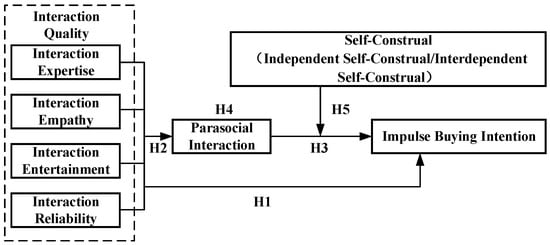
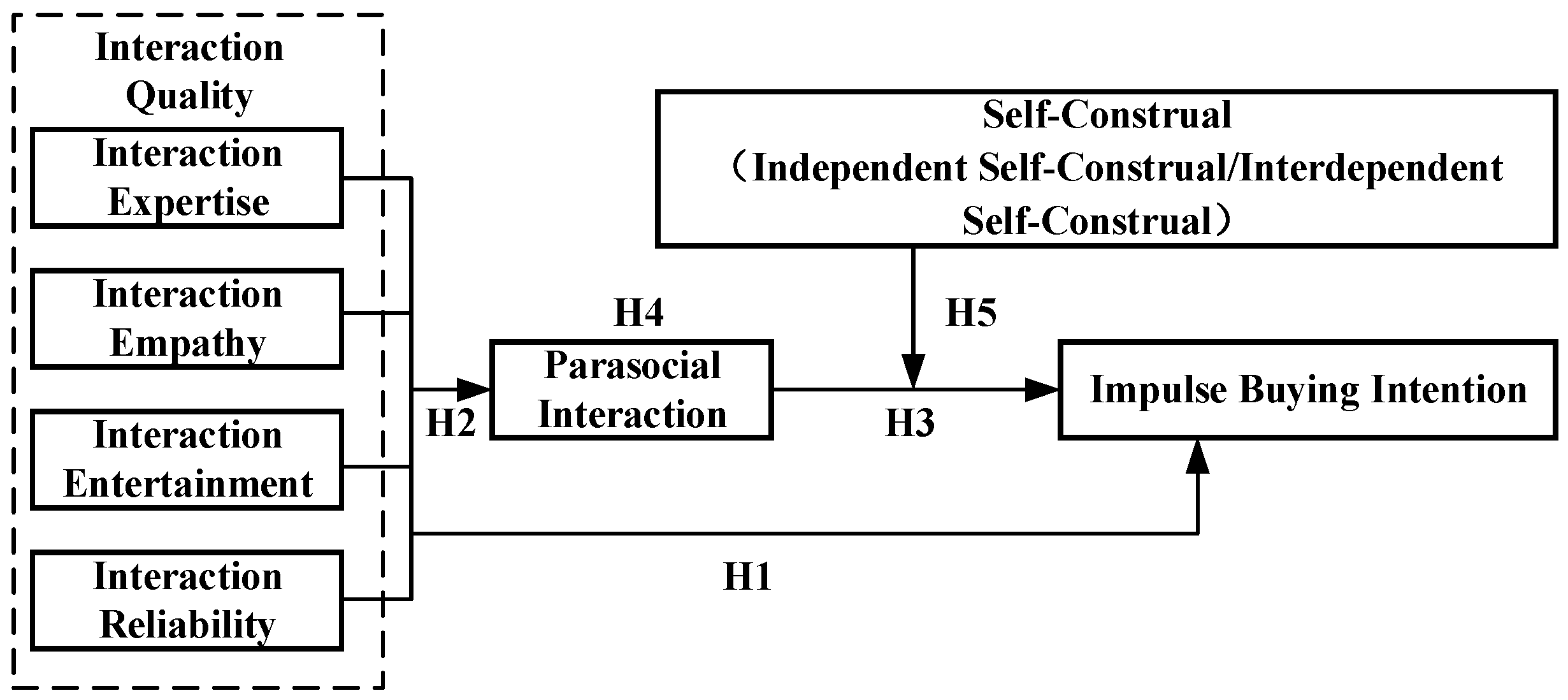

Disclaimer/Publisher’s Note: The statements, opinions and data contained in all publications are solely those of the individual author(s) and contributor(s) and not of MDPI and/or the editor(s). MDPI and/or the editor(s) disclaim responsibility for any injury to people or property resulting from any ideas, methods, instructions or products referred to in the content. |
© 2026 by the authors. Licensee MDPI, Basel, Switzerland. This article is an open access article distributed under the terms and conditions of the Creative Commons Attribution (CC BY) license.