


Abstract
Online shopping is expanding rapidly in emerging European markets, yet many consumers still combine digital channels with offline verification. This study asks whether the resulting heterogeneity among young consumers is genuinely complex or reducible to a simpler structure. Drawing on technology-acceptance and perceived-risk perspectives, it analyses survey data from 457 Romanian university students, of whom 269 were routed to eight attitudinal items on online smartphone purchasing. The questionnaire was distributed to students at two Romanian universities through institutional email and faculty social media accounts, yielding a non-probability convenience sample; no probability-based selection procedure was applied. After examining the dimensionality and reliability of the items through exploratory factor analysis, K-means clustering was used to segment respondents, and the solution was checked against hierarchical clustering. Two segments emerged: cautious, lower-online-orientation consumers, who report lower perceived convenience, speed, price advantage, and overall use of online purchasing, and online-oriented adopters, who view digital channels as efficient and convenient. Rather than many fine-grained segments, the data point to a dominant behavioural axis, namely overall orientation towards online purchasing. The findings provide evidence consistent with a parsimonious two-segment account of consumer heterogeneity in a rapidly developing digital market, and they suggest differentiated omnichannel strategies: confidence-building and risk-reduction measures for cautious consumers and experience optimisation for digital adopters.
1. Introduction
Smartphones have become the primary gateway to digital markets, particularly for younger consumers in emerging economies, who increasingly treat the mobile channel as their default route to information and purchase [1,2]. Online channels enable rapid information search, price comparison, and convenient purchasing, suggesting a progressive shift towards fully digital consumer journeys. However, despite these technological advances, hybrid purchasing behaviour, which combines online information search with offline verification, remains widespread in many emerging digital markets.
This persistence of hybrid behaviour may reflect a tension between rapid technological diffusion and continuing concerns about trust in online transactions [1]. While consumers increasingly rely on digital platforms for information, concerns related to product quality, delivery reliability, and post-purchase support continue to shape purchasing decisions. As a result, consumer heterogeneity in emerging markets may not require a highly fragmented explanation but may instead reflect a more parsimonious structure shaped chiefly by how consumers weigh the uncertainties of online purchasing against its convenience.
Existing empirical work on smartphone purchasing and omnichannel behaviour documents the coexistence of extensive online information search with offline verification strategies [3,4]. Evidence from Romania confirms similar patterns among young consumers [5]. Young adults often read online reviews, participate in social media discussions, and use price comparison platforms, but then visit physical outlets to test devices and to interact with sales staff before they decide whether to buy online or offline. Regression-based analyses can identify determinants of online purchase intention, yet they do not uncover whether the underlying population is segmented into relatively homogeneous groups that combine attitudes and verification strategies in systematically different ways.
For managers, understanding such heterogeneity is important when designing targeted marketing strategies, allocating resources between online and offline channels, and assessing the medium-term potential of mobile commerce in the youth segment. Retailers and smartphone vendors need to know whether all young consumers will gradually converge towards a similar pattern of predominantly online purchasing, or whether distinct groups with stable preferences for different channel combinations are likely to persist. The answer has direct implications for investments in physical retail networks, online service quality, and communication strategies.
This paper makes three contributions, spanning both academic and managerial dimensions. It moves beyond variable-centred approaches by identifying empirically distinct consumer segments in smartphone purchasing rather than estimating average effects across the whole sample. It situates the question in Romania, an emerging digital market where rapid technological adoption coexists with uneven institutional trust and persistent reliance on offline verification. And it offers segment-specific managerial implications for omnichannel retailers and smartphone vendors, showing that the young consumers studied here do not form a homogeneous group in their attitudes towards online purchasing. To pursue these aims, the study applies K-means clustering to survey data from Romanian university students and interprets the resulting segments through the literature on trust, perceived risk, and omnichannel behaviour. Where prior segmentation studies often report multiple fine-grained consumer groups, this study asks instead whether consumer heterogeneity in this context can be represented by one dominant behavioural axis, namely overall orientation towards online purchasing.
The Romanian case is well suited to this question. Online shopping has expanded rapidly from a low starting point: the share of internet users buying online rose from 17% in 2014 to about 60% in 2024, one of the steepest increases in the European Union, even though Romania remains below the EU average of 77% [6]. National data show the same youth-led pattern, with roughly 86% of internet users aged 16 to 34 purchasing online, against lower shares in older groups [7]. Recent studies of young Romanian consumers confirm that adoption is shaped not only by convenience but also by trust and perceived risk: hedonic motivation, trust, and social influence jointly drive the intention to continue using mobile commerce [1], and perceived usefulness and ease of use channel the effect of digital familiarity on online purchase intention among Generation Z [2,8]. What this body of work does not yet establish is whether the heterogeneity of these young consumers is best described by many fine-grained segments or by a dominant behavioural axis, accompanied by a weaker verification dimension. The present study addresses that gap by examining the context-specific expectation that, among Romanian university students who are open to buying their next smartphone online, attitudinal heterogeneity will be organised primarily around a dominant online-purchasing orientation, accompanied by a weaker information-seeking and verification dimension, rather than by multiple independent dimensions.
Accordingly, the study addresses two research questions. RQ1: How can Romanian university students who intend to buy their next smartphone online or are undecided about the purchase channel be segmented based on their verification strategies, perceived benefits of online purchasing, social influence, and actual use of online channels? RQ2: What are the main attitudinal and behavioural characteristics of the resulting segments in terms of online purchasing orientation and information-seeking and verification behaviour? Beyond these empirical questions, the study also pursues an interpretive objective, drawing out the theoretical and managerial implications of the segments for omnichannel strategy in an emerging digital market such as Romania.
2. Literature Review and Theoretical Background
The diffusion of online retailing has substantially altered consumer decision processes. In the traditional model, information search, evaluation of alternatives, and purchase took place largely in physical stores and through interpersonal communication. With the rise of e-commerce and mobile technologies, information search and evaluation have increasingly moved online, whereas the purchase decision can occur either online or offline. Empirical studies on Southern Europe, Latin America, and East-Central Europe show that the main perceived benefits of online shopping are convenience, lower prices, and broader assortments, whereas barriers are associated with perceived risk and institutional trust [9,10].
Research on trust in electronic commerce [11,12] integrates trust constructs into technology-acceptance frameworks and demonstrates that trust in platforms and vendors enhances perceived usefulness and purchase intention. These findings are consistent with established technology acceptance frameworks, which emphasise the role of perceived usefulness and ease of use in shaping adoption behaviour [13]. Trust is typically conceptualised as a belief in the integrity, benevolence, and competence of the online vendor or platform.
Empirical evidence across different market contexts further reinforces these theoretical insights. Cross-market studies confirm that trust remains a central determinant of e-commerce outcomes, while its antecedents vary with institutional context and prior marketplace experience [14]. Platform-level design choices also play an important role, as greater transparency in recommendation systems enhances perceived fairness and increases consumer trust [15]. When trust is sufficiently high, consumers are more willing to disclose personal data, accept delivery delays, and engage in online transactions [16]. Conversely, perceived risk can offset these positive effects and lead consumers to reject otherwise efficient online channels, particularly in emerging markets where institutional trust is still developing [17,18]. Prior research further shows that perceived risk remains a key barrier to online purchasing, affecting both initial adoption and repurchase intentions [19]. Recent cross-category evidence also confirms that multiple behavioural drivers, including trust, perceived value, and contextual factors, jointly influence online purchase intentions [20].
Other contributions highlight that consumers respond to uncertainty by intensifying information search, especially through user reviews and social recommendations. Online rating systems, discussion forums, and influencer content on social media enable potential buyers to access the experiences of a large number of previous customers at almost no cost. This can substantially reduce perceived uncertainty about product quality and seller reliability, yet it also creates new challenges such as information overload, fake reviews, and biassed evaluations. Consumers must therefore develop heuristics to interpret and filter information, for example by focusing on detailed qualitative reviews, paying attention to the dispersion of ratings, or giving more weight to sources perceived as independent and expert. This is consistent with prior research showing that online reviews and electronic word-of-mouth play a critical role in reducing uncertainty and shaping purchase decisions in digital environments [21].
Institutional economics provides a complementary macro-level explanation for hybrid behaviour. In environments where enforcement mechanisms and consumer protection are perceived as weaker, consumers rely more on personal experience, offline verification, and social networks. Formal institutions, such as legal frameworks for distance selling, dispute resolution mechanisms, and effective supervision of online platforms, interact with informal institutions like norms of fair dealing and reputational sanctions. Together, they shape aggregate levels of trust in digital markets and thereby influence the distribution of consumer types in the population. Emerging markets often feature rapid technological adoption in a context where institutional changes lag behind, which may sustain mixed online–offline purchasing patterns.
In the smartphone and mobile commerce domain, prior studies show that high perceived risk depresses mobile purchase intentions even when convenience is high, whereas accumulated positive online experience strengthens trust and willingness to buy. Evidence from O2O-based mobile shopping applications further shows that information quality and service quality strengthen perceived privacy protection and satisfaction, which then improve customer loyalty, underlining the importance of trust-related service cues in mobile commerce [22]. Smartphones are relatively expensive and technically complex products, which increases the salience of perceived risk. Consumers may worry about receiving a device with hidden defects, inadequate battery performance, or incompatibility with local networks. At the same time, smartphones are at the centre of an ecosystem of digital services, apps, and accessories that are often accessed or purchased online. This combination of risk and ongoing digital engagement makes the category particularly suitable for studying hybrid behaviour.
Previous studies in electronic commerce have applied segmentation approaches to identify distinct consumer profiles based on online behaviour and attitudes, while related omnichannel research highlights how consumers combine channels in the decision process [3,4]. Segmentation seeks to divide heterogeneous markets into relatively homogeneous groups of consumers that can be targeted with tailored value propositions. Traditional segmentation approaches rely on a priori criteria such as demographics or product usage intensity. In contrast, data-driven methods such as K-means clustering derive segments from patterns in the data, typically using behavioural or attitudinal variables. In the context of online consumer behaviour, clustering has been used to identify, for example, heavy online buyers, reluctant adopters, and information seekers. Applying this logic to smartphone purchasing in Romania allows us to derive segments that are grounded in actual response patterns rather than imposed by the researcher.
Studies focusing on younger consumers emphasise that so-called digital natives or members of Generation Z have grown up with constant access to the internet and social media and therefore tend to take the technical possibility of online shopping for granted. However, they are not necessarily uncritical adopters; rather, they evaluate digital channels through the lens of usability, aesthetics, and peer approval. For smartphone purchasing, they often rely on video reviews, unboxing content, and recommendations from influencers, which complement traditional written reviews. These patterns underline the importance of examining not only whether consumers use online channels, but also how they use them and which sources of information they deem credible.
An additional strand of literature examines omnichannel strategies, in which firms deliberately integrate online and offline channels to provide seamless customer journeys. Building on the customer journey perspective, omnichannel research conceptualises consumer behaviour as a sequence of interrelated phases across channels rather than a single decision event. The customer journey perspective highlights that consumer decision-making unfolds across multiple touchpoints, spanning both online and offline environments [23]. A recent systematic review shows that omnichannel buying should be understood as a sequence of phases (search, evaluation, transaction, fulfilment, and post-purchase interaction) rather than as a single, uniform journey across channels [24]. Recent empirical work has identified distinct omnichannel customer segments, including webroomers and showroomers, characterised by different combinations of search and purchase channels [25,26]. Complementary evidence from systematic reviews further highlights that these patterns are driven by trade-offs between convenience, perceived risk, and information availability [27].
Research in this area shows that consumers value the flexibility to search, order, pay, and receive support in different channels according to their situational constraints and preferences. For example, some customers may prefer to order online but pick up in store, while others may start their search in a physical outlet and complete the purchase on a mobile device after further consideration at home. The effectiveness of such strategies depends on the degree of integration between channels in terms of assortments, pricing, information systems, and organisational incentives. Recent research also shows that showroomers and webroomers are not homogeneous: regulatory orientation helps distinguish these consumers, and one segment is prone to adopt both behaviours, making cross-channel heterogeneity a legitimate basis for segmentation [28].
Recent empirical work further underlines the importance of segmentation and trust-related mechanisms in digital consumer markets. Bauerova et al. [29] identify distinct profiles of online grocery shoppers in Central Europe, while Stefko et al. [30] extend technology-acceptance models to mobile shopping and confirm the role of customised offers and price benefits. Mazurek et al. [31] complement these demand-side perspectives by proposing an improved weighted online rating system that mitigates review-related biases, thereby enhancing the informational infrastructure of e-commerce platforms.
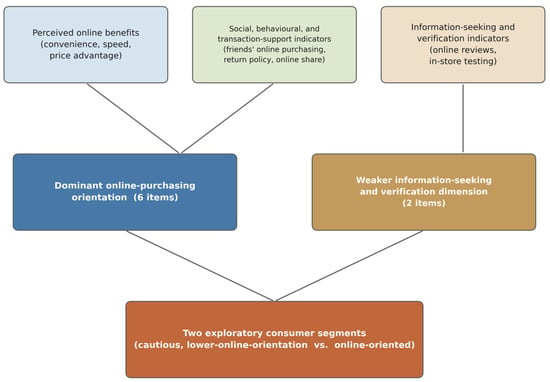
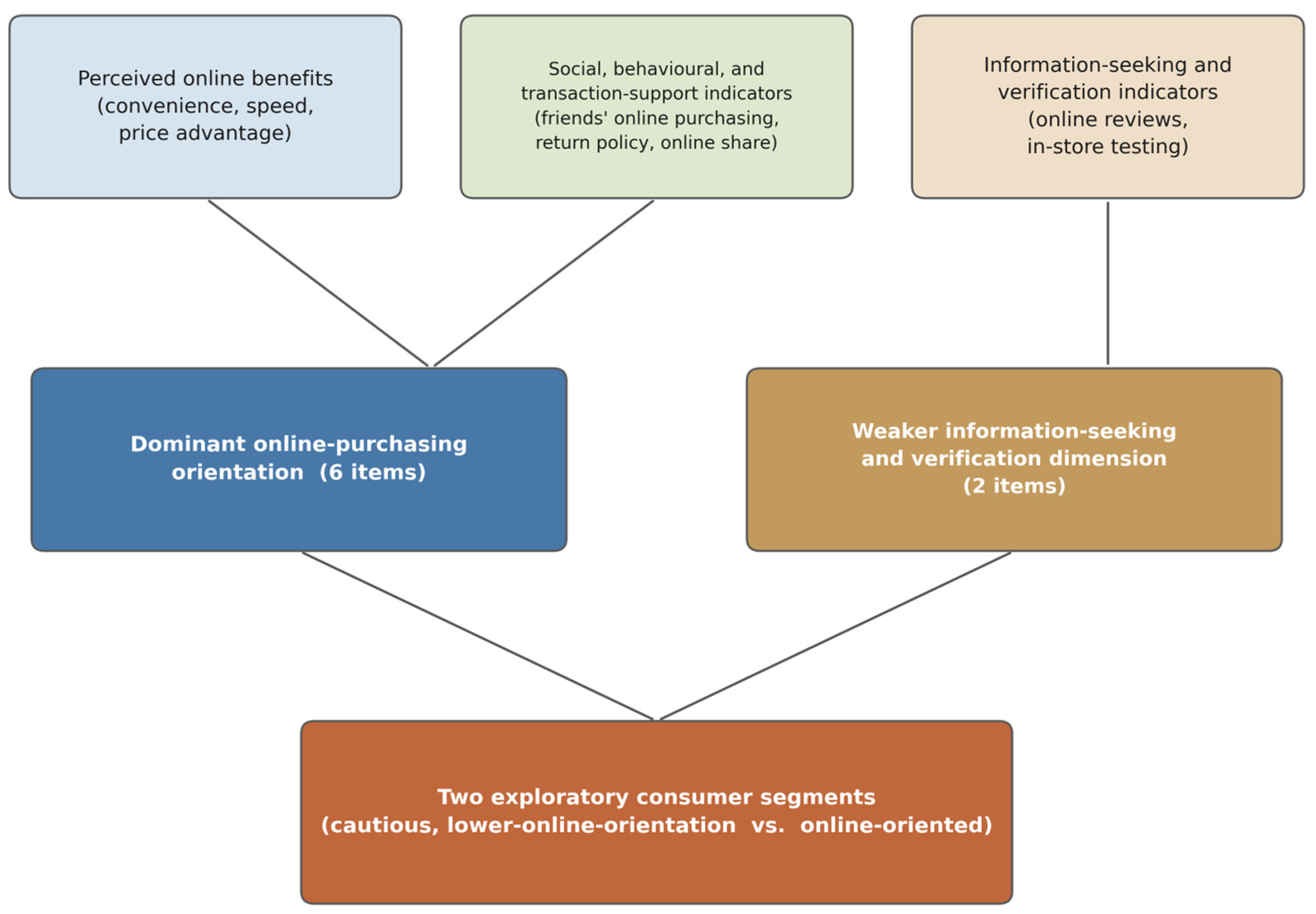
Three broad explanations compete in this literature. Technology-acceptance models, including the TAM and UTAUT families, treat online purchasing as a function of perceived usefulness, ease of use, and related beliefs and predict adoption well [1,8]. Trust and institutional accounts locate the decisive factor in the buyer’s confidence that platforms, sellers, and enforcement mechanisms will perform as expected, which matters most where formal institutions are still consolidating [32]. Omnichannel and customer-journey research, in turn, models behaviour as a sequence of search, evaluation, and purchase steps distributed across channels and typically yields multi-segment, channel-defined typologies such as webroomers and showroomers [33,34]. Each account is informative, yet each is built to explain either the drivers of adoption or the richness of channel combinations; few studies directly examine whether, in an emerging-market student population, this heterogeneity might collapse onto a dominant orientation accompanied by a weaker verification dimension. The present study takes the technology-acceptance and perceived-risk vocabulary as its proximate language while testing this more parsimonious possibility empirically. Figure 1 summarises this conceptual framing.
Figure 1.
Conceptual and analytical framing of the indicators used to identify consumer segments. The figure distinguishes a dominant online-purchasing orientation from a weaker information-seeking and verification dimension. It is interpretive and non-causal and does not represent a tested structural model.
Unlike prior studies that typically identify multiple consumer segments in digital environments, the present study investigates whether consumer heterogeneity among young consumers in an emerging digital market is organised mainly around one behavioural axis, namely their overall orientation towards buying online.
3. Materials and Methods
This study investigates smartphone purchasing behaviour among young consumers in an emerging digital market context. To address the research objective, two research questions and an interpretive objective are formulated.
3.1. Research Questions
Against this background, the paper addresses the following research questions.
RQ1:
How can Romanian university students who intend to buy their next smartphone online or are undecided about the purchase channel be segmented based on their verification strategies, perceived benefits of online purchasing, social influence, and actual use of online channels?
RQ2:
What are the main attitudinal and behavioural characteristics of the resulting segments in terms of online purchasing orientation and information-seeking and verification behaviour?
Beyond these two empirical questions, the study pursues an interpretive objective: to draw out the theoretical and managerial implications of the identified segments for understanding consumer heterogeneity and for designing omnichannel strategies in an emerging digital market such as Romania.
3.2. Data Collection and Sample
The empirical analysis uses data from an online questionnaire conducted in December 2024 among students at Ștefan cel Mare University of Suceava and Dunărea de Jos University of Galați. The study used a non-probability convenience sampling approach. At the University of Suceava, the questionnaire was sent by email to all students through their institutional email addresses, while at the University of Galați it was posted on the social media accounts of several faculties. No probability-based selection procedure was applied. The questionnaire did not request any identifying information. Participation was voluntary and anonymous, and respondents were informed about the academic purpose of the study and the approximate time required to complete the questionnaire. Prior to the main data collection, the questionnaire was pre-tested with a group of approximately 25 university students in November 2024. Participants completed the instrument, and a short debriefing was used to check whether the items were understood consistently and as intended. On the basis of this feedback, the wording of several items was refined to improve clarity, including the item on the intended purchase channel for the respondent’s next smartphone. Pre-test participants were instructed not to take part in the main survey, and their responses are not included in the final sample.
The full descriptive sample includes 457 responses. The eight smartphone-specific attitudinal items used for clustering were administered, by questionnaire design, only to the subgroup of respondents whose intended purchase channel for their next phone was either online or not yet decided (n = 269, 58.9% of the full sample). These items concern attitudes towards buying online and were therefore meaningful only for respondents who intended to buy online or were undecided about the channel; they were not shown to those who had already committed to buying in a physical store or on the second-hand market. All 269 cases were complete on the eight items, so the difference between the full sample and the clustering subsample reflects this routing rather than the exclusion of incomplete responses, and no further cases were lost to missing data. This dataset has also supported a separate published analysis using a different method and research question (logistic regression of channel choice) [5]. The present study differs in its analytic subsample, its method (clustering), and its objective, with no overlap in dependent variables or conclusions.
The full descriptive sample was predominantly female and young, whereas the analytic subsample had a more balanced gender distribution and a broadly similar age profile. Although the sample is not representative of the entire Romanian population, it is appropriate for the exploratory objective of examining smartphone purchasing behaviours among university students whose intended purchase channel was online or not yet decided. Detailed characteristics of the full sample and the analytic subsample are reported below. Table 1 presents the socio-demographic structure of the sample.
Table 1.
Sample characteristics (university students, N = 457).
Table 1 shows that the sample is predominantly female and concentrated in younger age categories, with most respondents reporting completed high school studies prior to university and middle-to-lower household income categories.
The full descriptive sample was predominantly female (65.6% female and 34.4% male) and had a mean age of 23.5 years (SD = 7.4; range = 18–64). The analytic subsample used for clustering comprised 269 respondents whose intended purchase channel for their next smartphone was online or not yet decided. Of these respondents, 59.5% were female and 40.5% were male. Their mean age was 23.68 years (SD = 7.39; range = 18–56), and 80.7% were under 25. The socio-demographic profile of the analytic subsample was broadly consistent with that of the full descriptive sample.
A total of 457 responses were collected. One respondent indicated at the screening question that they did not own a smartphone and was therefore not shown the smartphone-specific items; consequently, these items and the maximum intended price are reported for 456 respondents. All 269 cases included in the clustering analysis were complete on the eight clustering variables.
3.3. Measures and Variables Used for Clustering
Table 2 reports descriptive statistics for the attitudinal and behavioural variables used in the analysis.
Table 2.
Descriptive statistics for attitudinal and behavioural items (five-point bipolar response scales, endpoints labelled 1 = ‘definitely no’, 5 = ‘definitely yes’).
In the full descriptive sample, technical characteristics and the quality–price ratio received the highest mean ratings. Within the analytic subsample, reading online reviews received the highest mean rating, whereas social influence was comparatively weaker. Only the eight smartphone-specific attitudinal items (n = 269) are used as input variables for the clustering procedure, while the remaining variables are used exclusively for descriptive analysis.
All attitudinal items are measured using five-point bipolar response scales with only the endpoints labelled (1 = ‘definitely no’; 5 = ‘definitely yes’) and equally spaced intermediate positions, following a semantic-differential logic based on opposing endpoint anchors. Because only the endpoints carried verbal labels, the response options were treated as approximately interval-scaled, as is common for endpoint-anchored scales in multivariate analysis [35]. Before clustering, the dimensionality and reliability of these eight items were examined to confirm that they are suitable inputs for segmentation; this measurement check is reported in Section 3.4. All eight items were retained for clustering in order to preserve the interpretability of the resulting segments.
In addition to attitudinal variables, several socio-demographic variables (age, gender, education, and household income) are included in the dataset and used to characterise the sample descriptively. These variables were not used to derive the clusters. These variables capture structural differences in resources and life stage that may influence the perceived attractiveness and feasibility of online purchasing.
3.4. Dimensionality and Reliability of Attitudinal Items
Although the aim of this study is segmentation rather than scale development, the eight smartphone-specific attitudinal items were first examined to confirm that they are suitable inputs for clustering and that their underlying structure is simple. This check addresses two concerns raised in segmentation research: whether the items share enough common variance to justify a structured solution, and whether that structure is parsimonious rather than fragmented.
Sampling adequacy was satisfactory. The Kaiser-Meyer-Olkin measure was 0.767, and Bartlett’s test of sphericity was significant (χ2 = 413.281, df = 28, p < 0.001), indicating that the correlation matrix was suitable for factor extraction. All eight items had anti-image measures of sampling adequacy above the 0.5 threshold (lowest = 0.515), so no item was removed.
An exploratory factor analysis (principal axis factoring with Promax oblique rotation, chosen because the factors were expected to correlate) was then conducted as a dimensionality check. Two factors had eigenvalues above unity (2.826 and 1.255; the third was 0.911). This two-factor solution was corroborated by parallel analysis [36]: the first two observed eigenvalues exceeded their randomly simulated counterparts (2.826 vs. 1.261; 1.255 vs. 1.171), whereas the third did not (0.911 vs. 1.083). The two factors together accounted for 35.2% of the variance and were only modestly correlated (r = 0.287), indicating related but distinct facets rather than a single homogeneous construct or many independent ones.
The first factor groups the six items reflecting the perceived convenience, speed, price advantage, social influence, return policy, and overall share of online purchasing and is interpreted as an online-purchasing orientation. The second factor grouped the two information-search and verification items (reading online reviews and testing the device in a physical store). The full pattern matrix, communalities, and factor correlation are reported in Table 3.
Table 3.
Exploratory factor analysis: pattern matrix loadings and communalities (principal axis factoring, Promax rotation; n = 269).
Reliability was assessed appropriately for each factor. The six-item online-purchasing-orientation factor showed adequate internal consistency (Cronbach’s α = 0.753). For the two-item verification factor, Cronbach’s alpha is known to be biassed and is not the appropriate statistic; the Spearman–Brown coefficient is recommended for two-item scales [37] and was 0.359 (inter-item r = 0.219). The two verification indicators showed limited internal consistency and are therefore not interpreted as a reliable composite scale. They were retained as separate behavioural indicators in the clustering analysis.
To assess the stability of this structure within the analytic sample, the analysis was repeated on two random split-half subsamples (n = 133 and n = 136). Both halves independently returned a two-factor solution, with the same six items defining the first factor and the same two verification items defining the second, supporting the stability of the structure.
Taken together, the results support a simple two-facet structure comprising a dominant online-purchasing orientation and a weaker information-seeking and verification dimension. Because the two verification indicators showed limited internal consistency, they were retained and interpreted individually rather than combined into a composite scale. This provides the measurement basis for the clustering analysis reported next, and it motivates the study’s central question, namely whether respondent heterogeneity is likewise organised along a dominant behavioural axis rather than a complex multidimensional structure.
3.5. Clustering Procedure and Cluster Validation
The number of clusters was assessed for solutions ranging from k = 2 to k = 6 using the within-cluster sum of squares (WSS), the average silhouette coefficient, the Calinski–Harabasz index, and the Davies–Bouldin index [38,39,40]. Across these indices, the two-cluster solution (k = 2) performed best: it yielded the highest silhouette coefficient (0.224), the highest Calinski–Harabasz index (80.83), and the lowest Davies–Bouldin index (1.673) among the candidate solutions. The average silhouette coefficient of 0.224 nevertheless indicates limited separation between the clusters [41]. Accordingly, the solution is interpreted as exploratory rather than as evidence of strongly separated groups. The silhouette is best read alongside the other indices rather than in isolation: each index captures a different facet of cluster quality, and here the highest Calinski-Harabasz value and the lowest Davies-Bouldin value among the candidate solutions both point to the same two-cluster solution. The structure is consequently treated as exploratory and is corroborated below by a robustness check against an alternative clustering algorithm. These cluster validity indices are widely used in the literature to evaluate clustering solutions by balancing within-cluster compactness and between-cluster separation [38,39,40].
The analytical procedure was documented to support reproducibility. The clustering analysis is based on 269 complete cases and eight smartphone-specific attitudinal items measured on five-point bipolar response scales with only the endpoints labelled (1 = “definitely no”; 5 = “definitely yes”). The items were treated as approximately interval-scaled and standardised (z-scores) to eliminate scale effects. K-means clustering [42] was estimated using Euclidean distance and the default SPSS initialisation of well-separated cases. The number of clusters was evaluated using multiple cluster validity indices (WSS, silhouette, Calinski–Harabasz, and Davies–Bouldin), as described above, all computed on the standardised variables. Table 4 reports the cluster validity indices for k = 2 to k = 6. Descriptive analyses, exploratory factor analysis, reliability analysis, hierarchical (Ward) clustering, and K-means clustering were conducted in IBM SPSS Statistics 27. Parallel analysis was performed in JASP (version 0.97.1). The cluster-validity indices (silhouette coefficient, Calinski–Harabasz index, and Davies–Bouldin index) were computed in Python (version 3.12.3) using scikit-learn (version 1.8.0), based on the standardised variables and the cluster memberships exported from SPSS for each candidate solution. To assess the potential influence of common method bias, Harman’s single-factor test was conducted by constraining all eight items to load on one factor. This factor accounted for 35.3% of the variance, well below the 50% threshold conventionally taken to indicate a substantive common method problem [43]. The result does not indicate that a single common factor dominates the covariance structure, although common method bias cannot be completely excluded.
Table 4.
Cluster Validity Indices for k = 2 to k = 6.
K-means was selected as the primary exploratory method because it provides a transparent partition of standardised continuous indicators. Ward’s hierarchical method was subsequently used as an algorithmic robustness check. Because clustering solutions can be sensitive to the algorithm, the two-cluster solution was re-estimated using Ward’s hierarchical method [44] on the same standardised items, and the resulting partition was compared with the K-means solution. The two methods classified 85.5% of respondents identically (Cohen’s κ = 0.65), and the online-oriented segment was recovered almost exactly (173 of 175 cases). This convergence across a partitional and a hierarchical algorithm supports the stability of the two-cluster structure, while the somewhat greater reassignment within the cautious segment is consistent with its more diffuse character.
Although the primary focus of this paper is on segmentation rather than measurement development, the attitudinal items were formulated with reference to established constructs in the literature on online shopping, such as perceived usefulness, perceived ease of use, trust, perceived risk, and subjective norms. The questionnaire was pre-tested to ensure clarity and consistency of interpretation, and the order of items was designed to minimise potential priming effects.
4. Results
As a first step, the optimal number of clusters was determined. Table 4 reports the cluster validity indices for solutions with k = 2 to k = 6, confirming that the two-cluster solution offers the best overall fit according to the silhouette and Calinski–Harabasz criteria, while also achieving a low Davies–Bouldin index.
Table 5 reports the final cluster centroids (standardised values), providing the empirical basis for segment interpretation.
Table 5.
Final cluster centroids (k = 2, standardised values).
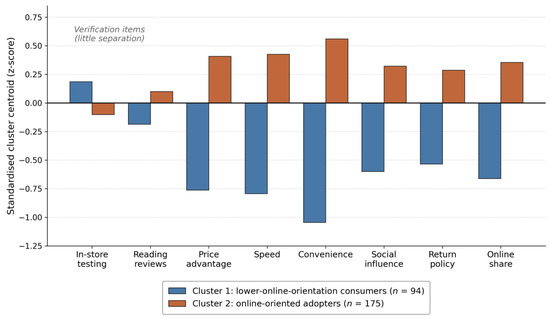
Cluster 1 represents cautious, lower-online-orientation consumers, who report markedly lower perceived convenience, speed, and price advantages of online purchasing, as well as a lower share of online transactions. However, the two clusters differ only marginally in review reading and in-store testing, indicating that verification behaviour is not the principal basis of segmentation.
Cluster 2 represents online-oriented adopters, exhibiting consistently positive values across most online-related variables. These consumers perceive online purchasing as efficient, convenient, and socially supported, and they report a higher share of purchases conducted online.
To convey the magnitude of the separation between segments on each item, effect sizes (η2) were computed from the between- and within-cluster variation and are reported in Table 5. These are descriptive measures of separation rather than inferential significance tests, since the F values produced by a clustering procedure are inflated by construction and cannot be read as tests of equality of means. The pattern is clear. The two information-verification items, in-store testing and review reading, show only small effects (η2 = 0.02 each), indicating that verification behaviour does not meaningfully distinguish the segments. By contrast, the six items reflecting online-purchasing orientation show large effects, ranging from η2 = 0.15 for the return policy to η2 = 0.59 for perceived convenience. Segment membership is therefore structured primarily by orientation towards online purchasing rather than by information-search or verification behaviour, which reinforces the interpretation of a dominant behavioural dimension accompanied by a weaker verification dimension.
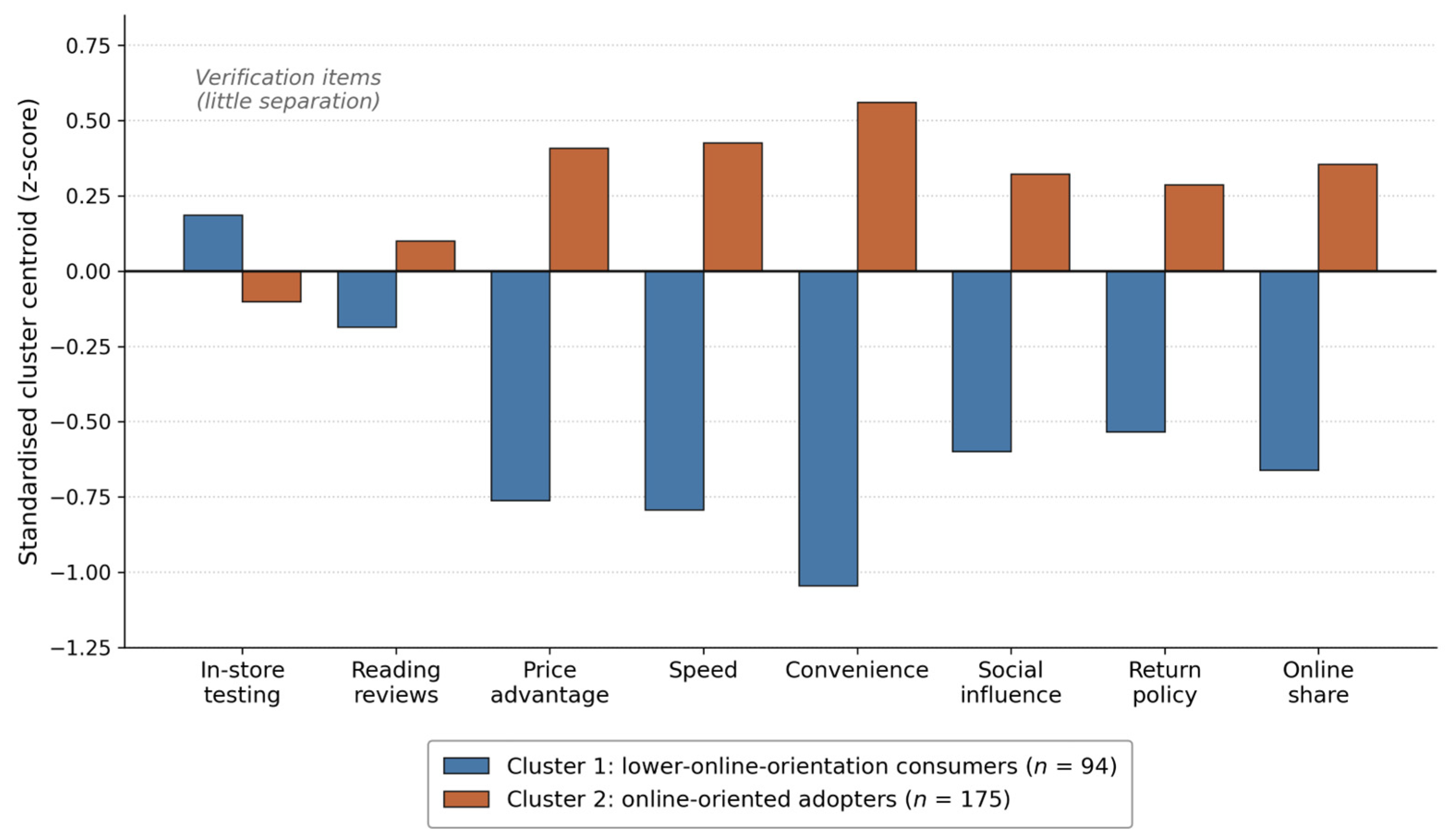
The strongest differences between clusters (Figure 2) are observed for perceived convenience, speed, and price advantages, indicating that perceived efficiency of online purchasing plays a central role in shaping segment membership. Importantly, differences are consistently aligned in the same direction across the six online-purchasing-orientation variables, reinforcing the interpretation of a dominant behavioural dimension.
Figure 2.
Standardised cluster centroids for the two-segment solution across the eight attitudinal items (n = 269). The two verification items show little separation between clusters, whereas the online-orientation items separate the segments strongly.
The comparison of the two clusters highlights a clear structural divide between consumers reporting lower perceived convenience, speed, price advantage, and overall use of online purchasing and those reporting higher evaluations and greater use of online channels. This indicates that the primary dimension of heterogeneity is the degree of online-purchasing orientation.
5. Discussion
5.1. Main Finding
Among the Romanian students studied here, the clusters differ above all in how readily respondents complete purchases online. Rather than revealing many finely differentiated segments, the findings support a parsimonious two-cluster structure that contrasts cautious, lower-online-orientation consumers with online-oriented adopters. This contrasts with the more differentiated multi-segment structures frequently reported in prior segmentation research.
5.2. Theoretical Implications
These results indicate that, in emerging digital markets, consumer heterogeneity rests on a basic divide between consumers who are more ready to complete purchases online and those who remain less ready to do so. The pattern is consistent with lower confidence in online purchasing among the cautious segment, although it should be stressed that trust and perceived risk were not measured through dedicated multi-item scales and are inferred here from the convenience, speed, price, and verification indicators. While some consumers adopt online purchasing as the default option, others remain less ready to complete transactions through online channels.
Interestingly, both segments display similar levels of engagement with online reviews, suggesting that the key difference lies not in information acquisition but in the transition from information to transaction.
Theoretically, the results argue for joining technology acceptance models with institutional and trust-based approaches. Online-oriented adopters can be interpreted as consumers for whom perceived usefulness and ease of use dominate residual risk concerns. In contrast, the cautious segment is distinguished primarily by lower evaluations of the convenience, speed, and price advantages of online purchasing and by a lower reported share of online transactions. The similarity between the segments in review reading and in-store testing suggests that the main divide concerns transaction readiness rather than information acquisition.
Importantly, the findings suggest that cautious online-purchasing orientations may not be merely transitional for a substantial segment of consumers. Longitudinal research is nevertheless required to assess their stability over time. This contributes to the literature by offering a more nuanced interpretation of digital adoption processes in emerging economies, where technological diffusion may outpace institutional trust development.
Taken together, these findings suggest that, in emerging digital markets, consumer segmentation may be governed by a limited number of fundamental behavioural dimensions rather than by increasingly complex multi-segment structures. This contrasts with the more differentiated structures frequently reported in prior segmentation studies and highlights the value of parsimonious theoretical models in rapidly developing digital markets.
5.3. Comparison with Prior Literature
These findings can be compared directly with segmentation studies in other markets. The two-segment structure echoes typologies found among students elsewhere: in a study of Turkish university students, cluster analysis distinguished enthusiastic from suspicious and reluctant online shoppers, with privacy and security concerns separating the cautious groups [46], a pattern consistent with the cautious segment identified here. Evidence from Latin America points the same way, with Brazilian non-shoppers clustering into reluctant and disbelieving groups, including consumers who must physically see a product before trusting a purchase [47]. In more mature European markets the structure is typically richer: German showrooming research separates loyal from competitive forms tied to price consciousness [48], and a Spanish-Italian study of supermarket shoppers identified as many as seven behaviour-based segments, several of which disengaged from the online channel over time [49]. The comparison suggests that the cautious-versus-online divide observed here is a recurrent feature of digital consumer behaviour, but that its reduction to a dominant behavioural dimension is more pronounced in this emerging-market student population than in mature markets, where finer segmentation tends to appear.
The segmentation results are also consistent with broader research on the digital divide, which highlights disparities in digital skills and access as potential drivers of unequal participation in online markets [50]. Although all respondents in the sample had internet access, prior research suggests that differences in digital skills, confidence, and support networks may contribute to divergent trajectories of online engagement. Online-oriented adopters may be better positioned to benefit from digital markets because they report greater convenience and readiness to transact online. Cautious, lower-online-orientation consumers, in contrast, may experience greater transaction-related uncertainty, although the specific psychological and technical mechanisms underlying this orientation were not directly measured in the present study.
At the same time, the segmentation results also resemble typologies identified in more mature e-commerce markets. Research on online shopping in North America and Western Europe frequently distinguishes between heavy online buyers, pragmatic users who weigh costs and benefits, and reluctant adopters who participate only when necessary. The two clusters identified in this study can be interpreted as local variants of these more general types, shaped by the specific economic and institutional conditions of the Romanian market. The convergence hints that certain dimensions of heterogeneity in digital consumer behaviour may be robust across countries, even if their relative prevalence differs.
By explicitly positioning the Romanian case within this broader international literature, the present study contributes to a more nuanced understanding of how global trends in digital commerce interact with local institutional contexts. The results indicate that policy measures aimed at strengthening consumer protection, improving the quality and transparency of online services, and fostering digital literacy are likely to support not only higher overall adoption, but also a more equitable distribution of benefits from digital markets.
5.4. Managerial Implications
The identified segmentation structure has direct implications for smartphone vendors, mobile operators, and e-commerce platforms targeting young consumers in emerging digital markets. In the Romanian context, online shopping has expanded rapidly from a low base but remains below the EU average [6]. Because smartphones are relatively expensive and technically complex products, retailers serving the student population examined here should combine digital efficiency with visible safeguards and accessible offline support. This means pairing fast and convenient online purchasing with transparent return procedures, reliable delivery and tracking, clear technical information, and opportunities for in-store verification or assistance.
For online-oriented adopters, firms should prioritise frictionless digital experiences, including intuitive interfaces, fast delivery, reliable order tracking, personalised offers, and strong social proof mechanisms. These consumers already perceive digital channels as efficient and convenient, so managerial efforts should focus on reinforcing speed, convenience, and overall user experience.
For the cautious segment, the priority is to strengthen confidence and reduce transaction-related uncertainty. Retailers should combine transparent return procedures, clear product information, visible consumer protection guarantees, and the possibility of in-store verification or omnichannel support. For this segment, the main challenge is not awareness of digital channels but lower readiness to complete transactions online.
Across all segments, investing in trustworthy online environments remains essential. This includes secure payment systems, reliable logistics, transparent communication, and visible responsiveness to customer feedback. Firms that actively manage verified reviews and collaborate with reputable partners can strengthen trust across different consumer segments.
From a policy-oriented perspective, improving digital literacy and providing clear guidance on secure online shopping could reduce perceived risk, particularly among more vulnerable consumers. At the same time, policy interventions should recognise that not all consumers aspire to fully digital consumption patterns and that maintaining access to high-quality offline options remains important for inclusive digital transformation.
These findings imply that firms should not assume a gradual convergence of all consumers towards fully digital purchasing. Instead, strategic differentiation remains necessary, as a substantial segment may remain less ready to complete purchases entirely online and may benefit from offline-supported options.
These implications directly reflect the underlying segmentation structure, which is primarily driven by differences in online purchasing orientation rather than by multiple independent behavioural dimensions.
6. Limitations and Future Research
The study is subject to several limitations. The segmentation was conducted only on respondents who were open to an online purchase, namely those whose intended channel for their next smartphone was online or not yet decided; consumers already committed to buying in a physical store or on the second-hand market were excluded by questionnaire design, so the cautious segment is defined within a population already receptive to online purchasing. The sample consists predominantly of students and therefore reflects the attitudes of younger, more digitally connected consumers. The results may not generalise to older age groups or to rural populations with different access to online infrastructure and different life experiences with technology. Future research could replicate the analysis using broader, nationally representative samples that include older consumers and individuals from less urbanised regions in order to assess the stability of the identified segments.
The clustering approach relies on self-reported attitudinal data. In addition, trust and perceived risk were not measured through dedicated multi-item scales; they are treated as interpretive constructs inferred from the behavioural and perceptual indicators, and future work could incorporate validated trust and risk measures. While such data provide valuable insights into perceptions, intentions, and subjective evaluations, they are also susceptible to biases such as social desirability and recall errors. Combining survey responses with behavioural data from transaction logs, clickstream records, or mobile app usage statistics would allow for a more precise validation of segments and for the identification of discrepancies between stated intentions and actual behaviour. In addition, the present segmentation is validated using internal cluster validity indices and substantive interpretability rather than external behavioural criteria. Future research could extend the analysis by linking segment membership to objective behavioural indicators, such as actual online purchase histories or clickstream data, in order to further validate and refine the identified clusters.
In addition, the analysis focuses on one emerging European market. Although Romania shares several characteristics with other countries in the region, such as rapid digitalisation and evolving institutional frameworks, there are also context-specific features related to income distribution, urban–rural divides, and historical experiences with formal institutions. Cross-country comparisons with other emerging markets in Europe and beyond would clarify whether the identified segments are specific to Romania or reflect more general patterns in the digital transformation of consumer behaviour.
Lastly, the primary segmentation relies on K-means and on a particular set of variables, although the two-cluster structure was corroborated using Ward’s hierarchical method. Future research could explore the robustness of the segmentation by applying alternative approaches, such as model-based clustering, latent class analysis, or fuzzy clustering, and by experimenting with different combinations of attitudinal, behavioural, and contextual variables. Integrating qualitative methods, such as in-depth interviews or focus groups, could also enrich the interpretation of clusters and shed light on the subjective meanings that consumers attach to online and offline channels.
7. Conclusions
This study identifies a parsimonious two-segment structure among Romanian university students whose intended purchase channel was online or not yet decided. The segments differ primarily in their overall orientation towards online purchasing: cautious, lower-online-orientation consumers represent 34.9% of the analytic sample, while online-oriented adopters represent 65.1%. Verification behaviour plays only a secondary differentiating role. The findings suggest that cautious online-purchasing orientations may not be merely temporary within the population examined, although longitudinal research is needed to assess their stability over time. For some respondents, online channels already represent the default option, whereas others use them more selectively for information search, price comparison, and purchasing. These patterns support differentiated omnichannel strategies aligned with consumers’ readiness to complete transactions online. Overall, the study suggests that, at least among digitally active young consumers in an emerging market, digital transformation does not eliminate heterogeneity but reshapes it along a dominant behavioural dimension. Within this population, the findings point to the value of more parsimonious frameworks for analysing consumer heterogeneity, particularly where institutional conditions and consumers’ readiness to transact online vary. Whether the same parsimony holds for older, rural, or less digitally engaged consumers remains an open question for future research; for the student population studied here, simplicity rather than complexity appears to capture the structure of heterogeneity more faithfully.
Funding
This research received no external funding. The APC was covered by Ștefan cel Mare University of Suceava.
Institutional Review Board Statement
The study was approved by the Ethics in Research Committee of “Ștefan cel Mare” University of Suceava prior to data collection (approval code 212, approval date 20 June 2024) and was conducted in accordance with the Declaration of Helsinki.
Informed Consent Statement
Participation was voluntary. Informed consent was obtained from all participants through the introductory section of the online questionnaire. The survey was anonymous, and no personally identifiable information was collected.
Data Availability Statement
The data are available from the corresponding author upon reasonable request.
Conflicts of Interest
The author declares no conflicts of interest.
References
- Vinerean, S.; Budac, C.; Baltador, L.A.; Dabija, D.-C. Assessing the Effects of the COVID-19 Pandemic on M-Commerce Adoption: An Adapted UTAUT2 Approach. Electronics 2022, 11, 1269. [Google Scholar] [CrossRef] [Scilit]
- Bunea, O.-I.; Corboș, R.-A.; Mișu, S.I.; Triculescu, M.; Trifu, A. The Next-Generation Shopper: A Study of Generation-Z Perceptions of AI in Online Shopping. J. Theor. Appl. Electron. Commer. Res. 2024, 19, 2605–2629. [Google Scholar] [CrossRef] [Scilit]
- Flavián, C.; Gurrea, R.; Orús, C. Combining channels to make smart purchases: The role of webrooming and showrooming. J. Retail. Consum. Serv. 2020, 52, 101923. [Google Scholar] [CrossRef] [Scilit]
- Verhoef, P.C.; Kannan, P.K.; Inman, J.J. From multi-channel retailing to omni-channel retailing: Introduction to the special issue on multi-channel retailing. J. Retail. 2015, 91, 174–181. [Google Scholar] [CrossRef] [Scilit]
- Ghiuță, O.-A.; Nistor, A. Analysis of Consumer Behavioral Factors Between Online Shopping and Physical Store Experience in the M-Commerce Era. Telecom 2025, 6, 17. [Google Scholar] [CrossRef] [Scilit]
- Eurostat. E-commerce statistics for individuals. Online shopping in the EU keeps growing. Eurostat News, 20 February 2025. Available online: https://ec.europa.eu/eurostat/web/products-eurostat-news/w/ddn-20250220-3 (accessed on 16 June 2026).
- National Institute of Statistics of Romania (INS). The Use of Information and Communication Technology in Households and by Individuals; INS: Bucharest, Romania, 2025.
- Catană, Ș.A.; Imbrișcă, C.I.; Veith, C. Understanding Generation Z’s Purchasing Behaviour on Online Marketplaces: A TAM-Based Approach. J. Theor. Appl. Electron. Commer. Res. 2025, 20, 260. [Google Scholar] [CrossRef] [Scilit]
- Hernández, B.; Jiménez, J.; Martín, M.J. Customer behavior in electronic commerce: The moderating effect of e-purchasing experience. J. Bus. Res. 2010, 63, 964–971. [Google Scholar] [CrossRef] [Scilit]
- Bianchi, C.; Andrews, L. Risk, trust, and consumer online purchasing behaviour: A Chilean perspective. Int. Mark. Rev. 2012, 29, 253–275. [Google Scholar] [CrossRef] [Scilit]
- Gefen, D.; Karahanna, E.; Straub, D.W. Trust and TAM in online shopping: An integrated model. MIS Q. 2003, 27, 51–90. [Google Scholar] [CrossRef] [Scilit]
- Pavlou, P.A. Consumer acceptance of electronic commerce: Integrating trust and risk with the Technology Acceptance Model. Int. J. Electron. Commer. 2003, 7, 101–134. [Google Scholar] [CrossRef] [Scilit]
- Venkatesh, V.; Morris, M.G.; Davis, G.B.; Davis, F.D. User acceptance of information technology. MIS Q. 2003, 27, 425–478. [Google Scholar] [CrossRef] [Scilit]
- Quintus, M.; Mayr, K.; Hofer, K.M.; Chiu, Y.T. Managing consumer trust in e-commerce: Evidence from advanced versus emerging markets. Int. J. Retail Distrib. Manag. 2024, 52, 1038–1056. [Google Scholar] [CrossRef] [Scilit]
- Li, Y.; Deng, X.; Hu, X.; Liu, J. The Effects of E-Commerce Recommendation System Transparency on Consumer Trust: Exploring Parallel Multiple Mediators and a Moderator. J. Theor. Appl. Electron. Commer. Res. 2024, 19, 2630–2649. [Google Scholar] [CrossRef] [Scilit]
- Chiu, C.-M.; Hsu, M.-H.; Lai, H.; Chang, C.-M. Re-examining the influence of trust on online repeat purchase intention: The moderating role of habit and its antecedents. Decis. Support Syst. 2012, 53, 835–845. [Google Scholar] [CrossRef] [Scilit]
- Jadil, Y.; Rana, N.P.; Dwivedi, Y.K. Understanding the drivers of online trust and intention to buy on a website: An emerging market perspective. Int. J. Inf. Manag. Data Insights 2022, 2, 100065. [Google Scholar] [CrossRef] [Scilit]
- Marriott, H.R.; Williams, M.D. Exploring consumers perceived risk and trust for mobile shopping: A theoretical framework and empirical study. J. Retail. Consum. Serv. 2018, 42, 133–146. [Google Scholar] [CrossRef] [Scilit]
- Zhang, Y.; Fang, Y.; Wei, K.K.; Ramsey, E.; McCole, P.; Chen, H. Repurchase intention in B2C e-commerce–A relationship quality perspective. Inf. Manag. 2011, 48, 192–200. [Google Scholar] [CrossRef] [Scilit]
- Zia, A.; Alzahrani, M.; Alomari, A.; AlGhamdi, F. Investigating the Drivers of Sustainable Consumption and Their Impact on Online Purchase Intentions for Agricultural Products. Sustainability 2022, 14, 6563. [Google Scholar] [CrossRef] [Scilit]
- Filieri, R.; McLeay, F. E-WOM and accommodation: An analysis of the factors that influence travelers’ adoption of information from online reviews. J. Travel Res. 2014, 53, 44–57. [Google Scholar] [CrossRef] [Scilit]
- Kim, Y.; Wang, Q.; Roh, T. Do Information and Service Quality Affect Perceived Privacy Protection, Satisfaction, and Loyalty? Evidence from a Chinese O2O-Based Mobile Shopping Application. Telemat. Inform. 2021, 56, 101483. [Google Scholar] [CrossRef] [Scilit]
- Lemon, K.N.; Verhoef, P.C. Understanding customer experience throughout the customer journey. J. Mark. 2016, 80, 69–96. [Google Scholar] [CrossRef] [Scilit]
- Furquim, T.S.G.; da Veiga, C.P.; Veiga, C.R.P.d.; Silva, W.V.d. The Different Phases of the Omnichannel Consumer Buying Journey: A Systematic Literature Review and Future Research Directions. J. Theor. Appl. Electron. Commer. Res. 2023, 18, 79–104. [Google Scholar] [CrossRef] [Scilit]
- De Keyser, A.; Schepers, J.; Konus, U. Multichannel customer segmentation: Does the after-sales channel matter? A replication and extension. Int. J. Res. Mark. 2015, 32, 453–456. [Google Scholar] [CrossRef] [Scilit]
- Van Nguyen, A.T.; McClelland, R.; Thuan, N.H. Omni-channel customer segmentation: A personalized customer journey perspective. J. Consum. Behav. 2024, 23, 3253–3275. [Google Scholar] [CrossRef] [Scilit]
- Sahu, K.C.; Naved Khan, M.; Gupta, K.D. Determinants of Webrooming and Showrooming Behavior: A Systematic Literature Review. J. Internet Commer. 2021, 20, 137–166. [Google Scholar] [CrossRef] [Scilit]
- Heitz-Spahn, S.; Belaud, L.; Ferrandi, J.-M. A Regulatory Focus Theory Approach to Understanding Cross-Channel Free-Riding Behaviour. J. Retail. Consum. Serv. 2024, 78, 103749. [Google Scholar] [CrossRef] [Scilit]
- Bauerova, R.; Starzyczna, H.; Zapletalova, S. Who are online grocery shoppers? EM Econ. Manag. 2023, 26, 186–205. [Google Scholar] [CrossRef] [Scilit]
- Stefko, R.; Gavurova, B.; Olearova, M.; Bacik, R.; Nebesky, L. Extended model of mobile shopping acceptance: An empirical study of consumer behaviour. EM Econ. Manag. 2023, 26, 148–166. [Google Scholar] [CrossRef] [Scilit]
- Mazurek, J.; Perez-Rico, C.; Fernandez-Garcia, C. A proposal of a relative weighted online 5-star rating system as a way to mitigate online reviews biases. EM Econ. Manag. 2025, 28, 180–191. [Google Scholar] [CrossRef] [Scilit]
- McKnight, D.H.; Choudhury, V.; Kacmar, C. Developing and Validating Trust Measures for e-Commerce: An Integrative Typology. Inf. Syst. Res. 2002, 13, 334–359. [Google Scholar] [CrossRef] [Scilit]
- Mishra, R.; Singh, R.K.; Koles, B. Consumer decision-making in Omnichannel retailing: Literature review and future research agenda. Int. J. Consum. Stud. 2021, 45, 147–174. [Google Scholar] [CrossRef] [Scilit]
- Safeer, A.A.; Hussain, I.; Abrar, M.; Shabbir, R. Omnichannel retailing in light of psychological factors: A mediated model. Psychol. Res. Behav. Manag. 2023, 16, 5069–5088. [Google Scholar] [CrossRef] [Scilit] [PubMed]
- Norman, G. Likert scales, levels of measurement and the “laws” of statistics. Adv. Health Sci. Educ. Theory Pract. 2010, 15, 625–632. [Google Scholar] [CrossRef] [Scilit] [PubMed]
- Horn, J.L. A rationale and test for the number of factors in factor analysis. Psychometrika 1965, 30, 179–185. [Google Scholar] [CrossRef] [Scilit] [PubMed]
- Eisinga, R.; te Grotenhuis, M.; Pelzer, B. The reliability of a two-item scale: Pearson, Cronbach, or Spearman-Brown? Int. J. Public Health 2013, 58, 637–642. [Google Scholar] [CrossRef] [Scilit] [PubMed]
- Calinski, T.; Harabasz, J. A dendrite method for cluster analysis. Commun. Stat. 1974, 3, 1–27. [Google Scholar] [CrossRef] [Scilit]
- Davies, D.L.; Bouldin, D.W. A cluster separation measure. IEEE Trans. Pattern Anal. Mach. Intell. 1979, 1, 224–227. [Google Scholar] [CrossRef] [Scilit]
- Rousseeuw, P.J. Silhouettes: A graphical aid to the interpretation and validation of cluster analysis. J. Comput. Appl. Math. 1987, 20, 53–65. [Google Scholar] [CrossRef] [Scilit]
- Kaufman, L.; Rousseeuw, P.J. Finding Groups in Data: An Introduction to Cluster Analysis; Wiley: New York, NY, USA, 1990. [Google Scholar] [CrossRef] [Scilit]
- MacQueen, J. Some methods for classification and analysis of multivariate observations. In Proceedings of the Fifth Berkeley Symposium on Mathematical Statistics and Probability, Berkeley, CA, USA, 21 June–18 July 1965 and 27 December 1965–7 January 1966; University of California Press: Berkeley, CA, USA, 1967; Volume 1, pp. 281–297. [Google Scholar]
- Podsakoff, P.M.; MacKenzie, S.B.; Lee, J.-Y.; Podsakoff, N.P. Common method biases in behavioral research: A critical review of the literature and recommended remedies. J. Appl. Psychol. 2003, 88, 879–903. [Google Scholar] [CrossRef] [Scilit] [PubMed]
- Ward, J.H. Hierarchical Grouping to Optimize an Objective Function. J. Am. Stat. Assoc. 1963, 58, 236–244. [Google Scholar] [CrossRef]
- Cohen, J. Statistical Power Analysis for the Behavioral Sciences, 2nd ed.; Lawrence Erlbaum Associates: Hillsdale, NJ, USA, 1988. [Google Scholar]
- Huseynov, F.; Yıldırım, S.Ö. Online Consumer Typologies and Their Shopping Behaviors in B2C E-Commerce Platforms. SAGE Open 2019, 9, 2158244019854639. [Google Scholar] [CrossRef] [Scilit]
- Nery-da-Silva, G.; Henrique de Araujo, M.; de Souza Meirelles, F. Contributions to the segmentation of e-commerce nonusers: Clustering the reasons not to shop online. Rev. Gestão 2024, 31, 201–214. [Google Scholar] [CrossRef] [Scilit]
- Schneider, P.J.; Zielke, S. Searching offline and buying online—An analysis of showrooming forms and segments. J. Retail. Consum. Serv. 2020, 52, 101919. [Google Scholar] [CrossRef] [Scilit]
- Frasquet, M.; Ieva, M.; Ziliani, C. Online channel adoption in supermarket retailing. J. Retail. Consum. Serv. 2021, 59, 102374. [Google Scholar] [CrossRef] [Scilit]
- Cruz-Jesus, F.; Oliveira, T.; Bacao, F. The Global Digital Divide: Evidence and Drivers. J. Glob. Inf. Manag. 2018, 26, 1–26. [Google Scholar] [CrossRef] [Scilit]

Disclaimer/Publisher’s Note: The statements, opinions and data contained in all publications are solely those of the individual author(s) and contributor(s) and not of MDPI and/or the editor(s). MDPI and/or the editor(s) disclaim responsibility for any injury to people or property resulting from any ideas, methods, instructions or products referred to in the content. |
© 2026 by the author. Licensee MDPI, Basel, Switzerland. This article is an open access article distributed under the terms and conditions of the Creative Commons Attribution (CC BY) license.