


Abstract
With the rapid growth of social media use in Nepal and their engagement with customers, understanding how these platforms support customer loyalty becomes essential for retail businesses. This study investigates the role of social media marketing in shaping brand loyalty among retail customers in Nepal through an integrated research design that combines systematic bibliometric and survey data analysis. The bibliometric findings suggest a clear progression in the literature, moving from a foundational emphasis on relationship marketing and loyalty theory toward a more integrated framework that incorporates social media engagement and, ultimately, measurable business outcomes. The quantitative results based on survey data conducted with 100 Nepalese consumers active on Facebook, Instagram, and TikTok show that effective social media strategies and the ability to address implementation difficulties significantly enhance brand loyalty. In contrast, the direct influence of customer trust is limited. The findings highlight the importance of tailored and interactive content, supported by appropriate digital practices, particularly in regions with developing infrastructure. This study offers practical recommendations to improve digital engagement, encourage retailers to collaborate with local influencers, respond to customer feedback, maintain transparency in messaging, and enhance digital capabilities to implement effective social media strategies. It also underscores the value of producing culturally relevant content that aligns with local interests and behaviours.
1. Introduction
Social media has emerged as a pervasive and indispensable platform driven by its widespread adoption and the human impulse to communicate. Within this dynamic digital environment, users actively create, share, and exchange content while participating and networking within virtual communities [1]. This shift has fundamentally transformed traditional marketing by enabling real-time, interactive communication between consumers and brands [2], supporting businesses in precisely targeting consumers based on demographics, browsing behaviour, and specific interests and pulling them towards the brand with engaging marketing strategies. Consequently, business organisations now rely on social media platforms to build brand awareness, influence consumer behaviour, and sustain competitive advantage [3]. Furthermore, it is also increasingly shaping the purchasing decisions of Generation Z and other consumer groups through rapid dissemination of opinions and experiences among large audiences [4]. Therefore, it serves as a hybrid promotional tool, enabling firms to engage directly with customers while fostering peer-to-peer interaction [5]. In the Nepalese retail market, social media has significantly influenced consumer buying behaviour through factors such as social influence, content marketing, and network effects, directly shaping purchase intentions [6]. For instance, the rise of platforms such as TikTok and Instagram has enabled small and informal retailers to participate in digital commerce, accelerating the shift toward mobile-based and socially driven retail practices [7].
From a theoretical perspective, several major theoretical frameworks have been applied to evaluate the effects of social media marketing on brand loyalty in the retail sector, including Relationship Marketing Theory (RMT), Consumer Engagement Theory (CET) and the Technology Acceptance Model (TAM). RMT emphasises the role of trust, commitment, and, generally, long-term customer relationships in marketing. In the social media marketing context, this theory implies that brands should move beyond transactional interactions and engage with customers to build meaningful relationships [8]. Businesses can encourage client commitment by building trust through specific associations, responsive correspondence and lasting brand messages [9]. The CET explains how iterative consumer-brand interaction fosters deep and long-term brand loyalty [10]. Being socially engaging and active on social media, such as commenting, liking, and sharing, allows consumers to create emotional bonds with brands. According to CET, loyal consumers will come around to businesses that actively engage with them. Social relations and community involvement in the lives of Nepalese people are part and parcel of purchasing behaviour [11]. Hence, leveraging CET-based marketing strategies can boost brand advocacy and loyalty. Several researchers have used the Technology Acceptance Model (TAM) to investigate consumer behaviour towards the adoption of new technologies [12]. As per TAM, two essential factors determine social media adoption. Customers are more likely to use social media marketing if it is seen as convenient and accessible and draws customers’ attention to the product. Furthermore, the Unified Theory of Acceptance and Use of Technology (UTAUT) explains the comprehensive framework to measure the factors that influence individuals’ adoption and use of technology. It elucidates that performance expectancy, effort expectancy, social influence and facilitating conditions are the key factors of technology acceptance and usage behaviour. In the context of social media marketing, social influence can shape the consumers’ interaction with the brand through peer recommendations, online discussions and influencer endorsements, while facilitating conditions support the continued engagement with social media platforms. Consequently, it provides a useful tool for understanding how social media engagement contributes to brand trust, consumer relationships, and brand loyalty. For example, Puriwat et al. [13] utilised UTAUT to explain the likelihood that consumers would adopt and frequently use social media for business purposes.
However, there are challenges such as low digital literacy and a lack of infrastructure that obstruct the use of social media [14] in Nepal. Although social media marketing has been extensively examined across the globe, such as in Nigeria [15], Colombia [16], Yemen [17], Zimbabwe [18], Saudi Arabia [19], and India [20], its effects on brand loyalty in Nepal’s retail sector have not been investigated and remain a critical research gap. This omission limits the generalisability of existing findings, as socio-cultural dynamics, digital adoption patterns, and retail market structures in Nepal differ substantially from those in previously studied environments [21].
This study undertakes a systematic examination of the relationship between brand loyalty and social media marketing in Nepal’s retail markets. To achieve this, we perform two complementary tasks: a systematic literature review and a case study with survey data. First, we perform bibliometric mapping of the literature that explores the conceptual architecture and thematic topics of brand loyalty and social media marketing. Second, we conduct the survey data collection based on the questionnaire developed with the support of a theoretical perspective and public interpretation on the impact of social media marketing on brand loyalty by retail consumers in Nepal. The findings offer a framework useful for policymakers and digital marketers as Nepal’s digital economy expands, supporting ethical practices and protecting consumer interests. In summary, this work has the following contributions.
- (i)
- Analyse the existing literature through bibliometric mapping, thereby identifying the dominant thematic topics on social media marketing and brand loyalty.
- (ii)
- Investigate the impact of social media marketing strategies on brand loyalty among retail customers in Nepal.
- (iii)
- Evaluate the challenges and opportunities of implementing social media marketing within Nepalese retail brands.
The rest of the paper is organised as follows. The background and context are discussed in Section 2. The material and methods are presented in Section 3. The results of the bibliometric and survey analysis are discussed in Section 4. Section 5 presents the findings of the reviews and discusses the survey results.
2. Background and Context
Here, we synthesise the literature that explores the social media landscape in Nepal and examine key constructs related to social media marketing, including consumer engagement, consumer trust, and brand loyalty. Since prior studies indicate a strong connection between social media and the retail sector, where social media platforms play a critical role in achieving marketing objectives [6,22,23,24], understanding these interrelated concepts is essential for analysing the role of social media marketing in Nepal’s retail sector.
2.1. Social Media Landscape in Nepal
The pace of social media growth has profoundly reshaped Nepal’s social media landscape, with millions of Nepalese engaging daily across platforms such as Facebook, TikTok, and YouTube. The country has a total of 32.4 million cellular mobile connections, which accounts for 109 per cent of the total population, showing the dense penetration of mobile users. By the end of 2025, 16.6 million individuals were using the internet in Nepal, with online penetration standing at 56.0 per cent [25]. Nepal is home to 14.8 million social media users, which is one of the highest rates of social media users per capita in South Asia. The most popular social media platforms in Nepal are Facebook, followed by Messenger and Instagram, with 14.8 million, 10.9 million and 4.35 million users, respectively, as of November 2025 [25]. Social media marketing has become a critical tool for businesses seeking to establish and strengthen relationships with customers and build brand loyalty [26]. The expansion of digital connectivity has enabled platforms like Facebook, Instagram and TikTok to facilitate direct and interactive engagement between retailers and consumers, allowing businesses to develop more targeted and responsive marketing strategies [27].
2.2. Social Media Marketing and Consumer Engagement
Traditionally, consumer engagement refers to the extent to which customers interact with a brand both emotionally and behaviorally, reflecting their level of participation, involvement, and connection developed through brand experiences [28]. Higher levels of engagement are associated with increased trust, stronger relationships, and a greater likelihood of loyalty, often expressed through advocacy and repeat interactions [29]. For example, organisations that effectively expand their customer reach are more likely to enhance visibility and engagement, thereby increasing their potential for sustained success. In this context, engagement functions as a key mechanism through which trust is developed and loyalty is reinforced [30]. Here, social media platforms provide a conducive environment for brand interaction through their capabilities for interactive content delivery, real-time communication and personalised marketing approaches [31]. The features available in social media, such as comments, likes, shares, and direct messages (DM), allow brands to build changing relationships with those in their audience. Empirical evidence further suggests that higher levels of social media engagement can significantly strengthen brand loyalty, in some cases increasing it substantially [32]. The key metrics that measure audience engagement with brands come from how much a consumer interacts with social media content through liking it, commenting on it, sharing it and spending time and clicking through brand posts [33]. This suggests that elevated customer engagement results in stronger brand commitment through the development of customers’ emotional connections with the brand. Social media campaigns strengthened by loyalty programs that provide exclusive deals to active followers serve as a mechanism for retaining customers [34].
In the Nepalese context, Sthapit et al. [27] has mentioned that social media serves as an excellent tool for enhancing interactions between brands and consumers because companies can handle questions swiftly and create specific suggestions while actively engaging consumers in brand communication. Features on social media (e.g., Instagram and Facebook), including live video polls and interactive stories, enhance user engagement by enabling consumers to feel valued and heard. In a study concentrated on Kathmandu Valley, Nepal, Poudel et al. [24] found that social media-driven awareness, content strategies, trust building, and personalised communication collectively increased customer engagement.
2.3. Social Media Marketing and Customer Trust
Sharawneh et al. [35] have reported that one of the major factors that helps determine how a consumer makes a purchase or shows long-term loyalty to any brand is trust. Consequently, the trust factor plays a pivotal role in social media marketing as it helps boost the brand’s credibility. Transparency on behalf of brands, running an ethical business and continuing to deliver high-quality products and services make consumers believe in them. With a reputable brand image, paying prompt attention to customers’ queries, actual interactions and social responsibility initiatives are some of how a business can gain the trust of its customers and maintain relationships in the long term [36].
According to [37], reviews, ratings and testimonials further build or boost consumer trust and brand loyalty in cases where consumers cannot directly feel or experience the product or services they are shopping for, which is what online reviews can do. Positive reviews racked up online are very important to modern consumers; they help in making the purchasing decision and also boost the brand’s reputation and credibility. On the other hand, negative reviews, when tackled well by way of responsive customer service and the ability to resolve issues, can boost credibility through the promise of customer satisfaction. User-generated content, such as services, products, customer stories and testimonials, is a part of social proof that assures potential buyers and encourages them to engage with the brand and be loyal to the brand.
2.4. Social Media Marketing and Brand Loyalty
Social media marketing stands separate when compared to traditional marketing since it enables instant interactions that create customised experiences, thus enabling better business–client relationships [15]. Through social media platforms such as Facebook, Instagram and TikTok, retailers establish maximum audience reach while offering both sides of the dialogue and building better satisfaction results from direct user participation. These platforms enable firms to track consumer preferences, behaviours, and trends, supporting more data-driven marketing decisions. Hence, social media marketing contributes to brand loyalty by fostering customer engagement, building trust, and strengthening emotional connections over time.
Adhikari et al. [38] performed a study on the impact of social media on customer engagement and brand perception in Kathmandu Valley, the capital city of Nepal. Their results showed a positive impact of content strategy on customer engagement and brand perception, which means that providing the right content to targeted people will increase engagement and thereby increase brand perception. However, in Nepal, digital marketing strategies are not yet adequately integrated into retail businesses like those in developed markets. Many Nepali retailers face challenges in content optimisation, audience targeting, and maintaining consistent engagement, which constrain their ability to build and sustain customer loyalty [6]. Cultural and economic factors also affect consumer behaviour, but they are sometimes not the same as global trends. Despite these challenges, social media marketing strategies such as content personalisation, video marketing, and interactive features have strong potential to enhance engagement and loyalty [39]. Tailor-made content based on the interests of customers helps in the enhancement of personalisation and creates an aura of feeling exclusive and emotionally connected between the brand and its consumers. Video marketing, such as live streaming, product demonstration, behind-the-scenes content, etc., grabs the attention of the audience and communicates a strong brand message to them in a more influential and attractive way compared to other forms of marketing. Interactive content, for example, quizzes, polls, contests, and augmented reality filters, engages users and makes them indulge in activities that increase brand recall and loyalty.
The summary of existing work on the impact of social media marketing across various study areas in Nepali markets is reported in Table 1. It collectively demonstrates a consistent and strong positive relationship between social media marketing activities and consumer-related outcomes in the Nepalese context. Across different domains and study focus areas, including general retail and the fashion industry, social media marketing has been shown to significantly influence brand awareness, business prosperity, purchase intention, buying behaviour, and brand loyalty.
Table 1.
Summary of existing studies on the impact of social media marketing in Nepalese contexts.
3. Material and Methods
3.1. Articles Search Strategy
A comprehensive literature search was performed across multiple databases with a search strategy defined to narrow down the literature search from broad topics, such as “marketing” and “business”, to more specific topics, including “brand loyalty”, “social media” and “retail marketing”. As a trial, we performed an initial search with each of these keywords individually and received a very large number of records. For instance, with the search string ”social media”, Google Scholar returned 9810 records. So, to narrow down the search into a more confined space related to the topic of investigation, we formulated the following search query: (Social media) AND (Brand loyalty) AND (Retail marketing). A comprehensive search was conducted across three major databases: Scopus, Google Scholar, and MDPI. After execution of the search query, we received the following numbers of articles: MDPI: 40; Scopus: 43; Google Scholar: 50 (accessed date: 12 February 2025). The detailed search strategy for each database is reported in Table 2.
Table 2.
Detailed search strategy for each database. Note that the extra keyword was not applied in other databases, as its inclusion resulted in very few and no relevant search results.
3.2. Inclusion and Exclusion Criteria
After retrieval, article selection and screening were performed following the PRISMA (Preferred Reporting Items for Systematic Reviews and Meta-Analyses) framework [41] as shown in Figure 1. Firstly, duplicate articles received from multiple sources were removed. Then, irrelevant articles were removed based on titles, keywords and abstracts. Finally, the following inclusion and exclusion criteria were used to finalise the articles:
- (i)
- Publications not relevant to brand loyalty and social media marketing;
- (ii)
- Publications that are not peer-reviewed and not available in full-text;
- (iii)
- Research works that are published in languages other than English and Nepali. Note that we included the work published in Nepali, as it will provide us with the opportunity to include a more local and contextual study in the review.
Figure 1.
A PRISMA procedure used to retrieve the articles from multiple databases.
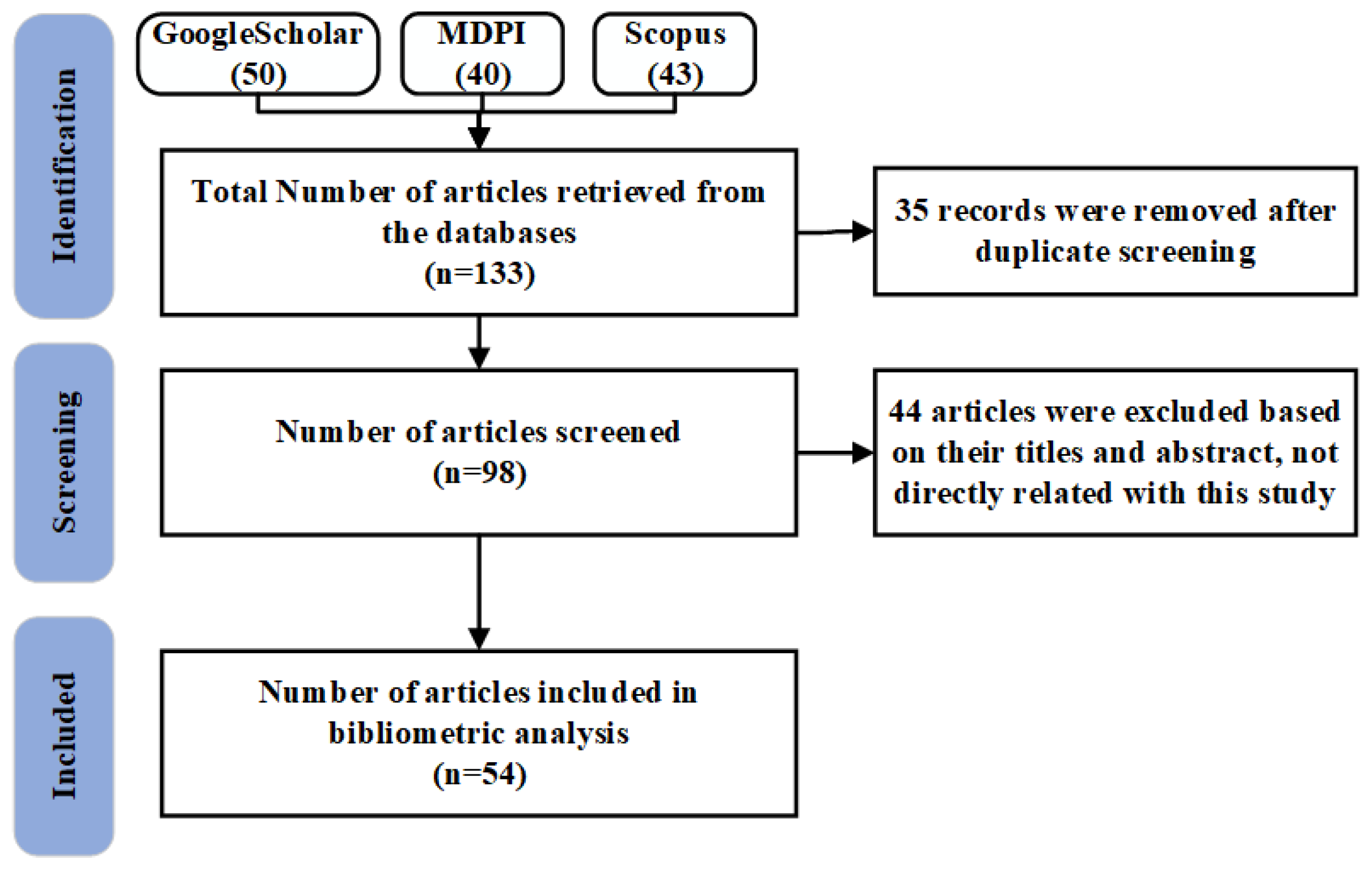
Following the procedure, we ended up with 54 articles for the final bibliometric analysis.
3.3. Data Collection and Survey
A structured survey approach was utilised for data collection, as it provides a means to obtain standardised data from a large number of participants in an efficient way [42]. The target population of this study was Nepalese retail customers who have experience using social media platforms.
Data were collected between March 2025 and June 2025 using a self-administered online questionnaire distributed through email and social media platforms. The online survey-based convenience sampling was used to recruit the participants. All participants were fully informed of the nature and purpose of the study, and informed consent was obtained. The respondents were able to vote in or out of the research at any time without penalty. Questions for the survey were developed in such a way that they contained no sensitive or intrusive content, thereby protecting the privacy, dignity and comfort of the participants.
The questionnaire included closed-ended questions in the form of Likert-scale [43] items to measure the perceptions of respondents. The measurement items were assessed utilising a five-point scale ranging from “strongly disagree (1)” to “strongly agree (5)”, allowing respondent to indicate their level of agreement with each statement [44]. The instrument was designed to capture respondents’ perceptions regarding social media marketing and its influence on brand loyalty.
Four latent constructs were measured in the study: social media marketing strategies (SMMS), customer trust (CT), implementation challenges and opportunities (ICO), and brand loyalty (BL). SMMS, CT, and ICO were treated as independent variables, whereas BL was considered the dependent variable. Accordingly, three hypotheses were formulated for regression analysis (Section 4.2.3).
Each of the SMMS, CT, and ICO constructs was measured using four items, while brand loyalty was measured using six items. These measurement items assessed various aspects of respondents’ experiences and perceptions related to social media marketing activities, trust toward retail brands, implementation-related factors, and loyalty behaviours. The details of the measurement items are reported in Appendix A.
Before the main data collection, the survey instrument was piloted with a small group of participants to ensure clarity and reliability [45] of the measurement items. This approach guarantees that accurate, relevant, and actionable insights are collected through a survey to understand digital consumer behaviour in Nepal. A total of 100 completed questionnaires were received and deemed suitable for analysis. Before conducting the statistical analyses, the collected data were screened for missing values, duplicate responses, and inconsistencies to ensure data quality and reliability.
4. Results
4.1. Bibliometric Results
Here, we first present a bibliometric analysis of the retrieved literature records, including descriptive statistics on publication outputs, document types, and sources. The temporal dynamics of research activity are presented to highlight the growth and evolution of research in this field. Furthermore, the thematic mapping based on keywords is presented, identifying the major research topics and emerging areas within the field. Finally, the relationship among the research themes is explored through co-occurrence networks based on keywords, thereby navigating the conceptual structure of the research landscape and the degree of interconnectedness between different topics.
4.1.1. Descriptive Statistics
The descriptive statistics of the document corpus related to social media marketing in the context of brand loyalty from the databases are presented in Table 3. A total of 54 documents were identified, distributed across 45 distinct sources, including journals, books, theses, and conferences. The average age of the documents was 4.04 years, indicating that the retrieved literature predominantly represents contemporary contributions to the field. These documents have collectively accrued an average of 13.89 citations per publication, suggesting a moderate-to-high scholarly impact within the research community.
Table 3.
Descriptive statistics of documents retrieved through multiple databases.
The keyword analysis indicates a rich conceptual diversity, with 151 unique “Keywords Plus” terms (ID) and 176 author-provided keywords (DE). This suggests that authors are employing a wide array of terms to describe their work, highlighting the diverse thematic orientation in the multi-disciplinary field of brand loyalty and social media research. A total of 119 authors contributed, with only 8 single-authored documents, yielding an average of 2.26 co-authors per document and suggesting a collaborative research environment. Furthermore, 22.26% of publications involved international co-authorship, emphasising the global interconnectedness of the research community.
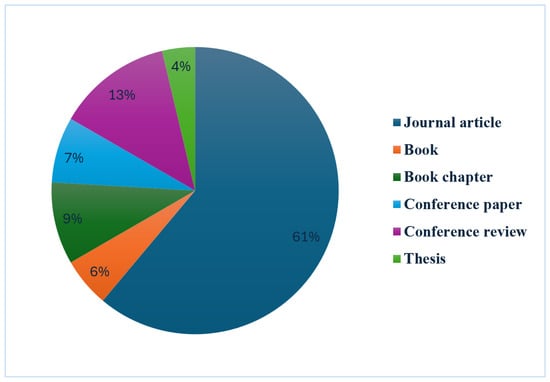
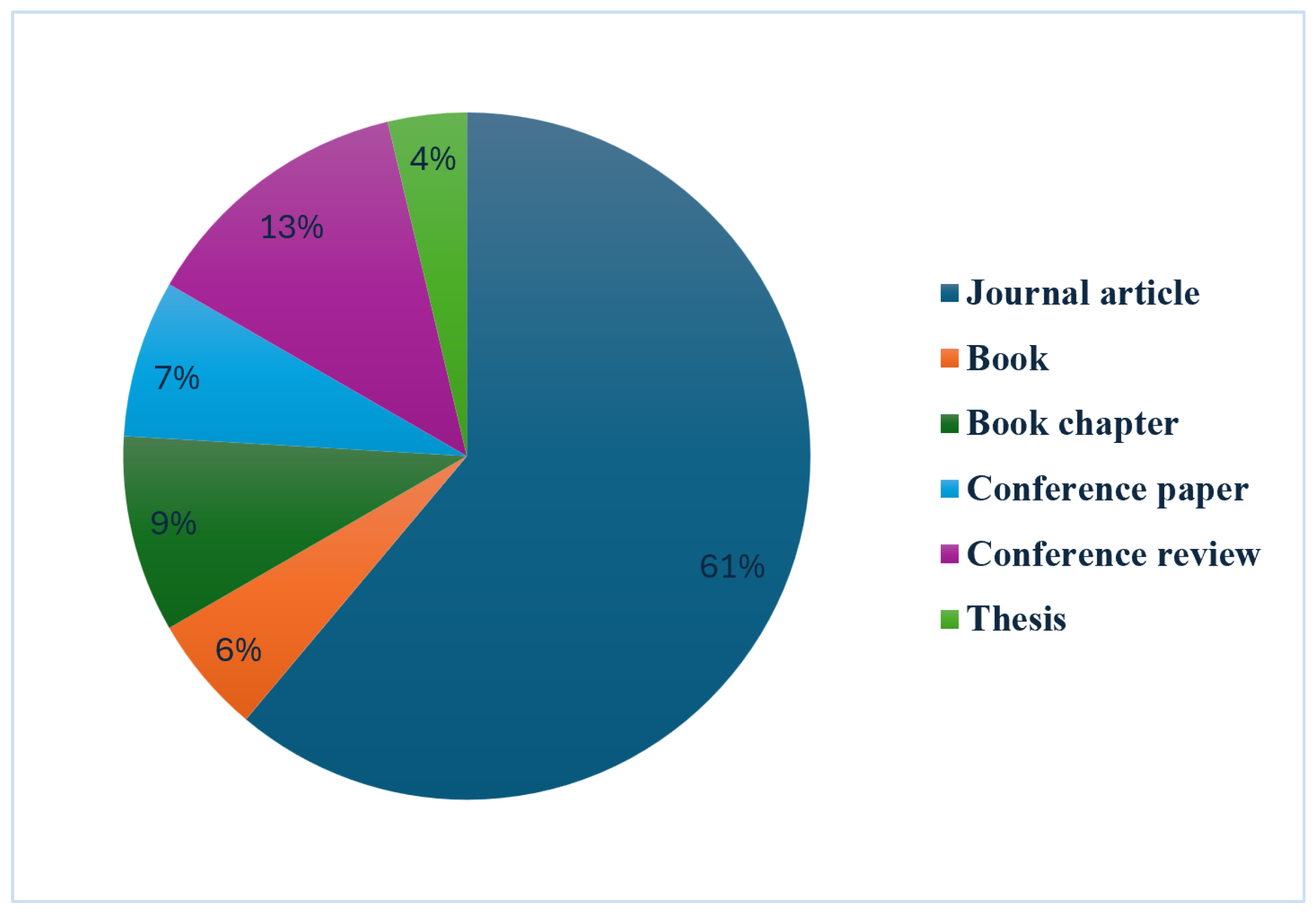
The distribution of document types in the corpus further clarifies that brand loyalty and social media marketing research span multiple scholarly outlets, reflecting both rigorous empirical work and diverse dissemination formats. As reported in Figure 2, out of 54 documents in the corpus, journal articles constitute the majority of publications (61%), highlighting the central role of peer-reviewed journals in advancing theoretical and empirical insights. Conference reviews follow with 7 documents (13%), while book chapters (9%) and conference papers (7%) represent additional avenues for knowledge dissemination. The predominance of peer-reviewed journal articles indicates that research on the impact of social media on brand loyalty is strongly oriented toward rigorous academic evaluation and emphasises validated, methodologically robust approaches to understanding how digital engagement influences consumer loyalty.
Figure 2.
Distribution of document types and their contribution to the corpus.
4.1.2. Research Trend and Dynamics
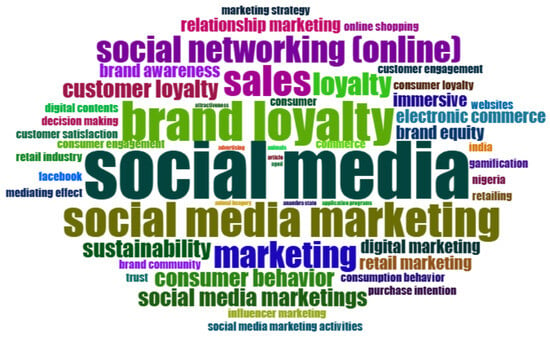
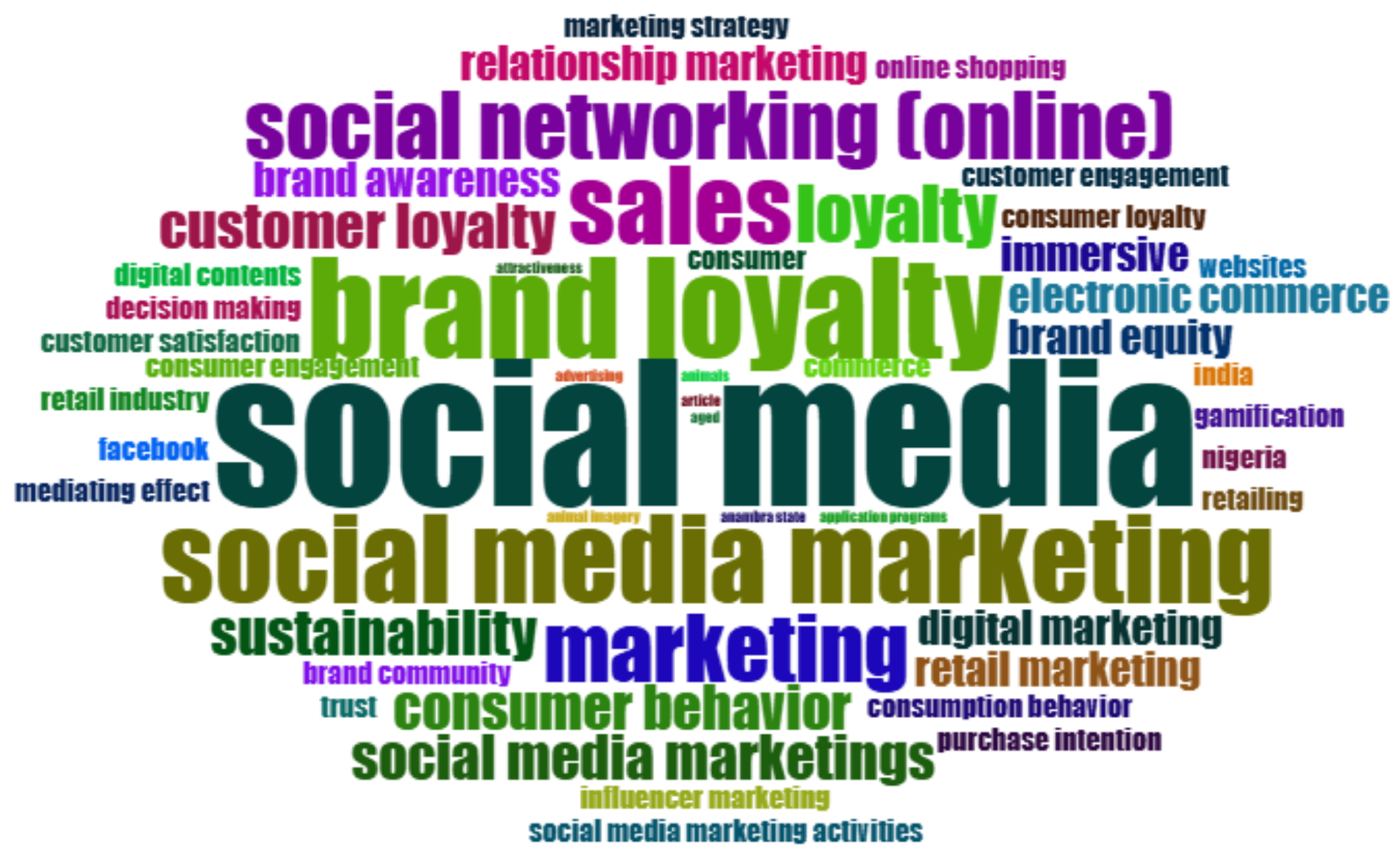
To observe the recent research trend on the impact of social media marketing on brand loyalty, we present the word cloud in Figure 3, where all keywords were extracted from published research works in this field, and the word size is displayed with respect to the frequency of the word. The most frequent words that describe the popular keywords among the researchers are “social media,” “social media marketing,” and “brand loyalty,” indicating that the literature is heavily oriented toward understanding how digital platforms influence consumer relationships and brand performance. Furthermore, the presence of keywords like “social networking,” “digital marketing,” and “retail marketing” suggests that scholars are exploring both strategic and operational dimensions of social media in driving customer engagement and retail business. The inclusion of platform-specific or activity-related terms, such as “Facebook,” “influencer marketing,” and “online shopping,” further underscores the applied nature of the research and its alignment with real-world marketing practices.
Figure 3.
Word cloud representation of keywords using bibliometric analysis [46].
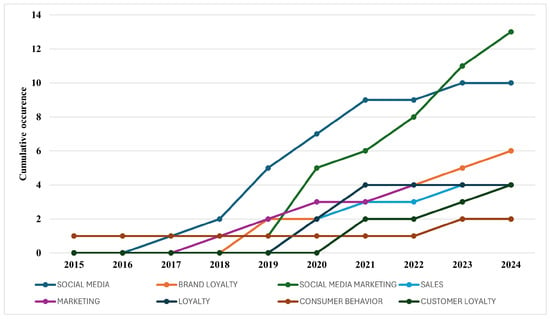
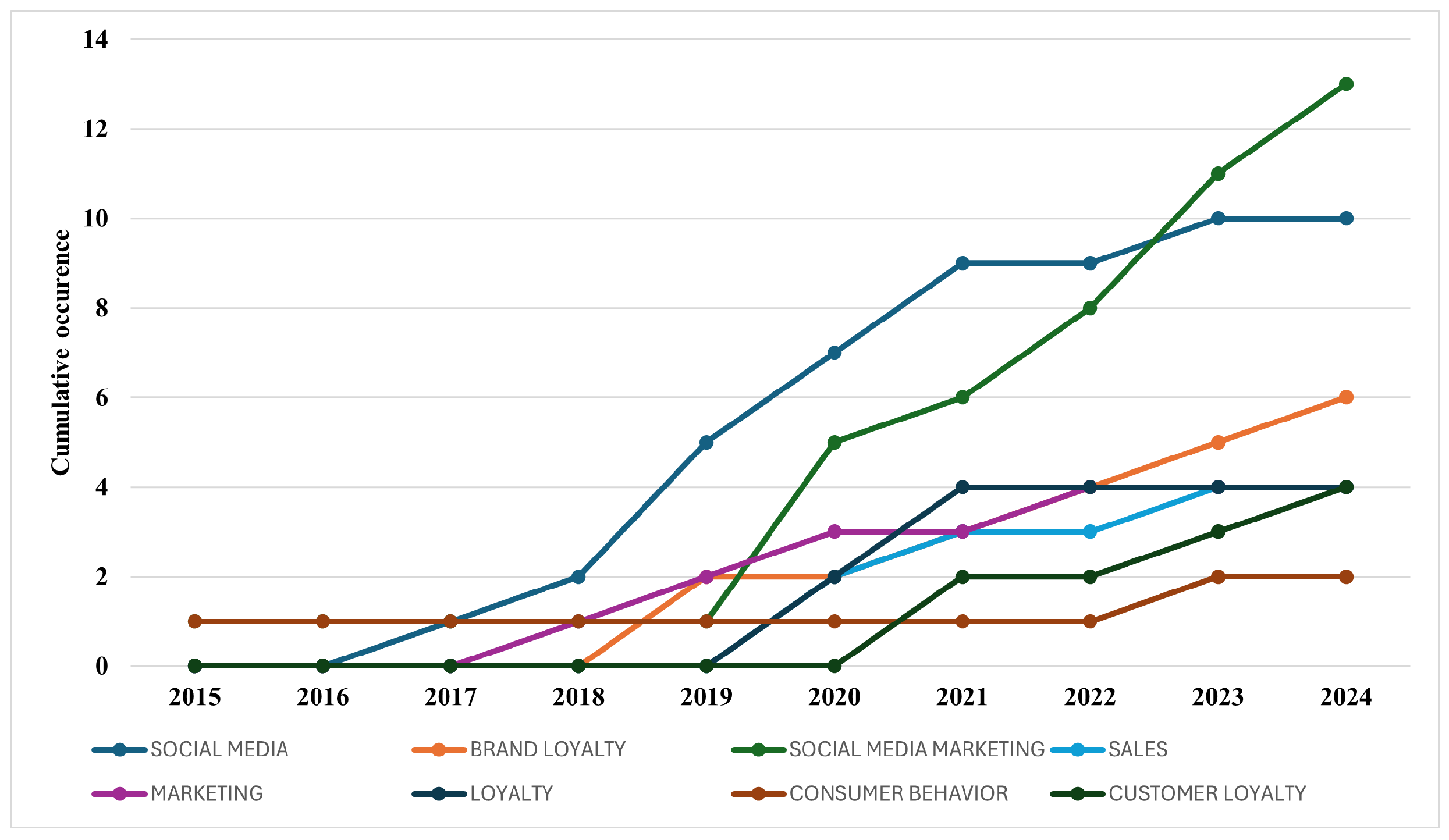
Furthermore, the research trend was analysed with the help of word dynamics as presented in Figure 4, which represents how the use frequency of keywords changes over time. Unlike the word cloud, it helps us to reveal the temporal evolution of research topics in the field of social media marketing research. As illustrated in Figure 4, the keyword “social media marketing” is the most rapidly increasing from 2020 onwards, indicating that social media marketing research has emerged as a dominant research theme in recent years. Similarly, the keyword “social media” also demonstrated strong and sustained growth in these years, highlighting its dominant role in this field. Keywords that reflect the research associated with customer retention and relationship management, such as ’brand loyalty’, ’customer loyalty’, and ’loyalty’, have shown a similar upward trajectory. Specifically, ’brand loyalty’ has seen a step increasing from 2022 along with the keyword “social media marketing”, suggesting a continued scholarly interest in understanding how the social media marketing strategy has impacted long-term customer retention and loyalty.
Figure 4.
Word dynamics of main keywords used in brand loyalty and social media marketing [46].
4.1.3. Thematic Topics and Co-Occurrence Network
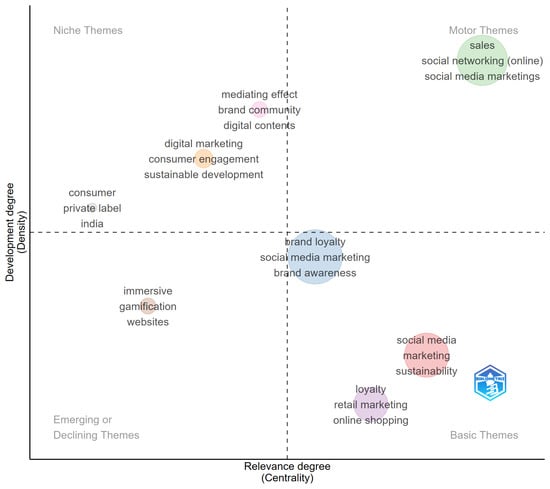
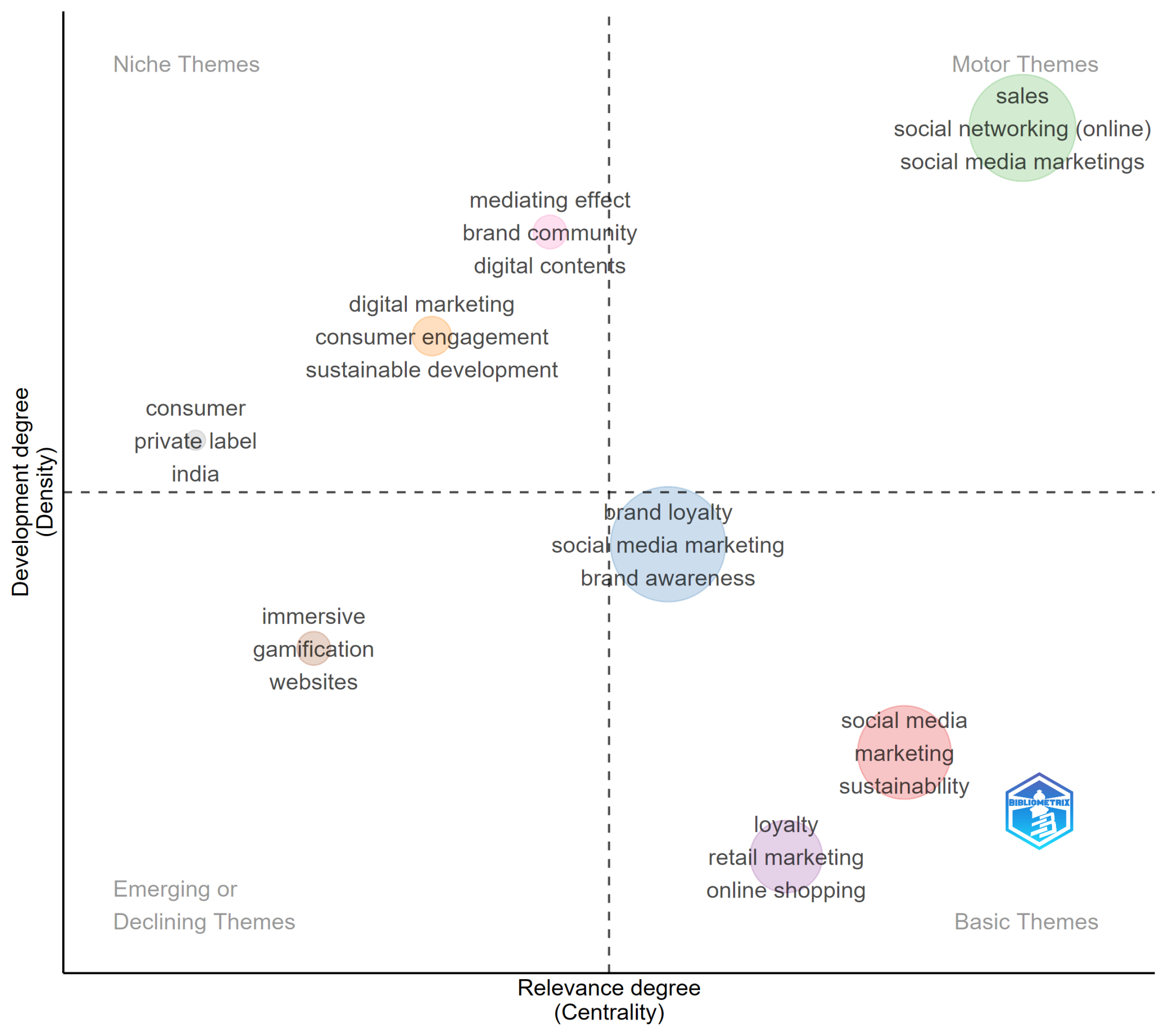
The thematic map of keywords is presented in Figure 5, where the keywords are placed according to their relevance (centrality) on the x-axis and their development (density) on the y-axis. Hence, it divides the space into four quadrants representing four themes: motor, basic, niche, and emerging/declining, thereby providing insight into their importance and maturity in the literature. Each bubble inside the maps includes the relevant cluster of keywords, which are located based on their connection to the overall fields relevancy and density.
Figure 5.
The four quadrants thematic map of all keywords in the corpus.
At the upper-right quadrant, representing the topics that are both highly developed (high density) and highly relevant (high centrality), are categorised as motor themes. It includes topics such as “social media marketing,” “social networking (online),” and “sales”, indicating that they are both well-developed and highly relevant core driving topics, reflecting the strong research focus on social media and sales-related outcomes in digital contexts. The specialised areas that are internally cohesive but not central to the main discussion in the field are accumulated in the upper-left quadrant as a niche theme. It includes themes such as “brand community,” “consumer engagement,” and “digital content”, which are highly developed internally but exhibit lower centrality within the broader research network, indicating that these topics are methodologically mature and conceptually cohesive; however, they remain somewhat specialised and less integrated with the core themes of social media marketing and brand loyalty.
The third quadrant (lower-left) represents the emerging or declining themes that contain “immersive”, “gamification”, and “websites”, indicating that these topics are currently underdeveloped and peripheral within the broader research on social media marketing and brand loyalty. They represent nascent areas with high potential for future exploration. Finally, the lower-right quadrant includes the foundational topics that are highly relevant but have low or moderate development (density). It includes the keywords such as “social media marketing”, “brand loyalty”, “brand awareness”, and, “online shopping” and “sustainability”, suggesting that sustainability and online shopping in social media marketing is recognised as important, yet under-explored, and has a promising avenue for future research to examine how sustainable practices on digital platforms influence consumer engagement, brand perception, and loyalty outcome.
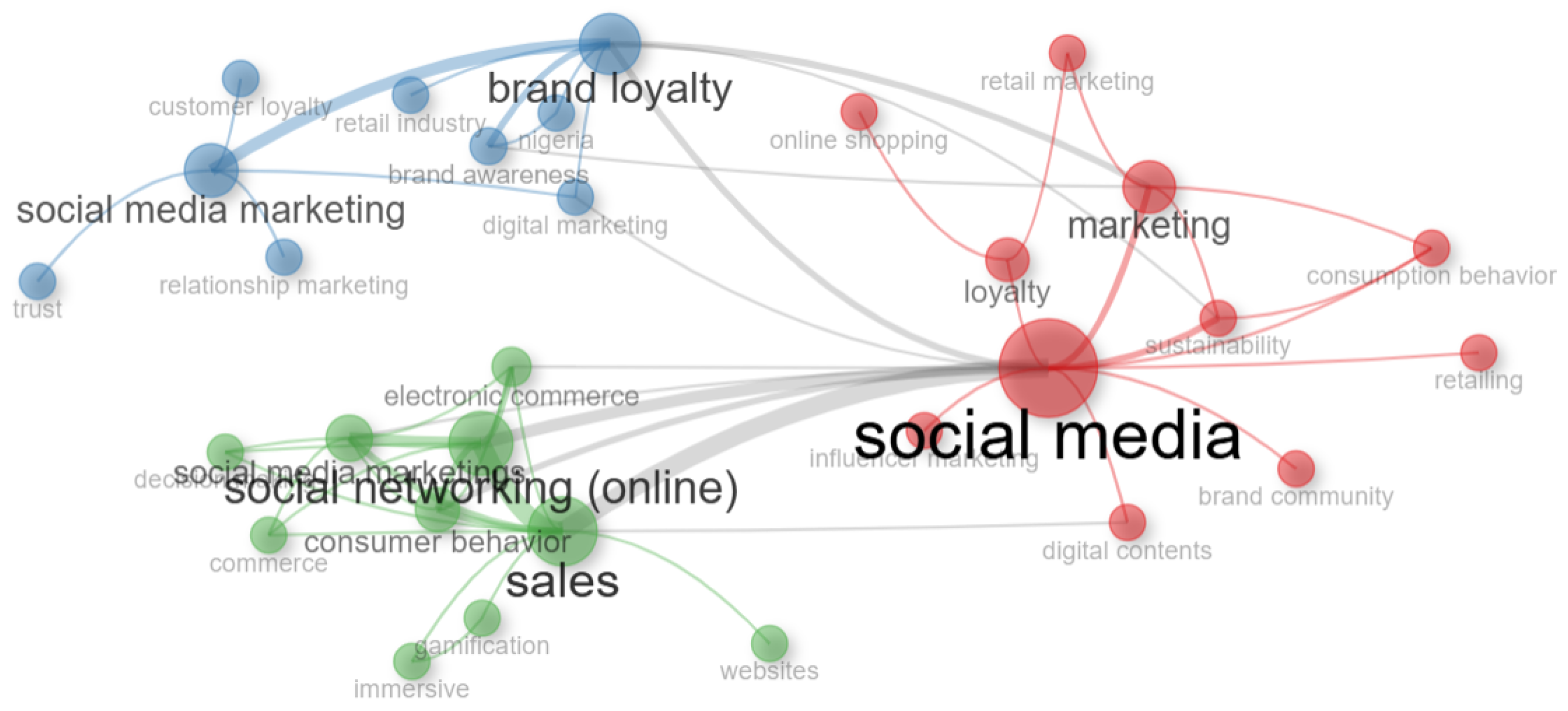
The evolution of thematic topics and their relationship is further analysed with a co-occurrence network, which shows how often keywords appear together within a dataset. Figure 6 demonstrates the three dominant interconnected thematic clusters in the intellectual landscape of brand loyalty and social media marketing research. The red cluster represents the conceptual and empirical core of the field, where social media, marketing, and loyalty emerge as the most dominant and densely connected nodes. The strong co-occurrence links between social media and loyalty suggest that this relationship constitutes the central research axis. The blue cluster captures the theoretical foundation of the field, anchored in brand loyalty and closely associated with social media marketing, brand awareness, and customer loyalty. This cluster reflects the continuation of traditional marketing theories within a digital context. The integration of social media marketing within this cluster suggests that these classical theories are being contextualised to account for the dynamics of online interactions. The connections between the blue and red clusters indicate a strong integration, where foundational theories of loyalty are increasingly operationalised through social media marketing strategies. The green cluster represents a more application-oriented research stream, centred on social networking, sales, and electronic commerce, highlighting the growing emphasis on linking social media activities with tangible business outcomes. Compared to the other clusters, this stream appears more practice-driven, reflecting the increasing interest of both researchers and practitioners in quantifying the return on investment of social media initiatives.
Figure 6.
The co-occurrence network of all keywords in the corpus.
In summary, the co-occurrence network structure reveals a bridging role played by several key nodes. Social media functions as the primary hub, connecting the theoretical, strategic, and transactional dimensions of the literature. Brand loyalty serves as a secondary integrative node, linking the theoretical constructs of the blue cluster with the applied marketing practices of the red cluster. Additionally, electronic commerce and consumer behaviour act as intermediaries between engagement-focused and sales-oriented research, facilitating the transition from interaction to conversion.
4.2. Survey Results
This section presents the analysis of survey data from three perspectives. First, the demographic characteristics of participants are described, including age, gender, and frequency of social media use. Second, correlation analysis among the four measurement constructs is conducted to examine their relationships. Finally, regression analysis is performed to test three hypotheses and assess the impact of the independent variables on brand loyalty as the dependent variable. After the data collection, the completed survey questionnaires were screened and tabulated in Excel for data preparation and coding. Responses to each measurement item were organised and examined for any inconsistency. For each respondent, the average score of the measurement items associated with a construct was calculated to obtain a single composite value representing that construct. These average scores were then used in the subsequent statistical analyses, ensuring that each construct was represented by a unified measure derived from its corresponding measurement items.
4.2.1. Descriptive Analysis
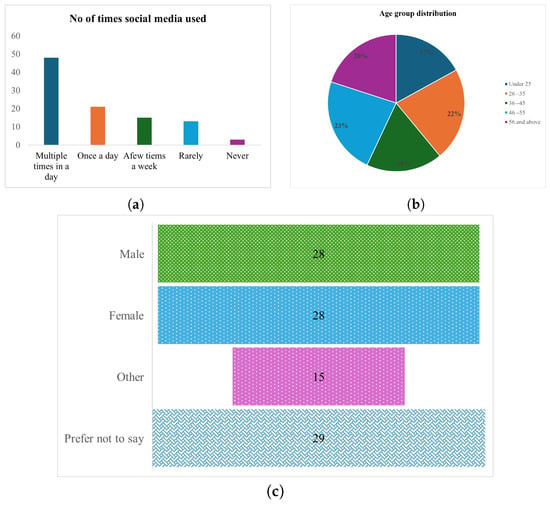
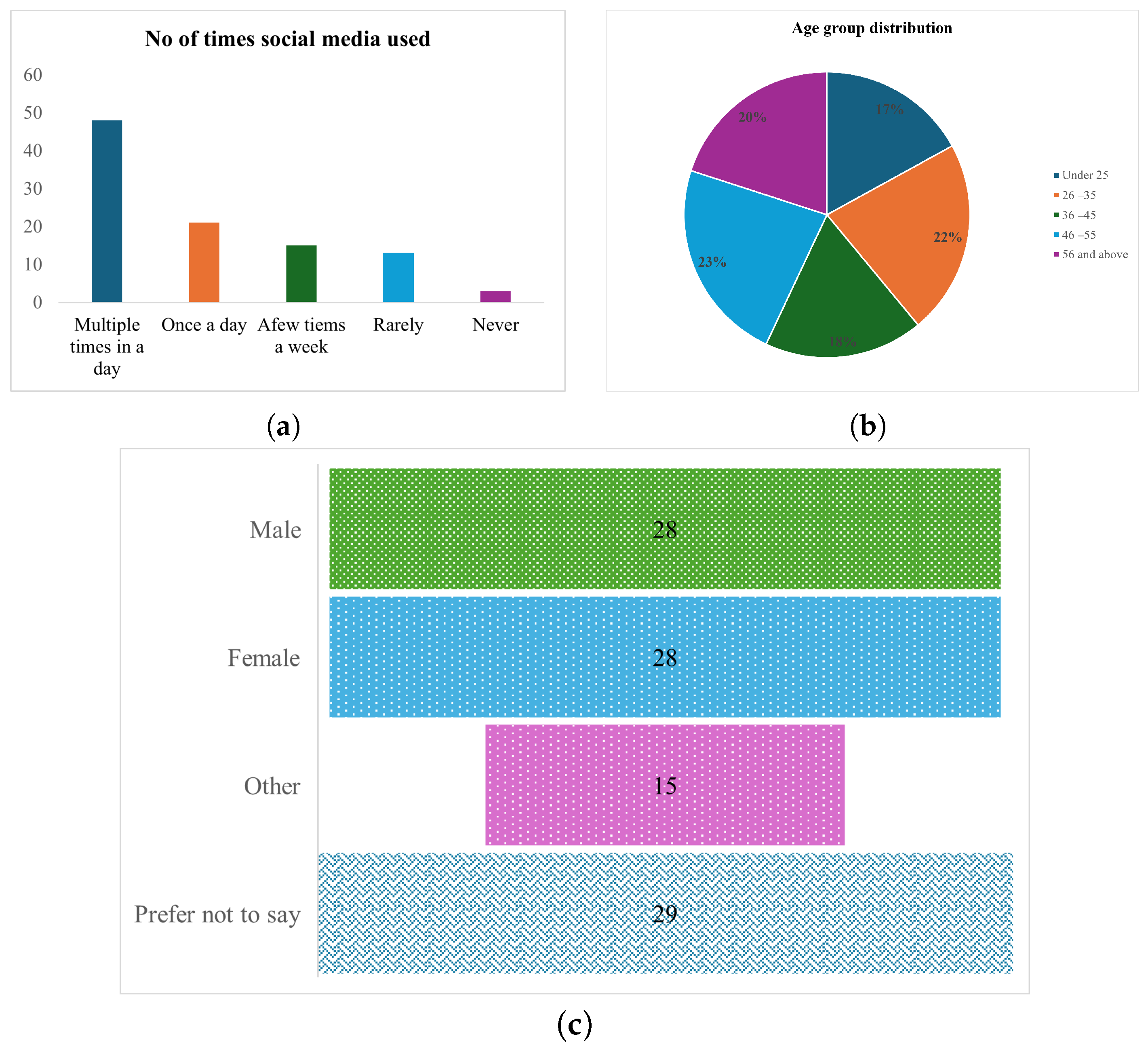
The demographic data from this study showed that people of a variety of ages, genders, and frequencies of social media use took part in the study. Age-wise, the biggest groups are people aged between 46 and 55 years (23%), and the next largest group is adults in their late thirties, with 22%. After that come people over 56 and those under 25, who account for 20% and 17% each, followed by those between 36 and 45, which is 18%. This distribution shows that the group has a good amount of young adult people and people in their 40s, which helps to hear different opinions about social media marketing and how much they like certain brands. Regarding gender, most people chose male or female and put them at almost the same number, with 28% of the sample being male and the other 28% being female. Notably, 15% of participants answered other to gender, while almost a third of the respondents did not share their gender (29%). The relatively high non-response rate towards gender information is cautiously taken into account in the further data analysis when drawing any conclusions regarding the influence of gender in the study. In terms of social media engagement, almost half the samples (48%) said they check or post things on social media several times a day (Figure 7).
Figure 7.
The distribution of collected samples based on (a) social media usage frequency, (b) age group, and (c) gender representation.
As reported in Table 4, all four constructs are moderately high on the measurement scale, with mean values centred around 3.0 to 3.15, suggesting that the positive but not extreme agreement across respondents. The moderate variability in responses is shown by the standard deviation in the range of 0.567 to 0.805, where brand loyalty shows the least dispersion (SD = 0.567) and customer trust and SMMS show relatively higher variability (around 0.8). Median values are close to the means (around 3), indicating approximately symmetric distributions for most variables, with no strong deviation between central tendency measures. The skewness and kurtosis value close to zero for all constructs indicates that the distributions are close to normality without extreme peakedness and asymmetry. Overall, the data suggest survey distributions suitable for correlation and regression analysis, with moderate agreement levels and no severe violations of normality assumptions.
Table 4.
Descriptive statistics of survey data.
4.2.2. Correlation Analysis
We first performed correlation analysis and a multicollinearity test to inform the regression analysis in the next section. The Pearson correlation coefficients among the study constructs are reported in Table 5. A moderately positive and statistically significant relationship between social media marketing strategies (SMMS) and customer trust (CT) (r = 0.593, p < 0.01) suggests that respondents who perceived retail brands as implementing more effective social media marketing strategies also reported higher levels of trust in those brands.
Table 5.
Correlation matrix among constructs (N = 100). Note that * p < 0.05; ** p < 0.01; SMMS: social media marketing strategies; CT: customer trust; ICO: implementation challenges and opportunities.
A weak but statistically significant positive correlation was observed between SMMS and implementation challenges and opportunities (ICO) (r = 0.207, p < 0.05). Although the association is relatively weak, this indicates that perceptions of social media marketing strategies are related to perceptions of implementation challenges and opportunities. Regarding brand loyalty, no significant correlations were found with either SMMS (r = 0.067, p > 0.05) or customer trust (r = 0.020, p > 0.05). These results indicate that neither social media marketing strategies nor customer trust exhibited a direct linear association with brand loyalty in the current data sample. In contrast, ICO demonstrated a moderate positive and statistically significant relationship with brand loyalty (r = 0.337, p < 0.01), suggesting that implementation-related factors may play a more important role in influencing customer loyalty than social media marketing strategies or trust alone.
Multicollinearity is the phenomenon of having correlated independent variables in a regression model that creates difficulties in adding the individual effects of any variable to the dependent variable. Variance Inflation Factor (VIF) is commonly used to assess the degree of multicollinearity among predictors [47]. Here, the VIF values for customer trust (2.18), social media strategies (1.59), and implementation challenges (1.48) indicate low to moderate levels of multicollinearity (Table 6). Although VIF values greater than 1 suggest some degree of correlation among predictors, values below 5 are generally considered acceptable for regression analysis [48]. Since all VIF values in the present model are well below this threshold, multicollinearity is not considered a serious concern for regression analysis.
Table 6.
Multicollinearity of predictor variables.
4.2.3. Regression Analysis
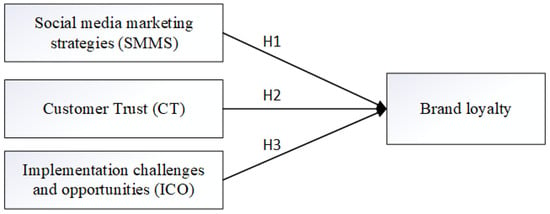
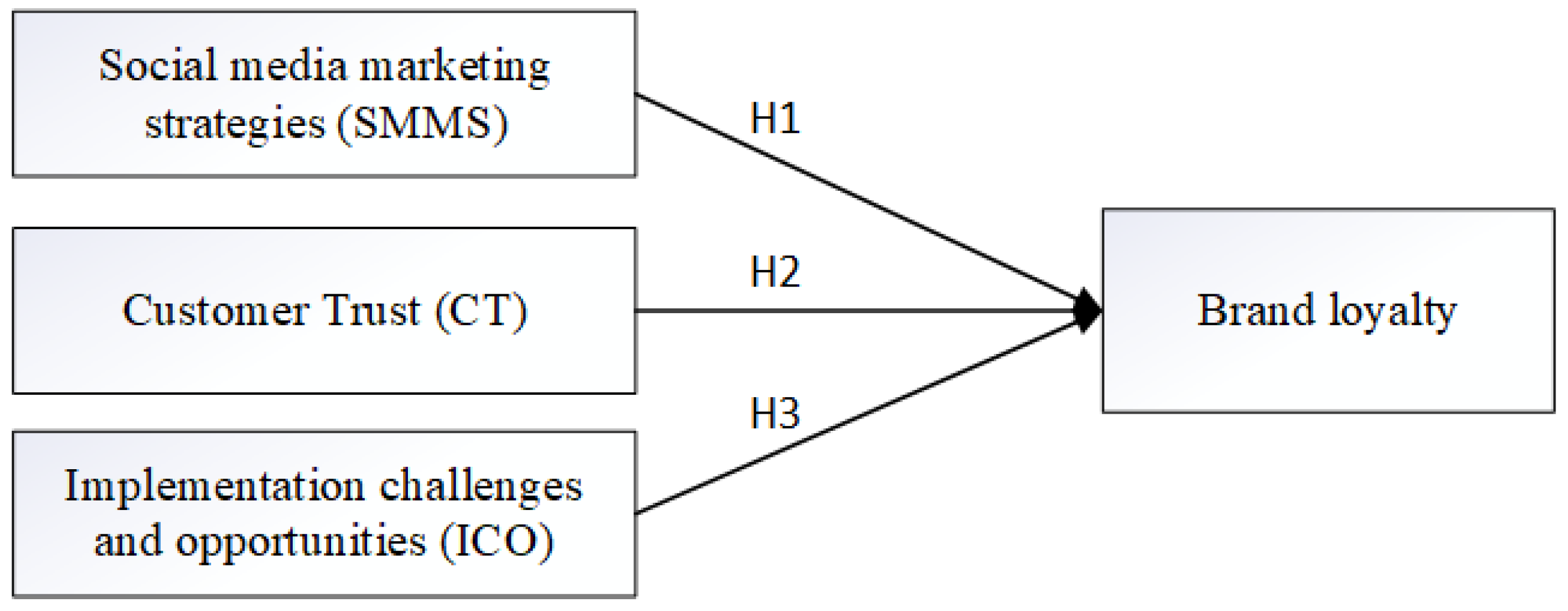
We formulated the three hypotheses to test with the regression model as demonstrated in Figure 8. The result of the regression analysis is reported in Table 7. The regression analysis indicates that the model has moderate explanatory power for brand loyalty within the sample ( of 0.4717 and adjusted of 0.3862). However, the findings should be interpreted with caution due to methodological limitations, particularly the relatively small sample size (n = 100) and the associated risk of reduced statistical power and potential selection bias [49]. As such, the results are better understood as exploratory and may not be fully generalisable to the broader population of social media users in Nepal.
Figure 8.
Relationship between independent and dependent variables.
Table 7.
Regression analysis of variables.
Hypothesis 1 (H1).
Social media marketing strategies have a positive effect on brand loyalty.
Social media marketing strategies () show a positive and statistically significant relationship with brand loyalty. Therefore, H1 is supported within the constraints of the present sample. This indicates that, holding other variables constant, greater use of social media marketing strategies is associated with higher levels of brand loyalty in the Nepalese retail context.
Hypothesis 2 (H2).
Customer trust has a positive effect on brand loyalty.
Customer trust () shows a negative but statistically non-significant relationship with brand loyalty. Therefore, H2 is not supported within this sample. Nepal has a collectivist culture where trust is often embedded in social capital rather than expressed as an individual transactional construct. In such settings, trust formation is frequently influenced by community-based social proof and peer networks [50], alongside structural constraints such as varying levels of digital literacy [51]. These factors may diffuse or reconfigure the direct effect of measured customer trust on brand loyalty, potentially explaining its lack of statistical significance in the current model.
Hypothesis 3 (H3).
Implementation challenges and opportunities have a positive effect on brand loyalty.
Implementation challenges and opportunities () exhibit a positive and statistically significant relationship with brand loyalty. Therefore, H3 is supported within the present sample. This implies that firms that effectively navigate contextual constraints such as infrastructural limitations, geographic barriers, and variations in digital access are more likely to achieve higher levels of brand loyalty.
5. Summary of Findings
The bibliometric analysis indicates that the field is evolving toward an integrated framework that incorporates social media engagement and brand loyalty within retail marketing. Emerging approaches such as gamification and virtual shopping are gaining attention as next-generation marketing strategies. However, there remains a need for unified models that integrate relational factors, consumer behaviour, and performance outcomes in social media contexts.
The survey results show that social media use by brands and related factors play a major role in building brand loyalty among Nepalese retail customers in Nepal. Regression analysis indicates a moderate relation between social media marketing and customers being loyal to the brand, suggesting that tailored and engaging content in social media is an effective driver of loyalty. Contrary to expectations, the level of customer trust did not have a significant effect on brand loyalty, indicating that trust is important but not the key driver of loyalty for brands in Nepal’s retail market.
Results from this study support earlier studies showing that social media marketing builds brand loyalty through personalised content, influencer collaborations, and participation in customer conversations [52]. As Khoa et al. [53] point out, the ability to address infrastructure problems improves the relationship between brands and consumers in developing markets. In addition, the study agrees with [3] that specific and relevant content makes the bond between a brand and its customers stronger. On the other hand, this study runs contrary to findings in the literature, suggesting that trust motivates the majority of customer loyalty, since it did not prove to be significantly related to loyalty in this case, according to [35]. This suggests that Nepalese consumers place greater emphasis on experience, quality, and functional value, while trust plays a secondary role in shaping brand attachment. Overall, the study enriches the existing literature by pointing out the details of digital consumer actions in Nepal and outlining the importance of adjusting strategies to suit the local market.
6. Recommendations
Through the findings of this research, it is recommended that retailers might improve their social media marketing strategies that align with the local preferences, language and culture of people in Nepal. Utilising content that reflect peoples every day experiences through interactive tools like live videos, polls, social media posts, and collaboration with relevant influencers can help bring consumers closer to the brand. By communicating with customers in two ways and letting them have a say, brands can make people trust them more and help their business stand out in a growing and busy retail market in Nepal.
Another challenge that needs to be addressed is the structural constraints that remain essential for expanding the effectiveness of social media marketing. Collaborations with local internet services and government bodies can help fix up infrastructure and make the internet work better for more people. These initiatives will help the brands reach more people, so more customers can connect with these brands on social media and make marketing online work even better.
Building customer trust should be considered a foundational or “hygiene” factor within social media marketing strategies. While the empirical results do not indicate a direct statistically significant relationship between trust and brand loyalty in the present model, trust remains important for supporting positive customer perceptions and sustained engagement. Accordingly, retailers should focus on maintaining transparency, responsiveness, and reliability in their social media communications. Prompt responses to customer inquiries, honest communication, and responsible brand behaviour can strengthen credibility and contribute to more favourable customer experiences, even if these effects are not directly reflected in loyalty outcomes within the current study.
Finally, strategic and systematic monitoring and evaluation of social media performance are essential. Regular assessments of the customer response and feedback over social media are important for retailers, as ongoing analysis of user feedback, engagement metrics and emerging customer trends enables them to adapt the correct social media marketing strategies. Data-driven decision-making supports the optimisation of content, the identification of emerging trends, and the enhancement of audience interaction. By using analytics tools, retailers can make their social media campaigns better and contribute to stronger customer satisfaction, which can help the brand stand out to customers and encourage them to come back again. In summary, the following recommendations are presented:
- (i)
- Tailor content to Nepalese culture and preferences, using interactive formats such as live videos, giveaways, and influencer collaborations to enhance engagement and strengthen brand connection.
- (ii)
- Collaborate with local stakeholders and government bodies to improve internet infrastructure, enabling broader audience reach and more effective social media marketing.
- (iii)
- Maintain transparency, responsiveness, and social responsibility while leveraging analytics and customer feedback to refine strategies, enhance engagement, and foster long-term brand loyalty.
7. Conclusions
The study examined the evolving role of social media marketing in shaping brand loyalty in Nepal, mainly by looking into the existing literature and survey data analysis. Bibliometric mapping revealed that the literature is largely centred on themes such as customer engagement, trust, content personalisation, and digital interaction, highlighting a strong shift toward relationship-driven marketing approaches. These thematic trends indicate that social media has become a critical platform for fostering emotional connections and long-term loyalty between brands and consumers. Empirical insights from the Nepalese retail sector show that social media marketing strategies positively influence brand loyalty, particularly through interactive, relevant, and culturally aligned content. In contrast, the role of customer trust was not found to be a significant predictor of brand loyalty in this context. Despite being conceptually important, trust alone did not show a direct impact in the current data. This may indicate that trust may function indirectly or in combination with other variables, rather than as a standalone determinant.
Finally, the study suggests that implementation challenges and opportunities (H3) significantly influence brand loyalty. Structural barriers such as limited digital access and technological constraints, when effectively addressed, can become opportunities for innovation and deeper customer connection. Retailers that adapt to these contextual challenges are better positioned to strengthen loyalty through tailored and context-specific strategies. Overall, the research underscores that while social media marketing is a powerful tool for building brand loyalty in Nepal, its success depends on strategic execution, contextual adaptation, and a strong focus on customer engagement.
This research has significant effects on our understanding and use of marketing. The theory highlights that due to the low number of academic studies on the topic, getting customers actively involved through social media is hard in Nepal, specifically. In practice, the study reminds Nepalese retail brands that digital marketing should focus on connecting with customers personally and through interactive activities, apart from just distributing their content. Since customer trust weakly affects purchases, marketers ought to blend it with positive content and a quick response to customers. Considering and dealing with infrastructural and social problems can lead to stronger marketing strategies. Retailers can use the findings of this research to improve their customer loyalty in the digital age.
It should be noted that the sample size of 100 respondents may limit the generalisation of the findings to the wider Nepalese market. Secondly, the empirical insights of the study rely on self-reported survey data, which may be subject to response bias. Using a cross-sectional study limits the ability to observe any changes or causes that happen over time. Beyond these methodological constraints, the study is also limited by its measurement scope, as it focuses primarily on three independent variables (SMMS, customer trust, and ICO), while other potentially important determinants of brand loyalty, such as pricing, product quality, and in-store customer experience, were not included. This reflects a broader limitation in the operationalisation of brand loyalty and related constructs within the current model. Future research should therefore focus less on speculative extension of additional variables and more on strengthening study design and measurement quality. This may include the use of larger and more diverse samples, improved sampling strategies, and more robust research designs such as longitudinal approaches.
Author Contributions
Conceptualisation, R.S.; methodology, R.S. and T.B.S.; software, R.S.; validation, R.S., T.B.S., B.B.K., and A.N.; formal analysis, R.S.; investigation, R.S.; resources, R.S.; data curation, R.S.; writing—original draft preparation, R.S.; writing—review and editing, R.S., T.B.S., B.B.K. and A.N.; visualisation, T.B.S.; supervision, A.N. All authors have read and agreed to the published version of the manuscript.
Funding
This research received no external funding.
Institutional Review Board Statement
The study was conducted in accordance with the Declaration of Helsinki, and approved by the Institutional Review Board of Ulster University (protocol code 20250313 and date of approval 13 March 2025). The research involved anonymous, voluntary surveys and interviews with competent adult participants, and no personally identifiable information was collected. Participation was voluntary, and appropriate measures were taken to ensure participant anonymity, confidentiality, and data protection throughout the study.
Informed Consent Statement
Informed consent was obtained from all subjects involved in the study.
Data Availability Statement
Data will be made available upon reasonable request.
Acknowledgments
The author used ChatGPT-5.5 solely for language editing to improve grammar, readability, and clarity. No generative AI was used to create, generate, or modify the scientific content, ideas, data, or analysis presented in this manuscript. The authors have reviewed and edited the output and take full responsibility for the content of this publication.
Conflicts of Interest
The authors declare no conflicts of interest.
Appendix A. Measurement Items
SMMS: Social Media Marketing Strategies
- (a)
- SMMS-1: The content shared by retail brands on social media is informative and relevant to my needs.
- (b)
- SMMS-2: I am more likely to consider purchasing from a brand that uses social media influencers.
- (c)
- SMMS-3: Personalised promotions or messages from retail brands on social media catch my attention.
- (d)
- SMMS-4: I find interactive campaigns (e.g., polls, giveaways) from retail brands engaging and appealing.
CT: Customer Trust
- (a)
- CT-1: I trust the information shared by retail brands on social media.
- (b)
- CT-2: I believe that Nepalese retail brands are honest in their social media communications.
- (c)
- CT-3: I feel secure providing my personal information to retail brands through social media platforms.
- (d)
- CT-4: Consistent social media presence increases my trust in a retail brand.
ICO: Implementation Challenges and Opportunities
- (a)
- ICO-1: Limited internet access affects how often I can engage with retail brands on social media.
- (b)
- ICO-2: I find that some retail brands lack professionalism in their social media marketing.
- (c)
- ICO-3: Social media marketing allows retail brands in Nepal to reach customers more effectively.
- (d)
- ICO-4: I believe that more training and awareness can help retail brands improve their social media presence.
BL: Brand Loyalty
- (a)
- BL-1: I am more likely to remain loyal to a retail brand that regularly posts engaging content on social media.
- (b)
- BL-2: Social media campaigns influence my decision to repeatedly buy from the same retail brand.
- (c)
- BL-3: I feel loyal to retail brands on social media that I perceive as trustworthy.
- (d)
- BL-4: I prefer to stick with brands that provide honest and transparent information through their social media platforms.
- (e)
- BL-5: I would be more loyal to retail brands if they improved their responsiveness and quality on social media.
- (f)
- BL-6: The ease of accessing brand information on social media increases my loyalty to retail brands in Nepal.
References
- Lu, Q.S.; Miller, R. How social media communications combine with customer loyalty management to boost green retail sales. J. Interact. Mark. 2019, 46, 87–100. [Google Scholar] [CrossRef] [Scilit]
- Safko, L.; Brake, D.K. The Social Media Bible: Tactics, Tools, and Strategies for Business Success; John Wiley & Sons: Hoboken, NJ, USA, 2009. [Google Scholar]
- Sohaib, M.; Han, H. Building value co-creation with social media marketing, brand trust, and brand loyalty. J. Retail. Consum. Serv. 2023, 74, 103442. [Google Scholar] [CrossRef] [Scilit]
- Dang, T.Q.; Nguyen, T.M.; Tran, P.T.; Phan, T.T.C.; Huynh, T.B.; Nguyen, L.T. From reality to virtuality: Unveiling Gen Z’s purchasing behavior through virtual influencers in the metaverse. Digit. Bus. 2025, 5, 100141. [Google Scholar] [CrossRef] [Scilit]
- Mangold, W.G.; Faulds, D.J. Social media: The new hybrid element of the promotion mix. Bus. Horiz. 2009, 52, 357–365. [Google Scholar] [CrossRef] [Scilit]
- Maharjan, S.; Tamrakar, S.; Gurung, T.; Shrestha, S. Effect of Loyalty, Awareness, Social Media Platforms, and Social Influencers on the Growth of the Fashion Industry in Nepal. New Perspect. J. Bus. Econ. 2024, 7, 33–44. [Google Scholar] [CrossRef] [Scilit]
- Bajracharya, S.; Sah, P. Impact of Social Media Marketing on Brand Awareness in Nepal. Nepal. J. Bus. 2024, 11, 36–55. [Google Scholar] [CrossRef] [Scilit]
- Davis, F.; Granić, A. The Technology Acceptance Model: 30 Years of TAM; SpringerBriefs in Human-Computer Interaction; Springer: Cham, Switzerland, 2024. [Google Scholar]
- Fetais, A.H.; Algharabat, R.S.; Aljafari, A.; Rana, N.P. Do social media marketing activities improve brand loyalty? An empirical study on luxury fashion brands. Inf. Syst. Front. 2023, 25, 795–817. [Google Scholar]
- Brodie, R.J.; Hollebeek, L.D.; Jurić, B.; Ilić, A. Customer engagement: Conceptual domain, fundamental propositions, and implications for research. J. Serv. Res. 2011, 14, 252–271. [Google Scholar] [CrossRef] [Scilit]
- Salem, S.F.; Salem, S.O. Effects of social media marketing and selected marketing constructs on stages of brand loyalty. Glob. Bus. Rev. 2021, 22, 650–673. [Google Scholar]
- Neupane, A.; Paudel, N.; Poudel, K.; Shahi, T.B. Examining adoption of mobile game in Nepal with extended TAM. Int. J. Bus. Inf. Syst. 2025, 49, 143–160. [Google Scholar] [CrossRef] [Scilit]
- Puriwat, W.; Tripopsakul, S. Explaining social media adoption for a business purpose: An application of the UTAUT model. Sustainability 2021, 13, 2082. [Google Scholar] [CrossRef] [Scilit]
- Rachmad, Y.E.; Sepriano, S.; Efitra, E.; Uzma, I. The Evolution of Consumer Behaviour: Theories of Engagement, Influence, and Digital Interaction; Sonpedia Publishing Indonesia: Jambi, Indonesia, 2024. [Google Scholar]
- Ezenwafor, E.C.; Ayodele, A.A.; Nwaizugbo, C.I. Social media marketing and brand loyalty among online shoppers in Anambra State, Nigeria: Mediating effect of brand awareness. J. Electron. Commer. Organ. (JECO) 2021, 19, 16–27. [Google Scholar] [CrossRef] [Scilit]
- Rico, H.; De La Puente, M.; Rios, J.; Perez, H. Social media, brand loyalty and the banking industry in Colombia. Innov. Mark. 2024, 20, 31–39. [Google Scholar] [CrossRef] [Scilit]
- Al-Hujri, A.; Al-Hakimi, M.A.; Alshageri, S.; Vasant Keshavrao, B.; Al Koliby, I.S. The impact of social media marketing activities on brand loyalty and awareness: The mediating role of customer satisfaction in Yemen’s telecom industry. Cogent Bus. Manag. 2025, 12, 2509793. [Google Scholar] [CrossRef] [Scilit]
- Ruzive, B.; Chawuruka, P.; Muchenje, C.; Masengu, R. The Impact of Social Media and Digital Transformation on Marketing. A Case Study of the Retail Sector in Zimbabwe. In AI and IoT: Driving Business Success and Sustainability in the Digital Age; Springer: Berlin/Heidelberg, Germany, 2025; Volume 2, pp. 291–300. [Google Scholar]
- Alanazi, T.M. Impact of social media marketing on brand loyalty in Saudi Arabia. Int. J. Data Netw. Sci. 2023, 7, 107–116. [Google Scholar] [CrossRef] [Scilit]
- Gupta, A.K.; Srivastava, V. Modelling the impact of social media marketing for apparel brands: Evidence from India. Int. J. Internet Mark. Advert. 2023, 18, 242–262. [Google Scholar] [CrossRef] [Scilit]
- Alotaibi, S.; Aljaafari, M.A.H. Social commerce in Saudi Arabia: Opportunities and challenges in a digital society. Sustainability 2024, 16, 10951. [Google Scholar] [CrossRef] [Scilit]
- Bhattrai, A. Integration of Social Media in Business: A Case of Nepal. Nepal. J. Econ. 2025, 9, 151–161. [Google Scholar] [CrossRef] [Scilit]
- Niroula, B.; Vaidya, S. Role of Social Media Marketing on Customer Purchase Intention in Kathmandu Valley Nepal. J. Islam. Econ. Perspect. 2025, 7, 54–66. [Google Scholar] [CrossRef] [Scilit]
- Poudel, S. Influence of Social Media Marketing on Customer Engagement in Kathmandu Valley. In Research in Nepalese Management; Uniglobe College: Kathmandu, Nepal, 2025; pp. 349–359. [Google Scholar]
- Kemp, S. Digital 2026: Nepal. Retrieved from DataReportal. 2025. Available online: https://datareportal.com/reports/digital-2024-nepal (accessed on 24 March 2026).
- Garanti, Z.; Kissi, P.S. The effects of social media brand personality on brand loyalty in the Latvian banking industry: The mediating role of brand equity. Int. J. Bank Mark. 2019, 37, 1480–1503. [Google Scholar] [CrossRef] [Scilit]
- Sthapit, A.; Shrestha, B.; Hamal, S. Effect of brand coverage in social-media on customer value creation: A study of tourist-based restaurants in Nepal. J. Bus. Manag. Rev. 2023, 4, 912–930. [Google Scholar] [CrossRef] [Scilit]
- Ndhlovu, T.; Maree, T. The central role of consumer–brand engagement in product and service brand contexts. J. Mark. Anal. 2024, 12, 944–961. [Google Scholar]
- Hollebeek, L.D.; Glynn, M.S.; Brodie, R.J. Consumer brand engagement in social media: Conceptualization, scale development and validation. J. Interact. Mark. 2014, 28, 149–165. [Google Scholar] [CrossRef] [Scilit]
- Sarkis, N.; Jabbour Al Maalouf, N.; Abou Jaoude, E.; Azzi, T. Building Brand Trust Through Influencers: The Mediating Role of Consumer Engagement. J. Theor. Appl. Electron. Commer. Res. 2026, 21, 114. [Google Scholar] [CrossRef] [Scilit]
- Eslami, S.P.; Ghasemaghaei, M.; Hassanein, K. Understanding consumer engagement in social media: The role of product lifecycle. Decis. Support Syst. 2022, 162, 113707. [Google Scholar] [CrossRef] [Scilit]
- So, K.K.F.; Wei, W.; Martin, D. Understanding customer engagement and social media activities in tourism: A latent profile analysis and cross-validation. J. Bus. Res. 2021, 129, 474–483. [Google Scholar] [CrossRef] [Scilit]
- Puspaningrum, A. Social media marketing and brand loyalty: The role of brand trust. J. Asian Financ. Econ. Bus. 2020, 7, 951–958. [Google Scholar] [CrossRef] [Scilit]
- Wang, Y.; Chowdhury Ahmed, S.; Deng, S.; Wang, H. Success of social media marketing efforts in retaining sustainable online consumers: An empirical analysis on the online fashion retail market. Sustainability 2019, 11, 3596. [Google Scholar] [CrossRef] [Scilit]
- Sharawneh, T. Social media marketing activities and brand loyalty in telecommunication industry: The mediating role of brand affect. J. Innov. Digit. Mark. 2020, 1, 1–10. [Google Scholar] [CrossRef] [Scilit]
- Ebrahim, R.S. The role of trust in understanding the impact of social media marketing on brand equity and brand loyalty. J. Relatsh. Mark. 2020, 19, 287–308. [Google Scholar]
- Arango-Botero, D.; Valencia-Arias, A.; Bermúdez-Hernández, J.; Duque-Cano, L. Factors that promote social media marketing in retail companies. Contad. Adm. 2021, 66, 233. [Google Scholar]
- Adhikari, A. Impact of Social Media on Customer Engagement and Brand Perception: A Case of Kathmandu Valley. Nepal. J. Bus. 2025, 12, 107–121. [Google Scholar] [CrossRef] [Scilit]
- Erdoğmuş, İ.E.; Cicek, M. The impact of social media marketing on brand loyalty. Procedia-Soc. Behav. Sci. 2012, 58, 1353–1360. [Google Scholar] [CrossRef] [Scilit]
- Rai, B.; Dahal, R.K. Social media marketing initiatives and brand loyalty. Nepal J. Multidiscip. Res. 2024, 7, 22–39. [Google Scholar] [CrossRef] [Scilit]
- Page, M.J.; McKenzie, J.E.; Bossuyt, P.M.; Boutron, I.; Hoffmann, T.C.; Mulrow, C.D.; Shamseer, L.; Tetzlaff, J.M.; Akl, E.A.; Brennan, S.E.; et al. The PRISMA 2020 statement: An updated guideline for reporting systematic reviews. BMJ 2021, 372, n71. [Google Scholar] [CrossRef] [Scilit] [PubMed]
- Ranganathan, P.; Caduff, C. Designing and validating a research questionnaire-Part 1. Perspect. Clin. Res. 2023, 14, 152–155. [Google Scholar] [CrossRef] [Scilit] [PubMed]
- Sullivan, G.M.; Artino, A.R., Jr. Analyzing and interpreting data from Likert-type scales. J. Grad. Med. Educ. 2013, 5, 541–542. [Google Scholar] [CrossRef] [Scilit] [PubMed]
- Tsai, C.C.; Chuang, S.C. The correlation between epistemological beliefs and preferences toward Internet-based learning environments. Br. J. Educ. Technol. 2005, 36, 97–100. [Google Scholar]
- Anupama, K.; Chaudhary, P.; Lakshmi, T. Introduction of a pilot study. Int. J. Ethics Trauma Vict. 2023, 9, 33–35. [Google Scholar]
- Aria, M.; Cuccurullo, C. bibliometrix: An R-tool for comprehensive science mapping analysis. J. Inf. 2017, 11, 959–975. [Google Scholar] [CrossRef] [Scilit]
- Kim, J.H. Multicollinearity and misleading statistical results. Korean J. Anesthesiol. 2019, 72, 558–569. [Google Scholar] [CrossRef] [Scilit] [PubMed]
- Sohil, F.; Sohali, M.U.; Shabbir, J. An introduction to statistical learning with applications in R: By gareth james, daniela witten, trevor hastie, and Robert tibshirani, new york, springer science and business media, 2013, $41.98, eISBN: 978-1-4614-7137-7. Stat. Theory Relat. Fields 2022, 6, 87. [Google Scholar]
- Msosa, S.K.; Martin, L.; Mkhonza, P.N.; Govender, G. Consumer Perceptions of Influencer Marketing: Business Insights and Leadership from the Retail Sector. Bus. Ethics Leadersh. 2025, 9, 96–108. [Google Scholar] [CrossRef] [Scilit]
- Adhikari, K.P.; Goldey, P. Social capital and its “downside”: The impact on sustainability of induced community-based organizations in Nepal. World Dev. 2010, 38, 184–194. [Google Scholar] [CrossRef] [Scilit]
- Paudel, R. Bridging the digital divide: The role of digital literacy in e-banking service quality and trust in Nepal. Fórum Empres. 2025, 30, 1–34. [Google Scholar] [CrossRef] [Scilit]
- Ibrahim, B. Social media marketing activities and brand loyalty: A meta-analysis examination. J. Promot. Manag. 2022, 28, 60–90. [Google Scholar]
- Khoa, B.T. The antecedents of relationship marketing and customer loyalty: A case of the designed fashion product. J. Asian Financ. Econ. Bus. 2020, 7, 195–204. [Google Scholar] [CrossRef] [Scilit]

Disclaimer/Publisher’s Note: The statements, opinions and data contained in all publications are solely those of the individual author(s) and contributor(s) and not of MDPI and/or the editor(s). MDPI and/or the editor(s) disclaim responsibility for any injury to people or property resulting from any ideas, methods, instructions or products referred to in the content. |
© 2026 by the authors. Licensee MDPI, Basel, Switzerland. This article is an open access article distributed under the terms and conditions of the Creative Commons Attribution (CC BY) license.