


Abstract
With frequent exposures of influencer false advertising and persona fabrication, “authenticity” has become an increasingly critical consumer demand. However, existing research employs inconsistent perspectives on “authenticity” (encompassing both consumer-perceived authenticity and influencer strategic authenticity) and remains fragmented, focusing narrowly on specific experiential dimensions such as positive emotions and social identity without systematic integration across the full customer journey. Therefore, this study adopts meta-analysis, systematically searching Chinese and English databases including Web of Science, Google Scholar and CNKI (2015–2026), and incorporates 170 effect sizes from 56 studies with 63 samples (n = 22,563) to systematically examine the effects of strategic authenticity (SA) and perceived authenticity (PA) on the customer experience journey (affective experience, cognitive experience, physical experience, and social-identity experience). Publication bias tests (fail-safe N > 5k + 10) indicated no significant bias. The results reveal that affective experience is more driven by strategic authenticity (ρ = 0.535), whereas cognitive experience (ρ = 0.591), physical experience (ρ = 0.355), and social-identity experience (ρ = 0.515) are more significantly influenced by perceived authenticity. Regarding influencer type moderation, virtual influencer SA exerts a stronger effect on social-identity experience (ρ = 0.574) than human influencer SA (ρ = 0.170, QB = 3.980, p = 0.046); conversely, human influencer PA shows a stronger effect on social-identity experience (ρ = 0.571) than virtual influencer PA (ρ = 0.016, QB = 8.189, p = 0.004). Regarding cultural differences, individualistic cultures exhibit stronger PA effects on physical experience (ρ = 0.419) and social-identity experience (ρ = 0.742); long-term orientation cultures show stronger SA effects on social-identity experience (ρ = 0.574). These findings contribute to the authenticity literature and offer actionable insights for influencer marketing practices.
1. Introduction
With the rapid development of the internet and digital economy, influencer marketing has become an important and pervasive approach for brand endorsement and user communication [1]. Industry reports predict that the global influencer marketing market size will grow from 31.07 billion US dollars in 2025 to 40.51 billion US dollars in 2026, and is projected to reach 152.56 billion US dollars by 2031, registering a compound annual growth rate of 30.36% from 2026 to 2031 [2]. This robust growth trend not only demonstrates the strong commercial momentum of the industry but also arouses widespread concerns regarding influencer content authenticity. However, in recent years, the commercial sphere has witnessed frequent authenticity crises, including fabricated professional personas [3], sales of counterfeit and substandard goods [4], and organized click farming through internet water armies [5], which have not only harmed consumer rights but also severely undermined social trust [6]. Against this backdrop, “authenticity” has emerged as an increasingly significant and urgent demand among consumers, gradually becoming a core concern shared by academia and business practice, and has attracted sustained attention from scholars both domestically and internationally in recent years [7,8,9]. Over the past five years, papers themed on influencer authenticity included in the Web of Science Core Collection have achieved an average annual compound growth rate exceeding 40%, which reflects the high level of academic interest in this concept [10].
Nevertheless, in existing research, the term “influencer authenticity” often points to different connotations across the different literature: for instance, some studies define influencer authenticity as consumers’ subjective judgments regarding whether an influencer is genuine [11], while others define it as an influencer’s authentic presentation of their own behaviors [6]; the former emphasizes the consumer perception perspective, whereas the latter focuses on the influencer’s strategic behavioral perspective. Such conceptual inconsistencies hinder the direct comparison and accumulation of research findings. Based on this, drawing upon the classification of authenticity proposed in recent research—using conceptual scope and applicable subject as criteria—this paper distinguishes influencer authenticity into two categories: one refers to the communication strategies employed by influencers to cultivate authentic images, termed “strategic authenticity”; the other refers to consumers’ subjective perceptions and judgments regarding whether an influencer is genuine, termed “perceived authenticity” [12].
However, there remain two major research gaps regarding how these two types of authenticity affect customer experience. First, most existing studies focus on isolated experience dimensions such as positive emotions and social identification, resulting in fragmented investigations into the impacts of authenticity, and a systematic framework based on the entire customer journey is still lacking. Second, few studies have comparatively analyzed the distinct functional mechanisms of the two types of authenticity. Although strategic authenticity and perceived authenticity differ fundamentally in conceptual origins, acting subjects and influencing mechanisms, their relative explanatory power across various dimensions of the customer experience journey remains unclear, and systematic examinations of their boundary conditions are also insufficient. Notably, with the rapid rise in virtual influencers such as Lil Miquela and Ling, China’s first hyper-realistic virtual human, and the growing prominence of cross-cultural disparities in global marketing scenarios, influencer type and cultural differences are highly likely to moderate the relationship between authenticity and customer experience. Neglecting these boundary conditions may lead to an overestimation of the generalizability of theoretical models and render practical recommendations less targeted.
Addressing the aforementioned research gaps, this study will employ meta-analysis to examine the effects of strategic authenticity and perceived authenticity on customers’ affective experience, cognitive experience, physical experience, and social-identity experience, and to explore the moderating roles of influencer type (human influencer vs. virtual influencer) and cultural differences (individualism vs. collectivism and long-term orientation vs. short-term orientation). Meta-analysis is a quantitative literature review method that enables scholars to calculate and compare effect sizes across numerous empirical studies to determine the magnitude of influence one variable exerts upon another [13]. Overall, this research aims to make the following contributions through meta-analysis: first, it reveals the integrated effects of influencer authenticity on affective, cognitive, physical and social-identity experiences from the perspective of the full customer journey; second, to clarify the differential effects of strategic authenticity and perceived authenticity on the customer experience journey, and to identify their distinct functional values in shaping the customer experience journey; and third, to examine the moderating effects of influencer type (human influencer vs. virtual influencer) and cultural differences (individualism vs. collectivism, long-term orientation vs. short-term orientation), thereby elucidating the boundary conditions under which influencer authenticity influences the customer experience journey and deepening the understanding of the situational contexts in which influencer authenticity operates. In addition, this study aims to extend and advance the following relevant literature streams: first, this study enriches the customer experience literature in the field of influencer marketing by adopting a complete customer journey framework covering affective experience, cognitive experience, physical experience, and social-identity experience, breaking through the limitation that previous studies only focused on isolated experience dimensions. Second, this study supplements the boundary condition literature on the relationship between influencer authenticity (strategic authenticity and perceived authenticity) and customer experience by examining the moderating roles of influencer type (human/virtual) and cultural dimensions (individualism/collectivism, long-term orientation/short-term orientation), so as to clarify the boundary conditions under which the two types of authenticity influence customer experience. By integrating the above two types of literature, this meta-analytic study clarifies contradictions in existing findings and provides a more unified and comprehensive theoretical foundation for future research.
1.1. Related Concepts and Research Model Construction
1.1.1. Strategic Authenticity and Perceived Authenticity
Existing studies on influencer authenticity are mainly classified and discussed from the two main perspectives of influencers and consumers, forming two core corresponding concepts, namely strategic authenticity from the influencer perspective and perceived authenticity from the consumer perceptual perspective.
Strategic authenticity is defined as the proactive communication strategies adopted by influencers to cultivate an authentic image [12]. Although existing studies have described this type of authenticity from diverse perspectives with differentiated expressions, they share consistent connotations. For instance, Duffy and Hund (2019) termed it “authenticity labor”, referring to the self-presentation strategies deployed by content creators to balance the platform’s “visibility requirements” and the audience’s “authenticity expectations” [14]; Luebke (2021) proposed the concept of “performed authenticity”, emphasizing the proactive behavioral process through which influencers construct a “genuine” public image via specific tactics [15]; Zhu and Wang (2025) further standardized and clarified this construct as strategic authenticity [16]. In terms of specific operational tactics, Audrezet et al. (2020) identified two core categories: passionate authenticity (e.g., demonstrating intrinsic passion rather than commercial motives) and transparent authenticity (e.g., voluntary information disclosure) [17]. Additionally, prior scholarship has recognized other prevalent strategies, including displaying genuine emotions, sharing behind-the-scenes content, adopting colloquial language, posting self-portrait imagery, creating original content, and engaging directly with audiences to express personal preferences [18,19]. As a controllable and implementable communication tactic for influencers, strategic authenticity has been extensively examined in extant research regarding its correlations with outcome variables such as consumer attitudes and behaviors, with most empirical evidence validating its positive effects. For example, Wang et al. (2024) found that influencer authenticity strategies encompassing originality, naturalness and consistency positively enhance consumers’ perceived credibility, thereby facilitating the formation of positive electronic word-of-mouth among consumers [6]. Focusing on Bilibili vloggers as the research subject, Chen et al. (2023) and Liao et al. (2024) conducted empirical analyses centering on authenticity management strategies including dual-sided information presentation and voluntary disclosure of commercial sponsorships, and their collective findings demonstrate that such proactive authenticity communication strategies can effectively stimulate consumers’ willingness for digital engagement and boost concrete digital participation behaviors such as interaction, likes and reposts [20,21].
Perceived authenticity refers to consumers’ subjective judgment and perception of whether an influencer is authentic [12]. Rather than an objective attribute, this perception is a socially constructed social concept co-created in the interaction between influencers and consumers [22,23,24], and it also presents strong context dependence, varying across specific situations and individual consumer differences [25,26]. Distinguished from strategic authenticity, perceived authenticity is a subjective judgment rooted at the consumer level. Existing studies have also confirmed that perceived authenticity exerts a significant positive effect on consumer attitudes and behaviors: Hill et al. (2023) indicated that consumers perceive micro-influencers as having a significantly higher level of perceived authenticity than macro top-tier influencers, and such enhanced authentic perception directly strengthens consumers’ purchase intention toward tourism products recommended by these influencers [1]; Kim et al. (2021) further verified through empirical analysis that influencer perceived authenticity positively shapes followers’ trust and subsequently enhances their loyalty toward the corresponding influencers [27].
To sum up, existing studies on influencer authenticity have verified the effects of strategic authenticity and perceived authenticity on specific consumer experience dimensions such as consumer digital engagement, laying a solid theoretical foundation for subsequent research and providing core references for this study. Nevertheless, obvious research gaps remain in the current literature. Most prior studies focus on isolated consumer experience dimensions, and few have systematically explored the comprehensive mechanisms through which these two types of authenticity influence consumers’ affective experience, cognitive experience, physical experience and social-identity experience from the perspective of the full customer journey. Against this background, this study mainly examines the effects of strategic authenticity and perceived authenticity on the customer experience journey, so as to further expand the research scope of the interdisciplinary field integrating influencer marketing and customer experience and enrich relevant theoretical research.
1.1.2. Customer Experience Dimensions and Influencing Factors
The term “customer experience” originates from the field of experiential marketing and generally refers to customers’ non-deliberate, spontaneous reactions and responses to specific stimuli [28].
Numerous classic studies divide customer experience into five dimensions, namely sensory experience, affective experience, cognitive experience, physical experience, and social-identity experience [29]. Sensory experience refers to experiences related to the five sensory modalities of vision, touch, hearing, smell and taste [30]; affective experience refers to customers’ emotional or affective responses, encompassing both mild positive emotions and intense feelings of pleasure and pride [31]; cognitive experience refers to customers’ thoughts, curiosity and creative thinking elicited during interactive processes [32]; physical experience refers to customers’ relevant experiences at the level of physical movements and behaviors [33]; and social-identity experience refers to customers’ social-level experiences, such as social connections and group belongingness [34]. This five-dimensional model possesses high theoretical integration and contextual applicability, which can systematically reveal the overall process of customer experience, and thus has been widely adopted in academic research on customer experience. For instance, existing studies situated in tourism contexts [35] and unmanned retail scenarios [36] have repeatedly cited this model to analyze the composition and influencing mechanisms of customer experience.
Existing studies have explored the effects of influencer-related factors such as personnel attitudes [28] and communication styles [37] on customer experience from the influencer perspective. Nevertheless, in the emerging field of influencer marketing, it remains underexplored whether the highly concerned authenticity characteristics of influencers can affect customer experience and what differential impacts the two types of authenticity may exert on customer experience. Accordingly, this study aims to examine the effects of strategic authenticity and perceived authenticity on customer experience. However, abstract traits represented by influencer authenticity are weakly correlated with customers’ sensory experience [38], and relevant literature focusing on customer sensory experience triggered by influencer authenticity is scarce in current research, resulting in insufficient data to support effect size calculation through meta-analysis. Therefore, this study confines its research scope to the impacts of influencer authenticity (including strategic authenticity and perceived authenticity) on the four dimensions of customer experience, namely affective experience, cognitive experience, physical experience and social-identity experience.
1.1.3. Research Model Construction
In terms of research model selection, this study is primarily grounded on Carl Hovland’s information transmission model, which is widely adopted to explain the influences of information source characteristics on audiences’ responses and behavioral outcomes [39]. As core information sources, influencers possess authenticity as a crucial attribute of source characteristics. This research mainly explores the effects of influencer authenticity on customers’ affective experience, cognitive experience, physical experience, and social-identity experience, which aligns logically with the core rationale of the information transmission model. Furthermore, discrepancies in information source types [40] and individual differences among audiences [41] may lead to varying effect magnitudes of information source characteristics on audience experience. Therefore, this study examines the boundary conditions of the relationship between influencer authenticity and customer experience from the perspectives of source-based differences (virtual influencers vs. human influencers) and audience individual differences (two dimensions of cultural differences), in order to address existing research discrepancies. Figure 1 illustrates the overall research framework of this paper, and the subsequent sections will elaborate on the connotation of this framework and propose specific research hypotheses.
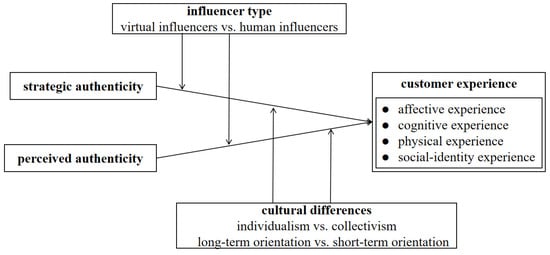
Figure 1.
The research model of this study.
1.2. The Effects of Strategic Authenticity on Customer Experience
1.2.1. The Effect of Strategic Authenticity on Affective Experience
Affective experience refers to customers’ emotional or affective responses, encompassing positive emotional reactions such as pleasure and excitement [30]. Prior research has demonstrated that brands can establish deep connections with target customers and elicit positive emotional responses through carefully designed communication strategies [42]. On the one hand, strategic authenticity is a deliberate communication strategy adopted by influencers as personal brands to cultivate authentic images, which establishes in-depth connections with customers primarily through influencers’ sharing of personal experiences and display of real-life moments, and such behaviors can effectively stimulate customers’ positive affective responses [43]. On the other hand, when influencers adopt proactive authenticity-oriented tactics, they actively engage with customers by replying to comments and expressing personal enthusiasm, thereby enhancing customers’ sense of participation and perceived importance [44]. Relevant evidence indicates that the sense of participation and being valued can significantly strengthen individuals’ pleasurable affective experience [45,46]. Furthermore, existing live-streaming research has confirmed that authenticity strategies employed by sales-oriented streamers exert significant positive effects on perceived emotional value [47]. Therefore, strategic authenticity demonstrates positive effects on customers’ affective experience. Based on this reasoning, this study proposes the following hypothesis:
H1a.
Strategic authenticity positively influences affective experience.
1.2.2. The Effect of Strategic Authenticity on Cognitive Experience
Cognitive experience refers to customers’ thoughts, curiosity and creative thinking elicited during interactive processes [33]. Relevant research indicates that brands can encourage customers to engage in in-depth thinking and further stimulate their curiosity and creative thinking through elaborately designed communication strategies [48]. As a vital communication strategy, strategic authenticity can significantly enhance customers’ sense of participation and trust [49,50], and such participation and trust are critical drivers of customers’ reflective thinking [51,52], curiosity and creative thinking [53,54]. For instance, existing studies have proven that influencers manage their authentic images via targeted communication strategies, which strengthen audience trust and motivate audiences’ curiosity and exploration intention toward online content [17]. Therefore, strategic authenticity is likely to trigger customers’ cognitive experience. Accordingly, this study proposes the corresponding hypothesis:
H1b.
Strategic authenticity positively influences cognitive experience.
1.2.3. The Effect of Strategic Authenticity on Physical Experience
Physical experience refers to customers’ relevant experiences at the level of physical movements and behaviors [33]. Previous studies have explored the relationship between communication strategies and customer behaviors [55,56]. Relevant research indicates that brands can effectively guide customers to engage in positive behaviors by adopting appropriate customer interaction strategies [57]. As a vital authenticity-based communication strategy, strategic authenticity can trigger customers’ positive behaviors by enhancing customer trust [50,58]. For instance, existing research has verified that strategic authenticity significantly promotes customers’ positive word-of-mouth communication behavior through the mediating effect of customer trust [12]. On the other hand, integrated marketing communication theory emphasizes that when communication strategies convey consistent, clear, and coherent messages to target customers, they will drive customers to generate behaviors such as recommendations and participation [59]. Strategic authenticity, as a communication strategy, manifests as influencers maintaining consistency and coherence between their behaviors and images, which substantially facilitates the delivery of consistent, clear, and coherent messages to customers, thereby establishing reliable perceptions in customers’ minds [6], ultimately leading to positive physical experiences [12]. Therefore, strategic authenticity triggers positive physical experiences in customers, leading to the following hypothesis:
H1c.
Strategic authenticity positively influences physical experience.
1.2.4. The Effect of Strategic Authenticity on Social-Identity Experience
Social-identity experience refers to customers’ social-level experiences, such as social connections and group belongingness [60]. Previous research has indicated that communication strategies serve as tools for creating individual social-identity experiences [29]. Strategic authenticity, as a communication strategy, is primarily manifested through influencers’ display of genuine emotions and personal authentic narratives, which readily evoke customers’ resonance [61], thereby facilitating social connections between customers and influencers [62] and triggering customers’ social-identity experiences. Furthermore, the parasocial relationship theory posits that audiences develop a one-sided intimate bond with media figures such as influencers that simulates interpersonal interaction. Even in the absence of genuine two-way communication, this relationship can provide audiences with a strong sense of companionship and social belonging [63]. When influencers adopt strategic authenticity strategies, including sincere self-disclosure and consistent image management, customers are more likely to regard influencers as trustworthy friends, thereby establishing parasocial relationships. Essentially, such parasocial relationships represent an in-depth social-identity experience, enabling customers to build psychological connections with influencers and their communities. Additionally, related studies have demonstrated that communication strategies such as authentic endorsements by fashion social media influencers significantly enhance customers’ willingness to co-create brand value with influencers [64]. This co-creation willingness further transforms customers from passive observers and recipients of brand stories into active participants, thereby realizing customers’ connections with brand communities and strengthening their sense of group belongingness [65]. Therefore, strategic authenticity as a communication strategy can elicit customers’ social-identity experiences. Accordingly, this study proposes the following hypothesis:
H1d.
Strategic authenticity positively influences social-identity experience.
1.3. The Effects of Perceived Authenticity on Customer Experience
1.3.1. The Effect of Perceived Authenticity on Affective Experience
Affective experience refers to customers’ emotional or affective responses, encompassing positive emotional reactions such as pleasure [31]. Perceived authenticity represents customers’ subjective judgment and perception regarding whether an influencer is authentic; the higher this perceived authenticity, the more the influencer’s language and behavior are capable of creating an authentic atmosphere, thereby triggering customers’ pleasurable experiences during interactions [66]. Existing live-streaming research has confirmed that when streamers are perceived as high in authenticity, customers will recognize higher information value and thus develop emotional closeness and identification with streamers more easily [67]. In addition, customers tend to generate stronger emotional connections with influencers whom they regard as genuine [68]. In summary, perceived authenticity exerts a positive effect on customers’ affective experience, and the corresponding research hypothesis is proposed in this paper:
H2a.
Perceived authenticity positively influences affective experience.
1.3.2. The Effect of Perceived Authenticity on Cognitive Experience
Cognitive experience refers to customers’ thoughts, curiosity and creative thinking elicited during interactive processes [32]. On the one hand, when customers perceive an influencer as authentic, they are more likely to engage in in-depth thinking and information processing [69]. According to the Elaboration Likelihood Model, individuals with high cognitive motivation and cognitive ability are more inclined to conduct careful scrutiny and deliberate processing of information [70]. The perceived authenticity of influencers can enhance customers’ perceived value [67]. Relevant studies have demonstrated that perceived value can stimulate customers’ high-level cognitive motivation and cognitive ability [71], which ultimately facilitates customers’ in-depth thinking and information processing. On the other hand, perceived authenticity can strengthen customer trust [72], prompting customers to comprehend information from a macro and abstract perspective and activate high-level construal. Such construal patterns are conducive to triggering association and divergent thinking [52]. Accordingly, perceived authenticity can stimulate customers’ cognitive experience. Based on the above analysis, this study proposes the following hypothesis:
H2b.
Perceived authenticity positively influences cognitive experience.
1.3.3. The Effect of Perceived Authenticity on Physical Experience
Physical experience refers to customers’ relevant experiences at the level of physical movements and behaviors [33]. On the one hand, numerous previous studies have explored the relationship between perceived influencer authenticity and customer behavior. When customers perceive an influencer as possessing high authenticity, it enhances the authenticity of their endorsements, thereby facilitating the generation of audience engagement behaviors [73]. Furthermore, high perceived authenticity also drives customers to engage in positive interactions with influencers [74]. On the other hand, high perceived authenticity reduces customers’ resistance to information and achieves stronger persuasive effects [75,76], thereby triggering positive customer behaviors. For instance, information conveyed by influencers with high perceived authenticity is more readily accepted and recognized by consumers, ultimately promoting consumers’ product recommendation behaviors [77]. In summary, the specific behaviors such as participation, interaction, and recommendation triggered by perceived authenticity essentially constitute customers’ responses at the physical action and behavioral level, which form the core content of physical experience [78]. Therefore, perceived authenticity can elicit customers’ positive physical experiences. Accordingly, this study proposes the following hypothesis:
H2c.
Perceived authenticity positively influences physical experience.
1.3.4. The Effect of Perceived Authenticity on Social-Identity Experience
Social-identity experience refers to customers’ social-level experiences, such as social connections and group belongingness [60]. According to the self-expansion theory, triggering individuals’ positive feelings serves as a mechanism for integrating others into the self, and individuals tend to expand their resources, perspectives and identities by including others within the self, so as to strengthen their sense of belonging [79]. When customers perceive influencers as highly authentic, positive affective responses will be aroused [27,68], which facilitates the inclusion of influencers into customers’ self-concept. By incorporating influencers into the self, customers can achieve the expansion of resources, perspectives and identities; that is, influencers’ values, social identities and cultural backgrounds are integrated into customers’ self-concept [80], enabling customers to integrate into the social groups connected with the influencers. This integration not only allows customers to gain new perspectives and identification, but also consolidates their bonds with social groups and fosters a stronger sense of belonging. Additionally, the parasocial interaction theory indicates that audiences form one-sided intimate relationships with media personalities [81]. A high level of perceived authenticity makes customers more inclined to view influencers as “genuine friends” and thus develop parasocial relationships. Such simulated interpersonal bonds can satisfy customers’ psychological need for social belonging, and consequently enhance their social-identity experience. Consequently, perceived authenticity exerts a significant positive effect on customers’ social-identity experience. Accordingly, the following hypothesis is proposed in this study:
H2d.
Perceived authenticity positively influences social-identity experience.
1.4. The Moderating Role of Influencer Type
The cognitive consistency theory posits that individuals possess an inherent tendency to maintain internal cognitive coordination and consistency. When perceiving cognitive congruence, individuals remain in a state of psychological balance, which is usually accompanied by positive attitudes and behaviors; on the contrary, perceived cognitive inconsistency will lead to cognitive dissonance, thereby driving individuals to alleviate such dissonance by adjusting their cognition or behaviors [82].
Strategic authenticity means that influencers shape an authentic image through elaborately designed communication strategies. Since virtual influencers are artificially constructed in essence [83], consumers generally anticipate that their images and behaviors stem from deliberate design. Therefore, the “elaborate design” embedded in the strategic authenticity of virtual influencers will not reduce consumer evaluations; instead, it precisely aligns with consumers’ expectations of artificial design, placing consumers in a state of cognitive consistency. Such cognitive consistency can reduce consumers’ psychological uncertainty and enhance their psychological comfort [84], thereby further facilitating the generation of positive attitudes [85] and behavioral engagement [57], and ultimately fostering favorable customer experience. In contrast, consumers hold the cognitive expectation that human influencers are endowed with inherent sincerity and naturalness regarding authenticity perception [24]. When human influencers adopt strategically authentic communication strategies with elaborate arrangement, such as deliberate self-disclosure, consumers are more likely to attribute such behaviors to extrinsic commercial motivations [86] rather than intrinsic authentic expression. This situation seriously contradicts consumers’ cognitive expectations for the sincerity and spontaneity of human influencers and thus triggers cognitive dissonance. As a consequence of cognitive dissonance, consumers tend to reduce their trust in human influencers [87], which weakens the effectiveness of influencer authenticity strategies and ultimately leads to inferior customer experience [57].
Perceived authenticity is defined as consumers’ overall judgment of whether influencers possess authentic traits. For human influencers, such judgment is formed based on multiple dimensions, including whether influencers demonstrate sincere and benevolent personality characteristics [88]. When consumers perceive a high level of human influencer authenticity, it generally reflects their recognition of influencers’ intrinsic attributes such as sincerity and transparency, and such internal identification is more conducive to evoking consumers’ in-depth resonance [89], ultimately improving consumers’ multi-dimensional experience [62,90]. Furthermore, given that consumers share common life experiences with human influencers, high perceived authenticity can more easily arouse consumers’ memories of similar experiences [91], thereby further strengthening customer experience. In comparison, the perceived authenticity of virtual influencers is mainly associated with consumers’ subjective judgment of authenticity regarding external features, such as anthropomorphic appearance simulation, movement fluency, and the rationality of virtual scenarios [9]. Such vision or situation-based perceived authenticity can hardly trigger profound resonance through intrinsic traits and real-life experiences in the same way as human influencers, thereby weakening its positive influence on customer experience [90]. Accordingly, this study proposes the following hypotheses:
H3a.
The effect of strategic authenticity on customer experience is moderated by influencer type. Specifically, compared to human influencers, virtual influencers’ strategic authenticity exerts a stronger positive effect on customer experience.
H3b.
The effect of perceived authenticity on customer experience is moderated by influencer type. Specifically, compared to virtual influencers, human influencers’ perceived authenticity exerts a stronger positive effect on customer experience.
1.5. The Moderating Role of Cultural Differences
Given that cultural background shapes consumers’ attitudes toward and responses to authenticity [92], it may potentially moderate the effect of influencer authenticity on customer experience. Accordingly, this study examines the moderating role of cultural differences in the relationship between influencer authenticity and customer experience. Hofstede classified culture into six core dimensions: individualism vs. collectivism, power distance, indulgence vs. restraint, masculinity vs. femininity, uncertainty avoidance, and long-term orientation vs. short-term orientation [93]. Based on the findings of existing cultural studies and the specificity of the research theme, this study does not adopt all six dimensions but focuses on individualism vs. collectivism and long-term orientation vs. short-term orientation for targeted analysis, with the core rationales presented as follows: First, all empirically validated and replicable dimensions in mainstream cultural models are essentially extensions and variations of the two fundamental dimensions of individualism vs. collectivism and long-term orientation vs. short-term orientation, and this two-dimensional framework has been empirically verified in cross-level cultural analyses [94]. Second, power distance centers on authority and obedience, which bears no direct connection to the core theme of authenticity in this research; masculine culture prioritizes competition, achievement and self-assertion, while feminine culture emphasizes interpersonal relationships, quality of life and altruism, and although this dimension may affect consumers’ content preferences, it cannot directly determine consumers’ attitudinal and behavioral responses to authenticity. The indulgence vs. restraint dimension presents substantial conceptual overlap with individualism vs. collectivism [95], and the simultaneous inclusion of both dimensions is likely to trigger multicollinearity and weaken research validity. Additionally, the connotation of uncertainty avoidance remains conceptually ambiguous, as it encompasses both societal discomfort with ambiguous situations and formal institutional regulations formulated to mitigate uncertainty, and these two sub-components do not always change in a coordinated manner [95]. Therefore, this study primarily selects the two dimensions of individualism vs. collectivism and long-term orientation vs. short-term orientation to investigate the moderating effect of cultural differences on the influence of influencer authenticity on customer experience.
The individualism versus collectivism dimension primarily refers to the degree to which people in a society are integrated into groups [93].
Strategic authenticity is defined as the communicative strategies that influencers actively employ to construct an image of authenticity [12]. In individualistic cultures, people attach great importance to individual honesty and sincerity in interpersonal interactions [96]. When influencers display their true selves through colloquial expressions and personal experience sharing, such practices precisely meet the psychological needs for autonomy and authenticity among consumers in individualistic cultures, and this need matching can generate motivational effects, activate consumers’ psychological identification [97], and further facilitate in-depth customer experience [98]. In contrast, individuals in collectivistic cultures tend to prioritize social norms and group harmony [93]. The unique and unconventional authentic strategic presentations embedded in strategic authenticity [50] may challenge group consensus [92], fail to evoke profound consumer resonance, and thereby weaken the positive effect on customer experience [90]. Accordingly, this study proposes the following hypothesis:
H4a.
Cultural differences (individualism vs. collectivism) moderate the effect of strategic authenticity on customer experience (affective experience, cognitive experience, physical experience, and social-identity experience). Specifically, the positive effect of strategic authenticity on customer experience is stronger in individualistic cultural contexts, whereas this positive effect is weaker in collectivistic cultural contexts.
Perceived authenticity refers to consumers’ subjective judgments and perceptions regarding whether an influencer is authentic [12]. In individualistic cultural contexts, when consumers perceive an influencer as highly authentic, it indicates that the influencer’s language and behavior can create an atmosphere of genuineness [66], which precisely aligns with consumers’ pursuit of authenticity, thereby generating stronger identification with the influencer [97] and ultimately enhancing customer experience [98]; whereas in collectivist contexts, individuals place greater emphasis on external norms, social consensus, and group evaluations [99], and consumers’ subjective perceptions of influencer authenticity are more susceptible to constraint and dilution by group opinions and social norms, resulting in weaker resonance and consequently diminishing the positive effect on customer experience [62,90]. Prior research has also evidenced that cultures with stronger collectivistic values weaken the influence of authenticity perception on well-being [100]. Thus, we propose the hypothesis:
H4b.
Cultural differences (individualism vs. collectivism) moderate the effect of perceived authenticity on customer experience (affective experience, cognitive experience, physical experience, and social-identity experience). Specifically, the positive effect of perceived authenticity on customer experience is stronger in individualistic cultural contexts, whereas this positive effect is weaker in collectivistic cultural contexts.
The long-term versus short-term orientation dimension primarily measures the extent to which a society focuses on the future [93].
Strategic authenticity is defined as the communicative strategies that influencers actively employ to construct an image of authenticity [12]. In long-term-oriented cultures, people place greater emphasis on future value, enduring relationships, and long-term consistency [93]. Strategic authenticity primarily manifests in the consistency between influencers’ words and actions, stability of values, and long-term coherence [6,101], thereby satisfying consumers’ pursuit of long-term consistency and enduring relationships in long-term-oriented cultures, generating psychological identification during interactions [97], enhancing consumer trust [6], and ultimately strengthening customer experience [12,98]. In short-term-oriented cultures, people prioritize immediate gratification, quick results, and situational adaptability [99]. Consumers are more readily attracted by exaggerated claims, instant discounts, or intense sensory stimuli, whereas the transparency and long-term consistency advocated by strategic authenticity struggle to evoke profound resonance among consumers in short-term-oriented cultures, thereby weakening its effect on customer experience [62,90]. Therefore, this study proposes the following hypothesis:
H5a.
Cultural differences (long-term orientation vs. short-term orientation) moderate the effect of strategic authenticity on customer experience (affective experience, cognitive experience, physical experience, and social-identity experience). Specifically, the positive effect of strategic authenticity on customer experience is stronger under long-term orientation, whereas this positive effect is weaker under short-term orientation.
Perceived authenticity refers to consumers’ subjective judgments and perceptions regarding whether an influencer is authentic [12]. In long-term-oriented cultures, consumers attach greater importance to consistency and long-term trustworthiness [93]; when consumers perceive high levels of influencer authenticity, it essentially represents their recognition of the congruence between influencers’ internal attributes and external behaviors, and such recognition significantly enhances consumers’ long-term trust in influencers [72], thereby ultimately strengthening customer experience [12,98]. In contrast, within short-term-oriented cultural contexts, consumer evaluations tend to be more immediate and utilitarian [99], so their subjective perception and assessment of influencer authenticity often remain at a superficial level and fail to trigger in-depth resonance, which in turn weakens its positive influence on customer experience [90]. Therefore, this study proposes the following hypothesis:
H5b.
Cultural differences (long-term orientation vs. short-term orientation) moderate the effect of perceived authenticity on customer experience (affective experience, cognitive experience, physical experience, and social-identity experience). Specifically, the positive effect of perceived authenticity on customer experience is stronger under long-term orientation, whereas this positive effect is weaker under short-term orientation.
2. Research Methods
This systematic review and meta-analysis was conducted and reported in accordance with the Preferred Reporting Items for Systematic Reviews and Meta-Analyses (PRISMA) 2020 statement [102]. The protocol was registered prospectively on the Open Science Framework (OSF) at the address: https://osf.io/5db8m/ (accessed on 21 April 2026).
2.1. Literature Search and Screening
The literature search for influencer authenticity was limited to the period 2015 (when influencer marketing began to rise) to 2026. To reduce publication bias, the included literature types cover journal articles, dissertations, conference papers and monograph chapters. The English literature is mainly retrieved from comprehensive databases such as Google Scholar, Web of Science and Elsevier, with search keywords including Influencer Authenticity, Streamer Authenticity and Internet Celebrity Authenticity. The Chinese literature is primarily collected from China National Knowledge Infrastructure, Wanfang Data, VIP Database and Baidu Academic, using Chinese keywords such as influencer authenticity, streamer authenticity and internet celebrity authenticity. To minimize omissions, this study also searched the reference lists of relevant review papers and empirical studies and requested the original data of several included articles.
A total of 169 articles related to influencer authenticity were retrieved. The screening of papers followed the approach of previous research [103] and was conducted according to the following criteria: First, the studies had to be empirical research with quantitative results, excluding qualitative research articles. Second, the studies had to include either strategic authenticity or perceived authenticity, or the sub-dimensions encompassed by these two types of authenticity, as well as related outcome variables such as customer affective experience, cognitive experience, physical experience, or social-identity experience. Third, the studies had to report relevant effect sizes, with non-experimental papers reporting correlation coefficients and experimental papers reporting statistics that could be converted into correlation coefficients (such as F, t, d, means, and SD). During the literature collection process, if a study did not report correlation coefficients and had no convertible indicators, alternative approaches were attempted to obtain the relevant data; if the data still could not be obtained, the sample was excluded. Fourth, the samples included in the meta-analysis were non-overlapping. Ultimately, 113 articles were excluded, and 56 articles were included, encompassing 170 effect sizes from 63 independent samples across countries including China, the United States, the United Kingdom, South Korea, and India, with a total sample size of 22,563 participants. The literature retrieval and screening process is shown in Figure 2.
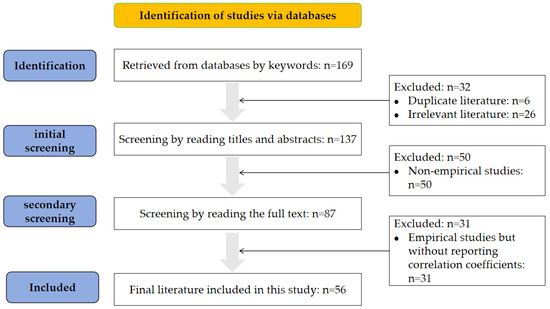
Figure 2.
Flow diagram of literature search and screening.
2.2. Variable Coding and Effect Size Processing
This study examined the relationship between influencer authenticity and customer experience, as well as its boundary conditions, which were tested through meta-analysis. To this end, we collected correlation coefficients for influencer authenticity and customer experience (affective experience, cognitive experience, physical experience, and social-identity experience), with all correlation coefficients derived from studies related to influencer authenticity (the contents and key elements of each variable are shown in Table 1) and compiled by the present study. Affective experience refers to customers’ emotional or affective responses, encompassing both mild positive emotions and intense feelings of pleasure and pride [31]. Therefore, in this study, variables described in the literature as positive emotions, pleasure, emotional arousal, and perceived emotional value were categorized under the customer affective experience dimension.

Table 1.
List of variables included in the meta-analysis.
Cognitive experience refers to cognitive activities such as thinking, curiosity and creative thinking aroused among customers during interactions [32]. Variables described in the literature as cognitive experience, factual knowledge, perceived functional value, customer inspiration, and decision-making confidence were categorized under the customer cognitive experience dimension. It should be noted that trust is a cognitive assessment based on rational analysis and judgment [50], credibility represents cognitive judgments regarding the reliability of information or targets [6], and perceived usefulness refers to customers’ cognitive evaluation that certain items such as content posted by influencers can resolve their doubts, assist their decision-making, improve performance or meet their needs [104]. All these variables involve customers’ rational processing and analysis of information, products or services in the interaction process, rather than pure affective or sensory responses, and fall into the broad scope of cognitive processing activities. Accordingly, this study classifies trust, credibility and perceived usefulness as components of cognitive experience as well. Physical experience refers to customers’ relevant experiences at the level of physical movements and behaviors [33]. Variables described in the literature as engagement behavior, participation degree, and product recommendation were categorized under the customer physical experience dimension. Social-identity experience refers to customers’ social-level experiences, such as social connections and group belongingness [60]. Variables described in the literature as social identity, perceived streamer identity, and social presence were categorized under the customer social-identity experience dimension. Additionally, commitment refers to the psychological bond and attachment established by individuals toward a certain object such as brands, communities, live streamers or other consumers, which essentially reflects the social ties and sense of belonging between individuals and external entities [64]. Therefore, this study also categorizes the variable of commitment into social-identity experience. The moderating variables involved influencer type and cultural differences. Influencer type was coded according to the specific type of research subject, divided into human influencers and virtual influencers. Cultural differences are determined according to the geographical origin of research samples with reference to the cultural dimension index proposed by Hofstede et al. (2010) [99]. Specifically, countries with individualism indices greater than 50 were classified as individualistic cultural countries, while those with indices less than 50 were classified as collectivistic cultural countries [105]. Following this classification approach, studies with samples from countries such as China and India, where the individualism index is less than 50, were classified as collectivistic cultural backgrounds, while studies with samples from countries such as the United Kingdom and the United States, where the individualism index exceeds 50, were classified as individualistic cultural backgrounds. Countries with long-term orientation indices greater than 50 were classified as long-term-oriented countries, while those with indices less than or equal to 50 were classified as short-term-oriented countries [106]. Therefore, studies with samples from countries such as Finland and China, where the long-term orientation index exceeds 50, were classified as long-term-oriented cultural backgrounds, while studies with samples from countries such as Ireland and the United States, where the long-term orientation index is less than or equal to 50, were classified as short-term-oriented cultural backgrounds. Variable coding was conducted independently by two researchers according to the coding criteria, and for inconsistent coding, the researchers discussed together to reach a final coding result [103].
Among the meta-analytic articles included in this study, in addition to empirical tests based on secondary data, a considerable number adopted the experimental method. Following previous meta-analytic practices, we converted statistical values (t, F, d, means, and SD) from experiments into correlation coefficients using formulas, and employed correlation coefficients [107,108] as the effect sizes for the relationship between influencer authenticity and customer experience. When a certain variable was measured through multiple dimensions, the overall effect size of this variable was represented by the average value of the effect sizes of each dimension [109]. The basic characteristics of the original studies included in the meta-analysis are reported in Appendix A. To facilitate the correction of effect sizes in subsequent analyses, on the basis of available reliability coefficients of existing variables, we adopted the mean value to replace the missing reliability values of variables that did not report reliability data or were measured with single-item scales [110]. Specifically, the missing reliability values of independent variables were substituted with the mean reliability of other independent variables at 0.866, and the missing reliability values of dependent variables were replaced with the mean reliability of other dependent variables at 0.872. Subsequently, the corrected effect sizes were processed with Fisher’s Z transformation to make the effect values conform to the normal distribution and meet the model assumptions required for follow-up statistical analysis [111]. Finally, an outlier test was conducted on the effect values after Fisher’s Z transformation. Outlier detection constitutes a critical step in meta-analysis; this study judged outliers based on whether the distance between each effect size and the overall mean exceeded three to four times the standard deviation [112], and completed the outlier test of effect sizes by writing operational codes via R software (version 4.5.1).
2.3. Meta-Analysis Procedure
This study employed CMA 3.0 as the meta-analysis software. Following scholars’ explanations of the main components of meta-analysis [107], we conducted analyses from the following aspects. First, heterogeneity tests, which mainly include the within-group heterogeneity test statistic QW and the between-group heterogeneity test statistic QB. Second, model selection. Compared to the fixed-effects model, the random-effects model often aligns more closely with reality [113] and can simultaneously account for both within-study and between-study variation, thereby reducing estimation errors. Therefore, this study adopted the random-effects analysis model. Third, publication bias. We examined the severity of publication bias using funnel plots and the fail-safe N test. First, regarding the funnel plots, the corrected effect sizes for the main effects of influencer authenticity (strategic authenticity or perceived authenticity) on customer affective experience, cognitive experience, physical experience, and social-identity experience were generally distributed at the top of the funnel plots and exhibited approximately symmetrical distributions. Second, the fail-safe n values for significant effect sizes all exceeded 5k + 10 (where k represents the number of included effect sizes), further confirming that publication bias was not severe for the effect sizes covered in these studies. Fourth, results reporting. This study reported the overall correlation coefficient ρ corrected for measurement error in reliability and its confidence intervals to correct for effect size attenuation caused by random measurement error [114].
3. Results Analysis
3.1. Main Effects Analysis
The main effects of strategic authenticity on customer experience are presented in Table 2. The results indicate that strategic authenticity is significantly and positively correlated with affective experience (ρ = 0.535, p < 0.001), cognitive experience (ρ = 0.458, p < 0.001), physical experience (ρ = 0.250, p < 0.001) and social-identity experience (ρ = 0.390, p < 0.001). Accordingly, Hypotheses 1a, 1b, 1c and 1d are supported. The main effects of perceived authenticity on customer experience are shown in Table 3. The results reveal that perceived authenticity also has significant positive correlations with affective experience (ρ = 0.471, p < 0.001), cognitive experience (ρ = 0.591, p < 0.001), physical experience (ρ = 0.355, p < 0.001) and social-identity experience (ρ = 0.515, p < 0.001). Thus, Hypotheses 2a, 2b, 2c and 2d are verified.
Table 2.
Meta-analysis results of strategic authenticity on customer experience.
Table 3.
Meta-analysis results of perceived authenticity on customer experience.
3.2. Moderation Effect Analysis
Most of the within-group heterogeneity test statistic QW of strategic authenticity (see Table 2) and perceived authenticity (see Table 3) in relation to customer experience are significant, indicating that potential moderating variables exist in their relationships. Subsequently, this study conducted a moderating effect test and reported the corrected within-group effect sizes of variables in each group. Meanwhile, groups with fewer than two effect sizes under different conditions (e.g., the moderation of cultural differences on the relationship between strategic authenticity and affective experience) were excluded from further moderating analysis [115]. Table 4 and Table 5 illustrate the moderating effects of each moderating variable on the relationships between strategic authenticity, perceived authenticity and customer experience respectively. The detailed analysis is presented as follows:
Table 4.
The moderating effects of variables on the relationship between strategic authenticity and customer experience.
Table 5.
The moderating effects of variables on the relationship between perceived authenticity and customer experience.
First, influencer type moderates the effects of the two types of influencer authenticity on customer experience. In terms of affective experience, influencer type yields a significant difference only in the effect size of strategic authenticity (QB = 25.927, p < 0.001), which means that the strategic authenticity of virtual influencers (ρ = 0.776, p < 0.001) exerts a stronger influence on affective experience compared with that of human influencers (ρ = 0.440, p < 0.001). For cognitive experience, the strategic authenticity of virtual influencers (ρ = 0.771, p < 0.001) has a more prominent impact than that of human influencers (ρ = 0.436, p < 0.001). Regarding social-identity experience, the strategic authenticity of virtual influencers (ρ = 0.574, p < 0.001) produces a greater effect than that of human influencers (ρ = 0.170, p = 0.315), while the perceived authenticity of human influencers (ρ = 0.571, p < 0.001) has a stronger influence on social-identity experience relative to that of virtual influencers (ρ = 0.016, p = 0.940). In addition, neither the strategic authenticity of human influencers nor the perceived authenticity of virtual influencers shows a significant effect on social-identity experience. Overall, the relationships proposed in Hypothesis 3 are partially supported.
Second, cultural differences (individualism vs. collectivism) moderate the effects of the two types of influencer authenticity on customer experience. For most relationships, no significant differences in effect sizes are observed between individualistic cultures and collectivistic cultures. Significant differences only exist in the relationships between perceived authenticity and physical experience (QB = 5.638, p = 0.018) as well as social-identity experience (QB = 4.894, p = 0.027). Specifically, perceived authenticity exerts a stronger effect on physical experience in individualistic cultures (ρ = 0.419, p < 0.001) than in collectivistic cultures (ρ = 0.208, p = 0.01); similarly, its impact on social-identity experience is more prominent in individualistic cultures (ρ = 0.742, p < 0.001) compared with collectivistic cultures (ρ = 0.457, p < 0.001). Therefore, Hypothesis 4 is partially supported.
Finally, cultural differences (long-term orientation vs. short-term orientation) moderate the effects of the two types of influencer authenticity on customer experience. Among the multiple outcomes related to strategic authenticity and customer experience, long-term orientation versus short-term orientation exerts a significant moderating effect on the relationship between strategic authenticity and social-identity experience (QB = 3.980, p = 0.046), as well as the relationship between perceived authenticity and physical experience (QB = 5.638, p = 0.018). Specifically, influencer strategic authenticity has a greater impact on social-identity experience in cultures with long-term orientation (ρ = 0.574, p < 0.001) than in those with short-term orientation (ρ = 0.170, p = 0.315); similarly, influencer perceived authenticity shows a stronger effect on physical experience in long-term orientation cultures (ρ = 0.419, p < 0.001) compared with short-term orientation cultures (ρ = 0.208, p = 0.01). Accordingly, Hypothesis 5 is partially supported.
4. Research Conclusions and Discussion
4.1. Main Conclusions
Through meta-analysis of 170 effect sizes derived from 56 Chinese and English publications comprising 63 independent studies (with a total sample size of 22,563), we found that: (1) influencer authenticity, encompassing both strategic authenticity (authenticity strategies proactively employed by influencers to cultivate authentic images) and perceived authenticity (consumers’ subjective perceptions or judgments regarding the degree of influencer authenticity), exerts significant positive effects on customer affective experience, cognitive experience, physical experience, and social-identity experience. More importantly, the results indicate that affective experience is more susceptible to the driving force of strategic authenticity, whereas cognitive experience, physical experience, and social-identity experience are more significantly influenced by perceived authenticity. (2) Influencer type (human influencers vs. virtual influencers) moderates the relationships between the two types of influencer authenticity and customer experience. Specifically, compared with human influencers, the strategic authenticity of virtual influencers exerts a more significant effect on customers’ affective experience, cognitive experience and social-identity experience, while the perceived authenticity of human influencers only generates a stronger impact on customers’ social-identity experience relative to virtual influencers. (3) Cultural differences (individualism vs. collectivism and long-term orientation vs. short-term orientation) moderate the relationships between the two types of influencer authenticity and customer experience. To be specific, perceived authenticity has more pronounced effects on customers’ physical experience and social-identity experience in individualistic cultures than in collectivistic cultures; strategic authenticity produces a greater influence on customers’ social-identity experience and perceived authenticity has a stronger impact on customers’ physical experience in cultures with long-term orientation than in those with short-term orientation. It should be noted that some moderating relationships identified in this study present limited effect sizes, so the corresponding conclusions should be interpreted with caution and need to be further verified by future meta-analyses based on larger samples.
4.2. Principal Theoretical Contributions
First, this study advances existing theoretical research by conducting a quantitative literature analysis of authenticity research in the influencer marketing domain and proposing an integrated research framework for influencer authenticity. In previous studies on influencer authenticity, scholars have either examined authenticity solely from the consumer or influencer perspective [11,17], or focused only on the impact of influencer authenticity on specific experiential dimensions such as positive emotions [50]. Building upon this foundation, the present study integrates strategic authenticity at the influencer end and perceived authenticity at the consumer end, systematically investigating the influence of influencer authenticity on the customer experience journey (affective experience, cognitive experience, physical experience, and social-identity experience). Employing meta-analysis to integrate effect sizes from existing independent studies and synthesize their common effects, this research yields more robust and generalizable conclusions. In addition, the coding procedures for each dimension of customer experience in this research extend the boundaries of customer experience theory, present a more comprehensive effect pattern of the meta-analytic relationship between influencer authenticity and customer experience, and generate more reliable statistical results, which further improves the explanatory scope of the findings. The findings further support and validate certain existing research conclusions [67,74,116]. More importantly, by disaggregating influencer authenticity, this study reveals the differentiated impact mechanisms of these two types of authenticity—strategic authenticity and perceived authenticity—on customer experience. Specifically, regarding customers’ affective experience, influencer strategic authenticity exerts a more pronounced effect than perceived authenticity; however, for customers’ cognitive experience, perceived authenticity demonstrates a significantly stronger influence than strategic authenticity. The underlying reasons are as follows: strategic authenticity is primarily manifested through strategies such as sharing personal authentic experiences and using colloquial language, authentic strategies which are more likely to evoke resonance among consumers [61], thereby stimulating stronger affective experiences. Meanwhile, cognitive responses correspond to a slow, deliberate information processing system that is more susceptible to individual knowledge, motivation, and subjective evaluation [117]. Consequently, consumers’ perception of influencer authenticity, as a subjective judgment, can enhance their value recognition of recommended content [67], and thus more readily influence their cognitive experience [71]. Furthermore, in the dimensions of physical experience and social-identity experience, the influence of influencer perceived authenticity is also more significant than that of strategic authenticity. The possible explanation lies in the fact that, according to the theory of planned behavior, attitude serves as a key predictor of behavioral intention [118]. Perceived authenticity, as consumers’ internal judgment regarding whether an influencer is authentic or not, can directly affect their physical and social-identity experiences. In contrast, strategic authenticity, as a strategic behavior on the influencer side, often requires mediation through certain mechanisms to indirectly influence consumer behavior and social-identity experiences, rendering its direct effects relatively weaker. This classification and comparative analysis break through the limitations of previous generalized research on authenticity, and provide a refined theoretical framework for understanding how authenticity functions across different stages of customer experience.
Second, this study delves into the moderating effects of influencer type (human influencer vs. virtual influencer) on the relationships between two types of authenticity (strategic authenticity and perceived authenticity) and customer experience, thereby enriching and deepening the comparative research system between virtual influencers and human influencers. Previous comparative studies on virtual versus human influencers have predominantly focused on differences in perceived influencer authenticity and their effects on consumer behavioral intentions [119]. In contrast, the present study distinguishes authenticity into strategic authenticity and perceived authenticity, and accordingly examines the specific differential effects of these two types of authenticity on customer experience between human influencers and virtual influencers, thereby advancing relevant comparative research at a more granular level. Specifically, compared to human influencers, the strategic authenticity of virtual influencers exerts a more significant impact on consumers’ affective experience, cognitive experience, and social-identity experience. This may be attributed to the fact that the “carefully designed” nature of virtual influencer strategic authenticity precisely aligns with consumers’ expectations of their artificial design, placing consumers in a state of cognitive consistency and thereby enhancing psychological comfort [84], ultimately making it easier to elicit positive customer experiences [57,85]. Conversely, when human influencers employ “carefully designed” authentic strategies, these are prone to be attributed to external motivations, violating consumers’ expectations of their “intrinsic sincerity,” triggering cognitive dissonance, leading to diminished trust, and consequently weakening positive effects across various experiential dimensions. Meanwhile, compared with virtual influencers, the perceived authenticity of human influencers exerts a stronger positive effect on consumers’ social-identity experience, while the perceived authenticity of the two types of influencers shows no significant differences in their impacts on affective experience and cognitive experience. A plausible explanation is that social-identity experience largely relies on consumers’ identification with intrinsic values and self-identity [120]. Since consumers share similar life experiences with human influencers, their perception of high authenticity of human influencers can more easily arouse experiential resonance [91] and thereby strengthen social-identity experience. In contrast, consumers’ perception of virtual influencers’ authenticity generally depends on their explicit characteristics [9], which hardly fosters in-depth identification with intrinsic values and self-identity, fails to evoke profound value resonance, and consequently generates a relatively weak influence on social-identity experience. By comparison, affective experience [121] and cognitive experience [122] can be formed based on explicit cues. Accordingly, the perceived authenticity of virtual influencers derived from visual or situational elements can also trigger affective experience such as emotions conveyed through facial expressions and tones, as well as cognitive experience such as logical thinking stimulated by consistent images and professional language, yielding effects comparable to those of human influencers. Additionally, this study also finds that the perceived authenticity of virtual influencers does not significantly influence consumers’ social-identity experience, possibly because social-identity experience relies more on deep-level value resonance and group identity identification [120], rather than solely depending on the authenticity of the object’s external characteristics (such as visual realism, etc.). These findings systematically construct an interactive theoretical model between influencer type and different categories of authenticity, providing explicit theoretical guidance for selecting influencer types and matching their authenticity strategies under different marketing objectives in future research.
Third, by integrating Hofstede’s cultural dimensions theory, this study theoretically expands and deepens the boundary conditions of influencer authenticity effects. Firstly, this study challenges the previous conclusion that authenticity exerts indistinguishable behavioral effects on consumers across individualistic and collectivistic cultures [123], and reveals that this cultural dimension actually moderates the magnitude of the effects of perceived authenticity on customers’ physical experience and social-identity experience. The underlying reason is that people in individualistic cultures attach greater importance to independent self-concept, personal choices and authentic self-expression [96]. Accordingly, the perceived authenticity of influencers directly acts as a key driver for audiences to engage in behaviors such as purchases and likes, as well as to establish parasocial relationships. In collectivistic cultures, by contrast, behaviors and social connections are predominantly driven by social norms, group consensus and situational appropriateness [94], which relatively diminishes the marginal contribution of authenticity. Nevertheless, the results indicate that perceived authenticity of influencers generates similar impacts on customers’ cognitive experience and affective experience in both cultural contexts. This may be attributed to the fact that fundamental human cognitive judgments regarding honesty and deception [124] and emotions elicited by authenticity [125] stem from universal underlying psychological mechanisms that remain unaffected by divergent cultural values, leading to roughly equivalent effects of perceived authenticity on cognitive and affective experience across the two cultural types. Secondly, this study incorporates the cultural dimension of long-term orientation versus short-term orientation and verifies its moderating effects on the relationships between strategic authenticity and social-identity experience, as well as between perceived authenticity and physical experience, thereby enriching the cultural analytical framework of existing influencer marketing theories. Specifically, consumers in long-term orientation cultures prioritize future value and enduring relationships [93]. The long-term consistency embedded in strategic authenticity [6] satisfies their pursuit of lasting relationships, fosters psychological identification and trust [97,98], and ultimately strengthens social-identity experience [79]. Meanwhile, perceived authenticity enhances long-term credibility [72], which in turn boosts physical experience represented by customer engagement and other related behaviors [12,98]. In short-term orientation cultures, consumers prefer instant gratification and immediate outcomes [93]. The long-term consistency emphasized by strategic authenticity can hardly evoke in-depth resonance and thus exerts a weak facilitating effect on social-identity experience [90]. Similarly, perceived authenticity is merely evaluated at a superficial level and fails to trigger profound resonance, resulting in a limited promotional effect on physical experience [90]. In addition, the findings demonstrate that influencer authenticity, including strategic authenticity and perceived authenticity, has no significant disparate impacts on customers’ cognitive experience regardless of cultural backgrounds. A plausible explanation is that human rational judgment of authenticity relies on basic logical evaluation mechanisms, which are minimally moderated by cultural long-term or short-term orientation [124]. Consequently, the effects of influencer authenticity on cognitive experience are largely consistent across different cultures. These conclusions diversify the practical application of cultural theories in influencer marketing research and deliver robust theoretical underpinnings for the design and implementation of differentiated influencer marketing strategies in cross-cultural settings.
4.3. Managerial Implications
First, influencers and brands should attach importance to and finely distinguish different types of influencer authenticity as well as their mechanisms of action. This study reveals that strategic authenticity is more conducive to stimulating customers’ affective experience, while perceived authenticity exerts a more prominent impact on cognitive experience, physical experience and social-identity experience. Therefore, influencers should strike a balance between the two in content creation. On the one hand, they can rapidly evoke emotional resonance by designing authentic and relatable communication strategies; on the other hand, they need to consistently maintain a credible and transparent image to deepen consumers’ identification with brand values, thereby promoting behavioral engagement and long-term relationship establishment. When selecting collaborative influencers, brands should likewise evaluate both the influencers’ strategic design capabilities and the level of perceived authenticity among their audiences, so as to achieve multidimensional objectives in experience shaping.
Second, authenticity strategies should be differentially designed according to influencer type (human influencer vs. virtual influencer). For virtual influencers, their “deliberately designed” strategic authenticity is more readily accepted by consumers and can effectively enhance affective experience, cognitive experience, and social-identity experience; therefore, operations may emphasize their technologically crafted coherent persona and content quality. For human influencers, the value of perceived authenticity is more prominent, particularly demonstrating greater advantages in driving social-identity experience; hence, they should avoid the “persona perception” resulting from excessive orchestration, and instead emphasize their genuine experiences, professional endorsements, and value expressions to evoke consumers’ deep identification and memorable resonance. Meanwhile, brands should note that virtual influencers have limited efficacy in fostering consumers’ sense of connection with social groups; if marketing objectives include building brand communities or strengthening user belongingness, priority should be given to collaborating with human influencers or adopting hybrid strategies.
Finally, in cross-cultural marketing, the emphasis of authenticity marketing needs to be adjusted according to different cultures. In individualistic cultural markets, consumers place greater value on self-expression and intrinsic authenticity; therefore, highlighting influencers’ perceived authenticity can effectively enhance consumers’ social-identity experience and sense of identification. In collectivist cultures, influencer authenticity should be more integrated with social norms and group harmony, avoiding excessive emphasis on individual distinctiveness. Furthermore, in long-term-oriented cultures, brands can focus on communicating the long-term consistency of strategic authenticity (such as stable values and sustained interactions) to align with consumers’ pursuit of enduring relationships, thereby deepening social-identity experience; in short-term-oriented cultures, emphasis should instead be placed on the immediate emotional arousal and behavioral motivation generated by authenticity strategies, to accommodate local consumers’ preferences for rapid feedback and instant gratification. In global expansion, brands should conduct localized adaptation of the presentation modes and communication priorities of influencer authenticity based on the cultural characteristics of target markets.
4.4. Research Limitations and Future Directions
First, this study has certain methodological limitations, among which the primary one is the extremely high heterogeneity across the included studies. Most effect sizes yield an I2 value above 90%, indicating that genuine discrepancies far exceeding sampling error exist across the 63 independent studies. Statistically, such high heterogeneity restricts the stability and generalizability of the pooled effects, which therefore need to be interpreted cautiously in combination with moderator variables. Substantively, it suggests that the relationship between authenticity and customer experience is shaped by multiple factors such as contextual settings, sample characteristics and measurement approaches, which also validates the necessity of the moderation analysis conducted in this research. High heterogeneity imposes constraints in three aspects: first, it widens the confidence intervals of pooled effects, making the conclusions vulnerable to biases; second, it highlights the substantial value of moderating effects and proves that the impacts of authenticity are contingent on boundary conditions; third, it indicates that such effects are not universally applicable without constraints and should be applied differentially according to influencer type, cultural context and experience dimensions. Second, the number of effect sizes corresponding to some variable relationships in this study is relatively small, which substantially reduces the reliability of the conclusions, especially for the moderation analysis. For instance, the insufficient effect sizes regarding the relationship between strategic authenticity and social-identity experience as well as several subgroup moderation relationships related to influencer type lead to low statistical power and unstable results, limiting the robustness and external validity of the moderating effects. Future research should systematically expand the literature and the sample of effect sizes, conduct large-sample meta-analyses and robustness tests, and further verify the reliability and generalizability of the moderating effects. Third, given that the impacts of influencer authenticity on consumers cover cognitive, affective, behavioral and other domains, this study adopts broadly defined constructs including affective experience, cognitive experience, physical experience and social-identity experience as research variables to fully capture the influences of influencer authenticity on consumer psychology and behaviors. Nevertheless, this approach may overlook discrepancies in construct definitions across different studies. Subsequent research can focus on more refined constructs, such as comparing the relationships between influencer authenticity and consumers’ purchasing and non-purchasing behaviors, so as to provide more targeted guidance for the management of influencer authenticity. In addition, the coding scheme for customer experience adopted in this study introduces within-dimension heterogeneity. For example, cognitive experience encompasses both initial cognitive activities such as thinking and curiosity and post hoc evaluations including trust and perceived usefulness, while social presence and commitment within social-identity experience differ in time frame and mechanism of action. Such aggregation may mask the effect differences among sub-dimensions in meta-analysis, suggesting that future studies should adopt finer-grained measurements or subgroup analyses for further validation. Furthermore, this study performs cultural coding based on the countries where samples are collected and Hofstede’s cultural dimensions. Although this method is feasible and easy to implement, it entails simplification. National-level cultural scores only reflect the average tendencies of groups and cannot fully capture individual variations in cultural values among respondents within a single country. Not all participants hold cultural values consistent with the mainstream characteristics of their nation, which may weaken the precision of the detected cultural moderating effects to a certain extent. Future research can adopt more refined coding strategies such as measuring cultural values at the individual level and distinguishing regional differences within countries to enhance the explanatory power and robustness of cultural moderation effects. Finally, the current research framework is based on a synthesis of the consequences of influencer authenticity’s effects and does not encompass an examination of the antecedent variables leading to the emergence of influencer authenticity. Consequently, future studies are encouraged to conduct more empirical investigations into the antecedents of influencer authenticity, so that larger meta-analytic datasets can be employed to test both the antecedents and consequences of influencer authenticity’s effects in marketing contexts.
Author Contributions
Conceptualization, Y.X. and D.Z.; methodology, Y.X. and D.Z.; software, Y.X. and D.Z.; validation, Y.X., D.Z. and H.S.; formal analysis, Y.X. and T.W.; data curation, Y.X. and D.Z.; writing—original draft preparation, Y.X., D.Z., T.W. and H.S.; writing—review and editing, Y.X., D.Z. and T.W.; visualization, D.Z. and T.W.; supervision, Y.X.; project administration, Y.X.; funding acquisition, Y.X. All authors have read and agreed to the published version of the manuscript.
Funding
This work was supported by the Humanities and Social Sciences Fund of the Ministry of Education (No. 24YJC630245), the Shaanxi Social Science Fund (No. 2024R010).
Institutional Review Board Statement
Not applicable.
Informed Consent Statement
Not applicable.
Data Availability Statement
The data presented in this study are available on request from the author.
Acknowledgments
The authors would like to thank the anonymous reviewers for their reviews and comments.
Conflicts of Interest
The authors declare no conflicts of interest.
Appendix A
Table A1.
Basic information of original studies included in the meta-analysis.
References
- Rao Hill, S.; Qesja, B. Social Media Influencer Popularity and Authenticity Perception in the Travel Industry. Serv. Ind. J. 2023, 43, 289–311. [Google Scholar] [CrossRef]
- Influencer Marketing Market Size, Share, Drivers & Opportunities—2031. Available online: https://www.mordorintelligence.com/industry-reports/influencer-marketing-market (accessed on 28 May 2026).
- Xinhua Insight|The Chaos Surrounding ‘Health Influencer’ Training: How to Make Science Communication More Reliable—Xinhua News Agency. Available online: https://www.news.cn/20260401/de34fbdd620f418582357d28cf93591f/c.html (accessed on 16 April 2026).
- Focus on ‘3·15’|Beware! That ‘Bargain’ ‘Viral’ Essential Oil You Bought Might Be a Fake—Beijing News. Available online: https://www.bjnews.com.cn/detail/1773928430189677.html (accessed on 16 April 2026).
- “Fake Traffic”, “Paid Post Removal”… Four Defendants Face Severe Punishment for Orchestrating “Online Trolls”. Available online: https://www.jiemian.com/article/11370524.html (accessed on 16 April 2026).
- Wang, E.S.-T.; Weng, Y.-J. Influence of Social Media Influencer Authenticity on Their Followers’ Perceptions of Credibility and Their Positive Word-of-Mouth. Asia Pac. J. Mark. Logist. 2024, 36, 356–373. [Google Scholar] [CrossRef]
- Balaban, D.C.; Szambolics, J. A Proposed Model of Self-Perceived Authenticity of Social Media Influencers. Media Commun. 2022, 10, 235–246. [Google Scholar] [CrossRef]
- Wellman, M.L.; Stoldt, R.; Tully, M.; Ekdale, B. Ethics of Authenticity: Social Media Influencers and the Production of Sponsored Content. J. Media Ethics 2020, 35, 68–82. [Google Scholar] [CrossRef]
- Wang, Y.; Huang, Y.; Wu, J. Balance the Virtual and Reality: Effect of Generation Z’s Authenticity Perception of Virtual Influencers on Tourism Intentions. Tour. Sci. 2025, 39, 105–125. [Google Scholar] [CrossRef]
- Analyze Results. Available online: https://webofscience.clarivate.cn/wos/alldb/analyze-results/e1cc4181-cf0a-487e-80c7-982bae5bf08d-01b62a3cfe (accessed on 28 May 2026).
- Harff, D.; Schmuck, D. Is Authenticity Key? Mobilization by Social Media Influencers versus Celebrities and Young People’s Political Participation. Psychol. Mark. 2024, 41, 2757–2771. [Google Scholar] [CrossRef]
- Zhu, L. Conceptualizing and Measuring Strategic Authenticity? A Reflective-Formative Second-Order Model. J. Bus. Res. 2025, 200, 115582. [Google Scholar] [CrossRef]
- Bullock, R.J. A Meta-Analysis Method for OD Case Studies. Group Organ. Stud. 1986, 11, 33–48. [Google Scholar] [CrossRef]
- Duffy, B.E.; Hund, E. Gendered Visibility on Social Media: Navigating Instagram’s Authenticity Bind. Int. J. Commun. 2019, 13, 20. [Google Scholar]
- Luebke, S.M. Political Authenticity: Conceptualization of a Popular Term. Int. J. Press. 2021, 26, 635–653. [Google Scholar] [CrossRef]
- Zhu, L.; Wang, Y. Acting Real: A Cross-Cultural Investigation of Finfluencer Strategic Authenticity. Int. J. Advert. 2025, 44, 164–183. [Google Scholar] [CrossRef]
- Audrezet, A.; De Kerviler, G.; Guidry Moulard, J. Authenticity Under Threat: When Social Media Influencers Need to Go beyond Self-Presentation. J. Bus. Res. 2020, 117, 557–569. [Google Scholar] [CrossRef]
- Duffy, B.E.; Wissinger, E. Mythologies of Creative Work in the Social Media Age: Fun, Free, and “Just Being Me”. Int. J. Commun. 2017, 11, 4652–4671. [Google Scholar]
- Haenlein, M.; Anadol, E.; Farnsworth, T.; Hugo, H.; Hunichen, J.; Welte, D. Navigating the New Era of Influencer Marketing: How to Be Successful on Instagram, TikTok, & Co. Calif. Manag. Rev. 2020, 63, 5–25. [Google Scholar] [CrossRef]
- Chen, L.; Yan, Y.; Smith, A.N. What Drives Digital Engagement with Sponsored Videos? An Investigation of Video Influencers’ Authenticity Management Strategies. J. Acad. Mark. Sci. 2023, 51, 198–221. [Google Scholar] [CrossRef]
- Liao, J.; Chen, J. The Authenticity Advantage: How Influencer Authenticity Management Strategies Shape Digital Engagement with Sponsored Videos. J. Bus. Res. 2024, 185, 114937. [Google Scholar] [CrossRef]
- Duffek, B.; Eisingerich, A.B.; Merlo, O.; Lee, G. Authenticity in Influencer Marketing: How Can Influencers and Brands Work Together to Build and Maintain Influencer Authenticity? J. Mark. 2025, 89, 21–46. [Google Scholar] [CrossRef]
- Schmieder, R. Waiting for a Face Reveal That Never Comes? How VTubers Challenge Our Understanding of Influencer Authenticity. Celebr. Stud. 2024, 15, 266–281. [Google Scholar] [CrossRef]
- Zniva, R.; Weitzl, W.J.; Lindmoser, C. Be Constantly Different! How to Manage Influencer Authenticity. Electron. Commer. Res. 2023, 23, 1485–1514. [Google Scholar] [CrossRef]
- Joo, S.; Miller, E.G.; Fink, J.S. Consumer Evaluations of CSR Authenticity: Development and Validation of a Multidimensional CSR Authenticity Scale. J. Bus. Res. 2019, 98, 236–249. [Google Scholar] [CrossRef]
- Molleda, J. Authenticity and the Construct’s Dimensions in Public Relations and Communication Research. J. Commun. Manag. 2010, 14, 223–236. [Google Scholar] [CrossRef]
- Kim, D.Y.; Kim, H.-Y. Trust Me, Trust Me Not: A Nuanced View of Influencer Marketing on Social Media. J. Bus. Res. 2021, 134, 223–232. [Google Scholar] [CrossRef]
- Becker, L.; Jaakkola, E. Customer Experience: Fundamental Premises and Implications for Research. J. Acad. Mark. Sci. 2020, 48, 630–648. [Google Scholar] [CrossRef]
- Schmitt, B. Experiential Marketing: How to Get Customers to Sense, Feel, Think, Act, and Relate to Your Company and Brands; Free Press: New York, NY, USA, 1999; ISBN 978-0-684-85423-6. [Google Scholar]
- Song, J.; Wang, Q.; Yi, H.-T. The Impact of AR App Characteristics on Telepresence, Customer Experience, and Continued App Usage Intention: The Moderating Effect of Consumer Innovativeness. J. Retail. Consum. Serv. 2025, 87, 104385. [Google Scholar] [CrossRef]
- Japutra, A.; Utami, A.F.; Molinillo, S.; Ekaputra, I.A. Influence of Customer Application Experience and Value in Use on Loyalty toward Retailers. J. Retail. Consum. Serv. 2021, 59, 102390. [Google Scholar] [CrossRef]
- Chen, S.-C.; Lin, C.-P. The Impact of Customer Experience and Perceived Value on Sustainable Social Relationship in Blogs: An Empirical Study. Technol. Forecast. Soc. Change 2015, 96, 40–50. [Google Scholar] [CrossRef]
- Brakus, J.J.; Schmitt, B.H.; Zarantonello, L. Brand Experience: What Is It? How Is It Measured? Does It Affect Loyalty? J. Mark. 2009, 73, 52–68. [Google Scholar] [CrossRef]
- Schmitt, B. Experience Marketing: Concepts, Frameworks and Consumer Insights. Found. Trends® Mark. 2011, 5, 55–112. [Google Scholar] [CrossRef]
- Gârdan, I.P.; Mauri, A.; Dumitru, I.; Gârdan, D.A.; Maican, S.Ș.; Moise, D. User-Generated Multimedia Content Impact on the Destination Choice: Five Dimensions of Consumer Experience. Electronics 2022, 11, 2570. [Google Scholar] [CrossRef]
- Lo, C.-H.; Wang, Y.-W. Constructing an Evaluation Model for User Experience in an Unmanned Store. Sustainability 2019, 11, 4965. [Google Scholar] [CrossRef]
- Berry, L.L.; Wall, E.A.; Carbone, L.P. Service Clues and Customer Assessment of the Service Experience: Lessons from Marketing. Acad. Manag. Perspect. 2006, 20, 43–57. [Google Scholar] [CrossRef]
- Xu, M.; Xu, X. Research on the Influence of Brand Self Broadcasting on Consumers′ Purchase Intention. J. Langfang Norm. Univ. Sci. Ed. 2024, 24, 95–101. [Google Scholar]
- Ren, M.; Wang, L. Travel Writing and International Communication: China’s Presentation on Social Media From the Perspective of Source Credibility Theory. China Publ. 2024, 23, 38–43. [Google Scholar]
- Li, S.; Wan Abas, W.A.; Alwie, A. Exploring the Impact of Source Credibility on Coffee Purchase Intention Through Attitude Toward UGC: A Study on Xiaohongshu. Stud. Media Commun. 2025, 13, 134. [Google Scholar] [CrossRef]
- Linne, R.; Schäfer, M.; Bohner, G. Ambivalent Stereotypes and Persuasion: Attitudinal Effects of Warmth vs. Competence Ascribed to Message Sources. Front. Psychol. 2022, 12, 782480. [Google Scholar] [CrossRef]
- Quach, S.; Septianto, F.; Thaichon, P.; Chiew, T.M. Mixed Emotional Appeal Enhances Positive Word-of-Mouth: The Moderating Role of Narrative Person. J. Retail. Consum. Serv. 2021, 62, 102618. [Google Scholar] [CrossRef]
- Purwandari, B.; Ramadhan, A.; Phusavat, K.; Hidayanto, A.N.; Husniyyah, A.F.; Faozi, F.H.; Wijaya, N.H.; Saputra, R.H. The Effect of Interaction between Followers and Influencers on Intention to Follow Travel Recommendations from Influencers in Indonesia Based on Follower-Influencer Experience and Emotional Dimension. Information 2022, 13, 384. [Google Scholar] [CrossRef]
- Li, Z.; Owusu, P.; Wang, B.; Lu, F. The Impact of Strategic Influencer Interaction Styles on Consumer Decision-Making: An Elaboration Likelihood Model Perspective. J. Retail. Consum. Serv. 2025, 87, 104374. [Google Scholar] [CrossRef]
- Lv, X.; Tang, R.; Luo, J.; Zhang, M.; Li, Q. I Join, So I Enjoy: How Customer Participation Increases Wellbeing. J. Happiness Stud. 2023, 24, 2783–2811. [Google Scholar] [CrossRef]
- Ramadhani Jatmika, M.; Abdurrahman, A. The Influence of Service Quality Dimensions on Customer Loyalty with Customer Satisfaction as an Intervening Variable. Int. J. Sci. Technol. Manag. 2023, 4, 1067–1080. [Google Scholar] [CrossRef]
- Gong, T.; Zhou, R.; Zheng, M. An Analysis of the Relationship Between the Linguistic Behaviour of Live-Streaming Influencers and Consumer Purchase Intentions. Bus. Econ. Res. 2022, 57–60. [Google Scholar]
- Baba, S.K. Strategic Experiential Marketing: A Conceptual and Module-Oriented Analysis. J. Manag. Econ. Stud. 2025, 7, 105–116. [Google Scholar] [CrossRef]
- Roccapriore, A.Y.; Pollock, T.G. I Don’t Need a Degree, I’ve Got Abs: Influencer Warmth and Competence, Communication Mode, and Stakeholder Engagement on Social Media. Acad. Manag. J. 2023, 66, 979–1006. [Google Scholar] [CrossRef]
- Liu, Y.; Sun, X. Tourism E-Commerce Live Streaming: The Effects of Live Streamer Authenticity on Purchase Intention. Tour. Rev. 2024, 79, 1147–1165. [Google Scholar] [CrossRef]
- Fu, Y.; Zheng, Y. The Influence of Social Participation on the Consumption of Middle-Aged and Elderly and the Mechanism. Res. World 2022, 5, 12–22. [Google Scholar] [CrossRef]
- Wan, E.W.; Rucker, D.D. Confidence and Construal Framing: When Confidence Increases versus Decreases Information Processing. J. Consum. Res. 2013, 39, 977–992. [Google Scholar] [CrossRef]
- Chang, H.-J. Relationship Models of Experience Satisfaction in Residential Refurbishment. Afr. J. Bus. Manag. 2012, 6, 8446. [Google Scholar] [CrossRef]
- Chen, Y.; Yu, C.; Yuan, Y.; Lu, F.; Shen, W. The Influence of Trust on Creativity: A Review. Front. Psychol. 2021, 12, 706234. [Google Scholar] [CrossRef]
- Sun, J.; Chen, D. A Study on Information Communication Strategies and Prosocial Behaviour: A Perspective Based on Impression Management Theory—China National Knowledge Infrastructure. Acad. Res. 2025, 7, 97–105. [Google Scholar]
- Kim, M.; Pennington-Gray, L. Enhancing Pro-Environmental Behaviors in Tourism: Communication Strategies Rooted in Elaboration Factors. J. Hosp. Tour. Manag. 2025, 64, 101317. [Google Scholar] [CrossRef]
- Tafesse, W.; Wien, A. Using Message Strategy to Drive Consumer Behavioral Engagement on Social Media. J. Consum. Mark. 2018, 35, 241–253. [Google Scholar] [CrossRef]
- Zhao, L.; Xu, Y.; Xu, X. The Effects of Trust and Platform Innovation Characteristics on Consumer Behaviors in Social Commerce: A Social Influence Perspective. Electron. Commer. Res. Appl. 2023, 60, 101284. [Google Scholar] [CrossRef]
- Huang, L.; He, X. A new study on definition of integrated marketing communications (IMC). Advert. Panor. Theor. Ed. 2008, 45–49. [Google Scholar]
- Zarantonello, L.; Schmitt, B.H. Using the Brand Experience Scale to Profile Consumers and Predict Consumer Behaviour. J. Brand Manag. 2010, 17, 532–540. [Google Scholar] [CrossRef]
- Bui, C.T.; Ngo, T.T.A.; Chau, H.K.L.; Tran, N.P.N. How Perceived eWOM in Visual Form Influences Online Purchase Intention on Social Media: A Research Based on the SOR Theory. PLoS ONE 2025, 20, e0328093. [Google Scholar] [CrossRef]
- Li, M.; Chung, W. Enhancing Brand Experience and Brand Authenticity: The Role of Octomodal Mental Imagery and Social Presence. PLoS ONE 2025, 20, e0321883. [Google Scholar] [CrossRef]
- Masuda, H.; Han, S.H.; Lee, J. Impacts of Influencer Attributes on Purchase Intentions in Social Media Influencer Marketing: Mediating Roles of Characterizations. Technol. Forecast. Soc. Change 2022, 174, 121246. [Google Scholar] [CrossRef]
- Hasan, S.; Zahid, H.; Qayyum, A. Influencer Authenticity and Intention to Co-Create Brand Value: An Investigation of Central and Peripheral Pathways. Cogent Bus. Manag. 2024, 11, 2393236. [Google Scholar] [CrossRef]
- Nazir, M.; Tian, J.; Hussain, I.; Arshad, A.; Shad, M.A. Examining the Relationship of Online Social Networking Sites’ Activities, Customers’ Brand Choice, and Brand Perception in Health-Related Businesses. Front. Psychol. 2020, 11, 546087. [Google Scholar] [CrossRef]
- Jang, S.; Liu, Y.; Namkung, Y. Effects of Authentic Atmospherics in Ethnic Restaurants: Investigating Chinese Restaurants. Int. J. Contemp. Hosp. Manag. 2011, 23, 662–680. [Google Scholar] [CrossRef]
- Zhao, B.; Wang, Y. The Impact of E-commerce Presenters’ Characteristics on Consumers’ Purchase Intentions. Bus. Stud. 2021, 1–6. [Google Scholar] [CrossRef]
- Kim, M.; Baek, T.H. Are Virtual Influencers Friends or Foes? Uncovering the Perceived Creepiness and Authenticity of Virtual Influencers in Social Media Marketing in the United States. Int. J. Human–Computer Interact. 2024, 40, 5042–5055. [Google Scholar] [CrossRef]
- Xu, X. An Empirical Study on the Impact of Characteristics of Corporate Self-Broadcast E-commerce on Consumer Purchase Intentions. J. Hubei Univ. Arts Sci. 2023, 44, 60–67. [Google Scholar]
- Hu, M.; Hu, Q.; Yang, L. Research on the Influence of Commentary Audio on the Communication Identity of Short Tourism Videos. Tour. Trib. 2025, 40, 68–79. [Google Scholar] [CrossRef]
- Watuna, M.A.; Dwandaru, W.S.B.; Nasir, M.H.; Wiyatmo, Y. Enhancing Students’ Mathematical Representation and Learning Motivation Through Problem-Based Learning Worksheets in the Sound Wave Topic. J. Pendidik. MIPA 2025, 26, 1610–1623. [Google Scholar] [CrossRef]
- Wijerathna, D.N.M.N.; Wijesundara, T.R. Impact of Perceived Authenticity in Micro-Influencer Marketing on Purchasing Intention in Fitness Sector: The Mediation Role of Trust. J. Manag. Matters 2022, 9, 1–25. [Google Scholar] [CrossRef]
- Forster, R.T.; Vendemia, M.A.; Journeay, J.M.; Downey, S.E. Mixing Parasocial Friendship With Business: The Effect of Sponsorship Disclosure Timing in Vlogs. J. Media Psychol. 2023, 35, 241–252. [Google Scholar] [CrossRef]
- Steils, N.; Martin, A.; Toti, J.-F. Managing the Transparency Paradox Of Social-Media Influencer Disclosures: How to Improve Authenticity and Engagement When Disclosing Influencer–Sponsor Relationships. J. Advert. Res. 2022, 62, 148–166. [Google Scholar] [CrossRef]
- Abidin, C. Visibility Labour: Engaging with Influencers’ Fashion Brands and #OOTD Advertorial Campaigns on Instagram. Media Int. Aust. 2016, 161, 86–100. [Google Scholar] [CrossRef]
- Colliander, J.; Dahlén, M. Following the Fashionable Friend: The Power of Social Media: Weighing Publicity Effectiveness Of Blogs Versus Online Magazines. J. Advert. Res. 2011, 51, 313–320. [Google Scholar] [CrossRef]
- Abdelsattar, W.O.; Shamma, H.; Amr, M. Contrasting the Efficacy of the Type of Influencer to the Type of Product: The Mediating Effect of Perceived Authenticity. Glob. Bus. Rev. 2024, 09721509241251400. [Google Scholar] [CrossRef]
- Lemon, K.N.; Verhoef, P.C. Understanding Customer Experience Throughout the Customer Journey. J. Mark. 2016, 80, 69–96. [Google Scholar] [CrossRef]
- Zhao, J.; Chen, X.; He, J.; Xie, Z. The Influence of Perceived Agency and Social Role Types on Consumer Attitude toward Smart Home Product: Based on Extended Self Theory. Luojia M Anagement Rev. 2024, 170–184. [Google Scholar]
- Wang, C.; Wang, L. Self-Expansion Theory and Its Related Research Process. J. Northwest Norm. Univ. Soc. Sci. 2023, 60, 97–104. [Google Scholar] [CrossRef]
- Lu, Y.; Liu, X.; Hu, Y.; Zhu, C. Influence of Livestreamers’ Intimate Self-Disclosure on Tourist Responses: The Lens of Parasocial Interaction Theory. J. Hosp. Tour. Manag. 2023, 57, 170–178. [Google Scholar] [CrossRef]
- Covaleski, M.A.; Evans, J.H.; Luft, J.L.; Shields, M.D. Budgeting Research: Three Theoretical Perspectives and Criteria for Selective Integration. J. Manag. Account. Res. 2003, 15, 3–49. [Google Scholar] [CrossRef]
- Putri, M.S.; Chandra, S.J.; Setiowati, R. Humanized vs. Animated Virtual Influencer: An Experimental Study. IOSR J. Bus. Manag. 2025, 27, 50–57. [Google Scholar]
- Ahn, J.; Kwon, J. CSR Perception and Revisit Intention: The Roles of Trust and Commitment. J. Hosp. Tour. Insights 2020, 3, 607–623. [Google Scholar] [CrossRef]
- Peck, J.; Wiggins, J. It Just Feels Good: Customers’ Affective Response to Touch and Its Influence on Persuasion. J. Mark. 2006, 70, 56–69. [Google Scholar] [CrossRef]
- Zeng, X.; Xu, J. The Effect of Message Sidedness on Sponsorship Disclosure: A Research Based on Multiple Inference Model. Journal. Commun. Rev. 2024, 77, 101–114. [Google Scholar] [CrossRef]
- Hong, F. The Impact Mechanism of User Comments and Ratings on Consumer Trust and Its Implications for E-Commerce Platforms. E-Commer. Lett. 2025, 14, 1344–1349. [Google Scholar] [CrossRef]
- Lee, J.A.; Eastin, M.S. Perceived Authenticity of Social Media Influencers: Scale Development and Validation. J. Res. Interact. Mark. 2021, 15, 822–841. [Google Scholar] [CrossRef]
- Belk, R.W. Possessions and the Extended Self. J. Consum. Res. 1988, 15, 139–168. [Google Scholar] [CrossRef]
- Lehnert, L.; Kuehnl, C. Empathy at the Heart of Customer Experience: A Holistic Framework for Understanding and Enhancing Consumer Empathy through the Lens of Customer Experience. Psychol. Mark. 2025, 42, 332–358. [Google Scholar] [CrossRef]
- Ardley, B.; Craig, C.; Hunt, A.; May, C. Product Endorsements on Instagram: Consumer Perceptions of Influencer Authenticity. Open J. Bus. Manag. 2022, 10, 1196–1214. [Google Scholar] [CrossRef]
- Sutton, A. Living the Good Life: A Meta-Analysis of Authenticity, Well-Being and Engagement. Personal. Individ. Differ. 2020, 153, 109645. [Google Scholar] [CrossRef]
- Hofstede, G. Dimensionalizing Cultures: The Hofstede Model in Context. Online Read. Psychol. Cult. 2011, 2, 8. [Google Scholar] [CrossRef]
- Minkov, M.; Kaasa, A. Do Dimensions of Culture Exist Objectively? A Validation of the Revised Minkov-Hofstede Model of Culture with World Values Survey Items and Scores for 102 Countries. J. Int. Manag. 2022, 28, 100971. [Google Scholar] [CrossRef]
- Yeganeh, H. Hofstede, GLOBE, Schwartz and Inglehart’s Cultural Dimensions: A Critical Examination and Assessment. Eur. Bus. Rev. 2025, 37, 1073–1090. [Google Scholar] [CrossRef]
- Triandis, H.C. Individualism & Collectivism; New Directions in Social Psychology; Westview Press: Boulder, CO, USA, 1995; ISBN 978-0-429-97947-7. [Google Scholar]
- Yu, W.; Fan, Y.; Zhang, J.; Men, Y. The Study on the Differentiated Effects of Needs-Supplies Fit on Organizational Identification. J. Manag. Sci. 2015, 28, 65–79. [Google Scholar]
- Azhar, S.A.; Yusof, Y.L.M.; Harun, Z.F. Building Consumer Trust: Key Factors Shaping Responses to Influencer Marketing Campaign. Soc. Manag. Res. J. 2025, 22, 113–128. [Google Scholar] [CrossRef]
- Hofstede, G.H.; Hofstede, G.J.; Minkov, M. Cultures and Organizations: Software of the Mind: Intercultural Cooperation and Its Importance for Survival, 3rd ed.; McGraw-Hill: New York, NY, USA, 2010; ISBN 978-0-07-166418-9. [Google Scholar]
- Datu, J.A.D.; Reyes, J.A.S. The Dark Side of Possessing Power: Power Reduces Happiness in a Collectivist Context. Soc. Indic. Res. 2015, 124, 981–991. [Google Scholar] [CrossRef]
- Pöyry, E.; Pelkonen, M.; Naumanen, E.; Laaksonen, S.-M. A Call for Authenticity: Audience Responses to Social Media Influencer Endorsements in Strategic Communication. Int. J. Strateg. Commun. 2019, 13, 336–351. [Google Scholar] [CrossRef]
- Page, M.J.; McKenzie, J.E.; Bossuyt, P.M.; Boutron, I.; Hoffmann, T.C.; Mulrow, C.D.; Shamseer, L.; Tetzlaff, J.M.; Akl, E.A.; Brennan, S.E.; et al. The PRISMA 2020 Statement: An Updated Guideline for Reporting Systematic Reviews. BMJ 2021, 372, n71. [Google Scholar] [CrossRef]
- Wei, X.; Liu, Y.; Chen, S. A Meta-Analysis of the Relationship Between Team Demographic Diversity and Team Performance. Acta Psychol. Sin. 2015, 47, 1172–1187. [Google Scholar] [CrossRef]
- Zhou, Y.; Tang, S.; Xiao, J. Research on Consumers’Purchase Intention on E-commerce Livestreaming Platforms—Based on the Perspective of Social Presence. Contemp. Econ. Manag. 2021, 43, 40–47. [Google Scholar] [CrossRef]
- Jiang, K.; Liu, D.; McKay, P.F.; Lee, T.W.; Mitchell, T.R. When and How Is Job Embeddedness Predictive of Turnover? A Meta-Analytic Investigation. J. Appl. Psychol. 2012, 97, 1077–1096. [Google Scholar] [CrossRef]
- Šandrk Nukić, I. Organizational Culture as a Determinant of Construction Companies’ Competitiveness: Case Study of Croatia. In Organizational Culture; Vveinhardt, J., Ed.; IntechOpen: Rijeka, Croatia, 2018; ISBN 978-1-78984-450-4. [Google Scholar]
- Wei, X.; Wang, A.; Jiang, N. A Meta-analysis of Antecedents of Team Faultline and Its Effects on Team Processes and Outcomes. Nankai Bus. Rev. 2018, 21, 139–149. [Google Scholar]
- Roschk, H.; Loureiro, S.M.C.; Breitsohl, J. Calibrating 30 Years of Experimental Research: A Meta-Analysis of the Atmospheric Effects of Music, Scent, and Color. J. Retail. 2017, 93, 228–240. [Google Scholar] [CrossRef]
- Joshi, A.; Roh, H. The Role of Context in Work Team Diversity Research: A Meta-Analytic Review. Acad. Manag. J. 2009, 52, 599–627. [Google Scholar] [CrossRef]
- Babić Rosario, A.; Sotgiu, F.; De Valck, K.; Bijmolt, T.H.A. The Effect of Electronic Word of Mouth on Sales: A Meta-Analytic Review of Platform, Product, and Metric Factors. J. Mark. Res. 2016, 53, 297–318. [Google Scholar] [CrossRef]
- Card, N.A.; Little, T.D. Applied Meta-Analysis for Social Science Research; Methodology in the Social Sciences; Paperback Edition; The Guilford Press: New York, NY, USA; London, UK, 2016; ISBN 978-1-4625-2500-3. [Google Scholar]
- Edeling, A.; Fischer, M. Marketing’s Impact on Firm Value: Generalizations from a Meta-Analysis. J. Mark. Res. 2016, 53, 515–534. [Google Scholar] [CrossRef]
- Borenstein, M. (Ed.) Introduction to Meta-Analysis; John Wiley & Sons: Chichester, UK, 2009; ISBN 978-0-470-05724-7. [Google Scholar]
- Hunter, J.E.; Schmidt, F.L. Methods of Meta-Analysis: Correcting Error and Bias in Research Findings, 2nd ed.; Sage: Thousand Oaks, CA, USA, 2004; ISBN 978-1-4129-0912-9. [Google Scholar]
- Liu, W.; Ma, Z.; Wei, X. A meta-analysis of the effect of crowding on consumers’ emotional reactions and shopping-related behavioral reactions. Acta Psychol. Sin. 2020, 52, 1237–1252. [Google Scholar] [CrossRef]
- Mucundorfeanu, M.; Balaban, D.C.; Mauer, M. Exploring the Effectiveness of Digital Manipulation Disclosures for Instagram Posts on Source Credibility and Authenticity of Social Media Influencers. Int. J. Advert. 2025, 44, 131–163. [Google Scholar] [CrossRef]
- Azzopardi, L. Cognitive Biases in Search: A Review and Reflection of Cognitive Biases in Information Retrieval. In Proceedings of the 2021 Conference on Human Information Interaction and Retrieval; ACM: Canberra, Australia, 2021; pp. 27–37. [Google Scholar]
- Liang, Y.; Zhao, H.; Zhao, B.; Yue, Y.; He, N. Predicting fertility intentions with the Theory of Planned Behaviour: A three-level meta-analysis. Adv. Psychol. Sci. 2025, 33, 1926–1941. [Google Scholar] [CrossRef]
- Liu, F.; Lee, Y.-H. Virtually Authentic: Examining the Match-up Hypothesis between Human vs Virtual Influencers and Product Types. J. Prod. Brand Manag. 2024, 33, 287–299. [Google Scholar] [CrossRef]
- Dziadkiewicz, A. Customer Value Development in the Light of Design Thinking Approach. J. Posit. Manag. 2018, 8, 58. [Google Scholar] [CrossRef]
- Strack, F.; Martin, L.L. Inhibiting and Facilitating Conditions of the Human Smile: A Nonobtrusive Test of the Facial Feedback Hypothesis. J. Pers. Soc. Psychol. 1988, 54, 768–777. [Google Scholar] [CrossRef]
- Jin, H. The Time Course of the Perception of Animacy: Evidence from ERP. Stud. Psychol. Behav. 2022, 20, 593–599. [Google Scholar] [CrossRef]
- Gadekar, M.; Diallo, M.F.; Osburg, V.-S. Digital Influencers in Different Cultural Contexts: Effects of Authenticity and Value Perceptions. Internet Res. 2025, 35, 1353–1378. [Google Scholar] [CrossRef]
- Wang, C.S.; Leung, A.K.-Y. The Cultural Dynamics of Rewarding Honesty and Punishing Deception. Pers. Soc. Psychol. Bull. 2010, 36, 1529–1542. [Google Scholar] [CrossRef]
- Russell, J.A. Core Affect and the Psychological Construction of Emotion. Psychol. Rev. 2003, 110, 145–172. [Google Scholar] [CrossRef]
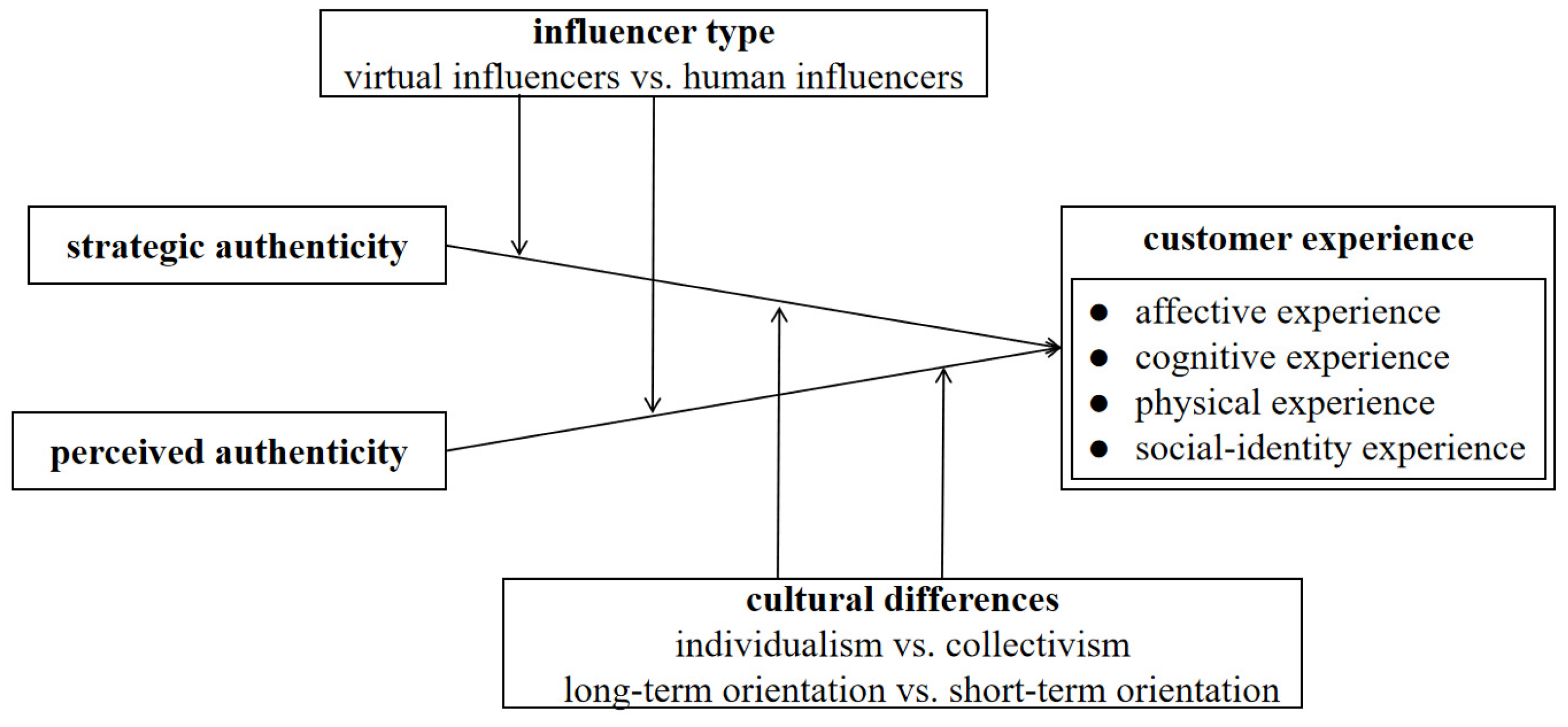
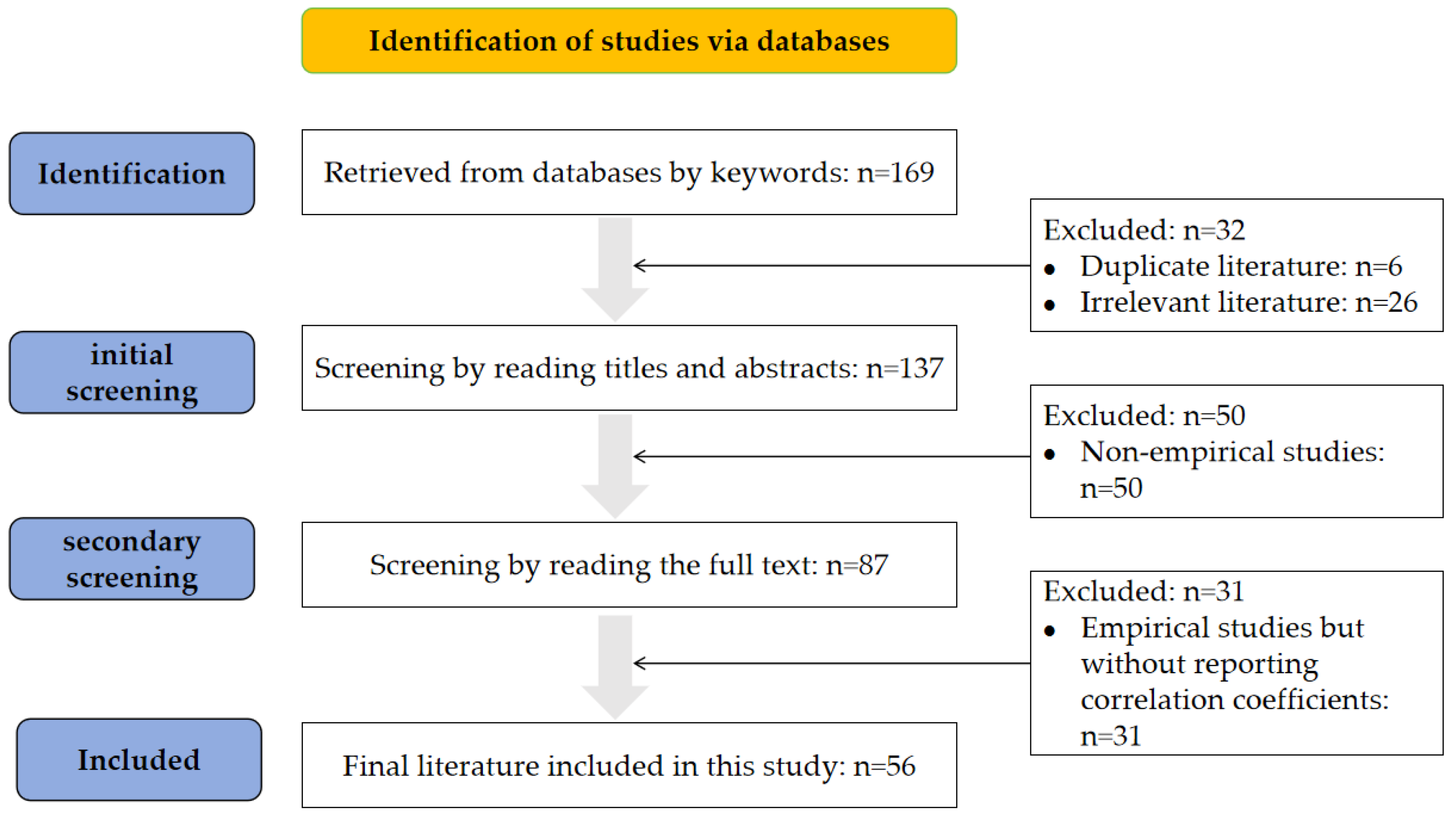
Disclaimer/Publisher’s Note: The statements, opinions and data contained in all publications are solely those of the individual author(s) and contributor(s) and not of MDPI and/or the editor(s). MDPI and/or the editor(s) disclaim responsibility for any injury to people or property resulting from any ideas, methods, instructions or products referred to in the content. |
© 2026 by the authors. Licensee MDPI, Basel, Switzerland. This article is an open access article distributed under the terms and conditions of the Creative Commons Attribution (CC BY) license.