


Abstract
Generation Z (Gen Z) consumers exhibit a distinctive multi-platform purchase behavior: they habitually discover products through social commerce (S-commerce) stimuli—including influencer content and livestream shopping—yet systematically migrate to e-marketplaces to complete their transactions. Despite the strategic importance of this behavioral pattern for platform operators, brand managers, and policymakers, the underlying mechanisms remain poorly understood. This study advances a Consumer Decision Journey framework comprising five stages—Social Commerce Stimuli, Discovery, Risk Evaluation, Marketplace Evaluation, and Purchase Decision—and integrates Stimulus-Organism-Response theory and the Elaboration Likelihood Model to explain how Gen Z consumers navigate cross-platform purchase decisions. Employing a sequential explanatory mixed-methods design, we conducted a large-scale survey (n = 423 Gen Z respondents) analyzed via Partial Least Squares Structural Equation Modeling, complemented by 18 in-depth qualitative interviews. Results confirm that influencer persuasion, livestream engagement, and perceived product authenticity drive product discovery; price comparison mediates, and price sensitivity moderates the discovery-to-risk pathway. Critically, perceived risk in S-commerce paradoxically accelerates cross-platform migration and elevates trust in e-marketplaces. Trust in e-marketplaces and logistics reliability each moderate the risk-to-purchase relationship. Qualitative analysis reveals that cross-platform behavior is a deliberate, internalized strategy among Gen Z—a platform arbitrage norm. These findings have substantial implications for S-commerce platform design, influencer marketing strategy, and e-marketplace positioning in emerging economies.
1. Introduction
The contemporary digital commerce landscape is defined not by single-platform transactions but by fluid consumer journeys that traverse multiple digital touchpoints. Nowhere is this more pronounced than among Generation Z (Gen Z) consumers—those born between 1997 and 2012—commonly referred to as Gen Z in the marketing and consumer behavior literature. It should be noted that the validity of generational categories as deterministic analytical units has been questioned in recent scholarship [1,2,3]. This study employs the Gen Z designation as a pragmatic demographic boundary identifying consumers whose formative years coincided with the social-media-native era, rather than as a claim of deterministic generational mechanisms. Our empirical analysis tests behavioral patterns within this cohort rather than presupposing generational uniqueness a priori. These consumers have grown up as digital natives navigating social media, short-form video, and e-commerce platforms simultaneously and interchangeably [4]. In rapidly digitalizing emerging economies, Gen Z consumers exhibit a structurally consistent behavioral pattern: they discover, evaluate, and deliberate over products within social commerce (S-commerce) environments, yet execute their final transactions on established e-marketplace platforms [5]. This behavioral pattern—herein termed cross-platform purchase behavior—represents a fundamental departure from the linear, single-channel purchase funnel assumed by much of the extant e-commerce and social commerce literature.
The social commerce market is projected to grow from USD 724 billion in 2022 to USD 6.2 trillion by 2030, with Gen Z as the primary demographic driver [6]. Globally, TikTok Shop operates in 13 markets, Instagram Shopping is active in 70+ countries, and the share of purchases completed on dedicated e-marketplaces after social media discovery ranges from 54% (Southeast Asia) to 41% (Western Europe) among Gen Z consumers. Cross-platform purchase behavior is therefore an emergent pattern across multiple markets—though its precise mechanisms and magnitudes are likely to vary by institutional context, platform infrastructure, and consumer culture. The present study focuses on Vietnam as a theoretically representative and empirically tractable emerging-economy context, with findings intended to inform rather than directly generalize across all global markets.
The academic literature relevant to this study spans four intersecting domains: social commerce adoption, livestream shopping, influencer marketing, and e-marketplace trust. A structured narrative review of this literature—comprising twelve representative studies identified through targeted searches in Scopus, Web of Science, and Google Scholar using the terms “social commerce,” “Gen Z,” “perceived risk,” “cross-platform,” and “consumer decision journey”—reveals both substantial progress and persistent, consequential gaps that motivate the present inquiry. This review does not follow PRISMA protocols for systematic reviews; rather, it constitutes a theoretically guided synthesis designed to map extant constructs, identify boundary conditions, and expose the research gaps addressed in the present study.
Social commerce adoption research, pioneered by Zhou et al. [7] and extended by Hajli [8] and Zhang and Benyoucef [9], has established a robust theoretical vocabulary for S-commerce as the integration of social media with commercial transactions. These foundational studies demonstrate that social interaction, user-generated content, and community trust are the primary value drivers of S-commerce adoption. However, they model S-commerce as a terminal destination—a platform on which transactions are both initiated and completed—thereby obscuring the increasingly common reality of cross-platform purchase journeys. Zhou, Zhang and Zimmermann [7] integrated view of social commerce and Hajli [8] Social media influence model, while theoretically seminal, was developed in a period when S-commerce and e-marketplace infrastructure were substantially less differentiated than they are today. Neither framework accounts for the systematic migration of purchase completion from discovery platforms to transaction platforms that characterizes contemporary Gen Z behavior.
Livestream shopping research has grown rapidly since Sun et al.’s [10] foundational IT affordance study, which identified social presence and immediacy as the primary purchase-influencing affordances of livestreaming. Wongkitrungrueng and Assarut [11] extended this by demonstrating that engagement quality during Facebook Live sessions builds seller-specific trust and elevates purchase intent. Prior Stimulus-Organism-Response (S-O-R) analyses of TikTok livestream behavior establish that hedonic, social, and functional value each independently predict Gen Z’s continued shopping engagement [12,13,14]. However, Imanuddin and Handayani’s [12] model treats in-platform continuance as the primary outcome, failing to account for the substantial proportion of consumers who engage intensively with livestream content yet complete their transactions on competing e-marketplace platforms. This single-platform outcome assumption is a structural limitation that the current study directly addresses.
Influencer marketing scholarship has documented the mechanisms through which key opinion leaders (KOLs) and micro-influencers drive purchase consideration [15]. Elaboration Likelihood Model (ELM)-based analysis demonstrates that both message value (a central-route cue) and source credibility (a peripheral-route cue) independently predict consumer trust in influencer-generated branded content, with trust mediating the path to purchase intentions. Sokolova and Kefi [16] provide perhaps the most detailed account of the parasocial interaction mechanism, showing that perceived influencer credibility operates through parasocial relationship quality to predict purchase intent among Instagram and YouTube followers. Critically, both studies model influencer effects as direct pathways to purchase intent on the discovery platform—a pathway that our data suggest is substantially modulated by the risk evaluation and cross-platform migration stages of the Gen Z consumer decision journey (CDJ). Influencer content, in the present model, drives discovery rather than direct purchase—a distinction with significant strategic implications.
Perceived risk research in e-commerce—anchored by Featherman and Pavlou’s [17] multi-faceted operationalization—has consistently treated risk as a unidimensional inhibitor of adoption and purchase behavior. Kim et al. [18] established that performance, financial, and psychological risk perceptions each significantly reduce e-commerce purchase intent. However, this risk-as-deterrent paradigm was developed in the context of single-platform adoption decisions where the alternative to transacting was non-purchase. In multi-platform digital commerce ecosystems, risk in one channel does not preclude purchase; it redirects it. Mitchell’s [19] risk relief motivation framework offers a partial theoretical basis for this reconceptualization, but empirical tests of cross-channel risk redirection in the specific context of S-commerce-to-e-marketplace migration remain absent from the literature.
E-marketplace trust scholarship, exemplified by Kim and Park [20] and Pavlou and Fygenson [21], has documented the institutional and cognitive bases of consumer trust in online marketplaces. These studies establish that structural assurances—buyer protection policies, escrow payment systems, standardized seller ratings—are primary determinants of e-marketplace trust and purchasing behavior. Pavlou and Fygenson’s [21] extension of the Theory of Planned Behavior to e-commerce trust is a benchmark for understanding how institutional trust facilitates online transactions. However, neither study examines the dynamic relationship between S-commerce risk perceptions and e-marketplace trust—a relationship that, as our study demonstrates, is a key driver of cross-platform purchase migration among Gen Z.
Multi-channel and omni-channel retailing research has addressed channel migration in offline-online contexts, establishing that consumers strategically use different channels for different stages of the purchase journey [22,23]. However, this literature focuses primarily on the transition between physical and digital channels rather than the intra-digital transitions between social commerce and e-marketplace platforms that define the contemporary Gen Z purchase experience. The consumer decision journey literature provides the broadest conceptual framework for multi-touchpoint purchase behavior, but has not been specifically applied to the social-commerce-to-e-marketplace migration context [24,25].
Table 1 provides a structured synthesis of representative prior studies, mapping their theoretical frameworks, samples, key constructs, and the gaps each leaves unaddressed. Synthesizing across these five literature streams, a composite research gap emerges. No prior study has simultaneously: (a) modeled the intra-digital CDJ from social commerce stimuli to e-marketplace purchase completion as a theoretically coherent five-stage sequence; (b) reconceptualized perceived risk as a positive migration catalyst rather than a unidimensional adoption inhibitor; (c) positioned Gen Z as the primary analytical unit with generation-specific theoretical elaboration; or (d) empirically tested cross-platform purchase behavior in social commerce ecosystem, one of the highest social-commerce-adoption emerging markets globally. The present study is designed to address this composite gap.
Table 1.
Structured Narrative Review of Representative Prior Studies and Research Gaps.
The Consumer Decision Journey (CDJ) framework, originally advanced by Court, Elzinga, Mulder and Vetvik [24] and elaborated for digital contexts by Edelman and Singer [25], offers a uniquely appropriate organizing structure for the cross-platform behavioral phenomenon under investigation. Unlike the traditional AIDA funnel—which assumes a linear, platform-consistent progression from awareness to purchase—the CDJ explicitly accommodates iterative, touchpoint-rich, and non-linear decision processes. Court, Elzinga, Mulder and Vetvik [24] demonstrated empirically that consumer journeys frequently involve ‘looping back’ through evaluation stages and traversing multiple information environments, a pattern that precisely characterizes Gen Z’s cross-platform S-commerce behavior. The intra-digital extension of the CDJ proposed in this study provides three insights unavailable in prior offline-online multi-channel frameworks: (1) platform complementarity—S-commerce and e-marketplace are perceived as complementary CDJ stages (discovery vs. completion) rather than competing channels, requiring different managerial strategies; (2) risk as a routing rather than exit mechanism—perceived risk redirects consumers to an alternative digital channel rather than causing purchase abandonment; and (3) algorithmic mediation of discovery—TikTok’s recommendation algorithm maps onto the CDJ’s passive awareness loop in ways that physical store browsing does not, enabling theorization of algorithmic serendipity as a Stage 2 mechanism
For the present study, we propose a five-stage CDJ adaptation specific to the S-commerce-to-e-marketplace migration context: Stage 1 (Social Commerce Stimuli) captures the platform-generated stimuli—influencer content, livestreaming, and authenticity signals—that initiate the journey. Stage 2 (Discovery) marks the cognitive transition from passive content consumption to active product consideration. Stage 3 (Risk Evaluation) encompasses the cognitive-affective processing of perceived S-commerce risks, catalyzed by price comparison behavior and modulated by price sensitivity. Stage 4 (Marketplace Evaluation) represents the comparative assessment of e-marketplace platforms as risk-mitigating transaction alternatives, shaped by institutional trust and logistics evaluations. Stage 5 (Purchase Decision) constitutes the behavioral outcome—cross-platform purchase completion. This five-stage adaptation provides the structural scaffold for the theoretical model, the hypothesis development, and the empirical analysis presented in subsequent sections.
Against this background, the present study pursues four inter-related research objectives: (1) to theorize and empirically model the antecedents of product discovery in S-commerce among Gen Z consumers through the CDJ lens; (2) to examine the mediating role of price comparison and the moderating role of price sensitivity in the conversion of discovery to perceived risk; (3) to test the paradoxical risk-redirection hypothesis—that perceived S-commerce risk drives rather than deters cross-platform purchase completion; and (4) to establish the boundary conditions under which trust in e-marketplaces and logistics reliability amplify the risk-migration relationship.
The study makes four primary theoretical contributions to the digital commerce and consumer behavior literature. First, it advances the application of the CDJ framework to intra-digital cross-platform consumer behavior, advancing beyond its original offline-online application to capture the S-commerce-to-e-marketplace journey distinctive to Gen Z. Second, it reconceptualizes perceived risk as a paradoxical forward-driver in multi-platform purchase decisions, fundamentally challenging the risk-as-deterrent axiom of single-platform e-commerce models. Third, it establishes that institutional platform trust and operational logistics reliability are non-substitutable moderators operating through psychologically distinct pathways. Fourth, it generates an early empirical investigation of Gen Z cross-platform purchase behavior in Vietnam—a market whose social commerce maturity makes it a leading indicator of behavioral patterns likely to emerge more broadly across the global digital commerce ecosystem. Practically, the study provides S-commerce operators, e-marketplace platforms, brand managers, and policymakers with actionable insights for navigating the multi-platform commerce environment that defines Gen Z consumer behavior.
2. Theoretical Background and Literature Review
2.1. The Consumer Decision Journey (CDJ) as Organizing Framework
The Consumer Decision Journey (CDJ)—originally conceptualized by Court, Elzinga, Mulder and Vetvik [24] in response to the proliferation of digital touchpoints—fundamentally challenged the traditional AIDA funnel model by demonstrating that consumer decision-making is iterative, touchpoint-rich, and often non-linear. The CDJ identifies four core stages—consideration, evaluation, purchase, and post-purchase (loyalty loop)—through which consumers cycle rather than progress linearly. Edelman and Singer [25] extended this framework to account for the ‘digital decision journey,’ arguing that proactive, personalized digital engagement at each stage can compress the journey and redirect consumer trajectories.
For the present study, we adapt the CDJ to the multi-platform S-commerce context, proposing a five-stage journey specific to Gen Z consumers in emerging economies: Stage 1 (Social Commerce Stimuli) encompasses platform features—influencer content, livestreaming, and authenticity cues—that initiate product awareness. Stage 2 (Discovery) marks the transition from passive scrolling to active product consideration, driven by stimuli engagement. Stage 3 (Risk Evaluation) captures the cognitive and affective processing of perceived risks associated with completing the transaction within the S-commerce environment. Stage 4 (Marketplace Evaluation) reflects consumers’ assessment of e-marketplace alternatives as risk-mitigating transaction environments, mediated by trust and logistics perceptions. Stage 5 (Purchase Decision) represents the final behavioral outcome—cross-platform purchase completion on an e-marketplace. This five-stage CDJ provides both the theoretical organizing principle and the structural backbone of the research model.
2.2. S-O-R Theory and the Elaboration Likelihood Model
Within the present model, the three theoretical frameworks operate in a deliberately bounded and hierarchical manner. The CDJ serves as the macro-level structural scaffold that defines the sequence of consumer experience stages and organizes the research model. S-O-R theory [27] provides the micro-level behavioral mechanism explaining how stimuli at each CDJ stage produce internal organism states that generate behavioral responses: environmental stimuli (S) from S-commerce platforms—visual content quality, influencer credibility signals, livestream interactivity—trigger internal cognitive and emotional organism states (O), including product knowledge, perceived authenticity, and risk perceptions, that ultimately generate behavioral responses (R) such as price comparison activity and cross-platform purchase. This stimulus-organism-response chain maps cleanly onto the CDJ stages: stimuli correspond to Stage 1, organism states to Stages 2–4, and responses to Stage 5.
The ELM complements S-O-R specifically at CDJ Stages 1 and 2, where it explains how social commerce stimuli persuade consumers toward product discovery through two distinct processing routes [28]. The central route—activated when motivation and ability to process are high—relies on argument quality, product information, and authentic evidence; it governs the processing of perceived product authenticity cues (Stage 1 → Stage 2). The peripheral route operates through heuristic cues—source attractiveness, social proof, and emotional appeal—and governs the processing of influencer persuasion and livestream engagement cues. Gen Z consumers, characterized by high digital literacy alongside abbreviated content-attention spans [29,30,31], exhibit a distinctive dual-route ELM profile: peripheral-route processing activates product awareness, while central-route processing determines whether awareness advances to active discovery. Critically, ELM’s explanatory role in this model is bounded to Stages 1–2 of the CDJ. Risk evaluation, marketplace assessment, and the purchase decision (Stages 3–5) are theorized through the S-O-R response mechanism and CDJ’s routing logic—not through ELM persuasion routes, which operate at the persuasion-to-awareness interface rather than the risk-to-migration interface. Figure 1 presents the proposed research model.
Figure 1.
Proposed Research Model of Cross-Platform Purchase Behavior between S-commerce and E-marketplace.
2.3. Hypotheses Development
2.3.1. Stage 1 to Stage 2: Antecedents of Product Discovery
Influencer persuasion operates as a primary social commerce stimulus, activating the discovery stage of the Gen Z CDJ. Drawing on ELM peripheral-route processing, influencer credibility—comprising perceived expertise, trustworthiness, and likability [32]—functions as a heuristic quality signal that directs Gen Z attention toward promoted products. For Gen Z consumers who have grown up with influencer culture as a normalized information medium [15,16], influencer endorsements serve as attentional gatekeepers within algorithmically curated content environments. The S-O-R mechanism here is straightforward: influencer stimulus → parasocial engagement organism state → product discovery response. Empirically, Lou and Yuan [15] found that influencer message value and credibility positively predict trust and behavioral engagement, while Sokolova and Kefi [16] demonstrated that parasocial interaction mediates the credibility-purchase intent relationship among young social media users. This relationship is expected to be particularly pronounced.
H1:
Influencer persuasion positively impacts product discovery in S-commerce among Gen Z consumers.
Livestream shopping constitutes perhaps the defining S-commerce innovation of the post-2019 era, offering real-time interactivity, authentic product demonstration, and time-limited urgency cues that are uniquely powerful for Gen Z’s experiential consumption orientation [12]. The livestream environment’s synchronous nature reduces perceived social distance between buyer and seller [11] and enables co-production of product knowledge through live Q&A interactions [10]. From an S-O-R perspective, livestream interactivity and entertainment represent compound stimuli that simultaneously activate hedonic (enjoyment, presence) and utilitarian (information, deal) organism states, each conducive to product discovery. Imanuddin and Handayani [12] demonstrated through S-O-R modeling that hedonic and social values derived from livestreaming drive continuance intention; Sun, Shao, Li, Guo and Nie [10] established that IT affordances of livestreaming—particularly social presence and immediacy—elevate purchase consideration. Gen Z’s preference for video-based content [4] suggests these effects will be amplified in the target population.
H2:
Livestream engagement positively impacts product discovery in S-commerce among Gen Z consumers.
Perceived product authenticity is the degree to which consumers believe that social commerce representations faithfully reflect actual product qualities [33]. Authenticity concerns are structurally heightened in S-commerce environments where product images and descriptions are user-generated, potentially edited, and divorced from standardized quality assurance systems. For Gen Z consumers—who are simultaneously the most skeptical and the most socially influenced generation of shoppers [4]—authenticity perceptions function as central-route ELM cues: only when product representations are deemed authentic will central-route processing advance to active product consideration. Ilicic and Webster [34] demonstrate that authenticity significantly moderates the relationship between celebrity endorsement and consumer engagement; Riley et al. [35] establish authenticity as a core antecedent of brand trust. Applied to S-commerce product discovery, authenticity enables cognitive elaboration—converting passive exposure to active discovery.
H3:
Perceived product authenticity positively impacts product discovery in S-commerce among Gen Z consumers.
2.3.2. Stage 2 to Stage 3: From Discovery to Risk Evaluation
The transition from the Discovery stage to the Risk Evaluation stage in Gen Z’s CDJ is mediated by price comparison behavior. When Gen Z consumers discover a product through S-commerce, the digital ecology of their shopping environment—characterized by multiple open browser tabs, quick app switching, and price comparison tools—renders cross-platform price verification a near-automatic behavior. Price comparison transforms product discovery into an evaluative process by surfacing price discrepancies and quality information asymmetries between S-commerce promotions and e-marketplace benchmarks [36]. This active comparison behavior amplifies risk perception by making salient the possibility that the S-commerce price is artificially promotional, the product quality is misrepresented, or the transaction lacks consumer protection. Degeratu et al. [37] demonstrate that price becomes a dominant evaluation criterion in digital shopping contexts where multiple price signals are simultaneously available. The mediation pathway—discovery triggers comparison, comparison amplifies risk—is a core mechanism of the Gen Z cross-platform CDJ.
H4:
Price comparison mediates the positive relationship between product discovery and perceived risk in S-commerce.
Price sensitivity moderates the strength of this discovery-to-risk pathway. Gen Z consumers exhibit above-average price sensitivity relative to older cohorts, a function of lower income levels (student demographics), higher financial consciousness, and a culture of digital deal-seeking. Highly price-sensitive Gen Z consumers will engage in more intensive cross-platform price verification following product discovery, generating greater price disparity exposure and, consequently, higher risk perceptions. Monroe and Krishnan [38] establish the theoretical basis for price sensitivity as a moderator of price-based cognitive responses; in the present model, high price sensitivity amplifies the discovery-to-comparison-to-risk cascade.
H5:
Price sensitivity positively moderates the relationship between product discovery and perceived risk in S-commerce, such that the positive effect is stronger for high-price-sensitivity consumers.
2.3.3. Stage 3 to Stage 5: Risk as Migration Driver
The theoretical core of this study is the proposition that perceived risk in S-commerce does not simply inhibit purchase but rather redirects the purchase decision to e-marketplace channels that offer structural risk relief. This reconceptualization builds on Mitchell’s [19] risk relief motivation framework, which posits that consumers actively seek risk-reducing behavioral alternatives when purchase risk exceeds tolerance thresholds. For Gen Z consumers who have internalized the capabilities of e-marketplaces—including buyer protection, escrow payments, review systems, and return guarantees—the natural risk-relief destination is Shopee or Lazada rather than purchase abandonment. The CDJ Risk Evaluation stage thus serves as a routing mechanism: high S-commerce risk probability increases the likelihood of completing the journey via the e-marketplace route rather than the S-commerce route.
The present reconceptualization extends prior risk-as-deterrent theory in three precisely delimited ways. First, Featherman and Pavlou’s [17] multi-faceted risk operationalization—developed in a single-platform adoption context where the behavioral alternative to purchase was non-purchase—is recontextualized in a multi-platform environment where the behavioral alternative is platform migration, not abstention. Second, Kim, Ferrin and Rao’s [18] finding that risk redirects consumers toward trust-providing alternatives is extended from service-to-service migration to platform-to-platform migration—a materially distinct behavioral domain requiring intra-digital theorization. Third, Mitchell’s [19] risk relief motivation framework receives its first path-level empirical test in the social commerce context, yielding a medium-to-large effect size that confirms the practical as well as statistical significance of risk-driven cross-platform migration.
H6:
Perceived risk in S-commerce positively impacts cross-platform purchase behavior among Gen Z consumers.
The risk-trust co-generation mechanism posits that exposure to S-commerce risk heightens consumers’ appreciation for e-marketplace safeguards, elevating trust in the latter through a contrast effect. When Gen Z consumers experience or anticipate the risks inherent in S-commerce transactions—counterfeit products, payment insecurity, unreliable delivery—they become more cognitively attuned to the risk-mitigation attributes of e-marketplaces, resulting in elevated trust perceptions. This mechanism is consistent with the assurance theory of trust [20], which holds that trust is partly constructed through comparative evaluation of institutional safeguards. Pavlou and Fygenson [21] demonstrate that institutional-based trust formation—driven by perceived structural assurances—is a primary determinant of e-commerce participation, particularly in high-uncertainty contexts. For Gen Z consumers’ moderately regulated digital commerce environment, e-marketplace institutional safeguards represent a meaningful risk governance mechanism.
H7:
Perceived risk in S-commerce positively impacts trust in e-marketplaces among Gen Z consumers.
Trust in e-marketplaces, once formed through the risk-contrast mechanism or accumulated transactional experience, directly activates cross-platform purchase completion. Trust reduces the perceived uncertainty of the e-marketplace transaction itself, lowers transaction costs, and facilitates purchase decision-making [20,26]. For Gen Z consumers, platform trust is particularly consequential: having grown up in an environment saturated with data breaches, fake reviews, and algorithmic manipulation, Gen Z exhibits heightened trust sensitivity and is more responsive to trust signals than older cohorts [4]. The direct effect of e-marketplace trust on cross-platform purchase behavior is therefore expected to be substantial.
H8:
Trust in e-marketplaces positively impacts cross-platform purchase behavior among Gen Z consumers.
2.3.4. Stage 4: Marketplace Evaluation—Logistics and Moderation Effects
Logistics reliability—encompassing delivery speed, order accuracy, and return facilitation—is a critical evaluative criterion in Gen Z’s Marketplace Evaluation stage. Gen Z consumers have grown up with next-day and same-day delivery as normative expectations [39,40], and logistics failures represent disproportionately negative experiences in this cohort’s consumer evaluations. In the e-marketplace context, Shopee Express’s dominant logistics network has established a baseline expectation of rapid, trackable delivery that functions as a structural trust signal. Logistics reliability directly predicts cross-platform purchase behavior by reducing fulfillment risk—a core component of overall perceived transaction risk.
H9:
Logistics reliability positively impacts cross-platform purchase behavior among Gen Z consumers.
The moderation hypotheses posit that both trust in e-marketplaces and logistics reliability amplify the positive effect of S-commerce perceived risk on cross-platform purchase behavior. This study investigates the nuanced interplay between perceived risk in social commerce (S-commerce) and consumers’ cross-platform purchase behavior, specifically examining how trust in e-marketplaces and the reliability of logistics operations modulate this relationship. Building upon established theories of trust transferability and risk perception in online environments, we posit that these moderating factors significantly influence the strength of the association between perceived risk and consumers’ propensity to engage in cross-platform purchasing [41]. Specifically, we hypothesize that elevated levels of trust in e-marketplaces will attenuate the negative impact of perceived risk on cross-platform purchase behavior, whereas enhanced logistics reliability will similarly mitigate this adverse effect, thereby fostering greater consumer engagement across platforms [42,43]. The understanding that trust, particularly in the context of e-commerce platforms and their associated logistics, is a critical determinant in mitigating consumer apprehension and fostering purchase intentions, especially within the dynamic landscape of social commerce [44,45]. This perspective aligns with prior research underscoring the pivotal role of trust in mitigating various risk factors, such as financial, time, and psychological risks, that influence online consumer buying behavior [46,47]. Indeed, a trusted platform is anticipated to reduce vulnerability and the perceived level of risk associated with transactions in online marketplaces. Specifically, consumers’ willingness to engage in vulnerable actions like cross-platform purchasing is heightened when they possess a strong expectation that the e-marketplace will perform as anticipated, irrespective of their ability to monitor or control the platform’s actions [48,49]. This transfer of trust from the overarching e-marketplace to specific transactions and behaviors, such as cross-platform purchasing, is a key mechanism through which perceived risk is managed.
When trust in e-marketplaces is high, risk-motivated consumers have a more confident migration destination: the high-trust platform provides greater cognitive assurance that the purchase will be executed safely, amplifying the risk-redirection mechanism. When logistics reliability is high, the fulfillment risk component of overall purchase risk is substantially reduced, lowering the residual risk of cross-platform migration and increasing the marginal propensity to migrate. Together, these moderation mechanisms explain the boundary conditions of the cross-platform risk-redirection effect.
H10a:
Trust in e-marketplaces positively moderates the relationship between perceived risk in S-commerce and cross-platform purchase behavior, such that the positive effect is stronger when trust is high.
H10b:
Logistics reliability positively moderates the relationship between perceived risk in S-commerce and cross-platform purchase behavior, such that the positive effect is stronger when logistics reliability is high.
3. Methodology
A sequential explanatory mixed-methods design [50] was employed, with quantitative Partial Least Squares Structural Equation Modeling (PLS-SEM) analysis conducted first to test the structural model, followed by qualitative in-depth interviews to explain and contextualize the quantitative findings. This design is particularly appropriate for the present research because cross-platform purchase behavior among Gen Z is a relatively novel phenomenon requiring both generalizable structural estimation and interpretive depth.
The target population was Vietnamese Gen Z consumers (born 1997–2012, aged 18–27 at the time of data collection in 2024) who had used at least one S-commerce platform in the preceding three months and had completed at least one cross-platform purchase (S-commerce discovery followed by e-marketplace completion) in that period. Convenience sampling with snowball augmentation was employed for the quantitative survey, distributed online (February–April 2024) via TikTok community groups, university student Facebook groups, and QR code distribution at four major university campuses in Ho Chi Minh City and Hanoi. Of 501 responses collected, 423 (84.4%) were valid after removing 43 incomplete responses, 19 straight-liners, and 16 attention-check failures. Following Hair et al. [51], the minimum sample for 38 indicators at a 10:1 ratio is 380; our sample of 423 satisfies this requirement.
A methodological note regarding sample inclusion criteria is warranted. Restricting the sample to consumers who had completed at least one prior cross-platform purchase was designed to ensure respondents possessed the experiential foundation necessary to evaluate constructs such as perceived risk, e-marketplace trust, and logistics reliability—constructs meaningfully assessed only by those who have navigated multi-platform purchase contexts [52]. Critically, the dependent variable (cross-platform purchase behavior) measures behavioral intention and habitual frequency rather than the binary occurrence of any cross-platform transaction. Substantial variance is present: 23.17% of respondents report completing cross-platform purchases on every occasion, 44.21% often, and 32.62% only sometimes, confirming the distributional spread required for structural estimation. We acknowledge this sampling decision as a boundary condition limiting inference to consumers with prior cross-platform exposure.
For the qualitative phase, 18 semi-structured interviews (average duration: 44 min) were conducted between March and May 2024 via Zoom and in-person in Ho Chi Minh City. Purposive sampling from 74 survey volunteers ensured diversity in age (19–26), gender, educational status, income level, and social commerce platform usage. Saturation was reached at interview 15, with interviews 16–18 confirming without extending themes [53].
All constructs used reflective multi-item scales adapted from validated instruments and modified for the Gen Z social commerce context. Influencer persuasion (5 items) was adapted from Ohanian [32] and Lou and Yuan [15]. Livestream engagement (4 items) drew from Wongkitrungrueng and Assarut [11] and Imanuddin and Handayani [12]. Perceived product authenticity (4 items) adapted Morhart, Malär, Guèvremont, Girardin and Grohmann [33] and Riley, Burmann and Schallehn [35]. Price comparison (4 items) and price sensitivity (three items) were drawn from Brynjolfsson and Smith [36] and Monroe and Krishnan [38]. Perceived risk in S-commerce (5 items) adapted Featherman and Pavlou [17]. Trust in e-marketplaces (4 items) used Kim and Park [20] and Pavlou and Fygenson [21]. Cross-platform purchase behavior (3 items) and Product Discovery (3 items) were newly developed from Court, Elzinga, Mulder and Vetvik [24], consistent with the CDJ framework. Content validity for both newly developed scales was established through a four-step procedure: (1) item generation anchored in the CDJ Stage 5 (purchase decision) and Stage 2 (discovery) conceptual definitions and the behavioral channel-switching literature; (2) expert panel review by three marketing academics and two S-commerce industry practitioners, with item retention requiring a Content Validity Ratio exceeding 0.80 [54]; (3) cognitive interviews with five Gen Z consumers to verify interpretive alignment; and (4) pilot testing (n = 45) yielding item-total correlations of 0.71–0.84 and a provisional AVE of 0.721 for the CPP scale. Logistics reliability (4 items) was drawn from Mentzer, Flint and Hult [40]. All items used seven-point Likert scales (1 = Strongly Disagree; 7 = Strongly Agree). The instrument underwent bilingual (English–Vietnamese) back-translation and pilot testing (n = 45).
PLS-SEM was selected for three theoretically grounded reasons (Hair, G. Tomas M. Hult, Christian M. Ringle and Sarstedt [51]): (1) the model is predictive and exploratory, aligned with PLS-SEM’s predictive orientation; (2) the model contains mediation, moderation, and moderated-mediation relationships that benefit from PLS-SEM’s bootstrapping-based inference; and (3) the behavioral outcome data exhibit non-normality, favoring PLS-SEM’s distribution-free estimation. SmartPLS 4.0 [55] was used. Bootstrapping (5000 subsamples, bias-corrected percentile method) provided path significance; blindfolding (omission distance = 7) assessed predictive relevance (Q2); and the variance inflation factor (VIF) confirmed absence of multicollinearity (all VIFs < 3.3).
To address common method bias (CMB), three complementary procedures were implemented. First, Harman’s single-factor exploratory factor analysis was conducted; the first unrotated factor accounted for 24.3% of total variance, below the 50% threshold conventionally indicative of severe CMB. Second, and more rigorously, a Common Latent Factor (CLF) model was estimated in SmartPLS 4.0 by specifying a latent common method factor with paths to all manifest indicators; standardized path coefficients from the substantive structural model changed by no more than 0.05 relative to the baseline model, confirming that common method variance does not substantially distort structural conclusions [56]. Third, procedural remedies were employed at the instrument design stage: predictor and outcome item blocks were temporally separated within the questionnaire, three constructs included reversed-scored items, and full respondent anonymity was assured to reduce social desirability bias.
Qualitative data were analyzed using Braun and Clarke’s [57] six-phase thematic analysis protocol. Two independent coders achieved Cohen’s κ = 0.82 (substantial agreement) after reconciliation of initial discrepancies. The five-stage CDJ framework served as a sensitizing structure for theme organization, enabling systematic triangulation between quantitative path effects and qualitative mechanisms.
Table 2 presents the demographic characteristics of the 423 Gen Z respondents. The sample is predominantly composed of core Gen Z (21–24 years, 44.7%), with balanced gender representation [4,58]. University students and bachelor’s degree holders account for 85.8%, consistent with the educational profile of Vietnamese Gen Z social commerce users. TikTok Shop is the primary discovery platform (54.1%), and Shopee is the primary purchase completion platform (68.8%). Notably, 67.4% of respondents report cross-platform behavior in more than half of their purchases, confirming the prevalence of the phenomenon in this cohort.
Table 2.
Demographic Profile of Gen Z Respondents.
4. Results
4.1. Measurement Model Evaluation
Table 3 presents the full measurement model results. Indicator reliability is confirmed by all standardized loadings exceeding 0.70 (range: 0.789–0.892). Internal consistency is established through composite reliability (CR) values of 0.874–0.911 and Cronbach’s alpha values of 0.822–0.884, both exceeding the 0.70 threshold [59]. Convergent validity is confirmed by AVE values of 0.649–0.744, all above the 0.50 criterion.
Table 3.
Measurement Model: Indicator Loadings, AVE, CR, and Cronbach’s Alpha.
Discriminant validity was assessed using the Heterotrait-Monotrait (HTMT) ratio [60]. Table 4 reports all HTMT values below the conservative 0.85 criterion, confirming construct distinctiveness. Additionally, all AVE square roots exceeded the inter-construct correlations (Fornell & Larcker criterion). VIF values for all predictor constructs were below 3.3 (maximum 2.134), ruling out multicollinearity concerns.
Table 4.
Heterotrait-Monotrait (HTMT) Discriminant Validity Matrix.
4.2. Structural Model and Hypothesis Testing
Structural model evaluation followed the sequence recommended by Hair et al. [61]: (1) collinearity assessment, (2) path significance, effect sizes, and path-level f2, (3) model explanatory power (R2), and (4) predictive relevance (Q2). Table 5 reports path coefficients, bootstrapped statistics, and path-level Cohen’s f2 effect sizes for each hypothesized relationship; Table 6 summarizes model-level fit indices.
Table 5.
Structural Path Coefficients, Effect Sizes (f2), and Hypothesis Test Results.
Table 6.
Model Fit Indicators: R2, Adjusted R2, Q2, f2, and VIF.
All eleven hypotheses were supported at conventional significance levels. Table 5 also reports path-level Cohen’s f2 effect sizes, computed following the formula f2 = (R2_included − R2_excluded)/(1 − R2_included), which indicate the practical significance of each relationship independent of sample size [62,63]. Among Stage 1–2 antecedents of product discovery, perceived product authenticity exerts the strongest influence (β = 0.343, p < 0.001, f2 = 0.224, medium effect), followed by influencer persuasion (β = 0.314, f2 = 0.205, medium effect) and livestream engagement (β = 0.289, f2 = 0.175, medium effect). This ordering is consistent with ELM predictions: for Gen Z consumers who have internalized influencer skepticism, central-route authenticity cues outperform peripheral-route source credibility cues in activating product discovery within the CDJ. All three antecedents yield medium effect sizes, confirming their practical significance as antecedents of product discovery.
In the Stage 2–3 risk generation pathway, price comparison fully mediates the discovery-to-risk relationship (indirect effect = 0.201, 95% CI [0.129, 0.273], f2 = 0.121, small-to-medium effect); the direct effect of PD on PR after controlling for PC is non-significant (β = 0.087, p = 0.143), indicating complete mediation. Price sensitivity significantly moderates this mediated pathway (β = 0.149, p = 0.004, f2 = 0.043, small effect), amplifying risk perception among highly price-conscious Gen Z consumers. The relatively modest f2 for price sensitivity moderation suggests that while statistically reliable, the interaction is a secondary amplifier rather than a dominant boundary condition.
The Stage 3–5 risk migration effects are the most theoretically significant findings. Perceived risk in S-commerce is the strongest direct predictor of cross-platform purchase behavior (β = 0.358, f2 = 0.332, medium-to-large effect), consistent with the proposed risk-redirection mechanism. It also exerts the largest effect on trust in e-marketplaces (β = 0.421, f2 = 0.295, medium effect), supporting the risk-contrast trust elevation mechanism. Trust in e-marketplaces (β = 0.301, f2 = 0.188, medium effect) and logistics reliability (β = 0.269, f2 = 0.141, small-to-medium effect) both independently predict cross-platform purchase, with trust yielding both the larger coefficient and the larger effect size. The f2 contrast between trust (0.188) and logistics (0.141) is substantively meaningful: institutional platform trust has greater practical influence on cross-platform migration decisions than does logistics reliability, suggesting that Gen Z consumers weigh cognitive-institutional confidence above operational fulfillment certainty when selecting a purchase completion platform.
Both moderation hypotheses were supported. Trust in e-marketplaces significantly amplifies the S-commerce risk-to-cross-platform purchase relationship (interaction β = 0.226, p < 0.001, f2 = 0.086, small-to-medium effect). Logistics reliability also moderates this relationship (interaction β = 0.136, p = 0.019, f2 = 0.034, small effect). While the f2 = 0.034 for logistics reliability moderation satisfies the conventional “small” classification [62], this effect retains meaningful practical significance. In Vietnam’s e-marketplace market, where Shopee’s gross merchandise value exceeded USD 10 billion in 2023, even marginal improvements in logistics-driven cross-platform migration conversion represent commercially consequential outcomes at scale. The comprehensive path-level f2 reporting presented in Table 5 also constitutes a methodological contribution, enabling future meta-analytic comparisons, given that most prior social commerce studies do not report path-level effect sizes.
Cross-platform purchase behavior achieves the highest explanatory power (R2 = 0.618), indicating that the CDJ model accounts for over 61% of variance in this outcome—a result that compares favorably with extant purchase intention models in social commerce R2 = 0.430 [12]; R2 = 0.489 [11]. All Q2 values are positive and substantially above zero, confirming predictive relevance across the full model.
4.3. Qualitative Findings: Gen Z CDJ Narratives
Thematic analysis of the 18 interviews generated eight themes organized around the five CDJ stages. Table 7 presents themes, sub-themes, representative quotes, and frequency counts. The qualitative data triangulate and enrich the quantitative findings across all five CDJ stages. A particularly noteworthy finding is the emergence of what respondents described as an internalized ‘shopping process’—a deliberate, habitual CDJ in which TikTok/Facebook function as discovery platforms and Shopee/Lazada function as purchase completion platforms. This finding suggests that cross-platform behavior among Gen Z in Vietnam has transcended individual decision episodes to become a stable behavioral routine—what we term platform arbitrage behavior. This routinization has important implications for both quantitative interpretation (the relatively high R2 reflects systematic behavioral consistency) and for practical interventions (altering the routine requires overcoming established behavioral inertia). The qualitative data further corroborate specific quantitative results in ways that extend beyond mere triangulation. The high explanatory power of the CPP model (R2 = 0.618) is directly interpretable through the platform arbitrage routine: when purchasing behavior follows a stable, habituated sequence, inter-individual variance attributable to unmeasured idiosyncratic factors is reduced, yielding a higher structural R2. The trust-over-logistics moderation asymmetry (f2 = 0.086 vs. 0.034) is explained mechanistically by respondents’ consistent accounts of logistics reliability as a disqualifying threshold criterion—platforms that fall below an acceptable delivery standard are excluded from consideration before institutional trust becomes salient—rather than as a differentiating purchase determinant. The qualitative data thus provide mechanism-level explanations for quantitative parameter magnitudes that the structural model alone cannot supply.
Table 7.
Qualitative Themes, CDJ Stages, Sub-themes, and Representative Gen Z Quotes.
5. Discussion
5.1. Comparison with Prior Research
The present study’s findings both confirm and substantively extend the conclusions of prior social commerce and consumer behavior research. In alignment with prior studies, we confirm that S-O-R mechanisms effectively explain Gen Z’s engagement with livestream S-commerce [11,16]; however, our study advances by tracing the S-O-R chain beyond continuance intention to cross-platform purchase completion—a more ecologically valid outcome variable for the Gen Z shopping context. Single-platform’s focus cannot account for the behavioral routing that occurs when S-commerce stimuli generate perceived risk, a limitation our CDJ framework explicitly addresses.
Our finding that perceived authenticity is the strongest antecedent of product discovery (β = 0.343, f2 = 0.224, medium effect) aligns with Morhart, Malär, Guèvremont, Girardin and Grohmann [33] theoretical proposition that authenticity is the foundation of consumer-brand engagement in social media contexts, and extends Hajli [8] finding that social interaction drives S-commerce purchase intention by establishing a more proximal mechanism: it is the authenticity of product representations, not merely social interaction per se, that activates Gen Z’s CDJ discovery stage. This finding also contrasts with Sokolova and Kefi [16], who found parasocial interaction to be the primary mechanism through which influencer credibility operates—a discrepancy that may reflect the higher skepticism of Gen Z consumers toward paid influencer content relative to the French sample studied by Sokolova and Kefi.
The mediation of price comparison in the discovery-to-risk pathway is a novel finding without a direct parallel in prior social commerce studies. The closest analog is Brynjolfsson and Smith [36] demonstration that digital markets amplify price comparison behavior and intensify price competition. Our study extends this logic to the cross-platform context, showing that price comparison is not merely a behavioral byproduct of digital shopping but a mechanistically important mediator that converts product discovery into risk perception—a finding with direct implications for S-commerce pricing strategy.
Most significantly, our demonstration that perceived risk in S-commerce positively drives cross-platform purchase behavior (β = 0.358, f2 = 0.332, medium-to-large effect) challenges the dominant assumption in e-commerce risk research—exemplified by Featherman and Pavlou [17] and Kim, Ferrin and Rao [18]—that perceived risk uniformly suppresses purchase behavior. The medium-to-large f2 confirms this is not merely a statistically significant but substantively trivial effect: S-commerce risk is among the most practically important predictors in the model. Our data suggest that for Gen Z consumers operating in a multi-platform environment, risk does not extinguish purchase motivation; it redirects it. This reconceptualization has profound implications: risk management strategies that focus on risk reduction within the S-commerce platform may be less effective than strategies that leverage the risk-contrast mechanism to build e-marketplace trust—turning S-commerce’s limitations into an e-marketplace’s marketing advantage.
The differential moderation effects of trust (β = 0.226, f2 = 0.086) versus logistics (β = 0.136, f2 = 0.034) are consistent with McKnight et al. [64] institutional trust theory, which posits that structural assurances are more powerful trust generators than operational performance metrics in high-uncertainty environments. The f2 gap between these two moderators (0.086 vs. 0.034) is substantively meaningful—trust explains more than twice the incremental variance in the risk-to-migration path that logistics does—confirming that institutional platform confidence is the primary boundary condition of risk-driven cross-platform migration for Gen Z.
5.2. Gen Z-Specific Insights
A core contribution of this study is the empirical characterization of Gen Z’s distinctive cross-platform CDJ. Three Gen Z-specific behavioral dynamics merit particular emphasis. It is important to qualify what ‘Gen Z-specific’ means in the present context. Without a matched comparison group from an older cohort (e.g., Millennials), we cannot attribute the identified behavioral patterns causally to generational membership rather than to life-stage effects, income-level constraints, or differential platform access. Our characterization of these patterns as generationally distinctive is therefore descriptive—reflecting the behaviors of consumers aged 18–27 in Vietnam’s 2024 social commerce ecosystem—rather than a causal claim about generational identity as an explanatory mechanism. Future research employing comparative generational designs would allow more definitive isolation of cohort-specific versus life-stage-driven effects.
First, platform arbitrage is a behavioral norm. Our qualitative data reveal that Vietnamese Gen Z consumers have internalized cross-platform shopping as a routine practice—not an exceptional coping behavior. This normalization distinguishes Gen Z from older cohorts, for whom cross-platform behavior is more likely to be a deliberate, effortful risk-management strategy [22]. The routinization of cross-platform behavior among Gen Z implies that S-commerce and e-marketplace platforms are perceived not as competitors but as functionally complementary stages in a unified purchase journey. Platform operators should recognize this complementarity and design for it rather than attempting to retain Gen Z consumers within a single platform.
Second, there is simultaneous skepticism and susceptibility. Gen Z consumers exhibit a paradoxical combination of influencer skepticism—acknowledging that KOL recommendations are commercially motivated—and genuine influencer-driven product discovery. This dual orientation is consistent with Petty and Cacioppo [28] ELM prediction that peripheral-route processing can trigger product awareness even when consumers are aware of the persuasive intent, provided the content is sufficiently engaging. For Gen Z, the influence of KOLs is not primarily transactional (direct purchase conversion) but navigational (directing attention toward product categories and specific items that are then evaluated through central-route processing on e-marketplace platforms).
Third, logistics is a baseline, and trust is a decision variable. Gen Z respondents in our qualitative interviews consistently described reliable logistics as a prerequisite for e-marketplace consideration, not a differentiating factor. This finding supports the quantitative moderation result (LR interaction β = 0.136 vs. TE interaction β = 0.226): logistics reliability modulates the risk-migration relationship only marginally because Gen Z consumers have already filtered out logistically unreliable platforms from their consideration sets. Platform-level institutional trust, in contrast, retains discriminatory power because different e-marketplaces offer meaningfully different trust environments (e.g., Shopee’s buyer protection versus smaller platforms’ limited guarantees).
6. Conclusions
This study has proposed and empirically validated a Consumer Decision Journey framework for understanding how Generation Z consumers navigate cross-platform purchase behavior, from social commerce stimuli through discovery, risk evaluation, and marketplace assessment, to e-marketplace purchase completion. Using PLS-SEM on data from 423 Gen Z respondents complemented by 18 qualitative interviews, we have established that perceived product authenticity, influencer persuasion, and livestream engagement drive product discovery; that price comparison mediates and price sensitivity moderates the discovery-to-risk pathway; and that perceived risk in S-commerce paradoxically accelerates rather than deters purchase—by redirecting Gen Z consumers to e-marketplace channels that offer structural risk relief. Trust in e-marketplaces and logistics reliability serve as distinct moderating amplifiers of this risk-redirection mechanism.
Qualitative analysis reveals that cross-platform behavior has become an internalized, routinized purchasing strategy among Gen Z—a platform arbitrage norm whereby TikTok and Facebook function as discovery environments and Shopee and Lazada as purchase completion environments. This routinization has fundamental implications for how S-commerce and e-marketplace platforms should design their user experiences, position their value propositions, and target their marketing investments for the world’s first generation of true digital natives.
As social commerce platforms in Southeast Asia and globally continue to evolve—developing more sophisticated transaction capabilities, influencer monetization systems, and consumer protection mechanisms—the cross-platform dynamics identified in this study will remain central to understanding Gen Z consumer behavior and the competitive ecology of the multi-platform digital commerce ecosystem.
6.1. Theoretical Contributions
This study makes four distinct theoretical contributions. First, it advances and operationalizes the CDJ as the organizing theoretical framework for understanding intra-digital cross-platform consumer behavior, extending the CDJ from its original multi-channel (offline-online) application to the intra-digital S-commerce-to-e-marketplace domain. This extension is particularly valuable given the growing prevalence of multi-platform digital ecosystems in emerging economies. Second, it reconceptualizes perceived risk as a paradoxical forward driver in multi-platform purchase journeys, challenging the risk-as-deterrent axiom of single-platform e-commerce models. This reconceptualization is grounded in the risk relief motivation framework [19] but extends it to explicitly model the risk-contrast trust elevation mechanism and the empirical cross-platform migration pathway.
Third, it establishes the differential moderating mechanisms of institutional trust and operational logistics confidence, advancing the trust literature by demonstrating that these constructs are not interchangeable moderators but operate through distinct psychological pathways in the Gen Z cross-platform context. Fourth, it generates an early empirical investigation of Gen Z cross-platform behavior in the social commerce ecosystem, filling a significant gap in the emerging-economy digital commerce literature and generating culturally contextualized insights that complement predominantly Western and Chinese social commerce research.
6.2. Practical Implications
For S-commerce platform operators (TikTok Shop, Facebook Marketplace), the primacy of perceived product authenticity in activating Gen Z product discovery argues for prioritized investment in authenticity infrastructure. More specifically, TikTok Shop should: (a) expand the “TikTok Shop Guarantee” authentication badge to all product categories with real-time brand verification APIs; (b) implement seller-facing “Discovery-to-Purchase Conversion Dashboards” that disaggregate in-platform from off-platform purchase completion rates, enabling data-driven investment in authenticity infrastructure; and (c) establish differentiated KOL verification tiers (Standard, Verified, Premium) tied to measurable authenticity metrics such as return rates and review consistency scores.
For e-marketplace operators (Shopee, Lazada), our findings present a counter-intuitive strategic opportunity: rather than competing with S-commerce for the discovery phase, e-marketplaces should position themselves as the natural, trusted completion destination for S-commerce-initiated journeys. Concretely, Shopee and Lazada should consider: (a) co-marketing programs branded around the discovery-to-completion journey—such as “Discover on TikTok, Complete on Shopee”—with embedded deep-link functionality enabling single-tap transition to e-marketplace product listings; (b) Gen Z-targeted “Risk Refuge” positioning in digital advertising that foregrounds buyer-protection policies, escrow payment security, and dispute resolution mechanisms; and (c) surfacing logistics reliability indicators (estimated delivery windows, real-time tracking, return-rate statistics) as prominent, consumer-facing trust signals at point-of-purchase.
For brand managers, the moderating role of price sensitivity suggests that value-messaging strategies tailored to Gen Z’s price comparison behavior can reduce the risk amplification effect of post-discovery price verification. Pre-empting cross-platform price comparison through transparent, real-time price consistency across channels—or explicit price-match guarantees—could reduce perceived S-commerce risk and increase on-platform purchase completion rates.
6.3. Limitations and Future Research
Four limitations warrant acknowledgment. First, the cross-sectional design precludes causal inference. Throughout the manuscript, language such as “is associated with,” “predicts” (in the structural sense), and “antecedent of” reflects PLS-SEM-estimated structural associations rather than experimentally established causal relationships. Future longitudinal designs—including panel surveys tracking the same consumers across multiple purchase occasions, or natural experiments exploiting platform-level changes in authenticity infrastructure—would more definitively establish directionality. Second, the Vietnamese Gen Z sample, while theoretically appropriate, limits generalizability to other emerging economy contexts. Without a matched comparison group from an older cohort, we cannot attribute findings causally to generational membership versus life-stage or platform access effects. Comparative studies across ASEAN markets and across generational cohorts are needed. Third, self-report measures of cross-platform purchase behavior are subject to recall bias—mitigated here by the 3-month recency criterion and intention-based item framing—and social desirability bias. Behavioral clickstream data obtained through platform API partnerships would provide objective purchase-channel attribution and substantially strengthen external validity. Fourth, the study treats cross-platform behavior as a unitary construct; future research might distinguish platform-switching, platform-adding, and platform-abandonment as behaviorally distinct outcomes with potentially different antecedents.
Future research should examine how S-commerce platforms’ evolving transaction capabilities (e.g., TikTok Shop’s native payment integration) affect the cross-platform CDJ—specifically, whether in-platform purchase completion capabilities reduce the risk-redirection mechanism or simply shift the CDJ endpoint. Generational comparative studies examining Millennial versus Gen Z cross-platform behavior would further illuminate the generational distinctiveness of the patterns identified here.
Author Contributions
Conceptualization, A.V.T.; methodology, B.T.K.; software, B.T.K.; validation, B.T.K. and A.V.T.; formal analysis, B.T.K.; investigation, A.V.T.; data curation, B.T.K.; writing—original draft preparation, B.T.K. and A.V.T.; writing—review and editing, B.T.K. and A.V.T.; visualization, B.T.K.; supervision, B.T.K. All authors have read and agreed to the published version of the manuscript.
Funding
This research received no external funding.
Institutional Review Board Statement
This study was conducted in accordance with the Regulations on Ethical Standards and Integrity in Scientific activities, and approved by the Institutional Review Board of Industrial University of Ho Chi Minh City via 296/QĐ-ĐHCN, 24 February 2023.
Informed Consent Statement
Informed consent was obtained from all participants in this study. Participants were free to leave the survey at any time. I respected participants’ privacy rights as ethical research. As a result, the data provided do not identify individuals based on their answers. The poll was entirely anonymous, with no information that could be used to determine participants’ identities.
Data Availability Statement
The dataset is available on request from the authors.
Acknowledgments
During the preparation of this manuscript, the author used Grammarly version 6.8.263 for the purposes of checking spelling and grammar. The author has reviewed and edited the output and takes full responsibility for the content of this publication. Additionally, the author would like to express their gratitude to all members of the Business and Management Research Group for their assistance.
Conflicts of Interest
The authors declare no conflicts of interest.
Abbreviations
The following abbreviations are used in this manuscript:
| AIDA | Attention, Interest, Desire, Action |
| AVE | Average Variance Extracted |
| CDJ | Consumer Decision Journey |
| CI | Bootstrapped Confidence Interval |
| CPP | Cross-Platform Purchase |
| CR | Composite Reliability |
| ELM | Elaboration Likelihood Model |
| Gen Z | Generation Z |
| HTMT | Heterotrait–Monotrait Ratio |
| IP | Influencer Persuasion |
| KOLs | Key Opinion Leaders |
| LE | Livestream Engagement |
| LR | Logistics Reliability |
| PA | Perceived Product Authenticity |
| PC | Price Comparison |
| PD | Product Discovery |
| PLS-SEM | Partial Least Squares Structural Equation Modeling |
| PR | Perceived Risk—S-Commerce |
| PS | Price Sensitivity |
| S-commerce | Social Commerce |
| SE | Standard Error |
| S-O-R | Stimulus-Organism-Response |
| TAM | Technology Acceptance Model |
| TE | Trust in E-Marketplace |
| TPB | Theory of Planned Behavior |
| USA | United States of America |
| USD | Us Dollar |
| VIF | Variance Inflation Factor |
References
- Parry, E.; Urwin, P. Generational categories: A broken basis for human resource management research and practice. Hum. Resour. Manag. J. 2021, 31, 857–869. [Google Scholar] [CrossRef] [Scilit]
- Rudolph, C.W.; Rauvola, R.S.; Costanza, D.P.; Zacher, H. Generations and Generational Differences: Debunking Myths in Organizational Science and Practice and Paving New Paths Forward. J. Bus. Psychol. 2021, 36, 945–967. [Google Scholar] [CrossRef] [Scilit] [PubMed]
- Wien, A.H.; Peluso, A.M. Influence of human versus AI recommenders: The roles of product type and cognitive processes. J. Bus. Res. 2021, 137, 13–27. [Google Scholar] [CrossRef] [Scilit]
- Francis, T.; Hoefel, F. ‘True Gen’: Generation Z and Its Implications for Companies; McKinsey & Company: São Paulo, Brazil, 2018; pp. 1–10. [Google Scholar]
- Khoa, B.T. The Triple Helix of Digital Engagement: Unifying Technology Acceptance, Trust Signaling, and Social Contagion in Generation Z’s Social Commerce Repurchase Decisions. J. Theor. Appl. Electron. Commer. Res. 2025, 20, 145. [Google Scholar] [CrossRef] [Scilit]
- Research and Markets. Social Commerce Market Size, Share & Trends Analysis Report by Business Model, by Product Type, by Platform/Sales Channel, by Region, and Segment Forecasts, 2023–2030; Research and Markets: Dublin, Ireland, 2022. [Google Scholar]
- Zhou, L.; Zhang, P.; Zimmermann, H.-D. Social commerce research: An integrated view. Electron. Commer. Res. Appl. 2013, 12, 61–68. [Google Scholar] [CrossRef] [Scilit]
- Hajli, M.N. A study of the impact of social media on consumers. Int. J. Mark. Res. 2014, 56, 387–404. [Google Scholar] [CrossRef] [Scilit]
- Zhang, K.Z.K.; Benyoucef, M. Consumer behavior in social commerce: A literature review. Decis. Support Syst. 2016, 86, 95–108. [Google Scholar] [CrossRef] [Scilit]
- Sun, Y.; Shao, X.; Li, X.; Guo, Y.; Nie, K. How live streaming influences purchase intentions in social commerce: An IT affordance perspective. Electron. Commer. Res. Appl. 2019, 37, 100886. [Google Scholar] [CrossRef] [Scilit]
- Wongkitrungrueng, A.; Assarut, N. The role of live streaming in building consumer trust and engagement with social commerce sellers. J. Bus. Res. 2020, 117, 543–556. [Google Scholar] [CrossRef] [Scilit]
- Imanuddin, K.A.; Handayani, P.W. User continuance intention to use social commerce livestreaming shopping based on stimulus-organism-response theory. Cogent Bus. Manag. 2025, 12, 2479178. [Google Scholar] [CrossRef] [Scilit]
- Xin, M.; Jian, L.; Liu, W.; Bao, Y. Exploring the Effect of Live Streaming Atmospheric Cues on Consumer Impulse Buying: A Flow Experience Perspective. J. Theor. Appl. Electron. Commer. Res. 2025, 20, 149. [Google Scholar] [CrossRef] [Scilit]
- Ma, S.; Wei, W.; Wang, J.; Liu, H.; Song, Y.; Yang, L. Influencing Factors of Consumers’ Impulse Purchase Intentions in Livestream E-Commerce Based on DEMATEL-AISM. J. Theor. Appl. Electron. Commer. Res. 2025, 20, 86. [Google Scholar] [CrossRef] [Scilit]
- Lou, C.; Yuan, S. Influencer Marketing: How Message Value and Credibility Affect Consumer Trust of Branded Content on Social Media. J. Interact. Advert. 2019, 19, 58–73. [Google Scholar] [CrossRef] [Scilit]
- Sokolova, K.; Kefi, H. Instagram and YouTube bloggers promote it, why should I buy? How credibility and parasocial interaction influence purchase intentions. J. Retail. Consum. Serv. 2020, 53, 101742. [Google Scholar] [CrossRef] [Scilit]
- Featherman, M.S.; Pavlou, P.A. Predicting e-services adoption: A perceived risk facets perspective. Int. J. Hum.-Comput. Stud. 2003, 59, 451–474. [Google Scholar] [CrossRef] [Scilit]
- Kim, D.J.; Ferrin, D.L.; Rao, H.R. A trust-based consumer decision-making model in electronic commerce: The role of trust, perceived risk, and their antecedents. Decis. Support Syst. 2008, 44, 544–564. [Google Scholar] [CrossRef] [Scilit]
- Mitchell, V.W. Consumer perceived risk: Conceptualisations and models. Eur. J. Mark. 1999, 33, 163–195. [Google Scholar] [CrossRef] [Scilit]
- Kim, S.; Park, H. Effects of various characteristics of social commerce (s-commerce) on consumers’ trust and trust performance. Int. J. Inf. Manag. 2013, 33, 318–332. [Google Scholar] [CrossRef] [Scilit]
- Pavlou, P.A.; Fygenson, M. Understanding and Predicting Electronic Commerce Adoption: An Extension of the Theory of Planned Behavior1. MIS Q. 2006, 30, 115–143. [Google Scholar] [CrossRef] [Scilit]
- Verhoef, P.C.; Kannan, P.K.; Inman, J.J. From Multi-Channel Retailing to Omni-Channel Retailing. J. Retail. 2015, 91, 174–181. [Google Scholar] [CrossRef] [Scilit]
- Neslin, S.A.; Grewal, D.; Leghorn, R.; Shankar, V.; Teerling, M.L.; Thomas, J.S.; Verhoef, P.C. Challenges and Opportunities in Multichannel Customer Management. J. Serv. Res. 2006, 9, 95–112. [Google Scholar] [CrossRef] [Scilit]
- Court, D.; Elzinga, D.; Mulder, S.; Vetvik, O.J. The consumer decision journey. McKinsey Q. 2009, 3, 96–107. [Google Scholar]
- Edelman, D.C.; Singer, M. Competing on customer journeys. Harv. Bus. Rev. 2015, 93, 88–100. [Google Scholar]
- Hajli, N. Social commerce constructs and consumer’s intention to buy. Int. J. Inf. Manag. 2015, 35, 183–191. [Google Scholar] [CrossRef] [Scilit]
- Mehrabian, A.; Russell, J.A. An Approach to Environmental Psychology; M.I.T. Press: Cambridge, MA, USA; London, UK, 1974. [Google Scholar]
- Petty, R.E.; Cacioppo, J.T. The Elaboration Likelihood Model of Persuasion. In Advances in Experimental Social Psychology; Elsevier: Amsterdam, The Netherlands, 1986; Volume 19, pp. 123–205. [Google Scholar]
- McCrindle, M.; Wolfinger, E. The ABC of XYZ: Understanding the Global Generations; McCrindle Publication: Bella Vista, NSW, Australia, 2009. [Google Scholar]
- Mazzù, M.F.; Andria, A.; Baccelloni, A.; De Angelis, M. The impact of humans vs. AI recommendation on consumer reactions to products exposure. Electron. Commer. Res. 2025, 1–41. [Google Scholar] [CrossRef] [Scilit]
- Flavián, C.; Ibáñez-Sánchez, S.; Orús, C. The impact of virtual, augmented and mixed reality technologies on the customer experience. J. Bus. Res. 2019, 100, 547–560. [Google Scholar] [CrossRef] [Scilit]
- Ohanian, R. Construction and validation of a scale to measure celebrity endorsers’ perceived expertise, trustworthiness, and attractiveness. J. Advert. 1990, 19, 39–52. [Google Scholar] [CrossRef] [Scilit]
- Morhart, F.; Malär, L.; Guèvremont, A.; Girardin, F.; Grohmann, B. Brand authenticity: An integrative framework and measurement scale. J. Consum. Psychol. 2014, 25, 200–218. [Google Scholar] [CrossRef] [Scilit]
- Ilicic, J.; Webster, C.M. Eclipsing: When Celebrities Overshadow the Brand. Psychol. Mark. 2014, 31, 1040–1050. [Google Scholar] [CrossRef] [Scilit]
- Schallehn, M.; Burmann, C.; Riley, N. Brand authenticity: Model development and empirical testing. J. Prod. Brand Manag. 2014, 23, 192–199. [Google Scholar] [CrossRef] [Scilit]
- Brynjolfsson, E.; Smith, M.D. Frictionless Commerce? A Comparison of Internet and Conventional Retailers. Manag. Sci. 2000, 46, 563–585. [Google Scholar] [CrossRef] [Scilit]
- Degeratu, A.M.; Rangaswamy, A.; Wu, J. Consumer choice behavior in online and traditional supermarkets: The effects of brand name, price, and other search attributes. Int. J. Res. Mark. 2000, 17, 55–78. [Google Scholar] [CrossRef] [Scilit]
- Monroe, K.B.; Krishnan, R. The effect of price on subjective product evaluations. In Perceived Quality: How Consumers View Stores and Merchandise; Jacoby, J., Olson, J., Eds.; Lexington Books: Boston, MA, USA, 1985; pp. 209–232. [Google Scholar]
- Xing, Y.; Bourlakis, M.; Grant, D.B.; McKinnon, A.C.; Fernie, J. The interface between retailers and logistics service providers in the online market. Eur. J. Mark. 2011, 45, 334–357. [Google Scholar] [CrossRef] [Scilit]
- Mentzer, J.T.; Flint, D.J.; Hult, G.T.M. Logistics Service Quality as a Segment-Customized Process. J. Mark. 2001, 65, 82–104. [Google Scholar] [CrossRef] [Scilit]
- Wiyata; Langgeng, S. Consumers’ Trust Transferability in Cross-Border Social Commerce and Its Impact on Perceived Risk and Purchase Intention. In Proceedings of the Brawijaya International Conference on Business, Administration, Taxation, and Tourism (BICBATT 2022); Atlantis Press: Dordrecht, The Netherlands, 2023; pp. 177–186. [Google Scholar]
- Sun, X.; Pelet, J.-É.; Dai, S.; Ma, Y. The Effects of Trust, Perceived Risk, Innovativeness, and Deal Proneness on Consumers’ Purchasing Behavior in the Livestreaming Social Commerce Context. Sustainability 2023, 15, 16320. [Google Scholar] [CrossRef] [Scilit]
- Singh, A.K.; Raghuwanshi, S.; Sharma, S.; Khare, V.; Singhal, A.; Tripathi, M.; Banerjee, S. Modeling the Nexus Between Perceived Value, Risk, Negative Marketing, and Consumer Trust with Consumers’ Social Cross-Platform Buying Behaviour in India Using Smart-PLS. J. Law Sustain. Dev. 2023, 11, e488. [Google Scholar] [CrossRef] [Scilit]
- Alkhalifah, A. Exploring Trust Formation and Antecedents in Social Commerce. Front. Psychol. 2021, 12, 789863. [Google Scholar] [CrossRef] [Scilit]
- Monfared, A.R.K.; Ghaffari, M.; Barootkoob, M.; Malmiri, M.M. The role of social commerce in online purchase intention: Mediating role of social interactions, trust, and electronic word of mouth. J. Int. Bus. Entrep. Dev. 2021, 13, 22–39. [Google Scholar] [CrossRef] [Scilit]
- Jabeen, R.; Khan, K.U.; Zain, F.; Atlas, F.; Khan, F. Investigating the impact of social media advertising and risk factors on customer online buying behavior: A trust-based perspective. Future Bus. J. 2024, 10, 123. [Google Scholar] [CrossRef] [Scilit]
- Ranjith, P.; Nisansala, S.; Jayasingha, N.; Weerasekara, K.; Wisenthige, K.; Dayapathirana, N. Does social media information credibility influence social commerce purchase intention of skincare products? Evidence from Facebook. PLoS ONE 2025, 20, e0334126. [Google Scholar] [CrossRef] [Scilit]
- Almahameed, M.; Obidat, A. Exploring the critical success factors of s-commerce in social media platforms: The case of Jordan. Int. J. Data Netw. Sci. 2023, 7, 163–174. [Google Scholar] [CrossRef] [Scilit]
- Wang, F.; Wei, M.; Hafiz, K.A.; Wang, S.; Huang, L.; Sun, B. Investigation of consumer cross-border e-commerce shopping in China using the theory of EAM. J. East. Eur. Cent. Asian Res. (JEECAR) 2024, 11, 783–795. [Google Scholar] [CrossRef] [Scilit]
- Creswell, J.W.; Clark, V.L.P. Designing and Conducting Mixed Methods Research; Sage Publications: Thousand Oaks, CA, USA, 2017. [Google Scholar]
- Hair, J.F.; Hult, G.T.M.; Ringle, C.M.; Sarstedt, M. A Primer on Partial Least Squares Structural Equation Modeling (PLS-SEM), 2nd ed.; SAGE Publications, Inc.: Los Angeles, CA, USA, 2017. [Google Scholar]
- Baccelloni, A.; Mazzú, M.F.; Ricotta, F.; Mattiacci, A. Uncovering the role of weak ties in implicit networks of influence: A network analysis on recommendation algorithms’ neighborhood. Eur. J. Mark. 2025, 59, 2725–2762. [Google Scholar] [CrossRef] [Scilit]
- Guest, G.; Bunce, A.; Johnson, L. How many interviews are enough? An experiment with data saturation and variability. Field Methods 2006, 18, 59–82. [Google Scholar] [CrossRef] [Scilit]
- Lawshe, C.H. A quantitative approach to content validity. Pers. Psychol. 1975, 28, 563–575. [Google Scholar] [CrossRef] [Scilit]
- Ringle, C.; Wende, S.; Becker, J. SmartPLS, version 4; SmartPLS GmbH: Oststeinbek, Germany, 2022.
- Podsakoff, P.M.; MacKenzie, S.B.; Lee, J.Y.; Podsakoff, N.P. Common method biases in behavioral research: A critical review of the literature and recommended remedies. J. Appl. Psychol. 2003, 88, 879–903. [Google Scholar] [CrossRef] [Scilit]
- Braun, V.; Clarke, V. Using thematic analysis in psychology. Qual. Res. Psychol. 2006, 3, 77–101. [Google Scholar] [CrossRef] [Scilit]
- Dimock, M. Defining Generations: Where Millennials End and Generation Z Begins. Available online: https://www.pewresearch.org/short-reads/2019/01/17/where-millennials-end-and-generation-z-begins/ (accessed on 17 October 2025).
- Fornell, C.; Larcker, D.F. Evaluating Structural Equation Models with Unobservable Variables and Measurement Error. J. Mark. Res. 1981, 18, 39–50. [Google Scholar] [CrossRef] [Scilit]
- Henseler, J.; Ringle, C.M.; Sarstedt, M. A new criterion for assessing discriminant validity in variance-based structural equation modeling. J. Acad. Mark. Sci. 2014, 43, 115–135. [Google Scholar] [CrossRef] [Scilit]
- Hair, J.F.; Risher, J.J.; Sarstedt, M.; Ringle, C.M. When to use and how to report the results of PLS-SEM. Eur. Bus. Rev. 2019, 31, 2–24. [Google Scholar] [CrossRef] [Scilit]
- Cohen, J. Statistical Power Analysis for the Behavioral Sciences; Taylor and Francis: Hoboken, NJ, USA, 2013. [Google Scholar]
- Hair, J.F.; Black, W.C.; Babin, B.J.; Anderson, R.E. Multivariate Data Analysis; Cengage Learning: Hampshire, UK, 2019; Volume 8. [Google Scholar]
- McKnight, D.H.; Choudhury, V.; Kacmar, C. Developing and validating trust measures for e-commerce: An integrative typology. Inf. Syst. Res. 2002, 13, 334–359. [Google Scholar] [CrossRef] [Scilit]
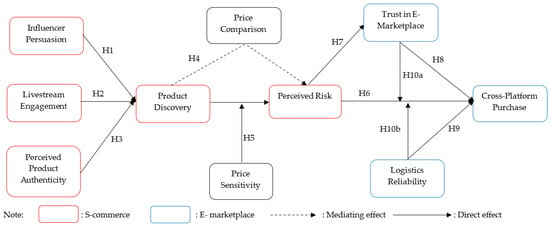
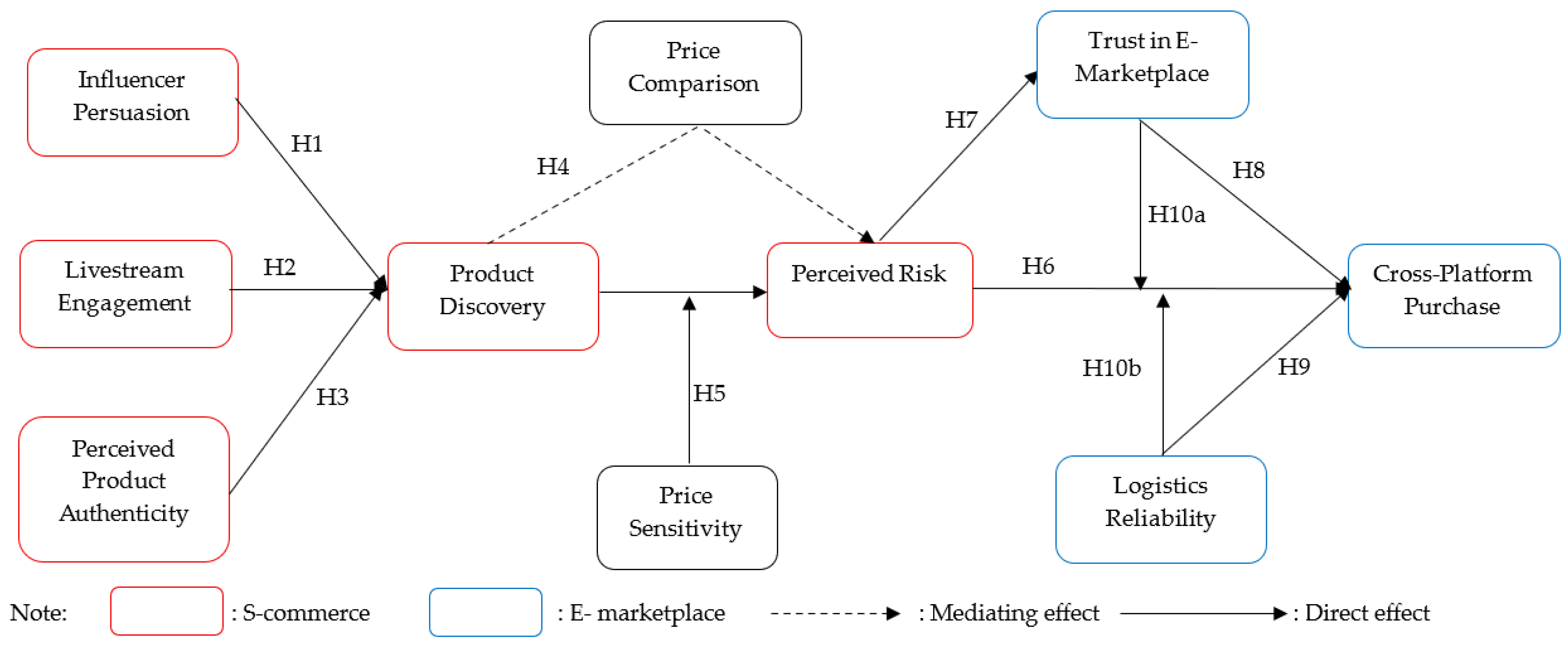

Disclaimer/Publisher’s Note: The statements, opinions and data contained in all publications are solely those of the individual author(s) and contributor(s) and not of MDPI and/or the editor(s). MDPI and/or the editor(s) disclaim responsibility for any injury to people or property resulting from any ideas, methods, instructions or products referred to in the content. |
© 2026 by the authors. Licensee MDPI, Basel, Switzerland. This article is an open access article distributed under the terms and conditions of the Creative Commons Attribution (CC BY) license.