


Abstract
Artificial intelligence (AI) is reshaping electronic retailing, yet many firms struggle to translate AI adoption into a sustainable competitive advantage, and research still lacks an integrative explanation of how digital maturity, AI implementation, AI-enabled benefits, customer experience, and competitive outcomes are linked in this context. This study develops and tests a capability-to-advantage framework proposing that digital maturity is associated with AI implementation, that AI implementation is associated with qualitative and quantitative AI benefits, and that these benefit streams are linked to digitally mediated customer experience and to differentiation and cost-based competitive advantage. Using survey data from retail employees and managers, we estimated the model with PLS-SEM and applied cIPMA to identify actionable priorities by combining importance-performance evidence with necessity-oriented insights. We triangulated the proposed mechanisms through NVivo-based sentiment and thematic analysis of open-ended comments. Results support all hypothesized relationships. Digital maturity strongly predicts AI implementation, which increases both benefit streams and directly improves the customer experience. Customer experience was the strongest downstream driver of both competitive advantage dimensions and partially mediated the effects of AI-enabled benefits. cIPMA identified customer experience and AI implementation as the primary improvement priorities; qualitative evidence was predominantly positive and highlights efficiency/cost gains and decision support alongside the capability constraints. The study integrates capability-based and customer-experience perspectives to offer a theory-guided explanation of how digital maturity and AI implementation are associated with competitive outcomes in electronic retailing while also offering guidance for managers seeking AI-driven advantage.
1. Introduction
Retailers increasingly compete in digitally mediated commerce environments where customers move fluidly across channels and touchpoints, making the orchestration of interactions throughout the customer journey strategically important [1,2]. In electronic retailing, much of this orchestration occurs through digitally mediated interactions (e.g., search, recommendation, checkout, delivery, and service recovery), making data-driven coordination across touchpoints especially consequential. Retail scholarship has emphasized that digital technologies and data-driven decision-making are reshaping competition and pushing firms to rethink value creation in both customer-facing and operational domains [3]. Against this backdrop, AI has become a focal technology for retail transformation, promising improvements across digital interactions, physical touchpoints, and supply chain operations [4,5]. In this article, we focused on electronic retailers (e-retailers), defined as retail firms whose primary customer interactions and transactions occur through digital channels, often complemented by physical touchpoints in omnichannel models.
AI in retail refers to the deployment of algorithmic systems such as machine learning-based predictive models, recommender systems, and natural language processing applications (e.g., conversational agents) to support and automate decisions across frontline and back-office retail processes [6,7]. Retail-focused research suggests that AI is reshaping retailing by enabling more precise personalization, improved payments and customer relationship management, and enhanced logistics and inventory management, all capabilities that can fundamentally alter how retailers compete [8]. Complementing this retail perspective, marketing scholarship argues that AI will change marketing strategy and customer behavior by extending firms’ ability to sense, predict, and respond to customers at scale [9,10]. However, the same literature cautions that AI also introduces pitfalls related to data, governance, and unintended consequences, reinforcing that outcomes depend on how AI is implemented and managed rather than on adoption alone [11,12].
An important problem for both research and practice is that AI value creation is frequently framed in technology-centric terms, even though the broader digital transformation literature emphasizes that performance benefits arise when technologies are embedded into organizational routines, processes, and complementary investments [13]. This view is consistent with classic IT business value research showing that organizational transformation, namely skills, governance, and process redesign, conditions the returns from advanced technologies [14]. More recent economic evidence on general-purpose technologies further indicates that productivity gains often follow a “J-curve”, emerging only after complementary intangible investments accumulate and organizations learn how to restructure work around the new technology [15]. In AI contexts, this implies that implementation depth, routinization across functions, integration with data and workflows, and organizational alignment, should be more predictive of realized benefits than surface-level adoption. In this study, we distinguish analytically between AI implementation and AI-enabled benefits. AI implementation refers to the extent to which AI applications are embedded in organizational processes and routines across retail activities, indicating deployment depth and functional breadth rather than simply favorable attitudes toward AI. In contrast, AI-enabled benefits refer to the outcomes respondents associate with that implementation. We further separate these benefits into qualitative benefits, such as improved decision quality, personalization, and service outcomes, and quantitative benefits, such as efficiency gains, cost reductions, speed improvements, and risk reduction. This distinction is important because organizations may implement AI broadly without perceiving equivalent benefits, and the benefits that do emerge may differ in kind rather than only in magnitude. For electronic retailers, this implementation logic is particularly salient because AI must be embedded into digitally mediated processes (e.g., personalization, pricing, fulfillment, and customer support) that directly structure the online customer journey.
This logic highlights the importance of digital maturity as a foundational antecedent of AI implementation. Digital maturity is commonly understood as the degree to which an organization has developed integrated digital infrastructure, interoperable systems, data governance, digitally enabled processes, and a culture that supports experimentation and change, being conditions that enable scalable digital initiatives rather than fragmented digitization [13,16]. Evidence from transformation research similarly emphasizes that strategy, talent, and culture shape whether advanced digital technologies can be implemented at scale [17], while work on large firms’ transformations underscores the role of building an operational backbone that supports enterprise-wide deployment of digital solutions [18]. In retail specifically, digital maturity has been empirically mapped as a multidimensional capability spanning strategy, operations/processes, technology integration, and culture, aligning closely with the organizational complements required to implement AI across the retail value chain [19]. Moreover, AI-readiness research suggests that AI implementation depends on data-related resources, organizational enablers, and managerial commitment, implying that digitally mature firms should be better positioned to initiate, integrate, and scale AI initiatives beyond isolated pilots [20,21]. In addition, recent retail work explicitly documents socio-technical barriers in AI integration and stresses that change management is pivotal for embedding AI across retail activities [22]. In electronic retailing, digital maturity is therefore expected to function as an enabling capability for integrating AI into both customer-facing digital touchpoints and back-end commerce operations, beyond isolated pilots.
However, organizational readiness and operational gains do not automatically translate into sustained market advantage, especially in retail, where competitive advantage is increasingly mediated by customer-facing value [23]. This is amplified in electronic retailing, where value delivery and evaluation are heavily shaped by digitally mediated touchpoints and the end-to-end online customer journey. Customer experience (CX) is widely conceptualized as a holistic, multi-touchpoint evaluation formed across the customer journey and influenced by touchpoint qualities and contexts [1,2,24]. Management research further positions customer experience as a strategic discipline through which firms can build defensible advantage by institutionalizing experience design, orchestration, and governance [25]. Importantly, AI can influence CX directly through AI-enabled touchpoints (e.g., personalization, conversational interfaces) and indirectly through operational improvements that reduce friction (e.g., fewer stockouts, faster delivery, more reliable service). Retail and omnichannel evidence indicates that AI can reconfigure key dimensions of the omnichannel customer experience, affecting how customers evaluate and navigate journeys across channels [26]. Therefore, a customer-centric lens suggests that AI-generated benefits become strategically meaningful when they enhance customer experience and translate into competitive positioning.
Despite growing interest in AI-enabled commerce, research still lacks an integrative explanation of how upstream digital maturity translates into realized AI benefits, and how those benefits become competitively meaningful through customer experience in electronic retailing. Motivated by these gaps, this study develops and tests a theory-driven directional model that links digital maturity, AI implementation, AI-enabled qualitative and quantitative benefits, customer experience, and competitive advantage in retail. Building on the resource-based view and dynamic capabilities theory [27,28], we conceptualize digital maturity as a higher-order capability that enables retailers to deploy AI systematically across operations and customer-facing activities. We distinguish AI qualitative benefits (e.g., improved decision quality, personalization, and service outcomes) from AI quantitative benefits (e.g., efficiency gains and cost reductions), and we theorize that both benefit types enhance customer experience. Finally, we model customer experience as a key mechanism through which AI-enabled benefits translate into two distinct competitive outcomes in retail: differentiation competitive advantage and cost competitive advantage.
This study contributes in three ways. First, it integrates insights from digital transformation, AI readiness, and customer-experience research into a single capability-to-advantage framework tailored to electronic retailing [13,20,21]. Rather than proposing a radically new theoretical logic, the study brings these streams together to explain how upstream organizational conditions are linked to downstream competitive outcomes. Second, it refines the explanation of AI value creation by distinguishing between qualitative and quantitative AI-enabled benefits, consistent with broader evidence that complementary organizational investments shape realized technological benefits [14,15]. Third, it provides a customer-centric and context-specific explanation of AI-enabled competitiveness by positioning customer experience as a mediator between AI-enabled benefits and both differentiation and cost-based competitive advantage in electronic retailing [2,24,25].
2. Literature Review and Hypotheses Development
2.1. Digital Maturity and AI Implementation
Digital maturity captures how far a retailer has progressed from fragmented digitization toward enterprise-wide digital integration, typically reflected in modern IT architecture, interoperable systems, data availability and governance, digitally enabled processes, and a culture that supports experimentation and change [29]. In digital transformation research, maturity is not simply “having technology”, but having the organizational and technological conditions that allow digital technologies to be scaled and translated into operational and strategic routines [13]. In electronic retailing, these maturity elements typically manifest in integrated commerce platforms and data stacks (e.g., product, customer, and transaction data), enabling consistent execution across digitally mediated journeys.
From a dynamic capabilities lens, digital maturity represents a higher-order capability that helps firms sense opportunities (through data and analytics), seize them (through coordinated investments), and reconfigure resources and processes to embed new technologies [13,28]. In the AI context, this matters because AI implementation is inherently socio-technical: it requires high-quality and accessible data, cross-functional process integration, governance, skills, and change management and not only algorithms. The AI readiness literature explicitly argues that the probability of successful AI adoption/implementation rises when organizations have the necessary assets, capabilities, and commitment in place. For example, Jöhnk et al. [21] identified categories of AI readiness factors (e.g., data-related, organizational, and managerial enablers) that closely align with what digital maturity frameworks seek to capture. Similarly, Holmström [20] conceptualizes AI readiness as an organization’s ability to deploy AI technologies to enable digital transformation, thus implying that mature digital foundations are a prerequisite for meaningful AI deployment beyond isolated pilots.
Empirical and practice-oriented evidence reinforces this logic. Digital transformation research highlights that strategic alignment, talent, and culture, which are elements commonly associated with digital maturity, shape whether advanced digital technologies can be implemented at scale [17]. Work on navigating digital transformation in established firms further shows that companies pursuing enterprise digitization (e.g., digitized solutions and customer engagement strategies) build the operational backbone that makes advanced technologies implementable across functions [18]. Importantly for retail, Pinto et al. [19] empirically mapped digital maturity levels in retail and showed that maturity is multi-dimensional (strategy, operations/processes, technology/integration, culture), which are precisely the organizational complements needed to implement AI broadly in forecasting, inventory, logistics, and customer-facing analytics.
Taken together, the literature converges: digitally mature retailers are better positioned to initiate, integrate, and scale AI across the retail value chain, whereas low-maturity retailers are more likely to face barriers (e.g., siloed data, lack of integration, insufficient governance, and limited absorptive capacity) that constrain AI implementation. Therefore, we hypothesize:
H1.
Digital maturity has a positive effect on AI implementation.
2.2. AI Implementation and AI-Enabled Benefits
In retail, AI implementation refers to embedding AI technologies (e.g., machine learning models, recommender systems, conversational agents, forecasting/decision engines) into frontline and back-office processes so that they become routinized capabilities rather than isolated pilots. Conceptually, AI implementation is distinct from the benefits attributed to AI. Implementation captures deployment depth, breadth of use, and process embedding across organizational activities, whereas AI-enabled benefits capture the outcomes respondents associate with that deployment. In other words, implementation addresses whether and how extensively AI is used in organizational routines, while benefits address what AI is perceived to improve once implemented. This distinction is important because broad implementation does not automatically guarantee equivalent benefits, and because realized benefits may emerge in different forms. For e-retailers, implementation is especially visible in the embedding of AI into core digital commerce processes such as search and discovery, recommendation, merchandising, pricing, checkout, fraud/risk controls, fulfillment, and customer support. Digital transformation research argues that value is realized when digital technologies are integrated into organizational processes and decision-making, triggering new routines, learning, and strategic responses [13]. In the AI context, firms that invest in AI-specific resources and integrate them into workflows develop higher-order “AI capability”, enabling more advanced sensing/interpretation and knowledge creation [30].
From a service and retailing perspective, AI implementation particularly expands qualitative benefits such as better personalization, improved decision quality, enhanced service consistency, and more innovative customer-facing solutions [31]. AI can increasingly perform analytical and even intuitive tasks that support service innovation and experience design, shifting how firms create value in customer interactions [7]. In retail, change-management research on AI integration emphasizes that once AI is embedded across the value chain, firms can better exploit AI-enabled improvements in decision-making and service design [22]. Empirically, AI capability has been shown to positively relate to organizational creativity and firm performance, consistent with the idea that implementation yields qualitative gains [30]. Therefore, stronger AI implementation should translate into stronger perceived qualitative benefits, so we hypothesize:
H2.
AI implementation has a positive effect on AI qualitative benefits.
Beyond qualitative improvements, AI implementation is also expected to generate quantitative benefits, as efficiency, productivity, accuracy, speed, and cost reductions, especially salient in retail operations (e.g., demand forecasting, inventory optimization, dynamic pricing, automation of routine service tasks). Economic research on general purpose technologies highlights that productivity gains materialize when complementary intangible investments and organizational changes accompany technology adoption, precisely what “implementation” captures better than mere adoption [15]. Thus, implementation depth should correlate with measurable operational returns.
In addition, the broader analytics literature indicates that advanced analytics capabilities improve firm performance and process outcomes when integrated into routines and paired with dynamic capabilities [32]. For example, big data analytics capability has been linked to performance effects through organizational capabilities that convert analytics into action [33]. Translating this logic into AI, implementation creates the process-level embedding and governance needed for automation and scale effects. In retail-specific AI-integration work, organizational alignment and systematic change management are presented as prerequisites to move from experimentation to consistent operational gains [22]. Hence, the more thoroughly AI is implemented, the greater the quantitative benefits firms should report, so we hypothesize:
H3.
AI implementation has a positive effect on AI quantitative benefits.
2.3. AI Implementation and Customer Experience
Customer experience is widely conceptualized as a holistic, multi-touchpoint evaluation shaped across the customer journey and omnichannel environments [1,2]. In electronic retailing, CX is often shaped by the usability and relevance of digitally mediated touchpoints that structure the end-to-end online journey. When AI is implemented in customer-facing processes, recommendations, search, personalization, chatbots, service recovery, and assisted selling, it directly changes the nature and quality of touchpoints and the journey logic that customers perceive. Contemporary CX research emphasizes that experience is formed through touchpoints and their qualities (e.g., ease, enjoyment, perceived control, relevance), which can be redesigned via digital technologies [24].
Recent evidence in marketing and retailing further supports the idea that AI-driven personalization and AI-enabled touchpoints materially shape CX. For instance, research examining AI-driven personalized journeys shows that such AI applications influence perceived tensions (personalization vs. empowerment) and customer experience outcomes, highlighting AI’s ability to alter experiential evaluations [34]. Conceptual synthesis work also shows that personalized touchpoints affect CX responses, contingent on trust/privacy concerns and journey stage, factors highly relevant to retail omnichannel strategies [35]. In sum, as AI moves from isolated tools to implemented routines across touchpoints, it should improve (or at least systematically shape) CX, therefore, we hypothesize:
H4.
AI implementation has a positive effect on customer experience.
2.4. AI-Enabled Benefits and Customer Experience
AI qualitative benefits, such as improved personalization relevance, better decision quality in service interactions, more consistent service, and enhanced problem resolution, map directly onto core CX drivers identified in CX theory. CX is not merely satisfaction; it reflects multi-dimensional evaluations of interactions and journey coherence, influenced by the service interface and experience management strategies [2]. When AI yields qualitative improvements (e.g., more context-aware recommendations, better frontline decision support), it can increase perceived relevance, reduce friction, and strengthen emotional and cognitive responses that constitute CX [31].
Service research suggests that AI can progressively perform not only mechanical and analytical tasks but also support more intuitive service elements, enabling better experience design [7]. Empirical work on AI-driven personalization similarly suggests that well-designed AI recommendations and personalized advertising can enhance experiential responses while also revealing boundary conditions such as empowerment concerns [34]. Likewise, the CX literature stresses that improving touchpoint qualities (e.g., usefulness, engagement, reduced effort) is central to superior experience; AI qualitative benefits are essentially mechanisms to lift these qualities [24]. Thus, greater AI qualitative benefits should lead to better CX, so we hypothesize:
H5.
AI qualitative benefits have a positive effect on customer experience.
In retail, many determinants of CX are operationally grounded: waiting time, availability, accuracy, convenience, and consistency across channels. Quantitative AI benefits, faster service, better stock availability through forecasting, fewer errors, shorter resolution time, and scalable service capacity, can improve the experience by reducing customer effort and increasing reliability [5]. CX frameworks explicitly recognize that experience emerges from touchpoints within contexts and is shaped by functional as well as affective qualities [24]. Accordingly, operational gains that customers directly feel (speed, convenience) can enhance CX even when they are not “flashy” innovations.
Recent omnichannel CX research offers measurement and application logic consistent with this claim: experience is multi-dimensional and sensitive to performance across channels and touchpoints [36]. In addition, service/AI research notes that AI’s early strengths (mechanical/analytical intelligence) are particularly effective at improving speed, accuracy, and consistency, precisely the quantitative levers that can elevate experienced service quality and reduce friction [7]. Therefore, AI quantitative benefits should contribute positively to customer experience, so we hypothesize:
H6.
AI quantitative benefits have a positive effect on customer experience.
2.5. Customer Experience and Competitive Advantage
Differentiation competitive advantage arises when customers perceive meaningful uniqueness that supports preference, loyalty, and willingness to pay. Strategy research frames differentiation as building superior value through distinct attributes that are valued by buyers [37]. In retail, CX is a primary carrier of such uniqueness because offerings are often easily imitated, while experience, across channels, brand interface, and service ecosystem, can remain idiosyncratic and hard to replicate [2]. CX management has therefore been positioned as a strategic marketing imperative and a basis for competitive advantage, not merely as an operational metric [25]. This mechanism is particularly salient in electronic retailing, where search costs are low and assortment transparency is high, making experience-driven value a key basis for preference and loyalty.
From a resource-based view, sustained advantage depends on valuable, rare, and hard-to-imitate resources and capabilities [27]. Retailers that design and manage superior CX effectively develop embedded routines (experience governance, touchpoint orchestration, analytics-driven personalization) that can fit the VRIN logic more plausibly than single technologies. Empirically and conceptually, top retailing scholarship highlights that retailers increasingly compete on experience design and engagement, reinforcing differentiation through superior customer interactions [3]. Thus, stronger CX should be associated with stronger differentiation competitive advantage, therefore we hypothesize:
H7.
Customer experience has a positive effect on differentiation competitive advantage.
Cost competitive advantage is traditionally associated with lower cost structures and superior efficiency relative to competitors [37]. While CX is often linked to differentiation, it can also support cost advantage through mechanisms such as reduced service failures and complaints, lower returns, higher self-service adoption, and more efficient customer service processes [38]. In other words, better experience can reduce the firm’s cost-to-serve while sustaining demand, particularly in high-volume retail contexts where service operations and returns logistics are material cost centers.
Information systems research provides process-level evidence consistent with this logic: IT resources and capabilities can improve the performance of customer service processes, supporting efficiency and effectiveness outcomes that are economically consequential [39]. Translating to CX, when experience management reduces friction and improves process outcomes, retailers can achieve lower operational costs (fewer escalations, faster resolutions) while maintaining customer satisfaction and retention. CX management scholarship also frames experience as an organizational discipline linked to improved firm outcomes, implying pathways to both differentiation and efficiency-based advantage [25]. Therefore, superior CX should also contribute positively to cost competitive advantage, therefore we hypothesize:
H8.
Customer experience has a positive effect on cost competitive advantage.
2.6. The Mediating Role of Customer Experience
AI qualitative benefits are not inherently “competitive advantage” unless they translate into customer-perceived value that changes market behavior. In electronic retailing, this translation is reflected in journey-level outcomes through which AI-enabled improvements become competitively consequential. Digital transformation research emphasizes that technologies create disruptions and possibilities, but advantage is realized through organizational responses and value creation mechanisms [13]. CX offers that mechanism: qualitative AI benefits reshape touchpoint qualities (relevance, engagement, perceived control), which cumulatively build superior experience across the journey [1,24].
Once CX is elevated, differentiation advantage becomes more plausible: CX is explicitly presented as a basis for competitive advantage in marketing strategy and is central to how retailers differentiate in technology-intensive environments [2,25]. Recent work on AI-driven personalized journeys underscores that qualitative AI outputs (recommendations, personalization) affect experiential evaluations, as a direct precursor to differentiation in customers’ minds [34]. Therefore, it is theoretically coherent that AI qualitative benefits improve CX, which then drives differentiation competitive advantage, yielding a mediated effect, so we hypothesize:
H9.
Customer experience mediates the relationship between AI qualitative benefits and differentiation competitive advantage.
Similarly, AI quantitative benefits should yield cost advantage primarily when they are converted into superior process outcomes and customer-facing efficiencies that reduce cost-to-serve without eroding value. This aligns with the economic view that the productivity effects of advanced technologies appear when complementary changes and process integration occur [15]. In retail service systems, quantitative gains often manifest in touchpoints that customers directly experience. As such, quantitative benefits can improve CX via reduced friction and effort, consistent with CX theory emphasizing functional touchpoint qualities [24,36].
At the same time, process-level evidence suggests that technology-enabled improvements in customer service processes enhance performance, which is a plausible bridge from operational AI benefits to cost advantage [39]. When CX improves because service is faster and more reliable, retailers may experience fewer costly failures and higher operational efficiency (lower returns/complaints and more scalable service). Thus, CX plausibly mediates the relationship between AI quantitative benefits and cost competitive advantage, therefore we hypothesize:
H10.
Customer experience mediates the relationship between AI quantitative benefits and cost competitive advantage.
Figure 1 presents the conceptual framework of this study. Drawing on the resource-based view and dynamic capabilities theory, the framework illustrates how digital maturity enables the effective implementation of artificial intelligence in retail organizations. Digital maturity is conceptualized as a higher-order organizational capability that provides the technological, organizational, and cultural foundations necessary to deploy AI across the retail value chain.
Figure 1.
Conceptual framework. Source: Authors based on the literature review.
The model proposes that AI implementation generates both qualitative and quantitative benefits. AI qualitative benefits reflect improvements in decision quality, personalization, and service outcomes, whereas AI quantitative benefits capture efficiency gains, cost reductions, and operational performance improvements. In line with customer-centric perspectives in retailing, the framework further posits that these AI-enabled benefits enhance customer experience, which represents a key mechanism through which AI-driven value is translated into competitive outcomes.
Finally, customer experience is modeled as a mediator linking AI-enabled benefits to competitive advantage. Specifically, the framework suggests that improved customer experience strengthens both differentiation-based and cost-based competitive advantage. Together, the proposed relationships depict a process through which digital maturity and AI implementation contribute to competitive advantage in electronic retail organizations (e-retailers) via AI-enabled benefits and customer experience.
3. Methods
3.1. Conceptual Model and Analytical Strategy
To test the proposed dual-path model linking digital maturity, AI implementation, AI-enabled qualitative and quantitative benefits, customer experience, and competitive advantage in retail, with a specific focus on electronic retailing contexts (pure-play and omnichannel e-retailers), the study employed a primarily quantitative analytical strategy complemented by NVivo-based analysis of open-ended responses (Figure 2). PLS-SEM is used to estimate the hypothesized relationships among latent constructs in a prediction-oriented framework, including direct effects and the model’s mediating mechanisms [40,41]. Consistent with recent methodological guidance, this design moves beyond single-technique inference by combining PLS-SEM with complementary approaches to strengthen interpretability and practical relevance [42].
Figure 2.
Mixed-method analytical workflow integrating PLS-SEM, cIPMA, and NVivo. Source: Authors’ elaboration; procedural logic informed by Hauff et al. [43] and Richter et al. [44].
To translate structural results into actionable priorities, the study applied combined IPMA and NCA through the integrated cIPMA procedure, which unifies sufficiency and necessity logic [43,44,45,46]. IPMA identifies antecedents that are highly important but underperforming, highlighting where managerial intervention may yield the largest gains, while NCA indicates whether specific antecedent levels are necessary for achieving target outcomes. In electronic retailing, this prioritization is especially useful because improvements in digitally mediated customer journeys can translate quickly into observable commerce outcomes. The cIPMA output situates antecedents across the four IPMA quadrants and simultaneously flags necessity and the share of cases that fall below the required thresholds [43,45]. PLS-SEM and cIPMA were conducted in SmartPLS 4.1.1.6 [47].
To provide limited contextualization and illustrative support for the quantitative results, open-ended survey comments were analyzed in NVivo 15. The qualitative corpus comprised 105 responses imported with case identifiers and a pre-assigned sentiment attribute (positive/neutral/negative). Analysis followed a two-layer procedure: (1) sentiment distribution on the full set of responses to capture overall polarity, and (2) theory-guided thematic coding using a structured codebook aligned with the model (AI implementation; AI qualitative benefits; AI quantitative benefits; customer experience; barriers/enablers). In practice, comments frequently referenced e-retail AI applications such as personalization and recommendations, customer support automation, forecasting and inventory-related decisions, and fulfillment/service efficiency, which were captured within the existing codebook categories rather than treated as separate constructs. To avoid inflating theme prevalence through repeated identical statements, theme-frequency reporting was based on a de-duplicated subset of 75 unique responses, while sentiment profiling retained all 105.
3.2. Data Collection and Scales
Data were collected using a self-administered online questionnaire targeting employees and managers of electronic retailers (including omnichannel and pure-play e-commerce retailers), designed to capture perceptions of digital maturity, AI implementation, AI-enabled benefits, customer experience, and competitive positioning. Because the respondent pool includes both operational and managerial roles, the measures should be interpreted as perception-based organizational assessments rather than as objective indicators of firm-level strategy or market performance. Accordingly, the customer experience and competitive advantage constructs in this study reflect employees’ and managers’ perceptions of these organizational outcomes rather than direct customer evaluations or objective market-based measures. Respondents were screened to ensure that they worked for retailers whose primary sales and customer interactions occurred through digital channels. The survey was administered during July–December 2025. The study used a non-probabilistic survey approach targeting employees and managers working in electronic retail organizations operating in Romania. An online format was chosen to reach respondents across retail formats and regions efficiently while reducing interviewer influence and supporting standardized administration. As shown in Table A1, the sample included a larger share of operational employees than senior executives. This composition is informative for evaluating process-level AI use and perceived organizational outcomes.
The survey combined structured Likert-type items with an open-ended question that invited participants to describe how AI is used in retail and what effects they perceive. All measurement items were developed based on prior literature and tailored to the retail context. Where necessary, items were adapted to reflect AI-specific applications. Importantly, the measurement model distinguishes between AI implementation and AI-enabled benefits at different analytical levels. AI implementation was operationalized through items capturing the extent to which AI is used across concrete retail activities and organizational processes (e.g., forecasting, procurement, delivery, inventory, sales, relationship management, and collaboration). In contrast, AI qualitative benefits were operationalized through perceived improvements in demand anticipation, product/service quality, customer satisfaction, and personalization, while AI quantitative benefits captured perceived improvements in cost, efficiency, delivery time/logistics, risk reduction, and process efficiency. Thus, the implementation items focus on embedded use, whereas the benefit items focus on perceived consequences of that use. The constructs and questionnaire items used to operationalize the conceptual model are detailed in Table A2; for the downstream constructs, these items capture the respondents’ perceptions of customer experience and competitive advantage rather than direct customer or market-performance measures. Participation was voluntary and anonymous, and no monetary or material incentives were provided to encourage candid responses. After screening and data cleaning, the final dataset used for the quantitative analyses comprised 338 valid cases. The open-ended item yielded 105 comments, which formed the qualitative corpus.
4. Results
4.1. Data Screening and Preliminary Checks
Data quality was assessed prior to model estimation. The final dataset comprised 338 complete cases, with no missing values across the 33 measurement items. We screened for suspicious response patterns (e.g., identical response vectors and straightlining). No duplicate cases or perfect straightlining profiles were detected, and only two responses showed near-invariant answering patterns, which were retained following review. Sample size adequacy for PLS-SEM was confirmed by a power analysis (f2 = 0.15, α = 0.05, power = 0.80, five predictors), indicating a minimum of 92 cases, and by the inverse square root method (β_min = 0.20, α = 0.05, power = 0.80), indicating a minimum of 155 cases [48]. The presence of outliers and distributional properties were also examined; no univariate or multivariate outliers were identified, and skewness (−0.118 to 0.086) and kurtosis (−1.371 to −1.233) did not suggest problematic deviations from normality. Finally, Harman’s single-factor test indicated that the first factor accounted for 32.73% of the variance [49]. Although this test should not be treated as a stand-alone diagnostic, the result, together with the satisfactory discriminant validity of the measurement model, does not suggest that the findings are driven primarily by a single common factor.
4.2. Measurement and Structural Model Evaluation
To address the study objectives, we first estimated the proposed model using PLS-SEM and subsequently applied cIPMA to identify actionable priorities by integrating sufficiency- and necessity-based insights. The PLS-SEM assessment followed established guidelines [40], comprising the evaluation of the measurement model, assessment of the structural model, and hypothesis testing.
Indicator reliability and internal consistency were confirmed through strong outer loadings (>0.70) and satisfactory reliability coefficients (Table A3). Collinearity concerns were examined using VIF values, which did not indicate problematic multicollinearity for the reflective indicators. Convergent validity was supported by average variance extracted (AVE) values above the recommended threshold, while discriminant validity was established using both the Fornell–Larcker criterion and the heterotrait–monotrait ratio (HTMT). Specifically, the square roots of AVE exceeded the inter-construct correlations [50], and all HTMT values were below 0.85 [51], indicating adequate discriminant validity (Table A4). This is particularly relevant for the distinction between AI implementation, AI qualitative benefits, and AI quantitative benefits, which were modeled as theoretically related but empirically distinct constructs.
In-sample explanatory power was assessed using the coefficients of determination (R2) for the endogenous constructs aligned with the proposed directional chain from digital maturity to AI implementation, AI-enabled benefits, customer experience, and competitive advantage in electronic retailing contexts (Figure 3). Using the Hair et al. [40] benchmark, the model explains a meaningful share of variance in AI implementation (R2 = 0.325) and in the downstream outcomes, showing moderate explanatory power for customer experience (R2 = 0.387) and differentiation competitive advantage (R2 = 0.374), and weak-to-moderate explanatory power for cost competitive advantage (R2 = 0.294). The explained variance was lower for the two benefit constructs, AI qualitative benefits (R2 = 0.265) and AI quantitative benefits (R2 = 0.275), suggesting that additional drivers beyond AI implementation may contribute to these perceived benefits. Overall, these results indicate moderate explanatory power and suggest that the proposed model captures an important, but not exhaustive, share of the variance in the focal outcomes.
Figure 3.
Structural model. Source: Authors’ calculations using SmartPLS 4 [47].
Out-of-sample predictive power was evaluated with a PLSpredict procedure using 10 folds and 10 repetitions, focusing on the model’s key downstream outcomes [52]. Across all indicators of these target constructs, Q2_predict values were greater than zero, indicating predictive relevance compared with a naïve mean benchmark.
All hypothesized direct relationships in the structural model were statistically significant and positive (Table 1), supporting H1–H8. Digital maturity increased AI implementation (β = 0.570, p < 0.001), and AI implementation enhanced both AI qualitative benefits (β = 0.515, p < 0.001) and AI quantitative benefits (β = 0.524, p < 0.001). Customer experience was positively shaped by AI implementation (β = 0.245, p < 0.001) as well as by AI qualitative benefits (β = 0.243, p < 0.001) and AI quantitative benefits (β = 0.298, p < 0.001). In turn, customer experience strongly improved the differentiation competitive advantage (β = 0.548, p < 0.001) and cost competitive advantage (β = 0.475, p < 0.001). In addition to statistical significance, the effect sizes indicate meaningful differences in the substantive magnitude of the relationships. Following conventional f2 benchmarks, the effect of digital maturity on AI implementation was large (f2 = 0.481), the effects of AI implementation on AI qualitative and quantitative benefits were medium-to-large (f2 = 0.361 and 0.379), the effects of AI qualitative and quantitative benefits on customer experience were small to moderate (f2 = 0.071 and 0.105), and the effects of customer experience on differentiation and cost competitive advantage were medium and small-to-medium, respectively (f2 = 0.381 and 0.241). These patterns are consistent with the interpretation that upstream capability conditions and customer experience exert a stronger influence in the model than some of the intermediate paths.
Table 1.
Hypotheses testing results (direct and indirect effects). Source: Authors’ calculations using SmartPLS 4 [47].
Mediation results indicate that customer experience serves as a significant, but partial, transmission mechanism for both AI benefit streams, confirming H9 and H10. Specifically, the indirect effects AI_QUAL → CX → DCA (β = 0.133, p < 0.001; v2 = 0.018) and AI_QUANT → CX → CCA (β = 0.141, p < 0.001; v2 = 0.020) were significant. Because the corresponding direct effects also remained significant, the results support complementary partial mediation, suggesting that AI-enabled benefits contribute to competitive advantage both directly and indirectly through improved customer experience.
4.3. cIPMA Results
A construct-level IPMA was conducted by comparing the rescaled performance scores (0–100) of the latent constructs with their total effects on the two competitive advantage outcomes, thereby providing a managerial prioritization lens on the structural results and identifying areas with potential for improvement [53]. As shown in Table 2 and Figure 4, customer experience had the highest importance for both differentiation (total effect = 0.548) and cost competitive advantage (total effect = 0.475), followed by AI implementation (0.350 and 0.311, respectively).
Table 2.
Importance-performance analysis for the competitive advantage outcomes. Source: Authors’ calculations using SmartPLS 4 [47].
Figure 4.
cIPMA for the DCA and CCA target constructs. Source: Adapted from Sarstedt et al. [45] and Hauff et al. [43]. Note: The quadrants are delimited using the mean of performance and mean of importance reported in the table of the IPMA results at the construct level. The size of the bubbles represents the percentage of instances that failed to satisfy the required condition for achieving 85% of the target construct level. ◯ = necessary, ● = not necessary.
To complement the IPMA results, we used NCA to identify minimum threshold conditions associated with reaching 85% of each target construct on a 0–100 scale. In simple terms, this analysis helps show which factors need to be above a certain minimum level if high outcome levels are to be achieved. Bottleneck tables were created from the rescaled latent construct scores, and necessity effect sizes were computed using the CE-FDH technique [44]. As reported in Table 3, achieving 85% differentiation competitive advantage requires minimum levels of AI implementation (≥5.386; 2.663% below), AI qualitative benefits (≥6.679; 6.805% below), AI quantitative benefits (≥11.108; 9.172% below), and especially customer experience (≥27.723; 26.923% below). For 85% cost competitive advantage, the necessary conditions are customer experience (≥16.104; 15.680% below), AI qualitative benefits (≥5.968; 5.030% below), and AI quantitative benefits (≥4.514; 2.367% below), whereas digital maturity and AI implementation do not impose a bottleneck at this outcome level.
Table 3.
Necessary condition analysis (NCA) bottlenecks for achieving 85% of the target constructs (0–100 scale).
Integrating the NCA bottleneck information into the four-quadrant IPMA matrices [43,45] (Figure 4) refines interpretation by distinguishing improvement priorities from “must-have” thresholds while remaining broadly consistent with the pattern already visible in the structural model. In particular, customer experience is not only the most important driver in IPMA, but also the strongest bottleneck for reaching high competitive advantage, implying that high differentiation and cost advantages are unlikely unless the minimum customer experience levels are met. At the same time, the NCA results show that minimum levels of AI-enabled benefits are also required (especially for differentiation), indicating that managers should prioritize customer experience and AI implementation while ensuring that AI-enabled benefits remain above the identified bottleneck thresholds when targeting high competitive advantage.
4.4. Qualitative Findings—Sentiment and Themes
The open-ended responses provide a supplementary qualitative view of how respondents describe AI in retail and indicate an overall favorable orientation toward it. Across all 105 responses, positive sentiment accounted for 56.2% (n = 59), negative sentiment for 24.8% (n = 26), and neutral sentiment for 19.0% (n = 20). To assess whether repeated identical answers materially affected this picture, we replicated the sentiment distribution on the 75 unique responses. The pattern was substantively unchanged: 56.0% positive (n = 42), 25.3% negative (n = 19), and 18.7% neutral (n = 14)—see Table A5, Panel A. Overall, the respondents tended to describe AI in terms of performance improvements and customer-facing gains, while negative comments highlighted implementation and capability constraints. Many comments referred to digitally mediated commerce touchpoints, reinforcing the relevance of the reported benefits for electronic retail journeys.
Theme prevalence was assessed on the 75 unique responses to prevent repetition bias, and the results are presented in Table A5, Panel B. The most frequently coded themes were cost reduction (38.7%; 29/75) and efficiency/automation (34.7%; 26/75), followed by decision insights (33.3%; 25/75) and skills/talent constraints (32.0%; 24/75). Customer experience–proximal themes also emerged strongly, particularly speed/convenience (24.0%; 18/75) and personalization (14.7%; 11/75), with additional mentions of logistics/delivery (13.3%; 10/75), service quality (12.0%; 9/75), and satisfaction/loyalty (12.0%; 9/75). Substantively, positive comments commonly linked AI to process efficiency and reduced delivery times (e.g., “Processes are more efficient and faster; delivery times are reduced and routes are optimized”), consistent with AI quantitative benefits and their CX implications (speed, convenience). Others emphasized improved anticipation of demand and personalization (e.g., “AI helps us anticipate demand much better and contributes to personalizing offers”), consistent with AI qualitative benefits influencing CX. Negative comments frequently centered on capability and integration barriers (skills gaps and legacy-system integration), suggesting boundary conditions for converting AI implementation into realized benefits and improved experience (e.g., “A lack of internal competencies slows adoption; integrating with legacy systems is problematic”)—see Table A5, Panel C. Collectively, these patterns provide qualitative support for the model’s mediating logic: respondents described AI-driven operational and experiential improvements in ways that align with the pathway from AI-enabled benefits, customer experience, and competitive advantage, with differentiation-oriented language more often tied to personalization and service quality, and cost-oriented language tied to efficiency and cost reduction.
5. Discussion
This section interprets the findings in light of the proposed directional chain from digital maturity to AI implementation, AI-enabled benefits, customer experience, and competitive advantage, combining sufficiency-based (PLS-SEM/IPMA) and necessity-based (NCA) evidence and triangulating these insights with the respondents’ open-ended comments. Because the empirical setting is electronic retailing (pure-play and omnichannel e-retailers), the interpretation emphasizes how AI-enabled capabilities translate into value through digitally mediated customer journeys. Overall, the findings support a theory-consistent explanatory chain rather than a disruptive or counterintuitive theoretical account. Accordingly, the contribution of the study lies less in proposing unexpected directional effects and more in integrating adjacent literatures, specifying the mediating role of customer experience and contextualizing these relationships in electronic retailing. Moreover, the quantitative results show that digital maturity is positively associated with AI implementation, which in turn enhances both qualitative and quantitative AI-enabled benefits and improves customer experience; customer experience then emerges as the main conduit through which AI-enabled benefits translate into differentiation and cost advantages. The cIPMA results further recast the structural findings in a managerial prioritization lens, indicating that customer experience and AI implementation appear as the most actionable priorities for improving both competitive advantage outcomes while the NCA bottlenecks highlight the minimum CX (and benefit) levels associated with higher performance targets. The qualitative evidence offers supplementary support for this interpretation: sentiment toward AI in retail is predominantly positive, and recurring themes emphasize efficiency/cost gains and decision-support benefits while also flagging capability constraints that can slow implementation. In electronic retailing, these constraints are particularly consequential because AI value is realized through customer-facing digital touchpoints and the operational systems that sustain them. A synthesis of these results is provided in Table 4.
Table 4.
Summary of results by analysis type and qualitative evidence. Source: Authors’ calculations based on SmartPLS 4 output [47] and NVivo coding results; IPMA logic follows Ringle & Sarstedt [53]; NCA thresholds based on CE-FDH [44] and integrated following the cIPMA rationale [43,45].
Building on the integrated evidence in Table 4, the findings are consistent with a value-creation chain in retail, and specifically, in electronic retailing contexts in which digital maturity enables AI implementation, which then produces AI-enabled qualitative and quantitative benefits, strengthens customer experience, and ultimately translates into competitive advantage. However, the model should be interpreted as providing a partial explanation of these outcomes rather than a comprehensive account of when AI pays off in retailing. In the structural model, all hypothesized links were positive and significant, indicating that AI-related value in retail is not driven by isolated tools, but by a capability sequence that starts with organizational readiness and culminates in customer-facing outcomes.
First, the strong effect of digital maturity on AI implementation suggests that retailers realize AI primarily when they have the technological backbone and organizational alignment needed to deploy AI across processes and touchpoints. This aligns with digital transformation research arguing that maturity reflects more than technology adoption as it includes complementary assets such as governance, skills, and process integration that make advanced technologies usable at scale [13,54]. In the retail AI context, readiness frameworks similarly emphasize that value depends on whether firms can translate AI from experimentation into routinized, organization-wide deployment [20,55]. This interpretation is also consistent with dynamic capability arguments that performance gains from digital technologies require complementary capabilities (e.g., data, routines, talent) rather than the technology alone [15,33].
Second, AI implementation was positively associated with both AI qualitative and AI quantitative benefits, indicating that deeper implementation is associated with improvements that are simultaneously experiential (service/personalization/decision quality) and operational (efficiency/cost/automation). This pattern is consistent with marketing and retail literature describing AI as a dual-use capability: it enhances customer-facing relevance and engagement while also improving back-end efficiency and coordination [4,6,9]. Importantly, the qualitative evidence mirrors this duality: the most frequent themes emphasized cost reduction, efficiency/automation, and decision insights, which map directly onto the quantitative and qualitative benefit streams captured in the model.
Third, the results show that customer experience is shaped by three converging drivers: AI implementation itself, AI qualitative benefits, and AI quantitative benefits. This is highly consistent with customer experience theory, which treats CX as a holistic evaluation formed across touchpoints and contexts, not reducible to satisfaction alone [1,2,24]. In practice, AI qualitative benefits (e.g., better personalization relevance, service consistency, decision support) align with CX mechanisms related to perceived relevance, reduced friction, and improved interaction quality, especially in omnichannel environments [35,36]. Similarly, AI quantitative benefits (e.g., speed, accuracy, availability, fewer errors) support CX through lower customer effort and higher reliability, which are core experience drivers in retail journeys [24,26]. This alignment is also evident in the open-ended responses, where respondents linked AI to faster processes, optimized delivery routes, and improved service quality, and also to better demand anticipation and personalization, which are precisely the pathways proposed in the conceptual model.
Fourth, customer experience emerged as an important construct through which AI-related benefits were associated with competitive outcomes. CX exerted strong positive effects on both differentiation competitive advantage and cost competitive advantage, reinforcing the view that CX can operate as a defensible strategic asset in retail, especially when product and price advantages are easier to imitate than experience design and execution [2,25,37]. Beyond the direct effects, the mediation findings indicate complementary partial mediation in both pathways: AI-enabled benefits contributed to competitive advantage directly and indirectly through customer experience. This pattern suggests that customer experience represents one relevant pathway through which AI benefits are associated with competitive outcomes, while direct associations also remain important.
The integrated cIPMA and NCA results add an important nuance because they show not only what is sufficient to improve competitive advantage, but also what is required to reach high outcome levels. Specifically, customer experience appears as both the most important driver in the IPMA logic and the strongest bottleneck in the NCA logic for achieving 85% of high competitive advantage outcomes. This implies that retailers may not reach high differentiation or cost advantage unless they first achieve minimum CX levels, meaning that AI investments that do not translate into experience improvements risk plateauing in their strategic impact. At the same time, NCA indicates that minimum levels of AI-enabled benefits (and, for differentiation, also AI implementation) remain necessary, supporting an interpretation where CX is the key conversion layer, but it cannot be sustained without adequate operational and capability foundations.
Finally, the sentiment analysis helps contextualize why the chain works for many retailers but remains constrained for others. Overall sentiment toward AI in retail was favorable (about 56% positive), with a meaningful minority of negative evaluations (about 25% negative), indicating both opportunity and friction in implementation. The thematic results clarify that negative sentiment is disproportionately tied to skills/talent constraints and legacy-system integration difficulties, and sometimes to concerns about delayed or unclear benefit realization, boundary conditions widely recognized in AI adoption research [6,11,20]. Taken together, the mixed-method evidence supports a balanced conclusion as retail employees and managers often perceive AI as delivering tangible operational and experiential improvements, but these gains are conditional on capability building, especially human capital and integration capacity, so that implementation can be converted into sustained customer experience improvements, and ultimately, competitive advantage.
The results depict a capability-to-advantage pathway in retail. More specifically, they suggest that digital maturity, AI implementation, AI-enabled qualitative and quantitative benefits, and customer experience are meaningfully associated with both differentiation and cost competitive advantage while leaving room for additional explanatory factors beyond those included in the present model. This pattern is consistent with RBV and dynamic capabilities arguments that performance gains from advanced technologies depend on higher-order capabilities that integrate and reconfigure resources, rather than on technology adoption alone [13,27,28,56]. At the same time, the findings extend customer experience theory by showing that CX operates as a strategic conversion layer through which AI-driven operational and service improvements translate into competitive advantage [1,2,24]. The qualitative evidence complements this interpretation as respondents most often associate AI with efficiency/cost gains and improved decision-making/personalization, while negative sentiment concentrates around capability gaps, reinforcing the idea that implementation readiness conditions whether AI benefits materialize in experience outcomes [4,7].
5.1. Theoretical Contributions
This study offers a theory-refining rather than theory-disrupting contribution. Specifically, it integrates RBV/dynamic capabilities and customer-experience perspectives to explain how AI-related organizational conditions are translated into competitive outcomes in electronic retailing [13,27,28,56]. The findings do not seek to overturn existing theory with counterintuitive effects; instead, they specify a more complete capability-to-advantage chain linking digital maturity, AI implementation, AI-enabled benefits, customer experience, and competitive advantage.
A second contribution is the distinction between qualitative and quantitative AI-enabled benefits. Prior discussions of AI value in retail often treat benefits in aggregate; by separating these two benefit streams, the study provides a more fine-grained explanation of how AI-related value is perceived and how it is linked to customer experience and competitive outcomes [4,7].
Third, the study positions customer experience as one important transmission mechanism through which AI-enabled benefits become strategically meaningful in electronic retailing. In this sense, the study refines customer-experience theory by placing customer experience within a broader capability-to-outcome logic rather than treating it only as an outcome variable [1,2,24,57].
Finally, by combining PLS-SEM with cIPMA/NCA and a supplementary qualitative component, the study adds interpretive value by complementing the structural results with an importance-performance and bottleneck perspective while using open-ended responses to illustrate how respondents describe AI-related benefits and constraints in retail [43,44,53].
5.2. Practical Implications
The findings suggest practical priorities for retail decision-makers because they identify (a) what moves competitive advantage the most, (b) where performance can be improved, and (c) what minimum levels must be met to reach high outcomes. Across both competitive outcomes, customer experience is the most actionable lever as it has the highest importance and is also the strongest bottleneck for reaching high differentiation and cost advantage. Managers should therefore treat AI initiatives as customer experience programs with explicit experience KPIs (e.g., friction reduction, service speed, personalization relevance, complaint handling, and journey continuity), rather than purely as technology deployments. For electronic retailers, this also implies aligning AI initiatives with journey-level commerce outcomes that customers directly experience, alongside internal efficiency gains.
Second, because AI implementation drives both benefit streams and directly improves customer experience, retailers should prioritize scaling AI into core processes rather than running disconnected pilots. Practically, this means selecting a small set of high-impact use cases tied to measurable outcomes (e.g., demand forecasting, inventory optimization, customer support augmentation) and building repeatable “implementation routines” (data pipelines, MLOps, governance, and business ownership) to move from experimentation to operationalization. Our qualitative results reinforce this point: respondents most often highlighted efficiency/automation and cost reduction, indicating that operational AI wins are visible and valued, but they also frequently noted capability constraints, especially skills shortages, which can stall implementation if not addressed.
Third, the NCA bottlenecks imply “non-negotiables” for achieving very high advantage. Retailers seeking top-tier differentiation or cost advantage must ensure that minimum levels of customer experience and AI-enabled benefits are reached, not merely improved at the margin. This suggests a sequencing logic: (1) build sufficient digital maturity and integration to support implementation; (2) ensure AI-enabled benefits are realized in operations and service design; and (3) translate these benefits into customer experience improvements through redesigned touchpoints and employee enablement. In practice, this requires cross-functional coordination (IT–data–operations–marketing–service) and governance that links AI outputs to frontline actions.
Finally, the implications extend to ecosystem actors such as retail associations, technology vendors, and training providers. The prominence of skills and readiness concerns in the open-ended comments indicates that capability building remains a bottleneck; targeted upskilling (data literacy, AI-enabled decision-making, and service redesign) and implementation support can accelerate value realization and reduce negative perceptions that stem from poor execution rather than from AI itself. Although the data were from Romania, the capability-to-experience logic is likely relevant to other markets where digital infrastructure is improving but AI adoption and value capture remain uneven, making the framework transferable to similar retail contexts.
5.3. Limitations and Future Research
The findings should be interpreted in light of several limitations. First, the study relies on a cross-sectional, self-reported dataset, which constrains the ability to establish temporal ordering or make strong causal inferences. Although the conceptual model specifies a directional sequence grounded in theory, the empirical design does not allow us to determine with confidence whether digital maturity precedes AI implementation, whether implementation precedes perceived benefits, or whether customer experience temporally transmits these effects into competitive advantage. In addition, the study tested theory-consistent positive relationships among constructs; therefore, the full support for the hypotheses should be interpreted as evidence of internal coherence in the proposed framework rather than as validation of a high-risk theory-building model. Another important limitation concerns informant validity. Although the sample included respondents from different organizational levels, it was weighted toward operational employees rather than senior strategic decision-makers. Generalizability may be shaped by the Romanian electronic retailing context; comparative studies across countries and retail formats would help identify boundary conditions. Taken together, these limitations suggest that the findings should be interpreted as theory-consistent, perception-based evidence from a specific national and organizational context rather than as broadly generalizable or definitive evidence on AI-related value creation in retail. Future research should also differentiate AI types and use cases (e.g., predictive vs. generative vs. automation; frontstage vs. backstage) and examine additional drivers (e.g., data governance, change management, workforce readiness) that may explain variation in perceived benefits and experience outcomes.
Author Contributions
Conceptualization, O.-I.B. and R.-A.C.; methodology, O.-I.B.; software, O.-I.B.; validation, O.-I.B. and R.-A.C.; formal analysis, O.-I.B.; investigation, O.-I.B. and R.-A.C.; resources, R.-A.C.; data curation, O.-I.B.; writing—original draft preparation, O.-I.B.; writing—review and editing, R.-A.C.; visualization, O.-I.B. and R.-A.C.; supervision, O.-I.B. and R.-A.C.; project administration, O.-I.B. and R.-A.C.; funding acquisition, O.-I.B. and R.-A.C. All authors have read and agreed to the published version of the manuscript.
Funding
This research received no external funding.
Institutional Review Board Statement
The Faculty has been informed about the study titled “When does artificial intelligence pay off in electronic retailing? A dual-path model from implementation to competitive advantage” (authors: Ovidiu-Iulian Bunea; Răzvan-Andrei Corboș), which involved a minimal-risk, non-interventional online questionnaire survey administered to adult participants. Participation was voluntary. Participants were provided with participant information/informed consent text before accessing the questionnaire items, and consent was obtained electronically (implied consent by voluntarily proceeding to the questionnaire). The survey did not collect direct identifiers (name, email address, phone number, IP address, or employer identifiers) and did not collect special-category personal data. Study results are reported in aggregated form. The Faculty confirms that, as conducted and described above, formal prior IRB approval was not mandatory for this minimal-risk, anonymous, non-interventional survey study.
Informed Consent Statement
Informed consent was obtained from all subjects involved in the study.
Data Availability Statement
The raw data supporting the conclusions of this article will be made available by the authors on request.
Conflicts of Interest
The authors declare no conflicts of interest.
Abbreviations
The following abbreviations are used in this manuscript:
| AI | Artificial intelligence |
| AI IMPL | Artificial intelligence implementation |
| AI QUAL | Artificial intelligence qualitative benefits |
| AI QUANT | Artificial intelligence quantitative benefits |
| AVE | Average variance extracted |
| CCA | Cost competitive advantage |
| CE-FDH | Ceiling Envelopment-Free Disposal Hull |
| cIPMA | Combined Importance-Performance Map Analysis |
| CX | Customer experience |
| DCA | Differentiation competitive advantage |
| DM | Digital maturity |
| HTMT | Heterotrait-Monotrait Ratio |
| IPMA | Importance-Performance Map Analysis |
| IT | Information technology |
| MLOps | Machine Learning Operations |
| NCA | Necessary Condition Analysis |
| PLS-SEM | Partial Least Squares Structural Equation Modeling |
| RBV | Resource Based View |
| VIF | Variance inflation factor |
| VRIN | Valuable, Rare, Inimitable, and Non-substitutable |
Appendix A
Table A1.
Sample characteristics of respondents. Source: Authors based on the collected data.
Table A2.
Measurement constructs, items, and sources. Source: Authors based on the literature review.
Table A3.
Indicators and construct reliability. Source: Authors’ calculations using SmartPLS 4 [47].
Table A4.
Discriminant validity assessment. Source: Authors’ calculations using SmartPLS 4 [47].
Table A5.
Sentiment distribution, top themes, and illustrative quotes (open-ended responses; NVivo dataset). Source: Authors based on the NVivo results.
References
- Lemon, K.N.; Verhoef, P.C. Understanding customer experience throughout the customer journey. J. Mark. 2016, 80, 69–96. [Google Scholar] [CrossRef] [Scilit]
- Verhoef, P.C.; Lemon, K.N.; Parasuraman, A.; Roggeveen, A.; Tsiros, M.; Schlesinger, L.A. Customer experience creation: Determinants, dynamics and management strategies. J. Retail. 2009, 85, 31–41. [Google Scholar] [CrossRef] [Scilit]
- Grewal, D.; Roggeveen, A.L.; Nordfält, J. The future of retailing. J. Retail. 2017, 93, 1–6. [Google Scholar] [CrossRef] [Scilit]
- Guha, A.; Grewal, D.; Kopalle, P.K.; Haenlein, M.; Schneider, M.J.; Jung, H.; Moustafa, R.; Hegde, D.R.; Hawkins, G. How artificial intelligence will affect the future of retailing. J. Retail. 2021, 97, 28–41. [Google Scholar] [CrossRef] [Scilit]
- Parab, G.U. AI-driven personalization in retail analytics: Transforming customer experiences. Int. J. Res. Comput. Appl. Inf. Technol. 2024, 7, 2387–2396. [Google Scholar] [CrossRef] [Scilit]
- Davenport, T.H.; Ronanki, R. Artificial intelligence for the real world. Harv. Bus. Rev. 2018, 96, 108–116. [Google Scholar]
- Huang, M.H.; Rust, R.T. Artificial intelligence in service. J. Serv. Res. 2018, 21, 155–172. [Google Scholar] [CrossRef] [Scilit]
- Shankar, V. How artificial intelligence (AI) is reshaping retailing. J. Retail. 2018, 94, vi–xi. [Google Scholar] [CrossRef] [Scilit]
- Davenport, T.; Guha, A.; Grewal, D.; Bressgott, T. How artificial intelligence Will Change Future marketing. J. Acad. Mark. Sci. 2020, 48, 24–42. [Google Scholar] [CrossRef] [Scilit]
- Kumar, V.; Ashraf, A.R.; Nadeem, W. AI-powered marketing: What, where, and how? Int. J. Inf. Manag. 2024, 77, 102783. [Google Scholar] [CrossRef] [Scilit]
- De Bruyn, A.; Viswanathan, V.; Beh, Y.S.; Brock, J.K.U.; Von Wangenheim, F. Artificial intelligence and marketing: Pitfalls and opportunities. J. Interact. Mark. 2020, 51, 91–105. [Google Scholar] [CrossRef] [Scilit]
- Fu, H.P.; Chang, T.H.; Lin, S.W.; Teng, Y.H.; Huang, Y.Z. Evaluation and adoption of artificial intelligence in the retail industry. Int. J. Retail. Distrib. Manag. 2023, 51, 773–790. [Google Scholar] [CrossRef] [Scilit]
- Vial, G. Understanding digital transformation: A review and a research agenda. J. Strateg. Inf. Syst. 2019, 28, 118–144. [Google Scholar] [CrossRef] [Scilit]
- Brynjolfsson, E.; Hitt, L.M. Beyond computation: Information technology, organizational transformation and business performance. J. Econ. Perspect. 2000, 14, 23–48. [Google Scholar] [CrossRef] [Scilit]
- Brynjolfsson, E.; Rock, D.; Syverson, C. The productivity J-curve: How intangibles complement general purpose technologies. Am. Econ. J. Macroecon. 2021, 13, 333–372. [Google Scholar] [CrossRef] [Scilit]
- Bravo-Jaico, J.; Maquen-Niño, G.L.E.; Germán, N.; Valdivia, C.; Alarcón, R.; Aquino, J.; Serquén, O. Assessing digital transformation maturity in higher education institutions: A correlational analysis by actors and dimensions. Front. Comput. Sci. 2025, 7, 1549262. [Google Scholar] [CrossRef] [Scilit]
- Kane, G.C.; Palmer, D.; Phillips, A.N.; Kiron, D.; Buckley, N. Strategy, Not Technology, Drives Digital Transformation; MIT Sloan Management Review: Cambridge, MA, USA; Deloitte University Press: New York, NY, USA, 2015; Available online: https://sloanreview.mit.edu/projects/strategy-drives-digital-transformation/ (accessed on 9 December 2025).
- Sebastian, I.M.; Ross, J.W.; Beath, C.; Mocker, M.; Moloney, K.G.; Fonstad, N.O. How big old companies navigate digital transformation. In Strategic Information Management; Routledge: London, UK, 2020; pp. 133–150. [Google Scholar]
- Pinto, M.R.; Salume, P.K.; Barbosa, M.W.; de Sousa, P.R. The path to digital maturity: A cluster analysis of the retail industry in an emerging economy. Technol. Soc. 2023, 72, 102191. [Google Scholar] [CrossRef] [Scilit]
- Holmström, J. From AI to digital transformation: The AI readiness framework. Bus. Horiz. 2022, 65, 329–339. [Google Scholar] [CrossRef] [Scilit]
- Jöhnk, J.; Weißert, M.; Wyrtki, K. Ready or not, AI comes—An interview study of organizational AI readiness factors. Bus. Inf. Syst. Eng. 2021, 63, 5–20. [Google Scholar] [CrossRef] [Scilit]
- Robertson, J.; Botha, E.; Oosthuizen, K.; Montecchi, M. Managing change when integrating artificial intelligence (AI) into the retail value chain: The AI implementation compass. J. Bus. Res. 2025, 189, 115198. [Google Scholar] [CrossRef] [Scilit]
- Laouar, M.; Boukerch, Y. Bridging the Gap Between Digital Maturity and Competitive Advantage: Are Digital Maturity Models Enough? Manag. Econ. Rev. 2025, 10, 119–132. [Google Scholar] [CrossRef] [Scilit]
- De Keyser, A.; Verleye, K.; Lemon, K.N.; Keiningham, T.L.; Klaus, P. Moving the customer experience field forward: Introducing the touchpoints, context, qualities (TCQ) nomenclature. J. Serv. Res. 2020, 23, 433–455. [Google Scholar] [CrossRef] [Scilit]
- Homburg, C.; Jozić, D.; Kuehnl, C. Customer experience management: Toward implementing an evolving marketing concept. J. Acad. Mark. Sci. 2017, 45, 377–401. [Google Scholar] [CrossRef] [Scilit]
- Calvo, A.V.; Franco, A.D.; Frasquet, M. The role of artificial intelligence in improving the omnichannel customer experience. Int. J. Retail. Distrib. Manag. 2023, 51, 1174–1194. [Google Scholar] [CrossRef] [Scilit]
- Barney, J. Firm resources and sustained competitive advantage. J. Manag. 1991, 17, 99–120. [Google Scholar] [CrossRef] [Scilit]
- Teece, D.J. Explicating dynamic capabilities: The nature and microfoundations of (sustainable) enterprise performance. Strateg. Manag. J. 2007, 28, 1319–1350. [Google Scholar] [CrossRef] [Scilit]
- Gkika, E.C.; Kargas, A.; Salmon, I.; Drosos, D. Unveiling Digital Maturity: Key Drivers of Digital Transformation in the Greek Business Ecosystem. Adm. Sci. 2025, 15, 96. [Google Scholar] [CrossRef] [Scilit]
- Mikalef, P.; Gupta, M. Artificial intelligence capability: Conceptualization, measurement calibration, and empirical study on its impact on organizational creativity and firm performance. Inf. Manag. 2021, 58, 103434. [Google Scholar] [CrossRef] [Scilit]
- Beem, V.R. AI-Driven Personalization in Retail: Transforming Customer Experience Through Intelligent Product Recommendations. Eur. J. Comput. Sci. Inf. Technol. 2025, 13, 117–131. [Google Scholar] [CrossRef] [Scilit]
- Vesterinen, M.; Mero, J.; Skippari, M. Big data analytics capability, marketing agility, and firm performance: A conceptual framework. J. Mark. Theory Pract. 2025, 33, 310–330. [Google Scholar] [CrossRef] [Scilit]
- Wamba, S.F.; Gunasekaran, A.; Akter, S.; Ren, S.J.-F.; Dubey, R.; Childe, S.J. Big data analytics and firm performance: Effects of dynamic capabilities. J. Bus. Res. 2017, 70, 356–365. [Google Scholar] [CrossRef] [Scilit]
- Hardcastle, K.; Vorster, L.; Brown, D.M. Understanding customer responses to AI-Driven personalized journeys: Impacts on the customer experience. J. Advert. 2025, 54, 176–195. [Google Scholar] [CrossRef] [Scilit]
- Weidig, J.; Weippert, M.; Kuehnl, C. Personalized touchpoints and customer experience: A conceptual synthesis. J. Bus. Res. 2024, 177, 114641. [Google Scholar] [CrossRef] [Scilit]
- Gahler, M.; Klein, J.F.; Paul, M. Customer experience: Conceptualization, measurement, and application in omnichannel environments. J. Serv. Res. 2023, 26, 191–211. [Google Scholar] [CrossRef] [Scilit]
- Porter, M.E. Competitive Advantage: Creating and Sustaining Superior Performance; Free Press: New York, NY, USA, 1985. [Google Scholar]
- Lee, W.J. Service Failure by Human, Service Recovery by AI Chatbot: The Impact of Justice, AI Efficacy on Recovery Effort. Virtual Econ. 2024, 7, 48–63. [Google Scholar] [CrossRef] [Scilit]
- Ray, G.; Muhanna, W.A.; Barney, J.B. Information technology and the performance of the customer service process: A resource-based analysis. MIS Q. 2005, 29, 625–652. [Google Scholar] [CrossRef] [Scilit]
- Hair, J.F.; Risher, J.J.; Sarstedt, M.; Ringle, C.M. When to use and how to report the results of PLS-SEM. Eur. Bus. Rev. 2019, 31, 2–24. [Google Scholar] [CrossRef] [Scilit]
- Hair, J.F.; Hult, G.T.M.; Ringle, C.M.; Sarstedt, M. A Primer on Partial Least Squares Structural Equation Modeling (PLS-SEM), 3rd ed.; Sage: Thousand Oaks, CA, USA, 2022. [Google Scholar]
- Cepeda, G.; Roldan, J.L.; Sabol, M.; Hair, J.; Chong, A.Y.L. Emerging opportunities for information systems researchers to expand their PLS-SEM analytical toolbox. Ind. Manag. Data Syst. 2024, 124, 2230–2250. [Google Scholar] [CrossRef] [Scilit]
- Hauff, S.; Richter, N.F.; Sarstedt, M.; Ringle, C.M. Importance and performance in PLS-SEM and NCA: Introducing the combined importance- performance map analysis (cIPMA). J. Retail. Consum. Serv. 2024, 78, 103723. [Google Scholar] [CrossRef] [Scilit]
- Richter, N.F.; Schubring, S.; Hauff, S.; Ringle, C.M.; Sarstedt, M. When predictors of outcomes are necessary: Guidelines for the combined use of PLS-SEM and NCA. Ind. Manag. Data Syst. 2020, 120, 2243–2267. [Google Scholar] [CrossRef] [Scilit]
- Sarstedt, M.; Richter, N.F.; Hauff, S.; Ringle, C.M. Combined importance–performance map analysis (cIPMA) in partial least squares structural equation modeling (PLS–SEM): A SmartPLS 4 tutorial. J. Mark. Anal. 2024, 12, 746–760. [Google Scholar] [CrossRef] [Scilit]
- Ștefan, S.C.; Simion, C.P.; Breazu, A.; Mircioiu, C.E.; Vișan, D.A.M. Sufficient and necessary enablers of digitalization in public institutions: IPMA and NCA insights in the context of PLS-SEM application. IEEE Trans. Eng. Manag. 2025, 72, 2065–2081. [Google Scholar] [CrossRef] [Scilit]
- Ringle, C.M.; Wende, S.; Becker, J.-M. SmartPLS 4. SmartPLS. 2024. Available online: https://www.smartpls.com (accessed on 11 January 2026).
- Kock, N.; Hadaya, P. Minimum sample size estimation in PLS-SEM: The inverse square root and gamma-exponential methods. Inf. Syst. J. 2016, 28, 227–261. [Google Scholar] [CrossRef] [Scilit]
- Podsakoff, P.M.; MacKenzie, S.B.; Lee, J.Y.; Podsakoff, N.P. Common method biases in behavioral research: A critical review of the literature and recommended remedies. J. Appl. Psychol. 2003, 88, 879–903. [Google Scholar] [CrossRef] [Scilit] [PubMed]
- Fornell, C.; Larcker, D.F. Evaluating structural equation models with unobservable variables and measurement error. J. Mark. Res. 1981, 18, 39–50. [Google Scholar] [CrossRef] [Scilit]
- Henseler, J.; Ringle, C.M.; Sarstedt, M. A new criterion for assessing discriminant validity in variance-based structural equation modeling. J. Acad. Mark. Sci. 2015, 43, 115–135. [Google Scholar] [CrossRef] [Scilit]
- Shmueli, G.; Sarstedt, M.; Hair, J.F.; Cheah, J.H.; Ting, H.; Vaithilingam, S.; Ringle, C.M. Predictive model assessment in PLS-SEM: Guidelines for using PLSpredict. Eur. J. Mark. 2019, 53, 2322–2347. [Google Scholar] [CrossRef] [Scilit]
- Ringle, C.M.; Sarstedt, M. Gain more insight from your PLS-SEM results: The importance-performance map analysis. Ind. Manag. Data Syst. 2016, 116, 1865–1886. [Google Scholar] [CrossRef] [Scilit]
- Westerman, G.; Bonnet, D.; McAfee, A. Leading Digital: Turning Technology into Business Transformation; Harvard Business Review Press: Boston, MA, USA, 2014. [Google Scholar]
- HosseiniNasab, S.M. A maturity-driven selection model for effective digital transformation governance mechanisms in large organizations. Kybernetes 2025, 54, 5106–5132. [Google Scholar] [CrossRef] [Scilit]
- Teece, D.J. Business models and dynamic capabilities. Long Range Plan. 2018, 51, 40–49. [Google Scholar] [CrossRef] [Scilit]
- Nitzl, C.; Roldan, J.L.; Cepeda, G. Mediation analysis in partial least squares path modeling: Helping researchers discuss more sophisticated models. Ind. Manag. Data Syst. 2016, 116, 1849–1864. [Google Scholar] [CrossRef] [Scilit]
- Wamba, S.F.; Akter, S.; Edwards, A.; Chopin, G.; Gnanzou, D. How ‘big data’ can make big impact: Findings from a systematic review and a longitudinal case study. Int. J. Prod. Econ. 2015, 165, 234–246. [Google Scholar] [CrossRef] [Scilit]
- Shrestha, Y.R.; Ben-Menahem, S.M.; von Krogh, G. Organizational decision-making structures in the age of artificial intelligence. Calif. Manag. Rev. 2019, 61, 66–83. [Google Scholar] [CrossRef] [Scilit]
- Rust, R.T.; Huang, M.H. The service revolution and the transformation of marketing science. Mark. Sci. 2014, 33, 206–221. [Google Scholar] [CrossRef] [Scilit]
- Porter, M.E.; Heppelmann, J.E. How smart, connected products are transforming companies. Harv. Bus. Rev. 2015, 93, 96–114. [Google Scholar]
- McLean, G.; Osei-Frimpong, K. Examining satisfaction with the experience during a live chat service encounter-implications for website providers. Comput. Hum. Behav. 2017, 76, 494–508. [Google Scholar] [CrossRef] [Scilit]
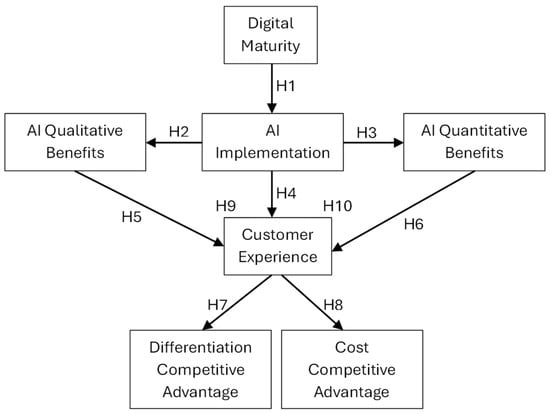
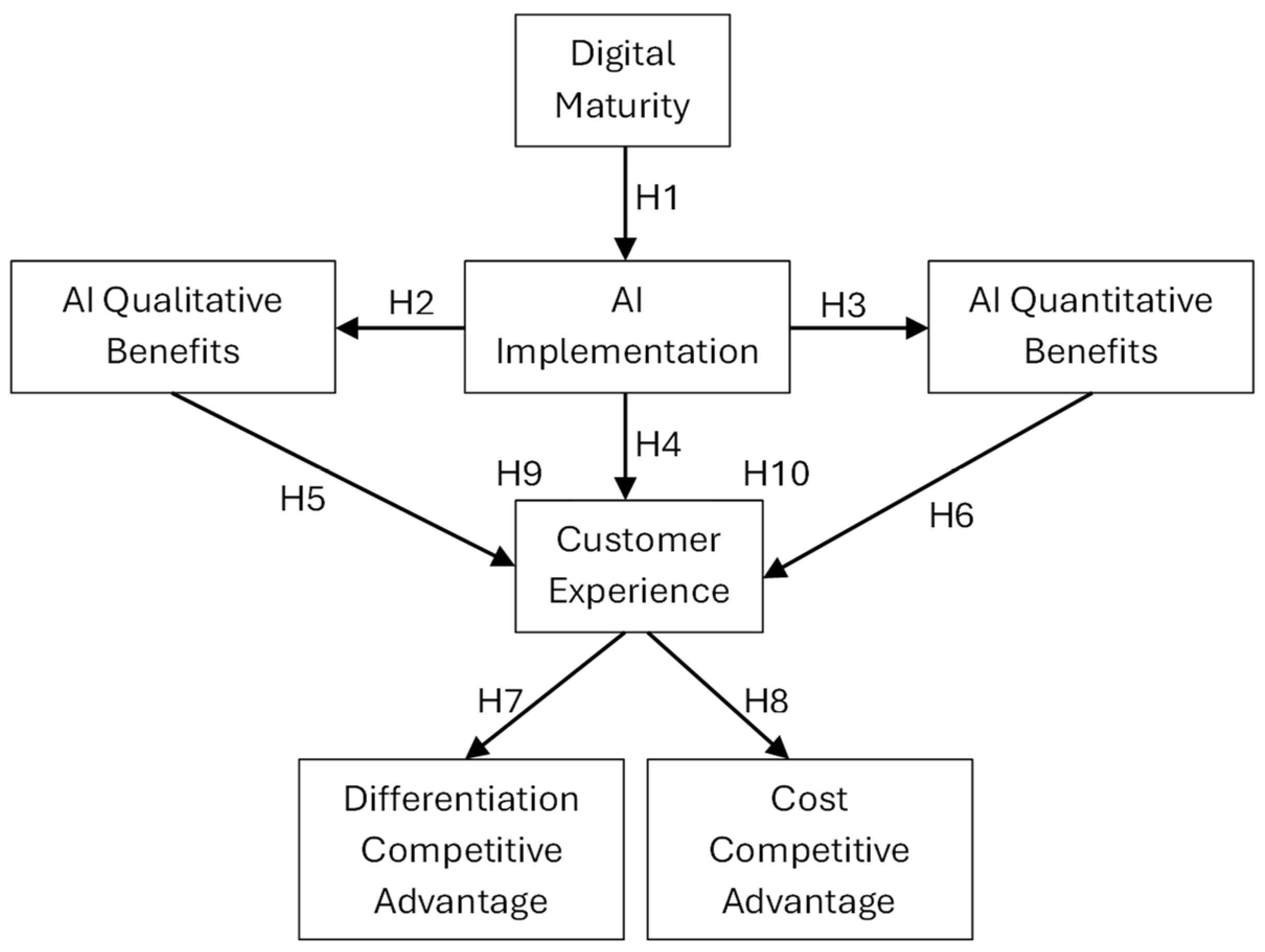
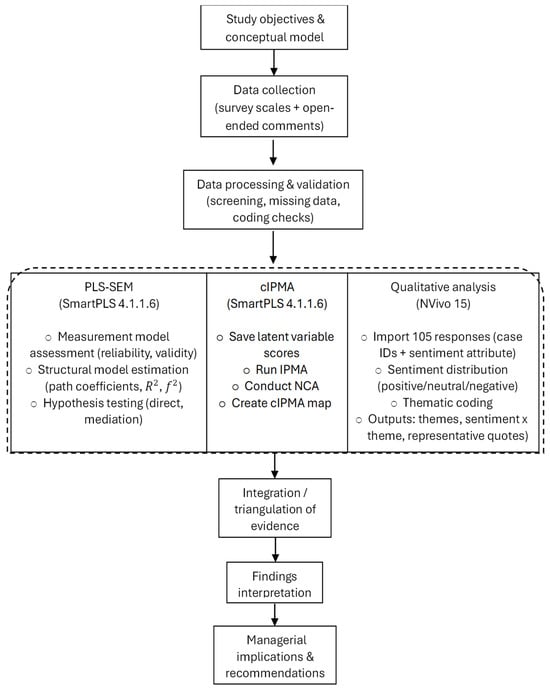
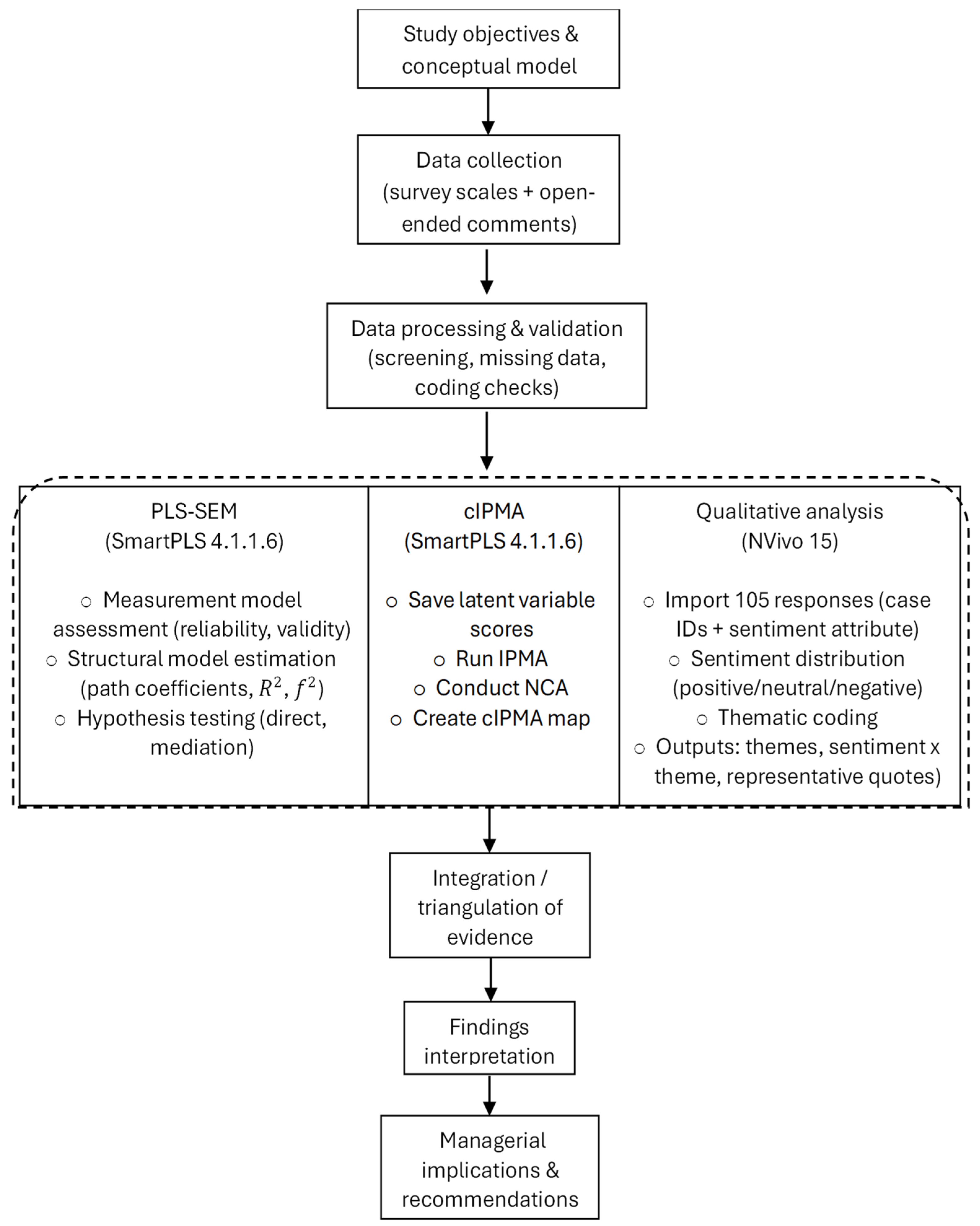
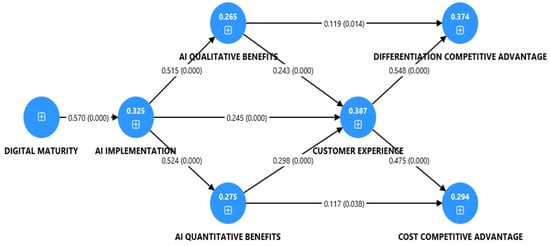
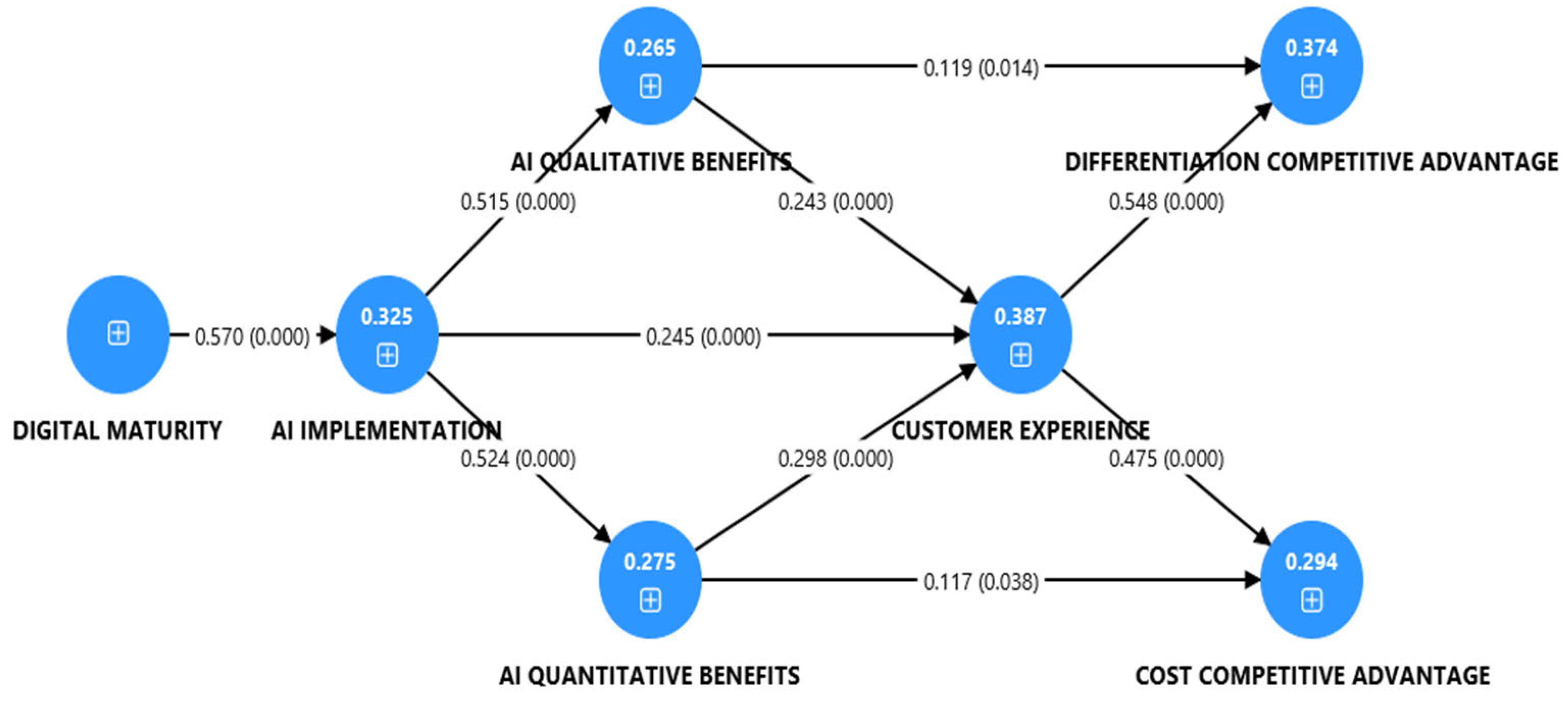
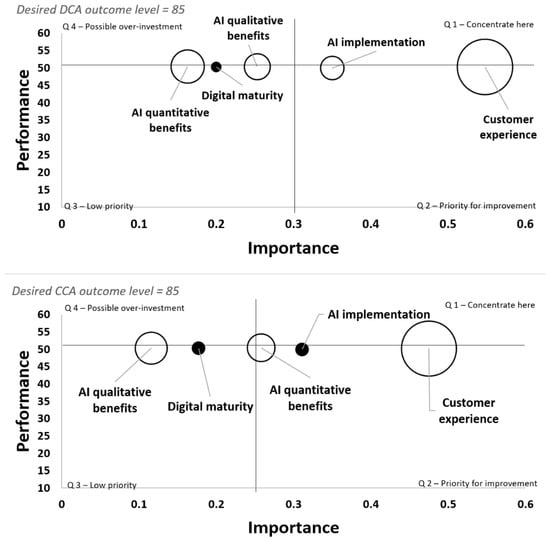
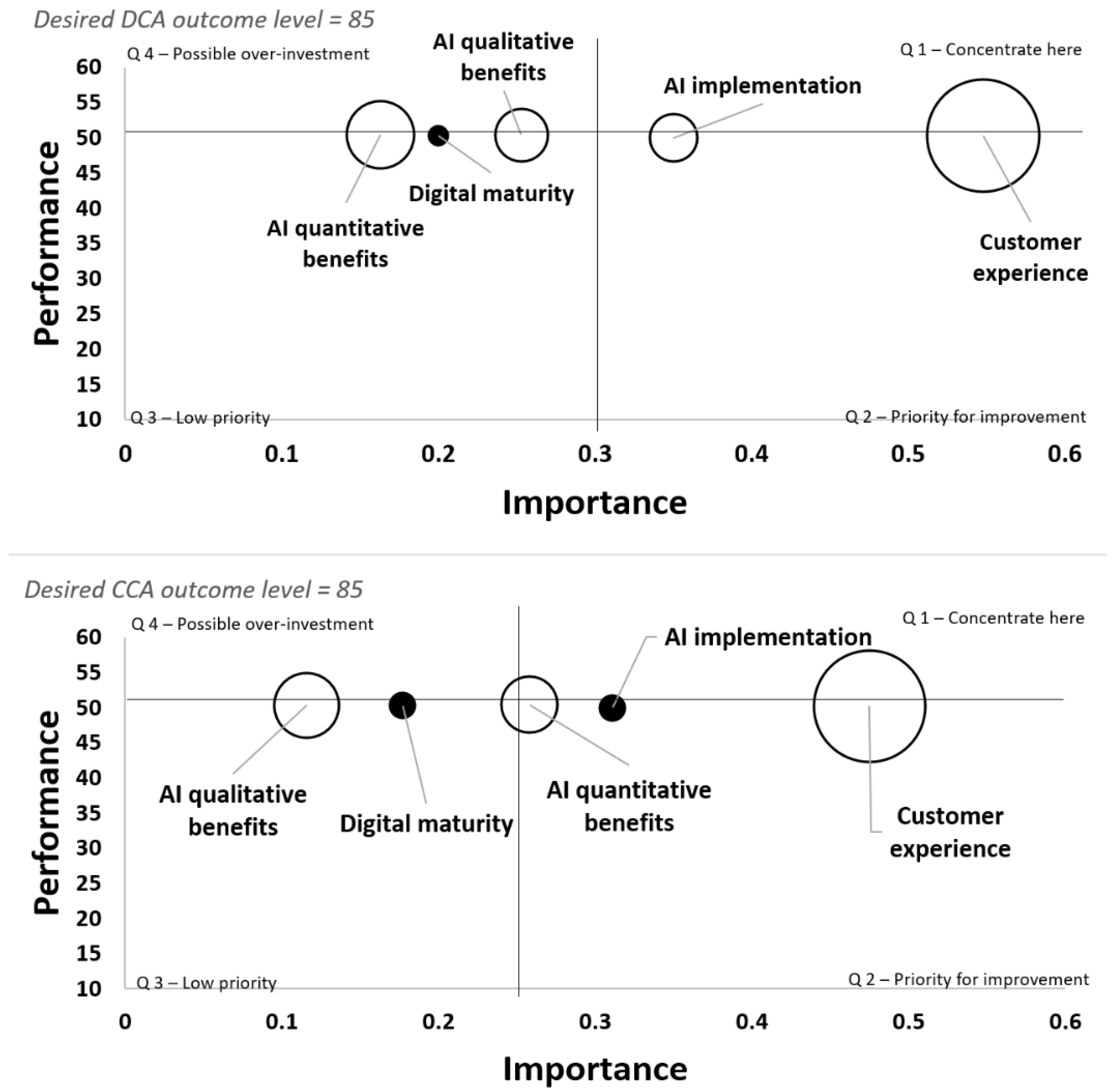

Disclaimer/Publisher’s Note: The statements, opinions and data contained in all publications are solely those of the individual author(s) and contributor(s) and not of MDPI and/or the editor(s). MDPI and/or the editor(s) disclaim responsibility for any injury to people or property resulting from any ideas, methods, instructions or products referred to in the content. |
© 2026 by the authors. Licensee MDPI, Basel, Switzerland. This article is an open access article distributed under the terms and conditions of the Creative Commons Attribution (CC BY) license.