


Abstract
Customer intimacy plays a crucial role in shaping customer relationships and guiding organizational strategies. As the digital business environment has grown, the concept of customer intimacy has evolved, leading to significant changes in its dimensions and implications. This systematic literature review and synthesis comprehensively analyzes the current research on customer intimacy, reexamines it within the context of e-commerce and digital marketing, and introduces the concept of “Digital Customer Intimacy”. The paper explores the unique characteristics of digital customer intimacy, how it differs from traditional customer intimacy, and identifies areas for future research. By synthesizing insights from various studies, this review deepens our understanding of customer intimacy in both traditional and digital contexts, offering practical insights for modern marketing and laying the groundwork for future research.
1. Introduction
In modern marketing research, customer intimacy has emerged as a crucial aspect of relationship marketing [1,2,3,4] and an essential business strategy [5]. It plays a vital role in shaping the quality and strength of relationships between customers and businesses [3,6,7]. Scholars have recognized customer intimacy as an antecedent to key business relationship factors, including customer loyalty, trust, and continuous purchase intentions. The concept encompasses multiple dimensions within business relationships, such as intimacy with the brand, frontline employees, products or services, and even among customers themselves. These dimensions collectively foster long-term, interactive business relationships that are fundamental to a business’s sustained success [8].
While there is no universally agreed definition of customer intimacy, it generally refers to the closeness achieved when businesses engage with customers and fulfill their demands. Central to this concept is the ability to offer personalized solutions tailored to individual customer preferences [9]. Beyond transactional interactions, customer intimacy also involves a psychological dimension, which includes emotional connections and a mutual understanding between the customer and the business.
The expansion of e-commerce and digital service tools has led to an evolution in customer intimacy. Conventional indicators of intimacy, such as face-to-face interactions, have become less frequent in digital business settings, where digital intimacy now compensates for the lack of physical presence [10]. As human–machine interactions (HMIs) gain prominence through AI-driven applications, such as virtual agents, chatbots, and immersive environments like livestream shopping and the Metaverse, the need to understand how digital tools shape customer experiences and foster customer relationships has become critical. For example, the human-like attributes of AI agents [11], interactions with service robots [12], and the impact of social media and livestream commerce are becoming increasingly central to the study of customer relationships. As personalized service becomes easier to deliver with these new technologies, the ability of customers to form emotional connections with technology is becoming a key focus for service providers, as high levels of customer intimacy lead to increased self-disclosure and deeper customer understanding, creating a positive feedback loop.
With industries shifting toward digital interactions, studying customer intimacy in the digital commercial environment is becoming increasingly important. Recent technological advancements have broadened the scope of intimate disclosure beyond human relationships to human and machine relationships [13], and the aim of customer intimacy is not only to enhance customer attitudes toward products, but also to drive the adoption of new technologies, thereby fostering more humanized digital experiences [14].
Recognizing this shift, this review introduces the concept of Digital Customer Intimacy (DCI), a novel dimension in relationship marketing tailored to the digital era. DCI involves businesses building close relationships with customers via digital technologies. Unlike traditional customer intimacy, which relies on in-person interactions, DCI leverages digital tools to deliver personalized experiences and tailored solutions in digital environments, overcoming the limits of physical contact.
As technologies in personalized customer service, social media marketing, and AI customer service have rapidly advanced, interest in studying customer intimacy has surged. Yet, systematic research on digital customer intimacy is lacking, leaving the concept ambiguously defined. Thus, this review addresses the need for a clear understanding of customer intimacy, particularly in the digital context, to establish a solid foundation for future research.
To address these emerging dynamics, this systematic literature review explores the following research questions:
RQ1. What is customer intimacy and what is the current research landscape?
RQ2. What constitutes digital customer intimacy, and how does it differ from traditional customer intimacy?
RQ3. How have customer intimacy and digital customer intimacy developed, and what is the future?
In prior studies, customer intimacy has been investigated through various theoretical lenses. Treacy’s [5] three value discipline model, for example, explored customer intimacy as a corporate strategy, where organizations adapt products and services to fit customers’ needs, prioritizing the lifetime value of the relationship [5,15,16,17]. Additionally, theories like social exchange theory and relational marketing have examined the links between consumer trust, intimacy, and loyalty, positioning customer intimacy as a critical mediating factor in customer relationships [18]. Other theories, such as brand love theory, the triangular theory of love, and parasocial relationship theory, have been applied to explore the psychological dimensions of customer intimacy, suggesting that intimacy is essential in cultivating brand love.
In digital contexts, customer intimacy has been increasingly studied in relation to technology adoption [19]. Models such as the Information Systems Success Model, Technology Acceptance Model, and Theory of Planned Behavior have been used to investigate the connection between customer intimacy and technology adoption.
Utilizing a systematic methodology, this review explores the concepts and theories of customer intimacy and digital customer intimacy, offering deep insights and implications for both current and future marketing practices. This review positions digital customer intimacy as a critical extension of relationship marketing theory. As the first of its kind, this review introduces digital customer intimacy as a distinct construct, offering a basis for future research on the psychological and behavioral dynamics of digital customer relationships. This contribution bridges gaps in existing theories, aligning relationship marketing with the demands of a technology-driven marketplace. This study also provides insights into leveraging digital tools to build customer intimacy. By understanding DCI, businesses can design personalized and engaging digital experiences that enhance loyalty and satisfaction, which is particularly valuable for companies seeking digital transformations.
2. Methodology
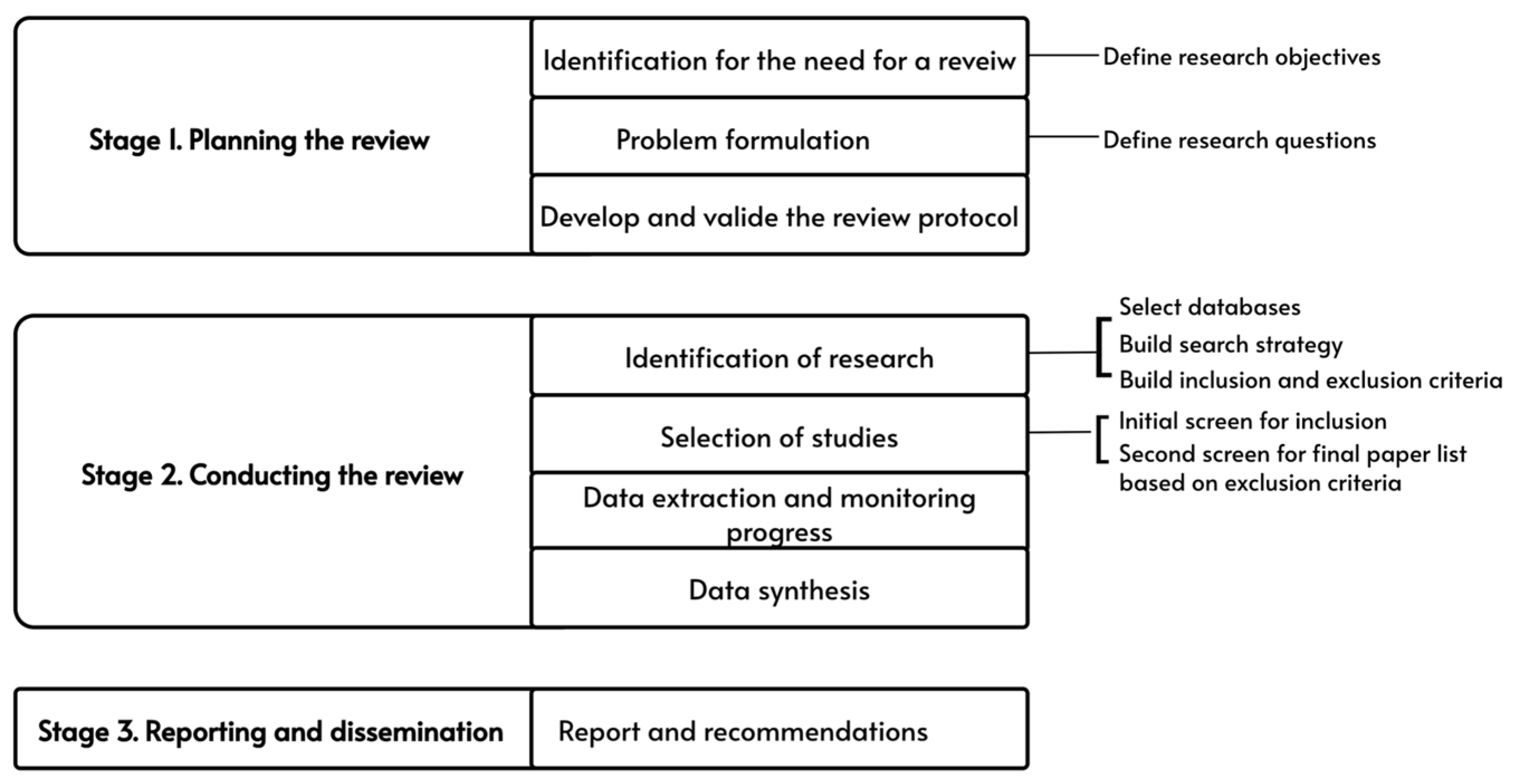
This systematic literature review adopts a replicable, scientific, and transparent process to synthesize existing knowledge and identify gaps within the fields of customer intimacy and digital customer intimacy. The methodology is based on established guidelines for conducting systematic reviews, specifically outlined [20,21] These frameworks ensure rigor and reliability in the research process, as illustrated in Figure 1.
Figure 1.
Research process. Adopted and developed from [20,21].
2.1. Stage 1 Planning the Review
The review process began with identifying the need to address the underexplored areas of customer intimacy (CI) and digital customer intimacy (DCI), particularly given the growing relevance of digital transformation in relationship marketing. A set of clearly defined research objectives and corresponding questions was established, as follows:
RQ1. What is customer intimacy and what is the current research landscape?
This research question aims to evaluate the current state of CI research by exploring its conceptualization, dimensions, and associated constructs.
RQ2. What constitutes digital customer intimacy, and how does it differ from traditional customer intimacy?
This research question aims to define and operationalize DCI while highlighting its unique features and measurements.
RQ3. How have customer intimacy and digital customer intimacy developed, and what is the future?
This research question aims to investigate the development of CI and DCI with the industry transition and identify future research directions.
These research questions were further broken down into sub-questions to ensure a comprehensive analysis, as summarized in Table 1.
Table 1.
Research questions and sub-questions.
Additionally, a review protocol was developed to ensure methodological consistency and quality. This protocol included inclusion and exclusion criteria, a structured search strategy, and a clear plan for data extraction and analysis.
2.2. Stage 2 Conducting the Review
2.2.1. Literature Search Strategy
The literature search was conducted on 29 October 2024, using Scopus and the Web of Science, both recognized for their comprehensive coverage of high-quality, peer-reviewed academic content [22,23]. To ensure the quality of the reviewed literature, only journal and conference proceeding papers were included, as this review aimed to gather robust evidence from original, peer-reviewed research that offers a solid theoretical foundation for new concepts [24].
The initial search employed the following keywords: “consumer intimacy”, “customer intimacy”, and “user intimacy”. To maintain the research focus within the commercial context, a set of inclusion criteria was applied, as detailed in Table 2.
Table 2.
Inclusion criteria.
A sample search query for Scopus is provided in Table 3.
Table 3.
Sample search query.
2.2.2. Screening Process
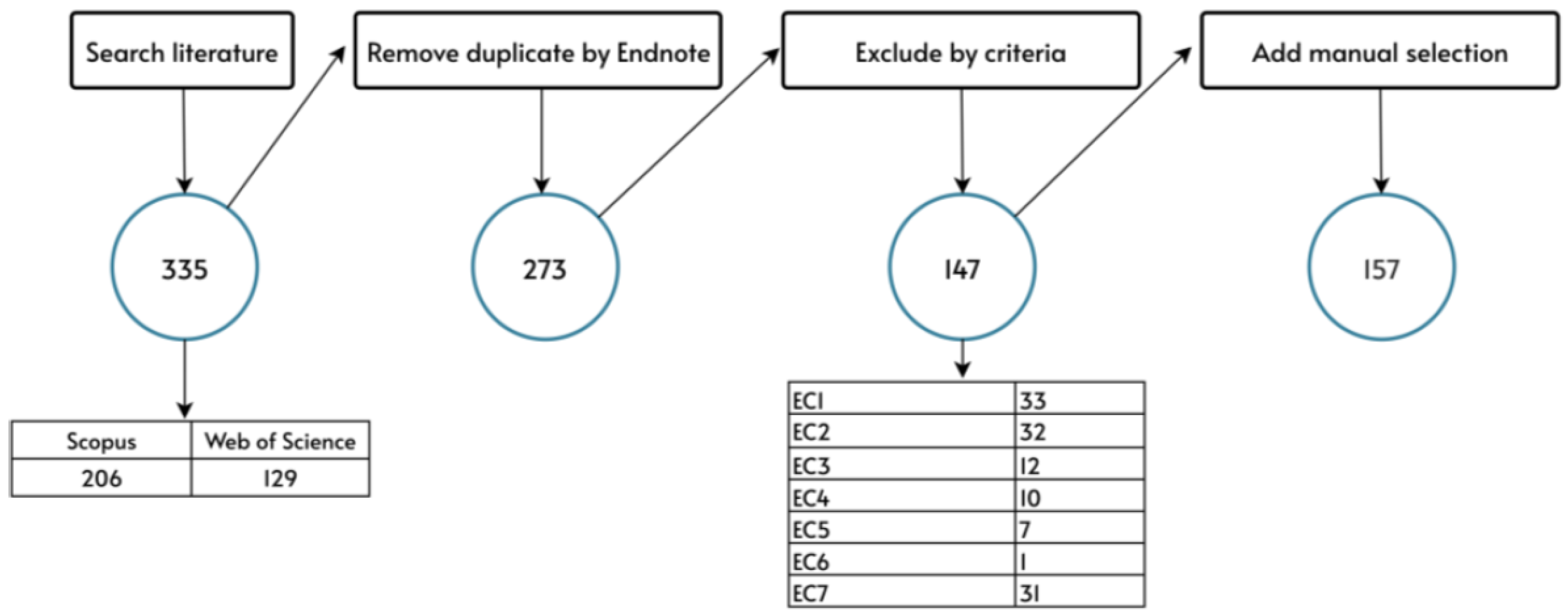
The search initially retrieved 335 articles, which were screened through the following stages:
- Title and Abstract Screening: Duplicates were excluded, resulting in 273 articles.
- Full-Text Review: Further exclusions were made based on the criteria outlined in Table 4, leaving 147 articles that directly addressed CI in a commercial context.
Table 4.
Exclusion criteria.
Recognizing the rapid evolution of digital interaction studies, an expanded search was conducted on 5 April 2024, incorporating the keyword “digital intimacy”. This supplementary search retrieved 102 papers from the Web of Science and 843 from Scopus. While many of these papers discussed intimacy in social or non-commercial contexts, few focused on digital customer intimacy. After manual screening, 10 relevant papers were added, resulting in a final sample of 157 studies. The entire filtering process is visualized in Figure 2.
Figure 2.
Literature filtering process.
2.3. Stage 3: Data Extraction and Analysis
Guided by the research questions, relevant data were extracted into an Excel spreadsheet [25]. Two complementary analytical approaches were employed to examine the data. Thematic analysis facilitated the identification and organization of core themes relevant to customer intimacy (CI) and digital customer intimacy (DCI), systematically exploring recurring patterns and constructs to address the research questions [26]. Meanwhile, qualitative content analysis provided a deeper exploration, uncovering new insights and theoretical connections. This approach was particularly valuable for analyzing the evolution of CI and the emergence of DCI, enriching our understanding of these constructs and highlighting their implications for future research.
The methodology was designed to ensure transparency, rigor, and reproducibility. By combining thematic and qualitative content analyses, this review offers both breadth and depth, addressing existing gaps while providing actionable insights for academics and practitioners.
3. Results and Analysis
This section presents a synthesis of the data extracted from the literature. By synthesizing and structuring the results, an in-depth understanding of customer intimacy and digital customer intimacy was achieved, offering insights for future research.
3.1. RQ1. What Is Customer Intimacy and What Is the Current Research Landscape?
Since Treacy [5] initiated the term “intimacy” related to customers [27], research on customer intimacy has been approached from various perspectives. Studies have explored customer intimacy as both a crucial construct in relationship marketing [28,29] and a fundamental business strategy [30]. In relationship marketing, customer intimacy is considered as a construct of customer relationship quality [31,32,33] and a measurement of customer relationship strength [7], as well as an antecedent [34] and a construct of brand love [35]. In business strategy, it is regarded as one of the three value disciplines for achieving a company’s competitive advantage [5,15,16].
Moreover, customer intimacy has been identified in different dimensions. In the literature, it has been explored between customers and brands [35], customers and companies [36], customers and their peer customers [37], and customers and products [38]. The multifaceted nature of customer intimacy has resulted in differing definitions across studies, posing a challenge for in-depth research.
3.1.1. SQ1-1: What Are the Definitions of Customer Intimacy in Contemporary Research?
The definitions of customer intimacy vary among scholars across different research contexts. Table A1 in Appendix A presents a summary of these definitions.
In the reviewed literature, customer intimacy is primarily seen as a customer relational concept, emphasizing the reciprocal relationship between companies and customers [39]. It involves ongoing engagement [8,40] and continuous interaction [41] between parties for building a feeling of closeness [42], emotional connection [35,43], and mutual understanding [44]. This relationship enables customers to share their preferences [45] and issues [46,47], while also allowing companies to understand individual customer needs and actively respond to them [48]. This responsiveness includes tailoring products and services [49,50] or offering personalized solutions [45].
Drawing from the literature, authors summarize customer intimacy as an ongoing business relationship characterized by a sense of closeness and mutual understanding between the company and the customer. This relationship is built through continuous interaction, active engagement, and responsiveness to customer feedback, with the ultimate goal of fostering mutual benefit.
3.1.2. SQ1-2: What Are the Recognized Dimensions of Customer Intimacy?
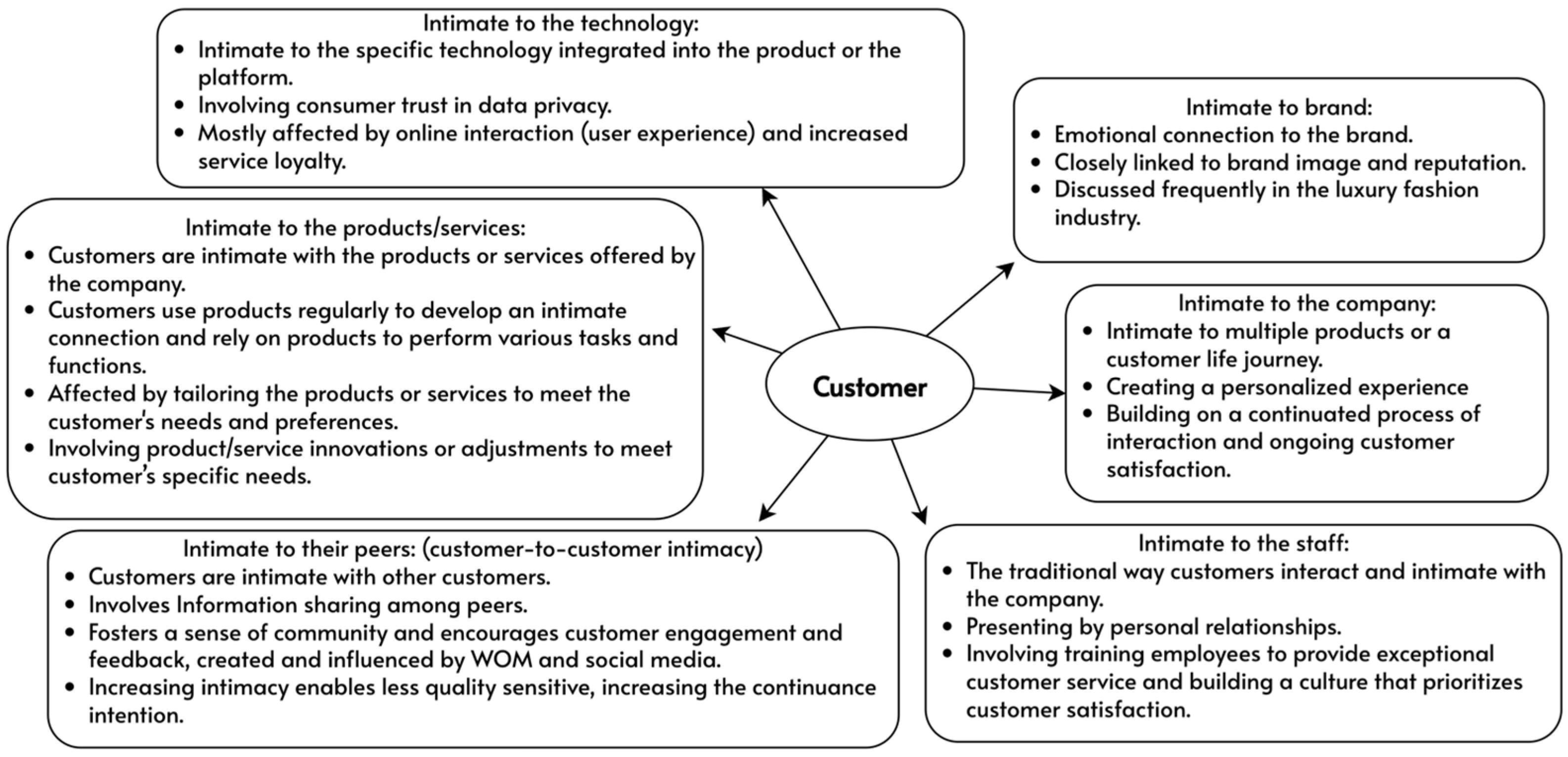
In this study, customer intimacy is explored across various dimensions throughout the business transaction process. Despite extensive study in diverse contexts, there remains a lack of clear summarization regarding its application in customer relationship research, often resulting in its indiscriminate use without proper consolidation. Therefore, a synthesis of customer intimacy dimensions was created and is presented in Figure 3.
Figure 3.
Dimensions of customer intimacy.
At a macro level, customers develop intimacy with a brand by forming emotional connections [33], which are closely tied to the brand’s image and reputation [51]. On a more individual level, customers build intimacy with a company creating personalized experiences and ongoing satisfaction [52]. This intimacy extends across multiple touchpoints, including interactions with staff [53], which often enhance by personal relationships and exceptional service [54].
Furthermore, customers foster intimate relationships with their peer customers [55], engaging in information sharing [4] and building a sense of community [56]. Intimacy between customers strengthens their continuous intentions to purchase products or service [37].
Customers also develop intimacy with products or services [38], relying on them for various tasks and valuing tailored solutions that meet their specific needs [57]. Additionally, at a micro scale, customers establish intimate connections with the technology integrated into products or services [58,59], aligning with their preferences and fostering trust in data sharing [60].
3.1.3. SQ1-3: What Constructs and Models Are Commonly Utilized to Demonstrate the Impact of Customer Intimacy Across Different Contexts?
The literature reveals a complex relationship between several factors associated with customer intimacy. These factors are categorized as antecedents, mediators, outcomes, and moderators, each playing a role in shaping the construct of customer intimacy.
Being a two-way relationship, customer intimacy is influenced by factors from both customer and company perspectives. Customer factors, such as customer usage patterns [61], knowledge about the company [62], and the perceived value of products or services [35], contribute to customer feelings about the company. Similarly, company factors, such as marketing strategies [63], social media marketing [2], customer relationship management strategies [64], brand features [65], staff interactions [66], and product features [67], impact the intimacy from company toward its customers.
Studies have examined the mediation mechanisms linking the antecedents of customer intimacy to its outcomes, such as consumer engagement [68], brand presence [69], trust [6], passion [70], and intention of use [71]. Moreover, scholars have studied how these relationships are moderated by factors like word-of-mouth [35], relationship norms [71], and religious factors [72].
Many studies have researched how customer intimacy contributes to company success, specifically to a company’s performance [45] and innovation in business models [73], products [74], or services [75]. These successes are impacted by the accumulation of tangible or intangible assets such as customer information disclosure [76], brand gratitude [56], brand love [77], brand image [68], and customer loyalty [4].
With the growth of e-commerce [78] and digital marketing [79], a significant focus in the literature has been on enhancing customer intimacy through social media platforms. This includes increased consumer engagement with official social media accounts [68] and examining shifts in media consumption patterns [63].
The constructs and models identified in the literature were synthesized into an integrative conceptual framework, as illustrated in Appendix A Figure A1. This framework provides a foundation for future research, helping to further understand the dynamics of customer intimacy and the interacting concepts.
3.2. RQ2. What Constitutes Digital Customer Intimacy, and How Does It Differ from Traditional Customer Intimacy?
Digital technologies have transformed customer interactions and service delivery [80], prompting a shift in service models and marketing strategies [81,82]. Although digital technologies may increase the physical distance between customers and businesses, it also reduces the psychological distance [83], highlighting the importance of exploring customer intimacy in the e-commerce context. Digital intimacy is a subdimension of user attitudes toward machines [84]. Intimacy emphasizes cultivating close and anthropomorphic connections to enhance users’ confidence in chatbot technology [85].
However, the field remains under-researched, resulting in the lack of a universally accepted term for customer intimacy in the digital era. To bridge this gap, the term “digital customer intimacy” is proposed for further exploration. “Digital”, as defined by Merriam-Webster [86], refers to the utilization of devices constructed or operating based on electronic principles. Distinct from “cyber”, “online”, or “virtual”, “digital” encompasses broader aspects of commercial services, including but not limited to online banking, e-learning, online shopping, and virtual agent services [87].
This section provides a thorough review of the role of digital customer intimacy (DCI) in the literature, examines the research methods employed in this area, and distinguishes DCI from customer intimacy (CI).
3.2.1. SQ2-1: What Is the Definition of Digital Customer Intimacy?
Since there is no established definition of DCI in the current research, the authors summarize and synthesize the existing definitions of customer intimacy in a digital context and digital intimacy in the commercial context. Based on this synthesis, DCI is operationalized accordingly. The summary is presented in Table A2 in Appendix A.
Digital intimacy is defined as a platform’s user-perceived ability to evoke warmth, closeness, or belonging, which encompasses modes of intimacy with their interaction partners [88]. The construct of digital intimacy includes elements such as honesty, genuineness, positivity, and mutual understanding [87].
In terms of customer intimacy in the digital context, Lin et al. [89] stated that customer intimacy on a mobile app means a direct relationship, collaborative data exchange, and a better user experience, rather than just measuring the exchange relationship. Read, Robertson, McQuilken, and Ferdous [68] highlighted that customer intimacy involves increasingly rich and crucial information sharing in digital commerce, which has advanced marketing research into an era where technology mediates customer communication and relationships [90].
Building on previous definitions of customer intimacy, digital customer intimacy specifically involves technology-driven interactions [91], user experience enhancement [89], customer data utilization [92], and online consumer engagement [64] to foster close relationships between customers and businesses. It enables the provision of bespoke products [73] and services tailored [93] to individual preferences and the optimization of the use of customer data to enhance overall experiences [93].
Drawing upon insights from previous researchers, we formulated the operational definition of digital customer intimacy as follows: digital customer intimacy as a close, data-driven relationship facilitated by digital technologies, which encompasses leveraging data exchange, understanding individual needs, driving engagement, enhancing user experiences, and fostering emotional connections to deliver personalized solutions.
3.2.2. SQ2-2: What Methodologies and Measurements Can Be Employed to Study Digital Customer Intimacy?
Given the limited research on DCI, there are no established methodologies and measurements in this field. However, by examining similarities with CI and DCI, this research question is addressed by summarizing the research methods used for studying customer intimacy in digital contexts. These methodologies are detailed in Table A3 in Appendix A.
Previous researchers have employed questionnaires, online surveys, interviews, and experimental setups gathering both qualitative and quantitative data. These approaches are often grounded in the theories of Social Exchange Theory, the Information Systems Success Model, and the Technology Acceptance Model. The popular data analysis techniques adopted are Structural Equation Modeling, Confirmatory Factor Analysis, and Multivariate Analysis of Variance.
Regarding the measurement of CI in the digital context, studies typically focus on users’ experiences, ease of use, users’ perceptions, and emotional connections, examining factors like user engagement, trust, and emotional closeness. For example, in mobile shopping, researchers assessed metrics including ease of communication and convenience, highlighting users’ experiences in this scenario [94]. Additionally, users’ perceived emotional closeness and support with a running app were measured [71].
Furthermore, many studies treat CI as a sub-dimension within their unit of analysis. For instance, Kim, Li, and Kim [94] studied mobile shopping usage, incorporating intimacy as a variable related to usability in this context. This review addresses the unit of observation to better understand the research perspectives. It finds that the majority of studies focus on the customer as the primary unit of observation, indicating that most CI research is conducted from the customer’s perspective.
Table 5 summarizes and synthesizes a set of measurements for DCI from the customer perspective. To gain a more comprehensive understanding of DCI as a mutual relationship construct, future research should consider exploring DCI from the company’s perspective.
Table 5.
Proposed measurements of DCI.
3.2.3. SQ2-3: What Is the Difference Between Customer Intimacy and Digital Customer Intimacy?
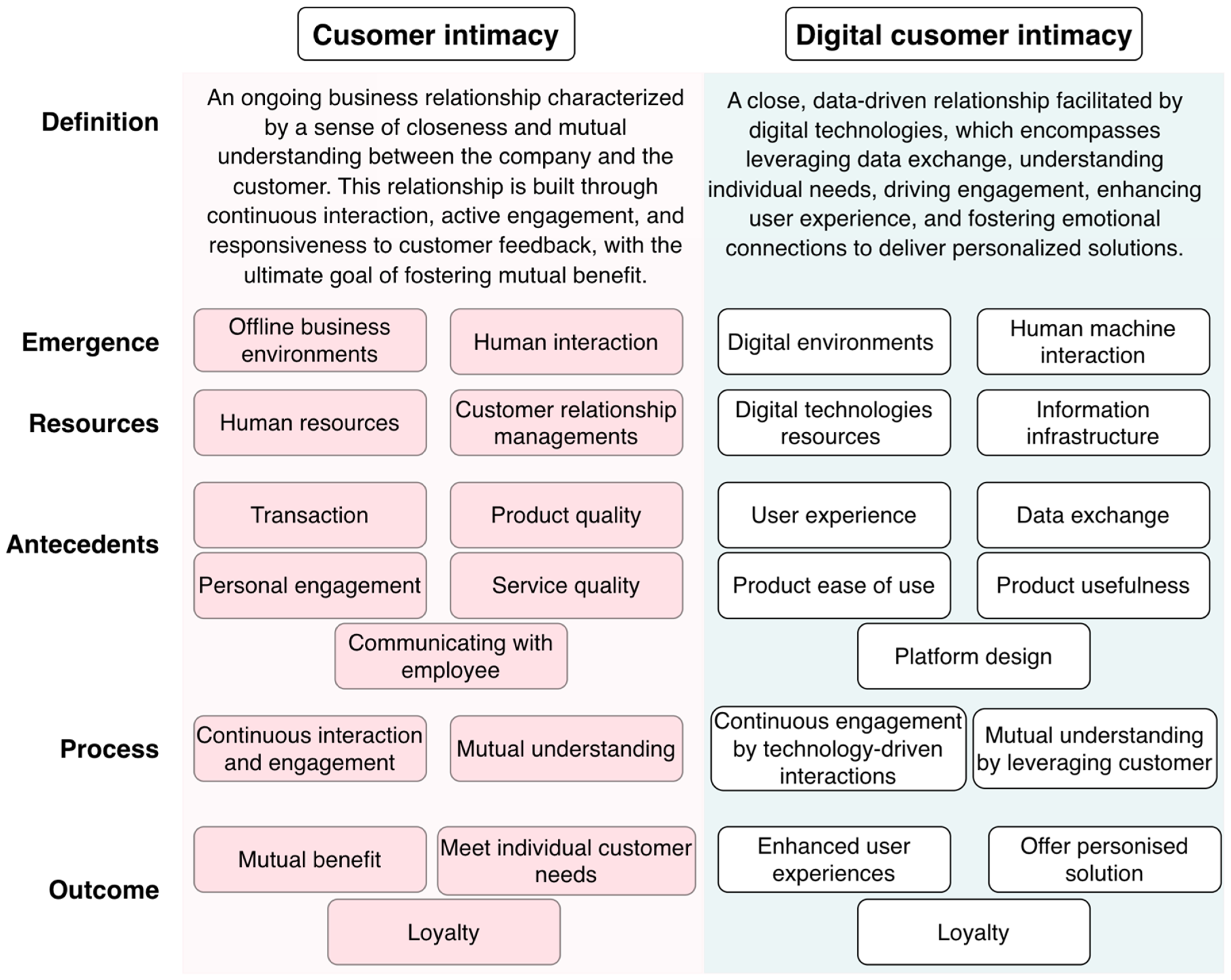
The distinctions between CI and DCI reveal both shared characteristics and unique features, as shown in Figure 4.
Figure 4.
Difference between CI and DCI.
Key differences are observed in interaction channels and the extent of customer information exchange. DCI has emerged from digital business environments characterized by frequent HMIs, emphasizing direct relationships between customers and products or services. DCI relies heavily on technology interfaces like mobile apps and online platforms to facilitate direct and frequent interactions, allowing for instant data exchange and problem resolution. While DCI enables personalized service delivery, it may face challenges in fostering deep emotional connections due to the lack of face-to-face interactions.
In contrast, CI emphasizes close personal relationships, typically through traditional offline channels that may involve slower response times and less frequent interactions. This personal relationship approach provides more opportunities to connect with customers on a human level, fostering trust and loyalty over time. In CI, people are the pivotal asset, driving both customer satisfaction and commitment to quality [27]. Particularly in service-based industries, human resources play a vital role in ensuring effective service delivery for fostering customer intimacy [95].
Moreover, DCI utilizes advanced digital technologies to create personalized experiences by analyzing past behaviors and preferences. This approach improves the overall customer experience and fosters loyalty and trust. In contrast, CI relies on interpersonal relationships and human intuition to tailor services, which can lead less consistent personalization compared to digital methods. Overall, DCI contributes to personalized experiences and addresses customer demands through technology-enabled interactions and collaborative data exchange, adapting to the evolving nature of customer relationships in the digital era. In practice, CI and DCI complement each other, working together to enhance customer service quality and deliver personalized solutions.
3.3. RQ3. How Have Customer Intimacy and Digital Customer Intimacy Developed, and What Is the Future?
3.3.1. SQ3-1: How Have CI and DCI Developed?
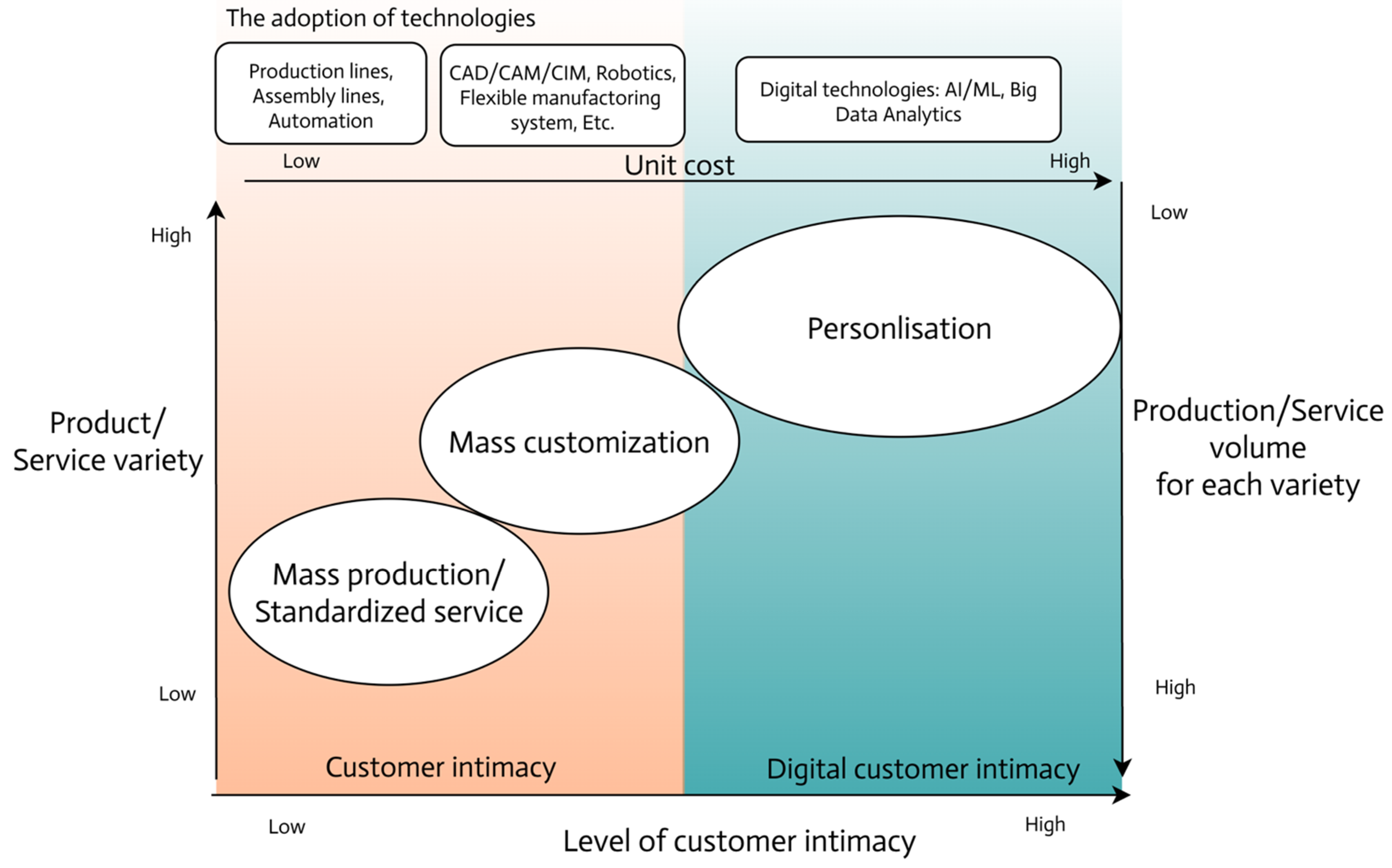
The development of CI and DCI are closely linked to the evolution of manufacturing and service paradigms, from mass production and standardized services [96] to mass customization and personalization. Table 6 summarizes this development.
Table 6.
The development of CI and DCI.
In mass production, there is typically a low product variety and almost no customer intimacy. This approach focuses on producing large quantities of standardized products at a low cost [97]. The products are identical, offering no customization to individual customer preferences, and there is minimal direct interaction or relationship-building with individual customers. However, evolving customer expectations led to the emergence of product customization and the concept of customer relationships.
Mass customization seeks to merge the efficiency of mass production with the flexibility of customized products [98]. This paradigm allows for an increased product variety while maintaining cost-effectiveness, enabling customers to choose from a range of options to tailor products to their preferences. Technologies such as industrial robots, flexible manufacturing systems, and the modular design of products have made it possible to offer customization without significant cost increases. In this paradigm, some customer interactions result in limited customer intimacy.
As customer needs continuously evolve, personalization has emerged as an innovative business model [27]. Unlike mass customization, which involves predefined product variants initiated by the customer [99], personalization refers to system- or company-initiated [100] solutions that tailor offerings to individual customer needs and preferences [95,101].
In personalization, the variety of products and services is vast. Customer intimacy is crucial, as a closer customer relationship allows for more personalized solutions, thereby enhancing the potential to serve the customer throughout their lifetime [42]. Personalization caters to varies niche markets, requiring supply chain flexibility [102] and often leading to higher unit costs.
Digital technologies facilitate personalized services by leveraging user behaviors and customer data [100]. For example, intimate contactless technology services provide personalized experiences tailored to individual preferences and needs [103]. With the aid of big data analytics and advanced AI technologies, companies can easily gain insights into customer preferences and needs [14], identifying [101] and quantifying [104] customer needs. DCI emerged from these data-driven customer interactions, enabling tailored customer solutions at scale, while offering an unlimited product variety.
The journey from mass production and standardized services to mass customization and personalization reflects the increasing importance of customer intimacy in business strategies. As digital technologies continue to advance, they further enhance the ability of businesses to offer personalized solutions, making digital customer intimacy an essential component of modern customer relationship management. Figure 5 illustrates this development.
Figure 5.
The development of CI and DCI.
3.3.2. SQ3-2: What Is the Future for Customer Intimacy and Digital Customer Intimacy and What Directions Should Future Research Pursue?
CI and DCI will become increasingly important as customer demands grow more refined and industries offer more personalized services. Their convergence will be essential for businesses to gain deep insights into customer needs and behaviors through both traditional and digital communication channels [64]. Consequently, a promising research area involves integrating CI and DCI methods to develop comprehensive digital strategies to understand customer requirements across various sectors.
As small- and medium-sized enterprises (SMEs) increasingly adopt Artificial Intelligence, the demand for personalized services is rising. However, SMEs encounter specific challenges when implementing DCI strategies. Researchers may explore the adaptability and effectiveness of DCI applications in SMEs, focusing on scalable and cost-effective solutions.
Addressing psychological engagement in DCI is crucial, especially given that HMIs can increase the spatial distance between customers and businesses. Innovative solutions that focus on building trust and psychological connections are essential. One promising tool in this area is the Metaverse. Exploring the adoption of the Metaverse in the customer purchasing process to enhance DCI is a key area for further research. Additionally, integrating DCI within the Metaverse economy presents a promising research direction. As the Metaverse emerges as a new frontier for strategic business opportunities [103], understanding customer experiences and behaviors in virtual immersive shopping environments becomes vital. Research should investigate the applications, methods, and impact of DCI across various industries within the Metaverse ecosystem.
4. Discussion
As a niche area within relationship marketing, research focused solely on customer intimacy (CI) remains limited. Previous studies have often treated CI as a component of broader relationship marketing strategies, primarily addressing it in specific contexts or through fragmented theoretical lenses related to trust, loyalty, and customer relationships. With the business environment increasingly shifting toward digital contexts, research on CI has not fully addressed its evolving dynamics in the digital era.
The transition to a digital marketplace reflects changing customer demands, moving from standardized offerings to personalized experiences. Even businesses prioritizing operational excellence or product leadership must now consider customers’ unique needs to retain loyalty and maximize their lifetime value. The ability to establish emotional connections and foster intimacy across various dimensions is becoming increasingly critical for enhancing customer retention. Both market demands and academic inquiry call for a deeper exploration of CI, particularly its application and development in digital environments.
This review defines CI as a business relationship characterized by a sense of closeness and mutual understanding, achieved through continuous interaction, active engagement, and responsiveness to customer feedback. The ultimate goal of CI is mutual benefits for both the business and the customer. Digital Customer Intimacy (DCI), as a distinct construct, adapts these foundational principles to meet the demands of technology-driven customer relationships. While traditional CI relies on face-to-face interactions to build emotional bonds, DCI leverages digital tools—such as AI agents, chatbots, and digital interfaces—to create personalized, data-driven experiences. These tools foster emotional connections even in the absence of physical presence, marking a paradigm shift in relationship marketing.
The findings of this review position DCI as a critical extension of relationship marketing theory, addressing gaps in understanding how digital technologies transform customer relationships. Theoretical contributions include consolidating the definitions and frameworks for CI and DCI, offering a foundation for studying their psychological and behavioral dimensions. DCI presents a scalable, data-driven model that integrates traditional intimacy into the digital environment, enabling new avenues of research into emotional engagement, technology adoption, and the evolving role of human–machine interaction (HMI). This review also identifies opportunities for integrating CI and DCI into emerging domains, such as the Metaverse economy, extending relationship marketing theory into novel technological contexts.
For practitioners, this review emphasizes the need to adapt relationship marketing strategies to incorporate digital tools. By understanding DCI principles, businesses can design more personalized and engaging customer experiences, enhancing satisfaction and loyalty. This is particularly relevant for organizations undergoing digital transformation, where DCI strategies enable consistent, scalable engagement through AI-driven platforms. Moreover, adopting DCI offers opportunities for product and service innovation, enabling businesses to maintain competitiveness in a technology-driven marketplace. In sectors like e-commerce, social media, and AI-powered customer service, DCI provides actionable insights for developing emotionally resonant, data-driven customer relationships.
Despite its significance, DCI remains underexplored. Future research should focus on converging CI and DCI within dynamic business environments, addressing emotional engagement challenges in digital interactions, applying DCI in small- and medium-sized enterprises (SMEs), and integrating DCI strategies into the Metaverse economy. Such efforts will deepen our understanding of DCI’s transformative potential for customer engagement in the digital age.
5. Conclusions and Limitations
This systematic literature review explores the evolving concepts of customer intimacy (CI) and digital customer intimacy (DCI), addressing the following three core research questions: What is customer intimacy, and what is the current research landscape? What constitutes digital customer intimacy, and how does it differ from traditional customer intimacy? How have customer intimacy and digital customer intimacy developed, and what is the future?
The review defines CI and DCI, consolidates CI’s dimensions, research models, and frameworks, and introduces DCI as a distinct construct. It highlights the key differences between CI and DCI, particularly in interaction methods, emotional connections, and measurement approaches, while discussing their development and future trajectories. This study positions DCI as a critical extension of traditional CI, emphasizing its role in leveraging digital tools to deliver scalable, personalized, and emotionally connected customer experiences.
Despite its contributions, this study has limitations. The limited research explicitly focusing on DCI and the predominance of customer perspectives in existing studies restrict a comprehensive understanding of the field. Future research should expand to include broader stakeholder perspectives, such as businesses and technology providers, to develop more holistic models. Additionally, the lack of longitudinal studies presents an opportunity to investigate how DCI evolves over time and its sustained impact on customer relationships. As the digital landscape continues to evolve, further research is needed to refine the conceptualization of DCI, assess its cross-industry applications, and explore its potential in emerging technologies such as the Metaverse. Advancing our understanding of DCI will help businesses to navigate the complexities of digital transformation, enabling them to build stronger and more meaningful customer relationships in an increasingly digital world.
Author Contributions
Conceptualization, Q.L., K.-C.C. and R.C.; methodology, Q.L. and K.-C.C.; data interpretation, Q.L.; formal analysis, Q.L. and K.-C.C.; Investigation, Q.L. and K.-C.C.; visualization, Q.L.; writing—original draft preparation, Q.L. and K.-C.C.; writing—review and editing, Q.L., K.-C.C. and R.C.; supervision, K.-C.C. and R.C. All authors have read and agreed to the published version of the manuscript.
Funding
This research received no external funding.
Conflicts of Interest
The authors declare no conflicts of interest.
Appendix A
Table A1.
Summary of definition of customer intimacy.
Figure A1.
Integrative conceptual framework.
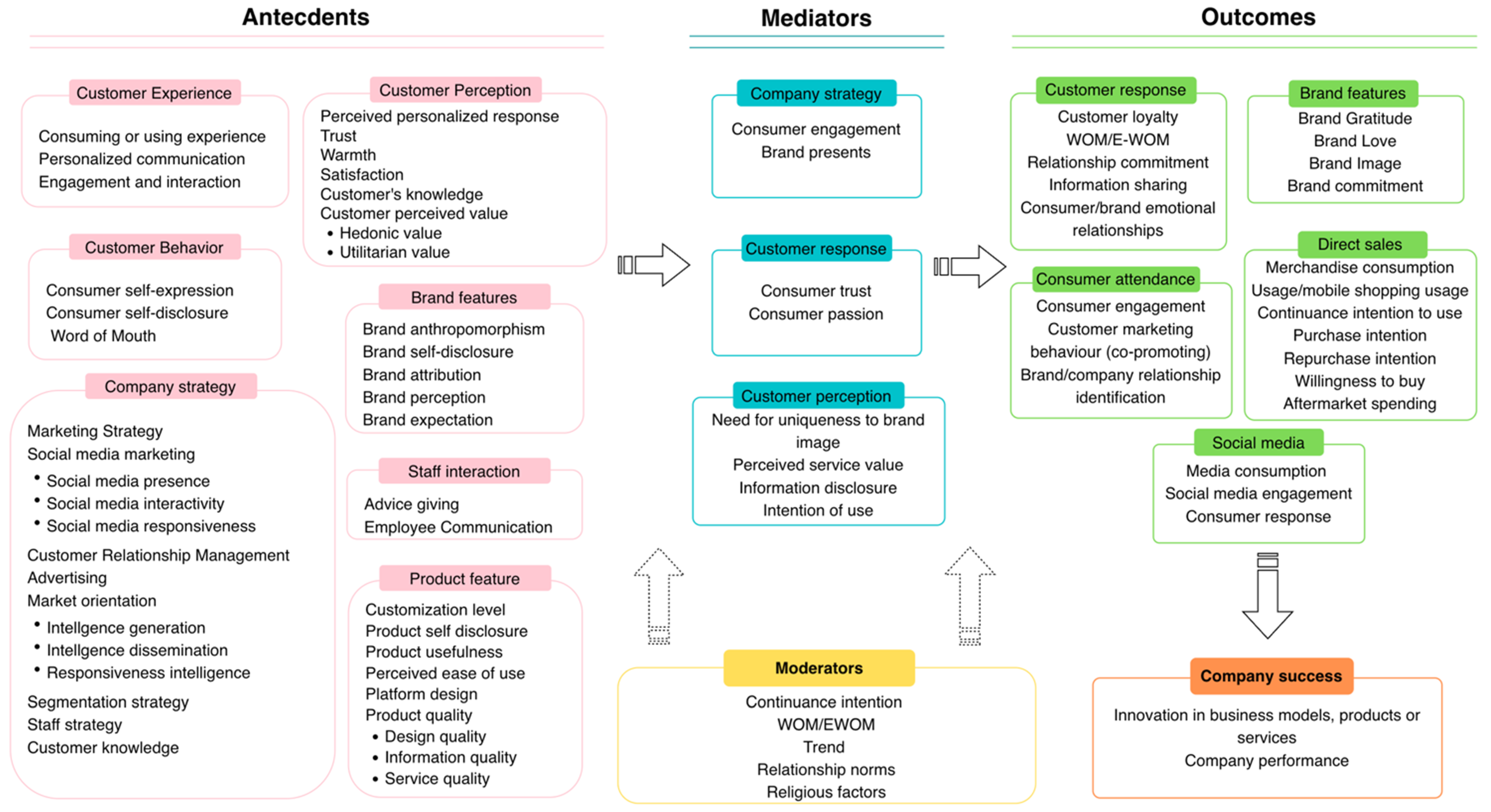
Table A2.
Summary of definition of customer intimacy in digital context.
Table A3.
Measurements and methodologies of DCI research.
References
- Bügel, M.S.; Verhoef, P.C.; Buunk, A.P. Customer intimacy and commitment to relationships with firms in five different sectors: Preliminary evidence. J. Retail. Consum. Serv. 2011, 18, 247–258. [Google Scholar] [CrossRef] [Scilit]
- Wang, T.; Lee, F.-Y. Examining customer engagement and brand intimacy in social media context. J. Retail. Consum. Serv. 2020, 54, 102035. [Google Scholar] [CrossRef] [Scilit]
- Kim, A.J.; Ko, E. Impacts of luxury fashion brand’s social media marketing on customer relationship and purchase intention. J. Glob. Fash. Mark. 2010, 1, 164–171. [Google Scholar] [CrossRef] [Scilit]
- Brock, J.K.U.; Zhou, J.Y. Customer intimacy. J. Bus. Ind. Mark. 2012, 27, 370–383. [Google Scholar] [CrossRef] [Scilit]
- Treacy, M.; Wiersema, F. Customer intimacy and other value disciplines. Harv. Bus. Rev. 1993, 71, 84–93. [Google Scholar]
- Mostert, P.; Theron, E.; Kruger, J. A disaggregated approach to establishing the antecedents and outcome of relationship quality in the South African banking industry. Int. J. Serv. Econ. Manag. 2021, 12, 317–337. [Google Scholar] [CrossRef] [Scilit]
- Yuan, S.; Liu, L.; Su, B.; Zhang, H. Determining the antecedents of mobile payment loyalty: Cognitive and affective perspectives. Electron. Commer. Res. Appl. 2020, 41, 100971. [Google Scholar] [CrossRef] [Scilit]
- Guan, H.; Wang, K. The dimensions of Customer Intimacy Relationship and measurement scale development based on customers’ perspective. In Proceedings of the 2012 International Symposium on Information Technologies in Medicine and Education, Hokodate, Hokkaido, Japan, 3–5 August 2012; pp. 1012–1015. [Google Scholar]
- Donavan, D.T.; Janda, S.; Maxham, J.G., III. Identification and aftermarket personalization with durable goods. Psychol. Mark. 2015, 32, 611–623. [Google Scholar] [CrossRef] [Scilit]
- Turri, A.M.; Smith, K.H.; Kemp, E. Developing affective brand commitment through social media. J. Electron. Commer. Res. 2013, 14, 201. [Google Scholar]
- Makady, H. Human, I know how you feel: Individual psychological determinants influencing smartwatch anthropomorphism. J. Technol. Behav. Sci. 2024, 9, 369–386. [Google Scholar] [CrossRef] [Scilit]
- Chiang, A.-H.; Chou, S.-Y. Exploring robot service quality priorities for different levels of intimacy with service. Serv. Bus. 2023, 17, 913–935. [Google Scholar] [CrossRef] [Scilit]
- Chung, L.L.; Kang, J. “I’m Hurt Too”: The Effect of a Chatbot”s Reciprocal Self-Disclosures on Users’ Painful Experiences. Arch. Des. Res. 2023, 36, 67–84. [Google Scholar] [CrossRef] [Scilit]
- Siahaan, B.P.; Prasetio, E.A. Understanding Customer Insights Through Big Data: Innovations in Brand Evaluation in the Automotive Industry. Asian J. Technol. Manag. 2022, 15, 51–68. [Google Scholar] [CrossRef] [Scilit]
- Micheels, E.T.; Gow, H.R. Do market oriented firms demonstrate clarity on their value discipline? Evidence from Illinois beef producers. Int. Food Agribus. Manag. Rev. 2009, 12, 127–152. [Google Scholar]
- Strnadl, C.F. From IT Strategy to Operations: Using the IT Driver Model to Align Service Levels to Business. In Proceedings of the International CMG Conference, Anaheim, CA, USA, 2–7 December 2001; pp. 909–920. [Google Scholar]
- Zacharias, N.A.; Nijssen, E.J.; Stock, R.M. Effective configurations of value creation and capture capabilities: Extending Treacy and Wiersema’s value disciplines. J. Bus. Res. 2016, 69, 4121–4131. [Google Scholar] [CrossRef] [Scilit]
- Huo, C.; Hameed, J.; Sadiq, M.W.; Albasher, G.; Alqahtani, W. Tourism, environment and hotel management: An innovative perspective to address modern trends in contemporary tourism management. Bus. Process Manag. J. 2021, 27, 2161–2180. [Google Scholar] [CrossRef] [Scilit]
- Ku, E.C. Increasing customer service competencies of airports: Virtual integration competence, warmth and intimacy of artificial intelligence services. Bus. Process Manag. J. 2024. [Google Scholar] [CrossRef] [Scilit]
- Xiao, Y.; Watson, M. Guidance on conducting a systematic literature review. J. Plan. Educ. Res. 2019, 39, 93–112. [Google Scholar] [CrossRef] [Scilit]
- Tranfield, D.; Denyer, D.; Smart, P. Towards a methodology for developing evidence-informed management knowledge by means of systematic review. Br. J. Manag. 2003, 14, 207–222. [Google Scholar] [CrossRef] [Scilit]
- Pranckutė, R. Web of Science (WoS) and Scopus: The titans of bibliographic information in today’s academic world. Publications 2021, 9, 12. [Google Scholar] [CrossRef] [Scilit]
- Joshi, A. Comparison between Scopus & ISI Web of science. J. Glob. Values 2016, 7, 1–11. [Google Scholar]
- Bandara, W.; Miskon, S.; Fielt, E. A systematic, tool-supported method for conducting literature reviews in information systems. In Proceedings of the ECIS 2011 Proceedings 19th European Conference on Information Systems, Helsinki, Finland, 11 June 2011; pp. 1–13. [Google Scholar]
- Mohamed Shaffril, H.A.; Samsuddin, S.F.; Abu Samah, A. The ABC of systematic literature review: The basic methodological guidance for beginners. Qual. Quant. 2021, 55, 1319–1346. [Google Scholar] [CrossRef] [Scilit]
- Jones, M.V.; Coviello, N.; Tang, Y.K. International entrepreneurship research (1989–2009): A domain ontology and thematic analysis. J. Bus. Ventur. 2011, 26, 632–659. [Google Scholar] [CrossRef] [Scilit]
- Krishnaraj, R. A Review on Customer Intimacy and Its Theories. 2022. Available online: https://easychair.org/publications/preprint/4RNs (accessed on 12 February 2024).
- Li, Y.-W. Personalization as a strategy to build customer relationship: The role of intimacy. In Proceedings of the PACIS 2009 Proceedings, Hyderabad, India, 10–12 July 2009; p. 97. [Google Scholar]
- Nobre, H.; Simões, C. NewLux Brand Relationship Scale: Capturing the scope of mass-consumed luxury brand relationships. J. Bus. Res. 2019, 102, 328–338. [Google Scholar] [CrossRef] [Scilit]
- Coltman, T.; Devinney, T.M.; Midgley, D.F. Customer relationship management and firm performance. J. Inf. Technol. 2011, 26, 205–219. [Google Scholar] [CrossRef] [Scilit]
- Akın, M.S.; Doğan, O. The effect of brand-relationship quality on positive word-of-mouth intention. In Proceedings of the 4th European International Conference on Industrial Engineering and Operations Management, IEOM, Rome, Italy, 2–5 August 2021. [Google Scholar]
- Filho, C.G.; Kiefer, K.; Fetscherin, M.; Blandina, A.; Rocha, M.N.; Monteiro, P.R.R. The effects of brand relationships on justice perceptions in service recovery. J. Consum. Mark. 2023, 40, 315–327. [Google Scholar] [CrossRef] [Scilit]
- Gautam, V.; Sharma, V. The mediating role of customer relationship on the social media marketing and purchase intention relationship with special reference to luxury fashion brands. J. Promot. Manag. 2017, 23, 872–888. [Google Scholar] [CrossRef] [Scilit]
- Wang, Y.-C.; Qu, H.; Yang, J. The formation of sub-brand love and corporate brand love in hotel brand portfolios. Int. J. Hosp. Manag. 2019, 77, 375–384. [Google Scholar] [CrossRef] [Scilit]
- Alshreef, M.A.; Hassan, T.H.; Helal, M.Y.; Saleh, M.I.; Tatiana, P.; Alrefae, W.M.; Elshawarbi, N.N.; Al-Saify, H.N.; Salem, A.E.; Elsayed, M.A. Analyzing the Influence of eWOM on Customer Perception of Value and Brand Love in Hospitality Enterprise. Sustainability 2023, 15, 7286. [Google Scholar] [CrossRef] [Scilit]
- Cochran, J. Increasing customer intimacy through customer relationship management. In Proceedings of the 10th Americas Conference on Information Systems, AMCIS 2004, New York, NY, USA, 6–8 August 2004. [Google Scholar]
- Baker, J.; Wakefield, K.L. How consumer shopping orientation influences perceived crowding, excitement, and stress at the mall. J. Acad. Mark. Sci. 2012, 40, 791–806. [Google Scholar] [CrossRef] [Scilit]
- Ko, C.-H. The Association of Product Metaphors with Emotionally Durable Design. In Proceedings of the 2017 6th IIAI International Congress on Advanced Applied Informatics (IIAI-AAI), Hamamatsu, Japan, 9–13 July 2017; pp. 58–63. [Google Scholar]
- Mulia, D.; Usman, H.; Parwanto, N.B. The role of customer intimacy in increasing Islamic bank customer loyalty in using e-banking and m-banking. J. Islam. Mark. 2021, 12, 1097–1123. [Google Scholar] [CrossRef] [Scilit]
- Graffigna, G.; Gambetti, R.C. Grounding consumer-brand engagement: A field-driven conceptualisation. Int. J. Mark. Res. 2015, 57, 605–630. [Google Scholar] [CrossRef] [Scilit]
- Ponder, N.; Bugg Holloway, B.; Hansen, J.D. The mediating effects of customers’ intimacy perceptions on the trust-commitment relationship. J. Serv. Mark. 2016, 30, 75–87. [Google Scholar] [CrossRef] [Scilit]
- Jasper, F.R. Determining the critical elements of the customer intimacy framework. Master’s Thesis, Edith Cowan University, Perth, WA, Australia, 2000. [Google Scholar]
- Park, J.; Yoo, J.W.; Cho, Y.; Park, H. Examining the impact of service robot communication styles on customer intimacy following service failure. J. Retail. Consum. Serv. 2023, 75, 103511. [Google Scholar] [CrossRef] [Scilit]
- Jun, P.; Tat, K.H.; Siqing, P. Effects of advertising strategy on consumer-brand relationships: A brand love perspective. Front. Bus. Res. China 2009, 3, 599–620. [Google Scholar]
- Nouicer, H.; Zaim, I.; Abdallah, L.B. Explaining the impact of a customer-oriented strategy on the small and medium-sized enterprises’(SMEs) global performance: Lessons from the Balanced Scorecard and the CUSTOR scale model. Int. J. Technol. Manag. Sustain. Dev. 2017, 16, 249–270. [Google Scholar] [CrossRef] [Scilit]
- Rodrigues, C.; Rodrigues, P. Brand love matters to Millennials: The relevance of mystery, sensuality and intimacy to neo-luxury brands. J. Prod. Brand Manag. 2019, 28, 830–848. [Google Scholar] [CrossRef] [Scilit]
- Viitaharju, L.; Lähdesmäki, M. Antecedents of trust in asymmetrical business relationships: Differing perceptions between food producers and retailers. Mark. Intell. Plan. 2012, 30, 567–587. [Google Scholar] [CrossRef] [Scilit]
- Hagen, B.; Zucchella, A.; Ghauri, P.N. From fragile to agile: Marketing as a key driver of entrepreneurial internationalization. Int. Mark. Rev. 2019, 36, 260–288. [Google Scholar] [CrossRef] [Scilit]
- Roy, S.K.; Paul, R.; Quazi, A.; Nguyen, B. Developing a service value measurement scale in retail banking services: Evidence from India. Int. J. Bank Mark. 2018, 36, 616–633. [Google Scholar] [CrossRef] [Scilit]
- Bauer, I.; Zavolokina, L.; Leisibach, F.; Schwabe, G. Exploring blockchain value creation: The case of the car ecosystem. In Proceedings of the 52nd Hawaii International Conference on System Sciences, Maui, HI, USA, 8–11 January 2019. [Google Scholar]
- Khoa, B.T. The antecedents of relationship marketing and customer loyalty: A case of the designed fashion product. J. Asian Financ. Econ. Bus. 2020, 7, 195–204. [Google Scholar] [CrossRef] [Scilit]
- Osarenkhoe, A. The business culture of a firm applying a customer-intimate philosophy: A conceptual framework. Int. J. Bus. Syst. Res. 2009, 3, 257–278. [Google Scholar] [CrossRef] [Scilit]
- Thaichon, P.; Quach, S.; Bavalur, A.S.; Nair, M. Managing customer switching behavior in the banking industry. Serv. Mark. Q. 2017, 38, 142–154. [Google Scholar] [CrossRef] [Scilit]
- Yim, C.K.; Tse, D.K.; Chan, K.W. Strengthening customer loyalty through intimacy and passion: Roles of customer–firm affection and customer–staff relationships in services. J. Mark. Res. 2008, 45, 741–756. [Google Scholar] [CrossRef] [Scilit]
- Ozdemir, S.; Zhang, S.; Gupta, S.; Bebek, G. The effects of trust and peer influence on corporate brand—Consumer relationships and consumer loyalty. J. Bus. Res. 2020, 117, 791–805. [Google Scholar] [CrossRef] [Scilit]
- Simon, F.; Tossan, V. Does brand-consumer social sharing matter? A relational framework of customer engagement to brand-hosted social media. J. Bus. Res. 2018, 85, 175–184. [Google Scholar] [CrossRef] [Scilit]
- George, A.S.; George, A.H. A review of ChatGPT AI’s impact on several business sectors. Partn. Univers. Int. Innov. J. 2023, 1, 9–23. [Google Scholar]
- Steinhoff, L.; Arli, D.; Weaven, S.; Kozlenkova, I.V. Online relationship marketing. J. Acad. Mark. Sci. 2019, 47, 369–393. [Google Scholar] [CrossRef] [Scilit]
- Koufteros, X.; Vonderembse, M.; Jayaram, J. Internal and external integration for product development: The contingency effects of uncertainty, equivocality, and platform strategy. Decis. Sci. 2005, 36, 97–133. [Google Scholar] [CrossRef] [Scilit]
- Aldboush, H.H.; Ferdous, M. Building Trust in Fintech: An Analysis of Ethical and Privacy Considerations in the Intersection of Big Data, AI, and Customer Trust. Int. J. Financ. Stud. 2023, 11, 90. [Google Scholar] [CrossRef] [Scilit]
- Zhao, D.; Kim, J.; Woo, M. Promoting usage of location-based services, an approach based on intimacy theory and data mining techniques. Indian J. Sci. Technol. 2016, 9, 1–6. [Google Scholar] [CrossRef] [Scilit]
- Nora, L. Testing customer’s knowledge on customer intimacy and its impact on repurchase intention. VINE J. Inf. Knowl. Manag. Syst. 2019, 49, 594–608. [Google Scholar] [CrossRef] [Scilit]
- Kim, Y.K.; Trail, G.; Ko, Y.J. The influence of relationship quality on sport consumption behaviors: An empirical examination of the relationship quality framework. J. Sport Manag. 2011, 25, 576–592. [Google Scholar] [CrossRef] [Scilit]
- Anna, K.; Lazaros, P. Exploring E-CRM Implementation in Sport Tourism Hotels in Peloponnese. In Cultural and Tourism Innovation in the Digital Era, Proceedings of the Sixth International IACuDiT Conference, Athens, Greece, 12–15 June 2019; Springer Nature: Cham, Switzerland, 2020; pp. 611–627. [Google Scholar]
- Jacob, I.; Khanna, M.; Rai, K.A. Attribution analysis of luxury brands: An investigation into consumer-brand congruence through conspicuous consumption. J. Bus. Res. 2020, 116, 597–607. [Google Scholar] [CrossRef] [Scilit]
- Hansen, H. Antecedents to consumers’ disclosing intimacy with service employees. J. Serv. Mark. 2003, 17, 573–588. [Google Scholar] [CrossRef] [Scilit]
- Lee, J.W.; Becker, K.; Nobre, H. A predictive model of consumer-luxury brand relationships. In Proceedings of the 9th Annual Conference of the EuroMed Academy of Business, Warszawa, Poland, 14–16 September 2016; EuroMed Press: Marseille, France, 2016. [Google Scholar]
- Read, W.; Robertson, N.; McQuilken, L.; Ferdous, A.S. Consumer engagement on Twitter: Perceptions of the brand matter. Eur. J. Mark. 2019, 53, 1905–1933. [Google Scholar] [CrossRef] [Scilit]
- Karampela, M.; Lacka, E.; McLean, G. “Just be there” Social media presence, interactivity, and responsiveness, and their impact on B2B relationships. Eur. J. Mark. 2020, 54, 1281–1303. [Google Scholar] [CrossRef] [Scilit]
- Hernandez-Ortega, B.; Ferreira, I. How smart experiences build service loyalty: The importance of consumer love for smart voice assistants. Psychol. Mark. 2021, 38, 1122–1139. [Google Scholar] [CrossRef] [Scilit]
- Cheng, L.K.; Huang, H.-L.; Lai, C.-C. Continuance intention in running apps: The moderating effect of relationship norms. Int. J. Sports Mark. Spons. 2022, 23, 132–154. [Google Scholar] [CrossRef] [Scilit]
- Yusfiarto, R.; Nugraha, S.S.; Pambudi, D.S.; Pambekti, G.T. Islamic banking and loyalty: Service quality, intimacy or religious driven? Stud. Bus. Econ. 2022, 17, 300–318. [Google Scholar] [CrossRef] [Scilit]
- Paiola, M.; Khvatova, T.; Schiavone, F.; Jabeen, F. Paths toward advanced service-oriented business models: A configurational analysis of small-and medium-sized incumbent manufacturers. Technol. Forecast. Soc. Change 2022, 182, 121774. [Google Scholar] [CrossRef] [Scilit]
- Sahid, S.; Habidin, N.F. Exploring measurement model for entrepreneurial marketing construct: A marketing for SME’s. Int. J. Supply Chain Manag. 2018, 7, 674–683. [Google Scholar]
- Vössing, M.; Siegel, J.; Feldmann, N.; Wuest, T.; Benz, C. Employee-Centric Service Innovation: A Viable Proxy for Customer-Intimacy for Product-Focused Enterprises. In Proceedings of the Exploring Service Science: 9th International Conference, IESS 2018, Karlsruhe, Germany, 19–21 September 2018; Proceedings 9, 2018. pp. 88–100. [Google Scholar]
- Srivastava, N.; Dash, S.; Mookerjee, A. Determinants of brand trust in high inherent risk products: The moderating role of education and working status. Mark. Intell. Plan. 2016, 34, 394–420. [Google Scholar] [CrossRef] [Scilit]
- Song, H.; Bae, S.Y.; Han, H. Emotional comprehension of a name-brand coffee shop: Focus on lovemarks theory. Int. J. Contemp. Hosp. Manag. 2019, 31, 1046–1065. [Google Scholar] [CrossRef] [Scilit]
- Penz, E.; Hogg, M.K. The role of mixed emotions in consumer behaviour: Investigating ambivalence in consumers’ experiences of approach-avoidance conflicts in online and offline settings. Eur. J. Mark. 2011, 45, 104–132. [Google Scholar] [CrossRef] [Scilit]
- Alalwan, A.A.; Rana, N.P.; Dwivedi, Y.K.; Algharabat, R. Social media in marketing: A review and analysis of the existing literature. Telemat. Inform. 2017, 34, 1177–1190. [Google Scholar] [CrossRef] [Scilit]
- Barrett, M.; Davidson, E.; Prabhu, J.; Vargo, S.L. Service innovation in the digital age. MIS Q. 2015, 39, 135–154. [Google Scholar] [CrossRef] [Scilit]
- Rathore, B. Exploring the impact of digital transformation on marketing management strategies. Eduzone Int. Peer Rev./Ref. Multidiscip. J. 2019, 8, 39–48. [Google Scholar] [CrossRef] [Scilit]
- Ekeledo, I.; Sivakumar, K. The impact of e-commerce on entry-mode strategies of service firms: A conceptual framework and research propositions. J. Int. Mark. 2004, 12, 46–70. [Google Scholar] [CrossRef] [Scilit]
- Cui, Y.; Mou, J.; Cohen, J.; Liu, Y.; Kurcz, K. Understanding consumer intentions toward cross-border m-commerce usage: A psychological distance and commitment-trust perspective. Electron. Commer. Res. Appl. 2020, 39, 100920. [Google Scholar] [CrossRef] [Scilit]
- Shim, H.; Cho, J.; Sung, Y.H. Unveiling Secrets to AI Agents: Exploring the Interplay of Conversation Type, Self-Disclosure, and Privacy Insensitivity. Asian Commun. Res. 2024, 21, 195–216. [Google Scholar] [CrossRef] [Scilit]
- Singh, P.; Malik, G. Mixed Method Approach towards Continuous Use of Chatbots in Healthcare Apps: An Integration of Humanizing Experience Theory. Serv. Mark. Q. 2024, 45, 225–255. [Google Scholar] [CrossRef] [Scilit]
- Merriam-Webster. Digital. Available online: https://www.merriam-webster.com/dictionary/digital (accessed on 5 November 2023).
- Lee, Y.; Kwon, O. Intimacy, familiarity and continuance intention: An extended expectation–confirmation model in web-based services. Electron. Commer. Res. Appl. 2011, 10, 342–357. [Google Scholar] [CrossRef] [Scilit]
- Hollebeek, L.D.; Clark, M.K.; Macky, K. Demystifying consumer digital cocreated value: Social presence theory-informed framework and propositions. Rech. Et Appl. En Mark. (Engl. Ed.) 2021, 36, 24–42. [Google Scholar] [CrossRef] [Scilit]
- Lin, P.-Y.; Liang, T.-P.; Huang, H.-C.; Li, Y.-W. Design quality, relationship intimacy and continuance intention of mobile apps: An extension to the is success model. J. Electron. Commer. Res. 2021, 22, 266–284. [Google Scholar]
- Donovan, K.P.; Park, E. Algorithmic intimacy: The data economy of predatory inclusion in Kenya. Soc. Anthropol. /Anthropol. Soc. 2022, 30, 120–139. [Google Scholar] [CrossRef] [Scilit]
- Potdevin, D.; Clavel, C.; Sabouret, N. Virtual Intimacy, this little something between us: A study about Human perception of intimate behaviors in Embodied Conversational Agents. In Proceedings of the 18th International Conference on Intelligent Virtual Agents, Sydney, Australia, 5–8 November 2018; pp. 165–172. [Google Scholar]
- Beath, C.; Tarafdar, M.; Ross, J. OneBankassure: Customer intimacy through machine learning. In Proceedings of the International Conference on Information Systems–Bridging the Internet of People, Data, and Things (ICIS), San Francisco, CA, USA, 13–16 December 2018. [Google Scholar]
- Liang, T.-P.; Li, Y.-W.; Turban, E. Personalized services as empathic responses: The role of intimacy. In Proceedings of the Pacific Asia Conference on Information Systems, PACIS 2009, Hyderabad, India, 10–12 July 2009. [Google Scholar]
- Kim, C.; Li, W.; Kim, D.J. An empirical analysis of factors influencing M-shopping use. Int. J. Hum.-Comput. Interact. 2015, 31, 974–994. [Google Scholar] [CrossRef] [Scilit]
- Anantadjaya, S.P.; Nawangwulan, I.M.; Pramesty, I.; Gunawan, G. Measuring customers’ intimacy? Evidence from Indonesian service-based companies. Int. J. Econ. Theory Pract. Soc. Sci. (J. Ekon. Serb.) 2015, 61, 11–28. [Google Scholar] [CrossRef] [Scilit]
- Ting, D.S.W.; Carin, L.; Dzau, V.; Wong, T.Y. Digital technology and COVID-19. Nat. Med. 2020, 26, 459–461. [Google Scholar] [CrossRef] [Scilit]
- Tu, Q.; Vonderembse, M.A.; Ragu-Nathan, T. The impact of time-based manufacturing practices on mass customization and value to customer. J. Oper. Manag. 2001, 19, 201–217. [Google Scholar] [CrossRef] [Scilit]
- Piller, F.T. Mass customization: Reflections on the state of the concept. Int. J. Flex. Manuf. Syst. 2004, 16, 313–334. [Google Scholar] [CrossRef] [Scilit]
- Kuhl, J.; Krause, D. Strategies for customer satisfaction and customer requirement fulfillment within the trend of individualization. Procedia CIRP 2019, 84, 130–135. [Google Scholar] [CrossRef] [Scilit]
- Sundar, S.S.; Marathe, S.S. Personalization versus customization: The importance of agency, privacy, and power usage. Hum. Commun. Res. 2010, 36, 298–322. [Google Scholar] [CrossRef] [Scilit]
- Tiihonen, J.; Felfernig, A. An introduction to personalization and mass customization. J. Intell. Inf. Syst. 2017, 49, 1–7. [Google Scholar] [CrossRef] [Scilit]
- Novais, L.R.; Maqueira, J.M.; Bruque, S. Supply chain flexibility and mass personalization: A systematic literature review. J. Bus. Ind. Mark. 2019, 34, 1791–1812. [Google Scholar] [CrossRef] [Scilit]
- Golf-Papez, M.; Heller, J.; Hilken, T.; Chylinski, M.; de Ruyter, K.; Keeling, D.I.; Mahr, D. Embracing falsity through the metaverse: The case of synthetic customer experiences. Bus. Horiz. 2022, 65, 739–749. [Google Scholar] [CrossRef] [Scilit]
- Kühl, N.; Mühlthaler, M.; Goutier, M. Supporting customer-oriented marketing with artificial intelligence: Automatically quantifying customer needs from social media. Electron. Mark. 2020, 30, 351–367. [Google Scholar] [CrossRef] [Scilit]
- Cuganesan, S. Calculating customer intimacy: Accounting numbers in a sales and marketing department. Account. Audit. Account. J. 2008, 21, 78–103. [Google Scholar] [CrossRef] [Scilit]
- Yeung, H.W.-c. Explaining geographic shifts of chip making toward East Asia and market dynamics in semiconductor global production networks. Econ. Geogr. 2022, 98, 272–298. [Google Scholar] [CrossRef] [Scilit]
- Barcelos, R.; Dantas, D.; Sénécal, S.; Rossi, C. The Effect of Brand Intimacy on Consumer Responses: An Application on a Social Media Context. In Rediscovering the Essentiality of Marketing. Developments in Marketing Science: Proceedings of the Academy of Marketing Science; Springer: Cham, Switzerland, 2016; pp. 209–214. [Google Scholar]
- Dong, X.; Chang, Y.; Liao, J.; Hao, X.; Yu, X. The impact of virtual interaction on consumers’ pro-environmental behaviors: The mediating role of platform intimacy and love for nature. Inf. Technol. People 2023, 37, 201–222. [Google Scholar] [CrossRef] [Scilit]
- Koefoed Hansen, L.; Kozel, S. Embodied imagination: A hybrid method of designing for intimacy. Digit. Creat. 2007, 18, 207–220. [Google Scholar] [CrossRef] [Scilit]
- Rosen, C. Electronic intimacy. Wilson Q. 2012, 36, 48. [Google Scholar]
- Spenner, P.; Freeman, K. To keep your customers, keep it simple. IEEE Eng. Manag. Rev. 2013, 41, 67–72. [Google Scholar] [CrossRef] [Scilit]
- Aaker, J.; Fournier, S.; Brasel, S.A. When good brands do bad. J. Consum. Res. 2004, 31, 1–16. [Google Scholar] [CrossRef] [Scilit]
- Sarkar, A.; Ponnam, A.; Murthy, B.K. Understanding and measuring romantic brand love. J. Cust. Behav. 2012, 11, 324–347. [Google Scholar] [CrossRef] [Scilit]
- Kang, S.-H.; Gratch, J. Exploring users’ social responses to computer counseling interviewers’ behavior. Comput. Hum. Behav. 2014, 34, 120–130. [Google Scholar] [CrossRef] [Scilit]
- Garrouch, K.; Ghali, Z. On linking the perceived values of mobile shopping apps, customer well-being, and customer citizenship behavior: Moderating role of customer intimacy. J. Retail. Consum. Serv. 2023, 74, 103396. [Google Scholar] [CrossRef] [Scilit]
- Adhikari, K.; Panda, R.K. Evaluation of brand relationship quality using formative index: A novel measurement approach. J. Prod. Brand Manag. 2020, 29, 505–516. [Google Scholar] [CrossRef] [Scilit]
- Sternberg, R.J. The concept of intelligence and its role in lifelong learning and success. Am. Psychol. 1997, 52, 1030. [Google Scholar] [CrossRef]
- Thorbjørnsen, H.; Supphellen, M.; Nysveen, H.; Egil, P. Building brand relationships online: A comparison of two interactive applications. J. Interact. Mark. 2002, 16, 17–34. [Google Scholar] [CrossRef] [Scilit]
- Chelune, G.J.; Waring, E.M. Nature and assessment of intimacy. Adv. Psychol. Assess. 1984, 6, 277–311. [Google Scholar]
- Tomasi, A. Technology and intimacy in the philosophy of Georges Bataille. Hum. Stud. 2007, 30, 411–428. [Google Scholar] [CrossRef] [Scilit]
- Liu, C.-T.; Guo, Y.M.; Lee, C.-H. The effects of relationship quality and switching barriers on customer loyalty. Int. J. Inf. Manag. 2011, 31, 71–79. [Google Scholar] [CrossRef] [Scilit]
- Snell, W.E.; Miller, R.S.; Belk, S.S. Development of the emotional self-disclosure scale. Sex Roles 1988, 18, 59–73. [Google Scholar] [CrossRef] [Scilit]
- Song, M.; Xing, X.; Duan, Y.; Cohen, J.; Mou, J. Will artificial intelligence replace human customer service? The impact of communication quality and privacy risks on adoption intention. J. Retail. Consum. Serv. 2022, 66, 102900. [Google Scholar] [CrossRef] [Scilit]
- Song, X.; Xu, B.; Zhao, Z. Can people experience romantic love for artificial intelligence? An empirical study of intelligent assistants. Inf. Manag. 2022, 59, 103595. [Google Scholar] [CrossRef] [Scilit]






Disclaimer/Publisher’s Note: The statements, opinions and data contained in all publications are solely those of the individual author(s) and contributor(s) and not of MDPI and/or the editor(s). MDPI and/or the editor(s) disclaim responsibility for any injury to people or property resulting from any ideas, methods, instructions or products referred to in the content. |
© 2024 by the authors. Licensee MDPI, Basel, Switzerland. This article is an open access article distributed under the terms and conditions of the Creative Commons Attribution (CC BY) license (https://creativecommons.org/licenses/by/4.0/).