

Topic Editors

Department of Pharmaceutical Chemistry, Faculty of Pharmacy, “Grigore T. Popa” University of Medicine and Pharmacy of Iași, 16 Universitaty Street, 700115 Iași, Romania

Challenges and Opportunities in Drug Delivery Research, 2nd Edition
Abstract submission deadline
30 April 2026
Manuscript submission deadline
30 June 2026
Viewed by
3508

Topic Information

Dear Colleagues,

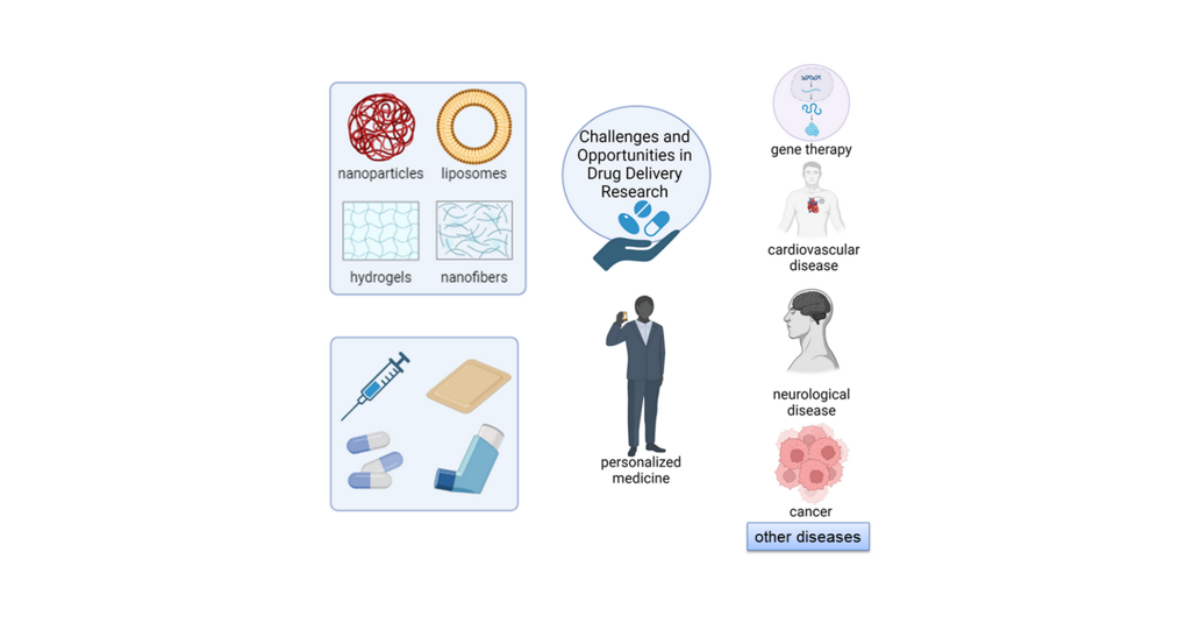
The topic “Challenges and Opportunities in Drug Delivery Research, 2nd Edition” encompasses innovative drug delivery and release science research with significant implications in medical fields such as cancer therapy, neurology, and cardiovascular medicine. This pioneering research aims to transform treatment methods by developing advanced drug delivery systems that improve precision, reduce side effects, and enhance patient outcomes. The scope extends to gene therapies, personalized medicine, and novel approaches addressing complex health challenges, potentially reshaping healthcare by providing tailored and effective solutions for various diseases and conditions.

Key focus areas involve a mechanistic comprehension of drug delivery systems based on biological and physicochemical principles and mathematical modeling, predictive analytics, drug delivery systems, and cellular interactions tailored for particular therapeutic objectives.

Potential topics of interest for discussion cover various drug delivery technologies, nanomedicine, different entry pathways into the human body, technology evaluations, drug delivery strategies, precise delivery and targeting at various levels and disease indications, and preclinical and clinical findings data related to drug delivery systems. Additionally, in-depth discussions could be extended to detailed explorations of the methods involved in delivering and releasing genes, vaccines, and antibodies.

Prof. Dr. Lenuta Profire
Dr. Ioana Mirela Vasincu
Topic Editors

Keywords

  • drug delivery technologies
  • release profile
  • nanotechnology
  • smart drug delivery
  • targeted delivery

Participating Journals

Journal Name Impact Factor CiteScore Launched Year First Decision (median) APC
Current Issues in Molecular Biology
cimb
3.0 3.7 1999 17.8 Days CHF 2200 Submit
Molecules
molecules
4.6 8.6 1996 16.1 Days CHF 2700 Submit
Pharmaceuticals
pharmaceuticals
4.8 7.7 2004 14 Days CHF 2900 Submit
Pharmaceutics
pharmaceutics
5.5 10.0 2009 14.9 Days CHF 2900 Submit
Scientia Pharmaceutica
scipharm
2.5 4.6 1930 38.1 Days CHF 1000 Submit

Preprints.org is a multidisciplinary platform offering a preprint service designed to facilitate the early sharing of your research. It supports and empowers your research journey from the very beginning.

MDPI Topics is collaborating with Preprints.org and has established a direct connection between MDPI journals and the platform. Authors are encouraged to take advantage of this opportunity by posting their preprints at Preprints.org prior to publication:

  1. Share your research immediately: disseminate your ideas prior to publication and establish priority for your work.
  2. Safeguard your intellectual contribution: Protect your ideas with a time-stamped preprint that serves as proof of your research timeline.
  3. Boost visibility and impact: Increase the reach and influence of your research by making it accessible to a global audience.
  4. Gain early feedback: Receive valuable input and insights from peers before submitting to a journal.
  5. Ensure broad indexing: Web of Science (Preprint Citation Index), Google Scholar, Crossref, SHARE, PrePubMed, Scilit and Europe PMC.

Published Papers (3 papers)

Order results
Result details
Journals
Select all
Export citation of selected articles as:
20 pages, 9055 KB  
Article
Preparation and Antitumor Evaluation of Four Pentacyclic Triterpenoids and 10-Hydroxycamptothecin Self-Assembled Nanoparticles
by Tingen Zhang, Yiwen Hu, Wenzhuo Yang, Xiaochao Huang, Linhui Zhang, Xiaotong Hou, Pengyu Shen, Ruihong Jian, Zhidong Liu and Jiaxin Pi
Pharmaceutics 2025, 17(12), 1577; https://doi.org/10.3390/pharmaceutics17121577 - 8 Dec 2025
Viewed by 174
Abstract
Background/Objectives: A carrier-free self-assembled nanomedicine delivery system refers to a high drug-loading nanomedicine delivery system prepared by one or more active drug ingredients through supramolecular self-assembly, which has the advantages of high drug-loading and a simple preparation process, enabling multidrug synergistic therapy. [...] Read more.
Background/Objectives: A carrier-free self-assembled nanomedicine delivery system refers to a high drug-loading nanomedicine delivery system prepared by one or more active drug ingredients through supramolecular self-assembly, which has the advantages of high drug-loading and a simple preparation process, enabling multidrug synergistic therapy. 10-hydroxycamptothecin (HCPT) have active antitumor effects. Pentacyclic triterpenes are natural active components with a wide range of pharmacological activities. This study aimed to investigate the impact of structural types on the self-assembly of pentacyclic triterpenes and HCPT. Methods: Molecular docking studies were performed. Self-assembled nanoparticles were designed by co-assembling ursolic acid (UA), asiatic acid (AA), oleanic acid (OA), and betulinic acid (BA) with HCPT via anti-solvent precipitation combined with ultrasonication, followed by characterization. Cytotoxicity assays using the CCK-8 method revealed that the prepared self-assembled nanoparticles exhibited concentration-dependent inhibitory effects against A375, AGS, HCT-116, and HepG2 tumor cells. Confocal laser scanning microscopy (CLSM) indicated that UA/HCPT nanoparticles (UA/HCPT-NPs) were more efficiently internalized and accumulated in cells compared with the UA + HCPT physical mixture. Results: Both in vitro and in vivo results demonstrated that the self-assembled nanoparticles significantly enhanced antitumor efficacy while exerting minimal toxicity on major organs within the tested dose range. Conclusions: In summary, these findings highlight that pentacyclic triterpenoids components possess significant self-assembly potential, and that dual-drug co-delivery via self-assembled nanoparticles represents as a promising strategy for cancer therapy. Full article
Show Figures

Graphical abstract

32 pages, 1280 KB  
Review
Deciphering Drug Repurposing Strategies: Antiviral Properties of Candidate Agents Against the Mpox Virus
by Aganze Gloire-Aimé Mushebenge and David Ditaba Mphuthi
Sci. Pharm. 2025, 93(4), 51; https://doi.org/10.3390/scipharm93040051 - 17 Oct 2025
Cited by 1 | Viewed by 1294
Abstract
Monkeypox (Mpox) has re-emerged as a global public health threat, with recent outbreaks linked to novel mutations that enhance viral transmissibility and immune evasion. The Mpox virus (MPXV), a double-stranded deoxyribonucleic acid (DNA) orthopoxvirus, shares high structural and enzymatic similarity with the variola [...] Read more.
Monkeypox (Mpox) has re-emerged as a global public health threat, with recent outbreaks linked to novel mutations that enhance viral transmissibility and immune evasion. The Mpox virus (MPXV), a double-stranded deoxyribonucleic acid (DNA) orthopoxvirus, shares high structural and enzymatic similarity with the variola virus, underscoring the need for urgent therapeutic interventions. While conventional antiviral development is time-intensive and costly, drug repurposing offers a rapid and cost-effective strategy by leveraging the established safety and pharmacological profiles of existing medications. This is a narrative integrative review synthesizing published evidence on drug repurposing strategies against MPXV. To address these issues, this review explores MPXV molecular targets critical for genome replication, transcription, and viral assembly, highlighting how the Food and Drug Administration (FDA)-approved antivirals (cidofovir, tecovirimat), antibiotics (minocycline, nitroxoline), antimalarials (atovaquone, mefloquine), immunomodulators (infliximab, adalimumab), and chemotherapeutics (doxorubicin) have demonstrated inhibitory activity against the virus using computational or experimental approaches. This review further evaluates advances in computational methodologies that have accelerated the identification of host-directed and viral-directed therapeutic candidates. Nonetheless, translational challenges persist, including pharmacokinetic limitations, toxicity concerns, and the limited efficacy of current antivirals such as tecovirimat in severe Mpox cases. Future research should integrate computational predictions with high-throughput screening, organ-on-chip technologies, and clinical pipelines, while using real-time genomic surveillance to track viral evolution. These strategies establish a scalable and sustainable framework for the MPXV drug discovery. Full article
Show Figures

Figure 1

20 pages, 1650 KB  
Review
Maillard Reaction-Derived Carbon Nanodots: Food-Origin Nanomaterials with Emerging Functional and Biomedical Potential
by Gréta Törős and József Prokisch
Pharmaceutics 2025, 17(8), 1050; https://doi.org/10.3390/pharmaceutics17081050 - 13 Aug 2025
Viewed by 1517
Abstract
The Maillard reaction (MR), a non-enzymatic interaction between reducing sugars and amino compounds, plays a pivotal role in developing the flavor, color, and aroma of thermally processed foods. Beyond its culinary relevance, the MR gives rise to a structurally diverse array of compounds, [...] Read more.
The Maillard reaction (MR), a non-enzymatic interaction between reducing sugars and amino compounds, plays a pivotal role in developing the flavor, color, and aroma of thermally processed foods. Beyond its culinary relevance, the MR gives rise to a structurally diverse array of compounds, including a novel class of fluorescent nanomaterials known as carbon nanodots (CNDs). These Maillard-derived CNDs, although primarily incidental in food systems, exhibit physicochemical characteristics—such as aqueous solubility, biocompatibility, and tunable fluorescence—that are similar to engineered CNDs currently explored in biomedical fields. While CNDs synthesized through hydrothermal or pyrolytic methods are well-documented for drug delivery and imaging applications, no studies to date have demonstrated the use of Maillard-derived CNDs specifically in drug delivery. This review examines the chemistry of the Maillard reaction, the formation mechanisms and characteristics of food-based CNDs, and their potential functional applications in food safety, bioactivity, and future biomedical use. Additionally, it critically evaluates the health implications of Maillard reaction products (MRPs), including both beneficial antioxidants and harmful by-products such as advanced glycation end-products (AGEs). This integrated perspective highlights the dual role of MR in food quality and human health, while identifying key research gaps needed to harness the full potential of food-origin nanomaterials. Full article
Show Figures

Figure 1

Back to TopTop

