Article

A Multi-User Collaborative AR System for Industrial Applications
1
State Key Laboratory of Virtual Reality Technology and Systems, School of Computer Science and Engineering, Beihang University, Beijing 100191, China
2
Peng Cheng Laboratory, Shenzhen 518067, China
3
Qingdao Research Institute of Beihang University, Qingdao 266104, China
*
Author to whom correspondence should be addressed.
Sensors 2022, 22(4), 1319; https://doi.org/10.3390/s22041319
Submission received: 6 January 2022 / Revised: 29 January 2022 / Accepted: 31 January 2022 / Published: 9 February 2022
(This article belongs to the Topic Augmented and Mixed Reality)

Abstract

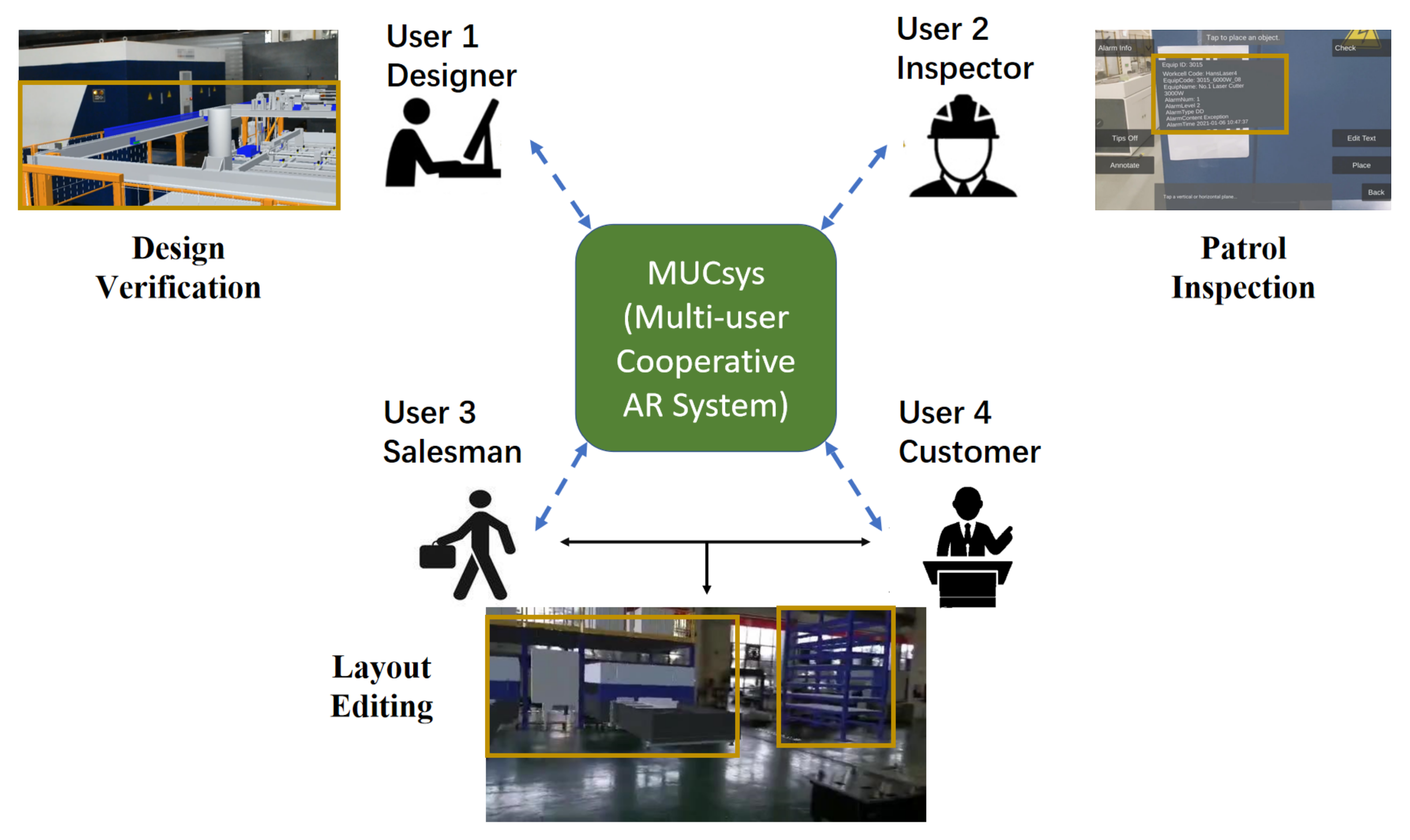
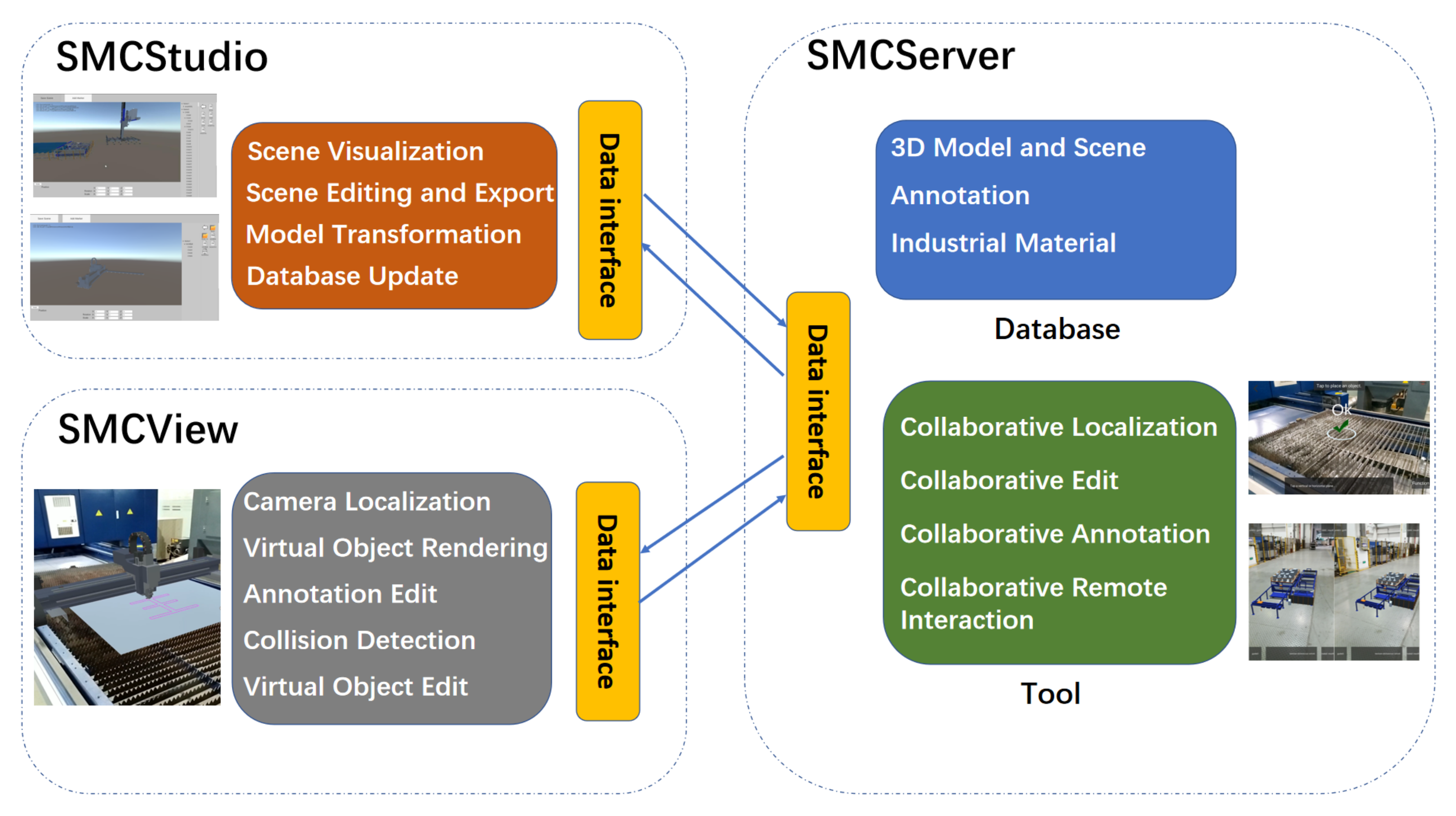
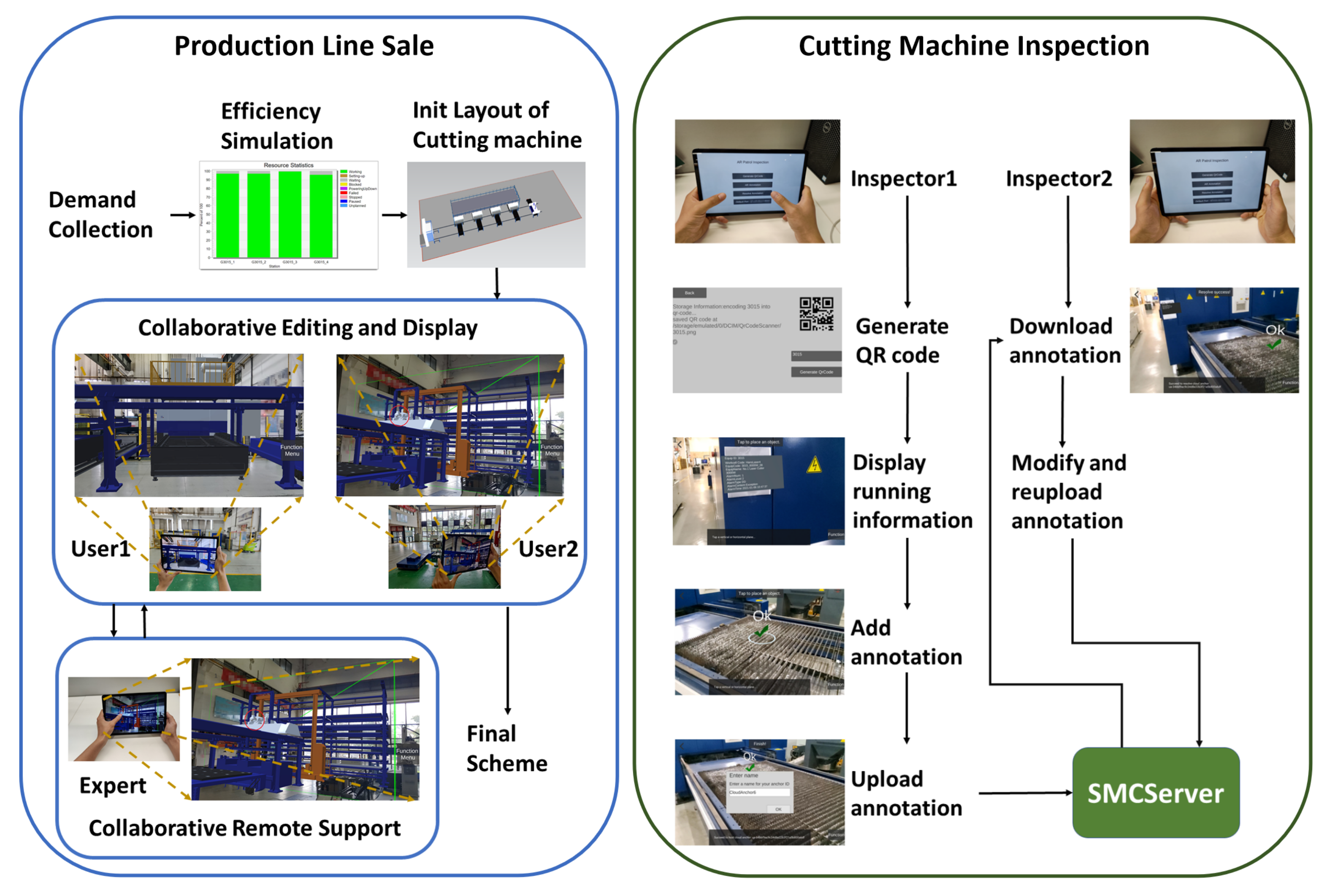
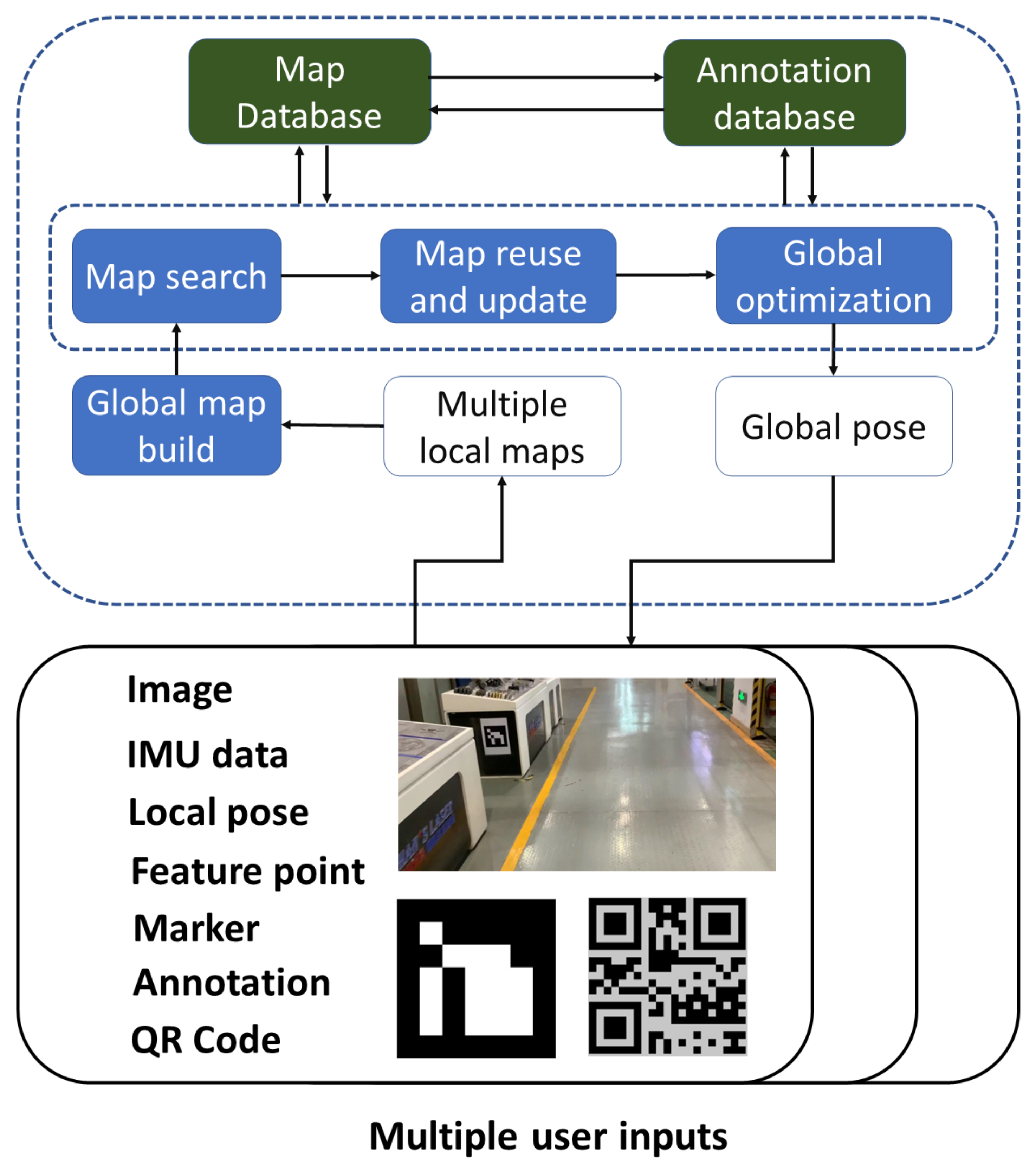
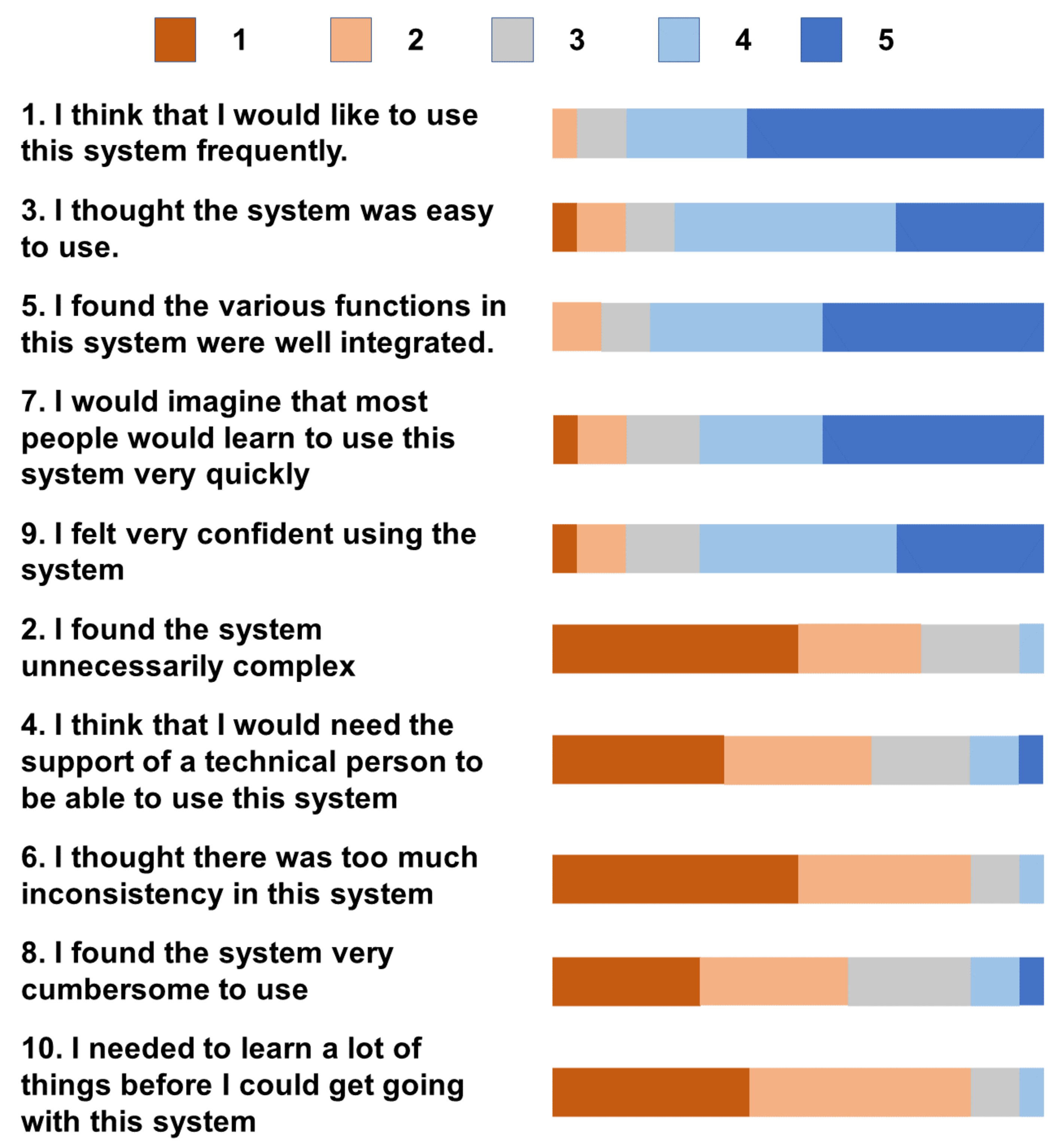
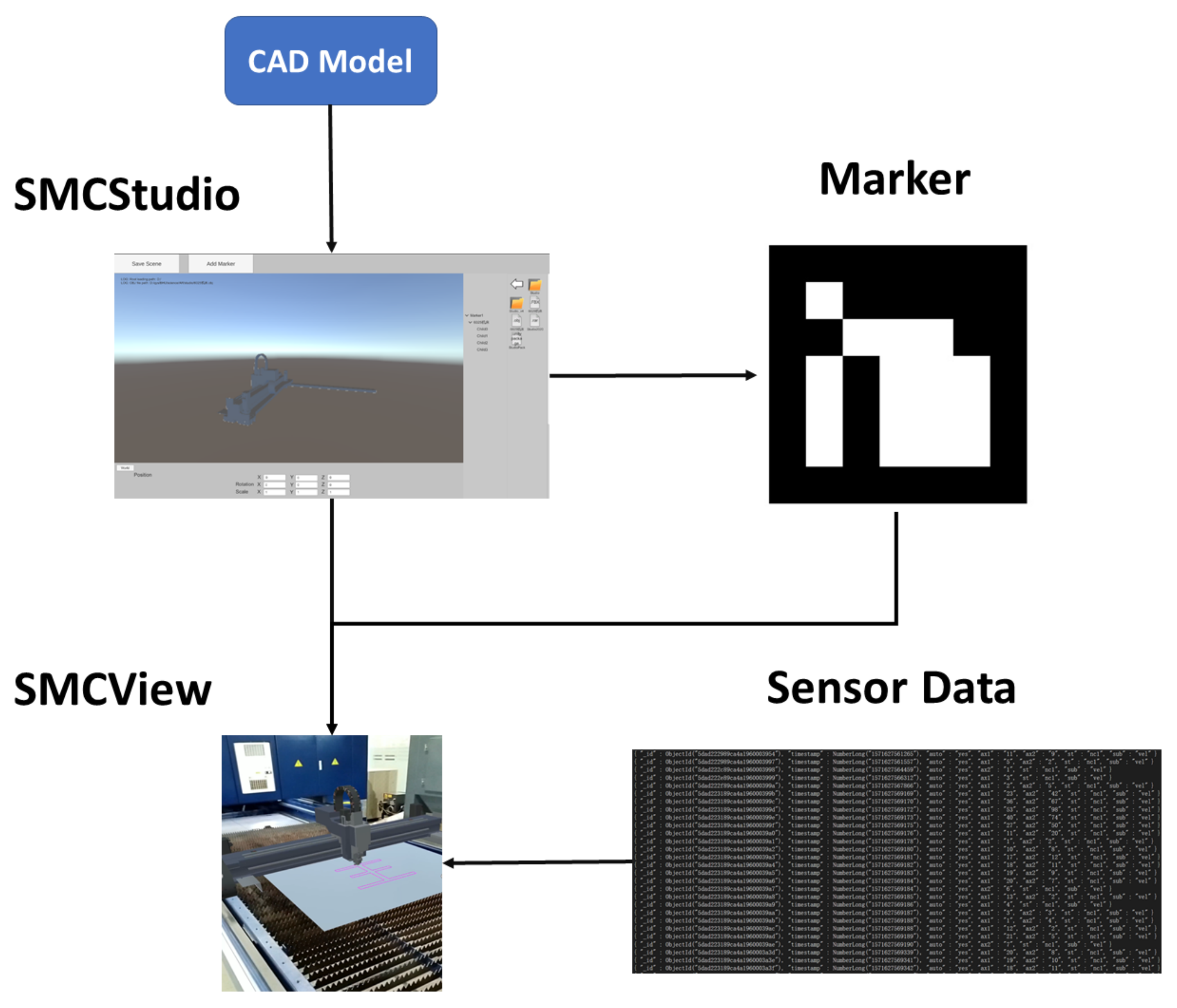
Augmented reality (AR) applications are increasingly being used in various fields (e.g., design, maintenance, assembly, repair, training, etc.), as AR techniques help improve efficiency and reduce costs. Moreover, collaborative AR systems extend applicability, allowing for collaborative environments for different roles. In this paper, we propose a multi-user collaborative AR system (aptly called the “multi-user collaborative system”, or MUCSys); it is composed of three ends—MUCStudio, MUCView, and MUCServer. MUCStudio aims to construct industrial content with CAD model transformation, simplification, database update, marker design, scene editing, and exportation, while MUCView contains sensor data analysis, real-time localization, scene loading, annotation editing, and virtual–real rendering. MUCServer—as the bridge between MUCStudio and MUCView—presents collaborative and database services. To achieve this, we implemented the algorithms of local map establishment, global map registration, optimization, and network synchronization. The system provides AR services for diverse industrial processes via three collaborative ways—remote support, collaborative annotation, and editing. According to the system, applications for cutting machines were presented to improve efficiency and reduce costs, covering cutting head designs, production line sales, and cutting machine inspections. Finally, a user study was performed to prove the usage experience of the system.
Keywords: augmented reality system; multi-user collaborative system; collaborative localization; industrial applications augmented reality system; multi-user collaborative system; collaborative localization; industrial applications