Skip to Content

Corrosion and Materials Degradation

Corrosion and Materials Degradation is an international, peer-reviewed, open access journal on corrosion, environment-assisted degradation, corrosion mitigation, corrosion mechanism and corrosion monitoring, published quarterly online by MDPI.

Get Alerted

Add your email address to receive forthcoming issues of this journal.

All Articles (258)

  • Correction
  • Open Access

In the original publication [...]

21 April 2026

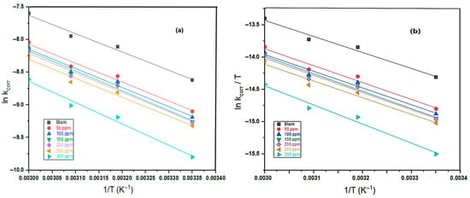
The Arrhenius plots (a), and the transition-state plots (b) for the corrosion of LCS in 0.5 mol L−1 of HCl without and with different concentrations of Salpn compound.

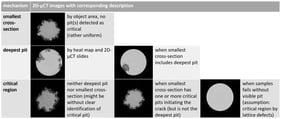
For the corrosion behavior of three extruded Mg alloys (WE43, Mg10Gd, ZX10), the corrosion morphology and the resulting local stress distribution are correlated with the residual strength using µCT, Digital Image Correlation and tensile tests. Samples are corroded in HBSS at 37 °C for various exposure times to increase the extent of corrosion. They are then examined by using the gravimetric method to determine the corrosion rate. Corroded tensile samples are subjected to µCT analysis before and after tensile testing. The crack formation originating from pitting corrosion is discussed on the basis of the stress distribution around local corrosion—its extent is clearly influenced on the morphology. µCT analyses reveals that fractures occur in different ways, either at the smallest cross section, at isolated deep pitting sites, or in other critical areas with critical pitting quantity or size. Mg10Gd has a slightly higher strength compared to WE43 and ZX10. ZX10 maintains superior residual strength over time. Pitting corrosion is mainly observed in Mg10Gd and WE43, with different degrees of residual strength. This study allows for a better understanding and prediction of critical areas of non-uniform corroded Mg alloys and provides information on the bearable stress concentration.

10 April 2026

Crack initiation mechanisms classified according to governing features: smallest cross section, deepest corrosion pit, or critical region.

Detection of Pitting Corrosion in Stainless-Steel Sheet Pile Walls Using Deep Learning

  • Tetsuya Suzuki,
  • Norihiro Otaka and
  • Taiki Hagiwara
  • + 2 authors

This study proposes a new deep learning-based approach for detecting pitting corrosion on stainless-steel sheet pile surfaces in drainage channels. Conventional ultrasonic thickness measurement methods cannot detect microscopic pitting corrosion that occurs before measurable thickness reduction. The research develops an automated detection system using visible images captured with smartphone cameras and U-net semantic segmentation. Two stainless steel grades (SUS410 and SUS430) were exposed for 5 years to a brackish water environment and analyzed. The deep learning approach achieved F1-scores of 0.831 (SUS410) and 0.808 (SUS430), outperforming binary thresholding methods (F1-scores: 0.407 and 0.329, respectively). Data augmentation improved performance by 1–3 percentage points. The method enabled non-destructive, quantitative assessment of early-stage corrosion using readily available equipment, providing a practical tool for infrastructure maintenance and long-term durability evaluation.

7 April 2026

Typical form of pitting corrosion [1,22].

Flashover events can induce rapid surface condition changes on outdoor ceramic insulators, while early-stage degradation is typically assessed indirectly through long-term ageing or electrical diagnostics. This study proposes an event-based, surface-focused evaluation framework to assess short-term flashover-induced surface degradation using normalized wettability indicators. A controlled experimental comparison was conducted on uncoated, TiO2-RTV-coated, and SiO2-RTV-coated 150 kV ceramic insulators subjected to a single flashover pre-stress under humid tropical conditions. Static contact angles decreased from 42.6° to 18.3° for uncoated ceramic, from 112.4° to 86.7° for TiO2-RTV, and from 115.8° to 92.6° for SiO2-RTV after flashover exposure. The corresponding relative wettability retention values were 43.0%, 77.1%, and 80.0%, while the wettability degradation index values were 0.57, 0.23, and 0.20, respectively. Surface morphology and elemental presence were qualitatively examined via SEM–EDS. The results show that both nanocomposite coatings effectively preserve post-flashover surface hydrophobicity compared with uncoated ceramics, with the SiO2-RTV system exhibiting the highest short-term wettability retention. By integrating static contact-angle measurements, qualitative surface morphology, and normalized wettability indicators, this study proposes an event-based evaluation framework for RTV-coated ceramic insulators. Flashover-voltage and leakage-current measurements were included only as supplementary validation to support the surface-based interpretation, without implying direct electrical performance modeling. This surface-focused, event-based approach provides an experimental basis for post-flashover condition assessment of ceramic insulators operating in humid outdoor environments.

30 March 2026

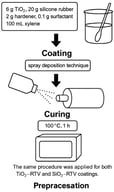
Experimental workflow for coating preparation, application, curing, flashover exposure, and post-flashover characterization procedures used in this study. The arrow indicates the spray-deposition step used to apply the TiO2-RTV and SiO2-RTV coatings onto the ceramic substrate before curing.

News & Conferences

Volumes

Latest Issues

Open for Submission

Editor's Choice

XFacebookLinkedIn
Corros. Mater. Degrad. - ISSN 2624-5558