
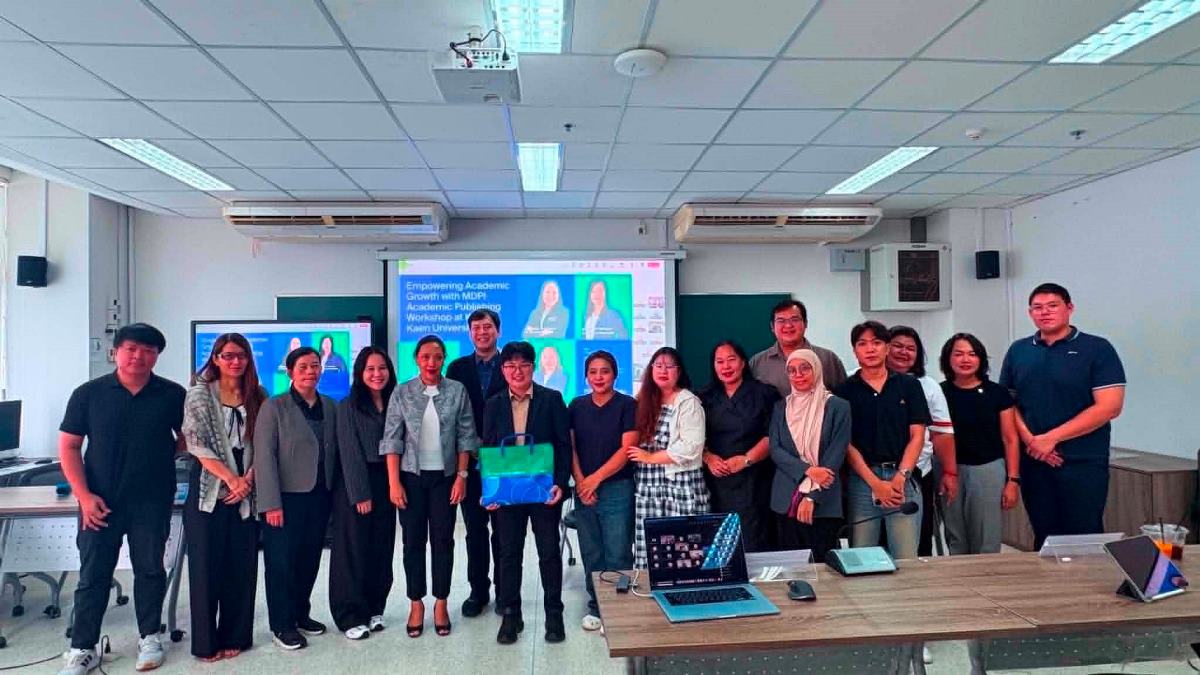
Summary of the MDPI Academic Publishing Workshop at Khon Kaen University
MDPI and Khon Kaen University came together to host an engaging workshop designed to demystify academic publishing and improve researchers’ ability to communicate their findings effectively. Participants took part in interactive sessions that covered practical strategies for writing clear scientific papers, interpreting reviewer comments, and avoiding common mistakes that trigger desk rejection. The atmosphere was collaborative, with many attendees sharing their own experiences and questions.

Assoc. Prof. Dr. Wipawee Grisanaputi, Assistant Dean for Research and Academic Services, Faculty of Humanities and Social Sciences at Khon Kaen University, delivered the opening remarks at the Academic Publishing Workshop. In her speech, she emphasized the importance of advancing research development and promoting the global dissemination of research outputs. She also highlighted that the workshop would offer valuable insights into the academic publishing process and encourage participants to actively engage throughout the event to maximize its benefits.

In the first session, Ms. Ploy Assavajamroon, Editorial Team Leader and Regional Engagement Editor, introduced MDPI by presenting the publisher’s background, mission, and core values. The session also highlighted MDPI’s memberships, collaborations, and journal indexing, reflecting its commitment to maintaining high standards in scholarly publishing. Beyond journal publication, participants were introduced to several MDPI initiatives, including Preprints, Scilit, and SciForum. The presentation further showcased the growth of the MDPI Bangkok office and its continued support for local research communities over the past year. The session concluded with an overview of Informatics as a potential publication venue for researchers.

The second session, on “How to Write Scientific Papers”, was presented by Dr. Krit Inthajak, the Regional Engagement Editor. The lesson comprises how to prepare literature reviews before deciding to write a manuscript, the contents of the front matter, main text, and back matter, and how the results should be correlated to the literature review and the author's objectives. Within fields of social science, the majority of the manuscript should focus on recent trends in regional areas and the social experiment consents, since proposing novel or innovative approaches may not be as common compared to other research fields.

The third session, “MDPI Editorial Process”, was again delivered by Ms. Ploy Assavajamroon. She began by explaining the definition and importance of the peer review process before introducing an overview of the editorial workflow, from manuscript submission to final publication. The session emphasized the essential materials authors should prepare prior to submission, as well as the general checklist used during the technical pre-check stage. She also explained the possible outcomes of the Academic Editor’s evaluation and concluded the session by highlighting the importance of a well-prepared cover letter and effective responses to reviewers’ comments.

The session titled “Data Visualization and Layout Guidelines for Scientific Papers” was presented by Ms. Natthinan Phuphueak, Production Group Leader at MDPI’s Bangkok Office. The session began with an introduction to the importance of effective manuscript presentation, emphasizing how clear formatting and strong visual communication can improve readability, professionalism, and the overall impact of scientific research. During the session, participants explored best practices for manuscript layout, including formatting consistency, journal requirements, and the effective organization of scientific content. Special attention was given to data visualization techniques, such as designing clear figures, tables, and graphical abstracts to present research findings more effectively. Practical examples and useful tools were also introduced to support authors in preparing publication-ready manuscripts. To conclude, the session highlighted the value of combining well-structured layouts with effective data visualization to strengthen scientific communication. Participants gained practical insights that can help improve the clarity, accessibility, and quality of their future academic publications.

This partnership has significantly strengthened the working relationship between MDPI and Khon Kaen University. By equipping local researchers with concrete tools and insider knowledge, the workshop has laid a strong foundation for lasting cooperation and ongoing support for scholarly development.