


- 3.0Impact Factor
- 6.0CiteScore
- 20 daysTime to First Decision
Trends and Controls on Greenhouse Gas Fluxes from Arctic and Alpine Freshwaters
This special issue belongs to the section “Water and Climate Change“.
Special Issue Information
Dear Colleagues,
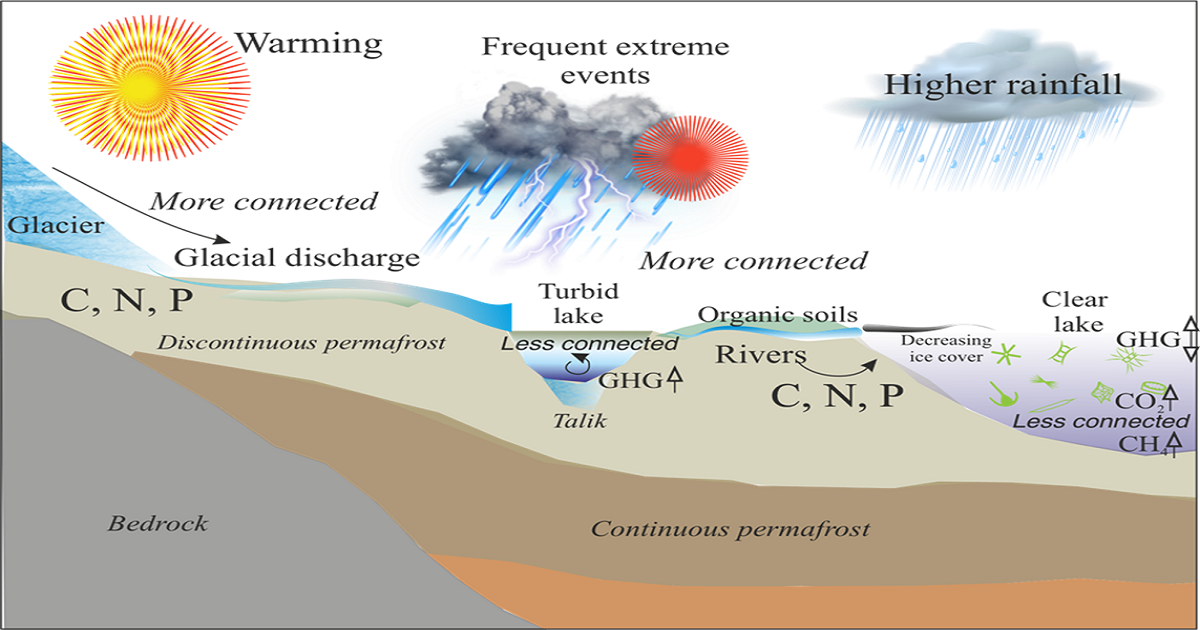
Polar and alpine freshwaters are experiencing warming and increasing precipitation, as well as more frequent weather extremes. Rapidly thawing glaciers and permafrost export water and organic matter, often contributing to the creation and enrichment of new streams, ponds, and lakes. Along with carbon, these freshwaters receive changing amounts of bioavailable nutrients. Climate-forced changes in the cryosphere, including glacier recession and permafrost degradation, force downstream ecosystems into a warmer and more productive future. Depending on the inflow characteristics, polar and alpine freshwater systems are greening or browning with respective metabolic consequences. For lakes, higher surficial energy retention brings on stratification, while warming leads to unprecedented oxygen depletion at a depth that catalyses the production of CH4 and N2O.
Arctic and alpine rivers, on the other hand, are releasing more CO2 to the atmosphere, and have also become a seasonally large CH4 source. The overall picture is that polar and alpine freshwaters contribute more and more GHGs to the atmosphere. However, their carbon sequestration potential is also likely to increase along with surface area, lake volume, and surface-to-bottom temperature differential. This Special Issue aims to gather experimental, observational, and theoretical work, broadening our understanding on how changes in polar and alpine freshwaters impact greenhouse gas emissions now and into the future.
Polar and alpine freshwaters are strongly influenced by climate change. Changes in their physical, chemical, and biological structuring are reflected in ecosystem-scale greenhouse gas fluxes. In fact, some lakes and rivers forming on the permafrost have been shown to act as pipelines releasing globally significant amounts of CO2 and CH4 to the atmosphere. While there is ample evidence on the magnitude of these emissions, there is relatively little work focusing on their control, both in space and time.
For this Special Issue, we invite all research that aims to understand what drives the flux of GHGs in arctic and alpine freshwaters in the context of ecosystem connectivity and global environmental change.
Dr. Maciej Bartosiewicz
Dr. Lukasz Stachnik
Prof. Dr. Jacob Clement Yde
Guest Editors
Manuscript Submission Information
Manuscripts should be submitted online at www.mdpi.com by registering and logging in to this website. Once you are registered, click here to go to the submission form. Manuscripts can be submitted until the deadline. All submissions that pass pre-check are peer-reviewed. Accepted papers will be published continuously in the journal (as soon as accepted) and will be listed together on the special issue website. Research articles, review articles as well as short communications are invited. For planned papers, a title and short abstract (about 250 words) can be sent to the Editorial Office for assessment.
Submitted manuscripts should not have been published previously, nor be under consideration for publication elsewhere (except conference proceedings papers). All manuscripts are thoroughly refereed through a single-blind peer-review process. A guide for authors and other relevant information for submission of manuscripts is available on the Instructions for Authors page. Water is an international peer-reviewed open access semimonthly journal published by MDPI.
Please visit the Instructions for Authors page before submitting a manuscript. The Article Processing Charge (APC) for publication in this open access journal is 2600 CHF (Swiss Francs). Submitted papers should be well formatted and use good English. Authors may use MDPI's English editing service prior to publication or during author revisions.
Keywords
- greenhouse gas
- arctic and alpine freshwaters
- global warming
- methane
- carbon dioxide
- nitrous oxide
- permafrost
- glaciers
Benefits of Publishing in a Special Issue
- Ease of navigation: Grouping papers by topic helps scholars navigate broad scope journals more efficiently.
- Greater discoverability: Special Issues support the reach and impact of scientific research. Articles in Special Issues are more discoverable and cited more frequently.
- Expansion of research network: Special Issues facilitate connections among authors, fostering scientific collaborations.
- External promotion: Articles in Special Issues are often promoted through the journal's social media, increasing their visibility.
- e-Book format: Special Issues with more than 10 articles can be published as dedicated e-books, ensuring wide and rapid dissemination.
Published Papers
Get Alerted
Add your email address to receive forthcoming issues of this journal.


