Dear Colleagues,
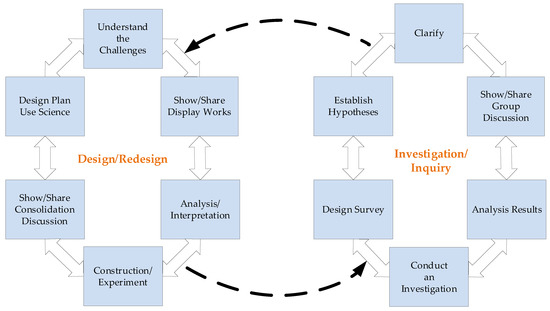
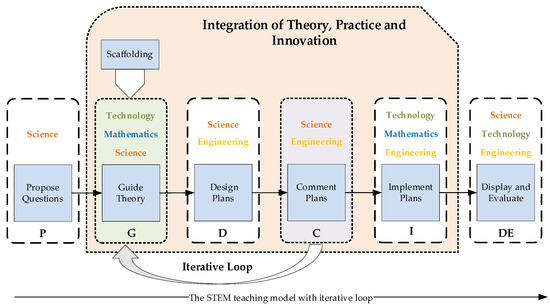
The few of the challenges of engineering education are “How to adapt and incorporate real-time projects/design problems in engineering practice?”, and “How to adapt the use of technology to enhance online teaching for distance learners?”. To address these problems, various learning and teaching approaches are adapted and implemented in engineering education. Innovative practices such as project-based learning (PjBL), problem-based learning (PBL), design-based learning (DBL), project-oriented design-based learning (PODBL), inquiry-based learning (IBL), active and collaborative learning, and experiential learning address the various challenges in engineering practicing for on-campus and online learners.
The use of technology plays an important role in the provision of educational equity for learners in educational communities. Engaging off-campus students through technology resources is vital for a virtual learning environment in engineering education. To ensure a positive experience for the students in off-campus (virtual) learning, the use of modern technology and adapting it is crucial for collaborative and active learning.
The Special Issue is a significant work, which responds directly to issues that have been identified as crucial to the future of young graduates in engineering education. Innovative practices in engineering education are experienced in various institutions around the world, from an individual level to a course level. The concept and implementation of a learning and teaching approach is emphasizing major changes in student learning, academic teaching, and management issues.
Proposals are invited to discuss and present the case studies on longitudinal perceptions on the concept or implementation of innovative learning and teaching approaches, as well as the evolution of online education. The aim and scope of the Special Issue on transformation in education through innovative practices will attract students, to transform them into graduates, so as to be career-ready engineering practitioners. Drawing from various case studies around the globe, this Special Issue outlines the rationale and implementation of several recent innovative practices in engineering education and future directions.
Topics of Interest
Papers in all areas of engineering education are invited, with particular emphasis on the main focus of current issues in engineering education, as follows:
- Student-centred learning environments
- Engaging undergraduate students in research
- Active and collaborative learning
- Inductive learning, problem-based learning, and project-based learning
- Design-based learning
- Virtual and remote learning in engineering education
- K-12 STEM education initiatives
- Use of modern technology in education
- Conceive, design, implement, and operate initiative
Dr. Siva Chandrasekaran
Dr. Riyadh Al-Ameri
Dr. John Long
Collection Editors
Manuscript Submission Information
Manuscripts should be submitted online at www.mdpi.com by registering and logging in to this website. Once you are registered, click here to go to the submission form. All submissions that pass pre-check are peer-reviewed. Accepted papers will be published continuously in the journal (as soon as accepted) and will be listed together on the collection website. Research articles, review articles as well as short communications are invited. For planned papers, a title and short abstract (about 250 words) can be sent to the Editorial Office for assessment.
Submitted manuscripts should not have been published previously, nor be under consideration for publication elsewhere (except conference proceedings papers). All manuscripts are thoroughly refereed through a single-anonymized peer-review process. A guide for authors and other relevant information for submission of manuscripts is available on the Instructions for Authors page. Sustainability is an international peer-reviewed open access semimonthly journal published by MDPI.
Please visit the Instructions for Authors page before submitting a manuscript.
The Article Processing Charge (APC) for publication in this open access journal is 2400 CHF (Swiss Francs).
Submitted papers should be well formatted and use good English. Authors may use MDPI's
English editing service prior to publication or during author revisions.