


- 3.5Impact Factor
- 8.2CiteScore
- 20 daysTime to First Decision
Advanced Monitoring and Control of Air Pollution: Sensors and Technologies for Environmental Protection
This special issue belongs to the section “Chemical Sensors“.
Special Issue Information
Dear Colleagues,
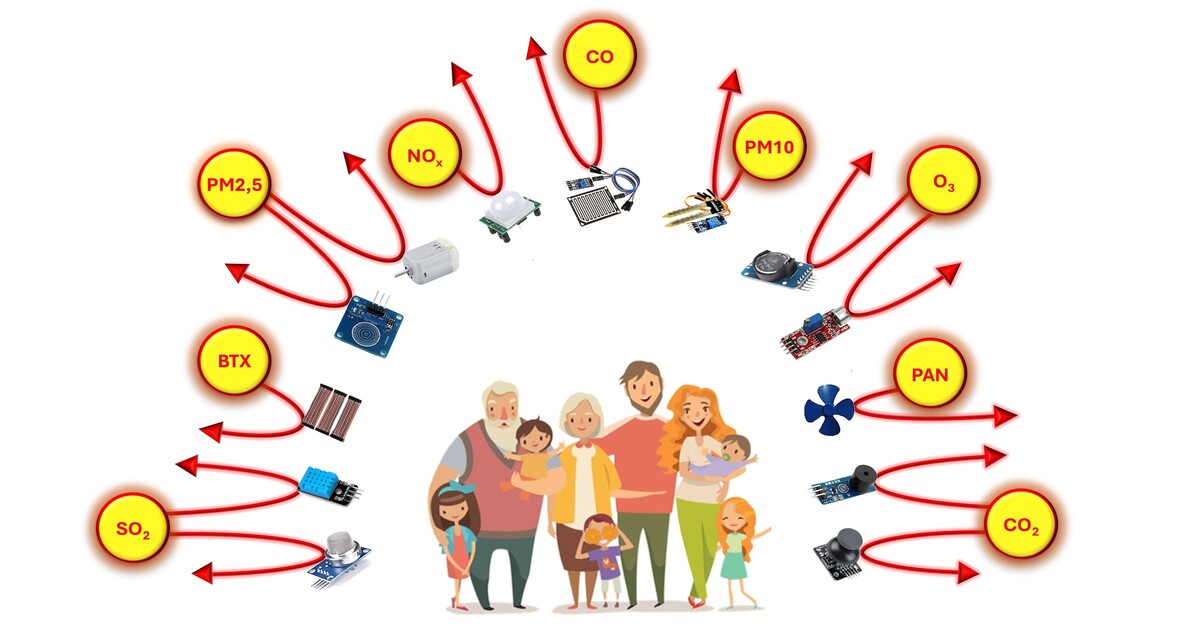
Air pollution is one of the major problems affecting modern society; it is responsible for a very high number of premature deaths and causes partial or total disability for hundreds of millions of people. The effect of pollution on materials puts at risk the artifacts and works of art preserved in museums and art galleries. The effect of pollution on biological systems also extends to vegetation and is the main cause of the greenhouse effect and climate change. Unfortunately, technical and economic reasons do not allow us to have a precise picture of exposure to pollutants, especially due to the scarcity of technological tools capable of verifying the extent and distribution of air pollution in space and time. Achieving a greater understanding of the dynamics of pollution can be achieved through the development of innovative, reliable, and low-cost systems that can determine the levels of pollution caused by chemical species in the gaseous phase and in particulate matter.
This Special Issue covers the state of the art of pollution sensing in its broadest sense in the following sectors:
- Atmospheric environment (e.g., urban, remote, industrial);
- Indoor environments and living spaces;
- Workplaces;
- Interior of public and private vehicles.
Papers should focus on, but should not be limited to, the application of new devices such as sensors, transmission systems, and wireless and personal devices. Particular attention will be given to “problem solving” devices for elucidating pollution processes. As the Guest Editor, I invite you to consider submitting your research for publication in this Special Issue, which will provide a selection of papers useful for the scientific and technical community involved in air pollution assessment and exposition.
Prof. Dr. Ivo Allegrini
Dr. Federica Valentini
Guest Editors
Manuscript Submission Information
Manuscripts should be submitted online at www.mdpi.com by registering and logging in to this website. Once you are registered, click here to go to the submission form. Manuscripts can be submitted until the deadline. All submissions that pass pre-check are peer-reviewed. Accepted papers will be published continuously in the journal (as soon as accepted) and will be listed together on the special issue website. Research articles, review articles as well as short communications are invited. For planned papers, a title and short abstract (about 250 words) can be sent to the Editorial Office for assessment.
Submitted manuscripts should not have been published previously, nor be under consideration for publication elsewhere (except conference proceedings papers). All manuscripts are thoroughly refereed through a single-blind peer-review process. A guide for authors and other relevant information for submission of manuscripts is available on the Instructions for Authors page. Sensors is an international peer-reviewed open access semimonthly journal published by MDPI.
Please visit the Instructions for Authors page before submitting a manuscript. The Article Processing Charge (APC) for publication in this open access journal is 2600 CHF (Swiss Francs). Submitted papers should be well formatted and use good English. Authors may use MDPI's English editing service prior to publication or during author revisions.
Keywords
- sensor devices
- environmental pollution
- environmental monitoring
- gaseous pollutants
- particulate matter
- ion chromatography (IC)
Benefits of Publishing in a Special Issue
- Ease of navigation: Grouping papers by topic helps scholars navigate broad scope journals more efficiently.
- Greater discoverability: Special Issues support the reach and impact of scientific research. Articles in Special Issues are more discoverable and cited more frequently.
- Expansion of research network: Special Issues facilitate connections among authors, fostering scientific collaborations.
- External promotion: Articles in Special Issues are often promoted through the journal's social media, increasing their visibility.
- e-Book format: Special Issues with more than 10 articles can be published as dedicated e-books, ensuring wide and rapid dissemination.
Published Papers
Get Alerted
Add your email address to receive forthcoming issues of this journal.


