Skip to Content
You are currently on the new version of our website. Access the old version .

Trends in Science Education

Trends in Science Education is an international, peer-reviewed, open access journal on science education published quarterly online by MDPI.
  • Open Access— free for readers, with article processing charges (APC) paid by authors or their institutions.
  • Rapid Publication: first decisions in 18 days; acceptance to publication in 7 days (median values for MDPI journals in the first half of 2026).
  • Recognition of Reviewers: Reviewers whose reports are timely and of high quality receive an APC discount voucher for a future publication in an MDPI journal. Become a reviewer.
  • Trends in Science Education is a companion journal of Education Sciences.

Get Alerted

Add your email address to receive forthcoming issues of this journal.

All Articles (3)

  • Article
  • Open Access

While play pedagogies are increasingly recognised in early childhood science education, existing approaches predominantly rely on adult-designed play contexts. Less is known about how scientific learning emerges when children lead their own play within classroom environments equipped with open-ended materials. This qualitative case study explores how children’s self-initiated building activities and teachers’ responsive guidance contribute to early science learning. The study was conducted in an urban public kindergarten with 20 children aged 4–6. Data were collected through participant observation using video recordings, field notes, reflective journals, and visual documentation. Qualitative data analysis revealed three key findings: (a) Self-initiated constructive play naturally prompts children to encounter foundational scientific concepts, such as balance, base of support and structural stability. (b) Critical incidents, such as spontaneous tower collapses and balance failures, when mediated by responsive teacher interventions, act as natural triggers to transform children’s individual trial-and-error experimentation into shared scientific inquiry. (c) A dialectical loop exists between everyday and scientific concepts, leading to the emergence of agency-driven scientific play. As children’s understanding grows, they naturally use scientific concepts to guide their next constructions. These findings suggest that early science learning is not a linear transfer of knowledge but a continuous cycle where play and scientific thinking enrich each other. Pedagogically, this study suggests moving away from rigid, adult-directed play activities toward creating material-rich environments where teachers leverage spontaneous building challenges as meaningful opportunities for inquiry.

Trends Sci. Educ.

13 November 2026

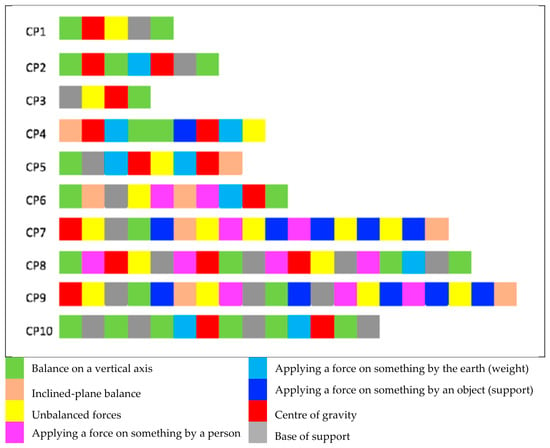
Frequency of science concepts per child-initiated CP event.
  • Article
  • Open Access

Designing guided inquiry requires more than reducing teacher direction: open-ended science tasks must preserve learner decision making while providing sufficient support for disciplinary reasoning. Adopting an interpretivist perspective, this qualitative case study examined how preservice secondary chemistry teachers interpreted a guided STEM inquiry challenge after experiencing it as learners. In small groups, participants designed and tested a low-cost device to rapidly cool a drink by integrating thermochemistry, heat transfer, quantitative reasoning, and engineering design. The analytic corpus comprised 20 reflective portfolio entries focused on the activity from a 2023–2024 chemistry education course. Reflexive thematic analysis identified three themes. Participants valued task openness because it supported reasoning, design, and ownership, but described challenge as productive only while conceptual and mathematical pathways remained accessible. They perceived autonomy as sustained through task constraints, optional hints, peer expertise, and strategically timed teacher guidance. Finally, experiencing inquiry as learners prompted reflection on prior knowledge, timing, support, and feasibility for future secondary classrooms. Rather than demonstrating learning gains, the study identifies instructional conditions participants perceived as consequential and conceptualizes guided inquiry as a redistribution of when, how, and how visibly teaching occurs.

Trends Sci. Educ.

15 October 2026

  • Editorial
  • Open Access

Research in science education—the study of the ways in which teachers teach and students learn scientific skills and concepts across nations, disciplines, and levels of education—has a key role in supporting the preparation of the next generation of scientists who will expand our human understanding of the natural world (Sung et al [...]

Trends Sci. Educ.

10 October 2026

News & Conferences

Latest Issues

Open for Submission

Journal Sections

XFacebookLinkedIn
Trends Sci. Educ. - ISSN 3043-1344