You are currently viewing a new version of our website. To view the old version click .
  • 1.3Impact Factor
  • Indexed inScopus
  • 28 daysTime to First Decision

Reproductive Medicine

Reproductive Medicine is an international, peer-reviewed, open access journal on obstetrics and gynecology published quarterly online by MDPI.

Quartile Ranking JCR - Q3 (Obstetrics and Gynecology)

All Articles (157)

Impact of Socioeconomic Status on Male Reproductive Health: A Mini Review

  • Rishik Kapoor,
  • Manesh Kumar Panner Selvam and
  • Suresh C. Sikka

The recent trends in decreasing population all over the world are cause of concern, especially in developed countries. Socioeconomic factors as well as age, physiological, and environmental issues are the main contributors in limiting the number of children in modern families. In this regard, male reproductive health has recently attracted significant attention not only in the research community but also in our social platform. Key issues such as infertility and sexual dysfunction contribute to the decline in male reproduction. Socioeconomic status (SES) is the least understood factor that plays a critical role in influencing male reproductive health. The SES of an individual can be a key determinant of the type of infertility care they receive and may also predict fertility outcomes for couples undergoing assisted reproductive technology procedures. This mini review seeks to deepen our understanding of reproductive health equity by exploring the impact of socioeconomic and social factors on men’s sexual health and fertility outcomes. Our attempt is to reveal the complex interconnections between SES and male reproductive well-being.

10 December 2025

Key socioeconomic and demographic factors influencing male reproductive health.

Background: Preeclampsia (PE) and gestational diabetes mellitus (GDM) are complex pregnancy disorders characterized by hypertension, proteinuria, increased blood glucose levels, and metabolic dysfunction. Methods: We investigated lymphocyte proliferation, immune function, key antioxidants, and metabolic and mitochondrial enzyme activities in women with PE and PE with GDM compared to normotensive pregnant (NP) controls. Lymphocyte proliferation was assessed following phytohemagglutinin (PHA) stimulation at varying concentrations (0.5, 2.5, and 5 µg/mL). Activities of key antioxidant enzymes, metabolic enzymes, and mitochondrial enzymes were measured. Other stress markers, including nitric oxide (NO) production and lipid peroxidation (TBARS), along with acetylcholine esterase (AChE) activity, and proinflammatory cytokine assays (IL-6 and TNF-α) were also evaluated from the PHA-induced lymphocytes. Results: Lymphocyte proliferation in response to PHA was significantly increased in PE and PE with GDM groups compared to NP, although low-dose PHA (0.5 and 2.5 µg/mL) moderately enhanced proliferation in NP. IL-6 and TNF-α levels were notably elevated in both disease groups. Antioxidant activities of SOD, GST, GPx and AChE, Citrate synthase, Cytochrome c oxidase, and NO production were significantly reduced in PE and PE with GDM, while hexokinase activity involved in glycolysis was elevated in both groups. Further, TBARS levels were elevated in the disease groups, particularly in PE with GDM. Conclusions: The findings arise from a clinical cross-sectional study and highlight significant immune alterations, oxidative stress, and mitochondrial impairment in PE and PE with GDM. The observed elevation in proinflammatory cytokines further underscore the role of immune activation in the pathogenesis of these complications, emphasizing the integrated immunometabolic shifts identified in this study, as potential molecular indicators for early intervention.

9 December 2025

(A). PHA-induced proliferation of lymphocytes from NP, PE, and PE with GDM women. Lymphocyte (2 × 10⁵ cells/mL) were incubated with 0, 0.5, 1.25, or 5 μg/mL of PHA for 72h, and proliferation was assessed using the MTT assay. PHA-induced proliferation of lymphocytes increased in PE women compared to NP. (B). TNF-α and (C). IL-6, the proinflammatory cytokine production, were increased in 5 μg /mL of PHA-induced lymphocytes among PE and PE with GDM women compared to NP. * represents (p < 0.05) significance compared to NP.

Background/Objectives: Non-receptive endometrium is associated with recurrent implantation failure, which leads to a decrease in the frequency of pregnancy during IVF; therefore, new treatment methods such as the use of Platelet-Rich Plasma (PRP) are gaining popularity in the treatment of infertility in women with repeated unsuccessful IVF attempts. Methods: A total of 38 women were included in this study, with the main complaint being the inability to conceive or maintain pregnancy. Medical examination, laboratory tests, ultrasound of the pelvic organs and hysteroscopy were performed. After that, whole blood was taken to prepare an autologous PRP; then, the PRP was inserted into the uterine using an intrauterine catheter in the first phase of the menstrual cycle (1–7 procedures). The primary outcome of this study was an increase in endometrial thickness and improvement of the receptive endometrial layer. The secondary outcome was pregnancy rate. This was a single-center prospective interventional clinical study. Results: Statistical analysis of changes in endometrial thickness after PRP therapy showed that endometrial thickness indicators after treatment significantly exceeded the values before the intervention. This may be evidence of the effectiveness of PRP therapy for thin endometrium. When analyzing pregnancy status, it was noted that after receiving PRP, more than half (56% of cases) became pregnant and the majority of them successfully gave birth. Conclusions: Based on the results of our study, we can conclude that intrauterine injection of PRP may be a new therapeutic approach in the treatment of thin endometrium and associated infertility. The use of PRP demonstrated effectiveness in increasing the thickness of the endometrium, regardless of pregnancy, while the secondary indicator was the frequency of successful pregnancies among the participants.

7 December 2025

The study design.
  • Systematic Review
  • Open Access

Background/Objectives: Cervical insufficiency remains a leading cause of second-trimester pregnancy loss and early preterm birth. Although single-level cerclage techniques such as McDonald or Shirodkar are widely accepted, the potential advantages of double or modified double-level cerclage remain controversial. Methods: This systematic review was conducted in accordance with PRISMA guidelines. Comprehensive searches of PubMed, Embase, Web of Science, and the Cochrane Library (to September 2025) were supplemented by Google Scholar and conference proceedings. Eligible studies included randomized controlled trials, comparative cohort studies, and case series directly comparing double versus single transvaginal cerclage. A total of twenty-six sources were included, spanning randomized trials, comparative cohort studies, published protocols, case series, systematic reviews, conference abstracts, and early technical or historical reports. The primary outcome was preterm birth before 34 weeks; secondary outcomes were GA at delivery, latency, neonatal morbidity and mortality, and maternal complications. Results: Across prophylactic (history- or ultrasound-indicated) settings, double sutures produced outcomes comparable to single-level cerclage without consistent superiority. In contrast, in emergency or exam-indicated cases with advanced cervical dilation or bulging membranes, double or double-level cerclage significantly prolonged latency and reduced very preterm birth (<32–34 weeks). Double-level reinforced techniques (including monofilament-based and modified Wurm-type approaches) showed improved mechanical support and lower neonatal intensive-care admission. Case series further demonstrated successful rescue procedures beyond 24 weeks, indicating expanded surgical feasibility in selected patients. Conclusions: While double cerclage yields similar results to single cerclage in prophylactic use, it appears advantageous in high-risk or emergency scenarios. Comparative analyses suggest that combined mechanical and infection-controlled approaches may improve cervical competence and prolong gestation in selected patients. Ongoing multicenter randomized trials are needed to establish its definitive role in modern obstetric practice.

2 December 2025

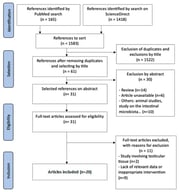
PRISMA Flow Diagram. A total of 260 records were identified through database and manual searches. After removal of duplicates, 92 unique records remained. Following full-text screening, 26 studies fulfilled the inclusion criteria and were included in the qualitative synthesis.

News & Conferences

Issues

Open for Submission

Editor's Choice

Get Alerted

Add your email address to receive forthcoming issues of this journal.

XFacebookLinkedIn
Reprod. Med. - ISSN 2673-3897