Skip Content
You are currently on the new version of our website. Access the old version .

Multimodal Technologies and Interaction

Multimodal Technologies and Interaction is an international, peer-reviewed, open access journal on multimodal technologies and interaction published monthly online by MDPI.

Quartile Ranking JCR - Q2 (Computer Science, Cybernetics)

All Articles (844)

The rapid expansion of digital education in the 21st century has positioned Virtual Reality Learning Environments (VRLEs) as promising spaces for fostering greater learner autonomy. As immersive technologies become more accessible and pedagogically versatile, they offer students opportunities to regulate their learning processes, experiment in interactive scenarios, and progress at their own pace. This review examines how autonomous learning has been conceptualized and investigated within VRLE research through a comprehensive bibliometric analysis of studies published between 2000 and 2025. The results reveal a research field shaped by two major orientations: one focused on human and pedagogical dimensions (learner diversity, instructional design, and evidence-based strategies) and another on technological innovation (artificial intelligence, machine learning, and simulation-based systems). Topic analyses show that digital and immersive education dominate current scholarly production, while areas directly related to autonomy, personalized learning, and student-centered methodologies remain comparatively less developed. Accordingly, it is crucial to reinforce pedagogical structures that enable autonomous learning in VR environments and to integrate technological advancements in a manner that translates into tangible improvements in educational quality across different settings.

5 February 2026
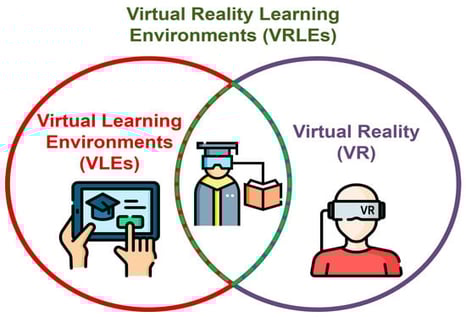
Evolution from conventional virtual learning environments (VLEs) to virtual reality learning environments (VRLEs).

The digital era represents a paradigm shift in gifted education, moving at an accelerating pace away from traditional models toward flexible and personalized technology-based pathways. This study investigates the impact of a model implemented via the FutureX platform in Saudi Arabia on the autonomy and self-regulated learning (SRL) of 63 gifted high school students. Using a quasi-experimental design, the study integrated quantitative measures (paired t-tests) with phenomenological analysis of interviews. The quantitative results showed statistically significant improvements (p < 0.001) in the dimensions of autonomy and self-regulated learning, with large Cohen’s d effect sizes for planning (d = 1.05), monitoring (d = 1.05), and cognitive control (d = 1.30). These gains were supported by a pedagogical design intentionally embedded within the platform to scaffold self-regulation. These findings were reinforced by qualitative results, with 88% of gifted students reporting that the platform provided appropriately challenging content and promoted self-learning and goal-setting behaviors.

4 February 2026

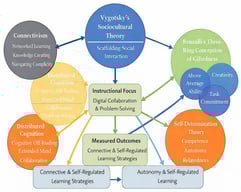
Theoretical Framework: From Principles to Practice in Technology-Enabled Acceleration for Gifted Learners.

Skilled operation of forestry harvesters is essential for ensuring safety, efficiency, and sustainability in logging practices. However, conventional training methods are often prohibitively expensive and limited by access to specialized equipment. This study delivers one of the first user-centered validations of a low-cost, VR HMD-based forestry harvester simulator, directly addressing access and scalability barriers in training. With 26 participants, we quantify cognitive load, usability, user experience, and simulator sickness using established instruments. An increase in cognitive load was seen from baseline tutorial to each training module (NASA-TLX: ; rm-ANOVA, p < 0.001). Usability was ‘Good’ (with a mean SUS score: 76.63), hedonic UX ranked in the top decile (UEQ-S), and simulator sickness was moderate (mean SSQ score: 28.91), while task success remained high across all modules. These results indicate early-stage feasibility and usability of a low-cost VR HMD harvester simulator for student-focused introductory instruction, and they provide actionable design guidance (e.g., managing extraneous load, comfort safeguards) advancing evidence-based VR HMD-based training in the forest engineering and harvesting domain. Our findings validate the potential of VR-HMD as a tool for forestry education capable of addressing training accessibility gaps and enhancing learner motivation through immersive experiential learning.

2 February 2026

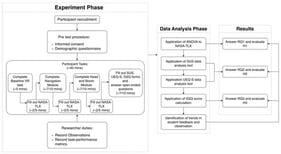
Study design and evaluation method illustrating the experiment phase (participant recruitment, pre-test, VR sessions, post-test), followed by data analysis and results addressing the research questions.

As universities expand their e-learning systems, it becomes increasingly important to understand how the use of information and communication technologies (ICTs) changes the skills needed for effective formative assessment. This study uses the principles of human–computer interaction (HCI) to create a framework for examining how digital tools, interfaces, and modes of interaction influence the way teachers assess students in higher education. The research relies on the information provided by 115 Mohammed V University teachers, who filled out a competency-based assessment grid regarding online assessment practices. The results remain exploratory and context-dependent and do not make claims of statistical representativeness beyond the studied institutional context. The findings attest to the virtues of digital technology in improving methodological and techno-pedagogical skills, without excluding the existence of serious shortcomings in semio-ethical and evaluative skills. It is certainly useful to leverage feedback to correct imperfections in evaluation practices and make them more responsive to digital interfaces. It is becoming imperative to rethink professional skills as the regulatory halo of the online formative assessment system, in order to evaluate a more synergistic framework that can give better visibility to virtual classrooms.

2 February 2026

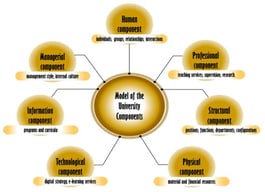
Explanatory model of the university components.

News & Conferences

Issues

Open for Submission

Editor's Choice

Get Alerted

Add your email address to receive forthcoming issues of this journal.

XFacebookLinkedIn
Multimodal Technol. Interact. - ISSN 2414-4088