
Liquids 2026, 6(2), 20; https://doi.org/10.3390/liquids6020020 (registering DOI) - 24 May 2026
Abstract
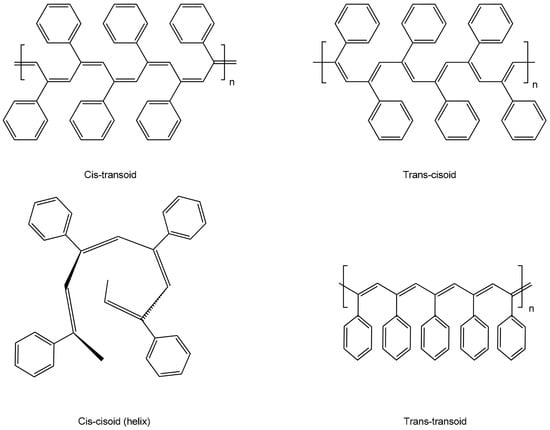
Poly(l-lactic acid) or poly(l-lactide) (PLLA) is an optically active polymer derived from renewable sources and fully biodegradable. It is known that PLLA assumes a left-handed helix in the solid state and also in solution it still keeps a certain
[...] Read more.
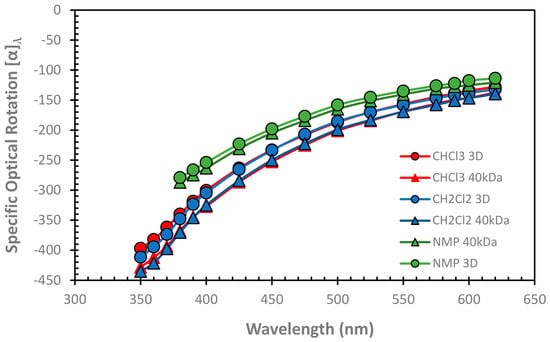
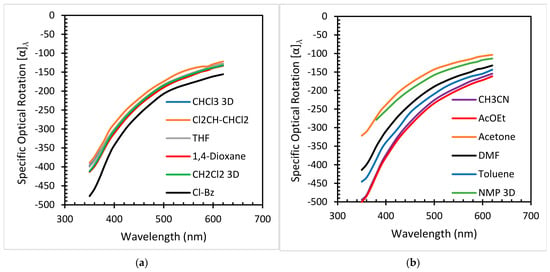
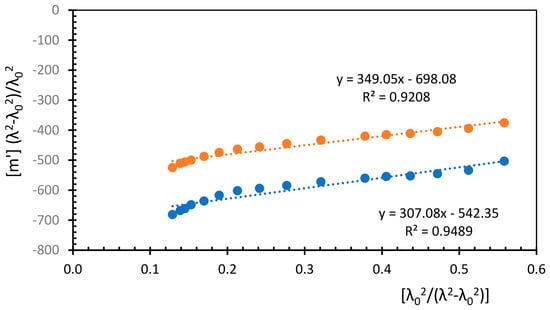
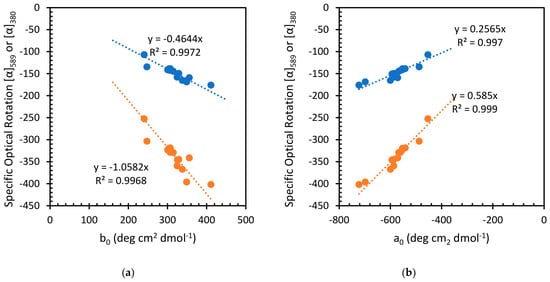
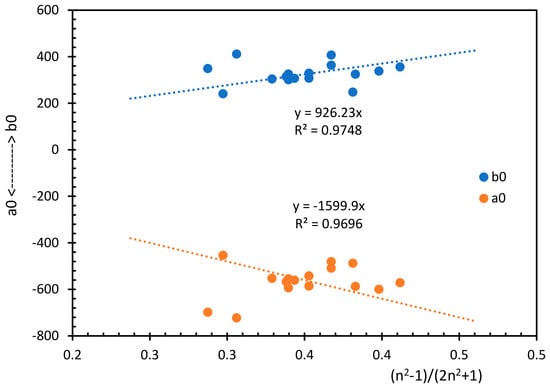
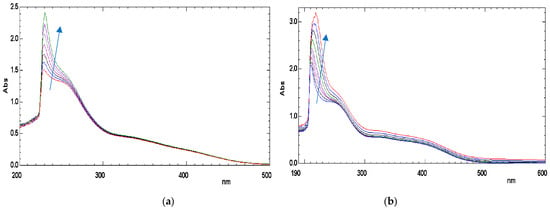
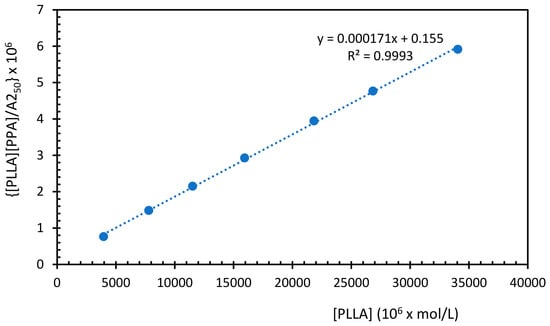
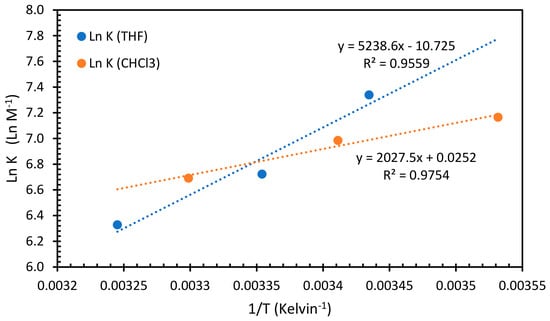
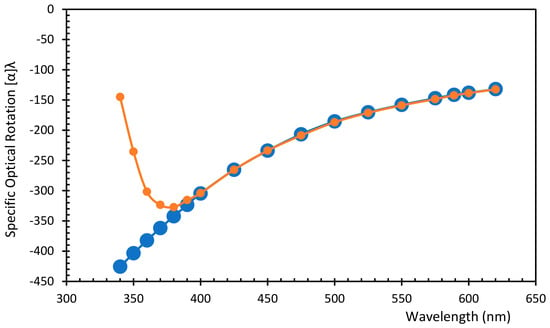
Poly(l-lactic acid) or poly(l-lactide) (PLLA) is an optically active polymer derived from renewable sources and fully biodegradable. It is known that PLLA assumes a left-handed helix in the solid state and also in solution it still keeps a certain degree of helical structure. Here, we examine the Optical Rotatory Dispersion (ORD) behavior of two grades of PLLA (medium molecular weight and hexadecyl-terminated or high molecular weight for 3D printing) in 13 different solvents and analyze the experimental ORD data through the Moffitt–Yang equation. Furthermore, the ORD data of PLLA in additional 6 solvents were taken from the literature and analyzed with the Moffitt-Yang approach. The results suggest that, also in solution, PLLA maintains the left-handed helix, and the most structurizing and helicogenic solvents for PLLA are ethyl acetate, acetonitrile, and certain chlorinated solvents. The equilibrium association constant (K) and other thermodynamic parameters (ΔG°, ΔH° and ΔS°) between PLLA and polyphenylacetylene (PPA, another helical polymer in the solid state and in solution) were determined in trichloromethane, dichloromethane, and tetrahydrofuran. The K values found suggest a strong helix-helix interaction between the two polymers. The ORD analysis of the PLLA-PPA solutions shows evidence of the extrinsic Cotton effect and confirms the chiral helicity induction between the two polymers with 1:1 complex formation.
Full article
(This article belongs to the Section Chemical Physics of Liquids)
►
Show Figures
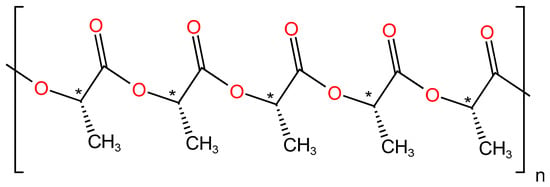
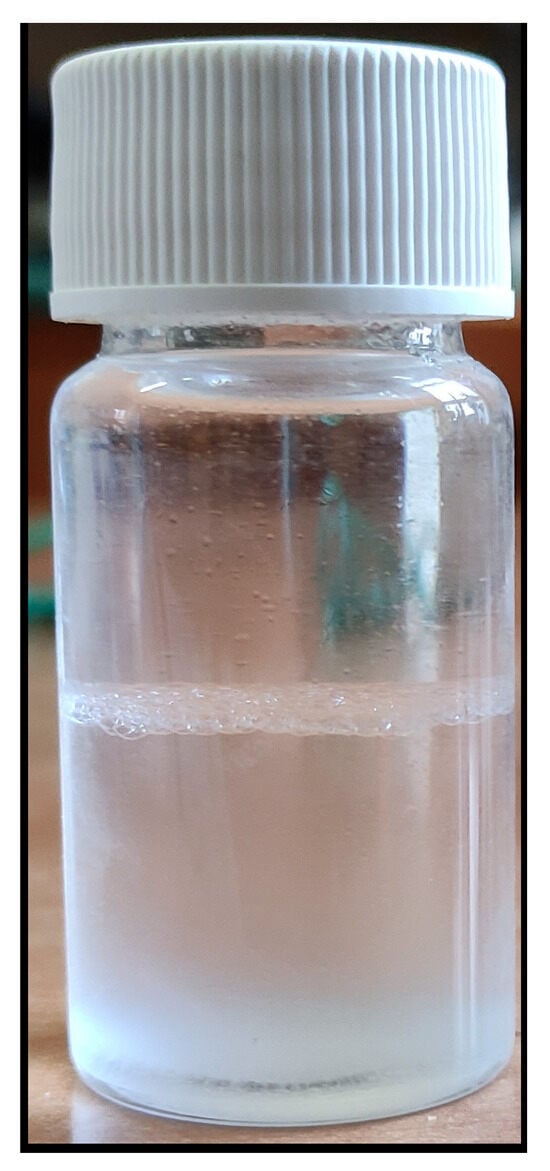
Figure 1