




-
Greening Human Rights in Africa: The African Court and the Environmental Accountability of States and Corporations -
Can a Regional Law Regulate End-of-Life Care in Italy? Ethical and Medico-Legal Perspectives -
Transplanting Australia’s Consumer Data Right: A Viable U.S. Open Banking Model? -
Nationalisation as a Response to Failing Public Service Providers: Challenges and Alternatives
Journal Description
Laws
Laws
is an international, peer-reviewed, open access journal on legal systems, theory, and institutions, published bimonthly online by MDPI.
- Open Access— free for readers, with article processing charges (APC) paid by authors or their institutions.
- High Visibility: indexed within Scopus, ESCI (Web of Science), RePEc, vLex Justis, CanLII, Law Journal Library, and other databases.
- Journal Rank: JCR - Q2 (Law) / CiteScore - Q1 (Law)
- Rapid Publication: manuscripts are peer-reviewed and a first decision is provided to authors approximately 43 days after submission; acceptance to publication is undertaken in 6.5 days (median values for papers published in this journal in the second half of 2025).
- Recognition of Reviewers: reviewers who provide timely, thorough peer-review reports receive vouchers entitling them to a discount on the APC of their next publication in any MDPI journal, in appreciation of the work done.
- MDPI’s Journal Cluster of Social Studies: Challenges-Journal of Planetary Health, Disabilities, Genealogy, Laws, Sexes, Social Sciences and Societies.
Impact Factor:
1.1 (2024);
5-Year Impact Factor:
1.4 (2024)
Latest Articles
Harmonising Trade Secret Protection in AI: Innovation, Opacity and Digital Vulnerability
Laws 2026, 15(2), 34; https://doi.org/10.3390/laws15020034 - 20 Apr 2026
Abstract
This study examines how the international harmonisation of intellectual property rules, particularly trade secret protection, reshapes the governance of artificial intelligence (AI) in ways that both enable and threaten justice. We argue that convergent standards on undisclosed information are essential for legal certainty
[...] Read more.
This study examines how the international harmonisation of intellectual property rules, particularly trade secret protection, reshapes the governance of artificial intelligence (AI) in ways that both enable and threaten justice. We argue that convergent standards on undisclosed information are essential for legal certainty in knowledge-intensive AI investments. Such standards are anchored in TRIPS, reinforced by WIPO guidance and digital trade agreements, and complemented by regional instruments such as the EU Trade Secrets Directive. This emerging framework facilitates cross-border technological cooperation while helping prevent the “regulatory expropriation” of code, models, and data infrastructures. At the same time, when this pro-secrecy architecture is extended to opaque algorithmic systems that mediate access to credit, employment, welfare, health and justice, it can entrench digital vulnerability: information asymmetries between firms, states and citizens; barriers to meaningful transparency and audit; and pathogenic forms of exclusion that disproportionately affect already disadvantaged groups. Building on the concept of digital and structural vulnerability, the paper defends a vulnerability-sensitive approach to harmonisation in which trade secret protection is balanced against human rights, algorithmic accountability and the regulatory space of Global South states. We conclude that only an intellectual property regime guided by an ethics and politics of vulnerability can reconcile economic integration, technological development and reducing digital vulnerability in deeply unequal societies.
Full article
(This article belongs to the Special Issue Harmonisation of Intellectual Property Rules: A Path Towards Global Integration?)
Open AccessArticle
The United Kingdom’s Ukraine Schemes and the Case for a Safe Passage Visa: At-Risk People, So-Called ‘Safe and Legal Routes’, and the Refugee Convention
by
Jennifer Morgan
Laws 2026, 15(2), 33; https://doi.org/10.3390/laws15020033 - 17 Apr 2026
Abstract
This paper analyses the existing international refugee framework in light of the emergence of alternative so-called ‘safe and legal routes’ devised by the UK government—in particular, the bespoke Ukraine visa schemes—and considers the practical implementation of a Safe Passage Visa programme in the
[...] Read more.
This paper analyses the existing international refugee framework in light of the emergence of alternative so-called ‘safe and legal routes’ devised by the UK government—in particular, the bespoke Ukraine visa schemes—and considers the practical implementation of a Safe Passage Visa programme in the UK. It will consider how safe routes may benefit at-risk people when provided alongside the protection afforded under the Refugee Convention. It will also evaluate the persistent failure of UK government policy that focuses on deterrent-only aims but has been unsuccessful in reducing irregular journeys to the UK. The paper will then explore the case for a ‘Safe Passage Visa’, focusing on the practical challenge of implementation and the potential impact of its development on the workings of the asylum system in the UK, including the potential reduction in irregular entry and other benefits. The paper argues that there is an imperative need to take action to safeguard and protect human lives in transit whilst asserting that this must be conducted in a way that complements and enhances the principles enshrined in the Refugee Convention.
Full article
(This article belongs to the Special Issue The Shifting Sands of Refugee Protection: Normativity, Crisis, and Contemporary UK Asylum)
Open AccessArticle
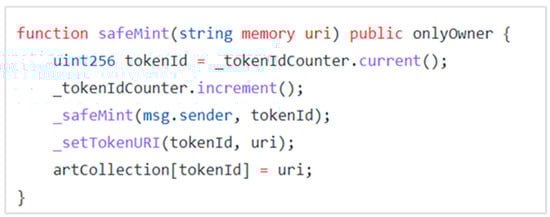
Development of a Smart Contract for the Transfer of Copyrights in an Artwork Linked to an NFT
by
William Fernando Martínez Luna, Ana María Moreno Ballesteros and Edgar José Ruiz Dorantes
Laws 2026, 15(2), 32; https://doi.org/10.3390/laws15020032 - 16 Apr 2026
Abstract
►▼
Show Figures
Non-fungible tokens (NFTs) are transforming the commercialisation of digital art by establishing unique blockchain identifiers that ensure authenticity and certify subsequent transactions. However, the transfer of control over an NFT does not automatically include the transfer of the associated copyrights, thereby creating legal
[...] Read more.
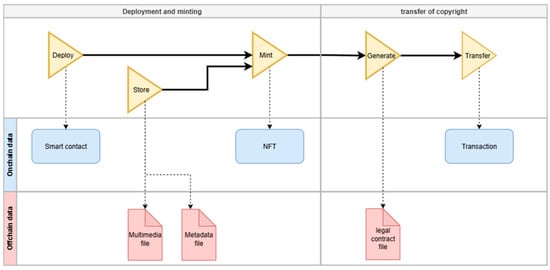
Non-fungible tokens (NFTs) are transforming the commercialisation of digital art by establishing unique blockchain identifiers that ensure authenticity and certify subsequent transactions. However, the transfer of control over an NFT does not automatically include the transfer of the associated copyrights, thereby creating legal uncertainty as to what rights are actually acquired. This interdisciplinary project between engineering and law proposes the design of a smart contract, based on the ERC-721 standard, to manage the transfer of property rights linked to digital artworks represented as NFTs. The accompanying legal contract incorporates essential clauses covering the identification of the parties, a description of the artwork and its link to the token, pricing, royalties, and the terms of rights transfer. The proposal seeks to integrate blockchain technology with existing legal frameworks, offering an innovative solution that strengthens legal certainty in the transfer of copyright within digital environments.
Full article

Figure 1
Open AccessArticle
The Interplay Between the 1951 Geneva Refugee Convention and the 1989 UN Convention on the Rights of the Child
by
Stefanie Schmahl
Laws 2026, 15(2), 31; https://doi.org/10.3390/laws15020031 - 15 Apr 2026
Abstract
The interplay between the 1951 Refugee Convention and the 1989 Convention on the Rights of the Child (CRC) is of particular importance, as children today make up around 41% of all refugees. The Refugee Convention grants subsidiary international protection for persons who have
[...] Read more.
The interplay between the 1951 Refugee Convention and the 1989 Convention on the Rights of the Child (CRC) is of particular importance, as children today make up around 41% of all refugees. The Refugee Convention grants subsidiary international protection for persons who have legally or de facto lost the protection of their home state because it either persecutes them or exposes them to persecution by non-state actors. The Convention contains various substantial guarantees for recognized refugees and persons seeking refugee status. However, it does not contain any explicit provision on refugee children. This is precisely where Article 22 CRC comes into play, which states that refugee children are entitled to “appropriate protection and humanitarian assistance”. The essay delineates the definition of what is meant by a “refugee child” in the light of both Article 22 CRC and Article 1A(2) of the Refugee Convention. Furthermore, it works out that Article 22 CRC can strengthen the Refugee Convention’s scant commitment to children’s rights. This is particularly evident in the CRC’s requirements for the treatment of children in asylum procedures, which are not addressed at all in the Refugee Convention.
Full article
(This article belongs to the Special Issue Protecting the Rights of Children in Migration—Volume 2)
Open AccessReview
Cyprus’ Approach to the Digital Services Act: Harmonisation, Enforcement, and Practical Implications
by
Alexandropoulou Antigoni and Themistokleous Antigoni
Laws 2026, 15(2), 30; https://doi.org/10.3390/laws15020030 - 14 Apr 2026
Abstract
The Digital Services Act (DSA) represents a landmark regulatory context aiming to secure a safer, trusted and more transparent digital environment. While the DSA establishes a harmonised regulatory framework for intermediary services across the EU, its enforcement system relies significantly on national regulatory
[...] Read more.
The Digital Services Act (DSA) represents a landmark regulatory context aiming to secure a safer, trusted and more transparent digital environment. While the DSA establishes a harmonised regulatory framework for intermediary services across the EU, its enforcement system relies significantly on national regulatory authorities, leaving member states a degree of institutional autonomy in designing the supervisory structures. This article examines the implementation of the DSA in Cyprus and discusses the national legal framework adopted through primary and secondary legislation. It analyses the powers, legally mandated tasks, rights, and obligations of the digital services coordinator in Cyprus including its supervisory, investigatory, and enforcement competences as well as the sanctioning mechanisms. This article provides a comprehensive legal analysis of the coordinator’s operation and contributes to the academic debate on the national implementation of the DSA as a horizontal legal tool of intermediary services and digital platforms accessed by European citizens.
Full article
Open AccessReview
Menstruation and the Myth of the Gender-Neutral Worker: Structural Inequality in Labor Law
by
Bernadett Solymosi-Szekeres
Laws 2026, 15(2), 29; https://doi.org/10.3390/laws15020029 - 12 Apr 2026
Abstract
The legislative framework of labor law is generally described as gender-neutral based on universal presumptions about employment availability, work productivity, and the ability to work without interruption; in actuality, this gender-neutral framework remains contingent on the existence of the non-menstruating body. This paper
[...] Read more.
The legislative framework of labor law is generally described as gender-neutral based on universal presumptions about employment availability, work productivity, and the ability to work without interruption; in actuality, this gender-neutral framework remains contingent on the existence of the non-menstruating body. This paper analyzes the concept of menstruation as the blind spot in labor law, exploring whether the gender-neutral framework of the legal system has the ability to achieve true gender equality while turning a blind eye to the cyclical body, which has been identified to negatively impact the lives of many menstruators. Methodologically, this research takes a normative approach, incorporating feminist legal theories, principles of substantive equality, and socioeconomic and medical studies on menstruation. The results of this research prove that the concept of menstruation cannot be described or characterized by frameworks such as illness or disability, leaving the normative regulatory space for menstruators to experience structural inequality. The formal equality of labor law rules thus produces unequal effects in practice by privileging an implicit model of uninterrupted work capacity. This article concludes that the legal silence surrounding menstruation is not neutral but reinforces gendered patterns of disadvantage. Making menstruation visible within labor law is therefore not a matter of special treatment but a necessary step towards substantive equality and embodied gender justice, and a prerequisite for any future regulatory responses aimed at addressing workplace inequality.
Full article
(This article belongs to the Special Issue Law and Gender Justice)
Open AccessArticle
Criminalising Asylum Beyond Prosecution: Exclusionary Law and Policy in the UK
by
Sarah Singer
Laws 2026, 15(2), 28; https://doi.org/10.3390/laws15020028 - 11 Apr 2026
Abstract
This paper explores the ‘criminalisation’ of asylum in recent UK law and policy, most notably the 2022 Nationality and Borders Act (NABA) and 2023 Illegal Migration Act (IMA), and the ways in which this framework has fed through into recent legislative and policy
[...] Read more.
This paper explores the ‘criminalisation’ of asylum in recent UK law and policy, most notably the 2022 Nationality and Borders Act (NABA) and 2023 Illegal Migration Act (IMA), and the ways in which this framework has fed through into recent legislative and policy measures. Whilst the development and expansion of criminal offences relating to irregular entry and arrival may be considered the most overt form of ‘criminalising’ people on the move, in this paper it is argued that the criminalisation of asylum in the UK today should not only be understood through the prism of crimmigration measures which are expressly penal in nature, but also through an array of measures which, although framed as administrative and civil, are similarly punitive in character and serve the criminal punishment rationale of retribution and deterrence. The legislative framework of the NABA 2022 and IMA 2023 has paved the way for this progressive ‘criminalisation’ by sanctioning those arriving irregularly to the UK to claim asylum. This trend has been continued in recent law and policy, and progressively expanded in a manner that increasingly sanctions refugees for the very fact of having claimed asylum in the UK.
Full article
(This article belongs to the Special Issue The Shifting Sands of Refugee Protection: Normativity, Crisis, and Contemporary UK Asylum)
Open AccessReview
Can a Regional Law Regulate End-of-Life Care in Italy? Ethical and Medico-Legal Perspectives
by
Tommaso Spasari, Paolo Bailo, Emerenziana Basello, Giuliano Pesel and Giovanna Ricci
Laws 2026, 15(2), 27; https://doi.org/10.3390/laws15020027 - 3 Apr 2026
Abstract
Recent Italian developments in end-of-life governance have intensified debate on self-determination, medically assisted suicide, and the constitutional limits of healthcare regulation. This article is a narrative review combined with doctrinal legal analysis and medico-legal commentary. It examines Tuscany’s Regional Law No. 16 of
[...] Read more.
Recent Italian developments in end-of-life governance have intensified debate on self-determination, medically assisted suicide, and the constitutional limits of healthcare regulation. This article is a narrative review combined with doctrinal legal analysis and medico-legal commentary. It examines Tuscany’s Regional Law No. 16 of 14 March 2025 within the broader Italian framework shaped by Law No. 219/2017, Constitutional Court Judgment No. 242/2019, and the subsequent constitutional review culminating in Judgment No. 204/2025. The article pursues three aims: to reconstruct the national legal framework governing end-of-life decision-making in Italy; to analyse the structure and constitutional implications of the Tuscan statute; and to assess the medico-legal relevance of the persistent uncertainty surrounding life-sustaining treatments as an eligibility criterion. The analysis highlights two distinct but interconnected issues: the constitutional boundary between regional healthcare organisation and matters requiring nationally uniform safeguards, and the unresolved interpretation of life-sustaining treatments in clinical and legal practice. In light of Judgment No. 204/2025, the article argues that regional procedural intervention may reduce administrative uncertainty, but cannot replace coherent parliamentary legislation capable of clarifying substantive criteria, limiting territorial variability, and reinforcing the role of palliative care within end-of-life pathways.
Full article
Open AccessArticle
Civil Liability Odds in Information Leaks: Controversial Legal Debates and Emerging Judicial Doctrines in Jordan
by
Ahmed M. Khawaldeh
Laws 2026, 15(2), 26; https://doi.org/10.3390/laws15020026 - 3 Apr 2026
Abstract
Cyberattacks and data breaches expose individuals and firms to liability in civil courts. Despite regulators’ efforts to standardize cybersecurity laws, judges, justices and attorneys have offered a plethora of interpretations to the same laws, causing a great deal of confusion. The current investigation
[...] Read more.
Cyberattacks and data breaches expose individuals and firms to liability in civil courts. Despite regulators’ efforts to standardize cybersecurity laws, judges, justices and attorneys have offered a plethora of interpretations to the same laws, causing a great deal of confusion. The current investigation utilizes the Jordanian civil code to illustrate how complex liability becomes in data breaches cases. Through a comprehensive examination of liability rules 256–291 within the civil code, the Supreme Courts’ liability precedents, and the new personal data protection law, this analysis finds that liability could be established under strict conditions. Liability claims in Jordanian courts must satisfy the standing doctrine, the presence of injury requiring compensation, and causality, and must demonstrate the clear links between data breaches and the harm/injury suffered. The novelty of the personal data protection law in Jordan is likely to impact how liability is interpreted and established in cybersecurity cases.
Full article
Open AccessArticle
Nationalisation as a Response to Failing Public Service Providers: Challenges and Alternatives
by
Rebecca Parry and Hakan Sahin
Laws 2026, 15(2), 25; https://doi.org/10.3390/laws15020025 - 2 Apr 2026
Abstract
There have been multiple examples in recent years of nationalisation being used as a strategy for protecting the functions of failing public service providers. In the UK, at present, there is a demand for the nationalisation of Thames Water, which supplies water to
[...] Read more.
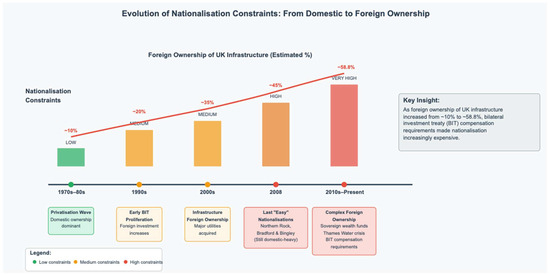
There have been multiple examples in recent years of nationalisation being used as a strategy for protecting the functions of failing public service providers. In the UK, at present, there is a demand for the nationalisation of Thames Water, which supplies water to 16 million users but is struggling financially and operationally. Proponents of nationalisation often overlook the complexity of the process, which involves the expropriation of shares and can be an expensive option. The expense arises in part due to the globalised investment context, where bilateral investment treaties (BITs) between various countries require compensation from foreign investors who suffer expropriation. There is wide foreign ownership of Thames Water, as well as many other UK public service suppliers. The practical and legal obstacles to nationalisation may mean that compensation must be paid at full market value, or not far short of it, even where the nationalised company is insolvent or failing. This paper examines the compensation frameworks applicable to the nationalisation of distressed public service providers with foreign ownership, analysing both bilateral investment treaties and the European Convention on Human Rights. Using Thames Water as a detailed case study, we demonstrate that current international investment law standards, which were developed for the expropriation of profitable enterprises, prove ill-suited when applied to the nationalisation of insolvent companies. Requiring “prompt, adequate and effective” compensation at fair market value for failing public service providers, such as utilities, creates perverse outcomes, as the taxpayers are asked to fund both the rescue of failed private ownership and the infrastructure investments that private owners neglected, while the shareholders who presided over the decline receive windfalls from state intervention. We propose an alternative framework based on four graduated responses: (1) enhanced regulatory intervention before failure occurs; (2) the use of upstream insolvency procedures, including restructuring plans; (3) the use of ordinary insolvency procedures of liquidation and administration; and (4) nationalisation as a last resort when market-based solutions are exhausted. Crucially, in this last case, we advocate for compensation to be calculated on a basis that reflects the insolvency of the nationalised entity. This entails valuing expropriated interests at what shareholders and creditors would have received through the insolvency proceedings that nationalisation displaces, which will typically be well below market value, even zero.
Full article
(This article belongs to the Special Issue Developments in International Insolvency Law: Trends and Challenges)
►▼
Show Figures

Figure 1
Open AccessArticle
A Jeffersonian Approach to Civic Engagement, Through Civic Education and the Flexibility of the Natural Law
by
Thomas Cook and Boleslaw Z. Kabala
Laws 2026, 15(2), 24; https://doi.org/10.3390/laws15020024 - 2 Apr 2026
Abstract
A Jeffersonian model of civic education supports robust civic engagement while differing in important respects from prevailing paradigms of community-embedded learning that prioritize activism. Rather than emphasizing participation alone, Jefferson’s approach to the development of civic awareness foregrounds reasoned speech, civil discourse, and
[...] Read more.
A Jeffersonian model of civic education supports robust civic engagement while differing in important respects from prevailing paradigms of community-embedded learning that prioritize activism. Rather than emphasizing participation alone, Jefferson’s approach to the development of civic awareness foregrounds reasoned speech, civil discourse, and the cultivation of practical judgment informed by theoretical understanding. Central to this model is Jefferson’s insistence that civic education is primarily a local and state responsibility, grounded in a broader commitment to self-government. Jefferson’s account reflects an appreciation for human reason as a universal capacity that makes consent and civic deliberation possible. Reason, so understood, provides the foundation for political equality and for an account of human flourishing articulated most clearly in the Declaration of Independence and consistent with core claims of the natural law tradition. This framework supports a conception grounded in metaphysical equality and civic friendship, best expressed within a federal political order, and capable of sustaining what classic sources and contemporary initiatives describe as a “pervasive commitment to diversity—as well as unity”. Further contributing to the novelty of our argument, we show that Jeffersonian natural-law-inflected civic engagement resonates well into the 20th century. Important judicial decisions, educational initiatives, and policy recommendations—including Cook v. McKee, Education for American Democracy (EAD), and the Truman Commission Report—draw upon related concepts of civic formation, consent, and reasoned participation. Jefferson’s emphasis on “reasons in speech,” understood as an essential element of self-government, thus remains a necessary and underappreciated contribution to contemporary debates over civic education and engagement.
Full article
(This article belongs to the Special Issue Vol. II of Civic Engagement, Justice, and the Law in a National and International Context)
Open AccessArticle
The Primacy of Civic Life: Aristotle’s Critique of Hippodamus
by
Sebastian R. Graham and Matthew K. Reising
Laws 2026, 15(2), 23; https://doi.org/10.3390/laws15020023 - 1 Apr 2026
Abstract
This article contributes to ongoing debates between political scientists and the burgeoning civic education reform movement over the nature and goals of political inquiry and the need for a careful analysis of political methodology. To do so, this article draws on and explicates
[...] Read more.
This article contributes to ongoing debates between political scientists and the burgeoning civic education reform movement over the nature and goals of political inquiry and the need for a careful analysis of political methodology. To do so, this article draws on and explicates Aristotle’s criticisms of Hippodamus to show the dangers of privileging legibility and quantifiability over the common experiences of civic life, which includes normative considerations of good and bad and right and wrong. Ultimately, we argue that Aristotle provides a model for inquiring into the nature of political life that is conscious of civic responsibility and which offers a strong justification for continued civic education reform. Along the way, we contribute to ongoing discussions about the potentially positive relationship between liberal and civic education by connecting the civic education movement to modern theorizing about virtue politics.
Full article
(This article belongs to the Special Issue Vol. II of Civic Engagement, Justice, and the Law in a National and International Context)
Open AccessArticle
Greening Human Rights in Africa: The African Court and the Environmental Accountability of States and Corporations
by
Adeline Auffret O’Neil, Indira Boutier and Emmanuel Maganaris
Laws 2026, 15(2), 22; https://doi.org/10.3390/laws15020022 - 27 Mar 2026
Abstract
The recognition of a clean, healthy, and sustainable environment as a human right has reshaped global human rights discourse, yet its operationalisation remains uneven. This article examines how the African human rights system which is uniquely grounded in collective rights, has reframed environmental
[...] Read more.
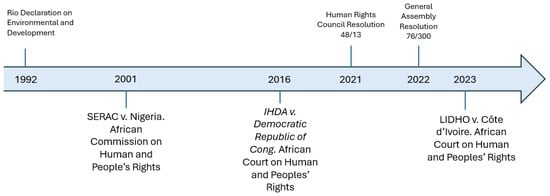
The recognition of a clean, healthy, and sustainable environment as a human right has reshaped global human rights discourse, yet its operationalisation remains uneven. This article examines how the African human rights system which is uniquely grounded in collective rights, has reframed environmental protection as a constitutive element of development, sovereignty, and justice. Through doctrinal and case-law analysis, it traces the evolution from the African Commission’s foundational jurisprudence in SERAC, which extended state duties to the regulation of private and transnational corporate actors, to the African Court’s landmark judgment in LIDHO v. Côte d’Ivoire. The study demonstrates how the Court transforms the aspirational ‘greening’ of human rights into binding obligations by articulating a robust duty of vigilance and linking environmental harm to violations of the rights to life, health, and development. It further shows that LIDHO inaugurates a post-sovereign model of shared and polycentric responsibility, in which state accountability encompasses corporate conduct within their jurisdiction and, potentially, beyond it. The article concludes that the African Charter’s collective framework offers an implicit regional model of ecological justice, one capable of addressing extractive asymmetries and informing emerging climate-related obligations across the continent.
Full article
(This article belongs to the Section Environmental Law Issues)
►▼
Show Figures

Figure 1
Open AccessArticle
Tides of Change: Counter-Terrorism, Rights, and Commercial Efficiency in UK Ports
by
Selina Wai Ming Robinson
Laws 2026, 15(2), 21; https://doi.org/10.3390/laws15020021 - 24 Mar 2026
Abstract
UK ports handle the vast majority of national trade by volume and constitute Critical National Infrastructure. Since 2004, the SOLAS/ISPS Code and the Port Security Regulations 2009 have established baseline security requirements, recently supplemented by the National Security and Investment Act 2021 and
[...] Read more.
UK ports handle the vast majority of national trade by volume and constitute Critical National Infrastructure. Since 2004, the SOLAS/ISPS Code and the Port Security Regulations 2009 have established baseline security requirements, recently supplemented by the National Security and Investment Act 2021 and the National Security Act 2023, creating overlapping obligations. This contribution maps the evolving regulatory framework (ISPS/Port Security Regulations, NSI 2021, NSA 2023, and CNI-related guidance). It assesses operational impacts using industry metrics and draws comparative lessons from Singapore and Rotterdam. Empirical research indicates that security regulation is not uniformly detrimental to performance: targeted, intelligence-led, and technology-enabled measures can coincide with productivity gains, whereas fragmented or blanket compliance regimes are more consistently associated with increased dwell times and throughput loss. These delays propagate through supply chains and intensify cost pressures, with proportionally greater impacts on mid-sized ports. Comparative evidence indicates that risk-based screening, integrated cyber–physical platforms, transparent governance, and clear cost-sharing frameworks can maintain security without compromising commercial performance. The contribution recommends (i) tiered, risk-based screening with transparent indicators; (ii) the consolidation of overlapping regulatory obligations; (iii) clearer liability frameworks, including model terms and alternative dispute resolution; and (iv) scheduled review provisions to maintain proportionality over time.
Full article
(This article belongs to the Special Issue Criminal Justice: Rights and Practice)
Open AccessArticle
The Use of Artificial Intelligence in the Administration of Justice: Suggested Framework of Ethical Principles and Reasoning of Judges in the Use of Intelligent Systems
by
Nikolaos Manos, Emmanouil Technitis and Athanassia Sykiotou
Laws 2026, 15(2), 20; https://doi.org/10.3390/laws15020020 - 18 Mar 2026
Abstract
Artificial intelligence is already being used in the administration of Justice, with various applications assisting judges in resolving cases. In particular, in criminal Justice, these applications include predictive Justice and decision-making assistance through the assessment of facts, as well as the classification of
[...] Read more.
Artificial intelligence is already being used in the administration of Justice, with various applications assisting judges in resolving cases. In particular, in criminal Justice, these applications include predictive Justice and decision-making assistance through the assessment of facts, as well as the classification of criminals into risk groups. This article examines the current regulatory and ethical framework (AI Act, Council of Europe Convention on AI, CEPEJ Ethical Charter, UNESCO and OECD principles) and develops a regulatory approach to the use of AI systems by judges and prosecutors. The methodology is based on a doctrinal analysis of international, EU, and professional ethical literature, as well as on a synthesis of principles of judicial conduct (Bangalore Principles, Magna Carta of Judges). To strike a balance between the rules of governing system use and judicial ethics, the article proposes a consistent framework of ethical principles (legitimacy, transparency, accountability, integrity, human oversight, prohibition of discrimination) and introduces a practical “line of reasoning” with key questions that judges should consider before and during the use of intelligent tools (risks, bias, proportionality, understanding of the algorithm, and impact on judicial judgment). The article concludes that AI may improve the efficiency of the justice system only when included inside a strong ethical framework and specialized training, guaranteeing that final judicial decisions remain solely human and fully aligned with the rule of law.
Full article
(This article belongs to the Section Human Rights Issues)
Open AccessArticle
The Honor of His Own, and Model of Future Times: George Wythe’s American Revolution in Civic Education
by
Samuel Postell
Laws 2026, 15(2), 19; https://doi.org/10.3390/laws15020019 - 18 Mar 2026
Abstract
This essay considers George Wythe’s essential role in creating American civic education. Wythe is most well-known for his influence on American Law; he was the first teacher of law in America and he wrote pivotal opinions on Virginia’s High Court of Chancery. Nevertheless,
[...] Read more.
This essay considers George Wythe’s essential role in creating American civic education. Wythe is most well-known for his influence on American Law; he was the first teacher of law in America and he wrote pivotal opinions on Virginia’s High Court of Chancery. Nevertheless, his influence on American education and the American Revolution was just as essential to the American Founding. Recovering Wythe’s role in shaping civic education in America is important today, given recent lawmaking decisions to fund civic centers within various states. Wythe and Thomas Jefferson—Wythe’s first student—shaped the College of William & Mary. Inventing American civic education was their aim. This paper explains Wythe’s role as a teacher who created the legal and moral frameworks for American civic education in America. I argue that Wythe’s contributions to American education were just as essential to maintaining self-government as the Revolutionary War was in rendering the colonies independent from Britain.
Full article
(This article belongs to the Special Issue Vol. II of Civic Engagement, Justice, and the Law in a National and International Context)
Open AccessArticle
Analysing the Impact of the GCM in Canada Through the Lens of Mobility Facilitation: An Invitation to Rethink the GCM’s Potential to Advance the Human Rights of Migrants
by
Baptiste Jouzier
Laws 2026, 15(2), 18; https://doi.org/10.3390/laws15020018 - 9 Mar 2026
Abstract
The Global Compact for Safe, Orderly and Regular Migration (GCM) has been presented as a milestone in embedding migration governance within an international human rights framework. This article critically examines the extent to which this ambition has translated into concrete effects by analysing
[...] Read more.
The Global Compact for Safe, Orderly and Regular Migration (GCM) has been presented as a milestone in embedding migration governance within an international human rights framework. This article critically examines the extent to which this ambition has translated into concrete effects by analysing the Canadian case. Drawing on a legal doctrinal and contextual policy analysis, informed by the concept of mobility facilitation, the article shows that the GCM has had a limited impact on Canadian migration policies. Despite sustained international commitment to the Compact, recent developments reveal a regression in the facilitation of mobility and the protection of migrants’ rights. This regression has not been reflected in Canada’s international reporting, exposing a disjunction between national practices and international positioning and calling into question the GCM’s capacity to generate international accountability. This article argues that the limited effectiveness of the GCM cannot be explained solely by the shortcomings of its implementation and review mechanisms but must also be understood in light of the unfavourable political context. Moving beyond a compliance-centred perspective, it contends that the GCM should also be understood as lending itself to an indirect form of mobilisation, capable of functioning as a counter-narrative to dominant criminalising and securitising approaches.
Full article
(This article belongs to the Topic Migration and Human Rights in the Age of the Global Compacts)
Open AccessArticle
Implementing EU Sanctions Through Criminal Law: Serious Negligence as a New Form of Culpability in the Slovak Republic
by
Libor Klimek
Laws 2026, 15(2), 17; https://doi.org/10.3390/laws15020017 - 4 Mar 2026
Abstract
The enforcement of European Union restrictive measures increasingly relies on criminal law at national level, particularly in response to serious and systematic violations that cannot be effectively addressed through administrative sanctions alone. Directive (EU) 2024/1226 requires Member States to ensure effective, proportionate, and
[...] Read more.
The enforcement of European Union restrictive measures increasingly relies on criminal law at national level, particularly in response to serious and systematic violations that cannot be effectively addressed through administrative sanctions alone. Directive (EU) 2024/1226 requires Member States to ensure effective, proportionate, and dissuasive criminal penalties for breaches of EU sanctions, including, in defined cases, conduct committed with serious negligence. This article examines the introduction of serious negligence as a new statutory form of culpability in the Slovak Republic, adopted through Act No. 157/2025 Coll. as part of the transposition of Union law. The analysis is based on a doctrinal examination of Slovak criminal law, legislative materials, and relevant EU legal instruments, complemented by a comparative overview of selected Member States. The article demonstrates that the Slovak legislator introduced serious negligence (Slovak: hrubá nedbanlivosť) as a qualified form of negligence in a cautious and narrowly circumscribed manner, limiting its application to a specific offence relating to the breach of a restrictive measure. While this approach strengthens the effectiveness of EU sanction enforcement, it also raises interpretative and practical challenges, particularly in distinguishing serious negligence from ordinary negligence and indirect intent. The article concludes that the Slovak model reflects a balanced attempt to comply with Union obligations while preserving the internal coherence and fundamental principles of national criminal law, with its long-term impact depending on consistent judicial interpretation and restrained application in practice.
Full article
(This article belongs to the Section Criminal Justice Issues)
Open AccessArticle
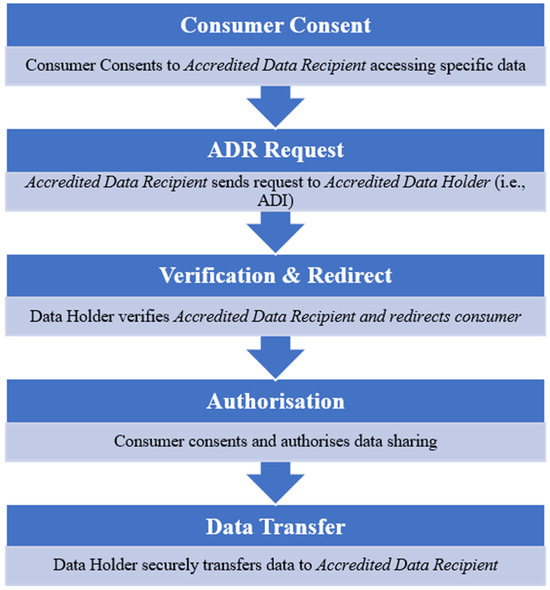
Transplanting Australia’s Consumer Data Right: A Viable U.S. Open Banking Model?
by
Rory O’Callaghan and Casey Watters
Laws 2026, 15(2), 16; https://doi.org/10.3390/laws15020016 - 4 Mar 2026
Abstract
►▼
Show Figures
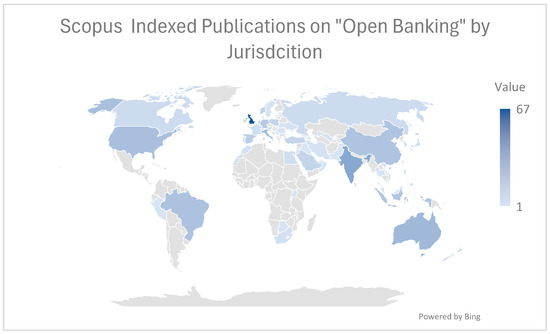
Open Banking aims to empower consumers to control their financial data, yet jurisdictions vary in their regulatory approaches. This article examines whether the US should adopt Australia’s statutory Consumer Data Right (CDR) as part of a domestic open banking framework, as open banking
[...] Read more.
Open Banking aims to empower consumers to control their financial data, yet jurisdictions vary in their regulatory approaches. This article examines whether the US should adopt Australia’s statutory Consumer Data Right (CDR) as part of a domestic open banking framework, as open banking is yet to be fully realized under Section 1033 of the Dodd-Frank Act. This study employs a comparative analysis of the economic and institutional differences between the Australian and US systems, with a focus on non-bank lenders and the challenges of legal transplantation. It argues that although Australia’s rights-based model provides a normative foundation for consumer empowerment, its rigid structure and expensive accreditation processes risk limiting participation and innovation. Instead, the paper advocates a hybrid approach for the US, integrating CDR principles into a market-responsive framework.
Full article

Figure 1
Open AccessArticle
State Capture, Symbolic Law, and the Perceived Risk of Reporting Corruption: A Multilevel Analysis of Bribery in Africa
by
Joseph Yaw Asomah and Eugene Emeka Dim
Laws 2026, 15(2), 15; https://doi.org/10.3390/laws15020015 - 28 Feb 2026
Abstract
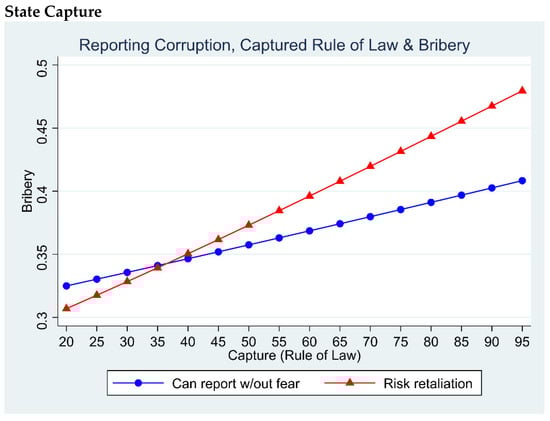
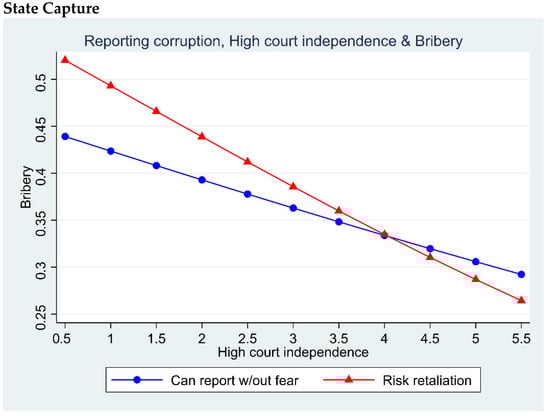
Bribery remains prevalent across African countries, yet little is known about how fear of retaliation for reporting corruption interacts with national institutional contexts to shape bribery behaviour. Using Round 9 Afrobarometer data from 42,655 respondents across 39 African states, this study examines how
[...] Read more.
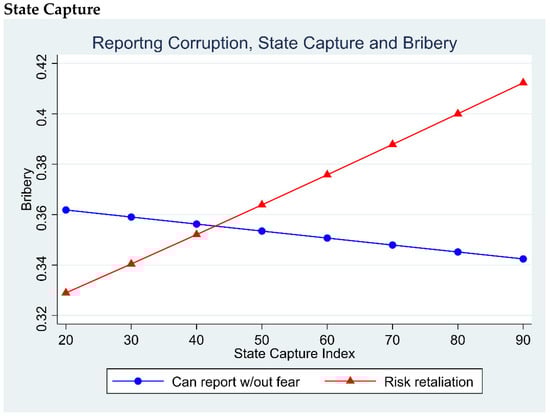
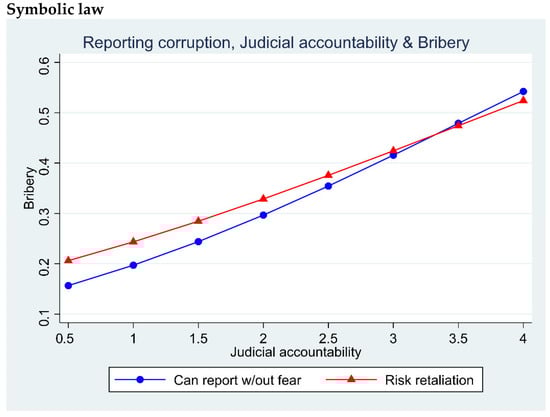
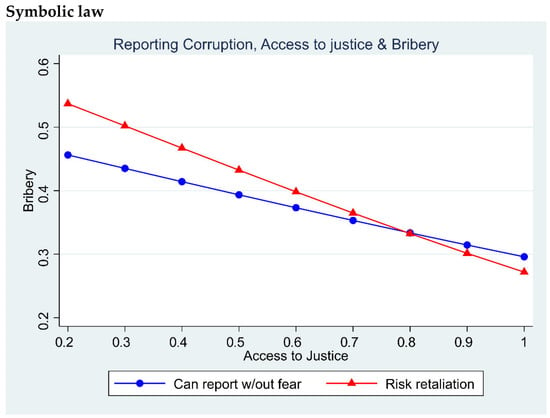
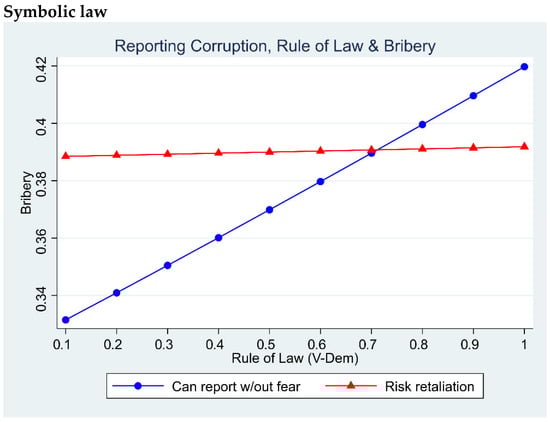
Bribery remains prevalent across African countries, yet little is known about how fear of retaliation for reporting corruption interacts with national institutional contexts to shape bribery behaviour. Using Round 9 Afrobarometer data from 42,655 respondents across 39 African states, this study examines how perceptions of reporting risk combine with macro-level conditions of state capture and symbolic law to influence the likelihood of paying bribes. Hierarchical logistic regression results show that individuals who fear retaliation are significantly more likely to engage in bribery, but this relationship is conditioned by institutional strength. High levels of state capture and weak rule-of-law systems intensify the effect of retaliation risk, whereas judicial independence mitigates it. Aspects of symbolic law—judicial accountability, access to justice, and enforcement—further shape how fear translates into corrupt exchanges. The findings demonstrate that reducing bribery requires credible, protective, and functional institutions, not simply increased anti-corruption awareness. The study advances corruption research by integrating behavioural risk perceptions with multi-dimensional measures of institutional weakness, offering a cross-national explanation for when fear becomes behaviourally consequential.
Full article
(This article belongs to the Special Issue Fostering Integrity or Falling Short: The Role of Anti-Corruption Laws in Diverse Global Contexts)
►▼
Show Figures

Figure 1
Highly Accessed Articles
Latest Books
E-Mail Alert
News
Topics
Topic in
Social Sciences, Societies, Laws, World, Psychology International, IJCS
Motivated Social Cognition in Individuals, Organizations, and Societies
Topic Editors: Andrew S. Franks, Hajime OtaniDeadline: 31 October 2027
Special Issues
Special Issue in
Laws
Societal and Ideological Challenges for Succession and Inheritance Laws in Today’s Societies
Guest Editors: Alain-Laurent Verbeke, Hannelore ThijsDeadline: 26 April 2026
Special Issue in
Laws
Antitrust Enforcement in Global Digital Markets—Challenges and Strategies Shaped by Evolving Legislative Frameworks
Guest Editor: Jing WangDeadline: 1 May 2026
Special Issue in
Laws
Law and Gender Justice
Guest Editors: Suvarna Cherukuri, Sitawa R. KimunaDeadline: 15 May 2026
Special Issue in
Laws
Fostering Integrity or Falling Short: The Role of Anti-Corruption Laws in Diverse Global Contexts
Guest Editors: Hongming Cheng, Joseph AsomahDeadline: 15 May 2026