Next Article in Journal
Adenoid Cystic Carcinoma of the Bartholin Gland. A Morphological and Immunohistochemical study of a rare case
Previous Article in Journal
The Eye-tracking technology in the healthcare settings: an observational, cross sectional, multicenter study
 
 
Journal of Interdisciplinary Research Applied to Medicine is published by MDPI from Volume 6 Issue 1 (2026). Previous articles were published by another publisher in Open Access under a CC-BY (or CC-BY-NC-ND) licence, and they are hosted by MDPI on mdpi.com as a courtesy and upon agreement with University of Salento.
Article

Polygraphic findings in simplified Barbed Reposition Pharyngoplasty (BRP) as a treatment for OSA patients

by
Caterina Arigliani
1,*,†,
Michele Arigliani
2,†,
Enrico Ciavolino
3,4,
Luana Conte
5,6,
Domenico Maurizio Toraldo
7,
Silvia Passariello
8,
Serena Arima
3,
Paola Angelelli
9,
Luigi Macchitella
9,
Antonio Palumbo
2 and
Michele De Benedetto
2
1
Plastic and Aesthetic surgery, University of Milan, Milan, Italy
2
ENT Unit, “V.Fazzi” Hospital, ASL (Local Health Authority) Lecce, Italy
3
Department of History, Society and Human Studies, University of Salento, Lecce, Italy
4
Wyższa Szkoła Bankowa w Gdańsku, aleja Grunwaldzka 238A, 80-266 Gdańsk, Poland
5
Laboratory of Interdisciplinary Research Applied to Medicine (DReAM), University of Salento and ASL (Local Health Authority) at the “V Fazzi” Hospital, Lecce, Italy
6
Laboratory of Advanced Data Analysis for Medicine (ADAM), Department of Mathematics and Physics “E. De Giorgi”, University of Salento, Lecce, Italy
7
Department of Rehabilitation, Cardiorespiratory Rehabilitation Unit, “V.Fazzi” Hospital, ASL (Local Health Authority) Lecce, Italy
8
Department of Pharmaceutical Sciences, University of Pavia, Pavia, Italy
9
Department of History, Society and Human Studies –Lab of Applied Psychology and Intervention - University of Salento, Lecce, Italy
*
Author to whom correspondence should be addressed.
These authors contributed equally to this work.
J. Interdiscip. Res. Appl. Med. 2021, 5(1), 19-26; https://doi.org/10.1285/i25327518v5i1p19
Published: 30 June 2021

Abstract

This study aims to compare polygraphic data in patients with OSA treated with Barbed Reposition Pharyngoplasty (BRP) performed with a simplified technique compared to the standard method. Variations of technique were performed and tested with the purpose of promoting tolerability and diffusion of this simplified technique. To evaluate the efficacy of the simplified BRP method, a sample of 99 patients was divided into two groups: Group A was treated with BRP (BRP group) and Group B was treated with simplified BRP (sBRP group). The results obtained on the two groups were compared with the two sample Bootstrap t-tests method, showing a substantial overlap in polygraphic results recorded 6 months after surgery.

1. Introduction

Obstructive sleep apnea (OSA) is a condition characterized by partial or complete repeated obstructions due to the collapse of the upper airway during sleep (Strollo and Rogers 1996). These cause intermittent hypoxia which leads to systemic damages and high risk of morbidity and mortality (Yaggi et al. 2005).
Surgical treatment for OSA uses different and specific options for each level of upper airway obstruction (Georgalas et al. 2010). One of the surgical options for patients with obstruction at the retro-palatal level is Barbed Reposition Pharyngoplasty (BRP), proven to be an effective and safe technique (Vicini et al. 2015; Montevecchi et al. 2018), that is showing wide success (Dachuri et al. 2019). This technique uses suture materials (Knotless Tissue-Closure Device) (Alessandri et al. 2010) never before used in the surgical therapy for OSA and the surgical rationale introduced by Mantovani (Mantovani et al. 2012; Rinaldi, Mantovani, and Pignataro 2017). The premise of the present study is the experience gained from dissection courses and didactic simulations of cadaveric surgical techniques at the palatal level for OSA, which for us constitute the best opportunity to test alternative surgical solutions. In this study we aimed to evaluate the polygraphic results of some simplifications of technique that were supposed to have low-medium impact on the results but that made the procedure easier to perform for less experienced surgeons and wanting with this to further promote the diffusion of this type of surgery.

2. Material and Methods

99 Patients were recruited into the sleep apnea surgery protocol after being subjected to Druginduced sleep endoscopy (DISE) procedure from April 2015 to December 2019. Patients’ characteristics have been described in (Arigliani et al. 2021).
All patients had never previously undergone other surgery for OSA but had undergone verification of surgical indications by DISE (Kotecha and De Vito 2018) through the 5VsEs instrumentation (Arigliani et al. 2020). A retrolingual obstruction was excluded through DISE procedure. All patients in this study performed tonsillectomy and palatal surgery only.
Of the 99 patients enrolled, 50 had been treated with standard BRP method (BRP group), 49 had been treated with simplified BRP method (sBRP group).
Unattended set polygraphy, DISE and all diagnostic procedures pre- and post-surgery were performed at “Vito Fazzi” Hospital in Lecce (Italy) by the same operator and with the same instrumentation. All surgical procedures were also performed by the same operator. Postsurgical polygraphic evaluation was performed after at least six months for both groups of patients in the study. For this study, we collected the anthropometric data as well as the pre- and post-surgery polygraphic data (Apnoea Hypopnea Index (AHI), (hour/sleep), Oxygen Desaturation Index (ODI), (hour/sleep), Lowest O2 saturation, (%). We based on AASM guidelines 2007 to make the results of our study comparable with previous literature (Berry et al. 2012).
We used the same protocol for post-operative pain management on all patients: the assessment also included an estimate of post-surgical pain on day 3 using a visual Analogue pain scale (Pain VAS scale) (Chiarotto et al. 2019; Williamson and Hoggart 2005).
For the polygraphic evaluation and post-surgery in both study groups refers to (Arigliani et al. 2021).
Research approval was obtained through the ethics committee of the Local Health Authority (ASL LE) at the Vito Fazzi Hospital (verbal no. 43, 3 March 2020), and informed written consent was obtained from all participants. All international ethical standards were respected throughout the study.

2.1. Surgical technique

The surgical procedure for what concerns the standard group was performed respecting as rigorously as possible the surgical technique published by Vicini et al. (Vicini et al. 2015). Regarding the sBRP group, the surgical procedure presents a simplification of technique theoretically of medium-low impact on the obtainable results compared with those of standard BRP. In the sRBP group, we used a Unidirectional Barbed, dual angle, absorbable Knotless wound closure device in Copolymer of glycolic acid and trimethylene carbonate, 30 cm, single needle, needle 37 mm, 1/2 circle, size 0, taper) (Covidien V-Loc 180TM) (Alessandri et al. 2010) (Covidien IIc, Mansfield, MA, USA) instead of a Bidirectional (whith transition zone in the middle) Tissue-Closure Device, double needle, in polydioxanone absorbable monofilament, size 0, recommended for suturing both pharyngeal lateral walls in the original description of the BRP procedure.
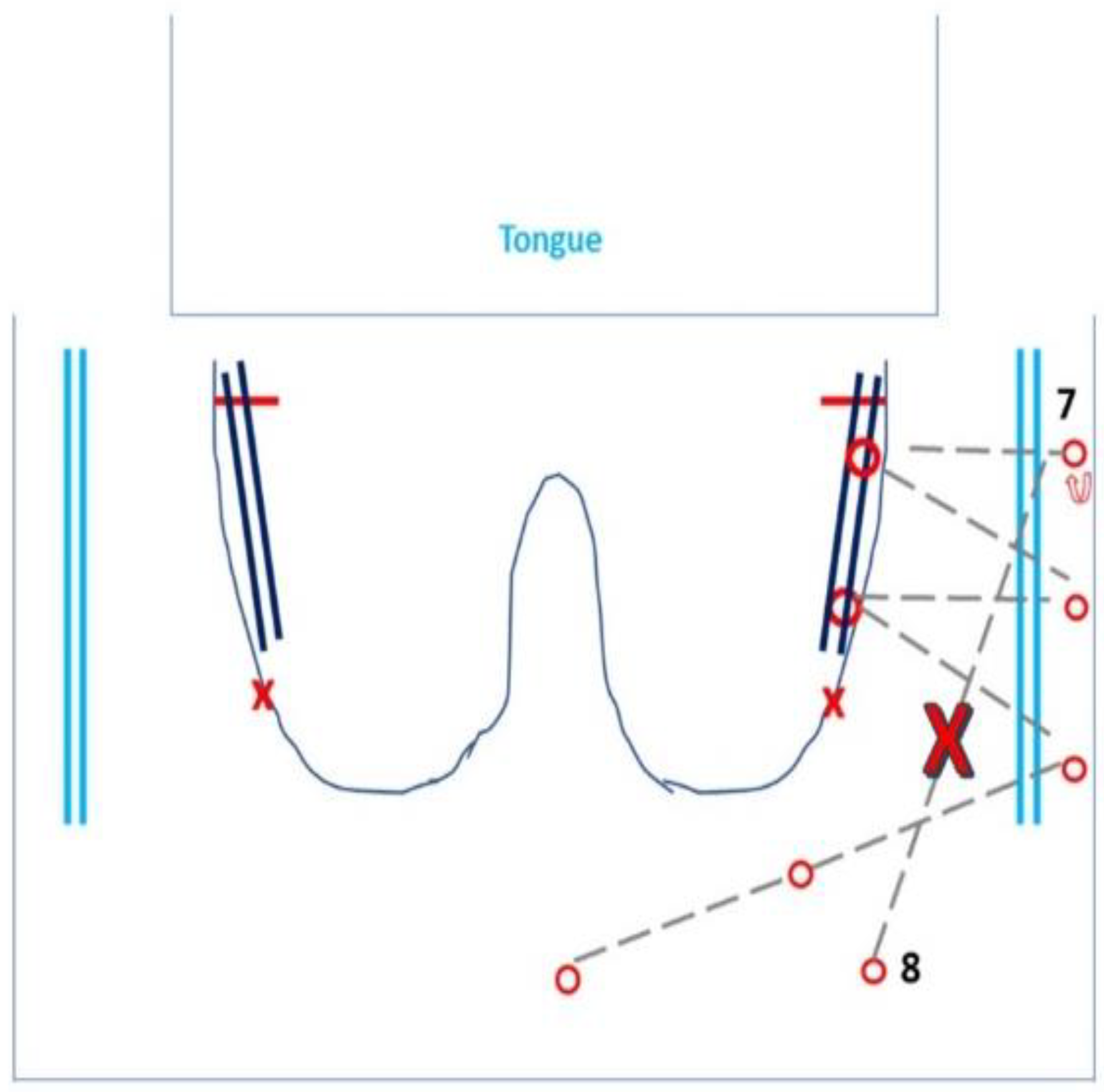
The sBRP procedure, on the other hand, stops at step 7 and does not continue to step 8 as in the case of the BRP procedure (Figure 1).
In all cases, an additional suture loop was performed to reinforce step 7.
A monopolar or dipolar diathermy was used. Using a second suture thread Barbed dualangle, Unidirectional, single needle, absorbable, 30 cm, (Covidien V-Loc 180TM) (Alessandri et al. 2010) we performed in the same way the sBRP procedure from the opposite side, taking care to balance and managing pulling force between the two sides.

3. Data Analysis

The sample analyzed is based on 99 patients divided into two groups. In the following subsections the groups are called Group BRP and Group sBRP and a descriptive study is reported for both and then a two sample bootstrap t-test (Brandley and Tibshirani 1993) (Brandley and Tibshirani 1993) is performed with aim to evaluate if there is:
  • A statistical difference between the means for Pre and Post Surgery, in Groups BRP and sBRP, for the following Variables (AHI, BMI, ESS, Lowest SpO2, ODI).
  • A statistical difference between the means Groups BRP and sBRP, in pre- and post-surgery, for the following Variables (AHI, BMI, ESS, Lowest SpO2, ODI).

3.1. Descriptive Analysis Group BRP

Table 1 the sample collected (n=50) for the Group A BRP for the five variables measured on the patients for the pre-surgery and postsurgery conditions. For each variable and condition the min, max, mean and standard deviations are reported.
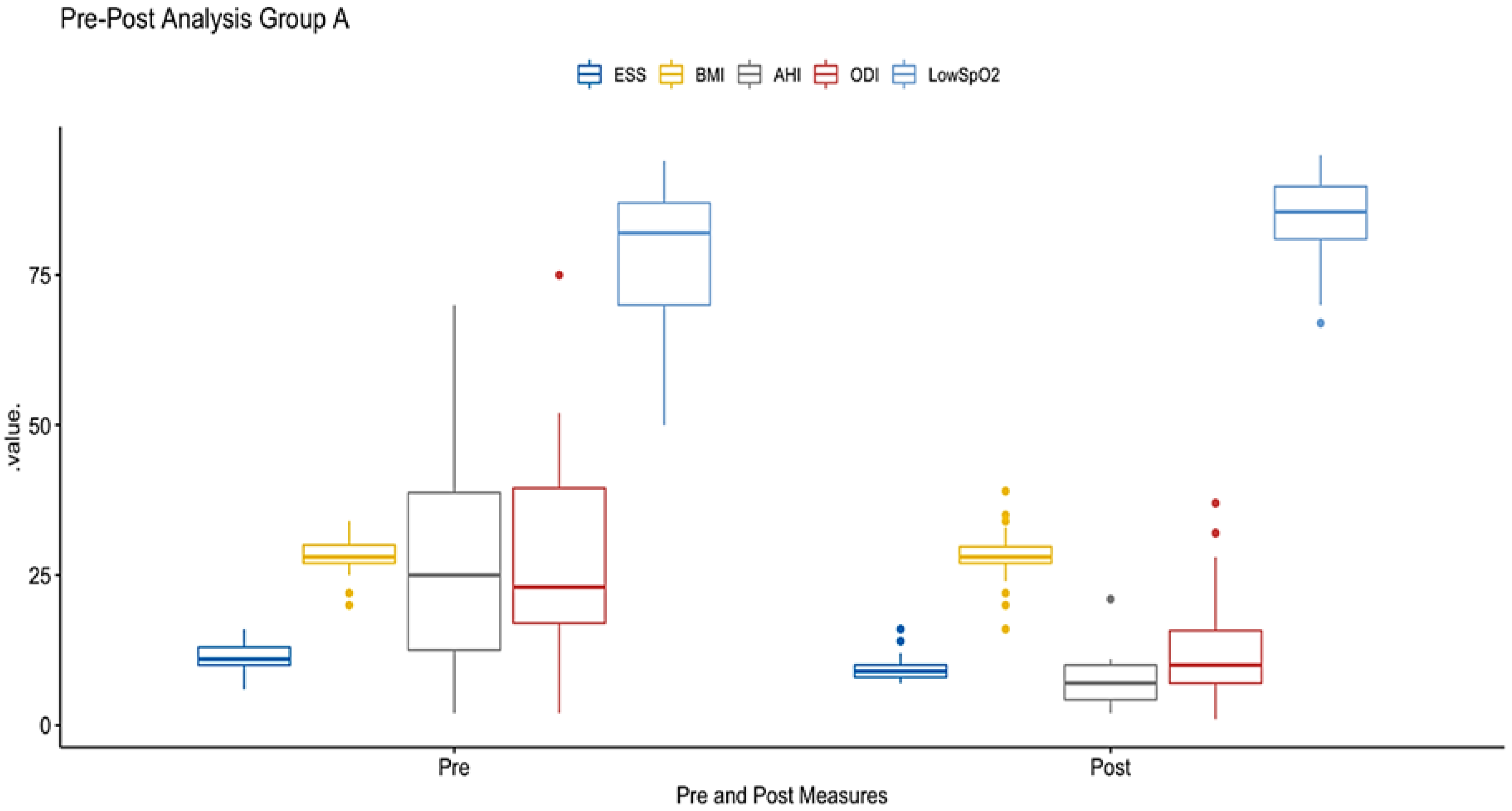
Figure 2 shows the box-plots for both the phases of the surgery (pre and post) for all the variables. The box-plot helps to read both the central tendency of the variable analyzed (the bold line in the middle of the box is the median) and the variability (based on the size of the box). It is possible to see that all the measures decrease, with the exception of Lowest SpO2, with a reduction of the variability, showing an improvement of stability of the measures.

3.2. Descriptive Analysis Group sBRP

In Table 2 are reported the patients’ measures of the Group B with a sample size n = 49, for both pre-surgery and post-surgery conditions. For each variable and condition the min, max, mean and standard deviations are reported.
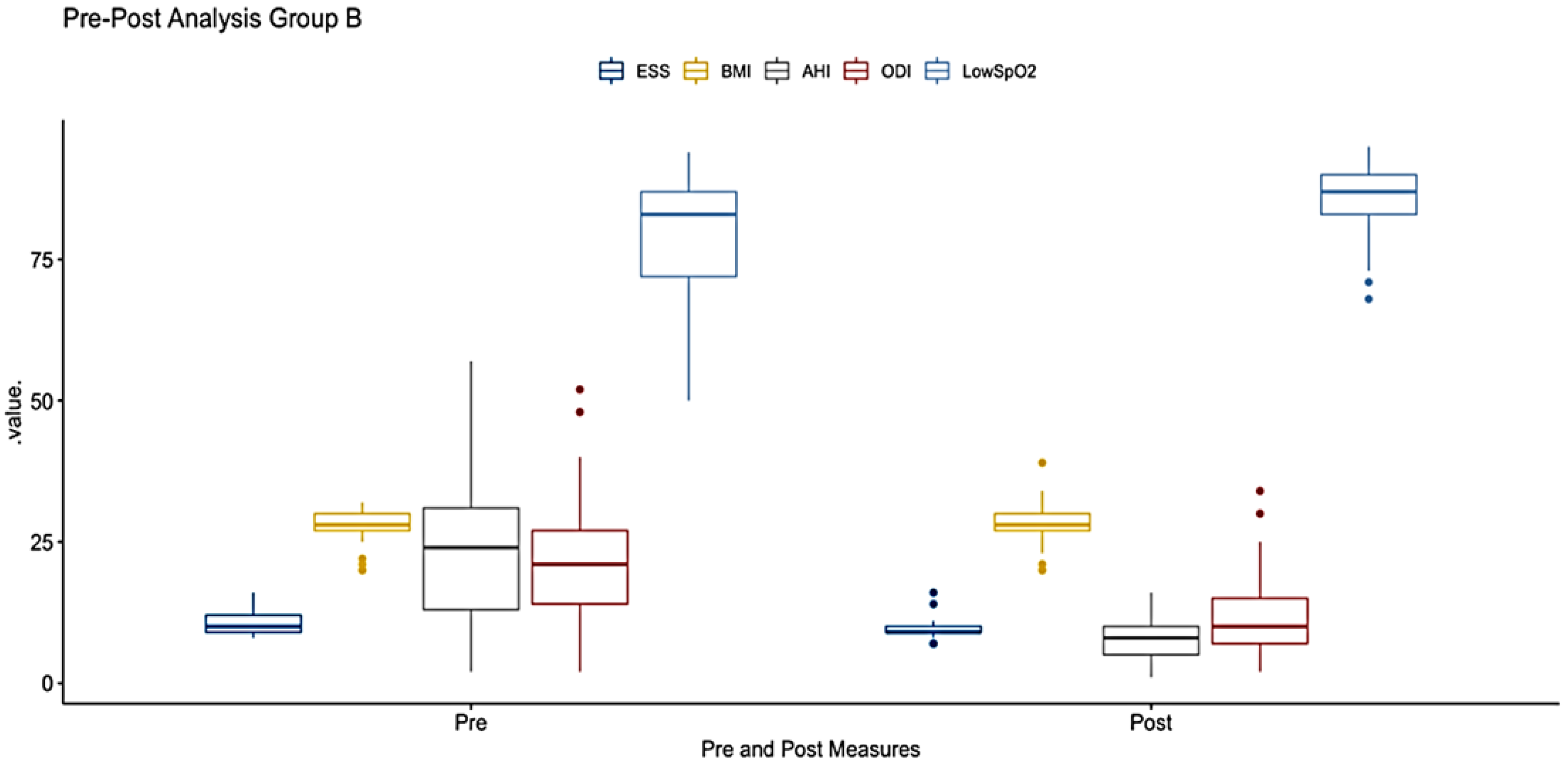
The visual analysis of the central tendency and the variability is shown by the box-plot reported in Figure 3 for both the phases of the surgery. The group B shows, as for the group A, a reduction of the median, with the exception of Lowest SpO2, and also of the variability for all the variables considered.

3.3. Test the differences in Pre and Post surgery phases

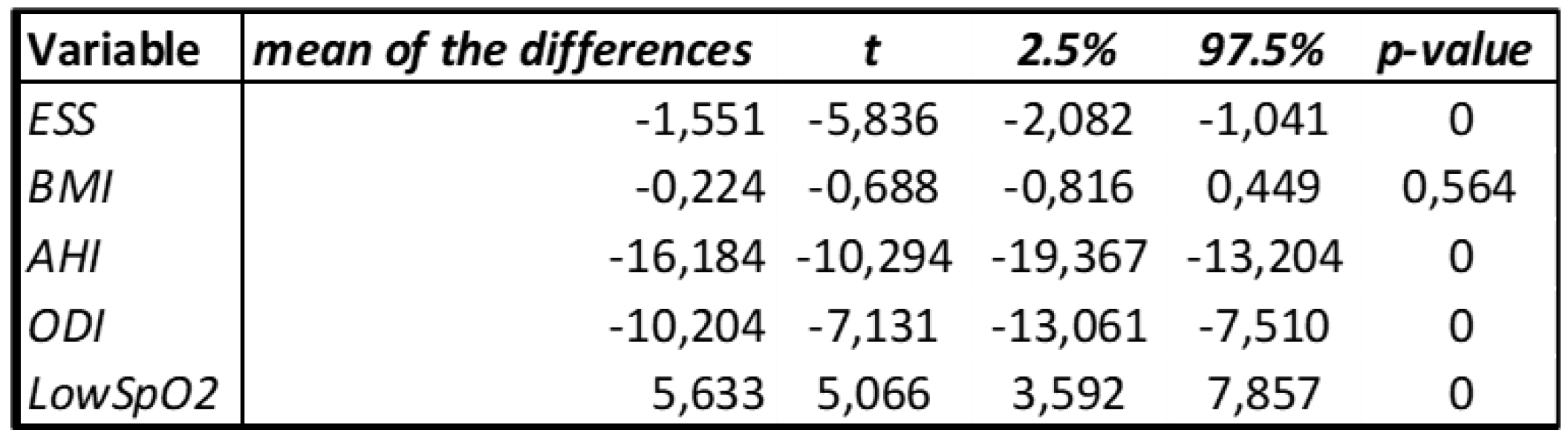
Table 3 and Table 4 reports the results of a Bootstrap paired t-test for both Group BRP and Group sBRP. Tables reports in the rows the variables and in the columns: difference between the means, t-test, confidence intervals and p-value. For all the variables, the differences between the means of pre-surgery and post-surgery are statistically significant, with the only exception of the BMI. The results show that the operation reduces all the parameters analyzed, only Lowest O2 increases, with an improvement of the general health conditions.
For all parameters examined, bootstrap test was conducted to assess the homogeneity of the groups before and after the surgery, with a p-value > 0.05. Thus, for all parameters examined, show that there is no significant difference between the mean of the BRP and sBRP groups. Regarding the functional results, comparison of the mean of the AHI, ODI, and Lowest O2 saturation parameters pre- and postsurgery in the two groups examined showed no statistically significant differences (two sample bootstrap t-test).
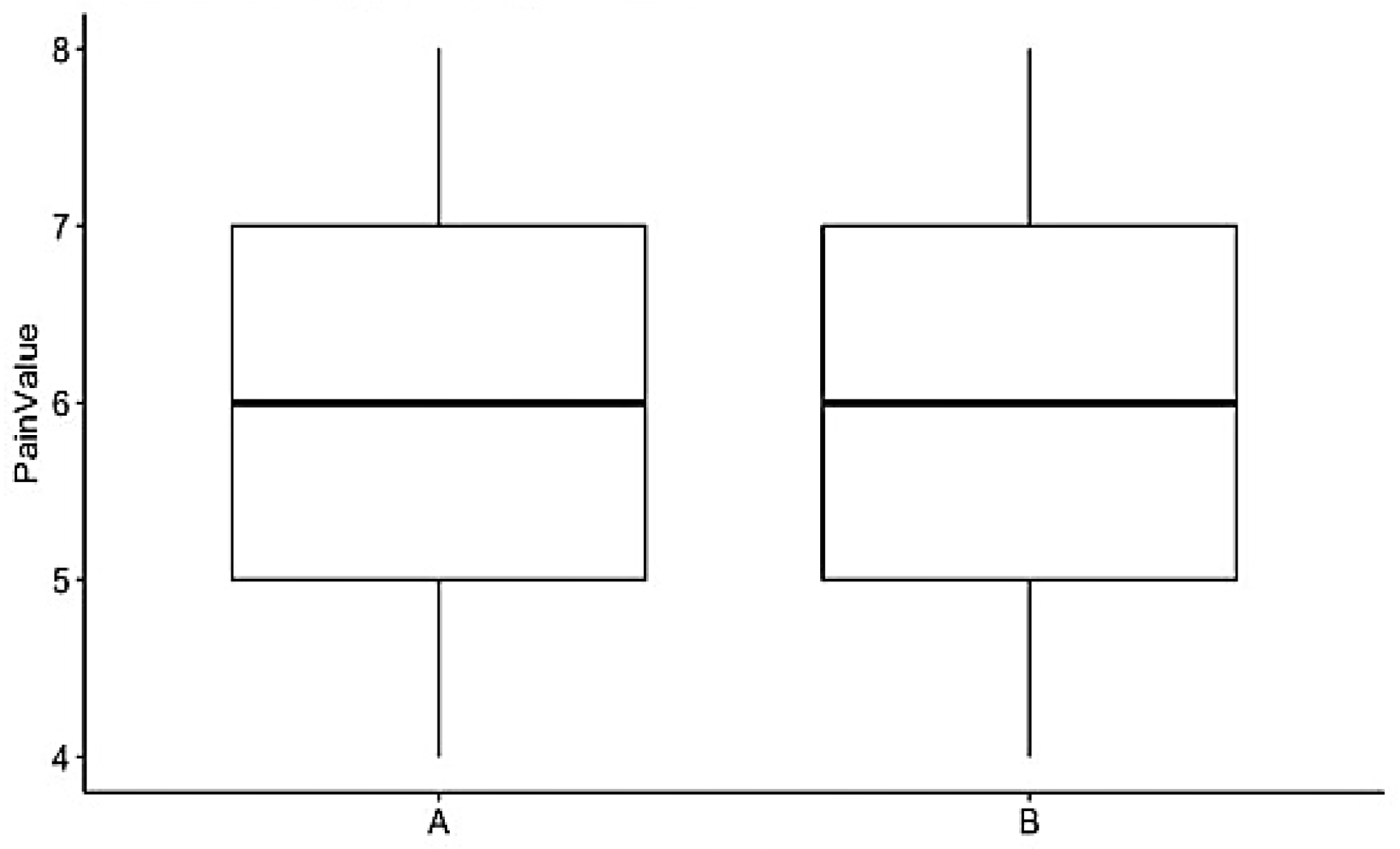
The results of the pain assessment analyzed at day 3 after surgery using a visual analog scale (VAS 0 -10, with 0 no pain, and 10 Worst imaginable post-operative pain) (Chiarotto et al. 2019; Williamson and Hoggart 2005) show no significant differences between the two study groups (Figure 4).
Only one patient in the standard BRP group had suture extrusion. No patient in the sBRP group had suture extrusion.

4. Discussion

The post-operative polygraphic measurements and the design of this clinical study seem to confirm one of the peculiar characteristics of BRP pharyngoplasty, that it is a procedure that allows the surgeon a certain freedom in its execution. Post-operative polygraphic data at 6 months confirm the efficacy of the technique even in the simplified form described.
We reconciled the conflicting demands of technique simplification with a modest impact on post- operative polygraphic outcomes by using Dual-Angle technology of wound closure Barbed device led to barbs with strong anchoring force. This technology was utilized using a unidirectional, single needle, Knotless, TissueClosure Device on each side of the pharynx.
The sBRP does not use the double-needle Barbed suture recommended for the standard BRP in order to couple the potential of dualangle suture technology with the potential of using a single-needle unidirectional suture on each side of the pharynx: suturing the two sides of the pharynx separately allows a better management of calibration and balancing of pulling forces on soft tissues and this allows to exploit the full potential of dual-angle suture technology.
Separate management of the vector quantities applicable to the sidewalls, which is possible with the use of unidirectional/single-needle sutures, allows us greater freedom in the choice of force application points, which, in this study, do not appear to have adversely affected the functional results.
This separate handling of sidewall collapsibility can also compensate for asymmetries due to technique inaccuracies.
We wanted to eliminate the last step of the standard BRP procedure because in the context of a procedure that is essentially easy to learn, a critical moment for the surgeon performing BRP pharyngoplasty for the first time is the execution of the final step.
Elimination of step 8 also appears to be able to reduce one of the minor complications which is a parcel extrusion of the suture most frequently placed there.
With the elimination of the last step of the BRP, a fundamental vector is eliminated and replaced by an additional loop of reinforcement of the suture between Pterygomandibular Raphe and Palatopharyngeus Muscle. In this way, while fixing only the collapsible lateral pharyngeal wall to a stable structure such as the Pterygomandibular Raphe and eliminating vertical vectors, we had no negative impact on polygraphic outcomes at 6 months post-surgery. Subsequent studies will be performed to compensate for the lack of long-term patient follow-up and to increase the sample population size under study.

5. Conclusion

In cases of OSA from retropalatal obstruction, the sBRP shows functional results at 6 months superimposable compared to the BRP technique from which it derives while being even less invasive. The sBRP version described above is also easier to execute, which benefits its dissemination.

References

  1. Alessandri, Franco, Valentino Remorgida, Pier Luigi Venturini, and Simone Ferrero. 2010. Unidirectional Barbed Suture versus Continuous Suture with Intracorporeal Knots in Laparoscopic Myomectomy: A Randomized Study. Journal of Minimally Invasive Gynecology 17, 6: 725–29. [Google Scholar] [CrossRef] [PubMed]
  2. Arigliani, Michele, Domenico M. Toraldo, Enrico Ciavolino, Caterina Lattante, Luana Conte, Serena Arima, Caterina Arigliani, Antonio Palumbo, and Michele De Benedetto. 2021. The Use of Middle Latency Auditory Evoked Potentials (MLAEP) as Methodology for Evaluating Sedation Level in Propofol-Drug Induced Sleep Endoscopy (DISE) Procedure. International Journal of Environmental Research and Public Health 18, 4: 2070. [Google Scholar] [CrossRef] [PubMed]
  3. Arigliani, Michele, Domenico M. Toraldo, Filippo Montevecchi, Luana Conte, Lorenzo Galasso, Filippo De Rosa, Caterina Lattante, and et al. 2020. A New Technological Advancement of the Drug-Induced Sleep Endoscopy (DISE) Procedure: The ‘All in One Glance’ Strategy. International Journal of Environmental Research and Public Health 17, 12: 4261. [Google Scholar] [CrossRef] [PubMed]
  4. Berry, Richard B, Rohit Budhiraja, Daniel J Gottlieb, David Gozal, Conrad Iber, Vishesh K Kapur, Carole L Marcus, and et al. 2012. Rules for Scoring Respiratory Events in Sleep: Update of the 2007 AASM Manual for the Scoring of Sleep and Associated Events. Deliberations of the Sleep Apnea Definitions Task Force of the American Academy of Sleep Medicine. Journal of Clinical Sleep Medicine: JCSM: Official Publication of the American Academy of Sleep Medicine 8, 5: 597–619. [Google Scholar] [CrossRef] [PubMed]
  5. Brandley, Efron, and J. Robert Tibshirani. 1993. An Introduction to the Bootstrap. New York: Chapman & Hall. [Google Scholar]
  6. Chiarotto, Alessandro, Lara J. Maxwell, Raymond W. Ostelo, Maarten Boers, Peter Tugwell, and Caroline B. Terwee. 2019. Measurement Properties of Visual Analogue Scale, Numeric Rating Scale, and Pain Severity Subscale of the Brief Pain Inventory in Patients With Low Back Pain: A Systematic Review. The Journal of Pain 20, 3: 245–63. [Google Scholar] [CrossRef] [PubMed]
  7. Dachuri, Sandeep, Ravi Sachidananda, Filippo Montevecchi, Mohamed Rashwan, Claudio Vicini, Sowjanya Gandla, Satish Kumaran Pugazhendi, and Srividya Rao Vasista. 2019. Barbed Reposition Pharyngoplasty in Indian Population: A New Palatal Surgery for OSAS. Indian Journal of Otolaryngology and Head & Neck Surgery 71, 2: 249–53. [Google Scholar] [CrossRef]
  8. Georgalas, C., G. Garas, E. Hadjihannas, and A. Oostra. 2010. Assessment of Obstruction Level and Selection of Patients for Obstructive Sleep Apnoea Surgery: An Evidence-Based Approach. Journal of Laryngology and Otology. J Laryngol Otol. [Google Scholar] [CrossRef] [PubMed]
  9. Kotecha, Bhik, and Andrea De Vito. 2018. Drug Induced Sleep Endoscopy: Its Role in Evaluation of the Upper Airway Obstruction and Patient Selection for Surgical and Nonsurgical Treatment. Journal of Thoracic Disease. AME Publishing Company. [Google Scholar] [CrossRef]
  10. Mantovani, M, A Minetti, S Torretta, A Pincherle, G Tassone, and L Pignataro. 2012. The Velo-Uvulo- Pharyngeal Lift or ‘Roman Blinds’ Technique for Treatment of Snoring: A Preliminary Report. Acta Otorhinolaryngologica Italica: Organo Ufficiale Della Societa Italiana Di Otorinolaringologia e Chirurgia Cervico- Facciale 32, 1: 48–53. [Google Scholar] [PubMed]
  11. Montevecchi, F., G. Meccariello, E. Firinu, M. S. Rashwan, M. Arigliani, M. De Benedetto, A. Palumbo, and et al. 2018. Prospective Multicentre Study on Barbed Reposition Pharyngoplasty Standing Alone or as a Part of Multilevel Surgery for Sleep Apnoea. Clinical Otolaryngology 43, 2: 483–88. [Google Scholar] [CrossRef] [PubMed]
  12. Rinaldi, Vittorio, Mario Mantovani, and Lorenzo Pignataro. 2017. Barbed Suture Rescue Procedure. Aesthetic Surgery Journal 37, 2: 250–52. [Google Scholar] [CrossRef] [PubMed][Green Version]
  13. Strollo, Patrick J., and Robert M. Rogers. 1996. Obstructive Sleep Apnea. New England Journal of Medicine 334, 2: 99–104. [Google Scholar] [CrossRef]
  14. Vicini, Claudio, Ehsan Hendawy, Aldo Campanini, Mohamed Eesa, Ahmed Bahgat, Saleh AlGhamdi, Giuseppe Meccariello, Andrea DeVito, Filippo Montevecchi, and Mario Mantovani. 2015. Barbed Reposition Pharyngoplasty (BRP) for OSAHS: A Feasibility, Safety, Efficacy and Teachability Pilot Study. ‘We Are on the Giant’s Shoulders. European Archives of Oto-Rhino-Laryngology 272, 10: 3065–70. [Google Scholar] [CrossRef] [PubMed]
  15. Williamson, Amelia, and Barbara Hoggart. 2005. Pain: A Review of Three Commonly Used Pain Rating Scales. Journal of Clinical Nursing 14, 7: 798–804. [Google Scholar] [CrossRef] [PubMed]
  16. Yaggi, H. Klar, John Concato, Walter N. Kernan, Judith H. Lichtman, Lawrence M. Brass, and Vahid Mohsenin. 2005. Obstructive Sleep Apnea as a Risk Factor for Stroke and Death. New England Journal of Medicine 353, 19: 2034–41. [Google Scholar] [CrossRef] [PubMed]
Figure 1. The simplified sBRP procedure with abolition of step 8 compared to the standard BRP procedure. Pterygomandibular Raphe (light blue). Palatopharyngeus Muscle (dark blue).
Jdream 05 00019 g001
Figure 2. Box-Plot Group BRP.
Jdream 05 00019 g002
Figure 3. Box-Plot Group BRP.
Jdream 05 00019 g003
Figure 4. Pain Value Analysis between BRP group and sBRP group.
Jdream 05 00019 g004
Table 1. Descriptive Indexes group BRP.
Jdream 05 00019 i001
Table 2. Descriptive Indexes group sBRP.
Jdream 05 00019 i002
Table 3. Bootstrap paired t-tests. Group BRP.
Jdream 05 00019 i003
Table 4. Bootstrap paired t-tests. Group sBRP.
Jdream 05 00019 i004
Disclaimer/Publisher’s Note: The statements, opinions and data contained in all publications are solely those of the individual author(s) and contributor(s) and not of MDPI and/or the editor(s). MDPI and/or the editor(s) disclaim responsibility for any injury to people or property resulting from any ideas, methods, instructions or products referred to in the content.