Dear Colleagues,
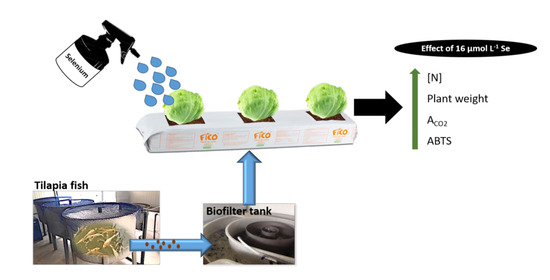
Aquaponics is gaining increasing attention and is becoming a more accepted method of growing organic vegetables. We are launching a Topical Collection on this timely topic to follow up on a Special Issue we released 2 years ago, which focused on hydroponics. We also welcome papers on hydroponics, since this field continues to see scientific advances on an ongoing basis. The science around aquaponics is increasing our in-depth knowledge at an accelerating pace, hence the need for this Topical Collection on “Recent Advances in Aquaponic and Hydroponic Research”. To give us a common base of understanding, hydroponics is the soilless culturing of plants in a nutrient solution that contains all the necessary elemental ions for healthy plant growth. The production of fruits and vegetables using hydroponic techniques continues to accelerate due to its increased nutrient and space-use efficiencies, and is frequently used commercially in modified and controlled environment agriculture (CEA) to produce high-nutrient-density crops (fruits and vegetables). A driving force behind the accelerated adoption of hydroponics is the increasing scarcity of water resources, since hydroponic production uses 90% less water than conventional field crop production. Fish culturing, as practiced using the recirculation of water coupled to various water treatment unit processes, is called recirculating aquaculture systems or RAS. When you combine RAS with hydroponics, the result is an aquaponic system. RAS and hydroponic systems may be operated as coupled (water goes back and forth between the two systems) or decoupled, where water moves from the RAS system to the hydroponic system and does not return. There are advantages to both systems.
We must learn to grow more food with less water and grow our food closer to the consumer if we want to create a more sustainable future. Aquaponic farming is becoming a critical part of the local food production equation. Aquaponics appeals to those who have heightened concerns about the sustainability of our food production systems. Aquaponics provides the opportunity to produce food in the most sustainable manner possible. It is possible to engineer an aquaponics system that captures all the nutrients contained in fish feed by sizing a coupled hydroponic system with sufficient plants to assimilate all the nutrients that the fish have not assimilated in their growing process. Although hydroponics and aquaponics have been practiced for centuries, we are still discovering how plants function in an aquatic environment as well as how we can optimize their performance, particularly from an environment sustainability perspective—hence the need for this Topical Collection.
In this Topical Collection we will collect current research papers on how to employ aquaponic and hydroponic technologies in the future to provide nutritious diets with which to feed the additional 2 billion humans that will be added to our current population of 7.7 billion by 2050. We also need to understand how our current aquaponic and hydroponic systems are working. We invite manuscripts that explore any aspect of this research topic, including new technologies and growing strategies, new aquaculture products such as seaweeds or other market-driven products, review papers, and traditional research papers. Topics could include nutrient and physiological plant analyses and mass balances, the business side of the equation to analyze the financial aspects of enterprise models, and everything in between. We look forward to receiving your manuscript.
Prof. Dr. Michael Timmons
Collection Editor
Manuscript Submission Information
Manuscripts should be submitted online at www.mdpi.com by registering and logging in to this website. Once you are registered, click here to go to the submission form. All submissions that pass pre-check are peer-reviewed. Accepted papers will be published continuously in the journal (as soon as accepted) and will be listed together on the collection website. Research articles, review articles as well as short communications are invited. For planned papers, a title and short abstract (about 250 words) can be sent to the Editorial Office for assessment.
Submitted manuscripts should not have been published previously, nor be under consideration for publication elsewhere (except conference proceedings papers). All manuscripts are thoroughly refereed through a single-anonymized peer-review process. A guide for authors and other relevant information for submission of manuscripts is available on the Instructions for Authors page. Horticulturae is an international peer-reviewed open access monthly journal published by MDPI.
Please visit the Instructions for Authors page before submitting a manuscript.
The Article Processing Charge (APC) for publication in this open access journal is 2400 CHF (Swiss Francs).
Submitted papers should be well formatted and use good English. Authors may use MDPI's
English editing service prior to publication or during author revisions.