

You are currently viewing a new version of our website. To view the old version click .
  • Tracked forImpact Factor
  • 27 daysTime to First Decision

Dietetics

Dietetics is an international, peer-reviewed, open access journal on all aspects of human dietetics published quarterly online by MDPI.

All Articles (147)

The Olea europaea L., commonly known as the European olive, has been recognized for centuries as one of the most valuable species among useful plants. In contemporary applications, the olive tree provides a wide array of raw materials utilized in the food, pharmaceutical, and nutraceutical industries. Extracts derived from the leaves, bark, and fruits of O. europaea have also gained significant relevance in dermatological and cosmetic formulations. The aim of this paper was to review scientific studies published between 2019 and 2025 concerning the application of olive oil and other derivatives of the European olive in the care of skin, hair, and nails. The analysis underscores the role of olive-derived bioactives in wound healing, stretch mark management, and skin regeneration, highlighting compounds such as oleocanthal and oleuropein in hydration, elasticity, wrinkle reduction, and photoprotection relevant to skin aging. The evidence for olive oil in hair and nail care mainly highlights their moisturizing and strengthening effects, though studies remain limited. O. europaea derivatives show a favorable safety profile with low allergenic potential, and their availability and minimal sensitization risk support use in home cosmetics. The importance of the European olive and its products is expected to grow in the coming years. However, the availability of technologies for processing waste materials obtained from this plant, as well as the associated technological costs, remain significant limitations.

9 December 2025

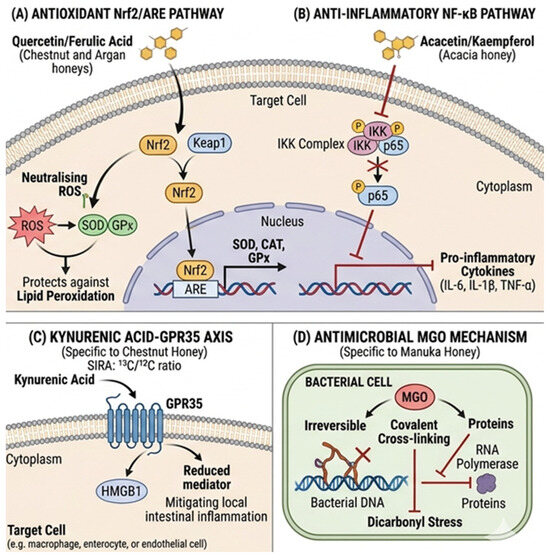
Olive Tree (Olea europaea) Derived Raw Materials (Wood, Twigs, Bark, Leaves, Fruits, and Seeds) and Their Major Chemical Constituents [15,16,17,18,19,20].
  • Systematic Review
  • Open Access

This study examined the efficacy of pediatric Produce Prescription Programs (PPP) on food security status, dietary intake, and health outcomes among children, and aimed to determine the optimal prescription dosage and exposure duration required to promote beneficial outcomes. A systematic review of studies published within the past 10 years, reporting on discrete food security status, dietary quality, and health outcomes among children was conducted. Studies not reporting child-specific data or not published in the English language were excluded. Three databases were searched (PubMed, CINAHL Complete, and EBSCO), data was narratively compiled, and the Newcastle-Ottawa Quality Assessment was employed to assess risk of bias. Prescription monetary amounts (dosages) were standardized, facilitating comparison between programs and outcomes. Nine studies (n = 3808 at-risk children) conducted at 52 sites were retrieved. Program protocols varied. Participation improved food security and fruit/vegetable intake; some beneficial changes were similar regardless of produce dosage and exposure. Data suggest conjecturally that a minimum dosage of $70/month adjusted for locality, cost-of-living and implementation year and exposure of ≥6 months might promote achievement of FV recommended guidelines. The value of educational components emerged in the studies. The findings of this study are limited by the high risk of bias embedded in the included interventions, as well as high heterogeneity amongst the programs. More research on program designs, the impact of PPPs on health outcomes, and cost-benefit analyses are warranted. Rigorous study designs are needed to assess the health impacts and long-term efficacy of pediatric PPPs.
9 December 2025

  • Systematic Review
  • Open Access

Population aging has significantly increased the number of older adults in situations of dependency, where they are more vulnerable to mental health problems and a decline in quality of life. Several studies have suggested that nutritional support could play a key role in improving these aspects. This study aimed to analyze the current scientific findings regarding how nutritional interventions influence mental well-being and life quality in elderly individuals with dependency. Following PRISMA methodology, literature was retrieved from internationally recognized bibliographic databases, including Web of Science, PubMed, Scopus, and ProQuest. Experimental and quasi-experimental studies that analyzed nutritional interventions aimed at dependent older adults with results related to mental health and/or quality of life were included. A total of 23 studies satisfying all inclusion standards were selected for the analysis. Most reported positive effects of nutritional interventions on mood, depressive symptoms, and/or perceived quality of life, although there was heterogeneity in the designs and measures used. Nutritional support may represent an effective strategy for improving mental health and quality of life in dependent older adults. However, further research with robust designs and standardized measures is needed to strengthen the available evidence.

1 December 2025

The market for gluten-free (GF) snack products has expanded, even among children without gluten-related disorders, but few studies have assessed their nutritional quality relative to gluten-containing (GC) counterparts. This study compared the macronutrient composition and fibre additive content of such snack bars marketed to children in Ontario. A total of 110 snack bars were identified using a standardized set of marketing-based criteria. Nutritional data, including macronutrient content and the presence of fibre additives such as inulin and fructooligosaccharides (FOSs), were collected. Data was standardized per 100 kcals and bar size, then analyzed using an independent sample t-test and chi-square. Results indicated that GF bars contained significantly higher levels of protein (1.7 ± 0.77 g vs. 1.3 ± 0.44 g; p = 0.002) and fibre (1.9 ± 0.95 g vs. 1.4 ± 0.98 g; p = 0.015). No significant differences were observed for sugar, carbohydrates, total fat, saturated fat, or trans fat content. Fibre additives were more common in GF bars (24.4% vs. 10.1%), though this association was not statistically significant (p = 0.079). Findings suggest that while GF bars show slight nutritional advantages, their similar overall profiles and greater use of fibre additives indicate room for improvement across both categories.
1 December 2025

News & Conferences

Issues

Open for Submission

Editor's Choice

Get Alerted

Add your email address to receive forthcoming issues of this journal.

XFacebookLinkedIn
Dietetics - ISSN 2674-0311