Review

European Olive (Olea europaea L.) as a Source of Cosmetically Valuable Raw Materials: A Narrative Review of Bioactive Constituents, Their Biological Mechanisms, and Applications

by
Anna Warias
1 and
Anna Kurkiewicz-Piotrowska
2,*
1
Kosmea Student Scientific Club, Tarnów Academy, Mickiewicza 8, 33-100 Tarnów, Poland
2
Institute for Basic Sciences, Faculty of Physiotherapy, University of Physical Education, 31-571 Krakow, Poland
*
Author to whom correspondence should be addressed.
Dietetics 2025, 4(4), 58; https://doi.org/10.3390/dietetics4040058
Submission received: 7 August 2025 / Revised: 6 November 2025 / Accepted: 5 December 2025 / Published: 9 December 2025

Abstract

The Olea europaea L., commonly known as the European olive, has been recognized for centuries as one of the most valuable species among useful plants. In contemporary applications, the olive tree provides a wide array of raw materials utilized in the food, pharmaceutical, and nutraceutical industries. Extracts derived from the leaves, bark, and fruits of O. europaea have also gained significant relevance in dermatological and cosmetic formulations. The aim of this paper was to review scientific studies published between 2019 and 2025 concerning the application of olive oil and other derivatives of the European olive in the care of skin, hair, and nails. The analysis underscores the role of olive-derived bioactives in wound healing, stretch mark management, and skin regeneration, highlighting compounds such as oleocanthal and oleuropein in hydration, elasticity, wrinkle reduction, and photoprotection relevant to skin aging. The evidence for olive oil in hair and nail care mainly highlights their moisturizing and strengthening effects, though studies remain limited. O. europaea derivatives show a favorable safety profile with low allergenic potential, and their availability and minimal sensitization risk support use in home cosmetics. The importance of the European olive and its products is expected to grow in the coming years. However, the availability of technologies for processing waste materials obtained from this plant, as well as the associated technological costs, remain significant limitations.

1. Introduction

With the growing interest in natural cosmetics, ingredients such as plant-derived oils and botanical extracts are increasingly incorporated into cosmetic formulations [1]. Natural-origin cosmetics are frequently sought after for their desirable effects, including hydration, skin restoration, and regeneration [2]. One such ingredient is olive oil (Olea europaea fruit oil), which is a fundamental component of the Mediterranean diet. It is valued not only for its nutritional role but also for its well-documented health-promoting properties [3]. Olive oil exhibits antioxidant, antimicrobial, and anti-inflammatory activity [4], and also contains components with photoprotective properties [5].
Beyond the oil itself, bioactive compounds derived from various parts of the olive tree are employed in the cosmetic, pharmaceutical, and nutraceutical industries [6]. This versatility is largely due to the plant’s rich phytochemical profile, which encompasses numerous biologically active substances.
O. europaea features a broad, twisted trunk of substantial girth. Its leaves are narrow, lanceolate, and leathery, tapering to a pointed tip [7]. The tree produces numerous small, self-pollinating flowers, typically cream or milky-white in color. The fruit, commonly known as olives, is oblong and ovoid, with size and coloration varying between cultivated and wild varieties. Mature olives range from 1 to 3 cm in length and display purple-black or green hues, while wild types often appear grayish [8,9].
O. europaea is highly adaptable to a range of climatic conditions, particularly high temperatures [10]. At present, olive cultivation and oil production are widespread, occurring on every continent except Antarctica. The tree is cultivated extensively across Europe, Asia, the Americas, Oceania, and Africa [8].

1.1. Importance of Olive Oil in Human History

Olive oil, the most valued derivative of the olive tree, held a significant role in ancient Greek culture, where its importance was reflected in mythology [11,12]. For the Greeks, olive oil extended beyond its role as a dietary staple; it was also used for treating wounds and various ailments. In the context of the Olympic Games—a central institution of Greek society—victors were crowned with olive wreaths, symbolizing triumph and honor [13]. Evidence further suggests that athletes applied olive oil to their skin to reduce friction and gain a tactical advantage in wrestling [12,13].
Historically, olive oil was integral not only to religious rituals but also to early cosmetic formulations. Ancient Jewish texts document its use in mouthwash preparations, reflecting rudimentary emulsion techniques and beliefs in its health-promoting properties [14]. Olive oil continues to hold religious significance within Christianity, being mentioned in the Bible at least seventy times, highlighting its spiritual and ritual importance [14].

1.2. Raw Materials Extracted from the European Olive

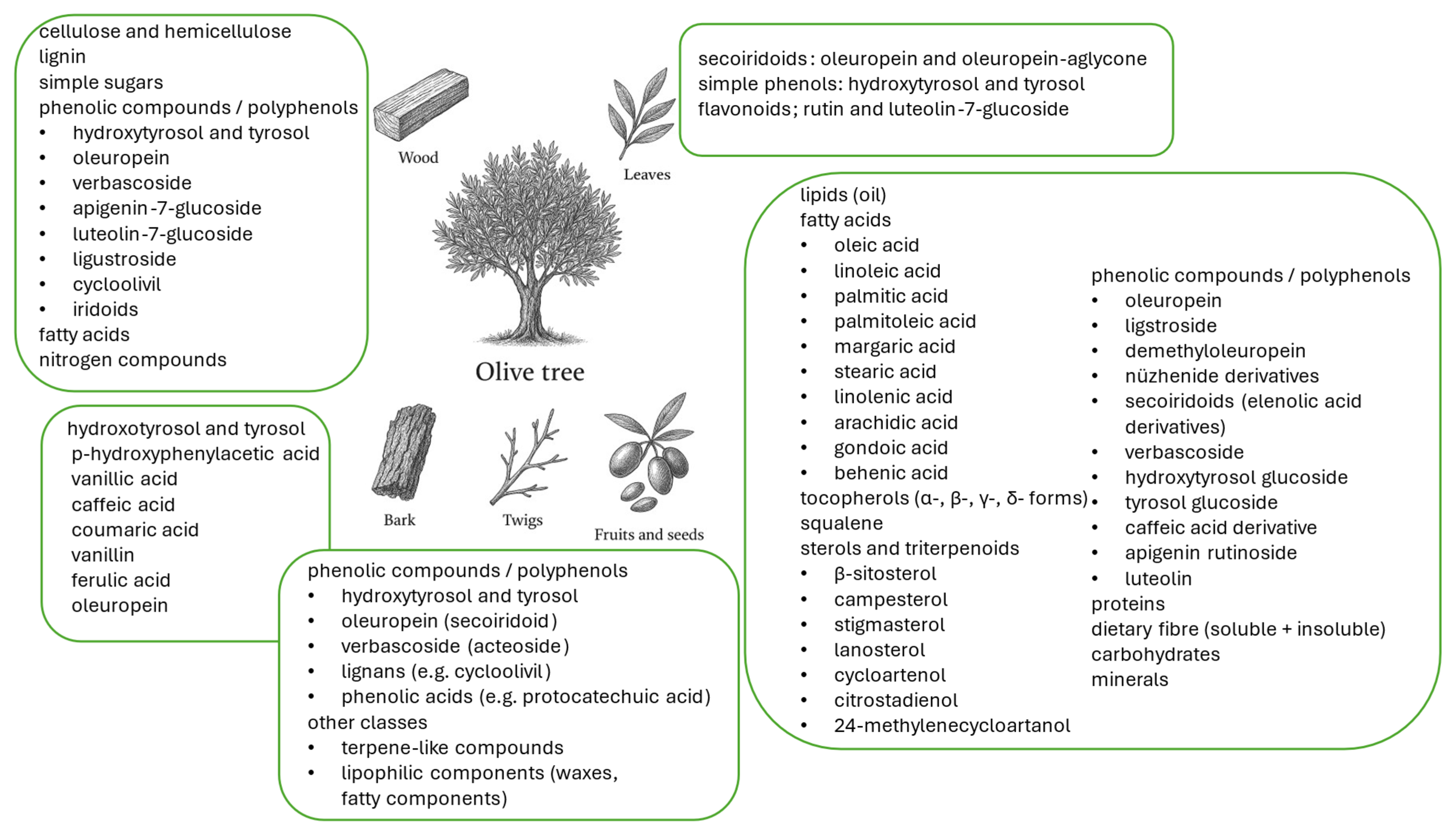
In addition to its notable adaptability to diverse climatic conditions, the olive tree is a plant of exceptional utility, as virtually all its parts can be exploited. The following raw materials are commonly obtained: olive wood, leaves, bark, and twigs, which after appropriate processing demonstrate a range of nutritional and health-promoting properties; and, most importantly, fruit, from which olive oil, seed oil, various extracts, and pastes are derived (Figure 1). The production of olive oil also generates by-products such as olive pomace (OP), composed primarily of residual pulp, fruit skins, and seeds, along with other waste materials, including post-extraction water and seed residues [14].
The production process of olive oil (OO) involves several sequential steps: harvesting, sorting, refining, crushing, separating, centrifugation, storage, and packaging [21]. Olive oil is categorized into several types based on acidity and extraction method. Among the eight recognized classes are virgin olive oil (VOO), extra virgin olive oil (EVOO), and lampante olive oil. Additionally, refined olive oil and pomace oil are obtained from production residues [21].
The distinctiveness and health-promoting effects of EVOO are largely attributable to strict production requirements. The oil must be extracted exclusively through mechanical means, with a final free acidity not exceeding 0.8%, a characteristic fruity flavor, and the absence of sensory defects [22].
Over the past decade, EVOO production has increased considerably, contributing to significant environmental challenges due to the generation of large volumes of processing waste such as seeds, pulp, OP, and leaves [23]. Olive leaves alone account for approximately 10% of the by-products of olive oil extraction [24]. The ecological impact of this waste is considerable, to the extent that conventional disposal methods such as incineration or composting are often unsuitable, due to the potential risk of environmental contamination [25].
This concern arises primarily from the high level of phenolic compounds and other organic substances present in waste. A promising alternative lies in the valorization of these by-products. This approach is aligned with the growing demand in the food and cosmetics industries for sustainable, functional ingredients. Current technological advancements focus on converting olive processing residues through extraction and processing into components suitable for incorporation into cosmetic and nutraceutical formulations [26]. But not all olive mill waste is amenable to reprocessing. While liquid waste can be repurposed as a water source, solid residues such as OP and stones are being explored for use in the production of compost, natural fertilizers, or biomass for biogas generation [27].
Crude OP, comprising shell, peel, pulp, and residual oil, is commonly used in solvent extraction to recover remaining oil. This process, however, is energy-intensive and time-consuming [28]. Due to its high content of phenolic compounds, OP also presents significant potential as a raw material in the development of novel cosmetic formulations [29].
Olive leaf extracts typically exhibit a dark brown coloration and a bitter taste. These materials are known for their health-promoting effects, largely attributable to their unique chemical composition, which varies depending on the geographical origin of the plant [30]. In addition to their use in cosmetics, olive leaf extracts are increasingly utilized in pharmaceutical applications [30].
This review summarizes current scientific findings on the applications of olive oil and other derivatives of O. europaea in dermatological, trichological, and nail care formulations.

2. Materials and Methods

To ensure the inclusion of the most current and relevant scientific data, a narrative literature review was conducted, covering publications from the past five years (2019–2025). The review was based on a comprehensive search of scientific databases, primarily PubMed and Google Scholar. The inclusion criteria encompassed original research articles, clinical case reports, and systematic or narrative reviews published in peer-reviewed journals. Conference reports and publications not subjected to peer review were excluded. The literature search was performed using a combination of the following keywords: olive oil, effect on the skin, benefits of using, problematic skin, sunburn, use in cosmetics, and zero waste. Boolean operators (AND, OR) were applied to refine the search results. Articles were selected based on their relevance to the topic and the quality of presented evidence. The review was conducted up to February 2025.

3. Results

3.1. Chemical Composition of Olive Oil

The chemical composition of olive oil is not fixed and may vary considerably depending on several factors. These include the geographical origin and genetic variability of the cultivar [21], as well as environmental conditions (such as soil type and climate), agronomic practices (including irrigation, fertilization, and harvesting time and method), and technological factors (such as extraction procedures and storage conditions) [31].
EVOO is widely known for its nutritional and bioactive properties [32]. Its main components are triglycerides composed predominantly of monounsaturated fatty acids (MUFA), with oleic acid being the most abundant. Oleic acid constitutes approximately 83% of total fatty acids in olive oil [33,34]. Other relevant constituents include aliphatic and triterpenic alcohols, phytosterols, polyphenols, volatile compounds, hydrocarbons, as well as tocopherols and tocotrienols.
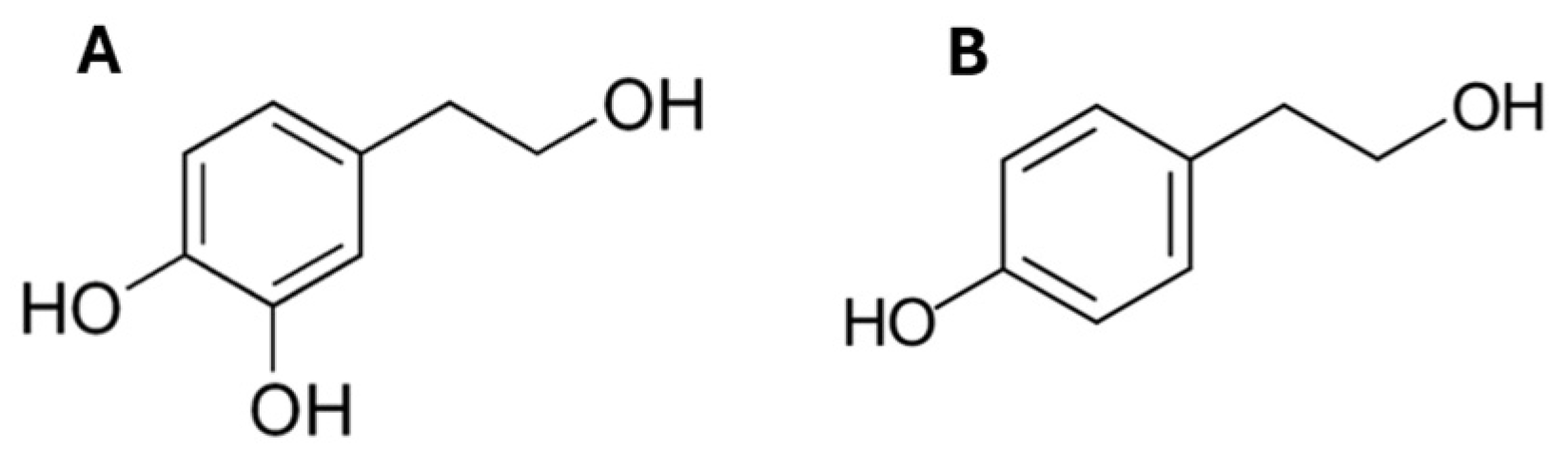
The phenolic compounds (PCs) present in olive oil include phenolic alcohols, phenolic acids, flavonoids, secoiridoids, and lignans. Among the phenolic alcohols, hydroxytyrosol and tyrosol (Figure 2) are the most prominent. These compounds are mainly present in virgin and extra virgin olive oils [34].
Phenolic compounds are largely responsible for the oxidative stability biological activities of the oil. According to the literature, the concentration of phenolic compounds in EVOO is strongly influenced by multiple agronomic and technological factors. These include the harvest timing, the genetic background of the olive cultivar, and the duration and temperature of the malaxation process. Some studies report a decrease in phenolic concentration during the ripening of the fruit, whereas others suggest an increase during early ripening stages, followed by a gradual decline after reaching a peak level [35].
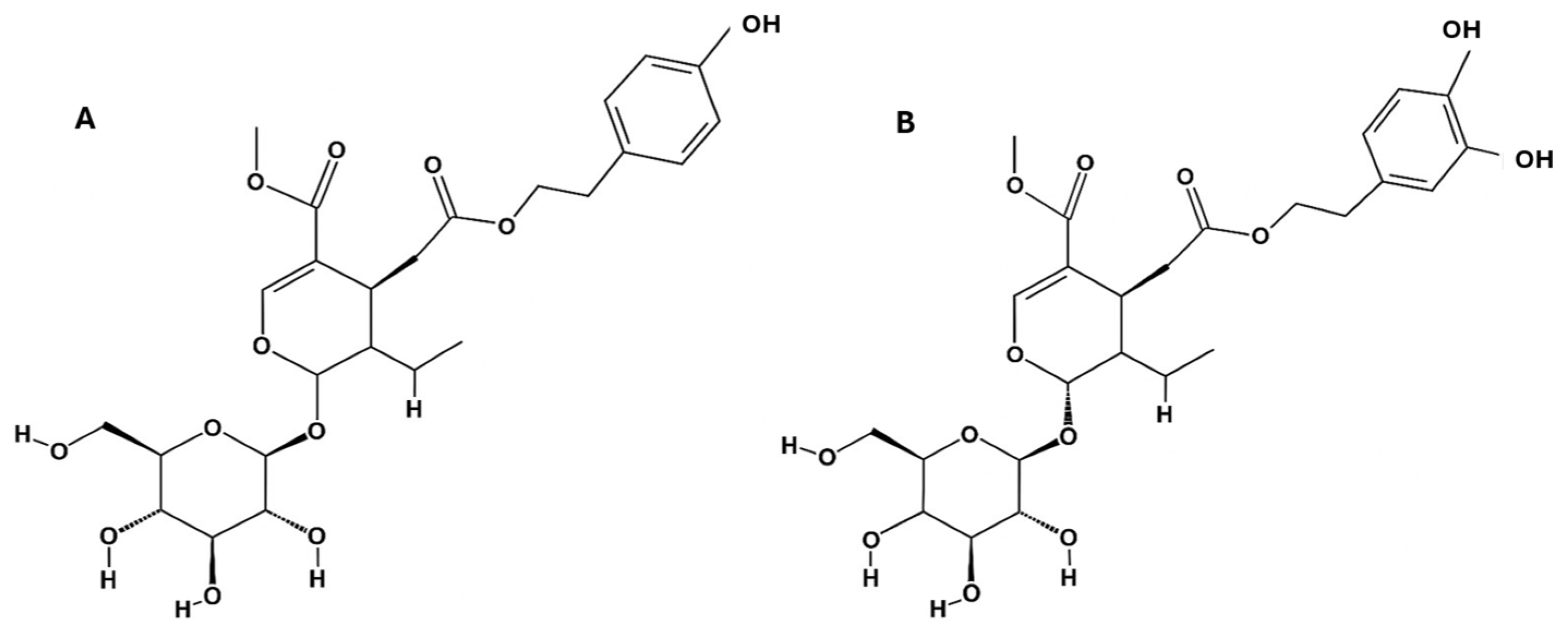
During the maturation of O. europaea fruits, complex biochemical and enzymatic transformations occur, altering the phenolic and lipid composition. These changes affect the levels of specific compounds such as ligustroside—a phenolic glycoside structurally related to oleuropein (Figure 3)—which is regarded as one of the key bioactive constituents in olives [35].
The phenolic profile, which encompasses both the qualitative and quantitative composition of these compounds is a key determinant of the organoleptic properties of olive oil, particularly its characteristic bitterness. Oils with phenolic concentrations of 220 mg/kg or less are classified as having very low or no bitterness. Concentrations ranging from 220 to 340 mg/kg indicate mildly bitter oils, while those between 340 and 410 mg/kg are considered bitter. Phenolic concentrations exceeding 410 mg/kg are associated with oils exhibiting a pronounced bitter taste [36] (Table 1). The polyphenolic compounds responsible for the characteristic taste of olive oil are also important constituents that determine its cosmetic value.
Numerous studies conducted using both in vivo and in vitro models have demonstrated a strong association between the phenolic content of olive oil and its health-promoting effects [2,9,15,20,25,30,34]. These effects are primarily attributed to the anti-inflammatory, antibacterial, and antioxidant properties of these compounds [34,35]. The antioxidant activity of polyphenols is closely related to their structural characteristics, especially the number and arrangement of hydroxyl groups on the aromatic ring. Consequently, different classes of polyphenolic compounds display varying degrees of antioxidant activity [37].
An important subclass of polyphenolic constituents are the secoiridoids, which are derivatives of oleuropein and ligstroside (Figure 3). This group includes the monoaldehydic aglycone of oleuropein (3,4-DHPEA-EA), the monoaldehydic aglycone of ligstroside (p-HPEA-EA), and the dialdehydic forms of elenolic acid: 3,4-DHPEA-EDA and p-HPEA-EDA (commonly known as oleocanthal). These secoiridoid derivatives are considered key contributors to the biological activity of olive oil. Their roles in modulating antioxidant status and cellular inflammatory responses have been extensively investigated, particularly in the context of cancer prevention and treatment [15,37] (Table 2).
The most representative secoiridoids found in the leaves of this plant include oleuropein, verbascoside, 7-O-apigenin glucoside and 7-O-luteolin glucoside [38].
Oleuropein is an iridoid oleuropeoside molecule esterified with a dihydroclavyl alcohol residue. In extra virgin olive oil it is present both in glycosylated form and as a free aglycone. Among olive-derived phenolic compounds, oleuropein is the most abundant in olive leaves [39] making this by-product a particularly valuable source material for the cosmetic, pharmaceutical, and dietary supplement industries. Similarly to other polyphenols found in olive-based products, oleuropein displays anti-inflammatory, antiproliferative, and antioxidant properties. It also supports liver function and exhibits beneficial metabolic, neurological, and cardiovascular effects, which are attributed to the activation of endogenous protective mechanisms [8,9,13,15,32,34,39].
Olive oil PCs have demonstrated a wide range of health-promoting properties, which has led to their application in the prevention and management of diabetes, cancer, cardiovascular diseases, and dyslipidemia. Interest in olive oil PCs has intensified due to growing scientific evidence supporting their therapeutic potential [39,40]. This body of research includes preclinical experiments, clinical trials, and population-based studies, all of which consistently show that adherence to a Mediterranean diet, particularly one rich in plant-derived polyphenols (biophenols), contributes to deceleration of the aging process and a reduction in metabolic disorders associated with oxidative stress and chronic inflammation [41].
In addition to their physiological functions in humans, biophenols play several important biological roles within the plant itself. These include attracting pollinators, contributing to structural integrity, providing protection against ultraviolet (UV) radiation, and enhancing resistance to microbial pathogens.
Like most fruits, the olive fruit is mainly composed of water (about 60–75% of its volume), a characteristic that also influences the composition of many olive-based cosmetic products. Reducing sugars are present at concentrations of 2–5%, lipids range from 10–25%, and phenolic compounds constitute 1–3% of the fruit’s composition [42]. The sugars are synthesized via photosynthesis, occurring not only in the leaves but also in the outer skin of the fruit. Interestingly, this process continues even after color change during ripening.
Carbohydrates such as mannitol, glucose, fructose, and galactose accumulate in the mesocarp cells, serving as precursors for the biosynthesis of numerous secondary metabolites characteristic of the olive fruit [41,42,43].

3.2. Benefits in Skin Care

The skin, the largest organ of the human body, is a complex multilayered structure. It serves as a protective barrier, with its main function is to safeguard underlying tissues against radiation, environmental pollutants, and microbial infections [44]. Anatomically, the human skin consists of three main layers: the epidermis, the dermis, and the hypodermis. The hypodermis is a highly vascularized layer composed of adipocytes, fibroblasts, and macrophages. The dermis (also referred to as cutis vera) is a fibrous connective tissue rich in type I and type III collagen, as well as elastin. These structural proteins are responsible for the mechanical strength and elasticity of the skin [45]. The outermost layer, the epidermis, is primarily composed of keratinocytes and is continuously renewed through stem cell proliferation.
The epidermal layer exhibits notable physical strength and chemical resistance. It provides selective permeability, primarily due to the presence of lipids within the intercellular spaces between corneocytes. In addition to serving as a permeability barrier, the epidermis also contains a protective layer that provides antimicrobial protection. This layer consists of antimicrobial lipids, peptides, and proteins that contribute to innate immune response [46]. The epidermis is organized into five distinct strata: the stratum corneum, stratum lucidum, stratum granulosum, stratum spinosum, and the innermost stratum basale [44,45,46].
Owing to the high density of histamine receptors in the skin, cosmetic products must exhibit low allergenic potential and minimal irritancy. Formulations containing olive oil or other compounds derived from O. europaea are intended for both topical and systemic use and are designed to improve a variety of skin conditions. Their primary functions include maintaining skin hydration, forming a protective barrier against environmental aggressors, and preventing degenerative changes associated with oxidative stress and chronic inflammation [47]. Fatty acids—the main constituents of olive oil play a crucial role in improving skin texture, enhancing elasticity, and promoting softness [48]. Given the established role of individual fatty acids in maintaining skin health, it should be noted that different types of olive oil vary in their fatty acid composition. The variability in fatty acid profiles among different olive oils may influence their dermatological properties. Representative data on the range of fatty acid contents in various olive oils are presented in Table 3.

3.3. Olive Oil and Raw Materials in Wound Healing, Antioxidant and Photoprotective Effects

One of the most relevant models used to evaluate the effects of active compounds on the functional reorganization of viable skin layers is the assessment of wound healing. Wounds are defined as natural, chemical, thermal, or traumatic damage that disrupts the integrity of the skin. A critical stage in the wound healing process is the regeneration of connective tissue, which can be enhanced or modulated through the use of medicinal plants [49].
Wound-healing properties have been attributed to olive oil and its derived raw materials, as reported in the scientific literature [47,50,51]. One example is a 2024 clinical study conducted on primiparous women who underwent perineal incisions during childbirth. Participants were divided into three groups: one group received a mixture of olive oil and cumin oil, another was treated with olive oil alone, and the third group received only standard postpartum care. A ten-day follow-up, beginning 24 h after delivery, revealed accelerated wound healing in groups using olive oil or the oil mixture compared to the control group [48].
Scientific evidence confirms that extracts derived from O. europaea demonstrate beneficial effects not only in the treatment of wounds but also in cases of sunburn, which often involve complications such as edema, erythema, and inflammation. These conditions are recognized as contributors to premature skin aging. The application of Olea europaea-based formulations may delay or alleviate symptoms of photoaging [52].
In medical practice, formulations containing olive leaf extract are increasingly utilized. One such example is a hydrogel referred to as EHO-85 [53]. This formulation contains a high concentration of polyphenols and is designed to neutralize reactive oxygen species, which are typically present in elevated levels in damaged tissues, thereby accelerating the healing process. The efficacy of EHO-85 was demonstrated in a 2023 study that compared the hydrogel’s performance with other well-established wound-healing agents, such as Centella asiatica extract, hyaluronic acid, and dexpanthenol. All tested agents, including the olive leaf-based hydrogel, significantly enhanced wound healing compared to the untreated control group [54]. The effects were confirmed through both clinical observation and histological evaluation.
The increasing interest in the cosmetic potential of olive-derived compounds, combined with the substantial volume of by-products generated during OO production, has prompted researchers to explore sustainable approaches for valorization. These by-products are known to be rich in polyphenols, which exhibit significant antioxidant and photoprotective properties. Methods have therefore been developed to recover these compounds and utilize them as active ingredients in cosmetic formulations [26,40,52,55].
As previously described, the phenolic compounds in O. europaea may function as chemopreventive agents. Their mechanisms include modulation of the cell cycle and antioxidant activity that may inhibit photocarcinogenesis. This process is triggered by the harmful effects of ultraviolet (UV) radiation, a major factor in the development of common skin malignancies [55]. Excessive exposure to UV radiation, especially without adequate photoprotection, leads to accelerated skin aging. Improving the photoprotective potential of cosmetic products can be achieved through the incorporation of polyphenols recovered from olive oil production waste.
The antioxidant potential of olive-derived substances contributes to reducing the biochemical consequences of oxidative stress and aging. Olive oil, rich in squalene, β-sitosterol, and oleic acid, has emollient effects that soften the skin [56]. Oleuropein, a glycosylated secoiridoid and a bitter phenolic compound found in the skin, pulp, seeds, and leaves of green olives, is widely used in cosmetics as an active ingredient. In addition to its anti-inflammatory, antiproliferative, and antioxidant activity, oleuropein also exhibits antimicrobial, antiviral, and anti-aging properties. Its effectiveness has been confirmed in in vitro studies using human keratinocytes [57].
The anti-wrinkle potential of other olive polyphenols, such as OC and olacein, was demonstrated in a recent clinical trial involving 70 participants with mild to moderate signs of skin aging. Participants were stratified by age and gender into four groups: women and men aged 20–44 years and 45–79 years. The intervention involved twice-daily application of a serum containing polyphenols extracted from O. europaea, including oleocanthal and olacein, for 30 days. Skin condition was assessed using the VISIA imaging system before and after the intervention. The results confirmed a significant improvement in skin appearance, indicating a measurable anti-aging effect of the serum [58].

3.4. Olive Oil and Raw Materials in Dermatoses

In recent years, numerous studies have explored the beneficial effects of olive oil (OO) in managing and alleviating various skin conditions, including rosacea, xerosis (dry skin), psoriasis, atopic dermatitis (AD), and contact dermatitis [59]. Among the key bioactive compounds responsible for these effects are oleic acid and squalene, both of which are naturally present in olive oil. Oleic acid promotes skin regeneration and modulates inflammatory responses [60], while squalene exhibits moisturizing and antioxidant properties. Squalene is considered an important compound that may help reduce the severity of certain dermatoses [61].
A growing body of literature has focused specifically on the role of Olea europaea in the treatment of atopic dermatitis, a genetically predisposed condition characterized by chronic pruritus and excessive skin dryness. AD can affect individuals across all age groups [62]. Its management involves symptom control, skin hydration, and anti-inflammatory therapy. Olive oil contributes to moisturization by forming an occlusive film on the skin’s surface, thereby reducing transepidermal water loss (TEWL). The unsaturated fatty acids in olive oil help strengthen skin barrier function and improve smoothness and elasticity [63]. Additional components, such as β-sitosterol, further contribute anti-inflammatory effects, offering a multifaceted mechanism for AD management.
The moisturizing effects of olive oil are also significant in the treatment of psoriasis, a chronic, immune-mediated skin disorder characterized by erythematous and scaly plaques [64]. Psoriasis, like many chronic skin conditions, negatively affects patients’ quality of life and requires a multifactorial management approach, including topical treatments, phototherapy, systemic drugs, and biological agents targeting specific immune pathways [65]. The application of olive oil has shown beneficial outcomes both in topical use [64] and through oral supplementation [66]. Modern topical formulations incorporating olive oil and pharmacologically active agents are under development [67]. Regular application has been shown to reduce lesion severity and alleviate pruritus. However, olive oil-based treatments should be used in combination with other therapies, including peptides or vitamin D analogs, to ensure effectiveness [63,65].
Contact dermatitis is another dermatological condition in which olive oil has been investigated as a potential therapeutic agent. This inflammatory reaction of the stratum corneum arises from exposure to irritants and leads to impairment of the skin barrier. Restoration of this barrier can be facilitated by unsaturated fatty acids and lipids, supporting the use of olive oil in skincare formulations [63]. However, it is important to note that botanical compounds can act not only as therapeutic agents but also as potential allergens. Case studies have documented instances of contact dermatitis caused by ozonated olive oil [68].
Sunburn is another common dermatological concern that accelerates skin aging and compromises the integrity of the skin’s hydrolipid barrier. It often results in inflammation, erythema, and increased susceptibility to bacterial and fungal infections. In this context, extra virgin olive oil demonstrates multifaceted protective effects [69]. Olive oil has shown antimicrobial activity against a range of microorganisms, including Gram-positive bacteria such as Staphylococcus aureus, Gram-negative bacteria, and fungi of the Candida genus. Studies have further indicated that ozonated olive oil possesses enhanced therapeutic efficacy relative to non-ozonated oil [70].
The process of ozonating vegetable oils alters their chemical structure by introducing ozone into carbon–carbon double bonds in unsaturated fatty acids. This reaction results in the formation of reactive compounds such as aldehydes, peroxides, and ozonides, all of which exert potent biological effects. Ozonated olive oil has more free fatty acids, a higher peroxide value, and fewer double bonds. This modification affects its rheological properties (the oil becomes more viscous) and its biological effects, including its antibacterial and anti-inflammatory properties [71]. These changes enhance the therapeutic efficacy of the oil.
Several comparative studies have assessed the effectiveness of ozonated olive oil versus unmodified EVOO [72,73]. For example, a study on 71 participants with gingivitis compared ozonated olive oil, pure EVOO, and a control group. Both oils improved oral health, with the ozonated oil showing the greatest effect [72].
Overall, olive oil and its derivatives, including ozonated forms, demonstrate significant therapeutic potential in managing various dermatological conditions through their moisturizing, anti-inflammatory, and antioxidant effects. Chemical modification via ozonation further enhances these properties, improving the oil’s antibacterial activity and clinical efficacy.

3.5. Olive Oil and Cosmetic Effects

Olive oil (OO) and its derivatives can be used both as standalone products and as components in cosmetic formulations. When applied regularly to the skin, olive oil contributes to the reduction in stretch marks, including those associated with pregnancy, growth spurts, or fluctuations in body weight [73]. These dermatological changes, often observed during pregnancy, are a source of psychological distress and reduced well-being for many individuals. Due to its oily consistency, OO forms an occlusive barrier on the skin surface, thereby ensuring prolonged hydration [73]. Its effectiveness in preventing and alleviating the appearance of stretch marks is attributed to the presence of oleic acid [60,65] squalene [61], unsaturated fatty acids [63], and polyphenols [41].
This effect was investigated in a clinical study conducted in 2022, which involved two groups of pregnant women. Participants were instructed to apply olive oil topically to the abdominal area beginning in the third trimester and continuing until delivery. One group, selected at random, applied the oil twice daily (morning and evening) while the control group did not use any additional skincare product. At the conclusion of the follow-up period, a significantly lower incidence of stretch mark development was observed in the group using olive oil [74]. These findings support both the efficacy and safety of olive oil in pregnancy-related skin care. Although olive oil is also believed to reduce nipple pain and irritation in breastfeeding women, there is a lack of high-quality clinical evidence to substantiate this application. As a result, lanolin remains the standard recommendation for this indication [75].
From a cosmetic perspective, squalene is an important constituent of olive oil. It is considered a safe and effective active ingredient and is widely used in skincare products [60]. In addition to its moisturizing effects, squalene exhibits cytoprotective and anti-tumor activities [76]. OO is considered as one of the best sources of squalene. In the study by Wu et al. [77] the authors report that squalene concentrations in EVOO samples ranged between 3864.5 and 6359.9 mg/kg which was 15 times more than that of other oil samples. Other vegetable oils analyzed in this study exhibit markedly lower levels. For instance, seabuckthorn seed oil contains ~250 mg/kg, sunflower seed oil up to ~125 mg/kg, and pumpkin seed oil up to ~16 mg/kg. Its utility in formulations designed for acne-prone skin is due to its antioxidant, antimicrobial, and fungistatic properties [78]. However, this effect is not preserved in squalane (perhydrosqualene), the fully hydrogenated form of squalene, which is often used in cosmetics for technological reasons as a more stable alternative [79].
Another important aspect of Olea europaea-derived raw materials is their potent antioxidant activity, conferred by a wide range of polyphenolic compounds [25,40,41]. Extracts from various parts of the olive tree, including leaves, bark, twigs, seeds, and pomace, are increasingly incorporated into cosmetic formulations [20,28,54,59]. Many of these extracts are obtained following the principles of the zero-waste philosophy, aligning with the growing demand for sustainable and eco-friendly solutions in the cosmetics industry. The valorization of by-products from the olive oil production process addresses both environmental concerns and the need for functional, bioactive ingredients in modern skin care.

3.6. Benefits in Hair Care

Human hair is composed of two primary parts: the shaft and the root, the latter of which is embedded in the scalp. The hair root includes the bulb, which contains the papilla and the hair matrix. The papilla is composed of capillaries, nerve endings, and fibroblasts, while the matrix consists primarily of keratinocytes. Hair follicles, located in the subcutaneous layer of the scalp, undergo a cyclic growth process composed of four main phases: anagen (growth), catagen (regression), telogen (rest), and exogen (shedding) [80].
Olive oil has attracted considerable attention in cosmetic science not only for its effects on skin health, but also for its impact on hair. The improvement of hair condition following olive oil application is linked not only to its superficial effects but also to its ability to penetrate the scalp, where it supports the reformation of chemical bonds, restoration of lipid and protein content, and recovery of mechanical integrity and hydrophobicity [81]. Studies have demonstrated that vegetable oils, including olive oil, exhibit a range of properties beneficial for enhancing hair structure [82].
A separate line of investigation has explored the role of olive oil in managing parasitic infections of the scalp. Its potential as an anti-lice agent has been evaluated in clinical research. A 2022 study assessed the efficacy of ozonated olive oil in treating pediculosis capitis. A total of 121 participants diagnosed with the condition were divided into two groups: one received treatment with ozonated olive oil lotion, while the other used a conventional permethrin-based shampoo. The results indicated that the group treated with ozonated olive oil achieved complete resolution of the infection, whereas those treated with permethrin required a longer duration for comparable results [83].
Olive oil has also shown promise in the context of hair loss disorders, including androgenetic alopecia, alopecia areata, scarring alopecia, and psoriasis-related alopecia. However, to date, studies investigating the therapeutic potential of olive oil in these conditions have been limited to animal models. A 2020 review summarized existing findings but concluded that additional evidence is required to confirm the efficacy and safety of olive oil for treating alopecia in humans [84]. Notably, oleuropein has demonstrated potential in preclinical model. In one study conducted on mice, oleuropein was shown to upregulate the expression of genes associated with the reversal of alopecia symptoms [85].
In recent years, a traditional East Asian hair treatment known as oiling has gained popularity in Western countries [86]. This practice involves the application of oil to the hair to improve moisture retention, enhance shine, ease combing, and provide nourishment. It is particularly useful for managing chemically treated hair, such as hair that has been dyed or bleached, which tends to suffer structural damage [86,87]. Improvements in hair structure following oiling have been visualized using scanning electron microscopy (SEM), which provides detailed images of hair morphology [88].
Hair oiling can also be beneficial for untreated (“virgin”) hair. Regular oiling may contribute to improved moisture balance, increased elasticity, and enhanced protection of hair ends, which are structurally more fragile than the roots [86,87]. Given its moisturizing properties demonstrated on the skin, olive oil may serve as a candidate oil for this practice. However, it is important to note that there is currently a lack of scientific data confirming the safety and efficacy of olive oil in this specific application.

3.7. Benefits in Nail Care

Nails are primarily composed of keratin, which is produced in the nail matrix. This structure is responsible for the adherence of the nail plate, while the area where the plate loses contact with the matrix is referred to as hyponychium. The primary function of the nail is mechanical, including protection and enhancement of fine motor tasks [89].
The moisturizing properties of olive oil when used externally, previously discussed in the context of skin and hair care, have also been applied to nail treatments. It is also believed that OO may support the management of certain nail disorders, such as psoriasis [90]. Psoriatic involvement of the nail is a manifestation of this chronic immune-mediated condition, which can lead to structural alterations in the nail bed and surrounding tissues. The pathophysiology of psoriatic nail disease is associated with dysfunctional keratinocyte activity and dysregulated immune responses [91]. Although anecdotal recommendations regarding the use of olive oil in both healthy and diseased nail care are widespread on the Internet, there is a notable lack of robust scientific evidence confirming its clinical effectiveness in this context.
Some sources suggest that olive oil contains vitamin A; however, it is important to clarify that plant-derived raw materials, including OO, do not contain retinoids. Instead, they contain provitamin A in the form of β-carotene. Nevertheless, olive oil can serve as an effective solvent for the delivery of vitamin A in formulations.
Vitamin A deficiency has been associated with an increased susceptibility to skin and nail infections caused by bacteria, viruses, and fungi. As a source of provitamin A, OO when used externally may offer a prophylactic benefit in nail care, particularly for individuals prone to trauma-induced infections. The β-carotene content in olive oil varies depending on the degree of refinement. In extra virgin (unrefined) olive oil, concentrations typically range from 2 to 5 mg/kg, whereas refined olive oils contain markedly lower levels, often below 0.5 mg/kg, due to pigment degradation during the refining process [19,22]. Beyond its vitamin content, the presence of various lipid components in olive oil may enhance the hydration and flexibility of the nail plate [92].
Olive leaves and pomace/extracts are the most relevant olive-derived waste streams for recovering β-carotene. Representative reported ranges are: leaves 15–15.7 mg/kg pomace extracts 12–134 mg/kg (extract) [25,26,28,30].
Both categories of ingredients: vitamin A derivatives and lipids (including essential fatty acids) are commonly included in nail care cosmetics, dietary supplements, and nutricosmetics (oral beauty supplements). Their regular use, both in the form of cosmetics and nutricosmetics may strengthen nails and accelerate nail growth [93].
The therapeutic potential of OO has also been investigated in the treatment of onychomycosis, a fungal infection characterized by discoloration and detachment of the nail plate [94,95]. In such cases, OO may be used as an adjunct to systemic antifungal therapy. Its antioxidant and anti-inflammatory properties make it a safe topical agent, and its antifungal efficacy can be further enhanced through ozonation [67] or by incorporation into formulations containing pharmacologically active ingredients such as terbinafine or essential oils [96].
Ingrown toenails, often caused by improper footwear or inadequate nail care, require treatment due to pain, inflammation, and infection risk [97]. In addition to podiatric management, antimicrobial therapy may be beneficial. Evidence indicates that olive oil derivatives, particularly ozonated formulations, can aid in treating nail disorders. In a study of 75 participants, a hydrogel containing oxygen, ozone, and monounsaturated fatty acids from unrefined olive oil significantly improved symptoms, with most subjects reporting rapid relief and progressive recovery [98]. These findings support the potential of ozonated olive oil as an effective topical adjunct therapy for nail diseases.

3.8. Olive-Derived Products as Dietary Supplements and Nutricosmetics

Recent scientific studies have demonstrated that this widely consumed dietary ingredient exerts multiple health-promoting effects. Regular consumption of OO has been associated with a reduced risk of developing diabetes, cancer, cardiovascular diseases, and other chronic conditions [99]. These protective effects are largely attributed to the bioactive compounds present in olive oil, particularly phenolic compounds such as oleuropein, polyphenolic constituents including hydroxytyrosol and tyrosol, as well as monounsaturated fatty acids like oleic acid.
Longitudinal studies have demonstrated a strong inverse relationship between olive oil consumption and the incidence of cardiovascular disease, diabetes, and all-cause mortality. One clinical trial, published in 2021, evaluated the effect of high-polyphenol EVOO on endothelial function in individuals at risk for type 2 diabetes. Compared with a control group consuming refined OO, participants who consumed EVOO exhibited significantly improved endothelial function. This suggests a vascular-protective mechanism mediated by polyphenolic compounds, with potential implications for skin and systemic health [99].
Adherence to the Mediterranean diet, which includes olive oil, fruits, vegetables, and fish, has been associated with a reduced incidence of allergic conditions [100]. This may be due to the anti-inflammatory properties of unsaturated fatty acids and other bioactive compounds. A variety of raw materials derived from O. europaea are currently utilized in modern dietary supplements. The most prominent of these is EVOO, which is widely promoted for its beneficial effects on brain function and immune system modulation, primarily due to its content of monounsaturated fatty acids. However, considerable attention has also been directed toward olive leaf extract and standardized phenolic compounds, such as oleuropein and hydroxytyrosol [2,25,30,53]. Olive leaf extracts are administered orally, mainly for their potent antioxidant, antimicrobial, and cardioprotective properties [25,30,52,53,54]. Oleuropein and hydroxytyrosol contribute to the regulation of blood pressure and lipid metabolism and exhibit potential anti-inflammatory and anticancer activities, as previously reported [39,57]. Other derivatives of O. europaea are not currently employed to a significant extent in dietary supplementation.

3.9. Potential Risks of Using Olive Oil on Skin, Hair and Nails

In addition to its widely recognized health-promoting and dermatological benefits, olive oil may also have adverse effects. These include potential pore blockage (comedogenicity), allergic reactions, and skin irritation.
Although the commercial form of OO is primarily intended for culinary use, its topical application has become increasingly popular due to its occlusive and moisturizing properties. When applied to the skin, olive oil forms a layer that is only partially absorbed, leaving a film on the surface. This occlusive barrier reduces TEWL by limiting water evaporation. However, it may also increase the risk of comedogenic effects, depending on individual predisposition, skin type, and the specific body area of application. Comedogenicity refers to the clogging of skin pores, leading to the formation of blackheads, which is particularly problematic for individuals with oily or acne-prone skin. For such skin types, non-comedogenic, fast-absorbing (drying) oils such as raspberry seed oil or grape seed oil are generally recommended. In contrast, OO is classified as a non-drying oil, meaning it may leave a greasy film and contribute to comedogenic reactions in susceptible individuals [101]. However, due to the limited number of high-quality studies assessing the impact of plant oils on skin physiology, a definitive conclusion regarding the comedogenic potential of olive oil cannot yet be drawn.
While OO functions as an emollient and moisturizing effects are fundamental in newborn skin care, the use of olive oil in infant skin care remains controversial. Skin care product selection should be guided by the user’s age, skin condition, and the intended therapeutic purpose. Although occlusive formulations are believed to improve skin integrity and reduce TEWL [102], a 2022 study reported that topical application of oleic acid, a primary component of OO, may lead to skin barrier disruption [103]. Based on this evidence, OO may not be suitable for use on infant skin, although more robust research is needed to draw firm conclusions.
Some reports published before the analyzed timeframe (last five years) indicate that OO may not be suitable for patients with venous insufficiency or stasis eczema [104]. Despite its low allergenic potential, OO has been shown to cause irritation when applied under occlusion. A 2006 case report described an aromatherapist who developed a persistent rash after using olive oil as a base for essential oil blends. The symptoms subsided after switching to soybean oil, allowing her to continue working without adverse reactions [105]. This case, along with others reported in the same study, underscores the importance of performing patch tests prior to general use of OO, particularly in individuals with occupational exposure to vegetable oils. While the general population has a low risk of developing sensitization to such ingredients, frequent and prolonged skin contact may increase the risk of allergic reactions.
Another case, published in 1999, described a massage therapist who developed occupational hand eczema associated with the use of OO. The oil was added to a lotion to enhance glide during massages, ultimately leading to contact dermatitis. Investigations confirmed that olive oil, rather than the suspected aromatic additives, was the allergen responsible for the symptoms [106]. Although such cases are infrequent and not well represented in the current literature, they highlight the need for awareness regarding potential contact dermatitis caused by OO.
In the context of nail care, OO does not appear to pose a significant risk and is generally considered safe. However, its use in hair care requires careful consideration. Hair texture and porosity are key factors in determining product compatibility, as the comedogenic potential of oils may affect the scalp, leading to excessive oiliness, itchiness, or discomfort.
Current scientific literature lacks reliable studies evaluating these effects Therefore, the topical use of OO in hair care remains an area that warrants further research to better understand its safety and efficacy across various hair types and conditions.

3.10. Challenges in the Sustainable Valorization of Olive Oil Industry Residues

The main by-products generated during olive oil production are olive pomace, a solid residue containing fiber, seeds, residual oil, and high levels of biologically active phenolic compounds [26,28,107,108] and olive mill wastewater (OMWW), a liquid effluent rich in organic matter. OMWW is dark-colored and toxic to microorganisms due to its high phenolic content [6,13,109]; therefore, proper treatment is essential to maintain aquatic environmental balance [110]. Additional residues arise from olive tree pruning. Dried leaves and twigs represent valuable lignocellulosic biomass that can be further processed into biofuel, activated carbon (biochar), or used as a source of phenolic compounds [16,109].
Valorization of these waste streams remains limited by technological and economic constraints. To recover bioactive phenols from olive-derived materials, green extraction technologies such as ultrasound- and microwave-assisted extraction, hydroethanolic extraction, and supercritical CO2 extraction are increasingly being explored at pilot scale [107,111].
Purification of phenolic fractions intended for nutraceutical or cosmetic use typically relies on chromatographic techniques. Although these methods yield extracts enriched in biologically active compounds, additional purification and standardization steps are required to ensure consistent quality.
Integrated processing strategies have been proposed, yet most remain at the techno-economic feasibility or pilot stage [28,106,112]. In contrast, activated carbon production from olive seeds and OP has already reached industrial implementation [113].
High energy costs (particularly those associated with drying wet raw materials) represent a major barrier to large-scale commercialization [114]. Economic feasibility depends strongly on production scale and final product value [112]. Furthermore, the seasonal nature of olive oil production complicates logistics, as the storage and transport of wet biomass increase overall costs [115]. Techno-economic analyses indicate that profitability can generally be achieved only through the integration of multiple valorization routes and/or the production of several high-value products [112].
For cosmetic and nutraceutical applications, purity and standardization are essential. These industries require reproducible levels of active ingredients and minimal batch-to-batch variation. However, natural fluctuations in pomace composition linked to olive cultivar, geographic origin, fruit maturity, and extraction technology make standardization difficult without additional fractionation and analytical control [107,108].
Residues such as pesticides and heavy metals may persist in olive leaves and pomace, necessitating pre-market testing and, where required, decontamination procedures. The presence of such impurities limits the suitability of these raw materials for human use and demands strict compliance with toxicological and regulatory standards, including EU contaminant limits [109,116].
Moreover, wet residues and extracts are susceptible to microbial growth, requiring stabilization through drying, pasteurization, or the use of suitable preservatives [114].
Taken together, these factors indicate that the valorization of olive oil by-products remains a dynamic research field, underscoring the importance of a zero-waste, circular economy approach.

4. Conclusions

Olive oil has beneficial effects on skin, hair and nails due to its moisturizing, anti-inflammatory and antioxidant properties. Used both on its own and as an ingredient in cosmetics, it improves the condition of the skin and its appendages. Its safety is confirmed by clinical studies, although other raw materials from European olive require further research on its long-term effects. Olive is safe for use on the body, but on the face, it can cause a comedogenic reaction, especially in people with oily and problematic skin. Despite the low risk of allergy, there have been cases of irritation in people professionally exposed to oils. The review conducted has identified several areas requiring further scientific investigation. This pertains primarily to raw materials obtained from olive leaves, bark, and various by-products generated during the production of olive oil. Surprisingly, research gaps also concern olive oil itself-a substance with a centuries-long history of use-which, despite its extensive traditional application, continues to represent a relevant and compelling subject of contemporary scientific inquiry. Further research is needed to ensure the safety and standardization of bioactive compounds obtained from olive oil production by-products, particularly given their compositional variability and potential contamination. Comprehensive toxicological evaluation, together with the development of harmonized purification and quality control protocols, is essential to enable their safe and reproducible use in cosmetic and nutraceutical applications.

Author Contributions

Conceptualization, A.K.-P.; methodology, A.K.-P.; validation, A.K.-P. and A.W.; formal analysis, A.K.-P. and A.W.; investigation, A.K.-P. and A.W.; resources, A.K.-P. and A.W.; data curation, A.K.-P. and A.W.; writing—original draft preparation, A.K.-P. and A.W.; writing—review and editing, A.K.-P. and A.W.; visualization, A.K.-P. and A.W.; supervision, A.K.-P.; project administration, A.K.-P. All authors have read and agreed to the published version of the manuscript.

Funding

This research received no external funding.

Data Availability Statement

No new data were created or analyzed in this study. Data sharing is not applicable to this article.

Conflicts of Interest

The authors declare no conflicts of interest.

References

  1. Michalak, M. Plant Extracts as Skin Care and Therapeutic Agents. Int. J. Mol. Sci. 2023, 24, 15444. [Google Scholar] [CrossRef]
  2. González-Acedo, A.; Ramos-Torrecillas, J.; Illescas-Montes, R.; Costela-Ruiz, V.J.; Ruiz, C.; Melguizo-Rodríguez, L.; García-Martínez, O. The Benefits of Olive Oil for Skin Health: Study on the Effect of Hydroxytyrosol, Tyrosol, and Oleocanthal on Human Fibroblasts. Nutrients 2023, 15, 2077. [Google Scholar] [CrossRef]
  3. Golański, J.; Luzak, B. The importance of selected food ingredients of plant origin that inhibit platelet functions in the primary prevention of cardiovascular diseases. Food Sci. Technol. Qual. 2024, 31, 120–140. [Google Scholar] [CrossRef]
  4. Radzimierska-Kazmierczak, M.; Smigielski, K.; Sikora, M.; Nowak, A.; Plucinska, A.; Kunicka-Styczynska, A.; Czarnecka-Chrebelska, K.H. Olive oil with ozone-modified properties and its application. Molecules 2021, 26, 3074. [Google Scholar] [CrossRef]
  5. Di Giacomo, G.; Romano, P. Evolution of the Olive Oil Industry along the Entire Production Chain and Related Waste Management. Energies 2022, 15, 465. [Google Scholar] [CrossRef]
  6. Foti, P.; Romeo, F.V.; Russo, N.; Pino, A.; Vaccalluzzo, A.; Caggia, C.; Randazzo, C.L. Olive mill wastewater as renewable raw materials to generate high added-value ingredients for agro-food industries. Appl. Sci. 2021, 11, 7511. [Google Scholar] [CrossRef]
  7. Boratyńska, K.; Boratyński, A. Olive tree (Olea europaea L.)–A tree for body and spirit. Wszechświat 2020, 121, 153–162. [Google Scholar]
  8. Elhrech, H.; Aguerd, O.; El Kourchi, C.; Gallo, M.; Naviglio, D.; Chamkhi, I.; Bouyahya, A. Comprehensive Review of Olea europaea: A Holistic Exploration into Its Botanical Marvels, Phytochemical Riches, Therapeutic Potentials, and Safety Profile. Biomolecules 2024, 14, 722. [Google Scholar] [CrossRef] [PubMed]
  9. Romero-Márquez, J.M.; Forbes-Hernández, T.Y.; Navarro-Hortal, M.D.; Quirantes-Piné, R.; Grosso, G.; Giampieri, F.; Lipari, V.; Sánchez-González, C.; Battino, M.; Quiles, J.L. Molecular Mechanisms of the Protective Effects of Olive Leaf Polyphenols against Alzheimer’s Disease. Int. J. Mol. Sci. 2023, 24, 4353. [Google Scholar] [CrossRef]
  10. Fraga, H.; Pinto, J.G.; Santos, J.A. Olive tree irrigation as a climate change adaptation measure in Alentejo, Portugal. Agric. Water Manag. 2020, 237, 106193. [Google Scholar] [CrossRef]
  11. Doroszewski, F.; Jażdżewska, K. Nonnus of Panopolis in Context III: Old Questions and New Perspectives; Mnemosyne, Supplements; Brill: Leiden, The Netherlands, 2020; Volume 438, pp. 1–425. [Google Scholar] [CrossRef]
  12. Cosentino, F. The use of oil in the Greek Olympics. J. Olymp. Hist. 2000, 8, 47–48. [Google Scholar]
  13. Albini, A.; Albini, F.; Corradino, P.; Dugo, L.; Calabrone, L.; Noonan, D.M. From antiquity to contemporary times: How olive oil by-products and waste water can contribute to health. Front. Nutr. 2023, 10, 1254947. [Google Scholar] [CrossRef]
  14. Agosteo, G.E.; Baldoni, L.; Barbera, G.; Barkaoui, K.; Belaj, A.; Ben-Ari, G.; Ben-Gal, A.; Benelli, G.; Biasi, R. The Olive: Botany and Production, 1st ed.; Fabbri, A., Baldoni, L., Caruso, T., Famiani, F., Eds.; CAB International: Wallingford, UK, 2023; ISBN 978-1-78-924733-6. [Google Scholar]
  15. Pessoa, H.R.; Zago, L.; Difonzo, G.; Pasqualone, A.; Caponio, F.; Ferraz da Costa, D.C. Olive Leaves as a Source of Anticancer Compounds: In Vitro Evidence and Mechanisms. Molecules 2024, 29, 4249. [Google Scholar] [CrossRef]
  16. Dermeche, S.; Mezoued, K.; Naib, H.; Senani, N.; Chaouche, T.A.; Alenazy, R.; Alhussaini, M.S.; Abdulrahman, A.I.A.; Alqasmi, M.; Almufarriji, F.M.; et al. Olive Tree Twigs as an Attractive Green Source of Antioxidant and Antibiofilm Biomolecules. Processes 2025, 13, 559. [Google Scholar] [CrossRef]
  17. Aliaño-González, M.J.; Gabaston, J.; Ortiz-Somovilla, V.; Cantos-Villar, E. Wood Waste from Fruit Trees: Biomolecules and Their Applications in Agri-Food Industry. Biomolecules 2022, 12, 238. [Google Scholar] [CrossRef] [PubMed]
  18. Issaoui, A.; Ksibi, H.; Ksibi, M. Comparison between several techniques of olive tree bark extraction (Tunisian Chemlali variety). Nat. Prod. Res. 2016, 31, 113–116. [Google Scholar] [CrossRef] [PubMed]
  19. Maestri, D.; Barrionuevo, D.; Bodoira, R.; Zafra, A.; Jiménez-López, J.; Alché, J.d.D. Nutritional profile and nutraceutical components of olive (Olea europaea L.) seeds. J. Food Sci. Technol. 2019, 56, 4359–4370. [Google Scholar] [CrossRef]
  20. Melguizo-Rodríguez, L.; González-Acedo, A.; Illescas-Montes, R.; García-Recio, E.; Ramos-Torrecillas, J.; Costela-Ruiz, V.J.; García-Martínez, O. Biological effects of the olive tree and its derivatives on the skin. Food Funct. 2022, 6, 11410–11424. [Google Scholar] [CrossRef]
  21. Słomczyńska, P.; Siudem, P.; Paradowska, K. 1H NMR as a tool for vegetable oil quality assessment. Food Sci. Technol. Qual. 2024, 31, 47–65. [Google Scholar] [CrossRef]
  22. Jimenez-Lopez, C.; Carpena, M.; Lourenço-Lopes, C.; Gallardo-Gomez, M.M.; Lorenzo, J.; Barba, F.J.; Prieto, M.A.; Simal-Gandara, J. Bioactive compounds and quality of extra virgin olive oil. Foods 2020, 9, 1014. [Google Scholar] [CrossRef]
  23. Mili, S.; Bouhaddane, M. Forecasting global developments and challenges in olive oil supply and demand: A delphi survey from Spain. Agriculture 2021, 11, 191. [Google Scholar] [CrossRef]
  24. Abbattista, R.; Ventura, G.; Calvano, C.D.; Cataldi, T.R.I.; Losito, I. Bioactive compounds in waste by-products from olive oil production: Applications and structural characterization by mass spectrometry techniques. Foods 2021, 10, 1236. [Google Scholar] [CrossRef] [PubMed]
  25. Ronca, C.L.; Duque-Soto, C.; Samaniego-Sánchez, C.; Morales-Hernández, M.E.; Olalla-Herrera, M.; Lozano-Sánchez, J.; Martínez, R.G. Exploring the Nutritional and Bioactive Potential of Olive Leaf Residues: A Focus on Minerals and Polyphenols in the Context of Spain’s Olive Oil Production. Foods 2024, 13, 1036. [Google Scholar] [CrossRef] [PubMed]
  26. Foti, P.; Pino, A.; Romeo, F.V.; Vaccalluzzo, A.; Caggia, C.; Randazzo, C.L. Olive Pomace and Pâté Olive Cake as Suitable Ingredients for Food and Feed. Microorganisms 2022, 10, 237. [Google Scholar] [CrossRef] [PubMed]
  27. Benincasa, C.; Pellegrino, M.; Veltri, L.; Claps, S.; Fallara, C.; Perri, E. Dried destoned virgin olive pomace: A promising new by-product from pomace extraction process. Molecules 2021, 26, 4337. [Google Scholar] [CrossRef]
  28. Palmeira, J.D.; Araújo, D.C.; Mota, C.C.; Alves, R.C.; Oliveira, M.B.P.P.; Ferreira, H.M.N. Fermentation as a Strategy to Valorize Olive Pomace, a By-Product of the Olive Oil Industry. Fermentation 2023, 9, 442. [Google Scholar] [CrossRef]
  29. Rodrigues, R.; Alves, R.C.; Oliveira, M.B.P.P. Exploring Olive Pomace for Skin care Applications: A Review. Cosmetics 2023, 10, 35. [Google Scholar] [CrossRef]
  30. Borjan, D.; Leitgeb, M.; Knez, Ž.; Hrnčič, M.K. Microbiological and Antioxidant Activity of Phenolic Compounds in Olive Leaf Extract. Molecules 2020, 25, 5946. [Google Scholar] [CrossRef]
  31. Zhang, Y.; Zhang, C.; Xu, C.; Deng, Y.; Wen, B.; Xie, P.; Huang, L. Effect of geographical location and soil fertility on main phenolic compounds and fatty acids compositions of virgin olive oil from Leccino cultivar in China. Food Res. Int. 2022, 157, 111207. [Google Scholar] [CrossRef]
  32. Chiavarini, M.; Rosignoli, P.; Giacchetta, I.; Fabiani, R. Health Outcomes Associated with Olive Oil Intake: An Umbrella Review of Meta-Analyses. Foods 2024, 13, 2619. [Google Scholar] [CrossRef]
  33. Rodrigues, N.; Casal, S.; Pinho, T.; Cruz, R.; Peres, A.M.; Baptista, P.; Pereira, J.A. Fatty acid composition from olive oils of portuguese centenarian trees is highly dependent on olive cultivar and crop year. Foods 2021, 10, 496. [Google Scholar] [CrossRef]
  34. Fabiani, R.; Vella, N.; Rosignoli, P. Epigenetic modifications induced by olive oil and its phenolic compounds: A systematic review. Molecules 2021, 26, 273. [Google Scholar] [CrossRef]
  35. Diamantakos, P.; Giannara, T.; Skarkou, M.; Melliou, E.; Magiatis, P. Influence of harvest time and malaxation conditions on the concentration of individual phenols in extra virgin olive oil related to its healthy properties. Molecules 2020, 25, 2449. [Google Scholar] [CrossRef]
  36. Genovese, A.; Caporaso, N.; Sacchi, R. Flavor chemistry of virgin olive oil: An overview. Appl. Sci. 2021, 11, 1639. [Google Scholar] [CrossRef]
  37. Ambra, R.; Lucchetti, S.; Pastore, G. A Review of the Effects of Olive Oil-Cooking on Phenolic Compounds. Molecules 2022, 27, 661. [Google Scholar] [CrossRef]
  38. Pasković, I.; Lukić, I.; Žurga, P.; Germek, V.M.; Brkljača, M.; Koprivnjak, O.; Major, N.; Grozić, K.; Franić, M.; Ban, D.; et al. Temporal variation of phenolic and mineral composition in olive leaves is cultivar dependent. Plants 2020, 9, 1099. [Google Scholar] [CrossRef] [PubMed]
  39. Da Porto, A.; Brosolo, G.; Casarsa, V.; Bulfone, L.; Scandolin, L.; Catena, C.; Sechi, L.A. The pivotal role of oleuropein in the anti-diabetic action of the mediterranean diet: A concise review. Pharmaceutics 2022, 14, 40. [Google Scholar] [CrossRef] [PubMed]
  40. Romani, A.; Campo, M.; Urciuoli, S.; Marrone, G.; Noce, A.; Bernini, R. An Industrial and Sustainable Platform for the Production of Bioactive Micronized Powders and Extracts Enriched in Polyphenols from Olea europaea L. and Vitis vinifera L. Wastes. Front. Nutr. 2020, 7, 120. [Google Scholar] [CrossRef] [PubMed]
  41. Bucciantini, M.; Leri, M.; Nardiello, P.; Casamenti, F.; Stefani, M. Olive polyphenols: Antioxidant and anti-inflammatory properties. Antioxidants 2021, 10, 1044. [Google Scholar] [CrossRef]
  42. Conte, P.; Fadda, C.; del Caro, A.; Urgeghe, P.P.; Piga, A. Table olives: An overview on effects of processing on nutritional and sensory quality. Foods 2020, 9, 514. [Google Scholar] [CrossRef]
  43. Ivancic, T.; Jakopic, J.; Veberic, R.; Vesel, V.; Hudina, M. Effect of Ripening on the Phenolic and Sugar Contents in the Meso- and Epicarp of Olive Fruits (Olea europaea L.) Cultivar ‘Leccino’. Agriculture 2022, 12, 1347. [Google Scholar] [CrossRef]
  44. Mostafavi Yazdi, S.J.; Baqersad, J. Mechanical modeling and characterization of human skin: A review. J. Biomech. 2022, 130, 110864. [Google Scholar] [CrossRef]
  45. Salminen, A.T.; Davis, K.J.; Felton, R.P.; Nischal, N.; VonTungeln, L.S.; Beland, F.A.; Derr, K.; Brown, P.C.; Ferrer, M.; Katz, L.M.; et al. Parallel evaluation of alternative skin barrier models and excised human skin for dermal absorption studies in vitro. Toxicol. Vitr. 2023, 91, 105630. [Google Scholar] [CrossRef] [PubMed]
  46. De Szalay, S.; Wertz, P.W. Protective Barriers Provided by the Epidermis. Int. J. Mol. Sci. 2023, 24, 3145. [Google Scholar] [CrossRef]
  47. Widyawati, T.; Daulay, M. Effect of Using Ethanol Extract of Artocarpus heterophyllus Leaves and Olea europea Fruit Oil Combination on Facial Skin. Acta Inform. Medica 2023, 31, 168–171. [Google Scholar] [CrossRef]
  48. Fili, R.; Behmanesh, F.; Nazmi, S.; Nikpour, M.; Memariani, Z. Randomized controlled trial of the effectiveness of olive and black seed oil combination on pain intensity and episiotomy wound healing in primiparous women: A study protocol. PLoS ONE 2024, 19, e0302161, Erratum in PLoS ONE 2024, 19, e0308811. [Google Scholar] [CrossRef]
  49. Al-Warhi, T.; Elmaidomy, A.H.; Maher, S.A.; Abu-Baih, D.H.; Selim, S.; Albqmi, M.; Al-Sanea, M.M.; Alnusaire, T.S.; Ghoneim, M.M.; Mostafa, E.M.; et al. The Wound-Healing Potential of Olea europaea L. Cv. Arbequina Leaves Extract: An Integrated In Vitro, In Silico, and In Vivo Investigation. Metabolites 2022, 12, 791. [Google Scholar] [CrossRef]
  50. Abdoli, A.; Shahbazi, R.; Zoghi, G.; Davoodian, P.; Kheirandish, S.; Azad, M.; Kheirandish, M. The effect of topical olive oil dressing on the healing of grade 1 and 2 diabetic foot ulcers: An assessor-blind randomized controlled trial in type 2 diabetes patients. Diabetes Metab. Syndr. Clin. Res. Rev. 2022, 16, 102678. [Google Scholar] [CrossRef]
  51. Taheri, M.; Amiri-Farahani, L.; Haghani, S.; Shokrpour, M.; Shojaii, A. The effect of olive cream on pain and healing of caesarean section wounds: A randomised controlled clinical trial. J. Wound Care 2022, 31, 244–253. [Google Scholar] [CrossRef] [PubMed]
  52. Machała, P.; Liudvytska, O.; Kicel, A.; Dziedzic, A.; Olszewska, M.A.; Żbikowska, H.M. Valorization of the Photo-Protective Potential of the Phytochemically Standardized Olive (Olea europaea L.) Leaf Extract in UVA-Irradiated Human Skin Fibroblasts. Molecules 2022, 27, 5144. [Google Scholar] [CrossRef] [PubMed]
  53. Verdú-Soriano, J.; Casado-Díaz, A.; de Cristino-Espinar, M.; Luna-Morales, S.; Dios-Guerra, C.; Moreno-Moreno, P.; Dorado, G.; Quesada-Gómez, J.M.; Rodríguez-Mañas, L.; Lázaro-Martínez, J.L. Hard-to-Heal Wound Healing: Superiority of Hydrogel EHO-85 (Containing Olea europaea Leaf Extract) vs. a Standard Hydrogel. A Randomized Controlled Trial. Gels 2023, 9, 962. [Google Scholar] [CrossRef]
  54. Torrecillas-Baena, B.; Camacho-Cardenosa, M.; Carmona-Luque, M.D.; Dorado, G.; Berenguer-Pérez, M.; Quesada-Gómez, J.M.; Gálvez-Moreno, M.Á.; Casado-Díaz, A. Comparative Study of the Efficacy of EHO-85, a Hydrogel Containing Olive Tree (Olea europaea) Leaf Extract, in Skin Wound Healing. Int. J. Mol. Sci. 2023, 24, 13328. [Google Scholar] [CrossRef]
  55. Lecci, R.M.; D’antuono, I.; Cardinali, A.; Garbetta, A.; Linsalata, V.; Logrieco, A.F.; Leone, A. Antioxidant and pro-oxidant capacities as mechanisms of photoprotection of olive polyphenols on UVa-damaged human keratinocytes. Molecules 2021, 26, 2153. [Google Scholar] [CrossRef] [PubMed]
  56. Gonçalves, S.; Gaivão, I. Natural ingredients common in the Trás-os-montes region (Portugal) for use in the cosmetic industry: A review about chemical composition and antigenotoxic properties. Molecules 2021, 26, 5255. [Google Scholar] [CrossRef]
  57. Li, H.; Deng, N.; Yang, J.; Zhao, Y.; Jin, X.; Cai, A.; Seeram, N.P.; Ma, H.; Li, D.; Yang, H.; et al. Anti-inflammatory and antioxidant properties of oleuropein in human keratinocytes characterized by bottom-up proteomics. Front. Pharmacol. 2024, 15, 1496078. [Google Scholar] [CrossRef]
  58. Nisticò, S.P.; Greco, M.E.; Amato, S.; Bennardo, L.; Zappia, E.; Pignataro, E.; Pellacani, G. Evaluating the Impact of Oleocanthal and Oleacein on Skin Aging: Results of a Randomized Clinical Study. Medicina 2024, 60, 947. [Google Scholar] [CrossRef]
  59. Weisberg, E.M.; Baumann, L.S. The Foundation for the Use of Olive Oil in Skin Care and Botanical Cosmeceuticals. In Olives and Olive Oil in Health and Disease Prevention, 2nd ed.; Preedy, V.R., Watson, R.R., Eds.; Academic Press: Cambridge, MA, USA, 2021; pp. 425–434. [Google Scholar] [CrossRef]
  60. Santa-María, C.; López-Enríquez, S.; Montserrat-de la Paz, S.; Geniz, I.; Reyes-Quiroz, M.E.; Moreno, M.; Palomares, F.; Sobrino, F.; Alba, G. Update on Anti-Inflammatory Molecular Mechanisms Induced by Oleic Acid. Nutrients 2023, 15, 224. [Google Scholar] [CrossRef] [PubMed]
  61. Barp, L.; Miklavčič Višnjevec, A.; Moret, S. Analytical Determination of Squalene in Extra Virgin Olive Oil and Olive Processing By-Products, and Its Valorization as an Ingredient in Functional Food—A Critical Review. Molecules 2024, 29, 5201. [Google Scholar] [CrossRef]
  62. Panahi, Y.; Rastgar, N.; Zamani, A.; Sahebkar, A. Comparing the therapeutic effects of aloe vera and olive oil combination cream versus topical betamethasone for atopic dermatitis: A randomized double-blind clinical trial. J. Pharmacopunct. 2020, 23, 173–178. [Google Scholar] [CrossRef]
  63. Kang, S.Y.; Um, J.Y.; Chung, B.Y.; Lee, S.Y.; Park, J.S.; Kim, J.C.; Park, C.W.; Kim, H.O. Moisturizer in Patients with Inflammatory Skin Diseases. Medicina 2022, 58, 888. [Google Scholar] [CrossRef] [PubMed]
  64. Poljšak, N.; Kočevar Glavač, N. Vegetable Butters and Oils as Therapeutically and Cosmetically Active Ingredients for Dermal Use: A Review of Clinical Studies. Front. Pharmacol. 2022, 13, 868461. [Google Scholar] [CrossRef]
  65. Lee, H.J.; Kim, M. Challenges and Future Trends in the Treatment of Psoriasis. Int. J. Mol. Sci. 2023, 24, 13313. [Google Scholar] [CrossRef]
  66. Donato-Trancoso, A.; Correa Atella, G.; Romana-Souza, B. Dietary olive oil intake aggravates psoriatic skin inflammation in mice via Nrf2 activation and polyunsaturated fatty acid imbalance. Int. Immunopharmacol. 2022, 108, 108851. [Google Scholar] [CrossRef]
  67. Rashid, S.A.; Bashir, S.; Naseem, F.; Farid, A.; Rather, I.A.; Hakeem, K.R. Olive oil based methotrexate loaded topical nanoemulsion gel for the treatment of imiquimod induced psoriasis-like skin inflammation in an animal model. Biology 2021, 10, 1121. [Google Scholar] [CrossRef] [PubMed]
  68. Aerts, O.; Leysen, J.; Horst, N.; Lambert, J.; Goossens, A. Contact dermatitis caused by pharmaceutical ointments containing ‘ozonated’ olive oil. Contact Dermat. 2016, 75, 123–126. [Google Scholar] [CrossRef] [PubMed]
  69. Augello, S.; Cameli, V.; Montanari, A.; Tacconi, S.; Uccelletti, D.; Dini, L.; Schifano, E. The Antifungal Potential of Ozonated Extra-Virgin Olive Oil Against Candida albicans: Mechanisms and Efficacy. Biomolecules 2024, 14, 1472. [Google Scholar] [CrossRef]
  70. Ugazio, E.; Tullio, V.; Binello, A.; Tagliapietra, S.; Dosio, F. Ozonated oils as antimicrobial systems in topical applications. Their characterization, current applications, and advances in improved delivery techniques. Molecules 2020, 25, 334. [Google Scholar] [CrossRef] [PubMed]
  71. Slavinskienė, G.; Grigonis, A.; Ivaškienė, M.; Sinkevičienė, I.; Andrulevičiūtė, V.; Ivanauskas, L.; Juodžentė, D.; Ramanauskienė, K.; Daunoras, G. A Comparative Study of the Chemical Properties and Antibacterial Activity of Four Different Ozonated Oils for Veterinary Purposes. Vet. Sci. 2024, 11, 161. [Google Scholar] [CrossRef] [PubMed] [PubMed Central]
  72. Feier, R.; Sireteanu Cucui, R.M.; Ratiu, R.F.; Baciu, D.; Galea, C.; Sachelarie, L.; Nistor, C.; Cocos, D.; Hurjui, L.L.; Cernei, E.R. Comparative Study of Ozonated Olive Oil and Extra Virgin Olive Oil Effects on Oral Hygiene. Appl. Sci. 2023, 13, 2831. [Google Scholar] [CrossRef]
  73. Anzolin, A.P.; da Silveira-Kaross, N.L.; Bertol, C.D. Ozonated oil in wound healing: What has already been proven? Med. Gas Res. 2020, 10, 54–59. [Google Scholar] [CrossRef] [PubMed] [PubMed Central]
  74. Solt Kırca, A.; Kanza Gül, D. Effects of Olive Oil on Striae Gravidarum in Primiparous Women: A Randomized Controlled Clinical Study. Altern. Ther. Health Med. 2022, 28, 34–39. [Google Scholar]
  75. Taheri, M.; Amiri-Farahani, L. Anti-Inflammatory and Restorative Effects of Olives in Topical Application. Dermatol. Res. Pract. 2021, 2021, 9927976. [Google Scholar] [CrossRef]
  76. Zhang, P.; Liu, N.; Xue, M.; Zhang, M.; Xiao, Z.; Xu, C.; Fan, Y.; Liu, W.; Qiu, J.; Zhang, Q.; et al. Anti-Inflammatory and Antioxidant Properties of Squalene in Copper Sulfate-Induced Inflammation in Zebrafish (Danio rerio). Int. J. Mol. Sci. 2023, 24, 8518. [Google Scholar] [CrossRef] [PubMed]
  77. Wu, L.; Zhao, J.; Wu, L.; Zhang, Y.; Li, J. Simultaneous determination of squalene, tocopherols and phytosterols in edible vegetable oil by SPE combined with saponification and GC-MS. LWT 2022, 169, 114026. [Google Scholar] [CrossRef]
  78. Morgan, N.R.; Magalingam, K.B.; Radhakrishnan, A.K.; Arumugam, M.; Jamil, A.; Bhuvanendran, S. Explicating the multifunctional roles of tocotrienol and squalene in promoting skin health. Skin Health Dis. 2024, 4, e448. [Google Scholar] [CrossRef] [PubMed]
  79. Fiume, M.; Bergfeld, W.F.; Belsito, D.V.; Hill, R.A.; Klaassen, C.D.; Liebler, D.C.; Marks, J.G.; Shank, R.C.; Slaga, T.J.; Snyder, P.W.; et al. Squalane and Squalene. Int. J. Toxicol. 2023, 42 (Suppl. 3), 107S–109S. [Google Scholar] [CrossRef] [PubMed]
  80. Grymowicz, M.; Rudnicka, E.; Podfigurna, A.; Napierala, P.; Smolarczyk, R.; Smolarczyk, K.; Meczekalski, B. Hormonal effects on hair follicles. Int. J. Mol. Sci. 2020, 21, 5342. [Google Scholar] [CrossRef]
  81. Lourenço, C.B.; Gasparin, R.M.; Thomaz, F.M.; da Silva, G.C.; Martin, A.A.; Paiva-Santos, A.C.; Mazzola, P.G. Impact of Hair Damage on the Penetration Profile of Coconut, Avocado, and Argan Oils into Caucasian Hair Fibers. Cosmetics 2024, 11, 64. [Google Scholar] [CrossRef]
  82. Han, S.Y.; Kang, E.K.; Choi, I.S. Iron gall ink revisited: A surfactant-free emulsion technology for black hair-dyeing formulation. Cosmetics 2021, 8, 9. [Google Scholar] [CrossRef]
  83. Haghighizadeh, A.; Mortezanejad, S.A.F.; Dadpour, S.; Rajabi, O. Evaluation of Anti-lice Topical Lotion of Ozonated Olive Oil and Comparison of its Effect with Permethrin Shampoo. Rev. Recent Clin. Trials 2022, 17, 58–67. [Google Scholar] [CrossRef]
  84. Ezekwe, N.; King, M.; Hollinger, J.C. The Use of Natural Ingredients in the Treatment of Alopecias with an Emphasis on Central Centrifugal Cicatricial Alopecia: A Systematic Review. J. Clin. Aesthet. Dermatol. 2020, 13, 23–27. [Google Scholar]
  85. Park, S.; Lee, J. Modulation of hair growth promoting effect by natural products. Pharmaceutics 2021, 13, 2163. [Google Scholar] [CrossRef] [PubMed]
  86. Sharma, N.; Yadav, Y.; Yadavusha, Y.; Show, S.; Sharma, C. Concept of hair and hair diseases in ayurveda. Int. J. Res. Med. Sci. Technol. 2019, 8, 712–720. [Google Scholar]
  87. Al-Owamri, F.; Al Sibay, L.; Hemadri Reddy, S.; Althaf Hussain, S.; Gangireddygari, V. Phytochemical, Antioxidant, hair growth and wound healing property of Juniperus excelsa, Olea oleaster and Olea europaea. J. King Saud Univ.-Sci. 2023, 35, 102446. [Google Scholar] [CrossRef]
  88. Lewczuk, B.; Szyryńska, N. Field-emission scanning electron microscope as a tool for large-area and large-volume ultrastructural studies. Animals 2021, 11, 3390. [Google Scholar] [CrossRef]
  89. Dumontier, C. Physiology of the nail apparatus: Surgical consequences. Hand Surg. Rehabil. 2024, 43, 101654. [Google Scholar] [CrossRef]
  90. Wang, Q.; Wang, J.; Sun, X.; Liu, L.; Zhang, M.; Yu, Y.; Gao, P.; Hong, S.; Li, X. Evidence-based dietary recommendations for patients with psoriasis: A systematic review. Clin. Nutr. 2025, 47, 68–82. [Google Scholar] [CrossRef]
  91. Forman, C.A.; Rigopoulos, D.; Lipner, S.R. A narrative review of nonpharmacologic treatments for nail psoriasis. JAAD Rev. 2025, 3, 93–99, Erratum in JAAD Rev. 2025, 4, 203. [Google Scholar] [CrossRef]
  92. Ly, T.T.G.; Yun, J.; Lee, D.H.; Chung, J.S.; Kwon, S.M. Protective effects and benefits of olive oil and its extracts on women’s health. Nutrients 2021, 13, 4279. [Google Scholar] [CrossRef]
  93. Khan, N.; Ahmed, S.; Sheraz, M.A.; Anwar, Z.; Ahmad, I. Pharmaceutical based cosmetic serums. Profiles Drug Subst. Excip. Relat. Methodol. 2023, 48, 167–210. [Google Scholar] [CrossRef]
  94. Khater, E.S.; Elardy, A.; Morsi, H. A comparative study of Ozonized olive oil versus Tazarotene gel in the Treatment of Onychomycosis. Zagazig Univ. Med. J. 2024, 30, 474–481. [Google Scholar] [CrossRef]
  95. Nickles, M.A.; Lio, P.A.; Mervak, J.E. Complementary and Alternative Therapies for Onychomycosis: A Systematic Review of the Clinical Evidence. Skin Appendage Disord. 2022, 8, 269–279. [Google Scholar] [CrossRef] [PubMed] [PubMed Central]
  96. Soltan, M.M.; Mahfouz, S.; Motawe, F.H.; Karam, E.A.; El-Hagrassi, A. In sight on olive oil maceration and supercritical CO2 in extracting rosemary essential oil. Sci. Rep. 2024, 14, 29730. [Google Scholar] [CrossRef]
  97. Huang, S.; Wang, J.; Chen, Z.; Kang, Y. Surgical interventions for ingrown toenail. Foot Ankle Surg. 2024, 30, 181–190. [Google Scholar] [CrossRef]
  98. Francavilla, V.; Secolo, G.; D’Armetta, M.; Toscano, R.; Campo, A.; Catanzaro, V.; Manno, M.; Secolo, I.; Messina, G. Onychocryptosis: A retrospective study of clinical aspects, inflammation treatment and pain management using Ozoile as a hydrogel and cream formulation. Eur. J. Transl. Myol. 2024, 34, 12487. [Google Scholar] [CrossRef]
  99. Njike, V.Y.; Ayettey, R.; Treu, J.A.; Doughty, K.N.; Katz, D.L. Post-prandial effects of high-polyphenolic extra virgin olive oil on endothelial function in adults at risk for type 2 diabetes: A randomized controlled crossover trial. Int. J. Cardiol. 2021, 330, 171–176. [Google Scholar] [CrossRef] [PubMed]
  100. Warner, J.O.; Warner, J.A. The Foetal Origins of Allergy and Potential Nutritional Interventions to Prevent Disease. Nutrients 2022, 14, 1590. [Google Scholar] [CrossRef] [PubMed]
  101. Dzidek, A.; Czerwińska-Ledwig, O.; Ziembla, A.; Matysiak, K.; Zawadzka, K.; Kulesa-Mrowiecka, M.; Uher, I.; Pałka, T.; Poráčová, J.; Piotrowska, A. Impact of Raspberry Seed Oil, Sesame Oil, and Coconut Oil on Skin in Young Women. Cosmetics 2023, 10, 169. [Google Scholar] [CrossRef]
  102. Ghori, N.U.H.; Mullally, C.A.; Nicol, M.P.; Currie, A.; Hibbert, J.; Payne, M.S.; Patole, S.; Strunk, T. Skin-Microbiome Assembly in Preterm Infants during the First Three Weeks of Life and Impact of Topical Coconut Oil Application. Int. J. Mol. Sci. 2023, 24, 16626. [Google Scholar] [CrossRef]
  103. Tanjung, C.; Harris, C.P.; Demmelmair, H.; Dwitya, S.; Munasir, Z.; Sudoyo, H.; Standl, M.; Sjarif, D.R.; Koletzko, B. Novel Interactions of Myristic Acid and FADS3 Variants Predict Atopic Dermatitis among Indonesian Infants. Nutrients 2022, 14, 4676. [Google Scholar] [CrossRef]
  104. Williams, J.D.; Tate, B.J. Occupational allergic contact dermatitis from olive oil. Contact Dermat. 2006, 55, 251–252. [Google Scholar] [CrossRef] [PubMed]
  105. Kränke, B.; Komericki, P.; Aberer, W. Olive Oil-Contact sensitizer or irritant? Contact Dermat. 1997, 36, 5–10. [Google Scholar] [CrossRef] [PubMed]
  106. Isaksson, M.; Bruze, M. Occupational allergic contact dermatitis from olive oil in a masseur. J. Am. Acad. Dermatol. 1999, 41, 312–315. [Google Scholar] [CrossRef] [PubMed]
  107. Gómez-Cruz, I.; del Mar Contreras, M.; Romero, I.; Castro, E. Towards the Integral Valorization of Olive Pomace-Derived Biomasses through Biorefinery Strategies. Chem. Bio. Eng. Rev. 2024, 11, 253–277. [Google Scholar] [CrossRef]
  108. Carlucci, V.; Ponticelli, M.; Russo, D.; Labanca, F.; Costantino, V.; Esposito, G.; Milella, L. Nutraceutical Valorization of Exhausted Olive Pomace from Olea europaea L. Using Advanced Extraction Techniques. Plants 2024, 13, 2310. [Google Scholar] [CrossRef]
  109. Lo Giudice, V.; Faraone, I.; Bruno, M.R.; Ponticelli, M.; Labanca, F.; Bisaccia, D.; Massarelli, C.; Milella, L.; Todaro, L. Olive Trees By-Products as Sources of Bioactive and Other Industrially Useful Compounds: A Systematic Review. Molecules 2021, 26, 5081. [Google Scholar] [CrossRef]
  110. Jamrah, A.; Al-Zghoul, T.; Darwish, M. A comprehensive review of combined processes for olive mill wastewater treatments. Case Stud. Chem. Environ. Eng. 2023, 8, 100493. [Google Scholar] [CrossRef]
  111. Contreras-Angulo, L.A.; Laaroussi, H.; Ousaaid, D.; Bakour, M.; Lyoussi, B.; Ferreira-Santos, P. Sustainable Valorization of Olive Oil By-Products: Green Extraction of Phytochemicals, Encapsulation Strategies, and Food Applications. J. Food Sci. 2025, 90, e70412. [Google Scholar] [CrossRef]
  112. Mouzakitis, Y.; Adamides, E.D. Techno-Economic Assessment of an Olive Mill Wastewater (OMWW) Biorefinery in the Context of Circular Bioeconomy. Eng 2022, 3, 488–503. [Google Scholar] [CrossRef]
  113. Martínez-Alvarenga, H.; Gutiérrez, M.C.; Benítez, A.; Martín, M.A.; Caballero, A. Comprehensive study of valorisation of exhausted olive pomace through the preparation of highly porous activated carbons. Fuel 2024, 374, 132502. [Google Scholar] [CrossRef]
  114. Loschi, F.; Zengin, G.; Zancato, M.; Ferrarese, I.; de Zordi, N.; Dall’Acqua, S.; Sut, S. Valorisation of olive pomace from Veneto region: Oven-dried material for food, nutraceutical, and cosmetic application of the OLIVARE project. Process Biochem. 2024, 137, 153–163. [Google Scholar] [CrossRef]
  115. Rapa, M.; Ciano, S. A Review on Life Cycle Assessment of the Olive Oil Production. Sustainability 2022, 14, 654. [Google Scholar] [CrossRef]
  116. Zipori, I.; Erel, R.; Yermiyahu, U.; Ben-Gal, A.; Dag, A. Sustainable Management of Olive Orchard Nutrition: A Review. Agriculture 2020, 10, 11. [Google Scholar] [CrossRef]
Figure 1. Olive Tree (Olea europaea) Derived Raw Materials (Wood, Twigs, Bark, Leaves, Fruits, and Seeds) and Their Major Chemical Constituents [15,16,17,18,19,20].
Dietetics 04 00058 g001
Figure 2. Examples of phenolic alcohols present in raw materials derived from the olive tree (Olea europaea): hydroxytyrosol (A) and tyrosol (B).
Dietetics 04 00058 g002
Figure 3. Compounds belonging to secoiridoids present in olive oil: (A) ligustroside; (B) oleuropein.
Dietetics 04 00058 g003
Table 1. Chemical compounds found in olive oil and their influence on the organoleptic characteristics of the raw material.
Chemical CompoundSensory Properties
3,4-DHPEA-EDA
(Oleacein)
Distinctly bitter taste, intensely astringent, gives a burning sensation especially on the tongue. At higher concentrations, it can cause a slight paralysis of the taste buds.
D3,4-HPEA-EA
(Aglycone oleuropein)
Very bitter, intensely astringent, at high concentrations unpleasant for many consumers. Often described as ‘aggressive’ in taste.
p-HPEA-EDA
(Oleocanthal)
Characteristic burning and sharp sensation in the back of the throat. Slightly bitter and astringent. Associated with anti-inflammatory effects.
p-HPEA-FA
(Aglycone ligstroside)
Produces a dry mouth sensation, acrid/pungent, but without a pronounced bitter aftertaste. Taste described as neutral or mineral.
Table 2. Groups of phenolic compounds found in olive oil their importance in cosmetics [15,20,34,35,37,38,39,40,41].
Group of CompoundsPhenolic CompoundsCosmetic Applications/Relevance
C6-C1
benzoic acid derivatives p-hydroxybenzoic acid
Acid 3, 4-dihydroxybenzoic acid
Gallic acid
Vanillic acids
Syringic acid
o-Vanillin
Antioxidants; skin-brightening and soothing agents
C6-C2
cinnamic acid derivatives
Tyrosol
Hydroxytyrosol
p-hydroxyphenylacetic acid
Strong antioxidants; anti-inflammatory; prevent photoaging; stabilize emulsions
C6-C3
cinnamic acid derivatives
and their transformed forms
O-coumaric acid
p-coumaric acid
Coffee acid
Ferulic acid
UV-absorbing; antioxidant and anti-aging; skin-tone evenness
C6-C3-C6
Flavonoids Apigenin
Apigenin
Luteolin
Quercetin
Anti-inflammatory, soothing, capillary-strengthening; protect against environmental stress
SecoiridoidsOleuropein
3,4-DHPEA-EA
p-HPEA-EA
3,4-DHPEA-EDA
p-HPEA-EDA
Antioxidant and anti-aging; enhance skin barrier; reduce irritation and erythema
Lignans Pinoresinol
Verbascoside
Antioxidant, moisturizing, antimicrobial; support skin regeneration and elasticity
Table 3. Variability in fatty acid concentrations in olive oil.
Fatty Acids
Olea europaea Cultivars
(%) [19]
Cobrançosa, Picual,
Galega and Others
(%) [22]
Picual, Arbequina, Koroneiki, Leccino, Frantoio, Hojiblanca, Coratina, Kalamata and Others
(%) [33]
Lentisca, Madural,
Redondal, Rebolã, Verdeal,
Verdeal Transmontana
C14:0 (myristic)0.05
C16:0 (palmitic)8.82 ± 0.189.4–19.510.4–12.5
C16:1 (palmitoleic)0.32 ± 0.060.6–3.20.56–1.29
C17:0 (margaric)0.12 ± 0.010.07–0.13
C17:1 (heptadecenoic)0.09 ± 0.010.17–0.24
C18:0 (stearic)2.47 ± 0.121.4–3.02.22–2.92
C18:1 (oleic)61.83 ± 0.7863.1–79.770.3–80.4
C18:2 (linoleic)24.24 ± 0.396.6–14.82.19–12.61
C18:3 (linolenic)0.39 ± 0.080.46–0.690.76–1.19
C20:0 (arachidic)0.53 ± 0.100.3–0.40.37–0.48
C20:1 (gondoic/eicosenoic)0.54 ± 0.090.2–0.30.24–0.33
C22:0 (behenic/docosanoic)0.40 ± 0.080.09–0.12
C24:0 (lignoceric)0.04–0.05
ΣSFA12.34 ± 0.51
ΣMUFA62.78 ± 0.7565.2–80.8
ΣPUFA24.63 ± 0.427.0–15.5
Disclaimer/Publisher’s Note: The statements, opinions and data contained in all publications are solely those of the individual author(s) and contributor(s) and not of MDPI and/or the editor(s). MDPI and/or the editor(s) disclaim responsibility for any injury to people or property resulting from any ideas, methods, instructions or products referred to in the content.